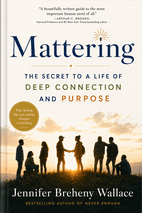
Jennifer Breheny Wallace's Mattering explores the universal need to feel valued and to add value, offering practical strategies like feedback loops and becoming a "cornerman" to build connection. Drawing on research and personal stories, it's for anyone feeling invisible, overwhelmed, or disconnected—from caregivers to employees—seeking a blueprint for deeper purpose.
Feature
Insta.Page
Blinkist
Shortform
Summary Depth
Full Chapter-by-Chapter
15-min overview
Section-by-section guides
Audio Narration
✓
✓
✓
Visual Mindmaps
✓
✕
✕
AI Q&A
✓
✕
✕
Quizzes
✓
✕
✕
PDF Downloads
✓
✕
✓
Price
$89.99/yr
$146/yr (PRO)
$199/yr
*Competitor data last verified July 2026.
1 Page Summary
In Mattering: The Secret to a Life of Deep Connection and Purpose, journalist Jennifer Breheny Wallace argues that the core human need driving our behavior, often obscured by the pursuit of achievement and the experience of burnout, is the feeling that we matter. She defines mattering as a two-part experience: feeling valued by others and feeling that we have value to add to the world. The book distinguishes this concept from simple belonging or purpose, illustrating it through small, powerful moments, such as a bodega owner remembering a customer’s favorite clementines, which communicate, “You matter,” without a word. Wallace’s investigation began with adolescent mental health but expanded to reveal mattering as a universal need critical at every life stage.
Wallace’s approach is distinctive for its practical, systems-oriented focus. She moves beyond abstract theory to offer concrete strategies for cultivating mattering in every domain of life. The book introduces concepts like creating “feedback loops” to reconnect with one’s impact, building a “mattering core” through healthy responsibility, and becoming a “cornerman”—someone who actively invests in another’s success. It warns against the imbalance of “mattering too much” in high-demand, low-support systems and emphasizes the role of “attunement” (being deeply “got” by another) and intentional “third spaces.” The author uses personal stories, case studies, and research from psychology and sociology to show that mattering is not a solitary trait but something that must be actively built and maintained within relationships and environments.
The intended audience is broad, encompassing anyone who has felt invisible, overwhelmed, or disconnected—whether at work, in caregiving roles, or during life transitions. Readers will gain a diagnostic toolkit for identifying where mattering is missing in their lives and a blueprint for how to restore it, from keeping an “impact file” to simply letting another car merge in traffic. The book ultimately reframes mattering from a personal quest (“I matter”) to a collective practice (“we matter”), arguing that the most resilient path to feeling valued is to focus on making others feel valued, a principle Wallace crystallizes through the personal loss of her own father. It offers a hopeful, actionable guide to building a life of deeper connection and purpose.
Introduction: The Mattering Core
Overview
A bodega owner remembered a customer’s favorite clementines. Later that day, a train conductor calmed a raging young man not with force but with compassion. These small gestures revealed something the author had been circling for years—that beneath the surface of achievement, burnout, and loneliness, we’re all asking the same question: Do I matter?
A Tale of Two Encounters
The clementine moment at the Harlem bodega wasn’t about fruit. It was about being seen, remembered, and valued. The shopkeeper’s thoughtfulness said, “You matter,” without a word. Later that day, on a crowded train, a young man’s fury dissolved when a conductor spoke to him as a person worthy of dignity. The author, then deep into researching adolescent mental health, realized that mattering wasn’t just a protective factor for young people—it was a universal human need, one she witnessed in action when the conductor looked past the man’s rage and answered his unspoken plea: Do you see me? Do you hear me? Do I matter?
What Mattering Really Means
Mattering is the feeling that we are valued by others and that we have value to add to the world. It’s not merely belonging or purpose—you can belong to a group yet feel invisible, or have a purpose but doubt your impact. Mattering encompasses both: Feeling Valued + Adding Value. It’s the story we tell ourselves about our place in the world. Sociologist Morris Rosenberg coined the term in the 1980s, but the need is ancient. Aristotle’s eudaimonia, Adler’s emphasis on contribution, and teachings across religions all point to the same insight: every person matters. Rituals from coming-of-age ceremonies to retirement celebrations are “mattering practices” woven into human life.
The Modern Mattering Crisis
The author spent six years asking people if they felt they mattered. Too often the answer was “no” or “not anymore.” A parent made invisible by caregiving. A doctor powerless against insurance companies. A college student who only felt worthy when her grades were high and her weight low. An elderly man no longer relied upon. These personal stories mirror global trends: rising rates of depression, burnout, and loneliness—what sociologists call “deaths of despair.” Over a billion people worldwide report feeling lonely. The chapter names this as a social health crisis, not just a mental health one. When mattering is absent, we chase counterfeits—attention over connection, prestige over purpose. And at its most extreme, the absence becomes anti-mattering: the gnawing belief that we are invisible and inconsequential, a void that can lead to self-destruction or lashing out.
The Mattering Core and Its Five Elements
The people who thrive despite life’s challenges have built a “mattering core”—an internal infrastructure of being valued and adding value. This core isn’t fixed; it can be strengthened. The chapter introduces five essential elements that make up the mattering core:
Recognition: Your presence and actions are noticed; your absence would be felt.
Reliance: Others depend on you; you feel needed.
Importance: You are prioritized; you matter to someone.
Ego Extension: Others are invested in your well-being; you are cared for.
Attunement: You are deeply understood and meaningfully responded to.
These elements become the foundation for the rest of the book, offering a framework for rebuilding mattering at home, at work, and in communities.
A Promise and an Invitation
The author made a promise after that train ride: to follow the thread of mattering wherever it led. This book is the result—a blend of stories, research, and practices for anyone who feels invisible, burned out, disconnected, or unsure of their place in the world. Whether you’re raising children, navigating retirement, rebuilding after a move, or watching someone you love drift, the ache is the same. The book will explore how to foster mattering in ourselves and others, and how to cope when we don’t feel it. It’s both a personal goal and a collective call to action.
Key Takeaways
Mattering is the feeling of being valued by others and adding value to the world—a core human need that transcends age, background, and culture.
The modern crisis of loneliness, burnout, and despair is often a crisis of anti-mattering: the painful belief that we are invisible and inconsequential.
The mattering core consists of five elements: Recognition, Reliance, Importance, Ego Extension, and Attunement. These can be strengthened over time.
Small gestures—like remembering someone’s preferences or speaking with compassion—are powerful mattering practices that answer our deepest questions: Do you see me? Do I matter?
Key concepts: Introduction: The Mattering Core
1. Introduction: The Mattering Core
The Universal Need to Matter
Everyone asks: Do I matter?
Small gestures reveal deep human need
Mattering transcends age and culture
What Mattering Really Means
Feeling valued by others
Adding value to the world
Not just belonging or purpose
Ancient concept, modern term by Rosenberg
The Modern Mattering Crisis
Many feel invisible or inconsequential
Linked to loneliness, burnout, despair
Over a billion people report loneliness
Anti-mattering leads to self-destruction
The Five Elements of Mattering Core
Recognition: being noticed
Reliance: being needed by others
Importance: being prioritized
Ego Extension: others invested in you
Rebuilding Mattering in Life
Mattering core can be strengthened
Small gestures are powerful practices
Applies at home, work, and communities
A personal goal and collective call
💡 Try clicking the AI chat button to ask questions about this book!
Chapter 1: Connect to Your Impact
Overview
The deep human need to know that our actions matter is at the heart of this chapter. A fire chief named Greg discovered that his firefighters weren’t lacking purpose—they were suffering from a disconnection from their impact, a paradox that extends far beyond firehouses. We drop off soup, donate online, give advice, and never learn the outcome. The antidote is mattering, the feeling that others are aware of us and our contributions. Greg closed the gap with simple feedback loops: his medical officer now followed up on patient outcomes, crews learned their tactics worked, and he launched an “I’m telling” initiative that turned recognition into a habit. Appreciation lands hardest when it affirms the person, not just the deed—a distinction that transformed his department’s morale.
The chapter urges us to notice one small thing where we made a difference, even in everyday tasks like cooking, and to keep an impact file—a collection of thank-you notes, emails, and mementos that counter our negativity bias. Seeing ourselves as part of a bigger whole—like the NASA janitor who understood he was helping put a man on the moon—makes our efforts feel real. The “If it weren’t for you” letters, written annually by a Florida real estate agent, go a step further: they remind people that their absence would leave the world emptier, creating a web of irreplaceable connections. Research on social networks shows that our behaviors ripple up to three degrees of separation, influencing people we may never meet. Traces of our kindness are everywhere, even when invisible.
The chapter closes with Greg Carter, another fire chief, who lived the weight of legacy. After the Charleston Sofa Super Store fire claimed nine firefighters, he rebuilt his department’s culture around training, communication, and safety. Years later, at retirement, he placed nine Chief Coins on the memorial plaques, saying “I see you. You mattered. ” That single act captures the chapter’s core: our small acts of gratitude and connection create ripples far beyond what we can see, and legacy isn’t just something left behind—it’s carried forward through how we train, lead, and remember.
Greg Bulanow never set out to be a firefighter. With an English degree and plans for an MFA, he took the job as a temporary adventure. But that changed the night he squeezed through twisted metal to reach a trapped woman, draped his bunker coat over her, and stayed by her side until she was lifted to safety. He felt the weight of trust, of being needed, of making a difference in someone’s worst moment.
Within a decade, Greg became chief of the North Charleston Fire Department. Yet the promotion brought a new problem: morale was crumbling. Firefighters responded to twenty-two thousand calls a year, pulled people from burning cars, revived heart attack victims—and then packed up and drove back to the station, never knowing what happened next. Did the woman survive? Did that child recover? The lack of closure wore them down. Divorce, drinking, and turnover became the norm. Greg tried buying new trucks and gear, only to hear someone mutter, “They’re trying to buy our support.”
That sting cracked something open. Greg realized his firefighters weren’t suffering from a lack of purpose—they were suffering from a disconnection from their impact. Even life-saving work can feel invisible when you never see the outcome.
The Problem of Invisibility
It’s a paradox that reaches far beyond firehouses. We drop off soup for a sick friend and never hear if it helped. We donate to a GoFundMe and wonder if our contribution mattered. We give advice and don’t learn how it turned out. Over time, that detachment seeps into work, home, and community. Researcher Morris Rosenberg called the antidote “mattering”—the feeling that others are aware of us and our actions. Even small gestures—a barista remembering your order, a neighbor waving—anchor us. But we also need to know our actions land. Like a former student returning to say a teacher’s belief changed their life.
Greg started closing the gap with simple systems. He directed his medical officer to follow up on patient outcomes when firefighters asked. Now instead of wondering about the little girl from the wreck, crews could hear she was recovering. He introduced a fire investigator who debriefed crews on the effectiveness of their tactics. Firefighters began to see that their decisions saved homes and protected neighbors.
Then Greg launched the “I’m telling” initiative. Every two weeks, shift commanders had to email him at least one thing a team member did worth recognizing. If nothing came to mind, they still had to send a “nothing to report” email. At first, the inbox filled with blank reports. Recognizing good work required a mental shift—supervisors were used to focusing on action, not observation. So Greg leaned into the firehouse culture of humor and teasing. “I’m telling” became a playful way to “tattle” on someone’s excellence. It caught on. Greg started sending handwritten thank-you cards, inviting crews to staff meetings for public praise, and handing out Chief’s Coins. One crew fixed a cyclist’s bike after a crash and delivered it the next morning. They got a coin.
The effect was subtle but real. Battalion chiefs began saying “good job” more often. Firefighters painted murals in the stations and designed custom T-shirts. They started taking ownership again. William James once wrote that the deepest principle in human nature is the craving to be appreciated. Greg’s experiment showed that appreciation lands hardest when it affirms the person, not just the deed. “Thanks for staying late” is one thing. “I always know I can count on you” is another. The first thanks the action. The second sees the doer.
Notice One Small Thing
During a visit to the station, I watched the routine up close. An electrical fire at a ranch house, smoke pouring from windows, a deflated reindeer ornament under a bush two weeks before Christmas. The firefighters moved with quiet precision. After extinguishing the flames, one of them noticed two stunned tenants standing nearby. He walked over, put a hand on a shoulder, and murmured comfort. Then they loaded the trucks, returned to the station, and started cooking dinner. No celebration. No decompression. Just the next thing. It was easy to see how, even in extreme work, you could lose sight of why you ran toward danger.
That’s why Greg’s feedback loops were so critical. Without reminders, even the most dedicated team can drift. We all need to intentionally connect with our impact. Whether you’re a parent driving kids to practice, a friend answering late-night texts, or a worker pouring hours into a project no one seems to notice—you don’t have to wait for validation. Start by paying attention to one small moment where you made a difference.
Keep an Impact File
Our brains are wired for negativity bias—a survival instinct that makes us focus on what goes wrong. To counter that, keep a collection of thank-you notes, emails, photos, or cards that prove your efforts matter. Think of it as a personal treasure chest, the opposite of a gratitude journal. Lauren Smith Brody keeps a Google doc of “little contributions notes” and even frames press clippings for a makeshift trophy wall. The act of framing tells her that her contributions are real and worthy. Humor helps too. Peter’s family hands out tacky trophies for everything competitive. Imagine an office awarding a “Rational Exuberance” plaque to someone who walked away from a too-risky deal, or a family “Glue Award” for the person who holds everyone together. Playful recognition makes “you matter” feel natural.
Part of a Bigger Whole
One of the most powerful ways to connect with your impact is to see how your role fits into something larger. The janitor at NASA who told President Kennedy, “I’m helping put a man on the moon,” understood this. Research shows that chefs in open kitchens, who see diners’ smiles, cook tastier food and feel more satisfied. When we connect our efforts to a greater purpose, we don’t just feel better—we perform better. So tell someone when you see their contribution to the whole. Tell your colleague their deadline hustle lifted the office energy. Tell your neighbor their park cleanups made a difference. Recognition says, I see the good in you.
If It Weren't for You...
Every year on a friend’s birthday, Amelia, a real estate agent in Florida, sends a note that begins, “If it weren’t for you...” and lists the ways that person impacts the world. For her cousin Mia: “If it weren’t for your humor, our family gatherings wouldn’t be nearly as fun.” For colleague Daniel: “If it weren’t for you, our office wouldn’t be as warm and friendly.” Friends hold on to those letters. They remind people that their absence would leave the world emptier. That’s the deepest form of awareness—knowing you are irreplaceable in your circles.
Researchers have found that our behaviors and emotional states ripple through social networks up to three degrees of separation. Think about that—you influence not just your friends, but their friends, and even their friends' friends. Your actions matter to people you may never meet. There are people who quote your words and remember your kindness long after you've moved on. Traces of your efforts are everywhere, even if they
Key concepts: Chapter 1: Connect to Your Impact
2. Chapter 1: Connect to Your Impact
The Problem of Invisible Impact
Firefighters saved lives but never learned outcomes
Disconnection from impact erodes morale and purpose
This paradox extends to everyday acts of kindness
Mattering is the antidote—feeling our actions land
Closing the Gap with Feedback Loops
Medical officer followed up on patient outcomes
Fire investigator debriefed crews on tactic effectiveness
Simple systems reconnect effort to results
The 'I'm Telling' Initiative
Shift commanders emailed one recognition every two weeks
Empty reports forced a mental shift to observation
Playful 'tattling' culture made recognition a habit
Appreciation That Sees the Person
Affirm the doer, not just the deed
Handwritten cards and public praise deepened impact
Crews took ownership and pride in their work
Notice One Small Thing
Find one difference you made, even in daily tasks
Keep an impact file of thank-you notes and mementos
Counter negativity bias with evidence of your worth
Part of a Bigger Whole
NASA janitor knew he helped put a man on the moon
Our behaviors ripple up to three degrees of separation
Traces of kindness are everywhere, even when invisible
Legacy Through Connection
Greg Carter honored nine fallen firefighters at retirement
Small acts of gratitude create ripples beyond what we see
Legacy is carried forward through training and remembering
Chapter 2: The Good Kind of Weight
Overview
The story of Julie Plaut Mahoney, who became her mother’s full-time caregiver only to feel adrift after her death, introduces the central idea of a mattering core—the kind of responsibility that anchors rather than crushes. Julie later co-founded Welcome Home, a nonprofit that repurposes donations for families in need, discovering that being relied upon can restore us even after profound loss.
Turning outward, research on the helper’s high shows that helping others actually boosts energy and a sense of control over time. Small acts—walking a neighbor’s dog, mentoring a colleague—shift focus and remind us we are essential. The distinction between obligation and responsibility is crucial; responsibility acts like a muscle that, when unused, lets our sense of mattering atrophy. Michael rediscovered this when adopting a cat named Blue, whose daily reliance on him reintroduced purpose. Ethan found similar grounding driving his neighbor to chemotherapy, eventually refusing payment because the role itself had become a source of pride. Needs are everywhere if we look, even in silly rituals like the traffic BFF—letting others merge—a reminder that our presence can make a small difference.
Leaning into your strengths means matching what you love with community needs. Colton Archer used his dry-cleaning business to offer free services for job interviews during the pandemic; an eighty-four-year-old father-in-law mows lawns and snow-blows driveways because that’s what he’s good at. To identify your strengths, ask what makes you lose track of time or what people thank you for. Inviting someone to help amplifies impact—Daniel calls his dad for advice not because he needs the answer, but because the advice-giving effect boosts the giver’s sense of competence. Andrew texts family group chats about upcoming birthdays, and one woman shares local event lists online: mattering matchmakers who invite others to join in.
The Repair Café model, started in Amsterdam and replicated in New Paltz, New York, shows how being a matchmaker can repair social connections alongside broken toasters. Retired engineers and tailors find new purpose teaching others, while an eighty-four-year-old handyman and a sustainability-minded volunteer both discover they are not disposable—nothing and no one is. Using pain as a compass turns difficult emotions into direction: Jean Purdy channeled her own infertility into pioneering IVF work that led to the first test-tube baby; Brianna Kohn, lonely after friends left New York during the pandemic, founded City Girls Who Walk, a group that grew into hundreds and inspired similar movements globally. The question “What keeps you up at night?” can transform worry into action.
Don’t assume—ask. Paul Feiner, town supervisor of Greenburgh, drives around with a “Mobile Problem Solver” sign, stopping people to hear their concerns directly. This principle translates to personal relationships through the platinum rule: treat others as they would like to be treated, not as you would. Stacey didn’t guess what her grieving friend needed; she asked, and the answer was a simple morning text. Need nudges like “I’m heading to Costco, what can I pick up?” signal genuine curiosity without pressure to fix anything. Building trust through consistency is where reliance becomes solid—Julie’s Welcome Home grew from a single act into a warehouse where clients choose five decorative items, giving dignity of choice. Volunteers learn they can count on predictable routines, and when one volunteer lost her husband, she returned to work because she knew the space would hold her grief without judgment.
Small acts carry cosmic echoes. The butterfly effect is mirrored across spiritual traditions: Judaism’s tikkun olam calls us to repair the world, Christianity’s Good Samaritan crosses boundaries, Hinduism’s ahimsa urges gentle care, Islam’s zakat makes supporting the vulnerable a duty, Buddhism’s karuna asks us to actively ease suffering. A stranger handing a cold bottle of water to someone sobbing on a park bench—that tiny act stays with the recipient for years. The good weight of being needed is the counterweight to modern hollowness. As Julie put it, if you’re in a hole feeling like you don’t matter, go somewhere you’re relied on, where people depend on you. Meaningful responsibility grounds us when life feels weightless, and not all of us can do great things, but we can do small things with great love.
Key Takeaways
Replace the golden rule with the platinum rule: ask what others need rather than assuming what you’d want.
“Need nudges” (e.g., “What can I pick up for you?”) convey genuine care without pressure to fix anything.
Trust is built through consistency—repeated, reliable acts that let others count on you.
Small kindnesses ripple outward in ways we can’t predict; spiritual traditions across the world affirm this unseen impact.
Meaningful responsibility—being needed—grounds us when life feels weightless.
Key concepts: Chapter 2: The Good Kind of Weight
3. Chapter 2: The Good Kind of Weight
The Mattering Core
Responsibility anchors rather than crushes us
Being relied upon restores purpose after loss
Helper's high boosts energy and time control
Responsibility is a muscle that atrophies without use
Leaning into Strengths
Match what you love with community needs
Ask what makes you lose track of time
Invite others to help via mattering matchmakers
Advice-giving effect boosts the giver's competence
Using Pain as a Compass
Turn difficult emotions into direction
Channel personal struggles into helping others
Ask 'What keeps you up at night?' to find purpose
Transform worry into actionable community impact
Don't Assume—Ask
Platinum rule: treat others as they want
Use need nudges like 'What can I pick up?'
Build trust through consistent, reliable acts
Ask directly rather than guessing needs
Small Acts, Cosmic Echoes
Tiny kindnesses ripple outward unpredictably
Spiritual traditions affirm unseen impact
Good weight of being needed counters hollowness
Do small things with great love
Chapter 3: Mattering Too Much
Overview
True mattering is a delicate balance between adding value and feeling valued, and this chapter explores what happens when that balance shatters. Danna Thomas’s story opens the conversation—she was a Teach for America kindergarten teacher who threw herself into martyrdom, believing self-sacrifice was the price of changing lives. But breaking down in a colleague’s classroom led to a revelation: the problem wasn’t her, it was a system that piled on high demands with low support. That formula, as psychologist Isaac Prilleltensky explains, is a recipe for overwhelm. What’s missing is importance—the feeling that others prioritize you, not just through recognition but through costly “adjusting acts” that prove your worth. This tension hits caregivers hardest, especially parents and teachers, who are expected to matter too much while feeling important too little.
Two cultural shifts have made this crisis worse: parenting standards have skyrocketed, and the traditional village of support has been replaced by paid services—a pay-to-play village that is financially out of reach for many. Even in close relationships, outsourcing has become instinct; a ride to the airport is seen as a task for Uber, when really it’s a bid for connection. Similarly, people in demanding roles like military spouses experience what Simone Gorrindo calls being essential yet invisible—told their sacrifice is critical, yet rendered silent and secondary. This dissonance is compounded by a passion tax that punishes those who love their work or feel called to serve, making them feel guilty for wanting a break.
The path back begins with mattering to yourself. Danna learned this through sacred lunch rituals with colleagues where work talk was banned, teaching her that being a priority for others helped her prioritize herself. The author’s mother-in-law decorated her tiny closets with chandeliers—a private act affirming my joy matters too. Self-care isn’t selfish; it’s other-focused, as educator Alexis Shepard says, because it gives you more to give. But self-prioritization only goes so far. We also need each other—people who make us a priority through small acts, like a custodian telling a teacher to take a bathroom break while he watches the kids. Research shows that even one hour per week of structured, vulnerable connection in groups like Suniya Luthar’s Authentic Connections Groups can reduce cortisol and improve well-being. The magic is in intentional time, not quantity.
This is also the antidote to the friendship recession men face. From informal firepit gatherings in Boise to a dad who launched a weekly breakfast group after thirty coffees with thirty neighbors, the lesson is clear: schedules and routines signal priority. It’s also about taking turns being the priority. Simone’s army-wife community rotates support; Ruth Bader Ginsburg’s husband knew when to step back. As an essay put it, we may not be number one, but being in the top five of many hearts counts. And the gestures that prove it are often small—remembering a child’s favorite pasta shape, a jar of M&M’s at an award ceremony. These details say you are uniquely known.
Equally important is protecting limits. Personal policies like “no emails after 7 p.m.” or a “Code Lavender” for overwhelmed teachers create emergency exits. Julie Mahoney of Welcome Home closes her organization for a week between Christmas and New Year to prevent depletion. Saying no to others becomes saying yes to yourself and to what truly matters. This all culminates in the story of Danna launching Happy Teacher Revolution, a grassroots movement that started with a handful of teachers and spread worldwide. Its principles—self-care as essential, shared struggles, boundaries as strength—ensure every teacher feels important as a person, not just as a function. The chapter closes by showing that importance is not a one-time declaration but a continuous practice: a revolution built one small, intentional act at a time, where people are shown again and again that they matter.
Key Takeaways
True mattering requires both adding value and feeling valued; when demands outpace support, we experience burnout and a distorted form of mattering.
Importance is demonstrated through "adjusting acts" that prioritize someone at a cost to ourselves.
Cultural shifts have created a "pay-to-play village," outsourcing care and connection, making it harder to feel prioritized.
Mattering to yourself is a radical act of self-respect that ultimately enables you to better serve others.
Relationships where we prioritize each other restore our sense of worth and build capacity to carry life's weight together.
Intentional time, not quantity, builds deeper bonds—even one hour weekly of authentic, vulnerable connection reduces stress and improves well-being.
Scheduling and routines signal priority: recurring coffee dates, calls, or firepit hangouts anchor relationships and protect against loneliness.
Taking turns being prioritized is fluid and reciprocal—it's not about being number one, but about being held in many hearts in many ways.
Small, detailed gestures—remembering a favorite ice cream or sending a congratulatory text—powerfully communicate that someone is uniquely known and valued.
Protecting limits (personal policies, Code Lavender, saying no) reinforces that people matter more than their output or availability.
Leading a revolution starts small—one person starting a group can ripple outward, creating communities where everyone feels important and supported.
Key concepts: Chapter 3: Mattering Too Much
4. Chapter 3: Mattering Too Much
The Crisis of Imbalanced Mattering
High demands with low support cause burnout
Feeling important requires costly 'adjusting acts'
Caregivers expected to matter too much, valued too little
Cultural shifts created a pay-to-play village
Mattering to Yourself First
Self-care is a radical act of self-respect
Sacred rituals like no-work lunch breaks help
Private acts affirm 'my joy matters too'
Self-prioritization enables better service to others
Prioritizing Each Other Intentionally
One hour weekly of vulnerable connection reduces stress
Scheduling and routines signal priority in relationships
Small gestures show someone is uniquely known
Taking turns being prioritized builds reciprocal bonds
Protecting Limits as a Strength
Personal policies like 'no emails after 7 p.m.'
Code Lavender creates emergency exits for overwhelmed
Saying no to others is saying yes to yourself
Closure periods prevent depletion and burnout
Building a Revolution of Importance
Happy Teacher Revolution started with a handful
Self-care and shared struggles are core principles
Boundaries reinforce people matter over output
Continuous small acts create lasting change
You've reached the end of the free chapters
Next chapter: “Tuning In” is locked
Keep reading Mattering — and unlock all 700+ book summaries with audio, mindmaps and AI Q&A.
$0.00 due today · 7 days free, then $89.99/year ($7.49/mo) · Cancel anytime before day 7
Jennifer Breheny Wallace is a journalist and author specializing in parenting and education, known for her book "Never Enough: When Achievement Culture Becomes Toxic—and What We Can Do About It." A graduate of Harvard College and a former contributor to The Wall Street Journal and The Washington Post, she focuses on the pressures of modern childhood and raising resilient kids. Her work has been featured on CBS This Morning and in major parenting publications.
Frequently Asked Questions about Mattering
What is Mattering about?
This book explores the universal human need to feel that we matter—that we are valued by others and that we have value to add to the world. Through real-life stories and research, it examines how small gestures of recognition and being seen can transform individuals and communities. The book argues that mattering is a protective factor against burnout, loneliness, and disengagement, offering practical ways to cultivate it in relationships, work, and daily life.
Who is the author of Mattering?
Jennifer Breheny Wallace is an author who spent years researching adolescent mental health and the concept of mattering. Her work draws on extensive interviews and personal experiences to illuminate how the question 'Do I matter?' shapes our well-being. She discovered that beneath achievement and burnout lies this fundamental need, and her book provides a roadmap for understanding and fulfilling it.
Is Mattering worth reading?
Yes, this book is deeply engaging because it addresses a core human need that often goes unspoken. It offers actionable insights and moving stories that can change how you view yourself and your interactions. You'll learn how small changes—from a shopkeeper remembering your favorite fruit to a coworker recognizing your contribution—can make a profound difference in feeling valued and adding value.
What are the key lessons from Mattering?
One key lesson is that mattering requires both feeling valued by others and contributing value in return, creating a delicate balance. Another is the importance of creating feedback loops to see the impact of our actions, as a fire chief did by following up on patient outcomes. The book also emphasizes being a 'cornerman' who actively invests in others' success and the power of attunement—truly feeling felt by another person. Finally, it teaches that even during life's transitions, we can ask where and how to matter next, rather than getting stuck in the loss of a previous role.
📚 Explore Our Book Summary Library
Discover more insightful book summaries from our collection




![The Explosive Child [Sixth Edition] by Ross W. Greene PhD - Book Summary](/_next/image?url=https%3A%2F%2Fapi.insta.page%2Fstorage%2Fv1%2Fobject%2Fpublic%2Fsmall_bookcovers2%2FB08NP52GTW.png&w=3840&q=75)