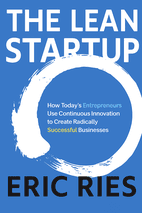
Eric Ries's The Lean Startup presents a methodology for developing businesses through rapid experimentation and validated learning, using concepts like the Minimum Viable Product. It is essential reading for entrepreneurs and innovators navigating uncertainty.
Feature
Insta.Page
Blinkist
Shortform
Summary Depth
Full Chapter-by-Chapter
15-min overview
Section-by-section guides
Audio Narration
✓
✓
✓
Visual Mindmaps
✓
✕
✕
AI Q&A
✓
✕
✕
Quizzes
✓
✕
✕
PDF Downloads
✓
✕
✓
Price
$89.99/yr
$146/yr (PRO)
$199/yr
*Competitor data last verified July 2026.
1 Page Summary
Eric Ries's The Lean Startup presents a methodology for developing businesses and products that aims to shorten product development cycles and rapidly discover if a proposed business model is viable. The core concept is the "Build-Measure-Learn" feedback loop. Instead of spending months or years building a product in isolation, entrepreneurs are encouraged to create a "Minimum Viable Product" (MVP)—the simplest version of the product that can be released to test fundamental hypotheses. The primary goal is to learn what customers truly want, thereby minimizing the market's time and resources wasted on products nobody will buy.
The book emerged from Ries's experiences in the early 2000s dot-com bubble, where he witnessed the failure of traditional, rigid business plans in the face of market uncertainty. He combined lean manufacturing principles (popularized by Toyota) with agile development and customer development practices to create a framework suited for innovative, new ventures. A central tenet is "validated learning"—using empirical data from customer interactions to make decisions rather than relying on intuition. This process is guided by "innovation accounting," a quantitative approach to measuring progress and deciding whether to "pivot" (change strategy) or "persevere" (stay the course).
The Lean Startup has had a profound and lasting impact, becoming a foundational text in the global startup ecosystem and influencing corporate innovation strategies. Its principles have been adopted by countless entrepreneurs, intrapreneurs, and even non-profits, shifting the focus from elaborate planning to agile experimentation. The book's vocabulary—MVP, pivot, validated learning—has become standard business lexicon, cementing its legacy as a modern classic that fundamentally changed how new products are built and launched.
Foreword
Overview
Jeff Immelt, Chairman and CEO of GE, opens with a reflection on the universal traits that bind entrepreneurs, whether they're launching startups or driving change within established giants like General Electric. He highlights their shared qualities: speed, openness to new ideas, and a knack for thriving in uncertainty through disruption and innovation. Immelt expresses deep admiration for Eric Ries's The Lean Startup, noting how its scientific methodology offers a practical framework for anyone to cultivate these entrepreneurial habits. At GE, this aligns perfectly with a culture dedicated to constant reinvention, where iteration and external insights are woven into the fabric of operations. The foreword sets the stage for how GE is integrating Ries's principles into its own evolution, emphasizing collaboration and rapid progress.
Entrepreneurial DNA in Corporate Innovation
Immelt draws a clear line between the agile mindset of entrepreneurs and GE's own ethos, underscoring that traits like adaptability and a hunger for innovation aren't confined to small ventures. He points out that GE's history, rooted in Thomas Edison's legacy of absorbing diverse ideas, naturally embraces this spirit. By partnering with thinkers like Eric Ries, the company reinforces its commitment to learning and improvement, ensuring that even at a massive scale, it can pivot quickly and deliver meaningful outcomes for customers.
Integrating Lean Startup Principles
The heart of the foreword details GE's adoption of The Lean Startup approach through initiatives like FastWorks, a tool designed to accelerate impact and validation. Immelt explains how this process enables teams to learn, iterate, and refine products in real-time, reducing waste and enhancing customer focus. He credits Ries as a key adviser in this journey, illustrating how scientific experimentation—testing hypotheses and adapting based on feedback—has become integral to GE's workflow. This shift isn't just about speed; it's about building a culture where evidence-driven decisions lead to sustained growth and relevance.
Legacy and Forward Momentum
Immelt ties GE's current transformation back to its founding principles, recalling Edison's openness to external inspiration as a blueprint for modern innovation. He expresses optimism that readers will find the same value in Ries's book that GE has, framing it as a guide for organizations seeking to balance scale with agility. The foreword closes with a hopeful note, encouraging others to embrace these ideas for broader progress, much like GE is doing to stay at the forefront of global industry.
Key Takeaways
Entrepreneurs universally exhibit traits like speed, innovation, and comfort with uncertainty, which can be cultivated in any organizational setting.
The Lean Startup provides a scientific, adaptable framework for driving disruption and continuous improvement.
GE's FastWorks initiative exemplifies how large companies can integrate lean principles to accelerate learning, validation, and customer outcomes.
Collaboration with external thinkers, like Eric Ries, helps legacy firms maintain relevance and agility in fast-changing markets.
Embracing a culture of iteration and external inspiration, as modeled by Thomas Edison, is crucial for long-term success and impact.
Key concepts: Foreword
1. Foreword
Universal Entrepreneurial Traits
Speed, openness to new ideas, and comfort with uncertainty
Shared qualities between startup founders and corporate innovators
Thriving through disruption and innovation across organizational types
Cultivating entrepreneurial habits through scientific methodology
GE's Entrepreneurial DNA
Agile mindset and adaptability in large corporations
Thomas Edison's legacy of absorbing diverse ideas
Hunger for innovation not confined to small ventures
Partnership with external thinkers to reinforce learning
Lean Startup Implementation at GE
FastWorks initiative for accelerated impact and validation
Real-time learning, iteration, and product refinement
Reducing waste through customer-focused experimentation
Scientific approach of testing hypotheses and adapting to feedback
Cultural Transformation and Legacy
Balancing scale with organizational agility
Evidence-driven decisions for sustained growth
Edison's openness as blueprint for modern innovation
Building culture of iteration and external inspiration
Collaborative Innovation Strategy
Eric Ries as key adviser in GE's transformation journey
Integrating external insights into corporate operations
Maintaining relevance in fast-changing markets
Embracing disruption while preserving legacy strengths
💡 Try clicking the AI chat button to ask questions about this book!
Introduction
Overview
The chapter begins with a poignant personal story of entrepreneurial failure, where the author recalls the moment his first startup crumbled despite having all the supposed ingredients for success. This sets the stage for a critical examination of the myths surrounding startup culture, challenging the notion that brilliance and hard work alone guarantee victory. Instead, the author introduces the Lean Startup methodology as a practical, process-driven alternative that can be learned and applied to navigate extreme uncertainty. Through his journey from failure to founding IMVU, he illustrates how a scientific approach to innovation—rooted in rapid experimentation and validated learning—can transform how we build sustainable businesses.
The Reality Behind Startup Myths
Many of us grow up hearing inspiring tales of visionary entrepreneurs who achieve fame through determination and groundbreaking products. The author argues that this narrative is often a myth, fueled by selection bias and after-the-fact rationalization. He shares how his own early failure felt like a betrayal of these stories, leaving him to question why so many promising ventures collapse. The truth, he reveals, is that most startups fail not due to a lack of vision or effort, but because they lack a reliable process to test and adapt their ideas in real-world conditions.
A Turning Point at IMVU
Determined to avoid past mistakes, the author co-founded IMVU with a radical new approach. Instead of perfecting their technology behind closed doors, they launched a minimal, bug-ridden product early and charged customers for it. They embraced constant iteration, shipping updates dozens of times daily, and prioritized running experiments over blindly following customer feedback. This counterintuitive strategy, which flew in the face of traditional business wisdom, proved highly successful. IMVU grew into a profitable company with millions of users, demonstrating that innovation thrives when managed through rapid, data-driven cycles.
Foundations of the Lean Startup
Drawing from diverse fields like lean manufacturing, agile development, and customer development, the author formalized these practices into the Lean Startup framework. He emphasizes that entrepreneurship is a form of management tailored to uncertainty, where the goal is not just to build products but to learn how to create a sustainable business. The methodology rests on five core principles: entrepreneurs are everywhere, entrepreneurship is management, validated learning, the Build-Measure-Learn feedback loop, and innovation accounting. These elements work together to reduce waste and increase the odds of success by making progress measurable and actionable.
Why Traditional Methods Fall Short
Startups operate in environments too unpredictable for conventional planning and forecasting to be effective. The author identifies two common pitfalls: over-reliance on detailed strategies that ignore uncertainty, and the chaotic "just do it" mentality that rejects management altogether. Both approaches lead to high failure rates because they don't address the need for structured experimentation. The Lean Startup offers a middle path, applying rigorous, scientific methods to innovation so that passion and vision are channeled into tangible results.
A Global Movement for Change
What began as personal insights at IMVU has evolved into a worldwide movement, with communities in over a hundred cities adopting Lean Startup principles. The author's mission is to make entrepreneurship more accessible and effective across industries, from tech startups to large corporations and even government agencies. By sharing his experiences and refining the methodology through collaboration, he aims to equip a new generation of innovators with the tools to turn ideas into impactful, sustainable ventures.
Key Takeaways
Startup success is not about innate talent or luck; it can be engineered through a disciplined process that embraces experimentation and learning.
The Lean Startup methodology applies principles from lean manufacturing to innovation, focusing on rapid iteration, validated learning, and measurable progress.
Entrepreneurship should be viewed as a manageable discipline, requiring new accounting and management techniques tailored to uncertainty.
Common startup failures often stem from outdated myths and a lack of adaptive processes, which the Lean Startup addresses by prioritizing customer feedback and scientific testing.
This approach is scalable and applicable beyond tech startups, offering a framework for innovation in any organization seeking to reduce waste and achieve sustainable growth.
Key concepts: Introduction
2. Introduction
Debunking Startup Myths
Traditional success narratives are often myths fueled by selection bias
Most startups fail due to lack of reliable testing processes, not vision or effort
Brilliance and hard work alone don't guarantee entrepreneurial success
Personal failure experience revealed flaws in conventional startup wisdom
The IMVU Case Study
Launched minimal, bug-ridden product early and charged customers
Embraced constant iteration with dozens of daily updates
Prioritized experiments over blind customer feedback
Counterintuitive approach led to profitable growth with millions of users
Lean Startup Framework Principles
Entrepreneurs are everywhere - not limited to specific contexts
Entrepreneurship is management tailored to uncertainty
Validated learning through customer feedback and data
Build-Measure-Learn feedback loop for rapid iteration
Innovation accounting to make progress measurable
Limitations of Traditional Methods
Conventional planning ineffective in unpredictable startup environments
Over-reliance on detailed strategies ignores uncertainty
Chaotic 'just do it' mentality rejects necessary management
Both extremes lead to high failure rates without structured experimentation
Global Impact and Scalability
Evolved from personal insights to worldwide movement across 100+ cities
Applicable beyond tech startups to corporations and government
Makes entrepreneurship more accessible and effective across industries
Provides tools for turning ideas into sustainable ventures
Part One: Vision
Overview
Overview
This opening section establishes the foundational role of vision in personal and professional transformation, framing it as the essential starting point for any meaningful change. It explores how a clear vision acts as a compass, guiding decisions and inspiring action even when the path ahead is uncertain. The narrative emphasizes that vision isn't just about distant goals but about shaping identity and purpose in the present moment, setting the stage for the practical steps that follow in subsequent chapters.
The Nature of Vision
Vision is portrayed as a dynamic, living concept that blends imagination with intention. It's not a static blueprint but a evolving picture of what could be, rooted in deep values and aspirations. The text illustrates how vision provides clarity amid chaos, helping individuals distinguish between mere distractions and opportunities aligned with their core purpose. Examples highlight how historical leaders and everyday innovators used vision to navigate challenges, underscoring that it's accessible to anyone willing to pause and reflect on what truly matters.
Cultivating Personal Vision
Here, the focus shifts to the process of developing a personal vision. It involves introspection, asking questions like "What legacy do I want to leave?" or "What brings me alive?" The chapter suggests practical exercises, such as journaling or vision boarding, to make abstract ideas tangible. It stresses that vision grows through experimentation and feedback, not isolation, and encourages embracing curiosity over fear. Stories of individuals who transformed their lives by clarifying their vision reinforce that this isn't a one-time event but an ongoing practice.
Vision in Action
This part examines how vision translates into daily habits and decisions. It discusses the importance of aligning small, consistent actions with the broader vision to build momentum. The narrative warns against the trap of "busyness" without direction, showing how a clear vision filters priorities and fosters resilience when obstacles arise. Case studies demonstrate how organizations and communities thrive when collective vision is communicated and lived, not just stated, creating a ripple effect of engagement and innovation.
Key Takeaways
Vision serves as a foundational anchor for growth, turning ambiguity into focused direction.
Personal vision emerges from self-reflection and evolves through real-world application.
Consistent, small actions aligned with vision compound into significant transformation over time.
A shared vision can unify teams and communities, amplifying impact beyond individual efforts.
Key concepts: Part One: Vision
3. Part One: Vision
Foundations of Vision
Vision serves as a compass for personal and professional transformation
Guides decisions and inspires action during uncertainty
Shapes identity and purpose in the present moment
Acts as the essential starting point for meaningful change
Dynamic Nature of Vision
Blends imagination with intention as a living concept
Evolves from deep values and aspirations rather than being static
Provides clarity to distinguish distractions from aligned opportunities
Accessible to anyone through reflection on what truly matters
Developing Personal Vision
Requires introspection through questions about legacy and passion
Practical exercises like journaling and vision boarding make ideas tangible
Grows through experimentation, feedback, and embracing curiosity
Ongoing practice rather than a one-time event
Implementing Vision in Daily Life
Aligns small, consistent actions with broader vision for momentum
Filters priorities and prevents directionless busyness
Fosters resilience when facing obstacles
Creates ripple effects of engagement and innovation in communities
1. Start
Overview
This opening chapter sets the stage by challenging the common misconception that entrepreneurship and management are opposing forces. It argues that while traditional management practices can stifle creativity in early-stage ventures, avoiding management altogether leads to chaos and failure. The author shares personal experiences of startup failures rooted in this "just do it" approach and highlights a global entrepreneurial renaissance fueled by excess productivity capacity. However, this opportunity is marred by wasteful failures due to a lack of a coherent management framework. Introducing the Lean Startup as a solution, the chapter frames it as an adaptation of lean manufacturing principles to entrepreneurship, emphasizing validated learning over traditional metrics. It positions entrepreneurship as a disciplined process of steering through uncertainty, with a focus on iterative feedback loops rather than rigid, rocket-ship-like planning.
The Entrepreneurial Management Paradox
Many aspiring entrepreneurs view management as a bureaucratic hindrance, leading them to reject processes and discipline in favor of action-oriented approaches. This often results in disorganization and missed opportunities, as evidenced by the author's own early setbacks. Despite the success of general management in established industries, its principles are ill-suited for the volatile environment of startups, where uncertainty reigns. The current economic landscape, marked by increased manufacturing output but fewer jobs, has created unprecedented entrepreneurial potential. Yet, without a tailored management paradigm, this potential is squandered through high-profile failures that waste human creativity and resources. The Lean Startup movement emerges as a response, aiming to prevent these losses by applying structured yet flexible management techniques.
Foundations of the Lean Startup
Drawing inspiration from lean manufacturing pioneers like Taiichi Ohno and Shigeo Shingo, the Lean Startup redefines progress through validated learning—a scientific approach to measuring what customers truly want. This shifts the focus from simply building products on time and budget to rapidly identifying value-creating activities. A comprehensive entrepreneurial theory must address all aspects of an early-stage venture, from product development to scaling, while enabling testable predictions. For instance, adopting cross-functional teams accountable for learning milestones may initially reduce perceived productivity, as workers accustomed to local efficiency metrics (like uninterrupted coding) struggle with the intangible nature of learning. However, this adjustment is crucial for avoiding the pitfall of creating something nobody wants, underscoring the startup's core goal: to discover the right product-market fit efficiently.
Steering Through Uncertainty with Feedback Loops
Using the metaphor of driving a car versus launching a rocket, the chapter illustrates how startups should navigate uncertainty. Traditional business plans often resemble rocket launches—detailed, assumption-heavy, and prone to catastrophic failure from minor errors. In contrast, the Lean Startup advocates for a driving approach, where continuous adjustments are made via the Build-Measure-Learn feedback loop. This involves tuning the "engine of growth" (product, marketing, and operations) and making pivots when necessary, all while staying aligned with a overarching vision. For example, a company that over-invests in infrastructure based on flawed forecasts "achieves failure" by executing perfectly but missing the mark. The Lean Startup method emphasizes adaptability, allowing entrepreneurs to persevere or pivot based on real-time insights, much like a commuter adjusting to road detours without losing sight of the destination.
Integrating Vision, Strategy, and Execution
A startup's journey is guided by a clear vision—a long-term goal of building a transformative business—supported by a strategy that includes the business model, product roadmap, and customer insights. The product itself is the tangible outcome of this strategy, constantly optimized through iterative tuning. Occasionally, strategy may require a pivot, but the vision remains steadfast. Startups operate as portfolios of simultaneous activities: growing the customer base, improving processes, and steering through decisions. This balance is essential even as companies scale, highlighting that entrepreneurship is fundamentally about management. The chapter concludes by noting that internal innovators in established companies face similar challenges, often dismissed for "failing" to deliver immediate results, yet they too can benefit from entrepreneurial management principles, setting the stage for further exploration.
Key Takeaways
Entrepreneurship requires a disciplined management approach to avoid chaos and harness opportunities in uncertain environments.
The Lean Startup adapts lean manufacturing principles, using validated learning as a measure of progress to eliminate waste and focus on customer needs.
Startups should emulate driving a car—using the Build-Measure-Learn feedback loop for constant adjustments—rather than rigid, rocket-ship-like planning.
A clear vision guides the startup, while strategy and products are iteratively tuned, with pivots made when necessary based on insights.
Balancing growth, optimization, and steering activities is key, and entrepreneurial management applies to both new ventures and internal innovators in established companies.
Key concepts: 1. Start
4. 1. Start
The Entrepreneurial Management Paradox
Entrepreneurs often reject management as bureaucratic, leading to disorganization and failure
Traditional management principles are ill-suited for startup uncertainty and volatility
Current economic landscape creates unprecedented entrepreneurial potential but high failure rates
Lean Startup emerges as response to prevent waste of human creativity and resources
Foundations of the Lean Startup
Adapts lean manufacturing principles to entrepreneurship context
Redefines progress through validated learning - scientific measurement of customer wants
Shifts focus from building products to identifying value-creating activities
Requires cross-functional teams accountable for learning milestones over local efficiency
Steering Through Uncertainty with Feedback Loops
Advocates driving approach (continuous adjustments) over rocket launch (rigid planning)
Uses Build-Measure-Learn feedback loop for iterative development
Emphasizes tuning the 'engine of growth' and making pivots when necessary
Prevents 'achieving failure' by executing perfectly but missing market needs
Integrating Vision, Strategy, and Execution
Vision provides long-term goal while strategy and products are iteratively tuned
Strategy may require pivots but vision remains steadfast
Startups operate as portfolios of simultaneous growth, optimization, and steering activities
Entrepreneurial management principles apply to both new ventures and internal innovators
You've reached the end of the free chapters
Next chapter: “Define” is locked
Keep reading The Lean Startup — and unlock all 600+ book summaries with audio, mindmaps and AI Q&A.
$0.00 due today · 7 days free, then $89.99/year ($7.49/mo) · Cancel anytime before day 7
Eric Ries is a renowned entrepreneur and author, best known for pioneering the Lean Startup methodology. His groundbreaking book, *The Lean Startup*, has become an essential guide for innovators and business leaders worldwide, revolutionizing how new ventures are built and launched. As a sought-after speaker and advisor, Ries has influenced countless startups and established companies with his principles of agile development and validated learning. His insights have reshaped modern entrepreneurship, emphasizing efficiency, customer feedback, and iterative design. Eric Ries's influential works are available in bookstores and on Amazon, offering practical strategies for navigating the complexities of the business landscape.
📚 Explore Our Book Summary Library
Discover more insightful book summaries from our collection