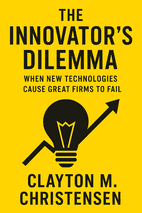
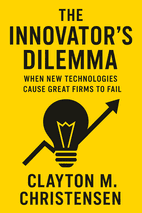
Clayton M. Christensen's The Innovator's Dilemma explains why leading companies fail during disruptive technological shifts, analyzing how good management practices can blind firms to simpler, cheaper innovations. It is essential reading for executives, entrepreneurs, and strategists navigating market change.
Feature
Insta.Page
Blinkist
Shortform
Summary Depth
Full Chapter-by-Chapter
15-min overview
Detailed analysis
Audio Narration
✓ (AI narration)
✓
✓
Visual Mindmaps
✓
✕
✕
AI Q&A
✓ Voice AI
✕
✕
Quizzes
✓
✕
✕
PDF Downloads
✓
✕
✓
Price
$59.99/yr
$146/yr (PRO)
$199/yr
*Competitor data last verified February 2026.
1 Page Summary
In The Innovator's Dilemma, Clayton M. Christensen explores why successful, well-managed companies often fail when confronted with disruptive technological change. The central paradox is that the very practices that make these firms leaders in their markets—listening to customers, investing in higher-margin sustaining innovations, and focusing on their most profitable segments—blind them to the threat of simpler, cheaper, and often inferior technologies that initially serve niche or emerging markets. Christensen distinguishes between "sustaining innovations," which improve existing products for mainstream customers, and "disruptive innovations," which create new markets or value networks and eventually displace established competitors.
Christensen developed his theory through historical case studies across industries like disk drives, excavators, and steel manufacturing. He demonstrated how disruptive technologies, such as mini-computers disrupting mainframes or hydraulic excavators displacing cable-actuated ones, consistently followed a pattern: they were first commercialized by new entrants, ignored by incumbents as they did not meet the needs of lucrative existing customers, and then improved rapidly to eventually meet mainstream performance demands. The book argues that failure is not a result of managerial incompetence but a systematic outcome of rational decision-making within the established firm's resource allocation processes, which are designed to reject projects that don't promise higher profits from known customers.
The book's lasting impact is profound, making "disruption" a central concept in business strategy and innovation management. It provided a predictive framework for understanding industry upheaval and offered actionable advice for incumbents, such as creating autonomous organizations to nurture disruptive technologies. Christensen's work fundamentally shifted the conversation from blaming failed companies to analyzing the structural and strategic dilemmas they face, influencing generations of entrepreneurs, investors, and corporate leaders on how to both defend against and initiate disruptive change.
This chapter serves as a heartfelt acknowledgment, revealing that the groundbreaking ideas presented in the book are not the product of a single mind, but rather a tapestry woven from the insights, support, and sacrifices of numerous individuals. The author details the extensive collaborative network—from academic mentors and industry professionals to research colleagues, students, and family—that made the research and writing possible, framing the entire work as a collective achievement.
Academic Foundations and Mentorship
The author’s intellectual journey began with a pivotal opportunity: senior professors at Harvard Business School took a chance by admitting and funding him into the doctoral program. This core group of mentors, along with other distinguished faculty, invested significant time in sharpening his thinking, insisting on rigorous evidence, and grounding his work within established scholarly traditions. Their selfless guidance during his doctoral research provided the essential foundation for the book’s theoretical framework.
Industry Access and Practical Insight
Translating theory into a viable model required deep immersion in a real-world setting. The author expresses profound gratitude to the executives and employees of the disk drive industry, who opened their records and shared their experiences. A special debt is owed to the editor of the Disk/Trend Report, whose unparalleled archives provided the complete and accurate data that became the empirical backbone for the entire study, allowing the construction of the book’s central model of industry evolution.
Collegial Refinement and Student Interaction
Once on the Harvard faculty, the author’s ideas were further refined through collaboration with colleagues from Harvard, MIT, and Stanford, who offered invaluable critiques and perspectives. The chapter also highlights the indispensable contributions of research associates, editors, and assistants who handled data, prose, and logistics. Perhaps most touchingly, the author credits his students as unwitting teachers, whose questions, puzzled looks, and challenges in the classroom were instrumental in testing and clarifying the concepts presented in the book.
Personal Sacrifice and Family Support
The deepest gratitude is reserved for his family. The author acknowledges that the demanding research on "disruptive technologies" was, in fact, disruptive to their family life, requiring significant time and absence. He credits his wife, Christine, not only for her unwavering faith and support but also as an intellectual partner who played a direct role in shaping the book’s ideas through nightly conversations that transformed half-baked thoughts into clear insights. The book is dedicated to them.
Key Takeaways
Scholarship is a Collaborative Effort: Major intellectual contributions are rarely solo achievements; they are built upon a foundation laid by mentors, colleagues, and the broader scholarly community.
Rigorous Theory Requires Real-World Data: The book’s persuasive power stems from its roots in comprehensive, industry-specific data, generously provided by practitioners.
Teaching is a Two-Way Street: Students are active participants in the development of ideas, challenging and refining a teacher’s thinking in profound ways.
Behind Every Great Work is Personal Sacrifice: The dedication required for deep research and writing often relies on the patience, support, and love of one’s family, who bear the personal cost of the endeavor.
Key concepts: In Gratitude
1. In Gratitude
Academic Foundations and Mentorship
Senior professors at Harvard Business School provided admission and funding for doctoral studies
Mentors invested significant time in sharpening thinking and insisting on rigorous evidence
Guidance grounded the work within established scholarly traditions
Provided essential foundation for the book's theoretical framework
Industry Access and Practical Insight
Executives and employees of the disk drive industry opened records and shared experiences
Editor of Disk/Trend Report provided unparalleled archival data
Complete and accurate data became empirical backbone of the study
Enabled construction of central model of industry evolution
Collegial Refinement and Student Interaction
Collaboration with colleagues from Harvard, MIT, and Stanford offered invaluable critiques
Research associates, editors, and assistants handled data, prose, and logistics
Students served as unwitting teachers through questions and challenges
Classroom interactions tested and clarified concepts presented in the book
Personal Sacrifice and Family Support
Research on disruptive technologies was disruptive to family life
Wife Christine provided unwavering faith and support
Wife served as intellectual partner through nightly conversations
Family bore personal cost of the demanding research and writing
Core Principles of Collaborative Scholarship
Major intellectual contributions are built upon foundations laid by mentors and colleagues
Rigorous theory requires comprehensive real-world data from practitioners
Teaching involves reciprocal learning where students challenge and refine ideas
Deep research relies on family sacrifice, patience, and support
If you like this summary, you probably also like these summaries...
💡 Try clicking the AI chat button to ask questions about this book!
Chapter 2: Introduction
Overview
It begins with a startling observation: some of the world’s most admired and brilliantly managed companies—like Sears, IBM, and Digital Equipment Corporation—often falter when faced with certain market shifts. These aren't stories of bad management or complacency, but of firms at the peak of their powers, celebrated for their customer focus and technological prowess, still losing their dominance. This is the core paradox the book explores.
The pattern suggests a deeper problem. The research argues that good management itself is often the root cause. Companies excel by listening to customers, investing in high-return projects, and developing better products for their core markets. Yet, these very strengths cause them to miss a different kind of innovation: disruptive technology. Unlike sustaining technologies, which improve products for existing customers, disruptive innovations start with worse performance on traditional metrics but offer a new value proposition—simpler, cheaper, or more convenient. They initially appeal to niche or entirely new markets.
This creates a powerful dilemma. For leading firms, investing in disruptive technologies is a rational non-decision. Why pour resources into lower-margin products that don't serve your best customers and address only tiny markets? Their management systems are designed to kill such ideas. To navigate this, the book presents a framework built on five key principles.
First, established firms are prisoners of their success, held captive by the demands of their current customers and investors—a concept known as the force of resource dependence. To break free, they must create an autonomous organization with its own cost structure, free from the parent company's constraints. Second, large companies face the growth paradox for large companies; small, emerging markets cannot satisfy their massive revenue needs. Success requires matching the size of the organization to the market, using small, agile teams.
Third, traditional planning fails because you cannot analyze nonexistent markets. Managers must adopt discovery-based planning, treating initial strategies as learning plans rather than rigid forecasts. Fourth, an organization's capabilities can become disabilities. The very processes and values that make a company excel at sustaining innovation cripple it for disruptive efforts. Managers must build new capabilities in new structures.
Finally, disruption succeeds because the trajectory of market demand vs. technological progress often diverges. Technological improvement frequently races ahead of what mainstream customers can use, allowing simpler, cheaper disruptive products to eventually meet and then redefine market needs. The book concludes by applying these principles to a practical case, like electric vehicles, showing how to analyze a disruptive threat and build a strategy around new definitions of value. The key is to take the threat seriously without jeopardizing the core business, ultimately learning to harness the powerful laws of disruptive change.
The Paradox of Good Management
The book opens with a central, puzzling observation: highly capable and admired companies, celebrated for their innovation and execution, often fail when confronted with specific types of market and technological shifts. This isn't about poorly run firms brought down by bureaucracy or bad luck. It's about companies at the top of their game—those with sharp competitive instincts, deep customer relationships, and aggressive investment in new technologies—that still lose their market dominance.
This pattern of unaccountable failure cuts across all types of industries: fast-moving and slow, technology-based and service-oriented.
Case in Point: Sears and Digital Equipment
Sears Roebuck serves as a prime example. In the mid-1960s, it was considered a "powerhouse," praised in Fortune for its seemingly natural managerial excellence. At its peak, it accounted for over 2% of all U.S. retail sales and pioneered innovations like supply chain management and credit cards. Yet, this acclaim arrived precisely as Sears was missing the seismic shifts toward discount retailing and home centers. It later lost its catalogue business and faced a crisis in its core retail model. The decisions that led to its decline were made when it was most widely admired.
The pattern repeats in technology. IBM dominated mainframes but missed the minicomputer wave. Digital Equipment Corporation (DEC), which created and dominated the minicomputer market, was itself hailed as an unstoppable "moving train" in 1986. Yet, it completely missed the disruptive rise of desktop personal computers and workstations, leading to its own precipitous decline. DEC, too, was being featured in management excellence studies at the very time it was making the fateful decisions to ignore the disruptive threat.
The list is long and varied: Xerox missing desktop copiers, integrated steel mills ignoring minimills, cable-shovel manufacturers failing to transition to hydraulics. The common thread in all these failures is that they were set in motion when these companies were considered among the best in the world.
Framing the Innovator's Dilemma
The author presents two possible explanations for this paradox:
These companies were never truly well-managed and simply rode a wave of good luck.
They were well-managed, but there is something inherent in the decision-making processes of successful organizations that plants the seeds of future failure.
The research in this book strongly supports the second view. It argues that good management was the root cause of their failure. Because these firms excelled at listening to their customers, investing in new technologies that delivered what those customers wanted, and systematically allocating capital to the highest-return projects, they were blindsided by different kinds of innovation.
This leads to a critical insight: widely accepted principles of good management are only situationally appropriate. There are times when it is right not to listen to customers, to invest in lower-performance/lower-margin products, and to pursue small, emerging markets.
Introducing Disruptive Innovation
The core problem is defined as disruptive technology (or disruptive innovation), which is distinct from sustaining technology.
Sustaining Technologies: These improve the performance of established products along the dimensions that mainstream customers historically value. They can be incremental or radical, but they serve existing markets better.
Disruptive Technologies: These initially offer worse performance by the mainstream market's traditional metrics. However, they introduce a new value proposition—typically being simpler, cheaper, smaller, or more convenient. They first appeal to fringe or new customer segments.
The failure framework is built on three key findings:
The Distinction: Disruptive technologies, not sustaining ones, are the primary cause of leading firms' failures.
The Trajectory Mismatch: The pace of technological improvement often outstrips market demand. This means technologies that are "not good enough" for the mainstream today may become more than adequate tomorrow, allowing disruptors to move upmarket.
The Investment Disconnect: For established companies, investing in disruptive technologies is a rational non-decision. These innovations promise lower margins, emerge in small markets, and are not demanded by their best, most profitable customers. Their management systems are designed to filter out such unattractive proposals.
The Path of the Book
The book is structured in two parts to first define the dilemma and then resolve it:
Part One (Chapters 1-4) builds the framework explaining why good management leads to failure, establishing the "innovator's dilemma."
Part Two (Chapters 5-10) prescribes managerial solutions, showing how companies can nurture disruptive technologies while managing their core businesses.
The research methodology is grounded in a deep study of the disk drive industry—a sector where this pattern of failure has repeated multiple times ("fast history"). The framework developed there is then tested for external validity across diverse industries like mechanical excavators, steel, retail, and motorcycles. The goal is to move from understanding the powerful "laws" of disruptive innovation to learning how to harness them, much as understanding the laws of physics enabled human flight.
The text then outlines a series of five core principles that explain why this dilemma occurs and how managers can navigate it.
The Force of Resource Dependence
The consistent failure of industry leaders in the face of disruption supports the theory of resource dependence. This theory posits that while managers feel in control, it is ultimately customers and investors who dictate a company's spending through their demands. High-performing companies excel at developing systems to kill ideas their customers don't want, making it nearly impossible for them to invest in disruptive technologies—which are initially lower-margin and unwanted by their mainstream clients—until those customers finally demand them, by which point it's too late. The proven solution is for managers to align with, rather than fight, this force by creating an autonomous organization. This independent entity, free from the demands of the parent company's mainstream customers and built with a cost structure suited to lower margins, can successfully cultivate the new market.
The Growth Paradox for Large Companies
Disruptive technologies create small, emerging markets that offer powerful first-mover advantages. However, these markets inherently cannot satisfy the massive growth requirements of large, successful companies. A small company needs only modest new revenue to achieve high growth rates, while a corporate giant needs billions. Consequently, large firms often wait for new markets to become "large enough to be interesting," a strategy that typically fails. Success is found by matching the size of the organization to the market; small, agile teams within or spun out from the larger company can pursue small-market opportunities without being hamstrung by corporate processes designed for billion-dollar businesses.
The Impossibility of Analyzing Nonexistent Markets
Traditional market research and planning, which are excellent for managing sustaining innovations, are ineffective and often misleading for disruptive technologies. This is because the markets for disruptive innovations simply do not exist yet; their size, customers, and applications are unknown. Companies that insist on detailed forecasts and financial projections before acting are paralyzed. The alternative is discovery-based planning, which operates on the assumption that all initial plans and forecasts are wrong. This approach focuses on creating a strategy for learning—investing in small, iterative steps to discover the real market, rather than executing a predetermined, data-backed plan.
Organizational Capabilities as Disabilities
Managers often believe that assigning the right people to a project is sufficient for success. However, organizations have inherent capabilities—and disabilities—defined by their processes (how work is done) and values (the criteria for prioritizing projects). These are inflexible. The processes and values that make a company brilliant at executing sustaining innovations (e.g., developing high-margin products for known customers) render it incapable of pursuing disruptive ones (e.g., exploring low-margin products for unknown markets). Therefore, managers must diagnose where these disabilities reside and often must create new organizational structures with new processes and values specifically designed to tackle the disruptive challenge.
The Trajectory of Market Demand vs. Technological Progress
Disruptive technologies become competitively lethal because the pace of technological improvement often outstrips the rate of performance improvement that mainstream customers can absorb. Products that are "not good enough" today rapidly improve along a trajectory that eventually overshoots what the mainstream market needs. When this happens, the basis of competition shifts from functionality to reliability, convenience, and ultimately price. This creates an opening at the lower end of the market. Incumbents, focused on racing toward higher-performance, higher-margin tiers, often ignore this opening until it is too late, leaving themselves vulnerable to disruption from below.
A Framework for Action: The Electric Vehicle Case
The principles culminate in a practical methodology for managers, illustrated through a case study on electric vehicles. The exercise demonstrates how to analyze whether a technology is disruptive and how to manage it. The key is to develop new markets around new definitions of value and to place the project within an organization whose size and processes are aligned with the market's nascent needs. The goal is to take the disruptive threat seriously without jeopardizing the core business that serves existing, profitable customers.
Key Takeaways
To survive disruption, companies must create autonomous organizations with cost structures and processes tailored for emerging, low-margin markets.
Small, focused teams are essential for capturing opportunities in small markets that cannot move the needle for a corporate giant.
Facing disruptive innovation requires a learning-driven, iterative approach (discovery-based planning), not rigid, data-heavy forecasts for markets that don't yet exist.
An organization's greatest strengths in its core business become its crippling disabilities when pursuing disruption; new capabilities must be built in new structures.
Monitor when product performance overshoots market needs, as this is the signal that the basis of competition is changing and disruption from simpler, cheaper alternatives is likely.
Key concepts: Introduction
2. Introduction
The Core Paradox of Market Leadership
Highly admired, well-managed companies at their peak often fail during market shifts
Failure occurs despite strong customer focus, technological investment, and good management
Good management practices themselves can be the root cause of missing disruptive innovations
Disruptive vs. Sustaining Technologies
Sustaining technologies improve existing products for current customers
Disruptive technologies start with worse performance on traditional metrics
Disruptive innovations offer new value: simpler, cheaper, or more convenient
They initially appeal to niche or entirely new markets
The Management Dilemma
For leading firms, ignoring disruptive technologies is a rational decision
Disruptive products don't serve best customers and address tiny markets initially
Management systems in successful companies are designed to kill disruptive ideas
Historical Case Studies
Sears Roebuck: Retail powerhouse missed discount retailing and home centers
IBM: Dominated mainframes but missed minicomputers
Digital Equipment Corporation: Created minicomputers but missed personal computers
Pattern repeats across industries: Xerox, steel mills, manufacturing
Five Principles of Disruptive Innovation Framework
Resource Dependence: Companies are captive to current customers and investors
Growth Paradox: Large companies need small, agile teams for emerging markets
Discovery-Based Planning: Cannot analyze nonexistent markets; need learning plans
Capabilities as Disabilities: Processes that enable sustaining innovation cripple disruptive efforts
Market vs. Technology Trajectory: Technology often outpaces what mainstream customers can use
Strategic Implications
Create autonomous organizations with separate cost structures
Match organization size to market size using small teams
Build new capabilities in new structures for disruptive efforts
Take disruptive threats seriously without jeopardizing core business
Harness the laws of disruptive change through new definitions of value
The Innovator's Dilemma: Good Management as a Root Cause
Established firms fail precisely because they excel at widely accepted principles of good management.
These principles—listening to customers, investing in high-return technologies—are only situationally appropriate.
There are strategic times when firms must not listen to customers and must invest in lower-margin products.
Defining Disruptive vs. Sustaining Innovation
Sustaining technologies improve established products along dimensions valued by mainstream customers.
Disruptive technologies initially underperform on traditional metrics but offer new value (simpler, cheaper, more convenient).
Disruptors first appeal to fringe or entirely new customer segments before moving upmarket.
Three Core Findings of the Failure Framework
Disruptive technologies, not sustaining ones, are the primary cause of leading firms' failures.
The pace of technological improvement outstrips market demand, allowing disruptors to eventually meet mainstream needs.
Established firms rationally reject disruptive innovations as they promise lower margins and serve small, unattractive markets.
Research Methodology and Book Structure
The framework is built on a deep study of the 'fast history' disk drive industry.
Part One (Chapters 1-4) explains why good management leads to failure.
Part Two (Chapters 5-10) prescribes managerial solutions for nurturing disruptive technologies.
Principle 1: The Force of Resource Dependence
Customers and investors, not managers, ultimately dictate a company's spending priorities.
Established firms' systems are designed to kill ideas their best customers don't want, blocking disruptive innovation.
The solution is to create an autonomous organization with a cost structure suited to lower-margin disruptive markets.
Principle 2: The Growth Paradox for Large Companies
Disruptive innovations create small markets that cannot satisfy the massive growth needs of large firms.
Large firms often wait until a market is 'large enough to be interesting,' which is a failing strategy.
Success requires matching organization size to the market, using small, agile teams to pursue small opportunities.
Principle 3: The Impossibility of Analyzing Nonexistent Markets
Traditional market research and planning fail for disruptive technologies because their markets do not yet exist.
Insisting on detailed forecasts and projections leads to paralysis.
The solution is discovery-based planning: investing in iterative learning to discover the real market.
Organizational Capabilities as Disabilities
Success requires more than assigning the right people; it depends on organizational processes and values
Processes and values that enable sustaining innovations disable pursuit of disruptive ones
Managers must diagnose where these organizational disabilities reside
Often requires creating new organizational structures with tailored processes and values for disruptive challenges
The Trajectory of Market Demand vs. Technological Progress
Disruptive technologies become lethal when technological improvement outpaces what mainstream customers can absorb
Products rapidly improve along trajectories that eventually overshoot mainstream market needs
When overshoot occurs, competition shifts from functionality to reliability, convenience, and price
Creates openings at the lower market end that incumbents ignore while pursuing higher-margin tiers
Incumbents become vulnerable to disruption from below by focusing on performance races
Framework for Action: Electric Vehicle Case Study
Provides practical methodology for analyzing whether a technology is disruptive
Key is developing new markets around new definitions of value
Must place projects in organizations whose size and processes align with nascent market needs
Goal: take disruptive threat seriously without jeopardizing core profitable business
Key Takeaways for Surviving Disruption
Create autonomous organizations with cost structures tailored for emerging low-margin markets
Use small, focused teams to capture opportunities in markets too small for corporate giants
Adopt learning-driven, iterative approaches (discovery-based planning) rather than rigid forecasts
Recognize that organizational strengths in core business become disabilities in disruption
Monitor when product performance overshoots market needs as signal of changing competition
⚡ You're 2 chapters in and clearly committed to learning
Why stop now? Finish this book today and explore our entire library. Try it free for 7 days.
Chapter 3: CHAPTER ONE: How Can Great Firms Fail? Insights from the Hard Disk Drive Industry
Overview
The search for why great companies fail found a powerful answer in the turbulent history of the hard disk drive industry. This field, marked by breathtaking technological speed and corporate turnover, revealed a stunning paradox: the very management practices that built industry leaders—like listening intently to customers and aggressively investing in new technology—were also the seeds of their downfall. This is the core of the innovator’s dilemma.
The industry’s story is one of ferocious progress and consistent failure. While established firms masterfully led advances in sustaining technologies—innovations that improved performance for their existing customers—they repeatedly missed the boat on disruptive technologies. These disruptive innovations, like the shifts to smaller 8-inch, 5.25-inch, and 3.5-inch drives, initially offered worse performance on mainstream metrics but possessed new attributes (smaller size, lower cost) that created entirely new markets. Time and again, leading manufacturers of larger drives dismissed these smaller models because their current customers in mainframe, minicomputer, or desktop PC markets had no use for them. Entrant firms, with no such customer allegiance, instead pioneered new applications like minicomputers, desktop PCs, and portable laptops.
This pattern was not a failure of technology or investment, but of strategy. Companies like Seagate, which even developed early 3.5-inch prototypes, killed the projects after their marketing teams received negative feedback from existing desktop PC customers. They were, in effect, "held captive by their customers," their resource allocation processes systematically steering them away from smaller, emerging markets. The disruptive technology would then improve rapidly along its own trajectory until it was good enough to invade the established market from below, by which time the entrants had an insurmountable lead.
Crucially, the pattern reversed when the technological change was sustaining along an established trajectory, as seen with the 2.5-inch drive for notebook computers. Here, incumbents like Conner Peripherals swiftly followed their customers and dominated. This contrast underscores that the attacker's advantage is specific to disruptive scenarios.
The implications extend far beyond disk drives. Surviving such disruptions often required radical organizational shifts, such as IBM’s creation of autonomous divisions for each new market segment. The chapter concludes that the failure of leading firms is a recurring phenomenon rooted in the powerful gravitational pull of known customers and proven markets, which makes it extraordinarily difficult for established organizations to pursue innovations that don’t immediately serve their current base.
The search for answers to why successful companies stumble led the author to an unexpected laboratory: the hard disk drive industry. A friend aptly compared it to the fruit flies of the business world—a sector where generations of companies and technologies flash by with breathtaking speed, creating a perfect environment for observing patterns of success and failure.
The Industry as a Living Laboratory
Nowhere has change been more pervasive and relentless. This rapid cycle of technological evolution, shifting market structures, and competitive turmoil, while a management nightmare, provided fertile ground for research. The core insight that emerged from studying this history is a profound paradox: the very practices that made leading firms successful—listening responsively to customers and aggressively investing in next-generation technologies to meet their demands—were the same practices that later caused their downfall. This is the heart of the innovator’s dilemma, suggesting that the classic management mantra of staying close to your customers can, under certain conditions, be a fatal strategy.
Mechanics and Origins of Disk Drives
At a basic level, a disk drive is a device that writes and reads digital information. Key components include rotating platters coated with magnetic material, read-write heads that hover over them (similar to a record player's needle), motors to spin the disks and position the head, and control circuitry. Information is stored by using the head to flip the magnetic polarity of tiny domains on the disk's surface, creating a pattern of binary 1s and 0s.
The industry was born from IBM's research, which produced the first drive, the refrigerator-sized RAMAC, in 1956. IBM continued to define the dominant architectural concepts for decades. An independent industry grew around two markets: the "plug-compatible" (PCM) market, which sold enhanced copies of IBM drives, and the "original equipment manufacturer" (OEM) market, which supplied drives to newer, non-integrated computer makers.
A History of Ferocious Change and Failure
The industry's growth was spectacular, rising from $1 billion in production in 1976 to $18 billion by 1995. Yet this growth masked incredible turbulence. Of the 17 established firms in 1976, all except IBM's operation had failed or been acquired by 1995. During that period, 129 new firms entered, and 109 of them also failed. The survivors were almost all startups that entered after 1976.
This carnage coincided with mind-boggling technological progress. The density of information stored on a square inch of disk surface grew at an average of 35% per year from 1967 to 1995. Drive size shrank at a similar pace, and prices per megabyte dropped precipitously, following a steep experience curve. This led to an initial "technology mudslide hypothesis": that leading firms failed because they simply couldn't keep up with the relentless pace of change.
Two Types of Technological Change
By analyzing a comprehensive database of every drive model from 1975 to 1994, the author discovered the mudslide hypothesis was wrong. The failing leaders were, in fact, consistently at the forefront of one type of technological change. The key was distinguishing between two categories:
Sustaining Technologies: These innovations improve the performance of existing products along dimensions that mainstream customers historically value (like capacity or recording density). They can be incremental (finer grinding of components) or radical (shifting from ferrite to thin-film heads). Crucially, in every single case in the disk drive industry, the established leading firms successfully pioneered and adopted these sustaining technologies. They invested heavily, often over many years and hundreds of millions of dollars, to push these performance frontiers. They did not fail because they were bad at innovation or risk-averse.
Disruptive Technologies: These innovations initially offer worse performance along the mainstream metrics valued by established customers. However, they bring other benefits—like smaller size, simplicity, or lower cost—that appeal to new or emerging markets. The classic examples in disk drives were the architectural shifts to smaller form factors: the move from 14-inch to 8-inch, then to 5.25-inch, 3.5-inch, and so on. For instance, when 5.25-inch drives emerged, they had far less capacity and higher cost per megabyte than the standard 8-inch drives used in minicomputers. To minicomputer makers, they were inferior. But their small size, light weight, and low price made them ideal for the nascent desktop personal computer market.
It was these disruptive changes, not the demanding sustaining ones, that consistently dethroned the industry leaders. The next sections delve into why this pattern occurred and how the very mechanisms of good management compelled leaders to ignore or attack the disruptive threats until it was too late.
The 8-Inch Disruption and the Minicomputer Niche
The trajectory for mainframe computer demands grew at about 15% annually. Meanwhile, the capacity of the 14-inch drives improved faster, at 22% per year, pushing beyond mainframe needs into scientific computing. Between 1978 and 1980, new entrant firms introduced smaller 8-inch drives with far less capacity. These were useless to mainframe manufacturers, who required 300-400 MB, but they perfectly served an emerging new market: minicomputers.
Companies like Wang and DEC, which built these smaller machines, had been unable to use 14-inch drives due to their size and cost. They were willing to pay a premium for the 8-inch drive's compactness—an attribute mainframe users didn't value. Once established, the capacity demanded by the median minicomputer grew at 25% per year. However, through aggressive application of sustaining innovations, the 8-inch drive makers found they could increase capacity at a blistering 40% annual rate.
This faster technological progress had a crucial consequence. By the mid-1980s, 8-inch drives had become good enough for the lower-end mainframe market. Their costs had fallen below those of 14-inch drives, and they offered technical advantages like less susceptibility to vibration. They began a rapid invasion upward, displacing 14-inch drives. Two-thirds of the established 14-inch manufacturers never launched an 8-inch model; the one-third that did were about two years behind the entrants. Ultimately, every 14-inch maker was driven from the industry.
This failure was not due to a technological deficiency. When the incumbents finally introduced 8-inch drives, their performance was competitive. The problem was strategic: they were "held captive by their customers." Mainframe makers explicitly did not want an 8-inch drive; they wanted more capacity at lower cost in the 14-inch format. By listening intently to these existing customers, the leading firms were pulled along a sustaining trajectory that blinded them to the disruptive threat emerging in a different market.
The Cycle Repeats: 5.25-Inch Drives and the Desktop PC
The pattern repeated precisely with the next architectural shift. In 1980, Seagate introduced 5.25-inch drives with 5-10 MB capacity, which held no appeal for minicomputer makers then demanding 40-60 MB drives. Seagate and other entrants instead pioneered an entirely new application: the desktop personal computer. Once established in PCs, the demanded capacity grew at 25% per year, while the technology again improved much faster, at 50% annually.
Established 8-inch drive makers were slow to respond. Only half ever introduced a 5.25-inch model, and on average, they lagged entrants by two years. Growth occurred in two waves: first in the new desktop application, and then as 5.25-inch drives, with their rapidly growing capacity, moved upmarket to substitute for larger drives in minicomputers. Of the four leading 8-inch firms, only Micropolis survived as a significant player in the 5.25-inch era, and it did so only with immense effort.
Listening to Customers Leads to Another Miss: The 3.5-Inch Drive
The 3.5-inch drive, first developed in 1984, found its initial market in portable and laptop computers, where attributes like ruggedness, weight, and power consumption were valued over raw capacity and cost. Seagate's engineers actually built working 3.5-inch prototypes as early as 1985. The initiative was killed, however, by marketing and executive opposition.
Seagate’s marketers took the prototypes to their existing customers in the desktop PC market—companies like IBM. These customers saw no value in the smaller size; they wanted higher capacities at lower cost, which the early 3.5-inch drives could not provide. Based on this feedback, Seagate canceled the program, reasoning that engineering resources were better spent on larger, more profitable 5.25-inch products for their current market.
This was a catastrophic misreading. Seagate finally began shipping 3.5-inch drives in 1988, the same year the technology's trajectory intersected desktop computer demands. By then, the industry had already shipped $750 million worth of 3.5-inch products. Tellingly, Seagate's 3.5-inch drives were sold almost exclusively into the desktop market, often with adapter frames, having missed the boat on the new portable computing segment they had helped enable.
When Incumbents Succeed: The Sustaining Transition to 2.5-Inch Drives
The emergence of the 2.5-inch drive in 1989 tells a different story. Here, an entrant (Prairietek) led initially, but Conner Peripherals—a leader in 3.5-inch drives—quickly responded and captured 95% of the market. Other incumbents soon followed. Why did they succeed this time?
The 2.5-inch drive was a sustaining technology along the trajectory of the portable computing market. The customers for 3.5-inch drives—laptop makers like Toshiba and Zenith—were the same ones who needed the smaller, lighter 2.5-inch drives for next-generation notebook computers. The incumbents seamlessly followed their customers across this transition. The disruptive 1.8-inch drive that followed, however, would again see entrant firms dominate, as its initial market was not in computing at all, but in portable heart monitors.
Key Takeaways
Disruptive innovations are often technologically straightforward, packaging known technology in a new architecture to serve new markets or applications.
Established firms excel at "sustaining innovations" that improve performance for their existing customers, even when those innovations are radical and difficult.
The failure of leading firms is consistently a failure of strategy, not technology. They are held captive by their current customers, whose needs pull them away from investing in disruptive technologies that initially serve smaller, less profitable, or entirely new markets.
The fear of cannibalizing existing sales can be a self-fulfilling prophecy. When firms wait to launch a disruptive technology until it attacks their home market, they guarantee they will be playing catch-up.
Entrant firms lead disruptive changes because they have no existing customer base to ignore. Their survival depends on finding and serving the new market that values the disruptive product's unique attributes.
Broader Implications Across Industries
The pattern observed in the hard disk drive industry, where leading firms falter in the face of disruptive innovations, is not an isolated phenomenon. Research by Rosenbloom and Christensen suggests that this tendency recurs across a wide range of industries, indicating a more universal principle at play. The disruptive technologies that topple giants are often technologically straightforward, yet they redefine market boundaries and value networks.
Data Transparency and Market Definitions
A detailed account of the data and methodologies used to chart the industry's evolution is provided in the chapter's appendix, ensuring scholarly rigor. Importantly, the chapter clarifies that when new disk drive architectures emerged—like the Winchester technology for minicomputers—they often addressed new applications rather than entirely new markets. This nuance is critical; for instance, the minicomputer market in 1978 was established, but using Winchester drives for it was a novel application that created a new trajectory for growth.
The Organizational Imperative: Autonomous Units
Survival across technological generations often demanded radical organizational shifts. While independent drive makers struggled, vertically integrated firms like IBM survived by creating autonomous, internally competitive "start-up" divisions for each new market segment. Separate organizations in San Jose, Rochester, and Fujisawa were tasked with focusing on mainframes, mid-range systems, and desktop PCs, respectively. This structural separation allowed each unit to cultivate the unique processes and priorities needed to succeed in its specific disruptive landscape, insulated from the demands of the established core business.
Contrasting Findings on Entrant Capabilities
The experience in disk drives differs from Henderson's study of the photolithographic aligner industry, where entrants produced superior new-architecture products. A key distinction lies in the entrants' backgrounds. In disk drives, most successful entrants were de novo start-ups founded by defectors from established firms, bringing passion but not necessarily a pre-existing, refined knowledge base from other markets. In contrast, Henderson's entrants transferred well-developed technological expertise from adjacent fields, giving them an immediate advantage in executing the new architecture.
The Magnetic Pull of Known Customers
The resource allocation process within firms is powerfully shaped by the articulated needs of existing customers. As Bower's research underscores, proposals framed around capacity to meet proven sales demand receive priority and funding. This dynamic systematically steers investments away from disruptive technologies, which initially serve smaller or emerging markets with unproven needs. The "power of the known" becomes a blind spot, making it extraordinarily difficult for established firms to marshal resources for innovations that their current customers do not yet want.
Record-Breaking Growth and Market Access
The commercial success of entrants could be meteoric, as seen with Conner Peripherals, which set a U.S. record for first-year revenues in manufacturing. However, accessing the right early customers was a pivotal challenge. Corporate entrepreneurs often relied on sales channels for established products, which were excellent for refining innovations within existing markets but ineffective for identifying new applications for disruptive technology. This created a systemic barrier to discovering and nurturing the very markets that would eventually become dominant.
Clarifying the Attacker's Advantage
The central insight—that attackers win with disruptive innovations but not necessarily with sustaining ones—refines existing theory. It aligns with and clarifies Foster's concept of the "attacker's advantage," which historically drew on examples that were, in retrospect, disruptive in nature. The framework presented here provides a clearer lens for predicting when attackers will prevail: specifically, when the innovation redefines performance metrics and migrates into new value networks, rather than merely improving along dimensions valued by the mainstream market.
Key Takeaways
The failure of leading firms in the face of disruptive innovation is a recurrent pattern across diverse industries, not limited to disk drives.
Successful navigation of disruptive change often requires creating autonomous organizations with dedicated resources and cultures, as exemplified by IBM's separate divisions.
The resource allocation process in established firms is inherently biased toward serving known customers, systematically starving disruptive initiatives of funding and attention.
Entrants succeed in disruption not necessarily through technological superiority, but by identifying and serving new market applications that incumbents overlook.
Market access for disruptive technologies is fundamentally different; relying on existing sales channels can hinder the discovery of new, growth-generating applications.
The "attacker's advantage" is most potent and predictable in the context of disruptive innovations, where new value networks and performance paradigms emerge.
Key concepts: CHAPTER ONE: How Can Great Firms Fail? Insights from the Hard Disk Drive Industry
3. CHAPTER ONE: How Can Great Firms Fail? Insights from the Hard Disk Drive Industry
The Innovator's Dilemma Core Paradox
Successful management practices (listening to customers, investing in technology) become seeds of failure
Established firms excel at sustaining technologies but miss disruptive innovations
Disruptive technologies initially offer worse performance but create new markets with new attributes
Companies become 'held captive by their customers' through resource allocation processes
Pattern of Disruption in Hard Disk Drives
Repeated pattern of shifts to smaller form factors (8-inch, 5.25-inch, 3.5-inch drives)
Entrant firms pioneer new applications (minicomputers, desktop PCs, portable laptops)
Disruptive technology improves until it invades established markets from below
Pattern reverses with sustaining technologies (2.5-inch drives for notebooks)
Industry as Business Laboratory
Hard disk drive industry compared to 'fruit flies of the business world'
Rapid cycles of technological evolution and corporate turnover reveal clear patterns
Provides fertile ground for observing success and failure dynamics
Classic management mantra of staying close to customers can be fatal under certain conditions
Technological and Market Dynamics
Spectacular growth ($1B to $18B from 1976-1995) masked incredible turbulence
Massive corporate failure rate among both established firms and new entrants
Attacker's advantage is specific to disruptive scenarios, not sustaining ones
Pattern extends beyond disk drives to other industries facing disruptive innovation
Two Types of Technological Change
Sustaining technologies improve performance along dimensions historically valued by mainstream customers; established leaders consistently pioneered and adopted these successfully.
Disruptive technologies initially offer worse performance on mainstream metrics but bring new benefits (smaller size, simplicity, lower cost) that appeal to new or emerging markets.
The architectural shifts to smaller form factors (e.g., 14-inch to 8-inch) are classic examples of disruptive change in the disk drive industry.
It was disruptive changes, not sustaining ones, that consistently dethroned industry leaders, despite the leaders' strong performance in sustaining innovation.
The 8-Inch Disruption and the Minicomputer Niche
8-inch drives, with far less capacity than 14-inch drives, were useless to mainframe manufacturers but perfectly served the emerging minicomputer market.
Once established, 8-inch drive capacity grew at 40% annually, far exceeding the 25% annual growth in minicomputer demand, allowing them to eventually invade the lower-end mainframe market.
Established 14-inch manufacturers failed because they were 'held captive by their customers'—mainframe makers who explicitly did not want 8-inch drives.
Two-thirds of 14-inch manufacturers never launched an 8-inch model; those that did were about two years behind entrants, leading to their eventual exit from the industry.
The Cycle Repeats: 5.25-Inch Drives and the Desktop PC
5.25-inch drives initially had no appeal for minicomputer makers but pioneered the new desktop personal computer application.
Capacity in 5.25-inch drives grew at 50% annually, rapidly exceeding the 25% annual growth in PC demand, enabling an upward invasion into minicomputer markets.
Only half of the established 8-inch drive makers ever introduced a 5.25-inch model, and they lagged entrants by an average of two years.
Growth occurred in two waves: first in the new desktop application, then as substitution in minicomputers, with most 8-inch leaders failing to survive the transition.
Listening to Customers Leads to Another Miss: The 3.5-Inch Drive
The 3.5-inch drive found its initial market in portable and laptop computers, where attributes like ruggedness, weight, and low power consumption were valued over raw capacity.
Seagate's engineers built working 3.5-inch prototypes as early as 1985, but the initiative was killed by marketing and executive opposition.
This decision exemplifies how listening intently to existing customers (who did not value the disruptive product's attributes) can blind firms to emerging disruptive threats.
Seagate's Strategic Failure with 3.5-Inch Drives
Seagate canceled its 3.5-inch program after existing desktop PC customers saw no value in the smaller size, prioritizing higher capacity and lower cost.
This decision was a catastrophic misreading of the market, as the 3.5-inch drive later intersected with desktop computer demands, creating a $750 million industry.
By the time Seagate entered the 3.5-inch market in 1988, it had missed the new portable computing segment and sold drives primarily into the desktop market with adapter frames.
Incumbent Success in Sustaining Transitions: The 2.5-Inch Drive
The 2.5-inch drive was a sustaining technology for the existing portable computing market, with laptop makers as the same customer base.
Incumbents like Conner Peripherals successfully captured 95% of the market by seamlessly following their customers across this transition.
This contrasts with disruptive transitions, where incumbents often fail because the technology serves new markets or applications.
Core Principles of Disruptive Innovation
Disruptive innovations are often technologically straightforward, repackaging known technology in a new architecture for new markets.
Established firms excel at sustaining innovations that improve performance for existing customers, even if radical.
Failure is strategic, not technological: firms are held captive by current customers, pulling resources away from disruptive technologies.
Fear of cannibalization becomes a self-fulfilling prophecy when firms wait until the disruptive technology attacks their home market.
Entrant firms lead disruptive changes because they lack an existing customer base to ignore and must find new markets that value the product's attributes.
Broader Implications and Industry Patterns
The pattern of leading firms faltering in the face of disruptive innovation recurs across many industries, indicating a universal principle.
Disruptive technologies often redefine market boundaries and value networks despite being technologically straightforward.
New architectures often address new applications within established markets, creating new trajectories for growth (e.g., Winchester drives for minicomputers).
Organizational Strategy for Survival
Survival across technological generations often requires radical organizational shifts, such as creating autonomous, internally competitive divisions.
Vertically integrated firms like IBM succeeded by establishing separate units focused on specific market segments (e.g., mainframes, mid-range systems, desktop PCs).
Autonomous units allow for unique processes and priorities tailored to disruptive landscapes, insulated from the core business's demands.
Contrasting Entrant Capabilities Across Industries
In disk drives, successful entrants were typically de novo start-ups founded by defectors from established firms, bringing passion but not necessarily refined knowledge from other markets.
This differs from Henderson's photolithographic aligner study, where entrants transferred well-developed expertise from adjacent fields, giving them an immediate advantage.
The background of entrants influences their ability to execute new architectures and compete with incumbents.
The Resource Allocation Dilemma
Resource allocation within firms is powerfully shaped by the articulated needs of existing customers, as proven sales demand receives priority and funding.
This dynamic systematically steers investments away from disruptive technologies, which serve smaller or emerging markets with unproven needs.
The 'power of the known' creates a blind spot, making it difficult for established firms to marshal resources for innovations their current customers do not yet want.
Record-Breaking Growth and Market Access
Entrants could achieve meteoric commercial success, as demonstrated by Conner Peripherals setting a U.S. manufacturing revenue record in its first year.
Accessing the right early customers was a pivotal challenge for disruptive technologies.
Established sales channels were effective for refining innovations in existing markets but ineffective for identifying new applications for disruptive technology.
Relying on existing corporate sales channels created a systemic barrier to discovering and nurturing the new markets that would eventually become dominant.
Clarifying the Attacker's Advantage
The central insight refines existing theory: attackers win with disruptive innovations, but not necessarily with sustaining ones.
This framework clarifies Foster's concept of the 'attacker's advantage,' which historically drew on examples that were disruptive in nature.
The theory provides a clearer predictive lens: attackers prevail when innovation redefines performance metrics and migrates into new value networks.
The advantage is not found in merely improving along performance dimensions already valued by the mainstream market.
Key Takeaways: Patterns of Failure and Success
The failure of leading firms in the face of disruptive innovation is a recurrent pattern across diverse industries, not an anomaly limited to disk drives.
Established firms' resource allocation processes are inherently biased toward serving known customers, systematically starving disruptive initiatives.
Successful navigation often requires creating autonomous organizations with dedicated resources and cultures, as IBM did with separate divisions.
Entrants succeed in disruption by identifying and serving new market applications that incumbents overlook, not necessarily through technological superiority.
Market access for disruptive technologies is fundamentally different; existing sales channels hinder the discovery of new, growth-generating applications.
The 'attacker's advantage' is most potent and predictable in the context of disruptive innovations, where new value networks and performance paradigms emerge.
Chapter 4: CHAPTER TWO: Value Networks and the Impetus to Innovate
Overview
Why do well-run, capable companies consistently miss out on groundbreaking innovations? It's not simply about bureaucracy or a lack of technical skill. This chapter explores a more powerful explanation, arguing that a firm's failure or success with new technology is determined by its value network—the specific commercial context of its customers, their priorities, and the attendant cost structures. While established theories focus on organizational impediments or the radical nature of new technology, they can't fully explain why industry leaders would pioneer complex improvements yet ignore simpler, disruptive ones. The answer lies in what their existing customers value.
A value network creates a self-contained ecosystem with its own definition of performance. For instance, mainframe computer makers prized disk drive capacity and speed, while the emerging portable computing network valued small size and low power consumption. Each network also has a distinct cost structure needed for profitability. An innovation that only makes sense in a low-margin network will be systematically rejected by a firm embedded in a high-margin one, regardless of its technical merits. This dynamic sets in motion a predictable, six-step pattern of disruption, vividly illustrated by the disk drive industry.
First, the disruptive technology is often invented inside the established firms. Engineers at companies like Seagate built working prototypes of smaller drives. The problem wasn't capability. Second, when marketers naturally took these prototypes to their lead customers—like IBM's desktop division—they received a dismissive response, as the new product didn't meet current needs. This led to third step: established firms, acting rationally, redirected resources toward sustaining innovations for their core market, accelerating development on the familiar trajectory. Fourth, frustrated engineers would leave to start new companies, which had to find new markets through trial and error, selling to anyone who would buy. Fifth, once anchored in a new application, these entrants rapidly improved their technology, eventually moving upmarket to attack the established firms from below. Finally, the incumbents would belatedly jump in to defend their base, but by then the entrants had built decisive advantages; the established firms' response often only cannibalized their older products without winning the new growth market.
This framework is further tested and refined by examining the boundaries of value networks and the crucial intersection of two trajectories: the slope of performance improvement that technology can supply, and the slope of performance that customers in a given network demand. When the technology trajectory is steeper, a product that initially only serves a low-end network can improve so rapidly that it eventually meets the needs of the high-end network, eroding the protective boundaries between them. This explains the attacker's advantage: entrants can freely commit to the new network's priorities and cost structures, while successful incumbents are paralyzed by their embedded commitments. The chapter concludes that the core issue is strategic and organizational flexibility. A new analytical tool is proposed, shifting focus from a technology's intrinsic difficulty to its relationship with existing and emerging value networks, forcing leaders to ask whether an innovation's future lies within their current commercial context or an entirely new one.
Organizational and Managerial Explanations of Failure
One school of thought attributes the failure of good companies to internal organizational impediments. While some analyses simplistically blame bureaucracy or risk-averse cultures, more nuanced studies provide deeper insight. For instance, the work of Henderson and Clark suggests that companies organize their product development into subgroups that align with a product's components. This structure excels at fostering improvements within those components but creates massive communication barriers when a change in the product's fundamental architecture is required. The organization's very structure, optimized for its dominant product, begins to dictate the kinds of new products it can design.
This concept was vividly illustrated at Data General, where an engineer examining a competitor's minicomputer famously saw the competitor's organization chart mirrored in the physical layout of the machine.
Capabilities and Radical Technology as an Explanation
A second theory focuses on the nature of the technological change itself. It distinguishes between incremental innovations (building on a firm's existing capabilities) and radical innovations (requiring completely new skills and knowledge). The argument is that established firms, having hierarchically built their expertise around specific problems, typically thrive at incremental improvements but stumble when a new technology renders their hard-earned competencies obsolete. Entrant firms often succeed with radical technologies because they can import and apply expertise developed in other industries.
Research supports the idea that a firm fails when a technological change destroys the value of its core competencies and succeeds when new technologies enhance them.
Introducing the Value Network
Despite their usefulness, neither of the above theories fully explains the anomalies observed in the disk drive industry. Established leaders consistently pioneered complex sustaining technologies of all types, even those that made their own assets obsolete. Yet they repeatedly failed to adopt seemingly simple disruptive changes, like the shift to 8-inch drives. The deciding factor wasn't the technology's complexity, risk, or novelty; it was whether the innovation served the needs of their existing customers.
This pattern leads to a more powerful explanatory concept: the value network. A value network is the commercial context within which a firm operates. It includes the firm's customers, the problems those customers need solved, the metrics they use to judge value, the chosen suppliers, and the prevailing cost structures. A firm's past strategic choices embed it within a specific network, and this context fundamentally shapes its perception of economic opportunity and risk.
Value Networks Mirror Product Architecture
Firms are embedded in value networks because their products are typically components within larger systems. For example, a disk drive is a component within a computer, which is itself part of a broader management information system. This creates a nested commercial ecosystem—a value network—where firms at each level (e.g., disk manufacturers, drive assemblers, computer makers) interact. Competing firms within a network develop tailored capabilities, cost structures, and cultures aligned with that network's unique demands.
How Value is Measured Defines the Network
Each value network has a distinct rank-ordering of important product attributes. In the mainframe computer network of the 1980s, disk drive value was measured by capacity, speed, and reliability. In the emerging portable computing network, the prized attributes were small size, ruggedness, and low power consumption. Hedonic regression analysis of disk drive prices confirms that customers in different networks were willing to pay vastly different "shadow prices" for the same attribute, like an extra megabyte of capacity.
Cost Structures Are Integral to the Network
A value network also entails a specific cost structure required to be profitable. A mainframe computer maker (and its disk drive suppliers) needed gross margins of 50-60% to cover high R&D, customization, and sales force costs. A portable computer maker, relying on standardized components and retail sales, could prosper with margins of 15-20%. Consequently, an innovation that is valuable only in a low-margin network will appear unattractive and unprofitable to a firm accustomed to the economics of a high-margin network.
Step 1: Disruptive Technologies Were First Developed Within Established Firms
Contrary to popular belief, the initial development of disruptive technologies often occurred inside the very established firms they would eventually threaten. Engineers at these companies, using bootlegged resources and off-the-shelf components, frequently built working prototypes. For instance, Seagate engineers developed numerous 3.5-inch drive prototypes, and Control Data had working 8-inch drives years before the market emerged. The innovation was not a problem of technical capability.
Step 2: Marketing Personnel Then Sought Reactions from Their Lead Customers
The natural next step was for marketers to gauge interest. They used their standard procedure: asking their most important, existing customers. Seagate showed its 3.5-inch prototypes to IBM’s desktop PC division, which had no use for a smaller, lower-capacity drive. This led to pessimistic sales forecasts and, coupled with lower projected profit margins, caused senior management to shelve the project. Resources were consciously or unconsciously diverted to more pressing sustaining projects for current customers, as seen at Control Data and others.
Step 3: Established Firms Accelerated Sustaining Technological Development
With the disruptive project sidelined, firms aggressively doubled down on what they knew best: sustaining innovations for their current value network. Seagate, for example, began introducing new 5.25-inch models at a breakneck pace, incorporating advanced technologies like thin-film disks and voice-coil actuators to compete with rivals and serve their mainstream customers' demand for higher capacity. This was a rational, profit-driven decision focused on large, known markets.
Step 4: New Companies Were Formed, and Markets Were Found by Trial and Error
Frustrated engineers from the established firms often left to start new companies, like Conner Peripherals (founded by ex-Seagate employees). These entrants faced the same problem: established computer makers weren’t interested. Consequently, they had to find entirely new markets through a process of trial and error. They sold to anyone who would buy, inadvertently pioneering applications in minicomputers, desktop PCs, and laptops—markets whose ultimate size was initially unclear.
Step 5: The Entrants Moved Upmarket
Once anchored in a new market, the start-ups followed their own sustaining technology trajectory, rapidly improving the capacity of their disruptive drives. Their view upmarket toward the large, established segments was highly attractive. As their drives' performance improved to meet mainstream needs, their inherent advantages (smaller size, simplicity, lower cost) allowed them to invade the established markets from below. Seagate itself had done this earlier, moving from desktops to dominate higher-end markets, only to be later displaced in desktops by 3.5-inch drive makers.
Step 6: Established Firms Belatedly Jumped on the Bandwagon
Only when the disruptive technology began actively stealing their customers did the incumbents react. They pulled their old prototypes off the shelf and launched products to defend their base. By this time, however, the entrants had often built insurmountable advantages in cost and design. The established firms' late entries typically only cannibalized their own older products and rarely won significant share in the new market. For example, Seagate's 3.5-inch drives were mostly sold to its existing desktop customers, not to the laptop market it had missed.
Flash Memory: A Test of the Framework
The emergence of flash memory serves as a contemporary test for the value network theory. While capability-based analysis suggested disk drive makers like Seagate and Quantum had the technical skills to compete in flash, the value network framework predicted their failure. Flash cards initially had value only in entirely new networks (like cell phones and digital cameras), not in the mainstream computing markets where drive makers made their money. As predicted, despite forming independent organizations and partnerships, both Seagate and Quantum withdrew their flash products by 1995, unable to justify focus on a small, distant market while fighting for share in their lucrative core business.
Key Takeaways
Disruptive technologies are often first invented within established firms, but they stall due to resource allocation processes dictated by current customers and profit models.
A firm's value network determines its economic priorities, systematically directing resources toward sustaining innovations and away from disruptive ones, regardless of technical feasibility.
New markets for disruptive technologies are typically discovered through trial and error by entrants, not through planned strategy by incumbents.
Belated responses by established firms are usually defensive, costly, and ineffective at capturing the growth of the new market.
Even when a firm possesses all the necessary technical capabilities, it will likely fail to cultivate a disruptive technology if that technology cannot be valued and deployed within its current value network.
The Structure and Boundaries of Value Networks
The chapter clarifies that a value network is not just a supply chain but a self-contained business ecosystem defined by two critical factors. First, there is a shared, often implicit, definition of product performance—a specific rank-ordering of which attributes (e.g., capacity, speed, size, cost) are most important. This hierarchy differs markedly from the priorities in other networks within the same broad industry. Second, each network has a characteristic cost structure built around profitably meeting customer needs within that specific context. These boundaries determine what constitutes a "good" product and a viable business model.
The Incumbent's Dilemma: Straightforward vs. Disruptive Innovation
The probability of an innovation's success for an established firm depends heavily on whether it serves the existing value network. Incumbents excel at straightforward innovations—whether architectural or component-based—that address the clear needs of their known customers. Conversely, they consistently lag in developing technologies for emerging value networks, even simple ones, because the value and application are uncertain according to their established criteria. This is not a failure of technology but of perspective; disruptive innovations are complex precisely because they don't fit the existing network's performance priorities.
The Crucial Intersection of Two Trajectories
The fatal blind spot for established firms occurs when two distinct trajectories interact over time:
The Performance Demand Trajectory: The slope of improvement demanded by customers in a given value network.
The Technology Supply Trajectory: The slope of improvement that technologists are able to deliver within a technological paradigm.
When these slopes are similar, technology remains contained. However, when the technology trajectory is steeper, a technology that initially only meets the needs of a low-performance, emerging network can improve so rapidly that it eventually satisfies the performance demands of the established, high-end network. This migration erodes the protective boundaries between networks. The example of 5.25-inch disk drives illustrates this: once their capacity and speed improved enough to meet minicomputer and later mainframe needs, the different attribute priorities (size/weight vs. capacity/speed) became irrelevant, allowing entrants to attack from below.
The Attacker's Advantage and Strategic Flexibility
Entrant firms hold a decisive advantage in commercializing disruptive architectural innovations. This "attacker's advantage" exists because these innovations generate no immediate value within the incumbent's network; they require a commitment to a new, emerging network. As history shows, the greatest barrier for incumbents is that "they did not want to do this." The core issue, therefore, is not purely technological capability but strategic and organizational flexibility. Entrants can easily commit to new market applications and cost structures, while successful incumbents are often paralyzed by their embedded commitments to existing customers and profitable operations.
A New Framework for Analysis
The chapter concludes by framing this as a new analytical tool. When faced with potential disruption, firms must ask:
Will this innovation's performance attributes be valued in our current value networks?
Must we address or create new networks to realize its value?
Could future market and technological trajectories intersect, causing this technology to become central tomorrow?
These questions shift the focus beyond intrinsic technological difficulty or organizational capability to the critical context of the value network.
Key Takeaways
Value networks are defined by unique performance priorities and cost structures, creating distinct competitive ecosystems.
Incumbents dominate sustaining innovations within their network but are systematically disadvantaged by disruptive innovations that serve emerging networks.
Disruption becomes possible when a technology's improvement trajectory outpaces the performance demands of an established network, allowing it to migrate from low-end to high-end applications.
The "attacker's advantage" is rooted in strategic agility, not just technology, as entrants can freely commit to new markets and models that incumbents are structured to reject.
Effective innovation strategy requires analyzing the relationship between an innovation and existing value networks, not just its technical merits.
Key concepts: CHAPTER TWO: Value Networks and the Impetus to Innovate
4. CHAPTER TWO: Value Networks and the Impetus to Innovate
The Core Problem: Why Good Companies Miss Disruptive Innovations
Failure is not primarily due to bureaucracy or lack of technical skill
Established firms often pioneer complex sustaining innovations but ignore simpler disruptive ones
The deciding factor is whether the innovation serves the needs of existing customers
Defining the Value Network Framework
A value network is the specific commercial context of customers, their priorities, and attendant cost structures
Each network creates a self-contained ecosystem with its own definition of performance
An innovation that only makes sense in a low-margin network will be rejected by firms in high-margin networks
The framework explains why industry leaders' rational decisions lead to disruption
The Six-Step Pattern of Disruption
Disruptive technology is often invented inside established firms
Marketing to lead customers yields dismissive responses as new products don't meet current needs
Established firms redirect resources toward sustaining innovations for their core market
Frustrated engineers leave to start new companies that find new markets through trial and error
Entrants rapidly improve technology and move upmarket to attack from below
Incumbents respond belatedly, often cannibalizing older products without winning new markets
Limitations of Alternative Explanations
Organizational theory: Companies structure around product components, creating barriers to architectural change
Radical technology theory: Firms fail when technology destroys core competencies but succeed when it enhances them
Neither theory fully explains why leaders pioneer complex sustaining tech but ignore simple disruptive changes
Key Analytical Concepts: Trajectories and Boundaries
Two crucial trajectories: technology's performance improvement vs. customers' performance demands
When technology trajectory is steeper, products from low-end networks can eventually meet high-end needs
This erosion of boundaries explains the attacker's advantage
Entrants can commit to new network priorities while incumbents are paralyzed by embedded commitments
Strategic Implications and New Analytical Tool
Core issue is strategic and organizational flexibility, not just technological capability
Shift focus from a technology's intrinsic difficulty to its relationship with value networks
Leaders must ask whether an innovation's future lies within current commercial context or a new one
The value network framework provides predictive power for understanding disruption patterns
The Concept of the Value Network
A value network is the commercial context that defines a firm's customers, their problems, their value metrics, suppliers, and cost structures.
A firm's past strategic choices embed it within a specific value network, which shapes its perception of opportunity and risk.
Value networks mirror product architecture, creating nested commercial ecosystems where firms at different levels interact.
Competing firms within a network develop tailored capabilities, cost structures, and cultures aligned with that network's demands.
How Value Networks Define Performance Metrics
Each value network has a distinct rank-ordering of important product attributes that determines what is valued.
Different networks assign vastly different 'shadow prices' to the same technical attribute (e.g., capacity vs. size).
Examples: Mainframe networks valued capacity and reliability; portable computing networks valued small size, ruggedness, and low power consumption.
Cost Structures as Integral to Value Networks
Each value network entails a specific cost structure required for profitability.
High-margin networks (e.g., mainframes) require 50-60% gross margins to cover R&D and customization costs.
Low-margin networks (e.g., portable computers) can prosper with 15-20% margins due to standardization and retail sales.
An innovation valuable only in a low-margin network appears unattractive to a firm accustomed to high-margin economics.
The Six-Step Pattern of Disruptive Innovation
Step 1: Disruptive technologies were first developed within established firms using bootlegged resources.
Step 2: Marketing sought reactions from lead customers, who had no use for the inferior performance on traditional metrics.
Step 3: Established firms accelerated sustaining technological development for their current value network.
Step 4: New companies formed and found markets through trial and error, pioneering new applications.
Step 5: Entrants moved upmarket as their technology improved, invading established markets from below.
Step 6: Established firms belatedly reacted, but their late entries typically cannibalized old products without winning the new market.
Case Evidence: The Disk Drive Industry
Seagate engineers developed 3.5-inch drive prototypes but shelved them after IBM's desktop division showed no interest.
Control Data had working 8-inch drives years before the market emerged but diverted resources to sustaining projects.
Frustrated engineers left to start new companies (e.g., Conner Peripherals) and found new markets through trial and error.
Entrants like Conner moved upmarket, eventually invading the established desktop market with superior cost and design advantages.
Seagate's late entry into 3.5-inch drives mostly served its existing customers, failing to capture the new laptop market.
The Flash Memory Test Case
Flash memory validated the value network theory by showing that established disk drive makers (Seagate, Quantum) failed despite having the technical capability.
The technology's initial value existed only in new networks (cell phones, digital cameras), not in the incumbents' mainstream computing markets.
Incumbents withdrew from flash memory by 1995, unable to justify focus on a small, distant market while defending their lucrative core business.
Core Principles of Disruption
Disruptive technologies are often invented within established firms but stall due to resource allocation processes dictated by current customers and profit models.
A firm's value network systematically directs resources toward sustaining innovations and away from disruptive ones, regardless of technical feasibility.
New markets for disruptive technologies are discovered through trial and error by entrants, not through planned strategy by incumbents.
Belated incumbent responses are usually defensive, costly, and ineffective at capturing new market growth.
Defining a Value Network
A value network is a self-contained business ecosystem, not just a supply chain.
It is defined by a shared, implicit definition of product performance—a specific rank-ordering of attributes (e.g., capacity, speed, size, cost).
Each network has a characteristic cost structure built around profitably meeting customer needs within that specific context.
These boundaries determine what constitutes a 'good' product and a viable business model.
The Incumbent's Innovation Dilemma
Incumbents excel at straightforward innovations (architectural or component-based) that address the clear needs of their known customers.
They consistently lag in developing technologies for emerging value networks, even simple ones, because the value is uncertain by their established criteria.
This failure is not technological but perspectival; disruptive innovations are complex precisely because they don't fit the existing network's performance priorities.
The Intersection of Performance and Technology Trajectories
The fatal blind spot occurs when the performance demand trajectory (what customers want) and the technology supply trajectory (what technologists can deliver) interact.
When the technology trajectory is steeper, a technology that initially serves a low-performance network can improve rapidly to meet the demands of a high-performance network.
This migration erodes the protective boundaries between networks, as seen when 5.25-inch drives improved enough to attack minicomputer and mainframe markets.
The Attacker's Advantage and Strategic Flexibility
Entrant firms hold a decisive 'attacker's advantage' in commercializing disruptive architectural innovations.
The advantage exists because these innovations generate no immediate value within the incumbent's network and require commitment to a new, emerging network.
The greatest barrier for incumbents is strategic and organizational flexibility; they 'did not want to do this' due to embedded commitments to existing customers and profitable operations.
A New Analytical Framework
Firms must ask: Will this innovation's performance attributes be valued in our current value networks?
They must determine if they must address or create new networks to realize the innovation's value.
They must assess if future market and technological trajectories could intersect, making the technology central tomorrow.
This framework shifts focus beyond technological difficulty to the critical context of the value network.
The Nature of Value Networks
Value networks are competitive ecosystems defined by unique performance priorities and cost structures.
Within a network, companies develop capabilities, organizational structures, and cultures optimized for that specific environment.
These networks create powerful economic incentives that shape what innovations a company can and cannot pursue successfully.
Sustaining vs. Disruptive Innovation in Value Networks
Incumbent firms are typically dominant in sustaining innovations that improve products along dimensions valued by their existing customers.
Disruptive innovations initially underperform on mainstream metrics but offer different attributes valued by a new or low-end market.
The very structures that make incumbents strong in their core network make them vulnerable to disruption from new entrants.
The Trajectory of Technology vs. Market Demands
Disruption becomes feasible when a technology's rate of improvement exceeds the rate of performance improvement that customers in an established market can absorb.
This performance overshoot allows the disruptive technology, initially serving a low-end or new market, to eventually meet the needs of the mainstream market.
The migration path is from simple, low-cost applications upward into more complex, performance-sensitive applications.
The Structural Roots of the Attacker's Advantage
The advantage of new entrants is strategic and structural, not merely technological.
Entrants can freely align their resources, processes, and profit models with the requirements of the emerging value network.
Incumbents are often paralyzed by the need to protect existing revenue streams and serve demanding mainstream customers, making commitment to disruptive models irrational from within their network.
Strategic Imperative for Innovation Analysis
Evaluating an innovation requires analyzing its relationship to existing value networks, not just its technical superiority or market potential in isolation.
Managers must ask whether the innovation aligns with the economic model and performance priorities of their current network or a different one.
Effective strategy depends on recognizing when a disruptive trajectory is emerging and having a mechanism to pursue it outside the constraints of the core business.
📚 Explore Our Book Summary Library
Discover more insightful book summaries from our collection