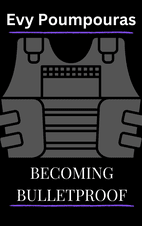
Evy Poumpouras's Becoming Bulletproof translates her Secret Service training into practical strategies for building mental resilience and situational awareness, empowering professionals and individuals to confidently navigate high-pressure situations and personal challenges.
Feature
Insta.Page
Blinkist
Shortform
Summary Depth
Full Chapter-by-Chapter
15-min overview
Section-by-section guides
Audio Narration
✓
✓
✓
Visual Mindmaps
✓
✕
✕
AI Q&A
✓
✕
✕
Quizzes
✓
✕
✕
PDF Downloads
✓
✕
✓
Price
$59.99/yr
$146/yr (PRO)
$199/yr
*Competitor data last verified February 2026.
About the Author
Evy Poumpouras
Evy Poumpouras is a former Secret Service Special Agent and national media contributor renowned for her expertise in security, resilience, and interpersonal communication. Drawing from her distinguished career protecting U.S. presidents, she translates high-stakes strategies into practical wisdom for everyday life. Poumpouras is the author of the critically acclaimed book "Becoming Bulletproof," which empowers readers to protect themselves physically, mentally, and emotionally. A sought-after speaker and co-host of the "Stay Dangerous" podcast, she is a leading voice on personal safety and empowerment. Her published works are available for purchase on Amazon.
1 Page Summary
"Becoming Bulletproof" by Evy Poumpouras is a compelling guide to developing resilience, confidence, and mental toughness, drawing from the author's extensive experience as a former Secret Service agent. Poumpouras shares practical strategies for navigating high-pressure situations, emphasizing the importance of mindset, situational awareness, and emotional control. The book blends personal anecdotes from her time protecting U.S. presidents with actionable advice, offering readers tools to overcome fear, build trust, and make decisive choices under stress.
Rooted in Poumpouras' background in law enforcement and counterterrorism, the book provides historical context by referencing real-world events, such as 9/11, to illustrate the principles of survival and adaptability. She underscores the value of preparation, both mentally and physically, and highlights how understanding human behavior can be a powerful asset in both personal and professional settings. Poumpouras also addresses the psychological aspects of resilience, teaching readers how to reframe challenges and harness adversity as a catalyst for growth.
The lasting impact of "Becoming Bulletproof" lies in its universal applicability. Poumpouras' insights transcend her Secret Service career, offering lessons that resonate with anyone seeking to strengthen their mental fortitude and navigate life's uncertainties. By combining her unique expertise with relatable advice, the book empowers readers to cultivate a "bulletproof" mindset, enabling them to face challenges with confidence and emerge stronger on the other side.
Humans are born with two innate fears: falling and loud noises. Studies show infants instinctively avoid visual cliffs and react to sudden sounds, hardwired survival mechanisms. All other fears—like sharks, plane crashes, or societal threats—are learned through upbringing, culture, or media. Poumpouras highlights how sensationalized news skews our perception of risk (e.g., school shootings are statistically rare but feel omnipresent). She challenges readers to confront irrational fears by assessing their actual likelihood versus perceived danger.
Fear in Action: A Home Invasion Story
A personal anecdote reveals how fear manifests differently in individuals. When teenage Poumpouras and her mother discover a burglar, her mother freezes, while Poumpouras fights, chasing the intruder. This illustrates the F3 response:
Flight: Evading danger (her mother’s instinct to flee).
Freeze: Paralysis from overwhelm.
The story underscores that no single response is “correct,” but self-awareness of your default F3 mode is critical. Poumpouras admits her Fight reflex isn’t always wise—like charging into danger instead of calling police—and urges readers to adapt their reactions through practice.
The Biology of Panic
Under stress, the sympathetic nervous system (SNS) floods the body with adrenaline, sharpening focus and physical readiness. However, unchecked, this becomes panic: racing heart, tunnel vision, and impaired reasoning. The parasympathetic nervous system (PSNS) counterbalances this, restoring calm. Poumpouras emphasizes that mastering fear isn’t about eliminating it but controlling the SNS-PSNS seesaw to avoid panic’s grip.
Societal Fears Through the Decades
The chapter traces how cultural fears evolve—from 1950s communism to modern mass shootings—and how media amplifies rare, dramatic threats. A 2018 study reveals 50% of teens fear school shootings despite 1-in-614-million odds, compared to higher risks like car accidents (1-in-102 lifetime odds). Poumpouras argues that fear often stems from lack of control (e.g., plane crashes feel scarier than driving) and urges logical risk assessment.
Key Takeaways
Fear ≠ Panic: Fear is a survival tool; panic clouds judgment.
Know Your F3: Identify whether you default to Fight, Flight, or Freeze—then train to override it when necessary.
Innate vs. Learned: Recognize which fears are primal (falling, loud noises) and which are culturally conditioned.
Media Distorts Risk: Sensationalism makes rare threats feel imminent. Use data to recalibrate your fears.
Control the Narrative: Practice emotional regulation to stay calm under pressure—panic kills faster than the threat itself.
Key concepts: Chapter 1: How We Fear
1. Chapter 1: How We Fear
The Science of Fear
Humans are born with two innate fears: falling and loud noises.
All other fears are learned through upbringing, culture, or media.
Sensationalized news skews perception of risk (e.g., school shootings).
Confront irrational fears by assessing actual likelihood vs. perceived danger.
Fear in Action: A Home Invasion Story
Fear manifests differently in individuals (Fight, Flight, Freeze).
No single F3 response is 'correct'—self-awareness is critical.
Adapting reactions through practice is key to managing fear.
The Biology of Panic
Sympathetic nervous system (SNS) triggers adrenaline under stress.
Unchecked SNS activation leads to panic (racing heart, tunnel vision).
Parasympathetic nervous system (PSNS) restores calm.
Mastering fear means controlling the SNS-PSNS balance.
Societal Fears Through the Decades
Cultural fears evolve (e.g., 1950s communism to modern mass shootings).
Media amplifies rare, dramatic threats over statistically higher risks.
Fear often stems from lack of control (e.g., plane crashes vs. driving).
💡 Try clicking the AI chat button to ask questions about this book!
Chapter 2: Harnessing Fear
Overview
Chapter 2: Harnessing Fear sweeps readers through a raw journey of transformation, where fear isn’t conquered—it’s weaponized. The narrative begins in the shadow of a Queens childhood steeped in survivalist dread, where the author’s immigrant parents wrapped their lives in cautionary rules. Yet beneath this suffocating safety net simmered a girl obsessed with Greek warriors, torn between her “hoped-for self” (bold, heroic) and “feared self” (shackled by anxiety). This friction sparks her rebellion: ditching a “filtered” existence predestined by family fears for the chaos of the NYPD Academy.
Here, humiliation and grit collide. Drill instructors strip recruits bare—yelling over mascara, punishing failures as a pack—forcing her to channel terror of weakness into furious resolve. She runs until her legs scream, claws through collective shame, and discovers a brutal truth: regret avoidance burns hotter than momentary pain. Action-based scars fade; inaction’s “what-ifs” fester. So when the Secret Service beckons, stability tempts her—until the specter of lifelong regret shoves her into another fire.
At the Secret Service academy, the crucible intensifies. She sparred with men twice her size, demanded to be thrown again, and wore bruises like badges. Academic stumbles? Met with sleepless nights and dogged focus. Every challenge—physical or mental—became a chance to redefine herself: not as a woman in a man’s world, but as a force of mental endurance.
The chapter’s heartbeat pulses in its contradictions: fear as both chain and catalyst, pain as teacher, struggle as identity. It’s not about innate talent or luck, but the relentless choice to lean into discomfort—to let each fall, failure, or doubt carve resilience into bone. By the end, the message crystallizes: life’s sharpest edges—the ones that cut deepest—are the very tools that sculpt us into who we’re meant to become.
Growing Up in Fear
The author paints a visceral portrait of her childhood in Queens, where fear was a constant companion. Her Greek immigrant parents, scarred by muggings, burglaries, and violence, instilled hypervigilance in their children. The family’s survivalist mindset—avoiding public transit, socializing, or even trick-or-treating—clashed with her childhood fantasies of becoming a hero like the Greek warriors she idolized. This tension between her “hoped-for self” (strong, courageous) and “feared self” (powerless, constrained) became a defining conflict.
Defying Fear Through Action
Rebelling against her parents’ vision of a “safe” life as a homemaker, the author applied to the NYPD Academy at 23. Her family’s disapproval escalated to silence and shame, yet their fear only solidified her resolve. She frames this choice as rejecting a “filtered” existence—a life limited by others’ anxieties—and embracing the discomfort required to align with her true self.
NYPD Academy: Trial by Fire
The Academy’s brutal training regimen stripped recruits of ego. The author describes humiliations like being screamed at for wearing mascara, collapsing during runs, and enduring collective punishment for individual failures. Instructors weaponized shame, warning that weakness could get fellow officers killed. Yet these trials became a crucible: she channeled fear of failure into relentless runs and mental discipline, vowing never to quit.
The Psychology of Regret
Here, the narrative pivots to a universal theme: regret’s dual nature. Action-based regrets (mistakes made) fade over time, while inaction-based regrets (paths untaken) linger as “what-ifs.” The author argues that fear of lifelong regret—not just fear itself—propels growth. For her, enduring physical pain in training paled in comparison to the imagined agony of surrendering to doubt.
Embracing the Next Challenge
Five months into the Academy, a crossroads emerges: an offer to join the Secret Service. Despite newfound stability in the NYPD, she confronts the “inaction regret” dilemma. A mentor’s advice—“If you don’t like it, we’ll take you back”—pushes her to leap. The section closes with her arrival at Secret Service training, underscoring the agency’s exclusivity (statistically harder to enter than Harvard) and her determination to transcend self-doubt once more. Key Takeaways
Fear can be harnessed as fuel when aligned with a vision of your “hoped-for self.”
Regret avoidance often outweighs short-term discomfort: “Muscles recover. Regret? That shit can be painful for a lifetime.”
Growth requires defying external limitations—whether familial, cultural, or self-imposed.
Resilience is iterative: Each challenge (NYPD, Secret Service) builds mental “muscle” for the next.
Inaction leaves room for endless “what-ifs,” while action—even failure—creates closure and growth.
Physical Training and Determination
The author recounts her grueling experience training at the Secret Service academy in Glynco, where she faced relentless physical challenges in a male-dominated environment. Determined to prove herself as an equal, she intentionally partnered with Matt, a former Army Ranger twice her size, during sparring sessions. Despite being thrown to the ground repeatedly—leaving her battered and sore—she refused to back down, demanding, “Again. Throw me again.” Her willingness to endure pain and train harder than her peers became a defining trait, driven by the mantra: “I wanted to be seen not as a female Special Agent, but as a Special Agent. Period.”
Academic Challenges and Resilience
Beyond physical demands, the academic curriculum tested her resolve. After failing her first law exam, she doubled down on studying, sacrificing downtime to master legal frameworks, investigative protocols, and federal jurisdiction. While classmates took breaks, she prioritized sleep-deprived study sessions, determined not to squander her opportunity. This discipline mirrored her physical training—relentless focus on improvement, no matter the cost.
The Role of Struggle in Success
The author reflects on her 12-year career as a Secret Service agent, crediting her growth not to raw talent but to embracing struggle. She argues that true excellence stems from *“mental endurance”—*the choice to confront challenges rather than avoid them. For her, enduring pain, setbacks, and self-doubt wasn’t just about survival; it was about proving that perseverance, not innate ability, shapes success.
Key Takeaways
Embrace discomfort: Growth happens when you voluntarily step into challenges that test your limits.
Mental endurance > physical strength: Sustained effort and resilience matter more than natural talent.
Own your narrative: Define yourself by your actions, not external labels or expectations.
Struggle as fuel: Adversity isn’t a barrier—it’s the crucible that forges capability.
Key concepts: Chapter 2: Harnessing Fear
2. Chapter 2: Harnessing Fear
Growing Up in Fear
Immigrant parents instilled hypervigilance due to past trauma
Clash between 'hoped-for self' (heroic) and 'feared self' (constrained)
Childhood fantasies of Greek warriors contrasted with restrictive upbringing
Defying Fear Through Action
Rebelled against family's vision of a 'safe' life by joining NYPD
Rejected a 'filtered existence' limited by others' fears
Used family's disapproval as fuel for determination
NYPD Academy: Trial by Fire
Brutal training stripped recruits of ego through humiliation
Channeled fear of failure into relentless physical and mental discipline
Collective punishment reinforced team accountability
Psychology of Regret
Action-based regrets fade, inaction-based regrets linger as 'what-ifs'
Fear of lifelong regret outweighs short-term discomfort
Regret avoidance becomes a primary motivator for growth
Embracing the Next Challenge
Left NYPD stability for Secret Service opportunity
Mentor's safety net ('we'll take you back') enabled risk-taking
Secret Service training framed as statistically harder than Harvard
Physical Training and Determination
Intentionally sought toughest sparring partners to prove equality
Endured repeated physical punishment with 'Again. Throw me again' mindset
Focused on being seen as 'Special Agent' rather than 'female Special Agent'
Key Takeaways
Fear can be weaponized when aligned with aspirational identity
Resilience is built iteratively through successive challenges
External limitations (family, culture, self-doubt) must be actively defied
Inaction creates permanent 'what-ifs'; action creates closure and growth
Academic Challenges and Resilience
Failing her first law exam became a catalyst for doubling down on rigorous study habits.
Sacrificed downtime to master legal frameworks, investigative protocols, and federal jurisdiction.
Prioritized sleep-deprived study sessions over breaks, mirroring her physical training discipline.
Demonstrated relentless focus on improvement, treating setbacks as opportunities to grow.
The Role of Struggle in Success
Credited her 12-year Secret Service career growth to embracing struggle, not innate talent.
Defined excellence as stemming from 'mental endurance'—choosing to confront challenges.
Argued that perseverance, not natural ability, is the true driver of success.
Viewed adversity as a crucible that forges capability, not a barrier to overcome.
Key Takeaways on Harnessing Fear
Embrace discomfort: Voluntary challenges test limits and catalyze growth.
Mental endurance outweighs physical strength or raw talent in achieving success.
Define yourself by actions and resilience, not external labels or expectations.
Use struggle as fuel—adversity is the crucible that builds lasting capability.
⚡ You're 2 chapters in and clearly committed to learning
Why stop now? Finish this book today and explore our entire library. Try it free for 7 days.
Chapter 3: Mental Armor
Overview
Chapter 3: Mental Armor weaves together the art of psychological self-defense with strategic foresight, framing resilience as both a shield and a filter. At its core, the chapter argues that mental armor isn’t about building impenetrable walls but cultivating agency—the power to choose what influences you. Drawing parallels between Holocaust survivors’ use of mental sovereignty and modern high-stress professions, it reveals how guarding your inner world allows bold action without being derailed by external noise.
The concept of the hormetic effect bridges physical and mental resilience: just as muscles grow through microtears, facing controlled stress—like simulated crises in Secret Service training or “stress vaccinations” such as public speaking—strengthens emotional grit. This philosophy extends to confronting fear early, likening unchecked dread to a weed. By tackling small fears head-on—cold showers after frostbite trauma or solo travel to combat loneliness—the author shows how incremental challenges reframe vulnerability as empowerment.
Yet resilience isn’t just about endurance; it’s also knowing when to retreat. Strategic avoidance—avoiding toxic “hot zones,” physically removing oneself from volatile situations, or walking away from fruitless conflicts—emerges as a survival tactic. Here, the chapter introduces strategic non-engagement, urging readers to “not catch the ball” thrown by provocations. By filtering interactions through questions like “Does this align with my priorities?” energy is preserved for what truly matters, mirroring politicians who sidestep traps to control narratives.
Ultimately, the chapter ties these threads to long-term objectives, contrasting impulsive reactions with disciplined focus. Whether interviewing predators without retaliation or sacrificing momentary satisfaction for career goals, the Gaming Framework underscores a truth: victory often lies in silence, patience, and redirecting energy toward strategic wins. By auditing environments, reframing solitude, and aligning daily choices with overarching missions, mental armor becomes less about battling storms and more about navigating them with intention.
The Power of a Mental Shield
Mental armor acts as a psychological barrier against external toxicity. The author compares it to bubble wrap: effective protection requires intentional layering. He recounts how Holocaust survivors used mental sovereignty (guarding their inner world) and dark humor to endure unimaginable suffering. Similarly, in high-stress professions like law enforcement, shielding oneself from verbal abuse or trauma is non-negotiable. The key takeaway? A mental shield isn’t about isolation—it’s about agency. You decide what to let in and what to deflect, enabling boldness without fear of criticism derailing you.
Building Resilience Through Stress (Hormetic Effect)
The Hormetic Effect—strengthening via controlled stress—is central to mental armor. Physically, muscles grow through microtears; mentally, resilience comes from incremental challenges. The author describes Secret Service training, where agents practiced high-stakes scenarios (e.g., escaping a burning building while protecting the president) to build tolerance for chaos. For civilians, this translates to “stress vaccinations”:
Public speaking: Start with low-stakes environments (e.g., acting classes).
Job interviews: Treat unwanted applications as rehearsals.
The process involves five steps: Expose (introduce manageable stress), Experience (observe your reactions), Adjust (refine your response), Overcome (focus on one improvement), and Repeat (build consistency).
Confronting Fear Early
Fear grows like a weed if ignored. The author shares his visceral fear of cold, stemming from frostbite during a presidential inauguration. To combat it, he deliberately exposes himself to cold showers, winter runs, and even ice surfing. The lesson? Kill fear while it’s small:
Notice the “seed” of fear (e.g., dread of loneliness).
Use hormesis: Gradually face it (e.g., solo dining, solo travel).
Reframe solitude as empowerment, not punishment.
Strategic Avoidance: Hot Zones and Mobility
Not all battles are worth fighting:
Avoid Hot Zones: Identify toxic people or environments using self-assessment questions (Do I feel worse after interacting with them?).
Get Off the X: Physically remove yourself from volatile situations. The author likens this to Secret Service tactics—never stay static during a threat.
Walk Away Courageously: Disengaging isn’t weakness; it’s strategic. Society glorifies confrontation, but survival often depends on knowing when to exit.
Key Takeaways
Mental armor is active, not passive: It’s a filter, not a wall. You choose what impacts you.
Stress is a tool: Controlled exposure (hormesis) builds resilience—start small, iterate, and repeat.
Fear demands early action: Confront it before it metastasizes, using incremental challenges.
Not all environments are safe: Audit your relationships and spaces; exit toxic zones tactically.
Mobility saves lives: Physically or emotionally, staying stagnant in harm’s way is never wise.
Strategic Non-Engagement
The chapter emphasizes that not every provocation deserves a response. Reacting to every conflict drains energy and reinforces predictability, making you vulnerable to manipulation. Instead, preserving mental clarity involves letting emotions pass before deciding whether to engage. The “Don’t Catch the Ball” analogy illustrates this: just because someone throws a challenge (like an inflammatory email) doesn’t mean you must catch it. Ignoring irrational or emotionally charged interactions deflates the aggressor’s power and protects your focus.
To determine when to respond, ask:
Is this urgent or necessary?
Will my reply invite drama?
Am I being baited?
Does this align with my priorities?
This strategy extends beyond arguments—it applies to time management. Like deleting spam, filtering out trivial interactions preserves energy for what truly matters. Politicians exemplify this by sidestepping loaded questions; they control the narrative by refusing to play others’ games.
Prioritizing Long-Term Objectives
The “long game” requires sacrificing fleeting emotional satisfaction for strategic wins. The author shares a visceral example from their career: interviewing child predators without reacting violently. Punching a suspect might feel justified (a “short game” tactic), but it jeopardizes the mission—securing a confession and protecting future victims.
The Gaming Framework contrasts outcomes:
Short Game (e.g., impulsive retaliation): Immediate gratification but long-term consequences (career loss, justice denied).
Long Game (e.g., disciplined focus): Delayed rewards (confession, justice, professional integrity).
Applying this framework involves:
Defining your ultimate goal (e.g., career advancement, financial stability).
Aligning daily decisions (short-game tactics) with that goal.
Pivoting when impulses threaten progress.
Regularly ask: “Will this action bring me closer to my goal?” Writing down objectives and tactics helps curb emotional reactions and reinforces logical decision-making.
Key Takeaways
Silence is strategic: Not reacting disarms provocations and conserves energy.
Filter interactions: Treat time and attention as finite resources—allocate them wisely.
Play the long game: Prioritize outcomes over momentary satisfaction. Use the Gaming Framework to align actions with goals.
Control the narrative: Avoid others’ agendas by refusing to engage on their terms.
Key concepts: Chapter 3: Mental Armor
3. Chapter 3: Mental Armor
Mental Armor as Agency
Psychological self-defense is about filtering, not isolation
Holocaust survivors used mental sovereignty and dark humor to endure
High-stress professions require shielding from external toxicity
Agency: Choosing what influences you enables bold action
Hormetic Effect: Resilience Through Stress
Controlled stress strengthens mental resilience (like microtears in muscles)
Secret Service trains with simulated crises to build chaos tolerance
Stress vaccinations (e.g., public speaking, mock job interviews)
Define ultimate goals and align daily decisions to achieve them.
Pivot when impulses threaten progress toward long-term outcomes.
Practical Application of the Gaming Framework
Regularly evaluate actions with: 'Will this bring me closer to my goal?'
Write down objectives and tactics to reinforce logical decision-making.
Use the framework to curb emotional reactions in high-stakes scenarios.
Prioritize delayed rewards (e.g., career integrity) over instant gratification.
Adapt tactics when they conflict with long-term mission success.
Core Principles of Mental Armor
Silence as a strategic tool to disarm provocations and conserve energy.
Filter interactions rigorously—time and attention are finite resources.
Play the long game: Outcomes trump momentary satisfaction.
Control narratives by refusing to engage on others’ terms.
Align actions with goals using the Gaming Framework for consistency.
Chapter 4: Mental Resilience
Overview
Chapter 4: Mental Resilience explores how to thrive in adversity by blending unflinching honesty with purposeful action. It begins with the Stockdale Paradox, where confronting harsh realities—like Admiral Stockdale’s imprisonment or a hiker trapped in a snowstorm—becomes the foundation of resilience. This isn’t about wishful thinking but balancing gritty truth with stubborn hope. The chapter warns against misdiagnosing problems, like mistaking a coworker’s fear for hostility, and urges readers to reframe challenges by seeking neutral perspectives to uncover root causes.
Central to resilience is shifting from a problem mindset—wallowing in blame—to a solution mindset. This involves setting emotional expiration dates, accepting situations without finger-pointing, and brainstorming even absurd fixes, like reimagining juvenile recidivism solutions. Pain gains meaning when tied to purpose, whether through post-9/11 volunteer work or Viktor Frankl’s philosophy: suffering becomes bearable when it serves others, releasing oxytocin and dulling despair.
Attitudes shape outcomes, too. Powerful statements like “Look what I became” embody ownership, contrasting sharply with victimhood. Secret Service agents exemplify this by owning mistakes, while students who blame professors for failures surrender agency. When stuck, third-person solutions and disrupters—like advising yourself as a friend or escaping stress through travel—create emotional distance, curbing impulsive reactions.
Practical tactics tie it all together: breaking crises into micro-goals, regulating emotions through mindfulness, and reframing disasters as temporary tests. Resilience isn’t avoiding pain but navigating it with clear eyes, creativity, and the conviction that even the darkest storms can be weathered—one deliberate step at a time.
The Stockdale Paradox: Truth Over Optimism
Admiral Stockdale’s survival story underscores the danger of blind optimism. While imprisoned in Vietnam, he observed that optimists who clung to unrealistic hopes often died of despair. The lesson? Face reality head-on—acknowledge challenges without sugarcoating them. The author parallels this with her Secret Service career: optimism about security plans coexisted with sober acceptance of potential threats. Resilience begins by saying, “This is happening. Now what?” instead of resisting reality.
Solving the Right Problem
A common pitfall is misdiagnosing issues. A workplace anecdote illustrates this: a young employee assumed her coworker’s hostility was personal, but the real issue was his fear of being replaced. By reframing the problem (shifting from “How do I make him nicer?” to “How do I ease his insecurity?”), she unlocked a solution. The takeaway? Emotional reactions often cloud judgment. Seeking external perspectives—especially from neutral parties—can reveal hidden root causes.
Problem Mindset vs. Solution Mindset
When crises hit, people often fixate on blame or frustration (e.g., venting about a lazy coworker). This “problem mindset” drains mental bandwidth. Instead, the chapter advocates a three-step shift to solutions:
Set an expiration date: Allow limited time to process emotions (e.g., 24 hours to wallow).
Acceptance: Own the situation without assigning blame.
Prototype thinking: Brainstorm all solutions, even absurd ones, to spark creativity (demonstrated via a classroom exercise on reducing juvenile recidivism).
Finding Meaning in Suffering
The author’s post-9/11 volunteer work and Viktor Frankl’s Holocaust survival philosophy (Man’s Search for Meaning) highlight a critical resilience tool: purpose. Helping others releases oxytocin, reduces depression, and reframes pain as purposeful. The message? Even in tragedy, ask: “How can this hardship serve me or others?” Action—not passivity—fuels recovery.
Power vs. Powerless Attitudes
Two sentences reveal opposing mindsets:
Powerful: “Look what I became” (ownership, agency).
Powerless: “Look what became of me” (victimhood).
The Secret Service’s culture of accountability exemplifies the former—agents owned mistakes and solutions. Similarly, students who blame professors for failing exams relinquish control. Resilience requires reframing setbacks as solvable challenges, not immutable verdicts.
Third-Person Solutions and Disrupters
When stuck, distance yourself:
Third-person solution: Advise yourself as you would a friend (e.g., “Leave the cheating partner”).
Disrupters: Break emotional loops by changing your environment:
Place: Physically remove yourself from stressors.
Activity: Engage in absorbing tasks (e.g., martial arts, travel).
Time: Impose a 24-hour rule before reacting to provocations.
These tools prevent impulsive decisions and create space for clarity.
The Stockdale Paradox in Action
The chapter dives into the Stockdale Paradox, a concept popularized by Jim Collins, which emphasizes the balance between confronting harsh realities and maintaining unwavering hope. Named after Admiral James Stockdale, a POW survivor, the paradox teaches that resilience isn’t about blind optimism but about acknowledging challenges while staying committed to long-term success.
Balancing Realism and Hope
The text illustrates this with an example of a hiker, Sam, stranded in a sudden snowstorm. Instead of panicking or denying the severity of his situation, Sam:
Acknowledges the reality: “I’m trapped, and rescue might take days.”
Clings to purpose: “I will survive this by staying calm and resourceful.”
This duality prevents despair without sugarcoating the stakes—a hallmark of mental resilience.
Practical Strategies for Resilience
Sam’s actions align with tactics for applying the Stockdale Paradox:
Micro-goal setting: Breaking down survival into manageable tasks (e.g., rationing supplies, building shelter).
Emotional regulation: Using mindfulness to avoid spiraling into fear.
Adaptive storytelling: Reframing the crisis as a “test of endurance” rather than a catastrophe.
Key Takeaways
Resilience requires honesty about challenges paired with relentless focus on solutions.
Small, deliberate actions build momentum during adversity.
Reframing crises as temporary obstacles—not insurmountable failures—fuels perseverance.
Key concepts: Chapter 4: Mental Resilience
4. Chapter 4: Mental Resilience
The Stockdale Paradox
Balance confronting harsh realities with unwavering hope
Blind optimism can lead to despair (e.g., POWs, stranded hikers)
Resilience starts with acknowledging reality: 'This is happening. Now what?'
Solving the Right Problem
Misdiagnosing issues clouds solutions (e.g., mistaking fear for hostility)
Reframe challenges by seeking neutral perspectives
Identify root causes, not surface-level reactions
Problem vs. Solution Mindset
Problem mindset: Fixates on blame/frustration (e.g., venting)
Solution mindset: 1) Set emotional expiration dates, 2) Accept without blame, 3) Brainstorm absurd fixes
Example: Classroom exercise on juvenile recidivism solutions
Purpose in Suffering
Link pain to meaning (e.g., post-9/11 volunteering, Frankl’s Holocaust survival)
Helping others releases oxytocin, dulls despair
Ask: 'How can this hardship serve me or others?'
Powerful vs. Powerless Attitudes
Powerful: 'Look what I became' (ownership, agency)
Powerless: 'Look what became of me' (victimhood)
Examples: Secret Service accountability vs. students blaming professors