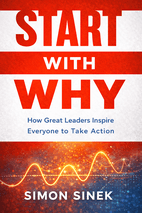
Simon Sinek's Start with Why 15th Anniversary Edition introduces the Golden Circle model to explain how inspiring leaders and organizations communicate from a core purpose. It is for entrepreneurs, executives, and anyone seeking to build loyal followings and authentic culture.
Feature
Insta.Page
Blinkist
Shortform
Summary Depth
Full Chapter-by-Chapter
15-min overview
Detailed analysis
Audio Narration
✓ (AI narration)
✓
✓
Visual Mindmaps
✓
✕
✕
AI Q&A
✓ Voice AI
✕
✕
Quizzes
✓
✕
✕
PDF Downloads
✓
✕
✓
Price
$59.99/yr
$146/yr (PRO)
$199/yr
*Competitor data last verified February 2026.
About the Author
Simon Sinek
Simon Sinek is a British-American author and motivational speaker best known for his concept of "The Golden Circle" and his book *Start With Why*, which explores how leaders inspire action. His expertise lies in leadership, organizational culture, and the psychology of human motivation, drawing from his background in advertising and cultural anthropology.
1 Page Summary
Simon Sinek's Start with Why argues that the most inspiring leaders and organizations think, act, and communicate from the inside out. He introduces the concept of "The Golden Circle," a simple model with three concentric rings: Why at the center, surrounded by How, and then What. While most organizations know what they do and how they do it, Sinek posits that truly influential ones start by defining their core purpose, cause, or belief—their why. This "why" is not about making a profit (which is a result) but rather the fundamental reason for existence that inspires action and fosters loyalty. The book uses compelling examples, most famously Apple, to illustrate how communicating from the "why" creates a powerful connection with customers and employees who share the same beliefs.
The book's premise is rooted in biology and historical patterns of human behavior. Sinek explains that the "why" corresponds to the limbic system, the part of the brain responsible for feelings, trust, and decision-making. This explains why purpose-driven messaging resonates on a deeper, more intuitive level than features-and-benefits arguments, which appeal to the neocortex. Historically, Sinek examines leaders like Martin Luther King Jr. and the Wright brothers, who succeeded not because they had the best resources, but because they championed a clear and compelling "why" that attracted followers and overcame significant obstacles. This framework provides a lens to understand why some movements and companies achieve disproportionate influence and endurance.
The lasting impact of Start with Why is its transformation of leadership and marketing discourse. It popularized the primacy of purpose in business strategy, shifting focus from purely transactional relationships to building loyal "tribes." The book's concepts have been widely adopted by entrepreneurs, executives, and marketers seeking to differentiate their brands and cultivate authentic organizational culture. The 15th Anniversary Edition underscores its enduring relevance, cementing "finding your why" as a fundamental step for any individual or group aiming to inspire and lead. Sinek's work continues to serve as a foundational text for understanding how trust is built and movements are sparked.
Simon Sinek opens this seminal work by inviting us into a world where inspiration isn't a rare gift but a learnable pattern. He positions the book not as a fix for what's broken, but as a guide to amplify what already works—the natural ability some have to inspire action. Through vivid storytelling and clear contrasts, he introduces the core premise: truly influential leaders and organizations think, act, and communicate from the inside out, beginning with a clear sense of Why. This introduction sets the stage for understanding how this approach can transform leadership, business, and even societal change.
The Pattern of Inspiration
At the heart of the chapter is the observation that a distinct pattern separates those who merely lead from those who inspire. Sinek argues that inspiring entities—whether individuals like Martin Luther King Jr. or companies like Apple—all operate from a deep-rooted sense of purpose. This isn't about manipulation or external incentives; it's about communicating a belief that resonates on a personal level, creating followers who act because they want to, not because they have to. The pattern is consistent across all spheres, suggesting it's a fundamental principle of human behavior.
Contrasting Examples: The Wright Brothers and Langley
To illustrate this pattern, Sinek presents a compelling historical juxtaposition. Samuel Pierpont Langley, with his elite credentials, powerful connections, and substantial funding, seemed destined to achieve manned flight first. In contrast, Wilbur and Orville Wright had no money, no formal advanced education, and only a dedicated team in their bicycle shop. Yet, it was the Wright brothers who succeeded. The difference, Sinek explains, wasn't in capability or resources but in approach. The Wright brothers' deep Why—their passionate belief in the possibility of flight—inspired their team and drove their innovation, while Langley was primarily motivated by the reward of success and recognition.
Modern Revolutionaries: Apple's Founding
The narrative then shifts to a modern example. During the personal computer revolution, many players had smart ideas and business acumen. However, Steve Jobs and Steve Wozniak founded Apple with a clear sense of purpose: to challenge the status quo and empower the individual. Wozniak's vision was to level the playing field, and Jobs's drive was to "put a dent in the world." This shared Why allowed Apple to inspire loyalty and repeat innovation across multiple industries, not just by selling products but by championing a cause. Their success wasn't due to being the only ones with a good product, but the ones who could consistently inspire.
The Movement Leader: Martin Luther King Jr.
Sinek further solidifies his argument with the example of Dr. Martin Luther King Jr. In the civil rights movement, many shared the goal of equality and were charismatic speakers. But Dr. King had a unique ability to articulate a dream that inspired a quarter of a million people from diverse backgrounds to gather peacefully in Washington. He provided a clear sense of Why—a belief in a better future for all—that transformed personal conviction into a collective movement. His leadership demonstrates how a clear purpose can mobilize masses for profound change.
Motivation vs. Inspiration
A key distinction drawn in this chapter is between motivating and inspiring. Motivation, Sinek notes, is often tied to external factors like incentives or threats—it can drive behavior, as seen with General Motors' sales dominance for decades. Inspiration, however, comes from within. Inspired action is deeply personal; people follow because the cause aligns with their own beliefs, often enduring inconvenience or paying a premium. This distinction explains why inspired organizations enjoy disproportionate loyalty, innovation, and long-term sustainability.
The Broader Vision and Call to Action
Sinek concludes the introduction by painting a hopeful vision of a world where the ability to inspire is widespread. He links inspired leadership to higher job satisfaction, which in turn fosters more productive, creative, and happier societies. The chapter ends with a direct challenge to the reader: to adopt a new mindset. The book's goal is not to prescribe specific actions but to explore the cause of action. By starting with Why, we can all learn to lead and build organizations grounded in trust and loyalty.
Key Takeaways
True leadership is about inspiration, not just motivation. Inspired followers act from a personal sense of purpose, not external rewards.
A consistent, learnable pattern separates inspiring leaders and organizations: they all think, act, and communicate from the inside out, beginning with a clear Why.
Historical and modern examples—from the Wright brothers to Apple to Martin Luther King Jr.—demonstrate that success driven by purpose outperforms success driven by resources or incentives alone.
Embracing this "Start with Why" philosophy has the potential to transform not only businesses but also employee well-being and societal health, creating a world where the majority love their work.
Key concepts: Introduction: Why Start with Why?
1. Introduction: Why Start with Why?
The Pattern of Inspiration
Inspiring leaders and organizations operate from a deep-rooted sense of purpose (Why)
The pattern is consistent across all spheres and is a fundamental principle of human behavior
Inspiration creates followers who act because they want to, not because they have to
This approach contrasts with manipulation or external incentives
Historical Contrast: Wright Brothers vs. Langley
Wright brothers succeeded despite fewer resources due to passionate belief in flight (Why)
Langley failed despite elite credentials and funding due to motivation by reward and recognition
Demonstrates that purpose-driven success outperforms resource-driven efforts
The difference was in approach, not capability
Modern Example: Apple's Founding
Apple succeeded by challenging status quo and empowering individuals (clear Why)
Shared purpose between Jobs and Wozniak inspired loyalty and repeat innovation
Success came from championing a cause, not just selling products
Demonstrates how purpose drives innovation across multiple industries
Movement Leadership: Martin Luther King Jr.
Dr. King's ability to articulate a dream inspired diverse masses to gather peacefully
Transformed personal conviction into collective movement through clear Why
Demonstrates how clear purpose mobilizes people for profound change
Shows the power of articulating belief in a better future
Motivation vs. Inspiration
Motivation relies on external factors like incentives or threats
Inspiration comes from within and aligns with personal beliefs
Inspired organizations enjoy disproportionate loyalty and long-term sustainability
Inspired action is deeply personal and enduring
Broader Vision and Call to Action
Inspired leadership leads to higher job satisfaction and more productive societies
Book challenges readers to adopt new mindset focused on cause of action
Goal is to explore the cause of action, not prescribe specific actions
Starting with Why creates organizations grounded in trust and loyalty
If you like this summary, you probably also like these summaries...
💡 Try clicking the AI chat button to ask questions about this book!
Chapter 2: Chapter 1: We Assume We Know
Overview
This chapter opens by establishing a core human tendency that shapes our decisions, actions, and understanding of the world: we operate based on assumptions, often believing we know more than we actually do. Using a striking historical anecdote and a powerful business metaphor, it argues that this reliance on incomplete or incorrect perceived truths is a fundamental flaw in our decision-making processes, whether in life, leadership, or building organizations. The chapter sets the stage for the book's central premise by illustrating the limitations of simply gathering more data and the superior power of starting from a clear, intentional foundation.
The Power and Peril of Assumptions
The chapter begins with a compelling riddle describing a leader's inauguration: a 43-year-old man, sworn in on a cold January day with a famed war-general predecessor, celebrating with long parades. Most listeners confidently assume it's John F. Kennedy—until the reveal of the date, January 30, 1933, identifies the figure as Adolf Hitler. This demonstrates how a single piece of missing information (the date) can completely invert our understanding. The author extends this idea to historical beliefs, like the pervasive idea that the world was flat, which stifled exploration until the correction of that assumption unleashed a new era of globalization and discovery. The point is that our behaviors and decisions are driven by these "perceived truths," which are not always accurate.
The Limits of Data-Driven Decisions
The narrative then examines how this plays out in our pursuit of goals and success. We gather data through research, advice, and experience to make "educated decisions," yet outcomes can still be wrong, sometimes catastrophically so. Conversely, when things go right, we often misattribute the cause (like an investor crediting skill for wins but blaming luck for losses). The chapter posits that simply seeking more information is an insufficient solution, especially if the entire process is built on a flawed initial assumption. It acknowledges the dance between rational analysis and gut instinct but concludes that neither method reliably produces repeatable, desirable outcomes on its own.
The Car Door Metaphor: Manipulation vs. Design
A pivotal story clarifies the alternative. American car executives visiting a Japanese plant note that, unlike in U.S. factories, no worker uses a rubber mallet to tap car doors into perfect alignment. When asked how they ensure a perfect fit, the Japanese guides reply, "We make sure it fits when we design it." The Americans were focused on correcting the problem (hammering the door) at the end of the process, while the Japanese engineered the desired outcome from the very beginning. The author presents this as a central metaphor for leadership and strategy: many organizations use short-term "mallets" (tactics, manipulations, pressure) to hammer results into place, while truly effective ones design systems and make decisions from the start that inherently yield the right outcome. The results may look similar in the short term, but only the latter approach creates structurally sound, sustainable, and repeatable long-term success.
Key concepts: Chapter 1: We Assume We Know
2. Chapter 1: We Assume We Know
The Power and Peril of Assumptions
The JFK/Hitler riddle demonstrates how a single missing piece of information can completely invert our understanding.
Historical beliefs like the 'flat Earth' assumption stifled exploration until corrected.
Our behaviors and decisions are driven by 'perceived truths' that are not always accurate.
We often operate with confidence based on incomplete or incorrect assumptions.
The Limits of Data-Driven Decisions
Gathering more data (research, advice, experience) does not guarantee correct outcomes.
We often misattribute causes for success and failure (e.g., skill vs. luck).
Building a process on a flawed initial assumption undermines even data-rich decisions.
Neither rational analysis nor gut instinct alone reliably produces repeatable, desirable outcomes.
The Car Door Metaphor: Manipulation vs. Design
U.S. factories used 'mallets' (corrective tactics) to hammer doors into alignment at the end.
Japanese plants designed the doors to fit perfectly from the start, eliminating the need for correction.
Many organizations rely on short-term 'mallets' (tactics, pressure) to force results.
True effectiveness comes from designing systems and decisions that inherently yield the desired outcome.
Only the design approach creates structurally sound, sustainable, and repeatable long-term success.
⚡ You're 2 chapters in and clearly committed to learning
Why stop now? Finish this book today and explore our entire library. Try it free for 7 days.
Chapter 3: Chapter 2: Carrots and Sticks
Overview
It begins by questioning the very premise of how most businesses think about success, suggesting that in a world of parity, fleeting advantages like price or features force leaders onto one of two fundamental paths: manipulation or inspiration. The chapter then unpacks the pervasive and often tempting toolkit of manipulations, from the short-term high of price drops and promotions to the primal pull of fear and the empty promise of aspirations. It explores the modern twist of social pressure through influencers and reveals how companies often chase novelty—mistaking minor feature updates for true, lasting change.
The discussion pivots by contrasting this with real innovation, using the stark difference between Motorola’s RAZR and Apple’s iPhone to illustrate how genuine change reshapes industries and power dynamics, rather than just offering a temporary sales bump. This leads to a crucial distinction: while manipulations are effective at driving transactions, they are utterly incapable of building loyalty. True loyalty, the kind that provides resilience in a crisis, comes from a different, more meaningful place.
The analysis reveals the heavy toll of a system built on carrots and sticks. For consumers, it creates paralyzing choice and anxiety; for corporations, it triggers an exhausting and costly arms race. This stress tax affects everyone’s well-being. Most dangerously, the short-term effectiveness of manipulations makes them addictive, trapping industries and leaders in a downward spiral where the pursuit of quick wins—as seen in the 2008 financial crisis—erodes long-term health and stability. The underlying message is clear: a strategy rooted solely in transaction is a path to failure, setting the stage for the alternative of building from a clear sense of purpose.
The Flawed Foundation of Business Decisions
The chapter opens by challenging a common business assumption: that customers choose a product based on superior quality, features, price, or service. In a market where competitors quickly match each other, these advantages are fleeting. The sobering conclusion is that most companies have no real understanding of why their customers are loyal or why their employees stay. This ignorance forces them to operate on flawed assumptions, leaving only two fundamental paths to influence behavior: manipulation or inspiration.
The Mechanics of Manipulation
Manipulation is presented as a common, often effective, and sometimes benign tactic. It's a tool we've all used, like a child promising friendship for candy. In business, when the core "why" is missing, companies disproportionately rely on a toolkit of manipulations to drive sales, loyalty, and decisions.
Price
Dropping prices is a highly effective, drug-like manipulation. It guarantees short-term sales but traps companies in a destructive cycle. As margins shrink, the pressure to cut costs or sell more intensifies, often leading to a race to the bottom that transforms products into mere commodities. While Walmart scaled this model, it came at a high cost to its reputation through various cost-cutting scandals. The central question becomes: how much are you willing to pay for the money you make?
Promotions
Using incentives like cash-back offers or "two-for-one" deals is a standard way to tip the scales when products are otherwise equal. However, as General Motors discovered, promotions can erode profit margins and create dependency—"No cash, no customers." The chapter introduces the industry concepts of "breakage" (profit from unused gift cards or vouchers) and "inertia" (profit from forgotten subscriptions). These are built-in manipulations that punish customer inaction, with companies like Fabletics exemplifying how difficult cancellation processes can turn promotions into profitable traps.
Fear
As the most powerful manipulation, fear bypasses logic by tapping into our survival instinct. In business, it manifests as the "safe choice" (like the old adage "No one ever got fired for buying IBM") or in marketing that agitates insecurities about health, safety, or missing out. Whether it's a public service announcement about drugs or an insurance ad, the mechanism is the same: influence behavior by introducing a perceived threat.
Aspirations
This manipulation tempts us toward a desirable ideal, such as finding love, getting rich, or achieving a better physique. It's most effective on those who lack the discipline to achieve these goals on their own, leading to short-term spikes in behavior (like January gym memberships) without fostering lasting change. The corporate parallel is the pursuit of "quick-fix" consulting solutions over sustainable, long-term strategies.
Social Pressure
The tactic of using experts, majority opinions, or celebrities to validate a choice exploits our fear of being wrong or left out. While classic endorsements (like Gatorade's "Be Like Mike") leverage aspirational figures, the modern era has birthed the "influencer"—a new type of celebrity who is the product. The scale is immense, with top influencers garnering hundreds of millions of views, and studies show a vast majority of young people now aspire to wield this form of social pressure themselves.
Novelty (Mislabeled as Innovation)
Here, companies mistake superficial new features for genuine innovation. Motorola's RAZR phone and Colgate's explosion of toothpaste varieties (41 types) are prime examples. Novelty provides a temporary sales bump but forces a company onto a hamster wheel of constant, minor updates. This "feature race" confuses consumers and dilutes the brand, whereas true innovation—like Edison's lightbulb or Netflix's streaming model—changes industries and societies.
Beyond Novelty: The Real Shift in Power
The chapter contrasts Motorola's RAZR, a phone celebrated for its novel features like a thin design and metal case, with Apple's iPhone. While the RAZR drove temporary sales through novelty, it was the iPhone that enacted a profound, lasting change. Apple's key innovation wasn't just the touchscreen; it was fundamentally altering the industry's power structure. Before the iPhone, wireless carriers dictated phone features to manufacturers. Apple inverted this relationship, demanding control over the user experience and partnering exclusively with AT&T. This move placed consumer electronics companies—and ultimately, the consumer—at the center of design, paving the way for ecosystem innovations like third-party app stores.
Manipulations Lead to Transactions, Not Loyalty
Tactics like police rewards or lost-pet posters are effective for one-time transactions but fail to foster lasting relationships. This transactional approach is rampant in politics, where attack ads and single-issue campaigns may win elections but breed voter cynicism, not loyalty. In business, there's a critical distinction between repeat business and loyalty. Repeat business is secured through ongoing manipulations—promotions, discounts, ads. Loyalty, however, is when a customer consciously chooses you over a better or cheaper alternative. The American auto industry has repeatedly suffered from relying on costly incentives to drive sales; when market conditions shifted, as during oil crises, this strategy collapsed. True loyalty, as demonstrated by customers supporting Southwest Airlines after 9/11, provides resilience that manipulations can never buy.
The Stress Tax of a Manipulative Marketplace
An overreliance on carrots and sticks creates a vicious cycle of stress for everyone. Consumers face paralyzing choice overload in everything from toothpaste to major life decisions, bombarded by competing messages. Companies, in turn, are locked in a exhausting arms race of new promotions and features just to stand out, eroding profit margins and internal well-being. Citing Dr. Peter Whybrow's American Mania, the chapter argues that the corporate pursuit of "more, more, more" overloads our brain's reward circuits, contributing to widespread health issues like anxiety and depression. In a system run on manipulations, both buyers and sellers lose.
The Addictive Downward Spiral
The most insidious danger of manipulations is that they are effective, making them the default strategy across industries. This creates a systemic trap where leaders, like addicts seeking a fix, chase short-term highs at the expense of long-term health. The 2008 financial crisis is presented as a catastrophic example: manipulations in the form of reckless bonuses, suppressed dissent, and easy loans fueled a bubble. When it burst, the absence of any loyal foundation—to the institution, the customer, or a greater cause—led to collapse. This pattern, seen also in the historic struggles of American carmakers, shows that a strategy built solely on transactions is ultimately a path to failure.
Key Takeaways
Novelty is not innovation. Real, category-redefining change alters systems and power dynamics, as Apple did, not just adds features.
Manipulations drive transactions; inspiration builds loyalty. Loyalty is a conscious choice to stick with a brand despite alternatives, and it provides invaluable resilience in tough times.
A marketplace saturated with manipulations creates systemic stress for consumers and corporations alike, with tangible costs to mental and physical health.
The short-term effectiveness of manipulations is addictive and dangerous. It leads to a cycle of declining organizational health, as evidenced by major economic crises, because it cultivates transactions, not partnerships.
Key concepts: Chapter 2: Carrots and Sticks
3. Chapter 2: Carrots and Sticks
The Flawed Foundation of Business Decisions
Challenges the assumption that customers choose based on superior quality, features, price, or service
In competitive markets, traditional advantages are fleeting and quickly matched
Most companies lack understanding of true customer loyalty or employee retention
Leaves only two fundamental paths to influence behavior: manipulation or inspiration
The Mechanics of Manipulation
Common, often effective tactic used when the core 'why' is missing
Toolkit includes price, promotions, fear, aspirations, social pressure, and novelty
Drives short-term transactions but fails to build genuine loyalty
We've all used manipulation (like a child promising friendship for candy)
Price Manipulation
Highly effective but destructive like a drug - guarantees short-term sales
Traps companies in a cycle of shrinking margins and cost-cutting pressure
Leads to race to the bottom, transforming products into commodities
Example: Walmart's scaling came with high reputational costs from scandals
Promotion Manipulation
Uses incentives like cash-back or 'two-for-one' deals to tip scales
Creates dependency - 'No cash, no customers' (General Motors example)
Industry concepts: 'breakage' (profit from unused offers) and 'inertia' (profit from forgotten subscriptions)
Example: Fabletics' difficult cancellation processes turn promotions into traps
Fear Manipulation
Most powerful manipulation that bypasses logic by tapping survival instinct
Manifests as the 'safe choice' (e.g., 'No one ever got fired for buying IBM')
Marketing that agitates insecurities about health, safety, or missing out
Used in public service announcements and insurance ads alike
Aspiration Manipulation
Tempts toward desirable ideals like love, wealth, or better physique
Most effective on those lacking discipline to achieve goals independently
Leads to short-term behavior spikes (January gym memberships) without lasting change
Corporate parallel: pursuit of 'quick-fix' consulting over sustainable strategies
Social Pressure Manipulation
Uses experts, majority opinions, or celebrities to validate choices
Exploits fear of being wrong or left out
Modern era created the 'influencer' - a celebrity who is the product
Scale: top influencers get hundreds of millions of views; most young people aspire to be influencers
Novelty (Mislabeled as Innovation)
Companies mistake superficial new features for genuine innovation
Strategy rooted solely in transaction is a path to failure
Sets stage for alternative: building from clear sense of purpose
The Illusion of Innovation vs. True Systemic Change
Motorola's RAZR succeeded through novelty features but created only temporary sales spikes without lasting impact.
Apple's iPhone achieved true innovation by fundamentally altering industry power structures and relationships.
Apple inverted the carrier-manufacturer dynamic, taking control of user experience and design away from wireless carriers.
This shift placed consumer electronics companies and consumer needs at the center of product development.
Real innovation creates new ecosystems (like third-party app stores) rather than just adding incremental features.
The Transactional Nature of Manipulations
Manipulations like rewards and promotions are effective for one-time transactions but fail to build lasting relationships.
There's a critical distinction between repeat business (secured through ongoing manipulations) and genuine loyalty.
True loyalty occurs when customers consciously choose a brand despite better or cheaper alternatives available.
The American auto industry exemplifies the collapse that occurs when market conditions shift away from incentive-based strategies.
Genuine loyalty provides organizational resilience that manipulations cannot purchase, as demonstrated by Southwest Airlines after 9/11.
The Systemic Costs of a Manipulative Marketplace
Overreliance on carrots and sticks creates a vicious cycle of stress for both consumers and corporations.
Consumers experience paralyzing choice overload across countless product categories and life decisions.
Companies become locked in an exhausting promotional arms race that erodes profit margins and internal well-being.
The corporate pursuit of 'more, more, more' overloads the brain's reward circuits, contributing to widespread health issues.
In a manipulation-driven system, both buyers and sellers ultimately lose despite short-term transactional gains.
The Addictive Cycle of Short-Term Manipulations
The effectiveness of manipulations makes them dangerously addictive as a default organizational strategy.
Leaders become like addicts chasing short-term highs at the expense of long-term organizational health.
The 2008 financial crisis exemplifies catastrophic collapse when manipulations (reckless bonuses, easy loans) replace loyal foundations.
Without loyalty to institutions, customers, or greater causes, manipulation-based strategies inevitably lead to failure.
This pattern creates a systemic trap where short-term gains undermine long-term sustainability across industries.
Chapter 4: Chapter 3: The Golden Circle
Overview
At its core, this chapter introduces The Golden Circle, a powerful model that explains how some leaders and organizations consistently inspire while others merely manipulate to achieve results. It all comes down to a simple, three-layer framework: WHAT, HOW, and WHY. While everyone knows what they do and some know how they do it, very few can clearly articulate why they do it—their purpose, cause, or belief. This hierarchy forms the blueprint for human behavior.
Most companies communicate from the outside in, starting with WHAT they do and hoping it leads to a sale. This approach relies on manipulation, using features and benefits to make a rational case. Inspired leaders and organizations, however, flip the script entirely. They think, act, and communicate from the inside out, starting with their WHY. This fundamental shift transforms their message. When Apple communicates, it doesn’t lead with computers; it leads with a belief in challenging the status quo. The products then become the tangible proof of that belief. This illustrates the chapter’s pivotal insight: people don't buy WHAT you do; they buy WHY you do it.
Clarity of WHY provides immense strategic freedom. A company defined by its purpose, like Apple, can move into entirely new product categories because its loyal followers understand the cause, not just the product. Conversely, companies defined by their WHAT, like many of Apple’s competitors, find themselves trapped in their "core business," unable to expand because customers see them only as a computer company. When an organization loses sight of its WHY and competes only on WHAT—price, features, service—it falls into the stressful and unsustainable commodity trap.
This principle extends far beyond product marketing. The chapter clarifies that Apple’s success isn’t about selling a lifestyle or having objectively "better" products; it’s about attracting people who already share the company’s underlying beliefs. This explains the often-fruitless debates between Apple and PC users—each side is right for their own WHY. The real cost comes when an organization’s WHY becomes fuzzy. Without a clear purpose to inspire, companies default to manipulative tactics that work in the short term but erode long-term loyalty and innovation.
The powerful, cautionary tale of the railroads drives this point home. In their heyday, these companies defined themselves by their WHAT—the railroad business. When the airplane emerged, they saw it as a threat, not as another way to fulfill their potential WHY of mass transportation. Their failure to adapt led to decline. The chapter warns that many modern industries—music, publishing, media—are today’s railroads, facing disruption because they’ve forgotten the cause they originally served.
Ultimately, the path to lasting success and adaptation isn’t found by frantically asking, "What should we do?" The critical question is, "Why did we start doing what we’re doing in the first place?" Reconnecting with that original WHY provides a stable compass, allowing any organization to navigate change, evaluate new technologies, and find fresh ways to bring its cause to life.
The Pattern of Inspiration vs. Manipulation
The chapter opens by observing a distinct group of leaders and organizations that achieve outsized influence by choosing to inspire people rather than manipulate them. These inspiring entities all think, act, and communicate in the same, counterintuitive way: from the inside out. This method is based on a naturally occurring pattern termed The Golden Circle, inspired by the mathematical beauty and predictable order of the golden ratio found in nature. Just as the golden ratio reveals order in apparent chaos, The Golden Circle uncovers order and predictability in human behavior, explaining why we do what we do.
This model provides a clear alternative to conventional wisdom, explaining phenomena like Apple’s cross-industry innovation, the cult-like loyalty of Harley-Davidson owners, the sustained profitability of Southwest Airlines, and the followings of historic figures like Martin Luther King Jr. and John F. Kennedy. The Golden Circle isn't just for grand visions; it has practical applications for leadership, culture, hiring, product development, and marketing, ultimately affecting employee engagement and customer loyalty. The core principle is that everything starts from the inside out—it all starts with Why.
Defining The Golden Circle: WHAT, HOW, WHY
To apply this model, the chapter defines its three concentric layers, moving from the outside in:
WHAT: This is the simplest layer. Every individual and organization knows what they do—the products they sell, the services they offer, or the job they perform. These are easy to identify.
HOW: Some know how they do what they do. These are often described as differentiating value propositions, unique processes, or strengths. They explain how something is different or better, but they are not enough on their own to inspire action.
WHY: This is the innermost and most crucial layer. Very few can clearly articulate why they do what they do. Here, why does not mean “to make a profit” (a result), but rather refers to one’s purpose, cause, or belief. Why does the organization exist? Why should anyone care?
The "Normal" Pattern of Communication
Most individuals and organizations operate and communicate from the outside in, moving from the clearest thing (WHAT) to the fuzziest (WHY). A typical, uninspired marketing message follows this pattern:
WHAT: "We make great computers."
HOW: "They're beautifully designed, simple to use, and user-friendly."
Call to Action: "Wanna buy one?"
This outside-in pattern is the norm across business, law, and politics, organized to convince someone of a difference or superior value. It is an attempt to manipulate behavior through rational argument.
The Inside-Out Philosophy of Inspired Leaders
In contrast, every inspired leader and organization, like Apple, thinks, acts, and communicates from the inside out. They start with WHY. Rewriting the Apple example in this order transforms the message:
WHY: "In everything we do, we believe in challenging the status quo. We believe in thinking differently."
HOW: "The way we challenge the status quo is by making our products beautifully designed, simple to use, and user-friendly."
WHAT: "And we happen to make great computers. Wanna buy one?"
This reversed order feels fundamentally different and is more compelling. The WHAT (the products) no longer serves as the primary reason to buy; it becomes the tangible proof of the WHY. The design and user interface (the HOW) help make the cause rational and real.
People Don't Buy WHAT You Do, They Buy WHY You Do It
This is the chapter's central, repeatable insight. Companies typically use tangible features and benefits (WHAT and HOW) to build a rational case for why they are better. However, people make decisions based on the deeper sense of purpose (WHY). When communicating from the inside out, the WHY is offered as the true reason to buy, and the WHATs serve as the evidence to rationalize that feeling.
The chapter argues that, on a practical level, there is no structural difference between Apple and its competitors (Dell, HP, etc.). They all have access to the same resources, talent, and media. Apple’s disproportionate success, innovation, and loyal following stem from this clarity of WHY. Their products give life to their cause of challenging the status quo and empowering the individual, a pattern evident from the Macintosh to the iPod and iTunes.
The Freedom and Limitation of Definition
A company's self-definition dictates its flexibility. Apple defined itself by its WHY (challenging the status quo), not by its WHAT (making computers). This philosophical clarity, later reflected in their name change from Apple Computer, Inc. to Apple Inc., allowed them to move seamlessly into phones, music players, and watches. Consumers understood why Apple existed, regardless of the product.
In stark contrast, competitors like Gateway (with TVs) and Dell (with PDAs and MP3 players) failed in new markets because they were defined by WHAT they did. They were seen as computer companies, and it "didn’t feel right" to buy other products from them. They were stuck in their "core business."
The Commodity Trap
When a company loses sight of its WHY and defines itself solely by WHAT it does, it essentially becomes a commodity. Competition then devolves into battles over price, quality, service, and features—a stressful and expensive cycle that is hard to sustain. The milk industry is used as an example: all milk is lumped together as a commodity because the differences in WHAT are minor and not driven by a clear WHY.
Companies with a clear sense of WHY never wake up trying to figure out how to differentiate. They are inherently different, and everyone knows it. They don’t need manipulation; they inspire.
Dispelling Common Misconceptions
The chapter concludes this section by addressing two common but incorrect explanations for Apple’s success:
"Apple sells a lifestyle": This is a misreading. Apple doesn’t sell a lifestyle; it is a brand that people who already embody a certain lifestyle (one aligned with challenging the status quo) are drawn to. The product serves as proof of the individual’s own WHY.
"Apple simply has the best products": While product quality is important (a bad product will fail regardless of WHY), the concept of "better" is subjective and depends on the standard set by one’s WHY. A Ferrari isn’t objectively better than a minivan; it’s better for someone whose WHY aligns with performance and prestige. For those who share Apple’s beliefs, Apple products are objectively better, making rational arguments about specs with non-believers pointless. The visceral draw starts with WHY.
Beyond Debate: Establishing WHYs for Different Needs
The endless arguments between Apple and PC users often get stuck at the level of features and benefits, with each side trying to prove they're right. But what if both are right? It's not about which is objectively better; it's about which one aligns with an individual's specific needs and values. This shift in perspective only becomes possible when we first understand the underlying WHY for each option. Establishing that core purpose transforms a divisive debate into a meaningful discussion about personal fit and belief.
The Cost of a Fuzzy WHY
Clarity of purpose isn't the only path to success, but it is the essential ingredient for sustaining that success over the long haul. It fuels consistent innovation and organizational agility. When a company's WHY becomes unclear or forgotten, growth stalls, loyalty fades, and inspiration dries up. In that void, manipulation—using tactics like price drops or promotions—becomes the default strategy to drive behavior. These tactics work in the short term but erode trust and value over time, creating a fragile foundation for the business.
The Railroads: A Cautionary Tale
History offers a stark lesson in what happens when WHY goes fuzzy. In the late 1800s, railroad companies were titans of industry. After achieving monumental success, they lost connection with their original cause and became obsessed with the WHAT—they believed they were in the "railroad business." This narrow self-definition guided all their investments into tracks and engines. When the airplane emerged, they saw it as a threat unrelated to their business, rather than as another form of fulfilling their potential purpose: long-distance, mass transportation. That failure to adapt led to their eventual decline. They might have owned the airlines today had they remembered why they started.
Modern-Day Railroads: Industries at a Crossroads
This pattern isn't confined to history. We see the same dynamic playing out in contemporary industries that defined themselves by their products or methods, not their cause. The music industry, for instance, clung to the WHAT of selling physical CDs and struggled to adapt to digital behavior, leaving an opening for a company like Apple to create iTunes. Similar cracks are evident in publishing, newspapers, film, and television. These are today's railroads, watching customers drift to companies from other sectors because they've lost sight of the fundamental need they originally set out to serve.
Returning to the WHY for Adaptation
The way forward for any organization feeling disrupted isn't to frantically ask, "WHAT should we do to compete?" The more powerful question is, "WHY did we start doing WHAT we're doing in the first place?" Reconnecting with that original cause or belief provides a stable compass. It allows a company to evaluate all current technologies and market opportunities through the lens of how best to bring that cause to life now. This isn't mere opinion; as the chapter notes, this principle is deeply rooted in the patterns of human biology and behavior.
Key Takeaways
Successful differentiation isn't about proving one option universally "better," but about understanding the specific WHY it serves for different people.
A clear, inspiring WHY is the cornerstone of lasting success, fostering innovation and loyalty. Without it, companies resort to manipulative tactics that undermine long-term health.
Defining yourself by WHAT you do (e.g., "we're in the railroad business") makes you vulnerable to disruption. Defining yourself by your WHY (e.g., "we're in the mass-transportation business") opens up adaptive possibilities.
Industries facing technological disruption, from music to media, are often suffering from a fuzzy WHY. Their path to renewal lies in revisiting their original purpose.
The critical strategic question shifts from "What should we do?" to "How can we best manifest our WHY with the tools available today?"
Key concepts: Chapter 3: The Golden Circle
4. Chapter 3: The Golden Circle
The Golden Circle Framework
Three-layer model: WHAT (outer), HOW (middle), WHY (inner core)
Most know WHAT they do, some know HOW, few articulate WHY
WHY represents purpose, cause, or belief - not profit (which is a result)
Framework explains how leaders inspire vs. manipulate
Inside-Out vs. Outside-In Communication
Inspired leaders/organizations communicate from WHY to WHAT
Normal pattern: Communicate from WHAT to WHY (outside-in)
Apple example: Starts with belief in challenging status quo, then products
Outside-in communication relies on manipulation through features/benefits
The Power of Starting with WHY
People don't buy WHAT you do, they buy WHY you do it
Clarity of WHY provides strategic freedom to expand into new categories
Attracts people who share the same beliefs (Apple vs. PC users)
Occurs when organizations lose sight of WHY and compete only on WHAT
Competition shifts to price, features, service - unsustainable
Companies defined by WHAT become trapped in their 'core business'
Leads to stress and erosion of long-term loyalty
The Railroad Cautionary Tale
Railroads defined themselves by WHAT (railroad business) not WHY
Failed to see airplanes as another way to fulfill mass transportation WHY
Modern parallels: music, publishing, media industries facing disruption
Warning: Forgetting original cause leads to inability to adapt
Practical Applications and Impact
Applies to leadership, culture, hiring, product development, marketing
Affects both employee engagement and customer loyalty
Provides stable compass for navigating change and evaluating technologies
Critical question: 'Why did we start doing what we're doing?'
The Inside-Out Philosophy of Inspired Leaders
Inspired leaders and organizations think, act, and communicate from the inside out, starting with WHY.
Communicating in the order of WHY → HOW → WHAT transforms the message, making the WHAT tangible proof of the WHY.
The HOW (process/values) makes the cause rational and real, while the WHAT serves as evidence, not the primary reason to buy.
People Don't Buy WHAT You Do, They Buy WHY You Do It
This is the chapter's central, repeatable insight: decisions are based on a deeper sense of purpose (WHY), not just features (WHAT).
When communicating from the inside out, the WHY is offered as the true reason to buy, and the WHATs rationalize that feeling.
Apple's disproportionate success stems from clarity of WHY, not structural advantages; their products give life to their cause of challenging the status quo.
The Freedom and Limitation of Definition
A company's self-definition dictates its flexibility: defining by WHY (purpose) allows seamless movement into new markets.
Apple's definition by WHY (challenging the status quo), not WHAT (computers), enabled expansion into phones, music players, and watches.
Competitors like Gateway and Dell failed in new markets because they were defined by WHAT they did, trapping them in their 'core business.'
The Commodity Trap
When a company loses sight of its WHY and defines itself solely by WHAT, it becomes a commodity.
Competition then devolves into battles over price, quality, service, and features—a stressful, expensive, and unsustainable cycle.
Companies with a clear WHY are inherently different and inspire; they don't need manipulation or constant differentiation efforts.
Dispelling Common Misconceptions
Apple does not 'sell a lifestyle'; it is a brand drawn to by people who already embody a lifestyle aligned with its WHY.
While product quality matters, 'better' is subjective and depends on alignment with one's WHY; rational arguments about specs with non-believers are pointless.
The visceral draw starts with WHY, making products objectively better only for those who share the underlying beliefs.
Beyond Debate: Establishing WHYs for Different Needs
Endless arguments (e.g., Apple vs. PC) often get stuck at the level of features, with each side trying to prove they're right.
The shift in perspective occurs when we understand the underlying WHY for each option; both sides can be right for different people.
Establishing core purpose transforms divisive debates into meaningful discussions about personal fit and belief.
The Cost of a Fuzzy WHY
Clarity of purpose is essential for sustaining long-term success, fueling consistent innovation and organizational agility.
When a company's WHY becomes unclear, growth stalls, loyalty fades, and inspiration dries up.
In that void, manipulation (price drops, promotions) becomes the default strategy, working short-term but eroding trust and value over time.
The Railroads: A Cautionary Tale
Companies that lose connection with their WHY become obsessed with their WHAT, leading to narrow self-definition.
The railroad industry declined because it defined itself as being in the 'railroad business' rather than in long-distance mass transportation.
Failure to adapt to new technologies (like airplanes) stems from viewing them as threats rather than new ways to fulfill the original purpose.
This historical example illustrates how a fuzzy WHY can lead to missed opportunities and eventual decline.
Modern-Day Railroads: Industries at a Crossroads
Contemporary industries repeating the railroad mistake define themselves by products/methods rather than their cause.
The music industry's focus on selling physical CDs (WHAT) left it vulnerable to digital disruption from companies like Apple.
Similar patterns are evident in publishing, newspapers, film, and television—all are today's 'railroads.'
Customers drift to companies from other sectors when industries lose sight of the fundamental need they originally served.
Returning to the WHY for Adaptation
The critical question for disrupted organizations is not 'WHAT should we do?' but 'WHY did we start doing WHAT we're doing?'
Reconnecting with the original cause provides a stable compass for evaluating technologies and market opportunities.
Adaptation means asking: 'How can we best manifest our WHY with the tools available today?'
This principle is rooted in human biology and behavior, not mere opinion—it's a fundamental pattern for resilience.
Key Takeaways
Differentiation is about understanding the specific WHY an option serves for different people, not proving universal superiority.
A clear WHY fosters innovation and loyalty; without it, companies resort to manipulative tactics that harm long-term health.
Defining by WHAT makes you vulnerable to disruption; defining by WHY opens adaptive possibilities.
Industries facing technological disruption often suffer from a fuzzy WHY; renewal comes from revisiting their original purpose.
The strategic question shifts from 'What should we do?' to 'How can we best manifest our WHY today?'
📚 Explore Our Book Summary Library
Discover more insightful book summaries from our collection