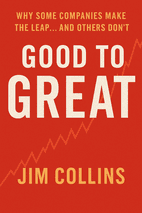
Jim Collins's Good to Great examines how companies transition from good to sustained greatness, identifying key principles like Level 5 Leadership and the Hedgehog Concept. It provides a data-driven blueprint for leaders and managers aiming to build enduringly great organizations.
Feature
Insta.Page
Blinkist
Shortform
Summary Depth
Full Chapter-by-Chapter
15-min overview
Detailed analysis
Audio Narration
✓ (AI narration)
✓
✓
Visual Mindmaps
✓
✕
✕
AI Q&A
✓ Voice AI
✕
✕
Quizzes
✓
✕
✕
PDF Downloads
✓
✕
✓
Price
$59.99/yr
$146/yr (PRO)
$199/yr
*Competitor data last verified February 2026.
About the Author
Jim Collins
Jim Collins is a renowned author and management expert, celebrated for his influential research on company greatness and enduring success. His seminal work, *Good to Great*, has become a cornerstone of business literature, exploring how companies achieve and sustain exceptional performance. Collins is also the acclaimed author of *Built to Last*, *Great by Choice*, and *How the Mighty Fall*, which collectively have sold millions of copies worldwide. His rigorous, research-driven approach has established him as a leading voice on leadership, corporate culture, and strategic discipline. Jim Collins's books are widely available for purchase on Amazon, offering invaluable insights for leaders and organizations striving for excellence.
1 Page Summary
Good to Great by Jim Collins examines how companies transition from being merely good to achieving sustained greatness. The research team analyzed 1,435 companies to identify eleven that made a definitive leap, maintaining superior performance for at least fifteen years. The core of this transition is the disciplined application of a conceptual framework, beginning with what Collins calls "Level 5 Leadership." These leaders blend personal humility with intense professional will, channeling ambition into the company's success rather than themselves. This foundational leadership style enables the crucial first step of "First Who, Then What"—getting the right people on the bus (and the wrong people off) before deciding where to drive it.
Once the right team is in place, leaders must confront the brutal facts of their current reality while maintaining unwavering faith that they will prevail in the end. This "Stockdale Paradox" is supported by a culture where the truth is heard, leading to the development of a "Hedgehog Concept." This central idea emerges from understanding what you can be the best in the world at, what drives your economic engine, and what you are deeply passionate about. The disciplined focus on this intersection guides all decisions, forcing companies to abandon activities that do not fit this core.
The final elements involve cultivating a culture of discipline, where people adhere consistently to the Hedgehog Concept without bureaucratic constraints, and leveraging technology as an accelerator of momentum, not a creator of it. The entire process is visualized as building momentum by relentlessly pushing a giant, heavy flywheel, turn by turn, until a breakthrough point is achieved. Published in 2001, the book's lasting impact lies in its data-driven, counterintuitive blueprint for excellence, providing a durable set of principles for building enduringly great organizations in any sector.
At the heart of this exploration lies the powerful concept that Good is the enemy of great, a notion that explains why many settle for mediocrity instead of striving for excellence. This idea emerged from a casual dinner conversation in 1996, where a colleague challenged Jim Collins to investigate how companies could leap from good to great, sparking a five-year research quest. Collins assembled a dedicated team of twenty-one researchers who immersed themselves in a rigorous process, sifting through decades of financial data to identify eleven companies that had consistently outperformed the market after years of average performance. To uncover what truly set these organizations apart, they compared them with similar companies that failed to make the leap, creating a robust framework for analysis.
As the team delved into nearly 6,000 articles and conducted extensive interviews, they stumbled upon surprising findings that defied conventional wisdom. Celebrity CEOs hired from outside, aggressive strategies, and heavy technology investments weren't the drivers of success; instead, transformations happened quietly through disciplined efforts. This led to the development of a cohesive framework centered on disciplined people, disciplined thought, and disciplined action, all building momentum like a flywheel effect where consistent, incremental pushes eventually lead to breakthroughs. In contrast, organizations chasing dramatic changes often fell into a doom loop of instability.
A culture of discipline emerged as crucial, blending entrepreneurial energy with structured approaches to eliminate bureaucracy and hierarchy. Technology played a supporting role as an accelerator, not a primary catalyst, ensuring it enhanced core strategies without distraction. The journey connects to Collins' earlier work, Built to Last, serving as a prequel that focuses on achieving greatness before embedding it into an enduring legacy. These principles aren't confined to business; they represent timeless physics of organizational success, applicable to schools, churches, and any group seeking excellence, even in turbulent times. Collins humbly credits the collaborative effort of his team and supporters, emphasizing that the insights are grounded in empirical evidence and collective dedication, highlighting that sustainable greatness stems from foundational truths rather than fleeting trends.
The Core Insight
The central idea that launched this entire inquiry is captured in the phrase, "Good is the enemy of great." This isn't just a catchy slogan—it's a profound observation about why so many organizations and individuals plateau at mediocrity. When something is merely good, it often lulls us into complacency, preventing the push toward true excellence. This concept struck Jim Collins during a dinner conversation in 1996, when a colleague pointed out that most companies never face the challenge of transforming from good to great because they're content with being good enough.
The Research Spark
That dinner conversation planted a seed that grew into a five-year quest. Bill Meehan of McKinsey & Company challenged the notion that Collins' previous work Built to Last applied to companies that needed to make the leap from good to great. This sparked the fundamental question: Can a good company become a great company, and if so, how? What followed was an extensive research project designed to uncover the secrets behind such transformations.
Building the Research Team
Collins assembled a dedicated team of researchers—ultimately involving twenty-one people over the course of the project. Their mission was clear: identify companies that had demonstrably made the leap from good to great and sustained it for at least fifteen years. The team embarked on what they called a "death march of financial analysis," sifting through decades of data to find patterns that met rigorous criteria.
Identifying the Good-to-Great Companies
The selection process was meticulous. They looked for companies with fifteen-year cumulative stock returns at or below the market average, followed by a transition point where returns soared to at least three times the market over the next fifteen years. This ensured they weren't just studying lucky breaks or temporary successes. From an initial pool of Fortune 500 companies, they identified eleven that fit the pattern, including unexpected names like Walgreens and Fannie Mae—companies that had been unremarkable for years before suddenly outperforming giants like Intel and Coca-Cola.
The Comparison Framework
To truly understand what set these companies apart, the team didn't just study the success stories in isolation. They created a control group of "comparison companies"—organizations in the same industries with similar resources that failed to make or sustain the leap. This included both "direct comparisons" and "unsustained comparisons," resulting in a total of twenty-eight companies analyzed. This comparative approach was crucial for distinguishing causal factors from coincidences.
Inside the Research Process
The team immersed themselves in data, reading and coding nearly 6,000 articles, conducting interviews, and analyzing everything from executive compensation to corporate culture. They adopted a Sherlock Holmes-like approach, paying close attention to "dogs that did not bark"—factors that conventional wisdom suggested should matter but didn't show up in the data. Weekly debates helped refine their understanding, ensuring that every insight was grounded in empirical evidence rather than preconceived notions.
Early Surprises and Counterintuitive Findings
As they delved into the data, several unexpected patterns emerged. Contrary to popular belief, celebrity CEOs from outside the company were negatively correlated with sustained greatness. Strategy alone didn't differentiate the great companies, nor did heavy investment in technology or aggressive mergers and acquisitions. Perhaps most surprisingly, the transformations weren't marked by dramatic change programs or motivational campaigns—they often happened quietly, almost imperceptibly at the time.
The Emerging Framework
Through iterative analysis, a coherent framework began to take shape. The journey from good to great follows a process of buildup leading to breakthrough, organized around three core stages: disciplined people, disciplined thought, and disciplined action. Wrapping around this entire process is what they termed the "flywheel effect"—a gradual accumulation of momentum that eventually leads to explosive results. This framework sets the stage for deeper exploration in the chapters to come.
A Culture of Discipline
The chapter emphasizes that mediocrity must be replaced by a profound understanding of three intersecting circles, starting with a culture of discipline. While all organizations have some form of culture, and many possess discipline, truly great ones fuse these into a cohesive culture of discipline. This isn't about rigid control but about fostering disciplined people who eliminate the need for excessive hierarchy, disciplined thought that removes bureaucracy, and disciplined action that makes tight controls unnecessary. When this culture merges with an entrepreneurial spirit, it creates a powerful synergy that drives exceptional performance.
Technology Accelerators
Good-to-great organizations approach technology with a unique mindset. They never rely on technology as the main catalyst for transformation, yet they often become pioneers in selectively applying it. The research reveals that technology alone is never the root cause of success or failure; instead, it's how technology is integrated into a broader strategy that matters. These companies use technology as an accelerator, not a starting point, ensuring it supports their core purpose without becoming a distraction.
The Flywheel and the Doom Loop
Transformations in great companies don't happen through sudden, dramatic shifts. Instead, they resemble the steady, relentless pushing of a massive flywheel. Each small effort builds momentum over time, leading to a breakthrough without any single "miracle moment." In contrast, organizations that chase revolutions, rapid changes, or massive restructurings often fall into a "doom loop" of inconsistent results. The key is consistent, incremental progress that accumulates into significant change.
From Good to Great to Built to Last
This section reframes the relationship between Good to Great and Collins' earlier work, Built to Last. Rather than a sequel, Good to Great acts as a prequel, focusing on how to elevate a good organization to one that achieves sustained great results. Built to Last then explores how to embed those results into an enduring, iconic company. The transition requires core values, a purpose beyond profit, and the dynamic of preserving the core while stimulating progress. Collins encourages readers to temporarily set aside comparisons between the two studies and immerse themselves in the findings here, with connections clarified later.
The Timeless “Physics” of Good to Great
Addressing concerns about relevance in a changing world, Collins argues that while specific practices (the "engineering") evolve, the fundamental principles (the "physics") of great organizations remain constant. He uses the example of Wells Fargo thriving amid banking deregulation to illustrate that these principles apply even in turbulent times. The book isn't about old or new economies; it's about universal truths that can help any organization—whether a school, church, or business—achieve greatness. Collins positions his work as a quest for enduring insights into human performance, using corporations as a research vehicle due to their clear metrics and data availability.
Acknowledgments
Collins humbly acknowledges that the book is a collective effort, crediting the research team for their dedication and the critical readers who provided honest feedback. He expresses gratitude to executives from the studied companies and various supporters who contributed to the project's success, emphasizing that any shortcomings are his alone. This section underscores the collaborative nature of the research and the importance of having the right people involved.
Key Takeaways
A culture of discipline, combined with entrepreneurship, is essential for great performance, reducing the need for hierarchy and bureaucracy.
Technology should be used as an accelerator, not a primary driver of change.
Sustainable transformations happen through consistent, incremental efforts (the flywheel effect), not sudden revolutions.
Good to Great serves as a foundation for building enduring organizations, with principles that apply universally across sectors.
Timeless organizational principles remain relevant despite economic changes, focusing on core truths rather than fleeting trends.
Key concepts: Chapter 1 - Good is the Enemy of Great
1. Chapter 1 - Good is the Enemy of Great
The Core Insight: Good is the Enemy of Great
Good performance creates complacency that prevents pursuit of excellence
Mediocrity often results from settling for 'good enough'
The concept originated from a 1996 dinner conversation challenge
Represents why many organizations plateau at average performance
Research Methodology and Team
Five-year research project with 21 dedicated researchers
Rigorous financial analysis spanning decades of data
Comparative framework with control group companies
Analysis of nearly 6,000 articles and extensive interviews
Company Selection Criteria
15 years of average performance followed by sustained excellence
Stock returns at least 3x market for 15+ years post-transition
11 companies identified from Fortune 500 pool
Included unexpected performers like Walgreens and Fannie Mae
Counterintuitive Findings
Celebrity CEOs and aggressive strategies weren't drivers of success
Transformations happened quietly through disciplined efforts
Technology served as accelerator, not primary catalyst
Conventional wisdom about success factors proved incorrect
Framework for Greatness
Three core elements: disciplined people, thought, and action
Flywheel effect: incremental pushes building momentum
Culture of discipline blending energy with structure
Avoiding the doom loop of dramatic, unstable changes
Universal Applications
Principles apply beyond business to all organizations
Timeless 'physics' of organizational success
Relevant for schools, churches, and groups in turbulent times
Serves as prequel to 'Built to Last' concepts
The Emerging Framework
The journey from good to great follows a buildup-to-breakthrough process
Three core stages organize the transformation: disciplined people, thought, and action
The flywheel effect describes gradual momentum accumulation leading to explosive results
Framework provides structure for deeper exploration in subsequent chapters
A Culture of Discipline
Great organizations fuse culture and discipline into a cohesive culture of discipline
Disciplined people eliminate need for excessive hierarchy and bureaucracy
Culture of discipline combines with entrepreneurial spirit for powerful synergy
Focuses on enabling freedom within framework rather than rigid control
Technology Accelerators
Technology is never the primary catalyst for transformation in great companies
Great organizations become pioneers in selectively applying technology
Technology serves as an accelerator rather than a starting point
Integration into broader strategy matters more than the technology itself
The Flywheel and the Doom Loop
Transformations occur through steady, relentless pushing of a massive flywheel
Each small effort builds momentum over time without dramatic shifts
Organizations chasing revolutions often fall into inconsistent 'doom loop'
Breakthroughs emerge from consistent incremental progress, not miracle moments
From Good to Great to Built to Last
Good to Great serves as prequel to Built to Last, focusing on achieving greatness
Built to Last explores how to embed great results into enduring organizations
Transition requires core values and purpose beyond profit
Dynamic involves preserving core while stimulating progress
The Timeless "Physics" of Good to Great
Fundamental principles (physics) remain constant while practices (engineering) evolve
Principles apply universally across sectors and turbulent times
Research focuses on enduring insights into human performance
Corporations serve as research vehicle due to clear metrics and data
If you like this summary, you probably also like these summaries...
💡 Try clicking the AI chat button to ask questions about this book!
Chapter 2: Chapter 2 - Level 5 Leadership
Overview
Darwin Smith and the Kimberly-Clark Transformation
The chapter introduces Darwin E. Smith, a seemingly ordinary man who became CEO of Kimberly-Clark in 1971. Despite initial doubts about his qualifications, Smith led the company through a stunning twenty-year transformation, turning it into the world's leading paper-based consumer products company. Under his leadership, Kimberly-Clark's cumulative stock returns outperformed the general market by 4.1 times, surpassing rivals like Scott Paper and Procter & Gamble. Smith was known for his lack of pretense—favoring time on his Wisconsin farm over executive glamour—but beneath his modest exterior lay a fierce resolve. This was evident in his personal life, such as losing a finger and continuing his education, and in his professional boldness, like selling Kimberly-Clark's mills to invest heavily in consumer brands like Huggies and Kleenex. Despite media criticism, Smith never wavered, and his decisions paved the way for long-term success.
Defining Level 5 Leadership
Smith exemplifies what the research identifies as a Level 5 leader—someone who blends extreme personal humility with intense professional will. This concept emerged unexpectedly from a study aiming to downplay executive roles, but data consistently showed that all companies transitioning from good to great had Level 5 leadership during their pivotal eras. Level 5 sits atop a hierarchy of executive capabilities, where leaders channel their ambition into the institution's success rather than personal acclaim. Unlike the comparison companies, which often had charismatic but ego-driven leaders, Level 5 leaders prioritize the company's enduring greatness.
The Duality of Humility and Will
Level 5 leaders embody a paradoxical mix of traits: they are modest yet fiercely determined, much like historical figures such as Abraham Lincoln. For instance, Colman Mockler, CEO of Gillette, displayed quiet grace but stood firm against hostile takeovers to protect the company's future innovations like the Sensor razor. His refusal to capitulate, despite short-term profit pressures, ultimately benefited long-term shareholders and cemented Gillette's market leadership. Similarly, David Maxwell of Fannie Mae turned the company from daily losses to massive profits and later forfeited millions in retirement funds to ensure the company's stability, demonstrating ambition focused solely on institutional success.
Contrast with Comparison Leaders
In stark contrast, leaders at comparison companies often prioritized personal legacy over organizational health. Stanley Gault of Rubbermaid, for example, was a charismatic Level 4 leader who drove impressive short-term growth but left the company without a sustainable foundation, leading to its decline after his departure. His self-centric approach—evidenced by frequent use of "I" in interviews—contrasts sharply with the self-effacing style of Level 5 leaders. Another example is Al Dunlap of Scott Paper, who boasted about his turnaround successes, accrued massive personal wealth, and compared himself to "Rambo," highlighting how oversized egos can undermine long-term company viability.
Key Traits and Research Insights
The research underscores that Level 5 leaders are not seeking fame; they are often overlooked in media coverage, yet they produce extraordinary results through their commitment to the company. Traits include:
Compelling modesty: They deflect personal credit and emphasize team contributions.
Professional will: They exhibit unwavering resolve to do what's best for the company, even in the face of adversity.
Successor focus: They ensure the company thrives beyond their tenure, unlike comparison leaders who often set up successors for failure.
This empirical finding challenges conventional wisdom that equates leadership with larger-than-life personalities, revealing instead that humility paired with determination drives enduring greatness.
Failed to generate summary
Key concepts: Chapter 2 - Level 5 Leadership
2. Chapter 2 - Level 5 Leadership
Darwin Smith and Kimberly-Clark Transformation
Seemingly ordinary CEO who led 20-year transformation of Kimberly-Clark
Cumulative stock returns outperformed market by 4.1 times
Blended personal modesty with fierce professional resolve
Made bold decisions like selling mills to invest in consumer brands
Demonstrated unwavering commitment despite media criticism
Defining Level 5 Leadership
Blends extreme personal humility with intense professional will
Emerges from research on companies transitioning from good to great
Sits atop hierarchy of executive capabilities
Channels ambition into institutional success rather than personal acclaim
Contrasts with charismatic but ego-driven leaders in comparison companies
The Duality of Humility and Will
Paradoxical mix of modesty and fierce determination
Exemplified by leaders like Colman Mockler of Gillette
Demonstrated through quiet grace combined with firm resolve
Prioritizes long-term company success over short-term pressures
Shown through personal sacrifice for institutional stability
Contrast with Comparison Leaders
Comparison leaders prioritize personal legacy over organizational health
Stanley Gault drove short-term growth but left unsustainable foundation
Al Dunlap exemplified ego-driven leadership with personal boasting
Self-centric approach contrasts with Level 5 self-effacing style
Oversized egos undermine long-term company viability
Key Traits and Research Insights
Compelling modesty: deflect personal credit, emphasize team contributions
Professional will: unwavering resolve for company's best interests
Successor focus: ensure company thrives beyond their tenure
Often overlooked in media despite extraordinary results
Challenges conventional wisdom equating leadership with large personalities
⚡ You're 2 chapters in and clearly committed to learning
Why stop now? Finish this book today and explore our entire library. Try it free for 7 days.
Chapter 3: Chapter 3 - First Who . . . Then What
Overview
This chapter introduces the powerful idea that truly great companies start by focusing on who is on the team before worrying about what the strategy should be. Leaders who embrace First Who, Then What understand that getting the right people on the bus—and the wrong ones off—creates a foundation for adaptability, reduces the need for heavy-handed management, and ensures that even the best vision can be executed. The story of Wells Fargo illustrates this beautifully, where a proactive strategy of injecting top talent paid off massively during industry upheavals, starkly contrasting with Bank of America's stagnant, directive-dependent culture. Similarly, at Fannie Mae, David Maxwell's rigorous approach to people decisions, where he challenged executives to self-select out, proved that having the right team in place was the critical first step to tackling a crisis.
A common pitfall highlighted is the Genius with a Thousand Helpers model, where companies like Eckerd Corporation relied on a single visionary, only to falter when that leader departed, unlike peer-driven companies such as Walgreens. Surprisingly, the research found that compensation structures showed no consistent link to success; the real driver was having intrinsically motivated people, as seen at Nucor, where hiring for character and work ethic mattered more than pay schemes. Cultivating rigorous cultures is essential, where high standards are consistently applied without being ruthless. Wells Fargo's acquisition of Crocker Bank demonstrated this rigor by retaining only the most qualified managers, a disciplined approach that good-to-great companies upheld, often avoiding layoffs altogether.
Practical disciplines for maintaining this rigor include a steadfast rule: when in doubt, don't hire, and keep looking, as Circuit City exemplified by never compromising on people quality. Another key principle is to act decisively when a people change is needed, because the best individuals don't require micromanagement. Furthermore, putting your best people on your biggest opportunities, not your biggest problems, drives growth, as Philip Morris showed by strategically moving top talent to expand internationally. This environment fosters Level 5 leadership dynamics, where executive teams engage in vigorous debate but unite behind collective decisions, transforming personal ambition into company success. Beyond business, this principle enriches personal lives, as leaders like Colman Mockler found balance and fulfillment by working with people they loved and respected.
In action, the right people are those who rally behind collective decisions without letting self-interest interfere. Unexpected findings challenge conventional wisdom: compensation's primary role is to attract the right people, not manipulate behavior; the mantra that "people are your most important asset" is flawed—it's specifically the right people who are invaluable; and defining the right person hinges more on character traits like integrity and work ethic than on specific skills or credentials. Ultimately, the chapter underscores that compensation should secure the right people, the true value lies in having individuals who align with core values, and hiring must prioritize character and innate potential over mere experience.
The Core Concept of "First Who, Then What"
The research reveals a counterintuitive approach where leaders prioritize assembling the right team before defining the company's direction. Instead of setting a vision and then aligning people, they focus on getting the right individuals on the bus—and the wrong ones off—trusting that the right people will collectively navigate toward greatness. This principle is grounded in three key truths: it enhances adaptability to change, as people committed to each other rather than a fixed destination are more flexible; it reduces the need for micromanagement, as motivated individuals drive themselves; and it underscores that even the best vision fails without the right people to execute it.
Wells Fargo: Building a Talent Engine
Under CEO Dick Cooley in the early 1970s, Wells Fargo proactively recruited top talent without specific roles, anticipating industry upheavals. This "injecting an endless stream of talent" strategy paid off during banking deregulation, as the team's collective expertise outperformed the market. Key executives like Carl Reichardt inherited this deep bench, with many going on to lead other major companies. In stark contrast, Bank of America's "weak generals, strong lieutenants" model fostered a passive culture where managers awaited directives, leading to stagnation. The performance gap was dramatic: from 1973 to 1998, Wells Fargo's stock returns soared, while Bank of America lagged behind the market, eventually recruiting Wells Fargo veterans to recover.
Fannie Mae's Discipline in People Decisions
David Maxwell exemplified rigor when he took over Fannie Mae during a crisis, prioritizing people over immediate strategy. He openly challenged executives to self-select out if they weren't prepared for the demanding turnaround, resulting in 14 of 26 top leaders leaving. Their replacements were A-players who thrived in a culture of peer pressure and excellence, where "you can't fake it." This approach ensured that the right team was in place to tackle the company's challenges, reinforcing that "who" questions must precede all other strategic considerations.
The "Genius with a Thousand Helpers" Trap
Unlike the good-to-great companies that built robust teams, many comparison firms relied on a single visionary leader. For instance, Jack Eckerd's personal genius in acquisitions and market insight drove Eckerd Corporation's growth, but his departure left a void, as he hadn't cultivated a strong team or successor. Similarly, Henry Singleton of Teledyne centralized control in himself, creating an empire that crumbled after he stepped down. This model contrasts sharply with companies like Walgreens, where Cork Walgreen focused on hiring and developing a talented executive team, ensuring continuity and shared leadership.
Compensation: A Secondary Factor
Contrary to expectations, executive compensation structures showed no correlation with success in the good-to-great transformations. Extensive analysis revealed no patterns in stock options, salaries, or bonuses between these companies and their mediocre counterparts. The real differentiator was having the right people, who are intrinsically motivated to excel. For example, Nucor hired farmers with strong work ethics, paying them based on team productivity, which attracted and retained driven individuals. This highlights that compensation should aim to get the right people on the bus, not manipulate behavior from the wrong ones.
Cultivating Rigorous Cultures
Good-to-great companies foster environments that are rigorous, not ruthless. Rigor involves consistently applying high standards at all levels, as seen when Wells Fargo acquired Crocker Bank and chose not to integrate most of Crocker's management, deeming them unfit for their culture. This selective approach ensures that the right people can focus on their work without insecurity, distinguishing it from wanton layoffs or harsh cuts. It's about creating a space where excellence is the norm, and those who don't meet the bar naturally exit.
The Wells Fargo Standard of Rigor
Wells Fargo's approach to the Crocker acquisition exemplified a disciplined, performance-oriented culture where only the most qualified managers retained their positions, regardless of their original company affiliation. This wasn't about protecting insiders; it was about upholding ferocious standards. Executives described the process as necessary to avoid "death by a thousand cuts" to their culture, emphasizing that prolonged uncertainty would be truly ruthless. By acting decisively on day one, they allowed people to move on with their lives rather than languish in limbo. Interestingly, Wells Fargo conducted fewer large-scale layoffs than Bank of America during the deregulation era, and upper management bore a heavier burden in the consolidation, demonstrating that rigor starts at the top.
This concept of rigor is often misunderstood. It's not about mindlessly chopping staff to boost numbers—good-to-great companies rarely relied on layoffs as a primary strategy. In fact, six of the eleven good-to-great companies had zero layoffs from a decade before their breakthrough through 1998, while comparison companies used layoffs five times more frequently. Endless restructuring and wanton hacking were antithetical to building sustained greatness.
Three Practical Disciplines for Rigorous People Decisions
When in Doubt, Don't Hire—Keep Looking
This principle is rooted in "Packard's Law," which states that no company can grow revenues consistently faster than its ability to attract the right people. Circuit City embodied this discipline, with Vice President Walter Bruckart emphasizing that people were the top five factors in their transition. CEO Alan Wurtzel insisted on never compromising, even during growth spurts, famously telling his team to "find another way to get through until we find the right people." In contrast, competitors like Silo focused on rapid expansion without the same people rigor, leading to inferior execution—such as damaged home deliveries—and ultimately, weaker performance. Circuit City's attention to detail extended even to delivery drivers, who were trained to be professional representatives of the brand, resulting in customer thank-you notes and industry-leading service.
When You Know You Need to Make a People Change, Act
The moment you feel the need to tightly manage someone, you've likely made a hiring mistake. The best people don't require micromanagement; they thrive with guidance and leadership. Delaying necessary changes is unfair to everyone: top performers end up compensating for others' shortcomings, and the wrong person wastes time that could be spent flourishing elsewhere. Good-to-great companies showed a bipolar pattern in top management turnover—people either stayed for the long haul or exited quickly. Leaders like Colman Mockler of Gillette invested significant time early on to ensure the right fit, moving or changing thirty-eight of the top fifty people in his first two years. Similarly, Alan Wurtzel emphasized the importance of finding the right seat before concluding someone doesn't belong on the bus. Key questions to guide decisions: Would you hire this person again? And if they left, would you feel disappointed or relieved?
Put Your Best People on Your Biggest Opportunities, Not Your Biggest Problems
Philip Morris CEO Joe Cullman demonstrated this by moving his top executive, George Weissman, from overseeing 99% of the business to leading the tiny international division—a move initially seen as a demotion but which proved genius. Weissman's skills were perfectly suited to expanding global markets, making Marlboro the world's best-selling cigarette. In contrast, R.J. Reynolds took a passive approach to international growth. This discipline highlights that managing problems only maintains mediocrity, while seizing opportunities drives greatness. A critical corollary: when divesting problematic divisions, retain your best talent. Kimberly-Clark did this by moving top paper business executives to consumer products after selling the mills, ensuring that skilled leaders like Dick Appert supported the transformation wholeheartedly.
The Level 5 Dynamic in Executive Teams
Good-to-great companies fostered an environment where top executives exhibited Level 5 leadership traits—transforming personal ambition into company ambition. Teams engaged in vigorous, sometimes heated debates in pursuit of the best answers, but once a decision was made, they unified completely behind it. At Philip Morris, executives described how arguments were always for the common good, not parochial interests, creating a culture where diverse strengths melded into collective excellence.
The Link Between Right People and a Fulfilling Life
Adhering to "first who" isn't just a business strategy; it enriches personal lives. Colman Mockler of Gillette maintained balance by assembling such capable teams that he rarely worked evenings or weekends, enjoying time with family and hobbies. Executives from companies like Philip Morris and Kimberly-Clark described their work experiences as passionate love affairs, with lifelong friendships formed. Spending the majority of time with people you love and respect makes any endeavor—whether building a company or living life—profoundly rewarding. This principle ensures that the journey itself is as great as the destination.
The Right People in Action
The chapter highlights that the most effective individuals are those who, even when they possess the best insights or alternative perspectives, consistently rally behind collective decisions without letting narrow self-interests derail progress. This ability to prioritize organizational unity over personal agendas emerges as a defining trait of the right people.
Unexpected Findings
Research revealed several counterintuitive insights that challenge conventional business wisdom:
Compensation's True Role: There was no consistent correlation between executive pay structures and a company's transition from good to great. Instead of using compensation to manipulate behavior in the wrong people, its primary function is to attract and retain the right individuals from the start. It's less about motivation and more about foundation-building.
Rethinking "Most Important Asset": The commonly held belief that "people are your most important asset" is fundamentally flawed. Not all people contribute equally; it's specifically the right people who become the invaluable core of a great organization. This shifts the focus from quantity to quality in human capital.
Defining the "Right Person": Identifying the right person hinges more on innate character qualities—such as integrity, work ethic, and emotional resilience—and inherent capabilities than on resume bullet points like specialized knowledge, educational background, or technical skills. These deeper attributes prove more predictive of long-term success and cultural fit.
Key Takeaways
Compensation systems should prioritize securing the right people rather than attempting to incentivize performance in mismatched hires.
The value lies not in having people, but in having the right people who align with the organization's core values and goals.
Hiring and retention strategies must emphasize character and innate potential over specific credentials or experience.
Key concepts: Chapter 3 - First Who . . . Then What
3. Chapter 3 - First Who . . . Then What
Core Concept: First Who, Then What
Prioritize assembling the right team before defining company direction
Get the right people on the bus and wrong people off first
Right people collectively navigate toward greatness without rigid direction
Enhances adaptability as people commit to each other rather than fixed destinations
Reduces need for micromanagement as motivated individuals drive themselves
Wells Fargo: Talent-Driven Success
Proactively recruited top talent without specific roles anticipating industry changes
Strategy paid off during banking deregulation with collective expertise
Deep bench of talent allowed for smooth leadership transitions
Contrasted with Bank of America's directive-dependent culture
Stock returns dramatically outperformed market and competitors
Fannie Mae: Rigorous People Decisions
David Maxwell prioritized people over immediate strategy during crisis
Challenged executives to self-select out if not prepared for turnaround
14 of 26 top leaders left, replaced by A-players
Created culture of peer pressure and excellence where 'you can't fake it'
Right team in place before tackling strategic challenges
Avoiding the Genius with Thousand Helpers Trap
Single visionary models falter when leader departs (Eckerd Corporation)
Key decision questions: Would you rehire? Would departure disappoint or relieve?
Put Your Best People on Your Biggest Opportunities, Not Your Biggest Problems
Move top talent to growth opportunities rather than problem areas to drive greatness
Philip Morris demonstrated this by shifting George Weissman to lead international expansion
Managing problems maintains mediocrity while seizing opportunities creates breakthroughs
When divesting problematic divisions, retain and redeploy your best talent
Kimberly-Clark successfully moved paper executives to consumer products after selling mills
The Level 5 Dynamic in Executive Teams
Good-to-great companies fostered Level 5 leadership transforming personal ambition into company ambition
Teams engaged in vigorous debates but unified completely behind final decisions
Arguments were always for the common good rather than parochial interests
Diverse executive strengths melded into collective excellence through unified purpose
The Link Between Right People and a Fulfilling Life
'First who' principle enriches personal lives beyond business success
Capable teams enable work-life balance, as demonstrated by Colman Mockler's family time
Work experiences became passionate endeavors with lifelong friendships formed
Spending time with people you love and respect makes any endeavor profoundly rewarding
The journey becomes as great as the destination when surrounded by the right people
The Right People in Action
Effective individuals rally behind collective decisions despite personal insights
Prioritizing organizational unity over personal agendas defines the right people
Ability to support collective progress without letting self-interests derail outcomes
Compensation's True Role
No consistent correlation between executive pay structures and good-to-great transitions
Compensation primarily functions to attract and retain the right people from the start
Less about motivating behavior and more about foundation-building
Should not be used to manipulate behavior in the wrong people
Rethinking 'Most Important Asset'
'People are your most important asset' is fundamentally flawed
Not all people contribute equally - it's specifically the right people who matter
Shifts focus from quantity to quality in human capital
Right people become the invaluable core of a great organization
Defining the 'Right Person'
Identification hinges on innate character qualities over resume credentials
Integrity, work ethic, and emotional resilience prove more predictive than specialized knowledge
Inherent capabilities matter more than educational background or technical skills
Deeper attributes determine long-term success and cultural fit
Chapter 4: Chapter 4 - Confront The Brutal Facts (Yet Never Lose Faith)
Overview
The chapter opens with the stark contrast between A&P and Kroger, where A&P's adherence to outdated traditions despite clear shifts in consumer behavior led to its downfall, while Kroger's willingness to confront changing realities and overhaul its model secured its dominance. This divergence illustrates a foundational principle: enduring success hinges on facing brutal facts head-on, rather than retreating into comforting illusions. This theme echoes in other industries, such as with Pitney Bowes thriving by encouraging scrutiny of potential threats, while Addressograph collapsed under a leader who ignored mounting evidence. Charismatic leadership, while powerful, can inadvertently stifle truth if it centers on the leader's vision instead of external realities, a pitfall avoided by figures like Winston Churchill, who actively sought unfiltered facts to ground his decisions.
Creating a culture where truth flourishes requires intentional practices, such as leaders leading with questions rather than answers, as seen in companies like Circuit City and Nucor, where open dialogue and debate allowed strategies to evolve organically. Embracing failures without blame is another critical element, exemplified by Philip Morris's transparent analysis of its Seven-Up acquisition misstep, which fostered learning over scapegoating. To ensure that warning signs aren't overlooked, organizations can implement red flag mechanisms, like Graniterock's "short pay" policy, which forces attention to issues before they escalate.
Balancing this confrontation with unwavering faith is essential, as demonstrated by Kimberly-Clark's resilient response to competition, contrasting with Scott Paper's resignation. This duality is perfectly captured in the Stockdale Paradox, where Admiral Jim Stockdale's survival as a POW relied on maintaining faith in ultimate victory while accepting daily hardships. The chapter underscores that leadership isn't about setting grand visions but about courageously guiding others to act on reality, and that motivation thrives when people aren't demotivated by ignored facts. By integrating practices like questioning, blame-free autopsies, and red flag systems, organizations can transform adversity into defining opportunities for growth.
The A&P and Kroger Divergence
In the mid-20th century, A&P reigned as the world's largest retailer, a titan of the grocery industry with a model perfectly suited to an era of frugality. But as American society shifted toward affluence, customers began craving more than just cheap staples—they wanted expansive superstores with diverse products, fresh offerings, and added services. A&P, steeped in tradition under leaders like Ralph Burger who clung to the legacy of its founders, ignored these changing realities. Despite experiments like The Golden Key store that revealed customer preferences for modern formats, A&P closed it and cycled through failed strategies, leading to a downward spiral of cost-cutting and declining quality.
Meanwhile, Kroger, once a modest competitor, confronted the same brutal facts head-on. Through extensive research and experimentation in the 1960s, Kroger's leadership recognized that the traditional grocery store was becoming obsolete. They made the deliberate choice to overhaul their entire system, store by store, embracing the superstore model. This commitment to facing reality propelled Kroger to eventually become America's top grocery chain, while A&P dwindled into irrelevance.
Embracing Reality Over Illusion
The stark contrast between A&P and Kroger underscores a fundamental principle: breakthrough success hinges on confronting harsh truths rather than clinging to comforting illusions. This theme extends beyond retail to companies like Pitney Bowes and Addressograph. Both faced the loss of their monopolies in the 1970s, but Pitney Bowes thrived by fostering a culture of relentless inquiry into "scary squiggly things"—unpleasant realities that could threaten future performance. In contrast, Addressograph's charismatic CEO Roy Ash pursued a grandiose vision without heeding mounting evidence of its failure, leading the company to near-collapse.
This pattern highlights how charismatic leaders can inadvertently suppress truth by making themselves the focal point, rather than external realities. As Winston Churchill demonstrated during World War II, even the most visionary leaders must actively seek unfiltered facts to make sound decisions. Churchill's creation of a Statistical Office to deliver brutal truths ensured that his steadfast faith in Britain's victory was grounded in reality, not dreams.
Cultivating a Culture of Truth
Creating an environment where brutal facts are openly discussed requires deliberate practices. Leaders in transformative companies like Circuit City and Nucor exemplified this by leading with questions rather than answers. Alan Wurtzel of Circuit City, facing near-bankruptcy, adopted a Socratic approach, persistently asking "why" to uncover underlying realities. Similarly, Nucor's Ken Iverson facilitated intense, chaotic debates among his team, allowing strategies to evolve through rigorous dialogue rather than top-down coercion.
These approaches ensure that truth isn't just voiced but heard, transforming potential de-motivation from false hopes into empowered decision-making. By prioritizing understanding over persuasion, these leaders built climates where reality could surface organically, paving the way for informed, collective action.
Conduct Autopsies Without Blame
The chapter highlights how great companies embrace a culture of learning from mistakes without assigning blame. A prime example is Philip Morris's acquisition of Seven-Up, which turned into a financial and reputational disaster. Instead of hiding this failure, executives openly discussed it, with CEO Joe Cullman dedicating five pages in his book to a clinical analysis of the error. He took full responsibility, crediting those who had challenged the decision initially. This approach fostered an environment where the truth could surface freely, emphasizing that with the right people, the focus should be on understanding and learning rather than finger-pointing.
Build Red Flag Mechanisms
In an age where information is abundant, the real challenge isn't access to data but ensuring it's acted upon. The text illustrates this with examples like Bethlehem Steel and Upjohn, which ignored clear warning signs until it was too late. In contrast, good-to-great companies used "red flag" mechanisms to make critical information unavoidable. For instance, Jim Collins shared how he used bright red sheets in his Stanford class, allowing students to halt discussions for any reason, forcing immediate attention to issues. Similarly, Bruce Woolpert's "short pay" policy at Graniterock gave customers the power to deduct payments for dissatisfaction, serving as an early warning system. These tools create a climate where uncomfortable truths are heard and addressed promptly.
Unwavering Faith Amid the Brutal Facts
Facing harsh realities doesn't have to lead to despair; instead, it can fuel resilience. The contrasting responses of Scott Paper and Kimberly-Clark to Procter & Gamble's market invasion underscore this. Scott Paper conceded defeat, diversifying and accepting second place, while Kimberly-Clark saw the competition as a catalyst for growth. Darwin Smith, Kimberly-Clark's CEO, even mocked P&G in a memorable moment, rallying his team to take on "Goliath." This mindset—embracing challenges as opportunities—echoed in other companies like Kroger, whose leaders displayed a Churchillian determination to persist for decades if necessary. The "hardiness" research on adversity survivors parallels this, showing that some individuals and organizations use difficulties as defining events that strengthen them.
The Stockdale Paradox
A central theme emerges from the story of Admiral Jim Stockdale, a Vietnam War POW who endured eight years of torture without losing hope. He maintained an unshakable faith that he would prevail and reunite with his family, yet he confronted the brutal reality of his situation daily. Stockdale noted that the optimists who expected quick releases often died of broken hearts, while those who balanced faith with realism survived. This duality—retaining ultimate faith while facing current facts head-on—became known as the Stockdale Paradox. It resonated across the good-to-great companies, from Fannie Mae's rebuilding under David Maxwell to Nucor's battle against imports. Leaders in these firms never wavered in their belief in eventual success, yet they disciplined themselves to address the grimmest truths, turning setbacks into springboards for greatness.
The Core Practices for Honest Confrontation
Building on the foundation of confronting reality, the research highlights several essential practices that enable organizations to face the truth head-on. Leading with questions rather than answers encourages a culture where curiosity drives discovery, and everyone feels empowered to contribute. Engaging in genuine dialogue and debate, rather than relying on coercion, ensures that diverse perspectives are valued and explored. Conducting thorough autopsies of failures without assigning blame allows teams to learn from mistakes without fear, fostering continuous improvement. Additionally, implementing red flag mechanisms—systems that make critical information impossible to ignore—helps prevent small issues from escalating into major crises.
Surprising Insights on Leadership and Motivation
Charismatic leadership, often seen as an asset, can surprisingly hinder progress by making team members reluctant to share harsh truths. True leadership begins not with a grand vision, but with the courage to confront brutal facts and guide others to act on them. Rather than wasting energy on external motivation, the focus should be on selecting self-motivated individuals and ensuring they aren't demotivated by ignoring reality. When people see that their input leads to meaningful action, their innate drive flourishes, creating a resilient and adaptive organization.
Key Takeaways
Confronting brutal facts is the first step toward breakthrough results, making right decisions self-evident.
Foster a culture where truth is heard through questioning, dialogue, blame-free autopsies, and red flag systems.
The Stockdale Paradox—maintaining faith while facing reality—is crucial for overcoming adversity.
Charisma can deter honesty; leadership starts with truth-confrontation, not vision-setting.
Motivation stems from not demotivating people by ignoring facts, rather than from external incentives.
Key concepts: Chapter 4 - Confront The Brutal Facts (Yet Never Lose Faith)
4. Chapter 4 - Confront The Brutal Facts (Yet Never Lose Faith)