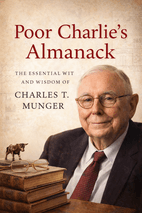
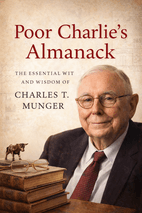
Charles T. Munger's Poor Charlies Almanack distills his multidisciplinary wisdom and mental models for clear thinking, drawn from speeches and essays. It serves investors, business leaders, and lifelong learners seeking to improve judgment and avoid common cognitive errors.
Feature
Insta.Page
Blinkist
Shortform
Summary Depth
Full Chapter-by-Chapter
15-min overview
Detailed analysis
Audio Narration
✓ (AI narration)
✓
✓
Visual Mindmaps
✓
✕
✕
AI Q&A
✓ Voice AI
✕
✕
Quizzes
✓
✕
✕
PDF Downloads
✓
✕
✓
Price
$59.99/yr
$146/yr (PRO)
$199/yr
*Competitor data last verified February 2026.
About the Author
Charles T. Munger
Charles T. Munger was the longtime vice chairman of Berkshire Hathaway and the business partner of Warren Buffett, renowned for his multidisciplinary approach to investing and decision-making. His expertise in psychology, economics, and business is encapsulated in his notable speeches and writings, most famously compiled in the book *Poor Charlie's Almanack*.
1 Page Summary
Poor Charlie's Almanack distills the essential wit and wisdom of Charles T. Munger, longtime vice chairman of Berkshire Hathaway and partner to Warren Buffett. Structured as a modern homage to Benjamin Franklin’s Poor Richard’s Almanack, the book is not a traditional memoir but a curated collection of Munger’s speeches and essays, framed by extensive commentary. Its core intellectual framework is "elementary, worldly wisdom," a multidisciplinary approach to decision-making that Munger argues is essential for success in business and life. He champions the use of mental models—core concepts from fields like psychology, economics, physics, and biology—to build a "latticework" of understanding, enabling clearer thinking and helping to avoid common cognitive errors.
The book’s historical context is deeply rooted in Munger’s own remarkable career as an investor, lawyer, and architect of Berkshire Hathaway’s culture. His insights are presented against the backdrop of decades of market cycles, illustrating timeless principles rather than fleeting tactics. A central and enduring contribution is his detailed exploration of human misjudgment, outlining over two dozen standard psychological tendencies (such as incentive-caused bias, social proof, and denial) that lead to poor decisions. This prescient work on behavioral economics, articulated long before the field gained mainstream acceptance, provides the practical foundation for his famous advocacy for rationality, patience, and lifelong learning.
The lasting impact of Poor Charlie’s Almanack extends far beyond investment circles. It has become a cult classic for thinkers and practitioners seeking to improve the quality of their judgment. Munger’s emphasis on inversion (solving problems by considering the opposite), his relentless focus on avoiding stupidity rather than seeking brilliance, and his advocacy for a broad, self-educated intellect have influenced generations of entrepreneurs, investors, and professionals. The book stands as a compelling testament to the power of a curious, multidisciplinary mind and a character-driven approach to building both a successful life and a durable enterprise.
Chapter 1: Foreword by John B. Collison
Overview
John B. Collison's foreword serves as a personal and heartfelt introduction to "Poor Charlie's Almanack." He recounts his initial discovery of the book in his youth, his subsequent meeting with Charlie Munger, and his deep appreciation for Munger's multidisciplinary approach to thinking. Collison emphasizes that the book is more than an investing guide; it's a manual for cultivating wisdom and integrity in all aspects of life.
A Personal Encounter and Intellectual Admiration
Collison shares how he first came across the almanac while eager to learn about business success. He found its candor and simplicity refreshing, with lines that blend humor with profound insight. Years later, meeting Munger in person confirmed his admiration; he describes Munger as engaging, intellectually curious, and remarkably energetic, even during a lengthy dinner conversation that spanned diverse topics.
The Multidisciplinary Tapestry of Munger's Thought
At its core, "Poor Charlie's Almanack" champions thinking across disciplines. Collison notes that Munger draws from fields like mathematics, physics, history, and ethics, delivering insights with irreverence and clarity. The book advocates for free enterprise, integrity, and taking work seriously without taking oneself too seriously.
Consistency and Compounding Through Decades
Despite the vast changes in the world since Munger's birth, Collison highlights his consistent traits: an insatiable appetite for learning, simple yet effective business evaluation frameworks, and a legendary partnership with Warren Buffett that began in a grocery store and led to Berkshire Hathaway's success. Collison draws a parallel between the compounding growth in investments and the compounding wisdom offered by the book.
Key Takeaways
"Poor Charlie's Almanack" is a transformative work that challenges conventional financial wisdom through multidisciplinary insights.
Charlie Munger's personal character, his curiosity, integrity, and intellectual stamina, mirrors the principles espoused in his writings.
The book serves as a lifelong guide for decision-making, applicable beyond investing to everyday life and business.
Collison encourages readers to approach the almanac with an open mind, promising that its lessons will compound in value over time.
Key concepts: Foreword by John B. Collison
1. Foreword by John B. Collison
Personal Discovery and Impact of the Almanac
Initial discovery of the book in youth while seeking business knowledge
Appreciation for its candor, simplicity, and blend of humor with insight
Recognition of the book as more than an investing guide—a manual for wisdom and integrity
Meeting Charlie Munger: Character and Intellectual Stamina
Personal encounter confirmed admiration for Munger's character
Description as engaging, intellectually curious, and remarkably energetic
Lengthy dinner conversation spanning diverse topics showcased his depth
Core Philosophy: Multidisciplinary Thinking
Champions thinking across disciplines like mathematics, physics, history, and ethics
Delivers insights with irreverence and clarity
Advocates for free enterprise, integrity, and taking work seriously without self-importance
Consistency and Compounding in Life and Work
Highlights Munger's consistent traits despite world changes: insatiable learning appetite and simple business frameworks
Legendary partnership with Warren Buffett from humble beginnings to Berkshire Hathaway's success
Parallel between compounding growth in investments and compounding wisdom from the book
Enduring Value and Reader Guidance
Book serves as a lifelong guide for decision-making beyond investing
Encourages readers to approach with an open mind for lessons that compound over time
Munger's personal character mirrors the principles in his writings
Scroll to load interactive mindmap
If you like this summary, you probably also like these summaries...
💡 Try clicking the AI chat button to ask questions about this book!
Chapter 2: Foreword by Warren E. Buffett
Overview
Overview
This chapter opens with Warren Buffett's foreword, a warm and witty tribute to his longtime partner, Charlie Munger. Buffett draws a charming parallel between Munger and Benjamin Franklin, positioning Charlie as a modern, more rigorous incarnation of Franklin's virtues. Following this, Charles Munger offers a brief rebuttal, characteristically modest and insightful, reflecting on their partnership and Buffett's unparalleled skills.
Buffett's Playful Parallel to Franklin
Buffett begins by recalling Benjamin Franklin's Poor Richard's Almanack, which championed thrift, duty, hard work, and simplicity for centuries. He then introduces Charlie Munger as Franklin's logical successor, one who didn't just recommend these virtues but demanded them with greater intensity. Where Franklin suggested saving pennies, Munger insisted on higher stakes; where Franklin advised promptness, Munger advocated for earliness. Buffett notes with amusement that Munger lived his principles relentlessly, even turning himself into a "living lesson in compounding" by avoiding any frivolous spending. This extended to his family experiencing "the joys of extended bus trips" while others flew privately. However, Buffett humorously concedes that on certain topics, like Franklin's essay on choosing a mistress, Munger had nothing to add.
The Ideal Partner: A Portrait of Munger
Shifting from Franklin, Buffett offers his own "Advice on the Choice of a Partner," which serves as a direct and heartfelt description of Charlie Munger. He outlines the ideal partner as someone smarter and wiser, who doesn't flaunt superiority, never second-guesses or sulks over mistakes, works generously for little pay, and adds fun to the long journey. Buffett reveals that since 1959, he has followed this advice slavishly, and Charlie was the only one who fit every criterion. Closing his foreword, Buffett references Franklin's eighth reason for choosing an older mistress—gratitude—and applies it to their 45-year partnership, expressing profound gratitude for Munger.
Munger's Characteristic Humility and Candor
In his rebuttal, Charles Munger immediately downplays the notion that he significantly enlightened Warren Buffett. With characteristic modesty, he states that Buffett didn't need much help and that he, Munger, gets more credit than he deserves. He acknowledges that Buffett initially had a "touch of brain block" from following Ben Graham's successful methods but emphasizes that Buffett's record would have been stellar regardless. Munger marvels at Buffett's continual improvement even into his 70s, calling it remarkable. Looking ahead, he candidly assesses Berkshire Hathaway's future, noting that while the acquisition side might not perform as brilliantly without Buffett, the company's great businesses will continue "pounding out money." He concludes with a wry, accepting perspective on the inevitable transition, refusing to complain after decades of Buffett's leadership.
Key Takeaways
Partnership as a Cornerstone: The chapter underscores the immense value of a complementary, trusting, and intellectually honest partnership, as exemplified by Buffett and Munger's decades-long collaboration.
Living Principles: Munger is portrayed not just as a proponent of virtues like thrift and compounding, but as someone who rigorously embodies them, making his life a testament to his beliefs.
Humility and Mutual Respect: Despite their success, both men display deep humility—Buffett through his gratitude and Munger through his modest assessment of his own role.
Enduring Legacy: The dialogue hints at the enduring strength of Berkshire Hathaway's culture and businesses, suggesting stability even as leadership eventually changes.
Key concepts: Foreword by Warren E. Buffett
2. Foreword by Warren E. Buffett
Buffett's Parallel: Munger as Modern Franklin
Positions Munger as a more rigorous successor to Benjamin Franklin's virtues
Contrasts Franklin's suggestions with Munger's intense demands (e.g., saving vs. higher stakes, promptness vs. earliness)
Highlights Munger as a 'living lesson in compounding' through extreme personal frugality
Notes humorous exception where Munger had nothing to add to Franklin's advice on choosing a mistress
Buffett's Ideal Partner: The Portrait of Munger
Describes ideal partner as smarter/wiser, humble, loyal, generous, and fun
Reveals Munger was the only person who perfectly fit all criteria since 1959
Applies Franklin's concept of 'gratitude' to their 45-year partnership
Expresses profound personal and professional gratitude for Munger's role
Munger's Humble Rebuttal and Candor
Modestly downplays his role in Buffett's success, claiming Buffett needed little help
Acknowledges Buffett's early 'brain block' from Graham's methods but affirms his inherent talent
Marvels at Buffett's continuous improvement even into his 70s
Candidly assesses Berkshire's future: acquisitions may slow, but core businesses will remain strong
Enduring Partnership and Legacy
Exemplifies a complementary, trusting, and intellectually honest decades-long collaboration
Demonstrates how lived principles (thrift, compounding) create personal and business success
Shows mutual respect and humility as foundations of their relationship
Suggests Berkshire's culture and businesses provide stability beyond leadership transition
Scroll to load interactive mindmap
⚡ You're 2 chapters in and clearly committed to learning
Why stop now? Finish this book today and explore our entire library. Try it free for 7 days.
Chapter 3: Introduction by Peter D. Kaufman
Overview
Peter D. Kaufman introduces the reader to the extraordinary mind of Charlie Munger, positioning him as a modern-day Benjamin Franklin. He promises that the journey through this book will lead to better investing, decision-making, and a deeper understanding of life itself. This is made possible through Munger's unique "multidisciplinary approach"—a robust, self-developed model for clear thinking built on timeless principles drawn from fundamental human nature and a vast array of academic disciplines.
The Munger Method: Wisdom from a Latticework of Models
Kaufman highlights that Munger’s ideas are durable because they are rooted in core truths, not fleeting trends. His intellectual style is a distinctive blend of encyclopedic knowledge, self-deprecating humor, and vivid storytelling. He effortlessly connects classical orators like Demosthenes with modern figures like Johnny Carson, using anecdotes and parables instead of dry abstractions to convey complex lessons. His mental models, drawn from every imaginable field, are not about financial jargon but about fundamental truths, human accomplishment, and foibles. Crucially, Munger employs powerful devices like inversion (figuring out what to avoid) and historical case studies to teach about life’s toughest challenges, placing a greater premium on wise life decisions than on mere investment decisions.
The Architecture of the Book
The introduction outlines the book’s structure. It begins with a biography tracing Munger’s path from Omaha to financial success, followed by a summary of his approach to life and learning. The core consists of eleven transcribed talks delivered over two decades, including a special, book-only version of his famous lecture on human misjudgment. Kaufman notes that the editorial team has added explanatory endnotes throughout to clarify concepts, add context, or underscore key ideas, hoping to inform, amuse, and inspire further curiosity. He also prepares the reader for Munger’s intentional redundancy, explaining that repetition is central to achieving the deep “fluency” Munger advocates.
Key Takeaways
Charlie Munger’s multidisciplinary approach is a powerful, timeless system for clear thinking based on fundamental principles from many fields.
His teachings are delivered with unique rhetorical flair, blending deep knowledge, humor, storytelling, and practical wisdom.
The book is structured to provide a full portrait of Munger, culminating in his own words across eleven key speeches.
Munger intentionally uses repetition and real-world case studies, aiming to build a "latticework" of knowledge that readers can recall and apply.
Key concepts: Introduction by Peter D. Kaufman
3. Introduction by Peter D. Kaufman
Introduction to Charlie Munger
Positioned as a modern-day Benjamin Franklin
Promises improved investing, decision-making, and life understanding
Emphasizes Munger's unique multidisciplinary approach to clear thinking
The Munger Method: Wisdom from a Latticework of Models
Ideas are durable, rooted in core truths rather than fleeting trends
Blends encyclopedic knowledge, self-deprecating humor, and vivid storytelling
Uses anecdotes and parables instead of dry abstractions
Employs powerful devices like inversion and historical case studies
Prioritizes wise life decisions over mere investment decisions
Book Structure and Content
Begins with a biography tracing Munger's path from Omaha to success
Core consists of eleven transcribed talks over two decades
Includes special version of his famous lecture on human misjudgment
Editorial team added explanatory endnotes for clarity and context
Munger uses intentional redundancy to build deep fluency
Key Takeaways
Multidisciplinary approach is a timeless system for clear thinking
Teachings delivered with unique rhetorical flair and practical wisdom
Book provides full portrait culminating in Munger's own words
Emphasis on building a 'latticework' of knowledge through repetition
Scroll to load interactive mindmap
Chapter 4: Chapter 1: A Portrait of Charles T. Munger
Overview
From his humble beginnings in Omaha, where a grueling grocery store job instilled a formidable work ethic and an early distaste for financial imprudence, Charlie Munger’s path was shaped by relentless curiosity and real-world education. His voracious reading, influenced by Benjamin Franklin, and his formative observations during the Great Depression taught him lasting lessons about family, risk, and capital. After a winding path through military service and an exceptional, degree-less leap into Harvard Law, he built a successful legal career in California, all while enduring profound personal hardship.
Yet, Munger’s mind was too entrepreneurial to be confined to law. Following his grandfather’s conservative principles, he meticulously built capital, first through shrewd real estate development and then by co-founding a influential law firm built on enduring values. The defining turn came with a fateful 1959 dinner in Omaha, where he met Warren Buffett. Their instant intellectual bond blossomed into a legendary partnership, founded on deep trust and shared ideas. Munger soon transitioned fully into investments, running a successful partnership before ultimately adopting a permanent equity model that would become synonymous with Berkshire Hathaway.
Beyond the spectacular investment record, Munger’s life reflects a broader philosophy of rational service. He views financial independence not as an end, but as a tool for societal stewardship. His philanthropy is a disciplined extension of his worldview, applying multi-model thinking to systemic challenges like population ethics, environmental stewardship, and education. For Munger, this strategic giving is the logical outcome of a life dedicated to wisdom—a way to leverage capital and intellect to build a measurably better world for future generations, fulfilling a deep sense of responsibility as both a thinker and a family patriarch.
Midwestern Roots and Early Influences
Charles Thomas Munger was born on January 1, 1924, in Omaha, Nebraska. His first intersection with the Buffett family came during his youth, working 12-hour shifts at Buffett & Son, the grocery store owned by Warren Buffett's grandfather, Ernest. This demanding job, which paid $2 a day, instilled a strong work ethic and a distinct aversion to what the elder Buffett decried as the "evils" of socialism.
An intellectually curious child, Munger was a voracious reader, encouraged by his parents and deeply influenced by the aphorisms of Benjamin Franklin. His friendship with family doctor Ed Davis provided early exposure to medical journals and scientific thinking, fostering a lifelong passion for science and rational problem-solving. Even his childhood hobby of raising and trading hamsters showcased an early knack for negotiation.
The Great Depression left a lasting mark on young Charlie. While his family, supported by his father Al's successful law practice, remained comfortable, he witnessed widespread hardship. He learned powerful lessons about familial support and business acumen by observing his grandfather, a federal judge, who risked his own capital to rescue a failing bank owned by a relative.
Education, Military Service, and Legal Beginnings
Munger attended Omaha's Central High School, where his intellect often made him a "wiseacre." Too small for mainstream sports, he excelled as captain of the rifle team. He began his undergraduate studies in mathematics at the University of Michigan, where he discovered a passion for physics and its logical framework for solving problems.
With World War II underway, he enlisted in the Army Air Corps at age 19. The military shuffled him through studies at the University of New Mexico and the California Institute of Technology (Caltech), where he trained as a meteorologist, eventually serving in Alaska. After his discharge in 1946 and despite lacking a bachelor's degree, he leveraged family connections and the GI Bill to gain admission to Harvard Law School. He graduated magna cum laude in 1948.
Choosing not to join his father's practice in Omaha, he moved to Southern California, passed the bar, and joined the firm of Wright & Garrett (later Musick, Peeler & Garrett). His personal life, however, was struck by tragedy. His first marriage ended in divorce, and shortly after, his young son, Teddy, was diagnosed with terminal leukemia. During this difficult period, friends introduced him to Nancy Barry Borthwick, a Stanford graduate with two sons of her own. They married in 1956 and would go on to have a blended family of eight children.
Building a Foundation Beyond Law
Despite success in law, Munger found the earning potential limited. Inspired by wealthy clients and with Nancy's support, he sought alternative paths to build capital. He adhered to his grandfather's conservative principles: concentrate on the immediate task and control spending.
His first major foray was real estate development. A 1961 partnership with client and friend Otis Booth earned a $300,000 profit on a $100,000 investment in Caltech-adjacent condominiums. He reinvested profits into larger projects, amassing a $1.4 million nest egg from real estate by 1964.
In 1962, he co-founded the law firm Munger, Tolles & Hills (later Munger, Tolles & Olson). While he would leave active partnership just three years later, his philosophical imprint on the firm remained, emphasizing principles like not taking "the last dollar" and choosing clients as one would friends. Upon his departure, he donated his share of the firm's capital to the family of a deceased junior partner.
A Fateful Partnership Begins
The pivotal turn in Munger's career stemmed from a 1959 dinner in Omaha arranged to welcome him home while settling his father's estate. Among the guests was Warren Buffett. The two men, aged 35 and 29 respectively, instantly connected, engaging in a wide-ranging conversation about business, finance, and history. Buffett was unimpressed with law as a primary career for someone of Munger's talents, viewing his own investment work as a far superior path.
This meeting sparked a deep friendship and intellectual partnership. They maintained constant contact through long letters and phone calls, sharing ideas with a mutual trust sealed by a handshake. Munger began winding down his legal career to focus on investments. He formed an investment partnership, Wheeler, Munger & Co., which from 1962 to 1975 generated strong returns (19.8% compounded annually before fees), though it suffered severe setbacks during the 1973-74 bear market.
Following this experience, and mirroring Buffett's earlier decision, Munger decided to stop managing money for outside partners. Instead, he focused on building permanent equity through a holding company structure. Partners in Wheeler, Munger received shares in Blue Chip Stamps and Diversified Retailing, which were later converted into Berkshire Hathaway stock, forming the core of his immense wealth.
The Berkshire Hathaway Ethos and a Broader Philosophy
Though the details of Berkshire's acquisitions are noted as a well-told story elsewhere, the chapter underscores the duo's spectacular track record in identifying undervalued companies for long-term ownership, such as See's Candies, The Buffalo Evening News, and GEICO, as well as major stakes in Coca-Cola and American Express.
Munger's worldview is heavily influenced by Benjamin Franklin, whom he admires as a multi-disciplinary thinker who used financial independence to serve society. This is reflected in Munger's own extensive philanthropic work with institutions like Good Samaritan Hospital, Harvard-Westlake School, Stanford University, and the Huntington Library. A self-described conservative Republican, he is also a staunch supporter of Planned Parenthood, believing every child should be born to a welcoming mother.
A Philosophy of Rational Philanthropy
Munger’s giving is not mere charity, but an extension of his worldly wisdom and rationalist philosophy. He approaches philanthropy with the same rigorous, multi-model thinking he applies to investments, seeking leverage points where capital and intellect can create disproportionate, lasting good. His support for organizations like Planned Parenthood stems from a fundamental belief in rational population ethics and the right of every child to be born into a stable, welcoming environment. He views this not just as a social good, but as a foundational requirement for a functional society.
Applied Wisdom to Systemic Challenges
His philanthropic interests reflect his diagnosis of civilization’s most pressing needs. Beyond population ethics, he targets two other pillars he deems critical for long-term human flourishing: environmental stewardship and educational quality. He believes a deteriorating environment and a poorly educated populace are direct threats to economic prosperity and societal progress. His contributions in these areas are strategic, aimed at supporting research, advocacy, and institutions that can drive systemic improvement, aligning capital with what he calls the "larger cause of civilization."
Legacy as a Steward for Future Generations
For Munger, a man with eight children and sixteen grandchildren, legacy is not an abstract concept. He frames his life’s work, including his philanthropy, as a stewardship project for future generations. His goal is to leave behind not just wealth, but a measurably better world—one with a healthier environment, more effective education, and more rational policies governing human life. This familial perspective grounds his grand philanthropic ambitions, connecting his desire to improve complex systems directly to the world his descendants will inherit.
Key Takeaways
Munger’s philanthropy is a direct application of his rational, model-based thinking to society’s greatest challenges.
He strategically focuses on leverage points in population ethics, environmental quality, and education to create lasting, systemic change.
His ultimate motivation is stewardship, viewing his legacy as the improved world he helps build for future generations.
Key concepts: Chapter 1: A Portrait of Charles T. Munger
4. Chapter 1: A Portrait of Charles T. Munger
Core Philosophy and Life Trajectory
Financial independence as a tool for societal stewardship, not an end goal
Life dedicated to wisdom, rational service, and multi-model thinking
Strategic philanthropy applied to systemic challenges like education and environment
Path shaped by relentless curiosity, real-world education, and formidable work ethic
Midwestern Roots and Formative Influences
Grueling grocery store job at Buffett & Son instilled strong work ethic and aversion to financial imprudence
Voracious reading and influence of Benjamin Franklin fostered intellectual curiosity
Observations during the Great Depression taught lasting lessons about family, risk, and capital preservation
Early exposure to scientific thinking through family doctor Ed Davis
Education and Early Career Development
Exceptional, degree-less leap into Harvard Law School via GI Bill, graduating magna cum laude
Military service in Army Air Corps with meteorology training at Caltech
Move to Southern California to build legal career, separate from father's Omaha practice
Enduring profound personal hardship including divorce and son's terminal illness
Entrepreneurial Transition and Capital Building
Shift from law due to limited earning potential, following grandfather's conservative principles
Successful real estate development partnerships, building $1.4 million nest egg by 1964
Co-founding Munger, Tolles & Olson law firm with enduring philosophical imprint
Applying business acumen to concentrate on immediate tasks and control spending
Partnership with Warren Buffett and Investment Evolution
Fateful 1959 dinner in Omaha sparked instant intellectual bond with Buffett
Transition from legal career to full-time investments based on deep trust and shared ideas
Running successful investment partnership before adopting permanent equity model
Legendary partnership that became synonymous with Berkshire Hathaway's approach
The Fateful Meeting with Warren Buffett
A 1959 dinner in Omaha introduced Munger to Warren Buffett, sparking an instant intellectual connection.
Buffett viewed Munger's legal career as inferior to investment work, encouraging a career shift.
The meeting initiated a deep partnership built on constant communication and mutual trust sealed by a handshake.
Transition from Law to Investment Management
Munger wound down his legal practice to focus on investments, forming Wheeler, Munger & Co.
His investment partnership generated strong returns (19.8% compounded annually) from 1962 to 1975.
Following severe setbacks in the 1973-74 bear market, Munger stopped managing outside money, mirroring Buffett's earlier decision.
Building Permanent Equity and Wealth
Munger shifted focus to building permanent equity through holding company structures like Blue Chip Stamps and Diversified Retailing.
Partners in Wheeler, Munger received shares that were later converted into Berkshire Hathaway stock.
This conversion formed the core foundation of Munger's immense personal wealth.
The Berkshire Hathaway Investment Ethos
Munger and Buffett built a spectacular track record identifying undervalued companies for long-term ownership.
Key acquisitions included See's Candies, The Buffalo Evening News, and GEICO, plus major stakes in Coca-Cola and American Express.
Their partnership exemplified a disciplined approach to value investing and permanent capital allocation.
Philosophical Influences and Worldview
Munger's worldview was heavily influenced by Benjamin Franklin as a model multidisciplinary thinker.
He admired Franklin's use of financial independence to serve society, which shaped his own philanthropic approach.
Despite being a conservative Republican, he maintained staunch support for Planned Parenthood based on rational population ethics.
Rational Philanthropy as Applied Wisdom
Munger approached philanthropy with the same rigorous, multi-model thinking he applied to investments.
He sought leverage points where capital and intellect could create disproportionate, lasting social good.
His support for causes like Planned Parenthood stemmed from fundamental beliefs in rational population ethics and children's rights to welcoming environments.
Strategic Focus on Systemic Challenges
Munger targeted three critical pillars for human flourishing: population ethics, environmental stewardship, and educational quality.
He viewed environmental deterioration and poor education as direct threats to economic prosperity and societal progress.
His contributions were strategic, supporting research and institutions that could drive systemic improvement in these areas.
Legacy as Intergenerational Stewardship
With eight children and sixteen grandchildren, Munger framed his work as stewardship for future generations.
His goal was to leave behind not just wealth, but a measurably better world with improved systems.
This familial perspective connected his philanthropic ambitions directly to the world his descendants would inherit.
Scroll to load interactive mindmap
📚 Explore Our Book Summary Library
Discover more insightful book summaries from our collection