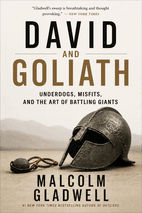
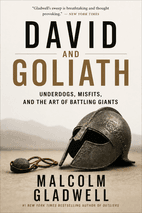
Malcolm Gladwell's David and Goliath challenges the conventional understanding of underdogs, arguing that perceived disadvantages like dyslexia or small class sizes can become hidden strengths. Drawing on historical anecdotes and social science research, it offers a new lens for anyone interested in psychology, strategy, or the mechanics of success.
Feature
Insta.Page
Blinkist
Shortform
Summary Depth
Full Chapter-by-Chapter
15-min overview
Section-by-section guides
Audio Narration
✓ (AI narration)
✓
✓
Visual Mindmaps
✓
✕
✕
AI Q&A
✓ Voice AI
✕
✕
Quizzes
✓
✕
✕
PDF Downloads
✓
✕
✓
Price
$59.99/yr
$146/yr (PRO)
$199/yr
*Competitor data last verified February 2026.
About the Author
Malcolm Gladwell
Malcolm Gladwell is a renowned journalist and bestselling author celebrated for his unique ability to explore the hidden forces that shape human behavior. His groundbreaking books, including *The Tipping Point*, *Blink*, and *Outliers*, have sold millions of copies worldwide and have profoundly influenced public discourse on topics ranging from social epidemics to success and decision-making. A staff writer for *The New Yorker*, Gladwell's work masterfully synthesizes sociology, psychology, and history to challenge conventional wisdom. His insightful analyses and compelling storytelling have established him as a leading thinker in non-fiction. All of his acclaimed books are available for purchase on Amazon.
1 Page Summary
In David and Goliath, Malcolm Gladwell challenges the conventional understanding of what it means to be an underdog, arguing that perceived disadvantages often conceal hidden strengths. The book’s central thesis is built around the idea that giants—whether in battle, business, or education—are not always what they seem, and that the very traits we consider weaknesses can be transformed into powerful assets. Gladwell uses the biblical story of David and Goliath as a framing device, but he subverts the traditional interpretation: Goliath, with his heavy armor and close-combat weapons, was not the invincible giant he appeared to be, but rather was vulnerable to a swift, unconventional attack from a nimble opponent armed with a sling.
Gladwell’s approach is distinctive for its blend of historical anecdotes, social science research, and compelling case studies. He draws on examples as varied as a girls' basketball team that wins with a relentless full-court press, dyslexic entrepreneurs like Richard Branson and Charles Schwab who succeed because of their disability, and the Impressionist painters who broke away from the Salon to find success in a smaller pond. Through these stories, he explores concepts such as the "inverted-U curve" (where more of a good thing—like money or punishment—can become harmful), "relative deprivation" (the damage of comparing yourself to those who are more accomplished), and the power of "desirable difficulties" (how struggles like dyslexia can force the development of other, crucial skills). The book is as much about cognitive biases and strategic thinking as it is about courage.
The intended audience is broad: anyone interested in psychology, history, strategy, or the mechanics of success and failure. Readers will come away with a new lens for interpreting their own struggles and a deeper understanding of how to harness the power of their perceived weaknesses. Gladwell does not offer a simple self-help manual, but rather a provocative series of arguments that encourage a re-examination of common assumptions about power, privilege, and the nature of adversity. The book consistently suggests that what we often see as an insurmountable disadvantage can be the very thing that makes us formidable.
The introduction begins not with a battle, but with geography. The Shephelah region of ancient Palestine, with its rolling ridges and strategic valleys, sets the stage for one of history's most iconic confrontations. The Elah Valley, in particular, has witnessed countless military struggles across millennia—Crusaders faced Saladin there, Maccabean rebels fought Syrian armies there. But its most famous moment came when a fledgling Israelite kingdom, led by King Saul, positioned itself on one ridge while the formidable Philistine army camped on the other.
The standoff was tense and dangerous. Neither side dared to descend into the valley and make the suicidal climb up the enemy's ridge. Then the Philistines sent forward their champion: Goliath, a giant standing at least six foot nine, encased in bronze armor that likely weighed over a hundred pounds, carrying an arsenal optimized for close combat. His challenge was clear—single combat, winner take all. No Israelite dared step forward.
Enter David, a shepherd boy who had come to deliver food to his brothers. He volunteered, refused Saul's armor ("I cannot walk in these, for I am unused to it"), and instead grabbed five smooth stones and his shepherd's staff. When Goliath saw him approach, he was insulted: "Am I a dog, that you should come to me with sticks?" David fired a stone from his sling, struck Goliath in the forehead, and the giant fell.
This is the story we all know. And it's almost entirely wrong.
The Weapons and the Warrior
Ancient armies consisted of three types of fighters: cavalry on horseback, heavy infantry with swords and armor, and projectile warriors—archers and slingers. The sling was no primitive toy. In skilled hands, it was devastatingly effective. Experienced slingers could hit birds in midflight, were described in the Book of Judges as accurate within a "hair's breadth," and could kill or seriously injure a target from up to two hundred yards away. Ballistics expert Eitan Hirsch calculated that a stone hurled by an expert slinger at thirty-five meters would hit with a velocity of thirty-four meters per second—comparable to a modern handgun. More importantly, the three warrior types operated like rock-paper-scissors: cavalry beat projectile warriors, infantry beat cavalry, and projectile warriors beat infantry.
Goliath was heavy infantry, encumbered by over a hundred pounds of armor, expecting a close-quarters duel. David was a projectile warrior, fast and maneuverable, with absolutely no intention of playing by Goliath's rules. When David ran toward Goliath, he wasn't being foolishly brave; he was closing to effective slinging range. The battle was decided in little more than one second—a span of time so brief that Goliath couldn't possibly react. As historian Robert Dohrenwend put it, Goliath had as much chance against David as "any Bronze Age warrior with a sword would have had against an opponent armed with a .45 automatic pistol."
A Misreading of Power
King Saul's skepticism reveals our fundamental misunderstanding of power. He saw David's small stature and Goliath's massive frame and concluded the giant held all the advantages. He didn't recognize that power could take other forms: breaking rules, substituting speed and surprise for brute strength. This error persists today, from education to criminal justice, in how we structure our institutions and assess our opponents.
But there's a deeper issue. The Israelites thought they knew who Goliath was, but they didn't really see him. His behavior was strange for a mighty warrior. Why did he need a shield bearer, a role typically reserved for archers who needed both hands for their weapons? Why did he move so slowly? Why did he tell David to "come to me" instead of advancing himself? And that odd comment about "sticks" plural when David held only one staff?
Medical experts now believe Goliath suffered from acromegaly, a condition caused by a pituitary tumor that overproduces human growth hormone—explaining his extraordinary size. One common side effect is severely restricted vision and double vision, as the tumor compresses the optic nerves. Goliath's attendant was his visual guide. The world around him was a blur. He couldn't see David until David was nearly upon him. When Goliath saw two sticks instead of one, it wasn't an insult—it was a symptom.
The very thing that gave Goliath his size was also the source of his greatest weakness.
Key Takeaways
We consistently misread power dynamics, assuming that obvious strengths—size, resources, conventional advantage—tell the whole story, when unconventional approaches can completely change the equation.
The underdog's apparent weaknesses can be reframed as strategic advantages. David's lack of armor gave him speed and maneuverability; his shepherd's sling was a sophisticated weapon, not a primitive tool.
Giants often carry hidden vulnerabilities. What appears to make someone powerful may simultaneously create profound weaknesses—Goliath's size came with impaired vision, making him helpless against an opponent who refused to fight on his terms.
The stories we tell about overcoming odds are often backward. We romanticize improbable victories without understanding the tactical realities that made them not improbable at all but strategically sound.
Key concepts: Introduction: Goliath
1. Introduction: Goliath
The Misunderstood Battle
Shephelah region and Elah Valley set the stage
David vs. Goliath story is almost entirely wrong
Standoff: neither side dared descend into valley
Weapons and Warrior Types
Three types: cavalry, heavy infantry, projectile warriors
Sling was devastating, like a modern handgun
Rock-paper-scissors: projectile beats infantry
David closed distance to sling range, not for melee
Misreading Power
Saul saw size, missed speed and surprise advantages
Power can take unconventional forms
Error persists in education and criminal justice
Goliath's Hidden Vulnerability
Goliath likely had acromegaly from pituitary tumor
Condition caused severely restricted vision
Shield bearer was visual guide, not just assistant
Size created his greatest weakness
Key Takeaways on Underdogs
We misread power dynamics and obvious strengths
Weaknesses can be reframed as strategic advantages
Giants often carry hidden vulnerabilities
Improbable victories are often strategically sound
If you like this summary, you probably also like these summaries...
💡 Try clicking the AI chat button to ask questions about this book!
Chapter 2: Chapter One: Vivek Ranadivé
Overview
Vivek Ranadivé, a software executive who had never played basketball, ended up coaching his daughter's twelve-year-old girls' team in Redwood City. Because his players couldn't shoot, dribble, or jump, he threw out every conventional basketball playbook and instead taught them a relentless full-court press, denying the inbounds pass and trapping ball handlers before they could cross half-court. The result was astonishing: a team of science-project kids destroyed far more talented opponents by scores like 25-0. This is not just a sports anecdote—it's a case study in what happens when an underdog refuses to fight on the giant's terms.
That insight connects directly to the work of political scientist Ivan Arreguin-Toft, who analyzed centuries of lopsided wars and found that when the weak side used unconventional tactics, they won far more often than expected. The chapter brings in T.E. Lawrence leading Bedouin soldiers on a six-hundred-mile desert march to take Aqaba from the east, losing only two men while capturing twelve hundred enemies. Lawrence knew that mobility, endurance, and knowledge of the terrain could neutralize overwhelming material superiority. The same logic applies to basketball: a press turns a game of polished skill into a battle of pure effort, and that shift terrifies the establishment.
But here's the puzzle: if the press works so well for underdogs, why don't more teams use it? The chapter examines a famous 1971 game where Fordham University used a press to beat a UMass squad led by Julius Erving—yet neither coach ever adopted the press again. The answer is simple: underdog strategies are hard. It requires constant movement, perfect conditioning, and the willingness to be desperate every second. Rick Pitino, who witnessed that Fordham game as a college freshman and later built his career on the press, explains that most teams are just good enough to avoid putting in that kind of grueling work. Ranadivé's girls, however, were so completely untalented that they had no choice—and that desperation became their greatest advantage.
The backlash against Ranadivé's team was fierce. Opposing coaches screamed, threw chairs, and even wanted to fight the "skinny foreign guy" in the parking lot. The reason, Ranadivé realized, was that the press exposed the game's hidden bias toward the strong. It turned basketball into a chaotic, flailing contest where effort trumped skill, and that felt like cheating to those who had invested years in conventional training. Ranadivé's own outsider status—he knew nothing of basketball's unwritten rules and had no reputation to protect—gave him the freedom to ignore that outrage, much like Lawrence ignoring British Army decorum or David ignoring Goliath's armor.
The fairy tale does not last forever. At the national tournament, Redwood City faced an Orange County team with a hometown referee who called ticky-tacky fouls at a four-to-one ratio, effectively neutralizing the press. Ranadivé eventually called off the press and lost playing "the way basketball is supposed to be played." But the chapter leaves a lasting impression: the girls had already proved that Goliath is not as invincible as he seems. The real lesson is not about sports at all—it's about the power of refusing to fight by rules designed to keep you down.
The Unconventional Coach
Vivek Ranadivé never played basketball. He grew up in Mumbai watching cricket and soccer, and when he decided to coach his twelve-year-old daughter Anjali's team, he saw the game with fresh eyes. American basketball struck him as fundamentally flawed: teams would score, then retreat to their own end, conceding seventy feet of the court while defending only twenty-four. It seemed like a conspiracy that made strong teams stronger and weak teams weaker. His girls—daughters of Silicon Valley nerds and programmers, more interested in science projects than sports—couldn't shoot, couldn't dribble, and weren't tall. If they played conventionally, they'd lose.
So Ranadivé settled on two principles. First, he would never raise his voice. He'd treat these twelve-year-olds the same way he ran his software company—calmly, with appeals to reason and common sense. Second, and more radically, his team would play a full-court press every single minute of every single game. No exceptions.
The Strategy That Changed Everything
The press targeted two deadlines. First, the five-second inbounds pass. Most teams didn't defend this—they ran back to their own end. Redwood City did the opposite. Each girl shadowed her opponent, positioning herself in front to prevent her from catching the pass at all. They didn't even bother guarding the player throwing the ball in; that extra defender became a floater to double-team the opponent's best player. Teams panicked. They threw the ball away. They let the five seconds expire. When opponents did manage to inbound, Redwood City turned its attention to the ten-second deadline to cross midcourt. Anjali would sprint over and trap the dribbler, forcing steals or panicked passes. The girls jumped ahead 4-0, 6-0, 8-0, 12-0. One game they led 25-0. They rarely attempted long-range shots; they scored layups off steals.
"We could hide our weaknesses," said Rometra Craig, the college player who helped coach. "We could hide the fact that we didn't have good outside shooters. We could hide the fact that we didn't have the tallest lineup."
The Lessons of David and Goliath
Political scientist Ivan Arreguin-Toft found that in wars between large and small countries where the larger side is at least ten times more powerful, the bigger side wins only 71.5 percent of the time. When the underdog fights unconventionally, its winning percentage climbs to 63.6 percent. T.E. Lawrence understood this. His Bedouin soldiers carried only a rifle, ammunition, and forty-five pounds of flour. They traveled 110 miles a day across the desert in summer, carrying just a pint of water. When Lawrence assaulted the port town of Aqaba, he led his men on a six-hundred-mile loop through snake-infested desert to attack from the east—a direction the Turks never thought possible. He killed or captured twelve hundred enemies while losing only two men. Movement, endurance, individual intelligence, knowledge of the country, and courage—these aren't just compensations for weakness. They are advantages of their own kind.
The Puzzle of the Press
In 1971, Fordham University's basketball team faced the University of Massachusetts Redmen, led by Julius Erving. Fordham's tallest player was six foot five; their starting forward was only six foot two. They launched a full-court press from the opening buzzer and never let up. They won 87-79. Yet Fordham's coach, Digger Phelps, never used the press the same way again. Jack Leaman, the UMass coach, didn't adopt the strategy either. This is the puzzle: the full-court press works for underdogs, so why don't more teams use it?
Arreguin-Toft found the same pattern. In 202 lopsided conflicts, the underdog chose to fight conventionally 152 times—and lost 119 of those. The Peruvians fought the Spanish straight up and lost. The Georgians fought the Russians straight up and lost. The Viet Minh switched from guerrilla to conventional warfare in 1951 and promptly suffered a series of defeats. It makes no sense—until you remember Lawrence's six-hundred-mile march through snake-infested desert. It is easier to have soldiers march to a fife-and-drum corps than to ride camels through hell. Underdog strategies are hard.
Rick Pitino was the skinny guard on the UMass freshman team who watched that Fordham game and never forgot it. He became head coach at Boston University at twenty-five and used the press to take the school to its first NCAA tournament in twenty-four years. At Providence College, he took over an 11-20 team of short, untalented players, pressed relentlessly, and ended up one game from playing for the national championship. Coaches visit his Louisville program to learn the press, then email him saying they can't do it—their players can't last. "We practice every day for two hours," Pitino said. "The players are moving almost ninety-eight percent of the practice. We spend very little time talking. When we make our corrections, they are seven-second corrections, so that our heart rate never rests." To play by David's rules, you have to be desperate. You have to be so bad that you have no other choice. Most teams are just good enough that they can't convince themselves to work that hard. But Ranadivé's girls were desperate. Their complete inability to pass, dribble, and shoot wasn't their greatest disadvantage—it was what made their winning strategy possible.
The Fury of the Opponents
Once Redwood City started winning, opposing coaches grew angry. There was a sense that using the full-court press against twelve-year-old girls just learning the game wasn't fair. It violated the unwritten rules about how basketball ought to be played. The conspiracy Ranadivé had sensed from the beginning—the one that made the game easier for the strong and harder for the weak—was being exposed, and the reaction was outrage.
Key Takeaways
An underdog can
Key concepts: Chapter One: Vivek Ranadivé
2. Chapter One: Vivek Ranadivé
The Unconventional Coach
Vivek Ranadivé, a software exec, never played basketball
Coached his daughter's untalented 12-year-old girls' team
Saw conventional basketball as biased toward strong teams
Used calm, rational approach like running his company
The Full-Court Press Strategy
Relentless press every minute, denying inbounds pass
Targeted 5-second and 10-second deadlines
Extra defender double-teamed best opponent
Turned game into chaotic contest of effort over skill
Astonishing Results
Team of science-project kids crushed talented opponents
Scores like 25-0, rarely attempted long-range shots
Scored layups off steals, hiding weaknesses
Proved underdogs can win with unconventional tactics
Historical Parallels
Ivan Arreguin-Toft: weak win more with unconventional tactics
T.E. Lawrence led Bedouins to take Aqaba with minimal losses
Mobility and terrain knowledge neutralize material superiority
Same logic applies: press shifts battle to pure effort
Why Few Use the Press
1971 Fordham beat UMass with press, but never reused it
Underdog strategies are hard: constant movement and conditioning
Most teams are good enough to avoid grueling work
Ranadivé's girls had no choice but desperation
Backlash and Outsider Freedom
Opposing coaches screamed, threw chairs, wanted to fight
Press exposed game's hidden bias toward the strong
Effort trumping skill felt like cheating to establishment
Ranadivé's outsider status let him ignore outrage
The Limits and Lasting Lesson
At nationals, biased referee neutralized press with fouls
Lost playing conventional basketball
Proved Goliath is not invincible
Lesson: refuse to fight by rules designed to keep you down
⚡ You're 2 chapters in and clearly committed to learning
Why stop now? Finish this book today and explore our entire library. Try it free for 7 days.
Chapter 3: Chapter Two: Teresa DeBrito
Overview
The Shepaug Valley Middle School in Connecticut has seen its enrollment shrink from 300 to just over 200, with the sixth grade poised to halve again—a change most parents would welcome as a chance for smaller classes and more individual attention. Yet when economist Caroline Hoxby examined Connecticut elementary schools using a natural experiment, she found that smaller classes produced precisely zero effect on learning. International data from eighteen countries backed her up: only Greece and Iceland showed meaningful benefits from class-size reduction. That counterintuitive finding sets the stage for a deeper exploration of why our instincts about “more is better” often lead us astray.
A Hollywood mogul’s story offers a parallel. Raised in scarcity, he learned the value of money by shoveling snow, paying half the electric bill, and working in a scrap-metal yard. That education in deprivation fueled his ambition—but now, with a jet and a Ferrari, he watches his own children grow up in a world of plenty, where they never learn those lessons. Wealth, like poverty, can ruin people, stealing their ambition and self-worth. This paradox is captured by the inverted-U curve: for parenting and income, more money helps up to a point (around $75,000 per year) but then diminishing returns set in, and at extreme wealth the curve turns downward. First-generation millionaires are “immigrants to wealth” who must learn to say “No, we won’t” instead of “No, we can’t”—a far harder conversation.
The same inverted-U curve governs class size. On the left side, where Israeli classes bulge to forty students, shrinking to twenty yields clear benefits. But in Connecticut, where variation runs from the high teens to the mid-twenties, the effect is flat. Teachers in that range don’t necessarily change their methods; they just work less. And crucially, when classes get too small—below twelve or even six students—the intimacy becomes a liability. Discussion dies, quiet kids stay quiet, and struggling students lose the peers they need to learn from. As economist Jesse Levin notes, extreme class-size reduction “steals away the peers that struggling students learn from.” Teresa DeBrito, the principal of Shepaug Valley, knows this firsthand. She once taught a class of twenty-nine in a low-income city and loved the noise—the energy of diverse voices grappling together. Now she watches her incoming grade shrink toward fifty kids and dreads the half-empty room that feels “like they have a muzzle on.”
At Hotchkiss, an elite private boarding school with two lakes and twelve Steinway pianos, average class size is twelve—exactly the scenario DeBrito fears. Yet Hotchkiss markets that intimacy as a premium. The trap is assuming that anything money buys automatically translates into advantage. That’s the Goliath trap: being bigger, stronger, richer isn’t always better. The shepherd boy knew it, a basketball coach who didn’t know basketball knew it, and a middle school principal in Connecticut knows it too. The chapter leaves us with a powerful reminder that more is not always more—and sometimes, less is just less.
Key Takeaways
Very small classes can be worse than large ones: they kill discussion, drain energy, and rob struggling students of essential peers.
Teresa DeBrito’s experience with a class of twenty-nine showed that noise and interaction can be a powerful engine for learning, not a distraction.
Schools like Hotchkiss fall into the Goliath trap: assuming that what wealth buys always equals advantage, ignoring the inverted-U curve where too much of a good thing backfires.
Key concepts: Chapter Two: Teresa DeBrito
3. Chapter Two: Teresa DeBrito
The Inverted-U Curve
More money helps up to $75,000, then diminishing returns
Extreme wealth can ruin ambition and self-worth
Same curve governs class size: too small backfires
Class Size Paradox
Smaller classes show zero effect in Connecticut study
Only Greece and Iceland benefit from reduction
Teachers don't change methods; they just work less
Loved noise of twenty-nine students in low-income city
Now dreads half-empty room feeling like a muzzle
Interaction and diverse voices drive learning
The Goliath Trap
Assuming wealth buys automatic advantage is wrong
Hotchkiss markets small classes as premium
Bigger, stronger, richer isn't always better
Chapter 4: Chapter Three: Caroline Sacks
Overview
From the smoky haze of Café Guerbois in 1860s Paris to the fluorescent-lit organic chemistry labs at Brown University, this chapter traces a single, unsettling truth: the pond you choose to swim in can determine your fate more than your raw ability. The Impressionists—Manet, Monet, Degas, and the rest—faced a strategic fork in the road. Keep submitting to the Salon, the grandest Big Pond in European art, where rejection and humiliation were common? Or break away and mount their own independent show, a Little Pond where they could be seen and celebrated? They chose the Little Pond, and history rewarded them. Caroline Sacks made the opposite choice. A brilliant science student from outside D.C., she picked Brown University over her safety school, the University of Maryland, because it was the “best” school—the Salon of higher education. There, in organic chemistry, she hit a wall. For the first time, she wasn’t at the top. She compared herself only to the other geniuses around her, and that constant, crushing comparison convinced her she wasn’t good enough. She abandoned science, her first love.
This phenomenon has a name: relative deprivation, coined by sociologist Samuel Stouffer when he noticed that Military Policemen—who had the worst promotion rates—felt more satisfied than Air Corps men who were promoted far more often. Why? Because soldiers compared themselves only to the guys in their own unit. Caroline Sacks was doing the same thing, and it made her feel stupid despite being objectively brilliant. Psychologist Herbert Marsh formalized this as the Big Fish-Little Pond Effect: the more elite the school, the worse students feel about their own abilities, even when those abilities are extraordinary. The damage is especially brutal in STEM. Data from Hartwick College and Harvard show that the bottom third of STEM majors at Harvard—students whose math SAT scores equal the top third at Hartwick—drop out of science at the same staggering rate. Every ten-point increase in a school’s average SAT score cuts a student’s chance of finishing a STEM degree by two percentage points. For Caroline Sacks, choosing Brown over Maryland meant slashing that chance by 30 percent.
The pattern repeats at the highest levels. Economists studied PhD graduates from elite programs like Harvard and MIT and found that only the top stars publish impressively. The 80th percentile student at an elite school publishes a fraction of what the top dog produces, and by the 55th percentile, they barely publish at all. Meanwhile, the best graduate from a mediocre school—a Big Fish in a Little Pond—publishes at rates that rival all but the elite’s superstars. Hiring managers would do better to take the top graduate from a no-name program than a middling graduate from Harvard. Even Harvard itself saw this coming. In the 1960s, admissions director Fred Glimp created the “happy-bottom-quarter” policy, deliberately admitting gifted athletes with lower academic qualifications so they’d have an alternative arena—like the football field—where they could still feel like a big fish.
This insight casts a harsh light on affirmative action. Law professor Richard Sander showed that bumping promising minority students up one tier in law school admissions means more than half of all Black law students end up in the bottom ten percent of their class. We take a bright student like Caroline Sacks—except one who happens to be Black—and call moving her into an even more competitive pond “help.” Meanwhile, Stephen Randolph, a physics prodigy who chose Harvard over MIT, earned his first B-minus in quantum mechanics and drifted into tax law. “Harvard cost the world a physicist and gave the world another lawyer,” he said. The happiness of relative position explains why the poor in Honduras report being happier than the poor in wealthier Chile: the gap between them and the average is smaller. We judge our well-being not by absolute standards but by how we stack up against those around us. The chapter closes with a thorn in the flesh from 2 Corinthians—a reminder that what looks like a disadvantage can become a source of strength, setting the stage for the theory of desirable difficulty. The lesson is uncomfortable but clear: sometimes the smartest move is to find a pond where you can be a big fish, not to chase the prestige of a bigger one.
Key Takeaways
Relative standing matters more than absolute ability. Comparing yourself to peers in a "big pond" can erode confidence and lead to dropping out, even if you are objectively talented.
Choosing a top-tier school can backfire. For many students, especially in science, attending a highly selective university decreases the likelihood of persisting in the major.
Better school ≠ better outcomes. Getting strong grades at a good school often leads to better career prospects than getting mediocre grades at a great school.
Disadvantages can be reframed. The upcoming section will explore how challenges and difficulties, when approached correctly, can actually foster growth.
Key concepts: Chapter Three: Caroline Sacks
4. Chapter Three: Caroline Sacks
The Big Fish-Little Pond Effect
Relative deprivation: comparing only to immediate peers
Herbert Marsh formalized the effect in education
Elite schools make students feel worse about abilities
STEM persistence drops with higher school selectivity
Caroline Sacks' Story
Brilliant student chose Brown over safety school Maryland
Hit a wall in organic chemistry despite objective brilliance
Constant comparison to genius peers crushed confidence
Abandoned science, her first love
STEM Dropout Data and Patterns
Bottom third at Harvard drops out like bottom at Hartwick
Every 10-point SAT increase cuts STEM completion by 2%
Choosing Brown over Maryland slashed chance by 30%
Elite PhDs: only top stars publish; mediocre ones barely do
Implications for Affirmative Action and Prestige
Bumping minority students up tier leads to bottom 10%
Richard Sander: more competitive pond can be harmful
Stephen Randolph: Harvard cost physics a physicist
Better to be top graduate from mediocre school than middling from elite
Relative Position and Happiness
Military Police felt satisfied despite poor promotion rates
Poor in Honduras happier than poor in wealthier Chile
We judge well-being by gap to those around us
Disadvantages can become strengths (desirable difficulty)
Frequently Asked Questions about David and Goliath
What is David and Goliath about?
This book challenges conventional thinking about underdogs, using the biblical story of David and Goliath as a central metaphor. It argues that perceived disadvantages—like small size, poverty, or even learning disabilities—can be reframed as hidden strengths. Through case studies from basketball, education, and military history, it reveals how unconventional tactics and perseverance can overcome overwhelming odds, and why what we think of as 'advantages' often come with hidden pitfalls.
Who is the author of David and Goliath?
Malcolm Gladwell is a renowned Canadian journalist, author, and speaker known for his bestselling books like *The Tipping Point* and *Outliers*. He has a gift for weaving together social science research, historical anecdotes, and compelling narratives to reveal counterintuitive truths about human behavior and success.
Is David and Goliath worth reading?
Absolutely. This book offers a mind-opening perspective that will change how you see underdogs and adversity. It's packed with fascinating, real-world examples—from a girls' basketball team that used a full-court press to beat more skilled opponents, to how dyslexia can foster entrepreneurial drive—that are both entertaining and deeply thought-provoking.
What are the key lessons from David and Goliath?
The most powerful lesson is that giants are not always as strong as they seem; underdogs can win by refusing to play on the giant's terms and instead leveraging their own unique strengths. Another key insight is the 'inverted-U curve': more of a good thing (like class size or punishment) can become harmful past a certain point. Additionally, difficulties can be desirable—as seen with dyslexia forcing the development of listening skills or other compensations—and relative deprivation in a 'big pond' can crush talent, so choosing the right environment matters more than raw ability.
📚 Explore Our Book Summary Library
Discover more insightful book summaries from our collection