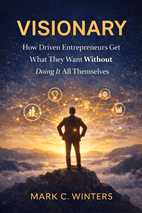
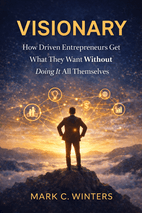
Mark C. Winters's Visionary provides a practical blueprint for founders to scale their impact by shifting from hands-on doer to strategic leader. It offers frameworks like the Visionary's Hierarchy of Needs, guiding entrepreneurs trapped in daily operations to build self-sustaining teams and systems.
Feature
Insta.Page
Blinkist
Shortform
Summary Depth
Full Chapter-by-Chapter
15-min overview
Detailed analysis
Audio Narration
✓ (AI narration)
✓
✓
Visual Mindmaps
✓
✕
✕
AI Q&A
✓ Voice AI
✕
✕
Quizzes
✓
✕
✕
PDF Downloads
✓
✕
✓
Price
$59.99/yr
$146/yr (PRO)
$199/yr
*Competitor data last verified February 2026.
About the Author
Mark C. Winters
Mark C. Winters is a historian and author specializing in military and political history, with a focus on the American Civil War. He is best known for co-authoring the acclaimed trilogy *This Hallowed Ground*, *A Stillness at Appomattox*, and *The Last Full Measure*. His work is distinguished by its narrative depth and rigorous research into leadership and battlefield strategy.
1 Page Summary
In Visionary: How Driven Entrepreneurs Get What They Want Without Doing It All Themselves, Mark C. Winters presents a practical blueprint for ambitious founders to scale their impact by shifting from being a hands-on "doer" to a strategic "visionary." The central thesis argues that true entrepreneurial success isn't about working harder or micromanaging every detail, but about mastering the art of building and leading a team that can execute on your vision. Winters introduces key frameworks, such as the "Visionary's Hierarchy of Needs," which outlines the sequential stages—from achieving personal proficiency to building systems and finally inspiring a culture—that an entrepreneur must climb to create a self-sustaining organization.
Winters's approach is distinctive for its actionable, step-by-step methodology drawn from his direct experience as an entrepreneur and advisor. Rather than offering abstract motivational advice, the book provides concrete tools for delegation, communication, and system-building. It focuses on the critical mindset shifts required to let go of operational control and empowers readers with specific strategies for hiring the right "Integrator" (a complementary operational leader), clarifying company vision, and establishing processes that allow the business to thrive independently of the founder's daily involvement.
The book is primarily intended for driven entrepreneurs, founders, and business owners who feel trapped in the day-to-day grind of their companies and are struggling to scale. Readers will gain a clear roadmap to escape the bottleneck of being the central problem-solver, enabling them to reclaim strategic focus and drive growth without burnout. By implementing Winters's principles, the audience learns how to amplify their unique strengths as a visionary while building a capable team that handles execution, ultimately creating a more valuable and sustainable enterprise.
This introductory section presents the "10 Pillars of Visionary Greatness" not merely as a checklist, but as a transformative journey of self-discovery and intentional construction. It frames the process as the essential foundation work required to build a lasting legacy, emphasizing that true visionary success begins internally before it can be manifested externally.
The Foundation and the Framework
The chapter opens with the analogy of building a tall tower, where prolonged effort on the foundation is non-negotiable. The 10 Pillars are introduced as this foundational playbook—a set of tools designed to unlock a Visionary's full potential. The process is active and sequential: study each pillar, answer its questions, take action, and, most critically, commit to the first step. This commitment is highlighted as the primary differentiator between those who merely wander and those who achieve greatness. The journey through the pillars promises a new understanding of oneself and the world, bringing clarity to both the desired destination and the actionable path to get there.
Beginning with the End in Mind
The starting point is adopting Stephen Covey's principle: "Begin with the end in mind." A Visionary must first answer the question, "What does it look like to be truly great?" This answer becomes the target. The text stresses that every great Visionary must build their future in their mind before building it in reality. This mental construction is described as a superpower—the ability to see what could be, not just what is. However, this internal vision must be held with steady clarity long enough to become believable and contagious to others. Like an architect's detailed renderings, this mental design phase is where the future is intentionally shaped.
The Transformational Journey
Engaging with the Pillars is framed as an act of assembling the mental framework of one's future. As clarity grows internally, momentum builds externally. The process itself is promised to be transformative; the individual who finishes will not be the same person who started. This evolution involves a shifting perspective, a heightened awareness of the present, and the inevitable emergence of a "gap" between current reality and the envisioned future. This creative tension, rather than being a discouragement, is normalized and even celebrated as the fuel for progress. The chapter encourages embracing this tension, viewing each identified gap or obstacle not as a blockade but as the very stepping stone that creates the pathway forward.
Key Takeaways
Greatness is Built from the Inside Out: The foundational work for visionary impact is internal, involving deliberate self-discovery and mental construction before any external execution.
Clarity is Contagious: A Visionary must first see the future with vivid detail and hold that vision steady before a team can effectively help build it.
Embrace Creative Tension: The feeling of being overwhelmed or recognizing the gap between where you are and where you want to be is a natural and necessary part of the growth process. This tension is the engine for advancement.
Progress Over Perfection: The goal is not flawlessness but consistent forward motion. Achieving 80% of the way toward these pillars is presented as the threshold for attaining greatness.
The Obstacle is the Way: Each challenge or deficiency identified through the pillars should be reframed as a precise stepping stone on the path to your goal.
Key concepts: The 10 Pillars of Visionary Greatness
1. The 10 Pillars of Visionary Greatness
The Internal Foundation
Greatness is built from the inside out
Foundation work precedes external execution
Self-discovery is essential for legacy
Visionary Mindset
Begin with the end in mind
See what could be, not just what is
Hold vision steady until it's believable
Transformational Process
Engagement changes the person who started
Clarity internally builds momentum externally
Process assembles mental framework of future
Creative Tension as Fuel
Gap between reality and vision fuels progress
Embrace tension as natural growth process
Obstacles become precise stepping stones
Action Principles
Commitment differentiates wanderers from achievers
Progress over perfection (80% threshold)
Take sequential action through each pillar
If you like this summary, you probably also like these summaries...
💡 Try clicking the AI chat button to ask questions about this book!
Chapter 2: The 10 Pillars at a Glance
Overview
This chapter presents the foundational framework of the ten essential practices, or Pillars, that form a holistic operating system for the Visionary leader. It positions these Pillars not as isolated tips, but as an interconnected set of disciplines designed to maximize personal effectiveness, strengthen crucial relationships, and drive organizational impact. The introduction frames them as the core structure that turns visionary ideas into sustainable reality.
Pillar 1: Know Thyself
The journey begins with deep self-awareness. Understanding one’s unique wiring, motivations, and innate strengths allows a Visionary to lean into their true genius and confidently delegate everything else. This clarity is the bedrock for better decisions, personal energy, and effective leadership alignment.
Pillar 2: Maintain Warrior Shape
Sustainable leadership requires physical, mental, and spiritual resilience. This Pillar emphasizes that you cannot give your best from an empty cup; building healthy habits is a non-negotiable investment that fuels the high performance the Visionary role demands for the long term.
Pillar 3: Surround Yourself
No Visionary succeeds alone. This principle stresses the strategic importance of building a complementary team—people who share the vision, cover for weaknesses, and provide collective support. These relationships form a powerful alliance and a strategic shield.
Pillar 4: Commit to Your Operating System
True freedom and focus are born from disciplined structure. This involves committing to three layered systems: a personal life OS, the Visionary OS (these 10 Pillars), the V/I Duo OS for partnership synergy, and a business execution OS (like EOS) for the organization.
Pillar 5: Support Your Integrator
The relationship with the Integrator—the person who turns vision into reality—is pivotal. This Pillar focuses on actively protecting and empowering this partnership through clarity, respect, and trust, recognizing it as a force multiplier for collective achievement.
Pillar 6: Think About What You Think About
Leadership starts in the mind. Visionaries must master their mindset by observing their thought patterns, intentionally replacing unhelpful ones, and focusing on constructive ideas that drive toward the vision. This mental discipline fuels clarity, creativity, and resilience.
Pillar 7: Watch for Pitfalls
Self-sabotage is a common risk. This Pillar calls for vigilance against typical Visionary traps like inconsistency, inability to delegate, or frequently shifting direction. Early recognition and mitigation of these pitfalls preserve momentum and positive energy.
Pillar 8: Help Others Stretch
Growing your team is an art. Effective leaders learn to stretch team members in a healthy way—pushing enough to build skill and confidence without causing breakdown. This thoughtful approach to development strengthens the entire organization for future challenges.
Pillar 9: Go Slow to Go Fast
Counterintuitively, intentional slowness is a strategic accelerator. Pausing to think, clarify, and align prevents costly rework and confusion. This deliberate pace creates the conditions for the entire team to execute with powerful, unified speed.
Pillar 10: First, Do No Harm
Leadership actions carry significant weight. A careless decision or remark can inflict lasting damage. This final Pillar is a call to lead with care, constantly considering the unintended consequences of actions to build trust, protect morale, and ensure a stable foundation for success.
Key Takeaways
The 10 Pillars are an integrated operating system, starting with self-leadership (Pillars 1-2) and expanding to relational and organizational leadership.
Sustainable success requires balancing visionary energy with personal discipline (Warrior Shape) and structured systems (Operating System).
The most critical leverage points are internal (mindset) and relational (your Integrator and team).
Proactive awareness—of self, thoughts, and potential pitfalls—is a recurring theme for preventing self-sabotage.
Effective leadership is often counterintuitive, requiring slowness for speed and carefulness for bold progress.
Key concepts: The 10 Pillars at a Glance
2. The 10 Pillars at a Glance
Foundational Self-Leadership
Build deep self-awareness of strengths and motivations
Develop physical, mental, and spiritual resilience
Master mindset by observing and directing thoughts
Strategic Relationships & Team
Build a complementary team to cover weaknesses
Actively protect and empower the Integrator partnership
Stretch team members with healthy development
Disciplined Systems & Structure
Commit to layered personal and business operating systems
Use intentional slowness to create alignment and speed
Establish disciplined structure for true freedom
Proactive Awareness & Prevention
Watch for common Visionary traps and pitfalls
Consider unintended consequences of actions
Prevent self-sabotage through early recognition
Holistic Leadership Approach
Balance visionary energy with personal discipline
Turn visionary ideas into sustainable reality
Lead with care to build trust and stability
⚡ You're 2 chapters in and clearly committed to learning
Why stop now? Finish this book today and explore our entire library. Try it free for 7 days.
Chapter 3: Pillar 1 Know Thyself
Overview
This journey begins with the timeless imperative of self-awareness, recognizing that truly understanding oneself is the essential lens for navigating every external relationship in business. It explores common visionary traits like foresight, resilience, and a bias for action, but quickly moves beyond broad categories into practical self-discovery. A variety of profiling tools—from the Crystallizer Assessment to Kolbe A and CliftonStrengths—serve as valuable data points to clarify one's natural wiring.
The process deepens by uncovering one’s Unique Ability and clarifying a personal Why, distinct from the company's purpose, often through frameworks like ikigai. This culminates in defining one’s Intrinsic Genius, a powerful convergence of Competence, Joy, and Drive. A practical exercise guides visionaries to map their activities on a Joy/Competence Matrix, identifying their "sweet spot" and "suck bucket" to distill their core genius statement.
With that clarity, the focus shifts to application through the Visionary Wish List, a brain dump of frustrations and desired changes that transforms overwhelm into a collaborative agenda. This list becomes the starting point for working with an Integrator to compartmentalize and plan for every idea, proving nothing gets lost.
This self-knowledge then becomes the key to solving the leadership puzzle. First, it frames the ideal Visionary-Integrator partnership as a Two-Piece Puzzle, requiring complementary fits. This expands into the crucial Three-Piece Puzzle, which adds the business itself as the third piece. Here, visionaries must honestly assess where they and their business fall on the Visionary Spectrum—from minimal to pioneer—and identify any alignment gaps that cause frustration. Similarly, they must plot their business’s needs on the Integrator Spectrum to define the exact operational counterpart required.
The chapter then explores how to lead effectively from this place of self-knowledge, cultivating intentional thought, avoiding common pitfalls, and learning to stretch others effectively by expanding their "Ledge of Conceivability." It emphasizes embracing a deliberate pace to maintain momentum and practicing harm prevention through clarity and consistent decision-making. Finally, it provides a framework for ongoing self-assessment, encouraging visionaries to regularly use tools like the Joy/Competence Matrix and revisit their Wish List and puzzle alignment to ensure they remain anchored in their genius as the foundation for all growth.
The Imperative of Self-Knowledge
The ancient call to "Know Thyself" is the foundational first step for any Visionary. This self-awareness isn't a solitary exercise; it's the critical lens through which you can effectively manage your intersections with your business, your team, and the marketplace. Without a deep internal understanding, these external relationships can become chaotic, leaving you feeling lost.
The Visionary Archetype: Traits and Patterns
Visionaries commonly share a set of characteristic traits. They possess a natural foresight, an endless well of ideas, and a passion for solving big, interesting problems. They are resilient, risk-tolerant, and driven by an irresistible urge to take action and make things happen. It's important to note the "80 percent rule": if most of these traits resonate, you're likely in the Visionary category. However, this is just the starting point for understanding your unique wiring.
Tools for Self-Discovery
To move beyond broad categories, several profiling tools offer deeper insight:
The Crystallizer Assessment: Helps clarify whether your natural abilities align more with the Visionary or Integrator role.
Kolbe A Index: Measures your instinctive method of operation (MO), focusing on how you execute rather than intelligence or personality.
Culture Index: Predicts intrinsic wiring and interpersonal dynamics, providing a shared language for teams.
CliftonStrengths: Identifies your top natural talents from 34 themes, encouraging you to lean into innate strengths like Ideation or Strategic thinking.
The 6 Types of Working Genius: Helps identify the types of work that bring energy and fulfillment versus those that lead to frustration.
These tools are valuable data points, not ultimate answers. For direct feedback, ask trusted colleagues: What am I best at? What's easy for me that others struggle with? What would you call my "superpower"?
Uncovering Your Unique Ability
This concept, popularized by Dan Sullivan, refers to your effortless superpower—the work that energizes you and leaves others in awe. Daniel Pink's "Seven Smarter Questions" offer another path, using prompts like What fascinated you as a kid? and When do you lose track of time? to uncover the intersection of passion and talent.
Clarifying Your Personal "Why" and Ikigai
Your core motivation extends beyond money. Simon Sinek's "Start With Why" emphasizes that people are inspired by why you do something. The Japanese concept of ikigai—your "reason for being"—represents the intersection of what you love, what you're great at, what the world needs, and what you can be paid for. It's crucial to distinguish your personal Why from your company's Why; your business should be a vehicle that aligns with and serves your broader personal vision.
Defining Your Intrinsic Genius
This is the powerful convergence of your competence, joy, and drive. The formula is: Intrinsic Genius = Competence x Joy x Drive.
Competence: What you're naturally great at.
Joy: The work that lights you up and creates flow.
Drive: The inner force synthesizing your purpose (why you exist) and your cause (what you're here to change).
Operating in this zone unlocks extraordinary energy, clarity, and impact.
A Practical Exercise to Discover Your Intrinsic Genius
Step 1: Focus on Your Visionary Seat. List the roles that only you can and should do in the business (ideally already defined on your EOS Accountability Chart).
Step 2: Activity Brain Dump. Quickly list everything you currently spend time and energy on as a Visionary.
Step 3: Plot on the Joy/Competence Matrix. Map each activity from your brain dump onto a four-quadrant chart:
Quadrant I (Love It/Great At): Your sweet spot. This is where you create disproportionate value.
Quadrant II (Love It/Not Great At): Learning zones or hobbies. Passion may lead to growing competence.
Quadrant III (Hate It/Good At): The "Suck Bucket." You're skilled but drained. A prime area for delegation.
Quadrant IV (Hate It/Stink At): "Hell." A black hole of energy. Delegate immediately—someone else will love these tasks.
Analyze the patterns in your Quadrant I activities to distill your core Competence and Joy.
Step 4: Explore Your Drive. Reflect on questions to define your Purpose (e.g., Why do you exist?) and your Cause (e.g., What do you want to change in the world?). Distill each into a simple statement.
Step 5: Craft Your Intrinsic Genius Statement. Combine your distilled Competence, Joy, and Drive into a single, clear statement—clunky and authentic is better than slick. Use feedback from trusted peers, but you are the final judge of what fits.
Creating Your Wish List
With clarity on your genius, identify what you want to change. A "Wish List" is a brain dump answering: If I had the right support, what problems would vanish? What could I finally get off my plate? This tool turns frustration into a clear agenda for creating the space you need to operate in your Intrinsic Genius.
From Wish List to Collaborative Execution
The chapter presents a vivid example of a Visionary's "Wish List"—a brain dump of everything from auditing employee files and managing vendor costs to improving office efficiency and ensuring core values are lived daily. This list isn't a to-do list for the Visionary, but a starting point for collaboration. The key step is for the Visionary to sit with their Integrator and collaboratively compartmentalize each item. Is it a one-year goal, a quarterly "Rock," a long-term issue, or a simple to-do? This process alleviates the common Visionary fear that great ideas will be lost, proving that every item has a place and a plan, even if it's scheduled for the future. It all begins with answering the core question: “What do I wish we could get done, take off my plate, or simply make go away?”
Solving the Leadership Puzzle
Understanding oneself naturally leads to understanding what kind of Integrator is needed. This is framed as solving a Two-Piece Puzzle, where the Visionary and Integrator pieces must fit together cleanly. The goal is a complementary fit—not one with too much overlap (which causes conflict) or too many gaps (where neither excels). The shape of your "Visionary edge" is defined by all your self-discovery work (DNA, Crystallizer results, Intrinsic Genius, Wish List). Only by knowing your own edge can you identify the complementary "Integrator edge" you need.
This model then expands into the Three-Piece Puzzle, which introduces a critical third element: the Business itself. Now, you must solve for two additional edges: where the Visionary fits the business, and where the Integrator fits the business. Every business has unique needs that define where these roles fall on their respective spectrums.
The Visionary Spectrum: How Much "Visionary" Does Your Business Need?
Businesses require different levels of Visionary energy, determined by:
Industry Type
Growth Aspirations
Degree of Market Change/Complexity
The spectrum ranges from a Minimal Visionary (focused on day-to-day ops in a stable, simple business) to a Pioneer Visionary (like Steve Jobs, navigating extreme complexity and long-term horizons). The exercise requires brutal honesty: mark a "V" for where you naturally fall on this spectrum, and a "B" for where your business's needs fall. The alignment—or gap—between these two points is revealing:
V > B: You bring more Visionary energy than the business needs, leading to boredom and "shiny object" syndrome outside the company's Core Focus.
B > V: The business needs more Visionary leadership than you naturally provide, leading to frustration from others who see greater possibilities.
Achieving alignment here is crucial; a single ship can't sail toward two different ports.
The Integrator Spectrum: Finding the Right Operational Counterpart
Just as Visionaries vary, so do Integrators. The Integrator Spectrum measures the complexity and strategic depth an Integrator must handle, influenced by the same business factors. It ranges from an Operational Integrator (tactical, project-focused) to a Thought Partner Integrator (strategic, comfortable with massive complexity, global issues, and disruptive change). You must place a "B" on this spectrum to define how much Integrator your business actually needs.
Completing the Three-Piece Puzzle
With the shapes of two pieces known—your Visionary edge (from self-knowledge) and the business's needs on both spectrums—you can now deduce the shape of the missing Integrator piece. This defines not only how they connect to you (complementing your strengths) but also how they must connect to the business (meeting its specific operational and strategic needs). This clarity is your roadmap for finding the right person.
Key Takeaways
The Visionary Wish List is the essential starting point for productive collaboration with an Integrator, transforming overwhelming ideas into a managed, compartmentalized plan.
Effective leadership is a puzzle. The Two-Piece Puzzle emphasizes a complementary, gap-filling fit between Visionary and Integrator.
The Three-Piece Puzzle is the complete model, forcing you to assess how both the Visionary and Integrator roles fit the specific needs of the business itself.
Use the Visionary and Integrator Spectrums to honestly plot where you and your business fall. A significant gap between your natural capacity ("V") and your business's needs ("B") is a core source of frustration or stagnation.
Knowing your shape and your business's shape allows you to define and seek the precise Integrator piece that will complete your puzzle and unlock transformative power.
Cultivating Intentional Thought
Visionaries actively shift their thoughts from harmful to helpful patterns, practicing patience during uncertainty and avoiding disengagement, often called "Out to Pasture" thinking. They cultivate gratitude and intellectual humility, remaining open to new perspectives. Trust is prioritized over control, especially with the Integrator, offering guidance without micromanaging. By blending their divergent thinking with the Integrator's convergent approach, they transform valuable ideas into executable plans.
Avoiding Common Pitfalls
Leaders must steer clear of detrimental behaviors like tampering, end runs, or playing the "owner card." Overcoming feelings of being sidelined, they embrace their Intrinsic Genius and recognize their earned place to combat Imposter Syndrome. Avoiding bottlenecks involves knowing when to delegate and seeking support early to prevent isolation. Personal warning signs help halt harmful actions before damage occurs, ensuring sustained effectiveness.
Stretching Others Effectively
Inspiring others to reach their "Ledge of Conceivability" involves expanding belief, not applying pressure. Visionaries balance aspiration with clarity, ensuring stretching is inspiring yet realistic. The long-term vision is grounded in reality but not constrained by it, with everyone understanding and supporting the 10-Year Target. Predictive discipline is key—setting clear, achievable targets with 80% confidence on the Traction side. They inspire with big ideas and partner with the Integrator to bring them down to earth.
Embracing Deliberate Pace
To maintain momentum, Visionaries identify and tame frenetic patterns that kill progress. They reset quickly when their behavior creates chaos and leverage focus to trigger team flow. Understanding the "Traffic Jam Theory" helps prevent bottlenecks and protect workflow. Intentionally slowing down in meetings and at home yields better results, embodying the "go slow to go fast" principle.
Leading with Harm Prevention
Avoiding harm is a leadership discipline for sustainable freedom. Visionaries hold themselves accountable for consistency and clarity in vision, avoiding waffling or mixed signals. They don't undermine structure with exemptions and signal "alerts" when thinking aloud to prevent confusion. Using tools like the Decision Tree empowers leaders to make accountable decisions, fostering trust and clarity.
Self-Assessment for Visionary Growth
A practical checklist helps Visionaries evaluate their progress. This includes using profile results (e.g., Kolbe, Culture Index) for decision-making, defining their Intrinsic Genius, regularly completing the Joy/Competence Matrix to stay in their "sweet spot," creating and reviewing a Visionary Wish List with the Integrator, and mapping the 3-Piece Puzzle for alignment with the business and Integrator. Visionaries mark proficiency with an "X," slash, or empty frame, and score themselves 1-10. This honest assessment forms the foundation for growth, emphasizing that knowing oneself anchors all business endeavors.
Key Takeaways
Intentional thought shifts toward helpful patterns and trust-based relationships enhance leadership effectiveness.
Awareness of pitfalls like harmful behaviors and isolation safeguards leadership integrity and momentum.
Stretching others involves inspiring realistic growth and ensuring alignment with long-term vision through collaborative planning.
A deliberate pace prevents chaos, fosters team flow, and improves overall productivity.
Harm prevention through clarity, consistency, and empowered decision-making is crucial for sustainable leadership.
Regular self-assessment with tools like the Joy/Competence Matrix and Visionary Wish List ensures alignment with personal genius and business goals, solidifying the foundation for the Visionary journey.
Key concepts: Pillar 1 Know Thyself
3. Pillar 1 Know Thyself
The Imperative of Self-Knowledge
Foundation for all external business relationships
Critical lens for managing team and marketplace
Prevents chaos and feeling lost
Visionary Traits and Patterns
Foresight, resilience, bias for action
Driven by solving big problems
80% rule identifies visionary alignment
Self-Discovery Tools
Crystallizer, Kolbe A, CliftonStrengths assessments
Provide data on natural wiring and strengths
Supplement with trusted colleague feedback
Unique Ability and Personal Why
Effortless superpower that energizes you
Distinct from company purpose
Find through ikigai and childhood fascinations
Intrinsic Genius Formula
Competence x Joy x Drive
Joy/Competence Matrix identifies sweet spot
Unlocks extraordinary energy and impact
Visionary Wish List Application
Transforms frustrations into collaborative agenda
Starting point for Integrator partnership
Ensures no idea gets lost
Leadership Puzzle Alignment
Two-Piece Puzzle: Visionary-Integrator fit
Three-Piece Puzzle: Adds business needs
Assess alignment on Visionary and Integrator Spectrums
Chapter 4: Pillar 2 Maintain Warrior Shape
Overview
Many visionary entrepreneurs mistakenly treat their own well-being as an acceptable cost of doing business, prioritizing relentless work over personal health in a cycle that feels noble but leads to burnout. This unsustainable pattern is countered by adopting a strategic philosophy of proactive self-care, framed as getting into Warrior Shape. To make this shift, entrepreneurs must view caring for their foundational Body, Mind, and Spirit not as selfish, but as the essential first step in being effective for everyone else. A crucial tool for this is the Eisenhower Matrix, which helps move beyond constant firefighting to schedule the important but non-urgent maintenance these areas require.
Central to this philosophy is the practice of consulting your Future Self, projecting forward to make today's choices with wisdom and long-term vision in mind. For the body, this translates into a simple, sustainable plan focusing on Fitness, Nutrition, and Sleep. For the mind, it means building routines for Clarity, Cognition, and Learning, with the Clarity Break emerging as a non-negotiable ritual for restoring strategic focus. For the spirit, strength comes from intentional practices in five key areas: Purpose Alignment, Integrity, Renewal, Sacred Sacrifice, and Higher Connection.
The chapter then provides a practical Transformation Exercise to bridge intention and action. This tool guides you to assess the Importance, Habits, and Performance in each foundational area, leading to reflective questions and a committed ninety-day action step. This process is exemplified through Frank's story, where he discovered a critical gap in his spiritual practice and committed to a small, consistent habit to address it. The journey culminates in a final Pillar 2 Inventory, using a mindset checklist and an overall self-rating to concretely measure your current state and solidify the Warrior Shape foundation before moving forward.
The High Cost of Self-Sacrifice
Visionary entrepreneurs often operate on a default setting of self-sacrifice, believing that working longer hours, skipping personal needs, and putting others first is a requirement of leadership. This pattern is instinctive and can feel noble, but research and experience show it is ultimately unsustainable and damaging. Studies link higher leader well-being—encompassing physical and emotional health—to better performance, decision-making, and business outcomes. Conversely, entrepreneurs report significantly higher rates of anxiety, depression, and addiction.
The story of Michael, a Visionary in a software company, illustrates the dangerous culmination of this pattern. His response to cash-flow crises was to sacrifice more of his own time, health, and family finances, believing he should suffer most. While initially setting a dedicated tone, the compounded sacrifices led to decreased productivity, failing health, familial strife, and near financial and marital ruin. His story serves as a stark warning: if the Visionary breaks, everyone connected to the venture suffers. An acquisition saved them, but the outcome could easily have been disaster.
The Personal Operating System: A Framework for Self-Care
The alternative to destructive self-sacrifice is proactive self-care, framed as getting into "Warrior Shape." This isn't selfish; it's strategic, akin to securing your own oxygen mask before helping others. To be your best for all stakeholders, you must first care for the foundational gifts you were born with: your Body, your Mind, and your Spirit. Everything else depends on their health.
A key tool for prioritizing this self-care is the Eisenhower Matrix. Visionaries often live in "firefighting mode," dealing only with tasks that are both Urgent and Important. This leaves no time for what is Important but Not Urgent—the proactive maintenance of their foundational well-being. Neglecting these areas leads to crises where the cost of repair is exponentially higher than the cost of prevention.
Consulting Your Future Self
To overcome the tyranny of the urgent, you must anchor your decisions in a compelling future. This involves having your Present Self consult your Future Self. Project yourself to a wiser, older age and ask: Which choices today will that Future Self thank you for? From this vision of your desired future in each foundational area, you can work backward to set milestones and create a plan for today.
Your Body in Warrior Shape
A Visionary's body must be fit, available, and resilient. It is the vehicle for all contribution.
The Vision: Your Future Self is healthy, energetic, mobile, and projects the vitality of the brand.
The Levers: All physical well-being literature can be simplified into three actionable categories: Fitness, Nutrition, and Sleep.
The Plan: Avoid complexity. Start with a simple, actionable plan like: 1) Do something physical daily, 2) Eat smart on weekdays, 3) Get 7-8 hours of sleep most nights. Set measurable goals, use available tools (like a fitness watch), and focus on building habits, not finding perfection.
Your Mind in Warrior Shape
A Visionary's mind must be clear, confident, and sharp—a resilient cognitive engine ready for adversity.
The Vision: Your Future Self possesses mental clarity, strong focus, reliable memory, deep wisdom, and a habit of lifelong learning.
The Levers: A simple plan can focus on Clarity, Cognition, and Learning.
The Plan & Tools:
Example Plan: 1) Maintain clarity through planning routines, 2) Exercise your brain daily with challenges, 3) Read one book per month and teach it to someone.
The Clarity Break: This is a critical, non-negotiable ritual. It involves blocking sacred, uninterrupted time (e.g., 90 minutes weekly) in a distraction-free zone to let your subconscious unpack, think, and regain focus. Using tools like a notepad or whiteboard, you ask big-picture questions about vision, people, and priorities. This practice systematically restores confidence and strategic clarity.
Habit Stacking: "Pre-decide" these activities by turning them into habits to avoid daily decision fatigue (e.g., Jeff Bezos's screen-free first hour of the day).
Your Spirit in Warrior Shape
A Visionary's spirit is the core of aligned energy, purpose, and courage.
The Vision: Your Future Self is energized, centered, and connected to something larger. Thought, word, and action are integrated.
The Five Levers: A powerful plan for spiritual strength focuses on:
Purpose Alignment: Regularly reconnect to your "Why."
Integrity Practices: Make your word law; align thought, feeling, word, and action.
Renewal Rituals: Schedule rhythms of rest, reflection, and reconnection (e.g., meditation, nature, journaling).
Sacred Sacrifice: Make sacrifice intentional and meaningful, not just instinctive grinding.
Higher Connection: Cultivate a relationship with something greater than yourself (legacy, community, faith).
The Plan: Identify measurable daily or weekly activities underlying these levers (e.g., journal entries, meditation sessions). Use habit-tracking tools to systematically integrate these practices into your life, turning spiritual care into a disciplined practice, not an abstract idea.
The Transformation Exercise
This section introduces a practical exercise designed to bridge the gap between intention and action in maintaining Warrior Shape. You are guided to assess three foundational areas: Body, Mind, and Spirit. For each, you score its current Importance to you on a scale of 1-10, list your Current Habits and desired New Habits, and then rate your present Performance. This creates a clear, personalized snapshot of where you stand.
The real power comes in the reflective questions that follow. You're asked to identify where you're performing best, pinpoint your biggest gap for improvement, and explore your feelings about the area you rated lowest in importance. Crucially, you're prompted to consider how your Future Self views these priorities, adding a layer of long-term perspective. The exercise culminates in a commitment: choosing one specific move to implement within the next ninety days, turning insight into immediate, tangible progress.
Frank's Personal Insight
The narrative brings the exercise to life through Frank's experience. He discovered a significant disconnect: while he rated Body and Mind as highly important (10) and was performing well in them (9), he was neglecting Spirit. He felt internal conflict, imagining his seventy-five-year-old Future Self emphasizing spiritual health. This "tug-of-war" led him to assign Spirit an Importance score of 8—a compromise that felt honest and actionable for his Present Self. His committed move was to reintroduce a daily scripture devotional and prayer, a small habit from his past, to "prime the pump" for deeper spiritual connection. His story beautifully illustrates how the exercise surfaces unconscious priorities and motivates gradual, sustainable change.
Taking Your Pillar 2 Inventory
Finally, you are directed to conduct a holistic review of your adherence to Pillar 2. Using the provided mindset checklist—which includes understanding self-care as non-selfish, prioritizing physical health, protecting mental clarity with Clarity Breaks, and grounding your spirit in your purpose—you mark your progress with an X (doing great), a slash (so-so), or leave it blank (needs work). This visual audit is followed by an overall self-rating on a scale of 1-10. This process consolidates the lessons from the transformation exercise into a final assessment, ensuring you move forward to Pillar 3 with a clear, rated understanding of your Warrior Shape foundation.
Key Takeaways
True self-assessment requires honest scoring across Importance, Habits, and Performance in Body, Mind, and Spirit, followed by reflective questioning.
Consulting your Future Self can resolve present-moment conflicts and reveal aligned priorities, often highlighting neglected areas like spiritual grounding.
Commitment starts small; a single, ninety-day action—like reviving an old habit—can be the catalyst for broader transformation.
A final Pillar 2 inventory using the mindset checklist and a overall rating provides a concrete measure of your current state, turning abstract concepts into a personalized roadmap for growth.
Key concepts: Pillar 2 Maintain Warrior Shape
4. Pillar 2 Maintain Warrior Shape
The Warrior Shape Philosophy
Proactive self-care is strategic, not selfish
Foundation is Body, Mind, and Spirit health
Use Eisenhower Matrix to prioritize maintenance
Cost of Self-Sacrifice
Self-sacrifice leads to burnout and poor outcomes
Leader well-being directly impacts business performance
Visionary breakdown harms the entire venture
Consulting Your Future Self
Anchor decisions in a compelling future vision
Ask what choices Future Self will thank you for
Work backward from vision to set today's plan
Body: Fitness, Nutrition, Sleep
Body must be fit, available, and resilient
Focus on simple, sustainable daily habits
Prioritize measurable goals over perfection
Mind: Clarity, Cognition, Learning
Mind must be clear, confident, and sharp
Clarity Break is a non-negotiable ritual
Build routines for mental resilience
Spirit: Five Key Areas
Purpose Alignment and Integrity
Renewal and Sacred Sacrifice
Higher Connection practices
Transformation Exercise
Assess Importance, Habits, and Performance
Commit to a ninety-day action step
Use Pillar 2 Inventory for self-rating
📚 Explore Our Book Summary Library
Discover more insightful book summaries from our collection