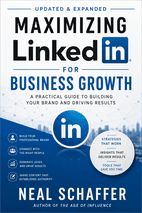
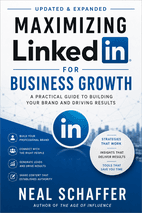
Maximizing LinkedIn for Business Growth, Updated and Expanded
Introduction
Chapter 1/4
Lang
1x
Voice
PDF
0:00
0:00
Maximizing LinkedIn for Business Growth, Updated and Expanded
by Neal Schaffer · Summary updated
What is the book Maximizing LinkedIn for Business Growth, Updated and Expanded about?
Neal Schaffer's Maximizing LinkedIn for Business Growth, Updated and Expanded provides a complete, step-by-step system for turning a LinkedIn profile into a lead-generation and relationship-building engine, covering profile optimization, engagement strategies, AI tools, and a daily playbook for professionals, business owners, and job seekers who want consistent, authentic success.
Feature
Insta.Page
Blinkist
Shortform
Summary Depth
Full Chapter-by-Chapter
15-min overview
Section-by-section guides
Audio Narration
✓ (AI narration)
✓
✓
Visual Mindmaps
✓
✕
✕
AI Q&A
✓ Voice AI
✕
✕
Quizzes
✓
✕
✕
PDF Downloads
✓
✕
✓
Price
$59.99/yr
$146/yr (PRO)
$199/yr
*Competitor data last verified February 2026.
About the Author
Neal Schaffer
Neal Schaffer is a digital marketing strategist, speaker, and author who specializes in helping businesses maximize their social media and online presence. He is best known for his books "Maximize Your Social" and "The Age of Influence," which draw on his expertise in social media marketing and his career as a former technology executive. With over a decade of experience, Schaffer also runs a popular blog and consulting firm, advising brands on leveraging social networks for sustainable growth.
1 Page Summary
From the outset, this book establishes LinkedIn as a platform that has fundamentally evolved from a digital resume repository into a powerful engine for professional branding, lead generation, and business growth. The central thesis is that success on LinkedIn today requires a deliberate, strategic approach focused on relationship-building and authentic engagement, rather than outdated tactics. The author emphasizes that the platform is uniquely influential, boasting a concentrated user base of decision-makers and high-earners, and that a professional's personal presence there is a critical strategic asset. The book’s core promise is to provide a playbook for the current LinkedIn landscape, helping readers identify which older practices still hold value and revealing effective new strategies for positioning themselves so that opportunities find them.
The author’s approach is highly practical and systematic, distinguishing this book as a comprehensive, step-by-step guide rather than a theoretical overview. The process begins with optimizing one's LinkedIn profile as a living inbound marketing tool, emphasizing visual branding and a mindset shift toward architecting one's professional future. It then moves through building a high-quality, trusted network, leveraging the unique structure of LinkedIn connections, and establishing credibility through third-party recommendations. The book dedicates significant attention to the art of engagement—shifting users from passive observers to active participants—and provides a clear framework for prospecting and creating resonant content, supported by an understanding of the platform’s algorithm. A distinctive feature is its modern, practical take on leveraging AI, introducing the ASKNEAL™ Framework for using tools like ChatGPT as a creative partner, while explicitly steering clear of automation bots that risk a ban.
The intended audience is broad, encompassing professionals across all departments—from sales and marketing to HR, engineering, and finance—as well as business owners and job seekers. The key takeaway for readers is a complete, adaptable system for maximizing LinkedIn, including actionable advice on when free versus paid subscriptions are necessary, the critical importance of using a Personal CRM to organize inbox conversations, and how to create a repeatable daily playbook for consistent success. The book is grounded in real-world success stories, such as a consultant landing a seven-month contract through careful profile keyword selection and a status update sparking a speaking gig, illustrating that with consistent, authentic effort, the right opportunities will follow.
More ways to explore Maximizing LinkedIn for Business Growth, Updated and Expanded
LinkedIn has transformed far beyond the digital resume repository it was when Neal Schaffer wrote his first two books on the platform. What once served primarily as a networking tool is now a powerhouse for professional branding, lead generation, content creation, and career growth. Drawing on years of helping thousands of professionals and businesses, Schaffer set out to write a playbook that works today—not one stuck in the strategies of five or ten years ago. The rapid pace of change, especially with the rise of AI, made an updated edition necessary even within a year of the original publication. This book aims to future-proof its teachings so readers can stay effective as LinkedIn continues to evolve.
The introduction outlines several core promises: identifying which older LinkedIn practices still hold value, revealing the most effective new strategies for relationship-building and business growth, helping readers position themselves so opportunities find them, and providing step-by-step actions for profile improvement, network expansion, and purposeful engagement. It also offers a complete, adaptable system tailored to individual goals and industries. Before diving in, Schaffer provides exclusive free resources—including a 30-day quick start checklist, his personal ASKNEAL™ AI framework, and a content calendar—available at nealschaffer.com/linkedinresources. He also invites readers to connect with him on LinkedIn.
A brief disclaimer clarifies that any tool names mentioned in the book come from personal experience, client use, or market research. Some companies may have provided gifted access or affiliate arrangements, but no one paid for inclusion; recommendations are based solely on merit.
Key Takeaways
LinkedIn has evolved from a resume/networking tool into a dynamic engine for brand building, lead generation, and career opportunities.
The book provides current, proven strategies that account for rapid platform changes and the impact of AI.
Five free resources are available to accelerate implementation, along with a personal invitation to connect with the author on LinkedIn.
Tool recommendations are genuine and not paid for, though some may involve affiliate relationships.
Key concepts: Introduction
1. Introduction
LinkedIn's Evolution
Transformed from digital resume to professional powerhouse
Now drives branding, lead generation, and content
Rapid changes, especially AI, required updated strategies
Core Promises of the Book
Identify which old LinkedIn practices still work
Reveal new strategies for relationship-building and growth
Help position yourself so opportunities find you
Provide step-by-step actions for profile and network
Future-Proofing Approach
Strategies work today, not five years ago
Adaptable system tailored to individual goals
Accounts for ongoing platform evolution
Free Resources Offered
30-day quick start checklist available
Personal ASKNEAL™ AI framework included
Content calendar for consistent engagement
Access at nealschaffer.com/linkedinresources
Tool Recommendations Disclaimer
Mentions based on personal experience or client use
No paid inclusion, only merit-based recommendations
Some may involve affiliate relationships
If you like this summary, you probably also like these summaries...
💡 Try clicking the AI chat button to ask questions about this book!
Chapter 2: 1. LinkedIn Statistics: Understanding the Platform’s Impact
Overview
LinkedIn may not be the largest social network—sitting at about 1.2 billion members compared to Facebook's 3 billion—but its influence punches far above its weight. This chapter unpacks the numbers that make LinkedIn a uniquely powerful platform for professionals and businesses. From its origins in 2003 as a closed network of trusted connections to its current status as the go-to space for decision makers and high-earners, the statistics reveal a platform that rewards thoughtful participation. Understanding these numbers is the first step toward unlocking LinkedIn's potential for your own career or business.
Not the Biggest, but Highly Influential
LinkedIn’s growth has been deliberate. Its privacy features—degrees of separation and restricted network expansion—kept it smaller than Facebook, Instagram, or TikTok. Yet in key markets, LinkedIn actually leads: it has more users in the United States, the United Kingdom, and France than Facebook does. While Facebook truly spans the globe, LinkedIn’s strength remains concentrated in North America and Western Europe, making it an elite playground for professionals in those regions.
A Platform for Decision Makers and High Earners
LinkedIn’s user base is far from random. Over half of U.S. college graduates are members, and 80% of B2B leads generated through social media come from LinkedIn. More telling: four out of five LinkedIn members drive business decisions in their organizations. Fortune 500 companies get it—99% of them use LinkedIn. And the wallet? Over 53% of U.S. LinkedIn users earn more than $100,000 a year. This is a community of buyers, investors, and influencers, not casual scrollers.
Content That Stays Visible and Trusted
Here’s a stat that should grab your attention: LinkedIn posts get 15 times more impressions than job postings on the same platform. The average LinkedIn post lives in feeds for 24 hours—compared to just over an hour on Facebook. A former LinkedIn employee even suggested the algorithm grants a reach window of about a week. Combine that longevity with LinkedIn consistently ranking as one of the most trusted social media platforms, and you have a recipe for building genuine authority. Less noise, more trust, and a much longer shelf life for your content.
Key Takeaways
LinkedIn’s 1.2 billion members are concentrated among professionals, decision makers, and high-income earners in the U.S. and Western Europe.
80% of B2B social media leads originate on LinkedIn, and 99% of Fortune 500 companies are active here.
Organic content on LinkedIn enjoys far longer visibility than on other networks—up to a week of algorithmic reach.
Users trust LinkedIn more than most platforms, creating a fertile environment for thought leadership and business development.
The platform’s focused demographics make it the premier space for serious professional networking, not casual socializing.
Key concepts: 1. LinkedIn Statistics: Understanding the Platform’s Impact
2. 1. LinkedIn Statistics: Understanding the Platform’s Impact
Not the Biggest, but Highly Influential
1.2 billion members, smaller than Facebook's 3 billion
Leads in US, UK, and France over Facebook
Strength concentrated in North America and Western Europe
Deliberate growth with privacy features
A Platform for Decision Makers and High Earners
Over half of U.S. college graduates are members
80% of B2B leads come from LinkedIn
Four out of five members drive business decisions
53% of U.S. users earn over $100,000 yearly
Content That Stays Visible and Trusted
Posts get 15 times more impressions than job postings
Average post lives 24 hours in feeds
Algorithm grants reach window of about a week
LinkedIn ranks as one of the most trusted platforms
Elite Professional Demographics
99% of Fortune 500 companies use LinkedIn
Community of buyers, investors, and influencers
Not casual scrollers but serious professionals
Key Takeaways for Strategy
Focused demographics make it premier for networking
Organic content enjoys far longer visibility
Fertile environment for thought leadership
Rewards thoughtful participation over casual use
⚡ You're 2 chapters in and clearly committed to learning
Why stop now? Finish this book today and explore our entire library. Try it free for 7 days.
Chapter 3: 2. How LinkedIn Is Used Today for Business
Overview
Back in 2011, the advice was simple: get every sales and marketing employee on LinkedIn to boost company visibility. Today, that advice feels almost quaint. Social media has permeated every department, companies have woken up to the power of employee advocates, and using LinkedIn professionally is simply normal. Whether you're in HR, engineering, or finance, understanding how LinkedIn serves the whole business is now a foundational skill. And here’s the kicker: people trust employees more than executives or PR departments, so your personal presence isn't just nice to have—it's a strategic asset.
Recruiting and Talent Acquisition
This is LinkedIn's oldest and still most powerful use case. The old "who you know" rule plays out in two directions: job seekers can tap their network to find warm introductions at target companies, while recruiters actively search for talent using tools like LinkedIn Recruiter. The paid LinkedIn Premium Career service even promises users a 43% higher chance of getting a reply from a recruiter. But limiting LinkedIn to just job hunting is leaving serious business value on the table.
Sales and Social Selling
For B2B sales professionals, LinkedIn is a goldmine. Social selling—using social media as part of the sales process—lets you find decision-makers by industry, job title, or company. You can connect directly or use warm introductions through mutual contacts. Tools like Sales Navigator and InMail turbocharge this process, but the core idea is simple: build relationships first, sell second.
Marketing
Marketers use LinkedIn in two primary ways: organic content and paid ads. Simply having a company page with leadership profiles establishes credibility, but the real muscle comes from publishing helpful content on personal profiles and running targeted ads. LinkedIn claims marketers see up to 2x higher conversion rates, and that audiences exposed to both brand and acquisition messages are 6x more likely to convert. It's the top-rated platform for B2B lead generation.
Your Company Page: Supporting Cast, Not the Star
Here's the hard truth: personal profiles crush company pages on reach, engagement, and trust. LinkedIn's algorithm favors human connections over corporate noise. Your personal profile should get 90% of your effort—optimization, networking, content creation. The company page is for social proof: make it look professional, post occasionally, but never treat it as the main event. People connect with people, not logos.
Employee Advocacy
Smart companies now realize their employees are their most credible voices. Surveys consistently show that people trust employees more than CEOs or PR departments. When employees share authentic stories about their work—without corporate spin—it humanizes the brand and builds genuine trust. The result? Greater visibility, credibility, and a competitive edge in attracting customers and talent.
Employer Branding
LinkedIn is the number one platform for showing job seekers what it's really like to work at your company. In a tight labor market, a strong employer brand makes hiring easier and cheaper. Companies are weaving employee advocacy into employer branding—letting real employees share their experiences, leveraging the company page, and using testimonials to attract top talent.
Thought Leadership
For professionals at any level, being seen as an expert in your field opens doors. Executives, marketers, consultants—all use LinkedIn to share insights, comment on trends, and publish original content. Some companies formalize this with thought leadership marketing programs, strategically positioning key leaders as go-to voices. Posting regularly builds authority and trust, making you and your company the first call when someone needs expertise.
Key Takeaways
LinkedIn is far more than a job board: it's a hub for recruiting, sales, marketing, advocacy, branding, and thought leadership.
Your personal profile outperforms your company page every time—invest 90% of your effort there.
Employee voices are more trusted than executive messaging, making employee advocacy a powerful growth lever.
Thought leadership isn't optional for ambitious professionals; it's how you differentiate and build lasting influence.
LinkedIn’s value extends to every department, not just sales and marketing.
Key concepts: 2. How LinkedIn Is Used Today for Business
3. 2. How LinkedIn Is Used Today for Business
Recruiting and Talent Acquisition
Oldest and most powerful use case
Job seekers tap networks for warm introductions
Recruiters use LinkedIn Recruiter to find talent
Premium Career boosts reply chances by 43%
Sales and Social Selling
Find decision-makers by industry or title
Build relationships first, sell second
Tools like Sales Navigator and InMail help
Warm introductions through mutual contacts
Marketing and Lead Generation
Organic content and paid ads both work
Personal profiles outperform company pages
Up to 2x higher conversion rates reported
Top-rated platform for B2B lead generation
Employee Advocacy and Employer Branding
Employees more trusted than CEOs or PR
Authentic stories humanize the brand
Strong employer brand makes hiring easier
Real employee experiences attract top talent
Thought Leadership
Being seen as an expert opens doors
Share insights and comment on trends
Formal programs position leaders as voices
Builds authority and lasting influence
Chapter 4: 3. Optimizing Your LinkedIn Profile for Maximum Impact
Overview
Your LinkedIn profile isn’t a static résumé—it’s a living, breathing inbound marketing tool that works for you around the clock. Every action you take on the platform points back to it, and a quick Google search for your name will likely land it near the top of results. That means your profile is your default professional homepage on the internet. The more detail you provide, the more easily past colleagues and future opportunities can find you. Think of it as telling your story to attract exactly the people you want to engage with. And here’s the mindset shift that matters: you’re not just documenting where you’ve been; you’re architecting where you’re going.
Lead with Visual Branding
First impressions happen fast—your cover photo and profile picture are the front door. Don’t leave the default cover image in place. Use it to showcase your personal brand: promote a project, your company’s values, or even your city. Swap it out as your priorities change. Your profile photo deserves equal care. Adding one makes your profile 21 times more likely to be viewed and 36 times more likely to receive a message. Professional headshots boost perceived influence by over 60%. Dress for your industry, smile genuinely, and let your face fill about 60% of the frame. Update the photo every two to three years so it always feels current.
Craft a Headline That Stops the Scroll
Your headline is your personal billboard in search results. It needs to make it obvious that you’re relevant. The winning approach? Start by getting crystal clear on who you want to attract—what problems do they have, what words would they search for? Then make your headline search-friendly by weaving in those keywords naturally. Finally, pick a proven formula that fits. Whether you’re a problem-solver (“Helping X Do Y”), a social proof builder (“Trusted by Fortune 500 Brands”), or a mission-driven professional, test different versions and track which one drives the most profile views. Your headline isn’t permanent; it’s an experiment.
Write an About Section That Connects
After someone sees your headline, they’ll land on your About summary. This is your chance to deepen the connection. Write in the first person, share personal stories and motivations, and quantify achievements whenever possible. Break up the text with white space and symbols to keep it visually scannable. Always end with a clear call to action—invite readers to connect, email you, or visit a website. Make it easy for them to take the next step.
Use Featured Content as a Visual Hook
Right below the About section lies a powerful spot for dynamic visuals: the Featured section. Here you can add a newsletter, a link to a key article, a YouTube video, or upload PDFs, images, and documents. This section stops the scroll and immediately showcases your best work, awards, or content you want to promote. Update it regularly to keep your profile fresh and strategic. Don’t skip this—it’s one of the most underutilized opportunities on LinkedIn.
Don’t Neglect the Experience Section
It’s tempting to treat the Experience section as an afterthought, but this is where you build credibility and create additional connection points with past colleagues and prospects. Include all relevant work history, not just your most recent role. For each position, detail your responsibilities and—critically—quantifiable achievements that show how you added value. This section also feeds your keyword strategy, so use natural language that aligns with what your ideal audience would search for.
Keywords Are Your Search Engine Fuel
Your profile needs to be findable. Integrate relevant keywords naturally across your headline, About section, and experience descriptions. Think about the exact terms potential clients or employers would type into LinkedIn’s search bar. The more you align your language with their search behavior, the higher you’ll rank. And don’t forget: additional sections like skills, certifications, projects, and honors give you more real estate for keywords and a fuller picture of your professional story.
Go Beyond the Basics with Extra Sections
LinkedIn offers a wealth of optional sections that help you stand out. Consider adding licenses & certifications if they’re crucial to your field, courses to show continuous learning, and volunteer experience or organizations to reveal your human side. If you hold a patent, speak another language, or have received honors, feature those. Each extra section adds depth and differentiation, making your profile more memorable.
Claim Your Vanity URL
Once your profile is polished, take one final step: customize your public profile URL so it’s clean and brandable (e.g., linkedin.com/in/yourname). This simple change makes your profile easier to share, looks professional on business cards and email signatures, and reinforces your personal brand.
Key Takeaways
Your LinkedIn profile is an inbound marketing tool, not a résumé—optimize it to attract your ideal audience.
Visuals matter: a professional photo and branded cover image dramatically increase engagement.
Your headline must be search-friendly, audience-focused, and tested regularly for best results.
The About section should tell a compelling story with a clear call to action.
Use the Featured section to showcase your best visual assets and keep your profile dynamic.
Fill out work history completely with quantifiable achievements and target keywords.
Leverage additional sections like certifications, volunteer work, and honors to differentiate yourself.
Always customize your public profile URL for a polished, brandable finish.
Key concepts: 3. Optimizing Your LinkedIn Profile for Maximum Impact
4. 3. Optimizing Your LinkedIn Profile for Maximum Impact
Visual Branding
Use a professional profile photo for 21x more views
Custom cover image to showcase personal brand
Smile genuinely, fill 60% of frame with face
Update photo every 2-3 years
Headline Optimization
Make it search-friendly with target keywords
Use proven formula: problem-solver or social proof
Test different versions and track profile views
Headline is an experiment, not permanent
About Section Storytelling
Write in first person with personal stories
Quantify achievements and use white space
End with clear call to action
Make it scannable with symbols
Featured & Experience Sections
Add dynamic visuals in Featured section
Include all relevant work history
Detail quantifiable achievements per role
Use natural keywords in descriptions
Search Engine Optimization
Integrate keywords across headline, About, experience
Add extra sections: certifications, volunteer work
Customize public profile URL for branding
Align language with ideal audience search terms
Frequently Asked Questions about Maximizing LinkedIn for Business Growth, Updated and Expanded
What is Maximizing LinkedIn for Business Growth, Updated and Expanded about?
This book provides a comprehensive playbook for leveraging LinkedIn's current features to build a professional brand, generate leads, and grow a business. It covers optimizing your profile as an inbound marketing tool, building a quality network, creating resonant content, and using AI strategically. The author emphasizes moving beyond outdated tactics and offers a repeatable daily routine, supported by real-world case studies of professionals who achieved tangible outcomes like landing contracts and speaking gigs.
Who is the author of Maximizing LinkedIn for Business Growth, Updated and Expanded?
Neal Schaffer is a recognized expert on LinkedIn who has written multiple books on the platform and helped thousands of professionals and businesses achieve results. He draws on years of hands-on experience, including assisting companies with social selling and employee advocacy. The author also provides exclusive free resources, such as a 30-day quick start checklist and his personal ASKNEAL™ AI framework, to support readers.
Is Maximizing LinkedIn for Business Growth, Updated and Expanded worth reading?
Absolutely—this book delivers up-to-date strategies that work on LinkedIn today, not advice from five or ten years ago. It’s packed with practical, step-by-step actions for profile improvement, network expansion, and purposeful engagement, all backed by real success stories. Whether you're a solo consultant or part of a large organization, the insights on AI integration and building a daily playbook make it a valuable investment for anyone serious about using LinkedIn for business growth.
What are the key lessons from Maximizing LinkedIn for Business Growth, Updated and Expanded?
One core lesson is that your LinkedIn profile is a living inbound marketing tool, not a static resume—optimizing it with visual branding and keywords helps opportunities find you. Building a network is about cultivating trusting relationships, not just accumulating connections, and regular, thoughtful engagement is more valuable than sporadic activity. Additionally, creating content that mixes professional expertise with personal authenticity boosts visibility, while using AI with the ASKNEAL™ framework can streamline content creation without losing your unique voice. Finally, implementing a personal CRM system to manage inbox conversations is crucial for turning relationships into long-term opportunities.
📚 Explore Our Book Summary Library
Discover more insightful book summaries from our collection