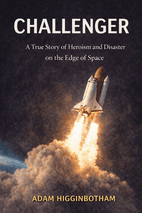
Adam Higginbotham's Challenger provides a definitive, minute-by-minute account of the 1986 Space Shuttle disaster, meticulously tracing the flawed institutional culture and technical failures that led to catastrophe. This narrative history is for readers of investigative journalism seeking a profound human and engineering case study.
Feature
Insta.Page
Blinkist
Shortform
Summary Depth
Full Chapter-by-Chapter
15-min overview
Detailed analysis
Audio Narration
✓ (AI narration)
✓
✓
Visual Mindmaps
✓
✕
✕
AI Q&A
✓ Voice AI
✕
✕
Quizzes
✓
✕
✕
PDF Downloads
✓
✕
✓
Price
$59.99/yr
$146/yr (PRO)
$199/yr
*Competitor data last verified February 2026.
About the Author
Adam Higginbotham
Adam Higginbotham is a British journalist and author best known for his deeply researched narrative nonfiction, particularly his expertise in chronicling technological disasters. His acclaimed book *Midnight in Chernobyl: The Untold Story of the World's Greatest Nuclear Disaster* won the Andrew Carnegie Medal for Excellence in Nonfiction. He has written for major publications like *The New Yorker* and *The New York Times Magazine*, often focusing on science, technology, and history.
1 Page Summary
Adam Higginbotham’s Challenger: A True Story of Heroism and Disaster on the Edge of Space is a definitive, minute-by-minute account of the 1986 Space Shuttle disaster, which killed seven astronauts and shattered NASA’s aura of invincibility. The book’s central thesis is that the catastrophe was not a simple technical failure but the inevitable result of a deeply flawed institutional culture. Higginbotham meticulously traces the history of the shuttle program, revealing how relentless political pressure, bureaucratic complacency, and a dangerous normalization of risk—particularly regarding the known flaws in the solid rocket booster O-rings—created a perfect storm. The narrative builds with the tension of a thriller, showing how warnings from engineers were repeatedly ignored or overruled by managers desperate to maintain an ambitious launch schedule.
Higginbotham’s approach is distinguished by his masterful synthesis of technical detail, corporate and political history, and deeply human storytelling. Drawing on extensive archival research, newly released documents, and interviews with many key figures—including NASA officials, Thiokol engineers, and the families of the crew—he reconstructs the events with novelistic depth. The book goes far beyond the infamous teleconference the night before the launch, exploring the shuttle program’s origins in Cold War politics and the decades of decisions that led to that frigid Florida morning. What makes the account particularly powerful is its balanced focus, giving equal weight to the complex engineering saga and the poignant, personal stories of the astronauts lost, making the tragedy feel both meticulously explained and profoundly human.
Intended for readers of narrative nonfiction, history, and compelling investigative journalism, this book serves as both a gripping chronicle of a national trauma and a timeless case study in organizational failure. Readers will gain a comprehensive understanding of the technical and human factors behind the disaster, far beyond the common public perception. Higginbotham delivers a sobering reminder of the consequences when institutional pride and process override safety and sound judgment, ensuring that Challenger is not just a history of a past event but a crucial lesson for the future of technological endeavor.
Chapter 1: Prologue
Overview
The prologue opens in the tense, quiet atmosphere of NASA's Flight Control Room in Houston on the morning of the Challenger launch. It establishes Steve Nesbitt, the chief commentator, as our focal point—a dedicated public affairs officer grappling with a cold, terrible coffee, and the immense responsibility of narrating the shuttle's ascent to the world. The narrative meticulously builds the routine procedures and high-stakes environment of Mission Control, only to shatter it with the catastrophic loss of the shuttle 73 seconds into its flight. The section closes on Nesbitt's agonized silence and his fateful, understated announcement of "a major malfunction," before transitioning to Part One: "The Last Man on the Moon."
The Voice of Mission Control
We are introduced to Steve Nesbitt, a seasoned but nervous NASA public affairs officer serving as the chief commentator. His job is to translate the complex, technical data from the flight controllers into clear, sober commentary for the global public watching the launch. He relies on an Ascent Events List and a bank of real-time telemetry data, listening to dozens of internal audio loops while ignoring the new TV monitor to focus on the cold numbers on his screen. He is deeply committed to factual, unadorned reporting and is acutely aware that once the shuttle clears the tower, the live narration is entirely in his hands.
A Routine Ascent Turns Catastrophic
The countdown proceeds despite freezing weather at the launchpad. Nesbitt begins his commentary as Challenger lifts off, calmly reporting its progress: the roll program, engine throttling, and velocity. The flight surgeon beside him watches the beautiful ascent on television, while Nesbitt sticks to his data. At T+68 seconds, he confirms the shuttle has throttled its main engines back up to 104 percent. Moments later, at T+72 seconds, a loud crackle bursts in his headset. Simultaneously, the flight surgeon sees the shuttle vanish into a sudden fireball. For a few seconds, Nesbitt continues reading the now-frozen data from his monitors before looking up to see the horrific image on the TV screen.
The Weight of Silence
In the aftermath of the explosion, the control room is stunned into silence. Nesbitt’s data feeds are dead, and the Flight Director finds no immediate answers from his team. With debris falling toward the ocean, Nesbitt is gripped by the duty to speak to the public and the astronauts' families, but also by a profound fear of making a catastrophic error in his reporting. He recalls a past mistake by a news anchor during the assassination attempt on President Reagan. An agonizing 41 seconds of dead air pass on the NASA commentary loop before he finally keys his microphone and delivers the grim, historic assessment: "Flight controllers here looking very carefully at the situation. Obviously a major malfunction."
Key Takeaways
The prologue establishes the precise, data-driven, and highly pressurized environment of NASA's Mission Control.
Steve Nesbitt is characterized as a dedicated professional whose core principle is accurate, responsible public communication.
The tragedy of the Challenger disaster is framed through a dual perspective: the clinical telemetry data and the visceral, horrifying visual evidence.
Nesbitt's prolonged silence and his ultimate, understated phrase—"a major malfunction"—powerfully underscore the shock, confusion, and immense burden of bearing witness to a national tragedy in real time.
Key concepts: Prologue
1. Prologue
The Voice of Mission Control
Steve Nesbitt serves as chief commentator, translating technical data for public broadcast
Relies on Ascent Events List and telemetry data, ignoring visual feeds for factual accuracy
Acutely aware of responsibility for live narration once shuttle clears launch tower
Represents NASA's commitment to sober, unadorned public communication
A Routine Ascent Turns Catastrophic
Launch proceeds despite freezing weather conditions at the pad
Nesbitt reports normal progress through roll program and engine throttling
At T+72 seconds, loud crackle in headset coincides with visual explosion on TV
Contrast between clinical data reporting and sudden visual horror of disaster
The Weight of Silence
Control room stunned into silence as data feeds go dead
Nesbitt grapples with duty to public versus fear of catastrophic error
41 seconds of dead air before his historic announcement
Understated phrase 'a major malfunction' captures shock and burden of witness
Key Themes and Significance
Tension between data-driven precision and human tragedy
Professional responsibility in moments of national crisis
Dual perspective: clinical telemetry versus visceral visual evidence
Establishment of narrative framework for examining the Challenger disaster
Scroll to load interactive mindmap
If you like this summary, you probably also like these summaries...
💡 Try clicking the AI chat button to ask questions about this book!
Chapter 2: Chapter One: Fire on Pad 34
Overview
It begins with a quiet moment of domestic life shattered by tragedy, as Martha Chaffee answers her door to learn her husband is gone. This personal loss immediately grounds the high-stakes world of space exploration in heartbreaking reality, introducing the close-knit community of astronauts and families who shared the risk. The story then turns to the three men lost aboard Apollo 1: the veteran commander Gus Grissom, the celebrated hero Ed White, and the dedicated rookie Roger Chaffee, capturing their camaraderie and the immense pressure they faced together.
That pressure stemmed from the relentless Race to the Moon, a national crusade born of Cold War rivalry. With technology being invented on the fly, the push to meet President Kennedy’s deadline created a breakneck pace. Within this environment, the specific spacecraft assigned to them, Spacecraft 012, was plagued with profound flaws. The astronauts themselves discovered shoddy workmanship, miles of frayed wiring, and a dangerously cumbersome hatch during visits to the contractor’s plant.
A cornerstone of the danger was the decision to use a pure oxygen cabin atmosphere, which, while simpler to engineer, created an environment where almost anything could ignite explosively. Warnings about this risk existed but were often drowned out by the culture of "Go' Fever"—the overwhelming drive to stick to the schedule. Despite written predictions of disaster and Grissom’s own furious anxiety, concerns about the spacecraft's flammable materials and faulty systems were ultimately dismissed or deferred.
The narrative follows the crew’s final, tense days as problems with the spacecraft persisted right up to the launch pad. On January 27, 1967, they entered the capsule for a routine "plugs-out" test. Sealed inside a pressurized oxygen tomb, they battled frustrating communications failures for hours. Then, in a fleeting, eighteen-second catastrophe, a spark became an inferno. The crew’s calm report—“We've got a fire in the cockpit”—turned to a desperate, garbled plea as flames engulfed the cabin, overwhelming all rescue attempts. The aftermath revealed a scene of utter devastation, marked by a single, haunting handprint melted into the hatch, a silent testament to the frantic struggle within. This tragedy, born of overlooked dangers and relentless pressure, would forever change NASA’s approach to safety and design.
A Knock at the Door
The chapter opens with Martha Chaffee’s world shattering. As she prepares dinner for her children in their Houston home, the unexpected appearance of astronaut Michael Collins at her door delivers the unspoken news of her husband’s death. The tight-knit astronaut community in “Togethersville” had already begun to gather, a silent testament to the tragedy unfolding at Cape Canaveral. It was January 27, 1967.
The Crew of Apollo 1
The narrative then introduces the three astronauts lost in the fire. Roger Chaffee, at 31, was the rookie—a dedicated Navy pilot and engineer, devoted family man, and the youngest of the crew. Mission commander Gus Grissom was a veteran, the second American in space, known for his blunt, no-nonsense demeanor. Senior pilot Ed White was a national hero, famous for his pioneering spacewalk. The chapter paints a picture of their camaraderie, with Chaffee looking up to Grissom, and the shared, immense pressure they faced.
The Race to the Moon
The assignment of Apollo 1 occurred within the frenetic context of the Cold War space race. After President Kennedy’s 1961 pledge to land on the moon, NASA had scrambled to catch up to early Soviet leads. Successes like John Glenn’s orbital flight and Ed White’s spacewalk had built momentum, but the technology for the lunar mission—the Saturn V rocket and the Apollo spacecraft—was still being invented, with daunting problems at every turn.
A Troubled Spacecraft
The core of the section details the profound flaws in Spacecraft 012. During visits to the North American Aviation plant in Downey, California, the astronauts found poor workmanship and dangerous design. Key failures included a leak-prone environmental control system that had already caught fire in tests, miles of poorly installed and frayed electrical wiring, and a notoriously cumbersome three-layer hatch that would take a minimum of 40 seconds to open from inside—a feature the astronauts universally hated but which program manager Joe Shea refused to change due to cost and schedule.
The Oxygen Environment
A critical and fatal decision was NASA’s insistence on a pure oxygen cabin atmosphere, pressurized to 16.7 psi. While simplifying the life-support system, this created an extraordinarily flammable environment. Internal NASA documents from 1963 acknowledged that in such conditions, even “human skin” could burst into flame. The official stance was that fires must be “precluded at all costs,” yet the cabin was filled with flammable nylon netting and Velcro used to secure items in zero-gravity.
Warnings Ignored
Despite clear dangers, a culture of “‘Go’ Fever”—an overwhelming pressure to meet schedules—dominated. At a key review meeting, Shea lightly ordered the flammable materials be cleaned up, but the directive was never followed. Gus Grissom grew increasingly furious and anxious about the spacecraft’s condition, privately telling a colleague that if he complained too loudly, “they’ll fire me.” A stark written warning from a General Electric safety consultant, predicting a fatal first fire in a spacecraft, was acknowledged by Shea but ultimately dismissed by his deputies.
The Final Days
In the weeks leading to the test, tensions were high. The spacecraft arrived at Cape Canaveral half-finished. Grissom, frustrated by persistent communications problems, even suggested Shea join them in the capsule for the upcoming “plugs-out” test to witness the issues firsthand. On the morning of January 27, 1967, the crew suited up under a clear Florida sky. As they prepared for the full-dress rehearsal, Shea departed for Houston, leaving the three astronauts to ascend the gantry of Launch Pad 34 and enter the flawed Spacecraft 012 for the final time.
Sealing the Capsule and Initial Conditions
Over an hour was needed for the pad crew to seal the hatches of Spacecraft 012, with one requiring forceful pounding to close. Inside the cramped, eight-foot-square cabin, astronauts Gus Grissom, Ed White, and Roger Chaffee settled into their couches, surrounded by instrument panels under a low, angled ceiling. The atmosphere was replaced with pure oxygen and pressurized to 16.7 pounds per square inch, sealing the inner hatch as tightly as a champagne cork.
Mounting Technical Issues
Trouble began almost immediately. The environmental control system triggered master alarms, and radio communication with ground controllers kept failing, forcing the astronauts to strain through static to hear instructions. As hours passed, air traffic control chatter even bled into their channels. By 6:20 p.m., with the simulated launch just ten minutes away, the countdown was paused so Grissom could troubleshoot, but frustration boiled over. "How are we going to get to the moon," Grissom snapped over the radio, "if we can’t talk between three buildings?" Ed White had to inform him the controllers couldn't hear his complaint, prompting Grissom's exasperated, "Jee-sus Christ!"
The Outbreak of Fire
After thirty seconds of silence, telemetry showed a voltage surge and a spike in Ed White's pulse and respiration. At a few seconds past 6:31 p.m., a sharp "Hey!" crackled over the radio, followed by Roger Chaffee's calm, disciplined report: "We've got a fire in the cockpit." Controllers in Cape Canaveral and Houston were stunned; one engineer turned to his colleague asking, "Did he say, ‘Fire’?" On a TV monitor, an RCA technician saw a bright glow through the cockpit window, then flames flickering, and Ed White's hands reaching for the hatch bolts. Chaffee's voice returned, now urgent and garbled: "We've got a bad fire—let's get out... We're burning up!" Flames soon obscured the view, and a horrific sound, like a scream, echoed over the channel before silence fell—all within eighteen seconds.
Desperate Rescue Attempts
On the gantry's Level A8, the pad leader heard "fire" and shouted, "Get them out of there!" A loud whoosh and explosion followed, showering the area with flame and debris, throwing a technician backward. Smoke and flames billowed through the walkway, forcing the crew to retreat for gas masks. They returned with a single fire extinguisher and, crawling through choking smoke, spent five grueling minutes prying the hatches open.
Aftermath and Grim Discovery
Inside, the cabin was blackened and smoldering, lit only by amber warning lamps. Grissom and White lay at the hatch, their pressure suits fused together, while Chaffee remained strapped to his couch, having maintained communications until the end. A single handprint, etched in soot, was melted into the Teflon surface of the inner hatch. Overwhelmed, the pad leader radioed the blockhouse, saying quietly, "I can't describe what I see."
Key Takeaways
The test's pure oxygen environment, combined with pressurized sealing, created a tinderbox-like condition that turned a minor spark into a catastrophic blaze.
Persistent communication failures and technical glitches during the simulation exposed critical flaws in spacecraft design and operational procedures.
The fire's rapid escalation—from alarm to tragedy in just 18 seconds—highlighted the lethal speed of emergencies in oxygen-rich capsules.
Rescue efforts were severely hampered by inadequate safety measures, including the lack of immediate fire teams and difficult hatch mechanisms.
This devastating event prompted sweeping NASA reforms, leading to redesigned hatches, replaced flammable materials, and enhanced emergency protocols for all future missions.
Key concepts: Chapter One: Fire on Pad 34
2. Chapter One: Fire on Pad 34
The Personal Tragedy
Martha Chaffee's world shatters with news of her husband's death
The tight-knit astronaut community gathers in silent witness
The human cost grounds the high-stakes space program in reality
The Crew of Apollo 1
Gus Grissom: Veteran commander, blunt and experienced
Ed White: National hero known for first American spacewalk
Roger Chaffee: Dedicated rookie engineer and family man
Strong camaraderie under immense shared pressure
The Race to the Moon Context
Cold War rivalry driving relentless schedule pressure
Technology being invented on the fly to meet Kennedy's deadline
Early Soviet leads creating urgency in American space program
Spacecraft 012 Flaws
Shoddy workmanship and dangerous design discovered by astronauts
Leak-prone environmental control system with prior fire history
Miles of poorly installed and frayed electrical wiring
Cumbersome three-layer hatch requiring 40+ seconds to open
The Pure Oxygen Environment
NASA's decision for simpler engineering created explosive risk
16.7 psi pure oxygen atmosphere made almost anything flammable
Internal documents acknowledged even human skin could ignite
Cabin filled with flammable materials like nylon netting and Velcro
Warnings and 'Go' Fever Culture
Overwhelming pressure to meet schedules drowned out safety concerns
Grissom's furious anxiety about spacecraft condition
Written prediction of fatal spacecraft fire dismissed by management
Directives to remove flammable materials never implemented
The Final Test and Catastrophe
January 27, 1967 'plugs-out' test on launch pad
Crew sealed in pressurized oxygen environment for hours
Communication failures during test procedures
Eighteen-second inferno from spark to fatal blaze
Haunting handprint melted into hatch as testament to struggle
Prelude to the Test
Tensions were high in the weeks leading to the test, with the spacecraft arriving at Cape Canaveral half-finished.
Astronaut Gus Grissom, frustrated by persistent communications problems, suggested manager Joe Shea join them in the capsule to witness the issues firsthand.
On the morning of January 27, 1967, the crew suited up under a clear sky, with Shea departing for Houston before they entered the flawed Spacecraft 012.
Capsule Sealing and Hazardous Environment
Sealing the hatches took over an hour, with one requiring forceful pounding to close.
The astronauts were sealed inside a cramped, eight-foot-square cabin under a low, angled ceiling.
The atmosphere was replaced with pure oxygen and pressurized to 16.7 psi, creating a tinderbox-like condition.
Cascading Technical Failures
Trouble began immediately with master alarms from the environmental control system and persistent radio communication failures.
Air traffic control chatter bled into their channels, adding to the confusion.
By 6:20 p.m., with the simulated launch ten minutes away, frustration boiled over, highlighted by Grissom's exasperated complaint about communication failures.
The Catastrophic Fire
The fire outbreak was signaled by a voltage surge and a spike in Ed White's vital signs on telemetry.
Roger Chaffee gave the initial calm report: 'We've got a fire in the cockpit,' followed soon by an urgent, garbled transmission: 'We've got a bad fire—let's get out... We're burning up!'
The entire event, from the first alarm to silence, transpired in approximately eighteen seconds.
Failed Rescue and Immediate Aftermath
Pad crew heard the alarm and attempted a rescue but were initially driven back by an explosion and billowing smoke and flames.
They returned with gas masks and a single fire extinguisher, spending five grueling minutes prying the hatches open.
Inside, they found a blackened, smoldering cabin with the astronauts' bodies in tragic positions, and a single soot-etched handprint melted into the inner hatch.
Scroll to load interactive mindmap
⚡ You're 2 chapters in and clearly committed to learning
Why stop now? Finish this book today and explore our entire library. Try it free for 7 days.
Chapter 3: Chapter Two: Whitey on the Moon
Overview
It begins in the stunned silence of Mission Control as news of the Apollo 1 fire arrives, a tragedy that reverberates through personal notifications to families and the solemn pageantry of state funerals. The subsequent investigation uncovers a harrowing systemic failure—a spacecraft filled with flammable materials and flawed design, born from a culture that had tragically prioritized schedule over safety. In the wake of the disaster, the program stalls amid congressional accusations of "criminal negligence," leading to a complete spacecraft redesign but also to devastating personal accountability, with figures like Joseph Shea becoming permanent scapegoats for the collective lapse.
As the program recovers and ultimately succeeds, landing men on the moon, the dream itself begins to tarnish. The profound moment of the final lunar departure is met with public indifference, overshadowed by the costs of the Vietnam War, social strife, and a growing critique, epitomized by Gil Scott-Heron's "Whitey on the Moon," that the technological spectacle ignored earthly inequality. The astronauts' fall from grace, through incidents like the Apollo 15 postal scandal, further dims the heroic luster.
With public support evaporated, NASA’s grand visions for moon bases and Mars missions are canceled. Facing economic pressure, President Nixon nearly ends manned spaceflight altogether. A pivotal compromise is struck, trading the romance of exploration for the utility of a reusable Space Shuttle. This pragmatic shift is mirrored in the spirited but ultimately futile debate over its name, where aspirational titles like Yankee Clipper, meant to evoke maritime destiny, were rejected in favor of the program's simple, utilitarian original title. The chapter closes on this decisive retreat from the Apollo era's bold spirit, securing NASA’s survival but anchoring its future firmly in Earth's orbit.
The Tragic News Reaches Houston
The chapter opens with the moment the Apollo 1 fire is reported to the Manned Spacecraft Center. Astronaut Michael Collins, present in Deke Slayton's office, witnesses the somber reception of the call and immediately takes action to notify the astronauts' families, personally delivering the devastating news to Martha Chaffee. The nation and the world respond with an outpouring of grief. The elaborate, solemn funerals at Arlington National Cemetery, attended by President Johnson, underscore the magnitude of the loss. Fellow astronaut Gene Cernan, escorting the Chaffee family, is left wondering if the moon program itself has perished in the flames.
Uncovering Systemic Failure
The investigation into the disaster begins immediately, revealing a cascade of negligence. Joseph Shea, the Apollo spacecraft manager, immerses himself in the inquiry, driven by guilt and a need for answers. The official report paints a damning picture: the command module was a deathtrap filled with flammable materials (including vast amounts of Velcro), plagued by faulty wiring, and sealed with an impossible-to-open hatch. The pure oxygen atmosphere turned a simple electrical short into an inferno that killed the crew by asphyxiation in seconds. The probe exposes a culture that had prioritized schedule and ambition over fundamental crew safety.
Aftermath and Accountability
In the fire's wake, the Apollo program grinds to a halt. NASA leadership is determined to press on, framing the lunar goal as the only fitting tribute to the lost crew. Congressional hearings, however, subject the agency to fierce criticism, with accusations of "criminal negligence." While the spacecraft is completely redesigned with safety as the paramount concern—featuring a new hatch, fireproof suits, and a safer cabin atmosphere—the human cost is profound. The engineering community loses its innocence, replacing blind optimism with a grim understanding of risk. Joseph Shea becomes the primary scapegoat, sidelined and eventually resigning, haunted for the rest of his life by the accident.
A Fading Dream
The narrative shifts to the end of the Apollo era. Gene Cernan’s poignant departure from the moon in 1972 as the last human to walk its surface is contrasted with public apathy; viewers complain that coverage interrupted their hospital drama. The chapter explores the complex reasons for this disillusionment: the exorbitant cost ($28 billion), a nation fractured by the Vietnam War and civil rights struggles, and a growing sense that technological spectacle did nothing for earthly inequality. This sentiment is powerfully captured by Gil Scott-Heron’s poem “Whitey on the Moon.” The astronauts’ fall from grace, exemplified by the Apollo 15 postal scandal, further tarnishes the program's heroic image.
The Uncertain Future of Manned Flight
With public and political support evaporating, NASA’s grand post-Apollo visions—moon bases, Mars missions—are canceled. President Nixon, facing economic pressures, considers ending manned spaceflight entirely. His advisors warn that doing so would signal American decline. In a pivotal 1972 meeting at San Clemente, NASA Administrator James Fletcher secures Nixon’s approval for a compromise: a reusable space shuttle, pitched as a way to routinize and reduce the cost of space access. This decision ensures NASA’s survival but marks a decisive retreat from the bold exploratory spirit of Apollo, trading the moon for Earth orbit.
The narrative describes the spirited debate over naming America's next-generation spacecraft, highlighting how proposals like Hermes, Pegasus, Skylark, and Starlighter continued the tradition of drawing from classical mythology, much like the Mercury, Gemini, and Apollo programs. Presidential adviser William Safire pushed for names infused with a sense of maritime adventure and national destiny, such as Yankee Clipper, aiming to evoke the pioneering spirit of earlier eras. Despite these creative efforts, President Nixon ultimately dismissed all suggestions. The vehicle that emerged was less a product of poetic inspiration and more a pragmatic entity, shaped by tight budgets, military needs, and political bargaining. In the end, it retained the straightforward, utilitarian title it had carried from its inception: the Space Shuttle.
Key Takeaways
The naming process for the new spacecraft involved proposals that mirrored the mythical and historical themes of past space programs, reflecting a desire to continue that legacy.
William Safire's suggestions, like Yankee Clipper, were intended to tap into narratives of maritime exploration and manifest destiny, but were rejected by President Nixon.
The Space Shuttle's name endured as a symbol of the project's nature—a practical compromise driven by congressional, military, and political constraints rather than aspirational branding.
Key concepts: Chapter Two: Whitey on the Moon
3. Chapter Two: Whitey on the Moon
The Apollo 1 Disaster and Immediate Aftermath
The Apollo 1 fire halts the program and triggers national grief and state funerals
Michael Collins personally notifies families, highlighting the human tragedy
The event raises existential questions about the future of the moon program
Investigation and Systemic Failures
Official investigation reveals a spacecraft filled with flammable materials and flawed design
A pure oxygen atmosphere and an impossible-to-open hatch turned an electrical short into a fatal inferno
The disaster stemmed from a culture that prioritized schedule and ambition over crew safety
Accountability and Program Redesign
Congressional hearings accuse NASA of 'criminal negligence'
The spacecraft is completely redesigned with safety as the paramount concern
Joseph Shea becomes the primary scapegoat, sidelined and haunted by the accident
Public Disillusionment with Apollo
The final lunar departure in 1972 is met with public apathy and indifference
Growing critique, epitomized by Gil Scott-Heron's 'Whitey on the Moon,' argues the spectacle ignored earthly inequality
The astronauts' fall from grace, through incidents like the Apollo 15 postal scandal, tarnishes the heroic image
Retreat from Exploration and the Shuttle Compromise
NASA's grand post-Apollo visions (moon bases, Mars) are canceled due to evaporated public support
Facing economic pressure, President Nixon nearly ends manned spaceflight entirely
A pivotal compromise trades exploration for utility, resulting in the reusable Space Shuttle program
The shift secures NASA's survival but anchors its future in Earth's orbit, retreating from Apollo's bold spirit
The Naming Debate and Its Symbolic Legacy
Proposals like Hermes, Pegasus, and Skylark aimed to continue the classical mythological naming tradition of Mercury, Gemini, and Apollo.
The debate reflected a conscious effort to link the new program to the aspirational and heroic legacy of past space exploration.
Names were seen as more than labels; they were intended to shape public perception and embody the mission's spirit.
Safire's Vision: Maritime Adventure and National Destiny
Presidential adviser William Safire advocated for names like Yankee Clipper to evoke themes of maritime exploration and pioneering.
His suggestions were designed to tap into narratives of American manifest destiny and frontier spirit.
This approach sought to frame spaceflight as the next logical chapter in the nation's history of expansion and discovery.
Nixon's Rejection and the Shift from Poetry to Pragmatism
President Nixon ultimately dismissed all the mythologically and historically inspired naming proposals.
His rejection signaled a move away from the aspirational branding that characterized the Apollo era.
The decision underscored a new administrative and political reality for the space program.
The Birth of the Space Shuttle: A Vehicle of Compromise
The final vehicle was shaped primarily by tight budgets, military requirements, and political bargaining, not poetic vision.
It emerged as a pragmatic entity designed to fulfill utilitarian roles like satellite deployment and crew rotation.
The project's nature was defined by congressional, military, and industrial constraints rather than singular exploratory goals.
Endurance of the Utilitarian Name
The straightforward title 'Space Shuttle' was retained from the project's inception, surviving the naming debate.
The name itself became a symbol of the program's practical, reusable, and workmanlike character.
Its endurance reflects how the vehicle's identity was cemented in compromise and functionality from the very beginning.
Scroll to load interactive mindmap
Chapter 4: Chapter Three: The Spaceplane
Overview
On April 1, 1969, NASA engineer Max Faget stunned his team by unveiling a crude balsa wood model of a spaceplane, declaring it the future of spacecraft. This vision sprang from his earlier triumph with the Mercury capsule, which used a simple blunt shape to survive reentry. Now, Faget imagined a reusable vehicle that could glide home like an airplane, but building such a machine—the Space Shuttle—posed a far greater challenge than the disposable Apollo missions. It had to endure violent launches, searing reentry heats, and deep space cold, all while being refurbished for multiple flights on a tight budget.
To grasp the scale of this endeavor, one must look back at decades of dreaming and experimentation. The concept of a rocket-powered spaceplane originated in the 1930s with Eugen Sänger's Silbervogel, a Nazi bomber design. After World War II, German engineers brought these ideas to America, leading to the Air Force's Dyna-Soar (X-20) project, a manned military spaceplane canceled in 1963 due to political clashes and the Outer Space Treaty. Yet, military ambitions didn't fade; the secretive Manned Orbiting Laboratory (MOL) aimed to spy from orbit, highlighting a persistent tension between NASA's civilian goals and Pentagon secrecy.
Amidst these lofty plans, a pragmatic research program was making real progress: the X-15. This rocket plane, launched from a B-52 bomber, pioneered hypersonic flight at the edge of space. It functioned as a hybrid aircraft-spacecraft, using thrusters for control in near-vacuum and gliding back on a hypersonic trajectory, protected by a heat-resistant Inconel X skin. Pilots like Neil Armstrong flew it, quietly achieving milestones such as Joe Walker's unofficial spaceflights years before they were widely recognized. Overshadowed by the astronaut program, the X-15 operated with little fanfare, producing invaluable data on reentry, materials, and human physiology under extreme stress.
This experimental work came with high stakes; every flight risked catastrophe at speeds exceeding a mile per second, teaching NASA harsh lessons about the frontiers of technology. Together, Faget's visionary design, historical blueprints, military intrigues, and the X-15's gritty trials set the stage for the monumental effort to create the Space Shuttle, blending inspiration from the past with hard-won practical knowledge.
The Secret Meeting and Max Faget's Vision
On the morning of April 1, 1969, a group of NASA’s top engineers in Houston were mysteriously summoned from their work on Apollo 10 to a cluttered, third-floor room. Suspecting an April Fool’s joke, they watched as Maxime “Max” Faget, the brilliant and iconoclastic Director of Engineering and Development, leapt onto a desk. From an airline bag, he produced a three-foot model made of balsa wood and paper—a crude prototype of a spaceplane.
Faget was already a legend, the intuitive genius behind the Mercury capsule design. He demonstrated his new model by tossing it across the room. First, it flew like a conventional plane. Then, with its nose tilted up, it maintained that angle, presenting its broad underside to the air, mimicking the reentry profile of a capsule. The message was clear: this was a vehicle designed to reenter the atmosphere using its blunt underside for heat protection, then glide to a runway landing like an aircraft. “We are going to build the next-generation spacecraft,” Faget announced.
The Mercury Capsule: A Foundation of Brilliance
Faget’s confidence stemmed from a track record of revolutionary, yet elegantly simple, solutions. His design for the Mercury capsule was inspired by earlier research into ballistic missile warheads, which found that a blunt shape survived reentry better than a pointed one. Faget’s squat cone, with a heat-shielded base, would reenter broad-side first, safely dissipating intense heat through an ablative resin layer. This design became the foundation for America's first manned spacecraft.
By 1969, with Apollo missions underway, Faget needed a new challenge. Prompted by his boss, Robert Gilruth, to examine concepts for a reusable winged spacecraft, Faget retreated to his home garage and built the model he revealed to his team.
The Daunting Scale of the Challenge
While the Apollo program was a monumental, single-use endeavor, the Space Shuttle presented a paradoxically more difficult engineering problem. Apollo hardware was discarded piece by piece during its mission. The Shuttle, however, had to be a true spacefaring vessel—a machine robust enough to survive intact, be refurbished, and fly again.
It would have to endure extremes no vehicle had ever faced: the acoustic violence of launch (up to 167 decibels), the aerodynamic brutality of “Max Q,” the deep cold of space (“cold soak”), and the fiery plasma of reentry, heating its skin to 2,700 degrees Fahrenheit. Furthermore, for the first time, NASA would have to develop such a machine under significant budgetary constraints.
Historical Precedents: From Nazi Blueprints to Cold War Dreams
The concept of a rocket-powered spaceplane was not new. In the 1930s, Austrian engineer Eugen Sänger conceived the Silbervogel, a suborbital glider intended as a transatlantic bomber for Nazi Germany, using a “dynamic soaring” skip technique to manage heat. After World War II, German engineers like Walter Dornberger, brought to America under Operation Paperclip, revived these ideas for the U.S. Air Force.
This led to the Dyna-Soar (X-20) program—a classified project to build a piloted, reusable spaceplane for bombing, reconnaissance, and satellite interception. Engineers grappled with unprecedented challenges, proposing advanced materials like graphite tiles and exotic metal alloys for its heat shield. However, the project was canceled in 1963 by Defense Secretary Robert McNamara. Its military purpose clashed with NASA’s public, peaceful mandate and was further undermined by the Outer Space Treaty banning orbital weapons.
The Military's Persistent Ambition and a Research Breakthrough
Despite Dyna-Soar's cancellation, the Air Force remained determined to have a manned military presence in space. McNamara simultaneously announced the Manned Orbiting Laboratory (MOL), publicly a scientific lab but secretly a manned spy satellite with a powerful camera to surveil the Soviet Union. This marked the beginning of a lasting tension between NASA’s civilian openness and the Pentagon’s classified orbital ambitions.
Parallel to these military projects, a crucial research program was advancing practical knowledge: the X-15. A joint NASA-Air Force-Navy venture, this rocket plane was designed to explore hypersonic flight (Mach 7) at the edge of space. Built with available technology and launched from a B-52 bomber, the X-15 provided invaluable real-world data on high-speed flight and reentry, directly informing the technological foundations needed for a vehicle like the Space Shuttle.
A Flight Profile of Extreme Engineering
The X-15's missions began with a dramatic drop from the wing of a B-52 bomber at 35,000 feet. After a mere ninety-second rocket burn, the craft would arc upwards on a ballistic trajectory, its pilots witnessing the curvature of the Earth and experiencing weightlessness as their flight plans floated in the cockpit. In the vacuum of near-space, traditional aerodynamic controls were useless, forcing pilots to rely on a pioneering system of hydrogen peroxide thrusters to maneuver.
The return to Earth was a hypersonic glide, ending with a landing on dry lake beds in the California and Nevada desert. The aircraft's skin was made of a special nickel alloy, Inconel X, to withstand searing reentry temperatures. Each pilot wore a custom, oxygen-fed pressure suit—a precursor to those used by Mercury astronauts—and sat in an ejection seat theoretically capable of saving them at Mach 4 and 120,000 feet, though few had faith in its survival guarantees at those extremes.
Pioneering the Frontier, Without Fanfare
Over nine years and nearly two hundred flights, a dozen pilots, including Neil Armstrong, flew the X-15. Their work gave NASA crucial early confidence that manned spacecraft could survive reentry. The program rapidly exceeded its initial goals, with pilot Joe Walker twice crossing the Kármán line (62 miles up) in 1963, unofficially becoming the first person to reach space twice.
Despite these achievements, the X-15 was overshadowed by the glamorous, government-publicized Mercury and Gemini programs. This lack of public attention, however, allowed the experiments to proceed with unusual freedom from political interference. As one pilot noted, they “produced research data instead of headlines.”
The Human and Scientific Cost of Exploration
To extend the program's life, NASA transformed the X-15 into a platform for high-altitude science, using wingtip pods to collect data on esoteric atmospheric phenomena. The flights yielded valuable medical insights, revealing heart rates more than double the norm due to the immense psychological strain of launch anticipation.
This work on the absolute frontier was perilous. Testing the limits of technology in such an unforgiving realm meant that the smallest mechanical fault or pilot error, at speeds exceeding a mile per second, could lead to instantaneous catastrophe.
Key Takeaways
The X-15 operated as a hybrid aircraft-spacecraft, requiring rocket thrusters for control in space and gliding home as a hypersonic vehicle, protected by advanced materials.
Its pilots, including Neil Armstrong, quietly achieved monumental firsts—like Joe Walker's two spaceflights—years before they were widely recognized.
Overshadowed by the astronaut program, the X-15 benefited from its low profile, enabling prolific, bureaucracy-free research that provided foundational engineering and medical data for NASA's manned spaceflight efforts.
The program embodied high-risk, experimental exploration, where every flight pushed against unknown limits and the margin for error was virtually nonexistent.
Key concepts: Chapter Three: The Spaceplane
4. Chapter Three: The Spaceplane
Max Faget's Vision and the Shuttle Concept
April 1, 1969: Faget unveils balsa wood model of a reusable spaceplane
Vehicle designed to reenter like a capsule (blunt underside) and land like an aircraft
Vision built on Faget's Mercury capsule success using blunt-body reentry
Shuttle presented greater challenge than Apollo: must survive and be reused
Had to endure launch violence, space cold, and reentry plasma heating
Historical Precedents: Early Spaceplane Concepts
1930s: Eugen Sänger's Silbervogel, a Nazi suborbital bomber concept
Post-WWII: German engineers bring ideas to U.S. via Operation Paperclip
U.S. Air Force Dyna-Soar (X-20) project canceled in 1963
Military ambitions continued with secret Manned Orbiting Laboratory (MOL)
Persistent tension between NASA's civilian goals and Pentagon secrecy
The X-15: Practical Hypersonic Research
Rocket plane launched from B-52, pioneering hypersonic flight at space edge
Hybrid aircraft-spacecraft using thrusters in near-vacuum
Protected by heat-resistant Inconel X skin during reentry
Produced invaluable data on reentry, materials, and human physiology
Flown by pilots like Neil Armstrong; Joe Walker achieved unofficial spaceflights
Engineering Challenges of Reusability
Shuttle had to survive acoustic violence of launch (up to 167 dB)
Endure aerodynamic brutality of 'Max Q' and deep space 'cold soak'
Withstand reentry plasma heating skin to 2,700°F
First NASA vehicle developed under significant budgetary constraints
Required robust design for refurbishment and multiple flights
The Dyna-Soar Program and Its Demise
A classified military project to build a piloted, reusable spaceplane for bombing, reconnaissance, and satellite interception.
Engineers proposed advanced materials like graphite tiles and exotic metal alloys for its heat shield.
Canceled in 1963 due to conflicts with NASA's peaceful mandate and the Outer Space Treaty banning orbital weapons.
Military Ambition and the Manned Orbiting Laboratory
After Dyna-Soar, the Air Force pursued the Manned Orbiting Laboratory (MOL), publicly a scientific lab but secretly a manned spy satellite.
This created lasting tension between NASA's civilian openness and the Pentagon's classified orbital ambitions.
Marked the beginning of persistent military efforts to establish a manned presence in space for surveillance.
The X-15: A Practical Research Breakthrough
A joint NASA-Air Force-Navy rocket plane designed to explore hypersonic flight at the edge of space.
Built with available technology and launched from a B-52 bomber, providing invaluable real-world data.
Directly informed the technological foundations needed for future vehicles like the Space Shuttle.
Extreme Engineering of the X-15 Flight Profile
Missions began with a drop from a B-52, followed by a 90-second rocket burn and a ballistic arc to near-space.
In the vacuum of space, pilots used pioneering hydrogen peroxide thrusters instead of aerodynamic controls.
Reentry involved a hypersonic glide, with the craft protected by Inconel X alloy and landing on dry lake beds.
Quiet Achievements and Pioneering Firsts
Pilots like Neil Armstrong and Joe Walker flew the X-15, with Walker twice crossing the Kármán line into space.
The program was overshadowed by Mercury and Gemini, allowing it to proceed with unusual freedom from political interference.
Produced crucial research data instead of headlines, giving NASA early confidence in manned reentry survival.
The Human Toll and Scientific Legacy
The X-15 was later used for high-altitude science, collecting data on atmospheric phenomena and pilot physiology.
Flights revealed extreme psychological strain, with heart rates more than double the norm due to launch anticipation.
Embodied high-risk exploration where the smallest fault or error at hypersonic speeds could lead to catastrophe.
Scroll to load interactive mindmap
📚 Explore Our Book Summary Library
Discover more insightful book summaries from our collection