CHAPTER ONE - Reeling in the Great White, and Other Tales of Fishing for State ...
Chapter 1/4
Lang
1x
Voice
PDF
0:00
0:00
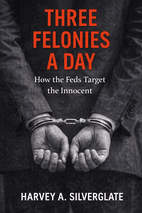
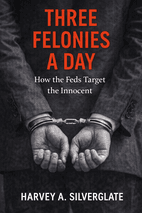
Three Felonies A Day
by Harvey A. Silverglate · Summary updated
What is the book Three Felonies A Day about?
Harvey A. Silverglate's Three Felonies A Day exposes how vague federal laws allow prosecutors to criminalize routine professional conduct, arguing that average citizens unknowingly commit several felonies daily. This critique is essential for legal professionals, journalists, and anyone concerned with civil liberties and justice reform.
Feature
Insta.Page
Blinkist
Shortform
Summary Depth
Full Chapter-by-Chapter
15-min overview
Detailed analysis
Audio Narration
✓ (AI narration)
✓
✓
Visual Mindmaps
✓
✕
✕
AI Q&A
✓ Voice AI
✕
✕
Quizzes
✓
✕
✕
PDF Downloads
✓
✕
✓
Price
$59.99/yr
$146/yr (PRO)
$199/yr
*Competitor data last verified February 2026.
About the Author
Harvey A. Silverglate
Harvey A. Silverglate is a prominent criminal defense and civil liberties lawyer, known for his staunch advocacy for free speech and due process. He is the co-founder of the Foundation for Individual Rights and Expression (FIRE) and the author of the notable book "Three Felonies a Day: How the Feds Target the Innocent," which critiques the overreach of federal criminal law. His career has focused extensively on defending First Amendment rights and academic freedom.
1 Page Summary
In Three Felonies A Day, civil liberties attorney Harvey A. Silverglate presents a powerful critique of the federal justice system, arguing that vague and expansive federal criminal statutes have created a environment where virtually any professional—from doctors and lawyers to journalists and financiers—can be indicted for seemingly innocuous conduct. The book's central thesis is that an average professional unknowingly commits several federal felonies daily due to laws that are so broad and poorly defined that prosecutors can criminalize a wide range of activities after the fact. Silverglate illustrates this through numerous case studies, demonstrating how prosecutors leverage statutes like mail fraud, wire fraud, and conspiracy to target individuals whose actions lack traditional criminal intent but who may be politically or personally inconvenient.
The historical context for this prosecutorial overreach, as Silverglate details, is the dramatic expansion of the federal criminal code since the New Deal era, particularly the proliferation of regulatory crimes that do not require proof of mens rea, or a guilty mind. This shift has transferred immense power from legislatures and juries to federal prosecutors, who can "manufacture" crimes by piecing together innocent acts into a narrative of criminality. The book highlights how this system is used against controversial figures, such as the prosecution of former Alabama Governor Don Siegelman, which many viewed as politically motivated, and the pursuit of accounting firm Arthur Andersen following the Enron scandal, which destroyed the firm based on a single jury verdict later overturned by the Supreme Court.
The lasting impact of Silverglate's work has been to sound a profound alarm about the erosion of the rule of law and the threat to individual liberty posed by an unaccountable prosecutorial state. It has become a foundational text for bipartisan criminal justice reform advocates, influencing debates on overcriminalization and prosecutorial discretion. The book argues that this system chills innovation, free speech, and legitimate business activity, creating a society where citizens cannot confidently know what is legal. Its title has entered the lexicon as a shorthand for the pervasive and often hidden danger of federal power, underscoring the need for clearer laws and stronger protections for individual rights against prosecutorial overreach.
Chapter 1: CHAPTER ONE - Reeling in the Great White, and Other Tales of Fishing for State ...
Overview
This chapter traces a disturbing pattern of federal prosecutions targeting state and local politicians, revealing how ambitious U.S. Attorneys have weaponized broad statutes to criminalize the gray areas of political life. It begins with the case of Hialeah Mayor Raul Martinez, a popular Democrat prosecuted under the Hobbs Act for a "racketeering conspiracy." The government's theory relied on immunized witnesses who testified they gave Martinez financial benefits out of a voluntary "hope of influence," not due to explicit threats. Even after his conviction was overturned and two juries deadlocked, the legal ordeal ended his congressional ambitions, proving the lasting damage of such prosecutions.
A similar playbook was used in Boston against Mayor Kevin White's ally, Theodore Anzalone. With no direct evidence, prosecutors employed a "ladder-climbing" strategy, convicting a minor bureaucrat to pressure testimony against higher targets. They bolstered a weak extortion case by adding complex money-laundering charges for unrelated cash transactions, hoping a jury would conflate them. The strategy faltered when the key witness was exposed attempting to extort the defendant, and an appeals court later rebuked the prosecution for inventing a legal duty in the money-laundering case. Despite the collapse, the investigations derailed White's career and propelled the prosecutor, William Weld, into the governor's office.
These cases signaled a troubling expansion of federal power into policing state politics, a trend that peaked under the George W. Bush administration. The selective prosecution of Alabama Governor Don Siegelman laid this political weaponization bare. He was convicted on a creative theory that a campaign donation was a bribe for a volunteer board appointment—a case widely criticized as politically motivated and overseen by a hostile judge. Even without a corruption charge, the federal arsenal could be deployed, as shown in the perjury indictment of Massachusetts Speaker Thomas Finneran. His case underscored the difficulty of proving perjury, especially the materiality requirement, as his alleged lies about his role in redistricting were irrelevant to the court's final ruling. Facing a weak case but immense pressure, Finneran was coerced into a plea that cost him his career, hinting at prosecutorial ambitions beyond pure justice.
Collectively, these narratives show a justice system where vague laws and creative legal theories allow prosecutors to pursue politicians for conduct that often resembles the normal, if unseemly, symbiosis of local government. The results are careers ruined, political landscapes altered, and a chilling effect on public service, often regardless of the ultimate verdict in a courtroom.
The Federal Case Against Raul Martinez
The section opens by framing the prosecution of Hialeah Mayor Raul Martinez as a potential example of federal overreach rather than a straightforward corruption case. It details how Martinez, a popular and charismatic Cuban-American Democrat with broad cross-ethnic support, was seen as a rising political star, even positioned as a potential successor to Congressman Claude Pepper.
His professional life as a real estate developer intertwined with his public role, a common and largely accepted practice given the modest salaries of local officials in Florida. While a state investigation found no evidence of bribery or extortion, a federal probe led by U.S. Attorney Dexter Lehtinen intensified. The timing raised suspicions, as Lehtinen’s wife, Ileana Ros-Lehtinen, was politically positioned to benefit if Martinez was sidelined from the congressional race.
The Core Allegations and the Hobbs Act
The federal indictment centered on the Hobbs Act, a law aimed at preventing extortion that obstructs interstate commerce. Prosecutors alleged Martinez engaged in a "racketeering conspiracy" by having developers cut him into real estate deals on favorable terms. The government's case relied heavily on immunized witnesses, like former ally Silvio Cardoso, who testified they provided financial benefits to Martinez hoping for future political or business favor—a "hope of influence."
Critically, witnesses stated Martinez never made explicit threats or demands. Their motivations were described as a voluntary desire to build a profitable alliance with a powerful, well-connected official. The defense argued this reflected the normal symbiosis of local politics, where officials with outside careers naturally attract business partnerships.
"Ladder Climbing" and the First Trial
The prosecution employed a "ladder climbing" technique, granting immunity to the very developers cast as victims to compel their testimony against Martinez. At his first trial, the judge instructed the jury that the "passive acceptance of a benefit" by an official who knew it was motivated by a hope of influence could constitute extortion, even without a direct quid pro quo. Convicted on some counts, Martinez was sentenced to ten years but won re-election while appealing.
A Pyrrhic Victory and Lasting Damage
The conviction was short-lived. An appeals court reversed it, criticizing the jury instructions for blurring the line between extortion and non-threatening arrangements. A second trial ended in a deadlocked jury favoring acquittal 11-1, and a third resulted in more deadlocks before the government abandoned the case. Although Martinez remained mayor, the legal cloud ultimately doomed a later congressional bid, demonstrating how federal prosecution can cause permanent political damage even without a final conviction.
Weld’s Prosecutorial Strategy: The Ladder to the Top
With no evidence directly linking Mayor Kevin White to corruption, U.S. Attorney William Weld’s team pursued a classic “climb the ladder” strategy. The plan was to convict lower-level functionaries and pressure them to testify against higher-ups, ultimately reaching the mayor. Their first catch was George Collatos, a petty bureaucrat convicted of extortion. In exchange for a reduced sentence, Collatos agreed to testify that he and Theodore Anzalone—a close friend and fundraiser for White—had conspired to extort an $8,000 cash bribe from the C.E. Maguire engineering firm on the mayor’s behalf.
Prosecutors believed that convicting Anzalone of this extortion would give them the leverage to force him to implicate White directly. This strategy operated on the assumption that “the fish rots from the head down,” a pervasive mindset within the Justice Department that often discounts the possibility that corruption could be limited to lower-level officials acting on their own.
Bolstering a Weak Case: The Additional Charges
Knowing the extortion case rested on the shaky credibility of Collatos, Weld’s team added two complex money-laundering charges to the indictment. These were not directly linked to the extortion allegation but were intended to create a narrative of pervasive, hidden cash transactions that a jury could connect.
The Birthday Party Fund: Anzalone had raised cash for a cancelled birthday party for the mayor’s wife. The funds moved circuitously through 64 individuals, who wrote checks, received refunds, and returned cash to Anzalone. Prosecutors theorized this was a scheme to launder illicit cash, though they could not trace its origin.
The Brokerage Account: Anzalone had taken $100,000 in cash—of unknown origin—and, through a series of sub-$10,000 bank check purchases, deposited it into a New York brokerage account in the names of White’s wife and mother. The prosecution argued this “structuring” of transactions was designed to avoid bank reporting requirements and hide illegally obtained gains.
The tactical goal was to try all three charges together. Prosecutors hoped the jury would use the suspicious cash movements from the money-laundering counts to infer guilt on the separate extortion charge, creating a self-reinforcing cycle of speculation without direct evidence.
A Critical Severance and the First Conviction
The defense successfully argued to sever the trials. Judge A. David Mazzone ruled the extortion charge would be tried separately from the two money-laundering counts. This was a major blow to the prosecution’s strategy, as it prevented the jury from conflating the unlinked transactions.
The money-laundering trial proceeded first. The defense did not contest the facts of the brokerage account transactions but argued Anzalone broke no law. A lawyer testified he had advised Anzalone that breaking a large cash sum into sub-$10,000 checks was legal. However, Judge Mazzone instructed the jury that a customer had a duty not to “structure” transactions to avoid bank reporting requirements—an obligation not found in the statute itself. Based on this instruction, the jury convicted Anzalone on the brokerage account charge but acquitted him on the birthday party charge. He was sentenced to one year in prison, with six months to serve.
The Extortion Trial and a Witness’s Corruption
With Anzalone appealing his conviction, the pivotal extortion trial began. The prosecution’s case now relied almost entirely on George Collatos’s testimony. Unbeknownst to the government, however, Collatos had attempted to extort Anzalone and Mayor White before the trial.
In a secretly witnessed meeting at a North End café, Collatos demanded a $200,000 bribe (disguised as a racehorse purchase) in exchange for testifying truthfully to Anzalone’s innocence. Anzalone’s defense team, led by attorneys Nancy Gertner and the author, meticulously documented this attempt but withheld the information to spring a trap at trial.
During cross-examination, Gertner revealed the scheme, disclosing the witnessed extortion attempt to the judge and stunned prosecutors. The government’s case imploded. In a desperate move, FBI agents harassed the defense witnesses in the middle of the night, threatening them with prosecution, but they still testified. Collatos’s credibility was destroyed, gutting the foundation of the prosecution’s already tenuous case.
The Aftermath of the Anzalone Appeal
The Court of Appeals' unanimous decision in July 1985 was a stinging rebuke to the prosecution. The court clarified that Joseph Anzalone had no legal obligation to structure his bank transactions to avoid triggering reporting requirements, emphasizing that any such duty must be explicitly stated in law. This victory, however, came with significant personal costs. Mayor Kevin White, worn down by the relentless investigation, abandoned his plans for a fifth term and any national ambitions, retreating to a teaching position at Boston University. Even there, he faced continued scrutiny, as U.S. Attorney Weld subpoenaed the university's president in a futile attempt to uncover a quid pro quo. Anzalone, his law practice destroyed by the FBI's intimidation of his clients, left the legal profession entirely. Despite the prosecution's collapse, Weld leveraged his "crusading prosecutor" image into a successful political career, becoming governor of Massachusetts.
A Troubling Expansion of Federal Power
These cases in Boston and earlier in Hialeah were early indicators of a dangerous shift. The American Bar Association echoed these concerns in a 1993 report, warning against the use of vague federal statutes to criminalize conduct outside the clear core of bribery and extortion. This trend placed public servants in a precarious position, subject to prosecution for actions that might be acceptable under local laws and customs. The fundamental question arose: should federal prosecutors, rather than state and local entities, define the boundaries of acceptable political conduct? This expansion of federal authority created a system where the rules were not only broad but often undefined, leaving individuals vulnerable to prosecution based on the whims of ambitious U.S. attorneys.
The Selective Prosecution of Governor Don Siegelman
The political weaponization of these laws became starkly apparent during the administration of George W. Bush. A study noted a significant disparity in investigations targeting Democratic officials. This context fueled skepticism around the 2005 indictment of Alabama Governor Don Siegelman, a popular Democrat, and HealthSouth CEO Richard Scrushy. Prosecutors alleged that Scrushy's $500,000 in donations to a state lottery campaign were a bribe for his reappointment to a volunteer health board—a position he had held under three previous governors and from which he derived no financial benefit.
Critics, including dozens of former state attorneys general, saw this as a politically motivated attack. The case was built on a creative interpretation of federal bribery, conspiracy, and racketeering laws. Despite the thin evidence—Scrushy wanted nothing from the appointment—a hostile judge, Mark Fuller, oversaw a conviction and imposed harsh treatment, including shackling Siegelman in court. The Eleventh Circuit Court of Appeals later found "substantial questions" about the conviction serious enough to release Siegelman on bail, hinting at the profound legal flaws in the government's theory.
The Curious Case of Speaker Thomas Finneran
Even when corruption isn't the charge, the flexible federal arsenal can be deployed. The 2006 perjury indictment of Massachusetts Speaker Thomas Finneran demonstrated this. Finneran, known for personal integrity in a state with a corruption history, was charged with lying about his involvement in a legislative redistricting plan during a civil rights lawsuit.
The case originated from a footnote by appellate judge Bruce Selya, who used circumstantial evidence to suggest Finneran was deeply involved in the process, contrary to his testimony. Judge Selya's personal skepticism towards Finneran's political evasions—a natural dance for any statehouse leader—was misinterpreted as criminal deceit. Advocacy groups like Common Cause lobbied for prosecution, and U.S. Attorney Michael Sullivan, despite likely understanding the realities of political leadership, pursued the indictment. The case highlighted the clash between a federal judge's idealized view of political transparency and the practical, face-saving maneuvers inherent to elected office, making a conviction by a jury of peers far from certain.
The Legal Hurdles of Proving Perjury
The section explains why securing a perjury conviction is notoriously difficult. The law requires proving a lie that is clear, direct, knowing, and material—meaning it must be relevant to the proceeding's outcome. Testimony that is vague, misleading, or relies on legalistic "word games" (termed "cute" testimony) often escapes this standard. This "wiggle room" is a intentional, protective feature of perjury law, preventing it from becoming a trap for witnesses who answer questions with intentional narrowness to avoid embarrassment, a common practice in political and legal settings. The indictment against Finneran struggled with this, as his answers, while seemingly categorical, could be interpreted as exactingly narrow responses to poorly phrased questions.
The Critical Flaw of Materiality
The analysis pivots to the most serious obstacle for the prosecution: the materiality of Finneran’s alleged lies. In the underlying civil rights case about redistricting, the three-judge court ruled based on the discriminatory effect of the plan, not the intent behind it. Since the civil trial outcome hinged on statistical results and expert testimony—not on Finneran’s state of mind or level of involvement—his testimony about his own role was likely legally immaterial. Even if he lied, those lies did not concern a fact central to the court's decision. Furthermore, the trial transcript revealed Finneran did admit to some involvement, using an intermediary and discussing the plan’s creation of a minority-majority district, further blurring the line between a direct falsehood and a diplomatic minimization.
The Anatomy of a Coerced Plea
Facing a weak case but immense prosecutorial pressure, Finneran ultimately pleaded guilty to obstruction of justice. The narrative details the mechanics of this coercion: prosecutors offered a recommendation of no prison time (unsupervised probation and a fine) in exchange for the plea. This is standard federal practice, wielding the threat of a potentially longer sentence after trial to force settlements. Notably, as part of this deal, Finneran was compelled into an unusual and likely unconstitutional agreement not to run for political office for five years—a condition the sentencing judge acknowledged he could not legally enforce but trusted Finneran to honor.
Political Realities and Prosecutorial Ambition
The summary suggests the prosecution may have been driven less by legal merit and more by political dynamics. Finneran’s motive for downplaying his role is framed as a political courtesy—not wanting to openly flaunt his control over colleagues—and personal offense at being accused of racial animus. Conversely, it hints that U.S. Attorney Michael Sullivan may have had his own ambitions, with the five-year electoral ban conveniently removing a potential future political rival (a popular Irish-Catholic figure in Massachusetts) from the field. The consequences for Finneran were severe: the loss of his law license, his high-paying private sector job, and his pension, despite the court acknowledging his lack of "evil motive" or racial bias.
Key Takeaways
Perjury is a uniquely difficult crime to prove, requiring a clear, knowing, and material falsehood, which allows witnesses legal "wiggle room" through narrow testimony.
The materiality requirement is often a fatal flaw for prosecutors, as a lie must concern a fact central to the proceeding's outcome; Finneran's alleged lies about his involvement were deemed irrelevant to the court's effect-based ruling.
The federal plea bargain system is a tool of immense prosecutorial power, capable of forcing guilty pleas from defendants even when the government's trial case is weak, often through the threat of harsher sentences post-trial.
Political and personal motivations can drive prosecutions, with outcomes sometimes serving ambitions (like sidelining a rival) rather than pure justice, as suggested by the extra-legal election ban.
The case exemplifies the catastrophic personal and professional consequences of a federal indictment, even one resulting in a probationary sentence, extending far beyond the courtroom.
Key concepts: CHAPTER ONE - Reeling in the Great White, and Other Tales of Fishing for State ...
1. CHAPTER ONE - Reeling in the Great White, and Other Tales of Fishing for State ...
The Pattern of Federal Prosecutions Against Politicians
Weaponization of broad federal statutes to criminalize gray areas of political life
Prosecutions cause lasting political damage regardless of final verdicts
Selective and politically motivated targeting of state and local officials
Use of creative legal theories to transform normal political symbiosis into crimes
Chilling effect on public service and alteration of political landscapes
The Prosecution of Hialeah Mayor Raul Martinez
Popular Democrat targeted under Hobbs Act for 'racketeering conspiracy'
Case relied on immunized witnesses describing voluntary 'hope of influence'
Prosecution used 'ladder-climbing' strategy with immunity grants
Conviction overturned due to flawed jury instructions on extortion definition
Multiple deadlocked juries and abandoned case still ended congressional ambitions
The Boston Case Against Theodore Anzalone
Prosecution of Kevin White ally with no direct evidence of extortion
Complex money-laundering charges added to bolster weak case
Key witness exposed attempting to extort the defendant
Appeals court rebuked prosecution for inventing legal duty
Investigation derailed White's career while propelling prosecutor William Weld
Political Weaponization Under Bush Administration
Selective prosecution of Alabama Governor Don Siegelman
Creative theory treating campaign donation as bribe for board appointment
Case widely criticized as politically motivated with hostile judge
Perjury indictment of Massachusetts Speaker Thomas Finneran
Prosecutorial coercion through weak cases with immense pressure
Prosecutorial Tactics and Legal Theories
'Ladder-climbing' strategy: convicting minor targets to pressure higher ones
Expansive interpretation of Hobbs Act for 'passive acceptance' of benefits
Adding complex charges (money-laundering) to confuse juries
Exploiting difficulty of proving perjury's materiality requirement
Using immunity grants to create witnesses from alleged victims
The Prosecution's 'Climb the Ladder' Strategy
Aim was to convict lower-level officials to pressure testimony against higher-ups, ultimately targeting Mayor Kevin White
First target was George Collatos, a bureaucrat convicted of extortion who implicated fundraiser Theodore Anzalone
Strategy assumed 'the fish rots from the head down,' discounting possibility of isolated lower-level corruption
Relied on convicting Anzalone to gain leverage for implicating White directly
Bolstering a Weak Case with Money-Laundering Charges
Prosecutors added complex money-laundering charges to strengthen shaky extortion case
Birthday Party Fund involved circuitous cash movement through 64 individuals for cancelled mayoral event
Brokerage Account charge involved $100,000 in cash deposited via sub-$10,000 checks to avoid reporting
Tactical goal was to try all charges together, allowing jury to infer guilt through association
Critical Severance and First Conviction
Defense successfully severed extortion trial from money-laundering counts
Judge Mazzone's ruling prevented jury from conflating unlinked transactions
Money-laundering trial resulted in conviction on brokerage charge based on judge's instruction about 'structuring'
Anzalone sentenced to one year in prison despite defense argument that breaking cash into checks was legal
Extortion Trial Collapse and Witness Corruption
Prosecution's case relied entirely on George Collatos's testimony
Defense revealed Collatos had attempted to extort Anzalone and White before trial
Collatos demanded $200,000 bribe disguised as racehorse purchase for favorable testimony
FBI harassment of defense witnesses failed to salvage prosecution's imploded case
Appeal Victory and Personal Costs
Court of Appeals unanimously rebuked prosecution, clarifying no legal duty to avoid triggering bank reports
Mayor Kevin White abandoned political ambitions, retreating to teaching position at Boston University
Anzalone's law practice destroyed by FBI intimidation of clients, forcing him to leave legal profession
Weld leveraged 'crusading prosecutor' image into successful political career despite case collapse
Broader Implications of Prosecutorial Tactics
Case demonstrates dangers of speculative prosecution strategies based on political assumptions
Reveals how aggressive tactics can destroy lives even when cases ultimately fail
Highlights potential for prosecutorial overreach in pursuit of high-profile targets
Shows how legal outcomes can be disconnected from political and personal consequences
The Expanding and Weaponized Federal Arsenal
Vague federal statutes are used to criminalize conduct outside the clear core of bribery and extortion.
This expansion places public servants in a precarious position, vulnerable to prosecution for actions acceptable under local norms.
It raises a fundamental question of whether federal prosecutors, rather than state entities, should define acceptable political conduct.
The system creates broad, undefined rules, leaving individuals exposed to the whims of ambitious U.S. Attorneys.
The Selective Prosecution of Governor Don Siegelman
The case is seen as a stark example of political weaponization during the George W. Bush administration.
Prosecutors used a creative interpretation of bribery laws, alleging donations for a lottery campaign were a quid pro quo for a volunteer board appointment.
Critics argued the case was politically motivated, noting the appointee sought no benefit and had held the position under previous governors.
A hostile judge oversaw a conviction with harsh treatment, though an appeals court later found 'substantial questions' about its legal validity.
The Perjury Case Against Speaker Thomas Finneran
Demonstrates how flexible federal laws can be deployed even when corruption is not the charge.
The case originated from a judge's personal skepticism of Finneran's political evasions, misinterpreted as criminal deceit.
It highlighted a clash between a federal judge's idealized view of political transparency and the practical, face-saving maneuvers inherent to elected office.
Advocacy groups lobbied for prosecution, pressuring the U.S. Attorney to pursue an indictment despite the realities of political leadership.
The Legal Hurdles of Proving Perjury
Securing a perjury conviction is notoriously difficult, requiring a clear, direct, knowing, and material lie.
Vague, misleading, or legally 'cute' testimony often escapes this standard, as 'wiggle room' is an intentional protective feature.
The materiality requirement was a critical flaw in the Finneran case; his alleged lies were not central to the outcome of the underlying civil rights suit.
The civil court ruled on discriminatory effect, not intent, making Finneran's testimony about his personal involvement likely immaterial.
The Coercive Mechanics of a Plea Deal
Facing a weak case but immense pressure, Finneran pleaded guilty to obstruction of justice in a coerced plea.
Prosecutors used the standard federal tactic of offering a lenient sentence recommendation (no prison) to avoid the risk of trial.
As part of the deal, Finneran was compelled into an unusual and likely unconstitutional agreement not to run for office for five years.
The sentencing judge acknowledged he could not legally enforce the political ban but trusted Finneran to honor it.
Political Dynamics and Motivations Behind the Prosecution
The prosecution may have been driven more by political calculations than by the legal strength of the case.
Finneran's motive for downplaying his legislative role was framed as political courtesy and personal offense at accusations of racial bias.
U.S. Attorney Michael Sullivan's ambitions are suggested as a factor, with the prosecution removing a potential future political rival.
The five-year electoral ban served as an extra-legal political consequence, sidelining a popular Irish-Catholic figure in Massachusetts.
Severe Consequences of a Federal Indictment
Finneran faced catastrophic professional losses, including his law license, private sector job, and pension.
The consequences extended far beyond the legal sentence, which was probation, demonstrating the broad collateral damage of an indictment.
These severe outcomes occurred despite the court acknowledging Finneran's lack of 'evil motive' or racial bias in the underlying redistricting case.
Legal and Strategic Weaknesses of the Perjury Case
The case highlighted the difficulty of proving perjury, which requires a clear, knowing, and material falsehood.
The materiality requirement was a fatal flaw, as Finneran's alleged lies about his involvement were deemed irrelevant to the court's ruling.
Witnesses in such cases often have significant legal 'wiggle room' through narrowly crafted testimony.
Prosecutorial Power and the Plea Bargain System
The federal plea bargain system is a tool of immense prosecutorial power, capable of forcing guilty pleas even from defendants with weak trial cases.
Prosecutors can leverage the threat of significantly harsher sentences if a defendant proceeds to trial and loses.
This dynamic creates pressure to plead guilty regardless of the actual merits of the government's case.
If you like this summary, you probably also like these summaries...
💡 Try clicking the AI chat button to ask questions about this book!
Chapter 2: CHAPTER TWO - Giving Doctors Orders
Overview
The chapter opens with the dramatic 2003 arrest of pain specialist Dr. William Hurwitz, framed by prosecutors as a drug dealer for his high-dose opioid prescriptions. His case becomes a powerful lens through which to examine a terrifying reality for physicians: the federal government can criminalize medical judgment. The legal framework, rooted in drug war statutes, forces doctors to navigate an impossibly murky line between legitimate pain treatment and illicit trafficking, a line defined not by clear medical standards but by the shifting enforcement priorities of the DEA.
The prosecution of Hurwitz revealed a strategy of targeting high-profile doctors, manipulating guidelines, and using patient-informants to build conspiracy theories. Even after his conviction was overturned on appeal, a retrial resulted in a prison sentence, highlighting the lasting ambiguity of the legal standard. Jurors, though instructed they were not deciding a malpractice case, admitted they were lost in a "gray area," relying on gut feelings to determine if a doctor had stepped outside the bounds of medical practice. This blurred line between malpractice and crime has a profound chilling effect, deterring physicians from treating chronic pain and leaving millions of patients suffering. This is not an isolated incident but part of a national pattern of prosecution where armed raids, asset forfeiture, and reputational destruction are used to intimidate the medical community.
While the Supreme Court delivered a rare rebuke to federal overreach in the context of Oregon's Death With Dignity Act, affirming that law enforcement cannot define national medical standards, the victory was limited. In everyday pain management, intimidation through prosecution created a de facto standard set by prosecutors. This vulnerability extends beyond prescribing to areas like off-label advocacy, where doctors like Dr. Peter Gleason can be indicted for conspiracy simply for sharing knowledge about non-FDA-approved uses of medications, facing financial ruin even for a misdemeanor plea.
The threat culminates in the arcane world of federal billing regulations, where ambiguous rules become weapons. The case of two Oklahoma surgeons illustrates how good-faith medical decisions, like performing a combined surgery to benefit a patient, can be reinterpreted as criminal fraud. Prosecutors further attempted to frame their ordinary professional partnership as a conspiracy, showing how collaboration itself can be criminalized. Even when such cases collapse, the process of indictment and trial itself becomes a punitive ordeal, forcing ethical dilemmas and betrayals, and ultimately making every doctor practice in fear of the government's second opinion.
The Arrest of Dr. William Hurwitz
Just before Rosh Hashanah in 2003, federal agents handcuffed prominent pain specialist Dr. William Hurwitz in front of his family, freezing his assets and setting bail at $2 million. Prosecutors vilified him as being "no better than a street corner crack dealer" who dispensed "misery and death," employing rhetoric more suited to a war on terror than a medical case. This dramatic arrest highlighted a growing and often overlooked risk for physicians: federal indictment, particularly for those treating chronic pain.
The Legal Framework: From Healer to Criminal
Prosecutors argued Dr. Hurwitz had crossed a line from healer to drug trafficker by prescribing large quantities of painkillers, like OxyContin, to patients he allegedly knew or should have known were addicts or diverting drugs. His 49-count indictment for drug trafficking and conspiracy illustrated a central conflict: the federal "war on drugs" uses pliable statutes to criminalize medical judgment. This regulatory assault began with the Harrison Tax Act of 1914 and evolved with the 1970 Controlled Substances Act, which created drug schedules and placed the DEA in the role of regulating prescriptions.
The Impossibly Murky Line for Physicians
The core problem is the vague, arbitrary line the DEA draws between legitimate pain treatment and illicit "drug dealing." A physician's therapeutic standard, which varies by doctor and specialty, is constantly second-guessed by law enforcement's definition of "abuse." There is no single medical standard for appropriate narcotics administration, forcing doctors to navigate a landscape where good-faith treatment can be reinterpreted as a crime. The situation is exacerbated by the nature of powerful analgesics like OxyContin. While it provides essential, long-lasting relief for severe chronic pain, its euphoric effects make it prone to abuse if misused. This creates a clinical minefield where physicians must distinguish between physical dependence (a predictable physiological state) and psychological addiction (compulsive use despite harm), a distinction often lost on law enforcement.
A High-Profile Target and a Shifting Standard
As a nationally renowned figure in pain management, Dr. Hurwitz became a high-profile target for prosecutors. The media fueled public panic with stories about "Oxybabies" and local officials declaring an OxyContin "health crisis." In court, prosecutors constructed a theory of a "conspiracy of silence" or "wink and a nod" arrangement, where patients lied to Hurwitz and he willingly turned a blind eye to fuel his income. Critically, agents discovered about 15 of his 500+ patients were diverting drugs but, instead of alerting him, made deals with those patients to testify against him in exchange for leniency.
For his defense, it was not enough to prove "good faith"; he had to show his practices aligned with "established medical norms," which were increasingly defined by the DEA. Briefly, a 2004 FAQ pamphlet co-produced by the DEA and medical groups offered a balanced, nuanced guide, acknowledging the legitimacy of long-term, high-dose opioid therapy and clarifying the dependence vs. addiction distinction. It explicitly warned that confusion on this point could lead to inappropriate prosecutions. However, the DEA abruptly withdrew this guide less than two months later when Hurwitz’s defense sought to use it, revealing an agency priority of winning prosecutions over facilitating sound medical practice.
Conviction, Reversal, and Lasting Ambiguity
At his first trial, Dr. Hurwitz was convicted and sentenced to 25 years, with observers noting he was essentially punished for "trusting his patients too much." The Fourth Circuit Court of Appeals overturned this conviction, criticizing the trial judge's jury instructions. The appellate court acknowledged a doctor's "good faith" is relevant and that "some latitude must be given to doctors," but confusingly insisted this standard must be "objective." One dissenting judge noted the contradiction: "I do not believe good faith should be objective; the two terms are contradictory."
At his retrial, renowned pain experts testified for the defense, explaining the critical shortage of physicians willing to treat high-need, complex pain patients and vouching for Hurwitz's methods. The most serious charges were dismissed, but the jury still convicted him on 16 counts of drug trafficking. He received a 57-month sentence—a better outcome than the original 25 years, but a professional and personal catastrophe. Jurors interviewed afterward expressed confusion by the law, acknowledging the patients exploited Hurwitz, but feeling he missed "red flags" they believed he should have seen. This underscored the fundamental, unresolved problem: physicians treating severe chronic pain do so at immense personal risk, judged by a legal standard that remains dangerously amorphous.
The Blurred Line Between Malpractice and Crime
The jurors in Dr. Hurwitz's trial were explicitly instructed that they were not deciding a malpractice case, but rather whether he had prescribed drugs "outside the bounds of medical practice," a violation of the Controlled Substances Act. While the jurors acknowledged this distinction, they confessed it was an incomprehensible "gray area," ultimately relying on their gut feelings. As author Tierney notes, this legal framework readily allows a physician making a medical judgment to be recast as a drug dealer based on a jury's second opinion.
The Chilling Effect on Pain Management
This prosecutorial approach has a devastating chilling effect. Physicians charged face immediate asset freezes, suspended licenses, and reputational ruin long before any verdict, often making a robust legal defense impossible. The case of Dr. Frank Fisher exemplifies this: arrested on sensational murder charges in 1999, he was ultimately acquitted of all charges by 2004, but only after spending months in jail and being financially destroyed, forced to live with his elderly parents.
The real-world consequence is that chronic pain sufferers cannot obtain adequate relief. Surveys indicate less than half of chronic pain or cancer patients receive sufficient pain management. Many are forced to rely on over-the-counter anti-inflammatories like Aleve® or Motrin®, which can cause fatal stomach bleeding when overused—a risk estimated to claim 16,500 lives annually. Siobhan Reynolds of the Pain Relief Network succinctly captured the absurdity of the legal standard, stating that Dr. Hurwitz "didn’t fail as a doctor; he failed as a law enforcement officer."
A National Pattern of Prosecution
The aggressive tactics against Dr. Hurwitz are not isolated. Dr. Cecil Knox’s Virginia clinic was raided by heavily armed agents who pointed guns at employees. After a trial where he was acquitted of many charges, the government refiled nearly 100 counts, leading him to accept a plea bargain and surrender his medical license. Similar prosecutions targeted doctors in Arizona, Florida, and South Carolina, with one physician receiving a 63-year sentence.
This pattern has created a climate of fear so profound that physicians now fear undertreating pain more than overtreating it, a form of legally actionable malpractice driven by caution. Legal expert George Annas noted the DEA had become "much more menacing" to doctors, especially after withdrawing support for established pain-prescribing guidelines.
The Supreme Court's Rare Rebuke
A rare setback for federal drug warriors came in a 2006 Supreme Court case concerning Oregon’s Death With Dignity Act. Attorney General John Ashcroft had issued an "Interpretive Rule" declaring that prescribing lethal doses under the Oregon law was not a "legitimate medical purpose" and was a federal crime. The Court ruled 6-3 against Ashcroft, stating the Controlled Substances Act did not authorize the Attorney General to define national medical standards or overturn a state’s legal medical practice. The power to define medical standards, the Court held, belonged to the Secretary of Health, not law enforcement.
However, this victory was limited to end-of-life care. In the realm of pain relief, the drug warriors achieved their regulatory aims not through formal rules, but through a strategy of intimidating, case-by-case prosecutions. The result is a de facto national standard for pain medicine dictated by prosecutors, not physicians, creating a vague and dangerous landscape for doctors.
Criminalizing Off-Label Advocacy
Physician vulnerability extends into the complex realm of drug regulation. While it is perfectly legal for doctors to prescribe FDA-approved drugs for "off-label" uses (conditions not listed on the drug’s official label), promoting such uses can lead to criminal charges. The case of Dr. Peter Gleason illustrates how prosecutors creatively use conspiracy laws to target physicians.
Dr. Gleason, a psychiatrist, advocated for the off-label use of Xyrem® (which contains GHB) for conditions like fibromyalgia and insomnia. The Department of Justice indicted him, alleging a conspiracy with the drug’s manufacturer to promote off-label uses—an activity illegal for the company, but not for a doctor acting alone. The indictment also included severe asset forfeiture provisions, threatening to bankrupt him and strip his ability to mount a defense.
Facing financial ruin and the overwhelming conviction rate in federal courts (where 96% of convictions come from plea deals, not trials), Dr. Gleason eventually pleaded guilty to a misdemeanor. His case demonstrates how the government can effectively outlaw a common and valuable medical practice—the sharing of off-label treatment successes—through aggressive legal tactics, deterring innovation and leaving both doctors and patients in fear.
The chapter illustrates how federal billing regulations create a minefield for physicians, where ambiguous rules and aggressive prosecutors can criminalize ordinary medical practice. The case of two Oklahoma OB/GYNs, Drs. Avery and Migliaccio, charged with defrauding the military's CHAMPUS program, serves as a cautionary tale.
The Anatomy of a Billing Prosecution
The surgeons were indicted for billing for fallopian tube repairs ("salpingoplasty") for patients seeking reversal of prior tubal ligations—a non-covered elective procedure. The prosecution alleged they concealed the true purpose by using alternate medical terminology and insufficient documentation, arguing the primary intent was the reversal. The doctors contended each patient had a legitimate medical condition requiring covered surgery and the reversals were secondary, performed simultaneously to avoid subjecting patients to the risks of a second operation.
Ambiguity on Trial
The appeal revealed the central flaw: hopelessly ambiguous regulations. The court admitted the rules were so unclear that "reasonable interpretations" should have been presented to the jury as a defense. It noted CHAMPUS bureaucrats had a duty to understand the medical terminology used. The conviction, the court suggested, stemmed from this ambiguity being improperly weighed against the doctors' intent and good faith.
The Conspiracy Charge: Turning Partnership into Crime
The government's theory for the conspiracy charge was particularly alarming. Prosecutors argued the two partners conspired simply by virtue of working together and discussing their billing practices—an ordinary aspect of any medical partnership. The appellate court found this circular reasoning unacceptable, as it could transform routine professional collaboration into a criminal enterprise.
A Pyrrhic and Unjust Victory
While Dr. Avery was fully acquitted, Dr. Migliaccio faced a retrial on one count based solely on the contradictory testimony of a single patient who claimed he asked her to lie. The court, bound by procedural rules, reluctantly allowed this despite expressing deep skepticism about the witness's credibility. Ironically, Dr. Migliaccio had earlier refused a prosecution deal to testify against his partner. The government ultimately dropped the retrial, but only after both physicians endured a lengthy, draining legal ordeal.
Key Takeaways
Ambiguous Rules as Weapons: Vague federal billing regulations can be wielded as criminal statutes against physicians acting in good faith and in their patients' best interests.
The Conspiracy Trap: The government may broadly interpret conspiracy laws, attempting to frame normal professional partnership discussions as criminal agreements.
Ethical Dilemmas Forced by Law: The case posed an impossible choice: perform a medically sound, single surgery and risk prosecution, or perform two separate surgeries to satisfy bureaucrats and risk patient harm.
The Human and Systemic Cost: Even when convictions are overturned, the process itself—with its threats, pressure to betray colleagues, and prolonged anxiety—is a punishment that chills medical practice and damages trust.
Key concepts: CHAPTER TWO - Giving Doctors Orders
2. CHAPTER TWO - Giving Doctors Orders
The Prosecution of Dr. William Hurwitz as a Case Study
High-profile 2003 arrest framed a pain specialist as a drug dealer for high-dose opioid prescriptions
Case reveals the federal government's power to criminalize medical judgment using drug war statutes
Prosecution strategy involved targeting prominent doctors, manipulating guidelines, and using patient-informants
Even after overturned conviction, retrial resulted in prison sentence, demonstrating lasting legal ambiguity
Jurors admitted relying on gut feelings in a 'gray area,' blurring malpractice and crime
The Legal Framework Criminalizing Medical Practice
Drug trafficking and conspiracy charges used against physicians prescribing pain medication
Rooted in Harrison Tax Act (1914) and Controlled Substances Act (1970), placing DEA as prescription regulator
Vague statutes allow prosecutors to reinterpret medical decisions as criminal acts
Creates an 'impossibly murky line' between legitimate treatment and illicit trafficking
Enforcement priorities, not clear medical standards, define the legal boundary
The Chilling Effect on Medical Practice
Prosecutions deter physicians from treating chronic pain, leaving millions of patients suffering
Armed raids, asset forfeiture, and reputational destruction intimidate the medical community
Creates de facto medical standards set by prosecutors rather than medical professionals
Extends beyond pain management to off-label advocacy and federal billing regulations
Forces doctors to practice in fear of the government's 'second opinion' on medical decisions
Clinical Realities vs. Law Enforcement Perceptions
No single medical standard exists for appropriate narcotics administration
Physicians must distinguish between physical dependence and psychological addiction
Powerful analgesics like OxyContin provide essential relief but are prone to abuse
Law enforcement often fails to understand medical distinctions in pain management
Good-faith treatment decisions can be reinterpreted as criminal negligence
Broader Pattern of Prosecutorial Overreach
Part of national pattern where collaboration between doctors is framed as conspiracy
Ambiguous billing regulations become weapons against medical judgment
Even misdemeanor pleas can cause financial ruin and career destruction
The indictment and trial process itself becomes a punitive ordeal
Limited Supreme Court rebukes (e.g., Oregon Death With Dignity Act) fail to protect everyday practice
The Legal Standard: Good Faith vs. Established Medical Norms
Defense required alignment with 'established medical norms' increasingly defined by the DEA, not just proof of good faith
A 2004 DEA/medical group FAQ pamphlet acknowledged legitimacy of long-term, high-dose opioid therapy and clarified dependence vs. addiction distinction
The DEA abruptly withdrew this balanced guide when Dr. Hurwitz's defense sought to use it, prioritizing prosecutions over sound medical practice
Hurwitz's Trials and the Unresolved Legal Ambiguity
First trial resulted in 25-year sentence for 'trusting his patients too much,' later overturned by Fourth Circuit Court of Appeals
Appellate court acknowledged doctor's 'good faith' is relevant but confusingly insisted it must be 'objective,' creating contradictory standards
Retrial conviction on 16 drug trafficking counts resulted in 57-month sentence despite expert testimony and dismissed serious charges
Jurors expressed confusion by the law, acknowledging patient exploitation but feeling Hurwitz missed 'red flags' they believed he should have seen
The Blurred Line Between Malpractice and Criminal Conduct
Jurors instructed to decide if prescriptions were 'outside the bounds of medical practice' rather than malpractice, creating an incomprehensible 'gray area'
Legal framework allows medical judgment to be recast as drug dealing based on jury's second opinion
Physicians treating severe chronic pain operate at immense personal risk under dangerously amorphous legal standards
The Chilling Effect on Pain Management
Prosecutions cause immediate asset freezes, license suspensions, and reputational ruin before any verdict, often preventing robust defense
Dr. Frank Fisher's case exemplifies destruction: acquitted after years but financially ruined and jailed for months
Chronic pain sufferers cannot obtain adequate relief, with less than half receiving sufficient pain management
Patients forced to use over-the-counter anti-inflammatories causing estimated 16,500 annual deaths from stomach bleeding
National Pattern of Aggressive Prosecutions
Dr. Cecil Knox's clinic raided by heavily armed agents pointing guns at employees, leading to plea bargain and license surrender
Similar prosecutions in Arizona, Florida, and South Carolina with one physician receiving 63-year sentence
Climate of fear causes physicians to fear undertreating pain more than overtreating, creating legally actionable malpractice driven by caution
DEA became 'much more menacing' to doctors after withdrawing support for established pain-prescribing guidelines
Supreme Court Rebuke and Limited Victory
2006 Supreme Court ruled 6-3 against Attorney General Ashcroft's attempt to override Oregon's Death With Dignity Act
Court held Controlled Substances Act did not authorize Attorney General to define national medical standards or overturn state legal medical practice
Power to define medical standards belongs to Secretary of Health, not law enforcement
Victory limited to end-of-life care; in pain relief, drug warriors achieved aims through intimidating case-by-case prosecutions rather than formal rules
De Facto National Standard Dictated by Prosecutors
Strategy of intimidating prosecutions creates de facto national standard for pain medicine dictated by prosecutors, not physicians
Result is vague and dangerous landscape where physicians must act as law enforcement officers rather than doctors
Siobhan Reynolds' observation: Dr. Hurwitz 'didn't fail as a doctor; he failed as a law enforcement officer'
Criminalizing Off-Label Advocacy
Doctors can legally prescribe FDA-approved drugs for off-label uses but face criminal charges for promoting such uses.
Prosecutors use conspiracy laws to target physicians for activities that are illegal for drug companies but not for individual doctors.
Aggressive legal tactics, including severe asset forfeiture provisions, can financially ruin doctors and force plea deals.
The case of Dr. Peter Gleason demonstrates how sharing off-label treatment successes can be effectively outlawed, chilling medical innovation.
The Anatomy of a Billing Prosecution
Doctors can be indicted for billing for covered procedures when the patient's primary intent is a non-covered elective surgery.
Prosecutions often allege concealment through the use of alternate medical terminology or insufficient documentation.
The defense typically contends that legitimate medical conditions existed, and combined procedures were performed to avoid patient harm from multiple surgeries.
Ambiguity on Trial
Federal billing regulations are often hopelessly ambiguous, allowing for multiple reasonable interpretations.
Courts have ruled that such ambiguity should be presented to the jury as a defense, weighing it against the doctor's intent.
Prosecutions can proceed based on the government's interpretation of unclear rules, rather than clear violations of law.
The Conspiracy Charge: Turning Partnership into Crime
Prosecutors may argue that routine professional collaboration and discussions about billing constitute a criminal conspiracy.
This broad interpretation can transform standard medical partnership activities into evidence of a criminal enterprise.
Appellate courts have rejected such circular reasoning as unacceptable for establishing criminal intent.
A Pyrrhic and Unjust Victory
Even when acquitted or charges are dropped, physicians endure lengthy, draining legal ordeals that serve as punishment in themselves.
The system can force ethical dilemmas, such as pressuring doctors to testify against colleagues to secure favorable deals.
Cases may proceed on weak evidence, such as the contradictory testimony of a single witness, due to procedural rules.
Key Systemic Flaws and Impacts
Ambiguous federal regulations are weaponized against physicians acting in good faith and in their patients' best interests.
The legal process itself chills medical practice, deters innovation, and damages trust within the healthcare system.
Doctors face impossible choices between optimal patient care and compliance with poorly defined bureaucratic rules.
The overwhelming conviction rate in federal courts pressures defendants into plea deals regardless of actual guilt.
⚡ You're 2 chapters in and clearly committed to learning
Why stop now? Finish this book today and explore our entire library. Try it free for 7 days.
Chapter 3: CHAPTER THREE - The Unhealthy Pursuit of Medical Device and Drug Companies
Overview
This chapter examines how aggressive federal prosecutions targeting the medical device and pharmaceutical industries can misfire, creating profound injustice and chilling legitimate professional activity. It begins with the harrowing ordeal of regulatory executive Lee Leichter, convicted on nearly 400 felony counts after a trial that failed to properly define the statutory standard for "safe and effective"—a technical risk-benefit analysis—instead leaving it to a jury's "common sense." Though his conviction was later overturned, his life and career were shattered, a case that highlights how complex regulatory nuance can be lost in the courtroom.
The narrative then shifts to the mechanics of pharmaceutical prosecutions, where the qui tam whistleblower statute often sparks financially driven investigations. Faced with existential threats like corporate debarment, companies routinely settle for massive sums regardless of guilt, creating a system that prioritizes financial recovery over factual merit. Yet when individuals dare to fight back, juries consistently reject the government's expansive theories. In the TAP Pharmaceuticals and Serono trials, juries swiftly acquitted executives, refusing to criminalize common industry sales practices like providing free drug samples or educational grants.
The chapter culminates with the alarming case of Dr. Peter Gleason, prosecuted under a novel conspiracy theory for discussing off-label uses of a drug. This case starkly illustrates the government's creative extension of liability, threatening to turn routine medical discourse into a felony and demonstrating the severe power imbalance where corporations cut deals, leaving isolated individuals to face the full force of prosecution alone.
The Devastating Case of Lee Leichter
The chapter opens with the story of Lee Leichter, a regulatory affairs executive whose life was upended by a federal prosecution. Charged with 392 felony counts—including conspiracy, racketeering, and fraud against the FDA—Leichter’s case became a marathon of legal suffering. A grand jury investigation began in 1990, an indictment followed in 1993, and a conviction was secured in 1995 after a 27-day trial. It wasn't until March 2001 that an appeals court reversed the conviction. Throughout this nearly eleven-year ordeal, Leichter, a devoted family man and meticulous professional known for carrying around the dense FDA regulations, saw his career destroyed, his finances ruined, and his first marriage end in divorce.
The Complex World of Medical Device Regulation
Leichter worked for USCI, a manufacturer of Class III heart catheters used in angioplasty procedures. These devices, among the most heavily regulated, require a "pre-market approval" (PMA) application to prove they are "safe and effective." The law explicitly recognizes that no device can be 100% safe or always effective; approval involves a nuanced risk-benefit analysis weighing the probable health benefits against the probable risks for the intended use. Manufacturers must also report significant modifications or problems via PMA Supplements. The system is designed to balance innovation with patient safety, reserving criminal prosecution for clear, intentional fraud, not honest errors in judgment.
The Core Conflict: Defining "Safe and Effective"
The government’s case alleged that USCI and its executives, including Leichter, failed to seek FDA approval for design modifications made to address field problems like catheter tips breaking or balloons failing to deflate. The defense argued these failures often resulted from physicians not following the approved "instructions for use" and that they reasonably believed they only needed to report problems stemming from the device itself, not from misuse. This created a fundamental legal clash over interpreting the FDCA’s core terms. The defense wanted the jury instructed on the statute’s technical, risk-balanced definitions, while prosecutors shockingly argued for jury instructions based on the "plain, ordinary" dictionary meanings of "safety" as "freedom from danger" and "effectiveness" as "having a definite or desired effect."
A Flawed Trial and a Compromised Victory
Presiding Judge Joseph Tauro gave the jury instructions that avoided defining "safe and effective" altogether, instead telling them to decide if the defendants "knowingly and willfully" concealed material facts. Confronted with complex regulations but told to use "common sense," the jury convicted Leichter and two colleagues. Judge Tauro, however, hinted at his doubts by imposing a relatively light 18-month sentence and having considered a directed acquittal. On appeal, the First Circuit Court reversed the convictions, criticizing the inadequate jury instructions in this highly technical case, yet curiously called the evidence of guilt "quite substantial." To avoid a retrial he might win but which would prolong his nightmare, a exhausted Leichter accepted a plea deal to a "strict liability misdemeanor," which requires no proof of criminal intent. Judge Tauro sentenced him to probation with home confinement, a final quiet statement on the case's dubious merits.
The Mechanics of Pharmaceutical Prosecution
The chapter details how federal prosecutions against pharmaceutical companies often follow a predictable and financially driven pattern. A key component is the qui tam or whistleblower statute, which allows private individuals with knowledge of potential fraud to file a civil suit on the government’s behalf. If successful, the whistleblower receives a substantial percentage of the recovery. This civil action frequently triggers a parallel criminal investigation by units like Boston’s Health Care Fraud Unit, creating immense pressure on the corporate defendant.
Faced with the combined threat of a civil suit and a criminal prosecution—where a conviction could lead to corporate debarment, a death sentence for any company reliant on government healthcare programs—corporations almost always choose to settle. They plead guilty and pay massive fines, even when they may have valid defenses, because the cost and risk of fighting are prohibitive. This process prioritizes financial recovery for the government and whistleblowers over the merits of the charges.
The TAP Pharmaceuticals Trial: A Jury Rejects the Theory
This dynamic set the stage for the prosecution of TAP Pharmaceuticals. The company itself pled guilty in 2001, paid a then-record $885 million, and cooperated fully with prosecutors, even waiving attorney-client privilege. However, ten former employees chose to go to trial in 2004, a move considered quixotic at the time.
The government’s case alleged that common industry sales practices were felonious. These included providing free drug samples (argued to be a disguised bribe if doctors later billed Medicare for them) and giving educational grants that funded conferences and professional development events (characterized as kickbacks). The prosecution’s star witnesses were whistleblowers who had received tens of millions of dollars from the earlier settlement.
After a three-month trial, the jury acquitted all remaining defendants on all counts following 23 hours of deliberation. The verdict was a clear rejection of the government’s attempt to criminalize standard, if aggressive, sales and marketing conduct within the pharmaceutical industry.
The Serono Case: A Faster Acquittal
Less than a year after the TAP acquittals, Boston prosecutors indicted Swiss drugmaker Serono SA and four executives. The charges mirrored TAP’s—alleging kickbacks in the form of trips to a medical conference in Cannes to induce prescriptions—with the added element of promoting an off-label use. Prosecutors creatively argued that promoting the drug for its approved use (AIDS wasting) became "off-label" because new treatments had reduced the syndrome’s incidence, and Serono was marketing to a "redefined" version of it.
As with TAP, Serono the corporation settled for $740 million. The four individual defendants went to trial and were acquitted by a jury in under three hours, an even more decisive repudiation of the prosecution’s theory.
The Chilling Case of Dr. Peter Gleason
The chapter concludes with the case of Dr. Peter Gleason to illustrate the expansive and "creative" nature of these prosecutions. While FDA rules prohibit manufacturers from promoting off-label uses (but not doctors from prescribing them), prosecutors charged Dr. Gleason with conspiracy. The theory was that by agreeing with a manufacturer (Jazz Pharmaceuticals) to promote a drug off-label, he became part of their criminal scheme.
This novel legal theory alarmed the medical and legal communities, as it threatened to criminalize a physician’s routine exchange of professional opinions and experiences about drug efficacy. The case appeared to be a tactic to pressure the doctor into testifying against the company, which had quickly cooperated with the government, leaving Dr. Gleason isolated.
Key Takeaways
Pharmaceutical fraud prosecutions are often financially motivated engines, driven by whistleblower statutes and the threat of corporate debarment, which force companies into settlements regardless of guilt.
Juries have repeatedly rejected the government’s attempts to criminalize common sales and marketing practices in the industry, as seen in the swift acquittals of individuals in the TAP and Serono cases.
Prosecutors employ increasingly creative and novel legal theories, such as charging physicians with conspiracy for off-label promotion, which risks creating a chilling effect on medical practice and professional discourse.
The system creates a severe imbalance of power, where corporations cut deals to survive, often sacrificing individual employees who are then forced to mount their own costly—though sometimes successful—defenses.
Key concepts: CHAPTER THREE - The Unhealthy Pursuit of Medical Device and Drug Companies
3. CHAPTER THREE - The Unhealthy Pursuit of Medical Device and Drug Companies
The Devastating Case of Lee Leichter
Regulatory executive convicted on 392 felony counts after an 11-year legal ordeal
Conviction overturned on appeal in 2001, but career and personal life were destroyed
Highlights how complex regulatory nuance can be lost in the courtroom
The Complex World of Medical Device Regulation
Class III devices require rigorous 'pre-market approval' (PMA) proving 'safe and effective'
Approval involves a nuanced risk-benefit analysis, not absolute safety
System designed to balance innovation with safety, with criminal intent required for fraud
The Core Legal Conflict: Defining 'Safe and Effective'
Prosecution argued for jury instructions based on 'plain, ordinary' dictionary meanings
Defense sought technical, risk-balanced definitions from the statute
Conflict centered on whether design modifications required FDA approval
Flawed Trial and Compromised Victory
Judge gave inadequate jury instructions, telling jurors to use 'common sense' on complex regulations
Appeals court reversed conviction but called evidence 'quite substantial'
Leichter accepted a plea deal to avoid further legal ordeal, receiving probation
Mechanics of Pharmaceutical Prosecution
Qui tam (whistleblower) statute drives financially motivated investigations
Companies face existential threats like corporate debarment, forcing settlements regardless of guilt
System prioritizes financial recovery over factual merit
Jury Rejection of Government Theories
In TAP Pharmaceuticals and Serono trials, juries swiftly acquitted executives
Juries refused to criminalize common industry practices like free samples and educational grants
Demonstrates disconnect between government theories and jury perceptions of wrongdoing
Alarming Extension of Liability: The Case of Dr. Peter Gleason
Prosecuted under novel conspiracy theory for discussing off-label drug uses
Illustrates government's creative extension of liability threatening routine medical discourse
Shows power imbalance where corporations settle, leaving individuals to face prosecution alone
Broader Implications of Aggressive Prosecutions
Creates profound injustice and chills legitimate professional activity
Highlights severe power imbalance between government and individuals
Demonstrates how financial incentives can distort justice in healthcare regulation
The Settlement Imperative for Corporations
Companies face overwhelming pressure to settle due to combined civil suits and criminal prosecutions
Corporate debarment from government healthcare programs represents a 'death sentence' threat
Financial recovery for government and whistleblowers often takes priority over merits of charges
Valid legal defenses are frequently abandoned due to prohibitive cost and risk of trial
TAP Pharmaceuticals Trial: Jury Rejection of Government Theory
Company settled for $885 million while ten former employees went to trial
Government attempted to criminalize standard industry practices like free samples and educational grants
Jury acquitted all defendants after 23 hours of deliberation
Verdict represented rejection of criminalizing aggressive but common sales practices
Serono Case: Swift Jury Acquittal
Prosecutors used creative 'redefined off-label' theory for drug promotion
Corporation settled for $740 million while four executives went to trial
Jury acquitted all defendants in under three hours
Case demonstrated even more decisive rejection of prosecution's legal theories
Dr. Peter Gleason: Expanding Prosecution to Physicians
Prosecutors used novel conspiracy theory to charge physician for off-label promotion
Case threatened to criminalize routine professional exchange of drug efficacy opinions
Appeared to be tactic to pressure doctor into testifying against cooperating company
Created chilling effect on medical practice and professional discourse
Corporations sacrifice individual employees to secure their own survival
Individuals face costly defenses despite eventual jury acquittals
Creative legal theories risk over-criminalizing standard industry and medical practices
Chapter 4: CHAPTER FOUR - Following (or Harassing?) the Money
Overview
This chapter traces a disturbing pattern in American justice, where prosecutors, often struggling to prove complex financial crimes, instead wield vague laws and novel theories to secure high-profile convictions. It opens with the coercive prosecution of Michael Milken, whose pioneering work in junk bonds made him a target. Facing the indictment of his brother and other relentless pressures, Milken was forced to plead guilty to activities later deemed lawful—a reality confirmed when a judge acquitted a colleague based on the same transaction. His story establishes a blueprint: using familial leverage and reinterpreting novel practices as crimes.
That blueprint was dusted off for Frank Quattrone during the post-tech bubble search for villains. Despite being initially distant from the core "kickback" investigations, Quattrone was indicted for obstruction of justice over a single, brief email endorsing his firm's document policy. His conviction, overseen by a notoriously biased judge, was later overturned, and regulators retreated from their cases—a tacit admission the underlying practices were industry-wide and not clearly illegal.
The case of Martha Stewart sharpened this prosecutorial playbook. Unable to build a strong insider trading case, prosecutors charged her with false statements about her motives. Even more aggressively, they floated a novel securities fraud charge, arguing her public denials—her very defense—were meant to prop up her company's stock. This tactic criminalized the act of self-defense during an investigation, creating a powerful chilling effect.
Finally, the chapter examines the monumental Enron prosecutions, where daunting financial complexity was boiled down into a simple story of lies. Prosecutors argued executives like Ken Lay and Jeff Skilling committed fraud by expressing optimism while knowing the company was failing. This raised a profound question: when does managing a corporate crisis become a crime, especially when critics argue the damning facts were "open secrets" buried in public filings? Through these interconnected narratives, the chapter reveals a justice system where the process of investigation itself becomes the greatest threat, enabled by deliberately vague laws that allow prosecutors to decide where the line between aggressive business and a felony lies, long after the fact.
The Milken Prosecution: A Case Study in Coercion
The chapter opens with the author’s reflection on the prosecution of Michael Milken, not out of sympathy for a billionaire client, but because of the raw and dangerous techniques used—techniques he feared would soon be applied to a broader civil society unable to mount a defense. Milken, the pioneering financier behind the high-yield “junk bond” market, enabled disruptive companies like MCI and CNN to challenge corporate giants. His success and innovative methods made him a target for a federal establishment unnerved by his competition and for prosecutors seeking a trophy in the "decade of greed."
The Anatomy of a Manufactured Case
The case against Milken was built on a foundation of novel transactions being reinterpreted as crimes and the testimony of rewarded witnesses like Ivan Boesky. A key pressure point was the indictment of Milken's younger brother, Lowell, a move seen as a diabolical lever to force a plea. Facing a superseding indictment, harassment of elderly family members, and the threat of endless multi-jurisdictional trials, Milken was backed into a corner.
The Coerced Plea and Its Aftermath
The government offered a deal: if Michael pled guilty to six felony counts (involving practices like “stock parking” that were industry-common and not clearly illegal) and paid $600 million, all charges against Lowell would be dropped. Crucially, Milken would not have to provide advance testimony or “compose” evidence against others. He accepted to protect his brother, though experts like economist Daniel Fischel later argued the counts described lawful conduct.
The sentencing phase revealed further prosecutorial overreach. Despite an agreement not to recommend a sentence, prosecutors submitted a memo detailing “Milken's Other Crimes.” At a sentencing hearing, Judge Kimba Wood found the government failed to prove these allegations. Yet, influenced by dubious witness accounts of secretive behavior (not actual obstruction charges), she imposed a harsh ten-year sentence, partly based on an unproven perception that Milken attempted to obstruct justice.
A Judicial Reckoning and Reduced Sentence
New legal analysis for Milken’s appeal concluded he had pled guilty to non-crimes. This was corroborated when Milken testified in the trial of a former colleague, Alan Rosenthal. Judge Louis Stanton, examining the same transaction underlying one of Milken’s guilty pleas, acquitted Rosenthal, ruling the transaction was lawful and involved real economic risk—directly contradicting the basis of Milken’s conviction. This judicial vindication led Judge Wood to subsequently reduce Milken’s sentence to two years.
The Pattern Repeats: The Targeting of Frank Quattrone
The narrative shifts to the 1990s tech bubble, where the search for scapegoats after the crash created fertile ground for federal investigations. Frank Quattrone, a leading Silicon Valley investment banker at Credit Suisse First Boston (CSFB), became a central figure.
Investigations into IPO Allocations
Initial investigations focused on CSFB’s Equities Division and allegations of “kickbacks,” where hot IPO shares were allegedly allocated to clients who promised higher commissions. Quattrone’s Investment Banking Division, which advised companies issuing stock, was not the target. CSFB settled related civil charges for $100 million in 2002, with no action against Quattrone.
The Shifting Focus
A separate investigation into “spinning”—allocating IPO shares to executives to win business—led to a global $200 million settlement between CSFB and regulators in 2003. Amid this complex web of civil and administrative proceedings, a federal grand jury suddenly turned its attention toward Quattrone himself, launching him into a daunting legal juggling act despite his initial distance from the core allegations.
The Quattrone Indictment and Trial
The core of the criminal case against Frank Quattrone rested on a brief email exchange in December 2000. During an earlier investigation into commission kickbacks, a subordinate lawyer, Richard Char, sent a routine reminder to bankers about the firm's document retention policy, which outlined when drafts should be discarded. Quattrone responded with a one-line endorsement: "having been a key witness in a securities litigation case in south texas (miniscribe), I strongly advise you to follow these procedures."
Prosecutors alleged this was an attempt to obstruct justice by causing the destruction of documents under subpoena. Quattrone's defense emphasized that the bank's general counsel had not yet circulated a legal "hold" notice to bankers at the time he sent his email, and that his intent was innocent—merely endorsing standard company policy. Despite the lack of charges for the original kickback or IPO allocation practices under investigation, a grand jury indicted him for obstruction in April 2003.
His trial was presided over by Judge Richard Owen, whose pronounced pro-prosecution bias became a major issue. After a mistrial due to a deadlocked jury, a second jury convicted Quattrone on all counts in 2004, and Judge Owen sentenced him to 18 months in prison. This conviction was overturned in 2006 by the Second Circuit Court of Appeals, which found Judge Owen's jury instructions fatally flawed. The appeals court ruled he had wrongly allowed the jury to convict without finding a direct "nexus" between Quattrone's email and a "corrupt intent" to obstruct. Notably, the court ordered the retrial be held before a different judge, a strong implicit rebuke of Judge Owen's conduct.
Legal and Regulatory Reversal
Parallel to the criminal case, the regulatory actions against Quattrone also unraveled. Just days after the appellate victory, the SEC overturned the NASD's lifetime industry ban, ruling the NASD violated its own rules by not respecting Quattrone's Fifth Amendment rights during its inquiry. Shortly thereafter, the NASD dropped all its remaining civil charges. The retreat was widely seen as an admission that the practices he was accused of were not explicitly illegal at the time they occurred and were common industry-wide.
The Martha Stewart Pivot
The narrative then shifts to another high-profile case demonstrating prosecutorial pattern: that of Martha Stewart. She was investigated for insider trading in late 2001 after selling ImClone shares based on a tip from her broker about the CEO's frantic selling. However, the underlying insider trading case against her was legally tenuous, as she had no direct fiduciary duty to ImClone and did not know the specific, material non-public information (an FDA drug rejection).
Instead, prosecutors focused on statements she and her broker made to investigators about a pre-existing $60 sell-order agreement, which the government alleged was a cover story. She was charged not with insider trading, but with making false statements and obstruction—a now-familiar strategy. This highlighted the peril of vague statutes; citizens can be trapped into felony charges for lies during investigations, even when the original conduct under scrutiny may not be criminal.
The Persistent Problem of Vague Laws
The section concludes by examining the systemic issue enabling such prosecutions: deliberately vague laws. Insider trading statutes were never clearly defined by Congress, even when penalties were drastically increased in the 1980s. The SEC actively opposed precise definitions, preferring flexible, after-the-fact enforcement. This vagueness creates a landscape where prosecutors, unable to secure convictions on complex financial charges, can readily resort to broader, nebulous charges like obstruction of justice or false statements. The passage of the Sarbanes-Oxley Act in 2002 further eased prosecutors' path in obstruction cases by removing the need to prove a defendant knew of a specific investigation. The chapter argues this creates a "trap for the unwary," where the process of investigation itself becomes the primary source of criminal liability.
The Novel Charge Against Martha Stewart
The prosecution of Martha Stewart introduced a particularly aggressive legal theory. Although the Department of Justice chose not to pursue a criminal insider trading charge against her—a case they likely could not win—they added a novel count of securities fraud. This charge was based not on her initial sale of ImClone stock, but on her public statements after the scandal broke. As news of her trade caused her own company's stock (Martha Stewart Living Omnimedia, or MSLO) to fall, Stewart issued public denials and explanations, including through her attorney to The Wall Street Journal, asserting her trade was based on a pre-existing sell order.
The indictment alleged these statements were fraudulent because they omitted her true motive—knowing about Sam Waksal’s sell order—and were intended to prop up MSLO's falling stock price. This effectively criminalized a defendant's public defense during an investigation, framing a press release as a securities fraud. While the trial judge ultimately dismissed this charge, the lack of an appellate ruling leaves the tactic available for future prosecutors, creating a significant chilling effect on public self-defense by investigation targets.
Prosecutorial Creativity in the Enron Cases
The prosecutions of Enron executives Kenneth Lay and Jeffrey Skilling further illustrate the government's strategy of simplifying complex financial cases into narratives about lies and optimism. Faced with what prosecutors themselves saw as a dauntingly complex case built on "impenetrable" transactions, the task force pivoted to a "big picture" theory. They argued that Lay and Skilling committed fraud by presenting an overly optimistic view of Enron's health to employees and investors while allegedly knowing the company was "rotting from the inside."
This approach transformed what could have been a technical accounting case into a "simple" story of truth versus lies. Legal observers noted the broad statutes used, like wire fraud, which can encompass a wide range of conduct. The central, troubling question raised is where the line falls between criminal fraud and a corporate leader's attempt to prevent a panic-induced collapse during a crisis, especially when many underlying facts were technically disclosed in complex financial filings.
The Debate Over "Open Secrets"
Malcolm Gladwell’s analysis of the Enron case challenges the simplicity of the prosecution's "black-and-white" narrative. He highlights that critical information about Enron's risky accounting practices—like mark-to-market accounting and special-purpose entities (SPEs)—was available in public filings and annual reports. Analysts like James Chanos and journalists like Bethany McLean were able to decipher these "open secrets" and warn of Enron's instability long before its collapse.
This perspective complicates the fraud allegation. If the damning facts were hidden in plain sight within dense financial disclosures, can executives be criminally liable for publicly expressing optimism? Critics like Joe Nocera countered that Enron's disclosures were designed to obfuscate, not illuminate. This debate underscores a fundamental tension: in an environment of overwhelming, complex disclosure, what constitutes criminal deception versus aggressive but legal corporate cheerleading? Prosecutors ultimately decided after the fact, with severe consequences, where that line was drawn.
Key Takeaways
Prosecutors can wield novel legal theories, such as charging public statements made in self-defense as securities fraud, creating uncertainty and a chilling effect for those under investigation.
Complex financial cases are often simplified by prosecutors into narratives about "lying" or undue optimism, using broad statutes like wire fraud to criminalize conduct that may not have clear prior legal boundaries.
A major legal and ethical question persists: when does a corporate executive's effort to manage confidence during a crisis cross the line into criminal fraud, particularly when underlying risks are technically disclosed in complex public filings?
The Enron case illustrates the paradox of "open secrets," where information is publicly available but so buried in complexity that its adequacy as "disclosure" is hotly debated, leaving executives vulnerable to retroactive criminal judgment.
Key concepts: CHAPTER FOUR - Following (or Harassing?) the Money
4. CHAPTER FOUR - Following (or Harassing?) the Money
The Prosecutorial Blueprint
Prosecutors use vague laws and novel theories to secure convictions when proving complex financial crimes is difficult
The process of investigation itself becomes the greatest threat to defendants
Deliberately vague laws allow prosecutors to decide where aggressive business becomes a felony long after the fact
Established pattern: using familial leverage and reinterpreting novel practices as crimes
Michael Milken: Coercion and Judicial Vindication
Pioneering junk bond financier targeted by federal establishment unnerved by his competition
Prosecutors used indictment of Milken's brother Lowell as coercive leverage to force a plea deal
Milken pled guilty to six felony counts involving practices later deemed lawful by courts
Judge Louis Stanton acquitted colleague Alan Rosenthal based on same transaction underlying Milken's guilty plea
Original harsh sentence reduced after judicial vindication revealed non-crimes
Frank Quattrone: Obstruction Over Industry Practice
Leading Silicon Valley banker targeted post-tech bubble crash as prosecutors sought scapegoats
Indicted for obstruction of justice over single email endorsing firm's document policy
Initial investigations focused on IPO allocation 'kickbacks' in different division
Conviction overturned and regulators retreated from cases, admitting practices were industry-wide
Prosecution demonstrated targeting of peripheral figures when core crimes were unclear
Martha Stewart: Criminalizing Self-Defense
Unable to build strong insider trading case, prosecutors charged false statements about motives
Floated novel securities fraud charge arguing her public denials were meant to prop up company stock
Tactic criminalized the act of self-defense during an investigation
Created powerful chilling effect for anyone under investigation
Demonstrated prosecutorial playbook of charging process crimes when substantive crimes are weak
Enron Prosecutions: Simplifying Complexity into Lies
Daunting financial complexity boiled down to simple story of executives lying about company health
Prosecutors argued expressing optimism while knowing company was failing constituted fraud
Raised question: when does managing corporate crisis become a crime?
Critics argued damning facts were 'open secrets' buried in public filings
Demonstrated prosecutorial strategy of transforming business judgment into criminal intent
The Quattrone Indictment and Trial
Criminal case centered on a brief December 2000 email where Quattrone endorsed the firm's document retention policy.
Prosecutors alleged this was obstruction of justice to destroy subpoenaed documents, while defense argued no legal 'hold' was in place and intent was innocent.
Trial judge Richard Owen displayed pro-prosecution bias; a mistrial was followed by a conviction and 18-month sentence in 2004.
Conviction overturned in 2006 by Second Circuit due to flawed jury instructions that failed to require proof of a 'nexus' between the email and corrupt intent.
Appeals court ordered retrial before a different judge, implicitly rebuking Judge Owen's conduct.
Legal and Regulatory Reversal
SEC overturned NASD's lifetime industry ban, ruling the NASD violated Quattrone's Fifth Amendment rights.
NASD dropped all remaining civil charges shortly after the appellate victory.
Retreat widely seen as admission that the accused practices were not explicitly illegal at the time and were common industry-wide.
The Martha Stewart Pivot
Stewart investigated for insider trading in 2001 after selling ImClone shares based on a tip about the CEO's selling.
Underlying insider trading case was tenuous due to lack of direct fiduciary duty and specific knowledge of material non-public information.
Prosecutors instead charged her with making false statements and obstruction—a strategy mirroring the Quattrone approach.
Highlights the peril of vague statutes where felony charges can arise from lies during investigations, even if original conduct wasn't criminal.
The Persistent Problem of Vague Laws
Insider trading statutes were never clearly defined by Congress, even when penalties increased in the 1980s.