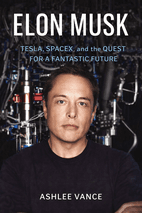
Walter Isaacson's Elon Musk offers an unvarnished biography based on two years of shadowing the innovator, detailing his intense drive and its impact on Tesla and SpaceX. It's for readers seeking a nuanced portrait of extreme ambition and its costs.
Feature
Insta.Page
Blinkist
Shortform
Summary Depth
Full Chapter-by-Chapter
15-min overview
Detailed analysis
Audio Narration
✓ (AI narration)
✓
✓
Visual Mindmaps
✓
✕
✕
AI Q&A
✓ Voice AI
✕
✕
Quizzes
✓
✕
✕
PDF Downloads
✓
✕
✓
Price
$59.99/yr
$146/yr (PRO)
$199/yr
*Competitor data last verified February 2026.
About the Author
Walter Isaacson
Walter Isaacson is an acclaimed biographer and journalist renowned for his masterful portraits of groundbreaking innovators. As the former CEO of the Aspen Institute and editor of TIME magazine, he brings a unique perspective to the intersection of history, technology, and leadership. His bestselling biographies, including *Steve Jobs*, *Leonardo da Vinci*, and *Benjamin Franklin*, are celebrated for their deep research and compelling narrative style. Isaacson’s work explores the nature of genius, creativity, and the forces that shape our world. His published books are widely available for purchase on Amazon, offering readers profound insights into the lives of history's most influential figures.
1 Page Summary
Walter Isaacson's biography Elon Musk is a comprehensive and unvarnished examination of the life and driving forces of one of the world's most consequential and controversial innovators. The central thesis explores the interplay between Musk's demonic drive and his visionary genius, arguing that his capacity for immense risk, relentless intensity, and often brutal management style are inseparable from his achievements with Tesla, SpaceX, Neuralink, and The Boring Company. Isaacson traces the roots of this behavior to a traumatic childhood in South Africa and a mindset he terms a "demon mode" that allows Musk to push through seemingly impossible engineering and business barriers, for better and often for worse.
The book is distinctive for its unprecedented access; Isaacson shadowed Musk for two years, attending meetings, reviewing emails, and conducting extensive interviews with Musk himself, as well as his family, friends, colleagues, and adversaries. This fly-on-the-wall approach results in a detailed, moment-by-moment narrative of critical episodes, such as the chaotic acquisition of Twitter (now X), the development of the Cybertruck, and the frantic efforts to launch Starship. Unlike a sanitized corporate history, Isaacson presents a balanced but stark portrait, detailing Musk's brilliance alongside his capriciousness, callousness, and the profound personal and professional turmoil he creates.
Intended for anyone seeking to understand the man shaping the future of transportation, energy, space exploration, and digital discourse, this biography offers readers a crucial, nuanced look at the price of extreme ambition. Readers will gain not a hero's tale but a complex case study in modern innovation, laying bare how Musk's unique amalgam of vision, engineering obsession, and disruptive temperament is transforming multiple industries while raising urgent questions about the concentration of power and the human cost of building the future.
This prologue delves into the formative years of Elon Musk in South Africa, painting a vivid picture of a childhood marred by systemic brutality and personal trauma. It establishes how relentless adversity—from paramilitary survival camps to schoolyard beatings and emotional abuse from his father—forged his exceptionally high pain threshold, risk tolerance, and a mission-driven psyche that views life as a series of existential crises to be conquered.
A Paramilitary Childhood
The narrative opens with Musk's experiences at "veldskool," a wilderness survival camp described as a "paramilitary Lord of the Flies." Here, bullying was encouraged, food and water were scarce, and children regularly fought one another. As a small, emotionally awkward twelve-year-old, Elon was frequently beaten and lost significant weight. The camp's culture was so severe that fatalities among attendees were not uncommon, treated as cautionary tales by the counselors.
Immersion in a Violent Society
This personal violence was set against the backdrop of 1980s South Africa, where random brutality was commonplace. Musk and his brother Kimbal once encountered a murder victim with a knife in his head, wading through his blood on their way to a concert. Even at home, danger lurked; at age six, Elon was severely attacked by the family's guard dog, an event followed by the traumatic betrayal of the dog being shot after he was promised it would be spared.
The Schoolyard as a Battleground
School presented a persistent arena for cruelty. As the youngest and smallest in his class, with poor social cues and a lack of ingratiating instinct, Musk was a prime target for bullies. The most severe attack occurred after a minor confrontation; a gang found him at recess, kicked him down concrete steps, and beat him so savagely that his face became an unrecognizable "swollen ball of flesh." The physical scars required decades of surgery, but the emotional wounds cut deeper.
The Architect of Emotional Scars
The most searing pain was inflicted by his father, Errol Musk. After the horrific school beating, Errol sided with the attacker, blaming Elon for provoking him. Upon returning from the hospital, Elon was subjected to a prolonged, abusive tirade from his father, who called him worthless and pathetic. Both Elon and Kimbal describe their father as a volatile "fabulist" with a Jekyll-and-Hyde nature, capable of switching from charm to relentless mental torture in an instant. Errol proudly admitted to exercising an "extremely stern streetwise autocracy" over his sons.
Forging a Survival Psychology
These experiences forced Elon to develop emotional shut-off valves. As noted by his first wife, Justine, he learned to "turn off fear," which also meant turning off joy and empathy to survive. This conditioning created an aversion to contentment and a belief that "life is pain." The PTSD from his childhood manifested in adulthood during times of extreme stress, such as the 2008 crises at SpaceX and Tesla, where he would relive his father's tirades in his sleep.
The Engine of Ambition
This cauldron of adversity shaped the core traits of the adult Elon Musk. The shutdown of fear translated into a superhuman tolerance for risk and a relentless, mission-driven fervor. He developed a "siege mentality" and a compulsion for drama and crisis, which energized him. As his brother Kimbal notes, he is a "drama magnet." This mindset drove his cosmic ambitions—to extend human consciousness, reach Mars, and transition the world to sustainable energy—but also made him callous, impulsive, and intensely demanding of himself and others.
The Playground Reclaimed
The prologue comes full circle by linking this ingrained psychology to his audacious 2022 bid to buy Twitter. After a year of historic success, Musk ruefully acknowledged his lifelong crisis mode but was unable to resist the allure of a new storm. Secretly plotting the takeover, he was drawn to owning the ultimate digital "playground," a chance to finally control the arena where, metaphorically, he would no longer be the bullied child but the master of the domain.
Key Takeaways
Adversity as a Forge: Musk's exceptionally high pain and risk tolerance were directly forged in the violent environments of his South African childhood and his father's emotional abuse.
Emotional Survival Strategy: To cope, he developed a mechanism to shut down fear and empathy, which later enabled his cold, calculated risk-taking but also contributed to interpersonal callousness.
The Father's Shadow: The traumatic influence of his volatile father left a lasting imprint, creating a lifelong battle against "demon mode" and a fear of becoming like him.
Crisis as Catalyst: Musk thrives on and is compulsively drawn to drama and existential crises, a theme that energizes his work and defines his personal life.
Origin of a Cosmic Mission: His childhood hardships fueled a profound, almost prophetic, drive to secure humanity's future, framing his entrepreneurial ventures as epic quests rather than mere business ventures.
Key concepts: Prologue: Muse of Fire
1. Prologue: Muse of Fire
Paramilitary & Societal Violence
Attended brutal 'veldskool' survival camps with fatalities
Lived amidst random public brutality in 1980s South Africa
Suffered severe childhood attack by family guard dog
Schoolyard Brutality & Trauma
Bullied for being youngest, smallest with poor social cues
Savage beating left face a swollen ball of flesh
Physical scars required decades of surgical repair
Father's Emotional Abuse
Errol Musk blamed Elon for his own severe beating
Subjected to abusive tirades calling him worthless
Father exercised stern, volatile autocracy over his sons
Forged Survival Psychology
Developed emotional shut-off valves to turn off fear
Belief that life is pain and aversion to contentment
PTSD manifested in adulthood during extreme stress
Adversity Shaping Ambition
High pain tolerance translated to superhuman risk tolerance
Developed siege mentality and compulsion for crisis
Drives cosmic missions to secure humanity's future
If you like this summary, you probably also like these summaries...
💡 Try clicking the AI chat button to ask questions about this book!
Chapter 2: Chapter 1: Adventurers
Overview
This chapter establishes the profound roots of Elon Musk’s appetite for risk and unconventional thinking, tracing it directly through two generations of bold, strong-willed, and often contradictory adventurers in his family tree. It portrays a lineage characterized by daring physical exploits, intense individualism, populist political leanings, and a willingness to defy norms and embrace danger.
The Haldeman Legacy: Daredevils and Populists
Elon Musk’s maternal grandfather, Joshua Haldeman, is presented as the archetype of this family spirit. A chiropractor, cowboy, and political activist, his life was a series of self-made adventures and strong convictions. After losing his farm in the Depression, he embraced a life of risk, traveling as a hobo and stowing away on ships. His political journey led him to leadership in Canada’s Social Credit Party—a movement with a documented anti-Semitic streak under its founder—and the technocratic Technocracy movement, which was temporarily banned. His defining trait was an impulsive embrace of danger, exemplified by trading his car for a plane he didn’t know how to fly, leading his family to become known as “The Flying Haldemans.” Disillusioned with Canada, he moved his family to apartheid-era South Africa in 1950, drawn by its perceived rugged individualism. His lifelong quest, inspired by a charlatan’s tale, was an annual, perilous search in the Kalahari Desert for a mythical lost city. He died in a plane crash when Elon was three, leaving a legacy captured in the family motto: “Live dangerously—carefully.”
Winnifred Fletcher: An Adventurous Partner
Haldeman’s wife, Winnifred, matched his adventurous spirit. As a teenager, she left her small town to pursue dreams of dancing and acting in Chicago and New York. Upon returning, she ran a dance school where she met Joshua. Their courtship was swift and decisive, mirroring their bold approach to life. She fully participated in the family’s risky adventures, including marathon flights and desert treks, helping to instill this fearless mindset in their children.
Maye Haldeman: Inheriting Resilience
One of the “flying twins,” Maye directly inherited her parents’ courage and self-reliance. A bright student in science and math, she also began a successful modeling career at fifteen. Her father’s philosophy deeply impacted her, leading to her own personal creed: “I know that I can take a risk as long as I'm prepared.” This balanced approach to risk—embracing it with calculation—would become a core trait passed to her son Elon.
Errol Musk: The Wheeler-Dealer
Elon’s father, Errol Musk, is depicted as a charming, entrepreneurial, and controversial figure. An engineer and politician who won a council seat in Pretoria, he shared the Haldemans’ love for flying and adventure but channeled it into lucrative and shady deals. His most notable venture involved trading his airplane for an unregistered stake in Zambian emerald mines, engaging in a “cloak-and-dagger” illegal gem trade until the market collapsed. His statements reveal complex and troubling racial views, as he criticizes the Haldemans for racism while making sweeping generalizations about Black Africans. His character is one of smooth opportunism and volatile charm.
A Fractured Foundation: The Musk Marriage
The relationship between Errol and Maye was tumultuous from their teenage years. Maye was repeatedly mistrustful of Errol due to his infidelity. After a breakup and a period of self-doubt, she accepted his marriage proposal based on promises of reform. The honeymoon to Europe was immediately discordant, marked by conflict and disappointment. Maye realized the marriage was a mistake but found herself immediately pregnant with their first child, making a quick exit feel impossible. This union, founded on drama and instability, created the fraught personal environment into which Elon Musk would be born.
Key Takeaways
Risk as Inheritance: Elon Musk’s famed risk tolerance is not a personal idiosyncrasy but a direct family trait, meticulously modeled by his grandfather Joshua Haldeman and mother Maye Musk.
Contradictory Ideologies: The family history encompasses a complex mix of fierce individualism, anti-establishment populism, and troubling associations with movements that held racist and anti-Semitic elements, all set against a backdrop of support for South Africa’s apartheid regime.
The Adventurer’s Code: The family operated under a specific philosophy of calculated daring: embracing physical and life-altering risks, but ideally with some level of preparation or control.
Parental Dynamic: Musk’s parents’ marriage was fragile and conflicted from its outset, establishing a home life of tension and instability that shaped his early childhood.
Key concepts: Chapter 1: Adventurers
2. Chapter 1: Adventurers
Family Legacy of Risk
Risk tolerance as direct family inheritance
Lineage of bold physical exploits and defiance
Philosophy of calculated daring and preparation
Joshua Haldeman: Archetypal Adventurer
Chiropractor, cowboy, and political activist
Impulsive embrace of danger and flying
Leadership in controversial political movements
Perilous quests for mythical lost city
Maye Haldeman: Calculated Risk-Taker
Inherited parents' courage and self-reliance
Successful modeling career from age fifteen
Personal creed: take risks with preparation
Balanced approach passed to son Elon
Errol Musk: Opportunistic Entrepreneur
Charming engineer and politician
Shady deals including illegal gem trade
Complex and troubling racial views
Shared love for adventure but volatile character
Tumultuous Parental Foundation
Marriage founded on drama and instability
Maye's immediate realization of mistake
Early pregnancy prevented quick exit
Fraught environment for Elon's birth
⚡ You're 2 chapters in and clearly committed to learning
Why stop now? Finish this book today and explore our entire library. Try it free for 7 days.
Chapter 3: Chapter 2: A Mind of His Own: Pretoria, the 1970s
Overview
This chapter explores the formative and often painful childhood of Elon Musk in 1970s Pretoria, South Africa. It paints a portrait of a profoundly unique, intellectually voracious, and deeply lonely boy, whose early traits—intense focus, fierce determination, and a struggle to connect socially—would become the bedrock of his adult persona. The narrative also delves into the dissolution of his parents' volatile marriage, a source of lasting trauma that shaped the family's hardscrabble resilience.
A Solitary and Intense Mind
From infancy, Elon was a challenging child who cried, ate, and slept little, his moods shifting rapidly. His mother, Maye, recognized his sharp intellect early, enrolling him in nursery school at age three against advice—a decision that backfired socially. He became a loner, often zoning out into a profound, impenetrable trance while processing his thoughts, a state his family learned not to interrupt. This, combined with a blunt intolerance for what he perceived as stupidity, left him isolated and friendless, seeding a deep, lifelong fear of being alone. His younger brother Kimbal recalls being in awe of Elon's "frightening" determination, illustrated by a story of a five-year-old Elon walking for two hours across Pretoria alone to attend a cousin's birthday party from which he'd been banned.
Family Dynamics and Early Trauma
Elon's home life was marked by a lack of coddling and significant freedom, which fostered self-reliance but also danger, as he experimented with rockets and explosives largely unsupervised. The marriage between his parents, Maye and Errol Musk, grew increasingly abusive. Maye recounts Errol's physical violence and cruel verbal attacks, with a young Elon trying to intervene by hitting his father's knees. After a final incident at an Oktoberfest celebration, they separated and divorced when Elon was eight. Maye moved the children to Durban, where she struggled financially as a model and dietitian, often leaving the kids to fend for themselves with the mantra, "You'll figure it out." Errol engaged in prolonged, threatening custody battles that caused the family continual distress.
Key Takeaways
The Origins of a Unique Mind: Elon's childhood established the core patterns of his personality: an extraordinary capacity for deep, single-minded focus; a relentless, almost frightening determination; and a preference for the precise logic of science and engineering over ambiguous social cues.
The Price of Being Different: His intellectual intensity and social awkwardness led to profound loneliness and bullying, traumas that left lasting emotional scars and contributed to what he would later describe as Asperger's-like traits.
Resilience Forged in Adversity: The toxic divorce, financial struggles, and Maye's insistence on self-reliance taught the Musk children grit and independence. Their mother's hard-nosed approach, while not soft, was viewed as a gift that prepared them for extreme challenges.
A Complex Emotional Blueprint: The chapter reveals the contradictions in Elon's psyche: he is deeply emotional about his own children and fears isolation, yet he often lacks the instinct for everyday empathy and warmth, a disconnect rooted in both his neurology and childhood experiences.
Key concepts: Chapter 2: A Mind of His Own: Pretoria, the 1970s
3. Chapter 2: A Mind of His Own: Pretoria, the 1970s
Early Personality Traits
Intense focus and impenetrable trance states
Blunt intolerance for perceived stupidity
Frightening determination from a young age
Profound loneliness and social isolation
Family Environment & Upbringing
Lack of coddling fostered extreme self-reliance
Unsupervised experimentation with rockets and explosives
Mother's mantra: 'You'll figure it out'
Financial struggles after parents' divorce
Parental Divorce & Trauma
Father Errol's physical and verbal abuse
Elon attempted to intervene against father
Prolonged, threatening custody battles
Divorce finalized when Elon was eight
Formation of Core Characteristics
Preference for logic over social ambiguity
Resilience forged through adversity
Deep fear of being alone
Asperger's-like traits emerging early
Contradictory Emotional Blueprint
Deeply emotional about his own children
Often lacks instinct for everyday empathy
Disconnect rooted in neurology and childhood
Fear of isolation despite social awkwardness
Chapter 4: Chapter 3: Life with Father: Pretoria, the 1980s
Overview
At age ten, Elon Musk made a pivotal and, in hindsight, regrettable decision: he chose to leave his mother’s home to live with his father, Errol, in Pretoria. This chapter explores the complex dynamics of that life, a period marked by both adventurous freedom and psychological hardship, which forged his resilient, competitive, and sometimes combative nature. It details his relationship with his charismatic yet difficult father, his tight-knit and mischievous bond with his brother and cousins, and the intellectual pursuits that became his sanctuary and his launchpad.
The Fateful Move
A ten-year-old Elon took the overnight train from Durban to Johannesburg alone to move in with his father, initially beaming with delight at their reunion. His decision stemmed from a mix of empathy for his father’s loneliness, his own social awkwardness, and the persuasive efforts of his grandmother. He was also drawn to Errol’s manly, swaggering presence and his impressive possessions, like a gold Rolls-Royce and a library of books and tools. Elon would later call it “a really bad idea,” stating he didn’t yet know “how horrible he was.” His brother Kimbal would join him four years later, explaining, “I didn’t want to leave my brother alone with him.”
Life with Errol
Their father was a figure of flamboyance, frugality, and hands-on engineering. The boys helped him build a tourist lodge in the Timbavati Game Reserve, sleeping by a fire with rifles for protection against lions. Errol experimented with materials, making floors from insulating mica. Elon became an expert marksman, accompanying visitors on hunts and winning a local skeet-shooting contest. Errol took the children on trips abroad, displaying his contradictory nature. In America, he rented a Thunderbird but refused to go to Disney World, deeming it too expensive. In Hong Kong, he left Elon and Kimbal alone in a grungy hotel for two days with a little cash—an experience Elon recalls as both neglectful and wondrously independent.
A Confederacy of Cousins
After the move, their mother, Maye, relocated nearby. Weekends often involved gatherings at their grandmother’s and time with their aunt’s three sons, Peter, Lyndon, and Russ Rive. The five cousins formed an adventurous, often contentious, band. With Maye’s more indulgent supervision, they would sneak out to concerts in Johannesburg, frequently encountering violent clashes on trains and at anti-apartheid protests. Elon emerged as the most fearless, confronting disruptive people much larger than himself. A fiercely competitive streak also surfaced; during a bike race to Johannesburg, he became enraged when his cousins hitched a ride in a truck, attacking them for cheating. Physical fights between the brothers were common and brutally pragmatic, often ending with a well-placed kick to the groin.
The Student and the Tinkerer
In school, Elon was a good but not stellar student, with consistent feedback noting he worked slowly, daydreamed, and often failed to finish his work. After being bullied at a public high school, he transferred to the strict Pretoria Boys High School, where he excelled except in subjects he deemed meaningless, like Afrikaans and religious instruction. His spare time was spent on experiments—making small rockets with volatile chemical mixtures and learning magic tricks and hypnosis. An early entrepreneurial spirit emerged, as with the cousins’ scheme to sell overpriced homemade chocolate eggs by framing it as “supporting future capitalists.”
The World in Books
Reading remained Elon’s primary escape and passion. He would immerse himself for nine-hour stretches, vanish into hosts’ libraries, and sit on bookstore floors. He devoured his father’s encyclopedias, becoming a “genius boy” in the family’s eyes, though his factual corrections made him an annoying nerd to peers. A pivotal book found in his father’s office detailed futuristic inventions, including ion-thruster rockets. He returned to it repeatedly, later crediting it with being the first thing that made him think about traveling to other planets, a vision he would describe in detail decades later from a Texas rocket base.
Key Takeaways
Elon’s choice to live with his father was driven by childhood empathy and admiration but exposed him to a complex and difficult parental relationship that he later deeply regretted.
His adolescence was characterized by a unique blend of neglectful independence and hands-on, adventurous labor, from building a bush lodge to navigating dangerous city streets abroad and at home.
The intense, often violent, camaraderie with his brother and cousins forged a personality defined by fearlessness, fierce competitiveness, and a survivor’s mentality.
Academically, he displayed high capability but only applied himself fully to subjects he found meaningful, a pattern of focused, self-directed learning that would define his approach.
Books provided a critical psychological refuge and, specifically, a book on futuristic inventions planted the early seed for his interplanetary ambitions, demonstrating the profound impact of his voracious reading.
Key concepts: Chapter 3: Life with Father: Pretoria, the 1980s
4. Chapter 3: Life with Father: Pretoria, the 1980s
Decision to Live with Father
Moved at age ten due to empathy and admiration
Later called it a 'really bad idea'
Brother Kimbal joined to not leave him alone
Complex Relationship with Errol
Father was flamboyant yet frugal and difficult
Hands-on adventures like building a bush lodge
Experiences of neglect mixed with independence
Adventurous Bond with Cousins
Formed a tight-knit, competitive band of five
Elon emerged as the most fearless confrontational
Fierce competitiveness led to physical fights
Self-Directed Learning & Escape
Good student but slow, focused on meaningful subjects
Conducted experiments like making small rockets
Reading was primary escape for nine-hour stretches
Foundational Ambitions Formed
Book on futuristic inventions inspired space travel
Early entrepreneurial schemes emerged
Pattern of focused, self-directed learning established
📚 Explore Our Book Summary Library
Discover more insightful book summaries from our collection