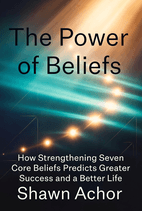
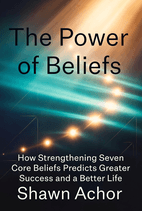
Shawn Achor's The Power of Beliefs draws on decades of research to show how seven core beliefs—like "My Behavior Matters" and "I Am Not Alone"—actively reshape biology and outcomes, then provides six practical strategies for changing limiting beliefs. Written for professionals, educators, and anyone feeling trapped by burnout or anxiety.
Feature
Insta.Page
Blinkist
Shortform
Summary Depth
Full Chapter-by-Chapter
15-min overview
Section-by-section guides
Audio Narration
✓ (AI narration)
✓
✓
Visual Mindmaps
✓
✕
✕
AI Q&A
✓ Voice AI
✕
✕
Quizzes
✓
✕
✕
PDF Downloads
✓
✕
✓
Price
$59.99/yr
$146/yr (PRO)
$199/yr
*Competitor data last verified February 2026.
About the Author
Shawn Achor
Shawn Achor is a positive psychology researcher and author best known for his international bestseller "The Happiness Advantage," which explores how happiness drives success rather than the reverse. He spent over a decade at Harvard University, teaching and researching the science of human potential, and his expertise focuses on applying positive psychology to improve workplace performance and well-being. His other notable works include "Before Happiness" and "Big Potential," and he has delivered one of the most-viewed TED talks on the topic of happiness.
1 Page Summary
Drawing on decades of research from fields as diverse as medicine, sports, and neuroscience, Shawn Achor’s The Power of Beliefs argues that our beliefs are not passive reflections of reality but active forces that reshape our biology, attention, and outcomes. The book opens with startling evidence—from placebo effects that have grown stronger over time to the disappearance of home‑field advantage in empty stadiums—to establish that belief is a “mechanical lever,” not a soft psychological factor. Achor then identifies seven core power beliefs—including “My Behavior Matters,” “I Am Grateful,” “I Matter,” and “There Is Something Greater than Me”—that serve as the foundation for resilience, happiness, and success. Each belief is grounded in specific studies, such as how the belief “I am not alone” literally makes hills look less steep, or how employees who find meaning in their work contribute thousands more in annual labor output.
What makes this book distinctive is its seamless blend of rigorous science with practical, actionable strategies. Achor does not simply explain which beliefs matter; he devotes the second half to six concrete pathways for changing them, from the “Disaster Elevator” (a cognitive exercise that short‑circuits catastrophic thinking) to “Starting the Wave” (leveraging social contagion to spread a new positive belief). The author’s own stories—from a childhood nightmare caused by a mistaken belief about stuffed animals to a night spent freezing on a mountain that reset his tolerance for discomfort—anchor the science in relatable human experience. Throughout, Achor emphasizes that belief change is not about wishful thinking but about understanding the brain’s mechanisms, such as how the anterior cingulate cortex signals cognitive dissonance and how anchor points must be “driven deep” through repetition.
This book is written for anyone who feels trapped by burnout, anxiety, loneliness, or the quiet sense that their actions don’t matter. It is especially valuable for professionals, educators, and leaders who want to understand how to shift not only their own mindset but also the culture of a team, classroom, or organization. Readers will come away with a clear framework for identifying which limiting beliefs hold them back, a toolkit of research‑tested strategies to replace them, and a compelling reminder that even small, consistent changes can create a “fulcrum powerful enough to lift us out” of stagnation. Achor’s ultimate message is both humble and empowering: the goal is not to transform your entire life overnight, but to change one part of it in a way that sticks.
Chapter 1: Chapter 1: The Power of Beliefs Is Ascending
Overview
The evidence is mounting from fields as diverse as medicine, sports, and finance: beliefs don’t just color our experience of reality—they actively reshape it. Groundbreaking placebo studies, from Henry Beecher’s 1955 original to Bruce Moseley’s sham knee surgeries in 2002, proved that belief alone can produce genuine physical improvements, matching the power of actual surgery. Even more startling, the placebo effect itself has been growing stronger over the decades—doubling in epilepsy trials, rising by 7 percent per decade in depression studies—suggesting that belief is not only potent but becoming more potent in the modern world. The same dynamic appears in sports: when Covid-19 emptied stadiums, the home‑field advantage evaporated overnight. The familiar physical factors like travel and altitude mattered far less than the presence of fans whose belief in the team literally shifted performance. Belief, it turns out, is a mechanical lever, not a soft psychological factor.
But belief is also what makes us uniquely human. No AI can believe a struggling student will turn their life around or that someone will beat the odds. Belief requires hope, commitment, and a quiet defiance of the numbers. And beliefs are powerful even when they aren’t objectively true—they are subjective lenses that dictate behavior, as the stock market’s trillion‑dollar swings on collective sentiment demonstrate. Yet despite this rising power of belief, modern life is plagued by what the chapter calls the Four Horsemen: burnout, anxiety, loneliness, and depression. Rates of these conditions have skyrocketed over the past two decades. The cause is a mass disconnection from the three traditional anchors of belief—community, religion, and occupation—a phenomenon named the Great Drift. Religious non‑affiliation has tripled, volunteer memberships have plunged, and face‑to‑face interactions have dropped dramatically. This drift leaves a void that fills with toxic beliefs: My behavior doesn’t matter. I am missing out. I am alone.
But there is a clear path forward. The antidotes are the Seven Core Power Beliefs—ancient wisdom now validated by modern science. Strengthening beliefs like My behavior matters, I am not alone, and This work is meaningful has been shown to double promotion rates, extend life by over seven years, improve cancer survival, and cut burnout nearly in half. The rest of the book offers concrete strategies—the Disaster Elevator, the Memory DeLorean, Stopping Negative Mantras, and more—to reshape how the brain processes conflict, memory, language, and social connection. Beliefs are ascending in power, and the Great Drift need not be our destiny. Same world, different beliefs, different outcome.
The Rise of Belief
Scientifically speaking, beliefs don’t just reflect reality—they bend it. That conclusion emerges from decades of research that began with Henry Beecher’s landmark 1955 study on placebos. Beecher demonstrated that fake treatments produced real, quantifiable improvements in 35 percent of patients compared to untreated controls. It was the first rigorous proof that belief alone could change physical outcomes.
The stakes grew stranger with a 2002 study led by Bruce Moseley. Patients with severe knee osteoarthritis were randomly assigned to receive either real arthroscopic surgery or a sham procedure where only an incision was made. At six months, one year, and even two years later, the sham surgery patients showed identical improvements in pain, inflammation, and mobility—despite their condition being progressive and degenerative. The placebo hadn’t just provided a temporary boost; it matched the lasting power of an actual invasive surgery.
Here’s where the story takes a truly unexpected turn. In 2011, French researchers analyzing childhood epilepsy studies discovered that the placebo effect had doubled over two decades—from 10 percent improvement in 1990 to 20 percent by 2010. Follow-up studies in Pain and across dozens of trials for depression, dementia, headaches, heart disease, and cancer confirmed the pattern: the impact of placebos has been steadily increasing. A meta-analysis of depression studies found the placebo effect rising by 7 percent per decade. That makes no sense if placebos are inert. Yet the data is clear: belief is not only powerful, it is becoming more powerful in the modern world.
The Home-Field Advantage
Few phenomena in sports are as consistently predictable as the home-field advantage. In the NFL, playing at home earns a team an average of three extra points in the spread. In college football, home teams win 64 percent of the time. In soccer, home teams win 45 percent of games and lose only 30 percent.
For decades, the explanation seemed obvious: familiarity with the stadium, altitude, temperature, and avoiding travel fatigue. Then Covid-19 emptied the stands. With no fans present, the home-field advantage vanished entirely. In football, there was no statistical difference between home and away. In soccer, home teams scored 0.39 fewer goals per game. The physical factors hadn’t changed—the away team still traveled, the court was still different. The only variable was the absence of fans. The advantage came not from geography or logistics, but from the belief that others are for you.
That discovery reframes what’s possible. If a team’s success can shift by up to 50 percent based solely on the presence of supporters, then belief is not a soft psychological factor—it’s a mechanical lever in performance, independent of training, genes, or environment.
Beliefs Are Uniquely Human
The rise of AI has given us an unexpected window into what only humans can do. AI can calculate odds, analyze data, and predict probabilities. But it cannot believe that a struggling student will turn their life around. It cannot believe that someone will beat stage 3 cancer or overcome a family history of addiction. Belief requires hope, commitment to a vision beyond the numbers, and the quiet defiance that whispers “my behavior matters” even when the data says otherwise. That is not a line of code.
So what exactly are beliefs? A working definition: beliefs are the lens through which our brains process the world and decide on a path. They are not facts. They are inherently subjective. A person surrounded by people who love them can still believe they are alone—and that subjective perception, not the objective reality, will dictate their behavior and outcomes. A student at the top of her class who doesn’t believe her work is meaningful will follow a different trajectory than the numbers predict.
Beliefs are real even when they aren’t true. In August 2024, Nvidia reported a revenue increase of 150 percent but its stock dropped 10 percent, dragging down the entire S&P 500. Investors believed the beat wasn’t strong enough—a collective belief that had nothing to do with fundamentals. The stock recovered half its losses the next day without any company news. Ten days later it was back to its previous price. A month later it dropped 20 percent, then hit a record high. Trillions of dollars can evaporate or multiply based on what people collectively believe.
The Four Horsemen of the Modern World
If belief has become more powerful, why are so many people struggling? The data on happiness is grim. Over the past twenty years, depression rates have doubled for every age group, including children. Anxiety rates have risen more than 50 percent since 2010. A study in Nature found that worldwide depression has increased by 60 percent since the 1990s. And 39 percent of Americans—across religious and political lines—believe we are in the “end times.”
Four patterns now dominate the modern experience: burnout, anxiety, loneliness, and depression. They are the Four Horsemen of our era, and they shape the context in which our beliefs operate. The numbers are stark: 36% of Americans, including 61% of young adults, report serious loneliness. Over 25% of adults are on medication for anxiety or depression. Work disengagement is at historic highs.
Why is this happening? For most of human history, our beliefs were shaped by three forces: community, religion, and occupation. Now we've become untethered from all three, creating a condition called The Great Drift. Religious non-affiliation jumped from 8% to 28% between 2001 and 2024. Military enlistment dropped 58% since the 1980s. Volunteer club memberships fell by over 60%. The gig economy and hybrid work have eroded occupational bonds. Men's face-to-face interactions dropped 30%, and teens spend 45% less time with each other in person.
The Great Drift doesn't just leave a void—it fills that void with toxic beliefs. Our brains default to nihilism and hyper-individualism, or they latch onto unsatisfying quasi-communities like influencers and angry podcasters. The result is seven symptomatic beliefs that act as biomarkers of the drift: My behavior doesn’t matter. I am missing out. I don’t matter. I don’t have enough. I am alone. This work is not meaningful. There is nothing greater than me.
But there is a way out. Over twenty years of research across fifty countries, I've identified what I call the Seven Core Power Beliefs—the antidotes to those negative markers. Strengthening even one of these has massive, measurable impacts on success, health, and happiness. They are: My behavior matters. I am grateful. I matter. I have something to give. I am not alone. This work is meaningful. There is something greater than me.
These aren't
Key concepts: Chapter 1: The Power of Beliefs Is Ascending
1. Chapter 1: The Power of Beliefs Is Ascending
Beliefs Reshape Reality
Placebo studies prove belief alone improves health
Sham knee surgery matched real surgery outcomes
Belief is a mechanical lever, not soft psychology
The Rising Power of Placebos
Placebo effect doubled in epilepsy trials since 1990
Depression studies show 7% increase per decade
Belief is becoming more potent in modern world
Home-Field Advantage Is Belief-Driven
Empty stadiums during Covid erased home advantage
Physical factors like travel mattered less than fans
Belief shifts performance by up to 50%
Beliefs Are Uniquely Human
No AI can believe someone will beat the odds
Belief requires hope, commitment, defiance of numbers
Subjective beliefs dictate behavior and markets
The Great Drift: Disconnection from Belief Anchors
Burnout, anxiety, loneliness, depression have skyrocketed
Religious non-affiliation tripled, memberships plunged
Void fills with toxic beliefs like 'I am alone'
The Seven Core Power Beliefs
Beliefs like 'My behavior matters' double promotion rates
Strengthening beliefs extends life by over seven years
Cut burnout nearly in half with core beliefs
Practical Strategies to Reshape Beliefs
Disaster Elevator and Memory DeLorean change thinking
Stopping Negative Mantras reprograms the brain
Same world, different beliefs, different outcome
If you like this summary, you probably also like these summaries...
💡 Try clicking the AI chat button to ask questions about this book!
Chapter 2: Chapter 2: Exploring How Beliefs Scientifically Change the Outcome
Overview
The stories we believe about ourselves and the world don’t just color our experience—they actively reshape our biology, attention, and outcomes. The author opens with a painfully relatable childhood example of mistaking correlation for causation—his stuffed animals falling off the bed seemed to cause his nightmares, when in reality his thrashing during a nightmare knocked them down. Changing that one belief stopped the nightmares almost overnight. That personal experiment sets the stage for exploring the science of how beliefs bend reality, from superstitions in professional sports to the hidden ways pessimism blinds us to opportunities. By the end, it becomes clear that beliefs aren’t abstract thoughts; they’re the lens through which we see every choice, and we have more power to adjust that lens than we realize.
From Stuffed Animals to Statistical Fallacies
The author’s childhood nightmare saga illustrates a cognitive trap we all fall into: post hoc, ergo propter hoc—assuming that because one event follows another, the first caused the second. For three years he believed the stuffed animals’ fall caused his nightmares, so he lay rigid each night in hypervigilant anxiety, which ironically triggered the very nightmares he feared. The moment he reversed the belief—realizing the nightmares caused the fall—the anxiety dissolved and the nightmares vanished. That’s the core lesson: false negative beliefs don’t just feel bad, they create self-fulfilling prophecies. He lists other examples of faulty childhood beliefs (the dishwasher will flood the kitchen, actors really die in movies) to show how common these mental missteps are, and how they shape our actions even when they’re absurd.
Athletes, Placebos, and the Magic of Superstition
Superstitions in sports offer a vivid demonstration of beliefs changing outcomes. Michael Jordan wore his UNC shorts under his Bulls uniform, Serena Williams refused to change winning socks despite the grossness. The author points out that if a placebo can make you feel better, a superstition can make you play better—not because the ritual itself has power, but because the belief in its power alters focus, confidence, and physiology. These are harmless false beliefs that happen to be useful, but the real goal of the book is to move beyond superstition toward true and positive beliefs that accurately predict a better quality of life. The point isn’t to cling to any belief, but to understand that the lens itself is predictive: it influences income, relationships, health, and even luck.
The Luck Experiment and the Science of Attention
Richard Wiseman’s 2003 newspaper study is a masterclass in how beliefs direct attention. Lucky people noticed the hidden message offering a bonus; unlucky people scanned right past it. Follow-up research using eye-tracking confirmed that optimists unconsciously seek positive information while pessimists scan for threats. Dopamine, the brain’s motivation chemical, floods the system when we expect good things, energizing us to chase opportunities. C. S. Lewis summed it up: those who look for miracles find them; those who don’t, never see one. The same streets, the same newspaper, the same world—but radically different outcomes based on the lens we bring to it. The author also shares a study where HR professionals initially believed change was unlikely, but after practicing a simple positive habit for three weeks, their belief in the possibility of growth doubled. Seeing change happen in their own lives rewired their assumptions.
Money, Health, and the Unseen Cost of Negative Beliefs
Our beliefs about money are especially potent. Klontz and Britt found that people who believe “money is evil” or “I don’t deserve wealth” tend to have lower net worth and higher financial stress, while those with positive, vigilant beliefs accumulate more wealth. But the damage doesn’t stop at the wallet. In 2024, nearly half of Americans believed it was the worst year financially ever—a belief that economists might dismiss, but that drove real insomnia, headaches, digestive issues, and a 13 percent increase in heart disease. Negative economic beliefs also predict higher rates of drinking, domestic abuse, and divorce. The nocebo effect—the dark twin of the placebo—shows that false negative beliefs can make us sick, anxious, and isolated even when objective reality is decent. Steven Pinker’s data on declining poverty, war deaths, and child mortality proves that despite the news, the world is getting better. Yet our information diets feed us a different story, and we live out that story in our bodies and relationships.
Stereotype Threat and the Power of Signature Beliefs
The chapter’s most hopeful section shows that beliefs can be weaponized against us, but also strengthened to protect us. Stereotype threat research demonstrates that priming women with the idea that “women are bad at math” makes them perform worse—but priming them with a positive belief reverses the effect. More striking: about 10 percent of women in the negative stereotype condition actually improve their performance. These are people who hold a core belief—what the author calls a Signature Belief—like “I can do anything I put my mind to.” That internal belief overrides the negative external prime. Kurt Warner, undrafted and stocking groceries, held onto a belief that he wasn’t done. Six years later he won the Super Bowl. Signature Beliefs don’t just insulate us from harm; they turn obstacles into fuel. The lesson is clear: we can consciously craft and strengthen beliefs that lead to growth, and in doing so, change the trajectory of our lives even in a world that often seems dark.
Key Takeaways
False negative beliefs create self-fulfilling prophecies. The author’s nightmare story shows that believing a harmless event causes harm can trigger the very outcome you fear. Check your assumptions about cause and effect.
Your beliefs control your attention. Optimists literally see more opportunities; pessimists overlook them. What you expect to find, you find—for better or worse.
Nocebo effects are real and pervasive. Negative news, economic pessimism, and stereotype threats can lower performance, increase illness, and shorten lives. Be mindful of the information you consume.
Signature Beliefs can override negative primes. A strong, positive core belief—like “I can overcome this”—can transform obstacles into stepping stones. Actively cultivate and practice these beliefs.
Key concepts: Chapter 2: Exploring How Beliefs Scientifically Change the Outcome
2. Chapter 2: Exploring How Beliefs Scientifically Change the Outcome
False negative beliefs drive insomnia and heart disease
World is improving, but beliefs make us sick
Stereotype Threat and Signature Beliefs
Negative primes worsen performance in groups
Positive primes can reverse stereotype effects
Signature Beliefs override external negativity
Crafted beliefs turn obstacles into fuel
Rewiring Beliefs Through Experience
Seeing change in own life rewires assumptions
Simple positive habits double belief in growth
Beliefs are adjustable lenses, not fixed truths
We have power to consciously craft beliefs
Beliefs Bend Biological and Social Reality
Beliefs reshape biology, attention, and outcomes
They influence income, relationships, and health
Lens predicts quality of life accurately
Adjusting lens changes life trajectory
⚡ You're 2 chapters in and clearly committed to learning
Why stop now? Finish this book today and explore our entire library. Try it free for 7 days.
Chapter 3: Chapter 3: Bending Reality: How Beliefs Change the Path
Overview
Benjamin Franklin risked his life flying a kite into a thunderstorm because he believed he could capture lightning, and that audacious belief reshaped history. Meanwhile, an eight-year-old jammed a wire into a lamp, set a wall on fire, and told his sister to keep playing Monopoly—because he believed he could make electricity visible like a proton pack. Two experiments, wildly different outcomes, but both changed the path. That’s the core insight: beliefs don’t just color how we feel about possibilities—they alter the math of what’s possible. Telling a nervous child “You’ll love school” rarely works; telling a sick friend “You’ll beat this” doesn’t shift a prognosis. The real question is how to frame beliefs so they actually bend reality.
The lottery and professional sports offer a clear contrast. Buying a ticket is the only action that matters for winning—after that, nothing you do changes the odds. But believing you can go pro? That belief can fuel training, diet, and perseverance, and even though the initial probability is tiny (0.009% of high school players get drafted), it can be altered through behavior. A player who earns a college scholarship jumps to a 0.239% chance; reaching draft eligibility pushes it to 1.1%—a 12,122% increase. Belief plus behavior bends probability. Health follows the same logic: a dire diagnosis offers three paths—hopelessness, stasis, or believing that positive outcomes are possible if specific mindset and behavioral changes are adopted. Only the third changes the math. It doesn’t guarantee a cure, but it improves quality of life, treatment adherence, and connection.
To build beliefs that work, one needs a quick philosophical lens. Two main categories exist: general beliefs (about how the world is) and possible beliefs (about what could happen). Within these, beliefs can be qualified or unqualified. “Pain is bad” is an unqualified general belief that might prevent someone from ever running; “Pain is usually bad, but not during exercise” opens a door. Then there are warrants—the reason you hold a belief. “I can run a mile because I walk three miles without issue” gives the brain a foothold. The single biggest mistake corporate leaders make is declaring audacious goals without the “how.” A better framing: “We’ve doubled sales six years running [warrant], so if we roll out this new technology and work hard [qualifier], I believe we can hit this goal.” For a cancer patient, “I will definitely beat cancer” is warrantless and unqualified; “I will increase my chances because I’m following doctors’ orders, we caught it early, and I have mental fortitude from daily meditation and exercise” changes the path. For a parent dropping a child at a new school, “You’ll love it because you started a new school three years ago and ended up loving it, and you’re great at making friends, so if you work hard and are kind, I believe you’ll love it here too” is a four-second reframe that can shift years.
Sometimes the limits come not from our own beliefs but from others’. A coach with a 95% chance of losing might tell the team they’ve got this—statistical probability isn’t destiny. Jim Carrey’s character heard “one in a million” and replied, “So you’re telling me there’s a chance!” Every successful person has a story of someone who didn’t believe in them. When a high school college counselor told a student not to waste money applying to Harvard, he applied anyway, got in, and spent twelve years there. Years later, in a Zimbabwe shantytown, a mother living in a grass and cardboard shelter believed her son would go to Harvard someday—and the doubt that surfaced is a memory that still stings. Science itself is full of qualifiers: early twentieth-century biologists said a human could never run a sub-four-minute mile, then Roger Bannister did it, and within three years sixteen others followed. Even beliefs about aging limit us: exposure to negative age stereotypes makes older adults become more sedentary and frail. Meeting Stu, a seventy-nine-year-old marathon runner, changed everything. Bright lights reveal the path. To believe well is not to deny data, but to dwell where evidence meets hope and action.
Naive beliefs in childhood can change a trajectory even if the specific goal never materializes. A seven-year-old dreaming of NBA stardom faces a 0.00% chance rounded to the nearest percentage. Crush that belief and the kid might never step onto a court again. But the kid who does believe can rewrite the odds—if they make it to a college team, they multiply chances by 12,122%. That naive belief fuels a decade of motivation, discipline, friendship, and joy. It changes the path before it ever changes the outcome. The same goes for the ill-advised wall-fire experiment: that reckless belief in mad-scientist potential didn’t lead to a Nobel Prize, but it steered a lifetime toward curiosity, science fairs, psychology research, and eventually writing this book. The beliefs you held—even the ones that didn’t come true—shaped the path that brought you here. They opened doors, or kept them closed.
We stand in a gap between what is proven and what is merely possible. In that space, the healthiest response is to hold beliefs carefully yet tenaciously. Beliefs don’t guarantee outcomes—a person with stage 4 cancer won’t necessarily experience remission just by hoping. But the belief that their behavior matters, that hope exists, that relationships are still possible? That belief improves quality of life, deepens connections, eases symptoms, and brings more happiness into the time they have left. To believe something is possible increases its likelihood within the bounds of reality; to believe it impossible slams the door shut. As William James wrote, “It is our attitude at the beginning of a difficult task which more than anything will affect a successful outcome.” The attitude doesn’t do the work for you, but it determines how much work you’ll try to do in the first place.
You cannot simply deny a possibility and expect it to survive. The visual artist and scholar Khang Kijarro Nguyen put it this way: “If you expect the mountain to be insurmountable, you've met the enemy. It's you.” Our beliefs predict the path we’ll walk—and sometimes they predict it so vividly that we end up walking into a blizzard. Which brings us to a snowy mountain in New Hampshire, an unwarranted belief gone wrong, an eight-year-old son huddled in an emergency hut, and the raw, cold power of changed beliefs.
Key Takeaways
Naive beliefs in childhood can change your trajectory even if the specific goal never materializes; they provide motivation, direction, and joy along the way.
Beliefs shape not only long-term outcomes but also how much effort you invest today—and effort is often what transforms possibility into reality.
In uncertain situations (like serious illness), holding positive, warranted beliefs about your agency and hope leads to measurably better quality of life.
Denying a possibility before you've even tried is often the surest way to make it impossible—your attitude becomes the first obstacle.
The stories you tell yourself about what's possible determine which paths remain open, and that choice ripples outward into everything that follows.
Key concepts: Chapter 3: Bending Reality: How Beliefs Change the Path
3. Chapter 3: Bending Reality: How Beliefs Change the Path
Beliefs Bend Reality
Beliefs alter the math of what's possible
Belief plus behavior changes probability
Examples: Franklin's kite vs. childhood experiment
Three paths: hopelessness, stasis, or active belief
Beliefs Change Probability Through Action
Lottery: belief doesn't change odds
Pro sports: belief fuels training, alters odds
0.009% to 1.1% chance through action
Health: belief improves adherence and quality
Types of Beliefs and Warrants
General beliefs vs. possible beliefs
Qualified vs. unqualified beliefs
Warrants provide the 'why' for belief
Audacious goals need warrants and qualifiers
Framing Beliefs That Work
Avoid warrantless, unqualified statements
Use past evidence as warrant
Add qualifiers for realistic hope
Four-second reframe can shift years
Overcoming Others' Doubts
Statistical probability isn't destiny
Every successful person faced disbelief
College counselor told student not to apply to Harvard
Science limits shattered by belief and action
Beliefs Shape Paths Beyond Outcomes
Naive beliefs fuel motivation and discipline
Childhood dreams create lifelong skills
Even failed goals change trajectory
Beliefs open or close doors permanently
Bright Lights Reveal the Path
Negative age stereotypes limit behavior
Meeting Stu, 79-year-old marathon runner
Believe where evidence meets hope and action
Dwell in possibility without denying data
Chapter 4: Chapter 4: The Nature of Belief Change
Overview
Beliefs are more changeable than most people think. A night spent freezing on a mountain with his wife and eight-year-old son didn't just change what the author thought about hiking—it reset his whole view of discomfort, risk, and resilience. The chapter argues that belief change is a basic feature of how the brain works. The anterior cingulate cortex acts like an alarm when new information clashes with old beliefs, creating cognitive dissonance that pushes us toward coherence. This discomfort is an evolutionary tool that makes growth possible. Historical examples—from dinosaurs to smoking on airplanes—show that collective beliefs shift dramatically over time.
The mechanism that makes change stick is the anchor point: a cognitive shortcut where we judge new experiences against a past reference. Colonel Brian Rideout's hypothermia made him unable to feel cold for years. Marathon runners reset what a mile feels like. The author's own anchor for suffering moved so much that a shabby rental car felt like a luxury after that night. But anchor points don't hold automatically—they must be driven deep through repetition. That's why exposure therapy works for phobias, and why the author lights five tea lights once a week to remind himself of negative events, reinforcing that today's minor problems are trivial by comparison.
The chapter's most powerful insight is that negative events can lead to post-traumatic growth. From the Buddha leaving his palace to Moses witnessing a beating, from Joseph being sold into slavery to Joseph Campbell's hero's arc, literature and religion have long understood that suffering can forge beliefs that reshape a life. Research confirms this: trauma can boost grit, appreciation, compassion, and spiritual growth—even when the trauma itself stays painful. The key question is whether belief change will tilt toward limitation or purpose. This sets up the next parts, which explore which beliefs to strengthen and how.
The Mountain That Moved Beliefs
The chapter opens with a personal story. Twelve years ago, the author and his girlfriend Michelle did a tough eight-hour hike on Franconia Ridge. A decade later, they repeated it with their eight-year-old son Leo. Michelle refused at first, but Leo said he wanted "something he was proud of."
It nearly turned into a disaster. They started at nine a.m., underdressed and underprepared. By two p.m., exhausted and out of food, they realized they were trapped—descending would take over five hours, but the sun would set in two, bringing near-freezing temperatures. With no flashlights and no way off, they found an emergency hut from 1888. Michelle refused to hike down in the dark. They huddled all night without coats, sleeping bags, or heat. The author prayed, listened to Harry Potter, and worried about Leo's blue lips. Morning came, and they hiked down safely.
But the real outcome was transformation. Their beliefs about themselves and the world had shifted. That single experience became a lens for three key insights: anchor points, how fast change can happen, and the potential for positive change after negative events.
Belief Change Is Possible
Many people think beliefs are fixed—pessimists stay pessimists, political views are permanent. But after two decades of research, the author argues change is radically possible and even contagious. When you change your lens, people around you often shift too. History proves it: 250 years ago no one believed in dinosaurs; a century ago no scientist believed in the Big Bang; 40 years ago smoking was allowed on planes. Beliefs evolve constantly.
Neuroscience explains why. When new information contradicts old beliefs, the brain experiences cognitive dissonance, activating the anterior cingulate cortex—a neural alarm. The prefrontal cortex then works to resolve the tension. This discomfort isn't a flaw; it's a feature that pushes us to reframe understanding. A static brain has no evolutionary advantage. Change is essential for growth.
Anchor Points
An anchor point is a cognitive shortcut: we judge new experiences against a past reference. If you grew up in a warm climate, a New England winter feels freezing. If your father earned $30,000, a $60,000 salary feels luxurious. Belief change happens when we move our anchor points—but the new anchor must be strong enough to hold.
Colonel Brian Rideout, a Marine, experienced such profound cold it caused hypothermia. For three years afterward, he didn't wear even a light jacket. His brain had a new anchor for temperature. Marathon runners find a mile feels like a warm-up after 26.2 miles. The night on the mountain reset the author's anchor for discomfort—the heat of a shabby rental car afterward felt like luxury. This explains why modern ease exaggerates our reaction to small discomforts: our anchors are too light.
Driving Anchor Points Deep
For an anchor belief to hold, it must be rooted deeply. Without reinforcement, even positive beliefs can drift—like a student who believes cheating is wrong until grade pressure hits. We can drive anchors deep through repetition.
Exposure therapy for phobias works this way: starting with a weak anchor (spiders are terrifying) and slowly moving it through repeated experiences until the brain adopts a new belief. The author keeps five tea lights on his closet windowsill, each representing a negative event—a painful back, depression, miscarriages, a premature birth, and the freezing night. Once a week he lights them for thirty seconds, reminding himself of what he overcame. This repetition keeps the anchor deep, preventing him from drifting into discontent over minor problems.
The false link between negative events and limiting beliefs is exactly what great literature and religious texts challenge. Religious narratives reframe suffering as a potential crucible for transformation. The Buddha left royal comforts to embrace hunger and loss. Moses witnessed a slave being beaten, shattering his worldview. The Hebrews' forty years in the desert is seen as a positive shaping experience. Joseph was sold into slavery. Jesus endured forty days without food, then betrayal. Across these stories, profound suffering forged beliefs billions still follow.
The same pattern appears in secular literature. Joseph Campbell's The Hero with a Thousand Faces argues that every hero's arc begins with a negative event that forces a revision of their worldview—leading to extraordinary growth. From Great Expectations to Star Wars and Harry Potter, characters face a choice: transform pain into purpose or let suffering limit their beliefs. But this isn't just for heroes. A family divided by politics might find unity after a grandparent's death. A child terrified of moving might discover a lifelong passion. Someone who hates uncertainty might become an entrepreneur after losing their job.
Psychologists call this post-traumatic growth. Hundreds of studies show trauma can accelerate grit, appreciation, compassion, and spiritual growth. Cancer survivors often report higher life satisfaction than those never touched by cancer—despite the fear and pain. Trauma itself is negative, and sometimes people emerge bitter. But positive belief change remains possible in all times.
Same World, Different Beliefs, Different Outcome
This raises two questions: How do we ensure we take the positive path through belief change? And which beliefs matter most to strengthen? These lead to Part II, which explores the seven most important beliefs, and Part III, which describes how to strengthen them. The chapter closes with a personal note. The author has prayed all night only three times: Leo's emergency C-section, the night his daughter was born three months early, and the time he let Michelle convince him to bring their eight-year-old on a frozen mountain hike.
Key Takeaways
Negative events can catalyze profound positive belief change, as seen in religious texts, literature, and research.
Post-traumatic growth is a documented phenomenon where suffering accelerates grit, appreciation, compassion, and spiritual growth.
The choice to transform pain into purpose—or let it limit beliefs—is universal, not just for heroes.
The path to ensuring positive belief change and identifying which beliefs to strengthen will be explored in Parts II and III.
Key concepts: Chapter 4: The Nature of Belief Change
4. Chapter 4: The Nature of Belief Change
Belief Change Is Possible
Beliefs are more changeable than most think
Change is contagious and can shift collective views
History shows dramatic belief shifts over time
Neuroscience: cognitive dissonance drives change
The Mountain That Moved Beliefs
Personal story of a near-disastrous hike
Family huddled in emergency hut overnight
Experience reset views on discomfort and risk
Transformation became lens for key insights
Anchor Points
Anchor points are cognitive shortcuts from past references
New experiences judged against old anchors
Belief change requires moving anchor points
Examples: hypothermia, marathon running, rental car
Driving Anchor Points Deep
Anchors must be rooted through repetition
Exposure therapy uses repeated experiences
Author lights tea lights weekly to reinforce anchors
Prevents drifting into discontent over minor problems
Post-Traumatic Growth
Negative events can forge transformative beliefs
Historical and religious stories confirm this pattern
Frequently Asked Questions about The Power of Beliefs
What is The Power of Beliefs about?
This book explores how our beliefs don't just color our experience of reality—they actively reshape it, drawing from research in medicine, sports, and neuroscience. It introduces seven core power beliefs—such as 'My behavior matters,' 'I am grateful,' and 'I am not alone'—that serve as the foundation for positive change. The second half of the book provides six practical strategies, including the Disaster Elevator and Memory DeLorean, to help readers shift their beliefs and rewire their brains for greater resilience and success.
Who is the author of The Power of Beliefs?
Shawn Achor is a researcher and bestselling author known for his work on happiness and human potential. He draws on decades of scientific studies, as well as his own personal experiences, to show how beliefs can be transformed. His previous book, *The Happiness Advantage*, introduced many to the idea that happiness fuels success, and here he deepens that exploration into the mechanics of belief.
Is The Power of Beliefs worth reading?
Absolutely—this book combines rigorous science with practical, real-world tools that you can start using immediately. Whether you're struggling with burnout, anxiety, or simply want to perform better, the strategies here are grounded in research and tested by the author's own life. It's a compelling, actionable guide that shows how small shifts in belief can create profound changes in outcomes.
What are the key lessons from The Power of Beliefs?
The most important lesson is that beliefs are not abstract thoughts but mechanical levers that alter biology, attention, and outcomes. The book outlines seven core power beliefs that act as antidotes to burnout, anxiety, and depression, with the first being 'My behavior matters.' It also provides six practical strategies for changing beliefs, such as the Disaster Elevator to short-circuit catastrophic thinking and the Memory DeLorean to reinforce positive memories. Ultimately, even small, consistent changes can create a fulcrum powerful enough to lift us out of suffering.
📚 Explore Our Book Summary Library
Discover more insightful book summaries from our collection