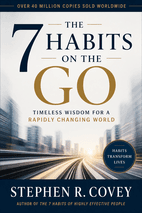
Sean Covey's The 7 Habits on the Go distills Stephen R. Covey's timeless principles into a portable guide for today's fast-paced world, helping overwhelmed readers align daily actions with deep values through practical prompts and reflective steps.
Feature
Insta.Page
Blinkist
Shortform
Summary Depth
Full Chapter-by-Chapter
15-min overview
Section-by-section guides
Audio Narration
✓ (AI narration)
✓
✓
Visual Mindmaps
✓
✕
✕
AI Q&A
✓ Voice AI
✕
✕
Quizzes
✓
✕
✕
PDF Downloads
✓
✕
✓
Price
$59.99/yr
$146/yr (PRO)
$199/yr
*Competitor data last verified February 2026.
About the Author
Sean Covey
Sean Covey is an author and leadership expert best known for his books "The 7 Habits of Highly Effective Teens" and "The 6 Most Important Decisions You'll Ever Make." As the son of Stephen R. Covey, he serves as Executive Vice President of Global Solutions and Partnerships for FranklinCovey, where he applies his expertise in leadership development and personal effectiveness. He holds an MBA from Harvard Business School and has co-authored numerous influential works on habit formation and teen success.
1 Page Summary
This book offers a distilled, portable guide to Stephen R. Covey's timeless principles, adapted for today’s fast-paced world. The central thesis is that true effectiveness and fulfillment come not from managing time or reacting to external pressures, but from aligning your daily actions with your deepest values. The core framework is the seven habits, presented as a sequential progression: from proactivity (choosing your response), to beginning with the end in mind (defining your legacy), to putting first things first (prioritizing what truly matters). The habits then extend outward to interpersonal effectiveness with think win-win (seeking mutual benefit), seek first to understand (listening with empathy), synergy (creating better solutions through collaboration), and finally sharpening the saw (continuous renewal of your physical, mental, spiritual, and social self).
Sean Covey’s approach makes these principles immediately actionable. Each chapter breaks a habit into its core insight—such as the “space between stimulus and response” for proactivity or the “time matrix” for prioritization—and then provides practical prompts, reflective questions, and concrete steps. A key distinguishing feature is the emphasis on the "Daily Private Victory" as the foundation for renewal, and the warning against getting lost in "the thick of thin things." The book is designed for on-the-go application, turning abstract ideas into daily checkpoints for behavior and mindset.
The intended audience is anyone feeling overwhelmed by a rapidly changing world and seeking a stable, principle-centered anchor to navigate it. Readers will gain a mental framework for moving from a reactive to a proactive life, tools for making better decisions, deeper relationships based on trust and empathy, and a clear method for sustaining their own energy and purpose. Ultimately, the book promises not just increased productivity, but a more meaningful and integrated life.
Habit 1 flips the script on how we see our place in the world. Instead of being a product of circumstances, genetics, or upbringing, Stephen Covey argues we have the power to choose our response to anything life throws at us. Proactivity isn’t just about taking initiative—it’s about taking responsibility. Reactive people let outside forces dictate their emotions and actions. Proactive people create a pause between what happens and how they respond, then consciously decide based on their values. This shift from victim to creator is the foundation of personal effectiveness.
The Pause That Changes Everything
The core skill of proactivity is learning to hit the brakes before reacting. Covey calls this the space between stimulus and response—and inside that space lies our freedom. In a heated argument or a frustrating setback, the reactive impulse is to lash out or complain. But a proactive person steps back, breathes, and asks: What response would be most aligned with my principles? This simple pause turns a knee-jerk reaction into a deliberate choice.
Becoming a Transition Person
One of the most powerful ways to live proactively is to become a transition person—someone who breaks unhealthy, abusive, or ineffective patterns and passes on better ones. Maybe you grew up in a home full of criticism; you can choose to become a parent or partner who builds others up instead. This isn’t about denying your past—it’s about not being determined by it. The transition person says, “The cycle stops with me.”
Language: The Mirror of Your Mindset
Your words reveal whether you see yourself as a victim or a creator. “I can’t,” “He makes me so angry,” “I have to”—that’s reactive language. It turns circumstances into bosses. Proactive language, on the other hand, puts you in the driver’s seat: “I choose to,” “I will,” “Let’s look at alternatives.” This isn’t cheap positivity—it’s a practical shift in ownership. When you speak proactively, you feel more capable, and your brain starts looking for solutions instead of excuses.
The Two Circles: Where to Put Your Energy
Covey introduces a pair of concentric circles that act like a compass for proactivity.
Circle of Concern – Everything you care about but can’t control: the weather, other people’s opinions, the economy. Reactive people fixate here, complaining about things outside their reach. That focus drains energy and shrinks their sense of agency.
Circle of Influence – Things you can do something about: your own behavior, your work habits, how you treat your family. Proactive people focus here. They don’t ignore the outer circle, but they invest their time in actions that make a difference. Over time, that positive energy actually expands their Circle of Influence.
Ask yourself honestly: which circle am I living in most days? If your attention goes to what you can’t change, you’re feeding helplessness. If it goes to what you can affect, you’re feeding power.
Making Proactivity a Daily Practice
Habit 1 isn’t a one-time decision—it’s a repeated choice. Covey suggests starting each morning by asking: What’s coming up today that might tempt me to be reactive? How can I prepare to respond proactively? This turns proactivity from an abstract idea into a daily muscle. Over time, the pause becomes automatic, the language shifts, and you realize you really are the creative force of your own life.
Key Takeaways
Proactivity is a choice, not a personality trait. Anyone can learn to pause and respond deliberately.
Your language either empowers you or traps you. Listen for “I can’t” and replace it with “I choose.”
Focus on your Circle of Influence. Energy spent on what you can’t control only depletes you.
Become a transition person. Break negative patterns; pass on what builds people up.
The four human endowments—self-awareness, conscience, independent will, creative imagination—give you the ultimate freedom: the power to choose.
Key concepts: HABIT 1: Be Proactive
1. HABIT 1: Be Proactive
The Pause Between Stimulus and Response
Proactivity is choosing your response, not reacting
The pause is where your freedom lies
Ask: What response aligns with my principles?
Becoming a Transition Person
Break unhealthy patterns from your past
The cycle of negativity stops with you
You are not determined by your upbringing
Language: Mirror of Your Mindset
Reactive language: 'I can't,' 'He makes me'
Proactive language: 'I choose,' 'I will'
Words shift ownership and drive solutions
Focus on Your Circle of Influence
Circle of Concern: things you can't control
Circle of Influence: things you can affect
Reactive people drain energy on concern
Proactive focus expands your influence
Proactivity as a Daily Practice
Start each morning by anticipating triggers
Prepare a proactive response in advance
The pause becomes automatic over time
If you like this summary, you probably also like these summaries...
💡 Try clicking the AI chat button to ask questions about this book!
Chapter 2: HABIT 2: Begin With the Endin Mind
Overview
Habit 2 flips the usual approach to productivity on its head. Instead of diving into action and figuring things out along the way, Stephen Covey insists that the most effective people start with a crystal-clear picture of the finish line. This isn't just about setting goals for a project or a day—it's about defining the ultimate end for your entire life. What do you want people to say at your funeral? What legacy are you building right now, whether you realize it or not? Covey uses the principle that all things are created twice: first in the mind, then in the physical world. If you skip the mental creation, you'll find yourself climbing a ladder that's leaning against the wrong wall, exhausting yourself for something that doesn't truly matter.
Define Outcomes Before You Act
Before you do anything—whether it's a conversation, a work task, or a major life decision—pause and ask: What outcome do I really want here? This simple habit prevents you from being reactive. When you define the outcome first, you gain clarity on which actions actually serve that end. It's the difference between wandering aimlessly and walking with purpose. Covey warns that it's easy to get caught up in efficiency (doing things right) rather than effectiveness (doing the right things). By mentally creating the end result first, you ensure your physical efforts are aligned with your deepest intentions.
Celebrate Your 80th Birthday
One of the most powerful exercises in this habit is to imagine your own 80th birthday celebration. Who is there? What are they saying about you? What kind of person did they experience you to be? This isn't a morbid thought experiment—it's a tool to uncover what you truly value. Most people live reactively, letting circumstances and others' expectations dictate their choices. But when you visualize the legacy you want to leave, you start making daily decisions that build that legacy. Covey quotes a deep truth: "Deep within each one of us is an inner longing to live a life of greatness and contribution—to really matter, to really make a difference." That longing becomes concrete when you write the eulogy you want to earn.
Refine Your Mission Statement
A personal mission statement is your constitution—a written declaration of your highest values and priorities. It's not a corporate slogan; it's a compass for your life. Covey emphasizes that this statement enables you to shape your future instead of letting it be shaped by other people or circumstances. The key is that it must come from within, not from external expectations. Viktor Frankl's insight is crucial here: "We detect rather than invent our missions in life." Your mission is something to uncover through reflection, self-awareness, and honest assessment of what matters most. Once written, it becomes a filter for every decision, big or small.
Rethink a Relationship
Efficiency often leads us to neglect relationships. We treat people as items on a to-do list, focusing on getting things done rather than nurturing connection. But true effectiveness, Covey argues, is measured by the impact we have on others. This week, identify one relationship that matters deeply to you. How can you tend to it? Not with a transaction, but with presence and care. When you begin with the end in mind for a relationship, you realize that the goal is not to complete a task but to build trust, love, and understanding. That shift changes everything about how you show up.
Share Your Mission Statement
Your mission statement isn't meant to stay private. Share it with the people who are most affected by your vision—your family, close friends, or key colleagues. This isn't about announcing grandiose goals; it's about inviting others into your framework of values. When your loved ones know what you stand for and where you're headed, they can support you, hold you accountable, and align their expectations with your priorities. It also deepens trust because you're being transparent about what drives you. Covey encourages us to treat mission statements as living documents, refined through sharing and feedback.
Balance Your Roles
One of the biggest pitfalls in life is over-investing in a single role—usually work—while neglecting others. Covey points out that in trying to be effective, people often lose their sense of proportion and sacrifice the most precious relationships. The solution is to write a mission statement for each of your key roles: parent, partner, professional, friend, community member, etc. Then check whether your daily actions are balanced across those roles. Balance doesn't mean equal time; it means giving each role the attention it truly deserves based on your deepest values. This prevents burnout and regret.
Key Takeaways
All things are created twice: mentally first, then physically. Define your desired outcome before you act.
Your legacy is built daily. Visualize your 80th birthday to clarify what matters most.
A personal mission statement is your life's constitution. Detect it through reflection, then write it down.
Tend to relationships with the same intentionality you give to tasks—they are the true measure of effectiveness.
Share your mission statement with loved ones to create alignment and accountability.
Balance your roles by assigning a mission to each and reviewing your actions regularly. Don't let one role dominate at the expense of others.
Key concepts: HABIT 2: Begin With the Endin Mind
2. HABIT 2: Begin With the Endin Mind
Define Outcomes Before You Act
All things are created twice: mentally then physically
Ask what outcome you want before any action
Focus on effectiveness, not just efficiency
Align physical efforts with deepest intentions
Visualize Your Legacy
Imagine your 80th birthday celebration
What do you want people to say about you?
Daily decisions build your legacy
Live a life of greatness and contribution
Create a Personal Mission Statement
It's your life's constitution and compass
Detect your mission through reflection, not invention
Use it as a filter for every decision
Write it from within, not from external expectations
Nurture Key Relationships
Don't treat people as to-do list items
True effectiveness is measured by impact on others
Tend to relationships with presence and care
Build trust, love, and understanding
Balance Your Life Roles
Write a mission for each key role
Avoid over-investing in a single role
Check daily actions for balance across roles
Give each role the attention it truly deserves
⚡ You're 2 chapters in and clearly committed to learning
Why stop now? Finish this book today and explore our entire library. Try it free for 7 days.
Chapter 3: HABIT 3: Put First Things First
Overview
Habit 3 is the practical application of the first two habits. If Habits 1 and 2 are about being proactive and beginning with the end in mind, Habit 3 is about putting that vision into action by managing your life around what truly matters. The core insight? Most people get trapped by urgency, reacting to whatever screams loudest. But effectiveness comes from spending your time in Quadrant II—the important but not urgent activities that have the greatest long-term payoff. It’s about scheduling your priorities, not prioritizing your schedule.
Setting Goals That Matter
Start by asking yourself: “What one thing can I do that, if done regularly, would make a tremendous, positive influence in my life?” That goal should come from your deepest values and sense of mission. An effective goal gives meaning to your everyday actions. As Covey notes, part of happiness is the ability to sacrifice what you want now for what you want eventually. Goals aren’t just tasks—they’re compasses.
Understanding the Time Matrix
The Time Matrix sorts activities by urgency and importance. Quadrant I is urgent and important (crises, deadlines, pressing problems). Quadrant II is not urgent but important (proactive work, planning, relationship building, renewal). Quadrant III is urgent but not important (interruptions, other people’s minor issues). Quadrant IV is not urgent and not important (trivial busywork, excessive TV, time wasters). The key is not to prioritize what’s on your schedule, but to schedule your priorities.
Preventing Crises by Preparation
We all have Quadrant I activities. But if you’re consumed by them, ask: How many of these crises could I prevent with better preparation? Most people spend too much time on urgent stuff and not enough on what’s truly important. Shifting time to Quadrant II reduces the firefighting.
Living in Quadrant II
When you’re highly effective, you live in Quadrant II. That means proactive work, creative thinking, planning, building relationships, and renewal. Keep the main thing the main thing. Quadrant II is where your biggest leverage lives.
Planning Your Week with Big Rocks
Effective people don’t just make daily to-do lists. They plan their week before it begins, scheduling the “Big Rocks” first. Your roles, goals, and Quadrant II activities are those rocks. Once they’re in place, the gravel of less-important tasks will fit around them. This weekly planning might be the single most productive habit you can adopt.
Staying True in the Moment of Choice
Your character is revealed in the moment you choose between your Quadrant II priorities and the pressure of the urgent. The urgent but not important will constantly threaten to derail you. That’s when you need your independent will and integrity to the truly important. Stay true to your mission.
Eliminating Time Robbers
Quadrants III and IV are time robbers. They steal hours without giving back. You have to decide your highest priorities and have the courage to say no—pleasantly and unapologetically—to everything else. The trick? Have a bigger yes burning inside.
Keeping Commitments to Yourself
Most goals are challenging. You can get frustrated when you procrastinate on something you truly want. Build self-trust by making small promises to yourself and keeping them. Then make bigger ones. Over time, your sense of honor will grow stronger than your moods.
Building Emotional Bank Accounts
The chapter transitions from Private Victory to Public Victory with the Emotional Bank Account concept. This is the amount of trust in a relationship. Deposits build trust; withdrawals break it down. Little things are the big things—kindness, courtesy, keeping promises, listening. Know what constitutes deposits and withdrawals for the important people in your life.
Apologizing and Forgiving
When you make a mistake, a sincere apology can quickly restore an overdrawn account. It takes courage. And if you’re carrying the burden of someone else’s actions, learn to forgive. Holding onto resentment only hurts you. As Covey says, any time we think the problem is out there, that very thought is the problem.
Key Takeaways
Spend most of your time in Quadrant II (important, not urgent).
Plan your week by scheduling your Big Rocks first—your roles and top priorities.
Learn to say no to unimportant activities by having a compelling yes.
Build self-trust by keeping small promises to yourself.
Nurture relationships through consistent deposits in the Emotional Bank Account.
Apologize sincerely when you’re wrong, and forgive others to free yourself from resentment.
Key concepts: HABIT 3: Put First Things First
3. HABIT 3: Put First Things First
The Time Matrix
Quadrant I: Urgent and important (crises, deadlines)
Quadrant II: Not urgent but important (planning, renewal)
Quadrant III: Urgent but not important (interruptions)
Quadrant IV: Not urgent and not important (time wasters)
Living in Quadrant II
Focus on proactive work and long-term payoff
Prevent crises through preparation
Schedule your priorities, not your schedule
Keep the main thing the main thing
Weekly Planning with Big Rocks
Plan your week before it begins
Schedule Big Rocks first (roles and goals)
Less important tasks fit around the rocks
This is the most productive habit you can adopt
Staying True in Moments of Choice
Character revealed when choosing priorities over urgency
Use independent will and integrity
Say no to time robbers with a bigger yes
Keep commitments to yourself to build self-trust
Emotional Bank Accounts
Trust in relationships is built through deposits
Deposits include kindness, promises, and listening
Apologize sincerely to restore overdrawn accounts
Forgive others to free yourself from resentment
Chapter 4: HABIT 4: Think Win-Win
Overview
Habit 4 isn’t just another technique for getting along—it’s a complete shift in how you view every interaction. At its heart, Think Win-Win means refusing to see life as a zero-sum game. Instead, you actively look for outcomes where everyone benefits. Stephen Covey calls this “a frame of mind and heart,” and it changes everything from negotiations to everyday conversations. The real question isn’t “How do I get more?” but “How can we both walk away feeling good about this?”
When you start from this place, you stop treating relationships like transactions. The goal isn’t to win at someone else’s expense—it’s to find solutions that work for all sides. That requires a deeper sense of security and a willingness to value other people’s wins as much as your own.
Consider Other People’s Wins as Well as Your Own
The first step is simply asking: In which relationships am I less likely to Think Win-Win? Maybe it’s with a colleague you see as a rival, or a family member where old patterns keep repeating. The benefit of shifting your mindset is huge—when you take time to identify what success looks like for both of you, trust deepens and resistance melts away. Covey puts it plainly: “Win-win is not a technique; it’s a total philosophy of human interaction.”
Avoid the Scarcity Mentality
Most of us are unconsciously trained to see life as a fixed pie. If someone else gets a bigger slice, there’s less for me. That scarcity mentality fuels comparison, jealousy, and competition. It makes us feel threatened by others’ success—even when their success doesn’t actually diminish our own. The cost is huge: we isolate ourselves, hoard credit, and miss out on collaborative wins that are far bigger than anything we could achieve alone. Start noticing where scarcity thinking shows up in your day. That awareness is the first step toward letting it go.
Cultivate an Abundance Mentality
The antidote to scarcity is an Abundance Mentality. This isn’t naive optimism—it’s a deep inner conviction that there is more than enough for everyone. When you truly believe that, you stop comparing and start celebrating others’ victories. You become secure enough in your own worth that someone else’s success doesn’t feel like a threat. Covey explains it flows “out of a deep inner sense of personal worth and security.” And here’s the paradox: the more you celebrate others, the more you open yourself up to receiving, too.
Balance Courage and Consideration
Think Win-Win requires a delicate balance. On one side is courage—the willingness to speak your truth, express your needs, and stand firm on what matters. On the other is consideration—the genuine desire to listen, understand, and respect where the other person is coming from. When either side is missing, you either bulldoze or cave. Maturity is holding both at once, especially when the stakes are high. Covey calls this the essence of effective human interaction: “If people can express their feelings and convictions with courage balanced with consideration… they are mature.”
Make a Win-Win Agreement
Intent matters. Before you enter any negotiation or agreement, ask yourself: Am I truly committed to finding a solution that works for both of us? Win-Win Agreements can be as simple as a spoken promise or as structured as a formal contract. But without genuine character and a strong relationship behind it, the agreement is hollow. Covey reminds us that “an agreement means very little in letter without the character and relationship to sustain it in spirit.” So invest in the relationship first—then the agreement will hold.
Give Credit
One of the most powerful ways to practice Win-Win is to share credit generously. Ask yourself: Who has recently helped me? Have I thanked them? For many people, public or private acknowledgment is a huge win. It builds trust and strengthens bonds. Harry Truman captured it perfectly: “It’s amazing how much you can accomplish when it doesn’t matter who gets the credit.” When you let go of the need to be the star, everyone shines brighter.
Key Takeaways
Win-Win is a complete philosophy, not a tactic—it requires a shift from competition to cooperation.
Scarcity thinking compares and threatens; abundance thinking trusts there’s enough for all.
True effectiveness balances courage (speaking up) with consideration (listening deeply).
Before any agreement, check your intent: are you genuinely aiming for mutual benefit?
Sharing credit freely builds trust and frees you to accomplish more than you ever could alone.
Key concepts: HABIT 4: Think Win-Win
4. HABIT 4: Think Win-Win
Core Philosophy of Win-Win
Refuse to see life as zero-sum
Seek outcomes where everyone benefits
It's a frame of mind and heart
Stop treating relationships as transactions
Overcoming Scarcity Mentality
Life seen as a fixed pie
Fuels comparison, jealousy, and competition
Threatened by others' success
Miss out on collaborative wins
Cultivating Abundance Mentality
Conviction there's enough for everyone
Celebrate others' victories
Flows from personal worth and security
Opens you up to receiving more
Balancing Courage and Consideration
Courage to speak your truth
Consideration to listen and respect
Maturity holds both at once
Essential for effective interaction
Practical Win-Win Actions
Check intent before any agreement
Invest in relationship before contract
Share credit generously
Acknowledge those who help you
Frequently Asked Questions about The 7 Habits on the Go
What is The 7 Habits on the Go about?
This book distills Stephen Covey's timeless 7 Habits framework into a portable, actionable guide for personal and professional effectiveness. It covers each habit in depth, from being proactive and starting with the end in mind to synergizing with others and renewing yourself through balanced self-care. The content emphasizes practical applications like pausing before reacting, defining your legacy, and scheduling around what truly matters. Ultimately, it's a roadmap for moving from reactive survival to proactive, principle-centered living.
Who is the author of The 7 Habits on the Go?
Sean Covey is a bestselling author and the son of Stephen R. Covey, the originator of the 7 Habits. He has adapted his father's classic principles into accessible formats for modern readers, including this concise edition designed for busy lives. Sean is also a speaker and thought leader on leadership and personal effectiveness.
Is The 7 Habits on the Go worth reading?
Absolutely. This book transforms a powerful personal-development framework into a quick, practical reference you can revisit anytime. It's perfect for anyone who wants to break reactive patterns, build deeper relationships, and focus on what truly matters without wading through lengthy theory. The bite-sized chapters and real-world examples make the habits easy to apply immediately.
What are the key lessons from The 7 Habits on the Go?
The seven habits build on each other: Be proactive by choosing your response to any situation; begin with the end in mind to align your actions with your deepest values; put first things first by focusing on important but not urgent activities. Later habits shift to interdependence: think win-win to create mutual benefit in relationships, seek first to understand then to be understood through empathic listening, and synergize by combining diverse strengths. Finally, sharpen the saw by renewing your physical, mental, spiritual, and social energy consistently.
📚 Explore Our Book Summary Library
Discover more insightful book summaries from our collection