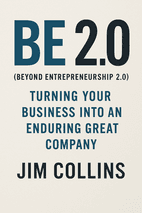
Jim Collins's Great by Choice examines why some companies thrive in uncertainty, identifying disciplined behaviors like the 20 Mile March for leaders building resilient, high-performance organizations.
Feature
Insta.Page
Blinkist
Shortform
Summary Depth
Full Chapter-by-Chapter
15-min overview
Detailed analysis
Audio Narration
✓ (AI narration)
✓
✓
Visual Mindmaps
✓
✕
✕
AI Q&A
✓ Voice AI
✕
✕
Quizzes
✓
✕
✕
PDF Downloads
✓
✕
✓
Price
$59.99/yr
$146/yr (PRO)
$199/yr
*Competitor data last verified February 2026.
About the Author
Jim Collins
Jim Collins is a renowned author and management expert, celebrated for his influential research on company greatness and enduring success. His seminal work, *Good to Great*, has become a cornerstone of business literature, exploring how companies achieve and sustain exceptional performance. Collins is also the acclaimed author of *Built to Last*, *Great by Choice*, and *How the Mighty Fall*, which collectively have sold millions of copies worldwide. His rigorous, research-driven approach has established him as a leading voice on leadership, corporate culture, and strategic discipline. Jim Collins's books are widely available for purchase on Amazon, offering invaluable insights for leaders and organizations striving for excellence.
1 Page Summary
Great by Choice examines why some companies thrive in uncertainty and chaos while others fail, building upon Jim Collins's earlier research in Good to Great. The book is rooted in the volatile period from the 1970s to the early 2000s, studying companies that outperformed their industry by at least 10 times during turbulent times. Collins and his co-author, Morten T. Hansen, identify a set of core behaviors—not luck or creative genius—that characterize these "10X" companies, such as Southwest Airlines, Intel, and Progressive Insurance. The central argument is that success in a chaotic world is not a matter of circumstance but of conscious, disciplined choice.
The book introduces several key concepts to explain this superior performance. The "20 Mile March" principle advocates for consistent, manageable progress—setting achievable goals and hitting them regardless of conditions—to build momentum and resilience. "Fire bullets, then cannonballs" emphasizes empirical validation: first conducting small, low-cost experiments (bullets) to test ideas before concentrating resources on a large, calibrated effort (cannonballs). Perhaps the most distinctive concept is "productive paranoia," where leaders maintain hyper-vigilance, building vast cash reserves and buffers long before a crisis hits, ensuring survival and allowing them to seize opportunities during downturns.
The lasting impact of Great by Choice is its demystification of success in unpredictable environments, providing a actionable framework for leadership and strategy. It shifted the narrative from seeking radical innovation or relying on visionary foresight to championing disciplined execution, empirical creativity, and relentless preparation. The book's principles continue to influence leaders across sectors, offering a guide for building organizations that do not merely endure chaos but use it as a platform to become truly great.
The chapter opens with a stark acknowledgment: the future is fundamentally unpredictable. Yet, the central challenge—and opportunity—is that while we cannot predict the future, we can create it. This paradox forms the heart of a nine-year research project launched in 2002, a period marked by crashing markets, terrorism, war, and disruptive change. The driving question became: Why do some organizations not only survive but truly thrive amidst chaos and uncertainty, while others falter?
The research team sought out companies that delivered extraordinary performance despite being buffeted by uncontrollable, fast-moving, and potentially harmful forces. These companies, labeled “10X cases,” achieved results at least ten times better than their industry averages. A prime example is Southwest Airlines, which, despite every conceivable industry shock over 30 years, delivered stock returns 63 times better than the general market.
This study distinguishes itself from prior research by deliberately selecting cases based on both spectacular performance and extreme environmental turbulence. The logic is that studying greatness in a calm environment is like watching an expert mountaineer on a sunny hike; you only see what truly makes them exceptional when they are on the side of Mount Everest in a storm. Extreme environments act like a centrifuge, separating the core behaviors of the truly great from the merely good.
The Research Method: A Study in Contrasts
Identifying the 10X companies required a rigorous selection process, sifting through over 20,400 companies to find those that met three strict criteria: spectacular 15+ year performance, achieved within a turbulent environment, and starting from a position of vulnerability. The final set included companies like Amgen, Intel, Microsoft, Progressive Insurance, Southwest Airlines, and Stryker.
The power of the research, however, lies not just in studying these winners but in contrasting them with carefully chosen comparison companies. These were firms in the same industry, facing the same opportunities and environmental storms during the same era, which failed to achieve greatness. For instance, Southwest Airlines was contrasted with Pacific Southwest Airlines (PSA), and Microsoft with Apple (focusing on its struggle in the 1980s and 1990s). As a group, the 10X companies outperformed their comparisons by more than 30 to 1.
The research was intentionally inductive. The team collected over 7,000 historical documents and built understanding from the ground up, allowing the evidence to guide them to conclusions, which often shattered conventional wisdom.
Surprising Findings: Myths Undermined
The historical analysis yielded insights that directly challenged several entrenched myths about leadership and strategy in turbulent times:
Myth: Successful leaders are bold, risk-seeking visionaries.
Finding: The 10X leaders were not more visionary or risk-taking. They were more disciplined, empirical, and paranoid.
Myth: Innovation is the ultimate key to thriving in chaos.
Finding: While innovative, the 10X companies were not consistently more innovative than their comparisons. The key differentiator was their ability to scale innovation, blending creativity with rigorous discipline.
Myth: In a fast world, you must always be fast.
Finding: The 10X leaders understood that a blanket “fast, fast, fast!” ethos is dangerous. They cultivated the ability to know when to act decisively and when to pause.
Finding: Counterintuitively, the 10X companies changed less reactively than their comparisons. They did not conflate external chaos with the need for internal upheaval.
Myth: Great companies have more good luck.
Finding: Both 10X and comparison companies experienced comparable amounts of good and bad luck. The critical difference was not the amount of luck, but what each did with the luck they received.
Key Takeaways
Greatness in uncertainty is not about predicting the future but about creating it through disciplined action.
Studying performance in extreme environments magnifies the distinguishing behaviors between great and good companies.
The 10X companies achieved extraordinary results not because they were luckier, more visionary, or more radically innovative, but because they were more disciplined, empirical, and deliberate.
Effective leadership in chaos involves a paradoxical blend: fanatic discipline around core values and processes, empirical creativity guided by evidence, and productive paranoia that drives consistent preparation.
Key concepts: 1 Thriving in Uncertainty
1 Thriving in Uncertainty
The Core Paradox of Thriving in Uncertainty
The future is unpredictable, but we can create it rather than predict it
Research focused on why some organizations thrive in chaos while others falter
Extreme environments act as a centrifuge, revealing true greatness
The 10X Companies: Extraordinary Performance in Turbulence
Organizations achieving at least 10 times better results than industry averages
Examples include Southwest Airlines, Microsoft, Intel, and Progressive Insurance
Selected based on spectacular performance AND extreme environmental turbulence
Starting from positions of vulnerability yet delivering sustained excellence
Research Methodology: Contrast and Induction
Rigorous selection from over 20,400 companies using strict criteria
Powerful contrast with comparison companies in same industries facing same conditions
10X companies outperformed comparisons by more than 30 to 1
Inductive approach using 7,000+ historical documents to build understanding from evidence
💡 Try clicking the AI chat button to ask questions about this book!
Chapter 2: 2 10Xers
Overview
The chapter opens with a gripping contrast between two Antarctic explorers, Roald Amundsen and Robert Falcon Scott, whose identical challenges led to starkly different fates. Amundsen’s victory stemmed from meticulous, evidence-based preparation and building enormous buffers, while Scott’s tragic failure resulted from thin margins and reliance on untested methods. This story isn’t just history; it’s a powerful metaphor for the modern 10Xer—leaders who don’t merely succeed but outperform their peers by at least ten times in the same volatile environments. Their success isn’t about luck or circumstance but a unique mindset: accepting that they can’t control everything, yet refusing to let external forces dictate their outcomes.
At the heart of this mindset are three core behaviors that intertwine to drive exceptional performance. First, fanatic discipline means unwavering consistency to values and goals, as seen in leaders like Peter Lewis of Progressive Insurance, who invented monthly financial reporting to uphold honesty amidst Wall Street pressure, or Herb Kelleher of Southwest Airlines, whose eccentric showmanship was a disciplined tool to cement company culture. This discipline fuels the second behavior, empirical creativity, where 10Xers bypass conventional wisdom to engage directly with evidence. Andy Grove’s hands-on research into his prostate cancer treatment or Amundsen’s meticulous study of explorer logs to choose a better base camp show how empirical grounding leads to bold, yet calculated, decisions.
But even with this creativity, 10Xers operate with a relentless productive paranoia, maintaining hypervigilance to prepare for worst-case scenarios. Bill Gates and Steve Ballmer at Microsoft, for instance, famously cataloged risks and maintained cash reserves during success, turning fear into proactive strategy. This paranoia isn’t paralyzing; it’s a catalyst for safeguarding their creative work and ensuring resilience. Underpinning all these behaviors is Level 5 ambition, where fierce drive is channeled outward toward a larger cause—like building a great company or achieving lasting impact—rather than personal glory. Figures like Dane Miller of Biomet, who prioritized fair compensation over personal gain, exemplify this ambition for the mission.
The chapter culminates with a practical call to action, encouraging self-assessment of these three behaviors—fanatic discipline, empirical creativity, and productive paranoia—and brainstorming steps to strengthen the weakest link. By fostering this balanced toolkit, individuals can mirror the 10Xer’s ability to thrive amidst uncertainty, transforming vulnerability into a strategic edge for achieving extraordinary results.
A Tale of Two Expeditions
The chapter opens with a stark contrast between two Antarctic explorers: Roald Amundsen, the victor who reached the South Pole first and returned safely, and Robert Falcon Scott, who arrived second and perished with his team on the return journey. This story is presented not as a matter of luck, but as a "near-perfect matched pair" for analysis. Both men were of similar age and experience, embarked on a similarly grueling journey in the same harsh environment at the same time. Their dramatically different fates, therefore, stemmed from their fundamentally different behaviors and preparations.
Amundsen's approach was characterized by meticulous, fanatical preparation rooted in empirical evidence. He apprenticed with Inuit peoples to learn effective polar survival techniques, adopted their clothing and steady-paced travel methods, and relentlessly trained for every conceivable scenario. He built enormous buffers into his plans, marking supply depots with multiple flags over a wide area and carrying surplus supplies. He prepared for the worst, even bringing four thermometers for a critical instrument where Scott brought only one.
Scott, in contrast, relied on untested technology (motor sledges), chose unsuitable animals (ponies over dogs), and left dangerously thin margins for error. His supply depots were minimally marked, his supplies were calculated to the bare minimum, and he lamented his "ill-fortune" in his journal when things went wrong. Amundsen embraced the uncontrollable by preparing for it; Scott was defeated by it.
Introducing the 10Xer
This historical analogy directly frames the chapter's core subject: the 10Xer. These are the leaders in the research study who built companies that didn't just succeed but outperformed their industry by at least ten times. Crucially, the research found that 10Xers and their less successful comparison leaders operated in the same volatile environments. Their success was not due to better circumstances, more inherent creativity, greater charisma, visionary brilliance, or even better luck.
The 10Xers distinguished themselves through a specific set of behavioral traits. They embody a central paradox: they accept that they cannot control or predict everything in a chaotic world, yet they refuse to believe that external forces will determine their fate. They take full responsibility for their outcomes. This mindset is brought to life through a triad of core behaviors, two of which are introduced in this section.
Fanatic Discipline
Discipline here is defined as unwavering consistency—consistency with values, long-term goals, and performance standards. It is self-discipline, the inner will to do what's necessary for a great outcome. 10Xers are "fanatics" in their discipline; they are relentless and monomaniacal about their quest, refusing to be knocked off course by external pressures or the "madness of crowds."
Peter Lewis (Progressive Insurance): Faced with Wall Street's volatility due to his refusal to play earnings-guidance games, Lewis didn't capitulate or ignore the problem. He invented a third option: making Progressive the first SEC-listed company to publish monthly financial statements. This gave analysts real data, mitigating the irrational stock swings while upholding his principle of honesty.
Herb Kelleher (Southwest Airlines): His outlandish public behavior (wearing dresses, arm-wrestling over lawsuits) was not mere eccentricity. It was a fanatically disciplined performance to animate and sustain the company's unique, fun-loving, and rebellious "Warrior Spirit" culture. Underneath the showmanship was a deadly serious, monomaniacal focus on building the best low-cost airline.
Empirical Creativity
When facing high-stakes uncertainty, 10Xers do not rely solely on conventional wisdom or expert opinion. They engage directly with the primary evidence to make their own creative, yet empirically-grounded, decisions.
Andy Grove (Intel): When diagnosed with a potentially life-threatening prostate condition, Grove didn't simply follow doctor's orders. He became a rigorous researcher of his own disease, reading primary scientific literature, testing lab variations, and plotting data. He discovered deep disagreements within the medical establishment itself. By engaging directly with the evidence, he crafted his own treatment plan—a combination radiation therapy—concluding, "I decided to bet on my own charts." This wasn't arrogance, but a rational response to significant uncertainty and consequence.
Empirical Creativity: Evidence Over Echo Chambers
When navigating uncertainty, 10Xers bypass conventional wisdom, punditry, and peer behavior. Their primary compass is empirical evidence. This isn’t about contrarianism for its own sake, but about grounding creative instincts and independent thought in direct observation, practical experimentation, and tangible data. This empirical foundation allows them to make bold moves while simultaneously bounding their risk.
The chapter illustrates this with the story of Roald Amundsen’s choice for his South Pole base camp. While the entire explorer community accepted McMurdo Sound as the only viable option, Amundsen questioned the consensus. He immersed himself in the original logs and journals of prior voyages, studying the evidence himself. His meticulous analysis revealed a stable, dome-like feature in the supposedly unstable Bay of Whales—a location that positioned him 60 miles closer to the Pole. He drew a logical conclusion others missed because he went directly to the source material.
The research found that 10Xers weren’t necessarily bolder or more confident than their less successful counterparts. Both groups took big bets. The difference was that the 10Xers' confidence was well-founded, built on a deeper empirical base. This empiricism doesn’t lead to indecision; it’s the prerequisite for it. Leaders like Andy Grove and Amundsen acted decisively after immersing themselves in the evidence.
Productive Paranoia: Hypervigilance as a Strategy
Despite their empirical confidence, 10Xers operate with a pervasive sense of vulnerability. They maintain hypervigilance, especially during good times, operating on the conviction that conditions will inevitably turn against them unexpectedly. This isn't debilitating fear; it's a catalyst for relentless preparation.
The behavior of Bill Gates and Steve Ballmer at Microsoft exemplifies this. During preparations for Microsoft's IPO, Ballmer shocked underwriters by aggressively cataloging every conceivable risk and nightmare scenario. Gates famously wrote a "nightmare memo" detailing severe threats even as Windows was ascending to dominance. This paranoia was channeled productively into actions like maintaining massive cash reserves, hiring meticulously, and relentlessly innovating.
This stands in stark contrast to leaders like Apple’s John Sculley, who, during a period of spectacular success in 1988, announced a nine-week sabbatical. The 10Xer mindset, demonstrated by figures like Herb Kelleher and Intel’s Andy Grove, is to constantly "look for the black cloud in the silver lining." They distinguish themselves not by paranoia itself, but by transforming that fear into methodical preparation, conservative financial management, and a constant cycle of asking "What if?"
Level 5 Ambition: Ambition for the Cause
The driving force behind these extreme behaviors is a distinct form of ambition. 10Xers channel their formidable egos and intensity into a purpose larger than themselves—building a great company, achieving a monumental goal, or creating lasting impact. Their ambition is first and foremost for the cause, not for personal aggrandizement.
This aligns with the concept of "Level 5 Leadership" from Good to Great, which blends profound personal humility with intense professional will. While some 10Xers, like Southwest’s Herb Kelleher or Progressive’s Peter Lewis, had flamboyant, outsized personalities, they shared the Level 5 core trait: their ferocious will was directed at building something enduring that could excel without them.
Examples range from Dane Miller of Biomet, who for years was ranked among America’s most "underpaid" CEOs because he refused stock options, believing excessive personal gain reflected "an uncontrollable greed complex," to Bill Gates, whose ego was poured into Microsoft as his "firstborn child" and later into philanthropic ambitions like eradicating malaria. They defined themselves by contribution and impact, not by money, fame, or power.
Key Takeaways
Empirical Creativity is a Discipline: 10Xers make bold, creative decisions by going directly to the evidence, not by following the crowd. This empirical rigor bounds their risk and fuels decisive action.
Paranoia is a Productive Tool: They maintain constant vigilance, assuming success is fragile. This productive paranoia is channeled into concrete preparation, strong financial buffers, and relentless work to stay ahead of potential threats.
Ambition is Channeled Outward: The motivating engine for 10Xers is Level 5 Ambition—a fierce drive to achieve a purpose or build an entity far larger than themselves. Their ego is in service of the mission.
Productive paranoia serves as a vital mechanism that allows 10Xers to channel potential anxieties into constructive, creative action. Rather than being paralyzed by fear, they actively presume worst-case scenarios and meticulously prepare for them. This forward-thinking approach significantly reduces the likelihood that a sudden disruption or streak of bad luck will interrupt their creative work, turning vulnerability into a strategic advantage.
The chapter closes with a practical exercise designed to foster self-improvement. It prompts you to rank the core 10Xer behaviors—fanatic discipline, empirical creativity, and productive paranoia—from your strongest to weakest. Following this assessment, you are encouraged to brainstorm actionable steps to transform your weakest behavior into a robust skill, thereby creating a more balanced and resilient personal toolkit for achieving exceptional results.
Key Takeaways
Proactive preparedness drives creativity: Productive paranoia isn't about worry; it's about systematic preparation that safeguards and enables creative endeavors.
Honest self-evaluation is essential: Continuously assess your mastery of the three core behaviors to pinpoint growth opportunities.
Intentional development bridges gaps: Focus on crafting specific, actionable plans to strengthen your weakest behavior, ensuring all three work in harmony for 10X performance.
Key concepts: 2 10Xers
2 10Xers
The Antarctic Analogy: Amundsen vs. Scott
Identical challenge, starkly different outcomes due to preparation and mindset
Amundsen: Meticulous, evidence-based preparation with enormous buffers
Scott: Reliance on untested methods and dangerously thin margins
Metaphor for the 10Xer mindset: preparing for the uncontrollable
The 10Xer Mindset & Core Paradox
Leaders who outperform peers by at least 10x in the same volatile environments
Success is not due to luck, circumstance, or inherent superiority
Core paradox: Accept uncontrollability but refuse to let external forces dictate outcomes
Full responsibility for results despite chaos
Fanatic Discipline
Unwavering consistency to values, goals, and performance standards
Inner self-discipline to do what's necessary for a great outcome
Relentless focus, refusing to be knocked off course by external pressures
Examples: Peter Lewis's financial honesty, Herb Kelleher's cultural showmanship
Empirical Creativity
Bypassing conventional wisdom to engage directly with evidence
Bold, calculated decisions grounded in hands-on research and data
Examples: Andy Grove's cancer treatment research, Amundsen's study of explorer logs
Productive Paranoia
Hypervigilance and preparation for worst-case scenarios
Turning fear into proactive strategy and safeguarding creative work
Examples: Microsoft's risk cataloging and cash reserves during success
Level 5 Ambition
Fierce drive channeled outward toward a larger cause or mission
Prioritizing lasting impact and company success over personal glory
Example: Dane Miller of Biomet prioritizing fair compensation over personal gain
Practical Application & Self-Assessment
Call to action: Assess personal strength in the three core behaviors
Brainstorm steps to strengthen the weakest behavioral link
Transform vulnerability into a strategic edge for extraordinary results
Empirical Creativity
10Xers bypass conventional wisdom and expert opinion to engage directly with primary evidence when facing uncertainty.
They ground creative instincts and independent thought in direct observation, experimentation, and tangible data.
This empirical foundation allows for bold moves while simultaneously bounding risk.
Their confidence is well-founded, built on a deeper empirical base rather than mere boldness.
Examples include Andy Grove researching his own medical treatment and Roald Amundsen analyzing original explorer logs to choose a superior base camp.
Productive Paranoia
10Xers maintain hypervigilance and a pervasive sense of vulnerability, especially during good times.
They operate on the conviction that conditions will inevitably turn against them unexpectedly.
This paranoia is not debilitating but is channeled into relentless preparation and methodical action.
They distinguish themselves by transforming fear into conservative financial management, meticulous hiring, and constant innovation.
Examples include Bill Gates' 'nightmare memos' and Microsoft's aggressive risk cataloging before its IPO.
Level 5 Ambition
10Xers channel their formidable egos and intensity into a purpose larger than themselves, such as building a great company or creating lasting impact.
Their ambition is first and foremost for the cause, not for personal aggrandizement.
This aligns with the 'Level 5 Leadership' concept, blending personal humility with intense professional will.
They define themselves by contribution and impact, rather than by money, fame, or power.
Examples include Dane Miller of Biomet refusing excessive stock options and Bill Gates pouring his ego into Microsoft and later philanthropy.
Fanatic Discipline in Action
10Xers adhere unwaveringly to a clear set of core principles, even in the face of extreme pressure or volatility.
They invent creative third options rather than capitulating to external demands that conflict with their principles.
Outlandish or eccentric behavior is often a disciplined performance to animate and sustain a core company culture.
Underneath showmanship lies a monomaniacal focus on achieving a central goal.
Examples include Peter Lewis publishing monthly financial statements to uphold honesty and Herb Kelleher's antics to sustain Southwest's 'Warrior Spirit'.
Empirical Creativity as a Discipline
Bold decisions are made by going directly to evidence rather than following consensus
Empirical rigor bounds risk while fueling decisive, creative action
Involves systematic testing and validation of ideas against real-world data
Productive Paranoia as a Strategic Tool
Constant vigilance assumes success is fragile and must be actively protected
Channeled into concrete preparation, financial buffers, and contingency planning
Transforms potential anxieties into constructive action and systematic preparation
Reduces vulnerability to sudden disruptions by anticipating worst-case scenarios
Level 5 Ambition and Outward Focus
Motivation comes from achieving purpose or building something larger than self
Ego is subordinated to serve the mission rather than personal recognition
Fierce drive directed toward external impact rather than internal validation
Self-Assessment and Development Exercise
Rank core behaviors (fanatic discipline, empirical creativity, productive paranoia) from strongest to weakest
Brainstorm actionable steps to transform weakest behavior into a robust skill
Create balanced personal toolkit where all three behaviors work in harmony
Honest self-evaluation identifies specific growth opportunities for improvement
Integration of Core Behaviors
Productive paranoia safeguards and enables creative endeavors through preparation
Three behaviors work synergistically to create resilient 10X performance
Intentional development bridges gaps between behaviors for comprehensive capability
⚡ You're 2 chapters in and clearly committed to learning
Why stop now? Finish this book today and explore our entire library. Try it free for 7 days.
Chapter 3: 3 20 Mile March
Overview
Picture a simple investment choice between two similar, high-flying companies. One, Stryker, promises steady, consistent growth. The other, USSC, offers a far more spectacular but erratic trajectory. The long-term result is shocking: a dollar in Stryker grew over 350-fold, while the same investment in USSC eventually vanished. This paradox sets the stage for a powerful principle: consistent, disciplined progress crushes volatile, aggressive growth every time.
This principle is embodied by the 20 Mile March, a metaphor for relentless, manageable progress. Imagine walking from San Diego to Maine. The successful hiker commits to marching exactly twenty miles every single day, regardless of perfect weather or brutal storms. This disciplined pace beats a second hiker who alternates heroic sprints with long periods of waiting for ideal conditions. The lesson is that sustainable, step-by-step advancement always wins.
Stryker itself became the corporate exemplar of this march. Under CEO John Brown, it instituted an uncompromising "law" of 20% annual net income growth, enforced through cultural mechanisms and, crucially, self-imposed constraint. Even when rivals grew faster and Wall Street pressured them, Stryker refused to exceed its upper-bound limit. In stark contrast, USSC pursued explosive, uncontrolled expansion until external storms hit, leaving it overextended and leading to its collapse. This对比 highlights a counterintuitive research finding: in chaotic environments, the most successful companies weren’t the ones making radical leaps, but those practicing steady, disciplined progress.
This discipline takes many forms. Southwest Airlines marched to the audacious beat of profitability every single year for three decades, while deliberately constraining its growth to preserve culture. Progressive Insurance adhered to a strict combined ratio, treating it as an unbreakable law, while its rival Safeco abandoned similar discipline with disastrous results. An effective 20 Mile March requires clear performance markers, self-imposed constraints, and metrics within the organization’s control, tailored to its specific context and pursued with unwavering consistency.
Such discipline forges genuine confidence, built not on rhetoric but on tangible achievement under pressure, as seen in high-performing schools that focus relentlessly on what they can control. More critically, the march acts as a shield against catastrophe. By preventing overextension, it provides resilience against sudden industry turbulence. The data is striking: companies adhering to their march when entering turbulent times succeeded in 29 out of 29 instances, while those without that discipline failed in most cases.
Ultimately, the 20 Mile March provides a mechanism for self-control when everything else is chaotic. It acts as an internal anchor, much like explorer Roald Amundsen’s decision to stop after 17 miles of good progress to preserve his team, ensuring steady progress toward the pole. This focus on disciplined execution over chasing the "Next Big Thing" is perfectly illustrated by Genentech’s turnaround. Under new leadership, it shifted from visionary overpromising to fanatical, incremental yearly progress, transforming into a spectacular performer and proving it’s never too late to start the march. True success lies in the power of consistent, managed effort, proving that discipline, not just breakthrough innovation, unlocks enduring performance.
The Stryker vs. USSC Investment Paradox
The chapter opens with a compelling investment choice between two similar, fast-growing companies in the same industry. Company A (Stryker) promises a steady 25% average annual growth, while Company B (USSC) offers a more spectacular 45% average. However, the volatility tells a different story. Stryker’s growth is consistent and controlled, while USSC’s is wildly erratic, swinging from +313% to -200%. The long-term result is staggering: a $1 investment in Stryker grew more than 350-fold over 19 years, while the same investment in USSC eventually disappeared as the company was acquired. This paradox—where consistent, disciplined growth dramatically outperforms volatile, aggressive growth—frames the entire chapter.
The 20 Mile March Metaphor
The core concept is illustrated through a metaphor of a 3,000-mile walk from San Diego to Maine. The successful hiker commits to marching exactly 20 miles every single day, regardless of conditions—whether facing scorching desert heat or blizzard conditions in the mountains, or resisting the temptation to go farther when the weather is perfect. This disciplined, relentless pace wins over a second hiker who alternates between heroic 40-50 mile days and long periods of inactivity, waiting for ideal conditions. The first hiker reaches Maine long before the second even enters Kansas City. The lesson is that consistent, manageable progress, sustained through all conditions, triumphs over sporadic bursts of effort.
Stryker’s "Law" of Consistent Growth
Stryker is presented as the corporate embodiment of the 20 Mile March. When CEO John Brown took over, he instituted “the law”: the company would achieve 20% net income growth every year. This was not a vague aspiration but a rigorous cultural mandate. Brown created mechanisms like the “Snorkel Award” for underperformers and segregated seating at company events to enforce discipline. Crucially, Stryker also practiced self-imposed constraint, refusing to grow faster than its 20% target even when rivals like USSC were growing more aggressively and Wall Street was applying pressure. This dual discipline—achieving a lower-bound hurdle in bad times and adhering to an upper-bound ceiling in good times—provided stability and endurance.
The Spectacular Collapse of USSC
In stark contrast, USSC pursued explosive, uncontrolled growth. It aggressively expanded into new markets like sutures, directly challenging giant Johnson & Johnson, and pushed inventory onto hospitals with famously aggressive tactics. While this led to a period of spectacular revenue growth, it left the company overextended and vulnerable. When external “storms” hit—including healthcare reform uncertainty and fierce competitive counterattacks—USSC had no resilience. Revenues collapsed, and by 1998, it ceased to exist as an independent company. Its story serves as a cautionary tale of what happens without the disciplined pacing of a 20 Mile March.
A Counterintuitive Finding: Discipline in Chaos
The research revealed a counterintuitive finding: in volatile, fast-changing environments, the most successful (“10X”) companies were not the ones making radical, aggressive leaps. Instead, they were the ones practicing the consistent step-by-step progress of the 20 Mile March. The less successful comparison companies were actually the ones pursuing more aggressive growth and big-leap changes. This discipline was not a result of their success but a driver of it, adopted early in their histories.
Southwest Airlines: A Profitable March
Southwest Airlines exemplifies the 20 Mile March in action. It set for itself the audacious goal of being profitable every single year—a feat considered impossible in the notoriously cyclical airline industry. It achieved this for 30 consecutive years, even when the entire industry lost billions. Equally important, Southwest practiced constraint in growth. It expanded slowly and deliberately from its Texas base, opening only four new cities in 1996 despite over a hundred clamoring for service. This discipline preserved its culture and profitability.
Elements of an Effective 20 Mile March
The chapter outlines the key components that make a 20 Mile March effective:
Clear Performance Markers: A concrete, challenging lower bound of achievement that must be hit even in difficult times.
Self-Imposed Constraints: An upper bound to limit growth in exceptionally good times, creating productive discomfort.
Tailored to the Enterprise: The march must be relevant to the specific organization and its environment (e.g., a combined ratio for an insurer, Moore’s Law for a tech company).
Within Your Control: The metrics should be largely influenced by the company’s own actions, not external forces.
Appropriate Time Frame: A “Goldilocks” timeline—not too short, not too long—to maintain focus and power.
Self-Designed and Consistent: The march must be internally generated, not copied, and achieved with relentless consistency.
Progressive Insurance vs. Safeco: Discipline and Its Abandonment
Progressive Insurance’s march was a combined ratio averaging 96% (meaning it paid out no more than $96 in claims and overhead for every $100 in premiums). CEO Peter Lewis treated this as an uncompromising law. Progressive achieved this profitable ratio in 27 out of 30 years. Its comparison, Safeco, initially had similar discipline but abandoned it in the 1980s, becoming seduced by investment profits and neglecting its core underwriting business. In a final, fatal departure from the march, Safeco made a huge, transformative acquisition in 1997, proclaiming it would no longer be “dull” or “conservative.” The result was years of unprofitability and massive underperformance versus the steadfast, “boring” discipline of Progressive.
Confidence Forged in Adversity
True confidence, the chapter argues, is not born from rhetoric or optimism but from tangible achievement under pressure. Stryker’s consistent performance under John Brown exemplifies this. The "Beat the Odds" study of Arizona schools powerfully illustrates the principle. It found that successful schools in tough environments shared a core mindset: they refused to blame external circumstances like funding or parent involvement. Instead, they focused fanatically on what they could control—individual student learning. Principal Juli Tate Peach at Alice Byrne Elementary embodied this by implementing a relentless cycle of instruction, assessment, and intervention, creating a "20 Mile March of learning." This consistent progress, kid by kid, built a self-reinforcing cycle of achievement, confidence, and greater discipline.
The Shield Against Catastrophe
Failing to maintain a consistent march can leave an organization dangerously overextended when unexpected turbulence hits. The stark contrast between Intel and AMD in the mid-1980s semiconductor crash demonstrates this. AMD, having pursued explosive growth and tripled its debt, was devastated and never fully recovered its competitive position. Intel, which had deliberately restrained its growth (a key aspect of the March), endured the storm and emerged stronger. The research data is striking: in 29 out of 29 instances, companies that were 20 Mile Marching when they entered a turbulent period emerged successfully. In contrast, companies that were not marching succeeded only 3 out of 23 times. The lesson is clear: in an unpredictable world, disciplined consistency is your primary defense against being crippled by sudden shocks.
Exerting Self-Control When Everything is Chaotic
The 20 Mile March provides a mechanism for disciplined self-control in an environment where almost everything else—markets, competition, technology—is uncontrollable. The story of Roald Amundsen’s polar expedition perfectly captures this. Despite perfect conditions and the anxiety of racing Robert Falcon Scott, Amundsen stopped after 17 miles, adhering to his regimen of consistent daily progress to preserve his team’s energy. Scott, by contrast, pushed hard on good days and was immobilized on bad ones. Similarly, 10X companies use their march as a tangible, shared focal point that keeps the organization moving forward systematically, regardless of external chaos, fear, or temptation.
The Genentech Turnaround: Discipline Applied
The story of Genentech under CEO Arthur Levinson synthesizes these themes. Before Levinson, Genentech was a visionary but undisciplined pioneer, constantly overpromising on five-year plans and underdelivering. Levinson instituted a 20 Mile March discipline, breaking ambitious long-term goals into incremental, mandatory yearly progress. He stated, "The only way we're going to get to where we want to be in five years is to make incremental progress year by year." This shift from chasing the "Next Big Thing" to fanatically executing on existing opportunities transformed Genentech into a spectacular performer. This case highlights that it is never too late to start the march and that discipline, not just breakthrough innovation, is what unlocks sustainable success.
Key Takeaways
Confidence is Earned: Sustainable confidence comes from proving you can achieve consistent markers in both good times and bad, creating a virtuous cycle of achievement and self-reliance.
Catastrophe Insurance: A 20 Mile March acts as a critical shield; by preventing overextension, it drastically reduces the probability of a catastrophic setback when inevitable industry turbulence strikes.
The Anchor of Self-Control: In a chaotic world, the march provides a controllable, internal discipline that focuses effort and maintains progress, regardless of external conditions.
Discipline Over Pure Innovation: The pursuit of the "Next Big Thing" is dangerous without the fanatical discipline of a march. Superior results come from making more of your current opportunities through consistent execution.
It’s Never Too Late: An organization can adopt 20 Mile March discipline at any stage, transforming underachievement into superior performance, as demonstrated by Genentech’s resurgence.
Key concepts: 3 20 Mile March
3 20 Mile March
The Performance Paradox: Consistent vs. Volatile Growth
$1 in Stryker grew 350-fold while the same investment in USSC vanished
Controlled, disciplined progress crushes spectacular but volatile expansion
The 20 Mile March Metaphor
Successful hiker marches exactly 20 miles daily regardless of weather conditions
Beats the hiker who alternates heroic sprints with periods of inactivity
Consistent, manageable progress triumphs over sporadic bursts of effort
Corporate Embodiment: Stryker's Disciplined System
CEO John Brown instituted 'the law' of 20% annual net income growth
Enforced through cultural mechanisms like the 'Snorkel Award' for underperformers
Practiced self-imposed constraint by refusing to exceed growth ceiling even under pressure
Key Components of an Effective 20 Mile March
Clear performance markers and metrics within the organization's control
Self-imposed constraints with both lower-bound and upper-bound limits
Tailored to specific context and pursued with unwavering consistency
The March as a Shield Against Catastrophe
Prevents overextension and provides resilience against industry turbulence
Companies with a march succeeded in 29/29 instances during turbulent times
Builds genuine confidence through tangible achievement under pressure
Universal Applications and Late-Stage Implementation
Southwest Airlines: profitability every year while constraining growth to preserve culture
Progressive Insurance: strict combined ratio as unbreakable law vs. Safeco's abandonment
Genentech's turnaround: shifted from visionary overpromising to fanatical incremental progress
The Spectacular Collapse of USSC
Pursued explosive, uncontrolled growth by aggressively expanding into new markets like sutures.
Used aggressive tactics to push inventory onto hospitals, leading to spectacular but unsustainable revenue growth.
Left the company overextended and vulnerable to external 'storms' like healthcare reform and competitive counterattacks.
Serves as a cautionary tale of what happens without the disciplined pacing of a 20 Mile March.
A Counterintuitive Finding: Discipline in Chaos
In volatile environments, the most successful companies were not those making radical, aggressive leaps.
Success was driven by consistent, step-by-step progress (the 20 Mile March), not by aggressive growth strategies.
This discipline was a driver of success, adopted early in their histories, not a result of it.
Southwest Airlines: A Profitable March
Set the audacious goal of being profitable every single year, achieving it for 30 consecutive years.
Practiced constraint in growth, expanding slowly and deliberately from its Texas base.
Opened only four new cities in 1996 despite high demand, preserving its culture and profitability.
Elements of an Effective 20 Mile March
Clear Performance Markers: A concrete, challenging lower bound of achievement.
Self-Imposed Constraints: An upper bound to limit growth in good times.
Tailored to the Enterprise: Relevant to the specific organization and its environment.
Within Your Control: Metrics largely influenced by the company's own actions.
Self-Designed and Consistent: Internally generated and achieved with relentless consistency.
Progressive Insurance vs. Safeco: Discipline and Its Abandonment
Progressive's march was a combined ratio averaging 96%, treated as an uncompromising law.
Safeco abandoned its initial discipline, seduced by investment profits and neglecting core underwriting.
Safeco's fatal departure was a huge, transformative acquisition, leading to years of unprofitability.
Progressive's steadfast discipline resulted in massive outperformance.
Confidence Forged in Adversity
True confidence comes from tangible achievement under pressure, not from rhetoric or optimism.
Successful schools in tough environments refused to blame external circumstances and focused on what they could control.
A '20 Mile March of learning' was implemented through relentless cycles of instruction, assessment, and intervention.
Consistent progress built a self-reinforcing cycle of achievement, confidence, and greater discipline.
The Shield Against Catastrophe
Failing to maintain a consistent march leaves an organization dangerously overextended during turbulence.
Intel's restrained growth allowed it to endure the mid-1980s semiconductor crash and emerge stronger.
AMD's explosive growth and high debt devastated it, and it never fully recovered.
Data shows 20 Mile Marching companies succeeded in 29 out of 29 instances during turbulent periods.
Exerting Self-Control When Everything is Chaotic
The 20 Mile March provides a framework for maintaining discipline in unpredictable environments.
Disciplined consistency is the primary defense against being crippled by sudden shocks.
Self-imposed constraints prevent overextension and build resilience for weathering storms.
The 20 Mile March as a Mechanism for Self-Control
Provides disciplined self-control in an uncontrollable environment of markets, competition, and technology
Acts as a tangible, shared focal point that keeps the organization moving forward systematically
Maintains progress regardless of external chaos, fear, or temptation
Amundsen vs. Scott: A Contrast in Discipline
Amundsen adhered to consistent daily progress (stopping after 17 miles) to preserve team energy despite perfect conditions
Scott pushed hard on good days and was immobilized on bad ones, lacking consistent discipline
Demonstrates the power of regimen over reaction to external conditions
Genentech's Transformation Through Discipline
Shifted from visionary but undisciplined pioneer to spectacular performer under CEO Arthur Levinson
Broke ambitious long-term goals into incremental, mandatory yearly progress
Moved from chasing the 'Next Big Thing' to fanatically executing on existing opportunities
Demonstrates that discipline, not just breakthrough innovation, unlocks sustainable success
Core Principles of the 20 Mile March
Sustainable confidence comes from proving consistent achievement in both good and bad times
Acts as catastrophe insurance by preventing overextension and reducing probability of catastrophic setbacks
Provides an anchor of self-control in a chaotic world by focusing effort on controllable internal discipline
Superior results come from making more of current opportunities through consistent execution rather than chasing innovation alone
Universal Applicability of the March
It's never too late to start a 20 Mile March - organizations can adopt this discipline at any stage
Can transform underachievement into superior performance, as demonstrated by Genentech's resurgence
Applies to both exploration (Amundsen) and corporate turnaround (Genentech) contexts
Chapter 4: 4 Fire Bullets, Then Cannonballs
Overview
At first glance, it seems obvious that breakthrough innovation should be the engine of extraordinary success, but a curious puzzle upends that assumption. Consider the tale of two airlines: Pacific Southwest Airlines (PSA) was a brilliant innovator, creating a revolutionary low-cost model with a famously fun culture. Yet when a new airline in Texas meticulously copied PSA’s entire playbook, the copycat—Southwest Airlines—soared to legendary status while the innovator eventually vanished. This paradox isn’t an outlier. Across industries, from biotechnology to medical devices, the data reveals a startling pattern. Companies like Genentech, bursting with patents and scientific firsts, were often outperformed by less innovative rivals like Amgen, which delivered far superior financial returns. Being the most innovative, it turns out, is not a reliable predictor of becoming a 10X winner.
This leads to a crucial concept: threshold innovation. Every competitive field has a minimum level of innovation required just to stay in the game. Once a company crosses that threshold, simply piling on more creativity doesn’t systematically lead to dominance. The real differentiator for 10X companies is how they blend creativity with relentless discipline. Intel’s early focus wasn’t on innovation for its own sake; it was on delivery, manufacturing excellence, and systematized efficiency. This fusion solves a core dilemma in an uncertain world: how to adapt without betting the farm on unproven ideas.
The solution is embodied in a powerful metaphor: fire bullets, then cannonballs. A bullet is a low-cost, low-risk experiment designed to test an idea and gather real-world evidence. A cannonball is a massive, all-in commitment of resources. The 10X method is to fire lots of bullets first. When one hits its target—showing genuine promise—only then do you concentrate your firepower to launch a calibrated cannonball along that proven line of sight. Amgen exemplified this, testing recombinant DNA technology on numerous small ideas before its erythropoietin (EPO) bullet hit, leading to a blockbuster cannonball.
The grave danger lies in skipping this empirical step. Comparison companies frequently fired uncalibrated cannonballs—huge, debt-fueled bets made on intuition or hope alone, like PSA’s disastrous expansion into hotels and jumbo jets. These had a catastrophic failure rate. Even a lucky win from such a gamble can reinforce a reckless process. What sets 10Xers apart is not that they never make mistakes; they do. But when they fire an uncalibrated cannonball, they learn fast and correct course. Progressive Insurance, after an $84 million loss from an untested push into trucking insurance, treated it as “expensive tuition.” It then returned to discipline, testing auto insurance in a few states with careful bullets before committing fully with a calibrated cannonball that transformed the company.
This underscores the supreme principle: empirical validation. In turbulence, analysis and prediction are fragile. 10X leaders don’t rely on seeing the future first; they let evidence reveal what’s working. Bill Gates, despite publicly backing OS/2 with IBM, kept a small team working on Windows as a strategic bullet. Market response, not his own prediction, dictated the ultimate cannonball. This disciplined creativity is perfectly illustrated by Apple’s renaissance. Steve Jobs began not with a magic new product but with rigorous operational discipline. The iPod’s development followed the bullets-then-cannonballs process: a well-designed player for Mac users was a bullet; iTunes for Mac was another. Only after overwhelming validation did Apple fire the world-changing cannonball of iTunes and iPod for Windows.
Ultimately, the chapter reveals that 10X success is less about visionary innovation or predictive genius and more about a systematic, disciplined approach to discovery. It’s the consistent practice of blending creative exploration with fanatical execution, ensuring that big bets are always informed by real-world proof. The methodology separates winners from also-rans, proving that in a chaotic environment, the greatest advantage comes from knowing when to experiment cautiously and when to strike with overwhelming force.
The PSA-Southwest Puzzle
The chapter opens with a vivid depiction of Pacific Southwest Airlines (PSA), a fun-loving, efficient, and highly successful intrastate airline in California, famous for its "Smile Machine" aircraft and zany customer service. It was a true innovator, creating a revolutionary low-cost, point-to-point business model. When entrepreneurs in Texas sought to start an airline, they didn't innovate; they meticulously copied PSA. Southwest Airlines' early leaders visited PSA, took detailed notes, and essentially photocopied its operating manuals and culture.
This presents the central paradox: the innovator (PSA) eventually vanished as an independent brand, while the copycat (Southwest) became a legendary 10X success. This directly challenged the authors' initial hypothesis that innovation would be the primary driver of extraordinary performance in turbulent times.
A Counterintuitive Pattern Across Industries
The surprise deepened when examining other industries, particularly biotechnology, where innovation is paramount. The data compared Genentech, a pioneering powerhouse responsible for major scientific firsts and a prolific patent output, against Amgen. While Genentech was vastly more innovative, Amgen delivered dramatically superior financial returns—by a factor of more than thirty to one.
A systematic analysis across all the studied company pairs revealed that in only three out of seven cases was the 10X company more innovative than its comparison. In some pairs, like Stryker versus US Surgical Corporation, the less innovative company ("one fad behind") outperformed the celebrated innovator. The data clearly showed that being the most innovative is not a reliable predictor of 10X success.
Threshold Innovation: The Minimum Viable Creativity
The research led to the concept of "threshold innovation." Every competitive environment has a minimum level of innovation required to be a viable contender. Industries like biotech have a high threshold; airlines have a lower one. Companies that fail to meet this threshold cannot win. However—and this is the crucial insight—once a company is above that necessary threshold, simply being more innovative does not systematically correlate with becoming a 10X winner. Other factors become far more critical.
The Critical Blend: Creativity and Discipline
The differentiating factor for 10X companies is not innovation alone, but the fusion of creativity with relentless discipline. Intel’s early motto wasn’t "Intel Innovates"; it was "Intel Delivers." They focused obsessively on manufacturing, scale, reliability, and consistent execution. Andy Grove even modeled operations after McDonald's for systematized efficiency. This discipline amplified the value of their creativity.
This blend solves the core dilemma: in an uncertain world, betting everything on unproven innovations is dangerous, but failing to adapt is fatal. The solution is a method for disciplined creativity.
The Principle: Fire Bullets, Then Cannonballs
This method is captured in the metaphor of firing bullets, then cannonballs. A bullet is a low-cost, low-risk, low-distraction empirical test designed to learn what works. It might miss, but losing a bullet is inconsequential. A cannonball is a major commitment of resources to a single, concentrated direction.
The 10X pattern is to first fire many bullets—small experiments, pilot projects, or tiny acquisitions. Once a bullet hits its target (shows empirical promise), you then concentrate all your resources to fire a calibrated cannonball along that proven line of sight. Amgen exemplified this by testing recombinant DNA technology on over a dozen different ideas (bullets) before its erythropoietin (EPO) hit. They then fired a massive cannonball to develop and launch EPO, which became a historic blockbuster.
The Peril of Uncalibrated Cannonballs
The critical distinction between 10X companies and the comparisons was not whether they fired cannonballs, but when. Comparison companies were far more likely to fire uncalibrated cannonballs—major bets made without prior empirical validation. These had a disastrous success rate of only 23%. In contrast, 10X companies fired calibrated cannonballs 69% of the time, after bullets had confirmed a path, leading to an 88% success rate.
The failure of comparison cases like Kirschner Medical, which made huge, debt-fueled acquisitions (cannonballs) without testing the waters, starkly illustrates the danger of bypassing the bullet-firing stage.
The Peril of Uncalibrated Cannonballs
PSA's trajectory illustrates the catastrophic risk of committing massive resources to an unproven idea. Its ambitious "Fly-Drive-Sleep" expansion into hotels and rental cars was a classic uncalibrated cannonball—launched without first testing the concept with smaller, low-cost experiments. This was quickly followed by another huge, uncalibrated bet: an enormous investment in L-1011 jumbo jets, aircraft ill-suited to its short-haul business model. These bets left the company acutely vulnerable. When external shocks hit—an oil embargo, recession, regulatory pushback, and a strike—PSA had no resilience. The compounded strain from its failed cannonballs and relentless bad luck led to its eventual demise and acquisition.
This case reveals a subtle danger: even a successful uncalibrated cannonball can be perilous. A big win from a reckless bet reinforces a bad process, creating an illusion that such gambles are a viable strategy, much like a lucky roulette win encouraging ever-riskier bets.
How 10Xers Recover from Strategic Mistakes
Even the most exceptional companies are not immune to firing an uncalibrated cannonball. The critical difference lies in their response. Southwest Airlines and Intel made such mistakes but quickly learned from them and returned to their disciplined, empirical approach. Progressive Insurance provides a powerful example. It broke its own rule by making a huge, untested push into trucking insurance, resulting in an $84 million loss. Leadership took full responsibility and treated the mistake as "expensive tuition."
The lesson was applied immediately. When considering a move into standard auto insurance, Progressive returned to discipline. It fired carefully measured bullets by testing the concept in a handful of states. After years of positive empirical validation, it then committed fully—firing a calibrated cannonball that transformed the company. Conversely, when its bullets for homeowners insurance failed to hit a target, it wisely chose not to fire a cannonball at all.
The Supreme Principle: Empirical Validation
The core lesson from these contrasts is that in a turbulent world, analysis alone is insufficient and can be dangerous. The 10Xers' superior method is not predictive genius but empirical validation. They use creativity to generate ideas, but they insist on validating those ideas through real-world, low-cost experiments before making large commitments.
This principle is beautifully demonstrated by Bill Gates's handling of the OS/2 versus Windows dilemma. Despite publicly predicting OS/2's dominance and partnering with IBM on it, Gates was paranoid enough to keep a small team working on Windows—a strategic bullet. He let empirical market evidence, not his own prediction or IBM's power, dictate the ultimate cannonball commitment. This underscores that 10X success doesn't require seeing the future first, but rather seeing what's working first.
Disciplined Creativity in Action: Apple's Renaissance
Apple's rebirth under Steve Jobs is a masterclass in combining fanatical discipline with empirical creativity. Jobs's first move was not a magical new product, but imposing rigorous operational and financial discipline, cutting costs and sharpening focus. He first made the most of the existing "Big Thing"—the Macintosh—revitalizing the core business.
The development of the iPod followed the bullets-then-cannonballs process perfectly. Apple did not invent the MP3 player market; it observed the empirical evidence (the rise of Napster, existing clunky MP3 players) and fired a bullet: a well-designed iPod for the Mac. It validated the concept, then fired more bullets (iTunes for Mac). With overwhelming evidence of demand and a viable model, it finally fired the monumental cannonball: iTunes and iPod for Windows, exploding its accessible market. What looks in retrospect like a single revolutionary leap was actually a step-by-step climb, each step validated by evidence before proceeding.
The Discipline of Calibrated Bets
This final portion reinforces the "fire bullets, then cannonballs" methodology as a disciplined system for navigating uncertainty. It’s not a one-time tactic but a repeatable framework that separates 10X companies from their less successful peers. The critical distinction lies between calibrated and uncalibrated cannonballs. A calibrated cannonball is a massive commitment fired only after empirical validation from successful bullets. An uncalibrated cannonball is a giant, untested bet launched on intuition or hope alone.
The research reveals that while both 10X and comparison companies sometimes fired uncalibrated cannonballs, their responses to the inevitable misfires differed drastically. 10Xers displayed a capacity for quick self-correction, treating the failure as a learning signal. The comparison cases, however, often compounded their errors by doubling down, firing yet another uncalibrated cannonball in a desperate attempt to fix the problems created by the first.
Counterintuitive Insights on Innovation and Prediction
Perhaps the most surprising findings challenge conventional wisdom about breakthrough success. The data showed that 10X winners were not systematically more innovative than their direct comparisons; in some pairs, they were even less innovative. This led to the concept of an innovation threshold—the minimum level of innovation required to be a viable contender in a given industry. Once above this threshold, simply being "more innovative" did not correlate with 10X success.
Furthermore, 10X leaders demonstrated no superior ability to predict the future. They were not prescient visionaries but relentless empiricists. Their advantage came not from knowing which bets would win ahead of time, but from using a disciplined process to discover what would work through low-cost experimentation. Their greatness lay in the consistent application of blending creativity (to generate bullets) with fanatic discipline (to calibrate and then commit resources to cannonballs).
Key Takeaways
The core of the methodology is the sequence: low-risk bullets first, then all-in cannonballs only after empirical validation.
The greatest danger is not failure, but firing uncalibrated cannonballs. 10X success is defined more by rapid recovery from these mistakes than by never making them.
Beyond a certain innovation threshold, consistent execution of a validated idea matters more than sheer innovative brilliance.
Ultimate success is explained by the synthesis of creativity and discipline, not predictive genius or single, legendary breakthroughs.
Key concepts: 4 Fire Bullets, Then Cannonballs
4 Fire Bullets, Then Cannonballs
The Innovation Paradox
Breakthrough innovation alone does not guarantee extraordinary success
Pacific Southwest Airlines (PSA) innovated but failed, while copycat Southwest Airlines became legendary
Genentech was more innovative than Amgen but delivered far inferior financial returns
Being the most innovative is not a reliable predictor of becoming a 10X winner
Threshold Innovation Concept
Every competitive field has a minimum innovation level required to stay in the game
Once past the threshold, more creativity doesn't systematically lead to dominance
10X companies blend creativity with relentless discipline
Intel focused on delivery, manufacturing excellence, and systematized efficiency rather than innovation for its own sake
Fire Bullets, Then Cannonballs Methodology
Bullets are low-cost, low-risk experiments to test ideas and gather evidence
Cannonballs are massive, all-in commitments of resources
Fire many bullets first, then concentrate firepower on proven lines of sight
Amgen tested recombinant DNA technology on small ideas before its EPO bullet led to a blockbuster cannonball
Dangers of Uncalibrated Cannonballs
Comparison companies frequently fired uncalibrated cannonballs—huge bets on intuition or hope
PSA's disastrous expansion into hotels and jumbo jets exemplifies this danger
Even lucky wins from such gambles reinforce reckless processes
10Xers learn fast and correct course when they make mistakes, treating failures as 'expensive tuition'
Empirical Validation Principle
In turbulence, analysis and prediction are fragile; evidence must reveal what's working
Bill Gates kept a small team working on Windows as a strategic bullet despite publicly backing OS/2
Market response, not prediction, dictated the ultimate cannonball
Apple's renaissance began with operational discipline, with iPod development following bullets-then-cannonballs process
Systematic Approach to Discovery
10X success is less about visionary innovation and more about disciplined discovery
Consistent practice of blending creative exploration with fanatical execution
Big bets must always be informed by real-world proof
Greatest advantage comes from knowing when to experiment cautiously and when to strike with overwhelming force
The Innovation Paradox: Not the Primary Driver of 10X Success
Data analysis showed that in only 3 out of 7 company pairs, the 10X company was more innovative than its comparison.
In some cases, like Stryker vs. US Surgical, the less innovative company outperformed the celebrated innovator.
Being the most innovative is not a reliable predictor of becoming a 10X winner.
Threshold Innovation: The Minimum Viable Creativity
Every competitive environment has a minimum level of innovation required to be a viable contender.
Industries vary in their innovation threshold (e.g., biotech has a high threshold, airlines a lower one).
Once above the necessary threshold, being more innovative does not systematically correlate with 10X success.
Other factors beyond pure innovation become far more critical for achieving 10X performance.
The Critical Blend: Creativity and Discipline
The differentiating factor for 10X companies is the fusion of creativity with relentless discipline.
Intel's early motto exemplified this: 'Intel Delivers,' focusing on manufacturing, scale, reliability, and execution.
Andy Grove modeled operations after McDonald's for systematized efficiency to amplify creative value.
This blend solves the core strategic dilemma: balancing the danger of betting on unproven innovations with the fatal risk of failing to adapt.
The Principle: Fire Bullets, Then Cannonballs
A bullet is a low-cost, low-risk, low-distraction empirical test designed to learn what works.
A cannonball is a major commitment of resources to a single, concentrated direction.
The 10X pattern: first fire many bullets (small experiments), then concentrate resources to fire a calibrated cannonball once a bullet shows empirical promise.
Amgen exemplified this by testing recombinant DNA technology on over a dozen ideas before hitting on EPO, then firing a massive cannonball to develop it into a blockbuster.
The Peril of Uncalibrated Cannonballs
Comparison companies were far more likely to fire uncalibrated cannonballs—major bets made without prior empirical validation.
Uncalibrated cannonballs had a disastrous success rate of only 23%.
PSA's 'Fly-Drive-Sleep' expansion and investment in L-1011 jets illustrate the catastrophic risk of uncalibrated cannonballs.
Even a successful uncalibrated cannonball is perilous, as it reinforces a bad process and creates an illusion that reckless gambles are a viable strategy.
How 10Xers Recover from Strategic Mistakes
Even exceptional companies fire uncalibrated cannonballs, but their critical difference lies in their response.
Southwest Airlines and Intel made such mistakes but quickly learned and returned to their disciplined, empirical approach.
Progressive Insurance broke its rule with a huge, untested push into trucking insurance, resulting in an $84 million loss, which leadership treated as 'expensive tuition.'
Progressive then returned to discipline: testing standard auto insurance with bullets in a few states before firing a calibrated cannonball, while wisely avoiding a cannonball in homeowners insurance after failed bullets.
The Supreme Principle: Empirical Validation
In a turbulent world, analysis alone is insufficient and can be dangerous.
The 10Xers' superior method is not predictive genius but empirical validation.
They use creativity to generate ideas but insist on validating them through real-world, low-cost experiments before making large commitments.
This approach ensures that major resource commitments (cannonballs) are made only along proven lines of sight established by successful bullets.
The OS/2 vs. Windows Case Study
Bill Gates publicly backed OS/2 while secretly funding a small Windows team as a strategic bullet.
He let empirical market evidence, not his own prediction or IBM's influence, dictate the ultimate cannonball commitment.
Demonstrates that 10X success requires seeing what's working first, not seeing the future first.
Apple's Renaissance: Disciplined Creativity
Jobs began with operational and financial discipline, revitalizing the existing Macintosh business first.
iPod development followed the bullets-then-cannonballs process: starting with a well-designed iPod for Mac as a validating bullet.
After validation, Apple fired the monumental cannonball: iTunes and iPod for Windows, exploding the accessible market.
What appears as a single revolutionary leap was actually a step-by-step climb validated by evidence at each stage.
The Discipline of Calibrated Bets
The methodology is a repeatable framework for navigating uncertainty, not a one-time tactic.
Critical distinction: calibrated cannonballs (massive commitments after empirical validation) vs. uncalibrated cannonballs (giant, untested bets).
10X companies differ in their response to misfires: they quickly self-correct, while comparison companies often double down on errors.
Counterintuitive Insights on Innovation and Prediction
10X winners were not systematically more innovative; they operated above an 'innovation threshold' but not beyond it.
10X leaders demonstrated no superior ability to predict the future; they were relentless empiricists, not prescient visionaries.
Their advantage came from a disciplined process to discover what works through low-cost experimentation.
Greatness lies in consistently blending creativity (to generate bullets) with fanatic discipline (to calibrate and commit).
Key Takeaways
Core sequence: low-risk bullets first, then all-in cannonballs only after empirical validation.
Greatest danger is firing uncalibrated cannonballs; 10X success defined by rapid recovery from mistakes.
Beyond an innovation threshold, execution of a validated idea matters more than sheer innovative brilliance.
Ultimate success explained by synthesis of creativity and discipline, not predictive genius or single breakthroughs.
📚 Explore Our Book Summary Library
Discover more insightful book summaries from our collection