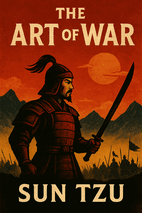
Sun Tzu's The Art of War - Complete Edition presents the ancient strategic treatise on achieving victory through preparation, deception, and psychological insight. This foundational text is essential for leaders, executives, and strategists navigating competition in business, law, or conflict.
Feature
Insta.Page
Blinkist
Shortform
Summary Depth
Full Chapter-by-Chapter
15-min overview
Detailed analysis
Audio Narration
✓ (AI narration)
✓
✓
Visual Mindmaps
✓
✕
✕
AI Q&A
✓ Voice AI
✕
✕
Quizzes
✓
✕
✕
PDF Downloads
✓
✕
✓
Price
$59.99/yr
$146/yr (PRO)
$199/yr
*Competitor data last verified February 2026.
1 Page Summary
This ancient Chinese military treatise, composed around the 5th century BC, is far more than a simple manual on battlefield tactics. Attributed to the strategist Sun Tzu, its core philosophy posits that the supreme art of war is to subdue the enemy without fighting. The text systematically explores fundamental principles of strategy, emphasizing meticulous preparation, deep self-knowledge, and an acute understanding of one's opponent. Key concepts include the strategic importance of terrain, the flexible use of direct and indirect force, the psychological manipulation of both enemy and one's own troops, and the critical economic and logistical calculations that underpin any campaign. Victory is presented as the outcome of careful analysis, deception, and the disruption of the enemy's plans and alliances long before the first clash of arms.
The historical context of the work is rooted in the Warring States period, a time of intense political fragmentation and constant conflict between rival Chinese states. This environment demanded efficient, decisive strategies for survival and consolidation of power. Sun Tzu's teachings were refined for rulers and generals seeking to gain advantage with minimal expenditure of blood and treasure. The text's enduring genius lies in its abstraction; by focusing on universal principles of competition, conflict, and human nature, it transcends its original military purpose. Its lessons are framed around the dynamics of strength versus weakness, planning versus chaos, and the decisive importance of timing and opportunity.
The lasting impact of The Art of War is profound and global. For centuries, it has been essential reading for military leaders across East Asia and, following translation, the Western world. Its influence extends far beyond the military sphere into modern business, law, sports, and political strategy, where its axioms on competitive advantage, leadership, and strategic planning are frequently cited. This modern English translation, presented with annotations, makes these timeless strategies accessible, highlighting the text's continued relevance for anyone engaged in any form of strategic confrontation or negotiation, cementing its status as a foundational text on the mechanics of power and success.
The Introduction establishes The Art of War not as a relic of ancient military history, but as a living, breathing philosophy for strategic thinking with profound modern relevance. It explores the timeless nature of Sun Tzu's wisdom, the enigmatic figure behind the text, its extraordinary journey through history, and the specific features of this edition designed to bridge the ancient and modern worlds.
The Universal Philosophy of Victory
At its heart, Sun Tzu’s work is a philosophy that prizes intelligence and preparation over brute force. Its enduring power lies in its understanding of universal human nature and its focus on achieving objectives with minimal conflict and disruption. This principle resonates powerfully in today’s boardrooms, political arenas, and personal pursuits. The text carries a subtle moral dimension, advocating for success achieved with honor, restraint, and a focus on preserving resources and lives. This ethic transforms it from a simple manual of conquest into a guide for ethical and efficient leadership.
The Strategist Behind the Scrolls
While historical details are sparse, Sun Tzu is presented as a brilliant military general and philosopher from China’s tumultuous Spring and Autumn period. His genius was in weaving deep philosophical insights—influenced by Daoist ideas of balance and harmony—into practical military strategy. He emphasized knowing both oneself and one’s opponent, viewing war as a grave necessity to be approached with utmost seriousness and a desire to minimize suffering. This blend of psychological insight, ethical restraint, and pragmatic action is the core of his lasting legacy.
A Text’s Journey Across Millennia
The historical journey of The Art of War is a story of remarkable adaptation. From its origins as a vital text for Chinese generals and statesmen, it was preserved and studied for centuries. Its first major leap to the West came via an 18th-century French translation by Jesuit missionary Joseph-Marie Amiot, who framed it as a philosophical work for Enlightenment thinkers. Subsequently, it permeated cultures from Japan (influencing samurai ethos) to the modern West, where its principles were adopted by 20th-century military, business, and political leaders. This journey underscores its unique ability to transcend its original context.
A Modern Edition for Contemporary Challenges
This edition is crafted to make Sun Tzu’s ancient wisdom accessible and actionable for today’s reader. It builds upon Amiot’s translation, modernizing the language while preserving philosophical depth. Its unique features include integrated annotations that clarify historical and cultural concepts, and chapter-by-chapter interpretations that distill key lessons and draw direct lines to modern applications in leadership, competition, and personal strategy. It is designed not just to be read, but to be used as a practical companion for navigating contemporary complexity.
Key Takeaways
Timeless Strategy:The Art of War is a philosophical guide to strategic thinking that remains relevant because it addresses fundamental truths about human nature, competition, and achieving goals with efficiency and minimal conflict.
Wisdom Over Force: Sun Tzu’s core teaching elevates preparation, intelligence, adaptability, and psychological insight above brute strength, advocating for victory through superior strategy rather than direct, costly confrontation.
Ethical Dimension: The text incorporates a moral framework, emphasizing restraint, the preservation of resources, and the responsible use of power, making it a guide for honorable success.
Universal Application: Its principles have proven adaptable far beyond warfare, offering valuable insights for business, diplomacy, leadership, and personal development.
A Living Text: This edition enhances understanding through annotations and modern interpretations, specifically designed to help contemporary readers apply Sun Tzu’s ancient strategies to their own challenges.
Key concepts: Introduction
1. Introduction
The Universal Philosophy of Victory
Emphasizes intelligence and preparation over brute force
Focuses on achieving objectives with minimal conflict and disruption
Contains a moral dimension advocating for success with honor and restraint
Transforms from conquest manual to guide for ethical leadership
The Strategist Behind the Scrolls
Sun Tzu as military general and philosopher from Spring and Autumn period
Blends Daoist ideas of balance with practical military strategy
Emphasizes knowing both oneself and one's opponent
Views war as grave necessity to minimize suffering
A Text's Journey Across Millennia
Originated as vital text for Chinese generals and statesmen
First Western translation by Jesuit missionary Joseph-Marie Amiot
Influenced Japanese samurai ethos and modern Western leadership
Demonstrates ability to transcend original cultural context
A Modern Edition for Contemporary Challenges
Modernizes language while preserving philosophical depth
Includes integrated annotations clarifying historical concepts
Provides chapter-by-chapter interpretations for modern applications
Designed as practical companion for navigating contemporary complexity
Core Principles and Applications
Timeless strategy addressing fundamental truths about human nature
Wisdom over force: victory through superior strategy
Ethical framework emphasizing restraint and responsible power
Universal application beyond warfare to business and personal development
If you like this summary, you probably also like these summaries...
💡 Try clicking the AI chat button to ask questions about this book!
Chapter 2: Chapter 1 - Laying Plans
Overview
Sun Tzu opens his treatise by establishing warfare as the most serious undertaking a state can face—a matter of survival that demands meticulous study. He argues that success is not a product of chance but of rigorous analysis, centered on five fundamental, interconnected principles. Mastering these allows a general to assess any situation, predict outcomes, and create the conditions for certain victory before a single battle is fought.
The Five Constant Factors
The cornerstone of all strategic planning is the continuous examination of five immutable elements.
The Moral Law (Dao)
This is the unifying force that aligns the people with their ruler. It is not merely an idea but a palpable sense of shared purpose that inspires the population and the army to face hardship and mortal danger without fear, because they believe in the cause.
Heaven (Tian)
This encompasses the natural cycles and forces: the changing seasons, times of day, and the interplay of complementary opposites (Yin and Yang), such as heat and cold or clear weather and storm. Victory requires operating in harmony with these natural rhythms and using them to one’s advantage.
Earth (Di)
This refers to the physical terrain and its tactical implications. A commander must understand distances, safe and dangerous ground, open and confined spaces, and the strategic value of high and low ground. Effective movement and positioning depend entirely on this knowledge.
The Commander (Jiang)
Leadership is defined by a specific set of virtues. A great general must possess wisdom, sincerity, benevolence, courage, and strictness. These qualities command respect, ensure disciplined obedience, and foster a loyal, motivated fighting force.
Method and Discipline (Fa)
This is the organizational machinery of the army. It includes the structure of ranks, the logistics of supply chains, the system of rewards and punishments, and the efficient allocation of resources. It is the practical framework that turns a group of individuals into a coherent, responsive instrument of war.
Strategic Assessment and the Path to Victory
With a firm grasp of the Five Factors, a general can conduct a comparative analysis between their own side and the enemy. The side where these factors are most favorably aligned holds the strategic advantage and is predicted to win. This assessment, often conducted in the temple before mobilization, is the true measure of potential success.
From this foundation, Sun Tzu derives practical, active strategies for the commander in the field. He stresses that all warfare is based on deception. The successful general actively shapes the enemy’s perception by feigning disorder, weakness, or fear to lure them into overconfidence and error.
The core strategic maxims that flow from this are:
Attack where the enemy is unprepared; appear where you are not expected.
If the enemy is united, work to divide them.
Avoid a direct, prolonged fight with a strong enemy. Instead, provoke and exhaust them.
Know yourself and know your enemy; victory is then never in doubt.
Key Takeaways
War is a Grave Responsibility: It is a state-altering endeavor that must never be approached lightly or without profound study.
Plan with the Five Constants: All strategic thinking must be rooted in the continuous evaluation of The Moral Law, Heaven, Earth, The Commander, and Method.
Victory is Determined Before Battle: By comparing your mastery of the Five Factors against your enemy’s, you can forecast the outcome. Superior planning and calculation lead to victory.
Deception is Fundamental: Never allow the enemy to accurately perceive your strength, intentions, or disposition. Shape their perceptions to create exploitable weaknesses.
Adapt and Avoid Strength: The cleverest strategy avoids protracted, head-on clashes with a strong foe. Instead, use indirect methods, such as dividing alliances and attacking unprepared targets, to secure victory with minimal cost.
Key concepts: Chapter 1 - Laying Plans
2. Chapter 1 - Laying Plans
The Nature and Gravity of Warfare
Warfare is the most serious undertaking of a state, a matter of survival.
Success is not a product of chance but of rigorous analysis and study.
Meticulous planning creates the conditions for victory before battle is joined.
The Five Constant Factors (The Foundation of Strategy)
The Moral Law (Dao): The unifying force aligning people and ruler in shared purpose.
Heaven (Tian): Natural cycles, seasons, and forces (Yin/Yang) to harmonize with.
Earth (Di): Physical terrain, distances, and tactical implications of ground.
The Commander (Jiang): Leadership virtues of wisdom, sincerity, benevolence, courage, and strictness.
Method and Discipline (Fa): Organizational machinery, logistics, and military structure.
Strategic Assessment and Comparative Analysis
Victory is predicted by comparing mastery of the Five Factors against the enemy.
The side where these factors are most favorably aligned holds the strategic advantage.
This assessment, often done pre-mobilization, is the true measure of potential success.
The Principle of Deception
All warfare is based on deception.
Actively shape enemy perception by feigning disorder, weakness, or fear.
The goal is to lure the enemy into overconfidence and create exploitable errors.
Core Strategic Maxims for Victory
Attack where the enemy is unprepared; appear where you are not expected.
If the enemy is united, work to divide them.
Avoid a direct, prolonged fight with a strong enemy; provoke and exhaust them instead.
Know yourself and know your enemy; victory is then never in doubt.
⚡ You're 2 chapters in and clearly committed to learning
Why stop now? Finish this book today and explore our entire library. Try it free for 7 days.
Chapter 3: Analysis of Chapter 1
Overview
The opening chapter establishes the core philosophical and practical framework of the text. It frames warfare as a grave matter of state survival that cannot be approached casually, demanding rigorous study, preparation, and strategic thought over mere brute force. This foundation is built upon five essential, interconnected factors that determine success and a central principle of strategic deception.
The Five Constant Factors
Success in any conflict hinges on a deep understanding of these five fundamental elements:
Dao (The Way): This is the moral and spiritual component. It refers to the harmony between the leadership and the people, where the populace is willing to follow their rulers into peril without fear, sharing a common purpose and vision.
Tian (Heaven): This encompasses the natural, cyclical, and environmental forces at play. It includes the weather, seasons, and the broader concepts of time and cosmic balance, such as the interplay of Yin and Yang.
Di (Earth): This is the tangible terrain and geography. It involves understanding distances, the lay of the land, and how to use features like narrow passes or open ground to one's decisive advantage.
Jiang (Leadership): The qualities of the commander are paramount. A worthy leader embodies virtues such as wisdom, sincerity, benevolence, courage, and strictness, inspiring trust and discipline.
Fa (Discipline): This is the organizational backbone. It involves the structure of the army, the chain of command, the management of supplies, and the systems that ensure efficiency and control.
The Principle of Deception and Strategic Assessment
Beyond the five factors, a pivotal tactic is introduced: deception. The text argues that all warfare is based on this concept. To secure advantages, one must be flexible and misleading—capable of feigning weakness when strong, disorder when ordered, or distance when near. This sets the stage for the famous axiom that underscores the entire work: thorough self-knowledge and knowledge of the adversary lead to victory, while ignorance of either leads to defeat. Every campaign must begin with a meticulous comparative assessment of these factors against the enemy's.
The Imperative of Speed and Economy
A critical warning is issued against protracted conflict. Lengthy campaigns exhaust state resources, drain public morale, and leave one vulnerable to third-party intervention. Therefore, the superior strategy is to achieve objectives swiftly and decisively. The chapter culminates in its highest ideal: the ultimate skill is to subdue the enemy's will without engaging in battle at all, achieving victory through superior positioning, diplomacy, and strategy.
Key Takeaways
War is a Grave State Matter: It is a last resort of supreme importance, demanding the most serious study and preparation, as it determines survival or ruin.
Success Rests on Five Pillars: Analyze every situation through the lens of Dao, Tian, Di, Jiang, and Fa (Morale, Environment, Terrain, Leadership, and Organization).
Deception is Fundamental: Strategy relies on creating false appearances to manipulate the enemy's perceptions and reactions.
Knowledge is Supreme Victory: The dictum "Know yourself and know your enemy" is presented as the essential formula for ensuring victory in any engagement.
Efficiency Over Protraction: A swift, decisive campaign is preferable; a prolonged war is corrosive and dangerous.
The Acme of Skill: The greatest triumph is to overcome the enemy strategically without ever having to fight a physical battle.
Key concepts: Analysis of Chapter 1
3. Analysis of Chapter 1
The Nature of Warfare
War is a grave matter of state survival, not to be approached casually
Demands rigorous study, preparation, and strategic thought over brute force
Determines the survival or ruin of the state
The Five Constant Factors for Success
Dao (The Way): Moral harmony between leadership and people, shared purpose
Tian (Heaven): Natural forces, weather, seasons, time, and cosmic balance
Di (Earth): Tangible terrain, geography, and strategic use of ground
Jiang (Leadership): Commander's virtues of wisdom, sincerity, courage, and discipline
Fa (Discipline): Organizational structure, command, supply, and control systems
Deception and Strategic Assessment
All warfare is based on deception as a pivotal tactic
Create false appearances: feign weakness when strong, disorder when ordered
Knowledge is supreme: know yourself and know your enemy for victory
Every campaign begins with comparative assessment of factors against the enemy
Speed and Economy in Conflict
Avoid protracted conflict which exhausts resources and morale
Swift, decisive campaigns are superior to lengthy wars
Prolonged war leaves one vulnerable to third-party intervention
Ultimate skill is to subdue the enemy's will without battle
Chapter 4: Chapter 2 - Waging War
Overview
Sun Tzu opens with a striking image of a fully equipped army, emphasizing that meticulous preparation is the foundation of confident action. However, he swiftly warns that this readiness must translate into decisive speed. The chapter revolves around the critical balance between thorough preparation and the urgent need to avoid prolonged campaigns, which drain resources and morale. At its heart, it's a lesson in efficiency: winning quickly by leveraging every advantage, especially those taken from the enemy.
The Foundation: Full Readiness Before Campaign
He details the components of a prepared force: a vast army of one hundred thousand soldiers, well-supplied with weapons, provisions, and two thousand chariots for battle and transport. Support personnel like craftsmen move with the army, and silver is reserved for timely troop payment. Everything essential is sheltered and protected, ensuring that advancing against the enemy is a seamless act.
The Urgency of Decisive Action
Sun Tzu admonishes against hesitation. Do not let weapons rust or swords lose their edge; victory must be the ultimate goal. When laying siege to a city, act swiftly and focus all efforts. Delay risks prolonging the campaign, leading to a drained treasury, neglected weapons, declining morale, and dwindling supplies. This weakened state invites devastating enemy attacks, which can tarnish a general's reputation and erase past glories.
The Crippling Burden of Long Campaigns
Prolonged warfare exhausts the state financially and socially. Resources are drained, morale weakens, and widespread suffering ensues. Prices for basic necessities rise, taxes increase, and farmers surrender much of their harvest. The ruler's armories empty, livestock perish, and state spending is drastically cut to supply the army. Sun Tzu starkly notes that nothing harms a kingdom more than these logistical expenses.
Sustaining Strength from the Enemy
A skilled general prioritizes shortening campaigns by sustaining the army at the enemy's expense. Aim to have vastly more supplies—for example, twenty measures of grain for the enemy's one. Disrupt enemy supply lines, ambush detachments, and capture convoys. This strategy relieves the home state's burden and keeps your forces robust.
Turning Capture into Advantage
When capturing more than ten enemy chariots, reward the troops generously and integrate the chariots into your own forces after removing enemy marks. Treat prisoners with respect, feed them well, and put their skills to use. This approach converts enemy losses into your gains, strengthening your army as if these resources were always yours.
The General as Arbiter of Fate
Victory lies in achieving decisive results, not in prolonged campaigns. A master general becomes the caretaker of the people's fate, securing peace and prosperity for the state. This role demands utmost focus and effort, elevating the nation's prestige and ensuring contentment for both ruler and people.
Key Takeaways
Preparation is Paramount: Ensure complete logistical, financial, and personnel readiness before engaging in conflict.
Speed is Strategic: Avoid prolonged campaigns to prevent economic drain, morale collapse, and reputational damage.
Economy of Force: Sustain your army by leveraging enemy resources, disrupting their logistics, and capturing supplies.
Integrate Captures: Wisely use captured equipment and treat prisoners well to bolster your own strength and morale.
Decisive Victory: Aim for swift, conclusive wins that protect the state, enhance its glory, and secure long-term prosperity.
Key concepts: Chapter 2 - Waging War
4. Chapter 2 - Waging War
The Foundation of Military Readiness
Meticulous preparation of personnel, weapons, and supplies is essential before any campaign
A fully equipped force includes soldiers, chariots, support craftsmen, and financial reserves
All essential resources must be sheltered and protected to ensure seamless advancement
The Strategic Imperative of Speed
Avoid hesitation and prolonged campaigns that drain resources and morale
Swift, decisive action prevents weapons from rusting and morale from declining
Delay risks financial exhaustion, weakened forces, and devastating enemy counterattacks
The Crippling Costs of Protracted Warfare
Prolonged campaigns exhaust state finances and social stability
Resources drain, prices rise, taxes increase, and agricultural production suffers
Nothing harms a kingdom more than the logistical expenses of extended conflict
Sustaining Strength Through Enemy Resources
Skilled generals shorten campaigns by sustaining armies at enemy expense
Aim to capture vastly more supplies than the enemy possesses
Disrupt enemy supply lines, ambush detachments, and capture convoys to relieve home state burden
Integrating Captured Assets and Personnel
Reward troops generously for capturing enemy equipment like chariots
Integrate captured equipment into your own forces after removing enemy markings
Treat prisoners with respect, feed them well, and utilize their skills to strengthen your army
The General's Role as Arbiter of National Fate
Victory lies in achieving decisive results, not in prolonged campaigns
Master generals become caretakers of the people's fate and national prosperity
Focus on swift, conclusive wins that protect the state and enhance its long-term prestige
📚 Explore Our Book Summary Library
Discover more insightful book summaries from our collection