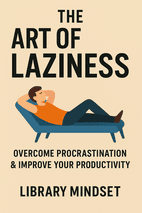
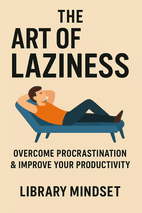
Library Mindset's The Art of Laziness reframes procrastination as a signal to prioritize, teaching strategic inaction through concepts like the lazy check to automate, delegate, and batch work. It's for anyone seeking sustainable productivity by working with their natural energy, not against it.
Feature
Insta.Page
Blinkist
Shortform
Summary Depth
Full Chapter-by-Chapter
15-min overview
Detailed analysis
Audio Narration
✓ (AI narration)
✓
✓
Visual Mindmaps
✓
✕
✕
AI Q&A
✓ Voice AI
✕
✕
Quizzes
✓
✕
✕
PDF Downloads
✓
✕
✓
Price
$59.99/yr
$146/yr (PRO)
$199/yr
*Competitor data last verified February 2026.
About the Author
Library Mindset
Library Mindset is an author and researcher focused on the philosophy of knowledge organization and the evolving role of libraries in the digital age. Their notable works include "The Curated Mind" and essays on information architecture, exploring how systematic access to information shapes learning and innovation. Their background combines formal training in library science with a practical focus on cognitive patterns and digital literacy.
1 Page Summary
This concise guide reframes laziness not as a character flaw but as a potential signal from our minds and bodies, advocating for a strategic approach to work that prioritizes efficiency over mere busyness. The core argument is that what we often label as procrastination can be a form of subconscious resistance to unimportant tasks, and by listening to this resistance, we can identify priorities and design smarter systems. Key concepts include the "lazy check"—questioning whether a task truly needs to be done—and the emphasis on automating, delegating, and batching work to conserve mental energy for what truly matters.
Situated within the modern productivity genre that reacts against burnout culture, the book draws on a long philosophical history of valuing leisure, from ancient thinkers to the 20th-century efficiency movements. It positions itself as a pragmatic counterpoint to rigid, discipline-heavy productivity systems, suggesting that sustainable output comes from working with our natural inclinations rather than constantly fighting against them. The methodology leans on behavioral psychology to create environments that make desired actions easier and energy-draining distractions more difficult.
The lasting impact of the book's philosophy is its shift in perspective from guilt-driven effort to intelligent, intentional action. It provides readers with a framework to audit their obligations, eliminate unnecessary effort, and build sustainable workflows that yield results without exhaustion. Ultimately, it promotes a form of productive laziness where strategic inaction in the short term leads to greater achievement and well-being in the long term.
The chapter opens with Robert Frost's iconic poem "The Road Not Taken," using it not as a celebration of individualism, as it is often misinterpreted, but as a metaphor for a fundamental daily choice. This choice is between the easy, well-worn path of comfort and routine, and the harder, "grassy" path that requires effort and purpose. The core argument is that a meaningful life—one of achievement and fulfillment—is built by consistently choosing this harder, less-traveled road. True aspirations demand time, focus, and deliberate effort, making the difficult path the one that ultimately "makes all the difference."
The Illusion of Short Time
The narrative challenges the common lament that "life is short" by invoking the ancient wisdom of the Roman Stoic philosopher Seneca. His perspective reframes the problem: life is long enough for great accomplishments, but we waste it. The scarcity we feel is self-imposed through luxury, carelessness, and lack of purposeful investment. This section reframes the primary obstacle not as a lack of time, but as a failure to consciously invest the time we have been generously given.
A Framework for Courageous Choices
To illustrate how to make the pivotal choice for the harder path, the chapter introduces Jeff Bezos's "regret minimization framework." Faced with leaving a stable finance job to start an online bookstore (Amazon), Bezos projected himself to age 80. He reasoned that he would never regret trying and failing at a bold idea aligned with a future he believed in (the internet), but he would eternally regret not trying at all. This mental model shifts decision-making from a focus on immediate safety to a long-view perspective on personal fulfillment and regret.
The Haunt of Future Regrets
The text makes the framework personal, asking the reader to project themselves to old age. It lists common, poignant regrets people face: not pursuing passions, wasting time in laziness, neglecting family and health, toiling without purpose, and failing to experience life fully. This list serves as a mirror, contrasting the potential future pain of inaction against the present-day excuses we make for staying on the easy path. The conclusion is a direct imperative: replace excuses with solution-oriented questions. By asking "how," we engage our mind's problem-solving capacity. The perfect moment is a myth; the only real time for action is now.
Key Takeaways
Every day presents a choice between the easy, crowded path and the harder, purposeful one that leads to genuine achievement.
Life is not inherently short; we make it so by wasting time. Meaning comes from well-invested time, not from the mere passage of it.
The "regret minimization framework" is a powerful tool for major decisions: project yourself to old age and choose the option you are least likely to regret not attempting.
Common deathbed regrets revolve around inaction, wasted time, and neglected relationships—all consequences of consistently choosing the easier path.
Action must replace excuse-making. Shift your questions from "Why can't I?" to "How can I?" and begin now, as there is no perfect time to start.
Key concepts: Introduction
1. Introduction
The Core Choice: Two Paths
Life presents a daily choice between an easy, routine path and a harder, purposeful one
Meaningful achievement requires consistently choosing the difficult 'road less traveled'
True aspirations demand deliberate effort, time, and focus
Reframing Time: Life Is Not Short
The common lament 'life is short' is challenged by Stoic wisdom
Life is long enough for great accomplishments, but we waste it through luxury and carelessness
Time scarcity is self-imposed through lack of purposeful investment
The Regret Minimization Framework
Jeff Bezos's decision-making model projects oneself to old age
Choose the option you would least regret not attempting
Shift focus from immediate safety to long-term fulfillment and potential regret
Consequences of Inaction: Future Regrets
Common regrets include not pursuing passions and wasting time in laziness
Regrets highlight neglecting family, health, and meaningful experiences
The pain of future inaction contrasts with present-day excuses for staying on the easy path
The Imperative for Action
Replace excuse-making with solution-oriented questions
Shift from 'Why can't I?' to 'How can I?' to engage problem-solving
The perfect moment is a myth; the only time for action is now
If you like this summary, you probably also like these summaries...
💡 Try clicking the AI chat button to ask questions about this book!
Chapter 2: What Is Procrastination?
Overview
Overview
The chapter defines procrastination as the act of delaying necessary tasks, tracing its roots to the Latin procrastinare. It highlights the timeless wisdom of Seneca, who warned that constantly postponing life’s duties steals our present moments by dangling a deceptive promise of tomorrow. At its core, procrastination is choosing instant gratification over long-term satisfaction, a conflict between what we know we should do and what we actually do.
The Enemy: Panic
The most potent force that breaks a cycle of delay is panic, which emerges only when a deadline looms or consequences become severe. While panic can unleash a frenzied burst of energy to complete a task—like an all-nighter—it produces mediocre results. The critical flaw is that panic is exclusively tied to urgency. Truly important but non-urgent aspects of life, like building relationships, learning new skills, or pursuing dreams, never trigger this panic response. Consequently, procrastination teaches us to wait for the emergency alarm before acting, causing us to neglect the very things that give our lives meaning and potential.
The Paradox of Time
There exists a profound contradiction in how we treat time. We intellectually agree it’s our most precious, non-renewable resource, yet we behave as if our supply is endless. We forget the reality of mortality and operate under the illusion that we can always reconnect with loved ones or chase our ambitions "later." This paradox, as explained by Sahil Bloom, is the gap between our knowledge and our actions. The chapter urges a decisive shift: to start doing meaningful things, spending time with cherished people, and learning desired skills now, with the acute awareness that the clock is always ticking.
The Productivity Mask
Often, procrastination isn’t simple idleness but active avoidance disguised as productivity. Unwilling to admit laziness or confront difficult tasks, we subconsciously (and sometimes deliberately) busy ourselves with trivial, unimportant activities. This creates a "mask" of being busy while making zero progress on significant goals. This state is more insidious than plain procrastination because it creates the illusion of motion while ensuring we remain stuck, circling the same unproductive patterns without improving our lives.
Key Takeaways
Procrastination is delaying essential tasks in favor of short-term comfort, a theft of the present moment.
Panic is a flawed antidote, as it only responds to urgency, forcing last-minute effort that yields subpar results and ignores important, non-urgent life goals.
The Paradox of Time reveals we acknowledge time’s value but act as if it’s infinite; true change requires acting on important matters immediately.
The Productivity Mask involves hiding from priority tasks by keeping busy with unimportant work, creating a false sense of accomplishment while stalling real progress.
Key concepts: What Is Procrastination?
2. What Is Procrastination?
Core Definition of Procrastination
Delaying necessary tasks in favor of short-term comfort
Theft of the present moment through deceptive promises of tomorrow
Conflict between knowing what to do and actual behavior
Choosing instant gratification over long-term satisfaction
Panic as a Flawed Antidote
Only triggered by looming deadlines or severe consequences
Produces frenzied, last-minute effort with mediocre results
Exclusively tied to urgency, not importance
Fails to address meaningful but non-urgent life aspects
Teaches reliance on emergency alarms before acting
The Paradox of Time
Intellectual acknowledgment of time as precious vs. behavioral waste
Operating under the illusion of endless time supply
Gap between knowledge and action regarding mortality
Requires decisive shift to act on important matters now
The Productivity Mask
Active avoidance disguised as productivity
Busying with trivial tasks while avoiding priority work
Creates illusion of motion without real progress
More insidious than plain procrastination
Maintains unproductive patterns while feeling accomplished
⚡ You're 2 chapters in and clearly committed to learning
Why stop now? Finish this book today and explore our entire library. Try it free for 7 days.
Chapter 3: Life Is Short
Overview
The chapter confronts the human tendency toward laziness and procrastination by invoking the stark, sobering awareness of our own mortality. It argues that remembering life's brevity is the ultimate antidote to wasting time on trivialities, freeing us to pursue what is genuinely important to our hearts.
The Whispers of Mortality: Memento Mori
The narrative begins with a powerful historical image from ancient Rome. During a triumph—a grand parade celebrating a military victory—a slave would ride beside the victorious general in his chariot. The slave’s sole duty was to whisper a continuous reminder: “Look behind you! Remember that you are but a man! Remember that you'll die!” This practice, known as memento mori (remember you must die), was designed to instill humility and perspective, preventing the hero from succumbing to hubris by reminding him of his fundamental human fragility and finite existence.
A Modern Echo: Steve Jobs on Death
This ancient wisdom finds a direct parallel in modern thought through the words of Steve Jobs. In his famous 2005 commencement speech, Jobs stated that remembering his impending death was the most crucial tool for making significant life choices. He explained that the fear of failure, external expectations, and pride all dissolve in the face of death, stripping away everything but what is truly essential. This remembrance, Jobs believed, liberates us because we have “nothing to lose,” empowering us to follow our hearts.
Visualizing the Finite: The Death Calendar
The chapter introduces a potent visual tool: the Memento Mori or Death Calendar. It depicts a grid of circles, each representing one month in an 80-year lifespan. Readers are instructed to fill in the circles corresponding to their age. This simple, graphic exercise makes the passage of time startlingly tangible. Seeing the limited number of blank circles remaining serves as a visceral, undeniable prompt to evaluate how one spends each passing month and to reject complacency.
The Unpredictable Hour
To underscore that an 80-year life is an optimistic assumption, not a guarantee, a list of notable historical figures and their ages at death is provided. It includes artists like Vincent van Gogh (37), revolutionaries like Martin Luther King Jr. (39), and conquerors like Alexander the Great (32). This roster drives home the point that life is not only short but often unexpectedly shorter than we presume. This randomness challenges the reader: “How can you be lazy? How can you procrastinate?”
The Call to Immediate Action
The conclusion synthesizes these themes into a urgent imperative. If society has convinced us to desire things we don’t truly want, the result is procrastination. The only rational response to the certainty of death and the uncertainty of its timing is to act now. Whether it’s traveling, starting a business, or pursuing a passion, the “best time” is always the present. The chapter ends with a direct appeal to stop delaying the pursuits that resonate from the “depths of our hearts,” as later may never come.
Key Takeaways
Memento Mori is a Practical Mindset: Actively remembering your mortality isn’t morbid; it’s a tool for clarity. It cuts through fear and superficial desires to reveal what you genuinely value.
Visualize Your Time: Abstract concepts like “decades” are easy to waste. Tools like the Death Calendar make your finite time visually concrete, creating psychological urgency.
Procrastination is a Bet Against Uncertainty: Delaying heartfelt goals assumes you have time to spare. The chapter argues this is a foolish gamble. The only sure way to honor a short and unpredictable life is to begin.
Key concepts: Life Is Short
3. Life Is Short
The Whispers of Mortality: Memento Mori
Ancient Roman practice of a slave whispering 'remember you must die' to victorious generals
Designed to instill humility and prevent hubris by emphasizing human fragility
Serves as a historical foundation for using mortality as a tool for perspective
A Modern Echo: Steve Jobs on Death
Jobs used awareness of death as his most important tool for making life choices
Fear of failure, expectations, and pride dissolve when facing mortality
Liberates us to follow our hearts because we have 'nothing to lose'
Visualizing the Finite: The Death Calendar
Grid of circles representing months in an 80-year lifespan
Filling in passed months makes time's passage tangible and visceral
Creates psychological urgency by showing limited remaining time
The Unpredictable Hour
List of notable figures who died young (van Gogh at 37, MLK at 39, Alexander at 32)
Life is not only short but often unexpectedly shorter than assumed
Challenges complacency with the question: 'How can you be lazy? How can you procrastinate?'
The Call to Immediate Action
Procrastination results from pursuing society's desires rather than genuine wants
The only rational response to certain death and uncertain timing is to act now
The 'best time' for meaningful pursuits is always the present moment
Core Principles and Applications
Memento Mori is a practical mindset for clarity, not morbid fixation
Visual tools make abstract time concrete to combat wastefulness
Procrastination is a foolish gamble against life's uncertainty
Chapter 4: 100% Responsibility
Overview
The chapter begins with a poignant quote from Winston Churchill, setting the stage for a discussion on personal accountability. It cites a study on New Year's resolutions, revealing that a staggering 91% of people fail to keep them, often due to a tendency to blame external factors. At its heart, this chapter argues that true empowerment comes from embracing 100% responsibility for one's life. It challenges the reader to stop making excuses, take action, and recognize that their future is shaped by their present choices.
The Zen Story: Perception Shapes Reality
A memorable Zen tale illustrates how our outlook defines our experience. When two men ask about a new town, the Zen master's response mirrors their descriptions of their old homes: one finds it dreadful, the other wonderful. This story underscores that life largely reflects our attitudes and actions. If we approach situations with negativity or passivity, we're likely to encounter more of the same. It's a gentle reminder that we have the power to shape our reality by how we engage with the world.
The Illusion of External Salvation
A harsh but necessary truth is presented: no one is coming to save you. The chapter stresses that others don't care about your laziness or procrastination, and no one has a vested interest in changing your life for you. It's entirely your responsibility. Giving up the hope for a rescuer is the first step toward genuine self-reliance. The text confronts readers with direct choices: laziness, unhappiness, and procrastination are habits within your control to change. Complaining achieves nothing; only action can alter your circumstances.
Embracing Mistakes as Lessons
Here, we're encouraged to reframe mistakes as natural and valuable parts of growth. Instead of fearing errors, see them as opportunities to learn and commit to doing better. The chapter advocates for jumping into the unknown, even if it's scary, because stagnation is worse than temporary failure. Drawing on George Bernard Shaw, it reminds us that success isn't about never stumbling but about avoiding repeat mistakes. This perspective helps build resilience and keeps us moving forward in the flow of life.
Prioritizing Your Concerns
Focusing on what truly matters is key to maintaining responsibility. The chapter warns against wasting energy on things outside your control, like others' opinions. By worrying about external judgments, you trap yourself in self-doubt and distract from your own goals. Instead, channel your attention inward—concentrate on your own concerns and let go of what belongs to others. This clarity fosters personal growth and prevents unnecessary distractions.
The Spectrum of Persistence
People are categorized into three types based on their approach to goals. The majority never start, forever waiting for something good to happen. A second group begins but quits when challenges arise, often left with regret. The third type—the successful one percent—persists through hardships, viewing obstacles as part of the journey. Life is compared to a marathon, requiring stamina and perseverance. The reward isn't for quitting but for the profound sense of achievement upon reaching your goals.
Key Takeaways
Own Your Life: You are entirely responsible for your actions and outcomes; blaming others only surrenders your power.
Action Over Excuses: Stop waiting for external rescue—change requires your own initiative and effort.
Learn from Mistakes: View errors as lessons rather than failures, and use them to propel forward.
Focus Internally: Concentrate on what you can control, ignoring distractions like others' opinions.
Persist Relentlessly: Success comes from perseverance through obstacles, embodying the mindset of the top one percent who never give up.
Key concepts: 100% Responsibility
4. 100% Responsibility
The Core Principle: 100% Responsibility
True empowerment comes from embracing full accountability for your life
Stop making excuses and blaming external factors for failures
Your future is shaped by your present choices and actions
Blaming others surrenders your personal power
Perception Shapes Reality
Your outlook and attitude define your experience of the world
Life largely reflects how you choose to engage with situations
Approaching situations with negativity yields negative experiences
You have the power to shape reality through your perspective
The Illusion of External Rescue
No one is coming to save you - it's entirely your responsibility
Others don't care about your laziness or procrastination
Giving up hope for a rescuer is the first step toward self-reliance
Complaining achieves nothing; only action can change circumstances
Reframing Mistakes as Growth
View mistakes as natural and valuable parts of learning
Errors are opportunities to commit to doing better
Stagnation is worse than temporary failure
Success means avoiding repeat mistakes, not never stumbling
Focusing on What Matters
Prioritize energy on things within your control
Avoid wasting energy on others' opinions and external judgments
Channel attention inward toward your own concerns and goals
Let go of what belongs to others to prevent distractions
The Persistence Spectrum
Most people never start, waiting for something good to happen
Many begin but quit when challenges arise, leaving regret
The successful persist through hardships as part of the journey
Life requires marathon-like stamina and perseverance
Actionable Mindset Shifts
Replace excuses with initiative and effort
View obstacles as part of the journey rather than reasons to quit
Concentrate on controllable factors while ignoring distractions
Embody the mindset of the top one percent who never give up
📚 Explore Our Book Summary Library
Discover more insightful book summaries from our collection