Nassim Nicholas Taleb's The Black Swan explores the profound impact of unpredictable, high-consequence events and critiques our reliance on flawed forecasting. It's for anyone in finance, risk management, or philosophy seeking to build robust systems against uncertainty.
Feature
Insta.Page
Blinkist
Shortform
Summary Depth
Full Chapter-by-Chapter
15-min overview
Detailed analysis
Audio Narration
✓ (AI narration)
✓
✓
Visual Mindmaps
✓
✕
✕
AI Q&A
✓ Voice AI
✕
✕
Quizzes
✓
✕
✕
PDF Downloads
✓
✕
✓
Price
$59.99/yr
$146/yr (PRO)
$199/yr
*Competitor data last verified February 2026.
About the Author
Nassim Nicholas Taleb
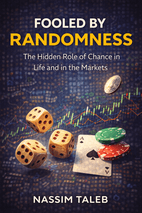
Nassim Nicholas Taleb is a renowned scholar, statistician, and former risk analyst whose work focuses on problems of randomness, probability, and uncertainty. He is the author of the landmark five-volume philosophical essay, the Incerto, which includes the international bestsellers *The Black Swan*, *Fooled by Randomness*, and *Antifragile*. His books have profoundly influenced how we think about risk and decision-making in an unpredictable world. Taleb's concepts, such as "black swan events," have become part of the modern lexicon in finance, economics, and beyond. His influential and provocative works are widely available for purchase on Amazon.
1 Page Summary
In The Black Swan, Nassim Nicholas Taleb introduces the concept of high-impact, unpredictable events that lie outside the realm of regular expectations—events he calls "Black Swans." These occurrences are characterized by their extreme rarity, profound consequences, and the human tendency to retrospectively concoct explanations for them, making them appear predictable after the fact. Taleb argues that much of human history has been shaped by such outliers, from the rise of the internet to World War I, yet traditional statistical models and Gaussian distributions fail to account for them, leaving society vulnerable to their effects.
The book critiques the reliance on flawed forecasting methods and the narrative fallacy—the human inclination to weave simplified stories around complex events, creating a false sense of understanding. Taleb emphasizes the limitations of using past data to predict the future, particularly in systems that are non-linear and complex, such as financial markets or geopolitical landscapes. He advocates for robustness and antifragility—systems that not only withstand shocks but actually benefit from volatility and uncertainty—rather than attempting to predict the unpredictable.
The Black Swan has had a lasting impact on fields ranging from finance and economics to risk management and philosophy, challenging conventional wisdom about prediction and preparedness. Its ideas gained renewed attention after the 2008 financial crisis, which exemplified the type of catastrophic event Taleb warned about. The book encourages a shift in thinking—from attempting to forecast Black Swans to building resilience against them—and remains a influential work on uncertainty, probability, and the limits of human knowledge.
This chapter explores how to thrive in a world dominated by unpredictable, high-impact events. It introduces the barbell strategy as a practical approach to risk, advocating for splitting resources between extreme safety and high-risk, high-reward opportunities. This creates asymmetric exposure—limiting downside while preserving unlimited upside potential. The discussion extends beyond finance to careers, governance, and personal decisions, emphasizing that stability is often an illusion masking hidden fragility.
A central theme is the distinction between Mediocristan—where outcomes cluster around averages (like human height)—and Extremistan, where a single event can dominate all others (like wealth or book sales). The text argues that traditional statistical models, particularly the Gaussian bell curve, dangerously misrepresent reality when applied to Extremistan phenomena. This misapplication stems from historical errors like Quételet’s moralistic framing of the "average man," which pathologized outliers and created a false sense of predictability.
The chapter provides actionable principles for navigating uncertainty: focus on consequences rather than probabilities, prepare instead of predict, maximize serendipity through real-world interactions, and maintain healthy skepticism toward experts. It reveals how small initial advantages compound through cumulative advantage (the Matthew Effect) and preferential attachment, explaining why success and failure often snowball in domains from art to economics.
Yet no position is permanently safe. The dynamics of Extremistan ensure constant churn, where newcomers can displace incumbents through luck or contagion. The internet’s long tail allows niche ideas to persist until they trigger popularity epidemics, while interconnected systems (like global finance) hide catastrophic fragility beneath surface stability. Society develops countermeasures—like progressive taxation—to compress extreme inequalities, though some disparities, like intellectual influence, resist engineering.
Ultimately, the chapter argues for embracing randomness and structuring one’s life to benefit from positive Black Swans while avoiding vulnerability to negative ones. It condemns the intellectual laziness of forcing Gaussian models onto power-law realities, urging readers to recognize where averaging works and where extremes rule. The goal is not to predict the unpredictable, but to build antifragility—gaining from disorder and uncertainty.
The Barbell Strategy in Practice
The core concept here involves applying a "barbell" approach to risk management, splitting resources between extreme safety and high-risk, high-reward ventures. This strategy emerged from trading floors but applies broadly to careers, investments, and even geopolitics.
The Barbell Structure
Allocate 85-90% of resources to ultra-safe instruments (like Treasury bills)
Place the remaining 10-15% in highly speculative, leveraged opportunities
This creates convexity - limited downside with unlimited upside potential
Effectively "clips" your exposure to harmful Black Swans while maintaining positive exposure to beneficial ones
Real-World Applications
This asymmetry appears in:
Careers: "Stable" jobs (e.g., traditional IBM positions) actually carry massive risk if disrupted, while volatile consulting careers offer more antifragility
Governments: Apparently stable dictatorships face catastrophic collapse risk, while constantly turbulent democracies prove more resilient
Banking: "Conservative" portfolios often hide explosive risks beneath surface calm
Navigating Uncertainty
The "Nobody Knows Anything" Principle
William Goldman's famous assertion about Hollywood reveals a deeper truth: success comes from structuring exposure to positive uncertainty rather than predicting outcomes. The key is distinguishing between:
Positive Black Swan Businesses
Movies, publishing, venture capital, scientific research
Question government plans and corporate risk assessments
Recognize incentive misalignment in experts and forecasters
Understand that competition can select for hidden risk-takers
The Matthew Effect and Cumulative Advantage
Success often stems from initial random advantages that compound through:
Tournament effects where slight advantages win entire markets
Reputation systems that reinforce early leaders (academic citations, cultural preferences)
Network effects and imitation creating winner-take-all outcomes
The role of luck in initial conditions often outweighs skill differences
This creates an increasingly unfair world where small initial advantages lead to massively disproportionate outcomes - what sociologists call the Matthew Effect: "For to everyone who has, more will be given, and he will have abundance; but from him who does not have, even what he has will be taken away."
Key Takeaways
Embrace asymmetric outcomes where upside potential vastly exceeds downside risk
Structure your affairs using the barbell strategy: extreme safety combined with calculated high-risk exposures
Focus on consequence management rather than futile prediction attempts
Actively maximize exposure to positive Black Swans while minimizing vulnerability to negative ones
Recognize how small initial advantages compound through social and economic systems
Cultivate skepticism toward experts and models claiming to predict rare events
Prioritize real-world interactions and environments that foster serendipitous opportunities
The Mechanics of Cumulative Advantage
The Matthew Effect shows how initial advantages compound over time, allowing the rich to get richer and the famous to become more famous. This "cumulative advantage" operates across domains—from companies and actors to writers who benefit from chance breakthroughs. The reverse is also true: failure becomes cumulative, creating self-reinforcing cycles of loss. Art proves particularly vulnerable to these dynamics due to its reliance on word-of-mouth and social contagion.
Media accelerates these effects. Book reviews exemplify this herding behavior, where critics anchor on one another's opinions until hundreds of reviews essentially parrot just two or three original arguments. This mirrors the groupthink observed among financial analysts, where collective narratives override independent judgment.
Preferential Attachment in Nature and Society
The broader mechanism behind cumulative advantage is "preferential attachment"—a universal pattern explaining why cities, vocabulary, and bacterial populations follow power-law distributions. Early 20th-century scientists Willis and Yule observed this in biology: species-rich genera tend to get richer, much like successful individuals attract more success.
Linguist George Zipf found language follows the same pattern. Words we use frequently require less mental effort to reuse, creating a feedback loop where common words dominate. Similarly, cities grow because newcomers gravitate toward already-populated areas. This explains why English became a global lingua franca: not due to inherent superiority, but because its initial advantage triggered a self-reinforcing adoption cycle.
The Contagion of Ideas
Ideas spread like epidemics, but with constraints. Cognitive scientist Dan Sperber argues ideas aren't passive "memes" that replicate like genes—they spread because people actively adopt and adapt them for their own purposes. Contagious ideas must align with our cognitive predispositions; we're prepared to believe some concepts but resist others. This creates "basins of attraction" where certain beliefs naturally cluster.
The Fragility of Success
Despite appearances, nobody is safe in Extremistan. Preferential attachment models often assume winners stay winners, but reality shows winners can be abruptly unseated by newcomers. History reveals how dominant cities like Rome and Baltimore declined, while new centers emerged. The corporate world demonstrates this vividly: of the 500 largest U.S. companies in 1957, only 74 remained in the S&P 500 forty years later.
Capitalism's dynamism comes from this constant churn. While socialism often protects established giants, capitalism allows lucky newcomers to displace incumbents. Randomness acts as a societal equalizer—luck redistributes opportunities more fairly than even intelligence, since neither is earned. This churn occurs in arts and culture too, where fads constantly reshape canons and reputations.
The Long Tail Effect
The internet created a countervailing force to concentration: the "long tail." While winners still emerge (like Google's dominance), the digital economy allows countless niche players to survive indefinitely. Physical bookstores might stock 5,000-130,000 titles, but online vendors can offer near-infinite inventory through print-on-demand and digital distribution.
This creates a "double tail" phenomenon: a small number of supergiants coexisting with a vast base of small players. Crucially, this reservoir of potential competitors means no dominant player is safe—any niche player might eventually trigger an epidemic of popularity and displace the current winner. This fosters cognitive diversity by allowing alternative ideas, products, and perspectives to persist until their moment arrives.
Systemic Fragility in Networks
Globalization and interconnection create hidden vulnerabilities. Networks—whether financial systems, power grids, or social media—naturally organize around highly connected hubs. While this makes networks robust against random small failures, it creates catastrophic vulnerability if a major hub fails. The 2003 Northeast blackout illustrates how single-point failures can cascade through interconnected systems.
The financial system exemplifies this danger. Mergers have created gigantic, interconnected banks that all follow similar risk models. This homogeneity means crises become less frequent but more severe—and less predictable. Unlike the internet's resilient ecosystem with its long tail of alternatives, finance lacks this diversity, making systemic collapse more likely and more devastating.
Social Responses to Inequality
Society naturally develops countermeasures against extreme concentration. Progressive taxation and voting systems attempt to compress economic disparities. Religious institutions have historically mitigated reproductive inequality through monogamy norms, preventing the social instability that arises when elite males monopolize mating opportunities.
However, not all inequality can be remedied. Intellectual influence follows superstar distributions that no social policy can flatten. Research shows social rank itself affects longevity—Oscar winners live longer than their peers, and steep social gradients shorten lives regardless of economic conditions. This suggests fairness involves more than material distribution; it encompasses status, recognition, and pecking order dynamics that resist engineering.
The Bell Curve's Fatal Flaw
The text launches a direct assault on the Gaussian bell curve, branding it an "intellectual fraud" that dangerously misrepresents reality. The author uses the poignant irony of the final German ten-mark note, which featured a portrait of Carl Friedrich Gauss and his bell curve, to illustrate this point. This currency, which famously hyperinflated to worthlessness in the 1920s, is the last object that should be associated with a model claiming extreme deviations are impossibly rare.
The Mathematics of Mediocristan vs. Extremistan
The core argument is a stark mathematical comparison. In a Gaussian framework, like human height, the probability of a deviation doesn't just decrease—it collapses at an accelerating, exponential rate. The odds of finding someone 70cm taller than average are 1 in 780 billion; for someone 80cm taller, they plummet to 1 in 1.6 quadrillion. This rapid falloff is why outliers can be safely ignored in Mediocristan.
In stark contrast, scalable, Mandelbrotian (or power-law) distributions, which govern phenomena like wealth, do not have this "headwind." The rate of decrease remains constant. Doubling a wealth threshold (e.g., from €1 million to €2 million) consistently reduces the number of people who meet it by a fixed factor (e.g., four times), whether you're looking at the merely rich or the super-rich. This means extreme events are not only possible but play a dominant role in the total outcome.
The 80/20 Rule and Real-World Inequality
This scalable logic explains the famous 80/20 rule (Pareto Principle), which is a signature of power-law environments. The world is far more unequal than this rule suggests; it could more accurately be called the 50/01 rule, where 1% of workers contribute 50% of the output. In publishing, the numbers are even more extreme: 97% of book sales are made by 20% of authors. This inherent and stable inequality means that in Extremistan, the most likely breakdown of any large total is profoundly asymmetric (e.g., $50,000 and $950,000, not two $500,000 incomes).
The Perils of Misapplication
The author vehemently argues that applying Gaussian tools to Extremistan phenomena is not a simplification or an approximation—it is a fundamental error with catastrophic consequences. Concepts like "standard deviation," "correlation," and "statistical significance" become meaningless and dangerously misleading outside of Mediocristan. They create an illusion of certainty and control where none exists, blinding us to the impactful, unpredictable Black Swans that define our world. This misapplication is identified as a root cause of financial crises, citing the development of Gaussian-based risk models like RiskMetrics that made banks more vulnerable than ever.
The Safe Harbor of Mediocristan
The discussion clarifies that the Gaussian is not useless; it is perfectly applicable in domains where physical constraints or strong equilibrium forces prevent extreme deviations. The safety of a coffee cup is used as a prime example. While quantum theory says it's possible for all its particles to jump in unison, the probability is so infinitesimally small it is effectively impossible. This is the "law of large numbers" in action: in Mediocristan, uncertainty is tamed through averaging, and no single observation can meaningfully impact the whole. This is why casinos cap bets—they rely on this principle to ensure their profits are stable and predictable.
Quételet's Normative Error
Adolphe Quételet emerges as a pivotal but problematic figure who misapplied the Gaussian distribution beyond its mathematical origins. A polymath who wrote poetry and co-authored an opera, Quételet became obsessed with the concept of l'homme moyen—the physically and morally average human. His fundamental error was mathematical rather than empirical: he imposed the bell curve as a normative ideal, treating deviations from the mean as "errors" in both statistical and moral terms. This framework pathologized outliers and created a scientific justification for punishing those at the extremes of the distribution. His timing proved ideologically convenient, aligning with post-Enlightenment socialist yearnings for aurea mediocritas (golden mediocrity) among thinkers like Marx, Proudhon, and Saint-Simon.
Contemporary critics like Augustin Cournot recognized the flaw in Quételet’s thinking. An "average" human would be a monster—someone impossibly average in every attribute, even gender. More troubling was the terminological confusion: the Gaussian was originally called la loi des erreurs (law of errors) for measuring astronomical miscalculations. Quételet’s reframing of human differences as "errors" provided pseudoscientific cover for compressing societal outcomes into a narrow band of acceptability—a middle-class shopkeeper’s fantasy of eliminating extremes.
The Thought Experiment: How Gaussian Arises
The text constructs a vivid thought experiment to demonstrate how Gaussian distributions emerge from pure randomness. Using a coin flip analogy where heads = +$1 and tails = -$1, it shows how after multiple rounds, outcomes cluster around zero. With 40 flips, the probability of extreme results (like 40 straight wins) becomes astronomically low—roughly once in 4 million lifetimes. This "washing out" of extremes occurs because middle outcomes (win-loss combinations that cancel out) dominate through combinatorial explosion.
The experiment escalates to illustrate convergence toward the ideal Gaussian: flipping 4,000 times at 10 cents, then 400,000 times at 1 cent, approaching a Platonic form where each bet becomes infinitesimally small. The resulting bell curve symmetry means deviations decline exponentially from the mean. Key metrics emerge:
68.2% of observations fall within ±1 standard deviation ("sigma")
Extreme deviations (e.g., beyond ±4 sigma) become vanishingly rare (1 in 32,000)
Where Gaussian Works—And Fails Critically
The Gaussian applies only under two rigid assumptions:
Independence: Events must be uncorrelated (no memory/path dependence)
Fixed step size: No "wild jumps" in outcome magnitudes
These assumptions hold in limited domains like yes/no outcomes (pregnancy tests, cancer diagnosis) or idealized games of chance. But they collapse in socioeconomic reality where:
Wealth distribution: A single loss can wipe out centuries of profits
Book sales: One blockbuster dwarfs millions of mediocre sellers
Income: Power-law dynamics dominate, not averaging
The Gaussian becomes dangerous when used outside its narrow applicability—particularly in finance and social modeling where scalable, fractal randomness prevails. Its misuse stems from psychological comfort and mathematical convenience rather than empirical validity.
The Intellectual Seduction
Francis Galton’s enthusiasm for the Gaussian—declaring "the Greeks would have deified it"—exemplifies its seductive appeal. His quincunx pinball machine visually demonstrated the emergence of bell curves from randomness, further entrenching its mythos. Yet even Poincaré expressed skepticism about its blanket application. The ultimate issue is epistemological: we mistake the Gaussian’s elegance for universality, imposing a Platonic ideal on a world fundamentally governed by wilder, scalable randomness.
Key Takeaways
Gaussian distributions only valid under strict independence and fixed-step conditions
Quételet’s error was moralizing the bell curve, pathologizing deviations as "errors"
💡 Try clicking the AI chat button to ask questions about this book!
Chapter 2: Chapter One - The Apprenticeship of An Empirical Skeptic
Overview
The chapter traces a journey from intellectual frustration to a revolutionary framework for understanding uncertainty. It begins with the author's long search for thinkers who fully grasped the implications of Black Swan events, ultimately finding resonance in Benoît Mandelbrot's work. Mandelbrot provided a scalable alternative to the fragile Gaussian models that dominate conventional thinking, showing how their miscalculations of extreme events can be catastrophic. His fractal geometry revealed patterns in nature and society where roughness and self-similarity persist across scales, making extreme deviations conceivable rather than purely random.
This mathematical insight connects to a deeper philosophical divide between two approaches to uncertainty: the Platonic idealization of elegant models versus a bottom-up, empirical skepticism that prioritizes robustness over precision. The narrative illustrates this with real-world failures like the LTCM collapse, where Nobel-winning models crumbled under real randomness, and critiques the persistent use of flawed metrics due to institutional inertia and cognitive biases. Professionals often prefer the false comfort of precise numbers over the messy reality of complex systems, a tendency exacerbated by psychological patterns like overconfidence, hindsight bias, and the narrative fallacy.
The text argues that Black Swans are subjective—defined by one's knowledge and context—and explores why some minds, particularly those with systematizing tendencies, are blind to them. This leads to a practical framework for decision-making: be hyper-conservative against negative Black Swans and hyper-aggressive toward positive ones, while embracing redundancy and optionality over optimization. The discussion extends to societal fragility, emphasizing that eliminating small volatilities often masks growing risks of large catastrophes, and advocates for building systems that withstand errors rather than relying on unattainable forecasting accuracy.
Ultimately, the chapter posits that fractal thinking and power laws offer a more realistic lens for domains dominated by extreme events, from finance to biology. It rejects the ludic fallacy of applying game-like probability to real-world uncertainty and underscores the value of time-tested systems and stoic resilience. By acknowledging the limits of prediction and focusing on consequences rather than probabilities, we can navigate an inherently uncertain world with greater wisdom and robustness.
The Search for Intellectual Consistency
The author describes his long quest to find thinkers who fully grasped the implications of Black Swan events. He encountered many in the business and statistical world who accepted the concept of unpredictable, high-impact events but failed to reject the standard Gaussian (bell curve) tools used to measure risk. Taking the idea to its logical conclusion requires abandoning the notion that a single measure like standard deviation can characterize uncertainty. He also found physicists who rejected Gaussian models but fell into another trap: placing excessive faith in precise predictive models, another form of Platonic idealization.
After nearly fifteen years, he found the thinker who connected these dots: Benoît Mandelbrot. Mandelbrot provided a framework that made many seemingly unpredictable Black Swan events conceivable, turning them "gray."
The Fragility of the Gaussian and the Scalable Alternative
A critical flaw in the Gaussian model is its extreme fragility when estimating the probability of rare, extreme events (tail events). The probabilities drop so precipitously that a tiny error in measuring standard deviation (sigma) can lead to a miscalculation of odds by a factor of trillions. The author posits that there are only two possible paradigms for understanding randomness:
Nonscalable (Gaussian): Where the law of large numbers prevails, and extremes are smoothed out.
Scalable (Mandelbrotian): Where patterns repeat across scales, and extreme events remain possible and consequential.
Rejecting the nonscalable model is sufficient to dismantle a flawed worldview. The author illustrates this with a comparison between a convention for "fat acceptance," where there is a natural upper limit to weight, and a hypothetical convention for the "rich," where a tiny percentage would hold a vast majority of the total wealth, demonstrating a scalable, power-law distribution.
Mandelbrot: The Poet of Randomness
The narrative shifts to a personal and melancholic visit to Mandelbrot's library. The author describes Mandelbrot not just as a collaborator on uncertainty, but as a rare intellectual soulmate—the first academic with whom he could discuss randomness without feeling intellectually defrauded. Their conversations centered less on statistics and more on aesthetics, literature, and stories of refined, polymathic intellectuals.
Mandelbrot is portrayed as an unconventional thinker who valued depth and vision over mere academic achievement, often praising obscure but profound individuals over famous Nobel laureates whom he considered mere "good students" with no real insight.
The Fractal Geometry of Nature
Mandelbrot's great contribution was connecting the dots of previous thinkers (like Pareto and Zipf) and linking randomness to a new type of geometry: fractals. He coined the term "fractal" from the Latin fractus (broken) to describe the rough, jagged, and self-similar patterns found throughout nature—patterns that Euclidean geometry (triangles, circles) fails to capture.
Fractality is defined as the repetition of geometric patterns at different scales; small parts resemble the whole. This is observed in coastlines, mountain ranges, trees, and veins. The famous Mandelbrot Set is a mathematical object that generates infinite complexity from a simple recursive rule. This concept has profound applications in:
Visual Arts & Architecture: Generating natural-looking complexity.
Music: Where movements contain smaller, self-similar motifs (e.g., Beethoven, Bach).
Poetry: Where the structure of small parts reflects the whole (e.g., Emily Dickinson).
Initially rejected by the mathematical establishment for its visual, non-abstract nature, fractal geometry was embraced by the public and artists, making Mandelbrot a "rock star" of mathematics.
Connecting Fractals to Real-World Randomness
The author provides a visual metaphor to distinguish the two paradigms:
Mediocristan (Gaussian): Like looking at a rug from a standing height. The uneven details smooth out into a uniform whole, obeying the law of large numbers.
Extremistan (Mandelbrotian): Like flying over a mountain range. The jagged, uneven nature of the terrain persists regardless of the scale from which you observe it.
This scale invariance is the key. The statistical relationships that describe a phenomenon (like wealth distribution) remain consistent whether you look at the top 1% or the top 0.001%. The "superrich are similar to the rich, only richer."
The chapter recounts how Mandelbrot presented these ideas to economists in the 1960s. Despite initial excitement, his framework was ultimately rejected—"pearls before swine"—because it was too disruptive to the established, Gaussian-based models. The author argues that a fractal framework should be the default model for uncertainty. It doesn't predict Black Swans but makes them conceivable by showing they are inherent to the system's structure, thereby "graying" them and mitigating the problem of complete surprise.
The Nature of Fractal Distributions
Fractal distributions follow power laws where the relationship between values isn't linear but exponential. This "scalability" means the ratio between exceedances (values above a certain threshold) follows a consistent pattern based on the power exponent. For example, if 96 books sell more than 250,000 copies with an exponent of 1.5, we'd expect about 34 books to sell more than 500,000 copies. This pattern continues predictably, showing self-similarity across scales—billionaires aren't more equal to each other than millionaires are; inequality persists at all levels.
The Problem of Measuring Exponents
Measuring these exponents proves remarkably difficult. The assumed exponents for various phenomena—from word frequency (1.2) to market moves (3)—are rough approximations, not precise values. Small changes in the exponent create dramatic differences in outcomes: between exponents 1.1 and 1.3, the top 1%'s share of total wealth drops from 66% to 34%. This sensitivity, combined with the fact that we estimate exponents from limited data rather than observing them directly, leads to significant measurement errors. The "crossover point"—where fractal behavior begins—is also uncertain, adding another layer of complexity.
Practical Implications and Limitations
Despite these uncertainties, recognizing fractal patterns allows for better decision-making. It reveals that extreme events—like a book selling 200 million copies or someone amassing $500 billion—have non-zero probabilities, even if unseen in historical data. This understanding helps mitigate Black Swan surprises by making some extreme events "gray"—predictable in possibility if not in timing. However, fractal models shouldn't be used for precise predictions; they illustrate possibilities rather than certainties. The distinction between hasard (computable risk) and fortuit (unforeseen accident) highlights the limits of what fractals can capture.
The Trap of False Precision
Many researchers and popular science books fall into the trap of overprecision, applying complex models from statistical physics as if they could predict reality exactly. This ignores the fundamental problem of induction: we use data to infer distributions, but those distributions tell us how much data we need, creating a circularity. In Extremistan, this problem is severe, unlike in Gaussian-based Mediocristan. Without real-world feedback, models can seem confirmatory while being fundamentally flawed. Decision-makers, humbled by actual outcomes, understand this gap better than theorists do.
The Value of Fractal Thinking
Fractal randomness doesn't eliminate Black Swans but helps domesticate some into Gray Swans—extreme events that are possible to anticipate broadly. By acknowledging that extreme deviations can occur and that distributions are scalable without strict upper bounds, we become better prepared for uncertainty. This approach doesn't provide precise answers but offers a framework for thinking about risk that is far more realistic than Gaussian methods, especially in fields like finance, publishing, and warfare where extreme events dominate outcomes.
Key Takeaways
Fractal distributions show scalability, meaning inequality persists across all scales, unlike Gaussian distributions where extremes become more equal.
Power law exponents are sensitive and hard to measure precisely; small errors lead to large differences in predicted outcomes.
Avoid overprecision in modeling; fractal insights are qualitative guides, not quantitative predictors.
The gap between model and reality is especially wide in Extremistan, requiring humility and awareness of unknown unknowns.
The Persistence of Flawed Models
Despite widespread agreement about the Gaussian curve's inadequacy for modeling financial markets after events like the 1987 crash, professionals continue using these tools. Their minds operate in a "domain-dependent" manner—capable of critical thinking in conferences but reverting to ingrained habits in daily practice. The allure of Gaussian methods lies in their ability to produce concrete numbers, satisfying a deep-seated desire for simplification even when reality is too complex to be captured by single metrics.
The LTCM Debacle
The theoretical failures became spectacularly practical with the collapse of Long-Term Capital Management (LTCM). Founded by Nobel laureates Myron Scholes and Robert Merton, LTCM relied on Gaussian-based models that explicitly ruled out extreme deviations. When the Russian financial crisis triggered a Black Swan event in 1998, their "sophisticated calculations" proved catastrophic. The firm's near-collapse of the global financial system exposed the dangerous gap between Platonic models and ecological reality. Yet, despite this monumental failure, business schools continued teaching Modern Portfolio Theory, and the financial establishment avoided meaningful accountability.
Intellectual Resistance and Ad Hominem Attacks
Challenging these established models provoked intense hostility from academics. Rather than engaging with the core argument about distribution assumptions, critics attacked distorted versions of the ideas ("it's all random") or resorted to personal insults. These reactions revealed cognitive dissonance—practitioners knew the models were flawed but had built careers around them. The most telling responses came through evasion: critics would focus on minor peripheral errors while ignoring the central problem of scale-invariance and extreme events.
Two Approaches to Randomness
The text presents a fundamental dichotomy in thinking about uncertainty:
Skeptical Empiricism (Fat Tony)
Focuses on what lies outside models
Prefers being broadly right over precisely wrong
Uses bottom-up reasoning from practice
Accepts messy mathematics that reflect reality
Assumes Extremistan as the starting point
Platonic Approach (Dr. John)
Works within idealized models
Values precise, elegant mathematics
Uses top-down theoretical reasoning
Relies on Gaussian and equilibrium assumptions
Assumes Mediocristan as the starting point
The resistance to change stems from institutional inertia: Nobel Prizes legitimizing flawed theories, academic systems rewarding mathematical elegance over empirical validity, and entire industries built around Gaussian-based risk management software. The situation parallels medieval medicine where theoretical models prevailed over clinical observation—with similarly dangerous consequences.
Key Takeaways
Gaussian models persist despite known flaws due to institutional inertia and the human preference for precise numbers over accurate complexity
The LTCM collapse demonstrated catastrophic real-world consequences of ignoring extreme events
Academic resistance to empirical criticism often manifests through ad hominem attacks and evasion of core arguments
A fundamental divide exists between bottom-up empirical approaches and top-down theoretical modeling
The financial establishment continues using flawed models because they provide legal and institutional cover, not because they work
The Ludic Fallacy in Real-World Contexts
The author sharply criticizes the "ludic fallacy"—the mistake of applying game-based randomness (like dice, coin flips, or Brownian motion) to real-world uncertainties. These sterile models generate what he calls "protorandomness," which ignores deeper layers of uncertainty. Unlike casino games where noise cancels out quickly, real-life events in politics, war, and social dynamics don’t average out or obey the law of large numbers. This fallacy is dangerously prevalent in fields like economics and finance, where experts use these simplified models while remaining blind to true uncertainty.
The Greater Uncertainty Principle Misdirection
The author attacks the common invocation of Heisenberg’s uncertainty principle as a metaphor for real-world limits to knowledge. He argues that quantum uncertainty is Gaussian and averages out—it’s predictable at scale. Contrasting this with his inability to predict when Beirut’s airport would reopen during the 2006 Lebanon war, he emphasizes that true uncertainty lies in large-scale, impactful events like wars, marriages, or job outcomes, not subatomic particles. Citing this principle as a "limit to prediction" is a hallmark of intellectual phoniness.
The Danger of Philosophical Compartmentalization
Philosophers, who should be guardians of critical thinking, often fail to apply skepticism to practical domains. The author describes attending a philosophy colloquium where scholars debated abstract Martian thought experiments while blindly trusting stock market investments and pension plans. This "domain dependence" shows how even professional thinkers separate theoretical skepticism from real-world decisions. They question the nature of truth but accept financial or political "expertise" uncritically, wasting cognitive resources on trivialities while ignoring systemic risks.
The Problem of Practice Over Theory
The author advocates for a problem-driven approach to knowledge, echoing Karl Popper’s view that genuine philosophy arises from real-world problems, not abstract debates. He distances himself from metaphysical arguments, emphasizing he is a "no-nonsense practitioner" focused on epistemological errors—like using the wrong mathematical models—rather than questioning reality itself. He warns against "phony skepticism" that targets religion while ignoring the dangers of pseudoscientific experts in economics or social science.
A Protocol for Action Under Uncertainty
The author outlines a personal protocol for handling Black Swans: be hyperconservative when facing potential large losses (negative Black Swans) and hyperaggressive when exposed to potential large gains (positive Black Swans). He avoids "safe" investments like blue-chip stocks due to their invisible risks, preferring speculative ventures where downsides are limited. He also emphasizes controlling one’s own criteria for success—missing a train is only painful if you run after it, and rejecting societal measures of success reduces vulnerability to fate.
Final Metaphysical Perspective
The chapter concludes with a stark reminder: the mere fact of being alive is a statistical miracle. Compared to the odds against one’s birth, everyday frustrations are trivial. This perspective underscores the importance of focusing on significant risks and opportunities rather than minor irritations.
Key Takeaways
Real-world randomness does not average out like game-based randomness, making the ludic fallacy a critical error in risk assessment.
Invoking quantum uncertainty as a metaphor for real-world unpredictability is misguided and signals intellectual dishonesty.
Philosophers and experts often fail to apply critical thinking to practical domains, exacerbating systemic risks.
Effective decision-making under uncertainty involves being conservative against negative Black Swans and aggressive toward positive ones.
Personal autonomy in defining success and failure reduces vulnerability to external unpredictability.
Maintaining perspective on the statistical miracle of existence helps prioritize truly significant risks over trivial concerns.
Intellectual Enrichment Through Dialogue
The book's publication brought an overwhelming flood of attention, including threatening messages and incessant interview requests, forcing the author to spend considerable time politely declining invitations. However, this notoriety also yielded significant intellectual benefits. It connected him with a diverse array of like-minded thinkers from outside his normal circles, including admired scholars like Spyros Makridakis and Jon Elster, who became valuable collaborators and critics. He also had the surreal experience of discussing his work with novelists and philosophers he long admired, such as Louis de Bernières and John Gray.
These interactions, often facilitated through "cappuccinos, dessert wines, and security lines at airports," underscored the power of oral knowledge and in-person conversation, where people reveal insights they would never commit to print. He met economists who genuinely predicted the 2008 crisis, like Nouriel Roubini, and discovered other rigorous thinkers in the field, such as Michael Spence. Colleagues like Peter Bevelin and Yechezkel Zilber became vital sources, nudging his research in new directions with papers from biology and cognitive science. A personal lament is that he found only two people, Makridakis and Zilber, who understand the art of a slow, thoughtful walk for conversation, a practice he cherishes.
Acknowledging and Correcting Errors
This intense scrutiny led to the identification of two key errors in the original text. The first, pointed out by Jon Elster, was an overstatement that the narrative fallacy made all historical analysis untestable. Elster clarified that the discovery of new documents or archaeological evidence can empirically counter a historical narrative. This led the author to realize he had himself fallen for a conventional, textbook narrative in his treatment of Arabic philosophy. He had exaggerated the importance of the debate between Averroés and Algazel, a misconception recently debunked by scholars like Dimitri Gutas who showed that many theorists, not knowing Arabic, had simply projected their own biases onto the texts.
Principles of Robustness from Mother Nature
Reflecting on the book's completion, the author meditated on the fragility of highly concentrated systems like banking, which he saw as an accident waiting to happen. He argues that the oldest systems, like Mother Nature, are the most robust because they have survived billions of years by accumulating invisible tricks and heuristics. This aligns with the historia approach of ancient medical empiricists, who emphasized recording facts with minimal theorizing, a practice later degraded by medieval Scholastics who favored explicit, universal knowledge over practical, experience-based wisdom.
Redundancy as a Foundational Principle
Mother Nature’s robustness is built on three types of redundancy:
Defensive Redundancy (Insurance): This is the simplest form, where spare parts are maintained for survival, like having two kidneys or lungs. This is the exact opposite of the "naive optimization" prevalent in orthodox economics, which seeks to eliminate such apparent inefficiencies. The author argues this economic thinking is dangerously error-prone, as it fails under "perturbation"—when a once-stable parameter is made random. For example, Ricardo's theory of comparative advantage collapses if the price of a specialized good (like wine) is allowed to experience extreme, random fluctuations. This explains why he finds naive globalization ideas dangerous; they create a fragile, interconnected system prone to systemic seizures, much like an epileptic brain. Similarly, debt is inherently fragile because it represents a confident bet on a stable future, making one highly vulnerable to forecasting errors—a combination he calls the "Scandal of Debt."
Avoiding "Too Big": Mother Nature limits the size of its units, not their interactions. An elephant can be shot without ecological collapse, but the failure of one large bank (Lehman Brothers) can bring down the entire system. The notion of "economies of scale" is often an illusion; as companies grow larger to satisfy Wall Street, they optimize away their redundancies, becoming more efficient on paper but vastly more vulnerable to outside shocks. Governments compound this problem by supporting these fragile giants because they are "large employers," creating a vicious cycle where large, fragile companies come to run the government.
Species Density and Connectivity: Through discussions with Nathan Myhrvold, the author understood that larger, more connected environments (globalization) lead to "species density," where the biggest get bigger at the expense of the smallest. This results in fewer cultural products per capita, more acute fads, and a higher risk of planet-wide epidemics or bank runs. The solution isn't to stop globalization but to be aware of and mitigate these dangerous side effects.
Other Forms of Redundancy
Two more subtle forms of redundancy allow systems to exploit positive Black Swans:
Functional Redundancy (Degeneracy): Where the same function can be performed by two completely different structures.
Spandrel Effect: Where a feature evolved for one function develops a new, central purpose (like the spandrels of San Marco cathedral or the mouth being used for kissing). This illustrates how progress under uncertainty requires dormant potential and redundancy, as you never know what function may be needed tomorrow.
Application to Climate Change
Applying this framework of ignorance and deference to Mother Nature, the author's stance on climate change is one of hyper-conservationism. He is deeply skeptical of forecasting models due to their nonlinearity and susceptibility to error, but this does not align him with anti-environmentalists. Instead, he argues the burden of proof is on those who would disrupt an ancient, robust system. We should not pollute because we cannot prove we are not causing harm. His practical solution, based on the nonlinear amplification of damage, is that if we must pollute, we should spread the damage across many different pollutants rather than concentrating on one, as a distributed poison is less harmful than a concentrated dose.
Key Takeaways
The Value of Dialogue: Real-world, in-person conversations with a diverse range of thinkers are a powerful source of knowledge that can correct errors and open new avenues of thought.
Error Correction is Vital: Intellectual honesty requires openly acknowledging and correcting mistakes, especially those stemming from accepted but unexamined narratives.
Robustness Over Efficiency: Mother Nature’s longevity is built on principles like redundancy and size limitation, which are directly opposed to the naive optimization and pursuit of scale common in economics and business.
Fragility of Scale and Debt: Large, interconnected systems and debt financing are inherently fragile because they rely on stable forecasts and are vulnerable to large, unexpected shocks.
Precautionary Principle: In the face of epistemic opacity (not knowing what we don't know), the prudent approach is hyper-conservationism—avoiding disruption of complex ancient systems like the environment because we cannot predict the consequences of our actions.
Functional Redundancy and Optionality
Objects and systems often possess hidden secondary uses beyond their primary design purpose—a concept directly opposing Aristotle's teleological view that everything has a single predetermined function. This functional redundancy creates optionality: the ability to benefit from unforeseen applications when environments change. Aspirin exemplifies this, evolving from fever reduction to pain relief, anti-inflammatory use, and ultimately cardiovascular protection. Similarly, books serve auxiliary functions beyond reading—as aesthetic objects, ego props, or laptop stands—sometimes making these secondary uses their primary purpose in certain contexts.
This redundancy becomes valuable under one condition: convexity to uncertainty, where the potential benefits from random events outweigh the harms. Engineering and medical history show this principle in action, while human psychology favors precise destinations over uncertain but beneficial paths. Research funding often prioritizes targeted outcomes over exploration of branching possibilities, missing opportunities embedded in functional redundancies.
Philosophical Distinctions in Probability
Probability manifests differently across contexts yet remains functionally identical for practical purposes. A "50% chance of rain" may reflect meteorological patterns, expert consensus, or betting markets—yet scientists use the same probability distributions regardless of interpretation. This contrasts with philosophical insistence on distinguishing between probability as subjective belief versus objective property.
The tension between "distinctions without a difference" (philosophically meaningful but practically irrelevant distinctions) and "differences without a distinction" (dangerous conflations using identical terminology) becomes critical. Measuring physical objects versus "measuring risk" exemplifies the latter—one involves physical dimensions, the other speculative forecasts, yet the shared terminology creates illusion of precision. Historical language conflations (like Latin felix meaning both "lucky" and "happy") further demonstrate how semantic precision evolves with societal needs.
Societal Fragility and Robustness
The 2008 financial crisis wasn't a Black Swan event but a predictable outcome of systemic fragility—akin to knowing an incompetent pilot will eventually crash. The problem wasn't insufficient forecasting but fragility to forecast errors. Society increasingly eliminates small volatilities while becoming vulnerable to large catastrophes, creating artificial quiet that masks growing risks.
The solution isn't eliminating errors but containing their spread—building systems robust to expert miscalculations, political incompetence, and economic hubris. This requires an epistemocracy: society structured to withstand forecasting errors rather than relying on unachievable expert infallibility. The author struggles between intellectual isolation and engaging with "uninteresting people" to promote such robustness, finding interview tricks to maintain sanity while participating in flawed systems.
Extremistan in Physical Health
Living organisms—including humans—require Extremistan-style variability to thrive. Evolutionary evidence shows humans adapted to alternating extremes: feast/famine cycles, intense exertion followed by idleness, and thermal variability. Modern "steady-state" health approaches (regular moderate exercise, consistent meals) contradict our epigenetic needs for acute stressors followed by recovery.
The barbell strategy applies perfectly: combining long, slow, meditative walks with rare intense bursts of activity (short sprints, heavy lifting) while maintaining nutritional variability—periodic feasting followed by fasting. This approach activates beneficial metabolic signals through nonlinear, complex-system responses rather than simple calorie thermodynamics. Results include improved body composition, blood pressure, and mental clarity while minimizing time commitment and boredom.
The same principle applies to economic systems: eliminating speculative debt reduces systemic fragility much like variable stressors increase biological robustness. Both systems require exposure to acute stressors while avoiding chronic, dull pressures—the true path to antifragility.
Key Takeaways
Functional redundancy creates valuable optionality when systems face uncertainty
Probability requires context-specific interpretation despite mathematical uniformity
Societal robustness comes from containing errors, not eliminating volatility
Biological health thrives under Extremistan-style variability, not steady-state inputs
The barbell strategy—combining extreme stressors with prolonged recovery—applies to both physical and economic systems
Common Misunderstandings of the Black Swan Concept
The author identifies a series of frequent misinterpretations made by professionals when engaging with his work. These include mistaking the Black Swan for a simple logical problem, preferring flawed models over no models at all, and demanding "constructive" positive advice instead of valuing the protective power of negative advice ("what not to do"). Other errors involve applying familiar labels like "skepticism" or "power laws" to his ideas, claiming the concepts were already known, and confusing his work with Popper's falsificationism. A critical mistake is treating future probabilities as measurable quantities and focusing on philosophical debates about randomness instead of the practical distinction between Mediocristan and Extremistan.
The Amateur Reader vs. The Professional
A striking observation is that curious amateurs and journalists often grasp the book's core ideas more effectively than professional economists or academics. The author argues that professionals frequently read with an agenda, rapidly scanning for jargon to fit the ideas into a pre-packaged framework they already know. This results in the work being incorrectly categorized as standard skepticism or behavioral economics. In contrast, amateur readers, driven by genuine curiosity, engage with the material more openly and understand its novel message.
The "Compression Test" for Substance
A method for judging a book's substantive value is proposed: its compressibility. The author contends that most business and "idea" books can be reduced to a few pages without losing their core message, making them largely insubstantial. In contrast, philosophical works and novels resist such compression. The author views The Black Swan as the beginning of a long philosophical investigation, not a closed, journalistic topic, and is gratified to see its ideas inspiring research across diverse fields from medicine to law.
Vindication Through Real-World Application
The narrative details the author's personal and professional journey following the book's publication. He faced significant criticism, often ad hominem attacks focusing on the book's popularity rather than its content. This period, a "desert crossing," was demoralizing. The turning point was the 2008 financial crisis, which acted as a massive vindication of his warnings about hidden systemic risks. His involvement in trading—"walking the walk"—provided not only financial gain but also psychological fortitude, making him indifferent to critics and confirming that most professionals using probabilistic models fundamentally misunderstand their tools.
Key Takeaways
The most profound misunderstandings of the Black Swan theory come from professionals who attempt to force it into existing, familiar categories rather than engaging with its novel framework.
Genuine understanding is often found in amateur, curious readers, not those with professional or academic baggage in economics and social science.
Substantive philosophical ideas cannot be compressed into simple takeaways, unlike most popular business and self-help books.
The ultimate validation of the theory came from the 2008 crisis, and real-world application of the ideas (e.g., in trading) provides both vindication and psychological resilience against critics.
Empirical testing revealed that a vast majority of finance professionals and academics do not intuitively understand the probabilistic tools they use daily, confirming a core premise of the book.
The Subjectivity of Black Swans
The core insight here revolves around the deeply personal nature of Black Swan events. An event is not a Black Swan in some universal, objective sense; it is defined by an individual's state of knowledge. The 9/11 attacks were a complete shock to the victims, but a planned outcome for the terrorists. The 2008 financial crisis blindsided most economists and financiers, yet the author positions himself as one who saw its possibility. This underscores the central metaphor: a Black Swan for the turkey is not a Black Swan for the butcher.
Asperger and the Systematizing Mind
This leads to an exploration of why some people are chronically blind to Black Swans. The text draws a parallel to a deficiency in "theory of mind," the ability to understand that others possess different knowledge and perspectives. This is linked to Asperger syndrome, a condition characterized by high systematizing abilities but low empathy. Research suggests such individuals are highly averse to ambiguity and are overrepresented in fields like engineering, physics, and, crucially, quantitative economics and finance. They are drawn to neat, closed models and fail to account for off-model risks, making them prone to catastrophic blowups, as exemplified by the Nobel laureates behind the collapse of Long-Term Capital Management.
The Folly of Past-Based Predictions
A specific and dangerous manifestation of this blindness is "future blindness"—the failure to understand that the future is not simply a reflection of the past. The text lambasts figures like Alan Greenspan and Robert Rubin for claiming the 2008 crisis was unforeseeable because "it had never happened before." This logic is ridiculed: just because you've never died doesn't make you immortal. The author points out that large deviations (like the 1987 crash or a world war) almost never have large predecessors; they emerge from a place of unpreparedness. The standard practice of "stress testing" based on the worst past event is thus fundamentally flawed, as it guarantees being unprepared for the next, larger crisis.
The Philosophy of Subjective Probability
Historically, probability was often treated as an objective property of the world, like temperature. The author argues this is a dangerous fallacy. The work of Ramsey and de Finetti on subjective probability—probability as a quantified degree of belief—is presented as the correct framework. This acknowledges that two rational people can assign different probabilities to the same future event based on their unique knowledge and models of the world.
The text then dismisses a common philosophical distinction as a pointless distraction for practitioners: the difference between epistemic uncertainty ( uncertainty from a lack of knowledge) and ontological uncertainty ( randomness inherent in the system itself). In the real world, the two are inseparable, and fixating on the distinction distracts from the core problem: we can never have perfect knowledge.
Life Happens in the "Preasymptote"
A critical practical point is made against relying on mathematical "long-run" properties. The author argues that "life takes place in the preasymptote," meaning the short-to-medium term where most outcomes are decided. A model might be perfectly accurate in the theoretical long run, but if it takes 10,000 years to converge, it is useless for any real-world decision-making. Furthermore, in complex, "nonergodic" systems (which are path-dependent), the long run may not even exist as a stable state. Small errors in calibrating a model's parameters can lead to massively divergent outcomes due to nonlinearities (the butterfly effect), making precise long-term prediction impossible.
From Knowledge to Action: The Third Dimension
The section concludes by framing this as the "most useful problem in modern philosophy." For centuries, epistemology has been trapped in a sterile two-dimensional framework of "True" vs. "False." The author argues for adding a crucial third dimension: the consequence of being right or wrong. A decision isn't just about what you believe; it's about the payoff or penalty associated with that belief. This is why we act to protect against negative Black Swans (like airport security) even without direct "evidence" they will occur—because the cost of being wrong is catastrophically high. This shifts the focus from commoditized "proof" to the severity of estimation errors, particularly for high-impact, low-probability events.
The Lehman Brothers Example
The author recounts a debate with a Lehman Brothers employee who claimed the August 2007 market events were a "once in ten thousand years" occurrence, yet three such events happened consecutively. This highlights the severe problem of deriving knowledge about rare event probabilities. The gentleman's claim couldn't come from personal or firm experience (Lehman hadn't existed for ten thousand years and soon collapsed), revealing his probabilities were purely theoretical. The more remote an event, the less empirical data exists, forcing greater reliance on theory. Standard inductive methods fail for rare events, increasing dependence on a priori models.
The Epistemic Problem of Risk Management
With philosopher Avital Pilpel, the author frames this as a self-reference problem in probability measures. To gauge future behavior from past data, you need a probability distribution. But to assess whether that data is sufficient and predictive, you again need a probability distribution. This creates a severe regress loop, akin to Epimenides the Cretan's paradox about liars. A probability distribution can assess truth but cannot validate its own truth, with especially severe consequences in risk assessment.
An Undecidability Theorem
With mathematician Raphael Douady, the author formalized this philosophical problem mathematically using measure theory. Their paper argues it's impossible to estimate probabilities from a sample without binding a priori assumptions on acceptable probability classes. This undecidability problem has more devastating practical implications than Gödel's incompleteness theorems.
The Primacy of Consequences Over Probabilities
In real life, we care more about an event's consequences (size, destruction, benefit) than its raw probability. Since rarer events often have more severe consequences (e.g., hundred-year flood vs. ten-year flood), our estimation error multiplies—both in probability and effect. The rarer the event, the less we know about its role, forcing greater reliance on extrapolative theories, which lack rigor precisely when claiming rarity. This error is more severe in Extremistan (where rare events dominate) than in Mediocristan (where regular events dominate).
Extremistan Illustrated
Less than 0.25% of companies represent half the world's market capitalization. A minuscule percentage of novels account for half of fiction sales. Under 0.1% of drugs generate over half of pharmaceutical sales. Similarly, less than 0.1% of risky events cause at least half the damages. This demonstrates the extreme concentration and impact of rare events.
Inverse Problems
Reverse engineering (from puddle to ice cube) is far harder than forecasting (ice cube to puddle), and the solution isn't unique. The "Soviet-Harvard" method confuses these two arrows, a manifestation of Platonicity—mistaking mental models for reality. This is severe in probability, especially for small probabilities. Many statistical distributions can fit the same data, each extrapolating differently outside the observed set. The problem explodes with nonlinearities or nonparsimonious distributions.
In negatively skewed environments (producing negative Black Swans but no positive ones), catastrophic events are absent from data due to survivorship bias. This makes systems appear more stable and less risky than they are, leading to surprises—evident in epidemics, environmental damage, and financial markets (e.g., retirees misled by historical data).
Preasymptotics
Theories derived from idealized asymptotic conditions (like infinity) perform poorly in the real, preasymptotic world. This is the ludic fallacy—assuming closed, game-like structures with known probabilities. The real challenge isn't computing probabilities but finding the true distribution. The tension between a priori and a posteriori knowledge is a major source of problems.
Proof in the Flesh
There is no reliable way to compute small probabilities. Using economic data, the author showed that a single observation can represent 90% of kurtosis (measuring tail fatness). Sampling error is too large for statistical inference about non-Gaussianity. Measures like standard deviation, variance, and least squares are bogus. Even fractals can't yield precise probabilities—tiny changes in the tail exponent alter probabilities by a factor of 10 or more. The implication: avoid exposure to small probabilities in certain domains.
Fallacy of the Single Event Probability
In Mediocristan, conditional expectations converge to the threshold (e.g., conditional on being above 10 standard deviations, the expectation is 10). In Extremistan, they don't. For stock returns, a loss worse than 5 units averages 8 units; worse than 50 units averages 80; worse than 100 units averages 250. There is no "typical" failure or success. You might predict a war but not its casualties; predict someone gets rich but not their wealth. Prediction markets are ludicrous for treating events as binary without consequences.
Black Swans are often less probable but have bigger effects. In fat-tailed environments, rare events can be less frequent but contribute disproportionately (e.g., arts, where success odds are low but payoffs high). Stress testing using past data is flawed because extreme deviations are atypical.
Psychology of Risk Perception
Experiments with Dan Goldstein show we have good intuition for Mediocristan (e.g., average height above 6 feet) but poor intuition for Extremistan (e.g., average company size above $5 billion). Framing matters: saying "one crash every thousand years" feels less risky than "one in a thousand flights crash," though probabilistically equivalent. Professionals are also fooled by perceptual errors.
The Problem of Induction and Causation in Complex Domains
Complex domains feature high interdependence (temporal, horizontal, diagonal) and positive feedback loops, creating fat tails and preventing convergence to Gaussian. Nonlinearities accentuate this. Complexity implies Extremistan.
Induction is archaic in complex environments; the Aristotelian distinction between induction and deduction misses the point. Causation changes meaning with circular causality and interdependence (e.g., percolation models vs. random walks).
Driving the School Bus Blindfolded
The economics establishment ignores complexity, degrading predictability. Feedback loops (e.g., Wall Street losses causing unemployment in China, which feedbacks to New York) create monstrous estimation errors. Convexity (disproportionate nonlinear responses) makes error measures useless. Traditional econometric models (e.g., input-output matrices) fail for large disturbances, which are everything in Extremistan. Monetary policy under nonlinearities can have no effect until sudden hyperinflation.
Key Takeaways
Rare event probabilities cannot be reliably estimated empirically, forcing dependence on theory.
Self-reference and undecidability theorems show severe flaws in probabilistic knowledge.
Consequences matter more than probabilities; estimation errors multiply for rare events.
Extremistan is characterized by extreme concentration and impact of rare events.
Inverse problems and preasymptotics reveal the failure of theories in real-world conditions.
Statistical measures like standard deviation are invalid for fat-tailed domains.
There is no "typical" event in Extremistan; prediction markets and stress testing are flawed.
Human intuition fails for Extremistan risks; framing influences perception.
Complexity, with interdependence and feedback loops, makes induction and causation problematic.
Traditional economic models are inadequate for complex, fat-tailed environments.
The Problem of Nonlinearities and Government Understanding
Governments often fail to grasp nonlinear systems, where adding resources yields no visible result until a sudden, explosive outcome like hyperinflation occurs. This highlights the danger of giving powerful institutions tools they don't fundamentally understand, particularly when dealing with complex systems where cause and effect aren't proportional.
The Limits of Probability and Statistical Thinking
The philosophical "a priori" discussed here serves as a theoretical starting point rather than an absolute belief. Interestingly, Bayesian inference originally dealt with expectation (average outcomes) rather than probability itself. Statisticians later reduced this to probability, inadvertently reifying the concept and forgetting that precise probability calculations rarely apply to real-world rare events. This creates a fundamental limitation: we cannot accurately compute probabilities for truly rare occurrences.
The Fourth Quadrant: Mapping Decision Risks
David Freedman's insights helped reframe the approach to statistical modeling, shifting from outright rejection of flawed models to identifying where they can and cannot be applied. This leads to the crucial Fourth Quadrant framework, which categorizes decisions based on two factors:
Type of Exposure
Binary exposures: Outcomes are simply true/false, with limited payoff variations (e.g., pregnancy tests, laboratory experiments)
Complex exposures: Outcomes have variable impacts, where magnitude matters greatly (e.g., investments, epidemics, wars)
Type of Environment
Mediocristan: Predictable environments where large deviations are impossible (e.g., casino games, human height)
Extremistan: Unpredictable environments where massive deviations can occur (e.g., financial markets, book sales, war casualties)
The Four Quadrants Explained
First Quadrant: Binary exposures in predictable environments. Forecasting works reliably here (e.g., casino bets, prediction markets).
Second Quadrant: Complex exposures in predictable environments. Statistical methods work moderately well but have limitations.
Third Quadrant: Binary exposures in unpredictable environments. Black Swans matter less since payoffs are limited.
Fourth Quadrant: Complex exposures in unpredictable environments. This is the danger zone where conventional models fail spectacularly and Black Swans cause maximum damage.
Practical Wisdom for Navigating Uncertainty
Negative Advice (What to Avoid)
Don't use defective models just for psychological comfort
Avoid the "nihilism" trap - admitting knowledge limits is wiser than pretending certainty
Recognize that most harm comes from unnecessary intervention rather than inaction
Positive Guidance (What to Do)
Respect time and accumulated wisdom: Older systems that have survived longer likely possess robustness against Black Swans
Embrace redundancy over optimization: Savings, multiple skills, and insurance provide crucial buffers
Avoid predicting rare events: Focus on managing exposure rather than forecasting precise outcomes
Reject flawed risk metrics: Standard deviation, regression models, and Sharpe ratios fail in Extremistan
Address moral hazard: Bonus structures that reward short-term gains while ignoring long-term risks are dangerously flawed
The Critical Concept of Iatrogenics
The harm caused by healers (or experts) remains poorly recognized outside medicine. Throughout history, unnecessary intervention has often caused more damage than inaction, yet we consistently prefer "doing something" over "doing nothing." This tendency is particularly dangerous in complex systems where our knowledge is incomplete.
Key Takeaways
The Fourth Quadrant (complex exposures in unpredictable environments) is where conventional models fail most dangerously
Avoiding harm is often more important than seeking profit, especially in complex systems
Redundancy and robustness trump optimization in uncertain environments
We must recognize where our knowledge ends rather than pretending certainty where none exists
Time-tested systems and approaches generally possess hidden wisdom about managing uncertainty
Model Errors and Asymmetry
Financial and biological systems often suffer from hidden model errors that create asymmetric outcomes. Biotech companies typically face "positive uncertainty" where model errors can lead to unexpected breakthroughs (positive Black Swans), while banks face almost exclusively negative shocks. This creates a fundamental difference between being "concave" or "convex" to model error - whether errors work for or against you.
The Volatility Deception
Traditional risk metrics mistakenly equate low volatility with stability. In reality, systems transitioning toward Extremistan often show decreased volatility right before catastrophic jumps. This phenomenon fooled Federal Reserve leadership and the entire banking system, demonstrating that calm surfaces can mask gathering storms.
Framing and Misrepresentation of Risk
Risk perception suffers from severe framing issues in the Fourth Quadrant, where conventional statistics fail. Critics often misrepresent the insurance-style properties of Black Swan hedging strategies by focusing on frequent shallow losses while ignoring the massive cumulative gains from rare events. The strategy described yielded 60% returns in 2000 and over 100% in 2008, dramatically outperforming the S&P 500's 23% loss over the same decade.
Ten Principles for Economic Resilience
The core of this section presents a decalogue for building Black Swan-robust societies:
Fragility Management: Systems should break early while still small, preventing "too big to fail" entities from emerging.
Accountability Structure: No socialization of losses with privatization of gains. What requires bailouts should be nationalized; everything else should remain private, small, and risk-bearing.
Expert Accountability: Those who caused systemic failures through blind risk-taking should never be entrusted with responsibility again. The economics establishment lost legitimacy in 2008.
Incentive Reform: Bonus structures that encourage risk-taking without disincentives for failure create dangerous asymmetries. Nuclear plant managers and financial risk-takers shouldn't receive incentive bonuses.
Complexity Countermeasures: Financial products must be simplified to counter economic complexity. Complex systems survive through slack and redundancy, not debt optimization.
Product Regulation: Complex financial products should be banned because neither buyers nor regulators truly understand them. Citizens need protection from themselves and predatory sales practices.
Confidence Independence: Only Ponzi schemes depend on confidence. Robust systems should withstand rumors without government intervention.
Leverage Rehabilitation: Using more leverage to solve leverage problems is denial, not solution. Debt crises are structural, not temporary.
Financial Independence: Citizens shouldn't rely on financial markets or expert advice for retirement security. Anxiety should come from businesses you control, not investments you don't.
Systemic Rebuilding: The 2008 crisis requires rebuilding the economic system fundamentally - converting debt to equity, marginalizing failed establishments, and clawing back ill-gotten bonuses.
Personal Philosophy and Stoicism
The narrative shifts to personal reflection in a Lebanese village cemetery, connecting Black Swan robustness to Stoic philosophy through Seneca's teachings. The key insight is amor fati - loving one's fate - and preparing to lose everything daily. Seneca's wealth made his Stoicism more credible than that of impoverished philosophers, demonstrating that true robustness comes from emotional independence from possessions and status.
Stoic Resilience in Practice
The story of Stilbo, who lost his family and country but declared "I have lost nothing," exemplifies Stoic apatheia - robustness against adverse events. Seneca embodied this by committing suicide calmly when ordered by Nero, having practiced readiness for this outcome daily. The farewell "vale" means both "be strong" and "be worthy," encapsulating the Stoic approach to Black Swan events.
Key Takeaways
Model errors create asymmetric outcomes favoring those positioned for positive Black Swans
Low volatility often precedes catastrophic system failures, making conventional risk metrics dangerously misleading
Ten principles outline how to build economic systems resilient to Black Swans through fragility management, accountability, and simplicity
Stoic philosophy provides personal robustness through amor fati and emotional independence from possessions
True resilience comes from daily preparation for catastrophic loss, not from attempting to predict specific events
Acknowledgments and Influences
The author expresses profound gratitude to an extensive network of individuals who contributed to the development of his ideas. This includes intellectual mentors, research funders like Ralph Gomory and Jesse Ausubel of the Sloan Foundation, business partners, coauthors, and editors who helped shape the manuscript. Special thanks are reserved for his family for their tolerance and practical assistance, and for his partner, Mark Spitznagel, whose systematic approach to business allowed the author the cognitive freedom to meditate and write.
A significant theme emerges regarding the author’s intellectual development: he learned the most from those he disagreed with. Engaging in debates with figures like Robert C. Merton, Steve Ross, and Myron Scholes provided a rigorous testing ground for his ideas, helping him identify the limits of both their theories and his own. This practice of seeking out contrary viewpoints, reading more from intellectual adversaries than allies, is presented as a duty and a method for achieving robust thinking.
The Writing Process and Environment
The book was largely written during a period of deliberate disengagement from business routines. The author adopted a peripatetic lifestyle, composing the text in cafés and airports like Heathrow Terminal 4, preferring environments "unpolluted with persons of commerce." This setting was crucial for the deep, meditative focus required to explore the book's complex ideas. A chance encounter with a scientist on a flight to Vienna even provided a key illustration used in the text, highlighting the role of serendipity in the creative process.
Notes and Technical Commentary
This section provides a detailed behind-the-scenes look at the author's philosophical and technical foundations, separating topics thematically rather than by chapter.
Defining the Gaussian and "Platonicity"
The term "bell curve" is explicitly defined as the Gaussian bell curve (normal distribution). The author clarifies that his use of "Platonicity" refers to the risk of using an incorrect form or model, not a denial that forms exist. It is a problem of reverse-engineering the correct model from observation.
The Empiricist Tradition and Skepticism
The author positions himself as an empirical philosopher, distinct from the British empiricist tradition, characterized by a deep suspicion of confirmatory generalizations and hasty theorizing. This skepticism is traced back through a rich history of thought, including:
Sextus Empiricus and the Problem of Induction: Ancient skepticism, which argued that universal conclusions cannot be drawn from a finite set of particulars.
Pre-Hume Thinkers: Figures like Bishop Pierre-Daniel Huet and Simon Foucher, who articulated the problem of induction decades before David Hume.
Islamic Skepticism: The work of Algazel (Al-Ghazali), who critiqued the understanding of causation by distinguishing between proximate causes and a greater, often unknowable, scheme.
Psychology of Decision-Making and Narrative
The notes delve into the cognitive biases that form a core part of the book's argument:
Narrative Fallacy: Humans have a compelling need to weave events into a logical, causal story, which often leads to a false sense of understanding. This is linked to the "consistency bias," where memories are revised to fit a subsequent narrative.
Two Systems of Reasoning: The interaction between an intuitive, emotional system and a slower, analytical system is highlighted as key to understanding how we misjudge risk and probability.
Overconfidence and Entrepreneurship: Studies are cited showing that the overconfidence of entrepreneurs explains high business failure rates, a clear example of misjudging the odds of success.
Key Takeaways
Intellectual growth is often fueled by engaging with and understanding opposing viewpoints, not by seeking confirmation.
Deep, creative work requires freedom from the cognitive burdens and routines of business.
The author’s empirical skepticism is rooted in a long philosophical tradition that questions our ability to derive true knowledge from observation alone.
Human cognition is riddled with biases, particularly the need to create narratives, which provides a false sense of predictability in a fundamentally uncertain world.
Cognitive Biases in Decision Making
The text explores how our brains are wired with numerous cognitive biases that systematically distort judgment. Prospect theory reveals our asymmetric response to gains and losses—losses hurt more than equivalent gains please us. Neural studies by Davidson and others show this negativity bias is hardwired into our brain architecture. We also struggle with delayed gratification; McLure's research demonstrates the tension between limbic system impulses for immediate rewards and cortical activity for long-term planning.
The planning fallacy consistently causes underestimation of project timelines, even for repeatable tasks. Overconfidence appears across domains, from financial analysts to economic forecasters, with studies showing experts often perform worse than simple models. The Dunning-Kruger effect explains why incompetent individuals lack the metacognition to recognize their own limitations.
The Problem of Silent Evidence
Historical analysis suffers from what's called silent evidence or survivorship bias—we only see what survived while missing everything that failed. This distorts our understanding of phenomena from manuscript preservation to business success stories. The fossil record itself exhibits "pull of the recent" where recent specimens are overrepresented. Even scientific discovery is affected, as researchers often miss connections between existing knowledge that could lead to breakthroughs.
Bacon's philosophical approach, while aiming for empirical truth, actually fell prey to confirmation bias by seeking middle-ground explanations rather than embracing true empirical skepticism. The reference class problem illustrates how we frequently calculate probabilities based on inappropriate samples that don't account for survival conditions.
Forecasting Limitations and Epistemological Boundaries
Attempts to predict complex systems face fundamental limitations. Poincaré's three-body problem in physics demonstrates how small initial differences lead to unpredictable outcomes. Hayek's work on knowledge problems shows why central planning fails—knowledge is distributed and fragmented across society.
Economics particularly struggles with forecasting, with studies showing professional economists consistently outperform simple models. The field exhibits insularity and often functions more like a religion than a science, with researchers frequently falling prey to confirmation bias by highlighting cases that fit economic models while ignoring counterexamples.
Drug discovery and innovation often occur through serendipity rather than planned research, as demonstrated by accidental discoveries like the laser. Darwin's simultaneous development of evolution theory with Wallace shows how environmental factors rather than pure genius drive scientific breakthroughs.
Key Takeaways
Cognitive biases like loss aversion and overconfidence are neurologically embedded and persist despite expertise
Historical analysis is fundamentally distorted by survivorship bias and silent evidence
Complex systems including markets and social phenomena have inherent prediction limitations
Professional forecasters consistently underperform simple models across multiple domains
Scientific and technological breakthroughs often occur through serendipity rather than planned research
Entire fields like economics can develop institutional blindness to their methodological limitations
Mathematical Barriers and Academic Franchise Protection
The text critiques how mathematical sophistication in economics often serves as a franchise protection mechanism rather than a genuine tool for knowledge. This creates a class of mandarins selected for engineering-like mindsets, leading to insular, mathematically complex papers that exclude broader interdisciplinary perspectives. The selection process itself becomes self-reinforcing, favoring those with technical skills over erudition, which ironically might be more useful for handling real-world uncertainties.
Statistical Misapplications and Power Laws
A significant portion discusses the limitations of conventional statistical methods like least squares regression and Gaussian distributions, which fail to account for extreme, high-impact events. These methods assume errors wash out rapidly and underestimate total possible error, making them ill-suited for domains dominated by Black Swans. The text emphasizes scalable distributions (power laws, fractals) where large deviations don't taper off, contrasting them with nonscalable distributions like the Gaussian or lognormal. Key concepts include:
Central Limit Theorem Flaws: Only works under strict assumptions of "tame" jumps and finite variance, converging slowly or not at all in real-world scenarios with extreme events.
Fractals and Power Laws: Defined by P>x = Kx^(-α), these are scale-free distributions where relative deviations don't depend on scale. They model real-world phenomena like wealth distribution, wars, and market crashes more accurately.
Lognormal as a Compromise: Highlighted as a dangerous middle ground that superficially resembles fractals but conceals Gaussian flaws by tapering off tails.
Network Effects and Cumulative Advantage
The Matthew Effect (cumulative advantage) explains why success breeds more success, leading to extreme concentrations in intellectual careers, arts, wars, and markets. This creates winner-take-all environments where small initial advantages snowball. References include Merton's work on Matthew Effects, Rosen's winner-take-all theory, and network science by Barabási and Watts showing how preferential attachment drives inequality.
Information Cascades and Self-Organized Criticality
Imitative behavior causes information cascades where rational agents ignore private information to follow others, leading to bubbles, fads, and systemic fragility. This ties into self-organized criticality (Bak) where systems naturally evolve to critical states, producing power-law distributed events like avalanches or market crashes.
Philosophical and Practical Implications
The section critiques historians and economists for confusing forward/backward processes and misapplying narrative to prediction. It also touches on:
Emotional Evanescence: Humans misforecast emotional impacts of future events.
Poisson Jump Models: Inadequate for scalable realities, as past data doesn't predict jump magnitudes.
Lottery Paradox: Highlights limitations of binary logic in probabilistic contexts, advocating for degrees of belief.
Key Takeaways
Mathematical complexity in economics often acts as a barrier to entry rather than a tool for truth.
Gaussian-based models are dangerously misleading in Extremistan; power laws and fractals better model real-world extremes.
Cumulative advantage (Matthew Effects) drives extreme inequality in success, wars, and markets.
Information cascades and self-organized criticality explain systemic fragility and boom/bust cycles.
Philosophical clarity is needed to distinguish between narrative and prediction, and to embrace probabilistic thinking over binary logic.
Empirical Studies in Forecasting and Judgment
This section presents a comprehensive collection of empirical research examining the accuracy and psychological underpinnings of professional forecasting. Studies by Batchelor (1990, 2001) and Bharat (2004) systematically analyze the performance of economic forecasters from intergovernmental agencies and Swedish economists, finding their predictions often fail to outperform simple consensus models. The work of Braun and Yaniv (1992) provides a striking case study comparing economists' probability assessments against base-rate model forecasts, revealing systematic human biases in judgment.
Psychological Foundations of Decision Making
A significant portion of the references explore the cognitive mechanisms behind human judgment. Dawes (1980, 1988, 1989, 1999, 2001a,b, 2002) contributes extensively to understanding confidence calibration in both intellectual and perceptual judgments, while also examining the ethical implications of using statistical prediction rules versus clinical judgment. Research by Björkman (1987, 1994) and colleagues investigates the underconfidence phenomenon in sensory discrimination and the role of internal cues in confidence resolution. These works collectively demonstrate how human decision-making systematically deviates from rational models.
Network Theory and Complex Systems
The bibliography includes groundbreaking work on network theory and complex systems, particularly from Barabási and Albert (1999, 2002, 2003) on scale-free networks and their emergent properties. Buchanan (2001, 2002) explores how these network principles apply to catastrophic events and social systems, while Callaway et al. (2000) examine network robustness and fragility through percolation theory on random graphs. This research provides mathematical frameworks for understanding how small-world connectivity influences information flow and system stability.
Behavioral Economics and Financial Markets
Several references bridge psychology and economics, particularly through behavioral finance. Barber and Odean (1999) demonstrate how individual investors' trading behavior is hazardous to their wealth, while Benartzi and Thaler (1995, 2001) explore myopic loss aversion and its role in explaining puzzles like the equity premium puzzle and excessive investment in company stock. De Bondt and Thaler (1990) provide evidence of security analysts' overreaction, challenging traditional market efficiency assumptions.
Philosophical and Historical Context
The section includes philosophical works that provide deeper context for empirical skepticism, including Ayer's (1958, 1972) examinations of probability and evidence, and Brochard's (1878, 1888) historical treatments of error and Greek skepticism. Dennett (1995, 2003) contributes evolutionary perspectives on knowledge and freedom, while Braudel (1953, 1969, 1985, 1990) offers historical methodology that informs the understanding of long-term patterns and discontinuities in human knowledge.
Key Takeaways
Professional forecasting consistently demonstrates systematic errors and overconfidence across multiple domains
Human judgment shows predictable deviations from rational models, particularly in confidence calibration and probability assessment
Network theory provides powerful tools for understanding complex systems and information flow in social and economic contexts
Behavioral economics reveals how psychological factors systematically influence financial decision-making and market outcomes
Philosophical and historical perspectives ground empirical skepticism in broader traditions of knowledge and error examination
Cognitive Biases and Forecasting Errors
The section presents extensive research demonstrating systematic flaws in human judgment and forecasting abilities across multiple domains. Fischhoff's work on hindsight bias reveals how people consistently overestimate what could have been known beforehand, while Einhorn and Hogarth's behavioral decision theory explores fundamental judgment processes. Multiple studies (Dunning et al., Easterwood & Nutt, Friesen & Weller) document persistent overconfidence among professionals, particularly financial analysts who show systematic misreaction and optimism in earnings forecasts.
Gigerenzer's research program demonstrates how cognitive heuristics operate and why they lead to predictable errors in probability assessment. This connects to Juslin's work on the hard-easy effect and calibration issues, showing how confidence often diverges from accuracy. The research collectively paints a picture of human cognition as fundamentally prone to overestimating knowledge and predictive capabilities.
Power-Law Distributions and Complex Systems
Several works highlight the prevalence of power-law distributions in complex systems, challenging traditional Gaussian assumptions. Faloutsos et al. demonstrate these patterns in internet topology, while Gabaix et al. develop theories of power-law distributions in financial markets. Arthur De Vany's research on Hollywood economics reveals the extreme uncertainty and "wild" randomness in creative industries, where a tiny fraction of projects generate most returns.
This connects to Huber's work on cumulative advantage and success-breeds-success patterns, showing how small initial advantages can lead to massively disproportionate outcomes. The research collectively undermines conventional models that assume normal distributions and gradual change, pointing instead toward systems characterized by extreme events and discontinuous changes.
Philosophical and Historical Foundations
The bibliography includes significant philosophical works that underpin empirical skepticism. Sextus Empiricus's writings on Pyrrhonian skepticism provide historical depth, while Feyerabend's "Farewell to Reason" challenges scientific orthodoxy. Hacking's works on probability and statistical inference examine how our concepts of chance have evolved, and Goodman's "Fact, Fiction, and Forecast" addresses fundamental problems in induction.
Historical works by Ferguson and others provide context for understanding how conventional narratives often fail to capture the role of contingency and uncertainty in human affairs. These philosophical and historical references ground the empirical findings in broader intellectual traditions that question human knowledge claims and predictive capabilities.
Key Takeaways
Professional forecasters across domains consistently exhibit overconfidence and systematic biases in their predictions
Complex systems from internet topology to financial markets follow power-law distributions rather than normal distributions, making extreme events more common than conventional models assume
Cognitive heuristics lead to predictable errors in judgment, particularly in assessing probabilities and uncertainties
The research tradition supporting empirical skepticism draws from both contemporary empirical findings and ancient philosophical traditions questioning human knowledge claims
Conventional models and forecasting approaches systematically underestimate the role of uncertainty, discontinuity, and extreme events in human affairs
References on Behavioral Foundations
This bibliography section provides the academic backbone for the chapter's exploration of empirical skepticism, drawing from a multidisciplinary pool of economics, psychology, and cognitive science.
Foundational Works on Probability and Uncertainty
The list includes seminal texts that grapple with the nature of chance and decision-making. Frank Knight's Risk, Uncertainty and Profit (1921) establishes the critical distinction between measurable risk and true uncertainty. This is complemented by John Maynard Keynes's early work, Treatise on Probability (1920), and his later economic theories that acknowledge the role of animal spirits and non-quantifiable factors in markets. These works provide the philosophical and economic groundwork for questioning purely quantitative models.
Studies in Cognitive Bias and Heuristics
A significant portion of the references are empirical psychological studies that document systematic errors in human judgment. The works by Joshua Klayman, including his exploration of the confirmation bias, demonstrate how people seek evidence that supports their pre-existing beliefs. Studies by Koriat, Lichtenstein, and Fischhoff on "Reasons for Confidence" and by Keren on calibration examine the gap between subjective confidence and objective accuracy, a central theme for any empirical skeptic. Gary Klein's Sources of Power offers a counterpoint, exploring the intuitive, heuristic-based decision-making that can be effective in real-world environments.
Social Dynamics, Markets, and Mimetic Behavior
The references extend beyond individual psychology to the collective behavior of groups and markets. Works by Kindleberger (Manias, Panics, and Crashes) and Kaizoji (on scaling in land markets and stock prices) analyze the complex, often irrational systems that emerge from many interacting agents. Studies on mate choice copying and behavioral ecology (Kirkpatrick & Dugatkin, Kreps & Davies) draw parallels between human and animal social learning, reinforcing the concept that copying others is a deeply ingrained, though often flawed, strategy.
Key Takeaways
Interdisciplinary Roots: The field of empirical skepticism is built upon a fusion of economics, psychology, and cognitive science, recognizing that human error is a systemic feature, not a random bug.
Documented Fallibility: A vast body of experimental evidence, cited here, rigorously documents specific cognitive biases like confirmation bias and poor calibration, moving skepticism from philosophy to empirically measurable science.
Systemic Implications: These individual cognitive limitations aggregate into larger social and economic phenomena, such as financial bubbles and manias, demonstrating that skepticism must be applied to market and group behavior as well as individual judgment.
Key concepts: Chapter One - The Apprenticeship of An Empirical Skeptic
2. Chapter One - The Apprenticeship of An Empirical Skeptic
The Search for Intellectual Consistency
Long quest to find thinkers who fully grasped Black Swan implications
Rejection of Gaussian tools despite accepting unpredictable events
Discovery of Benoît Mandelbrot as the thinker who connected the dots
Need to abandon single-measure approaches to uncertainty
The Fragility of Gaussian Models
Extreme fragility in estimating rare event probabilities
Tiny measurement errors lead to trillion-fold miscalculations
Two paradigms: nonscalable (Gaussian) vs scalable (Mandelbrotian)
Scalable systems show patterns repeating across scales with extreme consequences
Mandelbrot's Intellectual Legacy
Portrayed as intellectual soulmate and unconventional thinker
Emphasis on aesthetics, literature, and polymathic intellect over statistics
Valuing depth and vision over academic achievement
Critique of Nobel laureates as 'good students' lacking real insight
Connection of previous thinkers (Pareto, Zipf) through fractal concepts
Rejection of Euclidean geometry's limitations in capturing real-world complexity
Fractal thinking makes extreme deviations conceivable rather than purely random
Philosophical Divide in Uncertainty Approaches
Platonic idealization vs empirical skepticism
Preference for false comfort of precise numbers over messy reality
Institutional inertia and cognitive biases maintaining flawed models
Real-world failures (LTCM collapse) demonstrating model fragility
Practical Framework for Decision-Making
Hyper-conservative against negative Black Swans, hyper-aggressive toward positive ones
Embrace redundancy and optionality over optimization
Focus on consequences rather than probabilities
Build systems that withstand errors rather than pursue unattainable forecasting
Societal Fragility and Risk Management
Eliminating small volatilities masks growing catastrophic risks
Power laws as realistic lens for extreme event domains
Rejection of ludic fallacy (game-like probability in real-world uncertainty)
Value of time-tested systems and stoic resilience
Fractality and Its Applications
Fractality describes geometric patterns repeating at different scales with small parts resembling the whole
Observed in natural phenomena like coastlines, trees, and mountain ranges
Mandelbrot Set demonstrates infinite complexity from simple recursive rules
Applied across visual arts, music composition, and poetic structure
Initially rejected by mathematical establishment but embraced by public and artists
Mediocristan vs Extremistan Paradigms
Mediocristan (Gaussian) smooths out details into uniform whole under law of large numbers
Extremistan (Mandelbrotian) maintains jagged, uneven nature across all scales
Scale invariance means statistical relationships persist regardless of observation level
Fractal framework makes Black Swans conceivable by showing they're inherent to system structure
Economists rejected Mandelbrot's disruptive framework despite its explanatory power
Power Law Scalability in Fractal Distributions
Fractal distributions follow exponential rather than linear relationships
Scalability means inequality patterns persist consistently across different thresholds
Self-similarity across scales shows billionaires relate to each other like millionaires do
Predictable patterns continue across orders of magnitude in phenomena like book sales
Extreme events have non-zero probabilities even if unseen in historical data
Measurement Challenges with Power Law Exponents
Exponents are rough approximations rather than precise values across phenomena
Small changes in exponent create dramatic differences in predicted outcomes
Sensitivity means top 1% wealth share can vary from 66% to 34% with minor exponent changes
Crossover point where fractal behavior begins adds another layer of uncertainty
Exponents must be estimated from limited data rather than directly observed
Practical Applications and Limitations of Fractal Models
Recognizing fractal patterns enables better decision-making under uncertainty
Helps mitigate Black Swan surprises by making extreme events 'gray' rather than completely unexpected
Models illustrate possibilities rather than providing precise predictions
Distinction between computable risk (hasard) and unforeseen accidents (fortuit) shows model limits
Useful in finance, publishing, and warfare where extreme events dominate outcomes
The Danger of False Precision in Modeling
Overprecision ignores fundamental problem of induction in statistical inference
Circularity exists where distributions tell us how much data we need to infer those same distributions
Problem is severe in Extremistan compared to Gaussian-based Mediocristan
Models can appear confirmatory while being fundamentally flawed without real-world feedback
Decision-makers with practical experience understand the model-reality gap better than theorists
Value of Fractal Thinking for Risk Management
Domesticates some Black Swans into Gray Swans - extreme but broadly anticipatable events
Acknowledges scalable distributions without strict upper bounds for extreme deviations
Provides more realistic framework for uncertainty than Gaussian methods
Offers qualitative guidance rather than quantitative predictions
Requires humility and awareness of unknown unknowns in Extremistan environments
The LTCM Debacle
Nobel laureates' Gaussian-based models explicitly ruled out extreme deviations, leading to catastrophic failure during the 1998 Russian crisis
LTCM's collapse nearly triggered a global financial system meltdown, exposing the dangerous gap between Platonic models and ecological reality
Despite this monumental failure, financial institutions and business schools continued using and teaching flawed models without meaningful accountability
Intellectual Resistance and Ad Hominem Attacks
Academic critics avoided engaging with core distribution assumption arguments by attacking distorted versions of the ideas
Responses revealed cognitive dissonance - practitioners knew models were flawed but had built careers around them
Critics focused on minor peripheral errors while ignoring the central problem of scale-invariance and extreme events
Two Approaches to Randomness
Skeptical Empiricism (Fat Tony): Focuses on what lies outside models, prefers being broadly right over precisely wrong, assumes Extremistan
Platonic Approach (Dr. John): Works within idealized models, values precise elegant mathematics, assumes Mediocristan
Resistance to change stems from institutional inertia: Nobel Prizes legitimizing flawed theories, academic systems rewarding mathematical elegance
The Ludic Fallacy in Real-World Contexts
Mistake of applying game-based randomness (dice, coin flips) to real-world uncertainties that don't average out
Real-life events in politics, war, and social dynamics don't obey the law of large numbers like casino games
Dangerously prevalent in economics and finance where experts remain blind to true uncertainty while using simplified models
The Greater Uncertainty Principle Misdirection
Quantum uncertainty is Gaussian and averages out - predictable at scale, unlike true real-world uncertainty
True uncertainty lies in large-scale impactful events (wars, marriages, job outcomes), not subatomic particles
Invoking Heisenberg's principle as a 'limit to prediction' for real-world events is intellectual phoniness
The Danger of Philosophical Compartmentalization
Philosophers separate theoretical skepticism from real-world decisions, demonstrating 'domain dependence'
Professional thinkers debate abstract thought experiments while blindly trusting financial or political 'expertise'
Waste cognitive resources on trivialities while ignoring systemic risks in practical domains
The Problem of Practice Over Theory
Advocates for problem-driven knowledge approach, echoing Popper's view that genuine philosophy arises from real-world problems
Focuses on epistemological errors (wrong mathematical models) rather than metaphysical questioning of reality itself
Warns against 'phony skepticism' that targets religion while ignoring pseudoscientific experts in economics and social science
Protocol for Action Under Uncertainty
Be hyperconservative against potential large losses (negative Black Swans)
Be hyperaggressive toward potential large gains (positive Black Swans)
Avoid 'safe' investments with invisible risks, prefer ventures with limited downsides
Control personal criteria for success to reduce vulnerability to external unpredictability
Reject societal measures of success to maintain autonomy in risk assessment
Final Metaphysical Perspective
The fact of being alive is a statistical miracle compared to astronomical odds against birth
Everyday frustrations are trivial when viewed against this cosmic perspective
Focus should be on significant risks and opportunities rather than minor irritations
Intellectual Enrichment Through Dialogue
Book publication connected author with diverse thinkers outside normal circles
Oral knowledge and in-person conversations reveal insights never committed to print
Met economists who genuinely predicted 2008 crisis and other rigorous thinkers
Colleagues became vital sources, nudging research with papers from biology and cognitive science
Cherished practice of slow, thoughtful walks for meaningful conversation
Acknowledging and Correcting Errors
Intense scrutiny identified overstatement that narrative fallacy makes all historical analysis untestable
Discovery of new documents or archaeological evidence can empirically counter historical narratives
Author realized falling for conventional textbook narrative in treatment of Arabic philosophy
Exaggerated importance of Averroés-Algazel debate, a misconception debunked by modern scholars
Principles of Robustness from Mother Nature
Oldest systems like nature are most robust due to accumulated invisible tricks and heuristics
Aligns with ancient medical empiricists' approach of recording facts with minimal theorizing
Medieval Scholastics degraded practical wisdom by favoring explicit universal knowledge
Highly concentrated systems like banking are fragile accidents waiting to happen
Redundancy as Foundational Principle
Defensive redundancy (insurance) maintains spare parts for survival, opposite of naive optimization
Orthodox economics' elimination of redundancy is dangerously error-prone under perturbation
Ricardo's comparative advantage theory collapses with extreme random price fluctuations
Naive globalization creates fragile interconnected systems prone to systemic seizures
Debt is inherently fragile as a confident bet on stable future, vulnerable to forecasting errors
Systemic Fragility of Scale
Mother Nature limits unit size but not interactions, making large interconnected systems vulnerable
Economies of scale often create efficiency illusions while removing crucial redundancies
Government support for 'too big to fail' entities creates vicious cycles of fragility
Large, optimized systems become vulnerable to external shocks despite apparent efficiency
Globalization and Species Density Effects
Increased connectivity leads to 'species density' where largest entities dominate
Results in fewer cultural products per capita and more acute, widespread fads
Creates higher risk of planet-wide epidemics and systemic financial collapses
Requires awareness and mitigation rather than rejection of globalization
Evolutionary perspectives on knowledge, freedom, and empirical skepticism
Historical methodology for understanding long-term patterns and discontinuities
Examinations of probability, evidence, and historical treatments of error
Grounding empirical skepticism in broader traditions of knowledge examination
Cognitive Biases and Forecasting Errors
Systematic overconfidence and misreaction among professional forecasters
Hindsight bias causing consistent overestimation of predictable knowledge
Predictable errors in probability assessment through cognitive heuristics
Hard-easy effect showing divergence between confidence and accuracy
Power-Law Distributions and Complex Systems
Prevalence of power-law distributions challenging Gaussian assumptions
Extreme uncertainty and 'wild' randomness in complex systems like creative industries
Cumulative advantage patterns leading to massively disproportionate outcomes
Systems characterized by extreme events and discontinuous changes
Philosophical and Historical Foundations
Pyrrhonian skepticism providing historical depth to empirical questioning
Challenges to scientific orthodoxy and conventional knowledge claims
Evolution of concepts of chance, probability, and statistical inference
Role of contingency and uncertainty in conventional historical narratives
Behavioral Foundations of Empirical Skepticism
Empirical skepticism draws from multidisciplinary research in economics, psychology, and cognitive science
Seminal works distinguish between measurable risk and true uncertainty (Knight, Keynes)
Psychological studies document systematic cognitive biases like confirmation bias and poor calibration
Research extends from individual judgment errors to collective market behaviors and social dynamics
Cognitive Biases and Heuristics in Judgment
Confirmation bias leads people to seek evidence supporting pre-existing beliefs
Studies reveal significant gaps between subjective confidence and objective accuracy
Heuristic-based decision-making can be effective in real-world environments despite biases
Empirical evidence moves skepticism from philosophical concept to measurable science
Systemic Implications of Cognitive Limitations
Individual cognitive biases aggregate into larger social and economic phenomena
Financial bubbles and market manias emerge from collective irrational behavior
Social learning and mimetic behavior are deeply ingrained but often flawed strategies
Skepticism must be applied to both individual judgment and group/market behavior
Interdisciplinary Research Tradition
Field integrates economics (Knight, Keynes), psychology (Klayman, Fischhoff), and cognitive science
Includes both theoretical frameworks and empirical experimental evidence
Draws parallels between human social learning and animal behavioral ecology
Recognizes human error as systemic feature rather than random occurrence
⚡ You're 2 chapters in and clearly committed to learning
Why stop now? Finish this book today and explore our entire library. Try it free for 7 days.
Chapter 3: Chapter Two - Yevgenia’s Black Swan
Overview
Human judgment consistently falters when forecasting future events, plagued by cognitive biases like overconfidence, the illusion of control, and emotional heuristics that distort rational assessment. Experts across fields—from economics to medicine—display poor calibration in their predictions, often performing no better than chance while maintaining unwarranted confidence. This fallibility is compounded by traditional statistical models that rely on Gaussian distributions, failing to capture the impact of extreme, rare events known as Black Swans. Mathematical alternatives, such as Mandelbrot’s fractal geometry and power law distributions, offer more realistic frameworks for understanding volatility and discontinuity in complex systems like financial markets.
These ideas are grounded in interdisciplinary research spanning psychology, philosophy, and mathematics. Work on dual-process cognition and affective forecasting reveals how emotion overrides reason, while Popper’s falsificationism provides a philosophical basis for embracing uncertainty rather than seeking false certainty. Taleb’s investigation culminates in the Incerto project—a cohesive exploration of luck, uncertainty, and decision-making that moves from diagnosing forecasting failures to prescribing robust responses. Concepts like antifragility and skin in the game emerge as guiding principles for thriving in unpredictable environments, transforming the narrative from one of vulnerability to one of agency and resilience.
Cognitive Biases in Prediction
The text reveals extensive research on systematic errors in human judgment, particularly in forecasting and probability assessment. Studies by Lichtenstein and Fischhoff demonstrate widespread miscalibration in probability judgments, where individuals consistently overestimate their knowledge accuracy. This is compounded by the Dunning-Kruger effect, where low-ability individuals fail to recognize their own incompetence. The "illusion of control" identified by Langer shows people overestimating their influence over random events, while self-serving biases documented by Miller and Ross lead to attributing successes to skill and failures to luck.
Mathematical Modeling of Uncertainty
Mandelbrot's pioneering work on fractal geometry and "wild randomness" challenges traditional Gaussian models of market behavior. His collaborations with Taleb develop the concept of "random jump" processes to better account for extreme events. This mathematical framework is complemented by research on power law distributions (Newman, Redner) and complex networks that characterize how rare events propagate through systems. The limitations of traditional time-series forecasting methods are empirically demonstrated through the M-competitions (Makridakis et al.), showing poor performance in predicting real-world phenomena.
Philosophical and Psychological Foundations
The references establish deep roots in epistemology and cognition. Popper's philosophy of falsification and critical rationalism provides the philosophical basis for acknowledging the limits of prediction. Quine's work on natural kinds and the analytic-synthetic distinction challenges rigid categorization systems. From psychology, LeDoux's research on the emotional brain and dual-process theories (Sloman, Stanovich) reveal how affective responses often override deliberate reasoning in uncertainty.
Expert Performance and Forecasting Errors
Empirical studies consistently show poor calibration among experts across domains. McNees finds systematic errors in official economic forecasts, while Mikhail and colleagues demonstrate security analysts fail to improve accuracy with experience. The "planning fallacy" and optimistic biases persist even among professionals who should know better. Clinical prediction consistently underperforms statistical prediction, as Meehl documented, yet the preference for narrative over data persists.
Key Takeaways
Human judgment is systematically flawed when assessing probabilities and making forecasts, with overconfidence being a pervasive error
Traditional statistical models based on normal distributions fail to capture the impact of extreme, rare events that follow power law distributions
Expertise does not necessarily improve predictive accuracy and may sometimes worsen calibration of uncertainty
Philosophical frameworks that acknowledge the limits of knowledge (Popper) provide better guidance for decision-making under uncertainty than those seeking certainty
Cognitive Biases in Probability Assessment
The text references numerous studies demonstrating how human judgment systematically fails in probabilistic reasoning. Tversky and Kahneman's work on the "law of small numbers" shows people draw bold conclusions from insufficient data, while their availability heuristic reveals how we judge probability by how easily examples come to mind rather than actual statistics. Slovic's research illustrates the "affect heuristic," where emotional responses override rational risk assessment.
Expert Fallibility and Forecasting Errors
Tetlock's extensive research on expert political judgment reveals that specialists perform barely better than chance in predictions, yet maintain high confidence. Studies by Sniezek and Henry demonstrate groups often amplify rather than correct individual judgment errors. Research on calibration shows professionals consistently overestimate their predictive accuracy across fields from finance to medicine.
Mathematical Models of Extreme Events
Sornette's work on complex systems and critical phenomena provides frameworks for understanding market crashes and other discontinuous events. Mandelbrot's fractal geometry offers tools for modeling financial markets with fat-tailed distributions. Research on power laws and scale invariance by Stanley and others challenges Gaussian assumptions in economic modeling.
Psychological Foundations of Risk Perception
Schacter's work on memory distortions shows how recollection errors compound probability miscalibrations. Gilbert's research on affective forecasting reveals our inability to predict future emotional states. The collective work on prospect theory demonstrates how people value gains and losses asymmetrically, leading to predictable decision-making errors under uncertainty.
Key Takeaways
Human probability assessment is systematically flawed through cognitive biases and heuristics
Expert predictions consistently fail to outperform simple benchmarks despite high confidence
Traditional statistical models poorly account for extreme, disruptive events
Emotional and psychological factors significantly distort rational risk evaluation
The literature collectively challenges the notion of predictable patterns in complex systems
Academic Foundations and Conceptual Framework
The dense bibliography reveals the interdisciplinary nature of Taleb's investigation, drawing from mathematics (Yule), psychology (Zajonc, Zacks), linguistics (Zipf), and economics (Zajdenweber, Zitzewitz). This establishes that the concepts of uncertainty and rare events are not confined to a single field but are a universal condition affecting everything from language patterns to financial markets. The works cited provide the scientific and philosophical underpinnings for the personal and narrative-driven exploration in the main text.
The Incerto Project: A Unified Investigation
The chapter concludes by framing the entire discussion within Taleb’s larger body of work, the Incerto. This is not a series of separate books but a single, multi-volume "investigation of opacity, luck, uncertainty, probability, human error, risk, and decision making." Each volume tackles a different facet of the same core problem:
Fooled by Randomness focuses on our inability to distinguish between skill and luck.
The Black Swan deals with the dominance and unpredictability of high-impact, rare events and our flawed methods of narrating them after the fact.
The Bed of Procrustes offers philosophical aphorisms on the themes.
Antifragile introduces a solution: a framework for classifying systems based on their response to volatility and disorder, moving beyond mere robustness to things that actually benefit from shocks.
Skin in the Game addresses the ethical and practical necessity of having a personal stake in outcomes to ensure symmetry and responsibility in systems.
The project is described as a "personal essay" that uses stories and parables, making its profound conclusions accessible. The overarching thread is that while uncertainty is inherent and inordinate, there is clarity in how one should act within it—by building antifragility and ensuring skin in the game.
Key Takeaways
Interdisciplinary Roots: The Black Swan theory is not an isolated idea but is supported by a vast foundation of research across numerous fields, from statistics to cognitive psychology.
A Cohesive Philosophy: Taleb's work forms a complete and interconnected system of thought (Incerto), where each book builds upon and complements the others to address the problem of uncertainty from different angles.
From Diagnosis to Prescription: The journey moves from identifying the problems (being fooled by randomness, blind to Black Swans) to offering a proactive framework for thriving within them (antifragility, skin in the game).
Accessible Wisdom: Complex ideas about probability and risk are delivered through a narrative, autobiographical style, making them relatable and actionable rather than purely academic.
Key concepts: Chapter Two - Yevgenia’s Black Swan
3. Chapter Two - Yevgenia’s Black Swan
Cognitive Biases in Human Judgment
Overconfidence and miscalibration in probability assessments
Self-serving biases in success/failure attribution
Practical Frameworks for Uncertainty
Antifragility as principle for thriving in unpredictability
Skin in the game for accountability in decision-making
Robust responses over precise predictions
Transforming vulnerability into agency and resilience
Mathematical Frameworks for Discontinuous Events
Sornette's complex systems theory provides models for understanding market crashes and critical phenomena
Mandelbrot's fractal geometry offers tools for modeling financial markets with fat-tailed distributions
Research on power laws and scale invariance challenges traditional Gaussian assumptions in economics
These mathematical approaches better account for extreme, disruptive events than conventional models
Psychological Foundations of Risk Perception
Schacter's memory distortion research shows how recollection errors compound probability miscalibrations
Gilbert's affective forecasting reveals our inability to predict future emotional states accurately
Prospect theory demonstrates asymmetric valuation of gains and losses leading to decision-making errors
Cognitive biases and heuristics systematically distort human probability assessment
Emotional factors significantly interfere with rational risk evaluation processes
Interdisciplinary Academic Foundations
Draws from mathematics (Yule), psychology (Zajonc, Zacks), linguistics (Zipf), and economics
Establishes uncertainty and rare events as universal conditions across multiple fields
Provides scientific and philosophical underpinnings for the narrative exploration
Demonstrates that Black Swan phenomena affect everything from language patterns to financial markets
The Incerto Project Structure and Purpose
Forms a single, multi-volume investigation of opacity, luck, uncertainty, and decision making
Fooled by Randomness examines inability to distinguish skill from luck
The Black Swan addresses high-impact rare events and flawed narrative methods
Antifragile introduces systems that benefit from volatility and disorder
Skin in the Game addresses ethical necessity of personal stake in outcomes
Core Philosophical Framework
Moves from problem identification to proactive solutions for thriving in uncertainty
Uses narrative and autobiographical style to make complex ideas accessible and actionable
Emphasizes building antifragility rather than mere robustness against shocks
Advocates for symmetry and responsibility through personal stake in outcomes
Presents a complete, interconnected system of thought addressing uncertainty from multiple angles
Chapter 4: Chapter Three - The Speculator and the Prostitute
Overview
The chapter opens by exploring the psychological and social parallels between two seemingly disparate figures: the financial speculator and the sex worker. Both operate in high-stakes environments where risk, perception, and transactional relationships are paramount to their survival and success.
The Nature of Their Realms
Both professions exist in worlds governed by asymmetric information and the constant management of perception. The speculator trades on information not yet available to the market, while the prostitute navigates the intimate desires and vulnerabilities of clients. Their work is not about producing a tangible good but about leveraging knowledge, timing, and human psychology for gain. This creates a shared experience of operating on the edge of social conventions, often viewed with a mixture of disdain and fascination by mainstream society.
Risk and Reward
A core theme is the intimate relationship each has with risk. For the speculator, a miscalculation can lead to financial ruin. For the sex worker, the risks are even more profound, encompassing physical danger, legal repercussions, and social ostracization. The chapter argues that this constant dance with high-stakes consequences forges a unique, hardened pragmatism and a deep, often cynical, understanding of human nature. Their survival depends on an almost instinctual ability to read situations and people quickly and accurately.
The Illusion of Glamour
The narrative dismantles the superficial glamour often associated with both roles. The high-rolling speculator's life is revealed as one of intense stress, isolation, and the ever-present specter of catastrophic loss. Similarly, the life of the prostitute is portrayed as a performance, where the reality of the work is starkly different from the fantasy sold to the client. This highlights the performative aspect of both professions, where success is contingent on convincingly selling an image or an outcome.
Key Takeaways
Shared Psychology: The speculator and the prostitute operate under a similar mindset, defined by risk-taking, pragmatism, and a transactional view of human interaction.
Perception as Currency: In both fields, success is less about a concrete product and more about managing perceptions and exploiting information asymmetries.
The Reality Beneath the Surface: The outwardly glamorous or exciting facades of both professions mask high levels of stress, danger, and social marginalization.
A Commentary on Society: Their parallel existence serves as a critique of transactional systems, revealing the raw mechanics of risk, reward, and human nature that often underpin more "respectable" institutions.
Key concepts: Chapter Three - The Speculator and the Prostitute
4. Chapter Three - The Speculator and the Prostitute
Parallel Professions Analysis
Psychological and social similarities between speculators and sex workers
High-stakes environments with risk and perception management
Operating on the edge of social conventions
Viewed with mixture of disdain and fascination by mainstream society
Information and Perception Dynamics
Governed by asymmetric information systems
Speculators trade on undisclosed market information
Sex workers navigate client desires and vulnerabilities
Success based on leveraging knowledge and human psychology rather than tangible goods
Risk Management and Consequences
Intimate relationship with high-stakes risk
Speculator risks: financial ruin and catastrophic loss
Sex worker risks: physical danger, legal repercussions, social ostracization
Develops hardened pragmatism and cynical understanding of human nature
Performance vs Reality
Dismantling superficial glamour associated with both roles
Speculator reality: intense stress, isolation, constant threat of loss
Sex worker reality: stark contrast between performance and actual work conditions
Success contingent on convincingly selling images or outcomes
Societal Commentary and Implications
Shared mindset of risk-taking and transactional human interaction
Perception management as primary currency in both fields
Reveals raw mechanics of risk and reward underlying social systems
Critique of transactional nature in supposedly respectable institutions
📚 Explore Our Book Summary Library
Discover more insightful book summaries from our collection