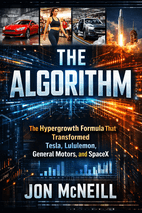
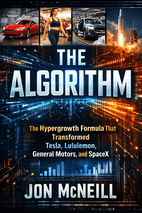
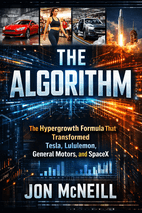
Jon McNeill's The Algorithm presents a five-step framework for driving innovation by questioning assumptions, simplifying processes, and accelerating execution. It provides a pragmatic playbook for leaders and entrepreneurs in fast-growing companies facing operational complexity or industry disruption.
Feature
Insta.Page
Blinkist
Shortform
Summary Depth
Full Chapter-by-Chapter
15-min overview
Detailed analysis
Audio Narration
✓ (AI narration)
✓
✓
Visual Mindmaps
✓
✕
✕
AI Q&A
✓ Voice AI
✕
✕
Quizzes
✓
✕
✕
PDF Downloads
✓
✕
✓
Price
$59.99/yr
$146/yr (PRO)
$199/yr
*Competitor data last verified February 2026.
About the Author
Jon McNeill
Jon McNeill is a prominent business executive and technology leader, best known for his role as the former President of Global Sales, Delivery, and Service at Tesla and as the former Chief Operating Officer of Lyft. His expertise lies in scaling high-growth technology and automotive companies, and he is currently the CEO of DVx Ventures, a firm focused on investing in and building transformative technology companies.
1 Page Summary
"The Algorithm" by Jon McNeill presents a systematic, five-step framework for driving innovation and solving complex business problems. The central thesis is that transformative growth is achieved not by incremental improvements but by radically questioning assumptions, ruthlessly simplifying processes, and strategically accelerating execution. The core steps are: Question Every Requirement, Delete Every Possible Step in a Process, Simplify and Optimize, Accelerate Cycle Time, and Automate Last. The book argues that this methodology can turn existential threats into opportunities, as illustrated by case studies where companies like Tesla overturned industry norms in manufacturing, sales, and service.
What distinguishes this book is its pragmatic, battle-tested approach, drawn largely from the author's firsthand experiences and detailed insider accounts of operational turnarounds at Tesla and other major companies. It moves beyond abstract theory to provide concrete, repeatable tactics, such as creating buyer personas to streamline sales, using a "cup-of-coffee" timeframe to reinvent service, or employing a unified digital plan to slash production cycles. A key, counterintuitive tenet is the principle to "automate last," emphasizing that human-led process optimization must precede technological solutions to avoid costly, inflexible systems.
The intended audience includes leaders, entrepreneurs, and managers in fast-growing or established companies facing operational complexity, scaling challenges, or industry disruption. Readers will gain a actionable playbook for instilling a culture of urgency and accountability, redefining their product around the entire customer experience, and using constraints as a catalyst for innovation. The book promises that by applying the Algorithm, organizations can systematically eliminate waste, accelerate growth, and transform weaknesses into celebrated competitive advantages.
Chapter 1: Chapter One. Step 1: Question Every Requirement
Overview
Imagine being told something is impossible, only to watch it become reality. That’s the power of the first step in the Algorithm: treating every rule not as law, but as a suggestion open for debate. This chapter brings that principle to life through bold challenges to entrenched norms.
The journey begins with Tesla in China, which refused to accept the long-standing requirement for a local joint-venture partner. By aligning with China’s priorities for clean energy and jobs, Tesla negotiated a landmark exception to build the first wholly foreign-owned auto plant. Back in California, the same mindset targeted manufacturing. Confronted by a costly, complex body shop, engineers asked: what if we eliminated it? Inspiration from a Matchbox toy car led to giant castings that replaced hundreds of parts, slashing costs and complexity.
This practice extends to "unsolvable" problems. The belief that a phone couldn’t accurately identify a distracted driver was overturned by analyzing motion sensor data, leading to TrueMotion. This technology pinpointed the driver’s unique movements, creating a new standard for risk assessment. Similarly, a glaring inefficiency was spotted in cyber-insurance, where companies with vastly different risks paid identical, exorbitant premiums.
The quest to fix this hit a wall: how to access the sensitive software stacks where real risk lives? The breakthrough came from shifting focus to an ignored market—small and medium-sized businesses (SMBs). These companies were unprotected, but they all shared a gateway: their Managed Service Providers (MSPs). By integrating vulnerability detection into the tools MSPs already used, the new venture Cork gained inside access. It launched by offering warranties through MSPs, scaling rapidly by providing data-driven security.
Ultimately, these stories show that transformative innovation starts with a simple habit: conducting a relentless inventory of every requirement and assumed constraint. The act of asking "why?" prepares the ground for decisive action.
Tesla's China Gamble
Tesla's need to manufacture in China collided with a rule: foreign-owned plants needed a Chinese partner. This was accepted by giants like GM and Volkswagen. Elon Musk sent the author to Beijing in 2015 with a directive: negotiate for a 100% Tesla-owned factory. This mission embodied the Algorithm's first principle—to question every requirement.
The author worked with Tesla's China team, who understood the government's priorities: job growth and national plans for electric vehicles. After fourteen months, Tesla secured approval for the first wholly foreign-owned auto plant in China. This proved that even entrenched norms could be challenged.
Rethinking Car Manufacturing: The Matchbox Revelation
Facing a mandate to slash costs, the author and head of engineering Doug Field scrutinized Tesla’s factory. The body shop, where hundreds of parts were welded, was a costly bottleneck. Inspired by a focus on eliminating constraints, the author asked: Could the entire body shop be eliminated?
Field’s response came via a Matchbox toy car, made from just two cast pieces. While the industry held that welding was the only safe method, Field questioned this. Tesla began experimenting and ultimately succeeded in casting large chassis parts. This allowed new factories to build a chassis from three cast parts instead of three hundred welded ones, yielding massive gains in cost, speed, and simplicity.
Questioning the "Unsolved": The TrueMotion App
The author wanted to solve the problem of distracted driving. The tech consensus was that it was impossible to accurately identify only the driver’s phone using imprecise GPS. This "unsolvable" label was an ironclad rule.
Refusing to accept this, the author collaborated with a physicist. Instead of focusing on static positions, they analyzed motion sensor data from journeys into the car. They discovered the driver’s movement had a distinct signature. This led to TrueMotion, technology that could identify the driver and lock down the phone. It was patented, adopted by insurers, and created a new standard for risk assessment.
Spotting Systemic Inefficiency: Cyber-Insurance
While serving on corporate boards, the author saw a pattern. Companies with vastly different risk profiles, like Lyft and Lululemon, were charged identical multi-million dollar premiums for cyber-insurance. The reason was an antiquated system where premiums were based on simple metrics from a generic form.
Seeing this inefficiency, the author directed his start-up incubator to investigate. The team found that new insurers still relied on external scans without accessing the actual software stack where risk lived. The opportunity was to build a model that could assess risk by getting "inside the stack."
Identifying an Unserved Market
Market research revealed a major opportunity: small and medium-size businesses (SMBs). These companies held valuable data but were largely ignored by cyber-insurers. Unable to assess their risks, insurers avoided them, leaving hundreds of thousands of businesses unprotected.
The MSP Gateway
A critical insight was that most SMBs outsourced security to Managed Service Providers (MSPs). These MSPs had standard access to their clients' software stacks. This was the perfect entry point. The idea was to integrate vulnerability detection software into the tools used by MSPs, gaining indirect access from the inside.
Launching Cork: A New Approach
In 2024, this vision became reality with Cork. Its software agent inspects a client's software stack, identifying vulnerabilities and providing remediation steps. Instead of selling insurance directly, the team pivoted to offering MSPs $500,000 warranties to pass on to their customers. This enhanced the MSPs' offerings and gave SMBs peace of mind, backed by continuous monitoring.
Rapid Validation and Growth
Cork's model proved highly successful, scaling from zero to millions in annual revenue within its first year. This validated that questioning an inefficient, one-size-fits-all market could uncover rich opportunities. The exorbitant premiums were artifacts of a data-poor industry, ripe for disruption.
The Broader Practice of Questioning
Most of us operate on autopilot, adhering to rules without examination. The first step of the Algorithm demands a conscious hunt for these ingrained customs—questioning everything from product requirements to HR policies. This comprehensive inventory is essential to identify unnecessary rules and prepare for eliminating them. True understanding must precede effective action.
Key Takeaways
Significant opportunities often lie in underserved markets neglected by incumbents.
Innovative solutions can emerge by leveraging existing gateways or partners to overcome access barriers.
A successful venture may require pivoting from an initial idea to a more feasible model.
Questioning every requirement is a disciplined, ongoing inventory of all rules and customs.
Rapid growth can result from addressing the data deficiencies in "crude," one-size-fits-all markets.
Key concepts: Chapter One. Step 1: Question Every Requirement
1. Chapter One. Step 1: Question Every Requirement
Core Principle: Question Every Requirement
Treat rules as suggestions, not laws
Conduct relentless inventory of constraints
Transformative innovation starts with asking 'why?'
Tesla's China Strategy
Challenged foreign-owned plant partnership rule
Aligned with China's clean energy priorities
Secured first wholly foreign-owned auto plant
Manufacturing Innovation: The Matchbox Insight
Questioned necessity of complex body shop
Inspired by toy car's two cast pieces
Replaced hundreds of parts with giant castings
Solving 'Unsolved' Problems: TrueMotion
Rejected impossibility of driver phone detection
Analyzed motion sensor data patterns
Created new standard for risk assessment
Cyber-Insurance Market Inefficiency
Identified identical premiums for different risks
Antiquated system based on generic forms
Need to assess actual software stack risk
Targeting Unserved SMB Market
Small businesses ignored by insurers
Held valuable data but unprotected
Managed Service Providers as key gateway
Cork's Innovative Solution
Integrated detection into MSP tools
Offered warranties instead of direct insurance
Provided continuous monitoring and remediation
If you like this summary, you probably also like these summaries...
💡 Try clicking the AI chat button to ask questions about this book!
Chapter 2: Chapter Two. Step 2: Delete Every Possible Step in a Process
Overview
Financial pressure at Tesla became a catalyst for radical innovation, proving that necessity can mother the most elegant inventions. Faced with a demand to multiply online sales twentyfold, the team began by realizing they didn't truly understand their customers. Moving beyond broad stereotypes, they identified five distinct buyer personas—from the Tech enthusiast to the Safety-focused family—and saw their website was missing the mark for most. While tweaking the site helped, the true breakthrough came from attacking the cumbersome, sixty-four-click purchase process itself, directly applying the Algorithm's mandate to delete every possible step.
The core problem was overwhelming choice; the made-to-order model created paralyzing complexity. By courageously slashing options down to two core packages, they didn't just simplify the customer's decision—they transformed manufacturing, cut costs, and boosted sales by over 20 percent. To eliminate the remaining clicks, they turned to the financing paperwork, questioning every line to discover that most of it was protective legal fluff, not necessity. By distilling a loan to its essence and prefilling data, they created a revolutionary one-click loan application, achieving a twelve-click process and hitting their twentyfold sales goal.
This principle of ruthless simplification proved universally powerful. When Hurricane Irma threatened Florida, a service lead bypassed all protocol and, by deleting approval steps, pushed a software update that unlocked extra battery range for stranded drivers—a decision made by weighing core ethical principles against the urgent need for speed. Similarly, the frustrating ritual of paying a restaurant bill inspired the creation of Zumi, an app that removes the entire payment step, making diners feel like valued club members and boosting restaurant revenue.
To cultivate this mindset, a powerful thought experiment is suggested: imagine teaching your entire process to a brilliantly capable but utterly ignorant robot. This forces you to justify every single action, immediately highlighting redundancies and pointless complexities. The key is to foster a culture of continuous, curious questioning, constantly asking "Why?" about every task. Engaging your entire team in the hunt for just one unnecessary step to eliminate can uncover a wealth of hidden inefficiencies, turning simplification from a one-time project into a sustainable competitive advantage.
Facing relentless financial pressures at Tesla, with cash reserves often dipping below three months, the team was driven to innovate out of necessity. In 2015, as sales slumped and the Model X struggled in production, Elon Musk set an audacious goal: increase digital sales by twenty times. This wasn't based on market data but on pushing the team to question every assumption and find breakthrough solutions.
Understanding the Customer
To tackle this, sales leader Ganesh Srivats and analytics head Michael Rossiter moved beyond the simplistic view of Tesla buyers as either performance or environmental enthusiasts. Their research revealed five distinct buyer types:
Tech: Focused on Autopilot and software features.
Safety: Predominantly female, valuing crash safety over Autopilot.
Performance: Drawn to speed and acceleration, with less concern for safety.
Environment: Motivated by carbon savings, yet this information was scarce on the website.
Status: Seeking a green, cutting-edge alternative to luxury sports cars.
This insight showed that the e-commerce site was overly tailored to performance buyers, burying key details like models, prices, and battery range. By redesigning the site with tabs for each buyer type, sales improved slightly, but not enough to meet the stretch goal.
The Click-Reduction Challenge
The real bottleneck was the online purchase process: sixty-four clicks from start to finish. Elon demanded it be reduced to ten clicks, embodying the Algorithm's step to delete every possible step. This led to questioning why so many clicks were necessary. The root cause was Tesla's made-to-order model, which offered over 300,000 unique combinations through countless options like colors, seat covers, and engine features.
Inspired by The Paradox of Choice by Barry Schwartz, which explains how too many options paralyze decision-making, the team realized simplification was key. They proposed reducing options to just two core packages tailored to practical versus performance buyers. Initially, engineers worried this would dilute the brand, making Tesla seem like Honda, but analysis showed it could transform manufacturing, simplify the supply chain, and lower costs.
With Elon's approval, they streamlined offerings, which slashed the click count from sixty-four to thirty and boosted sales by over 20 percent. Costs dropped, margins improved, and they were halfway to their goal.
Breaking Industry Norms in Financing
To eliminate the remaining clicks, they focused on financing, where loan and lease documents required dozens of signatures. Questioning every requirement—step 1 of the Algorithm—revealed that most documents were bank lawyers' precautions, not legal mandates. Elon pointed out that a loan's essence could be a single paragraph promising monthly payments.
Working with U.S. Bank and Ally Bank, the team stripped away 90% of pro forma verbiage. By prefilling customer data via Experian, they created a one-click loan application. Zean Nielsen, head of sales operations, ensured only the customer's name and driver's license were needed. The result: a twelve-click purchase process. Over ten months, digital sales increased twentyfold, revolutionizing auto e-commerce.
Hurricane Irma: Speed Through Simplification
In September 2017, as Hurricane Irma approached Florida, Tesla customers faced range anxiety in stalled traffic. Karim Bousta, head of global service, led a small team to address this emergency. Instead of following normal protocols, they deleted steps, deciding without higher approval to send a software update that temporarily unlocked extra battery range for economy models.
Weighing risks against his three principles—no harm, no illegal acts, no massive costs—Karim approved the update. Within hours, thousands of cars received 75 extra miles of range for free. This move not only aided customers but also boosted Tesla's reputation and stock price, showcasing how eliminating steps in a crisis can yield swift, positive outcomes.
Zumi: Transforming Dining Experiences
A frustrating wait for the bill at a Miami restaurant sparked another innovation. Ganesh Srivats recalled club dining in India where members could leave without paying, settling later. Research showed that payment steps are unpleasant for customers and inefficient for restaurants, costing about twenty minutes per table in cities like New York and London.
This led to creating Zumi, an app that handles reservations, ordering, tips, and payments seamlessly. Launched in London in 2024, it increased restaurant business by 20% by making diners feel like club members, eliminating the awkward payment moment and freeing staff to focus on service.
A Thought Experiment for Simplification
When struggling to reduce process complexity, imagine teaching every operational step to a highly advanced but ignorant robot. This forces you to explain each detail exhaustively, highlighting unnecessary tasks and inspiring shortcuts. This mental exercise helps identify steps that can be deleted, aligning with the Algorithm's core mandate.
By scrutinizing each step in a process, you open the door to significant efficiencies. Question every task's necessity—could it be redundant or combined with others? When you view operations from the ground up, treating each step as a candidate for removal, you naturally become more inventive in pruning unnecessary actions.
Seeing your business through the eyes of a newcomer repeatedly prompts the essential question: "Why?" This simple yet profound inquiry challenges assumptions and reveals steps that may have outlived their purpose.
Fostering a culture of continuous improvement can be accelerated through initiatives like internal contests. Encouraging team members to pinpoint just one eliminable step not only engages them but also uncovers hidden inefficiencies. Often, steps persist from historical contexts or are duplicates that serve no current need. Even necessary steps can frequently be merged into existing actions, streamlining the entire process.
Key Takeaways
Cultivate a habit of questioning every step in a process, asking if it's truly needed or if it can be combined with others.
Adopt an outsider's perspective to repeatedly ask "Why," challenging entrenched practices and identifying redundancies.
Engage your team by launching contests to spot eliminable steps, leveraging collective insight to uncover duplicative, obsolete, or integrable actions.
Key concepts: Chapter Two. Step 2: Delete Every Possible Step in a Process
2. Chapter Two. Step 2: Delete Every Possible Step in a Process
The Catalyst of Financial Pressure
Necessity drives radical innovation
Tesla faced a 20x online sales goal
Cash reserves below three months forced action
Understanding Diverse Customer Personas
Identified five distinct buyer types
Website was tailored only to performance buyers
Redesigned site with tabs for each persona
The Problem of Overwhelming Choice
Made-to-order model created 300,000+ combinations
Paralyzing complexity for customers
Root cause of 64-click purchase process
Radical Simplification of Options
Reduced offerings to two core packages
Cut clicks from 64 to 30
Boosted sales by over 20% and lowered costs
Revolutionizing Financing Paperwork
Questioned every line of loan documents
Stripped 90% of protective legal fluff
Created one-click loan application
The Final Process Transformation
Achieved 12-click purchase process
Hit 20x digital sales increase goal
Transformed auto e-commerce standards
Cultivating a Simplification Mindset
Use the 'teach a robot' thought experiment
Constantly ask 'Why?' about every task
Engage entire team in hunting inefficiencies
⚡ You're 2 chapters in and clearly committed to learning
Why stop now? Finish this book today and explore our entire library. Try it free for 7 days.
Chapter 3: Chapter Three. Step 3: Simplify and Optimize
Overview
Explosive growth often creates tangled, unsustainable processes. Confronting this complexity through radical simplification is the key to unlocking efficiency and scale. The chapter begins with a classic challenge: Tesla's onboarding for sales staff had become a month-long information dump that couldn't support the company's expansion. Instead of trimming the fat, the team made a revolutionary shift. They replaced the entire training program with a single, empowering goal: "Be so great that they'll talk about you at dinner." This moved the focus from what employees needed to know to what they needed to achieve, eliminating the training bottleneck and turning every employee into a creator of powerful word-of-mouth marketing. A story from a Florida service manager, who drove a customer in labor to the hospital, proved the mantra's power in action.
The same principle was applied to a crippling logistical bottleneck: Tesla's car delivery. What was once a luxurious, hour-long orientation had become an unscalable quality-control nightmare. The solution started with simplifying the feedback loop by creating a common language to report vehicle issues, allowing problems to be tracked and fixed at their source. Then, the team optimized the delivery preparation process through minute-by-minute workflow analysis. Innovations like a protective car cover and breaking prep into timed "pitches" slashed the time to prepare a vehicle from over five hours to just four minutes. This theme of hidden simplicity supporting complex experiences is mirrored in the world of fine dining at Chicago's Alinea restaurant. While guests enjoy a multi-sensory theatrical performance, the kitchen is a model of hyper-efficiency, with every tool and movement optimized to allow the artistry to shine flawlessly.
So, how do you apply this? The guidance is practical and direct. First, you must map the current process in painful detail, often using simple tools like sticky notes to visualize every step. The crucial question then becomes: which of these steps does the customer actually pay for? Everything else—the paperwork, internal checks, compliance tasks—is a candidate for elimination or, if that's impossible, to be hidden from view by running it behind the scenes. True simplification means going to the source of the problem, whether it's a factory flaw or a shipping issue, and solving it there. Once the process is stripped to its essential core, optimization can begin. This is the grind of practicing and refining the remaining steps to be fast, reliable, and repeatable. It’s not about big, flashy ideas, but about the disciplined work of making what must happen, happen brilliantly every time. This journey from tangled complexity to streamlined execution is the hard but universal path to innovation and scale.
The Problem of Unmanageable Growth
At Tesla, the existing onboarding process for new sales staff had become a sprawling, month-long training marathon. This was unsustainable for a company experiencing exponential global growth. The sheer volume of information—covering every possible customer question about batteries, software, pricing, and financing—had ballooned through a natural process of accretion. To meet growth targets, a radical simplification was needed, with the initial stretch goal being to reduce onboarding from one month to just two hours.
Radical Simplification Through a Single Goal
A focused team was assembled to tackle the problem. Their initial attempts to trim and condense the existing training materials failed to achieve the necessary reduction. This forced a fundamental rethink: instead of focusing on what employees needed to know, they focused on what they needed to achieve. The goal shifted from knowledge transfer to customer delight. This led to the revolutionary decision to replace the entire training regimen with a single, aspirational sentence: “Be so great that they'll talk about you at dinner.”
This simple directive accomplished several things at once. It eliminated the training bottleneck, allowing new hires to become productive immediately. It empowered employees to use creativity and problem-solving to wow customers, rather than relying on memorized scripts. It also created a powerful marketing engine, as these "dinner table stories" would organically spread through word-of-mouth and social media—a critical advantage for a company that spent nothing on advertising.
The Proof in a Family Story
The power of this simplification was quickly validated. A service manager in Florida, guided only by the new mantra, went far beyond standard procedure when a customer's car broke down while his wife was in labor. The manager drove the couple to the hospital, dropped off a loaner car, and even bought groceries for their children at home. When asked what inspired this extraordinary kindness, the manager simply cited the directive to make them "talk about you at dinner." The result was a legendary customer experience that perfectly embodied the brand promise.
Reinventing the Delivery Process
Explosive growth also crippled Tesla's car delivery system. The existing "white-glove" delivery experience, involving an hour-long personalized orientation for each customer, was impossible to scale. Furthermore, delivery centers had become unintended quality-control hubs, expensively fixing minor issues (like paint scratches) due to a lack of standardized criteria and a fear of disappointing high-end customers.
Nikki Monterroso, manager of the Fremont delivery center, was promoted to solve this global bottleneck. Her team’s first step was to simplify the feedback loop. They created a common, quantifiable vocabulary for reporting vehicle issues, replacing a "crazy quilt" of subjective, free-text descriptions. This allowed problems to be systematically tracked and addressed at their source in manufacturing.
Next, they optimized the delivery preparation process. By working with subject-matter experts like detailer Cameron Wetherbee, they analyzed the workflow minute-by-minute. Key innovations included:
A reusable, protective car cover that reduced paint scratches during shipping by 99%.
A shift from expensive custom trucking to regional rail hubs for mass transport.
Breaking the prep work into sequenced, timed "pitches" (vacuuming, washing, buffing, etc.) and staffing accordingly.
The result was staggering: car prep time dropped from 5-6 hours to just 4 minutes, freeing up massive operational capacity and drastically reducing working capital requirements by accelerating cycle time.
Alinea: The Art of Hidden Simplicity
The Michelin three-star restaurant Alinea in Chicago demonstrates that even the most complex, artistic operations depend on underlying simplicity. While the customer experience is an intricate, surprising performance involving moving rooms and theatrical dishes, the kitchen runs with hyper-efficient precision.
Chef Grant Achatz designed the kitchen layout through meticulous observation to optimize for economy of movement. Every appliance and tool is permanently bolted in place to minimize wasted motion, ensuring each complex dish can be assembled in seconds. This ruthless simplification of the underlying process is what allows the flawless execution of the elaborate, leisurely-feeling customer journey, maximizing throughput and revenue.
Guidance for Simplification
The section concludes by posing the core practical questions that naturally follow these examples: How do you actually simplify? And once you do, how do you optimize? This sets the stage for the actionable guidance that follows in the next portion of the chapter.
To simplify a process effectively, you first need a crystal-clear understanding of how it currently works. This begins with mapping out every single step, no matter how minor. A practical way to do this is by using sticky notes on a wall, with each note representing one step. The visual sprawl often reveals the complexity hidden in everyday operations. Once mapped, identify which steps the customer actually pays for—like the car itself in an automotive purchase, not the paperwork, registration, or receipts. These non-essential steps are for your benefit or regulatory compliance, not the customer's.
The real challenge is to eliminate every step the customer doesn't pay for. If elimination isn't possible, make them disappear by running them behind the scenes. This requires going to the source of issues. For example, in Nikki's case with car errors, her team visited the factory to address production mistakes and meticulously analyzed shipping flaws to handle them more efficiently. By doing so, they removed errors altogether and shielded customers from the complexity, turning a cumbersome process into something seamless.
From Simplification to Optimization
After stripping away unnecessary steps, optimization can begin. This phase is about refining what remains to be fast, reliable, and repeatable. Nikki's team demonstrated this by reducing a process from hours to minutes through relentless practice. Optimization isn't about flashy ideas; it's about honing the core steps that deliver customer value, ensuring consistency and speed. This grind—though demanding—leads to breakthroughs, whether in a kitchen, retail setting, or any other environment. The approach is universally applicable, emphasizing that innovation often stems from disciplined, incremental improvements.
The chapter closes by hinting at a future hack: speeding up cycle time to reveal optimization opportunities, setting the stage for further refinement.
Key Takeaways
Map processes comprehensively using tools like sticky notes to visualize every step.
Identify and focus solely on steps the customer pays for, eliminating or hiding the rest.
Optimization follows simplification, achieved through practice to ensure speed and repeatability.
This method involves hard, detailed work but drives innovation across diverse fields.
Always seek to address problems at their source to create seamless customer experiences.
Key concepts: Chapter Three. Step 3: Simplify and Optimize
3. Chapter Three. Step 3: Simplify and Optimize
The Problem of Unmanageable Growth
Complex processes become unsustainable at scale
Growth creates tangled, unscalable systems
Information bloat through natural accretion
Radical Simplification Philosophy
Replace knowledge transfer with achievement focus
Use single empowering goals over detailed training
Eliminate bottlenecks by simplifying core purpose
Tesla Onboarding Transformation
Replaced month-long training with one sentence
Goal: 'Be so great they talk about you at dinner'
Empowered employees to create word-of-mouth marketing
Process Mapping & Elimination
Map current process in painful detail
Identify what customer actually pays for
Eliminate or hide non-essential steps
Solving at the Source
Go to root cause of problems
Create common language for feedback
Fix issues where they originate
Optimization Through Refinement
Practice and refine essential steps
Make processes fast, reliable, repeatable
Focus on disciplined execution over flashy ideas
Results of Simplification
Turned employees into creators of experiences
Slashed preparation time dramatically
Created scalable systems supporting complex outcomes
Chapter 4: Chapter Four. Step 4: Accelerate Cycle Time
Overview
True growth isn't just about moving faster; it's about fundamentally accelerating cycle time—the total duration of any process from start to finish. This acceleration acts as a powerful forcing function, exposing hidden inefficiencies and quality issues that, once resolved, create a foundation for even greater speed. A personal story about a weeks-long car repair, where actual "touch time" was only a few hours, illustrates the massive opportunity hidden in this single metric and how optimizing it can disrupt entire industries.
The transformative power of this approach is clear in major corporate turnarounds. Tesla, for instance, faced a crippling disadvantage, taking three times longer than Toyota to build a car due to a chaotic planning process. By building a unified digital Vehicle Plan that provided real-time visibility from supply chain to customer demand, they slashed production cycle time from 14 days to under 6, gaining crucial agility. Similarly, General Motors proved that even established giants can learn to move faster. By granting a small, autonomous team the mandate to challenge every requirement and eliminate bureaucracy, GM developed the revolutionary electric Hummer in just 19 months—half the traditional timeline—and permanently reset the company's development speed.
Lululemon provides a masterclass in applying this principle under extreme pressure. To outfit Team Canada for the Olympics in just 4 months instead of 18, they had to collapse functional silos and run all steps concurrently. Placing managers from different departments in one room enabled instant, collaborative decisions, turning trans-Pacific sample shipments into on-the-spot approvals. This success led them to reimagine another cycle: customer delivery. By leveraging their stores as local hubs and partnering with Uber for last-mile fulfillment, they accelerated delivery from two days to two hours, creating a powerful loyalty tool.
The process for achieving this speed is critical. Leaders are cautioned not to simply try to accelerate a broken process, which will only break it faster. The right method is to first design a new, simplified process, then accelerate it. A powerful tactic is to set wildly aggressive weekly goals—like aiming for a 50% cycle time improvement—which quickly reveals the true bottlenecks that must be innovated around. Ultimately, the supreme competitive advantage gained from faster cycle times is an increased speed of cash through the business. The organization that turns investment into revenue the fastest not only wins financially but, through the rigorous focus required, often produces higher quality as a natural byproduct. Effective leaders use cycle time as a holistic diagnostic, systematically attacking the slowest step to accelerate the entire system.
The Power of Speed: Beyond Cost-Cutting
For exponential growth, speed’s true magic lies in accelerating cycle time—the total time from the start to the finish of a process. This acceleration boosts throughput using the same fixed resources and acts as a forcing function, exposing hidden quality and process issues that, when fixed, enable even greater speed. It’s the fourth step of the Algorithm, where the foundational work of questioning, eliminating, and simplifying finally allows an organization to hit the accelerator.
A Personal Lesson in Cycle Time
A frustrating car repair experience revealed the massive gap between cycle time (over four weeks) and “touch time” (only about 5-6 hours of actual work). This disparity represented a huge opportunity for improvement. Research showed the entire auto-body repair industry, a $30 billion sector, was ripe for disruption, having sidestepped lean manufacturing principles. This insight led to founding a company that successfully reduced repair cycle times from an industry average of 18 days down to 18 hours, demonstrating the transformative power of optimizing this single metric.
Tesla’s Race Against Toyota
Tesla faced a critical cycle time disadvantage, taking nearly three times longer than Toyota to build a car. A major bottleneck was the chaotic Sales and Operational Planning (S&OP) process. As volumes and complexity exploded, the company was “flying blind,” relying on error-prone spreadsheets and weekly yelling matches to match thousands of vehicle configurations with global supply chains and factory capacity. This inefficiency forced small-batch production, frequent factory changeovers, and mis-shipped vehicles.
Building a Digital Nerve Center
A small team was tasked with creating a unified digital platform—the Vehicle Plan—to give everyone real-time visibility from the supply chain through to customer demand. This central source of truth replaced guesswork with data, enabling coordinated, large-scale production. Implemented first on a crash-prone laptop, then more robustly in the new Shanghai factory, this system was crucial. It slashed car production cycle time from 14 days to under 6, allowed Tesla to reliably meet quarterly forecasts, and provided the agility to proactively manage supply and demand shocks, including the chaos of the COVID-19 pandemic.
GM’s Elephant Learns to Dance
Established companies can also harness the Algorithm, as shown by General Motors under CEO Mary Barra. To electrify the Hummer, GM set a “crazy-fast target”: develop a groundbreaking new vehicle in 19 months, half the traditional 4-year timeline.
Autonomy and Algorithmic Thinking
Engineer Josh Tavel was given a small, autonomous team and direct reporting lines to the president to bypass corporate bureaucracy. They embodied the Algorithm:
Questioning Requirements: They challenged every traditional “best practice” and requirement.
Eliminating Steps: They streamlined approvals and processes.
Simplifying & Optimizing: This created the foundation for breakneck speed.
The successful launch did more than create a “halo car”; it fundamentally transformed GM’s development cycle, setting a new company norm of 12-14 months for new models and providing a lasting competitive advantage through faster market introduction.
Lululemon’s Olympic Sprint
Facing an immovable deadline to outfit Team Canada for the Olympics in just 4 months (versus a normal 18-month cycle), Lululemon had to radically accelerate. This required a cultural and procedural shift away from their successful but deliberate linear process.
Concurrent Work and Collapsed Silos
The key was running steps concurrently instead of in a relay race. The company suspended standard rules and, most importantly, collapsed functional silos by placing managers from design, supply chain, and manufacturing in the same room. This enabled lightning-fast, collaborative decisions. Teams traveled together to factories to approve fabrics on the spot, turning weeks of trans-Pacific sample shipping into minutes of consultation. By focusing on bottlenecks and enabling concurrent work, they achieved the necessary fourfold acceleration in cycle time.
Lululemon's Fast Delivery Revolution
Following the success of their Olympic kit, Lululemon turned its focus to a different cycle: customer delivery. The company recognized that the two-day standard from its distribution centers was becoming outdated as e-commerce giants set new expectations for same-day service. Their ambitious goal was to accelerate delivery by a factor of twenty-four, moving from two days to just two hours.
The solution was a strategic pivot in logistics. Instead of relying solely on centralized warehouses, Lululemon began utilizing its extensive network of physical stores as local distribution hubs. To execute the actual deliveries, they partnered with Uber, engaging drivers for last-mile fulfillment. This innovation created a premium, ultra-fast delivery service offered for free to members, directly strengthening customer loyalty and retention.
The Process of Speeding Up
The chapter offers crucial guidance for applying this principle. It cautions that simply trying to accelerate an old, flawed process will only break it faster. The effective approach is to first imagine and design a new, improved process—simplify it, optimize it, and only then begin to work on increasing its speed.
A practical tactic is to set aggressive, weekly stretch goals, such as aiming for a 50 percent increase in cycle time each week. The barriers and breakpoints that emerge when trying to hit these targets will clearly reveal which steps require optimization. For Lululemon’s design team, this meant identifying the fabric dyeing and approval step as the critical bottleneck. By sitting side-by-side with factory partners to streamline that specific stage, they broke through the speed barrier.
The Ultimate Advantage: Speed of Cash
Whether the improvement is radical or incremental, accelerating cycle time consistently delivers a decisive competitive edge. The most significant benefit is an increased speed of cash through the business. The organization that moves cash from investment to revenue the fastest in any given market typically wins. While improved cash flow is a direct financial benefit, the operational focus required to achieve speed also naturally results in higher quality outputs.
Effective leaders use cycle time as a diagnostic tool. They view systems holistically, measure end-to-end cycle time, and then systematically attack the slowest step—the bottleneck that governs the pace of the entire process. Innovating to accelerate that single step cascades improvement throughout the entire operation.
Key Takeaways
Redesign, Then Accelerate: Don't waste time speeding up a broken old process. First, design a new, simplified one.
Set Aggressive Tempos: Aim for dramatic weekly speed increases (e.g., 50%). The resulting breakpoints will show you precisely where to focus optimization efforts.
Attack the Bottleneck: A process can only move as fast as its slowest step. Systematically identify and innovate around this constraint to accelerate the whole system.
Win with Speed of Cash: The ultimate competitive advantage gained from faster cycle times is an increased velocity of cash through your business, leading to superior financial performance and often higher quality.
Key concepts: Chapter Four. Step 4: Accelerate Cycle Time
4. Chapter Four. Step 4: Accelerate Cycle Time
Core Concept of Cycle Time
Total duration from process start to finish
Acceleration exposes hidden inefficiencies and quality issues
Not just moving faster, but fundamentally accelerating processes
Strategic Benefits of Acceleration
Increases throughput with same fixed resources
Acts as a forcing function for process improvement
Ultimate advantage is faster speed of cash
Tesla's Digital Transformation
Created unified digital Vehicle Plan for visibility
Replaced chaotic spreadsheets with real-time data
Slashed production cycle from 14 to under 6 days
GM's Agile Development Approach
Set aggressive 19-month target for Hummer EV
Granted autonomous team to bypass bureaucracy
Applied Algorithm: question, eliminate, simplify
Lululemon's Olympic & Delivery Innovation
Collapsed silos for concurrent Olympic gear production
Used stores as hubs for 2-hour delivery via Uber
Enabled instant collaborative decision-making
Implementation Methodology
Design new simplified process before accelerating
Set wildly aggressive weekly goals to reveal bottlenecks
Systematically attack the slowest step first
Industry Disruption Potential
Massive gap between cycle time and actual touch time
Auto repair reduced from 18 days to 18 hours
Entire industries ripe for lean transformation
📚 Explore Our Book Summary Library
Discover more insightful book summaries from our collection