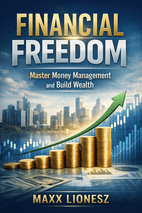
Maxx Lionesz's Financial Freedom demystifies budgeting, saving, and investing through a practical framework for young adults beginning their financial journey, equipping them to build wealth and avoid common pitfalls.
Feature
Insta.Page
Blinkist
Shortform
Summary Depth
Full Chapter-by-Chapter
15-min overview
Detailed analysis
Audio Narration
✓ (AI narration)
✓
✓
Visual Mindmaps
✓
✕
✕
AI Q&A
✓ Voice AI
✕
✕
Quizzes
✓
✕
✕
PDF Downloads
✓
✕
✓
Price
$59.99/yr
$146/yr (PRO)
$199/yr
*Competitor data last verified February 2026.
About the Author
Maxx Lionesz
Maxx Lionesz is a contemporary speculative fiction author known for the acclaimed "Chronoscape" series. His work is distinguished by its exploration of nonlinear time and complex socio-political systems, drawing from his academic background in theoretical physics.
1 Page Summary
Maxx Lionesz's Financial Freedom serves as a foundational guide for young adults navigating the complexities of personal finance. The book demystifies essential concepts like budgeting, saving, investing, and debt management, presenting them through a practical, step-by-step framework. Lionesz emphasizes the power of starting early, leveraging compound interest, and developing disciplined financial habits as the cornerstones for building long-term wealth, aiming to equip readers with the tools to avoid common pitfalls and take control of their financial futures.
The work is situated within the modern context of rising student debt, economic uncertainty, and the proliferation of digital financial tools. It responds directly to a generation seeking autonomy and stability, translating traditional financial principles into actionable strategies relevant to today's gig economy and digital banking landscape. By focusing on young adults at the beginning of their financial journeys, the book addresses a critical window for establishing a healthy money mindset before poor habits become entrenched.
The lasting impact of Financial Freedom lies in its empowering and accessible approach. It moves beyond simple advice to foster financial literacy as a core life skill, encouraging proactive planning over reactive scrambling. For its target audience, the book's legacy is the potential to shift perspectives, transforming money from a source of stress into a tool for achieving personal goals and securing genuine independence.
This chapter opens with a direct and empowering message: financial independence is not a far-off fantasy but a practical goal within your grasp. It introduces the author as the founder of LIONESZ PUBLISHING, driven by a passion for making financial wisdom accessible and actionable. The core promise is a fresh, practical guide designed specifically for young adults, aiming to transform your relationship with money from a source of stress into a tool for building the life you desire.
The Heart of the Guide: Empowerment Through Action
The book is framed as a journey, starting with fundamental concepts like budgeting and gradually advancing to more sophisticated investment strategies. This step-by-step approach ensures a solid foundation is built before moving to complex topics. To make the learning stick, the author emphasizes the use of real-world examples, strategic tips, and visual aids like graphics and tables throughout the text.
Shifting Your Financial Mindset
A central theme is the transformative power of perspective. This isn't just a manual for managing dollars and cents; it's a catalyst for changing how you think about money. The author recommends their other work, "BE R.E.A.L: The Mindset to Achieve The Winning Lifestyle You Desire," as a companion for cultivating the mental framework essential for financial success. The guide acknowledges that one-size-fits-all advice often falls short and commits to offering personalized strategies that respect your unique financial situation and aspirations.
Engagement Beyond the Page
Recognizing that readers may have faced disappointment with generic financial advice, this book incorporates interactive elements and supplementary resources. Features like QR codes provide access to online materials, making the learning process dynamic and enriched. Importantly, the path to financial freedom is presented as a collaborative effort. The author highlights the value of finding mentors and tapping into supportive communities, ensuring you have a network to guide you through the complexities of personal finance.
Your Invitation to Begin
The introduction concludes with a powerful call to action. It invites you to envision yourself applying each principle, making confident decisions, and steadily progressing toward financial empowerment. This book positions itself as more than just a reference; it's a gateway and a supportive partner in your journey to break free from uncertainty and unlock a future of prosperity and security.
Key Takeaways
Financial independence is presented as an achievable, practical goal that starts with taking action today.
The guide is specifically tailored for young adults, using a progressive learning path from basics to advanced strategies.
Transforming your mindset about money is as crucial as learning technical skills, with a recommended resource for deepening this shift.
Personalized advice, interactive content, and access to community support are key differentiators from generic financial guides.
The journey is framed as a collaborative and engaging process, empowering you to build a prosperous and secure future.
Key concepts: Introduction
1. Introduction
The Promise of Financial Independence
Financial independence is a practical, achievable goal, not a fantasy
The guide is specifically tailored for young adults
Aims to transform money from a source of stress into a tool for building your desired life
The Guide's Learning Methodology
Uses a progressive, step-by-step journey from basics to advanced strategies
Employs real-world examples, strategic tips, and visual aids to make learning stick
Builds a solid foundation before introducing complex topics
The Importance of Mindset Transformation
Changing how you think about money is as crucial as learning technical skills
The guide acts as a catalyst for a new financial perspective
Recommends companion resources for cultivating the essential mental framework for success
Personalized and Interactive Approach
Offers personalized strategies that respect your unique situation and goals
Moves beyond generic, one-size-fits-all advice
Incorporates interactive elements and supplementary resources (e.g., QR codes for online materials)
Collaborative Journey and Support
The path to financial freedom is presented as a collaborative effort
Highlights the value of finding mentors and tapping into supportive communities
Positions the book as a supportive partner, not just a reference
The Call to Action and Vision
Concludes with an invitation to envision yourself applying the principles and making confident decisions
Empowers you to break free from financial uncertainty
A gateway to building a future of prosperity and security
If you like this summary, you probably also like these summaries...
💡 Try clicking the AI chat button to ask questions about this book!
Chapter 2: 1.1 Decoding Financial Jargon: Essential Terms Every Young Adult Should Know
Overview
This section serves as a friendly decoder ring for the often intimidating language of personal finance. It translates four foundational terms from confusing jargon into practical concepts, empowering you to understand the real cost of borrowing, the magic of growth, the wisdom of spreading risk, and the importance of access to your money.
Annual Percentage Rate (APR): The Full Price Tag
APR is presented as the complete annual cost of borrowing money. It’s more than just an interest rate; it includes fees, giving you a true apples-to-apples comparison tool for loans and credit cards. For instance, a credit card with an 18% APR means you’ll pay $18 per year for every $100 you borrow. Understanding this "full price tag" helps you identify the most cost-effective credit options and avoid unexpectedly high charges.
Compound Interest: Your Money’s Best Friend
Here, compound interest is framed as a powerful ally for building wealth. The explanation breaks it down simply: it’s interest earned on both your initial deposit and on the interest that deposit has already generated. Using a clear example—$1,000 growing at 5% annually—it illustrates how money can grow exponentially over time with no extra effort on your part, highlighting why starting to save and invest early is so impactful.
Diversification: Don’t Put All Your Eggs in One Basket
This concept is demystified through the classic adage about eggs and baskets. Diversification is the strategy of spreading your investments across different types of assets (like stocks, bonds, and real estate) to mitigate risk. The core insight is that if one investment performs poorly, others in your portfolio may balance it out, protecting your overall financial health from a single market downturn.
Liquidity: Your Financial Flexibility
Liquidity is explained as a measure of how quickly and easily an asset can be turned into cash without losing value. Cash is the most liquid asset, while something like a house is much less liquid. The practical takeaway is the importance of considering liquidity in your financial planning; knowing which assets you can quickly access is crucial for handling emergencies or taking advantage of sudden opportunities.
Key Takeaways
APR is your true cost of borrowing. Always use it to compare loans and credit cards, not just the interest rate.
Compound interest is a powerful wealth-building force. The earlier you start saving and investing, the more you benefit from this "interest on interest" effect.
Diversification is fundamental risk management. Spreading investments across different assets helps protect your portfolio from volatility.
Liquidity matters for financial security. Maintain a mix of liquid and long-term assets to ensure you can access cash when needed.
Key concepts: 1.1 Decoding Financial Jargon: Essential Terms Every Young Adult Should Know
2. 1.1 Decoding Financial Jargon: Essential Terms Every Young Adult Should Know
Annual Percentage Rate (APR)
Represents the complete annual cost of borrowing money, including fees
Provides a true apples-to-apples comparison tool for loans and credit cards
Example: 18% APR means paying $18 per year for every $100 borrowed
Helps identify cost-effective credit options and avoid unexpected charges
Compound Interest
Interest earned on both initial deposit and previously earned interest
Creates exponential growth over time with no extra effort required
Example: $1,000 growing at 5% annually demonstrates the power of compounding
Highlights why starting to save and invest early is so impactful
Diversification
Strategy of spreading investments across different asset types (stocks, bonds, real estate)
Mitigates risk by balancing poor performance in one area with gains in others
Protects overall financial health from single market downturns
Embodies the 'don't put all your eggs in one basket' principle
Liquidity
Measure of how quickly an asset can be converted to cash without losing value
Cash is most liquid; real estate is much less liquid
Important for handling emergencies and seizing sudden opportunities
Requires maintaining a mix of liquid and long-term assets for financial security
Core Financial Principles
APR reveals true borrowing costs for better credit decisions
Compound interest enables powerful wealth building through time
Diversification manages risk through strategic asset allocation
Liquidity planning ensures access to cash when needed
⚡ You're 2 chapters in and clearly committed to learning
Why stop now? Finish this book today and explore our entire library. Try it free for 7 days.
Chapter 3: 1.2 Crafting Your First Budget: A Step-by-Step Guide for Beginners
Overview
This chapter marks the exciting beginning of your hands-on financial journey, transforming the abstract concept of budgeting into a practical, actionable plan. It positions creating your first budget as a foundational act of empowerment, similar to charting a map for a voyage toward financial independence. The guide walks you through a clear, sequential process—from understanding your cash flow to selecting a budgeting style that fits your life—ensuring you build a system that is both insightful and sustainable.
The Foundational Steps
The process begins with a clear-eyed assessment of your finances. First, you calculate your total monthly income from all sources, such as your salary, side gigs, or any other inflows. This establishes your financial playing field. Next, you categorize every expense, separating fixed costs (like rent or car payments) from variable ones (like dining out or hobbies). This categorization is powerful; it immediately reveals the flexible areas of your spending. The final, non-negotiable step in this foundation is to assign a portion of your income to savings before anything else, building a buffer for emergencies and future goals.
Exploring Budgeting Philosophies
With the basics in place, the chapter introduces several popular budgeting methods, each with its own philosophy. The envelope system is a tactile, cash-based approach that helps prevent overspending by physically limiting funds for each category. For a more digital or high-level thinker, the 50/30/20 rule offers a simple framework: allocating 50% of income to needs, 30% to wants, and 20% to savings and debt. It’s a balanced strategy for those who don’t want to track every penny. In contrast, zero-based budgeting is a meticulous approach where every dollar earned is assigned a job, ensuring complete awareness and control. It’s highly effective but requires more dedication.
Tailoring the Tool to Your Life
The guide emphasizes that the best budget is the one you’ll actually use. It illustrates this with relatable scenarios: a recent graduate might thrive with the simplicity of the 50/30/20 rule to manage student loans and social life, while a couple saving for a house might benefit from the detailed scrutiny of zero-based budgeting to find extra savings. To support these methods, modern digital tools and apps like Mint (for automated tracking and insights) or You Need a Budget (YNAB, for zero-based budgeting enthusiasts) can automate much of the work, providing real-time data and helping to turn budgeting from a chore into a consistent habit.
Key Takeaways
Budgeting starts with three core actions: calculating your total income, categorizing expenses (fixed vs. variable), and prioritizing savings.
No single budgeting method fits all; choose between tactile (envelope system), balanced (50/30/20 rule), or meticulous (zero-based budgeting) based on your personality and goals.
Your budget should be a living tool tailored to your current life stage, whether you’re just starting out or saving for a major purchase.
Leveraging digital apps can simplify tracking, provide valuable insights, and help embed positive financial habits for the long term.
Key concepts: 1.2 Crafting Your First Budget: A Step-by-Step Guide for Beginners
3. 1.2 Crafting Your First Budget: A Step-by-Step Guide for Beginners
The Budgeting Foundation: Understanding Your Finances
Calculate total monthly income from all sources (salary, side gigs, etc.)
Categorize every expense into fixed costs (rent, car payments) and variable costs (dining, hobbies)
Prioritize savings by assigning a portion of income to it first, before other spending
Choosing a Budgeting Philosophy
Envelope System: A tactile, cash-based method that physically limits spending per category
50/30/20 Rule: A balanced framework allocating 50% to needs, 30% to wants, and 20% to savings/debt
Zero-Based Budgeting: A meticulous approach where every dollar earned is assigned a specific purpose
Personalizing Your Budget
Select a budgeting method based on your personality, goals, and life stage
Tailor the approach to your situation (e.g., recent graduate vs. couple saving for a house)
Use digital tools and apps (like Mint or YNAB) to automate tracking and gain insights
Focus on creating a sustainable system you will consistently use
Chapter 4: 1.3 The Power of an Emergency Fund: Strategies to Build and Maintain It
Overview
Financial stability often hinges on preparing for the unexpected. This chapter explores the critical role of an emergency fund as a safeguard against life's unforeseen expenses, such as job loss or car repairs. It emphasizes that such a fund prevents reliance on debt and outlines practical steps to determine how much to save, effective strategies to build it, and smart ways to manage it for long-term security.
The Essential Buffer: Why It Matters
An emergency fund serves as a financial shock absorber, allowing you to handle surprises without derailing your budget or falling into high-interest debt. It transforms uncertain "what-ifs" into manageable situations, providing peace of mind and preserving your financial health during crises.
Determining Your Financial Safety Net
Conventional advice suggests saving three to six months' worth of living expenses. To tailor this, start by calculating your monthly essentials—rent, utilities, groceries, and other recurring costs. Then, multiply that number based on your personal circumstances. For example, freelancers or those with irregular income might aim for six months, while individuals with stable jobs and insurance could opt for three.
Building Your Fund: Steady and Strategic Approaches
Starting from scratch can feel overwhelming, but several methods make growth achievable. Automating savings is a powerful tactic; set up regular transfers from checking to a dedicated emergency account timed with your paychecks. Even small, consistent contributions accumulate over time. Additionally, review your spending to identify and cut non-essentials, like unused subscriptions or frequent dining out. Boosting your income through side hustles, freelance work, or selling unused items can also accelerate progress.
Keeping It Safe and Accessible
Management is crucial: your emergency fund should be easily accessible in a crisis but separate from everyday accounts to avoid temptation. High-yield savings accounts are ideal, offering higher interest rates while keeping your money liquid. This balance ensures the fund is ready when needed without compromising growth.
Key Takeaways
An emergency fund is a non-negotiable buffer against financial surprises, preventing debt accumulation.
Aim to save three to six months of living expenses, adjusting based on job stability and personal risk factors.
Build savings through automation, expense reduction, and supplemental income streams.
Store your fund in a high-yield savings account for both accessibility and growth.
Key concepts: 1.3 The Power of an Emergency Fund: Strategies to Build and Maintain It
4. 1.3 The Power of an Emergency Fund: Strategies to Build and Maintain It
The Essential Buffer: Why It Matters
Acts as a financial shock absorber for unexpected expenses
Prevents reliance on high-interest debt during crises
Transforms uncertain situations into manageable ones
Provides peace of mind and preserves financial health
Determining Your Financial Safety Net
Conventional advice: save 3-6 months of living expenses