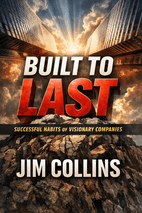
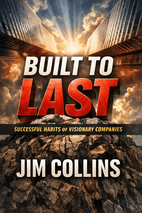
Jim Collins's Built to Last examines the habits of visionary companies that endure for generations, contrasting them with direct competitors to reveal core principles like preserving ideology while driving progress. It's essential reading for leaders and entrepreneurs focused on building institutions, not just achieving short-term success.
Feature
Insta.Page
Blinkist
Shortform
Summary Depth
Full Chapter-by-Chapter
15-min overview
Detailed analysis
Audio Narration
✓ (AI narration)
✓
✓
Visual Mindmaps
✓
✕
✕
AI Q&A
✓ Voice AI
✕
✕
Quizzes
✓
✕
✕
PDF Downloads
✓
✕
✓
Price
$59.99/yr
$146/yr (PRO)
$199/yr
*Competitor data last verified February 2026.
About the Author
Jim Collins
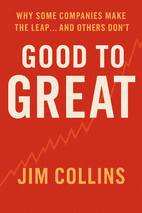
Jim Collins is a renowned author and management expert, celebrated for his influential research on company greatness and enduring success. His seminal work, *Good to Great*, has become a cornerstone of business literature, exploring how companies achieve and sustain exceptional performance. Collins is also the acclaimed author of *Built to Last*, *Great by Choice*, and *How the Mighty Fall*, which collectively have sold millions of copies worldwide. His rigorous, research-driven approach has established him as a leading voice on leadership, corporate culture, and strategic discipline. Jim Collins's books are widely available for purchase on Amazon, offering invaluable insights for leaders and organizations striving for excellence.
1 Page Summary
Built to Last: Successful Habits of Visionary Companies is a foundational work of business literature that examines what separates truly exceptional and enduring companies from their competitors. Jim Collins and Jerry I. Porras conducted a six-year research project, comparing "visionary" companies (like Disney, 3M, and Boeing) to direct comparison companies in the same industries. Their core finding is that visionary companies are not defined by a single great idea or a charismatic leader but by their ability to preserve a fixed core ideology while simultaneously stimulating relentless progress and change. This concept is encapsulated in the "clock building" versus "time telling" metaphor: visionary companies focus on building an organization (the clock) that can prosper beyond any single leader or product, rather than just executing on a great idea (telling the time).
The book introduces several key concepts that have become business staples. These include the "Big Hairy Audacious Goal" (BHAG) as a powerful mechanism to drive progress, the "Genius of the AND"—the ability to embrace seemingly contradictory goals like purpose AND profit, stability AND change—and the importance of cult-like cultures that preserve the core ideology. The research methodology, using direct historical comparison, provided a rigorous, evidence-based framework that moved beyond anecdotal management advice. Published in 1994, the book emerged during a period of intense focus on corporate longevity and excellence, offering a counterpoint to the then-popular focus on charismatic, turnaround CEOs by emphasizing systemic and cultural factors.
The lasting impact of Built to Last is profound. It established a new standard for data-driven business research and popularized a language for discussing organizational vision and values. Its principles have influenced leaders worldwide, shifting focus from short-term success to building institutions meant to last for centuries. While later works, including Collins's own Good to Great, would explore how companies can make the leap to excellence, Built to Last remains the seminal text on what it takes to sustain that excellence and create a truly visionary enterprise.
This opening chapter shifts the focus from charismatic leaders and brilliant ideas to the power of the organization itself. It explores what makes a visionary company—a premier institution that endures for decades, outperforming the market and etching itself into the fabric of society, all while weathering significant setbacks. The inquiry is grounded in a massive, multi-year research project sparked by a simple question: who was the visionary leader behind a century-old giant like 3M? The inability to answer pointed to a deeper, institutional source of greatness.
To uncover that source, the researchers identified 18 elite companies founded before 1950 and, critically, paired each with a strong comparison company from the same industry. This methodology was designed to move beyond the obvious and isolate what truly set the visionary organizations apart. The team then immersed itself in the complete historical record of these companies, analyzing tens of thousands of pages to understand their evolutionary journeys from startup to maturity, seeking timeless fundamentals rather than era-specific tactics.
The core of the chapter presents the provocative findings that emerged from this deep dive: a series of twelve shattered myths about business success. It challenges the notion that a great idea or a charismatic founder is essential, arguing instead for the clock builder over the time teller. It reveals that profit maximization is not the primary goal; visionary companies are driven by a core ideology of values and purpose, yet they make more money over the long term. They embrace paradox through the Genius of the AND, preserving their core while relentlessly stimulating progress, and they are not afraid to set Big Hairy Audacious Goals (BHAGs). Furthermore, their success stems more from evolutionary experimentation than complex strategic planning, they almost always grow their own leaders, and they create demanding, cult-like cultures where only those who fit the core ideology thrive.
These insights were not developed in an ivory tower. The frameworks were stress-tested and refined through real-world application with executives across industries, creating a vital link between historical research and practical leadership. The chapter concludes by acknowledging the limitations of social science while asserting that the weight of historical evidence, combined with rigorous comparison and real-world validation, provides a compelling guide for anyone committed to building an institution that lasts.
Defining the Visionary Company
The chapter opens not with a celebration of individual genius, but with a profound appreciation for the institution. It contrasts the fleeting nature of great leaders, products, and markets with the enduring power of a visionary company—an organization that prospers over long periods, through multiple life cycles and generations of leadership. These are the premier, widely admired "crown jewels" of their industries, organizations that have made an indelible imprint on the world. The text prompts you to mentally list such companies, likely bringing to mind names that have weathered decades or even centuries of change.
Crucially, these companies are not mythical perfect entities. The narrative grounds them in reality by detailing their significant stumbles: Disney's cash crises, Boeing's massive layoffs, 3M's origins as a failed mine, Ford's historic losses, and IBM's repeated brushes with bankruptcy. Their visionary status doesn't come from an unblemished record, but from a remarkable resiliency—an ability to bounce back from adversity that fuels extraordinary long-term performance.
Financial and Cultural Impact
The evidence of this performance is striking. The research presents a compelling investment scenario: from 1926 to 1990, $1 invested in the visionary companies would have grown to $6,356, dwarfing the returns from both a comparison companies fund ($955) and the general market ($415). Beyond the numbers, their impact is woven into the fabric of daily life. The chapter asks the reader to imagine a world without Post-it notes, the Boeing 747, Band-Aids, Disneyland, or the Marlboro cowboy—a testament to how these institutions have shaped modern society.
The core inquiry then becomes: Why? What allows these specific companies to separate themselves into this elite category? The introduction to the research findings is framed as a dismantling of common business myths.
Twelve Shattered Myths
The research challenged conventional wisdom with a series of counterintuitive discoveries:
Myth: It takes a great idea to start a great company.
Reality: Many visionary companies started without a great idea or with early failures. They often win like the tortoise—slow and steady over the long race.
Myth: Visionary companies require great, charismatic leaders.
Reality: Charismatic leaders are not required and can be detrimental. The key is being a "clock builder" who architects an enduring institution, not a "time teller" who is the star.
Myth: The most successful companies exist to maximize profits.
Reality: Profit is not the primary driving force. They are guided by a core ideology (values and purpose) beyond money, yet, paradoxically, they make more money.
Myth: Visionary companies share a common set of "correct" core values.
Reality: There is no "right" set. Values can be radically different. What matters is the authenticity and consistency with which they are lived.
Myth: The only constant is change.
Reality: They almost religiously preserve their core ideology for decades or centuries, while displaying a powerful drive for progress and adaptation in everything else.
Myth: Blue-chip companies play it safe.
Reality: They are not afraid to make bold commitments to "Big Hairy Audacious Goals" (BHAGs) to create momentum.
Myth: Visionary companies are great places to work, for everyone.
Reality: They are only great for those who fit their core ideology perfectly. It's a binary, "cult-like" environment where misfits are expunged.
Myth: Success comes from brilliant, complex strategic planning.
Reality: Best moves often come from experimentation, trial and error, opportunism, and accident—mimicking biological evolution.
Myth: Companies should hire outside CEOs to stimulate change.
Reality Home-grown management rules. In 1,700 combined years, visionary companies went outside for a CEO only four times (in just two companies).
Myth: The most successful companies focus on beating the competition.
Reality: They focus primarily on beating themselves, relentlessly asking how they can improve tomorrow.
Myth: You can't have your cake and eat it too (The Tyranny of the OR).
Reality: They embrace the "Genius of the AND," pursuing seemingly contradictory goals like stability AND progress, or values AND profits.
Myth: Companies become visionary through "vision statements."
Reality: Attaining stature is a never-ending process of embodying fundamental characteristics, not a one-time pronouncement.
The Research Project: Origins and Methodology
The project began with a simple, provocative question: Who is the visionary leader at 3M? The inability to name one for such a revered, century-old company highlighted that something deeper than a single charismatic individual was at work. This sparked the mission to identify the underlying characteristics of visionary companies themselves.
Step 1: Selecting the Companies
To avoid bias, the researchers did not create the list themselves. They surveyed 700 CEOs from a representative mix of large, small, public, and private companies, asking them to nominate "highly visionary" organizations. From the nominations, they created a list of the most frequently mentioned companies, then applied a strict filter: each company had to be founded before 1950. This ensured they were studying institutions that had outlasted any single leader or product cycle. The final study group of 18 companies had an average age of 92 years.
Step 2: The Critical Need for a Comparison Group
A vital part of the methodology was avoiding the "discover buildings" trap—the folly of attributing success to trivial common traits (like all having offices or desks). To isolate what truly mattered, each visionary company was paired with a comparison company in the same industry that was good and long-lasting, but not considered in the same elite, visionary tier (e.g., Ford vs. GM, Hewlett-Packard vs. Texas Instruments). This control group allowed the researchers to distinguish the universal traits of all large companies from the unique factors that enabled visionary performance.
The Critical Role of Comparison Companies
To avoid the "discover buildings" trap—where common traits reveal nothing unique—the research hinged on a controlled comparison. Each visionary company was paired with a "silver or bronze medal" counterpart selected through rigorous criteria: founded in the same era, with similar initial products and markets, yet less acclaimed in CEO surveys and not a top-tier performer. This approach ensured that differences uncovered would be meaningful, distinguishing truly exceptional organizations from merely good ones.
Unlocking Insights Through Historical Analysis
The team committed to examining each company's entire lifespan, not just its current state. This evolutionary perspective was crucial for understanding foundational dynamics, much like how a nation's history shapes its present. For instance, Merck's patient-first philosophy from the 1920s or 3M's resilient origins as a failed mine provided context for their enduring success. By tracing journeys from startup to maturity, the research aimed to answer compelling questions, such as why Motorola diversified triumphantly while Zenith stagnated, or how Procter & Gamble outlasted and outperformed rival Colgate over centuries.
Seeking Timeless Fundamentals
Amidst changing times, the focus remained on identifying underlying principles that transcend specific eras. For example, the core idea of "preserve the core and stimulate progress" emerged as a perpetual driver of vitality, applicable from 1850 to 2050. This lens allowed the study to extract actionable insights relevant for future generations of builders.
A Mountain of Evidence and "Tortoise Hunting"
Emulating Darwin's exploratory spirit, the team systematically gathered "crates of data" across nine organizational categories—from strategy and culture to financials and external events. They reviewed over 60,000 pages of documents, creating a vast archive that filled cabinets and bookshelves. This comprehensive sweep was designed to stumble upon unexpected "tortoises"—surprising patterns that challenge conventional wisdom—while ensuring no stone was left unturned.
Distilling Patterns into Practical Frameworks
Sifting through this wealth of information, the researchers combined analytic rigor with creative cross-disciplinary thinking, drawing from biology, psychology, and history. They continuously asked, "What separates the visionary from the comparison companies over time?" This process yielded conceptual frameworks that organized the evidence into digestible, powerful tools for leadership.
Testing Ideas in the Crucible of Reality
Concepts weren't just theoretical; they were stress-tested through consulting engagements and board roles across diverse industries, from biotechnology to retail. Feedback from hard-nosed executives refined the ideas, creating a vital loop from research to practice and back again. For instance, questions about core values from a pharmaceutical firm led to deeper investigation and clearer findings.
Confidence Amidst Limitations
While acknowledging that social science research can't offer laboratory-perfect controls, the sheer volume of historical data paired with real-world application lends credibility to the conclusions. The invitation is extended to readers: judge the evidence for yourself, think critically, and let the insights speak to your own journey of building something lasting.
Key Takeaways
Meaningful research requires comparison against strong peers, not just outliers, to identify truly distinctive traits.
Understanding a company's entire history is essential to grasping its core genetics and enduring success.
Timeless principles, not just fleeting tactics, form the bedrock of visionary organizations.
Comprehensive, multi-disciplinary data collection combined with real-world testing produces robust, applicable frameworks.
Key concepts: Chapter 1: The Best of the Best
1. Chapter 1: The Best of the Best
The Visionary Company Concept
Focus on organizational power over charismatic leaders or brilliant ideas
Premier institutions that endure for decades, outperform markets, and shape society
Characterized by remarkable resiliency through significant setbacks and failures
Defined by both extraordinary long-term financial returns and profound cultural impact
Research Methodology
Multi-year study of 18 elite companies founded before 1950
Used comparison companies from same industries to isolate differentiating factors
Analyzed complete historical records across tens of thousands of pages
Sought timeless fundamentals rather than era-specific tactics
Frameworks stress-tested through real-world application with executives
Shattered Myths About Business Success
Great idea not required: Many started without clear ideas or with early failures
Charismatic leaders not essential: Clock builders (institution architects) matter more than time tellers (star leaders)
Profit maximization not primary goal: Driven by core ideology beyond money, yet make more money long-term
No 'correct' core values: Values vary radically; authenticity and consistency matter most
Preserve core ideology while driving progress: Embrace paradox of stability and change simultaneously
Key Frameworks and Concepts
Clock builder vs. time teller: Building enduring institutions over relying on individual stars
Core ideology: Values and purpose beyond profit that guide the organization
Genius of the AND: Embracing paradoxes like preserving core while stimulating progress
Big Hairy Audacious Goals (BHAGs): Audacious targets that stimulate progress
Evolutionary experimentation over complex strategic planning
Debunking Myths of Corporate Greatness
Visionary companies embrace bold BHAGs rather than playing it safe
They are cult-like environments that fit only those aligned with core ideology
Success stems from evolutionary experimentation, not complex strategic planning
They focus on beating themselves through relentless self-improvement
They pursue the 'Genius of the AND' to achieve seemingly contradictory goals
Research Origins: The 3M Question
The project began with questioning who the visionary leader at 3M was
The inability to name one revealed that greatness transcends individual leaders
This sparked the mission to identify characteristics of visionary companies themselves
Methodology: Selecting Visionary Companies
Used CEO surveys to identify most-nominated visionary organizations
Applied strict filter: companies must be founded before 1950
Final study group of 18 companies averaged 92 years in age
Ensured study of institutions that outlasted leaders and product cycles
The Critical Comparison Group Approach
Each visionary company paired with industry counterpart in same era
Comparison companies were 'good but not great' performers
This controlled method avoided the 'discover buildings' trap
Allowed isolation of unique visionary traits from universal company traits
Historical and Evolutionary Analysis
Examined each company's entire lifespan, not just current state
💡 Try clicking the AI chat button to ask questions about this book!
Chapter 2: Chapter 2: Clock Building, Not Time Telling
Overview
Forget everything you think you know about how legendary companies are born. This chapter turns the conventional wisdom on its head by introducing a simple but profound metaphor: the difference between being a time teller and a clock builder. A time teller is a visionary with a brilliant idea at the perfect moment; a clock builder is an architect focused on creating an organization that can tell time for generations, long after any single person or product is gone. The builders of the world’s most enduring and visionary companies weren't necessarily prophets with a perfect market insight; they were master architects of resilient, adaptive institutions.
Contrary to the popular “great idea” myth, many of these companies started with no clear blueprint at all. Hewlett-Packard began by trying anything to make a nickel, Sony brainstormed ideas as mundane as sweet bean-paste soup after incorporating, and Sam Walton ran a single franchise store for nearly two decades. Their early days were often marked by stumbling and failure—3M began as a failed mine, and Disney’s first cartoons were panned. Intriguingly, their less successful competitors frequently launched with stronger, more innovative products, suggesting a surprising negative correlation between early entrepreneurial success and long-term visionary status. The tortoises, building for the long haul without a brilliant starting idea, ultimately outraced the hares.
This evidence forces a radical shift in perspective: the company itself, not its products, is the ultimate creation. True builders persist with the institution, willing to kill bad ideas but never giving up on building the organization. Leaders like Bill Hewlett and Dave Packard spoke of creating a stable, creative environment for engineers as their key product. While products and leaders become obsolete, a well-built company does not. The legacy of figures like Walt Disney isn’t just Mickey Mouse, but the innovative organization capable of regenerating success.
The chapter also decisively debunks the myth of the charismatic leader as a primary differentiator. Analysis shows that less successful comparison companies had leaders just as strong, persistent, and goal-oriented as those at visionary firms. High-profile charisma is not a prerequisite; in fact, many pivotal architects were notably un-charismatic. William McKnight of 3M was modest and humble, Masaru Ibuka of Sony was introspective, and Bill Allen of Boeing was a shy lawyer. Visionary companies are built not by personality cults, but by quiet architects.
So what was the crucial difference? It was an architectural approach—a fundamental orientation toward building the organization itself. This is illustrated through stark contrasts: Citicorp’s James Stillman built decentralized systems and a powerful board, while Chase’s Albert Wiggin was the controlling center of everything. Sam Walton built the empowering Wal-Mart system with concrete mechanisms, while Ames’ leaders dictated from above with no succession plan. Paul Galvin of Motorola was “a builder whose blueprints were people,” while Zenith’s Commander McDonald was its volatile, singular mastermind with no plan beyond himself.
This leads to the most critical step for any leader: a profound shift in perspective. It’s akin to the intellectual leaps of Newton or Darwin—moving from a leadership-centric view (the company as a vehicle for a leader's ideas) to a systems-centric view (the leader's primary output being the organization and its underlying capabilities). The goal is to create a company that can prosper far beyond any single lifetime, much like the framers of the U.S. Constitution built a country, not just installed a good king. This perspective is empowering because it means building a visionary company is a learnable process, not a mystery dependent on rare luck or personality.
This systems-thinking liberates companies from the "Tyranny of the OR," the false belief that you must choose between two good alternatives, like stability or change, purpose or profit. Instead, visionary companies embrace the "Genius of the AND." They actively, relentlessly pursue achieving both extremes simultaneously—a fixed core ideology and vigorous change, big audacious goals and incremental progress, investment for the long-term and demanding short-term results. This ability to hold and act on opposing ideas is a hallmark of a truly visionary organization’s intelligence.
The chapter opens with a powerful metaphor that frames the entire discussion. It contrasts the "time teller"—a charismatic individual with a brilliant, timely idea—with the "clock builder"—someone who focuses on constructing an enduring institution that can tell time long after they are gone. The central argument is that the builders of visionary companies concentrate not on being prophetic leaders with perfect market timing, but on architecting resilient, adaptive organizations.
Debunking the "Great Idea" Myth
The research directly challenges the popular narrative that visionary companies are born from a single, revolutionary product or market insight. In fact, the evidence suggests the opposite: a reliance on a "great idea" might be a hindrance to building an enduring institution.
Founding Without a Blueprint: Many legendary companies began with no clear product vision. Hewlett-Packard started by trying anything to make a nickel, from bowling foul-line indicators to weight-loss shock machines. Sony's founders brainstormed product ideas after incorporating, considering everything from sweet bean-paste soup to miniature golf before settling on a failed rice cooker. Sam Walton began with a single Ben Franklin franchise, building incrementally for nearly two decades before the Wal-Mart concept emerged.
Struggling Origins vs. Comparison Success: The early days of these companies were often marked by stumbling, tinkering, and outright failure. 3M began as a failed mine, Boeing's first plane flopped and forced the company into the furniture business, and Disney's first cartoon series was critically panned. In stark contrast, their comparison companies (like Texas Instruments, Ames Department Stores, and Douglas Aircraft) frequently launched with strong, innovative products and enjoyed greater initial entrepreneurial success.
The Tortoise, Not the Hare: The data reveals a surprising negative correlation between early entrepreneurial success and becoming a highly visionary company. The "tortoises" that built for the long haul—often without a brilliant starting idea—ultimately outperformed the "hares" that sprang from a specific, timely concept.
The Company as the Ultimate Creation
This evidence forces a fundamental shift in perspective: from seeing the company as a mere vehicle for launching products to seeing products as vehicles for building the company. The ultimate creation is not a product, but the organization itself—its culture, values, and adaptive capabilities.
Persistence Applied to the Institution: True builders persist with the company, not a specific idea. They are willing to kill or evolve failing ideas (as GE did by abandoning Edison's DC system for AC), but they never give up on building the institution. This prevents an emotional attachment to any single product cycle.
Leaders as Organizational Architects: The primary focus of these builders shifted from product design to organization design. Bill Hewlett and Dave Packard spoke not of specific devices, but of creating a stable, creative environment for engineers—treating "engineering" itself as a key product. David Packard, when asked about HP's most important growth decisions, listed organizational policies like profit-sharing and the "HP Way," not any single invention.
Transcending Obsolescence: While all products and leaders eventually become obsolete, a well-built company does not. The greatest legacy of figures like Walt Disney, Masaru Ibuka, and Paul Galvin is not a cartoon or a radio, but the innovative, value-driven organizations they built, capable of regenerating success across generations.
The Myth of the Charismatic Leader
The research decisively rejects the "great-leader theory" as the primary factor distinguishing visionary companies from their comparison counterparts. A systematic analysis showed that the less successful comparison companies were just as likely to have strong, persistent, and goal-oriented leaders during their formative years. Leaders like George Westinghouse and Harry Cohn exhibited the same classic leadership traits as their counterparts at 3M or Sony. Therefore, the presence of a traditionally defined "great leader" cannot explain the long-term superior performance of visionary companies.
Charisma Not Required
A fascinating corollary emerges: a high-profile, charismatic leadership style is not a prerequisite for building a visionary company. In fact, many of the most pivotal architects of these enduring institutions were notably un-charismatic.
William McKnight of 3M was described as "soft-spoken," "gentle," "humble," and "modest." He guided 3M for 52 years, building a famous company while remaining personally obscure.
Other founders and key shapers broke the charismatic mold: Masaru Ibuka of Sony was reserved and introspective; Bill Hewlett was down-to-earth; Procter and Gamble were prim and proper; Bill Allen of Boeing was a pragmatic, shy lawyer; and George Merck was the picture of restraint.
The point is not that these individuals were poor leaders, but that a specific, flamboyant personality style is unnecessary. The data suggests that both sets of companies had leaders strong enough that leadership quality alone cannot explain their differing trajectories. Visionary companies are not built by personality cults, but often by quiet architects.
An Architectural Approach: Clock Builders at Work
The crucial difference between the early shapers of visionary and comparison companies lies in their orientation. Those at the helm of visionary companies possessed a stronger organizational orientation—they were clock builders, not just time tellers. This architectural approach is illustrated through stark contrasts:
Citicorp vs. Chase
Citicorp's James Stillman focused on building an institution. He decentralized structure, created a powerful board, instituted early management training, and consciously stepped aside to let others build the organization, writing of "limitless possibilities" for the bank's future beyond him.
Chase's Albert Wiggin was the archetypal centralized, controlling leader. A contemporary magazine noted, "The Chase Bank is Wiggin and Wiggin is the Chase Bank." The institution was an extension of his personal ambition.
Wal-Mart vs. Ames
Sam Walton, though personally charismatic, dedicated his life to building the Wal-Mart system. He implemented concrete mechanisms—like "A Store Within a Store," profit sharing, suggestion programs, and satellite communications—to disseminate ideas and empower employees. He groomed a successor and set audacious goals for the company beyond his lifetime.
Ames' leaders dictated changes from above, left no room for initiative, had no succession plan, and later pursued reckless growth that destroyed the founder's creation.
Motorola vs. Zenith
Motorola's Paul Galvin was "a builder whose blueprints were people." He hired excellent engineers, encouraged dissent, gave people latitude, and was obsessed with management succession for the company's sake.
Zenith's Commander Eugene F. McDonald was the volatile, opinionated mastermind. The company was a projection of his gigantic personality. He had no succession plan, and after his death, a competitor noted, "As time goes on, Zenith will miss McDonald more and more."
Walt Disney vs. Columbia Pictures
Walt Disney, while a brilliant creative "time teller," was also a clock builder. He invested in his staff through art classes, technology, bonus systems, and training programs like Disney University. He built an institution with a clear identity and mission that survived him.
Columbia's Harry Cohn cultivated the image of a tyrant, cared primarily about personal power in Hollywood, and took no steps to build an enduring corporate identity. Upon his death, the company fell into disarray and was eventually sold.
The Message for CEOs, Managers, and Entrepreneurs
The most critical step in building a visionary company is a fundamental shift in perspective. This is analogous to the intellectual revolutions of the past:
The Newtonian revolution shifted thinking from a God who micromanages every event to understanding the underlying principles and systems that govern the universe.
The Darwinian revolution shifted thinking from species being individually created for specific roles to understanding the overarching processes of evolution and adaptation.
Similarly, building a visionary company requires moving from seeing the company as a vehicle for a leader's personal products or legacy ("time telling") to seeing the leader's primary output as the organization itself and its underlying systems, values, and capabilities ("clock building"). The goal is to create a company that can prosper and adapt far beyond any single leader's lifetime or individual ideas.
The text reinforces the profound shift from leadership-centric to systems-centric thinking by drawing a powerful parallel to the founding of the United States. The framers of the Constitution were not preoccupied with finding a "good king" but with building a country—designing resilient processes, guiding principles, and enduring mechanisms that would produce effective leadership and prosperity long after they were gone. This, the authors argue, is the essence of true organizational vision: being an architect, a builder of a "clock" based on human ideals, values, needs, and aspirations—a clock with a Spirit.
This leads to the crucial, empowering conclusion: because becoming a visionary company is about building such a system, it is fundamentally a learnable process. It does not require waiting for a lightning bolt of a "great idea" or the arrival of a charismatic savior. The essentials can be understood and then acted upon through consistent, hard work.
Liberation from the Tyranny of the OR
This introduces a defining mentality of visionary companies: the rejection of limiting, either/or choices. The authors label this constrained thinking the "Tyranny of the OR," which forces false dichotomies like stability or change, low cost or high quality, idealism or profitability.
In contrast, visionary companies operate with the "Genius of the AND." They refuse to choose between two seemingly opposing forces and instead find ways to embrace both extremes simultaneously. This is not a quest for mere balance—a middling, compromise position. It is the active, relentless pursuit of achieving both A and B to the highest degree.
The yin/yang symbol is used to illustrate this concept not as a blended gray circle, but as two distinct, powerful forces coexisting in the same space. The following paradoxes are presented as examples of what these companies embody:
A purpose beyond profit AND a pragmatic pursuit of profit.
A fixed core ideology AND vigorous change and movement.
Big Hairy Audacious Goals AND incremental evolutionary progress.
Investment for the long-term AND demanding short-term performance.
This ability to function at a high level while holding opposing ideas in tension is presented as a hallmark of a visionary organization's "first-rate intelligence."
Key Takeaways
The ultimate expression of "clock building" is architectural and constitutional, focused on creating self-perpetuating systems rooted in human spirit and values, not on installing a single "great leader."
This systems-based perspective is empowering: building a visionary company is a learnable, actionable process, not a mystery dependent on rare luck or personality.
Visionary companies liberate themselves from the "Tyranny of the OR," the limiting belief that only one of two good alternatives can be chosen.
Instead, they embrace the "Genius of the AND," actively pursuing the simultaneous achievement of both extremes (e.g., purpose and profit, stability and change) without settling for mere compromise.
Key concepts: Chapter 2: Clock Building, Not Time Telling
2. Chapter 2: Clock Building, Not Time Telling
The Core Metaphor: Clock Building vs. Time Telling
Time Teller: A visionary leader with a brilliant, timely idea or product.
Clock Builder: An architect focused on creating an enduring, self-sustaining organization.
The ultimate creation is the company itself, not its products or charismatic leaders.
Visionary companies prosper by building resilient institutions that outlast any single individual.
Debunking the 'Great Idea' Myth
Many visionary companies started with no clear blueprint or revolutionary product.
Early days were often marked by stumbling, failure, and mundane beginnings.
A negative correlation exists between early entrepreneurial success and long-term visionary status.
Less successful competitors frequently launched with stronger, more innovative initial products.
Rejecting the Charismatic Leader as Primary Differentiator
Comparison companies had leaders just as strong and persistent as visionary firms.
High-profile charisma is not a prerequisite; many pivotal architects were un-charismatic.
Visionary companies are built by quiet architects, not personality cults.
Leadership is about building systems and capabilities, not being the singular mastermind.
The Architectural Approach to Building
Focus on constructing decentralized systems, empowering structures, and concrete mechanisms.
Contrast with controlling, leader-centric models that lack succession plans.
The leader's primary output is the organization and its underlying capabilities.
Illustrated through stark contrasts between visionary companies and their less successful peers.
The Critical Shift in Perspective
Move from a leadership-centric view to a systems-centric view of the company.
The goal is to create a company that can prosper far beyond any single lifetime.
Building a visionary company is a learnable process, not dependent on rare luck or personality.
Empowering shift akin to major intellectual leaps in science and governance.
Embracing the Genius of the AND
Reject the 'Tyranny of the OR' (choosing between two good alternatives).
Actively pursue achieving both extremes simultaneously (e.g., purpose AND profit).
Hold a fixed core ideology AND vigorously drive change and adaptation.
This ability to manage paradox is a hallmark of a visionary organization's intelligence.
The Counterintuitive Origins of Visionary Companies
Many legendary companies began without a clear product vision, engaging in trial and error (e.g., HP, Sony, Wal-Mart).
Early days were often marked by stumbling, tinkering, and failure, in contrast to comparison companies that enjoyed greater initial success.
A negative correlation exists between early entrepreneurial success and becoming a highly visionary company; 'tortoises' outperformed 'hares'.
The Company as the Ultimate Creation
The fundamental perspective shifts from company as product vehicle to products as company-building vehicles.
True builders persist with the institution, not a specific idea, allowing them to evolve or kill failing products without giving up on the organization.
Leaders act as organizational architects, focusing on designing systems, culture, and values rather than specific products.
A well-built company transcends the obsolescence of any single product or leader, capable of regenerating success across generations.
Debunking the Myth of the Charismatic Leader
The 'great-leader theory' is rejected as the primary differentiator; comparison companies had similarly strong, persistent leaders.
A high-profile, charismatic leadership style is not a prerequisite for building a visionary company.
Many pivotal architects of visionary companies were notably un-charismatic (e.g., William McKnight, Masaru Ibuka, Bill Allen).
Visionary companies are built not by personality cults but often by quiet, organization-focused architects.
The Architectural Approach: Clock Builders vs. Time Tellers
The crucial difference lies in orientation: visionary company shapers had a stronger organizational orientation (clock builders).
Clock builders focus on creating systems, structures, and capabilities that endure beyond their own tenure.
Example: Citicorp's James Stillman built decentralized structures and institutions, while Chase's Albert Wiggin centralized control around himself.
Contrasting Leadership Approaches: Clock Builders vs. Time Tellers
Sam Walton built Wal-Mart's empowering systems (profit sharing, suggestion programs) while Ames' leaders dictated changes from above with no succession plan
Motorola's Paul Galvin focused on developing people and management succession, while Zenith's Commander McDonald created a personality-dependent organization
Walt Disney invested in institutional systems (Disney University, training) while Columbia's Harry Cohn cultivated personal power without building enduring identity
The Fundamental Shift in Perspective
Analogous to scientific revolutions: moving from leader-centric to systems-centric thinking
Shift from company as vehicle for leader's legacy to leader's primary output being the organization itself
Goal is creating companies that prosper beyond any single leader's lifetime or ideas
Similar to U.S. Constitution framers who built resilient processes rather than seeking a 'good king'
Clock Building as a Learnable Process
Building visionary companies is fundamentally actionable and learnable
Does not require waiting for a 'great idea' or charismatic savior
Essentials can be understood and implemented through consistent, hard work
Empowering conclusion: anyone can apply these principles through deliberate effort
Liberation from the Tyranny of the OR
Rejection of limiting either/or choices that force false dichotomies
Tyranny of the OR represents constrained thinking (stability OR change, low cost OR high quality)
Visionary companies refuse to choose between seemingly opposing forces
Embracing the Genius of the AND
Active pursuit of achieving both extremes simultaneously, not mere compromise
Illustrated by yin/yang symbol: distinct powerful forces coexisting in same space
Examples: purpose beyond profit AND pragmatic pursuit of profit, fixed core ideology AND vigorous change
Hallmark of visionary organization's 'first-rate intelligence' to hold opposing ideas in tension
Ultimate Expression of Clock Building
Architectural and constitutional focus on creating self-perpetuating systems
Rooted in human spirit and values rather than installing single 'great leaders'
Designing resilient processes that produce effective leadership long after founders are gone
Building a 'clock' based on human ideals, needs, and aspirations
⚡ You're 2 chapters in and clearly committed to learning
Why stop now? Finish this book today and explore our entire library. Try it free for 7 days.
Chapter 3: Chapter 3: More Than Profits
Overview
This chapter tackles a fascinating paradox at the heart of history's most enduring companies. It reveals that truly visionary organizations are guided by a core ideology—a set of values and a purpose that goes beyond just making money—while simultaneously being fiercely profitable and pragmatic. This isn't a contradiction, but rather the Genius of the AND: they pursue an inspiring, meaningful purpose and achieve strong financial results, viewing profit as essential fuel, not the ultimate destination.
The journey begins with Merck, a prototype of this pragmatic idealism. Decades ago, its leaders were motivated by a genuine mission to "preserve and improve human life," which drove decisions like distributing a drug for free to combat river blindness. Yet, they also believed such deeds would "somehow… always pay off." This blend stands in sharp contrast to a company like Pfizer, which historically oriented itself more singularly around profit maximization. The lesson is clear: being in a noble industry isn't enough; what matters is a consistently guiding ideology.
This ideology isn't a luxury born of success. As shown by Sony's founding in post-war Japan, it can be the very spark that ignites a company. Amidst ruin, its founders codified a "Pioneer Spirit" focused on innovation for society's benefit. Similarly, during an existential crisis, Ford's leadership reconnected to its historical principles, explicitly placing "people" and "products" ahead of "profits" to steer a turnaround. A clear, measurable pattern emerges from such comparisons: in nearly every case studied, the visionary company was more ideologically driven than its peer.
A tapestry of examples brings this principle to life. Hewlett-Packard viewed profit as a vital means to make a technical contribution, not the "proper end and aim." Johnson & Johnson's Credo famously prioritized patients and employees before shareholders, a guide that led to its decisive, costly response during the Tylenol crisis. Boeing's culture of aeronautical pioneers drove billion-dollar gambles, Motorola institutionalized honest dealing as both right and pragmatic, and Marriott meticulously built a service ethos passed from father to son.
Even controversial companies like Philip Morris exhibit this trait, framing their business around a defiant ideology of personal freedom and choice. The striking comparison between life-saving Merck and cigarette-selling Philip Morris underscores a critical insight: there is no single "right" core ideology. The content varies wildly—from 3M's celebration of innovation to Nordstrom's fanatical customer service to Disney's creation of happiness. What unites them is not the specific beliefs, but the authenticity of those beliefs and the relentless commitment to living them.
This leads to a practical framework for any leader. A core ideology combines Core Values, the few essential, non-negotiable tenets, and a Purpose, the broad, enduring reason for being beyond making money. The purpose acts as a perpetual guiding star—like Merck's fight against disease or Disney's mission to bring happiness—that provides direction for centuries. Importantly, this isn't just for CEOs; managers at any level can cultivate ideology within their teams, and entrepreneurs are encouraged to define it as early as possible. The ultimate power lies not in crafting a perfect slogan, but in discovering what the organization genuinely stands for at a bone-deep level and then building everything around it.
The Central Paradox: Ideals and Self-Interest
The chapter opens by establishing a central paradox observed in enduring, visionary companies: they are guided by a core ideology—a set of fundamental values and a sense of purpose beyond just making money—while simultaneously being highly profitable. This is framed not as a conflict, but as the “Genius of the AND,” where pragmatic business interests and idealistic goals coexist and reinforce each other.
Merck: The Prototype of Pragmatic Idealism
Merck & Company serves as the primary example. Decades before corporate value statements became commonplace, Merck's leadership articulated an ideology centered on “preserving and improving human life.” This was not mere rhetoric. It drove concrete actions, most notably the decision to develop and distribute Mectizan for free to combat river blindness in the developing world—a project with no foreseeable profit.
The analysis rejects a simplistic view of this decision. It was not purely altruistic nor purely a calculated business move. The ideals were a genuine motivator, but leaders like George Merck II and Roy Vagelos also acted on the belief that such deeds “somehow… always pay off” in the long term, whether through employee morale, reputation, or future market opportunities. This blend is the essence of pragmatic idealism.
The Critical Contrast: Merck vs. Pfizer
The strength of Merck’s ideological drive is highlighted by contrasting it with Pfizer, a company in the same industry. While both make life-saving drugs, their historical orientation differed significantly. Merck published its history as Values and Visions, while Pfizer’s was An Informal History. In the mid-20th century, while George Merck II spoke of profits following service, Pfizer’s John McKeen focused more singularly on profit maximization and diversification into unrelated fields purely for financial gain. This comparison suggests that having a noble industry is insufficient; the key is the consistent, explicit, and guiding role of a core ideology.
Ideology at the Start: Sony’s Founding Vision
The chapter then counters the notion that a strong ideology is a luxury of success by examining Sony at its founding. Amid the ruins of post-war Japan, while still struggling for survival, founder Masaru Ibuka codified a detailed “prospectus” filled with idealistic purposes and management guidelines. This document emphasized technological innovation for societal benefit, the joy of engineering, and substantive work over unfair profit-seeking. This core “Pioneer Spirit” guided decades of risky product decisions (like the Walkman) and shaped a unique, individualistic culture, distinguishing it from its more pragmatically focused comparison company, Kenwood.
Ideology in Crisis: Ford’s Turnaround Reflection
Similarly, ideology proved crucial not just at birth but during existential crisis. In the early 1980s, while hemorrhaging money, Ford’s management team paused to philosophically debate and clarify the company’s guiding principles. They explicitly placed “people” and “products” ahead of “profits” in their new mission. This act reawakened an ideological thread from Henry Ford’s early days, such as the controversial $5-day wage and relentless price cuts on the Model T, which he framed as serving workers and the public. This stands in stark contrast to General Motors during the same period, which, under Alfred Sloan’s legacy, maintained a more purely technical and profit-focused “clock” that lacked a deeper ideological soul.
A Clear Pattern: Core Ideology Over Pure Profit
The analysis of these pairs reveals a clear, measurable pattern: in 17 of the 18 visionary/comparison company pairs studied, the visionary company was more ideologically driven and less purely profit-driven. This explodes the myth that profit maximization is the primary objective of history’s most successful institutions. Instead, profit is understood as essential—like oxygen—but not the ultimate point. Visionary companies operate with the “Genius of the AND,” pursuing a meaningful core ideology and achieving profitability, seeing the latter as a means to sustain the former.
The Hewlett-Packard Philosophy
David Packard, though an engineer by training, deeply pondered the "why" of business. He articulated that HP's primary reason for existing was to make a unique contribution to society through advanced electronic equipment. While he insisted that profit was a vital means to enable this contribution—and that any manager who didn't prioritize it had no place at HP—he was clear that profit itself was not the "proper end and aim." This dual commitment was institutionalized, as later CEO John Young confirmed, stating that maximizing shareholder wealth was "way down the list," and that winning was defined by customer satisfaction and pride in their work.
In stark contrast, the review of Texas Instruments found no similar statements of purpose beyond making money. TI's history was marked by an obsessive focus on sheer size and financial growth goals, with little emphasis on "the why." This led to strategic differences: while TI aggressively pursued low-end markets like cheap calculators, HP avoided them precisely because they offered no opportunity for meaningful technical contribution.
Johnson & Johnson’s Guiding Creed
From its founding, Johnson & Johnson was framed around the ideal of alleviating pain and disease. This philosophy was formalized in 1943 as "Our Credo," a document that explicitly prioritized responsibilities: first to customers and patients, then to employees, the community, and finally to shareholders, who should receive a fair return. This credo acted as a tangible guide for decision-making. During the 1982 Tylenol poisoning crisis, it led J&J to recall all capsules nationwide at a massive cost, prioritizing public safety over short-term profit.
Bristol-Myers, its comparison company, lacked any similar codified ideology until 1987, and even then, its "Pledge" never seemed to permeate the culture or guide decisions with the same force. Faced with a nearly identical tampering crisis with Excedrin, Bristol-Myers took a limited, cost-conscious approach, recalling product only from the affected region.
Boeing’s Identity-Driven Gambles
Boeing’s key strategic decisions, such as the enormous gamble to develop the 747, were driven as much by its self-identity as a pioneer of aviation as by calculated profit motives. The company culture, described by CEO Bill Allen, was one of people who "eat, breathe, and sleep the world of aeronautics," finding satisfaction in difficult, constructive undertakings. The evidence suggests that while profitability was necessary, the driving "why" was about adventure, achievement, and pushing the technological envelope—a focus less evident at the more pragmatically financial McDonnell Douglas.
Motorola’s Pragmatic Idealism
Motorola’s founder, Paul Galvin, viewed profit as a necessary means, not the ultimate aim. This was exemplified during the Depression when he insisted on telling distributors the truth about financial struggles, believing it was both the right thing to do and pragmatically sound. This balance was institutionalized in the company’s statement of purpose, which aimed to "honorably serve the community" and earn an adequate profit to enable growth. Articles on Motorola consistently highlighted its intangible cultural drives.
Zenith, after its founder’s death, showed no comparable enduring ideology, defaulting to a focus on market share and profit maximization without a guiding sense of purpose.
Marriott’s Institutionalized Service Ethos
J. Willard Marriott, Sr., founded his company with three equally important ideas: friendly service, quality food at a fair price, and hard work to make a profit to enable growth and rewards. He meticulously institutionalized this service ideology through employee screening, management training, and explicit coaching of his successor. His son, Marriott Jr., decades later echoed the same principles: that the motivating factor was pride in doing work well, and that by taking care of employees and guests, "attractive" shareholder returns would naturally follow.
Howard Johnson, while having an initial focus on quality, showed no evidence of successfully passing this ideology to the next generation. By the 1970s, the company was run with a purely financial focus, leading to poor customer service and eventual sale.
Philip Morris’s Defiant Culture
Philip Morris exhibited a strong, defiant ideological culture around its products, framed as a matter of personal freedom and choice. Executives expressed a passionate, almost self-righteous allegiance to tobacco, cultivating a rebellious "cult of smoking" within the company. This stood in contrast to R.J. Reynolds, whose post-1960 leadership seemed to view cigarettes primarily as a way to make money, with little ideological attachment. Philip Morris’s esprit de corps and sense of standing for something (however controversial) created a cohesive identity largely absent at RJR.
Key Takeaways
Visionary companies explicitly embrace a dual purpose: a core ideology focused on contribution, service, or identity AND the pragmatic necessity of profit as the fuel to achieve it.
This "Genius of the AND" is consistently institutionalized through creeds, statements of purpose, and cultural practices to outlast the founding generation.
In contrast, the comparison companies more often defaulted to a primary or sole focus on financial metrics like growth, market share, and profit maximization, with a less defined or enduring sense of higher purpose.
This foundational difference in philosophy visibly influenced major strategic decisions, crisis responses, and overall corporate culture.
The Ideology Spectrum: From Merck to Philip Morris
The chapter highlights a striking comparison between Merck and Philip Morris, two companies with diametrically opposed products—one saving lives, the other selling cigarettes. Despite this, both exhibit a powerful, guiding core ideology. Philip Morris, under a CEO described as "ruthless" and "focused," operates with a clear belief system centered on personal freedom and winning, while Merck is driven by a mission to improve human life. This juxtaposition reveals that visionary companies can thrive under vastly different ideologies, challenging the assumption that only "virtuous" values lead to enduring success.
Is There a "Right" Core Ideology?
This leads to a pivotal question: does the content of the ideology matter? The research presented finds no single, consistent set of beliefs across all visionary companies. Some prioritize customers, others employees, innovation, or product excellence. The key insight is that the authenticity of the ideology and the organization's commitment to living it are far more critical than the specific values chosen. What counts is having a core ideology that genuinely inspires and guides people within the company, regardless of external opinions.
A Tapestry of Core Beliefs
The text provides a detailed table outlining the core ideologies of various visionary companies, illustrating this diversity. For instance:
3M champions innovation and tolerance for honest mistakes.
Nordstrom places service to the customer above all else.
Disney focuses on creativity, happiness, and preserving its "magic."
Wal-Mart exists primarily to provide value to customers.
This mosaic demonstrates that there is no universal formula; each company's ideology is a unique reflection of its deepest convictions.
Ideology in Action: Beyond Mere Words
How can we be sure these stated beliefs are more than empty slogans? The chapter offers two assurances. First, the very act of publicly espousing an ideology influences behavior toward consistency. Second, and more importantly, visionary companies actively embed their ideologies into the organizational fabric. They cultivate strong, almost cult-like cultures around their core beliefs, carefully select leaders who embody them, and strive for alignment in goals, strategy, and operations. Acknowledging that even great companies stumble—like GE with past ethical lapses or P&G breaching its own values—the emphasis is on their continual effort to preserve and live their ideologies, a commitment that sets them apart.
Crafting an Authentic Core Ideology
For leaders seeking to build a visionary company, the chapter provides a practical framework. Core ideology is defined as the combination of Core Values and Purpose.
Core Values are the essential, enduring tenets never to be compromised for financial gain. They should be few in number (typically three to six), deeply held, and stated with simple clarity—like Sam Walton's insistence on serving the customer or HP's "respect and concern for the individual." Critically, these values must be discovered from within, not copied from others; they are a reflection of what is authentically believed at a "bone deep" level.
Purpose is the fundamental reason for existence beyond making money—a perpetual guiding star. It need not be unique but must be broad and enduring, serving as a source of inspiration for generations. Examples include Merck's dedication to fighting disease or HP's aim to make technical contributions for human welfare. Like a horizon, it is always pursued but never fully reached, providing continuous direction and motivation.
The underlying message is unmistakable: the power of an ideology lies not in its popularity but in its authenticity and the relentless consistency with which it is lived.
The example of Sony illustrates how a core purpose like “bringing happiness to millions” through technological innovation provides a timeless guide, allowing the company to evolve from rice cookers to robotics without losing its foundational drive. This underscores that an effective purpose transcends specific products or markets, offering both inspiration and adaptability across decades.
Articulating a Lasting Purpose
When defining purpose for an organization, the authors caution against narrow descriptions tied to current outputs or customers. Instead, they advocate probing deeper by asking, “Why not just shut this organization down, cash out, and sell off the assets?” The answer should resonate equally today and a century from now, revealing the fundamental reason for existence. For instance, Disney’s purpose isn’t making cartoons for children but “to use our imagination to bring happiness to millions”—a statement compelling enough to endure for generations.
Purpose in Practice: Explicit and Implicit
While core values were explicitly present in all visionary companies studied, purpose sometimes appeared more implicitly or informally. However, because purpose serves a distinct role from values—offering a directional “north star”—most organizations benefit from clearly articulating both within their core ideology. Even if not formally stated, a sense of purpose often permeates the company’s actions and decisions.
Applying Ideology Beyond the CEO
Managers at any level can cultivate core ideology within their own teams or departments. If the broader company has a strong ideology, subgroup purposes should align with it, particularly the core values, but can still have a unique flavor. If the company lacks a clear ideology, individual leaders have the freedom—and responsibility—to establish one for their area, potentially serving as a role model to influence the entire organization.
Guidance for Entrepreneurs and Small Businesses
Not all visionary companies began with a fully articulated ideology; some, like Hewlett-Packard and Motorola, clarified theirs after the start-up phase. While it’s acceptable for entrepreneurs focused on survival to delay this process, the authors encourage defining core ideology as early as possible. Even in the throes of launching a business, setting aside time to articulate purpose and values can provide a crucial foundation for long-term success.
Key Takeaways
A powerful core purpose is fundamental and flexible, focusing on “why” the organization exists rather than “what” it currently does.
To uncover purpose, ask what would be lost if the organization ceased to exist, seeking answers valid for a hundred years.
Purpose can be implicit, but explicitly stating it alongside core values strengthens ideological clarity.
Managers at all levels can define ideology for their groups, fostering alignment or acting as change agents.
Entrepreneurs should articulate core ideology early, but it can emerge organically as the company evolves.
Key concepts: Chapter 3: More Than Profits
3. Chapter 3: More Than Profits
The Genius of the AND: Core Ideology & Profit
Visionary companies pursue meaningful purpose AND achieve strong financial results
Profit is viewed as essential fuel, not the ultimate destination
Core ideology goes beyond just making money while enabling pragmatic success
Merck: Prototype of Pragmatic Idealism
Guided by mission to 'preserve and improve human life'
Demonstrated through free distribution of Mectizan for river blindness
Belief that idealistic deeds 'somehow always pay off' in the long term
Ideology drove concrete actions, not just rhetoric
Critical Industry Contrast: Ideology vs. Profit Focus
Merck's 'Values and Visions' vs. Pfizer's profit-maximization approach
Noble industry alone is insufficient without guiding ideology
Historical orientation reveals fundamental difference in corporate character
Ideology as Founding Spark: Sony's Pioneer Spirit
Founded in post-war Japan amidst ruin with codified ideology
Focused on innovation for society's benefit from the beginning
Demonstrates ideology can ignite a company, not just result from success
Ideology in Crisis and Turnaround: Ford's Example
Reconnected to historical principles during existential crisis
Explicitly placed 'people' and 'products' ahead of 'profits'
Used core ideology to steer successful turnaround
Tapestry of Visionary Examples
Hewlett-Packard: Profit as means to make technical contribution
Johnson & Johnson: Credo prioritized patients/employees before shareholders
Boeing: Culture of aeronautical pioneers drove billion-dollar gambles
Motorola: Institutionalized honest dealing as both right and pragmatic
Marriott: Service ethos meticulously built and passed through generations
No Single 'Right' Ideology: Content Varies Wildly
Philip Morris: Defiant ideology of personal freedom and choice
Contrast between life-saving Merck and cigarette-selling Philip Morris
3M celebrates innovation, Nordstrom fanatical service, Disney creates happiness
Unity comes from authenticity and commitment, not specific beliefs
Practical Framework: Core Ideology Components
Core Values: Few essential, non-negotiable tenets
Purpose: Broad, enduring reason for being beyond making money
Purpose acts as perpetual guiding star (e.g., Merck's fight against disease)
Applicable to all levels: managers, teams, and entrepreneurs from the start
The Ultimate Power of Authentic Ideology
Not about crafting perfect slogans but discovering genuine beliefs
Building everything around bone-deep organizational identity
Measurable pattern: visionary companies more ideologically driven than peers
Ideology at Founding: Sony's Pioneer Spirit
Sony's core ideology was codified in a detailed 'prospectus' by founder Masaru Ibuka during post-war struggles, not as a luxury of success.
The ideology emphasized technological innovation for societal benefit, the joy of engineering, and substantive work over unfair profit-seeking.
This 'Pioneer Spirit' guided decades of risky product decisions (like the Walkman) and shaped a unique, individualistic culture.
Contrasted with the more pragmatically focused comparison company, Kenwood, which lacked a similar guiding ideology.
Ideology in Crisis: Ford's Philosophical Turnaround
During an existential financial crisis in the early 1980s, Ford's management paused to debate and clarify the company's guiding principles.
They explicitly placed 'people' and 'products' ahead of 'profits' in their new mission, reawakening an ideological thread from Henry Ford's early days.
Henry Ford's controversial $5-day wage and Model T price cuts were framed as serving workers and the public, not just profit.
Stood in stark contrast to General Motors, which under Alfred Sloan's legacy maintained a purely technical, profit-focused 'clock' without a deeper ideological soul.
The Core Pattern: Ideology Over Pure Profit Maximization
In 17 of 18 visionary/comparison company pairs studied, the visionary company was more ideologically driven and less purely profit-driven.
This explodes the myth that profit maximization is the primary objective of history's most successful institutions.
Profit is understood as essential—like oxygen—but not the ultimate point or reason for being.
Visionary companies operate with the 'Genius of the AND,' pursuing a meaningful core ideology AND achieving profitability, seeing profit as a means to sustain the ideology.
Hewlett-Packard's Philosophy of Contribution
David Packard articulated that HP's primary reason for existing was to make a unique contribution to society through advanced electronic equipment.
Profit was seen as a vital means to enable this contribution, but not the 'proper end and aim.'
This was institutionalized; later CEO John Young stated maximizing shareholder wealth was 'way down the list,' with winning defined by customer satisfaction and pride in work.
Contrasted with Texas Instruments, which showed no similar purpose beyond making money, leading to aggressive pursuit of low-end markets HP avoided.
Johnson & Johnson's Credo as a Decision-Making Guide
From its founding, J&J was framed around the ideal of alleviating pain and disease, formalized in 1943 as 'Our Credo.'
The Credo explicitly prioritized responsibilities: first to customers/patients, then employees, community, and finally shareholders (who should receive a fair return).
During the 1982 Tylenol crisis, the Credo guided the decision to recall all capsules nationwide at massive cost, prioritizing public safety over short-term profit.
Contrasted with Bristol-Myers, which lacked a similar codified ideology and took a limited, cost-conscious approach during its Excedrin tampering crisis.
Boeing's Identity-Driven Strategic Gambles
Key strategic decisions, like developing the 747, were driven as much by Boeing's self-identity as an aviation pioneer as by calculated profit motives.
The company culture was described as people who 'eat, breathe, and sleep the world of aeronautics,' finding satisfaction in difficult, constructive undertakings.
The driving 'why' was about adventure, achievement, and pushing the technological envelope, with profitability seen as necessary but not the primary motivator.
This focus was less evident at the more pragmatically financial comparison company, McDonnell Douglas.
Motorola's Balance of Principle and Pragmatism
Founder Paul Galvin viewed profit as a necessary means, not the ultimate aim, exemplified during the Depression by insisting on telling distributors the truth about financial struggles.
This balance was institutionalized in a statement of purpose aiming to 'honorably serve the community' and earn an adequate profit to enable growth.
Articles on Motorola consistently highlighted its intangible cultural drives as a defining feature.
Contrasted with Zenith, which after its founder's death defaulted to a focus on market share and profit maximization without a guiding sense of purpose.
Contrasting Ideological Legacies: Marriott vs. Howard Johnson
Marriott institutionalized a service ideology of friendly service, quality, and hard work for profit and growth, successfully passing it to the next generation.
Marriott Jr. articulated that pride in work and caring for employees and guests naturally leads to attractive shareholder returns.
Howard Johnson failed to transmit its initial quality focus, leading to a purely financial focus by the 1970s, poor service, and eventual sale.
The Pragmatic Necessity of Profit
Visionary companies embrace a dual purpose: a core ideology focused on contribution or identity AND the pragmatic necessity of profit as fuel.
This 'Genius of the AND' is institutionalized through creeds, statements, and cultural practices to outlast founders.
Comparison companies more often default to a primary focus on financial metrics like growth and profit maximization, with a less defined higher purpose.
The Ideology Spectrum: Content vs. Commitment
Visionary companies can thrive under vastly different ideologies, as shown by the contrast between Merck (saving lives) and Philip Morris (personal freedom).
There is no single 'right' set of beliefs; the authenticity of the ideology and the organization's commitment to living it are more critical than the specific values.
The key is having a core ideology that genuinely inspires and guides people within the company, regardless of external opinions.
Diversity of Core Beliefs in Visionary Companies
A mosaic of core ideologies exists, with no universal formula (e.g., 3M: innovation; Nordstrom: service; Disney: creativity and happiness; Wal-Mart: customer value).
Each company's ideology is a unique reflection of its deepest convictions, not copied from others.
Embedding Ideology into Organizational Fabric
Visionary companies ensure their beliefs are more than slogans by actively embedding them into culture, leadership selection, and operational alignment.
They cultivate strong, almost cult-like cultures around their core beliefs and strive for consistency in goals and strategy.
Even when they stumble, their distinguishing feature is a continual effort to preserve and live their ideologies.
Framework for Crafting an Authentic Core Ideology
Core ideology consists of Core Values (essential, enduring tenets never compromised for money) and Purpose (fundamental reason for being beyond profit).
Core Values should be few, deeply held, and discovered from within (e.g., Sam Walton's customer service, HP's respect for the individual).
Purpose is a broad, enduring, and inspirational guiding star that is never fully reached but provides continuous direction (e.g., Merck fighting disease, HP's technical contributions).
The Power of Authentic Ideology
Ideological power stems from authenticity and relentless consistency in practice, not popularity.
A core purpose like Sony's 'bringing happiness to millions' provides a timeless guide for evolution.
Effective purpose transcends specific products or markets, offering both inspiration and long-term adaptability.
Articulating a Lasting Purpose
Avoid narrow purpose definitions tied to current outputs or customers.
Probe deeper by asking what would be lost if the organization ceased to exist.
A true purpose should resonate equally today and a century from now, revealing the fundamental reason for existence.
Disney's purpose exemplifies this: 'to use our imagination to bring happiness to millions'.
Purpose in Practice: Explicit and Implicit Manifestations
While core values were explicit in all studied companies, purpose sometimes appeared more implicitly.
Purpose serves a distinct role as a directional 'north star,' separate from values.
Most organizations benefit from clearly articulating both purpose and values within their core ideology.
Even when not formally stated, a sense of purpose often permeates company actions and decisions.
Applying Ideology at All Organizational Levels
Managers at any level can cultivate core ideology within their own teams or departments.
Subgroup purposes should align with the company's core ideology, especially its values, but can have a unique flavor.
If the company lacks a clear ideology, individual leaders have the freedom and responsibility to establish one for their area.
Such leaders can serve as role models to influence the entire organization.
Guidance for Entrepreneurs and Small Businesses
Not all visionary companies began with a fully articulated ideology; some clarified theirs later.
While survival-focused entrepreneurs may delay the process, defining core ideology early is encouraged.
Even during launch, setting aside time to articulate purpose and values provides a crucial foundation for long-term success.
Core ideology can emerge organically as the company evolves.
Chapter 4: Chapter 4: Preserve the Core/Stimulate Progress
Overview
A visionary company operates not through rigid adherence to past methods, but through a dynamic, self-imposed tension. It must hold two seemingly contradictory forces in active harmony: an unwavering commitment to its foundational beliefs and a relentless, almost compulsive, push to evolve, improve, and advance. This is the central dynamic of "Preserve the Core/Stimulate Progress." Without this duality, a company risks either becoming a irrelevant relic, clinging to outdated practices in the name of tradition, or a rudderless ship, changing direction with every new trend but standing for nothing.
The Crucial Distinction: Core vs. Practice
A primary pitfall for companies is confusing timeless core ideology with temporal cultural or strategic practices. Core ideology—the enduring values and fundamental purpose—is sacred and must be protected. Everything else—strategies, tactics, organizational structures, product lines, and daily practices—must be open for change.
The chapter illustrates this with clear examples:
HP's core of "Respect and concern for individual employees" is permanent. Serving doughnuts at 10 a.m. is a non-core practice that can change.
Wal-Mart's core of "Exceed customer expectations" is permanent. Employing customer greeters is a non-core practice that can change.
3M's core of "Respect for individual initiative" is permanent. The "15 percent rule" for personal project time is a non-core practice that can change.
IBM's struggles in the late 1980s are cited as a cautionary tale. The company mistakenly treated non-core elements like mainframe computers, specific organizational hierarchies, and even dress codes (blue suits, white shirts) as immutable parts of its core ideology, rather than as changeable manifestations of it. The lesson is stark: to remain visionary, a company must be willing to change everything about itself except its core beliefs.
The Inner Drive for Progress
This stimulus for change is not merely a reactive adjustment to external market forces. In visionary companies, it is an internal, primal drive—a deep urge to explore, create, discover, and achieve. It is the force that led Sam Walton to discuss sales figures on his deathbed, Boeing to bet the company on the 747, and Motorola to live by the motto "Be in motion for motion's sake!"
This drive creates a powerful mix of self-confidence (allowing for audacious goals and bold moves) and self-criticism (a relentless dissatisfaction with the status quo). It is never satisfied, always asking, "How can we do better?" This internal engine ensures that change is proactive and continuous, not episodic and desperate.
The Interplay: How Core and Progress Reinforce Each Other
Core ideology and the drive for progress are not balanced; they are both pursued to the extreme simultaneously. They exist in a symbiotic, yin-yang relationship:
The core ideology provides stability and continuity, creating a fixed stake in the ground. This very stability enables progress by giving the company a secure base from which to experiment, take risks, and evolve.
The drive for progress provides constant momentum and change, pushing the company forward. This momentum enables the core ideology by ensuring the organization remains vibrant and strong in a changing world, thus preserving the carrier of the core itself.
From Intention to Mechanism: Building the "Clock"
Understanding this dynamic is not enough. Visionary companies distinguish themselves by institutionalizing both forces through tangible, concrete mechanisms. They build organizational "clocks" that systematically preserve the core and stimulate progress.
To preserve the core, they create cult-like cultures, rigorous indoctrination (e.g., Disney University), promote-from-within policies (e.g., HP), and reward systems that heroize those who embody core values (e.g., Nordstrom).
To stimulate progress, they set Big Hairy Audacious Goals (BHAGs), encourage experimentation (e.g., 3M's 15% rule), install relentless self-improvement processes (e.g., Motorola's six-sigma), and create internal competition (e.g., P&G's competing product lines).
The ultimate goal is alignment—ensuring all these gears and mechanisms work in concert, sending consistent signals throughout the organization that reinforce core ideology while driving forward movement.
Key Takeaways
The essence of a visionary company is the active, ongoing dynamic of preserving a fixed core ideology while vigorously stimulating progress and change in all non-core areas.
A critical failure point is confusing core values with cultural or operational practices. The former are sacred; the latter must be adaptable.
The drive for progress is an internal, compulsive force—a mix of self-confidence and self-criticism—not just a reaction to external pressure.
Core and progress have a symbiotic relationship: a strong core enables risk-taking for progress, and continual progress ensures the organization carrying the core remains vital.
Intentions are meaningless without tangible mechanisms. Building a visionary company requires installing concrete, aligned systems and practices that institutionalize both preservation and stimulation.
Key concepts: Chapter 4: Preserve the Core/Stimulate Progress
4. Chapter 4: Preserve the Core/Stimulate Progress
The Core Dynamic: Preservation and Stimulation
Visionary companies maintain a dynamic tension between preserving core beliefs and stimulating progress
This duality prevents becoming an irrelevant relic or a rudderless ship
Both forces must be held in active, simultaneous harmony
Distinguishing Core Ideology from Practices
Core ideology (values and purpose) is sacred and must be protected
Cultural practices, strategies, and structures are temporal and must be adaptable
Examples: HP's respect for employees (core) vs. doughnut service (practice)
IBM's failure: treating mainframes, hierarchies, and dress codes as core
The Internal Drive for Progress
Progress stems from an internal, primal urge to explore and achieve
Not merely reactive to external forces but proactive and compulsive
Combines self-confidence (for bold moves) with self-criticism (dissatisfaction with status quo)