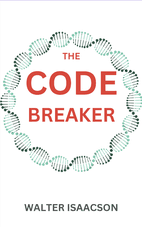
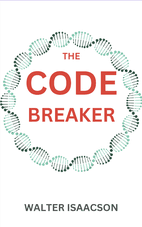
Walter Isaacson's The Code Breaker chronicles Jennifer Doudna's development of CRISPR gene-editing technology, exploring its revolutionary science and profound ethical implications. It's for readers fascinated by scientific discovery and the moral questions shaping our biological future.
Feature
Insta.Page
Blinkist
Shortform
Summary Depth
Full Chapter-by-Chapter
15-min overview
Detailed analysis
Audio Narration
✓ (AI narration)
✓
✓
Visual Mindmaps
✓
✕
✕
AI Q&A
✓ Voice AI
✕
✕
Quizzes
✓
✕
✕
PDF Downloads
✓
✕
✓
Price
$59.99/yr
$146/yr (PRO)
$199/yr
*Competitor data last verified February 2026.
About the Author
Walter Isaacson
Walter Isaacson is an acclaimed biographer and journalist renowned for his masterful portraits of groundbreaking innovators. As the former CEO of the Aspen Institute and editor of TIME magazine, he brings a unique perspective to the intersection of history, technology, and leadership. His bestselling biographies, including *Steve Jobs*, *Leonardo da Vinci*, and *Benjamin Franklin*, are celebrated for their deep research and compelling narrative style. Isaacson’s work explores the nature of genius, creativity, and the forces that shape our world. His published books are widely available for purchase on Amazon, offering readers profound insights into the lives of history's most influential figures.
1 Page Summary
The Code Breaker by Walter Isaacson is a compelling biography of Jennifer Doudna, a pioneering biochemist who co-developed CRISPR-Cas9, a revolutionary gene-editing technology. The book delves into the science behind CRISPR, a tool that allows precise editing of DNA, and its potential to transform medicine, agriculture, and even human evolution. Isaacson situates Doudna's work within the broader history of genetic research, tracing the journey from the discovery of DNA's structure to the ethical dilemmas posed by CRISPR's ability to alter the human genome.
The narrative explores the intense competition and collaboration among scientists, including Doudna's partnership with Emmanuelle Charpentier and the rivalry with Feng Zhang. Isaacson highlights the ethical challenges of CRISPR, such as its use in creating genetically modified organisms and the controversial case of He Jiankui, who edited the genes of human embryos. The book also examines the societal implications of gene editing, including questions about equity, access, and the potential for "designer babies."
Isaacson emphasizes the lasting impact of CRISPR, not only as a scientific breakthrough but also as a catalyst for redefining humanity's relationship with nature. By blending scientific detail with personal stories, The Code Breaker offers a nuanced exploration of how curiosity, collaboration, and ethical responsibility shape the future of genetic engineering. It underscores the importance of balancing innovation with thoughtful consideration of its consequences for society and the planet.
The chapter opens with Jennifer Doudna’s childhood in Hilo, Hawaii, where her identity as a haole (non-native) made her feel like an outsider. Her early struggles with isolation and bullying shaped her resilience, while her family’s academic roots and pioneering spirit laid the groundwork for her intellectual curiosity. A pivotal move to a smaller school, formative friendships, and exposure to nature’s mysteries sparked her passion for science. The discovery of James Watson’s The Double Helix further ignited her ambition, framing science as a thrilling detective story and planting the seeds for her future breakthroughs.
Alienation in Hilo
Growing up as a blond, blue-eyed girl in a predominantly Polynesian community, Doudna faced relentless teasing. The term haole became a marker of otherness, embedding a “crust of wariness” beneath her later genial demeanor. Stress-induced digestive issues in third grade highlighted her emotional turmoil, driving her to retreat into books and develop a defensive resolve: “There’s an internal part of me they’ll never touch.”
Family Legacy and Academic Roots
Doudna’s lineage echoed themes of perseverance. Her great-grandmother’s frontier diary, filled with tales of grit, mirrored Jennifer’s own stubborn spirit. Her father, Martin—a literature professor who prioritized education—moved the family to Hilo for his career, borrowing from his wife’s retirement fund to do so. This academic idealism trickled down to Jennifer, whom Martin saw as his intellectual heir, often treating her as “the son he wanted.”
Blossoming Curiosity
A move to a smaller school in fifth grade marked a turning point. Freed from the chaos of larger classrooms, Doudna thrived academically and socially. Her friendship with Lisa Hinkley, a bold mixed-race classmate, taught her to confront bullies head-on. Together, they explored Hilo’s lush ecosystems—studying eyeless spiders in lava caves and hilahila (“sleeping grass”)—which deepened her wonder for biological mechanisms.
Mentors and Academic Growth
Biology professor Don Hemmes and teacher Marlene Hapai became critical influences. Hemmes introduced Doudna to scientific inquiry through mushroom hunts and shell categorization, while Hapai framed science as joyful detective work. Her father’s high expectations and love of literature—balanced by his inclusion of female authors like Joan Didion—nurtured her interdisciplinary mindset.
The Double Helix Revelation
At age 12, Watson’s memoir captivated Doudna, blending scientific discovery with human drama. Though troubled by Watson’s sexist portrayal of Rosalind Franklin, she latched onto a revelation: women could be scientists. The book crystallized her belief that molecular structures held life’s secrets—a concept that would define her career. “It made me realize you could hunt for the reasons why nature worked the way it did,” she reflected.
Key Takeaways
Resilience through adversity: Childhood alienation forged Doudna’s determination and intellectual independence.
Curiosity as compass: Explorations of Hawaii’s biodiversity and mentors like Hemmes anchored her passion for molecular mysteries.
Literary inspiration: Watson’s The Double Helix reframed science as a human-centered quest, despite its flawed gender dynamics.
Interdisciplinary roots: A blend of literature, nature, and academic rigor shaped her approach to CRISPR and genetic discovery.
The chapter closes by foreshadowing her future role in a scientific revolution—one Watson himself would later compare to the discovery of DNA’s structure.
Key concepts: Chapter 1: Hilo
1. Chapter 1: Hilo
Alienation in Hilo
Faced relentless teasing as a haole (non-native) in a Polynesian community
Developed resilience and a defensive mindset: 'There’s an internal part of me they’ll never touch.'
💡 Try clicking the AI chat button to ask questions about this book!
Chapter 2: Chapter 2: The Gene
Overview
This chapter traces the intertwined journeys of Charles Darwin and Gregor Mendel, whose groundbreaking—yet initially disconnected—discoveries laid the foundation for modern genetics. Darwin’s path from a reluctant medical student to the architect of evolutionary theory is contrasted with Mendel’s quiet, meticulous experiments on heredity. Their stories converge on a central question: How do traits pass from one generation to the next? The chapter also bridges their work to the eventual identification of DNA as the molecule of inheritance, underscoring the role of curiosity, persistence, and interdisciplinary thinking in scientific breakthroughs.
Darwin’s Evolution of an Idea
Darwin abandoned medicine and theology to pursue his passion for naturalism, culminating in his voyage on the HMS Beagle. His observations of Galápagos finches—later identified as distinct species by ornithologist John Gould—sparked his theory of natural selection. Inspired by animal breeders and Thomas Malthus’s essay on population dynamics, Darwin proposed that favorable traits, arising through random variations (“sports”), could be preserved in isolated environments. However, he delayed publishing his theory for decades, fearing backlash. Only when Alfred Russel Wallace independently proposed a similar concept in 1858 did Darwin rush to share his work, leading to their joint presentation on evolution.
Mendel’s Peas and Patterns
Gregor Mendel, a Moravian monk and failed exam-taker, found solace in breeding pea plants. His experiments revealed that traits like flower color or seed texture followed predictable patterns: dominant traits masked recessive ones in the first generation, while recessive traits reappeared in a 3:1 ratio in the next. This contradicted the prevailing “blending” theory of heredity. Mendel presented his findings in 1865, but his work languished in obscurity for 35 years. His insights—later termed “genes” by Wilhelm Johannsen—offered a mechanistic answer to Darwin’s unresolved question: How are traits inherited without dilution?
The DNA Connection
By the early 20th century, scientists sought the physical basis of heredity. Proteins were initially assumed to carry genetic information, but experiments eventually pointed to nucleic acids (DNA and RNA). The chapter concludes by framing all life—from coronaviruses to humans—as vehicles for replicating genetic material encoded in these molecules. This sets the stage for the next chapter’s exploration of DNA’s structure, discovered by Watson and Crick in 1953.
Key Takeaways
Delayed Discoveries: Darwin’s hesitation and Mendel’s obscurity highlight how scientific progress often depends on timing, recognition, and courage to challenge norms.
Interdisciplinary Insights: Darwin and Wallace connected biology with economics (Malthus), while Mendel blended botany with mathematics—proof that creativity thrives at the intersection of fields.
Mechanism of Heredity: Mendel’s laws resolved Darwin’s dilution dilemma, showing traits are transmitted as discrete units (genes), not blended.
DNA’s Ascendance: The shift from proteins to nucleic acids as hereditary molecules revolutionized biology, unifying evolution and genetics.
Key concepts: Chapter 2: The Gene
2. Chapter 2: The Gene
Darwin’s Evolution of an Idea
Darwin abandoned medicine and theology to pursue naturalism, leading to his voyage on the HMS Beagle.
Observations of Galápagos finches and animal breeding inspired his theory of natural selection.
Delayed publishing his theory for decades due to fear of backlash, only sharing after Wallace proposed a similar idea.
Proposed that favorable traits arise through random variations and are preserved in isolated environments.
Mendel’s Peas and Patterns
Gregor Mendel, a monk, conducted meticulous pea plant experiments to study heredity.
Discovered dominant and recessive traits followed predictable ratios (3:1), contradicting blending inheritance.
His work was ignored for 35 years before being recognized as foundational to genetics.
Introduced the concept of discrete hereditary units (later termed 'genes').
The DNA Connection
Early 20th-century scientists sought the physical basis of heredity, initially suspecting proteins.
Experiments later identified nucleic acids (DNA and RNA) as carriers of genetic information.
Established DNA as the universal molecule of inheritance across all life forms.
Set the stage for Watson and Crick’s discovery of DNA’s structure in 1953.
Key Takeaways
Scientific progress often depends on timing, recognition, and challenging norms (Darwin’s hesitation, Mendel’s obscurity).
Interdisciplinary thinking (biology, economics, mathematics) drives breakthroughs in genetics.
Mendel’s laws resolved Darwin’s heredity dilemma by proving traits are transmitted as discrete units (genes).
The shift to DNA as the hereditary molecule unified evolution and genetics.
⚡ You're 2 chapters in and clearly committed to learning
Why stop now? Finish this book today and explore our entire library. Try it free for 7 days.
Chapter 3: Chapter 3: DNA
Overview
Chapter 3 traces the riveting quest to uncover DNA’s structure, a discovery that unlocked the secrets of heredity. From Oswald Avery’s 1944 experiments proving DNA’s role in inheritance to the fierce competition between scientists in the 1950s, the chapter highlights how collaboration, rivalry, and serendipity converged to reveal the double helix. Central to this story are James Watson and Francis Crick’s relentless drive, Rosalind Franklin’s critical yet underappreciated X-ray work, and the ethical ambiguities of scientific discovery. The chapter also frames DNA’s decoding as a pivotal moment in the information age, paralleling the rise of digital computing.
The Path to DNA’s Discovery
In 1944, Oswald Avery and his team demonstrated DNA’s role in heredity by transferring genetic traits between bacteria. This breakthrough shifted biology’s focus to understanding DNA’s structure. The challenge required merging genetics, biochemistry, and structural biology—a task that would consume scientists for nearly a decade.
James Watson: From Bird-Watching to Genetics
Watson’s journey began as a precocious bird-watcher in Chicago. His pivot to genetics came after reading Erwin Schrödinger’s What Is Life?, which posited that genes held a decipherable molecular code. After earning a PhD under Salvador Luria (a founder of the Phage Group), Watson’s obsession with genes led him to Copenhagen and, later, Cambridge. A pivotal lecture by Maurice Wilkins on DNA crystallography in Naples ignited his determination to solve DNA’s structure.
The Watson-Crick Partnership
At Cambridge’s Cavendish Laboratory, Watson met Francis Crick—a theorist with a booming laugh and disdain for conventionality. Their bond fused impatience, arrogance, and brilliance. Despite being ordered to avoid DNA research (to not encroach on Wilkins’ work), they secretly plotted to beat Linus Pauling, the famed chemist who had cracked protein structures using model-building. Their unorthodox approach—combining X-ray data, chemical intuition, and tin-plate models—set the stage for a clash with tradition.
Rosalind Franklin and the X-Ray Breakthrough
At King’s College London, Rosalind Franklin’s expertise in X-ray crystallography produced sharper images of DNA than anyone had seen. Yet her fraught relationship with Wilkins—stemming from institutional sexism and miscommunication—left her isolated. Watson’s dismissive view of her (“not unattractive” but frumpy) masked his reliance on her data. Her famous “Photograph 51,” secretly shown to Watson by Wilkins, revealed DNA’s helical pattern, though Franklin remained skeptical of helical models until late in her work.
The Race Against Linus Pauling
The threat of Pauling solving DNA first loomed large. When Pauling proposed an incorrect triple-helix model in 1953, Watson and Crick seized their chance. A flawed U.S. travel ban (due to Pauling’s pacifist politics) bought them time. Meanwhile, Watson’s confrontational visit to Franklin’s lab—ending with her near-physical fury—underscored the high-stakes tension. With Franklin’s unpublished data and Photograph 51, Watson and Crick rushed to correct their earlier mistakes.
The Double Helix Revelation
Watson’s cardboard cutouts of DNA bases led to the critical insight: adenine pairs with thymine, and guanine with cytosine. This complementary bonding explained replication—a “secret of life” hidden in the molecule’s symmetry. Their 975-word Nature paper (1953) famously understated the breakthrough: “It has not escaped our notice…” The double helix’s elegance—a spiral staircase with sugar-phosphate rails and base-pair rungs—revolutionized biology.
Legacy and Convergence
The 1962 Nobel Prize excluded Franklin, who died of cancer in 1958, likely from radiation exposure. Her contributions, though initially sidelined, proved indispensable. The chapter concludes by linking DNA’s discovery to the 1950s digital revolution, framing both as twin pillars of the information age: one using binary code, the other genetic code (A, T, G, C). This convergence reshaped science, ethics, and society.
Key Takeaways
Collaboration vs. Competition: Watson and Crick’s success relied on both teamwork and contentious rivalries, including their unauthorized use of Franklin’s data.
Rosalind Franklin’s Crucial Role: Her X-ray work provided the definitive evidence for DNA’s structure, yet systemic sexism delayed her recognition.
Structure Dictates Function: The double helix’s design—complementary base pairing—explained genetic replication and coding, birthing molecular biology.
Converging Revolutions: DNA’s discovery coincided with the digital age, underscoring how information—whether genetic or binary—drives scientific progress.
Ethical Complexity: The chapter questions ownership of scientific data and the cost of “winning” in a competitive field.
Key concepts: Chapter 3: DNA
3. Chapter 3: DNA
The Quest to Uncover DNA's Structure
Oswald Avery's 1944 experiments proved DNA's role in heredity, shifting scientific focus to its structure.
The discovery involved collaboration, rivalry, and serendipity among key scientists.
DNA's decoding paralleled the rise of the information age, linking genetic and digital codes.
Key Figures in DNA's Discovery
James Watson: Inspired by Schrödinger's What Is Life?, pivoted from bird-watching to genetics.
Francis Crick: A theorist with unconventional methods, partnered with Watson at Cambridge.
Rosalind Franklin: Produced critical X-ray images (e.g., Photograph 51) but faced institutional sexism.
Linus Pauling: A rival chemist whose incorrect triple-helix model accelerated Watson and Crick's work.
The Watson-Crick Breakthrough
Used model-building and Franklin's X-ray data (without her consent) to deduce DNA's structure.
Discovered complementary base pairing (A-T, G-C), explaining genetic replication.
Published their findings in a famously understated 1953 Nature paper.
Rosalind Franklin's Role and Legacy
Her X-ray crystallography provided definitive evidence for the double helix.
Isolated due to sexism and miscommunication with Maurice Wilkins.
Died before the 1962 Nobel Prize, leaving her contributions initially unrecognized.
Ethics and Competition in Science
Watson and Crick's use of Franklin's data raised questions about scientific ownership.
The race against Pauling highlighted the high-stakes tension of discovery.
Franklin's exclusion underscores systemic biases in scientific recognition.
DNA's Impact on Science and Society
The double helix revolutionized biology, explaining heredity at a molecular level.
Framed as a pillar of the information age, alongside digital computing.
Raised ethical debates about collaboration, credit, and the cost of scientific ambition.
Chapter 4: Chapter 4: The Education of a Biochemist
Overview
This chapter traces Jennifer Doudna’s evolution from a curious child to a determined scientist, highlighting pivotal experiences that shaped her path in biochemistry. From early inspirations like The Double Helix to overcoming gender bias and academic challenges, Doudna’s journey underscores resilience, mentorship, and the thrill of discovery. The narrative follows her through high school experiments, college struggles, and formative lab work, culminating in her entry into Harvard’s graduate program—a stepping stone toward groundbreaking contributions in molecular biology.
Early Inspirations and High School Breakthroughs
Doudna’s fascination with science began with James Watson’s The Double Helix, which portrayed scientific discovery as an exhilarating detective story. This contrasted with the sterile image of science she’d encountered earlier, igniting her passion for solving biological puzzles. In high school, hands-on experiments—like extracting DNA from salmon sperm—solidified her interest. A lecture on cancer biochemistry further inspired her, proving women could excel in STEM. Yet her ambition faced pushback: a guidance counselor dismissed her aspirations, declaring, “Girls don’t do science.” The rejection only fueled her resolve to prove him wrong.
Pomona College: Doubt, Discovery, and Defiance
Arriving at Pomona College at 17, Doudna battled insecurity and homesickness. Surrounded by wealthier peers, she questioned her place in chemistry—a field where her high school counselor had already doubted her. A pivotal summer in Don Hemmes’ lab shifted her perspective. Studying microscopic shells and cellular processes, she experienced the thrill of not knowing the answers beforehand. This unstructured, curiosity-driven work reignited her confidence. Back at Pomona, a biochemistry lab role under Sharon Panasenko became transformative. Tasked with growing bacteria in baking pans, Doudna’s success in cultivating “fruiting bodies” led to her first published paper—a milestone that silenced lingering self-doubt.
Harvard: Embracing Risk and Interdisciplinary Science
Encouraged by her father, Doudna applied to Harvard for graduate school, despite initial hesitation. Rotations in Roberto Kolter’s lab introduced her to global, politically engaged scientists—far from the “old white men” stereotype. Her stubborn streak paid off when she defied Kolter’s skepticism to successfully clone bacterial genes. Later, joining Jack Szostak’s lab, she witnessed how interdisciplinary thinking bridges basic and applied science. Her work editing yeast DNA using electric shocks hinted at future gene-editing breakthroughs. These experiences taught her to value intellectual risk-taking and collaboration, setting the stage for her later innovations.
Key Takeaways
Resilience Against Bias: Doudna’s defiance of gendered expectations—from her high school counselor to Harvard’s labs—showcases the tenacity required to thrive in male-dominated fields.
Mentorship Matters: Figures like Don Hemmes and Sharon Panasenko provided critical encouragement, blending scientific rigor with supportive guidance.
Curiosity Over Conformity: Unscripted lab work, whether with microscopic shells or bacterial communes, reinforced her love for open-ended discovery.
Global Science: Harvard’s diverse labs underscored the collaborative, borderless nature of modern scientific inquiry—a theme central to her later career.
Foundations for CRISPR: Early experiments in yeast DNA editing foreshadowed her revolutionary work on CRISPR, linking fundamental research to real-world applications.
Key concepts: Chapter 4: The Education of a Biochemist
4. Chapter 4: The Education of a Biochemist
Early Inspirations and High School Breakthroughs
Inspired by James Watson’s The Double Helix, which framed science as an exciting detective story
Hands-on experiments (e.g., extracting DNA from salmon sperm) solidified her passion for biochemistry
Faced gender bias when a guidance counselor dismissed her aspirations, fueling her determination
A lecture on cancer biochemistry showed her women could excel in STEM fields
Pomona College: Overcoming Doubt and Finding Confidence
Struggled with insecurity and homesickness as a young student in a new environment
Summer research in Don Hemmes’ lab reignited her curiosity through unstructured, discovery-driven work
Published her first paper after successful experiments with bacterial 'fruiting bodies' under Sharon Panasenko
Proved her high school counselor wrong by excelling in chemistry and biochemistry
Harvard: Risk-Taking and Interdisciplinary Growth
Joined Harvard for graduate school, embracing new challenges despite initial hesitation
Worked in Roberto Kolter’s lab, defying skepticism to successfully clone bacterial genes
Collaborated with Jack Szostak, learning the value of interdisciplinary approaches to science
Early experiments in yeast DNA editing foreshadowed her later CRISPR breakthroughs
Exposure to diverse, global scientists shaped her view of collaborative research
Key Themes in Doudna’s Scientific Journey
Resilience against gender bias and societal expectations in STEM
Importance of mentorship (e.g., Hemmes, Panasenko, Szostak) in shaping her career
Curiosity-driven research as a foundation for groundbreaking discoveries
Interdisciplinary and collaborative science as a pathway to innovation
Early work in molecular biology laid the groundwork for CRISPR advancements
📚 Explore Our Book Summary Library
Discover more insightful book summaries from our collection