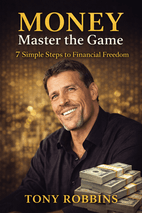
MONEY Master the Game: 7 Simple Steps to Financial Freedom
Chapter 1.1 It’s Your Money! It’s Your Life! Take Control
Chapter 1/4
Lang
1x
Voice
PDF
0:00
0:00
MONEY Master the Game: 7 Simple Steps to Financial Freedom
by Tony Robbins · Summary updated
What is the book MONEY Master the Game: 7 Simple Steps to Financial Freedom about?
Tony Robbins's MONEY Master the Game translates insights from top investors into a seven-step plan for financial freedom, focusing on low-cost index funds and strategic asset allocation. It empowers everyday individuals to build secure, long-term wealth by avoiding high fees and emotional investing mistakes.
Feature
Insta.Page
Blinkist
Shortform
Summary Depth
Full Chapter-by-Chapter
15-min overview
Detailed analysis
Audio Narration
✓ (AI narration)
✓
✓
Visual Mindmaps
✓
✕
✕
AI Q&A
✓ Voice AI
✕
✕
Quizzes
✓
✕
✕
PDF Downloads
✓
✕
✓
Price
$59.99/yr
$146/yr (PRO)
$199/yr
*Competitor data last verified February 2026.
About the Author
Tony Robbins
Tony Robbins is a renowned American author, life coach, and motivational speaker known for his high-energy seminars and bestselling self-help books, including "Awaken the Giant Within" and "Unlimited Power." His expertise lies in personal development, peak performance strategies, and business psychology.
1 Page Summary
Tony Robbins' MONEY Master the Game distills decades of financial research and interviews with over 50 legendary investors—including Ray Dalio, John Bogle, and Warren Buffett—into an actionable seven-step plan for achieving financial security. The core premise is that the traditional financial system is stacked against the average investor through high fees and complexity. Robbins advocates for a fundamental shift in strategy: moving from active stock-picking to low-cost, tax-efficient index and asset-allocation funds. The book's pivotal steps include dedicating oneself to saving a portion of income, creating a "dream bucket" strategy for goal-based investing, and mastering asset allocation through a simplified "All Seasons" portfolio adapted from Ray Dalio, designed to weather any economic climate.
Historically, the book emerged in the wake of the 2008 financial crisis, addressing widespread public distrust of Wall Street and a growing desire for transparent, self-directed financial strategies. It capitalizes on the rise of the FIRE (Financial Independence, Retire Early) movement and the democratization of investing through technology. Robbins synthesizes complex financial theories—like modern portfolio theory and behavioral finance—into accessible language, positioning the book as a bridge between elite investment wisdom and mainstream audiences seeking to escape the pitfalls of high fees and emotional decision-making.
The lasting impact of MONEY Master the Game lies in its role as a mass-market manifesto for passive, fee-conscious investing. It propelled the principles of index fund investing, popularized by Bogle, to a vast new audience, emphasizing that financial freedom is less about picking winners and more about avoiding behavioral errors and costly intermediaries. While some critics note its promotional tone for Robbins' partners, the book undeniably empowered millions to take control of their financial futures by providing a structured, psychologically-informed framework. Its emphasis on simplicity, automation, and long-term discipline continues to influence how individuals approach saving, investing, and retirement planning.
Chapter 1: Chapter 1.1 It’s Your Money! It’s Your Life! Take Control
Overview
Money isn't just paper in your wallet; it's one of the most charged and powerful forces in our lives, wrapped in taboo and capable of stirring deep emotions. At its heart, it's an illusion—a shape-shifter representing what we truly crave: empowerment, freedom, and security. The fundamental choice is stark: you either master money, or it masters you. To win, you need to adopt the Money Game mindset, viewing finance not as a frivolous pastime but as a serious strategic game where the world's wealthiest are the top players. The prize is financial freedom: a life where you work from joy, not necessity, by becoming more valuable to others.
But the playing field is tilted. Today's financial system is a labyrinth of complexity, from near-zero interest rates to a dizzying array of investment products. It's often rigged, with High-Frequency Trading (HFT) allowing supercomputers to profit in milliseconds, leaving everyday investors at a disadvantage. This confusion is no accident; it's designed to make you hand control over to so-called experts. Yet most advice out there is noise from unqualified voices. Real wisdom comes from true masters—figures like John C. Bogle and Ray Dalio—whose timeless principles, distilled from decades of success, form the core of a practical blueprint. This isn't just theory; it's about saving hundreds of thousands in fees and accessing strategies once reserved for the ultra-wealthy.
The author's personal mission fuels this guide. After the 2008 crisis, his outrage transformed into a quest to interview 50 financial titans, including a pivotal conversation with Ray Dalio. Dalio’s humility stood out, advising individuals to avoid the zero-sum "poker game" of professional trading and instead adopt a diversified, passive system that wins over time. This encounter underscored a key theme: true mastery requires acknowledging what you don’t know. Driven by this, the author committed to democratizing smart-money knowledge, leading to tools like Portfolio CheckUp, a free platform that audits your investments for hidden fees and performance gaps, genuinely leveling the playing field.
True wealth, however, isn't just about accumulating assets; it's about having enough to make a difference. Generosity is framed as both a privilege and a responsibility, with the habit of giving starting now, regardless of your bank balance. By picking up this book, you've already contributed to fighting hunger, and you're invited to join a larger movement of abundance. The chapter closes with a direct challenge: commit to the journey ahead. The roadmap is clear—the 7 Simple Steps to Financial Freedom—promising a life where money becomes a source of excitement, not stress, and you achieve a lifelong income on your own terms.
The Emotional Power and Illusion of Money
Money is framed as one of the most emotionally charged and taboo subjects, capable of provoking extreme feelings from guilt to shame. The text argues that, at its core, money is about power—it can create or destroy, fund dreams or start wars. Ultimately, however, money itself is an illusion, a "shape-shifter" that represents the deeper feelings we truly seek: empowerment, freedom, security, and choice. The fundamental choice presented is stark: you either master money, or it masters you.
Adopting the "Money Game" Mindset
The author confronts criticism of viewing money as a "game," insisting this is precisely the mindset of the world's wealthiest individuals. This isn't a frivolous game but a serious one where you can't afford to sit on the sidelines. The promise is that by following the 7 Simple Steps distilled from top financial "players," anyone can learn the rules and strategies to win. The goal is to stop being a chess piece in the financial system and become the chess player.
Envisioning Financial Freedom
The reader is invited to imagine a life mastered by this game: no worry about bills, office jobs, or retirement; the ability to start a business, care for family, and travel the world. This state—working from joy and abundance rather than necessity—is defined as financial freedom. The author asserts this is not a pipe dream and that the fundamental secret to wealth is simple: become more valuable by doing more for others. True financial mastery, however, involves not just earning but holding onto and multiplying your money.
The Rigged and Overwhelming Modern System
The text paints a picture of a daunting financial landscape that has radically changed. Traditional paths like corporate pensions are relics. Individuals now face near-zero interest rates, extreme market volatility, and a baffling array of over 10,000 mutual funds and complex instruments like ETFs, REITs, and CDOs. A significant focus is placed on High-Frequency Trading (HFT), described as a rigged system where supercomputers make micro-profits in milliseconds, front-running ordinary investors. This complexity is portrayed as a deliberate design to confuse people into ceding control to "professionals."
Cutting Through the Noise of False Experts
The chapter warns that "everybody has an opinion" on money, especially online, but most lack real mastery or a proven track record. The author distances himself from "financial entertainers" and "positive thinkers" who offer unrealistic promises or baseless advice. Instead, he positions himself as a "hunter of human excellence" who has spent 38 years studying and systematizing the strategies of top performers to produce measurable results.
Wisdom from the True Masters
The solution offered is to learn from true masters, not talking heads. The author reveals he interviewed 50 top financial minds for this book, including figures like John C. Bogle (Vanguard), Ray Dalio (Bridgewater), and David Swensen (Yale Endowment). The book promises to deliver their timeless principles and actual portfolio strategies for weathering any market condition. The greatest potential inheritance, it suggests, is not money but this set of actionable principles.
An Empowering, Accessible Blueprint
The journey ahead is framed as a practical blueprint for all ages and stages, focusing on psychology, behavioral economics, and simple adjustments to avoid common money mistakes. Anecdotal evidence, like the story of Angela who bought a new car by applying the steps, shows it’s about improving life today while securing tomorrow. The author pledges to act as a translator and "personal financial search engine," cutting through jargon and complexity to reveal how to save hundreds of thousands in fees, access vehicles with principal protection, and level the playing field so the strategies of the ultra-wealthy become accessible to all.
Key Takeaways
Money is a powerful emotional trigger and a tool; you must master it, or it will master you.
Adopting a strategic "game" mindset is key to winning financially.
Financial freedom is the ability to work from joy, not necessity.
The modern financial system is complex and often rigged (e.g., High-Frequency Trading), designed to confuse the average person.
True wisdom comes only from proven masters, not self-proclaimed experts.
The book provides a clear blueprint, translating the timeless principles of the world's top investors into actionable steps for anyone.
The Author's Journey: From Crisis to Mission
Following the 2008 financial meltdown, the author describes a growing sense of anger and frustration as promised systemic changes failed to materialize. Watching the documentary Inside Job was a tipping point, converting his outrage into a decisive question: “What can I do?” The answer became this book—a deliberate return to the written word after two decades focused on live events, driven by a mission to provide tangible financial tools to everyone.
He reflects on the profound role books played in his own life, serving as a lifeline during a difficult childhood and a source of transformative ideas from thinkers like Emerson, James Allen, and Napoleon Hill. Inspired by Hill’s method of interviewing the accomplished, he embarked on a four-year quest to seek out the modern “masters of the game” in finance, aiming to create a practical owner’s manual for the new economy.
A Conversation with a Titan: Ray Dalio
The narrative then shifts to a pivotal interview with Ray Dalio, founder of Bridgewater Associates, the world’s largest hedge fund. Dalio, from a humble Queens background, achieved extraordinary success through a unique, principle-driven system. His core message to individual investors is stark: do not try to beat professional traders at their own “poker game,” as it’s a hyper-competitive, zero-sum arena where most will lose.
Instead, Dalio advocates for a “passive way to win” by using a diversified system designed to protect against downturns, acknowledging that even the best investors are frequently wrong. After much persuasion, he outlines the principles of an ideal portfolio—one historically yielding positive returns 85% of the time over 30 years, with minimal losses even during catastrophic years like 2008. This system, normally inaccessible to all but the ultra-wealthy, forms a cornerstone of the strategies shared later in the book.
Embracing Humility and Expanding Access
The encounter with Dalio underscores a critical theme: the true masters are marked by humility and a constant acknowledgment of what they don’t know. The author admits his own journey was humbling, revealing vast gaps in his financial knowledge. This discovery evolved his mission from passive gathering to passionate advocacy.
He began uncovering sophisticated investment tools and opportunities with favorable risk/reward profiles—traditionally reserved for the ultra-wealthy. His goal transformed: to democratize this “smart money” knowledge, opening these pathways not just for his family and friends, but for every reader, thereby turning the book into a vehicle for genuine financial empowerment.
A New Level Playing Field
The author details how his advocacy has led financial institutions to offer unprecedented access to their services. The crowning achievement is Portfolio CheckUp, a complimentary online platform readers can use to audit their brokerage accounts for hidden fees and underperformance. This represents a potential sea change, creating a true win-win: institutions do the right thing while building lifelong loyalty with future affluent clients, and everyday investors gain transparency and power.
The Responsibility of Wealth and Generosity
True wealth mastery is framed not just as winning, but as having enough to make a difference. The author argues that giving is both a privilege and a responsibility, sharing how a single act of kindness during his family's period of extreme poverty shaped his life. He reveals his personal commitment: through his foundation and personal matching, he now helps feed millions annually.
This section directly ties the reader's journey to a larger mission. Purchasing this book means the reader has already provided 50 meals to the hungry. The author announces an ambitious, ongoing goal to provide hundreds of millions of meals and invites readers to join this effort, emphasizing that the habit of giving begins now, regardless of one's current wealth, to foster a mindset of abundance over scarcity.
The Challenge and the Road Ahead
The author concludes the chapter with a direct, motivational challenge. He commends the reader for being in the minority who read past a book's first chapter and urges a commitment to the full journey ahead. The ultimate promise is a life where money is a source of excitement, not stress, and where one achieves a lifelong income, working only by choice. He previews that the path forward will be outlined in 7 Simple Steps to Financial Freedom.
Key Takeaways
A powerful, free tool (PortfolioCheckUp.com) is available to audit investment fees and performance, democratizing access to financial insights.
Generosity is integral to true wealth; giving back is a responsibility that should begin immediately, regardless of one's financial starting point.
By purchasing the book, the reader has already contributed to fighting hunger, and is encouraged to continue.
The reader is challenged to commit fully to the process, with the promise of achieving financial freedom and a stress-free relationship with money.
The coming sections will provide a concrete roadmap: the 7 Simple Steps to Financial Freedom.
Key concepts: Chapter 1.1 It’s Your Money! It’s Your Life! Take Control
1. Chapter 1.1 It’s Your Money! It’s Your Life! Take Control
The Nature and Power of Money
Money is an emotionally charged force representing deeper desires like empowerment, freedom, and security.
It is fundamentally an illusion—a shape-shifter for what we truly crave.
The core choice is binary: master money or be mastered by it.
The Money Game Mindset
View finance as a serious strategic game, not a frivolous pastime.
The world's wealthiest are top players; learning their rules is key to winning.
The goal is to transition from being a chess piece to becoming the chess player.
Vision of Financial Freedom
Financial freedom means working from joy and abundance, not necessity.
It enables life choices like travel, family care, and entrepreneurship.
The secret to wealth is becoming more valuable by doing more for others.
Challenges of the Modern Financial System
The system is complex and often rigged, with tools like High-Frequency Trading (HFT) disadvantaging everyday investors.
Traditional safety nets (e.g., pensions) are disappearing.
Overwhelming product choices (mutual funds, ETFs, etc.) are designed to confuse and encourage reliance on 'experts'.
Seeking True Financial Mastery
Most financial advice is noise from unqualified voices; real wisdom comes from proven masters like Bogle and Dalio.
True mastery requires acknowledging what you don't know and adopting timeless, passive strategies.
The author's mission is to democratize smart-money knowledge through tools like Portfolio CheckUp.
The Broader Purpose of Wealth
True wealth is about having enough to make a difference.
Generosity is both a privilege and a responsibility, starting now regardless of wealth level.
The journey leads to a life where money is a source of excitement, not stress.
Wisdom from the True Masters
Learn from proven masters, not self-proclaimed experts or media talking heads.
The book distills principles and strategies from 50 top financial minds, including Bogle, Dalio, and Swensen.
The greatest potential inheritance is not money, but a set of timeless, actionable financial principles.
The strategies are designed to help investors weather any market condition.
An Empowering, Accessible Blueprint
The book provides a practical blueprint for all ages, focusing on psychology and avoiding common mistakes.
The author acts as a translator and 'personal financial search engine,' cutting through jargon and complexity.
It reveals how to save significant fees and access investment vehicles with principal protection.
The goal is to level the playing field, making strategies of the ultra-wealthy accessible to everyone.
The Author's Mission: From Crisis to Advocacy
The 2008 financial crisis and its aftermath sparked the author's mission to provide tangible financial tools.
Inspired by transformative books from his youth and Napoleon Hill's interview method.
Embarked on a four-year quest to interview modern financial masters to create a practical owner's manual.
The mission evolved from passive knowledge gathering to passionate advocacy for democratizing financial wisdom.
Core Investment Philosophy from Ray Dalio
Individual investors should not try to beat professional traders at their hyper-competitive 'poker game.'
Advocates for a 'passive way to win' using a diversified, principle-driven system.
The ideal portfolio is designed to protect against downturns, acknowledging even the best investors are often wrong.
Shares a system historically yielding positive returns 85% of the time, with minimal losses in catastrophic years.
Democratizing Access and Tools
Uncovered sophisticated investment tools and opportunities traditionally reserved for the ultra-wealthy.
Goal is to democratize 'smart money' knowledge for every reader.
Crowning achievement is the 'Portfolio CheckUp,' a free online tool to audit brokerage accounts for hidden fees and underperformance.
Creates a win-win: institutions build loyalty while everyday investors gain transparency and power.
The Responsibility and Impact of True Wealth
True wealth mastery includes having enough to make a meaningful difference.
Giving is framed as both a privilege and a responsibility, tied to a mindset of abundance.
The author shares a personal commitment to philanthropy, helping feed millions annually.
Purchasing the book directly contributes to providing meals, linking the reader's journey to a larger mission.
The Financial Freedom Promise
Achieve a lifelong income that allows you to work only by choice, not necessity
Transform money from a source of stress into a source of excitement and possibility
Join the minority who commit to and complete the full journey toward financial control
Tools for Immediate Action
PortfolioCheckUp.com provides a free audit of investment fees and performance
This tool democratizes financial insights previously available only to the wealthy
Taking this audit is a concrete first step toward understanding your current financial position
The Philosophy of True Wealth
Generosity is an integral component of genuine wealth, not an afterthought
The responsibility to give back begins immediately, regardless of financial starting point
Purchasing this book has already contributed to fighting hunger through the author's commitment
The Reader's Commitment
The challenge is to commit fully to the entire process outlined in the book
Reading past the first chapter places you in a proactive minority of readers
The reward for this commitment is a fundamentally transformed relationship with money
The Roadmap Ahead
The path forward will be clearly outlined in 7 Simple Steps to Financial Freedom
These steps provide a concrete, actionable framework for achieving control
The coming sections will detail this systematic approach to building financial security
Scroll to load interactive mindmap
If you like this summary, you probably also like these summaries...
💡 Try clicking the AI chat button to ask questions about this book!
Chapter 2: Chapter 1.2 The 7 Simple Steps to Financial Freedom: Create an Income for Life
Overview
The journey begins with a powerful truth: leaders in wealth don't just react; they anticipate. It likens this to a child winning a video game not by speed, but by knowing what comes next. This sets the stage for a guide designed to provide that foresight, cutting through complexity to a singular, vital goal: creating a guaranteed income for life. To understand why this is so urgent, it examines the broken state of retirement—a system invented when people didn't live long, now buckling under the weight of 30-year retirements where the greatest fear is outliving your money.
Multiple pillars of the modern world conspire against financial security. The traditional pension is gone, replaced by risky "do-it-yourself" plans. 401(k) traps and hidden fees silently devour savings, while tax drag is exposed as a monumental wealth destroyer, proving it's not what you earn but what you keep. Perhaps most insidious are the behavioral barriers—the inertia and cognitive illusions that keep people stuck, overwhelmed into inaction. Yet, there is a powerful solution introduced: modern financial tools that offer protection, growth potential, and that crucial lifetime income stream, acting as a personal pension.
The book's promise is to make this achievable through a clear, actionable framework: the 7 Simple Steps. This is paired with tools to automate the process, transforming intention into habit. Crucially, the author distinguishes between simply knowing something and truly mastering it. Lasting change requires progressing from cognitive understanding to emotional connection, and finally to physical mastery—where right actions become automatic through consistent repetition. A personal story of martial arts training under a grand master drives this home, revealing that mastery lies in the subtle refinement within endless repetition, not in collecting more moves.
This philosophy directly shapes the book's interactive design, crafted to be a blueprint that builds habits, not just knowledge. The core of this blueprint is the step-by-step roadmap. It starts with the psychological decision to save automatically and build a "money machine." It then teaches you to invest like an insider, avoiding costly myths and fees, before guiding you to price your dreams and create a concrete plan. You'll learn the critical art of asset allocation, discover how to create protected lifetime income, and gain insights from the world's top investors. The journey culminates in taking action, enjoying the fruits of your labor, and understanding that the secret to living is giving. This is presented as a personalized path to move from anxiety to empowerment, where financial freedom becomes an automatic, lived reality.
The Power of Anticipation
The chapter opens with a relatable analogy: the humiliating experience of losing a video game to a child. The child doesn’t win because they are faster or smarter, but because they have played the game before. They can anticipate what comes next. This, the author argues, is the ultimate power in building wealth. Losers react to financial markets and life events; leaders anticipate them. The book promises to provide that anticipatory knowledge by distilling wisdom from top financial minds, acting as a trusted guide through the financial jungle.
A Broken System: The New Reality of Retirement
The core mission is clarified: to help the reader create a guaranteed income for life, achieving true financial freedom. This goal is presented as achievable for anyone, regardless of starting point. To understand why it’s so crucial, the text explores the historical context of retirement. The concept is relatively new, created alongside Social Security during the Great Depression when life expectancy was just 62. The system was designed as a basic supplement, not a primary income source for a long retirement.
Today, the reality is starkly different. With life expectancy approaching 100, a person retiring at 65 may need to fund 30+ years of retirement. This is mathematically challenging with traditional models. Surveys reveal that the #1 fear for baby boomers is outliving their savings, and studies suggest 75% of Americans risk depleting their assets. Social Security alone, with an average benefit of $1,294 per month, is insufficient, and its future is uncertain due to an unsustainable worker-to-beneficiary ratio.
The Pillars of the Problem
Multiple systemic forces are working against financial security:
The Vanishing Pension: Traditional company pensions are nearly extinct, replaced by "do-it-yourself" plans like 401(k)s where individuals bear all the risk.
The 401(k) Trap: While 401(k)s hold trillions, many are laden with high, hidden fees that can devastate long-term growth. The author urges readers to pay close attention to a later chapter on this "myth."
The Tax Drag: Taxes are identified as perhaps the biggest wealth destroyer. A powerful compounding illustration shows $1 growing to over $1 million in 20 years tax-free, but to only about $28,000 if a 33% tax is applied each year before compounding. This highlights a core principle: it’s not what you earn, but what you keep.
Behavioral Barriers: Humans are not purely rational financial actors. We suffer from "cognitive illusions" and inertia. The organ donor example proves that small changes in how choices are presented (opt-in vs. opt-out) lead to massively different outcomes. This inertia explains why many people fail to enroll in retirement plans or create a financial strategy—the complexity is overwhelming, so they do nothing.
A Glimmer of Hope and a Path Forward
Despite the daunting landscape, the author introduces a promising solution: financial instruments that offer 100% principal protection, participation in market gains, and the ability to convert savings into a guaranteed lifetime income stream. This is presented as a modern tool to create a personal, reliable "pension."
The chapter concludes by introducing the book’s practical framework: a 7 Simple Steps plan designed to overcome inertia and complexity. It is paired with a free smartphone app intended to guide users, automate the process, provide nudges, and make execution simple. The promise is that once the plan is set, maintenance requires only minimal annual check-ins.
The Path to Mastery: Beyond Information
The author distinguishes between merely knowing information and truly mastering it, framing the book’s purpose as achieving the latter. He outlines three distinct levels of mastery required for lasting financial change:
Cognitive Understanding: Simply grasping the concept. This is where most people stop, but information alone has little real-world value.
Emotional Mastery: Reaching a point where the knowledge stirs your emotions—your desires and fears—making you conscious and capable of consistently applying what you've learned.
Physical Mastery: The ultimate goal, where the right actions become automatic and second nature. This level is achieved through one method only: consistent repetition.
He illustrates this with a personal story about training for a black belt in Tae Kwon Do under Grand Master Jhoon Rhee. After repeating a single move hundreds of times, he asked to learn the next move, only to be told that the subtle refinement within each repetition was the next move. The master explained that this relentless focus on fine distinctions through repetition is what separates a true master from a dabbler.
A Blueprint for Automatic Action
This story directly informs the book's unique design. It is not meant to be skimmed. Its interactive style—filled with questions, repeated phrases, and emphatic punctuation—is a deliberate technique to move knowledge from your head into your habits. The goal is to build understanding so deeply that taking the right financial actions becomes automatic, leading to real and lasting results. The author reiterates that this is more than a book; it's a personalized blueprint to diagnose your financial position and close the gap between where you are and where you want to be.
The 7-Step Roadmap Unveiled
The core of this section is a walkthrough of the seven steps that form the book's backbone, positioning them as a guided journey from novice to empowered insider:
Step 1: Welcome to the Jungle
This foundational step begins with understanding the psychology of wealth and culminates in the "most important financial decision of your life": deciding to save and invest automatically. You'll learn to build a "money machine" that generates lifetime income through the miracle of compounding.
Step 2: Become the Insider
Before investing, you must learn the rules. This step is a red-flagged map through the "investment jungle," exposing marketing myths and hidden fees (like those in mutual funds) that can systematically siphon away 60% of your potential returns over time. The goal is to invest like an informed insider from the start.
Step 3: What's the Price of Your Dreams?
Here, you transform vague dreams into a concrete, winnable plan. You'll calculate what you need for financial security, independence, and freedom, often finding the target is more achievable than imagined. Customizable tools help create and adjust your personal plan.
Step 4: Make the Most Important Investment Decision
This step is about asset allocation—how you divide your investments between secure and growth-oriented "buckets." It’s the decision every top investor cites as crucial for long-term success and staying wealthy.
Step 5: Upside Without the Downside
The focus shifts from accumulation to creating a protected lifetime income plan. This section reveals strategies to generate a guaranteed income stream, protect against market crashes, and ensure you don't outlive your money, offering "the upside without the downside."
Step 6: Invest Like the .001%
You'll gain insights from interviews with financial legends like Ray Dalio and Jack Bogle—the "Billionaire's Playbook." Learn how they navigate all market conditions, avoid losses, and build extraordinary wealth, often starting from humble beginnings.
Step 7: Just Do It, Enjoy It, and Share It
The final step is about action, fulfillment, and legacy. It includes an action plan, an inspiring look at future technologies that will improve quality of life, and a powerful reminder that the secret to living is giving. The journey concludes by integrating wealth with a life of joy and contribution.
The author concludes by inviting you to choose your own pace for this "journey of a lifetime," whether devouring the book in a weekend or absorbing it chapter by chapter.
Key Takeaways
True financial freedom requires mastery, not just information. Mastery progresses from cognitive understanding to emotional engagement and finally to physical action through consistent repetition.
This book is designed as an interactive blueprint to engineer automatic, positive financial behaviors, not just to convey information.
The 7 Simple Steps provide a complete path: from the psychological decision to start, through learning the insider rules, planning your dreams, allocating assets, creating protected income, learning from the ultra-wealthy, and finally living and sharing a rich life.
The journey is personalized and self-paced, but requires a commitment to move beyond reading and into consistent action and implementation.
Key concepts: Chapter 1.2 The 7 Simple Steps to Financial Freedom: Create an Income for Life
2. Chapter 1.2 The 7 Simple Steps to Financial Freedom: Create an Income for Life
The Power of Anticipation
Wealth leaders anticipate rather than react to financial events
Knowledge of future patterns provides a competitive advantage
The book distills wisdom from top financial minds to serve as a guide
The Broken Retirement System
Retirement was designed for shorter lifespans (life expectancy ~62)
Modern retirements may span 30+ years, creating mathematical challenges
The #1 fear is outliving savings, with 75% of Americans at risk
Social Security is insufficient and faces an unsustainable future
Systemic Barriers to Financial Security
Traditional pensions have vanished, shifting risk to individuals
401(k) traps include high hidden fees that devastate long-term growth
Tax drag is a major wealth destroyer—what you keep matters more than what you earn
Behavioral barriers like inertia and cognitive illusions prevent action
The Solution Framework
Modern financial tools can create protected lifetime income streams
The 7 Simple Steps provide a clear, actionable roadmap
Automation transforms intention into habit for lasting change
The Path to Mastery
True change requires progression from cognitive to emotional to physical mastery
Consistent repetition makes right actions automatic
The book is designed as a blueprint to build habits, not just knowledge
The 7-Step Roadmap Overview
Start with the psychological decision to save automatically
Learn to invest like an insider while avoiding myths and fees
Price your dreams and create a concrete financial plan
Master asset allocation and create protected lifetime income
Learn from top investors and transition to enjoying and giving
The Path to Mastery: Beyond Information
Distinguishes between knowing information and mastering it for lasting financial change
Outlines three levels of mastery: Cognitive Understanding, Emotional Mastery, and Physical Mastery
Emphasizes that information alone has little real-world value without emotional engagement
Identifies consistent repetition as the only method to achieve Physical Mastery
Uses a Tae Kwon Do training story to illustrate how refinement through repetition creates true mastery
A Blueprint for Automatic Action
Book's interactive design is deliberate to move knowledge from head to habits
Uses questions, repeated phrases, and emphatic punctuation to build deep understanding
Goal is to make right financial actions become automatic through consistent practice
Positioned as more than a book—a personalized blueprint for financial diagnosis and improvement
Designed to close the gap between current financial position and desired outcomes
The 7-Step Roadmap Unveiled
Presents a guided journey from financial novice to empowered insider
Each step builds progressively toward complete financial transformation
Combines psychological foundations with practical investment strategies
Integrates lifetime income planning with wealth accumulation principles
Concludes with action, fulfillment, and legacy components
Step 1: Welcome to the Jungle
Begins with understanding the psychology of wealth
Culminates in the 'most important financial decision of your life'
Focuses on deciding to save and invest automatically
Teaches how to build a 'money machine' using compounding
Lays foundation for generating lifetime income
Step 2: Become the Insider
Provides a red-flagged map through the 'investment jungle'
Exposes marketing myths and hidden fees in financial products
Reveals how fees can siphon away 60% of potential returns over time
Goal is to invest like an informed insider from the start
Teaches the rules before investing begins
Step 3: What's the Price of Your Dreams?
Transforms vague dreams into concrete, winnable plans
Calculates needs for financial security, independence, and freedom
Often reveals targets are more achievable than imagined
Uses customizable tools to create and adjust personal plans
Makes financial goals specific and measurable
Step 4: Make the Most Important Investment Decision
Focuses on asset allocation between secure and growth-oriented 'buckets'
Identified by top investors as crucial for long-term success
Key to both building and staying wealthy
Determines how investments are divided for optimal results
Strategic decision that underpins all investment success
Step 5: Upside Without the Downside
Shifts focus from accumulation to creating protected lifetime income
Reveals strategies for generating guaranteed income streams
Protects against market crashes and longevity risk
Ensures you don't outlive your money
Offers 'the upside without the downside' through principal protection
Step 6: Invest Like the .001%
Shares insights from financial legends like Ray Dalio and Jack Bogle
Provides access to the 'Billionaire's Playbook'
Teaches how to navigate all market conditions
Emphasizes avoiding losses as key to building extraordinary wealth
Shows strategies that work from humble beginnings
Step 7: Just Do It, Enjoy It, and Share It
Final step focuses on action, fulfillment, and legacy
Includes concrete action plans for implementation
Looks at future technologies that will improve quality of life
Reminds that 'the secret to living is giving'
Integrates wealth with a life of joy and contribution
Implementation and Support System
7 Simple Steps paired with free smartphone app for guidance
App designed to automate process, provide nudges, and simplify execution
Once plan is set, maintenance requires only minimal annual check-ins
Journey can be taken at self-paced speed—from weekend immersion to gradual absorption
Framework designed to overcome inertia and complexity through guided structure
Scroll to load interactive mindmap
⚡ You're 2 chapters in and clearly committed to learning
Why stop now? Finish this book today and explore our entire library. Try it free for 7 days.
Chapter 3: Chapter 1.3 Tap the Power: Make the Most Important Financial Decision of Your Life
Overview
This chapter dismantles the common belief that a high salary or windfall is the key to financial security, arguing that earned income alone cannot create lasting wealth. It emphasizes that the true path to prosperity lies in harnessing compound interest, a force so powerful that starting early can mean millions of dollars in difference, as shown through stories of investing twins and Benjamin Franklin’s centuries-old bequest. Despite massive earnings, numerous rich and famous individuals have gone bankrupt, proving that without a system to grow capital, spending rises to meet income, trapping one in a cycle of trading time for money.
The essential shift is from earning to investing, by building a personal Freedom Fund. This means paying yourself first—saving a committed percentage of every paycheck before any other expense. This fund becomes the seed for your own money machine, where capital compounds over time. The proof is in everyday people: a UPS manager, a laundress, and investor Sir John Templeton, who all amassed significant wealth through disciplined saving. Templeton’s story particularly highlights that the best investment opportunities often appear during times of widespread fear and pessimism.
Deciding on your savings rate is a personal, critical step. The focus then turns to execution, where automation is the non-negotiable secret to success. By automatically redirecting funds from your paycheck or account, you remove temptation and ensure consistency. Understanding the psychology behind why people fail to save—like present bias and loss aversion—leads to practical solutions such as the Save More Tomorrow (SMarT) plan. This behavioral strategy painlessly increases savings by allocating future raises, helping overcome mental hurdles.
Ultimately, the chapter charges readers to act on the ancient principle that a part of all earnings must be kept. By automating your chosen percentage into a Freedom Fund, you make the most important financial decision of your life, setting the foundation for compounding to build future freedom. The journey begins not with a large sum, but with the decisive commitment to start now.
The Fundamental Truth: You Can’t Earn Your Way to Wealth
The chapter opens by challenging the common belief that a bigger paycheck or a "big score" is the path to financial freedom. Using Warren Buffett’s quote as a springboard, it argues that earned income alone is insufficient for building lasting wealth. This point is underscored by an interview with economist Burton Malkiel, who identifies the single biggest mistake investors make: failing to harness the power of compound interest.
The Unmatched Power of Compounding
Malkiel illustrates this power through a compelling story of twin brothers, William and James. William started investing $4,000 annually at age 20, stopped contributing at 40, and let his money grow at 10% until 65. James started at 40, invested the same amount annually until 65. Despite investing $20,000 less overall, William’s account grew to nearly $2.5 million, while James’s reached less than $400,000. The 20-year head start in compounding created a $2+ million difference.
A second historical example drives the lesson home: Benjamin Franklin left $1,000 each to Boston and Philadelphia in 1790, stipulating it be invested for 200 years. Through compounding alone, that initial sum grew to approximately $6.5 million for each city by 1990.
The Earnings Trap: Lessons from the Rich and Famous
To shatter the illusion that high earnings guarantee security, the text presents a roster of ultra-high earners who faced financial ruin: pitcher Curt Schilling, actress Kim Basinger, musicians like Marvin Gaye and Michael Jackson, and director Francis Ford Coppola. The pattern is clear: without a system to preserve and grow capital, spending rises to meet (or exceed) income. The cycle of "work, get the money, spend the money, work" is a dead end, exemplified by the "fight, get the money, spend the money, fight" pattern attributed to boxer Floyd Mayweather Jr.
Shifting from Earning to Investing
The solution is a fundamental mind-set shift: stop merely trading your precious time for money and start making money work for you. This means moving from being the primary "money machine" (or "Anti-Time Machine") to building a separate, automated financial system. The core of this system is what the author calls your "Freedom Fund"—a portion of your income you pay to yourself first, before any other expenses.
Building Your "Money Machine"
This Freedom Fund is the seed capital for your personal money machine. By saving a fixed percentage of every paycheck and investing it intelligently, you create a pool of capital that compounds over time. The goal is to reach a "critical mass" where the investment returns can eventually cover your living expenses, creating financial freedom.
How much to save? While 10-15% is often recommended, the right number is personal. The key is to pick a percentage and commit to it unconditionally, through good times and bad.
The automation imperative: The secret to consistent saving is to make it automatic. As Malkiel advises, "The best way to save is when you don't see the money in the first place." Redirecting funds before they hit your checking account removes temptation and leverages behavioral economics in your favor.
Proof from Everyday People
The section concludes with powerful, real-world proof that this system works for anyone, not just the wealthy:
Theodore Johnson, a UPS personnel manager who never earned more than $14,000 a year, saved 20% of his income and bonuses in company stock. Through patience and compounding, it grew to over $70 million.
Oseola McCarty, a laundress with a sixth-grade education, consistently saved a portion of her modest earnings. Her accumulated savings allowed her to donate $150,000 to fund a university scholarship.
Sir John Templeton, who started with humble means, committed to saving 50% of his earnings. He combined this discipline with a contrarian investment philosophy (buying at "the point of maximum pessimism") to become a multibillionaire.
A Lesson from Sir John Templeton
The chapter highlights the extraordinary foresight of Sir John Templeton, who, amidst the global despair of 1939, invested $10,000 in the most downtrodden stocks on the New York exchange. His philosophy was simple yet profound: financial winter is always followed by spring. His faith was rewarded when, after World War II, that investment grew into a multibillion-dollar fortune. This pattern repeats throughout history, as seen in the market's dramatic recovery from March 2009 to 2013. The greatest opportunities emerge during periods of widespread fear, a concept revisited later with systems to help investors act when others are paralyzed.
Finding Your Savings Number
The narrative then turns personal, asking the reader to commit to a specific savings rate, just as the chapter's exemplars did. It argues that the foundational step to wealth is the conscious decision to become an investor by paying yourself first. This money is sacrosanct—for your future, not for discretionary spending. The text encourages reframing small spending sacrifices (like a cheaper night in) not as losses but as investments in future freedom, demonstrating how saving just $40 a week could grow to over $580,000 in 40 years through compounding.
The System: Automate Your Savings
Knowing that willpower is unreliable, the chapter stresses automation as the non-negotiable secret to success. It provides clear, actionable steps:
For employees: Contact HR to automatically direct a chosen percentage of your paycheck to a retirement account.
For the self-employed: Set up an automatic transfer from your checking account.
For everyone: If you don’t have an account, open one immediately—online or in person.
The message is urgent and direct: "Go ahead, I'll wait..." This act of automation is framed as the "most important financial decision of your life," transforming knowledge into execution.
Overcoming the Behavioral Hurdle
The chapter delves into the psychology of why people fail to save, citing work by behavioral economists Shlomo Benartzi and Richard Thaler. Humans have a "present bias," prioritizing immediate gratification (chocolate now) over long-term benefits (a banana later). We also experience "loss aversion," where saving feels like losing spending power today, making us avoid it.
The brilliant solution is the Save More Tomorrow (SMarT) plan. Instead of cutting your current spending, you commit to saving a portion of your future raises. Since you never had the money in your paycheck, you don't feel the loss. This painless method has helped workers save upwards of 14-19% of their income. The directive is to implement this system immediately, either through your employer or by setting it up yourself.
A Final Charge to Action
The section closes with a powerful call to internalize the ancient rule from The Richest Man in Babylon: "A part of all I earn is mine to keep." This portion must be taken first, before any other expense. The journey begins by deciding on a percentage—ideally at least 10%—and automating it. With this "Freedom Fund" established, the path is cleared to address the next critical questions: where to invest this money and how much is truly needed for financial freedom.
Key Takeaways
Invest When Others Are Fearful: The greatest financial opportunities are born in times of crisis and pessimism, as demonstrated by historical figures like John Templeton.
Pay Yourself First: The fundamental shift from consumer to investor begins by automatically setting aside a committed percentage of every dollar you earn before anything else.
Automation is Non-Negotiable: Willpower fails; systems succeed. Automating your savings removes the emotional burden and guarantees consistency.
Trick Your Brain: Use behavioral strategies like the Save More Tomorrow plan to save more painlessly by allocating future raises, overcoming our innate present bias and loss aversion.
Start Now, Start Anywhere: The exact percentage matters less than the act of beginning. Commit, automate, and let the power of compounding begin its work.
Key concepts: Chapter 1.3 Tap the Power: Make the Most Important Financial Decision of Your Life
3. Chapter 1.3 Tap the Power: Make the Most Important Financial Decision of Your Life
The Fundamental Truth: You Can't Earn Your Way to Wealth
High salary or windfalls alone cannot create lasting wealth
Earned income is insufficient without a system to grow capital
The biggest mistake is failing to harness compound interest
The Unmatched Power of Compounding
Starting early creates massive differences (William vs. James twin example)
Time is more important than contribution amount for compound growth
Historical proof: Benjamin Franklin's $1,000 grew to $6.5M over 200 years
Compound interest works exponentially, not linearly
The Earnings Trap: Lessons from the Rich and Famous
High earners like Curt Schilling, Kim Basinger went bankrupt
Spending rises to meet income without a capital growth system
Cycle of 'work, get money, spend money, work' is a dead end
No income level is immune to financial ruin without proper systems
Shifting from Earning to Investing
Move from trading time for money to making money work for you
Create a separate, automated financial system
Build a 'Freedom Fund' by paying yourself first
Transition from being the 'money machine' to building one
Building Your 'Money Machine'
Save a committed percentage of every paycheck (Freedom Fund)
Automation is the non-negotiable secret to success
Redirect funds before they hit checking account to remove temptation
Choose personal savings rate (10-15% recommended) and commit unconditionally
Reach 'critical mass' where investment returns cover living expenses
Proof from Everyday People & Behavioral Solutions
UPS manager, laundress, Sir John Templeton built wealth through discipline
Best investment opportunities often appear during times of fear/pessimism
Save More Tomorrow (SMarT) plan painlessly increases savings via future raises
Overcome present bias and loss aversion through behavioral strategies
Ancient principle: A part of all earnings must be kept
The Decisive Commitment
Start now, not with large sums but with commitment
Automate your chosen percentage into Freedom Fund
This is the most important financial decision of your life
Foundation for compounding to build future freedom
Real-World Proof: The System Works for Anyone
Theodore Johnson saved 20% of his modest UPS salary, growing it to over $70 million through patience and compounding.
Oseola McCarty, a laundress, consistently saved from her modest earnings and donated $150,000 to fund a university scholarship.
Sir John Templeton started humbly, saved 50% of his earnings, and combined it with contrarian investing to become a multibillionaire.
The Templeton Lesson: Invest in Financial Winter
In 1939, Templeton invested $10,000 in the most downtrodden stocks, believing 'financial winter is always followed by spring.'
His faith was rewarded post-WWII, growing that investment into a multibillion-dollar fortune.
The greatest opportunities emerge during periods of widespread fear and pessimism, a pattern repeated throughout market history.
Commit to Your Savings Number
The foundational step to wealth is the conscious decision to become an investor by paying yourself first.
Treat saved money as sacrosanct—for your future freedom, not for discretionary spending.
Reframe small spending sacrifices as investments in future freedom (e.g., saving $40/week could grow to over $580,000 in 40 years).
Automate Your Savings: The Non-Negotiable System
Willpower is unreliable; automation is the secret to consistent saving success.
Employees: Contact HR to automatically direct a percentage of your paycheck to a retirement account.
Self-employed: Set up automatic transfers from your checking account to savings/investment accounts.
This act of automation is framed as 'the most important financial decision of your life.'
Overcoming Behavioral Hurdles: The Save More Tomorrow Plan
People fail to save due to 'present bias' (prioritizing immediate gratification) and 'loss aversion' (saving feels like losing spending power).
The Save More Tomorrow (SMarT) plan commits you to saving a portion of your future raises, not current income.
Since you never had the money in your paycheck, you don't feel the loss, making saving painless.
This method has helped workers save 14-19% of their income effectively.
The Ancient Rule: Pay Yourself First
Internalize the rule from 'The Richest Man in Babylon': 'A part of all I earn is mine to keep.'
This portion must be taken first, before any other expense or bill.
Begin by deciding on a percentage (ideally at least 10%) and automating it to create your 'Freedom Fund.'
Scroll to load interactive mindmap
Chapter 4: Chapter 1.4 Money Mastery: It’s Time to Break Through
Overview
This chapter explores the true role of money in our lives, arguing that financial mastery is less about accumulation and more about understanding the psychological and emotional needs we attempt to meet through wealth. Using powerful contrasts, personal history, and a framework of core human drivers, it challenges the reader to redefine their relationship with money from one of pursuit to one of purposeful use.
The Two Faces of Wealth
The chapter opens with a stark juxtaposition of two billionaires. Adolf Merckle, who lost his status as Germany's richest man during the 2008 financial crisis, committed suicide—not because he was bankrupt, but because his identity and sense of significance were entirely tied to his wealth. In tragic contrast, Chuck Feeney, co-founder of Duty Free Shoppers, spent decades anonymously giving away his entire $7.5 billion fortune. For Feeney, money was purely a vehicle for contribution and change. These stories frame the central question: Do you use money, or does money use you?
A Personal Turning Point
The author shares a formative childhood experience of poverty, recalling a Thanksgiving when an anonymous stranger delivered food to his hungry family. This act of grace shattered his father's cynical worldview and planted a seed. At 17, he began a personal tradition of feeding families on Thanksgiving, an effort that grew exponentially over the years into a foundation that now feeds millions. This journey taught him that the deepest joy comes from giving, and that money is merely a tool to facilitate that feeling.
The Six Human Needs: What We're Really Chasing
The narrative introduces the concept that all human behavior is driven by the attempt to meet six fundamental needs:
Certainty/Comfort: The need for security, control, and avoidance of pain.
Uncertainty/Variety: The need for change, challenge, and stimulation.
Significance: The need to feel unique, important, or special.
Love and Connection: The need for closeness and relationship.
Growth: The sense that we are expanding our capacity and understanding.
Contribution: The need to give beyond ourselves.
Money can be a vehicle to meet the first four needs (the needs of the personality), but lasting fulfillment comes from meeting the last two (the needs of the spirit). The chapter warns that if significance is your primary driver, wealth alone will leave you empty; true significance comes from internal growth and contribution.
The Path to True Wealth: Gratitude and Purpose
The conclusion shifts from psychology to practical philosophy. Citing an interview with billionaire investor Sir John Templeton, the author identifies gratitude as the foundational secret to wealth and happiness. Gratitude dispels fear and anger, allowing one to "start rich" regardless of their financial state. The ultimate goal is to master oneself alongside mastering money, ensuring that wealth becomes a fun journey of mastery rather than a source of pain or a false idol. The chapter closes by pivoting to the practical realities of the financial world, setting the stage for the next section: equipping the reader to navigate a system where others may seek to take advantage of their inexperience.
Key Takeaways
Money magnifies your existing character; it does not change who you are.
Lasting fulfillment comes not from money itself, but from meeting the core human needs of Growth and Contribution.
Understanding why you want money—what needs you are trying to fulfill—is more important than the pursuit itself.
Gratitude is the cornerstone of true wealth. It allows you to appreciate what you have and breaks the cycles of fear and scarcity.
Financial mastery requires self-mastery first. When you know what you truly value, money becomes a tool, not a target.
Key concepts: Chapter 1.4 Money Mastery: It’s Time to Break Through
4. Chapter 1.4 Money Mastery: It’s Time to Break Through
The Two Faces of Wealth: A Central Question
Adolf Merckle's suicide illustrates the danger of tying identity and significance entirely to wealth.
Chuck Feeney's anonymous philanthropy shows money as a vehicle for contribution and change.
The central question: Do you use money, or does money use you?
Wealth alone cannot fulfill deeper human needs for meaning and identity.
A Personal Turning Point: The Power of Giving
A childhood experience of poverty and an anonymous gift of food shattered a cynical worldview.
A personal tradition of giving, started at age 17, grew into a foundation feeding millions.
The deepest joy comes from the act of giving, not from possessing wealth.
Money is merely a tool to facilitate feelings of contribution and connection.
The Six Human Needs: What Money Can and Cannot Fulfill
All behavior is driven by attempts to meet six core needs: Certainty, Variety, Significance, Love/Connection, Growth, and Contribution.
Money can be a vehicle for the first four (needs of the personality).
Lasting fulfillment comes primarily from meeting Growth and Contribution (needs of the spirit).
If Significance is your primary driver, wealth alone will leave you empty; true significance stems from internal growth and contribution.
The Path to True Wealth: Gratitude and Self-Mastery
Gratitude is the foundational secret to wealth and happiness, as cited from Sir John Templeton.
Gratitude dispels fear and anger, allowing one to 'start rich' regardless of financial state.
The ultimate goal is to master oneself alongside mastering money.
Wealth should become a fun journey of mastery, not a source of pain or a false idol.
Key Principles of Money Mastery
Money magnifies your existing character; it does not change who you are.
Understanding why you want money—what needs you are trying to fulfill—is more important than the pursuit itself.
Financial mastery requires self-mastery first; know your values to make money a tool, not a target.
The chapter sets the stage for navigating a financial system where others may take advantage of inexperience.
Scroll to load interactive mindmap
📚 Explore Our Book Summary Library
Discover more insightful book summaries from our collection