What is the book Rich Dad's CASHFLOW Quadrant about?
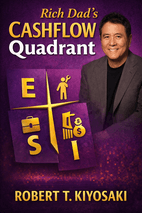
Robert T. Kiyosaki's Rich Dad's CASHFLOW Quadrant explains the four ways people earn money—as an Employee, Self-Employed, Business Owner, or Investor—and advocates for building systems and assets to achieve financial freedom. It is for readers seeking to move beyond trading time for money.
Feature
Insta.Page
Blinkist
Shortform
Rich Dad's CASHFLOW Quadrant
✓
✕
✕
Summary Depth
Full Chapter-by-Chapter
15-min overview
Section-by-section guides
Audio Narration
✓
✓
✓
Visual Mindmaps
✓
✕
✕
AI Q&A
✓
✕
✕
Quizzes
✓
✕
✕
PDF Downloads
✓
✕
✓
Price
$89.99/yr
$146/yr (PRO)
$199/yr
*Competitor data last verified July 2026.
1 Page Summary
Robert T. Kiyosaki's Rich Dad's CASHFLOW Quadrant builds upon the foundational lessons of his bestselling Rich Dad Poor Dad by introducing a framework for understanding how people earn money. The book presents the four quadrants—E (Employee), S (Self-Employed/Small Business Owner), B (Business Owner), and I (Investor)—as distinct mindsets and methods for generating income. Kiyosaki argues that the left side (E and S) is defined by trading time for money and paying the highest taxes, leading to a cycle of financial dependency, while the right side (B and I) focuses on building systems and assets that work independently of the individual's direct effort, enabling financial freedom and favorable tax treatment.
Published in 1998, the book emerged during a period of growing economic optimism and the dot-com boom, which popularized entrepreneurship and challenged traditional career paths. Kiyosaki's work tapped into a desire for financial education that was absent from conventional schooling, positioning itself as a counter-narrative to the post-war ideal of job security. His "Rich Dad" parables, while controversial for their anecdotal and simplified approach, effectively distilled complex financial principles into accessible lessons about cash flow, asset acquisition, and leveraging corporate structures for wealth building.
The lasting impact of CASHFLOW Quadrant lies in its powerful mental model, which has influenced millions to critically assess their source of income and aspire to transition from the left side to the right. It popularized the crucial distinction between being self-employed (still trading time for money) and being a true business owner (owning a system that others operate). While critics note its repetitive style and lack of detailed actionable steps, the book's core philosophy—that true wealth is built by owning assets and moving beyond linear earned income—remains a cornerstone of modern financial literacy and entrepreneurial thought.
Introduction: Which Quadrant Are You In?
Overview
Overview
This chapter introduces the foundational concept of the CASHFLOW Quadrant, a framework that categorizes people based on the source of their income. It presents this as a tool for self-assessment and a roadmap for those standing at a "financial fork in the road," aiming to shift from seeking job security to achieving true financial freedom. The narrative is framed by the author's contrasting lessons from his "Poor Dad" and "Rich Dad," setting the stage for a journey from the left side of the quadrant (Employee and Self-Employed) to the right side (Business Owner and Investor).
The Core of the CASHFLOW Quadrant
The quadrant is divided into four sections: E (Employee), S (Self-Employed/Small Business Owner), B (Big Business Owner), and I (Investor). Your quadrant is defined not by who you are, but by where your cash originates. The left side (E and S) is characterized by trading time for money, either for someone else or for yourself. The right side (B and I) is defined by systems and money working for you. While financial freedom is possible in any quadrant, the skills and leverage found on the right side can accelerate the journey significantly.
Two Fathers, Two Philosophies
The author’s "Poor Dad," a highly educated government official, championed the traditional path: "Go to school, get good grades, and find a safe, secure job." This advice points directly to the left side of the quadrant, prioritizing the security of a steady paycheck. In stark contrast, his "Rich Dad," a high school dropout, advised: "Go to school, graduate, build businesses, and become a successful investor." This philosophy targets the right side, focusing on creating assets and financial systems.
The Parable of the Bucket Haulers and the Pipeline Builder
A central story illustrates the mental shift required. In a village without water, two contractors, Ed and Bill, win the supply contract. Ed immediately begins hauling buckets from the lake, working harder and hiring help to increase volume. He remains physically and financially tied to his labor. Bill disappears to build a pipeline. He creates a corporation, secures investors, and builds a permanent system that delivers water 24/7 at a lower cost. Bill’s pipeline generates continuous wealth whether he works or not. The moral is a guiding question: "Am I building a pipeline or hauling buckets?"
Who This Book Is For
This book is specifically written for individuals in the E and S quadrants who feel ready to move toward the B and I quadrants. It acknowledges that this path is not easy but positions the reward—financial freedom—as worth the effort. The author promises to share the mental, emotional, and educational processes he underwent to make this transition himself.
A Roadmap in Three Parts
The introduction concludes by outlining the book’s structure. Part One will dissect the core differences between the quadrants and help you locate yourself and your goals. Part Two focuses on the necessary personal change—the "who you have to be" more than the "what you have to do." Part Three delves into the practical skills and secrets for finding success as a B and an I, emphasizing that operating on the right side requires greater financial intelligence and control over cash flow.
Key Takeaways
The CASHFLOW Quadrant reveals that your financial trajectory is determined by your income source, not your job title.
The left side (E/S) trades time for money; the right side (B/I) uses systems and invested capital to generate money.
The parable of Ed and Bill underscores the critical choice between linear effort ("hauling buckets") and building systemic, automated wealth ("pipelines").
Achieving financial freedom is a conscious journey from seeking job security (left side) to building financial security (right side), requiring new skills and a fundamental shift in mindset.
Key concepts: Introduction: Which Quadrant Are You In?
1. Introduction: Which Quadrant Are You In?
Foundational Concept of the CASHFLOW Quadrant
Framework categorizing people by income source, not identity
Tool for self-assessment and roadmap for financial transition
Contrasts lessons from 'Poor Dad' vs. 'Rich Dad' philosophies
Journey from left side (E/S) to right side (B/I) for financial freedom
Structure of the CASHFLOW Quadrant
E (Employee): Works for someone else, trades time for money
S (Self-Employed/Small Business Owner): Works for themselves, trades time for money
B (Big Business Owner): Owns systems that work for them
I (Investor): Money works for them through investments
Left side (E/S) = time for money; Right side (B/I) = systems/money for you
Two Contrasting Financial Philosophies
Poor Dad: 'Go to school, get good grades, find a safe, secure job' (Left side focus)
Rich Dad: 'Build businesses and become a successful investor' (Right side focus)
Poor Dad prioritizes job security and steady paycheck
Rich Dad focuses on creating assets and financial systems
Parable of Bucket Haulers vs. Pipeline Builder
Ed (Bucket Hauler): Works harder, hires help, remains tied to labor
Bill (Pipeline Builder): Creates corporation, secures investors, builds system
Pipeline generates continuous wealth regardless of personal work
Guiding question: 'Am I building a pipeline or hauling buckets?'
Target Audience and Purpose
Written for individuals in E and S quadrants ready to move to B and I
Acknowledges difficulty but positions financial freedom as worth the effort
Shares author's mental, emotional, and educational transition process
Focuses on moving from job security to financial security
Book Structure and Learning Path
Part One: Differences between quadrants, self-location, goal setting
Part Two: Personal change - 'who you have to be' over 'what to do'
Part Three: Practical skills for success as B and I
Right side requires greater financial intelligence and cash flow control
💡 Try clicking the AI chat button to ask questions about this book!
Chapter One: Why Don’t You Get a Job?
Overview
The chapter opens not with theory, but with visceral struggle. In 1985, the author and his wife Kim were homeless, living in their car, their savings and credit exhausted. To outsiders—and even to themselves in moments of doubt—the obvious solution was to "get a job." Both were employable college graduates. Yet they resisted, enduring hunger, fear, and strain on their marriage because they were pursuing a different objective: not job security, but financial freedom. This period of extreme adversity, which lasted for nearly a year, was the painful foundation from which they eventually became millionaires by 1989 and achieved complete financial independence by 1994. This personal journey directly challenges the common belief that "it takes money to make money," arguing instead that the journey begins with mindset, not capital.
The Core Dilemma: Job vs. Freedom
The central conflict is between two philosophies of life and work. When well-meaning friends and family asked, "Why don't you you get a job?" they were speaking from a framework that values the safety of a regular paycheck. For the author, inspired by his "rich dad," a job represented trading time for money—a trap that would prevent him from having money work for him. This isn't a disdain for work ethic, but a fundamental disagreement about the purpose of work. The emotional toll of their homelessness is starkly portrayed: arguments fueled by fear and hunger, yet a relationship strengthened by shared resolve. Their goal wasn't just wealth, but the freedom wealth could enable.
Introducing the CASHFLOW Quadrant
To explain the different ways people generate income, the author introduces the CASHFLOW Quadrant, a simple but powerful diagram divided into four sections:
E (Employee): Earns money by having a job.
S (Self-Employed/Small Business Owner): Earns money by working for themselves.
B (Business Owner): Owns a system that generates money, and can work independently of it.
I (Investor): Has money work for them through investments.
The critical insight is that while you can be rich or poor in any quadrant, the path to financial freedom—where your money works so you don't have to—is most effectively found on the right side (B and I). The left side (E and S) trades time for money and offers limited tax advantages, whereas the B and I quadrants allow assets and systems to generate wealth, often with significant legal tax benefits.
A Tale of Two Fathers: Contrasting Mindsets
The chapter's emotional and philosophical weight comes from the contrasting examples of the author's two father figures:
His Highly Educated, "Poor" Dad (an E): Believed that "money isn't everything" and that the love of money was evil. He was a hardworking state official who climbed the traditional ladder but found himself, at age 54, politically banished and struggling in vain to succeed as an S (self-employed). He died frustrated, financially dependent on Social Security, but with a clear conscience.
His "Rich Dad" (a B and I): Believed money was important for supporting a meaningful life—providing time for family, charity, health, and travel. He focused on building businesses and investments, which granted him increasing freedom and wealth as he aged.
This contrast is made painfully real. The educated dad had less and less time for family as his "success" grew, and he fell deeper into debt (e.g., buying a bigger house for a tax break). The rich dad had more and more free time as his businesses systems matured. The educated dad's tragic end—jobless, trying to navigate quadrants he didn't understand—became a haunting motivator for the author during his own homeless period.
Choosing Your Path
The quadrant you are drawn to depends on your core values, strengths, and interests. The author emphasizes that the skills required for success on the right side (B and I)—like financial acuity, systems thinking, and risk management—are rarely taught in school. His choice to focus on the B and I quadrants was a deliberate strategy based on his rich dad's guidance and his own understanding of his temperament. The chapter concludes by framing the book as a guide to understanding these different worlds, not to claim one quadrant is superior, but to empower informed choice about "who you want to become" over your working life.
Key Takeaways
Financial freedom and job security are not the same goal. The pursuit of freedom may require rejecting the apparent safety of a paycheck.
It doesn't take money or a formal education to make money. It takes a dream, determination, a willingness to learn, and leveraging your unique assets.
The CASHFLOW Quadrant (E, S, B, I) defines how income is generated. Moving from the left side (E-S) to the right side (B-I) represents a shift from you working for money to your money working for you.
Your mindset and values determine your natural quadrant. The core philosophical difference between "money isn't important" and "money is important for freedom" profoundly shapes your financial path.
The right-side quadrants (B and I) offer superior tax advantages and pathways to wealth that are not typically available to employees and the self-employed.
Long-term consequences matter. Small differences in your chosen quadrant compound over a lifetime, leading to vastly different outcomes in terms of time, freedom, and wealth.
Key concepts: Chapter One: Why Don’t You Get a Job?
2. Chapter One: Why Don’t You Get a Job?
Personal Struggle: The Foundation of Financial Freedom
The author and his wife experienced homelessness in 1985 despite being employable college graduates
They resisted getting jobs to pursue financial freedom rather than job security
This period of adversity became the foundation for becoming millionaires by 1989 and achieving financial independence by 1994
Challenges the belief that 'it takes money to make money' - emphasizes mindset over capital
The Core Dilemma: Job Security vs. Financial Freedom
Two conflicting philosophies: trading time for money (job) vs. having money work for you (freedom)
Well-meaning advice to 'get a job' comes from a safety-focused framework
A job represents a trap that prevents money from working for you
The emotional toll of homelessness was endured for the greater goal of freedom
The CASHFLOW Quadrant Framework
Four ways people generate income: E (Employee), S (Self-Employed), B (Business Owner), I (Investor)
Left side (E and S) trades time for money with limited tax advantages
Right side (B and I) allows assets and systems to generate wealth with significant tax benefits
Path to financial freedom is most effectively found on the right side (B and I)
Contrasting Mindsets: Two Father Figures
'Poor Dad' (E/S): Highly educated state official who believed 'money isn't everything'
'Poor Dad' died frustrated, financially dependent on Social Security despite hard work
'Rich Dad' (B/I): Believed money was important for supporting meaningful life and freedom
'Rich Dad' focused on building businesses and investments that granted increasing freedom with age
Choosing Your Path and Long-Term Consequences
Quadrant choice depends on core values, strengths, and interests
Skills for B and I quadrants (financial acuity, systems thinking, risk management) are rarely taught in school
Small differences in quadrant choice compound over a lifetime
The book aims to empower informed choice about 'who you want to become'
Chapter Two: Different Quadrants, Different People
Overview
This chapter paints a vivid picture of two very different paths in life, represented by the author's fathers. One sought security above all else, while the other valued freedom. This isn't just about career choices; it's about who you are at your core—your fundamental responses to fear and risk. Each of the four financial quadrants (E, S, B, and I) attracts people with distinct mindsets, which you can hear in the very words they use. Employees talk about security and benefits, while the Self-Employed crave control, often saying things like, "I did it my way." True Business Owners think in terms of delegation and systems, and Investors focus on cash flow and returns.
These differences become critical when building wealth. The Self-Employed are often brilliant specialists, but their need for control traps them in a job they own. The Business Owner, in contrast, builds a system that can run without them. The ultimate goal, however, lies in the Investor (I) quadrant, where money works for you. Here, the chapter redefines true wealth not as a high salary but as the number of days your passive income can cover your expenses, aiming for that income to perpetually exceed your costs of living.
This shift in perspective is urgent because the old rules of security have crumbled. The move from guaranteed company pensions to personal responsibility via 401(k)s means everyone is now forced to confront the I quadrant, the realm of risk. Many bring a fear-based, security-seeking mindset to investing, opting for strategies like excessive diversification or blindly trusting mutual funds. The chapter argues that the real danger isn't informed risk-taking but uninformed risk-avoidance. In the Information Age, financial survival demands becoming an educated investor who learns to manage risk as a skill.
Ultimately, the journey to financial freedom is accessible but demands a personal price, paid in resilience, desire, and the willingness to overcome setbacks. A practical test for aspiring Business Owners—can you leave your business for a year and return to find it stronger?—encapsulates the goal: building something that thrives independently. The path is clear, but it requires shifting your identity from seeking security to mastering the systems and skills that create genuine, self-sustaining wealth.
The author reflects on his educated dad’s unsuccessful attempts to move from the E (Employee) quadrant into the S (Self-employed) and B (Business owner) quadrants. Despite understanding the technical skills required, his dad was held back by his emotional response to fear and failure. When faced with financial loss, he retreated to the perceived security of the E and S quadrants. This highlights a central theme: the quadrants are not just about what you do, but about who you are at your core—your fundamental responses to fear, risk, and uncertainty. While both the author’s rich dad and educated dad experienced fear, the educated dad sought security, while the rich dad chose freedom.
Listening to the Words, Understanding the Soul
A primary skill for success on the right side (B and I quadrants) is the ability to “read” people by listening to the words they use, which reveal their core values and quadrant orientation.
E (Employee) Vocabulary: Uses words like “secure,” “safe,” “benefits,” and “good pay.” Their primary drive is to reduce fear through certainty and a defined contractual agreement. Security is often more important than money.
S (Self-Employed) Vocabulary: Uses phrases like “my rate is...,” “I can't find good help,” or “I did it my way.” They are “do-it-yourselfers” who respond to fear by seeking control and independence. They value being the expert and doing things their way above all else, often making it difficult to delegate or build a team.
B (Business Owner) Vocabulary: Says things like, “I'm looking for a new president for my company.” They think in terms of delegation and systems, asking, “Why do it yourself when you can hire someone to do it better?”
I (Investor) Vocabulary: Discusses “internal rate of return” and “cash flow.” They make money work for them.
Understanding these verbal cues allows a leader to communicate effectively with individuals from different quadrants, as the same word (like “risk”) can excite an I but terrify an E.
The S Quadrant: The Independent Artist
The S quadrant is filled with perfectionists and specialists—from doctors and lawyers to plumbers and shop owners. They are often true artists in their field. For them, independence trumps money; they need to be in control and have their expertise respected. This very strength becomes their limitation in building wealth, as they struggle to delegate. Their business is them; if they stop working, income stops. They own a job, not a true system.
The B Quadrant: The System Builder
In stark contrast to the S, a true B thrives on delegating work to competent people within a system they own or control. Their skill is leadership—bringing out the best in others and integrating smart people from all quadrants. The litmus test for a true B business is this: Can you leave it for a year or more and return to find it more profitable and running better? If so, you own a system. If not, you own a job. The technical skills of business are necessary but secondary to the human skill of leading people.
The Entrepreneurial Trap: Product vs. System
Many aspiring entrepreneurs confuse building a better product (an S mindset) with building a better business system (a B mindset). The classic example is comparing a gourmet hamburger to McDonald's. Countless people can make a better burger, but only McDonald's built a unparalleled global delivery system. The key to moving from S to B is shifting focus from perfecting the product/service itself to designing a system that can deliver it consistently through other people.
The I Quadrant: Where Money Converts to Wealth
The I (Investor) quadrant is where money works for the individual. It is the ultimate playground for wealth because it utilizes OPM (Other People's Money). The author makes a critical distinction: you can be rich (have high income, often from a successful S or B) without being wealthy. Wealth is achieved when the passive income from all your assets exceeds your living expenses. For true financial freedom, income must ultimately be converted into tangible, income-generating assets in the I quadrant.
Wealth Measured in Time, Not Dollars
The chapter reframes true wealth not as a dollar amount but as the number of days you can survive without working, based on your passive income covering your expenses. The ultimate goal is achieving indefinite wealth, where investment income perpetually exceeds your cost of living. This contrasts sharply with the "red-line finances" many people experience, where high earnings are instantly consumed by lifestyle expenses and debt, creating constant financial stress and leaving nothing for the asset column.
The Investor (I) Quadrant Defined
The core of the I quadrant is generating current, ongoing income from assets where your money is working for you. This is distinctly different from:
Saving for retirement in a 401(k) or similar plan, which is deferred and subject to market risk.
Professionals like stockbrokers or financial advisors, who typically earn active income (commissions/fees) from their work (E or S quadrant) rather than passive income from their own investments.
Other forms of "investment" like loyalty to an employer for a pension, relying on children for care, or depending on government programs like Social Security—all of which are becoming increasingly obsolete or unreliable.
The significant advantages of the I quadrant include the potential for money to work for generations and substantial legal tax benefits unavailable to most wage earners.
The Psychology of Risk and Investor Types
The primary barrier keeping people from the I quadrant is the fear of losing money—risk. This fear categorizes people into four broad types:
The Risk-Averse: Who keep money "safe" in savings.
The Delegators: Who hand their money to a financial advisor or fund manager.
The Gamblers: Who treat investing as a game of chance.
The Investors: Who treat it as a game of skill that can be learned.
The chapter argues that true risk can be minimized or eliminated through education and skill, contrasting sharply with the unseen risk of trusting outdated pension systems.
The seismic Shift: From Industrial-Age to Information-Age Security
A historic change is identified: the move from defined-benefit pension plans (a company's promise of lifelong income) to defined-contribution plans like 401(k)s (you get back only what was contributed, subject to market forces). This shift, marked by events like the 1974 ERISA law, transferred all retirement risk and responsibility from the employer to the individual. Combined with the impending insolvency of systems like Social Security, this means the old idea of a "safe, secure job" leading to a guaranteed retirement is over.
The Danger of Seeking Security in the Wrong Quadrant
Millions of inherently security-minded E's and S's are now forced to invest in the I quadrant due to this pension shift, but they bring their fear-based strategies with them. This explains the popularity of:
Diversification: A "don't lose" strategy, contrasted with Warren Buffett's advocacy for focused, concentrated investing based on deep knowledge.
Blue-Chip Stocks & Mutual Funds: Perceived as safer, though they offer no protection in a systemic market crash.
The chapter warns that the I quadrant is fundamentally the quadrant of risk, not security, and entering it without an investor's education is dangerous.
The Imperative to Become an Educated Investor
Given the great economic upheavals that accompany era changes, the conclusion is that individuals must take personal responsibility for their long-term financial security. This requires:
Learning to manage risk rather than avoid it.
Becoming a savvy investor yourself, rather than blindly delegating your future.
Acquiring the skills of the I quadrant, which, like riding a bike, can be learned through practice.
The outdated mindset of entitlement and dependence on big companies or government must be replaced with self-sufficiency and financial education to prosper in the Information Age.
Key Takeaways
True wealth is measured by the length of time your passive income can cover your expenses, not by your salary.
The Investor (I) quadrant is defined by generating current, ongoing income from assets, distinct from saving or professional financial services.
Fear of risk is the main barrier to becoming an investor, but risk can be managed through education and skill.
A historic shift from defined-benefit to defined-contribution pensions has transferred all retirement risk to individuals, making investor education essential.
Security-minded strategies like excessive diversification and reliance on mutual funds are often born of fear, not informed investing.
In the Information Age, personal financial responsibility and actively learning to manage investment risk are non-negotiable for long-term security.
The journey toward financial freedom is accessible to everyone, provided they cultivate the necessary skills and resolve. For those who have already reached this goal, the author offers congratulations and a request: share your story and guide others if they seek direction, but always allow them to find their own way among the many paths available.
A central theme emerges here: while financial freedom is liberating, it is not cheap. Its price isn't counted in money, advanced education, or even high risk. Instead, the currency is personal—paid in dreams, burning desire, and the capacity to overcome the disappointments that inevitably arise along the way. The author challenges readers to ask themselves if they are willing to pay this price, illustrating the choice through the contrasting lives of his two fathers. One paid the price for freedom; the other did not, but he still paid a different price in terms of missed opportunities or unfulfilled potential.
The B-Quadrant Quiz
Transitioning to a practical tool, the author presents a definitive test for anyone in or entering the B-Quadrant (Business Owner). The core question is: "Can you leave your business for a year or more and return to find it more profitable and running better than when you left it?" Answering "yes" signifies that you have built a true, system-driven business that operates independently of your daily presence. This is the essence of a successful business owner, distinguishing them from those who are merely self-employed.
Key Takeaways
Achieving financial freedom requires personal qualities like determination and skill, and those who succeed should act as guides, not dictators, for others on their journeys.
The real cost of financial freedom is measured in intangible assets: your dreams, your desire, and your resilience against setbacks.
A genuine business owner builds a system that thrives and grows without their constant involvement, as validated by the B-Quadrant Quiz.
Key concepts: Chapter Two: Different Quadrants, Different People
3. Chapter Two: Different Quadrants, Different People
The Core Distinction: Security vs. Freedom
Two life paths represented by the author's fathers: one seeking security, the other valuing freedom
Quadrants reflect who you are at your core—fundamental responses to fear, risk, and uncertainty
The educated dad retreated to security when faced with failure, while the rich dad pursued freedom despite fear
Listening to Vocabulary Reveals Quadrant Identity
E (Employee) vocabulary centers on 'security,' 'benefits,' and 'safe' employment
S (Self-Employed) vocabulary includes 'my rate,' 'I did it my way,' and difficulty delegating
B (Business Owner) vocabulary focuses on delegation, systems, and hiring leadership
I (Investor) vocabulary discusses 'cash flow,' 'returns,' and making money work
The S Quadrant: The Independent Specialist
Filled with perfectionists and specialists who value control and independence over money
They own a job rather than a system—income stops when they stop working
Their strength (expertise) becomes a limitation in building scalable wealth
The B Quadrant: The System Builder
Thrives on delegation and building systems that operate independently
The true test: Can you leave the business for a year and return to find it stronger?
Leadership and human skills are more critical than technical business skills
The Ultimate Goal: The Investor Quadrant
Wealth is redefined as the number of days passive income covers expenses
The modern shift from pensions to 401(k)s forces everyone to confront the I quadrant
The real danger is uninformed risk-avoidance rather than informed risk-taking
Financial survival requires becoming an educated investor who manages risk as a skill
The Journey to Financial Freedom
Accessible but demands personal price in resilience, desire, and overcoming setbacks
Requires shifting identity from security-seeking to system-mastering
Building something that thrives independently is the ultimate objective
The Entrepreneurial Trap: Product vs. System
Confusing building a better product (S mindset) with building a better business system (B mindset) is a common trap.
The key example is comparing a gourmet hamburger to McDonald's—the latter succeeded through its global delivery system, not just the product.
Moving from S to B requires shifting focus from perfecting the product/service to designing a system that delivers it consistently through others.
The I Quadrant: Where Money Converts to Wealth
The Investor (I) quadrant is where money works for the individual, utilizing OPM (Other People's Money).
A critical distinction is made between being rich (high income) and being wealthy (passive income exceeds living expenses).
True financial freedom requires converting income into tangible, income-generating assets in the I quadrant.
Wealth Measured in Time, Not Dollars
True wealth is reframed as the number of days one can survive without working, based on passive income covering expenses.
The ultimate goal is indefinite wealth, where investment income perpetually exceeds cost of living.
This contrasts with 'red-line finances,' where high earnings are consumed by lifestyle and debt, leaving nothing for assets.
The Investor (I) Quadrant Defined
The core of the I quadrant is generating current, ongoing income from assets where money works for you.
It is distinct from saving for retirement (deferred and risky), professionals earning active income, or relying on obsolete systems like pensions.
Advantages include generational wealth potential and substantial legal tax benefits unavailable to wage earners.
The Psychology of Risk and Investor Types
Fear of losing money is the primary barrier to entering the I quadrant, categorizing people into four types.
Types include the Risk-Averse, Delegators, Gamblers, and true Investors (who treat it as a skill).
True risk can be minimized through education and skill, unlike the unseen risk of trusting outdated systems.
The Seismic Shift: From Industrial-Age to Information-Age Security
A historic change occurred from defined-benefit pension plans (company's promise) to defined-contribution plans like 401(k)s (individual risk).
Laws like ERISA (1974) transferred retirement risk and responsibility from employer to individual.
The old idea of a 'safe, secure job' leading to guaranteed retirement is now obsolete.
The Danger of Seeking Security in the Wrong Quadrant
Security-minded E's and S's are forced into the I quadrant but bring fear-based strategies, such as diversification and blue-chip stocks.
Diversification is a 'don't lose' strategy, contrasted with focused investing based on deep knowledge.
The I quadrant is fundamentally about risk, not security, and entering it without education is dangerous.
The Imperative to Become an Educated Investor
Individuals must take personal responsibility for long-term financial security in the Information Age.
This requires learning to manage risk, becoming a savvy investor, and acquiring I quadrant skills through practice.
The outdated mindset of entitlement and dependence must be replaced with self-sufficiency and financial education.
The True Nature of Wealth and Investment
Wealth is measured by how long passive income can sustain expenses, not by salary level.
An Investor (I) is defined by generating ongoing current income from assets, not by saving or using financial advisors.
The primary barrier to becoming an investor is fear of risk, which can be managed through education and skill development.
The Modern Retirement Risk Shift
A historic shift from defined-benefit to defined-contribution pensions has transferred all retirement risk to individuals.
This shift makes investor education essential for personal long-term security.
In the Information Age, taking personal financial responsibility and actively learning to manage risk is non-negotiable.
The Psychology and Cost of Financial Freedom
Financial freedom is accessible to everyone but requires cultivating specific skills and personal resolve.
The price of financial freedom is paid in personal currency: dreams, burning desire, and resilience against disappointment.
Those who achieve financial freedom should share their story and guide others, but allow them to find their own path.
The B-Quadrant Litmus Test
The definitive test for a true Business Owner is whether the business can run profitably and improve in their prolonged absence.
A 'yes' answer indicates a system-driven business that operates independently of the owner's daily involvement.
This distinction separates genuine business owners from the self-employed who remain tied to their work.
Contrasting Mindsets and Outcomes
Security-minded strategies like excessive diversification and reliance on mutual funds often stem from fear, not informed strategy.
The choice to pursue financial freedom involves paying a price, while not pursuing it also carries a cost in missed potential.
The author illustrates this through the contrasting lives and choices of his two fathers.
Chapter Three: Why People Choose Security over Freedom
Overview
It explores the powerful societal conditioning that pushes most people toward seeking job security instead of financial freedom, tracing this mindset from childhood through adulthood. The traditional script of going to school, getting a good job, and acquiring debt through mortgages and lifestyle expenses creates a cycle where individuals feel they can't afford to quit, perpetually trapped by bills. Ironically, even success on the left side of the CASHFLOW Quadrant—as an Employee (E) or Self-Employed (S)—often leads to longer hours and less time, consuming the very freedom it promises.
This entrapment is deepened by a lack of financial intelligence. Many, like the author's educated father, follow well-meaning but flawed advice, treating personal homes as assets and chasing tax deductions that only lead to more debt and higher taxes. The two biggest expenses, taxes and debt interest, systematically drain increased income on the left side. The futile search for freedom within the E and S quadrants typically manifests as either jumping from job to job or starting one's own grueling business, which often results in becoming a prisoner of your own work.
The chapter argues that the old advice of finding a safe job is now obsolete, offering few real benefits and making employees financial partners with the government. It challenges the illusion that a large bank account alone equals security, emphasizing that without true financial education, accumulated wealth can vanish in economic shifts. The proven path to true freedom lies on the right side of the Quadrant, in mastering both the Business Owner (B) and Investor (I) categories. Here, systems and money work for you.
Ultimately, everyone faces a fork in the road: the crowded path of job security or the road to financial freedom. Wealth creation is a personal responsibility; an employer provides a paycheck, not riches. The most strategic and accessible route for most is to focus on building a Business first. This provides the crucial cash flow and real-world education needed to then become a successful Investor, allowing one to not just survive economic cycles but to profit from them.
The Conditioning Toward Job Security
The chapter opens with the contrasting advice from the author's two fathers. While both recommended college, their paths diverged afterward. His highly educated, "poor" dad advocated for the traditional route: "Go to school, get good grades, and then get a good safe, secure job." This is a life focused on the left side of the CASHFLOW Quadrant (E for Employee and S for Self-Employed/Small Business), motivated primarily by security.
The core reason people seek job security is deep conditioning, starting in school and at home. Most individuals learn little about money, making the promise of a steady paycheck feel like the only safe harbor. The left side of the Quadrant is fundamentally driven by this need for security, while the right side (B for Business Owner and I for Investor) is motivated by freedom.
Trapped by Debt and a Predetermined Script
For 90% of the population working on the left side, the path is often cemented by debt. Leaving school with student loans and immediately acquiring credit cards and other expenses forces a reliance on job security just to pay bills. The author describes a common "script": graduate, get a job, acquire lifestyle expenses (apartment, car, clothes), fall in love, get married, buy a house with a mortgage, furnish it with easy credit, have children, and suddenly find themselves less than three months from bankruptcy. This cycle traps people, making them say, "I can’t afford to quit. I have bills to pay."
The Success Trap on the Left Side
The author illustrates a critical paradox using his two dads. His rich dad, on the right side, achieved greater success which translated into more free time and money to teach others. His business system worked for him. Conversely, his educated dad worked harder on the left side. Each promotion brought more money but also more responsibility, longer hours, and less time with his family. Success in the E and S quadrants often consumes your time, leaving little of the freedom it was supposed to provide.
The Money Trap and Financial Illiteracy
Surviving on the right side requires financial intelligence—knowing how to keep money, make it work for you, and preserve it across generations. The author's rich dad understood that a personal home is a liability, not an asset, because it takes money out of your pocket. His educated dad, despite being word-literate, was not financially literate. He relied on bankers and accountants who told him his house was an asset and his best investment.
This advice led to a vicious cycle: each raise pushed him into a higher tax bracket, and his advisors recommended buying a bigger house for the mortgage interest tax deduction. The result was more income, but also more debt and higher taxes. The harder he worked, the more financially trapped he became, reinforcing his desperate clinging to job security and his advice to seek safe employment.
The Two Biggest Expenses: Taxes and Debt
The central money trap for those on the left side is that increased income disproportionately increases two major expenses: taxes and interest on debt. Government tax policies often encourage deeper debt (like mortgage deductions), which benefits the system but not necessarily the individual. The author notes that the ultra-rich avoid high taxes by generating income in the B and I quadrants, while E-quadrant employees are offered tax breaks that merely lead them further into liability.
The Futile Search for Freedom on the Left Side
Most people, trained only for job security and burdened by debt, mistakenly search for freedom within the E and S quadrants. The chapter outlines two common, frustrating patterns:
Going from Job to Job: The cycle of finding a "dream job," becoming disillusioned after a few years, and hopping to the next one, all while age and financial responsibilities (child support, college funds) mount without real wealth accumulation.
Doing Your Own Thing (E to S): After corporate downsizing, many start their own business. While rewarding, the S quadrant is arguably the hardest and riskiest. The business owner becomes the "chief cook and bottle washer," working incessantly. With a 99% failure rate over ten years due to lack of experience, capital, and eventual burnout, it often leads to being a prisoner of one's own business.
The Flawed Advice of the Industrial Age
The chapter concludes that the old advice—"Go to school, get good grades, and find a safe, secure job"—is now bad advice for most. For employees, there are few real tax breaks, making them "50/50 partners with the government." True financial freedom is nearly impossible when your primary strategy is to go into more debt for a tax deduction. The path to security and freedom lies in education about and movement toward the right side of the Quadrant.
The Illusion of Security in Money Alone
The chapter challenges the common belief that a large bank account automatically equals security. Many people with substantial retirement savings still feel deeply insecure because their wealth is often tied directly to their labor or a single business they don't fully understand. If that money vanishes and their earning capacity is gone, they are left vulnerable. The text emphasizes that in times of major economic upheaval, great transfers of wealth occur. The key preparation isn't just accumulating cash, but investing in one's financial education to be ready to navigate—and potentially benefit from—these inevitable changes.
The Proven Pattern for True Freedom
The author presents the definitive pattern for achieving financial freedom, as taught by his rich dad: operating successfully in both the B (Business Owner) and I (Investor) quadrants. In this model, people work for you in the B quadrant, and your money works for you in the I quadrant, granting you the ultimate freedom to choose whether to work. This is the pattern followed by the ultra-rich. However, a critical warning is issued: the skills required in each quadrant are different. Many successful B's fail as investors because their ego, not education, guides them after a big windfall. Mastery in both quadrants provides stability and genuine freedom.
The Fork in the Road
People ultimately choose between two primary paths: the common path of job security (left side of the Quadrant: E and S) and the path to financial freedom (right side: B and I). In uncertain times, the instinct is to cling tighter to job security, often leading to a lifetime of pursuit without ever achieving real safety. At a minimum, the author recommends striving for financial security—confidence in both your earning ability and your investing skills across all market cycles. He reveals that true investors often profit most in downturns, capitalizing on the panic of the unprepared.
The Limits of a Paycheck
A stark story illustrates a fundamental truth: your employer's responsibility is to provide a paycheck, not to make you wealthy. Employees can work for decades, earning good salaries, yet finish no better off financially than when they started, while the business owner builds significant equity. Wealth creation is a personal responsibility that begins the moment you receive your income. The author reiterates his rich dad's belief: "the only difference between a rich person and a poor person is what they do in their spare time." Working hard on the left side of the Quadrant means you'll likely have to work hard forever. Directing your spare time and financial discipline to the right side is what creates a chance for freedom.
The Step-by-Step Path: B Before I
When asked for a recommendation, the author advocates for the same path taken by successful entrepreneurs: focus on the B quadrant first, then transition to the I quadrant. He offers two core reasons for this sequence:
Experience and Education: Building a successful business provides invaluable, real-world education in systems and leadership. This "business sense" makes you a much more astute investor, as you learn to identify and invest in other strong B's. Investing in an E or S who lacks systemic understanding is far riskier.
Cash Flow: A functioning business generates the capital and, crucially, the free time needed to weather the volatile learning curve of investing. Without this financial cushion, individuals operating "at the red line" can be wiped out by a single market swing. The B quadrant provides the resources to gain investment knowledge safely.
The chapter concludes on an optimistic note: thanks to modern technology and systems, it is now easier than ever before to build a successful business in the B quadrant, making this path more accessible.
Key Takeaways
Wealth ≠ Security: Money alone, especially money tied solely to your labor, does not create true security. Financial education is the real asset that prepares you for economic change.
Freedom's Blueprint: Ultimate financial freedom is found in mastering both the B (Business Owner) and I (Investor) quadrants, where systems and money work for you.
You Are the Architect of Your Wealth: Your boss pays you; they do not make you rich. Your financial future is determined by how you manage your paycheck and use your spare time.
The Strategic Sequence: For most people, the safest and most effective path is to build a successful Business first. This provides the necessary cash flow and real-world education to then become a successful Investor.
Embrace Change: Economic downturns and shifts are not just threats; they are periods where wealth is transferred. The educated and prepared can navigate these times to their advantage.
Key concepts: Chapter Three: Why People Choose Security over Freedom
4. Chapter Three: Why People Choose Security over Freedom
The Societal Conditioning Toward Job Security
Traditional advice promotes school, good grades, and a safe job (E/S quadrants).
Conditioning begins in childhood and is reinforced by a lack of financial education.
The left side (E/S) is driven by security; the right side (B/I) is driven by freedom.
Bills and debt force reliance on a paycheck, making quitting feel impossible.
The cycle leaves many perpetually close to financial instability.
The Paradox of Success on the Left Side
Success as an Employee or Self-Employed often leads to longer hours and less free time.
Promotions increase income but also responsibility, consuming the freedom sought.
Contrast with the right side, where systems create time and financial freedom.
Financial Illiteracy and Misguided Advice
Lack of financial intelligence leads to treating liabilities (like a personal home) as assets.
Well-meaning advisors (bankers, accountants) often recommend strategies that increase debt.
Raises push into higher tax brackets, and tax deductions (e.g., mortgage interest) deepen the debt trap.
The Core Financial Drains: Taxes and Debt Interest
Increased income on the left side disproportionately increases taxes and interest expenses.
Government tax policies often incentivize more debt, benefiting the system over the individual.
The ultra-rich avoid this trap by generating income in the B and I quadrants.
The Futile Search for Freedom within E and S
Common patterns: job-hopping for better pay or starting a grueling self-employed business.
Both paths often lead to becoming a prisoner of your own work or paycheck.
True freedom requires a shift in quadrant, not just a change within the left side.
The Path to True Financial Freedom
Freedom is found on the right side of the Quadrant (Business Owner and Investor).
Wealth creation is a personal responsibility; an employer provides a paycheck, not riches.
The strategic route: build a Business (B) first to generate cash flow and education, then become an Investor (I).
This allows one to profit from economic cycles, not just survive them.
The Flawed Advice of the Industrial Age
The traditional path of 'go to school, get good grades, find a secure job' is now bad advice for most people.
Employees have few real tax breaks, effectively becoming '50/50 partners with the government'.
True financial freedom is nearly impossible when the primary strategy is going into debt for a tax deduction.
The path to security and freedom requires education about and movement toward the B and I quadrants.
The Illusion of Security in Money Alone
A large bank account does not automatically equal security; many with substantial savings still feel deeply insecure.
Wealth tied directly to one's labor or a single, poorly understood business is vulnerable to loss.
During major economic upheavals, great transfers of wealth occur between the prepared and unprepared.
True preparation involves investing in financial education to navigate and benefit from inevitable economic changes.
The Proven Pattern for True Freedom
The definitive pattern for financial freedom is operating successfully in both the B (Business Owner) and I (Investor) quadrants.
In this model, people work for you in the B quadrant, and your money works for you in the I quadrant.
The skills required for each quadrant are different; many successful B's fail as investors due to ego, not education.
Mastery in both quadrants provides stability and the ultimate freedom to choose whether to work.
The Fork in the Road: Security vs. Freedom
People choose between the common path of job security (E and S quadrants) and the path to financial freedom (B and I quadrants).
In uncertain times, the instinct to cling tighter to job security often leads to a lifetime of pursuit without real safety.
A minimum goal should be financial security—confidence in both earning ability and investing skills across all market cycles.
True investors often profit most in downturns by capitalizing on the panic of the unprepared.
The Limits of a Paycheck and Personal Responsibility
An employer's responsibility is to provide a paycheck, not to make you wealthy.
Employees can work for decades earning good salaries yet finish no better off financially, while the business owner builds equity.
Wealth creation is a personal responsibility that begins the moment you receive your income.
The key difference between rich and poor is what they do in their spare time; working hard forever on the left side versus building assets on the right.
The Step-by-Step Path: B Before I
The recommended path is to focus on the B quadrant first, then transition to the I quadrant.
Building a business provides invaluable real-world education in systems and leadership, making you a more astute investor.
A functioning business generates the capital and free time needed to safely weather the volatile learning curve of investing.
Modern technology and systems have made building a successful B-quadrant business more accessible than ever.
The Illusion of Job Security
A steady paycheck creates a psychological comfort zone, masking long-term financial vulnerability.
Reliance on a single employer or specialized skill leaves one exposed to economic shifts and layoffs.
The 'security' of a job often comes at the cost of time, freedom, and control over one's income.
The True Nature of Financial Security
Real security is derived from assets that generate cash flow independent of your direct labor.
It is built through financial intelligence—understanding cash flow, investing, and market cycles—not just a high salary.
Security is a function of control over your own financial systems, not dependence on an external entity.
The Path from Security to Freedom
The transition requires a mindset shift from seeking a safe job to building and owning systems.
Building a business (B quadrant) is presented as a foundational step to generate capital and operational knowledge.
The cash flow and experience from a business then fund and inform savvy investments (I quadrant), creating a self-sustaining wealth cycle.
Wealth Transfer in Times of Crisis
Economic downturns are periods of massive wealth redistribution, not just loss.
Those with financial education and liquid assets can acquire valuable investments at discounted prices.
Fear and lack of preparation in the E and S quadrants create the opportunities for wealth transfer to the B and I quadrants.
Overcoming the Fear of Change
The primary barrier to pursuing freedom is the emotional comfort of the known, even if it's suboptimal.
Education and a clear plan reduce the perceived risk of leaving the 'security' of a paycheck.
Starting part-time while employed can mitigate risk and build confidence in the B and I quadrant pursuits.
You've reached the end of the free chapters
Next chapter: “The Three Kinds of Business Systems” is locked
Keep reading Rich Dad's CASHFLOW Quadrant — and unlock all 600+ book summaries with audio, mindmaps and AI Q&A.
$0.00 due today · 7 days free, then $89.99/year ($7.49/mo) · Cancel anytime before day 7
Robert T. Kiyosaki is a renowned entrepreneur, investor, and educator best known for his groundbreaking personal finance book, *Rich Dad Poor Dad*. This international bestseller has challenged and changed the way millions of people around the world think about money and investing. Through his influential works, including the *Rich Dad* series, Kiyosaki advocates for financial literacy and advocates for building wealth through financial education, entrepreneurship, and real estate investing. His books, which are available on Amazon, have sold tens of millions of copies and have been translated into dozens of languages, solidifying his status as a leading and often provocative voice in the personal finance arena.
📚 Explore Our Book Summary Library
Discover more insightful book summaries from our collection