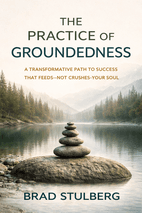
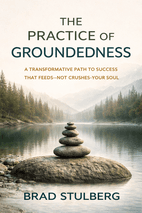
What is the book The Practice of Groundedness about?
Brad Stulberg's The Practice of Groundedness provides a structured framework for high achievers to build inner stability, covering acceptance, presence, patience, and vulnerability to combat burnout and find sustainable success.
Feature
Insta.Page
Blinkist
Shortform
Summary Depth
Full Chapter-by-Chapter
15-min overview
Detailed analysis
Audio Narration
✓ (AI narration)
✓
✓
Visual Mindmaps
✓
✕
✕
AI Q&A
✓ Voice AI
✕
✕
Quizzes
✓
✕
✕
PDF Downloads
✓
✕
✓
Price
$59.99/yr
$146/yr (PRO)
$199/yr
*Competitor data last verified February 2026.
About the Author
Brad Stulberg
Brad Stulberg is an author and coach who writes about sustainable excellence and well-being, drawing from his background in performance science and his own athletic experiences. He is best known for co-authoring the books "The Practice of Groundedness" and "Peak Performance," which explore the intersection of resilience, health, and achievement. His work is regularly featured in outlets like The New York Times and Outside Magazine.
1 Page Summary
In 'The Practice of Groundedness,' Brad Stulberg addresses a pervasive modern ailment he terms heroic individualism—the relentless, achievement-oriented drive that leaves high achievers chronically restless, dissatisfied, and fragile. The book's central thesis is that sustainable success and fulfillment are not found by striving harder, but by cultivating a solid internal foundation of groundedness. This foundational strength, likened to the deep roots of a redwood tree, enables passion and performance to soar sustainably. Stulberg synthesizes modern science, timeless wisdom traditions, and practical habits to argue that you cannot achieve your way to lasting happiness, proposing instead a shift from fragile, outward-focused striving to unwavering inner stability.
The book's distinctive approach is its structured, principle-based framework for building this grounded life. Each chapter unpacks a core component: fully accepting your present reality to enable effective movement; cultivating presence to own your attention and energy; practicing patience as a strategic, persistent force; embracing vulnerability as the true source of strength and confidence; fostering deep community to combat loneliness; and using physical movement to ground the mind. Stulberg grounds these concepts in personal anecdotes, like his battle with Obsessive-Compulsive Disorder (OCD), and stories from athletes and artists, while consistently linking them to psychological research (like Acceptance and Commitment Therapy) and philosophical insights (like the Buddhist parable of the "second arrow").
The intended audience is high-achieving individuals who feel controlled by their own drive, experiencing burnout, anxiety, or a sense of emptiness despite outward success. Readers will gain a practical roadmap to close the gap between their inner state (being) and their actions (doing). By learning to redirect habit energy, focus on the process as an infinite game, and integrate the principles into daily life through concrete strategies, readers are guided toward a more resilient, connected, and fulfilling definition of success. Ultimately, the book positions groundedness not just as personal improvement but as a necessary form of cultural resistance against a shallow, hurried world.
The chapter opens by examining a widespread modern struggle: high achievers who find themselves chronically restless, perpetually dissatisfied, and feeling controlled by their own drive, a condition termed heroic individualism. This mindset traps people in an endless cycle of achievement, leaving them with a gnawing sense that they are never enough. The author’s own confrontation with this reality came from a severe personal crisis—a sudden onset of OCD that forced a deep reckoning with how a lifetime of relentless striving creates a fragile foundation.
This story highlights a dangerous cultural trend where the constant pursuit of "more" leads to a collective crisis of anxiety, burnout, and loneliness. The turning point came with a simple metaphor observed in a redwood forest. Just as the tallest trees remain steady in a storm because of their deep, interconnected roots, people need groundedness—an unwavering internal strength—to find stability and true fulfillment. This isn't about abandoning ambition, but about building a solid foundation from which passion and performance can sustainably soar.
The pursuit of this foundation draws from three convergent wells: modern science, which shows you can't achieve your way to lasting happiness; timeless wisdom traditions that emphasize inner peace; and the habits of modern practitioners who embody this balance. From these sources, six core Principles of Groundedness emerge: Acceptance, Presence, Patience, Vulnerability, Deep Community, and Movement. These principles work together, creating a paradox: by releasing a tight grip on outcomes and focusing instead on this internal foundation, you create the conditions for enduring well-being and performance.
Ultimately, knowing these principles isn't enough. The real work lies in closing the knowing-doing gap through daily practice. Cultivating groundedness is a deliberate, ongoing effort that often goes against the grain of both culture and habit, but it is presented as the essential path from striving to thriving.
The Struggle of Heroic Individualism
The author observes a troubling pattern among high-achieving clients. Despite conventional success, they report a chronic inability to relax, a compulsion to check work constantly, and a pervasive restlessness. They feel a "deep-seated need to always be pushing toward something," and emptiness even after achieving major goals.
This condition is heroic individualism: an endless game of one-upmanship against oneself and others, paired with the belief that measurable achievement is the sole measure of success. It leads to a chronic sense of never reaching lasting fulfillment. This is a widespread modern malaise, intensified by a culture that promotes constant optimization. Common symptoms include anxiety, burnout, exhaustion, and a recurrent feeling of never being enough.
A Personal Catalyst: When the Bottom Falls Out
The author’s own life provided a jarring perspective. After publishing on peak performance, he was blindsided by a severe onset of Obsessive-Compulsive Disorder (OCD). This manifested as violent, intrusive thoughts and debilitating anxiety. This experience forced a profound reflection, linking his ingrained personality—incessant drive and an inability to be content—with the mind's potential to spiral into pathological overdrive. It suggested that a lifetime of pushing forward might create a fragility where "the bottom could more easily fall out."
The Cultural Cost of "More, More, More"
The author’s public sharing of his OCD experience resonated deeply, highlighting a dangerous societal trend: the relentless optimization of our lives may be fundamentally counterproductive. He cites the ancient concept of the "hungry ghost"—a being with a bottomless stomach that can never be satiated.
Data underscores this crisis: soaring rates of anxiety, depression, and addiction; declining well-being; an epidemic of loneliness; and the official classification of burnout as a medical condition. The irony is stark: many experiencing these afflictions are, by external measures, highly successful. This collective suffering signals that heroic individualism is reaching a breaking point.
The Redwood Revelation: Discovering Groundedness
A breakthrough came during a hike among California redwoods. Observing the violent winds swaying the upper branches while the massive trunks remained still, anchored by deep, interconnected roots, the author had an epiphany. The solution was not to focus more on outward achievement, but to nourish the "deep and internal roots." This is groundedness.
Groundedness is defined as an unwavering internal strength and self-confidence that sustains a person through life's ups and downs. It is a reservoir of integrity from which lasting performance and fulfillment emerge. The book posits a paradigm shift: rather than relentless pursuit of external success, the focus should be on cultivating this grounded foundation. This stabilizes ambition so striving becomes more sustainable and aligned with inner values.
Foundations of Groundedness: Science, Wisdom, and Practice
The quest to understand how to develop groundedness led to three key sources:
Scientific Research reveals that lasting happiness is not found in constantly raising expectations but in engagement with the present. Studies show that beyond a basic income threshold, more money does not buy more well-being, due to "hedonic adaptation." This explains why you cannot "achieve your way" out of heroic individualism. Effective clinical therapies are fundamentally about building groundedness.
Ancient Wisdom traditions universally emphasize groundedness. Buddhism points to finding peace beneath daily busyness. Stoicism advocates becoming "properly grounded." Taoism teaches maintaining balance by holding your ground. Figures from Saint Augustine to Meister Eckhart warned against slavery to worldly ambition.
Modern Practitioners among the world's best and most fulfilled performers consistently demonstrate a focus on nurturing their groundedness.
The Six Principles of Groundedness
The author presents six interconnected principles:
Accept Where You Are to Get You Where You Want to Go: This is clear-eyed honesty about your current reality, without judgment.
Be Present So You Can Own Your Attention and Energy: It involves reclaiming your focus for the actual life in front of you.
Be Patient and You'll Get There Faster: This principle champions playing the long game and allowing processes to unfold naturally.
Embrace Vulnerability to Develop Genuine Strength and Confidence: True confidence arises from aligning your outward self with your inward truth.
Build Deep Community: Prioritizing genuine human connection creates a supportive network.
Move Your Body to Ground Your Mind: Regular physical movement is a keystone habit for grounding your awareness.
Together, these principles create a powerful paradox: by letting go of a tight fixation on outcomes and instead building this durable foundation, you create the conditions that make sustained well-being and performance possible.
Closing the Knowing-Doing Gap
Understanding these principles is only the first step. The real transformation happens in application, in closing the "knowing-doing gap." The book provides concrete practices to embody each principle. This work goes against both societal pressure and personal habit, and change requires ongoing practice. Groundedness, like gardening, "is a practice. Not an idea."
Key Takeaways
Sustainable fulfillment arises from a foundation of groundedness, not from the relentless pursuit of external outcomes.
Six core principles form this foundation: Acceptance, Presence, Patience, Vulnerability, Deep Community, and Movement.
There is a critical difference between knowing a principle and living it. Closing the knowing-doing gap through deliberate practice is essential for real change.
Cultivating groundedness is a daily practice that often requires countering societal norms, but it is the path to deeper happiness and enduring performance.
Key concepts: 1. Grounded to Soar
1. Grounded to Soar
The Crisis of Heroic Individualism
Chronic restlessness despite external success
Belief that achievement is sole measure of worth
Leads to anxiety, burnout, and emptiness
Personal Catalyst: Author's OCD Experience
Severe OCD forced deep personal reckoning
Linked relentless striving to mental fragility
Showed achievement creates fragile foundation
Cultural Cost of Relentless Optimization
Societal trend of 'more' creates collective crisis
Soaring rates of anxiety and loneliness
Burnout now classified as medical condition
The Redwood Metaphor for Groundedness
Deep roots enable stability during storms
Solution is internal foundation, not external focus
Groundedness is unwavering internal strength
Three Foundations of Groundedness
Science: Can't achieve way to lasting happiness
Wisdom: Traditions emphasize inner peace
Practice: Modern practitioners embody balance
Six Principles of Groundedness
Acceptance, Presence, and Patience
Vulnerability, Deep Community, and Movement
Principles work together as integrated system
Closing the Knowing-Doing Gap
Knowledge alone insufficient without practice
Requires daily effort against cultural grain
Path from striving to thriving through action
If you like this summary, you probably also like these summaries...
💡 Try clicking the AI chat button to ask questions about this book!
Chapter 2: 2. Accept Where You Are to Get You Where You Want to Go
Overview
The chapter begins with the raw, powerful story of triathlete Sarah True, whose Olympic dream ended in physical and emotional collapse. Her journey out of depression only began when she stopped fighting her pain and accepted her grief and illness. This anchors the chapter's central idea: the most effective way to move forward is to first fully accept where you are right now. We often avoid this through denial or distraction, which keeps us stuck.
The author illustrates this with his own battle against Obsessive-Compulsive Disorder (OCD), where resisting intrusive thoughts only made them worse. Healing started with surrendering to their presence without liking them. This principle is also vital for present happiness. Research shows our moment-to-moment contentment is often reality minus expectations. Constantly expecting a better reality sets us up for perpetual disappointment.
This wisdom is formalized in Acceptance and Commitment Therapy (ACT), which teaches a three-part process: Accept your internal experiences, Choose a values-aligned direction, and Take action. This builds psychological flexibility. It echoes ancient philosophy, like the Buddhist parable of the "second arrow." The first arrow is life's inevitable pain; the second arrow—our judgment and resistance—causes most of our suffering. Disarming this second arrow is the path to groundedness.
Far from promoting complacency, acceptance is the secret to peak performance. Performing from acceptance fosters a performance-approach mindset, where you play to win and enter flow states. Denying reality leads to a fear-based performance-avoidance mindset, which creates anxiety and undermines results.
To cultivate this skill, the chapter offers practical tools. You can learn to view challenges through the lens of a "wise observer," creating space between you and your reactions. Since harsh self-criticism blocks progress, self-compassion is the essential bridge between clear-seeing and effective action. Critically, you don't need to feel ready to begin; the principle of behavioral activation shows that mood follows action. By accepting your starting point and taking a small, values-aligned step, you initiate positive change. Ultimately, learning to relax into the present moment is framed as the ultimate competitive advantage.
Sarah True's Olympic Heartbreak and Struggle
The chapter opens with the story of triathlete Sarah True at the 2016 Rio Olympics. Her race ended in failure when her body seized up. The devastation plunged her into a profound depression. Her turning point came only when she stopped resisting her pain. She finally accepted the enormity of her grief, ceased trying to fight it alone, and began intensive therapy. For True, the hardest challenge was the act of slowing down, accepting where she was, and confronting her illness.
The Foundational Principle of Acceptance
True’s story illustrates a universal principle: moving forward requires first accepting where you are. When things go wrong, we often use distraction or positive thinking to avoid the pain. This saves short-term pain but creates a long-term problem: we never address the root issue. Acceptance is the critical first step. It is not passive resignation; it is the clear-eyed, non-judgmental acknowledgment of your present circumstances. As psychologist Carl Rogers observed, “The curious paradox is that when I accept myself just as I am, then I can change.”
A Personal Battle with OCD
The author shares his own confrontation with this principle during severe OCD. His initial instincts—denial and resistance—only made the intrusive thoughts worse. Recovery began only when he started to surrender. He learned to accept the presence of the thoughts without liking them. This acceptance was the essential foundation that allowed for meaningful action and healing. You cannot effectively work on a problem you are refusing to fully acknowledge.
How Acceptance Fuels Present Happiness
The refusal to accept reality actively steals present contentment. Research reveals that life satisfaction is closely tied to the gap between expectations and reality. Moment-to-moment happiness can be understood as reality minus expectations. Constantly expecting things to be better leads to perpetual disappointment. The lesson isn't to abandon ambition, but to strive for goals while remaining present and accepting of your current reality.
The Science of Acceptance and Commitment Therapy (ACT)
The modern psychological framework for this is Acceptance and Commitment Therapy (ACT). ACT is built on the core insight that resisting unpleasant internal experiences amplifies their power. The model is a three-part process:
Accept your thoughts and feelings without fusing your identity to them.
Choose a direction aligned with your deepest values.
Take action based on that choice, even if it's uncomfortable.
The goal is to build psychological flexibility—the capacity to be present with life's challenges and still move toward what matters.
Ancient Wisdom on the "Second Arrow"
This modern science echoes ancient philosophy. Buddhist teachings offer the parable of the "two arrows." The first arrow is the unavoidable pain of life. The second arrow is our reaction to that pain: our denial, judgment, and resistance. This second arrow, which we shoot ourselves, causes the majority of our suffering. The path to groundedness is to see reality clearly—to say, "I see you"—and thereby disarm the second arrow.
The Link Between Acceptance and Peak Performance
The chapter challenges the belief that peak performance requires constant dissatisfaction. Instead, true high performance springs from a foundation of acceptance. When you accept your current reality, you perform from a place of freedom and love. This aligns with a performance-approach mindset, where you play to win and enter a flow state.
Conversely, when you resist your reality, you perform from a place of fear. You adopt a performance-avoidance mindset, playing not to lose. Research confirms that the former leads to exceeding expectations, while the latter generates anxiety and worse outcomes. This extends beyond athletics to anyone under pressure. Denial breeds doubt, while honest acceptance fosters quiet confidence.
Practical Tools for Cultivating Acceptance
The Lens of a "Wise Observer"
To create space between yourself and a challenge, practice viewing it from a detached perspective. In daily life, the RAIN method (Recognize, Allow, Investigate with kindness, Non-identify) is a quick tool. Another is self-distancing: imagine advising a friend in your situation. These techniques help you accept circumstances without being overwhelmed by them.
Choose Self-Compassion Over Self-Judgment
Acceptance is difficult if your inner voice is critical. Self-compassion is the bridge between seeing clearly and taking wise action. Harsh self-judgment triggers shame, which keeps you stuck.
Practices include:
Stop "Shoulding": Replace "I should/shouldn't" with "I wish" to eliminate guilt.
Treat Yourself Like a Crying Baby: Respond with kindness, rather than beratement.
Use a Mantra: The phrase, “This is what is happening right now. I’m doing the best I can,” can defuse negative self-talk.
Mood Follows Action
You cannot always control your feelings, but you can control your behavior. The principle of behavioral activation shows that taking values-aligned action is often the catalyst for improved emotions.
The integrated cycle is:
Accept where you are.
View it through the lens of the wise observer.
Apply self-compassion if stuck in judgment.
Choose a response aligned with your core values.
Act according to those values, regardless of how you feel. The mood will often improve as a result.
Relax and Win
When feeling anxious before an important endeavor, pause and affirm, "I'm as ready as I'm going to be." Take a breath and imagine nothing is wrong. Neuroscience shows that shifting from control to acceptance decreases activity in brain regions linked to self-referential worry, which block flow states. As coach Bud Winter said, the formula is simple: "Relax and win." Accepting the present moment creates the open, relaxed state where peak performance occurs.
Key Takeaways
Acceptance enables peak performance. Performing from acceptance and love is more effective than performing from fear and avoidance.
Create space to see clearly. Techniques like the "wise observer" and RAIN method help you accept reality without being overwhelmed.
Self-compassion is a strength. It is the essential bridge between acceptance and productive action, preventing you from getting stuck in shame.
Action drives change. You don't need to feel good to get started. Act in alignment with your values—your mood will often follow.
Relaxation is a competitive advantage. Letting go of the struggle to control and accepting "what is" opens the door to flow states and high-level performance.
Key concepts: 2. Accept Where You Are to Get You Where You Want to Go
2. Accept Where You Are to Get You Where You Want to Go
The Power of Acceptance
Moving forward requires first accepting your current reality
Acceptance is active, non-judgmental acknowledgment, not resignation
Resisting pain creates long-term problems and keeps you stuck
Personal Stories of Transformation
Sarah True's Olympic collapse led to depression until she accepted grief
Author's OCD worsened with resistance, healed through surrender
Acceptance provides the foundation for meaningful action
Relaxing into the present is a competitive advantage
Practical Tools for Cultivation
View challenges through a 'wise observer' lens
Self-compassion bridges clear-seeing to effective action
Behavioral activation: mood follows action, not vice versa
⚡ You're 2 chapters in and clearly committed to learning
Why stop now? Finish this book today and explore our entire library. Try it free for 7 days.
Chapter 3: 3. Be Present So You Can Own Your Attention and Energy
Overview
Our culture celebrates doing more, faster, and the myth of multitasking. But juggling tasks actually cuts productivity in half and scatters our focus, a state linked directly to unhappiness. This is amplified by our devices, which are engineered to be addictive. The alternative is to optimize for what's best—being fully present for what truly matters. This state of presence is where we find flow and deep fulfillment.
The journey of musician Mike Posner exemplifies this shift, from empty success to finding grounded meaning by being fully present. This leads to a transformative idea: moving from frenetic productivity to engaged productive activity. This is a unified, intentional state where actions are generative and shape who you become. It rests on the insight that attention determines importance; what we consistently focus on grows to define our life.
Cultivating presence requires practical strategies. Structure your environment to support focus, using upfront willpower to schedule deep work and remove temptations. Learn to surf the wave of distraction urges without giving in. Mindfulness meditation acts as a gym for your attention. Creating a not-to-do list frees up mental space for meaningful engagement. Owning your attention is how you own the quality of your life.
The Illusion of Multitasking
Multitasking is a myth. When we juggle tasks, our brains rapidly switch between them, reducing productivity by about half and lowering quality. Constant interruptions can drop IQ by ten points—similar to missing a night's sleep. Beyond performance, scattered attention harms well-being. Research shows a wandering mind is an unhappy mind; people are happiest when fully present. We spend nearly half our waking hours thinking about something other than what's in front of us.
Addicted to Distraction
Digital devices have made distraction ubiquitous. The average person checks their phone every twelve minutes. This trains our brains to be hyper-alert, always anticipating notifications. We crave these alerts because they validate our importance. App designs exploit our neural systems, using elements like red notifications to trigger dopamine release, making us seek more stimulation.
A Better Way to Optimize
Distractions like notifications are "candy"—tasty but empty. True optimization should focus on being fully present for what matters. This means evaluating trade-offs: every "yes" to a distraction is a "no" to something meaningful. Protect attention by designing environments free from interruptions, such as keeping phones out of sight. Studies confirm that even visible devices reduce presence by draining mental energy.
The Science and Wisdom of Presence
Being present can lead to flow, a state of complete absorption that enhances performance and well-being. Ancient wisdom traditions align with this: Buddhism, Taoism, and Stoicism all value absorbed states. Research finds that presence predicts happiness better than the activity itself. Another long-term study concluded that happiness equals love, which is essentially caring attention. Being fully here connects us to fulfillment.
Life Is Now: Mike Posner's Journey
Musician Mike Posner achieved fame but felt empty. After personal losses, he created an album meant to be listened to without distraction, capturing raw presence. Later, he walked across America, a journey that taught him to be present for highs and lows. He realized happiness isn't a destination but a daily decision to direct attention and energy with integrity. His experience shows that groundedness means being fully here for our lives.
Productive Activity: The Antidote to Frenetic Productivity
The chapter introduces "productive activity," a term describing a state where one's actions are a unified manifestation of their powers—akin to flow. Unlike scattered, quantity-driven productivity, productive activity is intentional and generative, shaping not only what you do but who you become. This hinges on the insight that what gets our attention becomes important. We are gardeners of our own minds; the seeds we nourish with our attention determine the landscape of our character and life.
Practical Pathways to Cultivating Presence
Embodying presence requires deliberate practice. Here are concrete strategies.
Step Out of the Distraction Candy Store
Resisting digital distractions in the moment is often futile. Instead, use "upstream" willpower by structuring your environment beforehand.
Scheduling Blocks: Carve out dedicated time for deep work in your calendar.
Removing Temptations: Physically relocate devices like phones. Out of sight is out of mind.
Expecting Discomfort: Start with short, manageable periods (e.g., 20 minutes). Your brain will relearn that the world is fine without constant input.
Patterning Success: Focus on achieving dedicated blocks of presence. This builds positive reinforcement, making distractions less enticing over time.
Surf Waves of Distraction
When you cannot eliminate distractions, learn to observe the urge without acting. Distractions create "waves" of craving. By mindfully riding these waves—feeling the urge but not giving in—you weaken the habit. Consciously savor the satisfaction that follows deep presence to train your brain to see distractions as noise.
Develop Mindfulness
Mindfulness meditation is a gym for your attention. The practice involves noticing when your mind wanders and gently returning focus to an anchor like the breath. This cultivates the ability to "see and let go." Regular practice strengthens your capacity to notice distractions non-judgmentally and redirect your attention.
Make a Not-To-Do List
Presence is often stolen by unnecessary tasks. Creating a "not-to-do list" can be revolutionary. Identify activities that provide little value and drain your attention. Have candid conversations to eliminate collaborative "nonsense." Cutting shallow work creates space for meaningful productive activity.
Final Thoughts on Presence
Presence is the foundational skill that allows you to be grounded in the now while actively directing your future. It moves you from being passively busy to engaging in generative, meaningful activity. Owning your attention through these practices is how you own the quality of your life.
Key Takeaways
Productive activity, not mere productivity, is the goal: a state of unified, intentional action that shapes who you become.
Attention determines importance. What you consistently focus on grows, shaping your character and life.
Structure your environment for presence. Use upstream strategies like scheduling focus blocks and physically removing digital distractions.
Surf urges without succumbing. Observe waves of distraction without acting, and savor the fulfillment of presence.
Mindfulness trains attention. Regular practice builds the muscle to notice distractions and return your focus.
Eliminate the unnecessary. Create a not-to-do list to cut shallow tasks, freeing your attention for what truly matters.
Key concepts: 3. Be Present So You Can Own Your Attention and Energy
3. Be Present So You Can Own Your Attention and Energy
The Problem: Scattered Attention
Multitasking is a myth that halves productivity
A wandering mind is an unhappy mind
Digital devices are engineered to be addictive
The Goal: Presence
Being fully present for what truly matters
Leads to flow states and deep fulfillment
Attention determines what becomes important in life
Productive Activity vs. Frenetic Productivity
Shift from scattered doing to unified, intentional action
Actions are generative and shape who you become
We are gardeners of our own minds through attention
Structure Your Environment
Use 'upstream' willpower to schedule deep work
Remove temptations like phones physically
Start with short, manageable periods of focus
Mindfulness as Attention Training
Meditation is a gym for your attention
Practice noticing distraction and returning focus
Cultivates the ability to 'see and let go'
Surf the Wave of Distraction
Observe urges without acting on them
Weaken habits by riding out craving waves
Savor the satisfaction of deep presence
The Personal Transformation
Happiness is a daily decision of attention
Being present connects us to grounded meaning
Owning your attention owns your life's quality
Chapter 4: 4. Be Patient and You’ll Get There Faster
Overview
Donna’s story—a world-class doer promoted to the C-suite—reveals a painful truth: the drive that propels us to success can become a liability once we get there. Her instinct to force outcomes backfired, creating frustration and slowing progress. This highlights a universal trap: our desire for control and quick results, a hallmark of heroic individualism, often sabotages our biggest, long-term goals.
This impatience is cultural. A study showed people would rather give themselves electric shocks than sit alone with their thoughts, underscoring our discomfort with waiting. We expect instant gratification, an expectation that bleeds into domains like career and creativity where progress inherently requires time.
Here, patience is redefined not as passive waiting, but as a thoughtful and steady persistence—a strategic advantage. It’s the wisdom to sometimes let things happen rather than always trying to make them happen. Across fields, this principle holds true: lasting health comes from the diet you can stick with patiently; breakthroughs like Darwin’s theory of evolution emerged after decades of quiet work; and successful entrepreneurs are often in their forties, leveraging experience over raw speed. This counters the commission bias, our tendency to favor frantic action over wise inaction.
True achievement is the result of small, consistent steps that compound, like the investment strategy of dollar-cost averaging. By showing up steadily and focusing on raising your average performance—not sporadic heroic efforts—you build enduring gains. This finds its ultimate expression in marathoner Eliud Kipchoge, whose “slowly by slowly” approach of never overextending in training embodies how peak performance arises from sustainable, patient effort.
This creates a shift from a state of excitement, which contracts your focus onto future outcomes, to a state of ease, which is expansive and rooted in the present. Kipchoge runs with ease while others strain, showing that patience and presence are the true wellsprings of power.
Cultivating this begins with practical steps: using the urge to intervene as a cue to ask what might happen if you didn’t, adopting a process mindset focused on small, controllable steps, and practicing disciplined restraint by stopping one rep short to ensure sustainability. Building patience also means intentionally creating space for it—leaving your phone behind to decondition the need for constant stimulation and practicing simple three-by-five breathing to become comfortable with pausing.
Ultimately, our addiction to speed is often a defense mechanism, a way to outrun deeper fears. But no amount of haste changes life’s fundamental realities. Lasting fulfillment and genuine breakthroughs are built on a foundation of gentle, persistent, and patient effort.
Donna's Accidental Ascent
Donna rose through a Fortune 100 company as a "world-class doer." Her promotion to the C-suite, however, made her default mode of forcing outcomes a liability. She found herself stressed and frustrated as her attempts to expedite initiatives backfired, slowing progress instead. Her story introduces the core tension: the skills that propel you to a position are not always the ones needed to succeed in that position. The desire for immediate control becomes counterproductive for long-term goals.
The Modern Aversion to Waiting
Our cultural impatience is highlighted by a psychological study where participants, left alone, chose to self-administer an electric shock rather than simply sit with their thoughts. This reveals a profound discomfort with waiting. We live in an age of instant gratification, and this expectation for speed bleeds into areas like career growth or creativity, setting us up for frustration because meaningful progress in these domains inherently requires time.
Patience as a Strategic Advantage
Patience is redefined as "thoughtful and steady persistence"—the wisdom to sometimes "let things happen." This is a stabilizing force for lasting progress. Examples illustrate this:
Health & Fitness: Long-term success depends on consistent adherence, not the specific diet. The best diet is the one you can stick with patiently.
Creativity & Innovation: Charles Darwin spent over twenty years developing his theory of evolution. Major breakthroughs are almost always predicated on a long foundation of prior work.
Entrepreneurship: Data shows the average age for founders of fast-growing startups is 45. Experience and patience often trump raw, youthful speed.
The chapter warns against the "commission bias"—our tendency to favor action over inaction when progress stalls. Often, the wiser path is disciplined consistency, trusting the process.
The Compounding Power of Consistency
True progress comes from small, consistent steps that compound over time, not heroic sprints. This is compared to dollar-cost averaging in investing. By showing up consistently—on both good days and bad—and focusing on raising your average performance, you build more enduring gains than with sporadic bursts of effort. This approach trades the rollercoaster of "excitement" for the steadier path of "ease."
The Philosopher King of Running
Marathon world record holder Eliud Kipchoge epitomizes patience. His approach is defined by never overextending in training, typically working at 80-90% of his maximum. This "slowly by slowly" strategy allows for remarkable consistency and prevents injury. His trademark ease, even during races, demonstrates that peak performance is about sustainable, patient effort, not constant force.
Excitement Versus Ease
The text contrasts excitement with ease. Excitement is a contracting force that narrows focus to the future, creating a temporary high. Ease is expansive, slowing time and creating space. Kipchoge runs with ease while competitors strain. The author shares a personal story of playing with his infant son, where releasing the need to control the situation and make something happen allowed him to transition from excited speed to patient, present-moment ease.
Cultivating Patience Through Practice
The chapter offers concrete practices to develop patience.
Let Things Happen Instead of Always Trying to Make Them Happen
Use the urge to intervene as a cue to ask what might happen if you didn't. Often, projects progress differently but no worse. This is like the "good enough parent," whose role is to create a safe container for growth. The practice involves consciously slowing down by 10% or taking a soft step back.
Process Over Outcomes—Take Small Steps for Big Gains
Avoid overemphasizing big, outcome-based goals, which can lead to burnout. Instead, adopt a "process mindset": set a goal, identify the controllable steps, then focus almost exclusively on executing those steps. Judge yourself on present effort, not distant outcomes.
Stop One Rep Short
End an activity—a workout, a writing session—while you still have a little energy left. This restraint prevents injury and burnout, ensuring you can continue consistently tomorrow. The mantra "slowly by slowly" reminds us to build progress sustainably.
Leave Your Phone Behind
Intentionally create pockets of forced patience by leaving digital devices behind during daily activities. This deconditions the addiction to constant stimulation and trains the mind to tolerate and appreciate brief periods of stillness.
Three-by-Five Breathing
A foundational exercise: close your eyes and take five deep breaths, three times daily. This simple practice of pausing cultivates comfort with stillness. It also helps combat the "commission bias," allowing for more considered decisions about when to act.
Final Thoughts on Patience
The chapter concludes that our addiction to speed often acts as a defense mechanism to avoid confronting deeper fears. A Buddhist parable reminds us that no amount of speed allows us to escape life's realities. True breakthroughs are built on a "long-standing foundation of steady and consistent effort." Embracing patience requires confronting fears, but this vulnerability is the source of genuine strength.
Key Takeaways
Ease is expansive and arises from patience and presence, while excitement contracts focus onto future outcomes.
Adopt a "good enough" mindset for big projects: create a safe container for progress instead of compulsively controlling every detail.
Cultivate a process mindset. Break large goals into small, controllable steps and focus on executing them.
Practice disciplined restraint. "Stopping one rep short" promotes sustainability and prevents burnout.
Train patience by creating tech-free zones in your routine to experience stillness.
Build the skill of pausing through a simple daily breathing exercise to counteract impulsive action.
Understand that speed is often a defense mechanism against deeper fears. Lasting progress is achieved through gentle, persistent, and patient effort.
Key concepts: 4. Be Patient and You’ll Get There Faster
4. Be Patient and You’ll Get There Faster
The Impatience Trap
Heroic individualism sabotages long-term goals
Cultural aversion to waiting and discomfort with stillness
Commission bias favors frantic action over wise inaction
Redefining Patience
Thoughtful and steady persistence, not passive waiting
Strategic advantage of letting things happen
Wisdom to choose inaction over forced action
Compounding Through Consistency
Small, consistent steps build enduring gains
Focus on raising average performance, not heroic sprints
Dollar-cost averaging approach to progress
From Excitement to Ease
Excitement contracts focus onto future outcomes
Ease is expansive and rooted in the present
Patience and presence as sources of true power
Eliud Kipchoge's Philosophy
"Slowly by slowly" approach to training
Never overextending (80-90% maximum effort)
Sustainable effort creates peak performance
Practical Patience Cultivation
Use urge to intervene as cue for restraint
Adopt process mindset on controllable steps
Stop one rep short to ensure sustainability
Creating Space for Patience
Decondition need for constant stimulation
Practice three-by-five breathing for comfort with pausing
Recognize speed as defense mechanism against fears
📚 Explore Our Book Summary Library
Discover more insightful book summaries from our collection