Introduction: How to Fall in Love with Your Schedule
Chapter 1/4
Lang
1x
Voice
PDF
0:00
0:00
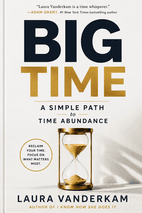
Big Time
by Laura Vanderkam · Summary updated
What is the book Big Time about?
Laura Vanderkam's Big Time reframes time management as an act of gratitude, offering data-driven strategies to reclaim your schedule and prioritize joy. It's for anyone feeling perpetually busy and wishing time away, providing a practical framework to become the "ringmaster" of your life and find spaciousness in every hour.
Feature
Insta.Page
Blinkist
Shortform
Summary Depth
Full Chapter-by-Chapter
15-min overview
Detailed analysis
Audio Narration
✓ (AI narration)
✓
✓
Visual Mindmaps
✓
✕
✕
AI Q&A
✓ Voice AI
✕
✕
Quizzes
✓
✕
✕
PDF Downloads
✓
✕
✓
Price
$59.99/yr
$146/yr (PRO)
$199/yr
*Competitor data last verified February 2026.
About the Author
Laura Vanderkam
Laura Vanderkam is an American author, speaker, and time management expert known for her books on productivity and work-life balance, including "168 Hours: You Have More Time Than You Think" and "Off the Clock: Feel Less Busy While Getting More Done." She writes a popular column for *Fortune* and contributes to other major outlets, and her work has been featured in *The Wall Street Journal* and *The New York Times*. Vanderkam holds a degree from Princeton University and lives outside New York City with her family.
1 Page Summary
Here is a concise 3-paragraph summary of the book Big Time by Laura Vanderkam, based solely on the provided chapter content.
Laura Vanderkam reframes time management from a source of stress to an act of gratitude, arguing that the sheer improbability of our existence makes every minute a gift. The book’s central thesis challenges the common feeling of being overwhelmed, asserting that most people are nowhere near the ceiling of what they can fit into their lives. Through the story of a school counselor who logged his hours and reclaimed time for ultramarathon training, Vanderkam illustrates that shifting from “I don’t have time” to “It’s not a priority” is a powerful mindset change, and that data-driven tracking reveals our hours are far more spacious than we assume.
Vanderkam’s distinctive approach combines practical, high-level frameworks with small, actionable challenges. She introduces the concept of becoming the “ringmaster” of life’s three rings—career, relationships, and self—by using weekly planning sessions, house rules, and flexible nets. The book emphasizes “dream big, plan small,” using the example of a family visiting all 63 national parks to show how grand goals can be broken into steps that fit real, imperfect days. For the workday itself, she offers a three-week challenge based on psychological needs for competence, belonging, and autonomy, proving that even imperfect implementation can lead to more joy and less exhaustion.
The intended audience is anyone who feels perpetually busy and wishes time away, particularly those with demanding careers, family obligations, or a sense that life is passing them by. Readers will gain a suite of concrete strategies, including how to reclaim weekday evenings as “golden hours,” cultivate serendipity by clearing clutter and making little bets, and adopt the 8,760-hour perspective to see a year as spacious rather than a series of frantic days. Ultimately, the book teaches active patience—a partnership with time that trusts slow processes and learns from nature’s example of purposeful waiting.
Chapter 1: Introduction: How to Fall in Love with Your Schedule
Overview
Time management rarely inspires warm feelings. We talk about beating the clock, racing against the hours, and lamenting that there's never enough time. The author asks us to consider a different starting point: what if we treated time like a winning lottery ticket? Not because we earned it or asked for it, but because the sheer improbability of existing at all makes every minute a kind of bonus.
To illustrate, she takes us on a detour to the Permian-Triassic extinction event, 252 million years ago, when 90 percent of Earth's species died off. A slightly different twist in that catastrophe, and humans never appear. None of us has any business being here—collectively or individually. And yet here we are. That unlikely gift of consciousness and hours is reason enough to approach scheduling with something closer to gratitude than frustration.
The Paradox of Control
It's true that life is unpredictable. We block out an hour to edit and spend it checking whether a fire alarm means evacuation. We can't foresee eruptions in Siberia that shape the distant future. But alongside that uncertainty, we have remarkable agency over the daily texture of our lives. The author describes a spring hike with a friend—something that happened because she texted and they both chose to make space. That simple act of intention turned a forgettable Friday into a pleasant memory.
Holding both truths simultaneously—that the long run is unknowable, yet we shape our days—is the foundation of wise time stewardship. It's not about controlling every second; it's about recognizing that we can direct many of them, and that the resource is far more abundant than we typically believe.
A Different Relationship with Time
If you start from abundance rather than scarcity, the trade-offs people lament often dissolve. You stop wishing away a boring drive and instead listen to a Bach cantata. You take a hike even as a work week ends, because the time feels spacious enough. The author has spent two decades studying how people actually spend their time—collecting time diaries, interviewing thousands, managing her own business and five children—and keeps arriving at the same conclusion: we have more discretionary time than we think, especially when we get organized and honest about it.
What This Book Offers
This isn't another productivity manual that will make you feel guilty about your to-do list. The author promises three things: practical strategies you can try in the next few days, new insights (including fresh research with hundreds of participants), and an entertaining lens that makes schedules feel like a love story rather than a burden. The goal is to wake up knowing you have something to look forward to.
She previews several core ideas: rewriting your story through a time audit, becoming the ringmaster of a complex life, dreaming big but planning small, embracing golden hours others write off, opening yourself to serendipity, zooming out to 8,760 hours in a year instead of 24 in a day, and practicing patience by holding outcomes lightly while trusting time's bigness.
Time, she reminds us, is a human construct—days were shorter in the Mesozoic. But illusion or not, it's a gift we can harness to make our improbable lives better.
Key Takeaways
Shift from seeing time as scarce and adversarial to viewing it as an abundant, improbable gift.
Acknowledge life's unpredictability while exercising agency over your daily choices.
The Permian-Triassic extinction is a reminder that your existence—and each hour—is a bonus.
Most common time complaints (overwork, scarcity) don't hold up when you look at actual data and mindset.
You can learn to love your schedule by adopting intentional strategies that turn routine hours into something to savor.
Key concepts: Introduction: How to Fall in Love with Your Schedule
1. Introduction: How to Fall in Love with Your Schedule
Time as an Improbable Gift
Treat time like a winning lottery ticket
Permian-Triassic extinction shows our existence is a bonus
Shift from scarcity to gratitude for each hour
The Paradox of Control
Life is unpredictable despite our plans
We have agency over daily choices
Intention turns ordinary moments into memories
Hold both uncertainty and agency together
Abundance Over Scarcity Mindset
Starting from abundance dissolves trade-off complaints
We have more discretionary time than we think
Organization and honesty reveal hidden time
What This Book Offers
Practical strategies for the next few days
Fresh research with hundreds of participants
Entertaining lens making schedules a love story
Goal: wake up knowing you have something to look forward to
Core Strategies Previewed
Rewrite your story through a time audit
Dream big but plan small
Embrace golden hours others write off
Zoom out to 8,760 hours in a year
If you like this summary, you probably also like these summaries...
💡 Try clicking the AI chat button to ask questions about this book!
Chapter 2: Chapter 1: Rewrite Your Story
Overview
Joel Thomas, a school counselor and father of four in Washington State, logged nearly 12 hours of housework, five hours of food prep, and three hours of errands each week, plus the chaos of snow days and sick kids. After losing his sister-in-law and father, he realized time is finite—and that freed him to see it as more spacious than he'd assumed. He wanted to train for ultramarathons without sacrificing family life, so he tracked his hours, reclaimed pockets of time by skipping evening TV and going to bed early, and turned those blocks into training slots. By 2025, he had run multiple 50Ks and a 50-mile race while working full time. His mindset shift: “Shifting from ‘I don’t have time’ to ‘It’s not a priority’ has been big.”
This story illustrates a powerful argument: most of us are nowhere near the ceiling of what we can fit into our lives, even when we feel overwhelmed. The author, a longtime time tracker, points out that we don’t actually know where our hours go unless we look. We build stories from standout negative moments—a spouse’s glance, a late-night call, the never-ending dishes—and conclude we’re drowning. But data tells a different tale. When 279 people completed the author’s Time Tracking Challenge in January 2023, their time satisfaction scores improved significantly. The “yesterday” subscale rose 12%, and the “generally” subscale jumped 18%. Agreement with “Generally I have enough time for the things I want to do” increased by 25%. People discovered their impressions were incomplete—one person estimated 60–70 work hours but logged only 53.5; another found 31.75 hours instead of a supposed 40-hour week. The act of tracking made them more mindful of choices and shifted their core narrative from scarcity to abundance. They realized that 168 hours is a vast canvas, and that life isn’t as frenzied as the story in their heads had made it.
Many trackers reported unexpected epiphanies. They discovered pockets of free time they hadn’t noticed before. Others realized they were doing creative pursuits multiple times a week, even though they’d assumed they never had time. Working parents were often surprised to see that family time occupied a higher percentage of their logged hours than they’d guessed. One person who had been spending evenings half-working, half-scrolling—feeling drained while accomplishing little—decided to stop and instead used those hours for the gym or family, and found her work productivity increased. Another noticed large blocks of uninterrupted time for key projects, contrary to the common narrative of fragmented workdays.
These realizations translated into measurable improvements: agreement with “Generally, how I spend my time aligns with my priorities and values” rose 13%, and “I regularly have time just for me” rose 15%. As one tracker put it, “Tracking time takes away that treadmill feeling and gives a 30,000-foot view of your week.” Another said, “There's way more time than you think.” The author’s philosophy is just that—even busy people have some space. Those 45 minutes of doomscrolling could have been real relaxation. That hour of puttering around the house could have been lying on the grass. When you see this space, a path to time abundance becomes simple.
Sometimes people decide they want to use that space for something more. Mike Ely, who tracked his time for a decade while starting a church in Romania, found that even with unpredictable ministry work, half his waking hours were available for other things. He rewrote his story from “my whole life is work” to “I have this canvas I can work with.” Viktorija Grant wanted both an MBA and a family, but she had never seen a mother with young children in any program. The two dreams seemed incompatible “until they weren’t.” She began by tracking her husband’s time to see how much an MBA would actually demand each week. The math worked, provided she cut extraneous stuff—like her Netflix account. She took the GMAT while six months pregnant and started Kellogg’s MBA with her baby daughter in tow. She made it manageable by taking most classes on Saturdays while her husband cared for their daughter, then doing homework on Sundays—often during naps or after bedtime. She adopted the principle of “shifting everything left”: working long before it was due, so if something went wrong with the baby, she still had six days to finish. She graduated with distinction while pregnant with her second child. Her approach is a blueprint: figure out where your time is going now, calculate how much your goal will take, then plot those hours into the existing space—leaving a buffer for surprises. As Mike Ely says, “People think time is scarce, so they can’t do anything, so they don’t do anything. Flip that around, and time simply opens up.”
Key Takeaways
Time tracking reveals hidden pockets of discretionary time, often leading to a 13–15% boost in time satisfaction.
The scarcity story of “no time” can be rewritten by seeing the 30,000-foot view of your week.
Viktorija Grant’s success with MBA, career, and family shows that with careful analysis and flexibility, multiple big goals can fit into the same hours.
Key strategies include “shifting everything left” (working ahead), sharing care, and cutting extraneous activities.
Key concepts: Chapter 1: Rewrite Your Story
2. Chapter 1: Rewrite Your Story
The Scarcity Story is a Lie
We build stories from standout negative moments
Data shows we have more time than we think
Time tracking reveals hidden pockets of time
Shifting from 'no time' to 'not a priority'
Time Tracking Transforms Perception
Tracking boosts time satisfaction by 13-18%
People discover 10+ hours they didn't know existed
Tracking gives a 30,000-foot view of your week
It shifts narrative from scarcity to abundance
Real-Life Epiphanies from Trackers
Working parents found more family time than assumed
Scrolling hours became gym or family time
Productivity increased when half-working stopped
Large uninterrupted work blocks were discovered
Rewriting Your Story: Case Studies
Joel trained for ultramarathons by reclaiming TV time
Mike Ely found half his waking hours were free
Viktorija earned an MBA with two young children
She used 'shifting everything left' to stay ahead
Practical Strategies for Time Abundance
Track your time to see where it actually goes
Calculate how much a goal will require
Plot new activities into existing time pockets
Cut extraneous activities like Netflix or doomscrolling
⚡ You're 2 chapters in and clearly committed to learning
Why stop now? Finish this book today and explore our entire library. Try it free for 7 days.
Chapter 3: Chapter 2: Become the Ringmaster
Overview
The real circus isn’t the chaos of a packed schedule—it’s the seamless coordination behind the spectacle. Watching Commander Alexander get shot from a cannon at 70 miles per hour, Alex Cortes revealed that every thrilling moment depends on meticulous planning, constant inspection, and split-second teamwork. That’s the model for managing life’s three rings: career, relationships, and self. Instead of trying to shrink your world, become the ringmaster by embracing three principles: everything is well planned, there’s a flexible net for when things go wrong, and it all looks like magic because nobody enjoys drudgery.
Planning is the foundation. Pastor Kurt Cockran escaped overwhelm and depression by instituting a weekly planning session with his wife—two hours every Friday to map out the coming week using “21 pods” (four-hour blocks), a shared family magnet, and designated office hours. The key takeaway for anyone is to carve out a regular time (preferably Thursday or Friday) to review all three rings, create a short priority list divided across career, relationships, and self, and then spend five minutes at the end of each workday adjusting tomorrow’s plan. That iterative control is the ringmaster’s superpower.
House rules automate decisions so daily life runs like a practiced act. The Klenke family turns a trip to South Bend into an expedition with a 15-passenger van and mandatory rest stops; they use Sibling Power Hours to pair older and younger kids for projects. Kristen Burgess, a single mother of eight, schedules her week around three rings, sets a chore chart that lasts a year, and protects her mornings from 5:00 to 9:00 a.m. Brittany White grocery shops alone on Wednesday nights and meets a friend every Sunday morning. The principle scales to work teams: end meetings ten minutes early, hold open office hours, dedicate specific days to marketing. Rules make the show run without constant thought.
Securing your net means building resiliency so that when chaos inevitably strikes—a gust of wind, a bus driver shortage, a broken car—it’s only a minor inconvenience. Wise ringmasters plan for failure: living near family for backup childcare, layering sitters, building buffer into project deadlines, keeping an emergency fund, and leaving Fridays lightly scheduled to absorb crises. The trapeze artist trains to land in the net, not to avoid falling.
Finally, managing for delight transforms the whole performance from drudgery into wonder. The ringmaster doesn’t just check boxes; they schedule something to look forward to, treat weekends like mini-vacations, and pay attention to the joy already present. When the clowns march in and the tightrope walker teeters, the goal is to savor the show you’re already running—because a circus isn’t about flawless execution, but about making the impossible look effortless and thrilling.
Alex Cortes and the Human Cannonball
On a sweltering July afternoon at the York State Fair, I watched Commander Alexander get shot out of a 28-foot cannon at 70 miles per hour. It was spectacular, but what struck me most when I later interviewed him was the meticulous planning behind the thrill. Cortes, a lifelong trapeze artist, had to learn the precise math of angling the cannon, starting with short shots and moving up in tiny increments. Inside, temperatures could reach 120 degrees. Every single shot required a full inspection. The trapeze work was no different: the catcher adjusts his swing based on the performers’ movements, and complicated tricks demand split-second coordination from four or more people. Even the net isn't simple—it must be positioned exactly right, inspected constantly, and performers train to land in it a certain way. A gust of wind can throw off a practiced stunt. Yet Cortes calls it fun, a huge rush every time.
That’s the real circus. Not the chaos we complain about when our schedules feel out of control, but a world where everyone knows exactly what to do and where to be. The net is tested and ready. Complexity appears seamless. So instead of trying to simplify your life into a tiny house, why not embrace the bigness and become the ringmaster? Managing your three rings—career, relationships, and self—comes down to three principles: everything is well planned, there's a flexible net for when things go wrong, and it all looks like magic because nobody enjoys drudgery.
Plan Your Circus
Pastor Kurt Cockran knows this firsthand. With five kids under ten and a demanding ministry, he once felt overwhelmed and deeply depressed. He threw himself into productivity methods, and the biggest game-changer was weekly planning. He and his wife Emily now have a sitter for a couple of hours every Friday morning to walk, reflect, and plan the upcoming week together. During the week, they use a shared note for topics to discuss instead of constant messaging.
Kurt divides his week into “21 pods”—three four-hour blocks per day. He designates 10 to 12 pods as work pods, keeping his hours sustainable even if they're spread oddly. A giant refrigerator magnet tracks family obligations. He publicizes his off-work hours to the congregation, uses Trello to manage follow-ups, and schedules messages so responses arrive during work pods, not family time. Office hours (4:30–5:30 p.m. Wednesday and Friday) mean anyone can reach him without notice. The result? His depression has vanished. He now believes he can be an excellent pastor and an excellent father—and he's even joined a recreational soccer league while Emily has her boxing setup.
Making Weekly Planning Work for You
The key is having a regular time to review all three rings. I recommend Thursday or Friday: you're running low on big-project energy anyway, you can still reach people for appointments, and you'll dodge the Sunday Scaries by knowing Monday's plan. You also get to plan each weekend twice.
During that session, study your calendar. Note obligations and desires of others. Then make a priority list divided into three columns: Career, Relationships, and Self. Don't leave Self blank—even one item ensures balance. List only what you truly commit to making happen. Everything should fit on one notebook page. If it's automatic (like standing dinner rules), it doesn't go on the list. Short lists you can trust keep you calm.
At the end of each workday, spend five minutes adjusting tomorrow's plan based on what actually happened. Things change—that's fine. Having a plan means you know how to pivot. When the wi-fi goes out, you know your most important task to take to Starbucks. That sense of control is the ringmaster's superpower.
House Rules in Practice
The Klenke family’s house rules reveal a playful yet deliberate approach to managing a large household. Their annual vacation to South Bend, Indiana—hardly a typical destination—was orchestrated like a small expedition: a 15-passenger van, a giant cooler, and a mandatory restroom break for everyone at every stop. At home, Connie implemented Sibling Power Hours during summer, pairing older and younger children for projects like baking or puppet shows, which turned chaos into collaboration. Even grocery shopping was streamlined to once a week, with five gallons of milk artfully stacked in the cart.
Kristen Burgess, a single mother of eight, built her own systems after her marriage ended. She plans each week on Fridays, balancing three rings: kids, self, and business. Her house rules include a set chore schedule that lasts a year, a list of 30 favorite meals for kids to choose from, and a strict block of time from 5:00 to 9:00 a.m. when children know not to bother her. Tuesday evenings are reserved for her own social life—a non-negotiable third ring. Brittany White, mother of seven, takes this further: she grocery shops solo on Wednesday nights, sometimes lingering in the parking lot for a phone call, and meets a friend every Sunday morning from 6:00 a.m. to 10:00 a.m. The principle is simple: create house rules that make Mom unavailable, and everyone adapts.
This mindset scales beyond parenting. For work teams, you can set rules like ending meetings ten minutes early, holding open office hours twice a week, or dedicating Tuesday mornings to marketing. The goal is to automate decisions so you don’t have to think about them, making daily life feel less like a scramble and more like a seamless performance.
Securing Your Net
Good systems don’t just prevent chaos—they catch you when chaos still happens. A trapeze artist trains to land in the net, not to avoid falling. Similarly, wise ringmasters build resiliency into their lives. They don’t act shocked when rain, cancellations, or power outages occur; they’ve planned for them.
Concrete examples include families who purchase homes within walking distance of school, so older kids can get themselves home without disrupting carpool schedules. Living near extended family (or chosen family) creates a safety net: Grandpa can pick up the kids in a pinch, or you can borrow a car when yours breaks down. For paid childcare, a layered approach works—daycare plus two backup sitters, or a nanny plus employer-provided backup care. Work schedules need the same slack. Project managers build buffer before deadlines. Teams stay ready to work from home if snow hits. One school district prioritized younger kids for busing during a driver shortage, since older kids could switch to virtual learning.
Financial and temporal margin are
Key concepts: Chapter 2: Become the Ringmaster
3. Chapter 2: Become the Ringmaster
The Ringmaster Mindset
Embrace life's three rings: career, relationships, self
Don't shrink your world—coordinate it
Three principles: planning, flexible net, magic
Weekly Planning Ritual
Schedule a regular planning session (Thursday or Friday)
Review all three rings and create a priority list
Use 21 pods (four-hour blocks) to map the week
Adjust tomorrow's plan for five minutes each evening
House Rules for Automation
Create rules that run daily life without thought
Use sibling power hours for family projects
Set chore charts and protect morning hours
End meetings early and hold open office hours
Securing Your Safety Net
Plan for failure to make chaos a minor inconvenience
Build buffer: emergency fund, backup childcare
Leave Fridays lightly scheduled for crises
Train to land in the net, not to avoid falling
Managing for Delight
Schedule something to look forward to each week
Treat weekends like mini-vacations
Savor the joy already present in your routine
Make the impossible look effortless and thrilling
The Human Cannonball Lesson
Thrilling moments require meticulous planning
Inspect everything and adjust in tiny increments
Split-second coordination from the whole team
Complexity appears seamless when everyone knows their role
Overcoming Overwhelm
Weekly planning cured Pastor Kurt's depression
Publicize off-work hours to protect family time
Use shared notes and tools to reduce constant messaging
You can excel at career, relationships, and self
Chapter 4: Chapter 3: Dream Big, Plan Small
Overview
The DeCou family’s quest to visit all 63 U.S. national parks began with a simple shift: Rob told Kristin to “think bigger.” They stretched the original 18-month timeline to several years, rented out their home, bought an SUV with a roof tent, and planned every detail in a spreadsheet. The lesson is about discretionary time—the bits and pieces everyone has. People overestimate what they can do in the short run and underestimate what they can do in the long run. That’s the heart of dream big, plan small: tackle nothing that feels onerous, but let the days add up. The author’s own journey through War and Peace in ten-minute daily readings proves that anywhere is walking distance if you have the time.
Not every grand idea is worth pursuing. Choose a project you genuinely want—something you’d still do on vacation. Clear finish lines help distinguish these projects from habits. Failure is part of the process: the author’s attempt to write daily scenes fell apart, so he switched to writing one sonnet per week. Project-choosing gets better with practice.
Once the dream is set, break it into steps that fit real life—not a perfect day, but a day when a kid gets sick. Small steps are key: 20 minutes daily adds up to 120 hours a year. Create a calendar that assigns specific tasks to each day, and test-drive the plan for a few days before committing. Resist the urge to race ahead on easy days; sustainability beats speed. The middle of any long project is the mushy middle, where enthusiasm falters. That’s when you simply walk the mile you’re in—and watch for magic.
Community keeps motivation alive: Elizabeth Howell discovered a vibrant online Latin community, and the author’s blog drew others to follow his Bach calendar. Rewards also help—watching the movie after finishing an Austen novel. Paradoxically, giving time to meaningful work makes time feel more abundant, not less. Accomplishing something massive reveals the secret: you do have enough time, even in ten-minute increments.
The DeCou family found themselves in Yellowstone in August 2023, part of a multiyear quest to visit all 63 parks. The seed was planted in 2022 when Rob encouraged Kristin to “think bigger.” They had jobs, kids, and a house, but instead of scrapping the dream, they got creative. Rob could take summers off from teaching; Kristin could slow her business. They’d rent out their house to fund travel. The goal stretched to several years.
They tackled logistics with a giant spreadsheet. The first summer they avoided popular parks, relied on hotels and KOA campgrounds, bought an SUV with a roof tent, and set a rule: tablets only while driving. That first summer took them from Crater Lake to the Grand Canyon, through the Dakotas, to Voyageurs and Indiana Dunes. By the next summer, they tackled Yosemite, Death Valley, the Utah parks, Grand Tetons, Yellowstone, and Glacier. Using shorter school breaks, they hit 50 of 63 parks. By early 2025, they were about to cruise to US Virgin Islands National Park, with plans for Alaska and American Samoa. They’d finish by 2026 or 2027.
It wasn’t always glamorous. Kristin recalled a rainy night at a campground, unable to sleep because of other campers’ zippers—while all four shared a single king mattress. But there were sublime moments too. At Theodore Roosevelt National Park, they watched over 300 bison at sunset, alone except for wild turkeys and foxes. “Having the defined purpose of seeing all the parks brings you places you wouldn't have gone otherwise,” Kristin said.
This story illustrates a deeper truth: we all have the same amount of time. Everyone has some discretionary time, even in bits and pieces. By connecting those dots, big things become possible. People overestimate what they can do in the short run and underestimate what they can do in the long run. Dream big, plan small.
The author’s fascination with long projects began with War and Peace. He learned the book has 361 short chapters, each readable in ten minutes. He started reading a chapter a day on January 1, 2021, and finished on December 27. The experience felt magical. Since then, he’s completed yearlong projects reading Shakespeare, Jane Austen, listening to Bach, and writing sonnets.
But this isn’t just about habits. When you dream big and plan small enough, you move out of the realm of discipline. Tooth brushing is easy, relatively pleasant, and happens at the same time each day. If you can brush your teeth 361 days in a row, you can read 361 short passages—if you want to.
To make a project feel as feasible as brushing your teeth, start by choosing well. Make sure the destination is somewhere you want to go. One gut-check question: Would I do this on vacation? If your project involves travel, those trips have to sound fun. For something to be doable long term, you must be willing to solve problems to do it on abnormal days.
Take Zoe Barinaga, who wanted to walk the Camino de Santiago. She made training enjoyable by doing it with her husband—long walks on weekends, listening to a “Bible in a year” app. Projects are more compelling with a true finish line. The author prefers yearlong projects because December 31 is an obvious end point. Elizabeth Howell decided to learn Latin to read Julius Caesar in the original. Being able to understand the gist of a chapter is reasonably straightforward.
Not every project works out. In 2022, the author set a goal to write daily scenes. It didn’t work—the pacing was off, and the plot never cohered. He stuck with it stubbornly, but when he reviewed what he’d written, he was bored. So in 2023, he switched to writing one sonnet per week. It was a much better experiment.
The next step: define your steps and create your calendar. Shira Gill, a professional home organizer, says the biggest challenge is feeling paralyzed by the “too-muchness” of it. Her approach: “Break the big thing into lots of little things. One room at a time. One drawer or shelf at a time.” At a gentle rate of five spots a week, you could organize an entire home in five months. Those five months are going to pass either way.
Once you’ve dreamed up a big project, break it into steps that fit your life. Don’t think about a perfect day. Think about a day when you have to leave work early to pick up a sick kid. How much time could you devote on a day like that? Plan for that.
Finding Time in the Cracks
The sweet spot for most sustainable habits is 30 minutes a day or less, and often 20 minutes is plenty. Twenty minutes daily adds up to 120 hours a year, the equivalent of three weeks off. Elizabeth Howell uses five- or ten-minute increments with podcasts. “It all adds up,” she says.
Creating a Workable Calendar
Every big project needs a map—a calendar that tells you exactly what to do each day. You can borrow existing ones or build your own. For Bach’s 1,080 works, the author created a spreadsheet assigning pieces. Building a calendar takes upfront effort but massively boosts your odds of finishing.
Test-Driving Your Calendar
Before you start, test-drive your plan for a few days. Pick random future assignments and do them as if they were real. This reveals whether the project actually fits your life.
Persistence and Small Steps
A calendar is easier to follow than a vague goal. Keep steps small enough that doubling up after a missed day doesn’t feel punishing. Resist the urge to race ahead on easy days. Sustaining a small step is better than burning out by scaling up.
The middle of a long project is where enthusiasm falters. Don’t think about that. Just walk the mile you’re in. And watch for magic—the sublime often strikes in the mushy middle.
The Power of Community and Rewards
Community can keep you going. Elizabeth Howell discovered a vibrant online Latin community. Share your journey. Rewards also help. After finishing each Austen novel, watch the movie. For Bach, the author finally got to sing the Mass in B Minor with a choir. Giving time to meaningful work makes time feel more abundant, not less.
The Abundance of Time
When you accomplish something massive, you realize you do have enough time. That feeling spills over into everything else. It’s our little secret that War and Peace takes only ten minutes a day.
Key Takeaways
Fit habits into small, consistent pockets (20–30 minutes daily) rather than waiting for big blocks.
Create a calendar that assigns specific steps to each day; test-drive it before committing.
Keep steps small and resist the urge to do more on easy days—sustainability beats speed.
Community and small rewards keep motivation alive through the mushy middle.
Accomplishing a big project paradoxically makes time feel more abundant, not less.
Key concepts: Chapter 3: Dream Big, Plan Small
4. Chapter 3: Dream Big, Plan Small
Dream Big, Plan Small
Think bigger than initial plans allow
Stretch timelines to make dreams feasible
People overestimate short-term, underestimate long-term
Anywhere is walking distance with enough time
Choosing the Right Project
Pick something you'd do on vacation
Ensure a clear finish line exists
Gut-check: is it genuinely desirable?
Project-choosing improves with practice
Breaking Down into Small Steps
Fit steps into real life, not perfect days
20 minutes daily equals 120 hours yearly
Create a calendar with specific daily tasks
Test-drive the plan before full commitment
Navigating the Mushy Middle
Enthusiasm falters mid-project
Focus on walking the mile you're in
Sustainability beats speed on easy days
Watch for magic in the mundane
Leveraging Community and Rewards
Community keeps motivation alive
Rewards like movies after finishing books
Share progress to build accountability
Celebrate small milestones along the way
The DeCou Family Example
Rented house, bought SUV with roof tent
Used spreadsheet for logistics planning
Hit 50 of 63 parks in two summers
Found sublime moments amid challenges
Time Abundance Through Action
Giving time to projects makes it feel abundant
Everyone has discretionary time in bits
Connecting dots makes big things possible
Accomplishment reveals you have enough time
Frequently Asked Questions about Big Time
What is Big Time about?
This book challenges the common feeling of time scarcity by reframing it as an improbable gift, urging readers to approach scheduling with gratitude. Through research and real-life stories, it offers practical strategies to transform your relationship with time, moving from overwhelm to abundance. Topics include rewriting your time story, becoming the 'ringmaster' of your life's three rings, and embracing the full 8,760 hours in a year.
Who is the author of Big Time?
Laura Vanderkam is a longtime time management expert who has written extensively on productivity and work-life balance. She is a longtime time tracker whose decade of data provides the foundation for the book's insights. Her work focuses on helping people see time as spacious and full of possibility.
Is Big Time worth reading?
Absolutely. This book offers a refreshing, data-backed perspective that replaces the typical 'beat the clock' mentality with a sense of possibility and gratitude. It provides concrete, actionable strategies—like the Evening Hours Challenge and weekly planning rituals—that have been shown to significantly boost time satisfaction and reduce feelings of wasted time. You'll come away with a practical toolkit for making your schedule feel less like a burden and more like a winning lottery ticket.
What are the key lessons from Big Time?
Shift from 'I don’t have time' to 'It’s not a priority' to reclaim hidden hours. Become the ringmaster of your life by planning weekly '21 pods' and automating decisions with house rules. Embrace your golden hours by valuing weekday evenings as two full workdays of potential, and cultivate serendipity by clearing clutter, planning for accessibility, and making little bets. Finally, think in terms of 8,760 hours a year and practice active patience, trusting that some processes unfold on their own timeline.
📚 Explore Our Book Summary Library
Discover more insightful book summaries from our collection