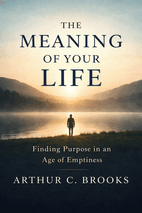
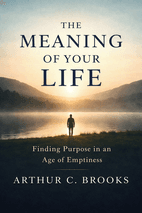
Arthur C. Brooks's The Meaning of Your Life provides a psychological map for finding purpose, blending philosophy and neuroscience to diagnose modern emptiness. It offers a framework based on coherence, purpose, and significance for anyone seeking a more examined and fulfilling life beyond digital distraction.
Feature
Insta.Page
Blinkist
Shortform
Summary Depth
Full Chapter-by-Chapter
15-min overview
Detailed analysis
Audio Narration
✓ (AI narration)
✓
✓
Visual Mindmaps
✓
✕
✕
AI Q&A
✓ Voice AI
✕
✕
Quizzes
✓
✕
✕
PDF Downloads
✓
✕
✓
Price
$59.99/yr
$146/yr (PRO)
$199/yr
*Competitor data last verified February 2026.
About the Author
Arthur C. Brooks
Arthur C. Brooks is a social scientist, professor at Harvard Kennedy School, and bestselling author who focuses on happiness, leadership, and the culture of American capitalism. He is the author of notable books such as "Build the Life You Want" and "From Strength to Strength," and previously served as the president of the American Enterprise Institute.
1 Page Summary
In 'The Meaning of Your Life,' Arthur C. Brooks tackles the widespread modern experience of feeling adrift and empty despite outward busyness. He argues that true meaning is not a vague feeling but a composite of three core components: coherence (life making sense as a story), purpose (having motivating goals), and significance (feeling one's life matters to others). The book provides a psychological map for this journey, distinguishing between the presence of meaning one feels and the active search for it, and offers practical tools like the Meaning in Life Questionnaire to help readers find their starting point.
Brooks’s approach is distinctive in its blend of classical philosophy, modern psychology, and neuroscience to diagnose the roots of our existential malaise. He identifies a modern "doom loop" of tech addiction and shallow substitutes for deep experience, arguing that we are trapped in the left hemisphere of the brain's world of complicated, technical problems while neglecting the right hemisphere's domain of complex, transcendent questions about love, art, and spirituality. The path forward requires a defiant interruption of this cycle through digital boundaries, self-reliance, and a commitment to asking deeper "why" questions about our beliefs, goals, and connections.
The book is intended for anyone seeking a more examined and fulfilling life beyond material success or digital distraction. Readers will gain a structured framework for understanding meaning, alongside actionable strategies to cultivate it through love, spiritual transcendence, purposeful work, engagement with beauty, and a healthier relationship with suffering. By moving past the "arrival fallacy" and the "Striver's Curse," Brooks guides readers toward intrinsic goals and authentic connections, arguing that meaning is found in the dedicated process of living—chopping wood and carrying water—with coherence, purpose, and significance.
We often feel adrift in modern life, sensing a void beneath our busy schedules and digital distractions. This shared experience of feeling that life lacks depth is more than a personal struggle; it’s a widespread "psychogenic epidemic." The journey toward a more meaningful life begins with a clear understanding of what "meaning" truly is. This exploration is powerfully illustrated by the story of Leo Tolstoy, who, despite immense success, was crippled by existential despair. His active struggle highlights a crucial psychological map: our relationship with meaning is defined by two dimensions—the presence of meaning we currently feel and our active search for it.
To navigate this landscape, we first need to deconstruct the destination. Meaning isn't a single, vague feeling but a composite of three core components. Coherence is the sense that your life’s events form a comprehensible story. Purpose provides a forward direction and motivating goals. Significance is the conviction that your life matters and has value beyond yourself, often rooted in the positive impact you have on others. True meaning emerges from the blend of these three elements.
To find your starting point on this journey, a practical tool called the Meaning in Life Questionnaire (MLQ) helps you plot your coordinates on the presence and search scales. Your scores sketch one of four portraits. You might be a Hopeful Wanderer, actively searching but lacking a clear sense of meaning. Perhaps you feel Lost in Place, where both presence and search are low. You could be a Happy Homebody, content and not looking, or a Relentless Seeker who has meaning but is driven to find even more. Identifying your portrait clarifies your unique starting position.
Tolstoy’s story provides a profound final lesson. After failing to find answers in philosophy and science, he discovered that the peasants around him possessed a peaceful sense of meaning rooted not in rational proof but in what he called "irrational knowledge"—a foundational faith that provided coherence beyond logic. His journey underscores that deep meaning often resides in a realm that complements, rather than contradicts, our intellect. Ultimately, this chapter provides three essential formulas to guide the work ahead: Happiness requires enjoyment, satisfaction, and meaning. Meaning itself is built from coherence, purpose, and significance. And this meaning is always experienced through the dual lenses of presence and search.
The Modern Meaning Crisis
The chapter opens by addressing the reader directly, acknowledging the various reasons one might feel adrift—whether it's a vague sense that something is missing, profound philosophical questions left unanswered, or the hollow addiction to digital distractions and workaholism. This widespread condition is described as a "psychogenic epidemic," a real and growing phenomenon where millions feel their lives lack depth and color, trapped in a superficial simulation of living through screens, shallow interactions, and perpetual busyness. The author states that finding meaning is possible, but it requires a fundamental shift in thinking and living, a journey into neglected parts of one’s own consciousness. The first step on this journey is to clearly define what we are even looking for when we seek "meaning."
Tolstoy's Search and the Two Dimensions of Meaning
The story then turns to a powerful historical example: the profound existential despair of Leo Tolstoy in his fifties. Despite immense worldly success, fame, and a stable family life, Tolstoy was consumed by a feeling of emptiness and contemplated suicide. His story illustrates a critical psychological distinction: he was low in the presence of meaning but high in the search for it. His active, desperate seeking is what ultimately led him to find answers. This introduces the two key dimensions psychologists use to map a person's relationship with meaning: Presence (the extent to which you feel your life has meaning) and Search (the extent to which you are actively looking for it). Understanding where you fall on these two scales provides your starting coordinates for the journey ahead.
Decomposing Meaning: Coherence, Purpose, and Significance
Before you can locate yourself on the map, you need to know the destination. The chapter employs the concept of decomposition—breaking down a complex problem into manageable parts—to define meaning itself. It presents a three-part model developed by psychologists:
Coherence: The sense that the events of your life fit together in a narrative that makes sense. It’s the answer to the question, "Why do things happen the way they do in my life?"
Purpose: The feeling that your life has goals and direction. It provides a map for your journey, answering, "Why am I moving in this direction?"
Significance: The belief that your life has inherent value, both to yourself and, crucially, to others. It counters the feeling of being mere "space dust," answering, "Why does my life matter?"
The chapter clarifies that significance is not about worldly achievements ("résumé virtues") but about the positive impact you have on others ("eulogy virtues"), using the classic film It's a Wonderful Life as a poignant illustration. True meaning, therefore, is the interplay of these three elements.
Plotting Your Coordinates: The Meaning in Life Questionnaire
With the destination (meaning as coherence, purpose, and significance) defined, the chapter provides the tool to find your starting point: the Meaning in Life Questionnaire (MLQ). This ten-question assessment, developed by psychologist Michael F. Steger, generates two scores:
A Presence score (from questions about understanding your purpose).
A Search score (from questions about actively seeking meaning).
A score of 24 on each scale is a key benchmark. The results categorize individuals, with a special focus on those who might score low on both—a state dubbed "Lost in Place," where one lacks meaning but has also stopped searching for it. The author argues that reading the book itself is evidence that one hasn't truly given up, setting the stage for the work to come.
The Four Portraits of Meaning
The chapter introduces a simple two-by-two grid based on your scores for the presence of meaning and the search for it. This creates four distinct portraits:
The Hopeful Wanderer (Low Presence, High Search): This describes someone who doesn't yet have a strong sense of their life's meaning but is actively looking for it. The search can feel frustrating, like driving without a GPS. The book is positioned as the tool to provide direction for this reader.
The Lost in Place (Low Presence, Low Search): This individual neither experiences much meaning nor is looking for it. They are likely feeling adrift or stagnant.
The Happy Homebody (High Presence, Low Search): This person has a strong, settled sense of meaning and therefore isn't actively searching. They are the least likely reader, but may be reading to help someone else.
The Relentless Seeker (High Presence, High Search): This portrait fits people, often high achievers, who have a solid sense of meaning but can't shake the feeling there is more to find. A word of caution is offered here: this relentless search can lead to the "paradox of choice" and chronic dissatisfaction. The advice is to lean into and appreciate the meaning you already have.
The author identifies as a Relentless Seeker, explaining that his own early search for meaning is what drove him into behavioral science—initially as a form of "me-search."
Tolstoy's Discovery of "Irrational Knowledge"
The chapter then returns to Leo Tolstoy's famous existential crisis. After failing to find meaning in intellectual and scientific circles, he retreated to a village of uneducated peasants. He expected to find people who lived in ignorant bliss, untroubled by life's big questions.
Instead, he discovered they were not free from wondering about meaning; they were free from the need for a purely intellectual, rational answer. Their peace came from an "irrational knowledge"—faith—that provided a coherent understanding of life beyond what logic alone could offer. This experience didn't make Tolstoy abandon his intellect, but it gave him a foundational, peaceful conviction that carried him for the rest of his life. His story illustrates that deep meaning often resides beyond the realm of pure reason.
Key Takeaways
The chapter concludes by distilling everything into three essential formulas to remember:
Happiness = enjoyment + satisfaction + meaning. Meaning is identified as the component currently in crisis for many people.
Meaning = coherence + purpose + significance. These are the three core parts to investigate: understanding your story (coherence), having motivating goals (purpose), and believing your life matters (significance).
Meaning is experienced in two dimensions: presence and search. Your unique combination on these scales shapes your current relationship with life's meaning.
Key concepts: Chapter 1: The Meaning of Meaning
1. Chapter 1: The Meaning of Meaning
The Modern Meaning Crisis
Widespread feeling of life lacking depth
Described as a 'psychogenic epidemic'
Caused by digital distractions and busyness
Tolstoy's Existential Despair
Successful yet felt profound emptiness
Contemplated suicide despite worldly success
His struggle illustrates the search for meaning
Two Dimensions of Meaning
Presence: Current felt sense of meaning
Search: Active pursuit of meaning
These define your relationship with meaning
Three Components of Meaning
Coherence: Life events form a comprehensible story
Purpose: Forward direction and motivating goals
Significance: Life matters and has value
Meaning in Life Questionnaire (MLQ)
Tool to measure presence and search scores
Helps identify your starting position
Creates four psychological portraits
Four Meaning Portraits
Hopeful Wanderer: High search, low presence
Lost in Place: Low search, low presence
Happy Homebody: High presence, low search
Relentless Seeker: High presence, high search
Tolstoy's Ultimate Discovery
Found meaning in 'irrational knowledge'
Peasants had peaceful sense of meaning
Meaning complements rather than contradicts intellect
If you like this summary, you probably also like these summaries...
💡 Try clicking the AI chat button to ask questions about this book!
Chapter 2: Chapter 2: The Right Side of Your Brain
Overview
A powerful metaphor from The Matrix suggests that while we're not physically plugged into pods, many of us are living in a kind of digital simulation. This modern world offers easy, shallow substitutes for deep, authentic experiences—scrolling instead of reading, texting instead of connecting, making a living online instead of searching for a calling. These digital replacements leave a gaping hole where a sense of meaning should be.
To understand this emptiness, the discussion turns to how our brains work, revisiting the classic idea of left and right hemispheres through a more nuanced lens. Here, the right hemisphere is framed as the "master" concerned with the big, transcendent, and numinous questions of life—the "why" behind love, art, and spirituality. The left hemisphere acts as the "emissary," focused on the practical "how-to" tasks of survival. A meaningful life requires the right side's search for purpose to guide the left side's execution.
This leads to a crucial distinction: life presents us with complex challenges, which are about living with mysteries like love and meaning, and complicated ones, which are technical problems we can solve. Modern technocratic life, however, traps us almost entirely in the left-hemisphere world of complicated details, a sterile state the chapter calls the "palace of crystal." This existence, devoid of the right brain's engagement with mystery, is not just empty—it's profoundly boring. This deep aversion to boredom fuels our addiction to smartphones and other "antiboredom machines," creating a desperate flight from a meaningless existence.
These forces combine into a vicious, self-reinforcing cycle termed the meaning doom loop. Left-brain work and life degrade our capacity to seek meaning, leading to boredom and anxiety. To escape, we turn to addictive technology, which further numbs the right hemisphere, accelerating the feelings of emptiness. This loop explains the sharp rise in distress and the sense that, for many, things have fallen apart "gradually, and then suddenly."
The chapter argues that neither outright techno-rejection nor blind techno-utopianism offers a way out. The solution isn't about finding better life-hacks or perfect digital simulations, because the essence of self and soul cannot be digitized. Instead, breaking free is a conscious, personal declaration. It involves a two-part shift: first, putting the complicated, problem-solving aspects of life in their proper, limited place, and second, actively cultivating the courage to engage with life's open-ended mysteries. This is a return to the real—a more challenging but infinitely more rewarding path that meets the unknown not with a search for a solution, but with love, curiosity, and an open heart.
The Modern Simulation
The chapter opens with the iconic sci-fi film The Matrix, using it as a metaphor for contemporary life. While we are not physically trapped in pods, many people, like the earlier examples Marc, Maria, and Paul, feel they are living in a simulation—a world of easy digital substitutes for authentic experiences. Cultural critic Ted Gioia’s observations are highlighted, tracing a shift from substantive, real-world activities (sports, reading newspapers, writing letters) to their shallow, digital counterparts (gaming, scrolling clickbait, texting). The author expands this list to include the replacement of searching for a calling with just making a living online, and swapping spirituality for technology. These digital substitutes fail to deliver a sense of life's meaning, creating a gaping hole in our experience.
The Two Hemispheres Reimagined
The text then turns to a personal story about the author's parents—his left-brained, mathematician father and his right-brained, artist mother—to introduce the popular but outdated concept of hemispheric lateralization. This leads to the work of psychiatrist Iain McGilchrist, whose refined theory revitalizes the idea. McGilchrist posits that both brain hemispheres deal with everything, but in fundamentally different ways:
The right hemisphere is the "master," concerned with the big, transcendent, and numinous questions of life—the "why." It handles what is spiritual, mysterious, awe-inspiring, and emotionally complex.
The left hemisphere is the "emissary," focused on the practical, "how-to" tasks of daily survival. It manages what is clear, straightforward, and complicated but solvable.
A healthy, meaningful life requires the right hemisphere's search for purpose to guide the left hemisphere's practical execution.
Recognizing the Numinous
The text provides clues for identifying right-hemisphere, numinous experiences in one's own life:
Being moved inexplicably by art or memory.
Sensing unspoken tension in a relationship.
Feeling a calling you can't define.
Craving a deeper spiritual experience.
Loving someone profoundly but struggling to explain why.
Being drawn to art that connects you to past suffering.
These experiences, which constitute life's meaning, cannot be simulated—they must be lived.
Complex vs. Complicated and the "Palace of Crystal"
A crucial distinction is made between life's challenges:
Complex challenges (right hemisphere) are easy to understand but impossible to "solve"—they can only be lived (e.g., love, meaning, emotions).
Complicated challenges (left hemisphere) can be hard to understand but are ultimately solvable with knowledge and technology (e.g., fixing a car, doing taxes).
Modern life, dominated by technology and distraction, shoves people into a left-hemisphere mode. They become stuck managing complicated details inside a "simulation" of life that is bereft of the right hemisphere's complex mysteries. This state is termed the "palace of crystal"—a concept from Dostoyevsky describing the vain attempt to find life's meaning solely within scientific, rational calculation. The modern, technocratic world has turned this philosophical error into a widespread neurobiological glitch.
The Boredom Crisis and the Antiboredom Machine
Life lived solely on the left side is not only empty but also profoundly boring. Citing studies where people chose electric shocks over boredom, the chapter argues that humans have a deep aversion to this state. This created a market for "antiboredom machines"—our personal digital devices. The explosive adoption of smartphones (with the average American checking theirs 205 times daily) is framed not merely as a story of addiction, but as a desperate flight from the boredom of a meaningless, simulated existence. Each glance at the phone reinforces left-hemisphere engagement, further suppressing the right hemisphere's capacity to ponder meaning.
The Meaning Doom Loop
These elements combine into a vicious, self-reinforcing cycle—the meaning doom loop:
Technical, left-brain-focused work and life degrade the ability to seek meaning (right brain off).
This leads to boredom, depression, and anxiety.
To self-anesthetize, people turn to addictive digital technology.
This further numbs the right hemisphere and increases distraction, worsening the sense of emptiness and fueling more device use.
This loop, which "feeds on itself, accelerate[s], and at some point explode[s]," explains the sudden, sharp rise in feelings of meaninglessness and mental distress since around 2008. The author calls this the "Campbell effect"—things fall apart "gradually, and then suddenly."
Rejecting Two False Solutions
The chapter concludes by dismissing two extreme responses:
Complete Techno-Rejection (Luddism): While some tech boundaries (like phones in schools) are wise, removing technology entirely is neither practical nor desirable, as it helps solve legitimate complicated problems.
Techno-Utopianism: The belief that better, more perfect technology will eventually simulate meaning and solve the human condition is rejected. The chapter ends with the wisdom of a taxi driver who stated that uploading a brain to the cloud would never capture his soul—affirming that the transcendent, numinous essence of self cannot be digitized. He is the everyday Neo, recognizing that the simulation, however advanced, can never be real.
Breaking Free from the Simulation
The chapter uses the iconic finale of The Matrix not as a literal blueprint but as a metaphor for a personal declaration of independence. While Neo flies into a digital sky, our escape is more grounded: a conscious decision to step away from the pervasive "simulation" of modern life. This simulation isn't just technology itself, but a life pattern dominated by a left-brain mindset—a cycle of seeking technical fixes for inherently human, complex needs, which only deepens feelings of emptiness and boredom. Escaping doesn’t mean renouncing the modern world, but rather changing our relationship with it.
The path to freedom involves a two-part strategy. First, we must deliberately put the "complicated" parts of life—the constant problem-solving and optimization—in their proper, limited place, unlearning the habits that make the search for meaning feel like a technical task. Second, we must actively develop our capacity to engage with life’s mysteries. This means cultivating the skills to live with an open mind and heart, meeting the unknown not with a search for a solution, but with love, courage, and a sense of adventure.
A Return to the Real
What follows in the book is consciously not another set of complicated tools or life-hacks. The author asserts that such left-brain approaches are precisely what fuels the meaningless loop. Instead, the promise is a shift in perspective—a new (yet ancient) way of seeing and pursuing relationships and experiences. It’s about learning to get "behind"
Key concepts: Chapter 2: The Right Side of Your Brain
2. Chapter 2: The Right Side of Your Brain
The Modern Digital Simulation
Life as a metaphor from The Matrix
Digital substitutes replace authentic experiences
Creates a gaping hole where meaning should be
Right Hemisphere: The Master
Concerned with big, transcendent questions
Handles the numinous and spiritual
Seeks purpose and the 'why' of life
Left Hemisphere: The Emissary
Focused on practical 'how-to' tasks
Manages complicated but solvable problems
Handles daily survival and execution
Complex vs. Complicated Challenges
Complex: about living with mysteries (love, meaning)
Complicated: technical problems we can solve
Modern life traps us in the complicated
The Palace of Crystal
Sterile state of left-hemisphere dominance
Existence devoid of mystery and meaning
Leads to profound boredom and emptiness
The Meaning Doom Loop
Left-brain work degrades meaning-seeking capacity
Boredom fuels addiction to technology
Creates self-reinforcing cycle of emptiness
Breaking Free: The Path Forward
Not about techno-rejection or utopianism
Put complicated aspects in proper place
Cultivate courage to engage with mysteries
⚡ You're 2 chapters in and clearly committed to learning
Why stop now? Finish this book today and explore our entire library. Try it free for 7 days.
Chapter 3: Chapter 3: Interrupt the Doom Loop
Overview
Fyodor Dostoyevsky escaped a destructive gambling addiction through love, creative work, and rebellion. His story mirrors our modern struggle with a doom loop of tech addiction and emptiness. The first step is to consciously interrupt that cycle. This takes defiance, a willingness to step away from addictive technologies, and a rediscovery of the value in stillness.
Cultivating this rebellious spirit starts by seeing the scale of the problem and letting righteous anger fuel change. Ralph Waldo Emerson's philosophy of self-reliance gives us a guide for this inner change. It values nonconformity, privacy, and honesty, pushing you to think for yourself and focus on what truly matters. But thinking for yourself is hard. The human brain is wired to fear social rejection, making the pull to go along with the crowd very strong.
Understanding the neuroscience of addiction is key to a successful rebellion. Modern technology hijacks the brain's dopamine system, creating compulsive cycles of craving that drain pleasure and purpose. To fight this, you need practical strategies. Create personal digital boundaries, schedule regular device-free breaks, practice mindful consumption, turn off notifications, and put physical space between you and your devices.
A central, surprising practice in this fight is the deliberate choice of purposeful boredom. Instead of running from monotony with digital distraction, let your mind wander without stimulus. This activates deeper, creative thinking. This disciplined stillness is a foundation for what comes next: building a meaningful life. True fulfillment comes from engaging with deep parts of human experience—like pondering big questions, seeking connection and beauty, finding your calling, and learning to grow through hardship. Interrupting the doom loop clears the space; bravely exploring these areas builds a life of real purpose.
Dostoyevsky's Escape and the Modern Parallel
Fyodor Dostoyevsky was trapped in a severe gambling addiction in mid-life. Facing prison over debts, he made a desperate deal to write a novel in thirty days. With the help of stenographer Anna Grigoryevna Snitkina, he wrote The Gambler, a story that reflected his own struggle. Through this, Dostoyevsky found love with Anna and, with faith, overcame his addiction. He saw that the glamour of the casino hid misery, and declared, "There are still the makings of a man in me." His recovery meant rebelling against normal behavior, breaking the addiction's hold with support, and finding deep meaning in ordinary life. His story is a guide for anyone trying to break free from destructive cycles.
This story parallels our modern "doom loop" of tech addiction and emptiness. If you're stuck in endless distractions while feeling empty, the first step is to interrupt this loop. You must declare independence from the herd, detox from addictive tech, and learn to embrace productive boredom. This rebellion frees your mind to pursue real purpose.
Start Fighting Back
People who beat addiction often describe their past as "hell on earth," and use anger as fuel to escape. Similarly, breaking free from tech addiction needs righteous anger. The average person checks their phone hundreds of times a day, spending over five hours on screens, often choosing devices over people. While personal responsibility matters, this is a global problem where technology steals our attention and erodes meaning. Quitting is uniquely hard because tech is everywhere, built into daily life. So, the first focus isn't total abstinence, but building a rebellious spirit against a culture that treats this harm as normal.
Defiance and Self-Reliance
Ralph Waldo Emerson's essay "Self-Reliance" is a guide for this rebellion. Emerson championed self-reliance and nonconformity, arguing that true individuality requires defying social pressure. His seven steps offer a practical plan:
Reclaim your privacy: Don't turn your life into a show by oversharing on social media.
Stop conforming: Question common wisdom and think for yourself; if "everybody's doing it," go the other way.
Be true to yourself: Embrace being alone and independent, even if others disapprove.
Defer gratification: Pursue long-term goals with passion, and accept hardship as part of growth.
Focus on what nourishes you: Cut out trivial distractions and pay attention only to what truly builds you up.
Be willing to change your mind: Don't cling to consistency; change your beliefs when you need to.
Be honest: Speak the truth bravely, even if it causes conflict, to avoid the cost of just pleasing people.
Emerson believed that peace comes only from within, through living by your own principles.
Thinking for Yourself Isn't Easy
Living by Emerson's ideals is tough because of our evolutionary instincts. Humans evolved in small groups where social rejection could mean death. A part of the brain called the dorsal anterior cingulate cortex (dACC) registers pain when we go against the group, making nonconformity feel dangerous. Even when we know that following trends—like screen overuse—drains meaning, the fear of being left out holds us back. This often leads to long-term regret for the paths we didn't take. Overcoming this biological impulse is essential to breaking free and finding real purpose.
Digital Detox
To rebel effectively, you need to understand how addiction works in the brain. Addiction involves compulsion, loss of control, continuing despite harm, craving, and needing more to get the same effect. At its heart is dopamine, a brain chemical that drives a cycle of wanting, liking, and learning. This system, vital for survival in our past, is hijacked by modern triggers. For example, picking up your phone when bored releases dopamine, which reinforces the habit. Over time, you build a tolerance, needing more stimulation while feeling less pleasure—a state where joy itself becomes hard to find.
Tech addiction is especially powerful because it's designed to exploit this dopamine system, similar to drugs or gambling. It often goes hand-in-hand with other addictions, making the crisis of meaning worse. For lonely people, especially the young, it speeds up the loss of meaning. Even successful adults can get stuck in empty cycles. By disrupting dopamine, tech addiction doesn't just kill purpose; it also weakens your overall self-control. Escaping the doom loop is a battle for your brain's chemistry.
Strategies to Interrupt the Doom Loop
Five practical steps can help limit technology's grip and break the cycle of distraction. First, set personal rules. Ban devices during key times like meals or before bed, and limit notifications to only the most important people. Second, schedule yearly device-free breaks, like a week in August or a silent retreat, to reset your brain and sharpen your senses. Third, consume mindfully. Set specific times for social media and use mindfulness to cut down on endless scrolling. Fourth, turn off all non-essential notifications so dopamine-triggering alerts don't control you. Fifth, create physical distance from your devices. Try a "phone foyer" at home so using your phone requires a deliberate choice, not a reflex.
Embracing Purposeful Boredom
Boredom, though we often avoid it, is vital for mental clarity and creativity. It lets the right side of your brain engage with deep, meaningful thoughts. Instead of fleeing monotomy with distractions, intentionally choose boredom to enrich your life. Practice mindfulness by noticing new details in ordinary moments, like on a train ride without your phone. Treat boredom like exercise—a daily discipline for your mind. Try working out without headphones, taking walks without a device, or just staring out the window on a flight to spark ideas. Start small, by waiting in line without your phone, and slowly you'll see the insights that come from stillness.
The Journey to Meaning
Stopping the doom loop is just the beginning. The real work is engaging with parts of life that create meaning, inspired by people who resist today's emptiness. These areas include:
Big Questions: Embracing states of wonder and puzzlement over life's unanswerable questions.
Romance: The pursuit of romantic love, even if it doesn't work out.
Transcendence: Looking beyond yourself through spirituality or helping others.
Calling: Seeking your purpose in work and life.
Beauty: Appreciating beauty in art, nature, or human character.
Suffering: Learning to manage pain and grow from it, instead of always avoiding it.
Modern life often ignores these areas, favoring quick answers over deep questions, efficiency over romance, and comfort over growth. Having the courage to engage with each dimension can lead to a more meaningful and full life.
Key Takeaways
Create personal rules and schedule device-free breaks to fight tech addiction and reclaim your attention.
Practice mindfulness and disable notifications to use technology on your terms and reduce distractions.
Choose boredom on purpose to activate creative thinking and sharpen your awareness of the world.
The path to meaning involves engaging with areas like big questions, romance, transcendence, calling, beauty, and suffering.
Start with small boredom practices and build habits that break the doom loop, leading to a life rich in purpose.
Key concepts: Chapter 3: Interrupt the Doom Loop
3. Chapter 3: Interrupt the Doom Loop
The Doom Loop & Interruption
Modern tech addiction creates a cycle of emptiness
First step is to consciously interrupt the destructive cycle
Requires defiance and stepping away from addictive tech
Dostoyevsky's Parallel Escape
Overcame gambling addiction through love and creative work
Rebelled against normal behavior to break addiction's hold
Found deep meaning in ordinary life after recovery
Fueling Rebellion with Anger
Righteous anger can fuel escape from tech addiction
Tech is uniquely hard to quit as it's built into daily life
Focus on building rebellious spirit against harmful norms
Emerson's Self-Reliance Philosophy
Champion nonconformity and thinking for yourself
Reclaim privacy and stop oversharing on social media
Focus only on what truly nourishes and builds you up
Neuroscience of Conformity
Brain's dACC registers pain when going against the group
Evolutionary fear of social rejection drives conformity
Overcoming this biological impulse is essential for freedom
Practical Digital Boundaries
Create personal digital boundaries and device-free breaks
Practice mindful consumption and turn off notifications
Put physical space between you and your devices
Purposeful Boredom Practice
Deliberately choose boredom over digital distraction
Letting mind wander activates deeper creative thinking
Disciplined stillness creates foundation for meaningful life
Chapter 4: Chapter 4: Three Big Questions You Must Ask
Overview
The chapter opens with the story of Koko the gorilla, whose inability to ask a question highlights a uniquely human trait: our drive to inquire and seek meaning. This is the spark of an examined life. The path to self-knowledge requires moving past superficial questions about what we are or how we act, and instead asking the deeper question of why. This probes the being self and demands brutal honesty to break down the ego's defenses.
The chapter presents three core "why" questions. The first explores coherence—why things happen the way they do. It encourages sitting with the discomfort of not knowing, honestly ranking personal beliefs, and checking if daily habits align with those beliefs. The pursuit of answers is often derailed by the arrival fallacy, the illusion that achieving a goal brings lasting happiness. True satisfaction comes from progress, and an over-focus on extrinsic rewards leads to the Striver's Curse: a hollow feeling after success.
This hollowness points to disordered goals. True purpose is found in intrinsic goals centered on loving and being loved, not in accomplishments. A practical exercise helps diagnose this misalignment. The inquiry then expands to significance—understanding why one's life matters to others. It draws on Aristotle's framework of friendships, highlighting that lasting significance comes from friendships of virtue, based on mutual admiration of character, not utility or pleasure.
Ultimately, wrestling with these questions is about the seeking itself. The chapter recommends analytical meditation as a method to contemplate them, allowing a deeper, felt understanding to emerge from quiet reflection.
The Path of No Path: Inviting Aporia
Today’s distractions have replaced deep, philosophical conversation, leaving out a crucial element: aporia. This ancient Greek concept, meaning “no path,” is a state of purposeful puzzlement achieved by contemplating deep, often unanswerable questions. This state stimulates a sense of mystery and connection to something larger, which generates meaning. Traditions from Socrates to Zen koans use such questions not to provide dogma, but to open the mind. The goal is not to find answers, but to embrace the seeking.
Moving from What and How to Why
We typically define ourselves by what (our labels) or how (our actions). These describe the "doing self," but meaning requires accessing the “being self,” centered on Why. Asking why questions about our values and existence illuminates purpose, but it is difficult. It demands brutal self-honesty and breaking down the “psychological immune system” we use to protect our egos.
Two practices are recommended:
Stop protecting yourself. Treat honest self-assessment like an emotional workout. Actively seek constructive criticism.
Embrace a narrative of change. Adopt a growth mindset, viewing your abilities as malleable so feedback becomes a tool for improvement.
The First Big Question: Coherence
The first foundational question is: Why do things happen the way they do in my life? This probes the coherence of your life story. The chapter uses a sci-fi story and neuroscience to challenge the assumption of free will, suggesting that inviting this uncomfortable doubt is essential for growth.
A practical exercise helps explore your beliefs:
Consider five explanations for why things happen: free will, others’ decisions, physical determinism, the will of a higher power, and randomness.
Cross out those you reject and rank the rest in order of importance.
Crucially, examine how your daily habits align with your stated beliefs. An inconsistency, like believing in a divine plan but living in constant anxiety, undermines your sense of coherence. The goal is to live with ambiguity while striving to align actions with your deepest truths.
The Pitfall of the "Arrival Fallacy"
The "arrival fallacy" is the mistaken belief that achieving a major goal brings lasting happiness. Neurologically, we quickly return to our emotional baseline. The real driver of satisfaction is progress toward the goal. This explains why strivers often feel a hollow emptiness after reaching long-sought milestones—the Striver's Curse.
Disordered Goals: "Doing" vs. "Being"
This emptiness comes from disordered goals. Strivers are natural "doers" who get dopamine hits from extrinsic rewards (money, prestige). But a life focused on "doing" neglects "being"—the intrinsic state of who you are. Meaningful purpose is intrinsically rewarding, rooted in the needs to love and be loved. Strivers often mistakenly try to earn love through accomplishments, creating a paradox: the more you do to earn love, the less you simply are, making genuine connection harder.
An Exercise for Goal Alignment
A practical exercise helps diagnose this:
Project yourself five years into a meaningful future.
List the improvements most responsible for this feeling.
Classify each as an intrinsic (love, growth) or extrinsic (money, fame) reward.
Honestly assess if your current actions align with the top intrinsic priorities.
Make resolutions to bring your daily life into alignment.
Significance: Understanding Why Your Life Matters
The third question is about significance: Why does my life matter, and to whom? Significance is found in knowing your life matters to others. Aristotle's framework of three friendships clarifies this:
Friendships of Utility: Based on mutual usefulness (e.g., colleagues). They are transactional.
Friendships of Pleasure: Based on shared enjoyment. They are enjoyable but fragile.
Friendships of Virtue: Based on mutual admiration for each other's character. This is love based on "being." These relationships provide lasting significance.
Strivers often have many utility and pleasure friendships but a deficit of virtuous ones, leading to emptiness.
An Exercise for Building Significance
To cultivate significant relationships:
List the ten people you spend the most time with.
Categorize each relationship as utility, pleasure, or virtue.
Make resolutions: Which relationships would you like to upgrade? How can you cultivate more virtuous friendships?
A Diagnostic for Significance
Two diagnostic questions can reveal a significance deficit:
Why are you alive? (Consider creation, mission, or both).
For what or whom would you readily give your life?
The ability to answer these from the heart indicates a grounded sense of significance.
A Method for Contemplation: Analytical Meditation
The chapter concludes by suggesting analytical meditation for pondering these questions. It involves sitting quietly or walking while repeating a core question (like "Who am I?") in your mind, allowing non-verbal understanding to arise from the brain's right hemisphere. The goal is not a tidy answer, but a deeper, felt understanding that prepares you for meaningful action.
Key Takeaways
Lasting fulfillment comes from progress toward goals, not their achievement—a trap known as the arrival fallacy that leads to the Striver's Curse.
Meaningful purpose is built on intrinsic goals of loving and being loved, not on extrinsic rewards.
Significance is found in virtuous friendships, based on mutual admiration of character, not utility or pleasure.
Practical exercises for aligning goals and auditing relationships are provided to move from insight to action.
Deep answers are found through contemplative practices like analytical meditation, which allows for non-verbal, felt understanding.
Key concepts: Chapter 4: Three Big Questions You Must Ask
4. Chapter 4: Three Big Questions You Must Ask
The Core Inquiry: Asking Why
Move from what/how questions to deeper why questions
Probe the 'being self' for true meaning
Requires brutal honesty to break ego defenses
The State of Aporia
Purposeful puzzlement from deep questions
Stimulates mystery and connection to meaning
Goal is embracing the seeking, not finding answers
First Question: Coherence
Why do things happen the way they do?
Align daily habits with your deepest beliefs
Live with ambiguity while seeking alignment
The Arrival Fallacy & Striver's Curse
Achieving goals doesn't bring lasting happiness
Satisfaction comes from progress, not arrival
Leads to hollow emptiness after success
Disordered Goals: Doing vs. Being
Extrinsic rewards (doing) neglect intrinsic being
True purpose rooted in love and being loved
Paradox: trying to earn love through accomplishments
Goal Alignment Exercise
Project meaningful future five years ahead
Classify improvements as intrinsic or extrinsic
Align current actions with intrinsic priorities
Third Question: Significance
Why does my life matter, and to whom?
Found in knowing you matter to others
Aristotle's friendships of virtue provide lasting significance
📚 Explore Our Book Summary Library
Discover more insightful book summaries from our collection