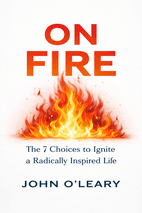
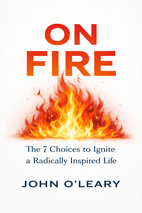
John O'Leary's On Fire outlines seven key choices for purposeful living, drawn from his own survival story, to help anyone facing adversity transform their mindset and ignite a life of passion and resilience.
Feature
Insta.Page
Blinkist
Shortform
Summary Depth
Full Chapter-by-Chapter
15-min overview
Section-by-section guides
Audio Narration
✓ (AI narration)
✓
✓
Visual Mindmaps
✓
✕
✕
AI Q&A
✓ Voice AI
✕
✕
Quizzes
✓
✕
✕
PDF Downloads
✓
✕
✓
Price
$59.99/yr
$146/yr (PRO)
$199/yr
*Competitor data last verified February 2026.
About the Author
John O'Leary
John O'Leary is a bestselling author, speaker, and former national spokesman for the Muscular Dystrophy Association. He is best known for his inspirational memoir "On Fire," which details his remarkable recovery from a devastating childhood accident. His work focuses on sharing a message of resilience, hope, and leading a purpose-driven life.
1 Page Summary
In "On Fire: The 7 Choices to Ignite a Radically Inspired Life," John O’Leary draws from his own harrowing experience of surviving a devastating fire at age nine that burned 100% of his body to outline a framework for purposeful living. The central thesis is that true inspiration and a life of impact are not products of circumstance, but of conscious daily choices. O’Leary distills his philosophy into seven key decisions, such as choosing to believe that your life matters, to surrender the outcome, and to forgive others, arguing that these choices empower individuals to overcome adversity and live "on fire" with passion and purpose.
What makes the book distinctive is O’Leary’s raw, personal narrative, which serves as the powerful foundation for his motivational advice. His approach is not about simplistic positive thinking, but about the difficult, transformative work of choosing hope, responsibility, and love in the face of profound pain and limitation. The book blends memoir, practical wisdom, and inspirational stories from others he has encountered, moving beyond mere self-help to deliver a message about the resilience of the human spirit and the ability to find meaning in our struggles.
The intended audience is anyone feeling stuck, facing challenges, or seeking greater meaning and motivation in their personal or professional lives. Readers will gain a perspective-shifting understanding that their past does not define their future and that they possess the agency to ignite change. Ultimately, O’Leary provides a hopeful, actionable guide for transforming trauma into triumph and learning to live not as a victim of circumstance, but as a radiant inspiration to others.
The chapter opens in the stark reality of a hospital room, where a severely burned nine-year-old boy named John, reeling from a gasoline fire he accidentally caused, asks his mother if he is going to die. Her response is not gentle reassurance but a shocking, pivotal question: “Do you want to die? It’s your choice, not mine.” This moment shatters his world of childhood entitlement and forces a fundamental shift. It becomes an inflection point where he must choose between giving up or fighting to survive, moving from a passive mindset to one of active ownership.
Against impossible medical odds, he chooses to fight. This early lesson frames the chapter’s core argument: while we cannot control what happens to us, we always control our response. The narrative extends this idea by challenging the very label of "accident" for the fire, suggesting that true accountability for our role in events—even unforeseen ones—is not a burden but a source of power. It is the key to intentionally navigating life, a principle illustrated by an anecdote about resolving conflict through shared responsibility.
The philosophy is put to a final, raw test on John’s first night home from the hospital. At a family dinner, unable to feed himself due to his injuries, he expects help. Instead, his mother insists he must do it himself, telling his sister to put the fork down. Through tears and frustration, he struggles to maneuver the utensil with his bandaged hands. This painful moment, remembered initially as cruelty, is later understood as a mother's agonizing gift of tough love. She was teaching him that the celebration was over and the daily work of living—of ownership—had begun. By making him "pick up your fork," she gave him the first tool to rebuild his life.
The story expands from this personal watershed to a universal challenge. It asks the reader to consider not whether they are breathing, but whether they are truly alive—engaged, resilient, and present. The metaphor of the fork represents every person’s defining choice: to surrender to circumstance or to seize accountability for their path. The chapter argues that a radically inspired life is built on this daily decision to own your story completely, to accept unchangeable hardships, and to find purpose in the fight itself. It concludes that life’s ultimate question isn’t about avoiding death, but about actively choosing, every day, to live.
The Hospital Room: A Mother’s Startling Question
A nine-year-old boy, John, lies in an emergency room after a catastrophic accident. His body is severely burned, his clothes fused to his skin, and the frantic activity of the nurses contradicts their reassuring words. He is in immense pain and fear, replaying the morning’s events: an attempt to mimic older boys by playing with fire in his parents’ garage led to a gasoline explosion. Engulfed in flames, he ran through the fire into his house, where his brother heroically smothered the flames with a doormat before an ambulance arrived.
In the stark hospital room, feeling desperately alone, he is finally visited by his mother. Seeking the comfort he has always known—like the time she saved him from drowning—he asks her the fearful question weighing on him: “Am I going to die?” Instead of the expected promise of a milkshake and a quick return home, she responds with a jarring question of her own: “John, do you want to die? It’s your choice, not mine.”
The Inflection Point: From Entitlement to Ownership
This shocking question serves as a profound inflection point. Before the fire, John lived a charmed, entitled life where his parents were in charge and he simply followed. His mother’s response dismantled that paradigm. She refused to offer empty comfort or assume responsibility for his survival. Instead, she pointed him toward a choice: to give up and fall into the abyss or to “fight like you’ve never fought before.” She framed his survival as his own battle to own, declaring, “It’s your choice. Not mine.”
Her question forced him to move from a mindset of passive entitlement to one of active ownership and total accountability. He chose to fight.
The Stark Reality and the Power of Choice
The medical odds were overwhelmingly against him. With burns covering 100% of his body, 87% of them third-degree, his survival was statistically impossible. Yet, his mother’s challenge ignited a fight. The narrative reveals that he did survive, not by accident, but through a combination of prayer, remarkable support, and his own choice to take ownership of his recovery. This foundational lesson—that we may not control what happens to us, but we always control our response—becomes the central theme. The first step to an inspired life is to own it completely and leave excuses behind.
Rejecting “Accident” and Embracing Accountability
The chapter challenges the very label “accident” for the fire. While he was a child who didn’t foresee the explosion, holding a flame to gasoline has a predictable outcome. Calling it an accident “cheapens my role in the event.” True accountability, he argues, is not a burden but a source of power. It frees you to navigate your path forward intentionally. He illustrates this with a story about Roger Staubach, who resolved a dispute between two brokers arguing over a commission by donating the entire sum to charity, teaching a powerful lesson that individuals are responsible for solving their problems together.
The Coming Home Test: “Pick Up Your Fork”
The final test of this new philosophy of ownership occurs on John’s first night home from the hospital. During a celebratory family dinner, he cannot feed himself due to his injuries. When his sister tries to help, his mother intervenes: “Put that fork down, Amy. If John is hungry, he’ll feed himself.” This moment, initially met with tears and anger, reinforced the painful but vital lesson. The celebration was over, and the hard work of living—of taking responsibility for his own needs—had begun. It was a clear directive to stop waiting for rescue and to start figuring out how to move forward, one difficult action at a time.
Key Takeaways
Life is a choice between actively living or passively dying. Our response to adversity, not the adversity itself, defines our path.
Ownership is the antidote to entitlement. Stop waiting for someone else to fix your life; the power to change it lies with you.
Accountability is power, not a burden. Taking full responsibility for your actions and their consequences frees you to intentionally shape your future.
Inflection points demand decisive action. Moments of crisis are opportunities to choose a new direction—toward ownership or away from it.
The fight for a meaningful life continues long after the initial victory. True resilience is shown in the daily, often frustrating, choices to be self-sufficient and move forward.
The Fork and the Fight
The chapter paints a vivid picture of a raw, emotional moment at the family dinner table. With the party ended and his hands freshly amputated and wrapped in bulky gauze, a nine-year-old boy faced his plate. Wrestling a fork between his bandages was a frustrating, clumsy battle. Each time it clattered to the table, his hunger and anger at his mother grew. Yet, through sheer stubbornness, he finally speared some potatoes and ate, glaring at her all the while. In that instant, he saw only her cruelty, not her courage.
A Mother's Painful Gift
Decades later, the author reflects on this scene with profound gratitude. He realizes how agonizing it must have been for his mother to sit passively, watching her injured child struggle when she could have easily fed him. She rejected the path of superficial comfort and picture-perfect appearances. Instead, she offered the harder, truer gift: the understanding that while love and support surround us, the core battle is our own. By making him pick up that fork, she handed him the first tool to rebuild his life. She had already challenged him to choose not to die after his accident; now, she was teaching him how to choose to live.
The Question of True Aliveness
This personal watershed moment opens into a direct challenge to the reader. The narrative shifts from the specific to the universal, asking not whether we are breathing, but whether we are truly alive. Are we excited, present, and resilient? Do we merely endure our days, or do we embrace them? The author contrasts a life of passive entitlement with one of active ownership, citing Stephen Covey's wisdom that we cannot change until we acknowledge our own role in creating our present.
Your Inflection Point
The conclusion is a powerful call to action. The story of the fork is presented as a metaphor for every person's defining choice: to surrender to circumstance or to seize ownership of one's life. It’s a decision to stop saying "it's not my fault" and start declaring "it's my life." This ownership unlocks the ability to accept unchangeable hardships, fight for what matters, and find celebration in the journey itself. The ultimate message is that life isn't about avoiding death, but about choosing, every day, to live radically and inspired.
Key Takeaways
Lasting strength and independence are often forged in moments of struggle, not ease.
The most courageous love sometimes means withholding help to foster self-reliance.
Truly living requires moving from a mindset of blame or entitlement to one of personal responsibility.
Your current situation, no matter how challenging, holds the potential for an inflection point where you can choose to own your story.
A radically inspired life is built on the daily choice to engage fully with both obstacles and opportunities.
Key concepts: 1: Do You Want to Die?
1: Do You Want to Die?
The Pivotal Question
Mother asks burned son: 'Do you want to die?'
Forces shift from passive entitlement to active choice
Survival framed as his own battle to own
The Inflection Point
Shatters childhood paradigm of parental responsibility
Choice between giving up or fighting to survive
Marks transition to ownership and accountability
Power of Response Over Circumstance
We control our response, not what happens to us
Ownership is the first step to an inspired life
Choice to fight defied impossible medical odds
Rejecting 'Accident' Mentality
Accountability for role in events, even unforeseen
True accountability is a source of power, not burden
Enables intentional navigation of life's path
The Fork Test: Tough Love
Mother insists he feed himself despite injuries
Teaches that celebration is over, daily work begins
Metaphor for seizing accountability for one's path
Core Philosophy of Ownership
Radically inspired life built on daily ownership
Accept unchangeable hardships, find purpose in fight
Ultimate question is actively choosing to live
Universal Challenge
Not just breathing, but being truly alive and engaged
Defining choice: surrender or seize accountability
Own your story completely to rebuild your life
If you like this summary, you probably also like these summaries...
💡 Try clicking the AI chat button to ask questions about this book!
Chapter 2: 2: What Are You Hiding?
Overview
The chapter opens with the relentless, painful reality of recovery in a burn unit, where daily baths are a torturous ceremony of scrubbing and re-bandaging skinless flesh. This agony leads to a moment of terrified hope when John sees his face in a mirror and realizes his features are intact, yet he makes a fateful decision: to hide his scars and story forever. For twenty years, he covers his body and his past, adopting a mask of normalcy through long sleeves and coping mechanisms like excessive drinking, illustrating a universal human tendency to conceal what we fear will be rejected.
His parents' parallel trauma is laid bare, revealing their shock at seeing him transformed and bandaged, a visual horror that echoes his own emotional confinement. The narrative then traces how this masking persisted until a training session as a hospital chaplain introduced the red jacket parable—a story about denying one's own defining experiences—which John initially dismisses. The mask is forcibly removed when his parents write a book about the fire for his wedding, using a childhood photo he despises. Reading their account, Overwhelming Odds, he confronts the full scope of his family's suffering and realizes his story was never his alone to hide.
This unwanted revelation becomes a catalyst for transformation, shifting his perspective from shame to strength. He begins to see his survival and scars as a gift, with each mark a badge of honor that evidence healing and resilience. The metaphor of the Golden Buddha within expands this idea, showing how we often plaster over our true worth to protect ourselves, but inspiring lives require chipping away that facade to reveal the gold underneath. Through vulnerability exercises where people share deep truths by saying, "John, if you really knew me...", the chapter highlights how authentic connection springs from our shared struggles, breaking isolation and building community.
A poignant moment with his young son, who innocently loves his father's scars, mirrors this journey toward self-acceptance. Ultimately, the chapter encourages embracing every part of our stories, not as weaknesses but as sources of strength, and to look at our reflections—scars and all—with love, recognizing they have led us perfectly to who we are today.
The Daily Agony of Healing
The chapter opens not with a memory, but with a relentless, painful present. John describes the torturous daily ritual of his bath in the burn unit. Nurses wheel his bandage-swaddled body to a steel tub, where the process of immersion, bandage removal, and wound scrubbing causes excruciating pain across his entire skinless body. The ordeal culminates in the shaving of his scalp—the donor site for skin grafts—which feels interminable. Afterward, he is coated in a burning white medicine, Silvadene, and re-wrapped like a mummy. This two-hour ceremony of pain has been his reality for weeks.
The Mirror and the Mask
During one such session, a devastating realization hits him as he sees the raw, red tissue beneath his bandages. He believes his life, and his identity, are over, convinced his face is also a monstrous scar. Unable to speak due to a tracheotomy, he communicates his despair to his mother using a letter board, painstakingly spelling out "MY FACE." To reassure him, his mother brings a small mirror. Terrified, John looks and sees the bandages framing his face, a feeding tube, and peeling skin—but his core features are intact. The relief is profound; a part of him is still "there." He smiles for the first time since the fire.
This moment, however, becomes an inflection point with a hidden cost. He decides that upon leaving the hospital, he will not share his miraculous story of survival. Instead, he will pretend the fire never happened. He trades his medical bandages for metaphorical ones: long sleeves and pants in all seasons to hide his scars, a desperate attempt to appear "normal" and fit in.
The Family's Trauma
The narrative then shifts to reveal his parents' parallel horror. After a brief, hopeful encounter in the emergency room, they are shown a transformed son hours later: bloated from IV fluids, eyes swollen shut, mummified in bandages, intubated, and strapped to a bed. The visual shock overwhelms them, crystallizing the dire warnings from doctors. Those life-saving bandages would encase John for five months in the hospital and for eight months total, but the emotional bandages he adopted would last for twenty years.
Two Decades Covered
John explains this lifelong "masking" as a universal human tendency. We construct masks—through makeup, behavior, or lifestyles—not to enhance ourselves but to hide what we fear the world will reject: our scars, stories, shame, and brokenness. His mask in high school and college was excessive drinking, a coping mechanism for acceptance and belonging. He argues that the peer pressure of adolescence never truly ends; adults simply seek different forms of validation through status, possessions, and social approval, fueled by an advertising industry that profits from our insecurity.
The Red Jacket Parable
A turning point comes during his training to become a hospital chaplain, a path he stumbled into and refused to quit. After a difficult session, his advisor, Dr. Davis, challenges him to know his own story. When John fails to understand, Dr. Davis shares a parable: a little girl named Mary denies that a distinctive red jacket on the floor is hers, despite everyone having seen her wear it daily. The lesson is that we all have a "red jacket"—a defining story or experience we try to disown. John listens but doesn't yet see the connection to himself.
The Unwanted Revelation
The forced removal of his mask begins at his own wedding. As he marries Beth, his parents, overwhelmed with gratitude for the miraculous journey, are inspired to write a book about the fire and his survival. They plan to feature on the cover a childhood photo of John just after the hospital, visibly scarred and in braces. John hates this photo—it symbolizes everything he spent two decades hiding. He argues against the book, feeling exposed and violated by their decision to "dredge up the past." They write it anyway, titling it Overwhelming Odds.
Reading their manuscript, his perspective begins to shift. He realizes for the first time the full extent of his family's trauma—his brother's injuries, his sisters' prescribed sleeping pills, and the profound emotional torment his parents endured. His story was not his alone to hide. The book, and that photo, became the sledgehammer smashing the mask he thought he needed.
From Shame to Strength
The author describes a profound shift in perspective upon reading his parents’ account of the fire that nearly killed him. He saw, with sudden clarity, how the entire tragedy was a "gift." The community’s outpouring of support, the painful recovery, and the lasting scars all led perfectly to the person he became. This wasn't about denying the pain, but about claiming the entire story as his own—his "red jacket." He emphasizes that wearing this symbolic jacket is not for seeking sympathy or using the past as a crutch. Instead, it’s about learning the lessons, celebrating the scars, and doing greater things because of them. The scars, once hidden in shame, became "badges of honor"—evidence of healing and miracles meant to be seen by others.
The Golden Buddha Within
This theme is illustrated through the story of the Phra Phuttha Maha Suwan Patimakon, the Golden Buddha of Bangkok. For two hundred years, its immense value was hidden under a layer of plaster to protect it from invaders, rendering it ordinary and overlooked. Its true splendor was only rediscovered by accident when a crack revealed the gold beneath. The author uses this as a powerful metaphor for the human condition: we often conceal our true worth and beauty beneath layers of protection—shame, denial, or a polished facade. The world, however, is desperate to be inspired by the authentic "gold" within each person's story. To live an inspired life, we must chip away the plaster and let our inner light shine.
The Power of Authentic Connection
To break down these facades, the author conducts a simple but transformative exercise in his workshops. After superficial introductions, he asks participants to complete the sentence: "John, if you really knew me, you’d know that..." This invitation to vulnerability immediately changes the room’s energy. Leaders share fears about business and parenting, past traumas, hidden grief, and unfulfilled longings. One man’s shocking admission about feeling grateful after his father's murder underscored the profound liberation of lowering the mask. The author references Henri Nouwen, noting that "the most personal is the most universal." Our deepest wounds and struggles are the very things that connect us, creating community out of isolation. Real life is lived in these moments of shared, unvarnished truth.
A Child’s Unfiltered Acceptance
The narrative culminates in a tender moment with the author’s young son, Jack. While mimicking his father shaving, Jack becomes fascinated by the thick, prominent scars on his father’s stomach. Instead of fear or awkward questions, the child simply observes the scars’ physical texture—"red, bumpy, and ridgey"—and concludes, "and I love it!" This innocent, unfiltered acceptance becomes a powerful mirror, helping the author to finally see his own scars not as defects, but as features worthy of love. It symbolizes the ultimate goal: to look at our own reflections, with all their marks and history, and choose self-acceptance.
Key Takeaways
Your story is a gift: Every experience, especially the painful ones, has shaped you and holds intrinsic value. Claiming your entire story (your "red jacket") is an act of empowerment, not victimhood.
Uncover your inner gold: Like the Golden Buddha, your true worth and beauty are often hidden under protective layers. Inspiring yourself and others requires the courage to chip away the plaster of pretense and let your authentic self be seen.
Vulnerability fosters connection: Superficiality keeps us isolated. Sharing your true struggles and scars is what builds genuine, life-giving community. The "most personal" is, in fact, "the most universal."
Scars are evidence of healing: They are not signs of weakness to be hidden, but symbols of strength and resilience to be celebrated. They are proof that you have survived and healed.
Choose self-acceptance: The journey ends not with changing your story, but with embracing it. Look at your reflection—scars and all—with love, recognizing it has led you perfectly to this moment and the possibilities ahead.
Key concepts: 2: What Are You Hiding?
2: What Are You Hiding?
The Decision to Hide
Relief at seeing intact face in mirror
Fateful choice to conceal scars and story
Adopts mask of normalcy for 20 years
The Masking Mechanism
Universal human tendency to hide flaws
Uses clothing and drinking to cope
Masking persists into adulthood
Family's Shared Trauma
Parents' shock at his bandaged appearance
Their suffering was parallel to his
Story was never his alone to hide
The Red Jacket Parable
Defining experiences we try to disown
Chaplain training introduces key metaphor
Initial dismissal of the lesson
Forced Confrontation
Parents' book reveals full family suffering
Unwanted catalyst for transformation
Shifts perspective from shame to strength
Scars as Gift and Strength
Scars become badges of honor
Evidence of healing and resilience
Golden Buddha metaphor for inner worth
Authentic Connection Through Vulnerability
Sharing deep truths builds community
Son's innocent acceptance mirrors journey
Embracing story leads to self-acceptance
⚡ You're 2 chapters in and clearly committed to learning
Why stop now? Finish this book today and explore our entire library. Try it free for 7 days.
Chapter 3: 3: Are You All In?
Overview
Lying in his hospital bed, John spells out "YOU SAVED ME" to his brother Jim, a moment that redefines heroism as ordinary courage in critical times, not superhuman feats. This personal story sparks a broader look at how everyday people, like Jim rushing into a fire or Amy holding her burned brother tight, act with selflessness when it matters most. Their actions are driven by a sudden, compelling mission—a why that transforms indifference into purposeful action. This idea echoes in examples like the FOCUS Marines Foundation, where veterans find new life through purpose, and in Viktor Frankl’s wisdom: When you know your why, you can endure any how. Even a janitor’s cleaning becomes vital when linked to saving lives, showing that no task is trivial with a larger mission in mind.
To keep that purpose alive, the chapter introduces the Ignition Statement, a personal mantra starting with "Because"—such as "Because God demands it, my family deserves it, and the world is starved for it"—that fuels daily perseverance through mundane or difficult moments. The narrative peaks with an ultimate example of being all in: the author’s eight-year-old sister, Susan, running into their burning house repeatedly to bring water, her love providing the why that overcame fear. These stories underscore that inflection points, where we choose to step forward or retreat, define our lives. Finally, it all boils down to a daily choice: succumb to indifference, which disengages and dims spirit, or embrace purpose, which engages and ignites meaning, reminding us that living "on fire" means recognizing something significant is always at stake.
A Brother's Heroic Visit
Lying in his hospital bed, John experiences a moment of profound connection when his older brother Jim, dressed in full protective gear, visits him. Using an alphabet board, John painstakingly spells out the message “YOU SAVED ME” to express his gratitude. Jim dismisses the label, calling John the real hero, but the moment cements their bond and redefines John’s understanding of his brother’s love and sacrifice.
Redefining Everyday Heroism
This personal experience leads to a broader reflection on the nature of heroism. True heroes are often not the superhuman figures of comics, but ordinary people who act with courage and selflessness when it matters most. They are individuals who move forward into danger or difficulty when others retreat, motivated by a sense of duty or love for others.
The Power of Mission and Purpose
The narrative shifts to illustrate how a compelling mission can reignite a life, using the example of the FOCUS Marines Foundation. The foundation helps veterans struggling after returning home by giving them a new sense of purpose and fellowship, effectively helping them feel “alive again.” This underscores a central theme: without a mission or a “why,” people can become unmoored and indifferent.
Jim's Inflection Point
The story returns to the day of the fire, detailing Jim’s critical choice. As a typical, self-focused teenager, Jim faced an immediate and terrifying mission: save his burning brother. After initially pulling back from the intense heat, he made the conscious decision to step back into the fire, using a mat to beat out the flames, wrap John up, and carry him to safety—sustaining burns himself in the process. This was his inflection point from indifference to purposeful action.
A Sister's Unbreakable Hold
John’s sister Amy provides another heroic example. After the fire was out, an eleven-year-old Amy ran to her severely burned brother, embraced him tightly, and repeatedly insisted, “It’s going to be okay. Have faith and fight.” Even when John, in utter despair, begged her to kill him, she refused to let go, physically and emotionally holding him together. Her actions demonstrate that heroic love means not abandoning someone in their darkest moment.
The "Why" That Fuels Endurance
Drawing from the wisdom of Holocaust survivor Viktor Frankl, the section presents a vital principle: When you know your why, you can endure any how. Frankl survived unimaginable suffering by holding onto his purpose—to rewrite his lost manuscript and help others find meaning. The chapter argues that while life is filled with mundane and difficult hows (tasks, chores, pain), having a clear why (purpose, love, mission) provides the fuel to persevere. Amy endured the pain of holding her burning brother because her why—her love for him—was greater than the how of her own discomfort.
Key Takeaways
Heroes are often ordinary people who choose courage and sacrifice in critical moments, like Jim running into the fire or Amy refusing to let go.
A compelling purpose is essential to combat indifference and feel truly alive, as seen in both Jim’s transformed actions and the veterans rediscovering their mission.
Your “why” is your anchor. Knowing your deeper purpose—whether it’s love for a person, a duty, or a personal mission—provides the strength to endure even the most painful “hows” in life.
Inflection points define us. Life presents moments where we can pull back in self-preservation or step forward in courage; the choice determines the life we lead and the person we become.
The Janitor's Purpose
During hospital rounds, the doctor made a point to bring the janitor, Lavelle, to the author's bedside. He looked Lavelle in the eyes and credited him directly with keeping the young patient alive by preventing infection through his meticulous cleaning. This moment underscored a profound truth: the number one killer of burn victims is infection, and the janitor's role was as critical as the surgeon's. It was a lesson in recognizing that no task is insignificant when connected to a larger purpose. Lavelle was driven not by a checklist, but by the understanding that his work safeguarded a life.
Crafting Your Ignition Statement
The narrative shifts to a universal tool for sustaining purpose: the Ignition Statement. This is a personal, present-tense declaration that begins with "Because" and serves as a constant source of fuel. It answers the core question of why we do what we do, cutting through fatigue, pain, and distraction. The author shares his own refined statement: "Because God demands it, my family deserves it, and the world is starved for it." This statement energizes him through travel, work, and family life. The key is to create a statement that informs the mundane, sacred moments of everyday life—diapers, spreadsheets, traffic—and keeps indifference at bay.
The Ultimate Example of Going All In
The chapter culminates with a powerful, personal story of being "All In." On September 11, 2001, firefighters ran into the burning World Trade Center, compelled by duty and purpose. This mirrors an earlier, intimate heroism from the author's own tragedy. As he stood burned in his yard begging to die, his eight-year-old sister, Susan, heard his pleas. Instead of a knife, she ran back into their burning house not once, but three times, each time to bring a cup of water to throw on his face. Her actions, driven by sheer love, likely saved his scalp and face from third-degree burns, which later became the donor site for skin grafts. She embodied the principle that when you know your why, you can endure any how.
The Choice: Indifference or Purpose
The final segment presents a stark, daily choice. Indifference is framed as a silent killer—of patients, relationships, and communities. Conversely, purpose breathes life into everything. The challenge is to reject the retreat into disengagement and instead choose to engage fully, to proclaim that the effort is worth the risk of getting burned. Living "on fire" means refusing to accept mediocrity and recognizing that something significant is always at stake in our daily actions.
Key Takeaways
Every Role Matters: Purpose transforms mundane tasks into life-saving missions, as demonstrated by the janitor whose cleaning prevented fatal infection.
Fuel Your Why: An "Ignition Statement" is a personal, present-tense mantra (beginning with "Because") that provides enduring motivation and focus for daily life.
Purpose Overcomes Fear: Knowing your profound why enables you to endure any how, exemplified by an eight-year-old girl running into a burning house.
The Daily Choice: Life presents a constant choice between indifference, which disengages and kills spirit, and purpose, which engages and saves lives—sometimes your own.
Key concepts: 3: Are You All In?
3: Are You All In?
Redefining Everyday Heroism
Heroism is ordinary courage in critical moments
Not superhuman feats but selfless action when needed
Moving forward when others retreat defines a hero
The Power of Mission and Purpose
A compelling 'why' transforms indifference into action
Purpose reignites life and combats feeling unmoored
No task is trivial when linked to a larger mission
The Core Principle: Why Over How
When you know your why, you can endure any how
Purpose provides fuel to persevere through pain
Love and mission make difficult tasks endurable
Inflection Points Define Our Lives
Critical moments where we choose forward or retreat
Jim's choice to re-enter the fire saved his brother
These choices determine who we become
Examples of Being All In
Jim beating flames and carrying John to safety
Amy holding her burned brother despite his despair
Eight-year-old Susan running into burning house repeatedly
The Daily Choice: Purpose vs. Indifference
Indifference disengages and dims the human spirit
Purpose engages and ignites meaning in life
Living 'on fire' means recognizing something is at stake
Tools for Sustaining Purpose
The Ignition Statement: a personal 'because' mantra
Connecting daily tasks to a larger mission
Remembering heroic examples in ordinary life
Chapter 4: 4: Why Are You in Jail?
Overview
The chapter begins in a hospital's grim reality, where a nine-year-old boy learns he must lose his fingers, sending him spiraling into a future that feels obliterated. This moment of despair sets the stage for a profound exploration of human resilience, contrasting sharply with the enduring example of the author's father. Decades later, battling Parkinson’s disease from a wheelchair, his dad embodies an extraordinary choice: to list everything he is grateful for because of his illness, transforming suffering into a litany of gifts.
This contrast reveals the transformative power of a simple shift in perspective. It introduces the chapter's central idea: the difference between a victim and a victor hinges on how we ask "Why me?" The victim's question is a lament over misfortune, while the victor's version is a search for purpose and hidden blessings. This isn't merely philosophical; it's supported by research like the famous Nun Study, which scientifically linked positive expression to a dramatically longer life.
The narrative then gets personal, showing how this principle works in practice. A failed real estate venture, undertaken with fear and inexperience, becomes a humbling training ground when the author consciously shifts his "Why me?" from despair to curiosity. This practice of gratitude is further illuminated by social research, which identifies it as the single greatest predictor of joy—not in grand events, but in the appreciation of ordinary moments. A dying man's wish to simply use a bathroom again underscores how easily we overlook life's mundane miracles.
This theme finds powerful resonance in an unlikely setting: a federal prison. Challenging inmates to find gratitude for their incarceration initially meets resistance, but one man’s list of thirty-one specific gratitudes—from hot meals to spiritual redemption—transforms the room, proving that perspective can alter any experience. Ultimately, the chapter returns to the hospital, where a compassionate surgeon presents the young patient with the same essential choice: to be a victim of his circumstances or a victor over them. This final lesson cements the idea that our mindset, fueled by daily gratitude, is what unlocks a life of vitality and inspires others, no matter the walls that surround us.
A Childhood Trauma and a Father's Wisdom
The chapter opens in a hospital room, where a young John O’Leary awakens from his seventh surgery following severe burns. Groggy and expecting his ever-present, encouraging parents, he instead overhears hushed whispers and sees his mother crying—a terrifying sight. His father, voice strained, delivers devastating news: to save his life from infection, doctors had to amputate his fingers.
John’s world collapses. He protests that fingernails grow back, so why not fingers? His mind races to a future he believes is now impossible: no baseball, no writing, no job, no family. He is consumed by rage, shock, and the conviction that his life is over. This moment starkly frames the central question: Why do some people become trapped by tragedy while others rise from it?
The Example of a Victor
The narrative then shifts to present day, highlighting John’s father as a living answer to that question. For over two decades, his dad has battled Parkinson’s disease, a degenerative condition that has stripped away his ability to perform simple tasks. Despite constant pain, falls, and immense difficulty, John notes he has never once heard his father complain.
During a quiet visit on a particularly hard day, John vulnerably shares his love and pride for his father. When he asks how his dad remains so positive despite the relentless challenges, the answer is profound: “I don’t know how I could be negative when I've got so much to be grateful for.”
From his wheelchair, struggling to speak, his father lists his gratitudes because of Parkinson's: it wasn’t a worse disease; it granted time for reflection; it deepened his relationship with his wife, who drew closer; medical technology; newfound empathy; simple daily abilities; and the perspective of being “healed, even if not cured.” He consciously chooses to focus on what he has, not what he’s lost.
The Transformative Question
This leads to the core principle: the difference between a victim and a victor lies in how they ask one simple question. The victim’s refrain is “Why me?”—a lament about misfortune. The victor’s question is also “Why me?”—but it’s an inquiry seeking purpose: What lesson is this teaching? How can this challenge raise me up and benefit others?
This shift in perspective isn’t just motivational fluff; it’s backed by data. The chapter cites the famous “Nun Study,” which tracked the journals of 180 nuns. The research found a staggering correlation between positive emotional expression and longevity: 90% of the most cheerful nuns were alive at 85, compared to only 34% of the least cheerful. Attitude and gratitude weren't just pleasant traits; they were key predictors of a long, vibrant life.
A Personal Lesson in Reframing
John then shares a story from his own early adulthood. Stuck working in a cubicle on Christmas Eve, he vowed to never lose control of his schedule again and impulsively launched a career as a real estate developer—a daunting choice for a man with no fingers or experience.
His first project was a catastrophic failure: a decrepit building with dead pigeons in a dirt basement, endless unforeseen repairs, and financial miscalculations. After months of grueling, painful work, the condos wouldn’t sell, and he had to convert them back to rentals. The “Why me?” victim mentality crept in repeatedly.
Yet, in the midst of the struggle, he began to consciously reframe the question. Taped in his truck was a quote by Melody Beattie on gratitude, which he read for daily strength. He started asking, “Why me? What is this preparing me for next?” This project, while a commercial failure, became a vital, humbling training ground that equipped him with essential lessons for future success. It proved that gratitude provides the courage to move through adversity.
The Practice of Gratitude as a Joy Indicator
The author recalls being struck by Brené Brown's insight at a leadership event: her research reveals that the single greatest predictor of joy in a person's life is the active practice of gratitude. It's not about circumstances, wealth, or major events; it's a conscious choice to appreciate what we have. Brown's data showed so strong a link between joy and gratitude that she refuses to discuss one without the other. Importantly, the research highlighted that people often feel deepest gratitude for life's ordinary moments—the sound of a loved one's laugh, the aroma of morning coffee, the simple pleasures we easily overlook. This underscores a vital truth: in chasing grand milestones, we might miss the countless small gifts that make life rich.
Celebrating the Little Things
A poignant hospital visit years ago cemented this idea for the author. A friend's father, dying from abdominal cancer, shared a heartfelt declaration: if he could ever use the bathroom again, he'd throw a celebration so loud the whole hospital would hear. That conversation, the last with this man, sparked a lasting habit. Now, the author consciously gives thanks all day for everything—big and small, good and bad—including a silent "happy dance" in restrooms to honor that lost ability and remember that even the most mundane acts are miracles. This practice transforms daily life, revealing that there are no ordinary moments, only gifts waiting to be recognized.
A Lesson from Behind Bars
An invitation to speak at a federal prison brought nervous anticipation, marked by stark warnings and security protocols. Standing before sixty men in orange jumpsuits in a sweltering chapel, the author shared personal stories of finding freedom within physical walls, much like his hospital experience. When the topic of gratitude arose, he played "Amazing Grace" on the piano and challenged the inmates to list three things they were grateful for because of their incarceration. After initial resistance and a defiant "Not one goddamn thing" from one man, another stood and shared a profound list of thirty-one gratitudes—from basic comforts like heat and meals to deeper gifts like redemption and new friendships. The room erupted in a standing ovation, illustrating how shifting perspective from victimhood to gratitude can alter entire experiences, even in the same confined space.
The Choice: Victim or Victor
In the final days of his hospital stay, the author received a pivotal visit from Dr. Ayvazian, the surgeon who had cared for him daily. Having survived a fire himself, the doctor spoke with deep empathy. He affirmed that while the physical recovery was miraculous, the journey ahead would be challenging, but the boy could still live an amazing life—becoming a lawyer, a team owner, a parent. He presented a clear choice: be a victim to the tragedy or rise above it as a victor. That moment, and the doctor's enduring phrase "my little comrade," has resonated for decades, emphasizing that with the right mindset, we can focus on possibilities rather than losses. This victor's shift, fueled by gratitude, unlocks vitality and optimism, turning life into a celebration that inspires others.
Key Takeaways
Gratitude is the foundation of joy: Actively appreciating life, especially its ordinary moments, is scientifically linked to sustained happiness.
Perspective transforms experience: The same circumstance—like imprisonment or illness—can be seen as a curse or a source of gratitude, radically altering one's daily reality.
Choose empowerment over victimhood: We have the power to ask "Why me?" not with despair, but with curiosity and thankfulness for gifts received and those to come.
Small practices lead to big shifts: Daily habits of gratitude, like acknowledging simple comforts, can reframe our entire outlook and inspire those around us.
Leadership and compassion show the way: Figures like Dr. Ayvazian demonstrate that true care involves guiding others to see their own potential, fostering resilience beyond immediate challenges.
Key concepts: 4: Why Are You in Jail?
4: Why Are You in Jail?
The Victim vs. Victor Mindset
Victim asks 'Why me?' as a lament over misfortune
Victor asks 'Why me?' to seek purpose and lessons
Mindset choice determines resilience and outcome
A Father's Transformative Gratitude
Battles Parkinson's without complaint for decades
Lists gratitudes because of his illness
Focuses on what he has, not what he lost
Childhood Trauma and Despair
Nine-year-old learns fingers must be amputated
Believes future is obliterated, consumed by rage
Sets stage for the central question of resilience
Scientific Backing for Perspective
Nun Study links positive expression to longevity
Cheerful nuns had dramatically higher survival rates
Attitude is a predictor of vibrant life
Personal Application: Failed Venture
Real estate project becomes a humbling failure
Consciously shifts 'Why me?' from despair to curiosity
Failure becomes a training ground for growth
Gratitude as the Key to Joy
Greatest predictor of joy is daily gratitude
Found in appreciation of ordinary moments
Dying man's wish highlights overlooked miracles
Gratitude in Unlikely Places: Prison
Inmates challenged to find gratitude for incarceration
One man lists 31 specific gratitudes from prison
Proves perspective can alter any experience
📚 Explore Our Book Summary Library
Discover more insightful book summaries from our collection