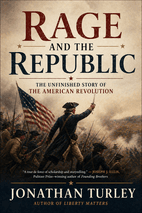
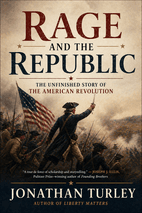
Jonathan Turley's Rage and the Republic traces the American Revolution as an unfinished struggle between constitutional checks and mob rule, using Thomas Paine's radicalism and the French Revolution as cautionary parallels. Written for readers of political philosophy and constitutional history seeking to understand today's threats to ordered liberty.
Feature
Insta.Page
Blinkist
Shortform
Summary Depth
Full Chapter-by-Chapter
15-min overview
Detailed analysis
Audio Narration
✓ (AI narration)
✓
✓
Visual Mindmaps
✓
✕
✕
AI Q&A
✓ Voice AI
✕
✕
Quizzes
✓
✕
✕
PDF Downloads
✓
✕
✓
Price
$59.99/yr
$146/yr (PRO)
$199/yr
*Competitor data last verified February 2026.
About the Author
Jonathan Turley
Jonathan Turley is a prominent American legal scholar, constitutional law expert, and law professor at George Washington University. He is known for his frequent media commentary, his representation of clients in high-profile cases ranging from the Clinton impeachment to Guantanamo Bay detainees, and his popular legal blog. He has also authored several books, including *The Indispensable Right: Free Speech in an Age of Rage*.
1 Page Summary
In Rage and the Republic: The Unfinished Story of the American Revolution, Jonathan Turley argues that the American Revolution is not a closed chapter of history but an ongoing struggle between two competing visions of governance: one rooted in the Founders’ careful, institutional checks on popular will, and the other in a more radical, direct-democratic impulse that often curdles into mob rule. The book traces this tension through the life of Thomas Paine—a revolutionary firebrand born in failure who ignited the American cause with Common Sense—and contrasts his radicalism with the sober realism of figures like James Madison and John Adams. Turley uses the French Revolution as a cautionary parallel, showing how Rousseau’s “general will,” embraced by Paine, led not to liberty but to the Terror and Napoleon, while the American system was deliberately designed to pit ambition against ambition.
The author’s distinctive approach is to weave intellectual history with vivid, often brutal episodes of popular unrest, from the Fort Wilson riot of 1779—where Founding Father James Wilson barely survived a mob—to the trial of Socrates in ancient Athens, presented as a warning against the demos tyrannos. Turley also examines the modern resonance of these conflicts, arguing that contemporary movements echoing Jacobin rhetoric, the academic assault on “rights talk,” and economic factionalism threaten the liberty-enhancing framework Adam Smith and the Founders established. The book’s final chapters stress that individual rights—free speech, property, due process—are “big, fierce” protections that are rare and under constant pressure, and that federalism, as the Founders intended it, remains the best safeguard against centralized power.
This work is intended for readers interested in political philosophy, American history, and contemporary constitutional debates. Turley, a prominent legal scholar, offers a synthesis that is both historically grounded and urgently present-minded, challenging those on both left and right who would sacrifice liberal institutions for revolutionary ends. Readers will gain a deeper understanding of how the American Revolution’s unfinished business—the tension between ordered liberty and popular rage—remains the central drama of the republic, and why the checks and balances first crafted in Philadelphia are not relics but necessary defenses against the perennial appeal of the mob.
Chapter 1: Chapter 1: The True Pain: From Ruin to Revolution
Overview
The story of Thomas Paine doesn’t begin with ink-stained pamphlets or revolution—it begins with a corset shop in Thetford, Norfolk. Born on January 29, 1737, to a Quaker father and an Anglican mother who considered herself above her station, Paine grew up in the margins of a small town. A statue in his honor now stands there, holding an upside-down copy of Rights of Man—a fitting irony for a man whose family faced persecution for their Quaker beliefs. His early life reads like a series of near-misses and outright failures that, in hindsight, forged the revolutionary he would become.
Quaker Roots and Early Restlessness
Paine’s father, Joseph Pain, was a staymaker who had been expelled from the Quakers for marrying outside the faith. The family walked a tightrope between his father’s fringe religion and his mother’s royalist Anglican ties, a tension that planted the seeds for Paine’s later rejection of organized religion. As a boy, he showed early wit: when a pet crow died, he wrote a poem that could double as his own epitaph—“For as you rise, so you must fall.”
He left school at thirteen to apprentice in his father’s corset shop. The business was fading with changing fashion, so at nineteen, Paine headed to London just as Britain declared war on France in 1756. There, a notice for a privateer called the Terrible caught his eye. He signed up, ready to become a pirate for king and country. But his father tracked him down and pulled him back to the corset trade. That intervention may have saved the American Revolution: the Terrible set sail without him, was mauled by a French ship called Vengeance, and returned with only seventeen survivors out of 167 men.
A Brush with Piracy
Paine’s return to staymaking didn’t last. He soon joined another privateer, the King of Prussia, captained by a man named Menzies. This time he saw combat, taking eight French ships over six months in the Caribbean. His share of the prize money—likely a half-percent—was modest but transformative. For the first time, Paine had a surplus. He spent the next year attending lectures by figures like James Ferguson, who stoked his interest in science and may have introduced him to Benjamin Franklin.
That money ran out, as it always did. Paine returned to staymaking, married a maid named Mary Lambert, fled creditors, and watched his wife and child die in childbirth. Then he became an excise officer—a tax collector for tea, of all things—and swore loyalty to a king he would later call a brute. He was caught cutting corners, fired, and then wrote his way back into the job. It was his first win as a writer.
Finding His Voice in Lewes
Lewes was a hotbed of republican debate. Paine joined the Headstrong Club, where he earned the nickname “the most obstinate haranguer” and won a copy of Homer. He married again, to Elizabeth Ollive, and went into business with her father. The business failed; the marriage soured. But Paine had discovered his voice.
In 1772, he wrote his first pamphlet: The Case of the Officers of Excise, arguing for higher pay to reduce corruption. It sold out four thousand copies and required reprinting. Parliament ignored it, but Paine learned he could persuade. The government noticed too—they fired him for repeated absences and debts. Bankruptcy followed. The marriage never truly consummated, but never divorced either. Paine packed his bags for London.
The Meeting That Changed Everything
In London, he presented himself to Benjamin Franklin. Nothing in his résumé suggested promise, but Franklin saw “an ingenious, worthy young man.” He gave Paine letters of introduction to his contacts in Philadelphia and helped secure passage. In October 1774, Paine boarded the London Packet. Typhus swept the ship, killing five. Paine was carried off the gangplank in a blanket, penniless and gravely ill.
But he had crossed the ocean as Thomas Paine—with an e—and a new world awaited. In Philadelphia, Franklin’s physician nursed him back to health, and Franklin invited him into the Society for Political Inquiries. Corsets, privateering, excise taxes, and a string of disasters had produced a man ready to abandon everything he’d known, including the country of his birth.
Key Takeaways
Paine’s childhood as a religious outsider shaped his later critiques of organized religion.
His father’s intervention kept him off the doomed privateer Terrible, likely saving his life.
Prize money from privateering funded his education and introduction to Benjamin Franklin.
His first successful writing as an excise officer taught him the power of persuasion—even when Parliament ignored him.
A lifetime of personal and financial failures made Paine willing to reinvent himself in America.
Key concepts: Chapter 1: The True Pain: From Ruin to Revolution
1. Chapter 1: The True Pain: From Ruin to Revolution
Quaker Roots and Early Restlessness
Religious tension between Quaker father and Anglican mother
Left school at 13 to apprentice in corset shop
Father saved him from doomed privateer Terrible
A Brush with Piracy
Joined privateer King of Prussia, captured 8 ships
Prize money funded education and science lectures
Returned to staymaking, married, lost wife and child
Finding His Voice in Lewes
Joined Headstrong Club, earned reputation as debater
First pamphlet argued for excise officer pay raises
Fired for debts, marriage failed, moved to London
The Meeting That Changed Everything
Benjamin Franklin saw promise in his résumé
Franklin gave letters of introduction to Philadelphia
Survived typhus on voyage, arrived penniless but hopeful
Key Takeaways
Religious outsider status shaped critiques of organized religion
Father's intervention likely saved his life
Privateering funded education and Franklin introduction
Failures made him willing to reinvent himself in America
If you like this summary, you probably also like these summaries...
💡 Try clicking the AI chat button to ask questions about this book!
Chapter 2: Chapter 2: The True Paine: The “Happy Something” of America
Overview
It’s hard to overstate how dramatically America changed Thomas Paine—and how dramatically Paine changed America. When he stepped off that ship in Philadelphia, barely clinging to life, he was just another desperate soul fleeing England’s decay. But he quickly found what he called “a happy something in the climate of America”—a society where class barriers hadn’t yet hardened, where the future wasn’t dictated by the past. For a man who had been named “Pain” and carried that weight his entire life, this was salvation. Within two years, that frail figure would become the most incendiary voice of the Revolution.
Paine’s rise was meteoric. He helped launch the Pennsylvania Magazine, where his early writings showed a gift for satire—his mock dialogue between Generals Wolfe and Gage biting enough to get noticed. He became the Enlightenment’s translator for ordinary people, turning lofty ideas into punchy prose. He even denounced slavery, a radical stance in 1775. Rumors swirled that he needed large draughts of rum and water to quicken his thoughts before writing. Whether true or not, the image fits: a man whose fire came from somewhere raw, not from polished education.
After Lexington, any lingering hope for reconciliation evaporated. He called England “Saturn, devouring its children,” and turned his back on his Quaker pacifist roots. By summer 1775, he sat down to write a pamphlet titled Plain Truth. His friend Dr. Benjamin Rush suggested a better name: Common Sense.
From "Plain Truth" to "Common Sense"
Paine insisted the pamphlet be priced low so common people could afford it—a decision that meant he made almost nothing from sales. But it became the world’s first bestseller, with an estimated 500,000 copies in circulation—one for every five people. Common Sense embodied the Declaration of Independence before it existed, declaring that “the cause of America is in great measure the cause of all mankind” and that “a government of our own is our natural right.”
To make that case, Paine knew he had to break his readers from the reverence for English history and common law. Sir William Blackstone had described the majesty of custom—its authority derived from “time whereof the memory of man runneth not to the contrary.” Paine understood that before colonists could embrace revolution, they had to reject the inviolability of that history. You had to destroy the myth to destroy the monarch.
So Paine plowed straight into his target. He trashed the lineage of George III traced to William the Conqueror, calling him “a French bastard landing with an armed banditti, and establishing himself as king of England against the consent of the natives, in plain terms a very paltry rascally original—it certainly hath no divinity in it.” It was mockery fused with defiance, and it resonated. He declared that “we have it in our power to begin the world over again” and that “the birth-day of a new world is at hand.” That line foreshadowed the French Revolution’s attempt to start history anew.
Breaking the Myth of English History
Paine identified two tyrannies: the king and the House of Lords. Both rested on hereditary succession, the institution he despised most. As historian David Benner noted, these views were not just revolutionary but dangerous—pro-British sentiment in North America was at its zenith, and even Whig allies were calling for greater rights, not revolution. Alluding again to Saturn, Paine wrote: “Even brutes do not devour their young, nor savages make war upon their families.” He pleaded with colonists not to leave the next generation “cutting throats, under the violated unmeaning names of parent and child.”
The timing was perfect. Common Sense was released the same day the King’s speech to Parliament declared the colonists engaged in “rebellious war.” The Continental Army had shrunk to half its size from a year earlier. George Washington credited Paine’s pamphlet with turning the tide, calling it “unanswerable reasoning.”
The Impact and Reception
Paine’s name didn’t appear until the third printing. Initially, people speculated Franklin or John Adams might be the author. Adams, though critical of Paine’s “democratical” leanings, admitted to his wife Abigail: “I could not have written any Thing so manly and striking a style.” He knew the true author: “His Name is Paine.”
Paine used the pseudonym “an Englishman”—not a Roman or Greek name like Cato. It was a calculated choice. Given his advocacy of rebellion, he didn’t consider himself a loyal subject. But the moniker helped bridge the separation for those still attached to tradition. The second part of Common Sense attacked hereditary monarchy directly, using Lockean natural rights theory. The language proved strikingly similar to Jefferson’s Declaration, accusing the King of waging war on his own people.
John Adams was alarmed by Paine’s preference for a unicameral legislature, fearing it would undermine balance. When Paine learned of Adams’s criticism, he stormed to Adams’s house to confront him. Neither left convinced. But Adams saw what Franklin had seen in London two years earlier—a man with “genius in his eyes.”
The American Crisis and Paine’s Wartime Role
When the Declaration was adopted six months later, Paine was volunteering with a militia unit called the “Flying Camp” near Staten Island. He was a mediocre soldier at best, but Washington and others needed his pen. Paine wrote sixteen papers composing The American Crisis, first published December 19, 1776. Again, he kept the price low.
The opening lines are immortal: “These are the times that try men’s souls. The summer soldier, and the sunshine patriot will, in times of crisis, shrink from the service of his country.” He declared every Tory a coward and for the first time referred to the “United States of America.” The essays revealed a dangerously impulsive side: in the third edition, Paine called for a loyalty oath and an extra property tax for those who wouldn’t publicly pledge. It was the final severance from the royal tax collector he once was. The same willingness to unleash democratic despotism on enemies of the Revolution showed that the “Saturn gene” remained—even in pursuit of liberty.
Paine’s Distinctive Voice and Vision
Jefferson later said that “no writer has exceeded Paine in ease and familiarity of style, and perspicuity of expression, happiness of elucidation, and in simple and unassuming language.” The irony: Paine’s style was anything but unassuming. It was partisan, rebellious, unyielding—more in line with French Revolution pamphlets than American polite discourse. Benjamin Rush described Common Sense as a work that “burst forth from the press” and ignited the nation.
Paine didn’t just want independence from England. He wanted a declaration of true revolution—to form “the noblest, purest constitution on the face of the earth.” In his bold vision, the United States would spark a global conflagration of popular government. He had rendered a verdict on his generation, and that generation answered.
Key Takeaways
Paine’s arrival in America gave him a society without calcified class barriers—precisely what he needed to reinvent himself.
Common Sense was a masterclass in accessible, biting prose that attacked the myth of English history and hereditary monarchy.
By keeping prices low, Paine ensured the pamphlet reached common people, making it the world’s first bestseller.
The work directly influenced the Declaration of Independence and turned around a struggling Continental Army.
Paine’s revolutionary impulse had a dark side—his call for loyalty oaths and political taxes revealed a willingness to use coercion against dissenters.
His style—direct, mocking, and unpretentious—set him apart from other founders and made him the voice of the Revolution for ordinary Americans.
Key concepts: Chapter 2: The True Paine: The “Happy Something” of America
2. Chapter 2: The True Paine: The “Happy Something” of America
Paine's Transformation in America
Found 'a happy something' in America's climate
Fled England's decay as a desperate soul
Became the Revolution's most incendiary voice
Rose rapidly through Pennsylvania Magazine writings
Common Sense as Revolutionary Bestseller
Originally titled Plain Truth, renamed by Rush
Priced low for common people to afford
500,000 copies sold, one per five people
Declared America's cause as mankind's cause
Breaking the Myth of English History
Attacked reverence for English common law
Called William the Conqueror a 'French bastard'
Rejected hereditary succession as tyrannical
Urged beginning the world over again
Two Tyrannies: King and House of Lords
Hereditary succession was his greatest target
Compared England to Saturn devouring children
Warned against future generations cutting throats
Pro-British sentiment was at its zenith
Impact and Reception of Common Sense
Published same day as King's 'rebellious war' speech
Washington credited it with turning the tide
Adams admitted he couldn't match Paine's style
Paine used pseudonym 'an Englishman' strategically
Paine's Role in the American Crisis
Volunteered with militia 'Flying Camp' near Staten Island
Was a mediocre soldier but essential writer
Wrote sixteen papers composing The American Crisis
First published December 19, 1776, kept low price
Paine's Radical Stances and Style
Denounced slavery in 1775, a radical position
Translated Enlightenment ideas for ordinary people
Used satire and mockery fused with defiance
Rumored to need rum to quicken his thoughts
⚡ You're 2 chapters in and clearly committed to learning
Why stop now? Finish this book today and explore our entire library. Try it free for 7 days.
Chapter 3: Chapter 3: The Birth of a New Age: The Enlightenment and the Cause of “Independency”
Overview
Thomas Paine stood on a Philadelphia dock in 1787, leaving just as the new nation began drafting its constitution. Paine knew how to start a rebellion; James Madison knew how to build a republic. After victory, critics dismissed Paine as a “crack-brained zealot” better at tearing things down than building them up. But his Common Sense had already sparked the revolution.
The founding era was shaped by faith in natural law and unalienable rights, drawing from Newton’s orderly universe and John Locke’s moral philosophy. Locke said rights come from God, not kings. The Declaration’s twenty-seven grievances showed a “long train of abuses.” Reverend Jonathan Mayhew’s 1750 sermon on Romans 13 argued that a tyrant is no minister of God, and obedience is owed only to just rulers.
But the Founders were no starry-eyed democrats. John Adams warned “there is danger from all men.” Jefferson insisted the Constitution must “bind him down from mischief.” Their realism about human nature led them to design checks and balances, pitting ambition against ambition. This was Newton’s three branches in orbit around the body politic. Yet even as they proclaimed all men created equal, the Founders lived with a glaring contradiction—slavery. Jefferson tried to condemn it in the Declaration but was rebuffed. The noble line stood, but its application was deferred.
The Founders also looked to ancient Athens as a cautionary tale. James Madison noted that pure democracy could turn even a gathering of Socrates into a mob. The American experiment was founded on natural law but built on sober realism about democracy’s perils.
On April 26, 1787, Paine sailed for France, seeking new revolutions abroad while the nation he helped birth turned toward building a stable republic. This marked a split between Paine, who knew how to turn a nation into a rebellion, and Madison, who knew how to turn a rebellion back into a nation. Despite their differences, both saw the Revolution as a realization of natural rights. Yet Paine’s optimism in popular government clashed with Madison’s belief in divided government.
Historians debate Paine’s direct influence on the Declaration, but an early draft suggests he may have reviewed it. The Declaration’s language of natural law drew on a shift from English tradition: Blackstone insisted on absolute parliamentary power, while the Founders insisted some rights could not be taken away.
This was the Age of Reason, and Newton’s Principia electrified American intellectuals. Paine, Franklin, and Madison saw in Newton’s orderly universe a model for government. Madison diagrammed the Copernican system at Princeton, and his vision of three branches echoes Newtonian physics. But if Newton provided the mechanism, John Locke supplied the purpose. Locke’s Second Treatise described a state of nature with perfect freedom and equality, where humans possess rights from God. Locke also justified rebellion: when a ruler exercises “power beyond right,” citizens may resume their original liberty.
That moral justification needed to overcome deep religious inhibitions against rebellion. Reverend Jonathan Mayhew provided the bridge. In his 1750 sermon, he challenged Romans 13, arguing that a tyrant who violates God’s natural laws is not “God’s Minister” but an enemy. If Paine was the spark, Mayhew set the stage.
Yet this liberating philosophy had limits. The Founders who embraced natural rights continued to enslave others. John Dickinson refused to sign the Declaration not because he rejected its principles, but because he thought the timing wrong. He too believed in a “higher source” for rights. He freed his slaves before his death. Others dismissed the metaphysics of natural law, but the Founders built their revolution on that metaphysics: the denial of natural rights is tyranny, whether by one tyrant or by the many.
The Founders’ commitment to natural law was a shared conviction that human-made law must answer to a higher moral standard. Princeton professor Robert George notes that while the framers held different views, they all believed in a law “that is no mere human creation.” For Locke and the Founders, God gave the world “in common,” but individuals retained sovereignty over themselves. The move from a state of nature to civil society was designed to protect existing rights, not to grant government the power to erase them. This radical idea—that rights are divine, not granted by rulers—overthrew monarchies, most vividly on January 21, 1792, when Louis XVI lost his head in Paris, watched by Thomas Paine.
The rejection of absolute monarchy did not guarantee liberty. The Founders understood that despotism could emerge from the many as easily as from the few. John Adams warned of the “ungovernable Passions” and the “insatiable” love of power in every human heart. “There is danger from all men,” he wrote, and the only maxim for a free government is “to trust no man living with power to endanger the public liberty.” Jefferson echoed this caution: “confidence is everywhere the parent of despotism.” The framers’ realism about human nature led them to design a system that pitted ambition against ambition.
To understand the future of democracy, the Founders looked to its past. Athens is often celebrated as the birthplace of popular government, but for the framers it offered a chilling lesson. James Madison noted that even if every Athenian had been a Socrates, the assembly would still have been a mob. Athens’ instability showed how a democracy can suddenly destroy itself. Montesquieu and Madison believed government must be built on an understanding of human weaknesses, not idealistic hopes. The American experiment, though founded on natural law, was erected on a deep realism about democracy’s perils.
Key Takeaways
The Founders anchored the republic in natural law, asserting that government cannot take away existing, divinely ordained rights.
The rejection of divine right monarchy did not automatically produce liberty; the framers feared the tyranny of the majority as much as the tyranny of a single ruler.
The lesson of Athens: pure democracy is mob rule. Madison’s insight that even a wise citizenry can become a mob in assembly shaped the Constitution’s design.
A lasting tension: liberty is both humanity’s destiny and its greatest danger. The solution lies not in trust but in structural checks—chains of the Constitution to bind ambition.
Key concepts: Chapter 3: The Birth of a New Age: The Enlightenment and the Cause of “Independency”
3. Chapter 3: The Birth of a New Age: The Enlightenment and the Cause of “Independency”
Thomas Paine vs. James Madison
Paine sparked rebellion; Madison built republic
Paine sailed for France as Constitution drafted
Paine's optimism clashed with Madison's divided government
Both saw Revolution as realization of natural rights
Natural Law and Unalienable Rights
Rights come from God, not kings (Locke)
Newton's orderly universe inspired government model
Human-made law must answer to higher moral standard
Denial of natural rights is tyranny
Religious Justification for Rebellion
Mayhew's 1750 sermon challenged Romans 13
Tyrant is not God's minister, but enemy
Obedience owed only to just rulers
Mayhew set stage for Paine's spark
Founders' Realism About Human Nature
Adams warned 'there is danger from all men'
Jefferson: Constitution must 'bind him down'
Checks and balances pit ambition against ambition
Newton's three branches in orbit around body politic
Slavery as Glaring Contradiction
All men created equal, but application deferred
Jefferson's condemnation of slavery rebuffed
Dickinson freed slaves; others kept them
Natural rights philosophy had limits
Ancient Athens as Cautionary Tale
Pure democracy could become mob rule
Even Socrates' assembly would be a mob (Madison)
Democracy can suddenly destroy itself
Government built on human weaknesses, not hopes
Locke's Philosophy and Its Limits
State of nature: perfect freedom and equality
Rights from God, not government grants
Rebellion justified when ruler exceeds power
Civil society protects existing rights
Chapter 4: Chapter 4: Of Democracy and Demagogues: Ancient Athens and the Rise of the Demos
Overview
The picture postcards of ancient Athens—gleaming marble temples and orderly assemblies—are a convenient fiction. This chapter strips away that polished surface to reveal a city-state that was a tiny, volatile, and often brutal experiment in direct rule by the demos. The framers of the U.S. Constitution looked to Athens for cautionary tales, not inspiration. The word democracy meant something far more radical to the Greeks: it was "mobocracy," the unmediated power of the masses. The chapter shows how this power emerged from economic chaos, was championed by Pericles (the original demagogue), and curdled into a system where popular will could be as arbitrary as any tyrant. The practice of ostracism—a yearly popularity contest with ten-year exile as the prize, no trial required—embodies this danger. The story of Aristides the Just, banished for being too good, is a perfect illustration.
The trial of Socrates forms the chapter's dark core. He survived the brutal rule of the Thirty Tyrants only to be condemned by the restored democracy. His crime was critique: he saw the demos as a collective tyrant—the demos tyrannos—whose unchecked passions replicated autocracy's worst abuses. His defiant choice of hemlock over escape was his final lesson. This critique was rooted in a pessimistic view of human nature: replacing a single brute with a pack of brutes was no progress. His solution, later codified by Plato, was the philosopher king—rule by wisdom, not popular vote. The Socratic fear is captured in the Icarus metaphor: democracies seduce citizens with liberty, causing them to fly too close to the sun and crash into ruin.
This history haunted America's founding—the framers studied Thucydides and engineered their republic to restrain Athens’ Icarian tendencies. And it sets the stage for the coming revolution in Paris, where the same volatile cocktail of popular rule and public passion would boil over again.
The Myth and Reality of Athenian Democracy
Athens is often held up as a golden ideal, but that image owes more to projection than history. Every era has refashioned Athens to suit its biases. The framers, especially James Madison, studied Athens closely and saw far from a stable model. The city-state was tiny—no more than thirty thousand citizens—and its history was marked by massacres, unstable governments, and mob violence. As Boston University professor Loren Samons put it, the idyllic image “has now almost completely eclipsed the very different picture painted by the actual events of Athenian history.”
The word democracy itself causes confusion. In modern America, we call any system where citizens have a say a democracy, even though the U.S. is a republic. But pure democracy—direct rule by the many—was understood by the ancients as dangerous. The Greek demos meant both “the many” and “the masses.” Benjamin Rush called it “mobocracy.” The term tyrant originally referred to an extraconstitutional ruler, not necessarily cruel, but one who ruled by force rather than consent.
Athens’ shift toward democracy began amid economic turmoil. Farmers were enslaved for unpaid debts, and violent uprisings erupted. Around 510 BC, Ephialtes proposed direct democracy. He was assassinated, but his protégé Pericles carried the torch. Pericles introduced public payments for jury service and expanded political authority to average citizens. He was a demagogue in the original sense—“leader of the demos.” But Thucydides noted that Pericles controlled the multitude, leading them rather than being led. What was nominally a democracy became “government by the first citizen,” leading to catastrophic blunders like the Peloponnesian War.
The Perils of Direct Democracy: Ostracism and Mob Justice
After Athens fell to Sparta and suffered under the Thirty Tyrants, democracy was restored. But in practice, it was more mob than reasoned. Thousands gathered in the assembly to hear inflammatory speakers, and juries of hundreds meted out “popular justice.” When Socrates was tried, the jury consisted of 501 citizens. There was no buffer between public anger and punishment.
Ostracism perfectly embodied the danger. Once a year, Athenians could write a name on a clay shard and banish that person for up to ten years with no trial or appeal. It was punishment for unpopularity. The story of Aristides the Just captures the absurdity: an illiterate man asked Aristides himself to write “Aristides” on the shard, admitting he was just tired of hearing him called “the Just.” Ostracism was marketed as a shield against tyranny, but it was sanitized mob rule.
The Trial of Socrates: Democracy’s Darkest Hour
The most damning indictment of Athenian democracy came with Socrates’ trial. He had survived the Thirty Tyrants—two of whom were his former students—only to be condemned by the restored democracy. His accusers included Anytus, a “fanatical democrat” who had lost property to the tyrants. Socrates had long criticized direct democracy, arguing the masses were ignorant and violent.
At his trial, Socrates was defiant. He mocked the jury by suggesting his punishment should be free meals for life. He refused to flee, even when his friends arranged escape. The death was gruesome—hemlock poisoning causes suffocation, vomiting, and seizures. The verdict was close: 280 to 220 for conviction. But once sentenced, the crowd turned on the accusers. Meletus was killed, Anytus and Lycon fled. The mob devoured its own.
Socrates’ critique went beyond a preference for aristocracy—it was rooted in deep pessimism about human nature en masse. He saw the demos as a collective monarch, the demos tyrannos, whose power was as arbitrary as any despot. Leaving the state of nature only to replace individual brutes with a gang of brutes was no progress. This made him an intellectual ancestor to Thomas Hobbes, who believed that without a strong guiding hand, society would devolve into chaos.
Plato’s Republic codified this fear into a solution: the philosopher king. The ideal ruler was chosen by knowledge and virtue, not popularity. For Socrates, democracies released humanity’s Icarian impulses. He traced his ancestry to Daedalus, who built wings for Icarus. Icarus, intoxicated by freedom, flew too close to the sun and fell. Democracy, Socrates argued, followed the same tragic arc.
That danger was what the American framers engineered against in Philadelphia. They had read Thucydides and understood Athens’ fate. The coming revolution in Paris would follow a different path, but both cities would see the same pattern return: popular, unbridled government careening toward destruction.
Key Takeaways
Socrates saw the demos as a collective tyrant (demos tyrannos) whose unchecked power replicated the dangers of autocracy.
His ideal of the philosopher king emphasized rule by virtue and knowledge, not popular consent.
The Icarus analogy captures the Socratic critique: democracy’s freedom leads to self-destructive excess.
This fear directly influenced the American founders, who sought to harness democratic power while restraining its Icarian tendencies.
The chapter sets up a comparative study of two revolutionary cities—Philadelphia and Paris—both haunted by Athens’ ghost.
Key concepts: Chapter 4: Of Democracy and Demagogues: Ancient Athens and the Rise of the Demos
4. Chapter 4: Of Democracy and Demagogues: Ancient Athens and the Rise of the Demos
The Myth vs. Reality of Athenian Democracy
Athens was a tiny, volatile city-state, not a golden ideal
Direct democracy meant mobocracy to the Greeks
Economic chaos and Ephialtes' assassination sparked reform
Pericles led as a demagogue, controlling the multitude
Pericles: The Original Demagogue
Introduced public pay for jury service
Expanded political power to average citizens
Thucydides noted he led the multitude, not followed
His leadership led to catastrophic Peloponnesian War
Ostracism: Sanitized Mob Rule
Yearly vote to banish a citizen for ten years
No trial or appeal required for exile
Aristides the Just banished for being too good
Marketed as anti-tyranny, but was mob justice
The Trial of Socrates: Democracy's Dark Core
Condemned by restored democracy after surviving tyrants
Accused by fanatical democrat Anytus
Defiantly mocked jury, refused to escape
Hemlock death was gruesome; crowd later turned on accusers
Socrates' Critique: The Demos as Collective Tyrant
Legacy for America's Founding and Future Revolutions
Framers studied Thucydides for cautionary tales
Engineered republic to restrain Icarian tendencies
Set stage for volatile Paris revolution
Same cocktail of popular rule and passion boiled over
Frequently Asked Questions about Rage and the Republic
What is Rage and the Republic about?
This book examines the life and ideas of Thomas Paine as a lens to understand the recurring dangers of revolutionary rage, from ancient Athens to modern America. It contrasts the American Founders' cautious constitutional design—with checks, balances, and federalism—against the French Revolution's embrace of Rousseau's 'general will,' which spiraled into the Terror. The narrative draws parallels to today's political climate, where calls for radical change, attacks on rights, and celebratory guillotine imagery echo the same democratic excesses the Founders warned against.
Who is the author of Rage and the Republic?
Jonathan Turley is a renowned constitutional law scholar and professor at George Washington University Law School. He is a frequent commentator on legal and political issues, known for his defense of civil liberties across party lines. In this book, he combines historical analysis with sharp commentary on contemporary crises of democracy.
Is Rage and the Republic worth reading?
Yes, this book offers a timely and gripping warning about the fragility of democratic institutions when popular rage goes unchecked. Turley’s deep dive into history—from the Fort Wilson riot to the French Terror—makes urgent, unsettling connections to modern demands for 'mobocracy' and the erosion of rights. It is an essential read for anyone worried about where today's political fury might lead.
What are the key lessons from Rage and the Republic?
The book teaches that democracies are inherently vulnerable to tyranny of the majority unless protected by strong constitutional safeguards—federalism, separation of powers, and fixed rights like free speech and property. It shows that revolutionary fury often comes from privileged elites, not the oppressed, and that unchecked 'general will' can turn as brutal as any autocracy. Finally, it argues that liberty is best preserved locally, through a federal system that prevents any single majority from silencing dissent.
📚 Explore Our Book Summary Library
Discover more insightful book summaries from our collection