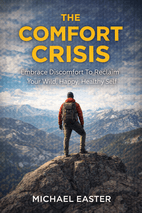
Michael Easter's The Comfort Crisis investigates how modern comfort harms our health and resilience, advocating for voluntary hardship like cold exposure and strenuous challenge. It's for anyone feeling unfulfilled by modern ease who seeks greater vitality through measured discomfort.
Feature
Insta.Page
Blinkist
Shortform
Summary Depth
Full Chapter-by-Chapter
15-min overview
Detailed analysis
Audio Narration
✓ (AI narration)
✓
✓
Visual Mindmaps
✓
✕
✕
AI Q&A
✓ Voice AI
✕
✕
Quizzes
✓
✕
✕
PDF Downloads
✓
✕
✓
Price
$59.99/yr
$146/yr (PRO)
$199/yr
*Competitor data last verified February 2026.
About the Author
Michael Easter
Michael Easter is a journalist and professor at the University of Nevada, Las Vegas, who specializes in covering health, fitness, and adventure. He is best known for his book *The Comfort Crisis*, which explores how modern comforts impact our health and happiness. His work often combines scientific research with immersive, firsthand reporting from extreme environments.
1 Page Summary
In The Comfort Crisis, Michael Easter investigates the paradox of modern life: despite unprecedented levels of safety and convenience, rates of anxiety, depression, and chronic illness are soaring. He argues that our engineered world, which meticulously eliminates discomfort, hardship, and uncertainty, is actually making us weaker, unhealthier, and less resilient. The book posits that by seeking constant ease, we have created a "comfort crisis," depriving ourselves of the essential physical and mental stressors that humans evolved to navigate, which are crucial for building strength, focus, and a sense of meaning.
Easter grounds his thesis in evolutionary biology and anthropology, contrasting our current sedentary, climate-controlled existence with the demanding lives of our ancestors and contemporary hunter-gatherer societies. He explores concepts like "miswanting" (our poor prediction of what will make us happy) and the benefits of voluntary hardship through practices like cold exposure, fasting, and strenuous physical challenge. The narrative is driven by his own immersive experiment: a 33-day hunting expedition in the brutally remote Alaskan wilderness, which serves as a crucible for testing the principles of embracing discomfort, boredom, and effort.
The lasting impact of the book lies in its actionable framework for reintroducing "good stress" into daily life. Easter doesn't advocate for abandoning modern advances but for strategically incorporating what he terms the "comfort paradox"—seeking measured doses of discomfort to enhance health and well-being. This includes embracing physical effort, practicing boredom to spark creativity, confronting manageable risks, and connecting with the natural world. Ultimately, The Comfort Crisis makes a compelling case that by voluntarily stepping outside our zones of ease, we can reclaim vitality, resilience, and a deeper appreciation for life.
The chapter opens with the author, Michael Easter, standing on a tarmac in Kotzebue, Alaska, preparing for a 33-day expedition into the remote Arctic wilderness. Filled with anxiety about the dangerous bush plane flight and the myriad threats awaiting him in the backcountry, he introduces the core premise of his journey: to intentionally step far outside the safety and comfort of modern life. He posits that contemporary existence has become too sheltered and easy, and that emerging science suggests embracing certain discomforts is essential for physical, mental, and spiritual well-being.
The Threshold of Danger
The narrative immediately establishes the stakes. Easter details the specific perils of Alaskan bush flying, citing FAA warnings and a high annual accident rate. His apprehension is heightened when his companion, Donnie Vincent, jokes about their pilot’s skill not eliminating the risk of a fatal crash. This sets a tone of real, unmitigated danger, separating this adventure from a recreational hike. The safety nets of civilization—roads, hospitals, cell service—are stripped away, emphasizing the trip’s "all-in" nature.
The "Comfort Crisis" Thesis
While packing gear in the face of freezing wind, Easter articulates the book’s central argument. He contrasts the impending hardship with the “sheltered, sterile, temperature-controlled, overfed, underchallenged, safety-netted lives” most people lead today. He references poet Mary Oliver and a growing body of scientific evidence suggesting that systematic comfort is limiting human potential. The intentional discomfort of the expedition is framed as “part rewilding, part rewiring,” a direct antidote to modern ailments ranging from physical disease to a lack of meaning and purpose.
The Expedition Team
Easter introduces his two companions, whose extensive experience both reassures and unnerves him. Donnie Vincent is a seasoned biologist and filmmaker who has lived for months in the Arctic and even among wolves. William Altman, the cinematographer, is portrayed as a self-reliant throwback who lived primitively in the Maine woods. Their backgrounds establish credibility for the journey but also serve as a reminder of nature’s unforgiving unpredictability, illustrated by their past near-misses with starvation and grizzly bears.
A Moment of Ironic Dread
The final scene delivers a moment of dark humor and heightened anxiety. After being assured the “best pilot,” Brian, was secured, Easter and William are loaded onto a separate plane. A young pilot named Mike—potentially the same Mike who recently crashed and rebuilt his plane—introduces himself. Before Easter can process this alarming possibility, the engine roars to life, symbolically drowning out his “inner scream” and committing him irrevocably to the unknown. The chapter ends on this cliffhanger, physically and metaphorically launching the author into his discomfort experiment.
Key Takeaways
Modern life is characterized by unprecedented levels of safety and comfort, which may be limiting human resilience and fulfillment.
Scientific research is increasingly linking intentional exposure to hardship and discomfort with improved physical health, mental toughness, and spiritual well-being.
The Alaskan Arctic represents an extreme environment where the comforts and safety nets of civilization are completely absent, forcing a direct confrontation with primal challenges.
The journey is framed as an active experiment in “rewilding” oneself to counteract the negative effects of the modern “comfort crisis.”
Key concepts: One: 33 Days
1. One: 33 Days
The Threshold of Danger
Alaskan bush flying presents real, unmitigated danger with high accident rates
Safety nets of civilization (roads, hospitals, cell service) are completely stripped away
The expedition's 'all-in' nature separates it from recreational outdoor activities
Apprehension is heightened by companion's jokes about pilot skill not eliminating fatal risk
The Comfort Crisis Thesis
Modern life is overly sheltered, sterile, temperature-controlled and safety-netted
Systematic comfort may be limiting human potential and causing various ailments
💡 Try clicking the AI chat button to ask questions about this book!
Chapter 2: Two: 35, 55, or 75
Overview
This chapter traces the author's personal journey from a chaotic, alcohol-dependent existence toward sobriety, and the subsequent realization that merely removing alcohol unveiled a deeper, more pervasive layer of comfort insulating him from a meaningful life. It is a raw account of hitting rock bottom, enduring the acute discomfort of withdrawal, and then confronting the quieter, more insidious comforts of modern living.
A Family Legacy of Chaos
The narrative opens by grounding the author's story in a familial tradition of alcoholism and recklessness, painting a vivid picture of men fueled by "booze, bullshit, and self-serving chaos." From a father who rode a green-painted horse into a bar to uncles shouting obscenities in jail cells, this history establishes a genetic and environmental blueprint for self-destruction. The author acknowledges riding this same "family horse," living a double life as a successful health journalist while his own reality was a cyclical fog of weekend binges, broken bones, and arrests. Alcohol served as a universal numbing agent, blanketing stress, boredom, sadness, and all the uncomfortable realities of being human.
The Clarity of Rock Bottom
The turning point arrives not with a grand catastrophe, but on a miserable morning soaked in whiskey and vomit. In a rare moment of piercing clarity, the author sees his life with brutal honesty: a "career fraud" on a path to losing everything—job, relationships, possessions, and ultimately his life, whether at 35, 55, or 75. This vision presents a stark choice: cling to the numbing complacency of alcohol or embrace the terrifying unknown of sobriety. Choosing the latter initiates immediate, acute physical discomfort—shakes, sweats, and withdrawal—but this soon gives way to a greater challenge: a frenetic, rewiring mind plagued by seemingly profound, baffling questions about how to simply live without alcohol.
Uncovering a New Layer of Comfort
As the author perseveres, a new world emerges. He gains perspective, peace, and deeper connections. However, this newfound awareness reveals that he has simply traded one form of comfort for a suite of others. His entire daily life—from the temperature-controlled home and cushy commute to the effortless food and on-demand entertainment—is designed to eliminate any semblance of physical or mental discomfort. Even exercise is sanitized and made comfortable. This realization prompts the central, probing question of the chapter: if relinquishing the destructive comfort of alcohol opened up his life, what potential might lie in cleansing himself of these other, more insidious comforts?
Key Takeaways
Discomfort is a catalyst: Growth and clarity often emerge not from comfort, but from the willing embrace of acute, painful change, as exemplified by the decision to get sober.
Comfort can be a trap: While some comforts are destructive and obvious (like alcoholism), others are quiet, pervasive, and can insulate us from the raw, engaging experience of being alive.
Awareness precedes change: The journey begins with a moment of honest self-assessment, seeing life "as it was and not as I believed it to be," which creates the possibility for a different path.
Sobriety is a rewiring: Early sobriety involves not just physical withdrawal, but a fundamental relearning of how to exist in the world without a primary coping mechanism.
The question of modern life: The chapter implicitly challenges the reader to audit their own insulated existence and ask what they might be numbing or avoiding through the myriad comforts of contemporary living.
Key concepts: Two: 35, 55, or 75
2. Two: 35, 55, or 75
A Family Legacy of Chaos
Establishes a familial blueprint of alcoholism and reckless behavior
Describes living a double life as a successful professional while privately self-destructing
Highlights alcohol as a universal numbing agent for all uncomfortable human emotions
The Clarity of Rock Bottom
Turning point arrives through brutal self-honesty about being a 'career fraud'
Presents the stark choice between numbing complacency and terrifying sobriety
Early sobriety involves acute physical withdrawal followed by mental rewiring
Uncovering a New Layer of Comfort
Sobriety reveals that modern life is designed to eliminate all discomfort
Even positive activities like exercise become sanitized and comfortable
Prompts the central question: what potential lies in cleansing other insidious comforts?
Core Insights and Challenges
Discomfort serves as a catalyst for growth and clarity
Comfort can be both destructive (alcohol) and quietly insulating (modern conveniences)
Challenges readers to audit what they numb or avoid through contemporary comforts
⚡ You're 2 chapters in and clearly committed to learning
Why stop now? Finish this book today and explore our entire library. Try it free for 7 days.
Chapter 3: Three: 0.004 Percent
Overview
This chapter explores a central paradox of modern life: our species evolved over millions of years to seek comfort as a survival mechanism, yet the unprecedented, constant comfort we've created in the last sliver of our history is making us physically and mentally unwell. It frames our current health crises—from obesity to diseases of despair—as a direct consequence of an evolutionary mismatch, where our ancient wiring clashes with a radically new environment.
The Comfort Drive: An Evolutionary Inheritance
Our instinct to seek safety, shelter, warmth, and extra food is a deep biological inheritance. For almost all of human history, this drive was beneficial, propelling us toward actions that ensured survival in a harsh world. Discomfort—whether hunger, cold, pain, or stress—was the ever-present signal that pushed us to find solutions. The problem is that while our world has transformed, this fundamental wiring remains unchanged.
The Evolutionary Journey
To understand the scale of this mismatch, the narrative traces our lineage over 2.5 million years:
Homo habilis (2.5 million years ago): Walked upright, used simple stone tools, and had a brain half our size.
Homo erectus (1.8 million years ago): More human-like, lived in social groups, used fire, and created primitive art.
Homo heidelbergensis & neanderthalensis (700,000 years ago): Developed larger brains, built homes, made clothes, and became apex predators through coordinated, high-stakes hunting of massive prey like mammoths.
Homo sapiens (200,000-300,000 years ago): Developed complex language, tools, cities, and agriculture.
Throughout this immense span of time, life was defined by inescapable discomfort and acute stress. The modern comforts that dominate our daily lives—computers, smartphones, climate control, ultra-processed food—have been common for about 100 years. This represents just 0.004% of our evolutionary history.
A World of Discomfort vs. A World of Comfort
The chapter vividly contrasts the texture of ancestral life with our own:
Exposure vs. Climate Control: Ancestors endured the elements with only rudimentary shelter; today, Americans spend 93% of their time in climate-controlled interiors.
Hard-Earned Hunger vs. Effortless Abundance: Early humans and tribes like the Hadza experience deep, persistent hunger, risking injury (like bee stings or animal attacks) to gather food. Now, calorie-dense food is available safely and instantly.
Creative Boredom vs. Constant Stimulation: Downtime for ancestors fostered imagination and deep social connection. Today, entertainment is constant and passive, from radio to TV to the smartphone, which "pronounced boredom dead" in 2007.
Physical "Life" vs. Deliberate "Exercise": Hunter-gatherers like the Hadza engage in hours of intense, necessary movement daily. Our bodies evolved for endurance hunting and constant migration, not for sedentary lifestyles.
Acute Survival Stress vs. "First-World" Stress: Ancestral stress was immediate and physical: finding food, avoiding predators, surviving infection. Modern stress is often psychological: social comparison, work deadlines, and status anxiety.
The Unintended Consequences of Comfort
While data shows the world is objectively "better" by many metrics—less violence, longer lifespans—this comfort has come with severe side effects. We've exchanged acute physical discomforts for chronic lifestyle diseases:
Physical Health Decline: 70% of Americans are overweight or obese; a third have diabetes or prediabetes; heart disease remains a top killer—conditions rare before the 20th century.
Mental Health Crisis: "Diseases of despair" (depression, anxiety, addiction, suicide) are rising sharply, with overdose deaths tripling in two decades. For the first time in nearly a century, U.S. life expectancy dropped for three consecutive years (2016-2018) due largely to these factors.
The chapter concludes that by removing the struggles we were evolved to handle—meaningful physical effort, exposure to nature, deep social bonding, and persevering through manageable hardship—we have created an environment that, while comfortable, often fails to support our fundamental human needs for happiness and health.
Key Takeaways
The human drive for comfort is an ancient survival mechanism that is now mismatched with our modern, comfort-saturated environment.
Constant comfort is a historical anomaly; humans evolved over 2.5 million years in conditions of persistent physical discomfort and acute survival stress.
The removal of evolutionary challenges has led to a rise in "diseases of comfort": obesity, diabetes, heart disease, and "diseases of despair" like depression and addiction.
Modern, psychological "first-world stress" has replaced the acute physical stresses our biology was designed to manage, often with negative health consequences.
The chapter suggests that re-incorporating certain forms of productive discomfort and struggle may be essential for our physical and mental well-being.
Key concepts: Three: 0.004 Percent
3. Three: 0.004 Percent
The Central Paradox of Modern Comfort
Human evolution favored comfort-seeking as a survival mechanism
Modern constant comfort creates physical and mental health crises
Current health problems stem from evolutionary mismatch between ancient wiring and new environment
Evolutionary Inheritance of the Comfort Drive
Instincts for safety, shelter, warmth, and extra food are deep biological inheritance
Mental health crisis: rising depression, anxiety, addiction, and suicide rates
First decline in U.S. life expectancy in nearly a century (2016-2018)
Core Implications and Solutions
Removing evolutionary struggles fails to support fundamental human needs
Modern environment lacks meaningful physical effort, nature exposure, and deep social bonding
Re-incorporating productive discomfort may be essential for well-being
Chapter 4: Four: 800 Faces
Overview
This chapter explores the psychological phenomenon where our perception of problems shifts as they become less frequent, leading us to find issues even in benign situations. Through the work of psychologist David Levari, we see how this "problem creep" affects our judgment and, ultimately, our relationship with comfort in modern life.
The Airport Observation and Initial Curiosity
David Levari, a psychologist at Harvard, was inspired by a casual observation at an airport security line with his mentor, Dan Gilbert. They noticed TSA agents often treating nonthreatening individuals as risks, prompting a question: if prohibited items vanished, would the agents relax or simply expand their definition of a threat? This sparked Levari's investigation into whether humans inherently search for problems even when they diminish.
The 800 Faces Experiment
Levari designed a study where participants viewed 800 human faces, ranging from intimidating to harmless, and judged which seemed "threatening." Unbeknownst to them, after the 200th face, Levari gradually reduced the frequency of threatening faces. Similarly, in another study, participants evaluated research proposals for ethics, with unethical proposals becoming rarer over time.
Prevalence-Induced Concept Change
The results revealed that as threatening faces or unethical proposals became scarce, participants began labeling neutral faces as threatening and ambiguous proposals as unethical. Levari termed this "prevalence-induced concept change" or "problem creep." Essentially, our brains adjust expectations based on context, so fewer problems don't lead to satisfaction; instead, we lower our threshold for what constitutes a problem, perpetuating a cycle of perceived troubles.
The Evolutionary Basis and Modern Implications
This tendency likely evolved as a cognitive shortcut, allowing early humans to make quick, relative comparisons for survival. However, in today's world, it means we constantly move the goalposts for satisfaction. Levari notes that as we make relative judgments, we become less content with the same things over time, applying directly to how we experience comfort.
Comfort Creep in Daily Life
The concept extends to "comfort creep," where new comforts become standards, and old ones feel inadequate. For example, stairs gave way to escalators, simple meals to gourmet options, and basic shelters to climate-controlled homes. Each advancement narrows our comfort zones, making previous levels of discomfort unacceptable, all without our conscious awareness.
The Unconscious Nature and Potential Awareness
Levari emphasizes that this creep occurs unconsciously, making it hard to recognize how it consumes us. The chapter concludes by posing a question: what if we could become aware of this process and counteract its effects on our well-being?
Key Takeaways
Humans have a psychological tendency called "prevalence-induced concept change," where we perceive problems even as they become rare, leading to "problem creep."
This phenomenon stems from evolutionary adaptations for efficient decision-making but now contributes to perpetual dissatisfaction in modern life.
"Comfort creep" results from this, where advancements in comfort raise our standards, shrinking our tolerance for discomfort and hindering contentment.
The process is largely unconscious, highlighting the need for mindfulness to recognize and mitigate its impact on our happiness and perspectives.
Key concepts: Four: 800 Faces
4. Four: 800 Faces
The Origin of the Investigation
David Levari's observation at airport security with Dan Gilbert sparked the research
Question: If threats vanish, do people relax or expand their definition of a threat?
Initial curiosity about whether humans inherently search for problems even as they diminish
The Experimental Evidence
Study 1: Participants judged 800 faces as 'threatening' while frequency of actual threats was secretly reduced
Study 2: Participants evaluated research proposals for ethics while unethical proposals became rarer
Key finding: As real threats/ethical violations decreased, participants labeled neutral items as problematic
Prevalence-Induced Concept Change (Problem Creep)
Psychological phenomenon where our perception shifts as problems become less frequent
Brains adjust expectations based on context, lowering thresholds for what constitutes a problem
Fewer problems don't lead to satisfaction; instead, we perceive problems in benign situations
Evolutionary Roots and Modern Consequences
Likely evolved as a cognitive shortcut for quick, relative comparisons in survival situations
In modern life, leads to moving goalposts for satisfaction and perpetual dissatisfaction
Relative judgments make us less content with the same things over time
Comfort Creep in Daily Life
Extension of problem creep to comfort standards
New comforts become standards while old ones feel inadequate (stairs→escalators, simple meals→gourmet)
Each advancement narrows comfort zones, making previous discomfort levels unacceptable
Awareness and Implications
The creep occurs unconsciously, making it hard to recognize
Process consumes us without our awareness
Potential for mindfulness to counteract effects on well-being and happiness
📚 Explore Our Book Summary Library
Discover more insightful book summaries from our collection