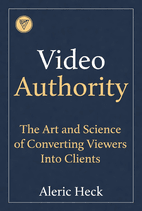
Aleric Heck's Video Authority provides a framework for service professionals and coaches to use strategic video content as the central engine for building trust and converting viewers into clients, focusing on demonstrating expertise and conveying authenticity over technical production.
Feature
Insta.Page
Blinkist
Shortform
Summary Depth
Full Chapter-by-Chapter
15-min overview
Detailed analysis
Audio Narration
✓ (AI narration)
✓
✓
Visual Mindmaps
✓
✕
✕
AI Q&A
✓ Voice AI
✕
✕
Quizzes
✓
✕
✕
PDF Downloads
✓
✕
✓
Price
$59.99/yr
$146/yr (PRO)
$199/yr
*Competitor data last verified February 2026.
About the Author
Aleric Heck
Aleric Heck is a contemporary author and historian specializing in medieval European history and folklore. He is best known for his critically acclaimed series "The Chronicles of the Ironwood," which blends historical detail with mythic storytelling. His expertise stems from his academic background in medieval studies and years of archival research.
1 Page Summary
Aleric Heck's "Video Authority" positions video not merely as a marketing tool but as the central engine for building trust and converting an audience into a client base in the digital age. The book's core thesis is that strategic, value-driven video content allows professionals and businesses to demonstrate expertise, convey authenticity, and shortcut the traditional trust-building process. Heck systematizes this into a framework focusing on the "why" behind video—establishing authority and connection—rather than just the technical "how," advocating for consistent content that addresses specific client problems and showcases the provider's unique perspective and personality.
Historically, the work is situated in the post-2010 landscape where video platforms like YouTube matured and social media algorithms began privileging video content, making it a non-negotiable channel for direct client engagement. Heck moves beyond the early days of viral, entertainment-focused video to argue for a professional, client-centric approach that leverages the medium's intimacy to replace in-person meetings and lengthy sales cycles. The methodology synthesizes principles from direct response marketing, personal branding, and psychology, applying them to a medium that had often been used for broad brand awareness rather than targeted conversion.
The lasting impact of "Video Authority" lies in its practical, actionable blueprint for service providers, consultants, and coaches to build a sustainable business around their knowledge. It demystifies video production, emphasizing message over production value, and provides a clear pathway from creating educational content to naturally guiding viewers into paid offerings. By framing video as a primary vehicle for trust-based selling, the book has influenced a generation of entrepreneurs to use the medium not just for visibility, but as the foundational system for client acquisition and relationship building.
Chapter 1: Introduction
Overview
The chapter begins not with abstract theory, but with a pivotal childhood memory. The author’s journey into video marketing started at age seven with a simple camcorder, a gift that ignited a passion. This personal spark eventually grew into a professional expertise that has helped thousands of businesses generate massive revenue and fueled the author's own eight-figure company. The core promise is established immediately: this book is a practical guide to replicating that success by mastering how to turn viewers into loyal clients.
The Core Premise: Video as Your Essential Weapon
In today's crowded digital landscape, attention is the most valuable currency. Video is positioned not as a mere optional tactic, but as the definitive tool for cutting through the noise and forging real human connections. It engages multiple senses simultaneously—sight, sound, and motion—creating an impact that static text or images alone cannot match. The book promises to move beyond just "creating videos" to using video strategically to achieve specific business outcomes.
What You Will Learn: A Preview of the System
The introduction provides a clear roadmap of the actionable strategies to come. Readers are promised a complete system that addresses both the psychological and logistical challenges of video marketing, including:
Overcoming camera shyness to build authentic authority.
A batch-creation system for producing 90 days of content in a single day.
A specific framework for crafting video advertisements that actually convert viewers.
The "OmniPresent Marketing" strategy used to scale the author's business.
How to repurpose a single video into dozens of content assets across all platforms.
A complete playbook dedicated to consistently converting viewers into paying clients.
Timeless Principles Over Temporary Trends
A crucial point is made that the book’s value lies not in chasing the latest platform algorithm, but in teaching foundational principles. Whether the dominant platform is YouTube, Instagram, LinkedIn, or a future innovation, the core strategies for connection and conversion will remain applicable. These principles are validated by the author’s track record, having helped over 3,000 clients achieve results and driving recognition like a spot on the Inc. 5000 list.
The Ultimate Goal: Your Transformation
The chapter concludes by refocusing on the reader’s potential. It states that the modern business climate demands authentic connection, and video is the mandatory medium to provide it. By the end of the book, the reader is promised a clear roadmap to use video to generate leads, build trust, establish authority, and ultimately scale their business. The stage is set for the first practical lesson: how to step in front of the camera as an authentic authority.
Key Takeaways
Video marketing is a non-optional, critical tool for building authentic connections and capturing attention in the modern marketplace.
The book is based on a proven system, not just theory, with a track record of generating significant revenue for thousands of businesses.
The focus will be on timeless strategic principles for converting viewers into clients, not on fleeting platform-specific hacks.
Readers will receive a complete, actionable playbook covering everything from mindset and content creation to conversion and scalable strategy.
Key concepts: Introduction
1. Introduction
Personal Origin Story & Core Promise
Author's journey began with childhood camcorder sparking passion
Professional expertise built helping thousands of businesses generate revenue
Book promises practical guide to replicate success and turn viewers into clients
Video as Essential Business Weapon
Attention is most valuable currency in crowded digital landscape
Video cuts through noise and forges real human connections
Engages multiple senses (sight, sound, motion) for unmatched impact
Focus on strategic use for business outcomes, not just video creation
Complete System Preview
Overcoming camera shyness to build authentic authority
Batch-creation system for 90 days of content in single day
Framework for crafting video advertisements that convert
OmniPresent Marketing strategy for business scaling
Repurposing single video into dozens of content assets
Timeless Principles Over Trends
Focus on foundational principles rather than platform algorithms
Strategies remain applicable across platforms (YouTube, Instagram, LinkedIn, future)
Validated by track record: 3,000+ clients and Inc. 5000 recognition
Reader Transformation Goal
Modern business demands authentic connection via video
Clear roadmap to generate leads, build trust, establish authority
Ultimate goal: scale business using video as mandatory medium
Sets stage for first practical lesson: becoming authentic authority on camera
Scroll to load interactive mindmap
If you like this summary, you probably also like these summaries...
💡 Try clicking the AI chat button to ask questions about this book!
Chapter 2: Chapter One
Overview
The chapter introduces the core concept of becoming an Authentic Authority through the lens of the author's personal journey. It traces his evolution from a child fascinated by video to a successful entrepreneur who built an eight-figure business by leveraging YouTube and video marketing. The narrative establishes that true influence and business growth stem not from polished perfection, but from combining genuine authenticity with demonstrable expertise.
The Genesis of a Video Entrepreneur
The author's passion for video began in childhood with a Christmas gift of a video camera. This early love for creation was supercharged by access to editing software and, later, the launch of YouTube. A pivotal moment occurred at age twelve when he started creating app review videos, discovering the thrill of impacting an audience. His first major breakthrough came from an organic need: creating a beginner's guide for his father and grandmother's new iPhones. This single, helpful video propelled his channel to over one million views and opened the door to sponsorship revenue, proving he could turn his passion into a substantial income even while in high school.
Scaling the Business and Discovering a New Path
While his YouTube channel provided linear growth, the author sought exponential scaling. Inspired by The 4-Hour Workweek, he hired a team to automate his channel operations, freeing up his time for strategic thinking. A critical turning point came when a marketing client asked him to simply re-upload a successful promotional video. He refused but counter-offered to run the video as a YouTube ad instead. The test campaign's phenomenal results revealed the untapped power of YouTube advertising. This led to lucrative offers, including a job in Silicon Valley, which he declined to build his own company, AdOutreach, focused on YouTube ad campaigns for apps.
Teaching Others and Building a Company
After joining a mastermind group, the author found that his unique results with YouTube ads for webinars generated high demand from peers. He shifted from doing the work for clients to teaching them his "done together" hands-on implementation model. This pivot allowed AdOutreach to scale dramatically, working with thousands of clients, achieving eight-figure revenue, and earning recognition on the INC 5000 list. The core of this success was using their own YouTube ad strategies to grow their business, proving the model's effectiveness.
The Philosophy of Authentic Authority
The chapter argues that in a crowded digital marketplace, video is the most powerful tool to connect with an audience because it engages multiple senses. However, its effectiveness hinges on the creator establishing themselves as an Authentic Authority. This is a dual concept:
Authenticity: People connect with real individuals, not overly produced personas. The author shares a powerful personal anecdote about almost deleting the video that ultimately made him over a million dollars because he was self-conscious about his weight. Publishing it despite his insecurities proved that viewers resonate with genuine presentation and valuable content more than with polished appearance.
Authority: Expertise must be demonstrated, not just claimed. This is done by providing "golden nuggets"—small, highly valuable pieces of insight or actionable advice—within a video. Instead of a hollow sales pitch, an effective video provides immediate value, establishes the creator's knowledge, and builds curiosity for more. A client example of a nutritionist debunking the "a calorie is a calorie" myth illustrates how to instantly position oneself as an authority.
Practical Steps to Embrace Your Role
The author emphasizes that everyone has unique gifts and perspectives that constitute their authenticity. The goal is to share expertise with the confidence of explaining something to a close friend. To help readers internalize this, the chapter concludes with a structured exercise: the Authentic Authority Blueprint. This 30-minute worksheet guides readers to identify their hidden professional traits, unique experiences, industry misconceptions, and key insights to craft a personal authority statement.
Key Takeaways
Authenticity Over Polish: Your genuine self is your greatest business asset. Viewers build trust with real people, not flawless productions.
Provide Value to Establish Authority: Use "golden nuggets" of unique, actionable insight within your videos to demonstrate expertise before making an offer.
Embrace the Journey: Every expert started as a beginner. Your unique path, quirks, and experiences are what make your perspective valuable.
Action Breaks Inertia: The "Quick Win Challenge" encourages immediately recording a short, unpolished video to overcome the initial fear of being on camera, reinforcing that courage to begin is often the biggest hurdle.
Key concepts: Chapter One
2. Chapter One
The Genesis of a Video Entrepreneur
Childhood passion for video creation sparked by a Christmas gift camera
Early success at age twelve with app review videos and discovering audience impact
First major breakthrough: a helpful iPhone guide video generating over one million views
Proving passion could become substantial income through sponsorship revenue while in high school
Scaling the Business and Discovering a New Path
Sought exponential growth beyond linear YouTube channel success
Hired a team to automate operations, inspired by The 4-Hour Workweek
Pivotal moment: refusing to re-upload a client video, instead testing it as a YouTube ad
Phenomenal ad results revealed untapped power of YouTube advertising
Declined Silicon Valley job to build his own company, AdOutreach
Teaching Others and Building a Company
Shifted from doing client work to teaching a 'done together' implementation model
Scaled AdOutreach to work with thousands of clients and achieve eight-figure revenue
Earned recognition on the INC 5000 list
Proved model's effectiveness by using their own YouTube ad strategies to grow their business
The Philosophy of Authentic Authority
Video is the most powerful digital tool because it engages multiple senses
Authenticity: People connect with real individuals, not overly produced personas
Authority: Expertise must be demonstrated through 'golden nuggets' of valuable insight
Personal anecdote: Almost deleted a million-dollar video due to self-consciousness about weight
Effective video provides immediate value, establishes knowledge, and builds curiosity
Practical Steps to Embrace Your Role
Everyone has unique gifts and perspectives that constitute their authenticity
Share expertise with the confidence of explaining to a close friend
Authentic Authority Blueprint: 30-minute worksheet to craft a personal authority statement
Identify hidden professional traits, unique experiences, and industry misconceptions
Key Takeaways and Action
Authenticity Over Polish: Your genuine self is your greatest business asset
Provide Value to Establish Authority: Use 'golden nuggets' before making offers
Embrace the Journey: Your unique path and experiences make your perspective valuable
⚡ You're 2 chapters in and clearly committed to learning
Why stop now? Finish this book today and explore our entire library. Try it free for 7 days.
Chapter 3: Chapter Two
Overview
This chapter explores how anyone can cultivate genuine confidence on camera, regardless of existing fears or insecurities. It centers on the idea that you already possess this confidence from everyday video interactions, and by tapping into that natural comfort, you can present yourself as an authentic authority to any audience.
Finding Confidence in Familiar Spaces
You've likely already experienced moments of ease on video through platforms like FaceTime or Zoom, chatting with friends or colleagues. The chapter encourages you to recognize these instances as proof of your inherent capability. The key is to transfer that same relaxed, conversational tone to your content creation. Instead of envisioning a faceless crowd, remember that you're already comfortable being seen and heard in personal settings—this foundation is your starting point for building public confidence.
The Camera as Your Confidant
A powerful technique involves mentally reframing the recording process. Picture the camera as a close friend you're having a video call with, not as a portal to thousands of strangers. This shift removes performance pressure and allows your natural personality to shine. You retain full control over whether the video is ever shared, so you can record with the freedom to express yourself openly, just as you would in a private conversation.
Amplifying Your Passion
When you record, it's essential to consciously elevate your energy. The camera has a slight dampening effect on enthusiasm, so you must compensate by channeling the excitement you feel when discussing a beloved topic with a friend. Your genuine passion is contagious and acts as a magnet for your audience. By focusing on subjects that truly ignite your interest, your delivery becomes more dynamic and engaging without feeling forced or unnatural.
Embracing Your Authentic Self
Confidence on video doesn't require adopting a persona. In fact, authenticity is your greatest asset. The chapter shares personal anecdotes about overcoming self-consciousness related to appearance and niche interests, emphasizing that being your true, nerdy, or unique self is what resonates with people. When you stop trying to conform to imagined expectations and instead embrace your individuality, you project a confidence that is both compelling and relatable.
Shifting Your Mindset
To combat the fear of failure, the introduction of an "Entrepreneur's Mindset" is previewed. This perspective ensures that every recording is a step forward, not a potential setback. By detaching from immediate outcomes and viewing each video as practice where you control the visibility, you build resilience. The process itself—expressing your passion authentically—becomes the victory, regardless of view counts or external validation.
Practical Exercises for Growth
The chapter provides actionable steps to build on-camera fluency. A structured 30-minute exercise guides you through camera warm-ups, identifying passion topics, and recording practice videos while imagining a friend on the other side. Additionally, a five-minute Quick Win Challenge involves having a video call with a friend to observe and mirror the natural enthusiasm that arises when discussing passions. These practices reinforce that confidence is a muscle built through consistent, pressure-free repetition.
Key Takeaways
Your baseline confidence for video already exists from personal calls; the task is to harness that familiarity for public content.
Speak directly to the camera as if it's a trusted friend to bypass anxiety and foster authentic delivery.
Intentionally amplify your natural energy and passion to counteract the camera's dulling effect and connect with viewers.
Authenticity triumphs over performance—embracing your true self is what builds trust and distinguishes you from others.
Use practical exercises, like the confidence-building drill and Quick Win Challenge, to develop comfort and enthusiasm systematically.
Key concepts: Chapter Two
3. Chapter Two
Finding Confidence in Familiar Spaces
Recognize existing comfort from personal video calls (FaceTime, Zoom) as proof of capability
Transfer relaxed, conversational tone from personal settings to content creation
Build public confidence starting from your foundation of personal video ease
The Camera as Your Confidant
Reframe camera as a close friend on video call, not portal to strangers
Remove performance pressure by focusing on private conversation mindset
Retain control over sharing to record with freedom of expression
Amplifying Your Passion
Consciously elevate energy to counteract camera's dampening effect
Channel excitement felt when discussing beloved topics with friends
Let genuine passion act as contagious magnet for audience engagement
Embracing Your Authentic Self
Authenticity is greater asset than adopting a persona
Overcome self-consciousness by embracing unique, nerdy, or true self
Resonate with audience through relatable individuality rather than conformity
Shifting Your Mindset
Adopt 'Entrepreneur's Mindset' to view every recording as progress
Detach from immediate outcomes and view videos as practice
Build resilience by making authentic expression the victory itself
Practical Exercises for Growth
30-minute structured exercise with camera warm-ups and passion topic identification
Record practice videos imagining friend on other side of camera
5-minute Quick Win Challenge: video call with friend to mirror natural enthusiasm
Scroll to load interactive mindmap
Chapter 4: Chapter Three
Overview
The chapter introduces a transformative perspective that redefines the very concept of failure for entrepreneurs. It argues that by adopting a specific mindset, you can engineer a path where you never truly fail again. The core idea is to eliminate the word "failure" from your vocabulary, replacing it with a binary outcome: every result is either a "success" or a "learning lesson." This shift creates a framework where the only real failures are entirely within your control.
The Three "True Failures"
The chapter asserts there are only three ways to genuinely fail, and all are matters of choice.
Giving Up. This is the ultimate failure, and it is a conscious decision. As long as you are alive and willing to continue, you control whether a setback becomes a permanent endpoint or a temporary detour.
Never Starting. This failure is born from the fear of potential mistakes. The paralysis caused by worrying about negative outcomes guarantees a failure of inaction. The chapter references a poignant quote: “worrying is a tax on a debt you may never owe.”
Not Learning. This failure locks you into a negative cycle. If you don’t extract a lesson from an undesirable outcome, you are destined to repeat it. This repetition leads to discouragement, which inevitably steers you toward the first true failure: giving up.
The Platform Metaphor: Your Business as a Learning Engine
To illustrate the mindset, the author presents a metaphor. Imagine your business is a platform you want to raise sky-high. Beside it are unmarked boxes of all shapes and sizes—each representing a business decision. Opening a box reveals an outcome: a balloon (a success that lifts the platform) or an anvil (a lesson that weighs it down).
The process of growth involves opening many boxes. Even an anvil provides critical information—you learn to avoid boxes of that particular shape. With "lesson learned" scissors, you can even cut away past weights. The platform rises not from a perfect streak, but from the accumulated knowledge of which boxes to open and which to avoid. The three true failures are reframed as questions: Would your platform rise if you were too afraid to open any box? What if you stopped opening boxes after a few anvils? Could you find the balloons if you didn’t learn to distinguish box types?
Extracting Value from Every Outcome
The chapter deepens the argument by stating that a mistake you learn from is more valuable than a success you don’t learn from. A success without understanding is a one-time gain; a learned lesson provides a permanent advantage that compounds over time. Therefore, the goal is to actively learn from both wins and losses:
Document and reverse-engineer successes so you can repeat them.
Analyze and dissect mistakes to understand their root cause and avoid repetition.
This approach skews the odds of long-term success in your favor, turning a potential "doom spiral" into an upward trajectory.
Historical Lessons in Tenacity
The principles are validated with two powerful stories:
Thomas Edison's relentless experimentation with thousands of materials for the lightbulb wasn't a string of failures, but a necessary process of elimination. Each "mistake" refined his approach.
"Uncle Darby" from Think and Grow Rich abandoned a gold mine just three feet from a massive vein. A junk dealer who later bought the mine hired an expert, learned about a fault line, persisted, and struck millions. Darby’s failure wasn't the initial setback; it was giving up and not seeking the knowledge to overcome the obstacle. He later adopted the lesson, vowing to never again "stop three feet from gold."
Cultivating the "Always Win" Mindset
The chapter concludes by framing the journey as that of a ship’s captain. Skilled sailors aren’t made by smooth seas but by navigating storms. Challenges are not failures; they are the training ground for expertise. By committing to constant, incremental improvement—even just 1% better each day—you ensure that every outcome propels you forward. This "Always Win" mentality, where you either succeed or learn, makes true failure impossible. It is the foundational mindset that makes all subsequent tactical advice in the book effective.
Key Takeaways
Eliminate the concept of "failure." View all outcomes as either a success or a learning lesson.
The only three real failures are giving up, never starting, and not learning—all of which are within your control.
A mistake you learn from is more valuable than a success you don’t, as the lesson provides a permanent strategic advantage.
Persistence is non-negotiable. As demonstrated by Uncle Darby and Thomas Edison, breakthroughs often lie just beyond perceived failure.
Adopt an "Always Win" mindset: every experience, good or bad, is fuel for growth that takes you closer to your long-term goals.
Key concepts: Chapter Three
4. Chapter Three
Redefining Failure: The Success/Lesson Binary
Replace 'failure' with binary outcomes: success or learning lesson
Create framework where only real failures are within your control
Transformative perspective eliminates traditional concept of failure
The Three True Failures (Within Your Control)
Giving Up: Ultimate failure as conscious decision to stop
Never Starting: Failure from fear of potential mistakes
Not Learning: Failure that locks you into negative cycles
Platform Metaphor: Business as Learning Engine
Business as platform raised by opening boxes (decisions)