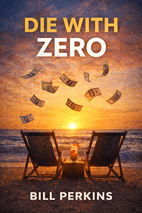
Bill Perkins's Die With Zero challenges conventional retirement saving by advocating for maximizing life fulfillment through strategic spending on experiences. It provides a framework for optimizing your wealth across your lifetime, targeting anyone seeking to align their finances with meaningful living.
Feature
Insta.Page
Blinkist
Shortform
Summary Depth
Full Chapter-by-Chapter
15-min overview
Section-by-section guides
Audio Narration
✓
✓
✓
Visual Mindmaps
✓
✕
✕
AI Q&A
✓
✕
✕
Quizzes
✓
✕
✕
PDF Downloads
✓
✕
✓
Price
$89.99/yr
$146/yr (PRO)
$199/yr
*Competitor data last verified July 2026.
1 Page Summary
Die With Zero challenges the conventional wisdom of saving as much as possible for retirement, proposing instead that the ultimate goal should be to maximize life fulfillment, not wealth accumulation. Author Bill Perkins, a former energy trader and hedge fund manager, argues that people often over-save, missing opportunities to spend their time and money on meaningful experiences when they are most able to enjoy them. The book's central philosophy is built on three core concepts: investing in "experience capital" (memorable life events), understanding that time and health are finite resources that typically peak before one's finances, and aiming to have your net worth reach zero by the end of your life, having fully converted your assets into life experiences.
The book emerged in a contemporary context of rising life expectancies and widespread financial anxiety, yet it also critiques a deeply ingrained cultural and historical emphasis on leaving an inheritance. Perkins uses economic principles like "time-value of money" and introduces his own "net worth curve" to illustrate that the value of a dollar spent on an experience in your 30s or 40s far outweighs its value if saved and spent in your 80s. He advocates for strategic "time buckets"—planning major experiences for specific life stages—and for giving money to children or causes earlier in life when it can have a transformative impact, rather than as a posthumous bequest.
The lasting impact of Die With Zero lies in its fundamental shift in perspective from a scarcity-driven, fear-based model of personal finance to one focused on intentionality and optimization for happiness. It has sparked significant conversation about the purpose of money and prompted readers to audit their life energy, questioning whether their saving and spending align with their deepest values. While critics note its assumptions about predictable lifespans and market returns, the book's enduring contribution is its powerful framework for making conscious decisions to design a richer life, measured not by a bank statement, but by a collection of fulfilled moments.
Optimize Your Life
Overview
The poignant story of Erin and John, whose lives were upended by a sudden cancer diagnosis, instantly challenges the illusion of infinite time. Their experience underscores a universal dilemma: while death reminds us life is finite, we often live as if we can delay joy indefinitely. This leads directly to framing life as an optimization problem—how to maximize fulfillment and minimize waste given limited time and resources. A key insight is that squandering life is a greater risk than squandering money, emphasizing the importance of timing experiences to match one’s health and abilities.
The author introduces the "honorary billionaire" mindset, advocating for spending generously on life experiences now, unlike actual billionaires who accumulate wealth faster than they can meaningfully use it. This critique targets the "Space Invaders" approach to wealth, where points are racked up without a strategy for conversion into lifetime fulfillment. This philosophy is rooted in the author’s personal journey from a frugal clerk to a conscious spender, sparked by a boss who introduced consumption smoothing—the idea of balancing spending across your lifetime so your younger self isn’t impoverished for a wealthier future you.
A transformative shift came from the concept of "life energy," which views money as the finite hours of your life traded for pay. This framework encourages evaluating every decision in terms of the life energy required, moving beyond mere frugality. The author argues for prioritizing experiences over material goods, as experiences pay a "memory dividend" that grows in value over time, making life richer rather than smaller. The book itself originated from a conversation where the author’s desire to "die with zero"—fully using resources for a life of experiences—intrigued a friend, highlighting its focus on those saving too much out of fear, not those in poverty.
At its core, the chapter presents humans as energy-processing units, where the ultimate reward of being alive is accumulating positive experiences. This creates a complex trade-off: how much life energy should be allocated to earning money versus directly having experiences? While perfect optimization is impossible due to life’s unpredictability, the value lies in applying guiding principles for wiser decision-making. The chapter concludes with a call to purposeful living, urging a shift from autopilot to intention by actively identifying and pursuing meaningful experiences, thereby better balancing preparation for the future with living fully in the present.
A Stark Awakening: The Story of Erin and John
The chapter opens with the harrowing story of Erin and John, a couple in their thirties with three young children. John's sudden diagnosis of a rare, aggressive cancer forced an immediate reckoning with their priorities. As his health declined, the author advised Erin to stop working and focus on family time—advice she had already embraced. They spent John's final months enjoying simple pleasures together and taking trips for treatment, squeezing in experiences like historic tours in Boston while he still could. John died just three months after diagnosis. While traumatic, Erin reflects that quitting her job to be present was the right choice. This extreme story underscores a universal truth: death wakes us up to the finite nature of life, yet most people live as if they have infinite time, delaying gratification indefinitely.
The Central Optimization Problem
The narrative pivots to frame this universal challenge as an engineering-style optimization problem: how to maximize life fulfillment and minimize waste given our finite time and resources. The author argues that while some delayed gratification is rational (like studying for a test), many people delay it for too long, saving for experiences they will never enjoy. Key principles emerge:
Some experiences are only possible at certain life stages (e.g., water-skiing in your 90s).
Time, once gone, is gone forever; money can often be earned later. Therefore, squandering life is a greater risk than squandering money.
The author advocates for spending intentionally on experiences that bring personal happiness, whether that's travel, philanthropy, or time with family. He stresses that fulfillment requires not just choosing the right experiences, but timing them right to match your health and abilities throughout your lifetime.
The "Honorary Billionaire" and the Problem of Perpetual Accumulation
The author introduces a personal nickname: the "honorary billionaire." This refers to his philosophy of spending generously on life experiences now, unlike actual billionaires who cannot spend their vast fortunes within a lifetime. He notes that even famously philanthropic billionaires like Bill Gates see their wealth grow faster than they can give it away thoughtfully. The critique is that many high achievers treat life like a game of "Space Invaders," racking up monetary points without a strategy for converting that wealth into lifetime fulfillment—for themselves or for others—while they are still alive to enjoy the impact.
A Personal Pivot: From Frugal Clerk to Conscious Spender
The author shares his own origin story. After college, driven by a desire for freedom, he took a low-paying entry-level job ($18,000/year) on the New York Mercantile Exchange, living extremely frugally. He proudly saved $1,000 until a pivotal conversation with his boss, Joe Farrell. Farrell chastised him, asking if he was an idiot for saving such a small sum when his future earning potential was high. This introduced the author to the concept of "consumption smoothing"—the idea of balancing spending across your lifetime, not impoverishing your younger self to enrich an already-wealthier future self.
Life Energy: A Transformative Mindset
This lesson was cemented by the book Your Money or Your Life. Its core idea—that money represents "life energy" (the finite hours of your life traded for pay)—revolutionized the author's thinking. He began evaluating every purchase in terms of the life energy required to earn it. The book also revealed that a higher salary doesn't always mean higher hourly income when you factor in hidden costs like long commutes, expensive work attire, and lost personal time. This framework encourages deliberate choices, comparing the cost of any decision (like eating a cookie) against the required "payment" in life energy or effort (like extra treadmill time).
Experiences Over Austerity
While Your Money or Your Life advocates for frugality to achieve financial independence, the author's key takeaway is different. He champions spending on experiences, which psychological studies show provide more lasting happiness than material goods. Experiences pay a "memory dividend," increasing in value over time. Living too frugally when you can afford experiences makes your world smaller. Therefore, the central question becomes: How do you maximize the value of your experiences to make the most of your one life?
The Origin of the Book
The author explains that this book began as an idea for an app to solve the complex optimization of life energy. The impetus to write it came from a conversation with his doctor, Chris Renna. When asked about fears of running out of money, the author responded, "I hope I run out of money!" This unusual perspective—aiming to die with zero by fully using resources for a life of experiences—intrigued the doctor, who urged him to write a book to explain the concepts fully. The author clarifies he is writing for those who are saving too much out of irrational fear, not for those in true poverty who lack discretionary income.
The chapter moves beyond the simple ant-versus-grasshopper metaphor to frame the central challenge of life as a sophisticated optimization problem. It argues that whether you are an over-saver or an over-spender, you are likely living suboptimally by failing to properly balance the conversion of your "life energy" into meaningful experiences.
The Core Framework: Life Energy & Experiences
The author introduces a foundational concept: humans are energy-processing units. We process energy (food) to survive, and we use that energy to move through the world, which generates experiences—discovery, joy, wonder. The ultimate reward of being alive is therefore the accumulation of positive life experiences. The goal is to maximize these experiences across your lifespan.
The Optimization Problem: Earning vs. Experiencing
However, experiences are not free. This creates a complex trade-off. To gain experiences, you must often first convert your life energy into money by working, and then convert that money back into experiences. The central, difficult question becomes: How much of your life should be allocated to earning money, and how much to directly having experiences? This is highly personal, with many variables, making it a perfect candidate for analytical thinking or computational modeling.
The Role of Tools and Guiding Principles
While a sophisticated app can help model different life paths by processing numerous variables, the author acknowledges that perfect optimization is impossible due to life's inherent complexity and imperfect data. Therefore, the true value lies not in finding a perfect answer, but in applying a set of guiding principles or "rules" for wiser decision-making. These principles, detailed in subsequent chapters, help you allocate your precious life energy more deliberately, moving you closer to an optimal balance between preparing for the future and living in the present.
The Call to Purposeful Living
The ultimate aim is to break the cycle of automatic living and encourage a more purposeful, deliberate approach to your one "ride" through life. The chapter concludes with a direct recommendation to begin this process by actively identifying the meaningful and memorable experiences—big or small—that you truly want to have.
Key Takeaways
The goal of an optimized life is to maximize meaningful experiences, which are the reward for your "life energy."
Life presents a complex optimization problem: balancing the conversion of energy into money (work) and money into experiences.
While perfect optimization is unattainable, you can make significantly better decisions by applying thoughtful principles and deliberate planning.
The journey begins with identifying what experiences you genuinely want, shifting from autopilot to purposeful intention in designing your life.
Key concepts: Optimize Your Life
1. Optimize Your Life
The Stark Awakening: Confronting Mortality
Erin and John's story illustrates the sudden impact of a terminal diagnosis
Death reveals life's finiteness, yet people often live as if time is infinite
Prioritizing present experiences over work can be the right choice in limited time
Simple pleasures and family time become paramount when time is short
Life as an Optimization Problem
Maximize fulfillment and minimize waste given finite time and resources
Timing experiences correctly is crucial—some are only possible at certain life stages
Squandering life is a greater risk than squandering money
Delayed gratification becomes irrational when it prevents ever enjoying experiences
The Honorary Billionaire Mindset
Spend generously on life experiences now, unlike billionaires who accumulate faster than they can spend
Critique of the 'Space Invaders' approach to wealth—racking up points without a fulfillment strategy
Wealth should be converted into lifetime fulfillment while you can enjoy it
Focus on using resources for experiences rather than perpetual accumulation
Consumption Smoothing Across a Lifetime
Balance spending across your lifetime rather than impoverishing your younger self
Younger self shouldn't sacrifice excessively for a wealthier future self
Match spending to earning potential at different life stages
Avoid extreme frugality when future earning potential is high
Life Energy: A Transformative Framework
View money as finite hours of your life traded for pay
Evaluate decisions in terms of life energy required, not just monetary cost
Move beyond mere frugality to conscious allocation of life energy
Trade-off between allocating life energy to earning versus directly having experiences
Experiences Over Material Goods
Experiences pay a 'memory dividend' that grows in value over time
Experiences make life richer rather than smaller
Prioritize experiences that bring personal happiness and fulfillment
The 'die with zero' philosophy: fully using resources for a life of experiences
From Autopilot to Intentional Living
Shift from passive accumulation to active pursuit of meaningful experiences
Apply guiding principles for wiser decision-making despite life's unpredictability
Balance preparation for the future with living fully in the present
Humans as energy-processing units whose ultimate reward is accumulating positive experiences
The Life Energy Framework
Money represents 'life energy'—the finite hours of your life traded for pay
Evaluate purchases by calculating the life energy required to earn the money for them
Higher salaries don't always mean higher hourly income when factoring hidden costs like commutes and work attire
This framework encourages deliberate choices by comparing costs against required life energy
Experiences as Ultimate Value
Spending on experiences provides more lasting happiness than material goods
Experiences pay a 'memory dividend' that increases in value over time
Excessive frugality when you can afford experiences makes your world smaller
The central question becomes: How do you maximize the value of your experiences?
The Die With Zero Philosophy
Aim to fully use resources for a life of experiences rather than accumulating wealth
Target audience is those saving too much out of irrational fear, not those in poverty
The unusual perspective of hoping to 'run out of money' sparked the book's creation
Moves beyond simple ant-versus-grasshopper metaphors to sophisticated optimization
Human Experience Optimization
Humans are energy-processing units that convert energy into experiences
The ultimate reward of being alive is accumulating positive life experiences
Goal is to maximize meaningful experiences across your lifespan
Experiences include discovery, joy, wonder, and other meaningful moments
The Core Trade-Off
Experiences require converting life energy into money, then money into experiences
Central question: How much life should be allocated to earning vs. experiencing?
This optimization problem is highly personal with many variables
Perfect for analytical thinking or computational modeling approaches
Practical Optimization Approach
Perfect optimization is impossible due to life's complexity and imperfect data
Value lies in applying guiding principles for wiser decision-making
Principles help allocate life energy more deliberately
Goal is moving closer to optimal balance between future preparation and present living
Purposeful Living Implementation
Break the cycle of automatic living through deliberate intention
Begin by actively identifying meaningful experiences you truly want
Shift from autopilot to purposeful design of your life
Focus on both big and small memorable experiences
💡 Try clicking the AI chat button to ask questions about this book!
Invest in Experiences
Overview
The story of Jason's impulsive backpacking trip across Europe, funded by a loan shark, leaves the author with a deep sense of envy and regret. While their finances were the same upon Jason's return, Jason came back transformed by vivid adventures and self-discovery, while the author felt he had missed his window for that kind of formative experience. This sets the stage for a powerful idea: your life is essentially the sum of your experiences, and their richness determines how full a life feels. As seen in a touching moment with his aging father, who found immense joy in reliving old football highlights, you retire on your memories. When physical abilities decline, your past experiences become your primary source of happiness.
This perspective challenges our cultural obsession with being the Ant—constantly saving and delaying gratification. Instead, it advocates for a conscious balance between work and play, recognizing that both are essential. To move beyond guesswork, the chapter introduces a practical tool: assigning "experience points" to activities you enjoy and plotting them over time to create your personal Fulfillment Curve. The area under this curve represents your cumulative life fulfillment, which you can actively shape by how you allocate time between earning money and having enjoyable experiences.
Crucially, experiences aren't mere consumption; they are investments that yield a memory dividend. Just as financial investments generate future income, experiences generate ongoing returns through recollection. Every time you reminisce, share a story, or look at photos, you collect additional points of joy. These dividends can compound over a lifetime, often surpassing the value of the original event. This explains why prioritizing Return on Experience over solely financial Return on Equity is so vital. The ultimate purpose of money is to fund a life rich in experiences, so every expenditure should be evaluated by the experiences it generates and their ongoing memory dividends.
To maximize these benefits, it's wise to start early, much like with retirement savings. Beginning in your twenties extends the time you have to collect memory dividends, allowing the emotional returns to grow substantially. Even when you're young and broke, meaningful experiences don't require lavish spending—youth and creativity let you find joy in low-cost activities like exploring local parks or attending free events. The key is to move beyond autopilot, consciously choosing how to spend your "life energy." For instance, reevaluating small, habitual expenses like daily coffee can free up resources for more memorable adventures.
Practical steps include acting immediately to invest in experiences, rather than postponing them, and involving loved ones to enhance the shared joy and dividends. Strengthening memories through photos, videos, or reunions helps preserve these investments, ensuring they continue to provide fulfillment long into the future.
Jason's Trip and the Seed of Regret
In his early twenties, the author's friend Jason made a radical decision: he borrowed a substantial sum from a loan shark to finance a three-month backpacking trip across Europe, putting his low-paying job on hold. The author, sharing a tiny apartment with Jason, thought the idea was reckless, worrying about both the dangerous loan and the missed career opportunities. He chose not to go.
When Jason returned, their financial situations were identical, but Jason was transformed. In the pre-internet era of the early 1990s, his stories and photos of Dachau, post-Communist Prague, lazy afternoons in Paris, and a romantic encounter on a Greek island were revelations. He returned with a broadened worldview and profound self-knowledge. The author was left with growing envy and a deep, lasting regret for not joining him. By the time he traveled to Europe at age 30, he felt too old for the hostel experience and was burdened with more responsibilities, solidifying his belief that he had missed his optimal window for that specific, formative adventure. Jason, meanwhile, considered the trip—and its associated debt—a priceless bargain for the life experiences gained.
The Business of Your Life
This anecdote introduces a core philosophy: your life is the sum of your experiences. The richness of these accumulated experiences ultimately defines how full a life you perceive you have lived. Without deliberate planning to curate meaningful experiences, you risk defaulting to a cultural autopilot, reaching the end of your days with a sense of thirst and regret. The chapter reinforces this with a poignant personal memory: near the end of his father’s life, the author gifted him an iPad loaded with digitized football highlights from his youth. His father’s profound joy in reliving those memories drove home the realization that you retire on your memories. When physical capacity fades, the treasury of your past experiences becomes your primary source of joy and fulfillment.
Between the Ant and the Grasshopper
This idea challenges conventional wisdom, which heavily emphasizes the virtue of the Ant—relentless saving and delayed gratification for retirement. The author isn’t advocating for the Grasshopper’s recklessness but for a conscious balance. Our culture over-corrects toward the Ant, causing us to undervalue the Grasshopper’s insight about the necessity of play. The true moral, from the author’s preferred version of the fable, is that there is a time for work and a time for play. The goal is to intelligently bridge these two impulses.
What’s an Experience Worth? A Quantitative Framework
To move beyond instinct and make deliberate choices, the author proposes a quantitative model. You can assign "experience points" to any activity based on the enjoyment it brings you—gardening might be a 10 for one person and a 0 for another. By adding up the points from all positive experiences in a year, you get an annual fulfillment score. Charting these scores over time creates your personal Fulfillment Curve. The area under this curve represents your cumulative life fulfillment. Crucially, you can shape this curve through your decisions, particularly in how you allocate time between earning money (work) and having enjoyable experiences (play).
The Memory Dividend: Why Experiences Are an Investment
Experiences are not just consumption; they are investments with a powerful psychological return. Just as financial investments generate future income, experiences generate a memory dividend. Because humans possess memory, we don’t just live an experience once; we relive it through recollection. Every time you reminisce about a great vacation, share its story, or look at photos, you collect additional "dividend" experience points.
These dividends can compound significantly. Sharing a memory becomes a new, bonding experience in itself, creating a positive chain reaction. Over a lifetime, the cumulative points from these memory dividends can rival or even exceed the points from the original experience. This is why people save photo albums above other possessions—memories are truly priceless and irreplaceable.
Return on Experience vs. Return on Equity
The chapter concludes by contrasting two mindsets. Most people, like the author’s friend Paulie considering a vacation property, evaluate opportunities based solely on financial return (Return on Equity). The author argues for prioritizing Return on Experience. The ultimate purpose of earning and investing money is to fund a life rich in experiences. Therefore, the primary question about any expenditure should be: What experiences will this purchase generate, and what will be their ongoing memory dividend? While we must save for retirement, we must not forget that we are ultimately saving for the experiences retirement will allow, and that investing in experiences at every age enriches our entire life’s journey.
Start Early to Reap Memory Dividends
The chapter builds on the idea of investing in experiences by stressing the importance of timing. Just as financial advisors urge starting retirement savings early, the same principle applies to life experiences. The earlier you begin, the longer you have to collect "memory dividends"—the ongoing joy and fulfillment that memories provide over time. Beginning in your twenties, for instance, extends the tail of these dividends, allowing the cumulative emotional returns to surpass the initial experience itself. This approach mirrors Warren Buffett's investment wisdom but shifts the focus from growing wealth to growing a life rich in adventures and memories.
Investing in Experiences When You're Young and Broke
A natural concern arises: how can you invest in experiences when you're young and financially limited? The chapter reassures that meaningful experiences don't require lavish spending. Youth, health, and a fresh perspective allow you to derive immense enjoyment from low-cost or free activities. Think of exploring local parks, attending free community events, or simply sharing quality time with friends. These opportunities, often funded by tax dollars or inherent in daily life, are frequently underutilized. By seizing them, you can build a treasure trove of memories without straining your budget, laying a foundation for future dividends.
Choosing Your Own Adventure: Beyond Autopilot
Adulthood brings the freedom to choose experiences, yet many people operate on autopilot, missing chances to direct their time and money intentionally. The chapter highlights the "latte factor"—the small, habitual expenses like daily coffee that accumulate into significant sums. While not advocating for deprivation, it encourages awareness of trade-offs. For example, the cost of a daily coffee habit could fund regular travel. By consciously deciding whether to maintain such habits or reallocate resources toward more memorable experiences, you take control of your "life energy" and prioritize what truly enriches your existence.
Practical Recommendations for Enhancing Your Experience Investments
To put these concepts into action, the chapter offers actionable steps:
Act immediately: Identify experiences you can invest in soon—today, this month, or this year—and weigh the risk of postponing them.
Include loved ones: Consider the people you want to share experiences with, as shared memories often yield higher dividends.
Strengthen memories: Use methods like photography, video albums, or reunions to preserve and enhance memories, ensuring they continue to provide joy long after the initial event.
Key Takeaways
Investing in experiences early maximizes "memory dividends," providing lifelong emotional returns.
Even with limited funds, youth and creativity allow for valuable, low-cost experiences that build a rich memory portfolio.
Conscious choices about spending—avoiding autopilot habits—enable you to redirect resources toward more fulfilling adventures.
Practical steps, such as acting now, involving others, and preserving memories, help optimize your investments in experiences.
Key concepts: Invest in Experiences
2. Invest in Experiences
The Core Philosophy: Life as Sum of Experiences
Your life's richness is determined by the accumulation of meaningful experiences
You retire on your memories—past experiences become primary joy in later life
Without deliberate planning, you risk reaching life's end with regret and thirst
The ultimate purpose of money is to fund a life rich in experiences
The Ant vs. Grasshopper Balance
Cultural obsession favors the Ant (constant saving, delayed gratification)
Advocates for conscious balance between work and play as both essential
True wisdom: there is a time for work and a time for play
Avoids Grasshopper's recklessness while valuing play's necessity
The Memory Dividend Concept
Experiences generate ongoing returns through recollection (memory dividends)
Dividends compound over lifetime through reminiscing, sharing stories, photos
Return on Experience (ROE) should be prioritized alongside financial returns
Every expenditure should be evaluated by experiences generated
Practical Framework: The Fulfillment Curve
Assign experience points to enjoyable activities
Plot points over time to create personal Fulfillment Curve
Area under curve represents cumulative life fulfillment
Allocate time consciously between earning money and having experiences
Implementation Strategies
Start investing in experiences early (like retirement savings)
Youth and creativity enable meaningful low-cost experiences
Reevaluate habitual expenses to free resources for memorable adventures
Involve loved ones to enhance shared joy and memory dividends
Strengthen memories through photos, videos, and reunions
Case Study: Jason's Transformative Trip
Impulsive backpacking trip funded by loan shark led to transformation
Returned with identical finances but enriched worldview and self-knowledge
Created lasting regret for author who missed optimal window
Demonstrates experiences as priceless bargain despite financial cost
The Fulfillment Curve: A Quantitative Model for Life
Assign 'experience points' to activities based on personal enjoyment to quantify fulfillment
Calculate an annual fulfillment score by summing positive experience points
Chart scores over time to create a personal Fulfillment Curve
The area under the curve represents cumulative life fulfillment
Shape your curve through deliberate allocation of time between work (earning) and play (experiences)
The Memory Dividend: Experiences as Psychological Investments
Experiences generate ongoing returns through memory, similar to financial dividends
Recollection, storytelling, and photo-viewing collect additional 'dividend' experience points
Memory dividends can compound through sharing, creating bonding experiences
Cumulative memory points can rival or exceed points from the original experience
Memories are priceless and irreplaceable, explaining why people treasure photo albums
Return on Experience vs. Return on Equity
Contrasts financial return mindset (Return on Equity) with experiential return mindset (Return on Experience)
Ultimate purpose of money is to fund a life rich in experiences
Primary question for expenditures: What experiences will this generate and what memory dividends will follow?
Saving for retirement means saving for the experiences retirement will enable
Investing in experiences at every age enriches the entire life journey
The Timing Advantage: Start Investing in Experiences Early
Starting early extends the 'tail' of memory dividends over a longer lifetime
Beginning in your twenties allows cumulative emotional returns to surpass the initial experience
Mirrors Warren Buffett's investment wisdom but applies to life experiences rather than wealth
Maximizes the duration for collecting ongoing joy from memories
Experiences on a Budget: Investing When Young and Financially Limited
Youth, health, and fresh perspective enable enjoyment of low-cost or free activities
Examples include exploring local parks, attending free events, and quality time with friends
These opportunities are often funded by tax dollars or inherent in daily life
Building a treasure trove of memories without straining budget lays foundation for future dividends
Conscious Choice: Moving Beyond Autopilot Living
Adulthood brings freedom to choose experiences, yet many operate on autopilot
Highlights the 'latte factor'—small habitual expenses that accumulate significantly
Encourages awareness of trade-offs between daily habits and memorable experiences
Example: Daily coffee habit cost could fund regular travel
Taking control of 'life energy' by reallocating resources toward enriching experiences
Actionable Strategies for Optimizing Experience Investments
Act immediately: Identify experiences to invest in soon and weigh risks of postponement
Include loved ones: Shared memories often yield higher dividends through bonding
Strengthen memories: Use photography, video albums, or reunions to preserve and enhance memories
Ensure memories continue providing joy long after initial events
Why Die with Zero?
Overview
Meet John Arnold, a phenomenally successful energy trader who started a hedge fund to earn enough for "the good life," only to find himself unable to stop. Even after amassing billions, he realized too late that he had traded irreplaceable years with his young children for wealth he could never meaningfully spend. His story is a stark example of a powerful autopilot that keeps people accumulating long after the money has lost its optimal utility for enriching their lives. This isn't just a billionaire's dilemma. Consider a fictional woman named Elizabeth, whose prudent financial plan still leaves her dying with $130,000 unspent—money that represents over two and a half years of full-time labor spent working for free. This waste of "life energy" is the core problem the chapter addresses.
Economically, this philosophy isn't radical; it's the logical endpoint of the Nobel Prize-winning Life-Cycle Hypothesis, which argues that to maximize life enjoyment, your net worth should hit zero when you die. The practical barriers are not knowing your death date and two key behaviors: short-term thinking and, most powerfully, inertia—the inability to shift comfortably from saving to spending. Some might object, saying they love their work, but even if money is a by-product of passion, failing to convert it into other experiences is still a waste. Others fear running out or want to leave an inheritance, but the data reveals a surprising truth: most people oversave for too late in life.
Statistics from the Federal Reserve show that median net worth peaks for people aged 75 and older, and studies find retirees are extraordinarily slow to draw down their savings. A third even increase their wealth after retiring. This inertia persists because people often don't account for the natural decline of 'go'—the reality that our capacity and desire for active spending on travel and entertainment diminish as we age, moving through "go-go," "slow-go," and "no-go" phases. Planning for steady spending throughout retirement leads directly to dying with a large, unspent surplus.
A major driver of this oversaving is the fear of catastrophic healthcare costs, leading to massive precautionary saving. However, the author argues that for most, the scale of potential end-of-life care is so astronomically high that an extra $50,000 in savings makes no practical difference in a true crisis. A smarter strategy is to transfer that specific risk through long-term care insurance, freeing up resources to invest in preventative health and, crucially, in meaningful experiences earlier in life when they can be most fully enjoyed. The chapter concludes by shifting the question from why one should aim to die with zero to how it can be practically achieved in the face of life's uncertainties.
The High Cost of Inertia: John Arnold’s Story
The chapter opens with the story of John Arnold, a brilliant energy trader and the author’s friend. John started a hedge fund with the explicit goal of making enough money to enjoy "the good life." He even joked that once he made $15 million, he should be punched in the face if he was still trading. However, when he hit that target, the goalposts shifted. The thrill of the winning streak and the ingrained habit of work kept him going long past the point where the additional money had optimal utility for his personal life.
His wealth ballooned from $15 million to $4 billion, but his leisure time diminished. He retired at 38—a dream for most—but the author argues it was actually too late. John lost irreplaceable years with his young children and now faces the "Brewster's Millions" problem: having more money than he can reasonably spend on enriching life experiences, especially as a parent mindful of not spoiling his kids. His story illustrates a core trap: the autopilot of work and accumulation can override rational understanding, leading to a massive imbalance between life energy invested and life experiences gained.
Quantifying the Waste: Elizabeth’s Tale of Working for Free
To show this isn't just a "billionaire problem," the author presents a detailed, fictional case study of Elizabeth, a 45-year-old single woman with a solid but modest income. Through conservative calculations about her savings, spending, and life expectancy, he demonstrates that despite her prudent plans, she is projected to die with $130,000 unspent.
By dividing this leftover sum by her effective hourly wage, he reveals this represents over 6,646 hours of labor—more than two and a half years of 50-hour workweeks spent working for money she never got to use. This is framed as the ultimate waste of "life energy." The argument is made that regardless of income level, dying with unspent money means you've necessarily forfeited experiences, making it a sub-optimal, irrational outcome.
The Rational Foundation: The Life-Cycle Hypothesis
The philosophy of "dying with zero" is presented not as a novel idea, but as the logical conclusion of sound economic theory. The Nobel Prize-winning economist Franco Modigliani’s Life-Cycle Hypothesis (LCH) is introduced, which states that to maximize life enjoyment (or "utility") from your wealth, your net worth should theoretically fall to zero at your date of death.
The author acknowledges the practical hurdle of not knowing one’s death date, suggesting planning to a maximum reasonable age. He identifies two behavioral barriers that prevent people from following this rational path: myopia (short-term thinking, often leading to under-saving) and inertia (the powerful autopilot that keeps savers from comfortably shifting into spending mode later in life).
Addressing Common Objections
"But I Love My Job!"
The author concedes that if work itself is a primary source of fulfillment, it complicates the equation. However, he argues the core principle remains unchanged. Even if money is a "by-product" of passionate work, it still represents potential life energy. Failing to convert that money into other valued experiences—whether related to your passion or not—is still a waste. The source of the money does not alter the calculus of maximizing your life with it.
Fear and "What About the Kids?"
The immediate fear of running out of money is acknowledged as understandable. The author clarifies he is not advocating for zero savings, but rather that most people oversave for too late in life, depriving their younger selves. The "kids" question—leaving an inheritance—is noted as the most common objection, but it is deferred to a later chapter. A preview of the answer is given: giving money to heirs or charity while you are alive is often better than posthumous giving, and once given, that money is no longer "yours" to plan for in your "die with zero" calculation.
The Data Doesn't Lie: People Save Too Much
To prove the point that oversaving is a widespread reality, the chapter cites hard data. U.S. Federal Reserve statistics show that median net worth consistently rises with age, peaking for householders 75 or older. This means a significant portion of the population is still accumulating wealth well into traditional retirement years.
Further studies from the Employee Benefit Research Institute are highlighted, showing retirees are extremely slow to draw down assets. For example, those who retired with $500,000 or more had a median of over 88% of that sum left 20 years later (or at death). A full third of retirees increased their wealth after retiring. This data powerfully supports the book's central claim: the inertia of saving is so strong that people systematically fail to spend their life energy on themselves, even when they have the means.
The Decline of 'Go'
The text explores a counterintuitive reality: as people age, their desire and capacity to spend money on experiences often diminishes, a concept formalized by retirement planners as the "go-go," "slow-go," and "no-go" years. The author illustrates this with a poignant personal story about giving his grandmother a $10,000 check. Despite having no financial need to hoard it, she never spent the money, eventually using a tiny fraction to buy him a sweater. This behavior mirrored her habit of keeping plastic covers on her furniture—preserving assets at the total cost of ever enjoying them. This serves as a powerful metaphor for the "senselessness of indefinitely delayed gratification."
Data supports this pattern, showing a steady decline in household spending after age 55, even among affluent retirees. While healthcare costs rise, expenditures on travel, entertainment, and clothing fall sharply. The critical insight is that many people mistakenly plan for a steady rate of spending throughout retirement, not anticipating this natural decline in their capacity for "go," which leads to significant oversaving.
Precautionary Savings and the Healthcare Dilemma
Beyond the unconscious decline in "go," there is a more deliberate reason people underspend: fear of catastrophic medical costs. People engage in "precautionary saving" to hedge against the unpredictable expenses of serious illness or long-term care. The author argues that for most people, this logic is flawed.
He posits that the cost of extreme end-of-life care is so astronomically high that typical savings are rendered meaningless—an extra $50,000 might buy just one more night in the hospital. Therefore, sacrificing years of life energy to build a slightly larger financial buffer against such costs is irrational. He advocates for a shift in focus: spending resources on preventative healthcare and enjoyable life experiences earlier, rather than stockpiling cash for a potential medical crisis where the return on investment (in terms of quality of life) is terribly low.
The practical solution for the legitimate fear of long-term care costs is not massive personal savings, but long-term care insurance. The broader principle is that for quantifiable risks, insurance exists to transfer that risk, allowing individuals to spend their money on living rather than on fear-based savings.
Key Takeaways
Human spending capacity follows a predictable, declining trajectory through the "go-go," "slow-go," and "no-go" years of retirement. Planning for constant spending leads to wasted life energy.
The common fear of ruinous medical bills often leads to excessive precautionary savings. For most, the scale of potential costs is so large that modest extra savings make no practical difference in a true crisis.
A smarter approach is to use insurance products (like long-term care insurance) to mitigate specific financial risks, and to invest in preventative health and meaningful experiences early, when they can be most enjoyed.
The core question shifts from why one should aim to die with zero to how it can be practically achieved, given lifespan uncertainty—a subject addressed in the next chapter.
Key concepts: Why Die with Zero?
3. Why Die with Zero?
The Core Problem: Wasting Life Energy
John Arnold's story: billionaire who traded irreplaceable years with family for unspendable wealth
Elizabeth's tale: fictional example showing modest earners also die with significant unspent money
Unspent money represents wasted 'life energy' - time worked for no personal benefit
Accumulation autopilot overrides rational understanding of money's optimal utility
Economic Foundation: Life-Cycle Hypothesis
Nobel Prize-winning theory by Franco Modigliani
To maximize life enjoyment, net worth should hit zero at death
Practical barrier: not knowing death date requires planning to maximum reasonable age
Behavioral barriers: myopia (short-term thinking) and inertia (inability to shift from saving to spending)
The Reality of Oversaving
Federal Reserve data shows median net worth peaks at age 75+
Retirees are extraordinarily slow to draw down savings
One-third of retirees actually increase wealth after retiring
People fail to account for natural decline in capacity for active spending ('go-go', 'slow-go', 'no-go' phases)
Addressing Key Objections
Objection: 'I love my work' - Even if money is a by-product of passion, failing to convert it into experiences is still waste
Objection: Fear of running out - Data shows most people oversave for too late in life
Objection: Wanting to leave inheritance - Can be addressed through intentional planning rather than accidental surplus
Major driver: Precautionary saving for healthcare costs often exceeds practical utility
Practical Risk Management Strategy
Catastrophic healthcare costs are often so high that extra savings make little practical difference
Better approach: Transfer specific risk through long-term care insurance
Free up resources for preventative health investments
Redirect funds to meaningful experiences earlier in life when they can be most fully enjoyed
The Philosophical Shift
Moving from 'why' die with zero to 'how' to achieve it practically
Recognizing that money's value lies in its conversion to life experiences
Balancing present enjoyment with future security without oversaving
Optimizing life enjoyment across different phases of capability and desire
The Passionate Worker's Dilemma
Work as a primary source of fulfillment complicates but does not invalidate the core principle.
Money earned from passionate work still represents unconverted life energy.
Failing to convert that money into valued experiences remains a waste, regardless of the money's source.
Addressing Common Fears and Objections
The goal is not zero savings, but to avoid oversaving for too late in life.
The fear of running out of money is acknowledged but framed as an issue of balance.
The inheritance question is deferred, with a preview that giving while alive is often superior to posthumous giving.
Empirical Evidence of Oversaving
U.S. Federal Reserve data shows median net worth peaks for those 75 or older.
Studies reveal retirees are extremely slow to draw down assets, often preserving most wealth until death.
A significant portion of retirees actually increase their wealth after retiring, demonstrating systemic underspending.
The Natural Decline of Spending Capacity
The 'go-go,' 'slow-go,' and 'no-go' years describe a predictable decline in desire and capacity for experiences.
Household spending consistently declines after age 55, even among the affluent.
Planning for constant retirement spending ignores this reality and leads to wasted life energy.
The Flawed Logic of Precautionary Savings
Fear of catastrophic medical costs drives excessive 'precautionary saving.'
The scale of extreme end-of-life care can render typical extra savings meaningless.
Sacrificing life energy for a slightly larger financial buffer against such costs is often irrational.
Practical Solutions for Financial Risks
For quantifiable risks like long-term care, insurance is the efficient solution, not personal savings.
Resources are better spent on preventative healthcare and meaningful experiences earlier in life.
The focus should shift from fear-based savings to risk transfer and intentional living.
How to Spend Your Money (Without Actually Hitting Zero Before You Die)
Overview
This chapter tackles the practical challenge of spending down your wealth to maximize life enjoyment without the fear of running out. It acknowledges that dying with exactly zero is impossible, but argues you can get remarkably close by using specific tools and adopting a more rational, clear-eyed perspective on your own mortality and longevity risk.
Confronting Your Expiration Date
The journey begins with an uncomfortable but essential step: estimating your life expectancy. While it’s an imprecise science, using a life expectancy calculator provides a crucial baseline far better than the default assumption of living forever. Tools like the Actuaries Longevity Illustrator or the Living to 100 calculator offer probabilistic ranges, showing you have, for instance, a 50% chance of living to 92. This data is the foundation for all subsequent planning. Without it, you’re forced to save for a worst-case scenario (like living to 123), which guarantees you’ll waste years of life energy earning money you’ll never use.
Annuities: Insurance Against Living Too Long
To manage the risk of outliving your savings (longevity risk), the chapter introduces income annuities. It reframes them not as investments, but as insurance products—essentially the opposite of life insurance. You pay a lump sum to an insurance company in exchange for a guaranteed monthly income for life. This allows you to spend more aggressively than you likely would on your own (often more than the standard 4% withdrawal rule) because the insurer pools risk across many people. By transferring this risk, you avoid the need to “self-insure” with an overly large, wasteful financial cushion.
Working with a Financial Adviser (The Right Way)
If you seek professional help, you must be clear about your goal. You are not trying to maximize wealth, but to maximize total life enjoyment. This is a fundamentally different objective. You should work with a fee-only adviser (to avoid conflicts of interest) and explicitly tell them you want a plan to enjoy your savings fully without running out. The adviser’s role is to help you “decumulate” your assets efficiently, which may or may not include annuities as part of a broader strategy.
The Urgency of Time and "Final Countdown"
The chapter concludes by addressing the core irrationality around death. Our brains are wired to avoid the subject, leading us to act as if we have infinite time. To counter this, the author recommends using a tool like the "Final Countdown" app, which displays the estimated days, weeks, and years you have left. This visible reminder creates necessary urgency, helping shift behavior from indefinite postponement to intentional action. The goal is to align your spending with your declining health and energy, spending more in your active fifties and sixties than in later decades.
Key Takeaways
Estimate your life span: Use a life expectancy calculator to establish a realistic planning horizon—it’s the first step to spending rationally.
Consider annuities for longevity risk: View them as insurance, not investments, to guarantee lifetime income and free you from oversaving for extreme old age.
Define your goal for advisers: Your financial goal is to “maximize total life enjoyment,” not maximize wealth. Communicate this clearly to any fee-only financial adviser you engage.
Spending decreases with age: Plan to spend more aggressively in your earlier retirement years, as health and interests naturally narrow later in life.
Confront your mortality: Using a reminder of your finite time, like a countdown app, can provide the psychological urgency needed to stop delaying meaningful experiences.
Key concepts: How to Spend Your Money (Without Actually Hitting Zero Before You Die)
4. How to Spend Your Money (Without Actually Hitting Zero Before You Die)
Confronting Your Expiration Date
Estimate life expectancy using calculators like Actuaries Longevity Illustrator
Establish a probabilistic baseline (e.g., 50% chance of living to 92)
Avoid worst-case scenario planning that leads to oversaving and wasted life energy
Annuities as Longevity Insurance
Reframe annuities as insurance against outliving savings, not as investments
Guarantee lifetime income by transferring risk to an insurance company
Enable more aggressive spending than traditional withdrawal rules (e.g., 4% rule)
Eliminate the need for an overly large financial cushion through risk pooling
Working with a Financial Adviser
Define goal as maximizing total life enjoyment, not maximizing wealth
Seek fee-only advisers to avoid conflicts of interest
Communicate explicit desire to spend savings fully without running out
Focus on efficient decumulation strategy, potentially including annuities
Creating Psychological Urgency
Use tools like 'Final Countdown' app to visualize remaining time
Counteract irrational avoidance of mortality to enable intentional action
Align spending with declining health and energy across retirement decades
Spend more aggressively in active fifties and sixties than in later years
You've reached the end of the free chapters
Next chapter: “What About the Kids?” is locked
Keep reading Die With Zero — and unlock all 600+ book summaries with audio, mindmaps and AI Q&A.
$0.00 due today · 7 days free, then $89.99/year ($7.49/mo) · Cancel anytime before day 7
Bill Perkins is a professional poker player, venture capitalist, and author best known for his book *Die with Zero: Getting All You Can from Your Money and Your Life*, which advocates for optimizing life experiences over wealth accumulation. His expertise spans high-stakes investing, energy trading, and experiential life planning, drawing from his background as a hedge fund manager and founder of the energy commodity firm Small Ventures USA.
📚 Explore Our Book Summary Library
Discover more insightful book summaries from our collection