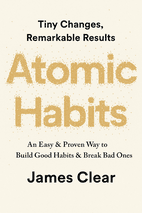
James Clear's Atomic Habits provides a four-step framework for building good habits and breaking bad ones through small, incremental changes. It offers practical strategies like habit stacking for anyone seeking sustainable personal or professional improvement.
Feature
Insta.Page
Blinkist
Shortform
Summary Depth
Full Chapter-by-Chapter
15-min overview
Detailed analysis
Audio Narration
✓ (AI narration)
✓
✓
Visual Mindmaps
✓
✕
✕
AI Q&A
✓ Voice AI
✕
✕
Quizzes
✓
✕
✕
PDF Downloads
✓
✕
✓
Price
$59.99/yr
$146/yr (PRO)
$199/yr
*Competitor data last verified February 2026.
About the Author
James Clear
James Clear is the author of the #1 New York Times bestseller "Atomic Habits," which has sold millions of copies worldwide and established him as a leading voice in the fields of habit formation and continuous improvement. His work distills complex topics into actionable strategies that help individuals and organizations build systems for sustained success. Clear's expertise is further amplified through his popular website and newsletter, where he shares evidence-based ideas for mastering habits, decision-making, and continuous improvement. A sought-after speaker, he has worked with leaders from Fortune 500 companies and sports teams. His books are available for purchase on Amazon.
1 Page Summary
Atomic Habits by James Clear is a comprehensive guide to understanding and implementing small, incremental changes that lead to significant personal and professional growth. The book emphasizes the power of habits, arguing that success is not the result of one-time actions but the accumulation of consistent, small improvements over time. Clear introduces the concept of "atomic habits," which are tiny, manageable changes that compound into remarkable results. He outlines a four-step framework—Cue, Craving, Response, and Reward—to help readers build good habits and break bad ones, emphasizing the importance of environment, identity, and systems over goals.
Historically, the book builds on decades of psychological and behavioral research, drawing from figures like B.F. Skinner and Charles Duhigg, while presenting these ideas in an accessible and actionable way. Clear combines scientific insights with practical strategies, such as habit stacking, temptation bundling, and the "Two-Minute Rule," to make habit formation achievable for anyone. The book also addresses common pitfalls, such as relying on motivation or willpower, and instead focuses on creating systems that make good habits inevitable and bad habits difficult.
The lasting impact of Atomic Habits lies in its universal applicability and actionable advice. It has become a cornerstone in the self-improvement genre, empowering millions to transform their lives through small, consistent changes. By shifting the focus from outcomes to processes, Clear provides a sustainable approach to personal development, making the book a timeless resource for anyone seeking to improve their habits and achieve long-term success.
The chapter opens with a life-altering accident: James Clear’s traumatic brain injury during high school, which reshaped his understanding of resilience and growth. From the chaos of emergency surgeries and a medically induced coma to the grueling recovery process, Clear’s journey underscores the fragility of life and the power of incremental progress. This personal story sets the stage for his exploration of habits, revealing how small, consistent actions became the foundation for his academic, athletic, and professional achievements—and how they can transform anyone’s life.
The Injury and Immediate Aftermath
On the last day of his sophomore year, a freak accident involving a flying baseball bat leaves Clear with severe facial fractures, skull damage, and brain swelling. Unaware of the severity, he walks to the nurse’s office, answering questions incorrectly (mistaking the year and president) before collapsing. Rushed to the hospital, he stops breathing, is airlifted to a trauma center, and placed in a coma. The scene mirrors his family’s earlier crisis—his sister’s childhood leukemia—as the same priest comforts his parents.
The Long Road to Recovery
Waking from the coma, Clear faces anosmia (loss of smell), a protruding eyeball, and double vision. His return to normalcy is slow: months of physical therapy, seizures, and emotional lows. A crushing blow comes when he’s cut from his high school varsity baseball team—a humiliation for someone with dreams of playing professionally. Yet, this setback fuels his determination to rebuild, piece by piece.
A New Beginning at Denison University
College becomes Clear’s laboratory for habit-building. He prioritizes sleep, cleanliness, and weightlifting, transforming his physique and academic performance. Small wins—straight A’s, a starting pitcher role, and eventual team captaincy—compound into larger successes: All-American honors and a university-wide academic award. These habits, he realizes, aren’t just routines but a system for reclaiming agency after years of upheaval.
From Habits to a Life’s Work
Clear’s obsession with habits extends beyond athletics. Launching a blog in 2012, he shares practical insights, amassing millions of readers and building a career as a behavior-change expert. His “small habits” philosophy evolves into speaking engagements, the Habits Academy, and this book—a synthesis of psychology, neuroscience, and lived experience. He emphasizes that lasting change isn’t about grand gestures but mastering the “atomic” habits that shape identity.
Key Takeaways
Small habits compound: Incremental changes, sustained over time, lead to extraordinary outcomes.
Identity shapes behavior: Building habits isn’t just about actions but becoming the type of person who embodies those habits.
Resilience is iterative: Setbacks are inevitable, but systems (not goals) drive long-term success.
External + internal: Effective habit formation balances environmental cues and emotional states.
You are your experiments: Clear’s framework emerged from personal trial and error—proof that anyone can redesign their habits.
Key concepts: Introduction: My Story
1. Introduction: My Story
The Life-Altering Accident
Freak baseball bat injury causes severe brain trauma
Clear collapses after misidentifying basic facts (year, president)
Emergency airlift, coma, and parallels to sister's leukemia crisis
Physical and Emotional Recovery
Wakes with anosmia, double vision, and facial deformities
Cut from varsity baseball team—a devastating setback
Slow progress through physical therapy and seizure management
Habit Transformation in College
Prioritizes sleep, cleanliness, and weightlifting as foundational habits
Earns straight A’s and becomes All-American baseball pitcher
Small wins compound into academic and athletic leadership roles
From Personal System to Global Framework
Blog (2012) shares habit insights, attracting millions of readers
Develops 'atomic habits' philosophy blending psychology and neuroscience
Scales work through Habits Academy, speaking, and this book
Core Philosophy of Atomic Habits
Identity > Goals: Habits shape who you become, not just outcomes
1% improvements compound into transformative change over time
Systems (e.g., environment, cues) matter more than motivation
If you like this summary, you probably also like these summaries...
💡 Try clicking the AI chat button to ask questions about this book!
Chapter 2: THE FUNDAMENTALS: Why Tiny Changes Make a Big Difference
Overview
This chapter challenges the common belief that monumental effort is required to achieve meaningful change. Instead, it argues that small, consistent habits—often overlooked or dismissed as insignificant—are the true drivers of long-term transformation. By focusing on incremental progress, readers learn how tiny adjustments compound over time, leading to outcomes that far surpass initial expectations. The chapter blends scientific research, real-world examples, and psychological insights to illustrate why mastering the fundamentals of behavior change starts with embracing the power of the mundane.
The Power of Marginal Gains
The concept of marginal gains—improving by just 1% in multiple areas—is introduced through the story of the British cycling team’s rise to dominance. By optimizing seemingly trivial details (e.g., better sleep, bike maintenance, handwashing), their tiny improvements accumulated into world championship wins. This “aggregation of marginal gains” demonstrates how small, intentional changes create a ripple effect, ultimately reshaping outcomes.
The 1% Rule: How Habits Compound
Habits operate like financial interest: repeated small actions gain exponential value over time. For example, reading 10 pages daily might feel insignificant day-to-day, but over a year, it translates to 3,650 pages—equivalent to dozens of books. Conversely, negative habits (like daily procrastination) compound in the opposite direction, eroding progress. The chapter emphasizes that consistency, not intensity, determines whether these tiny changes work for or against us.
Breaking the Myth of Monumental Effort
Society often glorifies dramatic overhauls—crash diets, overnight success stories—but these rarely sustain. The chapter dissects why “big leaps” fail: they rely on motivation, which fluctuates, rather than systems. By contrast, tiny habits are frictionless, making them easier to maintain. A person aiming to exercise more might start with just two minutes of daily stretching; the goal isn’t intensity but ritual. Over time, this ritual expands naturally into a robust routine.
Key Takeaways
Small habits > grand gestures: Consistency in minor actions outperforms sporadic bursts of effort.
Compounding works both ways: Tiny positive habits build exponential growth, while negative ones silently undermine progress.
Systems trump goals: Focus on sustainable processes (e.g., daily routines) rather than fixating on distant outcomes.
Start absurdly small: Reduce friction to make habits effortless, ensuring they stick long-term.
Key concepts: THE FUNDAMENTALS: Why Tiny Changes Make a Big Difference
2. THE FUNDAMENTALS: Why Tiny Changes Make a Big Difference
The Power of Marginal Gains
Small 1% improvements in multiple areas can lead to significant overall success.
The British cycling team's dominance was built on optimizing trivial details like sleep and bike maintenance.
Aggregation of marginal gains creates a ripple effect that reshapes outcomes.
The 1% Rule: How Habits Compound
Habits compound like financial interest, gaining exponential value over time.
Consistent small actions (e.g., reading 10 pages daily) lead to substantial long-term results.
Negative habits also compound, silently eroding progress if left unchecked.
Breaking the Myth of Monumental Effort
Dramatic overhauls (e.g., crash diets) often fail because they rely on fleeting motivation.
Tiny habits are frictionless and easier to maintain than intense efforts.
Starting absurdly small (e.g., two minutes of stretching) builds sustainable rituals that grow naturally.
Key Takeaways
Small, consistent habits outperform sporadic grand gestures.
Compounding works for both positive and negative habits.
Systems and processes matter more than distant goals.
Reducing friction makes habits effortless and long-lasting.
⚡ You're 2 chapters in and clearly committed to learning
Why stop now? Finish this book today and explore our entire library. Try it free for 7 days.
Chapter 3: 1: The Surprising Power of Atomic Habits
Overview
Chapter 1: The Surprising Power of Atomic Habits
The story of British Cycling’s transformation under Dave Brailsford sets the stage for understanding atomic habits. By obsessing over tiny, seemingly insignificant improvements—like better handwashing or optimized sleep—the team unlocked unprecedented success through the aggregation of marginal gains. This philosophy reveals a universal truth: small, consistent changes don’t just add up—they compound. A 1% daily improvement might feel invisible, but over a year, it multiplies progress by 37 times. Conversely, a 1% daily decline can erase gains entirely, highlighting how positive compounding in habits (like learning or exercise) and negative compounding (like stress or procrastination) steer life’s trajectory as decisively as a plane adjusting its course by a few degrees.
Yet progress isn’t always visible. Imagine heating an ice cube: it stays solid until hitting 32°F, when it suddenly melts. Similarly, habits often linger in a plateau of latent potential, where effort feels wasted until a breakthrough moment arrives. This “Valley of Disappointment” explains why the San Antonio Spurs’ relentless practice or bamboo’s years of root-building precede explosive success. The lesson? Systems over goals matter most. Fixating on gold medals or finished projects rarely drives lasting change; instead, refining daily processes—like writing one paragraph or automating a task—creates sustainable momentum.
Atomic habits thrive within these systems. They’re the tiny, repeatable actions—a 1% healthier meal, five minutes of daily reading—that embed themselves into routines, building like atoms into molecules. Over time, they reshape identities: you don’t achieve success as much as you become it through consistent action. Goals, while seductive, often backfire by prioritizing short-term wins over lasting growth. Cleaning a room once doesn’t prevent future messes; designing a habit of tidying daily does.
Ultimately, the chapter paints success as a slow-motion avalanche. It’s not the grand gesture but the compound effect of tiny changes—the 1% better choices repeated relentlessly—that rewrite stories. Whether in health, creativity, or relationships, small steps, not leaps, carry us across the finish line.
The British Cycling Revolution
When Dave Brailsford took over British Cycling in 2003, the team had a century of underwhelming results. His strategy—the aggregation of marginal gains—focused on improving every aspect of cycling by 1%, from bike ergonomics to handwashing techniques. These tiny adjustments, like using aerodynamic suits or optimizing sleep environments, seemed trivial individually. But collectively, they transformed the team into a powerhouse. By the 2008 Olympics, British cyclists dominated, winning 60% of gold medals, and later claimed five Tour de France victories in six years. Brailsford’s approach proved that small, consistent improvements could rewrite history.
The Math of Marginal Gains
Improving by 1% daily compounds exponentially. Over a year, 1% daily growth leads to a 37x improvement, while 1% daily decline nearly erodes progress to zero. This “compound interest” principle applies to habits:
Positive compounding: Productivity, knowledge, and relationships grow steadily through repeated small efforts.
Negative compounding: Stress, negative thoughts, and unhealthy choices escalate over time.
Like adjusting a flight path by 3.5 degrees—a tiny shift that changes the destination—daily habits steer long-term outcomes.
The Ice Cube Effect and the Plateau of Latent Potential
Progress isn’t linear. Imagine heating an ice cube from 25°F to 31°F—nothing happens until it hits 32°F and melts. Similarly, habits often show no visible results until a critical threshold is crossed. Early efforts accumulate as latent potential, creating a “Valley of Disappointment” where progress feels invisible. Breakthroughs—like the San Antonio Spurs’ relentless practice or bamboo’s sudden growth after years of root-building—are the result of persistent systems, not fleeting goals.
Systems Over Goals
Goals focus on outcomes; systems focus on processes. British Cycling didn’t win by obsessing over gold medals but by refining daily routines. Problems with goal-centric thinking:
Same goals, different outcomes: Winners and losers often share identical objectives.
Temporary fixes: Cleaning a room doesn’t stop future messes without better habits.
Delayed happiness: Goals condition joy on future achievements, while systems reward consistent action.
Short-term focus: Goals end at the finish line; systems keep you playing.
Atomic Habits in Action
Atomic habits are small, systemic changes embedded within larger routines. Like atoms forming molecules, these micro-habits build extraordinary results over time. For example:
Productivity: Automating one task frees mental bandwidth for creativity.
Knowledge: Daily reading compounds into transformative insights.
Health: A 1% better diet or exercise routine reshapes long-term wellness.
Success isn’t a single leap but a cascade of tiny, deliberate steps.
Systems Over Goals
The chapter emphasizes that lasting change isn’t about lofty goals but about refining the systems behind them. Goals are fleeting endpoints, while systems are the daily processes that sustain progress. Atomic habits thrive within these systems—small, repeatable actions that compound over time. For example, writing one paragraph daily might seem trivial, but as part of a writing system, it becomes the foundation of a book.
The Compound Effect of Tiny Changes
Habits are likened to financial interest: their value multiplies with consistency. A 1% improvement daily leads to a 37x gain over a year, while a 1% decline erodes progress just as dramatically. The key isn’t individual actions but their persistence. Missing a single workout or skipping a healthy meal won’t derail progress, but the pattern of those choices determines long-term outcomes.
Key Takeaways
Systems > Goals: Focus on improving daily processes, not just end results.
1% Rule: Tiny, consistent adjustments outperform occasional grand efforts.
Compounding Habits: Small choices, repeated, reshape your trajectory—for better or worse.
Key concepts: 1: The Surprising Power of Atomic Habits
3. 1: The Surprising Power of Atomic Habits
The British Cycling Revolution
Dave Brailsford's 'aggregation of marginal gains' philosophy
1% improvements in every aspect (e.g., bike ergonomics, sleep optimization)
Transformed team from mediocrity to dominance (60% Olympic golds, Tour de France wins)
Proof that tiny, consistent changes rewrite outcomes
The Math of Marginal Gains
1% daily improvement compounds to 37x growth over a year
Positive compounding (knowledge, habits) vs. negative compounding (stress, procrastination)
Habits act like flight path adjustments—small shifts steer long-term trajectories
The Ice Cube Effect
Progress isn't linear; breakthroughs follow a 'plateau of latent potential'
Effort feels wasted until critical threshold (e.g., ice melting at 32°F)
Examples: San Antonio Spurs' practice, bamboo's delayed visible growth
Systems Over Goals
Goals focus on outcomes; systems focus on processes (e.g., daily routines over gold medals)
Flaws of goals: temporary, happiness-delaying, short-term focused
Systems create sustainable momentum (e.g., writing daily vs. 'finish a book')
Atomic Habits in Action
Micro-habits (1% better choices) compound into identity change
Habits compound like financial interest—small, consistent improvements multiply over time.
A 1% daily improvement leads to a 37x gain over a year, while a 1% daily decline erodes progress equally.
Success depends on persistent patterns, not isolated actions (e.g., one missed workout won’t ruin progress, but the habit of skipping will).
Focus on systems (daily processes) over goals (end results) for sustainable growth.
The '1% Rule' emphasizes that tiny, consistent adjustments outperform sporadic large efforts.
The Power of Small Habits
Atomic habits are small but foundational—they build the identity of who you become.
Minor changes seem insignificant at first but create a 'tipping point' for transformation.
Habits are votes for the type of person you wish to be—each repetition reinforces identity.
Focus on 'being the kind of person who...' rather than just achieving outcomes.
The Plateau of Latent Potential
Progress often feels delayed—habits accumulate silently before reaching a breakthrough.
Like an ice cube melting at 32°F, change requires patience until the 'critical threshold' is hit.
Frustration arises when efforts don’t yield immediate results, but persistence is key.
The 'Valley of Disappointment' is the gap between expectations and reality—trust the process.
The Role of Identity in Habits
Lasting change requires shifting identity (beliefs about yourself), not just behavior.
Habits are effective when they align with self-image (e.g., 'I am a runner' vs. 'I’m trying to run').
Every action is a vote for the type of person you want to become.
Outcome-based habits focus on results; identity-based habits focus on transformation.
Chapter 4: 2: How Your Habits Shape Your Identity (and Vice Versa)
Overview
This chapter challenges the conventional focus on goal-setting and instead argues that lasting change comes from reshaping your identity through habits. The author introduces three layers of behavior change—outcomes, processes, and identity—and explains why most people fail by targeting the wrong layer. While outcomes (like losing weight) and processes (like dieting) matter, true transformation happens when habits align with who you believe you are. Identity shapes behavior, and behavior, in turn, reinforces identity—a feedback loop that either locks you into old patterns or propels you toward growth.
The Problem with Outcome-Focused Change
Most people start their habit-building journey by fixating on goals: What do I want to achieve? But this approach often fails because it neglects the deeper layer of identity. For example, someone who says, “I’m trying to quit smoking” still identifies as a smoker, making relapse likely. In contrast, declaring, “I’m not a smoker” shifts self-perception, making the habit easier to discard. The chapter highlights that goals like “run a marathon” or “write a book” are fleeting unless tied to a new identity (e.g., “I am a runner” or “I am a writer”).
Identity: The Hidden Force Behind Habits
Your habits are proof of your beliefs. If you see yourself as “bad at math,” you’ll avoid challenges that contradict that story. Conversely, small actions—like writing daily or exercising—accumulate evidence for a new identity. The author shares Brian Clark’s story: after getting a manicure, he stopped biting his nails because he began to identify as someone who takes pride in his appearance. Habits become sustainable when they’re not just tasks but expressions of who you are.
The Two-Step Identity Shift
Decide who you want to be. Ask: What would a healthy/consistent/confident person do?
Prove it with small wins. Each habit—like cooking a meal instead of ordering takeout—is a “vote” for your new identity. You don’t need perfection, just a majority of choices that align with your desired self. Over time, these votes rewrite your self-image.
For instance, a person aiming to lose weight might start by asking, “What would a healthy person choose?”—guiding decisions until health becomes intrinsic to their identity.
The Double-Edged Sword of Identity
Identity can trap or liberate. Phrases like “I’m not a morning person” or “I’m terrible with directions” cement limiting beliefs. To change, you must unlearn old identities. The chapter warns against clinging to labels that conflict with growth. For example, a manager who sees themselves as “not a leader” will struggle to adopt empowering habits. Progress requires shedding outdated self-narratives.
Key Takeaways
Identity > outcomes: Sustainable change starts with believing, “This is who I am,” not “This is what I want.”
Habits are votes: Every action either reinforces or undermines your self-image.
Small wins matter: Consistency—not intensity—builds identity. Writing one page daily makes you a writer; exercising regularly makes you an athlete.
Beware self-limiting labels: Phrases like “I’m bad at math” become self-fulfilling prophecies.
Feedback loops: Habits shape identity, and identity shapes habits—a cycle that can work for or against you.
In the end, habits aren’t just about doing—they’re about becoming.
Key concepts: 2: How Your Habits Shape Your Identity (and Vice Versa)
4. 2: How Your Habits Shape Your Identity (and Vice Versa)
The Three Layers of Behavior Change
Outcomes: Focus on what you want to achieve (e.g., losing weight)
Processes: Focus on systems and habits (e.g., dieting)
Identity: Deepest layer - focus on who you believe you are
True transformation happens when habits align with identity
Identity and habits form a reinforcing feedback loop
Why Outcome-Focused Change Fails
Goals alone are fleeting without identity change
Statements like 'I'm trying to quit smoking' reinforce old identity
Lasting change requires shifting self-perception (e.g., 'I'm not a smoker')
Goals must be tied to new identities (e.g., 'I am a runner')
Habits as Identity Evidence
Your habits are proof of your current beliefs
Small actions accumulate evidence for new identities
Example: Getting manicures helped someone stop biting nails by changing self-image
Sustainable habits are expressions of identity, not just tasks
The Identity Shift Process
Step 1: Decide who you want to be (ask identity-based questions)
Step 2: Prove it with small wins (each habit is a 'vote' for new identity)
No need for perfection - majority of aligned choices rewrites self-image
Example: 'What would a healthy person choose?' guides decisions
The Dangers of Fixed Identities
Self-limiting labels become self-fulfilling prophecies
Phrases like 'I'm not a morning person' cement limiting beliefs
Growth requires unlearning old identities
Example: Manager who identifies as 'not a leader' struggles with leadership habits