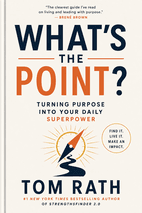
Introduction: What’s the Point?—Your Daily Wake-Up Call
Chapter 1/4
Lang
1x
Voice
PDF
0:00
0:00
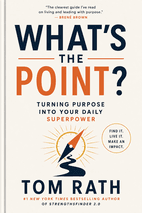
What's the Point?
by Tom Rath · Summary updated
What is the book What's the Point? about?
Tom Rath's What's the Point? dismantles conventional success myths by arguing that genuine purpose comes from outward contribution, not passion or happiness. Written for anyone feeling stuck or unfulfilled, it provides a practical framework for filtering decisions through the daily question of what truly matters.
Feature
Insta.Page
Blinkist
Shortform
Summary Depth
Full Chapter-by-Chapter
15-min overview
Detailed analysis
Audio Narration
✓ (AI narration)
✓
✓
Visual Mindmaps
✓
✕
✕
AI Q&A
✓ Voice AI
✕
✕
Quizzes
✓
✕
✕
PDF Downloads
✓
✕
✓
Price
$59.99/yr
$146/yr (PRO)
$199/yr
*Competitor data last verified February 2026.
About the Author
Tom Rath
Tom Rath is an American author and researcher best known for his bestselling books *StrengthsFinder 2.0*, *How Full Is Your Bucket?*, and *Eat Move Sleep*. He is a leading expert on strengths-based development, well-being, and organizational health, with his work influencing millions through Gallup's research. Rath also holds a deep personal connection to his topics after being diagnosed with a rare genetic condition that shapes his focus on preventive health.
1 Page Summary
Based solely on the provided chapter summaries, Tom Rath’s What’s the Point? is a direct, research-backed challenge to conventional wisdom about success, meaning, and fulfillment. The book dismantles common myths, arguing that passion is overrated and that the relentless pursuit of happiness is a counterproductive decoy. Instead, Rath proposes that genuine purpose and meaning are found in outward contribution—asking "Who do I help?" rather than "What do I love?"—and in deliberately aiming one’s strengths to serve others. The central thesis is that many people waste their lives on autopilot, chasing societal expectations, status, and other people’s definitions of achievement, which ultimately leads to quiet regret.
The author’s approach is deeply personal and unfiltered, stemming from a genetic cancer diagnosis that gave him an early expiration date. He uses this "borrowed-time advantage" as a lens to critique everything from the trap of inherited childhood dreams and the neuroscience behind digital addiction to the myth of finding a single, all-encompassing purpose. The book is structured around practical, actionable concepts like “job crafting” to reshape your current role, time-compressing your efforts to maximize impact, and building an “Evergreen” body of work that compounds its value. Rath emphasizes that the most successful people are not driven by passion or status, but by a relentless focus on solving real problems for others.
The intended audience is anyone feeling stuck, unfulfilled, or busy without meaning—from recent graduates to seasoned executives. Readers will gain a clear framework for filtering every decision through the daily question, "What’s the point?" to eliminate trivial pursuits and focus on genuine impact. The book ultimately redefines success not as personal achievement or visibility, but as the act of planting seeds for a harvest you may never see, investing in the growth of others, and engineering a legacy that endures beyond your own lifetime.
Chapter 1: Introduction: What’s the Point?—Your Daily Wake-Up Call
Overview
At fifteen, the author received a genetic cancer diagnosis that gave him an expiration date: forty years old. Most people would crumble. Instead, he got something rare—absolute clarity about what mattered. He built a family, wrote books like How Full Is Your Bucket? and StrengthsFinder 2.0, and chased every version of success society handed him. Then he turned forty—the age he wasn’t supposed to reach—and realized he’d spent decades living someone else’s definition of achievement. Every milestone was a response to expectation, not conviction. That brutal moment birthed the question that became his daily compass: What’s the point? Not a philosophical abstraction, but a practical filter for meetings, projects, and career paths. This book is the unfiltered version of what he learned—no research-heavy safety net, no polite lies. It’s the honest conversation he wishes someone had given him at twenty-two.
The Real Problem: You’re Wasting Your Day
Most of us are busy being busy. We optimize our calendars, answer emails, attend meetings, and complete tasks that won’t matter next week, let alone next year. And we never stop to ask why. The author calls this dying in installments—one meaningless day at a time, surrounded by people doing the same. The tragedy isn’t laziness; it’s that we’ve never learned to ask the right question. We’re running on autopilot, following scripts written by other people who were also following scripts. The result? We treat 57,600 seconds of consciousness each day as if they’re infinite, yet we can’t remember what we did last Tuesday.
Purpose Isn’t a Mountain to Climb
The word purpose has been hijacked by influencers selling anxiety—grand quests, lifetime mission statements, the pressure to find a singular calling. That’s backward. Purpose is simpler: knowing why you’re doing what you’re doing today, and being willing to change direction when the answer is “I don’t know” or “because I’m supposed to.” It’s fuel for the current moment, not a treasure to find at the end of a journey. The author isn’t asking you to quit your job or follow a dream. He’s asking you to pay attention to your actual life and have the courage to ask why, right now, while the clock is running.
A Necessary Warning
The author makes no claim to be a guru or formal expert. He’s a guy who paid attention because death was on the schedule. What follows isn’t prescriptive—it’s provocative. Some ideas will spark; others will fizzle. That’s fine. But if an idea makes you uncomfortable, lean in. Resistance often points to the growth you need most. This book isn’t about making you feel better about your choices. It’s about helping you make better ones, starting now. It will challenge everything you think you know about work, success, and a life worth living, and it will ask you to burn down what isn’t working.
Key Takeaways
Stop waiting for a heart attack or breakdown to ask the hard questions. Start now with whatever you’re doing next.
Purpose is not a grand quest; it’s a daily check-in: Why am I doing this? If you can’t answer, change course.
Most of your day is spent on autopilot. The only way off is to consciously question each habit and expectation.
Discomfort is a signal, not a problem. Lean into ideas that challenge you—they might be the ones you need.
You don’t need to find your passion or quit your job. You need to pay attention to the life you’re living and have the guts to redirect it.
Key concepts: Introduction: What’s the Point?—Your Daily Wake-Up Call
1. Introduction: What’s the Point?—Your Daily Wake-Up Call
The Wake-Up Call: A Diagnosis That Brought Clarity
Genetic cancer diagnosis gave author an expiration date at 40
He built success chasing others' definitions of achievement
Turning 40 revealed he lived by expectation, not conviction
The question 'What’s the point?' became his daily compass
The Real Problem: Dying in Installments
Most people are busy being busy on autopilot
Tasks completed today won't matter next week or year
We treat 57,600 seconds daily as if infinite
Tragedy is never learning to ask the right question
Purpose Redefined: A Daily Check-In, Not a Grand Quest
Purpose is knowing why you're doing what you do today
It's fuel for the current moment, not a lifetime mission
Be willing to change direction when answer is 'I don't know'
Pay attention to your actual life, not a distant dream
A Necessary Warning: Provocative, Not Prescriptive
Author is not a guru—just someone who paid attention
Ideas may spark or fizzle; lean into discomfort
Resistance often points to the growth you need most
Book challenges everything about work, success, and life
Key Takeaways: Start Now with What You're Doing Next
Stop waiting for a crisis to ask the hard questions
Purpose is a daily check-in: 'Why am I doing this?'
Consciously question each habit and expectation
Discomfort is a signal to redirect your life
Scroll to load interactive mindmap
If you like this summary, you probably also like these summaries...
💡 Try clicking the AI chat button to ask questions about this book!
Chapter 2: Chapter 1: Why Passion Is Overrated
Overview
This opening chapter dismantles the "follow your passion" gospel that's been sold to us as the only path to a meaningful career. The author starts from a personal place—sitting in a career counselor's office at 22, one eye lost to cancer, a ticking clock on his life expectancy—and uses that urgency to question whether passion is really the compass we think it is. The core argument lands hard: passion is unreliable, self-centered, and often disappears exactly when the work gets difficult. What actually drives success and fulfillment is purpose—specifically, the kind of purpose that comes from seeing how your daily efforts improve someone else’s life. The chapter reframes the entire conversation from "What do I love?" to "Who do I help?"
The Passion Mirage
The research cuts through the hype. A nine-year study tracking 4,660 people found that a strong sense of purpose predicted higher earnings—not because people chased money, but because purpose drove performance in ways passion never could. The author interviewed hundreds of successful professionals across every field and found exactly one who credited their success to following a passion. Everyone else told a different story: they found something that needed doing, got good at it, and discovered meaning through contribution. Fulfillment followed competence, not the other way around.
This matters because of how we think about interests. The "find your passion" mindset treats interests as fixed, pre-existing things waiting to be discovered—a fixed mindset that makes people quit when challenges arise. Passion evaporates precisely when the work gets hard. Purpose, built through consistent effort and attention to impact, keeps you going.
The Contribution Path
Jason's story drives this home. Twenty-five years in tech, successful on paper, feeling dead inside. Then he starts volunteering at his son's early childhood program, asks "How can I help?" and ends up running the place—taking a major pay cut, shocking his friends and family. Within three years he doubled funding and created Texas's premier program for at-risk youth. He wasn't following a long-held passion for education. What changed was simple: he could see the faces. In tech, he tracked abstractions—dashboards, quotas, quarterly earnings. At the school, he watched a four-year-old who'd been sleeping in cars learn to read. He saw the ripple effects across three generations. Purpose emerged from the relationships and the visible impact, not from some pre-existing dream.
Redefining Work
The chapter challenges the language we use. "What do you do?" assumes your identity lives in your title or role. The author describes a conference interaction where a woman asked, "What do you do during the day that helps people?" and it stopped him cold. That shift—from "what you do" to "who you help"—changes everything. Most people live with a toxic split between their "work self" and "real self," treating work as something to endure. But when your identity gets hijacked by your job title or bank balance, you're not just killing motivation—you're eroding self-worth from the inside.
The "résumé obituary" concept lands hard. A typical résumé reads like an obituary written by someone who didn't know the deceased: dry titles, percentages, metrics. It tells nothing about what makes a person's contribution unique or meaningful. The author argues this fundamentally backward approach positions you as a collection of skills to be consumed rather than a unique individual who can improve lives.
The Faces You Ignore
Research shows that when you see and hear from the people you help, motivation and performance skyrocket. It's not just feel-good theory—studies across professions demonstrate that connecting daily work to its impact on real people creates energy, creativity, and grit. The author points out that most people already take actions that eventually improve lives, but they fail to make the connection explicit. The fix is simple: start asking "Who benefits from my work, and how can I make that impact bigger?" A software developer creates tools that help people connect or solve problems. A grocery clerk ensures families have access to food. Seeing those faces changes everything.
Don't Wait for Permission
Nobody hands you purpose. Organizations chase quarterly numbers, not your personal growth. If you want more than a paycheck, you rewrite the rules. The author urges readers to find the thread connecting daily tasks to someone else's better day. Make it your mission to leave every project, team, and customer better off than you found them. Meaning isn't something that happens to you; it's manufactured in the lab of daily choices, decision by decision, interaction by interaction.
The chapter closes with a practical challenge: identify three activities where your skills directly help others, ask two beneficiaries how specifically it helps them, then block time next week to prioritize those activities. Stop chasing what you love. Start building what the world needs.
Key Takeaways
Passion is unreliable and self-centered; it vanishes when work gets hard. Purpose—knowing who you help and why it matters—drives real success and fulfillment.
Purpose isn't found through soul-searching; it's built through daily acts of contribution, brick by brick.
Shift the question from "What do you do?" to "Who do you help?" That reframe connects your efforts to their actual impact on real people.
Seeing the faces of those you help skyrockets motivation and performance. Research proves it.
Meaning is manufactured in daily choices. Nobody will hand you purpose—you build it by paying attention to the difference you make.
Key concepts: Chapter 1: Why Passion Is Overrated
2. Chapter 1: Why Passion Is Overrated
The Passion Mirage
Passion is unreliable and vanishes when work gets hard
9-year study: purpose predicts earnings, not passion
Fulfillment follows competence, not the other way around
Fixed mindset makes people quit at first challenge
The Contribution Path
Jason found meaning by asking 'How can I help?'
Purpose emerged from visible impact on real people
Seeing faces of those helped drives motivation
Contribution beats chasing pre-existing dreams
Redefining Work
Shift from 'What do you do?' to 'Who do you help?'
Work-self vs real-self split erodes self-worth
Résumé obituary: dry titles miss true contribution
You are more than a collection of skills to consume
The Faces You Ignore
Seeing beneficiaries skyrockets motivation and performance
Most people already help others but miss the connection
Ask: 'Who benefits from my work?' explicitly
Every job can improve lives when you see the impact
Don't Wait for Permission
Nobody hands you purpose—you build it daily
Connect daily tasks to someone else's better day
Meaning is manufactured in daily choices
Stop chasing passion; start building what the world needs
Scroll to load interactive mindmap
⚡ You're 2 chapters in and clearly committed to learning
Why stop now? Finish this book today and explore our entire library. Try it free for 7 days.
Chapter 3: Chapter 2: Your Childhood Dreams Are Anchors, Not Wings
Overview
Having a life-threatening condition didn’t liberate me from the trap of inherited expectations—it just made the trap more obvious. When I was diagnosed at fifteen, I assumed the shortened timeline would force me to chart my own course. Instead, I spent the next decade unconsciously chasing what would make my parents proud, mimicking adult responsibilities without ever asking if the path was truly mine. It took years to realize that my childhood ambitions weren’t wings lifting me toward my authentic self; they were anchors holding me in place.
The data backs up how insidious this inheritance really is. Sons are 2.7 times more likely to share their father’s occupation; daughters nearly twice as likely to share their mother’s. In specific roles, the numbers become absurd: women whose mothers worked in HR are 78 times more likely to end up there; sons of drywall installers are 136 times more likely to follow suit. This isn’t about passion or genetic predisposition. It’s about exposure. Your brain literally cannot imagine alternatives it has never witnessed.
The Inheritance You Don’t Want
The question “What do you want to be when you grow up?” might seem harmless, but it creates an artificial pressure to have life figured out before you’ve even started living. Parents’ expectations shape children’s aspirations more powerfully than socioeconomic background or natural abilities. A century ago, this made sense—sons learned their father’s trade because there were no other options. But today’s economy moves at warp speed, while parental expectations remain stuck in the 1920s.
Even when pressure isn’t overt, we set wildly unrealistic goals as kids: millionaire by twenty-two, perfect marriage by thirty, professional athlete. These dreams, formed with a child’s limited worldview, continue to pull at our adult decisions long after we’ve outgrown them. You’re not choosing your future—it’s being programmed into you.
Ditch Those Childhood Dreams
Your childhood dreams were never really yours. They were an amalgamation of parental expectations, social pressures, and a narrow slice of what’s possible. Consider the parent who never had piano lessons and pushes their child to excel at music, regardless of the child’s aptitude or interest. One woman told me her mother’s unfulfilled musical ambitions turned what was once a genuine interest into grueling recitals that destroyed her love for music entirely. The parent lives vicariously through the child’s achievement, while the child loses their identity.
Most parents genuinely want what’s best, but they rarely consider how their hopes distort a child’s authentic interests. What young people really need is exposure to possibilities their parents never imagined, not pressure to decide their future at age five.
When Success Feels Like Prison
Even when you think you’re chasing your own ambitions, you may be unconsciously following someone else’s script. Researchers found that parental desires for a child’s future influence outcomes more than the child’s own stated preferences. We’re literally living our parents’ dreams and calling them our own.
A young entrepreneur I worked with spent seven years pursuing a law degree and building a practice to fulfill his father’s expectation that he join the family firm. Three years into practicing law, deeply unhappy despite financial success, he made the difficult decision to incinerate that inherited dream. He sold his practice, disappointed his father, but finally freed himself to pursue work aligned with his actual strengths. This wasn’t rebellion—it was recognizing when a dream has become an anchor. When he let go of who he thought he should be, he discovered who he truly was. Surprisingly, his relationship with his father deepened through that authenticity.
Liberating yourself from outdated childhood dreams isn’t destruction; it’s creation. It makes space for new dreams that reflect who you’ve become, not who others wanted you to be. Spending decades pursuing a dream you’ve outgrown is a terrible waste of the only resource that matters: your time.
The Career Caste System Nobody Talks About
The familiarity trap doesn’t just limit individuals—it shapes entire professions and perpetuates inequality. When doctors raise doctors and service workers raise service workers, we build a caste system disguised as meritocracy. Professions remain stubbornly homogeneous in gender, race, and socioeconomic background, not because of ability but because of exposure. The only shadow you should live in is the one you cast yourself.
Breaking free from inherited expectations requires confronting not only external pressure but also the internalized voices that have been with you since childhood. Yet this liberation is essential if you are to discover who you really are and what you’re capable of contributing.
Let Your Dreams Die Already
Your aspirations should change over time, as you do. If they don’t, something is wrong. Research shows that unmet childhood dreams can cause unhappiness in early adulthood, but that effect disappears as people progress through their working lives—suggesting we naturally outgrow early ambitions, or at least we should.
Think about how dramatically your understanding of the world has evolved since childhood. You’ve experienced failures, successes, relationships, and countless moments that reshaped what matters to you. Yet many still cling to dreams formed before they understood what life actually entails. When talking to kids, ask what they want to do now, based on what they currently know, instead of asking “when you grow up.” The latter implies a fixed destination rather than an evolving journey, setting up the expectation that they must pick a lifetime path before they’ve even begun living. That single linguistic shift can free them from the trap that ensnares so many adults.
Key Takeaways
Childhood dreams are often anchors built from parental expectations and limited exposure, not wings toward your true self.
Statistics show children are dramatically more likely to follow their parents’ occupations—not due to passion, but because of familiarity and lack of alternatives.
The question “What do you want to be when you grow up?” creates harmful pressure to commit to a path before you have the life experience to choose wisely.
Letting go of inherited dreams isn’t destruction; it creates space for authentic ambitions that evolve as you do.
Break the pattern by exploring skills and interests that don’t fit your expected path—starting with one concrete action this week.
Key concepts: Chapter 2: Your Childhood Dreams Are Anchors, Not Wings
3. Chapter 2: Your Childhood Dreams Are Anchors, Not Wings
Childhood Dreams as Anchors
Dreams formed with child's limited worldview
Unrealistic goals pull at adult decisions
Anchors holding you, not wings lifting you
Inherited Expectations Trap
Sons 2.7x more likely to share father's occupation
Brain cannot imagine alternatives never witnessed
Parental expectations stuck in 1920s economy
Ditch Those Childhood Dreams
Dreams are amalgamation of parental pressures
Parents live vicariously through child's achievement
Need exposure to possibilities parents never imagined
When Success Feels Like Prison
Living parents' dreams and calling them our own
Lawyer example: seven years fulfilling father's expectation
Letting go of who you should be reveals who you are
Career Caste System
Familiarity trap shapes entire professions
Doctors raise doctors, service workers raise service workers
Homogeneity from exposure, not ability
Let Your Dreams Die Already
Aspirations should change as you do
Unmet childhood dreams cause early unhappiness
Ask kids what they want now, not when grown up
Liberation Through Authenticity
Liberation is creation, not destruction
Makes space for dreams reflecting who you've become
Deepened relationships through authenticity
Scroll to load interactive mindmap
Chapter 4: Chapter 3: Superpowers You Fail to See
Overview
Your greatest talent is likely dying right now—not as a metaphor, but literally, as neural pathways that could have made you extraordinary wither from disuse. The tragedy isn't that you lack ability; it's that you've never been exposed to the career where that ability could flourish. The author illustrates this through his own life: he discovered a knack for investing only decades after finishing college, and only now—while fighting a life-threatening illness—realizes he might have been a brilliant biomedical researcher. The chapter argues that most of us end our careers without ever working in the field where we had the most potential.
The Talents We Fail to Find
Potential contributions often hide in plain sight. The author shares two personal examples that sting with irony:
Investing: He started experimenting with tech stocks in 1998, right before the dot-com bubble. The wild swings taught him to love studying markets, something that gave him financial freedom later in life. But this talent emerged too late to consider professional investing as a career.
Biomedical research: Forced by his own health crisis to become a self-taught expert, doctors now mistake him for a physician. Yet the idea of medical school never crossed his mind when he was young because no one in that field showed him what the work entailed.
The haunting question: How many people die with their best contribution still locked inside them? The author estimates a vast majority.
You Can't Be What You Can't See
This isn't just philosophy—it's neuroscience. Your brain cannot construct mental models of possibilities you've never encountered. Think of color blindness: if you've never seen blue, you cannot imagine it. Same with career paths.
Research backs this up. Children begin eliminating career options as early as age six based on gender stereotypes. Between ages six and eight, their acceptable career choices narrow significantly—not because of ability, but because of lack of exposure.
The result: millions of people living far below their potential, constrained not by their capabilities but by their limited field of view.
The Exposure Gap
Landmark 2025 OECD research surveyed 690,000 students across 80+ countries. The findings are startling:
Four in ten students are unclear about their career expectations—double the number from a decade ago.
49% say their education has done little to prepare them for life.
Only 45% have ever visited a workplace by age 15–16.
In the United States, 75% of high school graduates don't feel prepared to make college and career decisions. Two-thirds say they would have benefited from more career exposure during their formative years.
The author calls this the exposure gap: an invisible constraint on human potential that operates on a massive scale. People don't know what they don't know—and that's the primary barrier to discovering your superpowers.
You're Actively Choosing Blindness
Even when options exist, we actively avoid seeing them. Our brains come equipped with confirmation bias that filters out possibilities outside our worldview. Social media algorithms feed us more of what we already consume. News sources polarize. Our friends think like us.
The result: a steadily narrowing vision of what's possible. We feel stuck because we can't envision alternatives—like choosing a meal from a menu with 90% of the options blacked out. Some of those hidden options might be perfect for you, but you'll never select what you can't see.
The Poverty Nobody Talks About
This isn't just a problem for disadvantaged communities. Across all socioeconomic groups, we suffer from a poverty of exposure—a deficit of diverse role models that limits our sense of what's possible.
Even privileged individuals live in homogeneous social circles. The most successful people, however, actively fight this by diversifying their exposure.
Sara Blakely's story illustrates the flip side: when she approached hosiery manufacturers with her Spanx idea, every single one rejected her. They saw her outsider status as a weakness. But because she wasn't exposed to industry conventions, she didn't know what was "impossible." Her lack of formal business education meant she questioned assumptions others took for granted.
Sometimes the best thing that can happen is to be so unexposed to an industry's limitations that you don't know what can't be done.
Start Your Exposure Revolution
It's up to you to break the cycle. The author suggests:
Diversify your inputs: If every business book you read is by an older white man (as was the case when he started), seek out women and diverse authors. The result: better insights, better writing.
Read outside your industry: A friend spends four hours a month reading perspectives from unrelated fields.
Require cross-disciplinary input: One leader insists every strategic initiative includes perspectives from at least three disciplines not on his leadership team.
These aren't nice-to-do practices—they're blindness prevention techniques. The rate of industry convergence is accelerating. Most jobs that will exist in a decade haven't been invented yet. If you're only exposed to traditional paths, you're cultivating blindness to the opportunities of the future.
What Your Kids Will Never See (Unless You Act)
The problem compounds across generations. The author's children (ages 14 and 16) have only seen what a writer and a teacher do. That's about 2% of what they need to know.
His calculation: the average young person should see at least 5–10 careers to even start thinking about potential paths. To get a sense of half the options available, they'd need to explore 50 different jobs.
This means someone with half your potential is right now succeeding in a career you've never heard of. Someone less talented than you is changing the world in a field you don't know exists.
Your 50-Career Challenge
The author created CareerSight, a program that includes "Purpose Profiles" of the top 50 careers—snapshots of what people do and whom they serve. These aren't job descriptions; they're windows into worlds your brain has never processed.
Your mission:
Scan these profiles (they're in Part IV) looking for seeds of hidden potential in yourself.
More critically: help others spot their hidden superpowers. Every person you help see a new possibility is a life transformed—and a contribution to the world that might otherwise never exist.
Key Takeaways
Your greatest talent may be dying undiscovered—not from lack of ability, but from lack of exposure to the right career.
The brain cannot imagine possibilities it has never encountered. Childhood narrowing of career options begins as early as age six.
We actively choose blindness through confirmation bias, social media algorithms, and homogeneous social circles.
Poverty of exposure affects all socioeconomic groups—but the most successful people strategically diversify their inputs.
Fix this for yourself by reading and talking to people outside your industry. Fix it for your children by exposing them to dozens of careers early.
Use the 50 Purpose Profiles to spot hidden talents in yourself and others—it's never too late to explore something new.
Key concepts: Chapter 3: Superpowers You Fail to See
4. Chapter 3: Superpowers You Fail to See
The Tragedy of Unseen Potential
Neural pathways wither from disuse
Most end careers without finding their best field
Author discovered investing talent too late
Health crisis revealed potential in biomedical research
You Can't Be What You Can't See
Brain can't imagine unseen possibilities
Children eliminate careers by age six
Gender stereotypes narrow options early
Limited exposure constrains potential
The Exposure Gap
40% of students unclear about career expectations
49% say education didn't prepare them for life
Only 45% visited a workplace by age 15-16
75% of US graduates feel unprepared
Actively Choosing Blindness
Confirmation bias filters out alternatives
Social media algorithms narrow vision
Friends and news sources reinforce views
Hidden options remain forever unselected
Poverty of Exposure
Affects all socioeconomic groups
Even privileged live in homogeneous circles
Sara Blakely's ignorance of limits enabled innovation
Lack of exposure can be an advantage
Start Your Exposure Revolution
Diversify inputs beyond your demographic
Read outside your industry regularly
Require cross-disciplinary perspectives
Blindness prevention for accelerating change
Breaking the Generational Cycle
Children see only 2% of career options
Need exposure to 5-10 careers minimum
50 jobs needed to grasp half the options
Parents must actively broaden horizons
Scroll to load interactive mindmap
Frequently Asked Questions about What's the Point?
What is What's the Point? about?
The book challenges conventional notions of success by urging readers to ask "What's the point?" in every aspect of life. Drawing from the author's journey after receiving a terminal diagnosis, it argues that passion, happiness, and status are misguided pursuits, and instead advocates for purpose-driven contribution. Through research and personal stories, it provides practical frameworks like job crafting, time compression, and the immortality test to help readers align their daily work with lasting impact.
Who is the author of What's the Point??
Tom Rath is a bestselling author and researcher best known for books like How Full Is Your Bucket? and StrengthsFinder 2.0. Diagnosed with a genetic cancer at age 15 and given a life expectancy of 40, he spent decades pursuing external validation before realizing he had been living others' definitions of achievement. His personal experience and extensive research on wellbeing and strengths form the candid foundation of this book.
Is What's the Point? worth reading?
This book is a powerful wake-up call for anyone who feels they are wasting their days on meaningless tasks. It delivers unfiltered insights from someone who faced mortality early and discovered that society's markers of success often lead to emptiness. For those seeking clarity on what truly matters, it offers both philosophical depth and actionable advice to create a life of genuine impact.
What are the key lessons from What's the Point??
One key lesson is that purpose—specifically improving others' lives—drives success far more than following passion. Another is that our greatest talents may remain undiscovered if we never encounter the right environment, so we must actively seek exposure to diverse fields. Additionally, avoiding the certainty trap is crucial because expertise can make us deaf to new learning. Finally, building an "evergreen" body of work that continues to create value without our constant presence is the ultimate form of legacy.
📚 Explore Our Book Summary Library
Discover more insightful book summaries from our collection