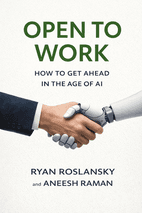
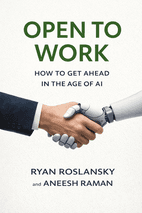
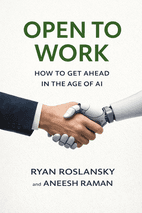
Ryan Roslansky's Open to Work provides a pragmatic roadmap for professionals to future-proof their careers by collaborating with AI, not fearing it. It advocates shifting from rigid job titles to viewing work as tasks and careers as nonlinear paths, emphasizing uniquely human strengths like creativity and the 5Cs framework.
Feature
Insta.Page
Blinkist
Shortform
Summary Depth
Full Chapter-by-Chapter
15-min overview
Detailed analysis
Audio Narration
✓ (AI narration)
✓
✓
Visual Mindmaps
✓
✕
✕
AI Q&A
✓ Voice AI
✕
✕
Quizzes
✓
✕
✕
PDF Downloads
✓
✕
✓
Price
$59.99/yr
$146/yr (PRO)
$199/yr
*Competitor data last verified February 2026.
About the Author
Ryan Roslansky
Ryan Roslansky is the CEO of LinkedIn, having previously served as the company's Senior Vice President of Product Management. He is recognized for his expertise in scaling global technology platforms and played a key role in the development of LinkedIn's Influencer program and content strategy.
1 Page Summary
In 'Open to Work,' Ryan Roslansky argues that the rapid rise of artificial intelligence represents not a threat to human workers, but an unprecedented opportunity for those who learn to collaborate with it. The book's central thesis is that professionals must proactively adapt by shifting their mindset: from fearing obsolescence to leveraging AI as a "thought partner" that handles routine tasks, thereby freeing humans to focus on their irreplaceable strengths. This requires moving beyond rigid job titles to see work as a collection of tasks and careers as nonlinear "climbing walls," where success comes from creative problem-solving and a unique blend of skills.
The author's distinctive approach is to ground this transformation in historical patterns, neuroscience, and practical frameworks. Roslansky examines past technological disruptions, like the Luddites and the shift to electricity, to show that while change is painful, it ultimately creates new opportunities. He challenges the century-long overvaluation of standardized "hard skills" by highlighting neuroscience that proves the critical economic value of so-called "soft skills," which he crystallizes into a new framework: the 5Cs (Curiosity, Courage, Creativity, Compassion, and Communication). The book is distinctive for its balanced focus on both individual agency and systemic change, advocating for a shift in organizational structures from static "org charts" to dynamic "work charts" built around projects and outcomes.
The intended audience is any professional seeking to future-proof their career in an AI-driven economy. Readers will gain a pragmatic, actionable roadmap for transitioning from anxiety to advocacy. This includes tools like a three-bucket framework for task analysis with AI, guidance for building a "multidirectional network," and the empowering concept of "onlyness"—leveraging one's unique life experiences as a definitive competitive advantage. Ultimately, the book provides a hopeful vision where human potential, amplified by smart technology, leads to more innovative, compassionate, and inclusive workplaces and economies.
Ume is a recent graduate who discovered that artificial intelligence could perform much of her university coursework. She reflects that this might have made her final years of study unnecessary. Instead of spiraling into a crisis, she draws on her personal journey of growth and resilience to frame AI not as a threat, but as a powerful collaborator. Her story is set against a broader historical backdrop. It examines how past generations, like the Luddites, resisted technological change. While such disruptions are painful, they have ultimately transformed work and created new opportunities. The core message is one of proactive adaptation. Our uniquely human qualities, combined with savvy use of new tools, can pave the way forward.
Ume's Perspective on AI and Human Potential
Ume’s story begins with a pragmatic discovery: AI could effortlessly complete the "busywork" of her education. Coming from an immigrant family and a low-income background, she had already learned to overcome shyness by taking risks and embracing failure. This resilience shaped her response to AI. She realized that what would set her apart wasn't rote knowledge or technical prowess, but her soft skills—her willingness to learn, her ability to connect with people, and her compassion. For Ume, AI is a partner that handles technical tasks, saving her time so she can focus on being more creative, genuine, and strategic in her content creation for social media. She meticulously guides AI with detailed prompts, infusing it with her personal problem-solving approaches, and always revises the output to match her energetic style. This collaboration allows her to scale her mission of inspiring young girls in computer science without losing her authentic voice.
Learning from the Luddites and Historical Change
The account then shifts to a historical lens, recounting the Luddite rebellion of 1811, where weavers destroyed mechanized looms to protect their livelihoods. They understood the technology's immediate threat perfectly. This pattern repeats through history: scribes feared the printing press, and telephone operators resisted automated switching. In each case, technology did eliminate specific jobs, but it also generated entirely new categories of work—printers, engineers, telecom technicians—and expanded access to information and communication. The text acknowledges the real human cost of such disruptions, validating the fear and loss experienced by those whose skills are rendered obsolete. However, it contrasts those past episodes with our current moment. Today, we have widespread awareness of AI's rise and access to the tools themselves, giving us a critical window to adapt before transformation is complete.
Key Takeaways
Human skills are the differentiator: In an AI-augmented world, traits like curiosity, empathy, and the ability to build genuine relationships become increasingly valuable and irreplaceable.
AI is a collaborative tool, not a replacement: Effective use of AI, as demonstrated by Ume, involves skilled prompting and human oversight to enhance creativity and efficiency, not to substitute for personal voice and judgment.
Technological disruption is a historical constant: While new technologies displace specific jobs, they historically create new forms of work and industries, though this offers little immediate comfort to those displaced.
Proactive adaptation is possible: Unlike past revolutions, we have advance knowledge and tools for AI, allowing individuals to learn new skills and integrate these technologies on their own terms.
Key concepts: Foreword
1. Foreword
AI as Collaborative Partner
AI handles technical tasks and busywork efficiently
Frees humans to focus on creativity and strategy
Requires skilled prompting and human oversight
Human Skills as Differentiator
Soft skills become increasingly valuable with AI
Curiosity, empathy, and relationship-building are irreplaceable
Personal voice and judgment remain essential
Historical Pattern of Technological Disruption
Technology eliminates specific jobs but creates new ones
Resistance to change is a recurring historical theme
Disruptions have ultimately transformed work positively
Proactive Adaptation to AI
We have advance knowledge of AI's impact unlike past generations
Individuals can learn to integrate AI on their own terms
Combining human qualities with tools paves way forward
Ume's Personal Framework for AI Integration
Uses AI to scale her mission without losing authentic voice
Infuses AI with personal problem-solving approaches
Views AI through lens of resilience and growth mindset
If you like this summary, you probably also like these summaries...
💡 Try clicking the AI chat button to ask questions about this book!
Chapter 2: Chapter 1: Buckle Up
Overview
The workplace is transforming at a dizzying pace, driven by a simple new reality: professionals who master AI are gaining a decisive edge. This shift is already here, with leadership demanding these skills and a staggering proportion of job requirements set to evolve. A gap is rapidly widening between those engaging with AI and those holding back.
This acceleration is part of a predictable pattern—the S-curve of technological adoption—and AI is currently in its steep, explosive middle phase. The time to adapt is compressing from decades to months, creating a cognitive mismatch as our linearly-wired brains struggle with exponential change. This fuels a natural, biological resistance where fear of professional obsolescence triggers the same primal alarms as a physical threat.
In this environment, merely keeping up requires constant effort, a phenomenon known as the Red Queen Effect. To stay in place, you must run, as the very definition of work transforms around you. The solution, however, isn't to compete with machines but to collaborate with them. Real-world examples show professionals using AI to free themselves to amplify their uniquely human strengths in creativity and connection.
This transition from anxiety to advocacy is possible by learning from history without repeating its cycles of resistance. While disruption is real, the knowledge and tools to adapt are now widely accessible. The crucial first step is demystifying the technology itself. Using AI effectively is more like learning to use email than becoming an engineer; it’s about application, not creation. The core directive is to start using it.
The chapter ultimately frames this moment not as a crisis but as a profound opportunity. It moves from diagnosing the challenge to advocating for an adaptation mindset, where intentional experimentation is the key skill. The goal is to use AI as a force for human amplification, shedding obsolete industrial-era models of work to redefine roles around creativity, problem-solving, and genuine connection.
The Inevitable Shift at Work
The fundamental premise is clear: while AI itself may not replace you, a person adept at using AI very likely will. This shift is already underway. Data shows that nearly 90% of C-suite leaders see accelerating AI adoption as critical, with two-thirds stating they wouldn’t consider candidates without AI skills. This isn't a future hypothetical; professionals are already adding AI literacy to their profiles and workflows.
The transformation is profound. Researchers estimate that as much as 70% of the skills required for the average job will change by 2030 due to AI's impact. This means your job is evolving beneath you. A gap is widening daily between those experimenting with AI and those hesitating. This gap grows because of a unique feature of AI: it's a two-way learning process. The technology improves at understanding you while you improve at commanding it.
The S-Curve of Technological Adoption
Major technological changes follow a predictable pattern known as an S-curve:
The Slow Bottom: The technology starts slowly, seeming like a niche toy.
The Steep, Explosive Middle: A tipping point is hit, and adoption skyrockets. Industries transform rapidly. This is where AI is now.
The Plateaued Top: The technology becomes ubiquitous, essential infrastructure like electricity.
We are in the steep, explosive phase, where adoption is ceasing to be optional. Critically, the time we have to adapt through each S-curve is shrinking. Humanity had decades to adjust to electricity, years for the internet, but with AI, we have months or weeks between breakthroughs. This creates a cognitive mismatch: our brains are wired for linear, predictable change, but technology evolves exponentially.
The Biology of Resistance
The anxiety and resistance many feel toward AI are not character flaws but biological imperatives. Our brain's alarm system can't distinguish between a physical threat and a professional one, triggering a freeze, fight, or flee response. This often manifests as ignoring AI, arguing against it, or clinging to outdated methods.
Beneath the fear of job loss lies a deeper, existential fear: the loss of identity and purpose. Recognizing that this resistance is a natural, human reaction is the first step toward managing it.
The Red Queen Effect
In a rapidly changing environment, standing still means falling behind. The "Red Queen Effect" describes the phenomenon where you must run as fast as you can just to stay in place. At work, this plays out as a slow creep: new jargon in meetings, unfamiliar tools in job postings, a sense that others are pulling ahead.
This isn't a race against other people but against the transformation of work itself. Continuous upskilling has become the baseline for maintaining relevance.
Amplifying Human Uniqueness
The path forward isn't just about using AI, but using it to amplify intrinsically human skills. The story of Ume Habiba, a software engineer and content creator, illustrates this. Upon realizing AI could handle much of her technical coursework, she leveraged her unique strengths—her people skills and creativity—and used AI as a partner to handle routine tasks. She provides rich context to AI tools, directs them to craft relatable analogies, and always revises the output to inject her authentic voice. AI saves her time, allowing her to focus on creativity and genuine connection.
Learning from History, Not Repeating It
Historical resistance to technology, like the Luddites, often came from those who understood its disruptive consequences most clearly. They were right about what would be lost, but they couldn't envision what would be created.
While acknowledging the real pain of disruption, the chapter argues this cycle can be different. The knowledge of the coming change is widely available, and the tools to adapt are accessible. We have the opportunity to prepare proactively.
Transforming Skepticism into Advocacy
The journey from skeptic to advocate is possible, as shown by Jonetta Gresham, a nurse-turned-project manager. Initially a staunch skeptic, her perspective transformed when she used AI to craft a resume. It perfectly captured her skills and story, saving her immense time. She later used AI to personalize study materials for an IT certification, training it on her voice and thought processes to enhance her understanding. For Jonetta, AI became a liberating ally that handles memorization, freeing her to do the higher-order thinking she values.
AI 101: What You Actually Need to Know
You don't need to be an AI engineer to benefit from it. Using AI is akin to learning to use a smartphone or email—it's about application, not creation. At its core, AI is a technology that learns from vast data to understand context and generate content.
The critical takeaway is simple: You don't need to understand how it works under the hood. You just need to start using it. The only way to navigate this period of exponential change is to move through it by engaging with the tools directly.
From Understanding to Action
The chapter transitions from diagnosing the problem of rapid change to presenting its solution. It frames the book as a guide for developing a dynamic adaptation mindset. The core argument is that the workers who thrive are those who intentionally experiment and practice adapting before a crisis forces them to. The ultimate skill is learning how to learn.
The Human Amplification Opportunity
Ume and Jonetta’s stories reveal a critical insight: successful adaptation isn't about competing with AI, but about using it to amplify uniquely human capabilities. This requires a conscious choice to prioritize curiosity over comfort. The text argues that industrial-era models of work—designed for efficiency and predictability—are now obsolete. Their dissolution is presented as a historic opportunity to redefine work around fundamental human strengths: creativity, novel problem-solving, and meaningful connection.
Here, AI is recast as a liberating force. By handling routine efficiency work, it potentially frees humans to focus on creating what has never existed before.
Preparing to Let Go
The section concludes by stating that building a better future first requires giving yourself permission to let go of what no longer works, even if it’s familiar.
Key Takeaways
The pace of change is exponential, not linear. Change will never be this slow again. The time for intentional experimentation is now.
Your resistance is biology, not weakness. The discomfort felt toward rapid change is an evolutionary protective instinct. Recognizing this allows you to consciously choose adaptation.
Don’t fight the future; build it. The adapters focus on what can be gained and use tools like AI to amplify human potential, rather than dwelling only on what might be lost.
Key concepts: Chapter 1: Buckle Up
2. Chapter 1: Buckle Up
The Inevitable AI Shift at Work
AI-skilled professionals gain decisive competitive edge
Leadership demands AI skills in hiring decisions
70% of job skills will change by 2030 due to AI
S-Curve of Technological Adoption
AI is in explosive middle phase of adoption
Adaptation time compressing from decades to months
Creates cognitive mismatch with exponential change
Biology of Resistance to AI
Fear triggers primal freeze/fight/flee response
Anxiety stems from threat to identity and purpose
Resistance is natural biological reaction
The Red Queen Effect
Must run fast just to stay in place
Continuous upskilling is new baseline requirement
Work itself transforms around professionals
Amplifying Human Uniqueness
Collaborate with AI, don't compete
Use AI to free time for creativity and connection
Inject authentic human voice into AI outputs
Learning from Historical Resistance
Understand what's lost but envision what's created
Avoid repeating cycles of technological resistance
Tools for adaptation are now widely accessible
Adaptation Mindset
Demystify AI through application, not creation
Intentional experimentation is key skill
Frame moment as opportunity, not crisis
⚡ You're 2 chapters in and clearly committed to learning
Why stop now? Finish this book today and explore our entire library. Try it free for 7 days.
Chapter 3: Chapter 2: Let It Go
Overview
We start with a story from the past that shows a pattern we still see today. Mary Smith had a skilled job that disappeared when a simple machine came along. This makes us ask: why do we keep building systems that turn complex human skill into a single, boring task? This is the efficiency trap. It started in factories that cared only about output. That mindset didn't stay there. It moved into offices, shaping our work and creating a strict collar hierarchy. White-collar jobs promised creative freedom, but often became just another kind of routine work.
Now, artificial intelligence is forcing a change. It shows that a lot of modern "knowledge work" is really just process and admin, not deep thinking. The first fear is that AI will replace us. But the real chance is to be set free. To move forward, we need an entrepreneurial shift in how we think. We need to focus on creating value and solving problems, no matter our job title. The best way is to treat AI as a thought partner. It can handle the routine tasks, which frees the human mind for judgment, creativity, and understanding people.
We see this in stories of change. People like Taj English stopped being valued just for executing tasks—like writing code fast—and started being prized for their ideas. His business idea came from a deep understanding of his community, a form of cultural insight that AI can't copy. By letting AI do the routine work, he became a strategist and creator. This pattern of augmentation, not replacement, is the new reality. The goal is to escape the industrial-age treadmill. We should use technology not to do old jobs faster, but to help us do entirely new, more meaningful work.
The Vanishing Profession and Its Echo
The chapter begins with Mary Smith, a “knocker-upper” in early 1900s London who woke clients for work with a peashooter. It was a respected skill, until cheap alarm clocks made the job pointless. The lesson isn't to miss the job itself. It's to question a system that used human potential for just one repetitive thing. The author says this pattern is still here. We see it in the analyst stuck formatting spreadsheets, the mechanic buried in paperwork, and the nurse typing notes instead of helping patients. In some way, we are all like Mary Smith, doing necessary work that doesn't use our full abilities.
The Factory’s Design: From Craft to Efficiency
This change was deliberate. For thousands of years, work was personal and varied, like a village shoemaker making custom boots. The Industrial Revolution replaced this with the factory. Humans became parts in a machine, each doing one small task over and over. The goal was efficiency: machines could make more, faster, and for less money. This model did create mass-produced goods and raised living standards for many. But it also had a high cost—dangerous jobs, injuries, and a focus on output over people's well-being.
The Office as Assembly Line
The efficiency mindset left the factory. As the economy moved from making things to handling information, we brought the factory's rules into offices. The nine-to-five workday was created to sync factory shifts. It became the white-collar standard, even when technology made it unnecessary. The COVID-19 pandemic showed that many of these office habits were just tradition, not about getting work done. It revealed a deeper system: the hierarchy of collars.
The Collar Hierarchy: A Promise Unfulfilled
The “collar system” sorted people socially and economically:
Blue Collar: Factory and trade work with physical labor.
Pink Collar: Caregiving and admin roles, often done by women.
White Collar: Office work managing information.
White-collar work was sold as an escape—a way to use your mind to create. But for most people, it just moved the factory's focus on efficiency into an office. Advanced degrees like the MBA trained people to run standard processes, not to be creative. Even computer science jobs followed this: for every big thinker, there were many engineers just focused on writing code faster.
AI and the White-Collar Reckoning
Artificial intelligence is now revealing what much white-collar work really is. Research shows the core skills of jobs like software engineering are exactly what AI is good at copying. The truth is, a lot of the workday is filled with "work about work"—endless meetings, updates, and emails—not valuable thinking. As scholar Anne-Marie Slaughter says, AI can take knowledge jobs because those jobs haven't involved much real thinking for a long time. At the same time, skilled blue-collar trades are becoming more attractive. They pay well and involve hands-on problem-solving that AI can't easily do.
The Entrepreneurial Shift
Moving forward requires a new mindset. As MIT's Paul Cheek says, the key is entrepreneurial thinking. This doesn't always mean starting a company. It means "creating more than is reasonable with the resources we have." It's about finding problems and making solutions in any job, from a nurse improving care to anyone fixing a broken process. The future will judge us not by our title, but by how well we use technology to boost human skills like judgment, creativity, and building relationships.
Using AI as a Thought Partner
The chapter ends with consultant Neil Pretty’s method. He uses AI not as a shortcut, but as a colleague. It helps him gather ideas quickly, which sparks his own new thoughts. He stays in charge, using AI to improve his human judgment and creativity. This difference matters. Research shows that relying too much on AI can weaken our own thinking skills. The most successful people will combine core human skills—like truly understanding a customer—with what AI can do.
From Coder to Creator: Taj’s Journey
Taj English's story shows this shift in action. As a skilled coder, his value was once measured by old industrial metrics: speed, accuracy, and output. When AI tools began doing those tasks well, he feared his job was over. But Taj realized his real worth wasn't in writing the code, but in the idea for it.
His idea for ListedB, a barbershop booking app, didn't come from data. It came from his life. He knew that in his Caribbean community, the barbershop is a social center. Reputation is everything, and business comes through personal networks. An AI, trained on huge datasets, could never understand this lived experience. It could write the code, but only Taj could imagine the product's heart and how people would use it.
AI as a Strategic Partner
Faced with this, Taj made a key choice: he stopped trying to beat AI at coding and started working with it. He treated AI like a "junior co-worker." He gave it the boring, repetitive coding tasks that used to fill his day. This freed him to focus on more important work: improving his vision, planning for growth, and talking to his community. He changed from being an efficient worker to an entrepreneur, using AI to grow his business in ways that once needed a whole team.
The Broader Pattern of Augmentation
Taj’s story isn't unique. Research from Microsoft and LinkedIn shows a clear trend: people who use AI regularly say they feel more creative and can focus better on their most important work. This points to a future where we stop talking about humans versus machines. Instead, we talk about augmentation. Artificial intelligence handles the efficient, routine work. This serves human intelligence, so people can focus on what they do best—like innovating, understanding culture, and solving real problems.
Key Takeaways
The efficiency trap is ending. AI will take over the routine, repetitive tasks that have filled our workdays. This makes us ask what human work should really be.
Cultural insight is an irreplaceable advantage. The best ideas often come from personal experience and understanding people—areas where AI cannot go.
Collaboration beats competition. The best path is to partner with AI, not fight it. Let it handle the routine work so humans can focus on creative and strategic thinking.
The goal is liberation, not replacement. Used well, AI can free us from the "more, better, faster" cycle. It lets us put our energy into work that is truly new and meaningful.
Key concepts: Chapter 2: Let It Go
3. Chapter 2: Let It Go
The Efficiency Trap
Industrial mindset values output over human potential
Turns complex skills into single repetitive tasks
Creates systems that waste human abilities
Factory Mindset Migration
Industrial Revolution replaced craft with assembly lines
Efficiency model moved from factories to offices
Created rigid work structures like the 9-to-5 schedule
Collar Hierarchy Reality
White-collar work promised creativity but delivered routine
Advanced degrees often train for process management
Most knowledge work involves administration, not deep thinking
AI's White-Collar Reckoning
Reveals that much knowledge work is process, not thinking
Exposes 'work about work' like meetings and emails
Makes skilled blue-collar trades more valuable comparatively
The Entrepreneurial Shift
Mindset of creating value beyond job titles
Focus on solving problems with available resources
Future success based on augmenting human skills with technology
AI as Thought Partner
Use AI to handle routine tasks and gather ideas
Maintain human control over judgment and creativity
Avoid over-reliance that weakens independent thinking
Augmentation Over Replacement
AI frees humans for strategy and creation
Cultural insight remains uniquely human
Technology enables new, more meaningful work
Chapter 4: Chapter 3: The Humans Are Coming
Overview
For a long time, we believed the brain’s abilities were fixed, but groundbreaking research revealed its incredible plasticity. Studies, like those on London taxi drivers, showed the brain could physically grow with use, while the concept of deliberate practice proved extraordinary skill isn't innate but built. Ironically, just as science was discovering this adaptability, society was locking into a narrow view of intelligence. The IQ test, born from military needs, reduced human capability to a single score that prized speed and standardized logic, creating a century-long hierarchy that valued technical "hard skills" above all else.
This hierarchy is now being overturned. Neuroscientist Vivienne Ming’s research shows that the so-called "soft skills" are often far better predictors of success than traditional credentials. Her work highlights that resilience and the courage to be publicly wrong in pursuit of learning are uniquely human strengths that machines cannot replicate. This insight leads directly to a new framework for human potential: the 5Cs (Curiosity, Courage, Creativity, Compassion, and Communication). These interconnected capabilities are the true engine of human innovation.
In the age of AI, these attributes are no longer just advantageous; they are essential. Emotional intelligence and the 5Cs represent the new hard skills, the irreplaceable human edge. History shows that great innovation requires time for deep, collaborative thinking—conditions our efficiency-obsessed workplaces have often stifled. Here, AI presents a profound opportunity. By mastering and automating routine, efficiency-driven tasks, it can liberate humans to reclaim that precious time. We can shift from competing with AI on its terms to collaborating with it on ours, using it as a tool to democratize innovation and refocus our work on the slow, creative, and deeply human processes that build the future.
The Brain's Hidden Potential
We used to view the brain as static, but discoveries revealed its remarkable plasticity. Eleanor Maguire's study of London taxi drivers showed the hippocampus, a memory region, grew larger with experience. The brain could literally grow with use.
At the same time, Anders Ericsson challenged the myth of innate genius. Research, including on Mozart's intense early training, showed extraordinary ability is built. He called this "deliberate practice": focused, feedback-driven effort to stretch one's abilities. Excellence is constructed, not simply born.
The Rise and Reign of a Narrow Measure
While science uncovered the brain's adaptability, the economic world cemented a rigid view of intelligence. It started with the Binet-Simon test, designed to identify children needing support. Its creator warned it was not a complete measure.
But the test was transformed in the United States. The military used it in World War I to sort millions of recruits, giving birth to the modern IQ test. It reduced intelligence to a single score favoring speed and standardized logic. This narrow definition, perfect for industrial economies, created a century-long hierarchy that prized technical "hard skills" over "soft skills" like creativity.
The Mad Scientist's Counterpoint
Neuroscientist Vivienne Ming's research rebukes this outdated hierarchy. She found that "soft" human capabilities often predict success better than credentials. For example, resilience was a better predictor of coding quality than a Stanford computer science degree.
In a study of university students, the highest achievers weren't those who perfectly regurgitated material. They were the students who were "regularly wrong" in public forums because they were actively exploring and testing ideas. Ming argues the willingness to be wrong in pursuit of learning is a uniquely human strength. AI can be told it's wrong, but it cannot learn the emotional courage to fail, recover, and grow.
Introducing the 5Cs: The Human Edge
Ming's work points to irreplaceable human capabilities. Through expert conversations, the authors identify five core, interconnected attributes: Curiosity, Courage, Creativity, Compassion, and Communication (the 5Cs).
Curiosity is the drive to ask "what if?"—the spark for exploration.
Courage is the willingness to act amid uncertainty.
Creativity is the capacity to reimagine what's possible.
Compassion is genuine care and empathy, the foundation of trust.
Communication is the art of turning language into shared meaning.
These capabilities feed each other: curiosity needs courage; creativity needs communication; compassion gives work purpose.
Soft Skills as the New Hard Skills
The term "soft skills" is a relic. As AI masters routine and analytical tasks, the human abilities of the 5Cs are becoming the hardest and most valuable skills to cultivate. They are, as MIT's Paul Cheek states, "the fuel for the future of the economy." This echoes Daniel Goleman's arguments about emotional intelligence, correcting how we value human potential.
The Rising Value of Emotional Intelligence
Daniel Goleman's work showed emotional intelligence (EQ) is critical for success. In the AI age, this becomes an urgent imperative. AI lacks genuine emotional attunement and human connection—the bedrock of the 5Cs. These are not simple skills but core human capabilities forged through real-world challenge and connection.
The Historical Need for Deep Work and Collaboration
History shows great innovators needed time for slow, deep thinking. Figures like Leonardo da Vinci had patrons who valued exploration over efficiency. Albert Einstein credited his breakthroughs to sustained curiosity over years. But this deep thinking was collaborative. Einstein constantly tested ideas with others. Breakthroughs emerge when curious minds connect.
Yet, modern workplaces have failed to cultivate these conditions. Compensation and promotion have favored measurable technical skills that fed an efficiency-driven economy. The value of a faster coder was clear; the value of a curious thinker was not. Our work structures have discouraged developing these essential human capabilities.
AI as the Catalyst for Human-Centric Work
AI presents a profound opportunity here. It excels at speed and optimization—tasks historically rewarded over human depth. It cannot experience shared curiosity or build authentic relationships. Therefore, AI can liberate humans from the efficiency grind, freeing up our most precious resource: time.
This reclaimed time can be redirected toward the slow, collaborative, deeply human work of innovation. When combined with AI's rapid prototyping, human creativity is supercharged. Entrepreneurs, for example, can use AI to generate business plans in days instead of years, allowing more experiments with less time and money. This democratizes innovation.
The core shift is moving from competing with AI on its terms (efficiency) to collaborating with it on our terms (creativity, connection, curiosity).
Key Takeaways
Emotional Intelligence is Non-Negotiable: In the AI age, the human capabilities of the 5Cs transition from being advantageous to being essential for irreplaceability.
Innovation Demands Time and Trust: History's greatest breakthroughs required deep thinking and collaboration—conditions most modern workplaces have eliminated for efficiency.
AI is a Liberating Tool, Not Just a Competitor: By automating efficiency-driven tasks, AI gives us the opportunity to reclaim time for the deeply human, collaborative work of innovation.
Democratizing Potential: AI tools can level the playing field, allowing more people to test ideas by reducing barriers of time, money, and specialized training.
Key concepts: Chapter 3: The Humans Are Coming
4. Chapter 3: The Humans Are Coming
Brain Plasticity and Deliberate Practice
Brain physically grows with use, like in taxi drivers
Extraordinary skill is built, not innate
Deliberate practice involves focused, feedback-driven effort
The IQ Test and Narrow Intelligence
IQ test reduced intelligence to a single score
Prized speed and standardized logic over creativity
Created a century-long hierarchy favoring technical skills
Soft Skills as Better Predictors of Success
Resilience predicts success better than credentials
Willingness to be publicly wrong indicates active learning
These are uniquely human strengths machines lack
The 5Cs Framework
Curiosity: Drive to ask 'what if?' and explore
Courage: Willingness to act amid uncertainty
Creativity: Capacity to reimagine what's possible
Compassion and Communication: Foundation of trust and shared meaning
Emotional Intelligence in the AI Age
5Cs and EQ are the new essential hard skills
AI lacks genuine emotional attunement and connection
These capabilities are irreplaceable human edges
Historical Need for Deep Work
Great innovators required time for slow, deep thinking
Breakthroughs emerge from sustained curiosity over years
Deep thinking was fundamentally collaborative
AI as Liberator for Human Creativity
AI can automate routine, efficiency-driven tasks
Frees humans to focus on creative, slow processes
Enables collaboration with AI on human terms
📚 Explore Our Book Summary Library
Discover more insightful book summaries from our collection