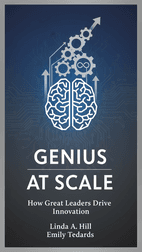
Linda A. Hill's Genius at Scale provides a practical roadmap for executives and change-makers to drive continuous innovation by acting as Architects, Bridgers, and Catalysts. Through detailed case studies from Mastercard to a Michelin-starred kitchen, it shows how to build collaborative communities and catalyze movements for widespread impact.
Feature
Insta.Page
Blinkist
Shortform
Summary Depth
Full Chapter-by-Chapter
15-min overview
Detailed analysis
Audio Narration
✓ (AI narration)
✓
✓
Visual Mindmaps
✓
✕
✕
AI Q&A
✓ Voice AI
✕
✕
Quizzes
✓
✕
✕
PDF Downloads
✓
✕
✓
Price
$59.99/yr
$146/yr (PRO)
$199/yr
*Competitor data last verified February 2026.
About the Author
Linda A. Hill
Linda A. Hill is a professor at Harvard Business School and a renowned expert on leadership and innovation. She is best known for her influential books "Being the Boss: The 3 Imperatives for Becoming a Great Leader" and "Collective Genius: The Art and Practice of Leading Innovation." Her research focuses on how leaders can build organizations that foster breakthrough innovation and develop talent.
1 Page Summary
In 'Genius at Scale,' Linda A. Hill argues that the era of the lone visionary leader is over. The central thesis is that driving continuous innovation in a complex world requires leaders to act as Architects, Bridgers, and Catalysts (the ABCs). These leaders do not command innovation but instead build the collaborative communities, strategic partnerships, and broader movements necessary to unleash collective genius across an organization or ecosystem. The book positions this model as a survival imperative for businesses and institutions needing to adapt and innovate at scale.
The book's distinctive approach is its deeply practical, case-based methodology. Each chapter profiles a different leader—from corporate executives at Mastercard and Pfizer to social entrepreneurs in Africa and a Michelin-starred chef—demonstrating how the ABC framework is applied in diverse contexts. The narratives show how these leaders overcome specific barriers like cultural inertia, internal silos, and risk aversion by fostering cocreation, enabling rapid experimentation, and cultivating a learning mindset focused on psychological safety and shared purpose.
The intended audience includes executives, managers, and change-makers across all sectors who are responsible for leading innovation and transformation. Readers will gain a concrete roadmap for moving beyond outdated leadership models. Through the detailed case studies, they will learn practical strategies for building innovative communities, bridging internal and external worlds, and catalyzing movements that turn novel ideas into widespread, sustainable impact.
Modern leadership faces an urgent problem: how to drive continuous innovation at scale in a complex, interconnected world. The old model of a solitary visionary is obsolete. True innovation is a collective act of "cocreation"—a process of collaboration, experimentation, and learning among diverse people. The book's core thesis is that exceptional leaders act as Architects, Bridgers, and Catalysts (the ABCs) to unleash "genius at scale." They build the communities, partnerships, and movements needed to turn novel ideas into widespread impact.
The Imperative for a New Leadership Model
Innovation is now a survival imperative for businesses, communities, and nations. The chapter opens with the story of a financial services CEO who partnered with a newly acquired entrepreneur to digitally transform the company. This led to a tenfold increase in market value and expanded global economic access. Yet, when presented with this success, most executives are reluctant to take on such innovation leadership roles. They see the work as hard, risky, and without a clear roadmap. This reluctance highlights the critical leadership gap: How can leaders inspire the imagination and courage needed to act our way into an uncertain future?
Building on a Foundation: From "Collective Genius" to "Genius at Scale"
This book builds on research from Collective Genius (2014). That work established that innovative leaders are not solo heroes. Instead, they cultivate environments where every person's "slice of genius" can be harnessed. But a decade of further study across 18 countries and 21 industries revealed a new challenge. Building innovative teams inside an organization is no longer enough. The accelerating pace of technological change, global crises, and deep interdependence mean leaders must now also operate beyond their organizational walls. This evolution—from fostering internal "collective genius" to orchestrating "genius at scale" across entire ecosystems—is the new frontier of innovation leadership.
Introducing the ABCs: Architect, Bridger, Catalyst
The book's core framework comes from observing leaders who drove innovation in this complex landscape. They shared a repertoire of three interconnected roles:
The Architect works primarily within their team or organization to build an innovative community. They shape culture and capabilities, instilling a shared purpose and the abilities to collaborate, experiment, and learn. They systematically identify and remove emotional, intellectual, and procedural barriers to innovation.
The Bridger operates at the boundaries of their organization, forging partnerships with external entities like other companies, startups, or regulators. They curate the right partners, translate across different organizational languages and priorities, and integrate disparate efforts to cocreate new value. This role requires immense influence without formal authority.
The Catalyst works far beyond organizational boundaries to galvanize whole ecosystems. They map the stakeholder landscape, seed tangible opportunities for multi-party collaboration, and cultivate the movement by equipping others with the mindsets and tools to sustain momentum. They move from a gatekeeping to a synergy-creating mindset.
These roles are visualized as concentric circles radiating outward from the team to the world. While complementary, the book's stories focus on leaders who primarily exemplify one of these roles to achieve extraordinary outcomes.
A Road Map of Stories to Come
The book's journey begins with a snapshot of all three ABC roles in action at Mastercard. It then divides into three parts, each dedicated to one role:
Part I: The Architect features stories from Pfizer, Procter & Gamble, and Cleveland Clinic Abu Dhabi, showing how leaders transform legacy cultures and capabilities.
Part II: The Bridger explores narratives from Delta Air Lines, the Dubai International Financial Centre, and Mastercard, highlighting the art of building innovation partnerships.
Part III: The Catalyst presents entrepreneurial ventures like avatarin, African Food Changemakers, the Francescana Family, and Sampark Foundation, whose founders launched movements to tackle systemic challenges.
The epilogue will feature a "chief catalyst officer" and invite readers to reflect on their own paths to leading innovation.
Key Takeaways
Innovation is a collective endeavor. It results not from lone genius but from the cocreation of diverse people through collaboration, experimentation, and learning.
Leading innovation requires new roles. To achieve "genius at scale," leaders must learn to act as Architects (building innovative communities), Bridgers (forging external partnerships), and Catalysts (galvanizing ecosystem movements).
The leadership challenge is now existential. The speed of technological change and scale of global interdependence mean that innovating in silos is no longer viable. Leaders must operate beyond their formal authority and organizational boundaries.
This is learnable. The book is designed to be a realistic yet optimistic guide, using detailed stories from diverse global leaders to show that while the work is demanding, the art of driving innovation at scale is within reach.
Key concepts: Introduction
1. Introduction
The Imperative for a New Leadership Model
Innovation is a survival imperative for organizations
Old model of solitary visionary is obsolete
Leaders reluctant due to perceived risk and difficulty
Critical gap: inspiring action into uncertain future
From Collective Genius to Genius at Scale
Builds on research from Collective Genius (2014)
Internal team innovation is no longer sufficient
New challenge: operating beyond organizational walls
Orchestrating genius across entire ecosystems
The ABC Framework: Architect, Bridger, Catalyst
Architect builds innovative community within organization
Bridger forges partnerships at organizational boundaries
Catalyst galvanizes whole ecosystems far beyond
Roles visualized as concentric circles radiating outward
Core Thesis: Innovation as Cocreation
Innovation is collective act of collaboration and learning
Leaders unleash genius at scale through ABC roles
Turn novel ideas into widespread impact
Requires influence without formal authority
Road Map of Stories and Learning Journey
Part I: Architect stories from Pfizer, P&G, Cleveland Clinic
Part II: Bridger narratives from Delta, DIFC, Mastercard
Part III: Catalyst entrepreneurial ventures and movements
Epilogue invites readers to reflect on their own path
If you like this summary, you probably also like these summaries...
💡 Try clicking the AI chat button to ask questions about this book!
Chapter 2: 1. The ABCs of Leadership: Ajay Banga at Mastercard
Overview
Ajay Banga took the helm of Mastercard at a critical moment. The company was steeped in a cultural inertia where employees, conditioned by a compliance-focused, top-down environment, ranked innovation nearly last among their priorities. Banga's first challenge was clear: the company's very survival in a digital age depended on reigniting its creative spark. He began by radically redesigning the company's internal environment. He reframed Mastercard’s mission to a more audacious "World Beyond Cash," focusing on the vast unbanked population. To bring this to life, he introduced the "Grow, Diversify, Build" strategic framework, backed by dedicated investment, and established the "Mastercard Way." This new cultural code emphasized customer focus, thoughtful risk-taking, and a powerful "decency quotient (DQ)," which he embedded through policy changes and a relentless drive to eliminate bureaucratic excuses.
Understanding that Mastercard couldn’t innovate in isolation, Banga created a vital bridge to the outside world by establishing Mastercard Labs. He empowered this unit with autonomy to scout startups, form tech partnerships, and bring new talent and ideas into the organization. This function not only sourced external innovation but also worked internally to prime the core business for change. It was a resounding success, transforming innovation from the company’s 26th priority to its top one. With a revitalized culture and new technological bridges in place, Banga then amplified Mastercard’s role from a corporate leader to a global catalyst. He mobilized entire ecosystems of governments, banks, and NGOs to advance financial inclusion, earning trust through local partnerships and setting—and exceeding—ambitious public goals to bring hundreds of millions into the digital economy.
This entire journey illustrates the essence of the architect role in leadership. True innovation is a voluntary act; it cannot be mandated. Effective leaders, therefore, focus on building a community with a shared purpose and values, which provides the cultural foundation for co-creation. They deliberately build capabilities like diversity of thought and a bias for action and experimentation. Finally, they skillfully adjust organizational levers—from structure to talent—while constantly calibrating their own leadership style to support the environment they’ve built. The architect’s power lies not in formal authority, but in shaping the conditions that allow innovation to flourish.
When Culture Gets in the Way
Upon becoming CEO, Ajay Banga confronted a deep-seated cultural inertia at Mastercard. Despite the external threat of digital disruption, internal surveys revealed employees ranked innovation as the 26th most important priority out of 27. The company, historically a risk-averse membership association serving banks, had developed a top-down, consensus-driven culture. Employees were conditioned to ask, "Boss, what do you want me to do?" and avoided independent decision-making. This culture of compliance, while born from a legitimate need for security in a regulated payments infrastructure, had stifled creativity and urgency. The board recognized this as an existential threat post-2008 financial crisis, leading them to hire Banga for his unique blend of risk awareness and aspirational thinking.
Architecting the Environment
Banga’s first major task was to fundamentally redesign Mastercard’s internal environment to foster innovation. He shifted the company’s mindset from incremental competition with rivals like Visa to a more expansive mission: combating cash itself in a "World Beyond Cash." This reframing focused on the 85% of global transactions still conducted with cash and checks, particularly targeting financial inclusion for the unbanked. To operationalize this vision, he introduced a strategic framework: "Grow, Diversify, Build."
Grow meant excelling in the core card payments business.
Diversify involved expanding services to new customers like governments and small businesses.
Build focused on creating entirely new businesses and revenue streams.
Banga backed this with a clear resource allocation: 50% to Grow, 25% to Diversify, and 25% to Build, mandating budgets to include long-term investments. To unite the organization around new behaviors, he established the "Mastercard Way," centered on relentless customer focus, thoughtful risk-taking, and a "decency quotient" (DQ). He instilled urgency by challenging excuses for lost deals, implemented policies to break bureaucratic bottlenecks, and rewarded well-reasoned risk-taking even when it failed. He also championed DQ through tangible benefits like competitive wages, equal pay, and generous leave policies.
Bridging Across Boundaries
Recognizing Mastercard couldn't generate all needed technology internally, Banga appointed Garry Lyons as a "bridger" to connect the company with external innovation. He granted Lyons extraordinary autonomy and a separate budget to create Mastercard Labs, a dedicated innovation unit. Labs acted as a bridge to the outside world, scouting startups, partnering with tech firms, and hiring specialized talent. Internally, Lyons’s team worked to prime the core business for change through hackathons, upskilling, and awareness campaigns. This bridging function was profoundly successful; within a few years, employees ranked innovation as the company’s top priority. The infrastructure itself was modernized with an "API-first" approach, allowing external partners to cocreate new solutions seamlessly.
Catalyzing a Movement
With a renewed internal culture and new technological bridges in place, Banga escalated Mastercard’s ambition to act as a catalyst for financial inclusion on a global scale. He understood that bringing a billion unbanked people into the digital economy required mobilizing entire ecosystems of governments, banks, telcos, and NGOs. This began with building societal trust, adopting an attitude of earning the right to operate by creating local value. Mastercard launched pivotal partnerships, such as helping South Africa move government aid to digital cards (adding 22 million to the banking system) and collaborating with Nigeria on national e-identification cards. Banga’s public pledge at the World Bank to bank 500 million people created momentum and accountability, a goal Mastercard achieved two years early, leading to an even more ambitious target of 1 billion people.
Building Community
The chapter positions the architect role as one that fundamentally understands innovation as a voluntary act. Leaders cannot mandate the mindsets needed for co-creation; instead, they must skillfully shape the social and operational environment to allow it to emerge. Architects achieve this by fostering a strong sense of community, built on a foundation of shared purpose, values, and rules of engagement. This cultural framework aligns and energizes teams through difficult journeys and guides how they interact to solve problems.
Beyond culture, architects actively develop specific organizational capabilities. They cultivate diversity of thought and teach teams to navigate the constructive conflicts that arise from it. They promote a bias for action and experimentation, encouraging teams to learn from missteps rather than over-planning. They also empower their people with tools—both analog and digital—to make collaborative innovation more inclusive and repeatable.
To invite this innovative behavior, architects manipulate key organizational levers. They are meticulous in adjusting structures, operating models, and talent configurations to remove barriers and introduce enablers. Critically, they also practice continuous self-calibration, knowing when to lead from the front versus the back, when to support versus confront, and when to prioritize learning over immediate performance.
Key Takeaways
Innovation is voluntary. The architect’s core task is to create conditions where people choose to engage in co-creation, not to command it.
Community is the engine. A shared purpose, values, and rules of engagement form the cultural bedrock for sustained innovation.
Capabilities must be built. Architects actively develop their organization's ability to handle diverse perspectives, experiment, learn from failure, and use collaborative tools.
Levers are structural and personal. Effective architects adjust organizational systems while also constantly adapting their own leadership style to the needs of the moment.
Formal authority is secondary. This role is a set of practices accessible to leaders at any level, not a function of title or position.
Key concepts: 1. The ABCs of Leadership: Ajay Banga at Mastercard
2. 1. The ABCs of Leadership: Ajay Banga at Mastercard
Established 'Mastercard Way' with decency quotient
Bridging Across Boundaries
Created Mastercard Labs for external innovation
Appointed Garry Lyons as 'bridger' with autonomy
Scouted startups and formed tech partnerships
Modernized infrastructure with API-first approach
Catalyzing a Movement
Mobilized ecosystems of governments and NGOs
Focused on financial inclusion for unbanked
Set and exceeded ambitious public goals
Earned trust through local partnerships
The Architect Role in Leadership
Innovation is voluntary, cannot be mandated
Build community with shared purpose and values
Develop diversity of thought and action bias
Adjust organizational levers and leadership style
Embedding Decency Quotient (DQ)
Championed competitive wages and equal pay
Implemented generous leave policies
Rewarded thoughtful risk-taking even on failure
Eliminated bureaucratic excuses for inaction
Transforming Innovation Priority
Innovation rose from 26th to top priority
Internal hackathons and upskilling programs
Core business primed for change
External partners cocreated new solutions
⚡ You're 2 chapters in and clearly committed to learning
Why stop now? Finish this book today and explore our entire library. Try it free for 7 days.
Chapter 3: 2. Collaboration at the Speed of Science: Michael Ku at Pfizer Global Clinical Supply
Overview
When Michael Ku arrived at Pfizer in 2011 to lead the digital transformation of its Global Clinical Supply chain, he entered a world of high-stakes logistics strained by outdated systems and a culture of siloed execution. As an outsider, he faced immediate skepticism from a team accustomed to compliance over innovation. His first crucial move was to establish a unifying patients-first ethos, shifting the team’s purpose from simply shipping packages to ensuring treatments reached trial patients correctly. This foundational principle guided his subsequent efforts to break down entrenched silos by deliberately integrating diverse perspectives—expanding his leadership team, embedding clinical pharmacists for frontline insight, and establishing global teams to understand local patient needs.
Ku soon realized that true collaboration at Pfizer was often stifled by a polite culture that avoided conflict. He introduced tools like a complexity scorecard and championed candid feedback to redefine collaboration as productive debate, not mere consensus. A pivotal moment came through his own personal transformation; feedback revealed his directive style was quieting his team. By consciously stepping back, speaking last, and modeling vulnerability, he fostered the psychological safety needed for open dialogue. This cultural groundwork, built over years, created a community that had learned to “walk together” with shared purpose.
With this foundation in place, the focus shifted to executing the digital vision. Ku used vivid storytelling to communicate the value of new tools, framing data as an informed partner rather than a dictator. The patients-first culture deepened, guiding decisions and fostering internal partnerships. By democratizing innovation—redefining it as any new and useful change—he empowered every team member to solve problems, leading to practical advances like a centralized regulatory platform. To overcome decision-making bottlenecks, he empowered his team to create cross-functional tetrads, which decentralized authority and sparked novel strategic ideas.
This entire journey was put to the ultimate test during the Covid-19 pandemic. The cultivated culture of collaboration and agile decision-making enabled the team to operate at light speed. Leveraging their data systems and just-in-time processes, they navigated unprecedented logistical challenges to support the rapid clinical trials and distribution of the Pfizer-BioNTech vaccine. Ku’s experience demonstrates that digital transformation’s success hinges on architecting a collaborative culture first—one built on a shared purpose, inclusive problem-solving, and leaders willing to adapt—proving that such a foundation is what allows science, and supply chains, to move at the speed of necessity.
An Outsider’s Arrival
In 2011, Michael Ku joined Pfizer to lead a digital transformation of its Global Clinical Supply (GCS) chain, moving from the biotech world of Genzyme to the pharmaceutical giant. He immediately recognized the scale and strain of the operation—a high-performing but overstretched system managing shipments for thousands of clinical trial sites worldwide, using outdated technology. As an outsider in a company that typically promoted from within, he knew his arrival caused apprehension. His new team, survivors of multiple mergers and layoffs, was focused on siloed execution, not innovation. For them, collaboration meant compliance, not the constructive debate Ku believed was essential.
Establishing a Unifying "Why"
Ku’s first major act was to redefine the team’s purpose. At a town hall in his third week, he shifted the focus from simply shipping packages to a “patients-first” ethos. He shared his frontline pharmacy experience, arguing that the supply chain’s responsibility only ended when “the clinical trial patient took the right product, at the right dose, at the right time, at the right temperature, and in the right location.” This meant GCS needed to partner with healthcare providers at clinical sites, supplying critical information as diligently as they supplied drugs. Despite skepticism from veterans comfortable with analog systems, Ku spent the rest of the year on a global listening tour, using every conversation to reinforce this patient-centric purpose and begin building trust.
Fostering Diverse Perspectives to Break Down Silos
Ku identified siloed thinking, bred from decades in single functions, as a major barrier. To foster the “combinational chemistry” of innovation, he focused on integrating new perspectives into GCS:
Bringing the Outside-In: He significantly expanded the Leadership Team (LT) from six to sixteen, adding high-potential internal employees and leaders from upstream/downstream partner functions like finance and procurement. This move for more inclusive decision-making was initially met with resistance but slowly increased transparency.
Bringing the Patient Perspective: In 2012, Ku established the new Clinical Research Pharmacy (CRP) team, embedding clinical pharmacists into GCS to advocate for patients and site healthcare workers. When the existing team resisted, Ku encouraged site visits where staff saw firsthand how their packaging and instructions impacted real-world drug administration, making CRP’s value self-evident.
Bringing the Global Perspective: Ku challenged the team to consider “Where are our patients?” leading to the official adoption of the “Global Clinical Supply” name. He later pushed to establish on-the-ground teams in Asia and Latin America to better understand local regulatory and practice landscapes, arguing it was essential for serving patients despite concerns about complexity.
Redefining Collaboration Beyond Consensus
Ku observed that Pfizer’s deeply polite culture often equated collaboration with consensus, stifling debate. To spur productive conflict, he introduced tools like a “complexity scorecard” (rating projects red, yellow, green) to create a neutral language for discussing risk. He also championed Pfizer’s “OWN IT” initiative, encouraging the use of “Straight Talk” coins to signal intent to give candid, patient-focused feedback without blame.
The Architect’s Personal Transformation
A leadership coach and 360-degree feedback revealed a critical gap: despite his intent to empower, Ku’s team experienced him as directive, which quieted discussion. He consciously began speaking last in meetings, physically stepping back to let debates unfold, and changed his language from “transformation” to “evolution” to show respect for Pfizer’s legacy. By openly discussing his feedback and growth areas with his team, he modeled the vulnerability and psychological safety he wanted to cultivate, strengthening the team’s bond and willingness to speak up.
A Foundation for the Future
By 2016, Ku felt GCS had learned to “walk together” as a community with shared purpose and better rules of engagement. The cultural foundation for innovation was laid. However, critical work remained: information was still being sent to clinical sites in cumbersome paper binders. With the team aligned, the stage was set for the next phase—learning to “run together” by integrating the digital tools and data capabilities necessary to scale.
Communicating the Digital Vision
Ku and his team articulated the value of new digital tools through vivid storytelling and interactive demonstrations, showing how these innovations could simplify processes and accelerate drug delivery. To address resistance, Ku refined his language, shifting from "data-driven" to "data-informed" decisions, personifying data as a collaborative partner. Visualization tools and dashboards helped staff see how data alignment supported their shared goal of "running together."
Expanding the Sense of Community
The "patients first" ethos became deeply embedded, with team members routinely questioning actions based on patient impact. This culture fostered internal collaborations, such as with Pfizer's consumer division, where simulated home tests revealed practical challenges in administering medicines. Symbolic gestures, like creating HOPE lapel pins from a patient's artwork, kept the shared purpose visible and reinforced community bonds globally.
Democratizing Innovation
Ku tackled the misconception that innovation was synonymous with invention by redefining it as "anything that was both new and useful." He encouraged every team member to see themselves as problem-solvers, celebrating "learnings" from missteps and awarding "Learn Fast" achievements. This mindset shift led to tangible improvements, such as digitizing country-specific regulations into a centralized platform and developing a data marketplace for better coordination and governance.
Building Decision-Making Muscles
As innovation flourished, Ku noticed a reluctance to terminate stalled projects, dubbed "walking zombies." An external assessment revealed that discomfort with "creative conflict" led to decision-making bottlenecks. In response, Ku empowered his leadership team to devise a solution, resulting in the creation of cross-functional "tetrads." These groups decentralized decision-making, fostered strategic thinking, and became catalysts for novel ideas, such as innovative distribution methods for gene therapy programs.
Meeting the Covid Challenge: Collaboration at Light Speed
When the pandemic hit, GCS's cultivated collaboration was put to the test. The team rapidly adopted a remote, just-in-time model, using their advanced data marketplace to track infection rates and logistical risks. Decisions were made and implemented with unprecedented speed, ensuring vaccines reached trial sites efficiently without compromising scientific rigor. Their efforts culminated in the successful emergency authorization of the Pfizer-BioNTech vaccine, demonstrating a supply chain capable of agile, patient-centric innovation.
Lessons Learned: Architecting for Collaboration
Ku's journey underscores that digital transformation hinges on fostering a collaborative culture. As a middle manager, he focused on shaping mindsets and behaviors through a shared "patients first" purpose. By adapting his leadership style—listening, empowering teams, and embracing conflict as a tool for refinement—he built an environment where innovation thrived. This foundation proved critical during the pandemic, highlighting that effective collaboration requires continuous effort to balance diverse perspectives and maintain a cohesive community.
Key Takeaways
Storytelling Drives Adoption: Articulating the "why" behind digital tools through relatable narratives helps overcome resistance and align teams with a common vision.
Culture is Foundational: Embedding a shared purpose, like "patients first," into daily practices and symbols sustains motivation and guides decision-making.
Innovation is Inclusive: Redefining innovation to encompass any new, useful change empowers all employees to contribute, fostering a proactive problem-solving mindset.
Decentralize Decision-Making: Cross-functional structures like tetrads distribute ownership, enhance strategic thinking, and accelerate innovation by leveraging diverse expertise.
Collaboration Enables Agility: A strong sense of community and comfort with constructive conflict allows organizations to pivot rapidly during crises, maintaining rigor while achieving speed.
Key concepts: 2. Collaboration at the Speed of Science: Michael Ku at Pfizer Global Clinical Supply
3. 2. Collaboration at the Speed of Science: Michael Ku at Pfizer Global Clinical Supply
Establishing a Patients-First Purpose
Redefined team purpose from shipping to patient outcomes
Shared frontline pharmacy experience to build trust
Conducted global listening tour to reinforce mission
Shifted focus to correct drug at right time and place
Breaking Down Silos with Diverse Perspectives
Expanded leadership team from six to sixteen members
Embedded clinical pharmacists for frontline patient insight
Established global teams in Asia and Latin America
Used site visits to demonstrate value of new roles
Redefining Collaboration as Productive Debate
Introduced complexity scorecard to surface hidden issues
Championed candid feedback over polite consensus
Shifted culture from compliance to constructive conflict
Created psychological safety for open dialogue
Personal Transformation of Leadership Style
Learned directive style was silencing the team
Consciously stepped back and spoke last in meetings
Modeled vulnerability to encourage honest input
Fostered psychological safety through personal change
Communicating Digital Vision Through Storytelling
Used vivid stories to explain value of new tools
Framed data as an informed partner, not a dictator
Made digital transformation relatable and compelling
Built shared understanding of technology's purpose
Democratizing Innovation Across the Team
Redefined innovation as any new and useful change
Empowered every member to solve practical problems
Created centralized regulatory platform from ideas
Established cross-functional tetrads for decision-making
Crisis Response During Covid-19 Pandemic
Leveraged collaborative culture for light-speed operations
Used data systems and just-in-time processes effectively
Navigated unprecedented logistical challenges
Supported rapid vaccine trials and distribution
Chapter 4: 3. Experimenting into the Future: Kathy Fish at Procter & Gamble
Overview
Procter & Gamble, once a consumer goods powerhouse, found its innovation engine sputtering. The company's methodical, decade-long development cycles couldn't keep up with agile startups like Dollar Shave Club, leading to investor dissatisfaction and a leadership shakeup. In 2014, Kathy Fish stepped in to revive what she called a "broken" innovation machine. Rather than imposing top-down mandates, she built a case for change from the ground up, starting by studying P&G's own blockbuster past. She discovered that triumphs like Tide won because they delivered a complete, captivating experience—not just functional specs. This insight sparked the new corporate aspiration of "irresistible superiority", aiming for products that resonated emotionally and earned repeat love.
To turn this vision into reality, Fish looked beyond P&G's walls, embracing "lean innovation" principles from the startup world. This meant swapping high-stakes, long cycles for fast, cheap experiments that tested ideas with real consumers early on. She even led executives on a trip to Silicon Valley to see these methods in action, building crucial buy-in. That enthusiasm fueled the launch of GrowthWorks, a new operating system co-created with Chief Brand Officer Marc Pritchard. Designed as a mini-entrepreneurial ecosystem within each business unit, it featured dedicated founder teams, executive sponsors, growth boards, and support teams to foster agility and consumer-centricity.
But piloting GrowthWorks immediately hit cultural roadblocks. Teams were stuck in a "solutions-focused mindset", leaping to product ideas without deeply understanding consumer problems, countered by the mantra to "fall in love with the problem, not the solution". More profoundly, a fear of failure permeated the culture of overachievers, making risky projects seem career-threatening. In response, Fish's team experimented with new pathways like the "E-track" (entrepreneurial track), tying rewards to learning milestones rather than just traditional success metrics.
As GrowthWorks expanded, Fish realized leaders were often the bottleneck, defaulting to judgment instead of enablement. Coaches were brought in to train them to ask generative questions like "What did you learn?" and "How can I help?", shifting their role from approvers to architects of an experimental culture. To equip teams with missing skills—from e-commerce to digital marketing—Fish and Pritchard co-invested in "The Garage", a centralized talent hub that provided on-demand expertise, seeding new capabilities back into the business units.
When validated ideas moved to incubation, they faced the "incubation impasse": P&G's systems were geared for massive scale, not mid-range testing, and funding was hesitant without proven metrics. Fish tackled this by enhancing teams' ability to articulate value hypotheses, establishing ring-fenced incubation funds, and crucially, adding innovation metrics to business unit presidents' scorecards to hold them accountable for nurturing new ventures.
Within three years, this holistic approach activated over eight hundred leaders and teams, cultivating a portfolio of more than a hundred projects. Breakthroughs like the EC30 brand—P&G's first direct-to-consumer subscription—showcased the new agility. Fish's leadership democratized innovation, making it everyone's responsibility through modeling, cocreation, and psychological safety. By her retirement in 2020, lean innovation had taken root, with 75% of P&G's portfolio meeting the "irresistibly superior" standard, proving that even giants can continuously reinvent how they create the future.
P&G's Innovation Machine Stalls
Procter & Gamble's historic dominance was built on a methodical, large-scale innovation process. This linear, time-intensive approach—sometimes taking up to a decade—began to falter. The 2008 financial crisis stalled growth, and the company was producing only incremental tweaks. At the same time, agile, direct-to-consumer startups like Dollar Shave Club emerged, leveraging new business models and data. They exposed P&G's size and complexity as liabilities. By 2014, with investors dissatisfied, a leadership shakeup ensued. Kathy Fish was appointed to lead R&D and innovation, tasked with fixing a "broken" machine.
The Invitation to Innovate and "Irresistible Superiority"
Rather than mandating change, Fish built a bottom-up case for transformation. Her first move was to research the company's own history of blockbuster products like Tide. She discovered their success wasn't just about technical specs; it was a holistic victory of performance, packaging, and brand messaging. Fish crystallized this into a new corporate aspiration: "irresistible superiority." This moved the goal beyond functional superiority to creating a complete, emotionally resonant consumer experience. The phrase became a galvanizing mantra, but the real challenge was building new ways of working to deliver it.
Adopting Lean Innovation
To build capabilities for speed, Fish looked outside, studying startup methods. She saw that "lean innovation" principles were aligned with P&G's needs. This methodology emphasized small teams running fast, inexpensive market experiments to test ideas with real consumers before major investment. It was a stark contrast to P&G's traditional high-stakes, long-cycle process. Fish saw lean innovation as a way to de-risk investments and cultivate new experimental mindsets. Shifting P&G's culture—where failure was anathema to high-achievers—was the core challenge. To socialize the concept, Fish led the executive team on a trip to Silicon Valley to see the methodology in action.
Launching GrowthWorks as a New Operating System
The Silicon Valley trip led Fish to formally institutionalize the new approach. Partnering with consulting firm Bionic, she and Chief Brand Officer Marc Pritchard co-launched GrowthWorks, designed to embed lean innovation across P&G's business units (BUs). They used a "business unit-led, corporately supported" implementation strategy, treating the rollout as an experiment.
The heart of GrowthWorks was a new growth operating system, a mini-entrepreneurial ecosystem within each BU. This system featured four key roles:
Founder Teams: Dedicated, multifunctional teams tasked with identifying consumer problems and testing solutions.
Executive Sponsors: Senior leaders who provided resources and removed barriers.
Growth Boards: Cross-functional groups that managed the innovation portfolio and provided metered funding.
Operating System Teams: Support groups assisting founders with logistics, supply chain, and finance.
Piloting the New Model and Confronting Cultural Barriers
GrowthWorks was piloted in three BUs to identify cultural obstacles. The pilots revealed deep-seated issues. One was a "solutions-focused mindset" where teams started with a product idea rather than a deep consumer problem. The counter-mantra was: "Fall in love with the problem, not the solution."
A more profound barrier was the pervasive fear of failure. In a culture of "type A" overachievers, working on risky projects was seen as career-threatening. P&G's own reward systems, which tracked against short-term deliverables, were part of the problem. In response, Fish's team experimented with new career pathways like an "E-track", where compensation was tied to learning milestones and "entrepreneurial stewardship."
Coaching Leaders to Enable Experimentation
As GrowthWorks expanded, Fish's team found that BU leaders were critical bottlenecks. Founder teams often faced discouragement from growth board leaders who defaulted to judging ideas based on short-term returns, rather than asking about consumer learnings.
Fish recognized leaders had to "work on themselves" to become architects of an experimental culture. Coaches trained leaders to guide conversations with key questions: "What did you learn?", "How do you know?", "What do you need to learn next?", and "How can I help?". This shifted the focus from pass/fail judgments to continuous learning, positioning leaders as enablers.
The Garage: A Hub for Agile Expertise
As ideas gained momentum, Fish and Pritchard recognized a critical gap: founder teams lacked specialized skills to build mini-businesses from scratch. Skills like e-commerce and digital marketing were outside P&G's standard repertoire. In response, they co-invested in creating "The Garage", a centralized bench of talent within GrowthWorks. This resource pool offered on-demand expertise in design, digital development, and more. Leaders could "try it and then buy it," borrowing talent for projects with the option to hire them full-time later. This accelerated experiments and seeded new skills directly into the business units.
Navigating the Incubation Impasse
Moving validated ideas into the incubation phase presented new hurdles. P&G's manufacturing systems were optimized for massive scale, not the mid-range quantities needed for testing. Teams faced a catch-22: they needed capital to demonstrate returns, but finance groups were hesitant to fund ventures without proven metrics. Fish addressed this by helping teams articulate value hypotheses, establishing a ring-fenced incubation fund, and, most significantly, adding innovation metrics to the scorecards of business unit presidents. This held them personally accountable for nurturing new ventures.
A Flourishing Portfolio of Innovation
Within three years, GrowthWorks had activated over eight hundred leaders and teams, cultivating a portfolio of more than a hundred projects. This new approach transformed P&G's culture, enabling faster, cheaper learning cycles. The EC30 brand—a line of environmentally friendly cleaning products—emerged from this mindset. It became P&G's first direct-to-consumer subscription brand, showcasing how lean innovation could bridge corporate R&D with market-ready solutions.
Architecting Cultural Change
Fish's leadership democratized innovation
Key concepts: 3. Experimenting into the Future: Kathy Fish at Procter & Gamble
4. 3. Experimenting into the Future: Kathy Fish at Procter & Gamble
P&G's Innovation Crisis
Methodical decade-long cycles became obsolete
Agile startups like Dollar Shave Club disrupted market
Investor dissatisfaction led to leadership shakeup in 2014
Kathy Fish tasked with fixing 'broken' innovation machine
Irresistible Superiority Vision
Fish studied P&G's blockbuster past like Tide
Success came from complete emotional experience, not specs
New aspiration: products that earn repeat love
Shifted goal from functional to emotionally resonant
Adopting Lean Innovation
Embraced startup methods for fast, cheap experiments
Tested ideas with real consumers before major investment
Executives visited Silicon Valley to build buy-in
De-risked investments while cultivating experimental mindsets
GrowthWorks Operating System
Co-created with Chief Brand Officer Marc Pritchard
Mini-entrepreneurial ecosystem within each business unit
Featured founder teams, sponsors, growth boards
Designed to foster agility and consumer-centricity
Overcoming Cultural Roadblocks
Teams stuck in 'solutions-focused mindset'
Mantra: fall in love with problem, not solution
Fear of failure made risky projects career-threatening
E-track tied rewards to learning milestones
Leadership Transformation & Talent
Leaders shifted from approvers to enablers
Coaches trained leaders to ask generative questions
The Garage provided on-demand expertise hub
Seeded new capabilities back into business units
Scaling & Lasting Impact
Addressed 'incubation impasse' with ring-fenced funds
Innovation metrics added to presidents' scorecards
Activated 800+ leaders and 100+ projects in 3 years
75% of portfolio met 'irresistibly superior' standard by 2020
Frequently Asked Questions about Genius at Scale
What is Genius at Scale about?
The book explores how leaders can drive continuous innovation at scale by acting as Architects, Bridgers, and Catalysts (ABCs). It argues that true innovation is a collective act of cocreation, not the work of a solitary visionary. Through real-world cases—from Ajay Banga transforming Mastercard to Kathy Fish reviving P&G’s innovation engine—the book shows how leaders build communities, partnerships, and movements to turn novel ideas into widespread impact.
Who is the author of Genius at Scale?
Linda A. Hill is a professor at Harvard Business School and a leading authority on leadership and innovation. She coauthored the influential book 'Collective Genius' and has spent decades studying how organizations unleash the creative potential of diverse teams.
Is Genius at Scale worth reading?
Yes, it offers a fresh, actionable framework for any leader struggling to make innovation happen at scale. The vivid case studies—from a financial giant’s digital transformation to a hospital built from scratch—provide concrete lessons that go beyond theory. It’s a practical guide for turning an organization into a learning community where creativity thrives.
What are the key lessons from Genius at Scale?
Leaders must design a culture that fosters collaboration, experimentation, and psychological safety—like Ajay Banga’s 'Mastercard Way' or Michael Ku’s patients-first ethos. They need to bridge internal and external worlds, as Nicole Jones did with Delta’s cocreation lab, and catalyze collective action by empowering diverse voices. Innovation is not a solo act but a disciplined process of learning, adapting, and building ecosystems that turn bold ideas into lasting impact.
📚 Explore Our Book Summary Library
Discover more insightful book summaries from our collection