Thinking Fast and Slow

Introduction

1/4
Lang
1x
Voice
PDF
0:00
0:00

Thinking Fast and Slow

by Daniel Kahneman · Summary updated

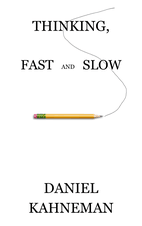
Thinking Fast and Slow book cover

What is the book Thinking Fast and Slow about?

Daniel Kahneman's Thinking, Fast and Slow explores the two systems of the mind—fast, intuitive thinking and slow, deliberate reasoning—and their impact on judgment and decision-making. It reveals common cognitive biases for readers interested in psychology, economics, and improving their own choices.

FeatureInsta.PageBlinkist
Summary DepthFull Chapter-by-Chapter15-min overview
Audio Narration✓ (AI narration)
Visual Mindmaps
AI Q&A✓ Voice AI
Quizzes
PDF Downloads
Price$33/yr$146/yr (PRO)
*Competitor data last verified February 2026.

About the Author

Daniel Kahneman

Daniel Kahneman is a Nobel Prize-winning psychologist renowned for his pioneering work in behavioral economics. His groundbreaking research, conducted with Amos Tversky, laid the foundation for the field by exploring the systematic biases inherent in human judgment and decision-making. He is best known for his international bestseller, *Thinking, Fast and Slow*, which masterfully distills decades of research for a broad audience. His more recent work, *Noise: A Flaw in Human Judgment*, co-authored with Olivier Sibony and Cass R. Sunstein, investigates the hidden problem of unwanted variability in professional judgments. Kahneman's influential books, available on Amazon, have profoundly shaped our understanding of the human mind and have had a significant impact on economics, medicine, and public policy.

1 Page Summary

Daniel Kahneman's Thinking, Fast and Slow explores how humans think through two distinct systems:

  • System 1 (Fast Thinking): Intuitive, automatic, and effortless. It helps in quick decision-making but is prone to biases and errors.
  • System 2 (Slow Thinking): Deliberate, logical, and effortful. It is more accurate but requires more mental energy.
Key Concepts:
  1. Cognitive Biases: System 1 often leads to biases, such as the availability heuristic (judging probability by ease of recall) and confirmation bias (favoring information that supports our beliefs).
  2. Prospect Theory: People evaluate gains and losses differently, making them more loss-averse than risk-seeking.
  3. Overconfidence and Illusions: We overestimate our knowledge and control, leading to poor decisions.
  4. Framing Effects: The way information is presented influences choices, even when the facts remain the same.
Takeaways:
  • Understanding when to rely on System 1 vs. System 2 can improve decision-making.
  • Being aware of cognitive biases helps mitigate their impact.
  • Rationality is often influenced by emotions and mental shortcuts.

Kahneman's work provides deep insights into human thinking, helping us recognize and correct errors in judgment.

Chapter 1: Introduction

Overview

Overview
Imagine two brilliant minds clashing over a question: Are humans good intuitive statisticians? That’s where it all begins. In 1969, Daniel Kahneman and Amos Tversky sparked a partnership that would unravel how we think—or think we think. Through playful experiments, like asking statisticians to judge small-sample studies, they uncovered a paradox: even experts trust flimsy data. This led to their groundbreaking idea of heuristics—mental shortcuts that simplify decisions but breed biases. Their collaboration thrived on humor and a “shared mind,” blending logic and gut feelings to challenge assumptions about rationality.

Take Steve, the shy, detail-oriented guy. Is he more likely a librarian or a farmer? Most people ignore the sheer number of farmers and vote librarian, thanks to the representativeness heuristic—letting stereotypes override logic. Or consider why people guess the letter K appears more often as the first letter in words (it doesn’t). Blame the availability heuristic, where ease of recall trumps facts. These quirks aren’t just trivia; they reveal how System 1—our fast, intuitive mind—substitutes hard questions with simpler ones, while System 2 (the slow, analytical thinker) steps in only when intuition stalls.

Their 1974 Science paper, peppered with quizzes that let readers feel their own biases, ignited a revolution. Suddenly, fields from medicine to finance saw how availability bias skews media coverage or why investors bet on gut feelings (looking at you, Ford exec who loved cars but ignored data). Later, prospect theory flipped economics by showing how fear of loss outweighs the thrill of gain. Yet, intuition isn’t all villainy. A firefighter sensing danger or a chess master spotting a winning move relies on expert intuition—honed through practice, not guesswork. It’s recognition, not luck, that separates pros from amateurs.

The chapter weaves these threads into a bigger tapestry: System 1 silently shapes most choices, from guessing Steve’s job to trusting a stock tip. We’re overconfident storytellers, stitching causal narratives where randomness reigns, and hindsight fools us into thinking “we knew it all along.” Classical economics’ “rational actor” crumbles under framing effects and emotional memories. Even our sense of well-being splits between the experiencing self (living the moment) and the remembering self (editing the highlight reel).

By the end, you’ll see biases not as flaws but as features of how our brains juggle efficiency and accuracy. The book invites readers to spot these patterns—in themselves and the world—and rethink what it means to make a “rational” choice. Because whether we’re judging risks, reliving memories, or trusting a hunch, it’s all a dance between two systems: one quick and cunning, the other slow and skeptical.

The Collaborative Spark

The story begins in 1969, when the author invited Amos Tversky—a charismatic, razor-sharp researcher—to guest-lecture at a seminar. A debate over whether humans are “good intuitive statisticians” ignited their collaboration. Through playful yet rigorous experiments (e.g., asking statisticians to evaluate small-sample studies), they discovered even professionals overtrusted flimsy data. This led to their landmark concept: heuristics as mental shortcuts that simplify complex judgments but introduce biases. Their partnership thrived on humor, mutual respect, and a “shared mind” that blended logic and intuition.

Case Studies in Bias

Key experiments brought their theories to life:

  • The Librarian vs. Farmer Dilemma: Participants ignored base rates (e.g., far more farmers exist) and relied on stereotypes (“Steve seems like a librarian!”), exposing the representativeness heuristic.
  • The Letter K Quiz: People overestimated how often K appears first in words (it’s more common third) due to the availability heuristic—judging frequency by how easily examples come to mind.
  • The Ford Stock Gamble: An executive invested based on gut feeling (“I liked their cars!”), illustrating the affect heuristic, where emotions override analysis.

These examples underscored a universal truth: intuition often trumps logic, even among experts.

Ripples of a Revolution

The 1974 Science article “Judgment Under Uncertainty” challenged entrenched beliefs about human rationality. By including quiz-like demonstrations (e.g., the Steve question), readers experienced their own biases, making the research deeply personal. The work reshaped fields from medicine to finance, revealing how media coverage (via availability bias) skews public perception and why policies often ignore “unsexy” issues. Later, their prospect theory redefined decision-making, showing how people fear losses more than they value gains—a cornerstone of behavioral economics.

Intuition’s Double-Edged Sword

While biases dominate the discussion, the chapter acknowledges intuition’s power. Experts like firefighters or chess masters develop “recognition-primed” intuition through years of practice—think of Simon’s mantra: Intuition is recognition. Yet, this skill contrasts sharply with the flawed gut feelings of amateurs (e.g., the Ford investor). The takeaway? Intuition is neither inherently good nor bad; its accuracy hinges on expertise and context.

Key Takeaways

  • Language shapes critique: Terms like halo effect or availability heuristic help dissect errors in judgment.
  • Collaboration fuels discovery: The author’s partnership with Amos blended logic and creativity, challenging assumptions about rationality.
  • Biases are systemic: Mental shortcuts (heuristics) save time but often lead to predictable mistakes.
  • Context matters: Expert intuition thrives on deep experience; amateur intuition often falters.
  • Impact is everywhere: From media narratives to stock markets, understanding biases clarifies why we—and society—act as we do.
The Two Systems of Thinking

The chapter introduces the interplay between intuitive (System 1) and deliberate (System 2) thinking. System 1 operates automatically and quickly, relying on expertise or heuristics. For example, a chess master instinctively identifies strong moves, while an investor might substitute a complex financial decision with a simpler question like, “Do I like Ford cars?” This substitution—answering an easier question instead of tackling the hard one—is central to intuitive heuristics. When System 1 fails to produce an answer, System 2 kicks in: slower, effortful, and analytical.

System 1 isn’t limited to intuition; it also handles basic perceptions (e.g., recognizing a lamp) and memories (e.g., recalling Moscow as Russia’s capital). Over the past 25 years, psychologists have refined this two-system model, emphasizing System 1’s hidden dominance in shaping judgments and choices, even when we believe we’re being rational.

The Structure of the Book

The author outlines the book’s five-part framework:

  1. Part 1: Establishes the two-system model, exploring how System 1’s associative memory constructs coherent narratives of the world.
  2. Part 2: Examines judgment heuristics and why humans struggle with statistical reasoning. System 1 prefers causal, metaphorical, or associative thinking over probabilistic analysis.
  3. Part 3: Focuses on overconfidence—our tendency to overestimate knowledge and underestimate uncertainty. Hindsight bias and the “illusion of certainty” distort our understanding of past events.
  4. Part 4: Challenges classical economics’ assumption of rationality. Using prospect theory and framing effects, the author argues that human decisions often deviate from logical norms due to System 1’s influence.
  5. Part 5: Introduces the conflict between the experiencing self (living in the moment) and the remembering self (shaped by memory). For instance, a longer painful experience might be remembered as less bad if its ending improves, skewing future choices.

Key Takeaways

  • Intuitive thinking (System 1) often substitutes hard questions with simpler ones, while deliberate thinking (System 2) steps in when intuition fails.
  • Statistical reasoning is counterintuitive for humans, leading to overconfidence and hindsight bias.
  • Economic “rationality” is a myth; real-world decisions are shaped by System 1’s biases, framing, and emotional memory.
  • Our “two selves” (experiencing vs. remembering) clash in defining well-being, influencing personal and societal choices.
  • The book challenges readers to recognize these mental shortcuts and rethink assumptions about judgment, decision-making, and happiness.

Key concepts: Introduction

1. Introduction

The Birth of Behavioral Insights

  • Kahneman and Tversky's 1969 collaboration began with a debate on human intuitive statistics.
  • Experiments revealed experts overtrust small-sample data, exposing flaws in intuition.
  • Introduced the concept of heuristics as mental shortcuts that create biases.
  • Their partnership thrived on humor, mutual respect, and a 'shared mind' blending logic and intuition.

Key Experiments Revealing Biases

  • The Librarian vs. Farmer Dilemma: Stereotypes override base rates (representativeness heuristic).
  • The Letter K Quiz: Ease of recall distorts frequency judgments (availability heuristic).
  • The Ford Stock Gamble: Emotional attachment trumps data (affect heuristic).
  • Demonstrated System 1 (fast intuition) often substitutes hard questions with simpler ones.

Impact and Revolution

  • 1974 Science paper let readers experience their own biases through interactive quizzes.
  • Reshaped fields like medicine and finance by exposing irrational decision-making.
  • Prospect theory showed losses loom larger than gains, altering economic models.
  • Highlighted how media skews perception via availability bias (e.g., overestimating rare risks).

The Dual Nature of Intuition

  • Expert intuition (e.g., firefighters, chess masters) is recognition honed by practice.
  • Contrasts with amateur gut feelings that ignore data (e.g., Ford executive's car bias).
  • Intuition is context-dependent—valuable for experts, misleading for novices.

Core Themes of Human Thinking

  • System 1 (fast) dominates most decisions; System 2 (slow) intervenes reluctantly.
  • We construct narratives to explain randomness, fostering overconfidence and hindsight bias.
  • Framing effects and emotional memories undermine classical 'rational actor' models.
  • Well-being splits between the experiencing self (moment) and remembering self (edited highlights).

Key Takeaways

  • Language shapes critique by providing terms to dissect errors in judgment.
  • Collaboration between the author and Amos blended logic and creativity, challenging rationality assumptions.
  • Biases are systemic, with mental shortcuts leading to predictable mistakes.
  • Expert intuition thrives on deep experience, while amateur intuition often fails.
  • Understanding biases clarifies actions in media, markets, and society.

The Two Systems of Thinking

  • System 1 (intuitive) operates automatically and quickly, relying on heuristics or expertise.
  • System 1 substitutes complex questions with simpler ones (e.g., 'Do I like Ford cars?').
  • System 2 (deliberate) is slower and analytical, activated when System 1 fails.
  • System 1 handles basic perceptions and memories, often dominating judgments unnoticed.
  • The two-system model highlights System 1's hidden influence on seemingly rational choices.

The Structure of the Book

  • Part 1 introduces the two-system model and System 1's role in constructing narratives.
  • Part 2 explores judgment heuristics and human struggles with statistical reasoning.
  • Part 3 focuses on overconfidence, hindsight bias, and the illusion of certainty.
  • Part 4 challenges classical economics using prospect theory and framing effects.
  • Part 5 examines the conflict between the experiencing self and remembering self.

Key Insights on Decision-Making

  • Intuitive thinking often replaces hard questions with simpler, biased substitutes.
  • Humans default to causal or associative thinking over probabilistic analysis.
  • Economic 'rationality' is a myth due to System 1's framing and emotional biases.
  • Memory (remembering self) distorts past experiences, influencing future choices.
  • The book urges readers to recognize mental shortcuts and rethink judgment norms.
Scroll to load interactive mindmap

If you like this summary, you probably also like these summaries...

💡 Try clicking the AI chat button to ask questions about this book!

Chapter 2: Part I. Two Systems

System 1: The Speed Demon

System 1 is the brain’s autopilot. It’s fast, emotional, and operates on heuristics (mental shortcuts). For example, answering “2 + 2 = ?” or flinching at a loud sound relies on System 1. While efficient, it’s prone to errors like jumping to conclusions or stereotyping. Kahneman illustrates this with the “Linda problem,” where people often prioritize narrative coherence over statistical likelihood, a mistake rooted in System 1’s love for stories over logic.

System 2: The Thoughtful Analyst

System 2 is the brain’s slow, methodical planner. It kicks in when solving complex equations, learning to drive, or resisting temptation (like skipping dessert). Unlike System 1, it requires conscious effort and can only handle one task at a time. However, it’s lazy—our brains default to System 1 to conserve energy, which explains why critical thinking feels exhausting. Kahneman emphasizes that System 2 often endorses System 1’s snap judgments rather than overriding them.

The Tug-of-War Between Systems

The two systems constantly interact, but not always harmoniously. For instance, the Müller-Lyer optical illusion (where lines of equal length appear different) tricks System 1, but even when System 2 knows the truth, it struggles to “unsee” the illusion. This tension underscores why biases persist despite our best intentions. Kahneman also highlights how expertise (e.g., a chess master’s intuition) blurs the lines between the systems, as trained System 1 responses can mimic System 2’s precision.

Key Takeaways

  • System 1 is fast, intuitive, and error-prone; System 2 is slow, logical, but energy-draining.
  • We over-rely on System 1 because mental effort feels costly, leading to cognitive biases.
  • Even when System 2 engages, it often rationalizes System 1’s impulses rather than correcting them.
  • Understanding these systems helps identify when to trust intuition—and when to pause for analysis.

Key concepts: Part I. Two Systems

2. Part I. Two Systems

System 1: The Speed Demon

  • Operates automatically and quickly with little effort
  • Relies on heuristics and emotional responses
  • Prone to errors like jumping to conclusions or stereotyping
  • Example: Solving '2 + 2 = ?' or flinching at a loud sound
  • Prefers narrative coherence over statistical likelihood (e.g., Linda problem)

System 2: The Thoughtful Analyst

  • Slow, deliberate, and requires conscious effort
  • Handles complex tasks like math or learning new skills
  • Limited capacity—can only focus on one task at a time
  • Often lazy; defaults to System 1 to conserve energy
  • Tends to endorse System 1's judgments rather than override them

The Tug-of-War Between Systems

  • Systems interact but often conflict (e.g., optical illusions)
  • System 2 struggles to correct System 1's automatic errors
  • Expertise blurs the line (e.g., chess masters' intuitive precision)
  • Highlights persistence of biases despite conscious awareness
  • Demonstrates why critical thinking feels effortful

Key Takeaways

  • System 1 is fast/intuitive but error-prone; System 2 is slow/logical but lazy
  • Mental effort feels costly, leading to over-reliance on System 1
  • System 2 often rationalizes System 1's impulses rather than correcting them
  • Understanding the systems helps discern when to trust intuition vs. analyze
Scroll to load interactive mindmap

⚡ You're 2 chapters in and clearly committed to learning

Why stop now? Finish this book today and explore our entire library. Try it free for 7 days.

Chapter 3: 1. The Characters of the Story

Two Systems in Action

System 1 handles routine tasks: reading billboards, detecting hostility in a voice, or driving on an empty road. It’s fast but prone to biases. System 2 steps in for tasks requiring focus: comparing products, filling out tax forms, or resisting the urge to blurt out insults. While System 1 generates quick impressions, System 2 scrutinizes them—though it’s lazy and often defers to System 1’s shortcuts. For instance, you know the lines in the Müller-Lyer illusion are equal (System 2), but you still see one as longer (System 1).

The Battle for Control

Conflicts arise when automatic responses clash with intentional goals. Try naming the font case of the word “LEFT” when it’s printed on the right side—it’s harder because System 1 automatically reads the word, while System 2 struggles to override it. Similarly, resisting a distraction (like a loud noise) or following counterintuitive instructions (“steer into a skid”) requires System 2 to suppress System 1’s impulses. These clashes highlight System 2’s role as the “self-control” mechanism, though its energy is finite and easily depleted.

Illusions and Blind Spots

Cognitive illusions—like trusting a charming but manipulative patient—mirror visual illusions. They reveal System 1’s flaws: it answers easier questions than asked, relies on stereotypes, and ignores statistical logic. Even when we’re aware of these biases (thanks to System 2), we can’t “turn off” System 1. The gorilla experiment exemplifies this: focusing on a task (counting basketball passes) blinds us to obvious anomalies (a gorilla crossing the screen). Worse, we’re often “blind to our blindness,” oblivious to how much we miss.

The Collaborative Dance

Most daily actions rely on System 1’s efficiency, while System 2 monitors for errors. When surprises occur (a barking cat), System 2 investigates. This partnership minimizes effort but leaves room for systematic errors. The chapter underscores that while we identify with System 2 (the conscious “self”), System 1 is the unsung workhorse—and the source of both brilliance and blunders.

Key Takeaways

  • System 1 is fast, automatic, and intuitive but prone to biases.
  • System 2 is slow, effortful, and analytical but lazy and energy-intensive.
  • Cognitive illusions (e.g., visual tricks, misplaced trust) reveal System 1’s limits—we can’t fully escape its influence.
  • Self-control and complex tasks require System 2, but vigilance is exhausting and unsustainable.
  • The two systems collaborate seamlessly, yet their interaction explains both human ingenuity and predictable errors.

Key concepts: 1. The Characters of the Story

3. 1. The Characters of the Story

Two Systems in Action

  • System 1 handles fast, automatic tasks like reading or detecting emotions but is prone to biases.
  • System 2 manages effortful tasks like comparisons or self-control but is lazy and energy-intensive.
  • Example: Müller-Lyer illusion shows System 1's automatic perception vs. System 2's logical knowledge.

The Battle for Control

  • Conflicts arise when System 1's automatic responses clash with System 2's intentional goals.
  • Example: Naming font cases (e.g., 'LEFT' on the right) requires System 2 to override System 1.
  • System 2 acts as a self-control mechanism but has limited energy and is easily depleted.

Illusions and Blind Spots

  • Cognitive illusions (e.g., trusting charm over facts) reveal System 1's flaws and biases.
  • System 1 answers easier questions than asked, relies on stereotypes, and ignores logic.
  • Example: Gorilla experiment shows 'blindness' to anomalies when focused on a task.

The Collaborative Dance

  • Daily actions rely on System 1's efficiency, with System 2 monitoring for errors.
  • System 2 investigates surprises (e.g., a barking cat) but often defers to System 1.
  • The partnership minimizes effort but leads to systematic errors.

Key Takeaways

  • System 1 is fast and intuitive but biased; System 2 is analytical but lazy.
  • Cognitive illusions expose System 1's limits—we can't fully escape its influence.
  • Self-control requires System 2, but vigilance is exhausting.
  • The systems' collaboration explains human ingenuity and predictable errors.
Scroll to load interactive mindmap

Chapter 4: 2. Attention and Effort

The Add-1 Task and Mental Sprinting

When participants perform tasks like Add-1 (incrementing each digit in a string by 1), their cognitive limits are quickly exposed. The exercise requires intense focus, rapid memory manipulation, and precise timing. At peak effort, the brain’s “sprint” becomes unsustainable:

  • Pupil dilation serves as a real-time indicator of mental strain, expanding up to 50% during high-effort tasks.
  • Heart rate increases, and participants often hit a “wall” within seconds.
  • Overloading working memory (e.g., with too many digits) causes immediate cognitive shutdown—like a circuit breaker tripping.
Pupils: Windows to Cognitive Effort

Inspired by psychologist Eckhard Hess, experiments by Kahneman and Jackson Beatty revealed that pupil size correlates directly with mental workload:

  • Tasks like mental math or memory retention caused measurable pupil dilation, while casual conversation did not.
  • The “inverted V” pattern of dilation mirrored subjective effort: rising during task execution, peaking at the hardest point, then fading as the mind “unloaded.”
  • Observers could even detect when someone gave up on a task by watching their pupils contract abruptly.
Cognitive Overload and Selective Blindness

Under extreme effort, attention becomes a zero-sum game:

  • Participants performing Add-1 often missed visual stimuli (like a letter K flashed on-screen) during peak mental strain—a phenomenon akin to the “invisible gorilla” effect.
  • System 2 prioritizes the primary task, leaving no spare capacity for peripheral inputs.
  • This selective focus is evolutionarily adaptive: in emergencies, System 1 hijacks attention to ensure survival (e.g., reacting to a car skid before conscious thought kicks in).
The Law of Least Effort

Cognitive work follows an economy of effort:

  • People gravitate toward tasks that demand less energy.
  • Skill and talent reduce effort: experts use fewer brain regions for familiar tasks, and high-IQ individuals solve problems more efficiently.
  • Task switching (e.g., shifting from counting Fs to commas) is inherently draining, requiring System 2 to override habitual responses.

Key Takeaways

  1. System 2 is lazy but essential—it handles complex tasks but avoids overexertion.
  2. Pupil dilation is a reliable biomarker of mental effort, peaking during tasks like Add-3 or mental math.
  3. Attention is finite: Overloading System 2 causes “blindness” to peripheral stimuli.
  4. Evolution prioritizes efficiency—effort is costly, so we’re wired to conserve it (the “law of least effort”).
  5. Skill and intelligence reduce cognitive load, freeing mental resources for other tasks.
  6. Task switching and multitasking drain energy, highlighting System 2’s role in executive control.

Key concepts: 2. Attention and Effort

4. 2. Attention and Effort

The Add-1 Task and Mental Sprinting

  • Exposes cognitive limits through intense focus and memory manipulation
  • Pupil dilation increases up to 50% during high-effort tasks
  • Heart rate rises, and participants hit a 'wall' quickly
  • Overloading working memory causes immediate cognitive shutdown

Pupils: Windows to Cognitive Effort

  • Pupil size directly correlates with mental workload
  • Dilation follows an 'inverted V' pattern, peaking at hardest task points
  • Observers can detect task abandonment via abrupt pupil contraction
  • Casual tasks (e.g., conversation) show minimal dilation

Cognitive Overload and Selective Blindness

  • Attention becomes zero-sum under extreme effort
  • Participants miss peripheral stimuli (e.g., flashed letters) during peak strain
  • System 2 prioritizes primary tasks, leaving no spare capacity
  • Evolutionarily adaptive: System 1 hijacks attention in emergencies

The Law of Least Effort

  • People naturally prefer tasks demanding less energy
  • Skill and talent reduce effort (e.g., experts use fewer brain regions)
  • Task switching is draining, requiring System 2 to override habits
  • High-IQ individuals solve problems more efficiently

Key Takeaways

  • System 2 is lazy but essential for complex tasks
  • Pupil dilation is a reliable biomarker of mental effort
  • Attention is finite—overload causes 'blindness' to peripheral stimuli
  • Evolution prioritizes efficiency (law of least effort)
  • Skill/intelligence reduce cognitive load
  • Task switching drains energy, highlighting System 2's executive role
Scroll to load interactive mindmap

📚 Explore Our Book Summary Library

Discover more insightful book summaries from our collection

Self-Help(45 books)

Business(69 books)

StreetwiseThe Infinity MachineThe Scaling CurveTurn Words Into WealthApple in ChinaThe SaaS PlaybookThe Growth EngineScale SoloVisionaryDing DongRunnin' Down a DreamSix Months to Six FiguresThe Curious Mind of Elon MuskPineapple and Profits: Why You're Not Your BusinessBig TrustObviously AwesomeCrisis and RenewalGet FoundVideo AuthorityOne Venture, Ten MBAsBEATING GOLIATH WITH AIDigital Marketing Made SimpleThe She Approach To Starting A Money-Making BlogThe Blog StartupHow to Grow Your Small BusinessEmail Storyselling PlaybookSimple Marketing For Smart PeopleThe Hard Thing About Hard ThingsGood to GreatThe Lean StartupThe Black SwanBuilding a StoryBrand 2.0How To Get To The Top of Google: The Plain English Guide to SEOGreat by Choice: 5How the Mighty Fall: 4Built to Last: 2Social Media Marketing DecodedStart with Why 15th Anniversary Edition3 Months to No.1Think BigZero to OneWho Moved My Cheese?SEO 2026: Learn search engine optimization with smart internet marketing strategiesUniversity of Berkshire HathawayRapid Google Ads Success: And how to achieve it in 7 simple steps3 Months to No.1How To Get To The Top of Google: The Plain English Guide to SEOUnscriptedThe Millionaire FastlaneGreat by ChoiceAbundanceHow the Mighty FallBuilt to LastGive and TakeFooled by RandomnessSkin in the GameAntifragileThe Infinite GameThe Innovator's DilemmaThe Diary of a CEOThe Tipping PointMillion Dollar WeekendThe Laws of Human NatureHustle Harder, Hustle SmarterStart with WhyMONEY Master the Game: 7 Simple Steps to Financial FreedomLean Marketing: More leads. More profit. Less marketing.Poor Charlie's AlmanackBeyond Entrepreneurship 2.0

Business/Money(1 books)

Business/Entrepreneurship/Career/Success(1 books)

History(1 books)

Money/Finance(1 books)

Motivation/Entrepreneurship(1 books)

Lifestyle/Health/Career/Success(3 books)

Psychology/Health(1 books)

Career/Success/Communication(2 books)

Psychology/Other(1 books)

Career/Success/Self-Help(1 books)

Career/Success/Psychology(1 books)

0