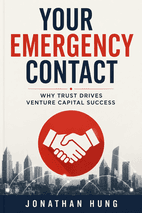
Jonathan Hung's Your Emergency Contact delivers a blunt, trust-driven guide to venture capital for early-stage founders and aspiring VCs, teaching that chemistry with a founder matters more than metrics and that rejection fuels resilience.
Feature
Insta.Page
Blinkist
Shortform
Summary Depth
Full Chapter-by-Chapter
15-min overview
Detailed analysis
Audio Narration
✓ (AI narration)
✓
✓
Visual Mindmaps
✓
✕
✕
AI Q&A
✓ Voice AI
✕
✕
Quizzes
✓
✕
✕
PDF Downloads
✓
✕
✓
Price
$59.99/yr
$146/yr (PRO)
$199/yr
*Competitor data last verified February 2026.
About the Author
Jonathan Hung
Jonathan Hung is a technology writer and software engineer specializing in user experience and human-computer interaction. He is the author of "The Pragmatic UX Designer" and has contributed to several open-source projects focused on accessibility. His background includes a decade of industry experience at companies like Mozilla and a degree in computer science from the University of Toronto.
1 Page Summary
In a field often clouded by mystique and credentialism, Jonathan Hung delivers a blunt, practical guide to venture capital that he wishes had existed when he started two decades ago. The book’s central thesis is that trust—not spreadsheets, pedigree, or gut instinct—is the true engine of success in venture capital and entrepreneurship. Hung argues that chemistry with a founder is more important than any single metric, and that the most valuable lessons come not from theory but from raw experience, including painful misses like passing on Robinhood. The book is structured around a series of memorable frameworks, from “going on lots of dates” to develop pattern recognition, to acting with “One Sigma Confidence” (moving forward when you are about 70 percent certain) rather than waiting for complete clarity.
What makes the book distinctive is its deeply personal and contrarian approach. Hung rejects the polished “author origin story” and instead grounds his advice in the grit of his father’s immigrant hustle, his own gambling story of winning $250,000 by recognizing when to press forward, and the formative failure of his startup Legacy Pioneers, where a cofounder exploited his trust while he was grieving his father’s death. He introduces concepts like the “grudge” as a legitimate entrepreneurial fuel (drawing on Michael Jordan, Kobe Bryant, and Steve Jobs), the “sizzle vs. the steak” metaphor for substance over charisma, and the framework of “living life in quarters” to avoid the trap of deferred gratification. The book’s closing chapter, rooted in Coldplay’s “Everything’s Not Lost,” offers a hard-earned invitation to maintain hope through the relentless uncertainty of the venture capital world.
The intended audience is first and foremost early-stage founders and aspiring venture capitalists who need a mentor who will “save them time by helping them avoid foolish mistakes.” However, the book’s insights—on partnership, resilience, and the compound effect of daily rhythms—extend well beyond finance to anyone building something from scratch. Readers will gain not a set of formulas but a mindset: that business is deeply relational, that rejection and failure are fuel, and that the relationships you build with investors should be built on trust, authenticity, and long-term connection, not transactional gain. Ultimately, Hung argues that legacy is not something built at the end, but something shaped every day in the small choices nobody claps for.
Chapter 1: Introduction
Overview
The opening of this book isn’t your typical author origin story. There was no triumphant “you should write a book!” moment—in fact, the author’s own mom thinks he’s nuts for doing it. What drove him was a hole in the market: two decades ago, when he first started in venture capital, he couldn’t find a practical guide that actually explained how to raise money, get a client, or build a business from scratch. Most books taught theory and credentials, but not the raw moves needed to land capital or a customer. This book is meant to be the mentor he wished he’d had back then—someone who’d save him time by helping him avoid foolish mistakes.
The Real Story Behind the Author
The author’s worldview was forged by his father’s grit. His dad lost both parents before age sixteen, had no safety net, and built everything from nothing. That hustle became the family’s default mode. Growing up, the author saw privileged kids (like Frank Sinatra’s grandson or Paris Hilton’s classmates) and learned that access alone means nothing—it’s what you do with it that counts. He discovered his own path during a summer internship at the Department of Labor, where he realized emotional intelligence mattered more than an Ivy League degree.
A major turning point came in 2012, when his dad was diagnosed with end-stage renal failure. Those three years gave the author a new lens on his father—not just a tough boss, but a man who cared deeply. That experience cemented his belief that true success isn’t a straight line. It’s messy, full of losses, and defined by how you bounce back.
The Myth of the Know-It-All VC
Early in his career, the author assumed everyone else had a secret rulebook. He quickly learned otherwise. Most people in VC are figuring it out as they go, faking confidence more than they’d admit. The real game-changer? Admitting what you don’t know and asking for help. Pride keeps people stuck. His own dad, for all his hard work, wasn’t great at asking for help—and that’s a trap the author had to unlearn.
He argues that the “don’t lose” mantra is unrealistic. Every successful investor or founder has lost money. The key isn’t avoiding losses; it’s resilience. That’s the kind of honesty this book offers.
Who This Book Is For
The author paints a wide but precise audience:
New VCs or associates – You have drive but lack experience. This book shows the behind-the-scenes work that doesn’t make it into podcasts: connecting founders with lawyers, accountants, insurance brokers—the unsexy details that keep startups alive.
Loved ones of VCs – Parents, partners, or friends who see the status-chasing but miss the quiet diligence and intention behind every decision.
LPs (limited partners) – Especially those considering a long-term partnership with an emerging manager. The book opens the entire playbook on judgment, accountability, and fiduciary duty.
Early-stage founders – If you’re in your first two years, you’ll learn how VCs actually think, what they look for, and how to build a trusting partnership.
Students of business – The author, an adjunct professor, wrote this with classrooms in mind, offering a real-world primer that could spark deeper conversations.
The Grudge That Drives Everything
If the author had to rename his firm, he’d call it Grudge Ventures. That’s because every builder carries a deep-seated resentment—a chip on the shoulder, heartbreak, rejection, or being underestimated. That grudge is fuel. For him, it came from terrible business partners, bad investments, and trusting the wrong people. He’s made peace with the process, but he wrote this book to spare others the same pain.
So before you turn another page, he asks you: What’s your grudge? What’s the deeper reason you’re building, raising capital, risking failure? Is it freedom? Legacy? Proving something to yourself? The answer matters—because in the end, we all want someone in our foxhole. This book is meant to be that resource, something you leave on your nightstand and return to again and again.
Key Takeaways
Success in VC and startups isn’t about having a perfect background; it’s about hustle, resilience, and the willingness to ask for help.
Admitting what you don’t know is a superpower. Most people are faking it—stop pretending and start learning.
Losses are inevitable. Bounce-back ability matters more than an undefeated record.
The book is a practical guide for founders, new VCs, LPs, students, and anyone who supports someone in the industry.
Every builder has a “grudge”—a personal wound or chip that drives them. Identifying yours gives your work direction and meaning.
Key concepts: Introduction
1. Introduction
The Author's Motivation
No practical guide existed for raising money or building businesses
Book is the mentor he wished he had
Driven by a hole in the market
The Real Story Behind the Author
Father's grit and hustle shaped his worldview
Access means nothing without action
Emotional intelligence beats Ivy League credentials
Father's illness taught resilience and care
The Myth of the Know-It-All VC
Most VCs are figuring it out as they go
Admitting ignorance is a superpower
Losses are inevitable; resilience matters most
Pride keeps people stuck
Who This Book Is For
New VCs needing behind-the-scenes practical advice
LPs considering partnerships with emerging managers
Early-stage founders learning VC thinking
Students and loved ones of VCs
The Grudge That Drives Everything
Every builder has a chip on their shoulder
Grudge fuels resilience and direction
Book aims to spare others from painful mistakes
Identify your deeper reason for building
Scroll to load interactive mindmap
If you like this summary, you probably also like these summaries...
💡 Try clicking the AI chat button to ask questions about this book!
Chapter 2: Chapter 1 | Go on Lots of Dates
Overview
The best venture capital advice isn’t about finding the perfect deal—it’s about going on lots of dates. You simply cannot know what you want in a founder, partner, or LP until you’ve had enough experiences to develop genuine perspective. Pattern recognition and gut instinct are overrated; chemistry with a spreadsheet is a myth. The lesson often comes the hard way, through partnerships rushed into after just a few conversations—a mistake no one would make in romance, yet one repeated daily in dealmaking. The real reason to date widely isn’t to find the “best” opportunity, but to discover what fits you.
That early education often begins with a stroke of luck. A casual coffee leads to a $25,000 check written to a digital gift card startup called Gyft, all based on a founder’s energy and the thrill of motion. The acquisition ten months later returns 2.5x—and completely warps your calibration. You start believing in instinct, until you pass on a fantasy stock trading game with no revenue at a $20 million valuation. That game is Robinhood. The miss hits hard: you don’t know what you don’t know. The only remedy is volume—dozens of dates, dozens of meetings—until patterns emerge not in the deals, but in yourself.
Over time, you develop a clear framework rooted in experience rather than a rigid checklist. The founder is everything; nothing else matters if the leader isn’t right. Small tests reveal everything—do they follow through when there’s nothing in it for them? Networking becomes intentional, funded with real resources: dinners, events, partnerships. You learn to spot overpromisers who vanish when delivery is required. The people worth trusting aren’t the ones who pitched perfectly; they’re the ones who show up quietly, deliver, and leave ego at the door.
No one should evaluate alone. After any promising first meeting, you recap the date with others—bring in a team member, an advisor, even a spouse. Ask: “Am I crazy, or is there something here?” A second voice saves you from falling in love with potential that doesn’t match reality. That second opinion often reveals what you missed or confirms what you felt but couldn’t articulate. It’s exactly like asking friends what they thought of your date.
Careful evaluation means treating diligence as pattern recognition, not a checkbox. The world is small in venture—founders and investors talk, and your reputation moves faster than you do. That’s the real value of insider intel: knowing how someone operates under stress, which team dynamics are fraying. The best wins are shared, not hoarded. Pull a friend into a good deal. The industry doesn’t have to be zero-sum.
When evaluating a founder, the critical question is whether they have a plan for the money—not just vibes and vague aspirations. You want the backup plan, not the optimistic scenario. Walk me through how you’ll get your first ten thousand customers. Tell me what happens when the supply chain breaks. Most startups fail because execution is inconsistent, not because the idea was bad. The money is the starting gate, not the finish line.
For anyone feeling invisible or overlooked at the start, remember: you’re not doing anything wrong—you just haven’t found your people yet. You don’t need everyone to believe in you. You need the right partner, the right LPs, the right co-investors who click with your pace and philosophy. The only way to find them is to keep moving, keep showing up, keep learning the language of fit.
Along the way, mistakes happen. Wiring money for what turned out to be someone’s lifestyle—no product, no customers, just rent and conference selfies. That sears a lesson: money doesn’t create momentum on its own. It only works with clear intention, structured time, and actual progress. Founders breadcrumb investors with shifting milestones. Investors ghost after promising follow-up. Both sides feel foolish, but that’s the education. You start asking better questions. You spot patterns faster. You learn when to lean in and when to walk away.
This is the entire process of VC dating—awkward small talk, mismatched expectations, chemistry with no follow-through. But once in a while, you meet someone who sees what you see and makes you better. That’s the relationship worth building. So keep reaching out. You never know what your next date might hold.
Key Takeaways
Don’t rush the relationship. You wouldn’t propose after two dinners, so don’t invest after one pitch. Always take a second meeting.
Build pattern recognition through volume. Learn what you like (and what to avoid) by seeing a lot of deals. Set a weekly target for new founder or investor meetings.
Watch the follow-through. Missed emails or vague answers now mean bigger issues later. After every meeting, ask: Did they deliver on what they said?
Get a second opinion. Even solo GPs need sounding boards. Involve one trusted voice in every early-stage decision.
Qualify the plan, not the pitch. Focus on what happens after the check clears. Ask founders to walk through their first ninety days post-funding.
Protect your time and capital. Don’t fund vibes. Fund clear execution. Before wiring, verify: Is there progress? A path? A plan?
Keep showing up. Finding the right fit takes time and misfires. That’s normal. Log your meetings, lessons learned, and instincts after each pitch.
Key concepts: Chapter 1 | Go on Lots of Dates
2. Chapter 1 | Go on Lots of Dates
Volume Builds Pattern Recognition
You can't know what fits without many experiences
Instinct is unreliable without data from volume
Set weekly targets for founder or investor meetings
Patterns emerge in yourself, not just in deals
Evaluate the Founder, Not the Pitch
The founder is everything; nothing else matters
Watch follow-through on small promises
Qualify the plan for the money, not vibes
Ask for backup plans, not optimistic scenarios
Get a Second Opinion
Recap promising meetings with a trusted voice
A second opinion reveals what you missed
Involve team, advisor, or spouse in decisions
Avoid falling in love with potential alone
Don't Rush the Relationship
Don't invest after one pitch like a first date
Always take a second meeting before deciding
Mistakes come from rushing into partnerships
Chemistry with a spreadsheet is a myth
Keep Showing Up to Find Your People
Feeling invisible means you haven't found fit yet
You need the right partner, not everyone's belief
Keep moving and learning the language of fit
Log meetings and lessons from each misfire
Scroll to load interactive mindmap
⚡ You're 2 chapters in and clearly committed to learning
Why stop now? Finish this book today and explore our entire library. Try it free for 7 days.
Chapter 3: Chapter 2 | Develop Your One Sigma Confidence
Overview
The late MIT professor Jonathan Byrnes taught that serious leaders must act without perfect information, a lesson that became One Sigma Confidence — moving forward when you're about 70 percent certain, not waiting for 100 percent clarity. In early-stage venture capital, where there's often no revenue or product yet, waiting for complete certainty means missing the window. This 70 percent threshold contrasts with Six Sigma thinking, which works for manufacturing pacemakers but not for betting on ideas. Most people wait for total clarity because of "the lie of academia": you get A and B, solve for C, one right answer. Real life gives you nothing, so you make judgment calls with incomplete data. Clarity often comes after the decision, not before. A personal gambling story — winning $250,000 on a slot machine only after pouring tens of thousands in and staying when quitting made sense — illustrates pattern recognition, odds calculation, and knowing when to press forward or walk away.
To ground emotion-driven decisions, the author built a scoring system with four pillars: Team, Idea, Valuation, and Alignment, each scored 1 to 4 for a maximum of 16. A score of 12 — 75 percent — provides One Sigma Confidence to invest. Team comes first, with preference for small founding teams and a resilient, self-aware, humble founder who leads without ego; the author never invests in a solo founder. The idea must solve a real problem and show signal over noise — something proprietary, a novel market insight, or a strong brand backer. Valuation must match the stage and risk. Alignment requires a personal connection between what the founder is building and what the author can offer beyond capital: network, storytelling support, media access. When a deal scores 12 or higher, the author commits fully, advocating and vouching with conviction tested by evidence.
Once an investment is made, it's only the beginning. A quarterly assessment ranks each portfolio company into three buckets: green (thriving, raising next round, profitable, exit-ready), yellow (at risk, still seeking product-market fit but with 12-plus months runway), and red (no longer viable, less than six months runway). This structure forces accountability and clarity over time. Yet even when the numbers line up, sometimes something just doesn't sit right. The author has walked away from deals that checked fifteen out of sixteen boxes because that sixteenth point created real doubt — and was glad for it. Partnership, trust, past experience, and instinct all feed into the final call. Reaching the One Sigma threshold but still feeling a knot in the stomach means it's time to listen. Restraint is as much a discipline as spotting the next big win.
Building your One Sigma Confidence muscles is not a shortcut to certainty; it's developed through reps, relationships, and real decisions with real consequences. Most people only see press releases and exit headlines, not the slow grind of long calls, second-guessing, and pattern recognition earned by putting in the hours. Intelligence and experience are not the same — having capital doesn't make someone an investor. The author always asks when someone weighs in on a deal: "How confident are you?" asking them to score team, idea, valuation, and alignment. If they can't get to twelve, pass. Quantifying your conviction separates instinct from insight.
This chapter is really about two things: how to evaluate founders and how to evaluate yourself — knowing when your confidence is earned, when you're leaning too hard on gut or hiding behind data. Both can lead you astray. But if you've done the work, been honest about risks, and your score hits the bar while your belief holds steady, then it's time to move. Don't wait for perfect. Wait for possible. When you feel that spark of clarity, even at 70 percent, take the shot. Confidence comes not from knowing everything, but from knowing enough to act.
Key Takeaways
Confidence is earned, not assumed. Having capital doesn't make you an investor; time in the seat does. Track your reps—deals, pitches, founders engaged. Reps matter more than résumés.
Learn to move at 70 percent. Certainty kills deals. Use a scoring system to quantify your belief and green-light at 70 percent or higher.
Evaluate the evaluator—start with you. Your own clarity, discipline, and trust signals matter as much as the founder's pitch. After every deal review, rate your own confidence on a scale of one to ten. Be honest.
Separate instinct from insight. Gut calls are fine only if backed by experience and reflection. Log each decision and revisit it quarterly to see how your instincts held up.
Challenge shiny surface thinking. A polished deck isn't proof. Dig into traction, plans, and execution—not just vision or style.
Filter advice by experience. Smart people will have opinions, but that doesn't mean they've earned the right to guide you. Before taking advice, ask about their track record in that space.
Show up after the wire hits. Investing doesn't end with a check. Create a post-investment dashboard and track updates, engagement, and founder momentum quarterly.
Trust can outweigh traction. When a deal looks great on paper but something feels off, slow down. Rescore. Ask around. Clarity often comes from a second look.
Key concepts: Chapter 2 | Develop Your One Sigma Confidence
3. Chapter 2 | Develop Your One Sigma Confidence
One Sigma Confidence Framework
Act at 70% certainty, not 100%
Contrasts with Six Sigma manufacturing thinking
Clarity often comes after the decision
Quantify conviction to separate instinct from insight
Four Pillars Scoring System
Score Team, Idea, Valuation, Alignment (1-4 each)
Maximum 16 points; invest at 12 (75%)
Team first: small, resilient, humble founders
Idea must solve real problem with proprietary edge
Post-Investment Accountability
Quarterly assessment: green, yellow, red buckets
Green: thriving, raising, profitable, exit-ready
Yellow: at risk but 12+ months runway
Red: no longer viable, under 6 months runway
When to Walk Away
Trust can outweigh traction and scores
Walk away if 16th point creates real doubt
Listen to the knot in your stomach
Restraint is as important as spotting wins
Building Confidence Muscles
Developed through reps, relationships, real decisions
Quantify your confidence on every deal
Filter advice by track record, not opinions
Show up after the check is written
Scroll to load interactive mindmap
Chapter 4: Chapter 3 | Deliver More Than Just Sizzle
Overview
A fundamental truth in entrepreneurship and investing: charisma gets you in the door, but only substance keeps you there. The author uses the vivid metaphor of a steak—the sizzle might lure you into the restaurant, but it’s the taste that makes you a regular. In the world of startups, that sizzle is your pitch, your energy, your first impression. But the steak is your execution, your follow-through, your integrity. The chapter isn’t about dismissing the sizzle; it’s about understanding that it’s only the appetizer. The real meal is earned after the check clears.
The Sizzle vs. The Steak
The author recalls a fellow GP telling a founder, “You sold us on the sizzle. Now we want to taste the steak.” That line captures the core tension. Founders often overpromise based on hope and ambition, especially when raising money is brutal and building from scratch is chaotic. But when vision replaces truth, trust erodes. The author describes himself as a “cautious optimist”—willing to believe in the unseen future, but demanding that belief is backed by delivery. The first meeting might be won on charm; the second is won on receipts. Over time, the gap between the pitch and the performance becomes the defining measure of a founder’s credibility.
Treating Other People’s Money with Respect
The concept of OPM—“other people’s money”—is central here. The author shares a personal insight from his days as a financial advisor: he was obsessive when trading his own money, but far more relaxed when handling a client’s trade. Same transaction, different emotional weight. He sees the same pattern in founders. After the fundraising grind, once the wire hits, some lose that obsessive care. Burn rates get sloppy, updates stop. The antidote is skin in the game. The author personally puts 5 to 10 percent of his own capital into every fund he raises. Because when the money is personal, you treat it differently. Respecting OPM like it’s your own is the difference between sizzle and steak.
Your Word Is Your Reputation
The author insists that not all money is good money. Where a check comes from matters, because the industry runs on reputation. A family office investor once told him, “Personal dynamics are greater than economic returns.” That stuck. People do business with those they trust, not just those with the highest returns. The author’s father was a master at reading people—not manipulatively, but humanely. He asked, “What lights you up? What do you care about?” That kind of genuine curiosity builds relationships that outlast any single deal. In a world where your name travels faster than your numbers, keeping your word is the most valuable currency you have.
Clear Communication After the Check
The real investor-founder relationship begins after the wire transfer. The author pays close attention to the communication rhythm early on. He doesn’t expect weekly updates from every portfolio company, but he notices the ones who stay in touch. The best founders send thoughtful, concise, honest updates—what’s working, where they’re stuck, what they need. That transparency allows him to add value. He also shares a blunt truth: with more than 150 companies, he can’t give equal time to everyone. Founders who persist, who ask for help clearly, tend to get more attention. “If you don’t ask, the answer is always no.” The chapter urges founders to sound the alarm early, not wait until everything is on fire. Vague optimism doesn’t help; concrete questions and focused updates build trust.
Post-Investment Founder Behavior
You learn the most about a founder after the money hits the bank. Before the check, everyone is polished. Afterward, patterns emerge. Some founders treat the investment as a finish line and go quiet. Others overpromise and underdeliver—the author shares a painful memory of promising a distributor 5,000 pizzas a month but selling fewer than 50. That failure cost a partnership and taught him that nothing destroys trust faster than selling a fantasy and delivering a flop.
The best founders stay grounded, own their roadblocks, and bring investors into the process—not just the highlight reel. They evolve as leaders, knowing that the same approach that worked with three people will crack with twenty. The author recalls a line: “If you’re still doing things the same way you did them a year ago, you’ve already failed as a leader.” He also emphasizes transparency in the “yellow zone”—that uncertain period when the product isn’t working yet and the burn rate is high. The founders who earn long-term respect are the ones who stay open, share what they’re learning, and handle failure with maturity. The author backs a founder in AI who eventually shut down the company—but did it with such honesty and thoughtfulness that the author told him he’d be first to back him again.
Beyond the Elevator Pitch
The author’s experience on Entrepreneur Elevator Pitch reinforced that a good pitch opens the door, but it doesn’t carry you to the summit. Many founders nail the 60-second sizzle—great energy, polished story, relatable problem. But when the investors start peeling back layers in the boardroom—asking about supply chains, unit economics, distribution partners—the whole thing falls apart. The author compares scaling a company to climbing Everest: you don’t just need capital; you need a Sherpa, a guide who knows the terrain. He references that only about 48% of Shark Tank deals actually close after the cameras stop rolling. Why? Because due diligence is real, and the sizzle fades when the lights go off.
The Student Mindset
The best founders never stop learning. They treat every experience—wins and failures—as a lesson. Failure, the author argues, is the most honest teacher. Success polishes your image; failure shapes your character. The founders who stand out are those who ask better questions, listen closely to feedback, and are willing to challenge their own assumptions. The author’s father warned, “Don’t let your blind spots take you out. Keep asking. Keep digging. Keep learning.” This mindset extends beyond business: the author pays attention to the whole person—how they’re doing outside the company, what they’re carrying. Because underneath the strategy and metrics, we’re all human beings trying to build something meaningful. Business is always personal.
Key Takeaways
Charisma opens doors, but execution keeps them open. After every pitch, write down exactly what you promised and track delivery weekly.
Treat OPM like your own. Run a quarterly thought experiment: “If this were my last dollar, would I still spend it this way?”
Protect your reputation like a line item. Send a meaningful update to key partners every four to six weeks.
Promise only what you can prove. Before bold projections, do a premortem: What could prevent this from happening?
Delegate before you burn out. List recurring tasks, circle only what you alone can do, and delegate two of the others this week.
Your word is a currency—spend it wisely. If you miss a target, own it early and explain your plan.
The steak must match the sizzle. After every pitch, ask: “Will this hold up under deep diligence?”
Keep a student mentality. Schedule a monthly reflection: What did you learn this month that changed your mind or revealed a blind spot?
Key concepts: Chapter 3 | Deliver More Than Just Sizzle
4. Chapter 3 | Deliver More Than Just Sizzle
Sizzle vs. Steak
Charisma opens doors, substance keeps you there
Pitch is sizzle; execution is the steak
Gap between pitch and performance defines credibility
Frequently Asked Questions about Your Emergency Contact
What is Your Emergency Contact about?
This book is a practical mentor for entrepreneurs and investors, offering raw, actionable advice on raising capital, landing clients, and building a business from scratch. It draws on two decades of venture capital experience to teach how to develop perspective through volume, act decisively with 70 percent confidence, and prioritize substance over charisma. The author also explores the emotional and relational side of business, including channeling personal grudges as fuel and building lasting partnerships rather than transactional deals.
Who is the author of Your Emergency Contact?
The author is Jonathan Hung, a venture capitalist who started in the industry twenty years ago and couldn't find a practical guide to raising money or building a business. His worldview was shaped by his father, an immigrant from Taiwan who built everything from nothing, teaching him that access means nothing without execution. Hung's mother even thinks he's crazy for writing the book, reflecting his candid, no-nonsense approach.
Is Your Emergency Contact worth reading?
Absolutely—it's the mentor you wish you had when starting out, filled with hard-earned lessons from real wins and painful misses alike. The frameworks, like One Sigma Confidence and Living Life in Quarters, are applicable far beyond venture capital, helping you make better decisions under uncertainty. It's refreshingly honest, practical, and avoids the typical theory-heavy fluff of most business books.
What are the key lessons from Your Emergency Contact?
One key lesson is to 'go on lots of dates'—expose yourself to many opportunities to develop genuine perspective rather than relying on gut instinct. Another is to develop One Sigma Confidence: act when you're about 70 percent certain, not waiting for complete clarity. The book also emphasizes delivering substance (steak) over charisma (sizzle), embracing critics to uncover blind spots, and building relationships as long-term 'emergency contacts' rather than transactions. Finally, it teaches you to live life in quarters to avoid the trap of deferred gratification and to build a legacy through steady daily habits, not heroic acts.
📚 Explore Our Book Summary Library
Discover more insightful book summaries from our collection