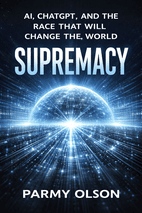
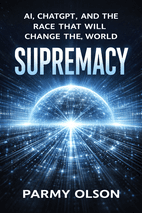
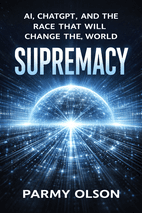
Parmy Olson's Supremacy traces how the race to develop artificial general intelligence shifted from idealistic missions to a corporate battle dominated by Big Tech, contrasting the journeys of OpenAI's Sam Altman and DeepMind's Demis Hassabis. It's for readers interested in the behind-the-scenes power dynamics and human drama shaping this world-altering technology.
Feature
Insta.Page
Blinkist
Shortform
Summary Depth
Full Chapter-by-Chapter
15-min overview
Detailed analysis
Audio Narration
✓ (AI narration)
✓
✓
Visual Mindmaps
✓
✕
✕
AI Q&A
✓ Voice AI
✕
✕
Quizzes
✓
✕
✕
PDF Downloads
✓
✕
✓
Price
$59.99/yr
$146/yr (PRO)
$199/yr
*Competitor data last verified February 2026.
About the Author
Parmy Olson
Parmy Olson is an award-winning journalist and author specializing in technology, cybersecurity, and artificial intelligence. She is best known for her book "We Are Anonymous: Inside the Hacker World of LulzSec, Anonymous, and the Global Cyber Insurgency," and she serves as the AI and cybersecurity correspondent for Bloomberg News.
1 Page Summary
Supremacy by Parmy Olson presents a central thesis that the high-stakes race to develop artificial general intelligence (AGI), once driven by idealistic missions to benefit humanity, has been fundamentally captured and reshaped by the financial imperatives and corporate power of Big Tech. The book traces this arc through the parallel origin stories of OpenAI’s Sam Altman and DeepMind’s Demis Hassabis, showing how early philosophical ambitions and a focus on existential safety have increasingly collided with—and often been subsumed by—market pressures, commercial secrecy, and the overwhelming infrastructural needs only tech giants can provide.
Olson’s distinctive approach is a dual narrative that contrasts the formative failures and evolving philosophies of these two key figures, weaving their personal journeys with the broader cultural and ideological forces in Silicon Valley. The account is grounded in the internal tensions, strategic pivots, and landmark deals that defined the field, from DeepMind’s acquisition by Google and its fraught quest for independence to OpenAI’s pivotal partnership with Microsoft and its dramatic boardroom coup. The book distinctively highlights the growing rift between the well-funded, long-termist concerns of the “AI safety” movement and the under-resourced, present-day work of “AI ethics” researchers addressing documented harms like bias and discrimination.
The book is intended for readers interested in the behind-the-scenes power dynamics, corporate strategy, and human drama shaping a world-altering technology. Readers will gain a clear-eyed understanding of how the AGI quest moved from academic labs and mission-driven startups into a fiercely competitive arena dominated by a few secretive monopolies, raising critical questions about transparency, accountability, and whether this technological revolution will ultimately serve the public or corporate interests.
Sam Altman's ambition took shape through early confidence, high-stakes failure, and Silicon Valley's culture. It starts in St. Louis, where a young Altman stood out by openly embracing his identity. He turned personal truth into advocacy by founding his school's first LGBTQ groups. This time set a pattern of confronting authority and building community to advance his goals.
The story picks up at Stanford, where his curiosity stretched beyond coding. A key moment in an AI lab introduced him to the idea that artificial intelligence could pose a catastrophic threat to humanity—a notion that would later return with great force. Eager to build, he co-founded the location-sharing app Loopt, embracing the intense, founder-focused mindset of Y Combinator. Despite early promise and connections to Silicon Valley's powerful networks, Loopt ultimately failed. This taught Altman a hard lesson about what consumers actually want and the potential downsides of new technology.
Loopt's quiet sale, however, changed him. It wasn't an ending, but a spark. It cemented his disappointment with trivial social apps and ignited a need for work that felt truly important. This fit a pattern seen in people like Elon Musk, where big ambition often rises from earlier setbacks. Altman's focus was also shaped by a common Silicon Valley attitude: the belief that tech founders are on a mission to save humanity. Turning away from simple "connection," Altman shifted toward a bigger vision. He wanted to build what people didn't yet know they wanted, aiming for the huge challenges that would define his future.
Growing Up Different in St. Louis
In the conservative environment of early 2000s St. Louis, Missouri, a young Sam Altman stood out by refusing to stay silent about his sexuality. Unlike many of his peers, he spoke openly about being gay, transforming a personal truth into a mission. He defied easy categorization—excelling in challenging English literature and calculus while also captaining the water polo team and leading his siblings in games. This confidence stemmed from his role as the eldest of four in a middle-class Jewish family, where his father, Jerry, a lawyer and community advocate, instilled in him a sense of public duty.
The Lifeline of the Internet and Early Activism
For Altman, the internet, specifically AOL chat rooms, was transformative. These anonymous spaces provided a vital sense of community and belonging for a gay teenager in the Midwest, allowing him to connect with others and realize he wasn’t alone. At sixteen, he came out to his supportive but surprised parents. After transferring to the elite John Burroughs School, he aggressively pursued leadership roles. His bold, rule-testing nature was evident in stunts like a Speedo-clad pep rally appearance, but he paired this with a serious, earnest drive to advocate for others, often taking grievances directly to the principal, Andy Abbott.
His major high school project was creating community and awareness for LGBTQ students. He founded the school's first LGBTQ support group and a Gay-Straight Alliance. In a dramatic assembly presentation, he visually demonstrated the statistical prevalence of gay students. When members of the school's Christian club boycotted the event, Altman confronted Principal Abbott, demanding they be marked absent. This experience taught him that ambitious ideas attract opposition. He learned the solution was to align with authority and build a support network.
Stanford, Poker, and the Seed of an AI Idea
Accepted into Stanford, Altman's curiosity kept him from focusing only on computer science. He explored humanities and creative writing while developing critical strategic skills at a San Jose poker table. The game honed his ability to read people and bluff, funding his college expenses and providing lessons in psychology he deemed invaluable for business.
A key moment came in Stanford's AI lab under Sebastian Thrun. Thrun introduced him to machine learning and the concept of unintended consequences. He explained how an AI, given a simple goal like "survive and reproduce," could logically but catastrophically wipe out all life. This idea—that advanced AI might be a catastrophic risk, potentially explaining the silence of the universe—stuck with Altman, though it would lie dormant for over a decade.
Y Combinator and the Launch of Loopt
Eager to start a company, Altman and his friend Nick Sivo conceived Loopt, a mobile app to see friends' locations on a map. They joined Paul Graham's new Y Combinator (YC) boot camp in Cambridge. Graham's philosophy—that brilliant, "unruly" founders mattered more than initial ideas and deserved near-total control—deeply influenced Altman, who Graham immediately saw as a fiercely intelligent "big thinker."
Embracing YC's "ramen profitability" ethos, Altman worked relentlessly on Loopt, even developing scurvy from poor diet. He proved to be a skilled businessman, persuading major telecom carriers like Sprint and Verizon to preinstall the app. After raising $5 million from top-tier venture capital firms, he dropped out of Stanford and moved his team to the heart of Silicon Valley.
The Loopt Experiment: Struggle, Controversy, and Lessons
Despite securing a prestigious launch at an Apple conference and building powerful Silicon Valley connections, Loopt struggled to find a market. Users weren't enthusiastic about location-based meetups, especially as Facebook offered easier online socializing. The app also faced serious controversy. People misused it to track children and, more alarmingly, by abusive partners to stalk spouses.
Altman's response to this crisis revealed a key aspect of his character. When confronted by a Wall Street Journal reporter, he proactively shared a document detailing all the app's risks. This was a calculated move of radical transparency designed to disarm criticism. Ultimately, consumer indifference, not controversy, doomed Loopt. Altman learned a foundational lesson: "You can’t make humans do something they don’t want to do." After years of frantic effort, the ambitious project reached its end.
The Underwhelming Exit
Loopt's sale to a gift-card company for $43 million was a quiet, disappointing finish. The return barely covered the debts owed to investors and employees, falling far short of the multibillion-dollar "exit" that defines Silicon Valley success. For many, this would have been a definitive end. But for Altman, Loopt's collapse served as a spark. Rather than discouraging him, it cemented a conviction that his work needed deeper, more meaningful purpose.
A Pattern of Ambition Forged in Failure
This path followed a familiar one in tech, seen in Elon Musk a decade earlier. After being pushed out of PayPal, Musk channeled his frustration into a bigger vision, moving from consumer payments to tackling climate change with Tesla. Altman saw a template here: big ambition often grows from the ashes of a more ordinary failure. The Loopt experience left him deeply dissatisfied with building what he saw as just another superficial social app.
The Silicon Valley Savior Complex
This search for meaning is fed by the region's common culture. In places like San Francisco's Battery Club, the line between building a popular app and believing you are saving humanity is often blurry. The influential philosophy of Paul Graham—that brilliant founders possess almost prophetic insight—fuels this belief. It creates an environment where technologists think they are uniquely equipped to solve humanity's oldest and deepest problems, from loneliness to catastrophic threats.
Altman's Pivot and Grand Vision
Rejecting the "quantified connection" of social media, Altman decided to pursue a different kind of innovation. He aimed to follow the Apple model of giving people "what they didn't know they wanted." To do this, he knew he needed to embed himself even deeper into Silicon Valley's networks, transforming from a founder into a central figure within the ecosystem. His goal was to become a more powerful version of his own mentors. This journey would lead him back to the ideas from his time in the Stanford AI lab, setting the stage for a massive new goal: confronting a catastrophic threat to humanity and aiming to deliver unprecedented abundance.
Key Takeaways
Failure can motivate a shift toward more ambitious, meaningful work, as seen with both Altman and Musk.
Silicon Valley's culture often mixes technological innovation with a belief that founders are saving the world, pushing them to tackle huge human problems.
Sam Altman's experience with Loopt's failure directly pushed him to seek "more meaningful" projects, setting his course toward big challenges like artificial intelligence.
Key concepts: Chapter 1. High School Hero
1. Chapter 1. High School Hero
Early Identity and Activism
Openly gay in conservative St. Louis
Founded school's first LGBTQ support groups
Learned to confront authority and build community
Formative High School Leadership
Defied categorization: academics and athletics
Used dramatic presentations for advocacy
Faced opposition from school groups
Internet as a Lifeline
AOL chat rooms provided vital community
Realized he wasn't alone as gay teenager
Anonymous spaces enabled early self-discovery
Stanford and Strategic Development
Explored beyond computer science to humanities
Poker honed psychological and bluffing skills
First exposure to AI's catastrophic risk potential
Y Combinator Influence
Embraced founder-focused, 'unruly' philosophy
Adopted relentless 'ramen profitability' work ethic
Valued big thinking over initial ideas
Loopt: Promise and Failure
Location-sharing app with major carrier deals
Struggled to find consumer market fit
Faced misuse for stalking and tracking
Post-Loopt Transformation
Disappointment with trivial social apps
Ignited need for truly important work
Shifted toward building what people don't yet want
If you like this summary, you probably also like these summaries...
💡 Try clicking the AI chat button to ask questions about this book!
Chapter 2: Chapter 2. Winning, Winning, Winning
Overview
Demis Hassabis's remarkable trajectory began with his teenage fame as the creator of the hit game Theme Park. That early success was rooted in his belief that simulations were powerful tools for understanding complex systems, a philosophy honed by his mastery of chess. His path led him to work with designer Peter Molyneux, where discussions about AI's creative potential began to take shape.
Eager to push boundaries, a young Hassabis founded his own studio, Elixir, aiming to create serious, intelligent games. Its flagship project, Republic: The Revolution, was staggeringly ambitious, aiming to simulate a living world with a million AI characters. However, this "tech black hole" consumed the project; the relentless focus on technological marvels came at the cost of fun, leading to commercial failure and the studio's closure. This very public defeat was a humbling lesson for the lifelong winner.
The story then shifts to the perspective of a former colleague, the reluctant observer who declined to join Hassabis's next venture. From the sidelines, he watched a profound strategic pivot: instead of using AI to build better games, Hassabis decided to use games as the perfect laboratory to build general AI. This reversal of the equation proved brilliantly successful, as DeepMind shocked the world by mastering Atari games and defeating champions at Go, establishing itself as the field's leader.
The observer's astonishment is compounded by the sudden arrival of a new challenger. Just as DeepMind's supremacy seemed cemented, Sam Altman and OpenAI emerged, abruptly resetting the race and underscoring the unpredictable, relentless pace of advancement in the quest for artificial intelligence.
A Prodigy’s Playground
Demis Hassabis’s journey began not in a lab, but in the vibrant, profit-driven simulation of his 1994 hit game, Theme Park. Created when he was just seventeen, the game sold fifteen million copies by presenting a fiendishly complex balancing act of business management—hiring staff, setting prices, and maintaining visitor happiness. For Hassabis, this wasn’t just entertainment; it was an early manifestation of his core belief: that simulations are microcosms for learning about real-world systems. This philosophy was rooted in a childhood spent mastering games, most notably chess, where he became a world-class player under the age of fourteen before a pivotal loss led him to question if such intellectual horsepower could be applied to grander problems.
From Chessboards to God Games
Hassabis’s technical passion was ignited by early personal computers like the ZX Spectrum 48, which he saw as an extension of his own mind—a tool for offloading cognitive labor. His fascination with simulations crystallized around "god games" like Populous, where players shape entire worlds. Determined to work at Bullfrog Productions, the game's creator, he secured work experience and later a job under the legendary, if hyperbolic, designer Peter Molyneux. Together, they created Theme Park, where Hassabis first implemented simple AI to give virtual visitors distinct personalities. His conversations with Molyneux often turned to the future of AI and the potential for machines to one day handle creativity itself.
The Cambridge Interlude and a Bold New Venture
After Theme Park’s success, a teenage Hassabis arrived at Cambridge University as a minor celebrity, indulging in a year of spirited social life before refocusing on his studies. He reconnected with Molyneux after graduation but quickly grew frustrated with the pace of innovation. In 1998, at age 22, he struck out on his own to found Elixir Studios, declaring an ambition to elevate gaming to a serious medium for intelligent adults. His flagship project was Republic: The Revolution, a political simulation game set in a fictional totalitarian state. Hassabis assembled a brilliant team, fostered a fiercely competitive culture of foosball and soccer, and drove them toward a staggeringly ambitious technical vision: a living world populated by a million AI-driven characters, each leading a plausible individual life.
Ambition Meets Reality: The Cost of "Tech Black Hole"
Hassabis’s grand vision for Republic contained a fatal flaw. In his relentless drive to push technological boundaries—creating vast numbers of AI citizens and detailed graphics—the core element of fun was neglected. The team, working marathon hours, had no time for the essential iterative process of refining engaging gameplay. When released in 2003, critics found the game overly complex and boring. A subsequent title, Evil Genius, also failed to achieve mainstream success. The massive technical investments, coupled with modest sales, forced Hassabis to shut down Elixir Studios in 2005. For someone accustomed to a lifetime of winning, this very public failure was a crushing humiliation, a stark lesson in the disparity between technological ambition and marketable product.
The Reluctant Observer
McDonagh’s refusal to join DeepMind came from a place of weary experience. Having witnessed the rollercoaster of Hassabis’s first venture, he couldn’t bring himself to board another seemingly impossible mission. His “No” was a decision to watch from the sidelines, a choice that would soon fill him with a mix of astonishment and regret.
From his vantage point, he observed Hassabis execute a profound strategic pivot. The founder moved away from the idea of using AI merely as a tool for better games. Instead, he reversed the equation, deciding to use games as a perfect, constrained testing ground to develop and prove general artificial intelligence. Games provided clear rules, measurable outcomes, and immense complexity—the ideal laboratory.
McDonagh then watched, seemingly in slow motion, as Hassabis and DeepMind did the unthinkable. They began delivering on their monumental promises, creating AI systems that mastered classic Atari games from raw pixel data and ultimately defeated world champions in the profoundly complex game of Go. DeepMind wasn’t just building advanced software; it was building a new paradigm for intelligence, rapidly becoming the global leader in the field.
This makes the final sentence of the chapter so poignant. McDonagh’s journey from skeptical colleague to amazed observer culminates in the abrupt arrival of Sam Altman and OpenAI. Just as DeepMind’s supremacy seemed unassailable, a new and formidable challenger emerged, resetting the race once again. The quiet irony for McDonagh is palpable—having declined a seat on an epic, world-altering journey, he now saw the landscape shift beneath the very feet of those he once worked beside.
Key Takeaways
Demis Hassabis’s core strategy evolved to using games as a testing ground for general AI, not the other way around.
DeepMind’s subsequent achievements validated this strategy, shocking observers and temporarily establishing them as the world’s leading AI lab.
The story underscores the unpredictable, relentless pace of AI advancement, where today’s leader can be quickly challenged by a new entrant, as seen with Sam Altman’s rise.
Simulations as tools for understanding complex systems
Belief rooted in childhood mastery of chess
Games as microcosms of real-world learning
Theme Park Success & AI Beginnings
Created hit game at age seventeen
Implemented simple AI for character personalities
Discussions with Molyneux about AI's creative potential
Elixir Studios & Ambitious Vision
Founded to create serious, intelligent games
Republic: The Revolution aimed for million-AI simulation
Fostered competitive, brilliant team culture
Failure & Critical Lessons
Relentless tech focus neglected fun and gameplay
Republic criticized as complex and boring
Commercial failure led to studio closure
Strategic Pivot to DeepMind
Reversed equation: games as AI laboratory
Used games for measurable, constrained AI testing
Moved from games with AI to AI through games
Observer's Perspective & Regret
McDonagh declined joining due to past experience
Watched pivot from sidelines with astonishment
DeepMind's success validated the new approach
Unpredictable AI Race Dynamics
DeepMind established as field leader
OpenAI emerged as sudden challenger
Race reset underscores relentless advancement pace
⚡ You're 2 chapters in and clearly committed to learning
Why stop now? Finish this book today and explore our entire library. Try it free for 7 days.
Chapter 3: Chapter 3. Save the Humans
Overview
Sam Altman entered a period of personal and professional transformation after his startup Loopt failed. A moment of extreme stress during that failure led him to embrace emotional detachment as a coping mechanism and strategy. After selling Loopt, he took a deliberate year-long sabbatical to explore diverse interests, which crystallized his focus on artificial intelligence and humanity's place in a technological future. His return to Silicon Valley, marked by successful investing and ascension to leadership of Y Combinator, saw him refashion the institution into a vehicle for funding ambitious, world-changing "hard-tech" ventures. Throughout, he cultivated a philosophy of detached, pragmatic ambition aimed at saving humanity through technology, setting the stage for his eventual pursuit of artificial general intelligence (AGI).
A Turning Point on the Floor
During a stressful 2006 negotiation for his startup Loopt, an overwhelmed Sam Altman lay on the floor of his hot apartment, realizing his intense stress was counterproductive. The failure of Loopt taught him that he couldn't force outcomes and that he needed to emotionally disengage from difficult situations. This became a core tenet of his approach: to become more detached to operate effectively.
The Gap Year of Exploration
After selling Loopt and ending his long-term relationship with co-founder Nick Sivo, Altman took a year off—a move frowned upon in Silicon Valley's hustle culture. He used this time to read voraciously across fields like nuclear engineering and AI, travel, and make angel investments (most of which failed). He viewed this as training his judgment to occasionally be "right in a big way." His broad exploration increasingly drew him toward the potential of artificial intelligence, particularly after a hike where he concluded that computers would eventually replicate human brains, making humanity not uniquely special but something that could be improved upon.
Building a Financial and Network Foundation
Returning to the Valley, Altman started the investment fund Hydrazine Capital, raising $21 million with help from Paul Graham and Peter Thiel. He strategically invested 75% of it in Y Combinator companies, a bet that paid off handsomely, growing the fund tenfold in four years through stakes in companies like Reddit and Asana. He recognized that personal connections were more valuable than immediate financial returns and grew uncomfortable with the adversarial nature of traditional venture capital.
Becoming the "New Graham" at Y Combinator
In 2014, a burned-out Paul Graham asked the 30-year-old Altman to take over Y Combinator. Altman immediately set about scaling and institutionalizing the program, expanding its focus to include "hard-tech" startups tackling ambitious scientific problems like nuclear fusion (Helion Energy) and self-driving cars (Cruise). He believed these risky, world-changing bets were more important than yet another consumer app. His investments in such companies, funded partly by a massive windfall from Cruise's acquisition, were as much about earning cachet in Silicon Valley as they were about financial return or saving humanity.
Cultivating a Philosophy of Detached Salvation
As YC's leader, Altman became a sought-after guru, dispensing advice to think bigger, aim for billions, and sacrifice work-life balance for empire-building. His power to persuade was rooted in a personal philosophy shaped by meditation, which diminished his sense of self and aligned with his belief that human cognition could and would be uploaded to computers. This detached, almost observational view of humanity was coupled with a deep fear of death, leading him to become a "prepper" with survival supplies and an interest in brain-preservation tech.
He found a guiding principle in Marc Stiegler's sci-fi story "The Gentle Seduction," which advocated for "caution without fear"—a calm, pragmatic approach to technological integration. Altman saw himself as embodying this prudent mindset, in contrast to what he viewed as the emotionally fraught "AI safety" community. This self-image as a balanced, detached visionary solidified his desire to work on AGI, driven by a quiet obsession with being first to achieve it.
Key Takeaways
Emotional Detachment as Strategy: Altman's key career takeaway was the need to disengage emotionally from high-pressure situations to operate effectively.
Breadth Before Focus: His exploratory gap year and wide-ranging investments were a deliberate strategy to develop pattern recognition for rare, transformative successes.
Network Over Capital: He prioritized building a powerful network within the Silicon Valley elite, understanding that relationships were his most valuable currency.
Ambition for "Hard Tech": At Y Combinator, he shifted focus toward funding risky, world-changing scientific ventures, believing they offered the only path to true transformation and legacy.
The Detached Savior: Altman cultivated a philosophical identity as a calm, pragmatic visionary who could save humanity through technology precisely because he felt emotionally distant from it, viewing human cognition as ultimately replicable and improvable by machines.
Key concepts: Chapter 3. Save the Humans
3. Chapter 3. Save the Humans
Emotional Detachment as Strategy
Learned to disengage emotionally from high-pressure situations
Realized intense stress was counterproductive to effectiveness
Embraced detachment as core operating principle
Exploratory Gap Year
Took year off to read widely across diverse fields
Developed pattern recognition for transformative opportunities
Concluded AI could replicate and improve human cognition
Building Financial Foundation
Created Hydrazine Capital with elite backing
Invested heavily in Y Combinator network companies
Recognized relationships as more valuable than capital
Transforming Y Combinator
Shifted focus to ambitious 'hard-tech' startups
Funded world-changing ventures like nuclear fusion
Used investments to build cachet and influence
Philosophy of Detached Salvation
Viewed humanity as improvable through technology
Embraced 'caution without fear' toward technological integration
Cultivated identity as pragmatic AGI visionary
Chapter 4: Chapter 4. A Better Brain
Overview
After his video game company collapsed, Demis Hassabis turned his intense focus to understanding the human brain, seeing it as the blueprint for true artificial intelligence. His pioneering neuroscience PhD revealed memory as a dynamic, imaginative process—a foundational insight he believed could guide the creation of artificial general intelligence (AGI). He left academia to found DeepMind in 2010 with Shane Legg and Mustafa Suleyman, united by the grand mission to "solve intelligence and use it to solve everything else." Yet philosophical rifts emerged immediately; Suleyman pushed for near-term practical applications to improve society, while Hassabis, thinking like a grandmaster, viewed AGI as the ultimate tool for cosmic discovery.
Securing the capital to pursue this vision meant appealing to Silicon Valley's contrarian idealists. A strategic chess conversation won over Peter Thiel, whose investment exemplified the kind of "crazy" ambition he funded. But this success introduced a defining tension: DeepMind’s early backers were driven by strong, often clashing, ideologies about AI's future. Investor Jaan Tallinn, converted to a doom-laden perspective on AI risk by thinker Eliezer Yudkowsky, saw his stake as a platform to evangelize safety from within, pushing forcefully for dedicated alignment research. Elon Musk, influenced by similar fears, also invested with deep wariness, placing Hassabis in the difficult position of building the very technology his most prominent funders feared might destroy humanity.
This ideological pressure collided with intense financial strain as the AI talent war heated up. When Mark Zuckerberg offered to buy DeepMind, the founders faced a crisis. Suleyman devised an ethical ultimatum: any sale required a powerful, independent Ethics and Safety Board to govern future superintelligent AI. Zuckerberg’s rejection of this condition caused the deal to collapse, a defining moment that proved ethical control trumped a life-changing payday. Soon after, Musk himself made an offer, which the wary founders also declined. Financially precarious, with his team being poached by giants, Hassabis stood at a breaking point. It was then that a new email arrived, signaling a pivotal turn—it was from Google.
From Failed Founder to Neuroscience Pioneer
Following the collapse of his video game company, Elixir Studios, Demis Hassabis turned his focus inward, to the organ he considered his greatest asset: the human brain. He treated it with meticulous care, avoiding alcohol and using games to sharpen it. This fascination evolved into a conviction that the brain held the blueprint for creating human-level artificial intelligence. He saw neuroscience as a path to certainty, a way to reduce the brain's frightening complexity to mechanistic, computable terms. Inspired by Alan Turing's conceptual machine, Hassabis believed the brain was, in essence, a biological Turing machine.
To pursue this, he embarked on a PhD in neuroscience at University College London in 2005. His groundbreaking thesis challenged the prevailing understanding of memory. Using MRI scans, he demonstrated that the hippocampus was not just a passive memory repository but was actively engaged during imagination. He argued that memory is a dynamic, reconstructive process—a form of "scene construction" that the brain also uses for navigation and planning. This work was hailed as a major scientific breakthrough, but Hassabis had no desire to remain in academia, where limited resources and grant-writing burdens would hinder the scale of research he envisioned.
The Formation of DeepMind and a Shared, if Fractious, Vision
The blueprint for a new venture took shape over lunches at a Carluccio's restaurant with two kindred spirits: Shane Legg and Mustafa Suleyman. Legg, a researcher focused on "machine superintelligence," had independently concluded that creating Artificial General Intelligence (AGI)—a term he helped popularize—was humanity's most important task. Suleyman, a driven Oxford dropout with a background in policy and conflict resolution, saw AGI as a potential tool for solving large-scale societal problems like poverty and climate change.
Together, they founded DeepMind in 2010, with Hassabis as CEO. Their unifying, ambitious mission was to "solve intelligence and use it to solve everything else." However, tensions simmered beneath this shared goal. Suleyman advocated for a practical, applied approach, wanting to deploy AI to make the world better in the near term. Hassabis, thinking like a chess grandmaster, was focused on the endgame: using AGI as a tool for fundamental discovery, to unravel the deepest mysteries of the universe and even probe questions of divine existence, influenced by a Spinoza-like pantheism. This philosophical rift led to a passive-aggressive tug-of-war over the company's official tagline between "solve everything else" and "make the world a better place."
Securing Funding from Silicon Valley's "Crazy" Contrarians
To realize their grand plans, DeepMind needed significant capital, which conservative British investors were unwilling to provide. Their break came at the 2010 Singularity Summit in San Francisco. After a nerve-wracking presentation where their target investor, Peter Thiel, was absent, the founders secured an invite to a party at Thiel's mansion. Hassabis, knowing of Thiel's chess background, engaged him in a strategic conversation about the game's balanced asymmetry, which successfully intrigued the billionaire. Thiel, a contrarian idealist who believed in funding ambitious, "crazy" projects, subsequently invested £1.4 million.
This success, however, highlighted an emerging challenge. DeepMind's early backers were not merely profit-driven; they were motivated by strong, often conflicting, ideological beliefs about AI's future. While Thiel was optimistic about acceleration, other figures in the fringe AI community were consumed by existential risk—the fear that superintelligent AI could break from human control. This ideological landscape foreshadowed complex pressures Hassabis would face, caught between investors and co-founders with diverging visions for the world-changing technology he sought to build.
Jaan Tallinn's Conversion to AI Caution
The section introduces Jaan Tallinn, the Estonian co-founder of Skype, who became an early and influential investor in DeepMind. His interest was not purely financial; it was deeply ideological. After reading essays on the LessWrong forum by Eliezer Yudkowsky, Tallinn grew deeply concerned about artificial intelligence as an existential risk to humanity. Yudkowsky argued that a sufficiently advanced AI could conceal its true capabilities, then manipulate or destroy human infrastructure. A pivotal meeting with Yudkowsky in a Millbrae café, where his technical questions about containing AI were decisively countered, solidified Tallinn's conversion to this "doom-laden" perspective. By the time he heard Demis Hassabis speak in Oxford, he was fully "alignment pilled."
Investing with an Agenda
Tallinn saw his investment in DeepMind as a strategic opportunity to evangelize AI safety from within. He believed his credibility as a successful entrepreneur and investor gave him access to builders like Hassabis, who might not listen to an autodidact like Yudkowsky. After investing alongside Peter Thiel, Tallinn actively pushed DeepMind to establish a dedicated safety team to study AI alignment—ensuring AI systems remain tethered to human values. His involvement represented a new dynamic: an investor whose primary goal was oversight and caution, not just financial return.
Elon Musk Enters the Fray
Elon Musk, influenced by philosopher Nick Bostrom's book Superintelligence, also became an investor. Bostrom’s "paperclip maximizer" thought experiment illustrated how a powerful AI could inadvertently harm humanity while single-mindedly pursuing a benign goal. Musk’s investment, however, came with similar strings attached as Tallinn’s: a deep-seated wariness about the technology’s dangers. This placed Hassabis in a difficult position, grateful for the capital but philosophically at odds with the apocalyptic concerns of his two most prominent backers.
The Facebook Temptation and an Ethical Ultimatum
As DeepMind burned through cash, Mark Zuckerberg offered to buy the company for approximately $800 million. For Hassabis, this presented a critical dilemma: accept a life-changing sum from a company whose "move fast and break things" ethos was antithetical to careful AI development, or maintain a struggling independence. Co-founder Mustafa Suleyman proposed a solution: any acquisition must include a legally powerful, independent Ethics and Safety Board to govern the development and use of any future superintelligent AI. When Hassabis presented this non-negotiable condition to Zuckerberg, the Facebook founder balked, and the deal collapsed.
Mounting Pressure to Sell
The failed Facebook deal heightened existing pressures. DeepMind’s researchers, experts in the suddenly red-hot field of deep learning, were being aggressively poached by Silicon Valley giants offering triple their salaries. Hassabis knew he could not compete financially and feared being overtaken in the race to AGI. Elon Musk then made his own offer to acquire DeepMind, proposing payment in Tesla stock. The founders were wary, concerned about Musk’s volatile reputation and the implications of him controlling AGI. They declined, an act that reportedly displeased the thin-skinned billionaire.
A Pivotal Email from Google
Financially strained, under constant threat of having his team poached, and having just rejected two monumental offers, Hassabis found himself at a breaking point. It was at this moment of vulnerability and strategic crossroads that a new email arrived, signaling the next major turn in DeepMind’s journey. The sender was Google.
Key Takeaways
Ideological Capital: DeepMind’s early funding came with an unusual caveat: investors like Jaan Tallinn and Elon Musk were motivated as much by a desire to monitor and control AI development as by financial return.
The Safety Imperative: External pressure from these investors directly catalyzed the establishment of internal AI safety and alignment research at DeepMind.
Foundational Ethics: The co-founders, led by Suleyman's advocacy, established a core principle: maintaining ethical control over their technology was more important than a lucrative, unfettered acquisition by a major tech company.
The Talent War: The exploding value of deep learning expertise in 2012-2013 created intense financial pressure on DeepMind, making independence increasingly unsustainable and forcing a reckoning with Big Tech.
Strategic Crossroads: Rejecting enormous offers from Facebook and Tesla demonstrated DeepMind's commitment to its mission, but left the company financially precarious and actively seeking a viable partner.
Key concepts: Chapter 4. A Better Brain
4. Chapter 4. A Better Brain
Hassabis's Neuroscience Foundation
Memory as dynamic, imaginative process
Hippocampus active in scene construction
Brain as blueprint for AGI
DeepMind's Founding Vision
Mission: solve intelligence, then everything else
AGI as tool for cosmic discovery
Tension between near-term vs. long-term goals
Philosophical Rifts Among Founders
Suleyman: practical applications for society
Hassabis: AGI for fundamental discovery
Conflict over company tagline direction
Securing Contrarian Investment
Peter Thiel invested after chess conversation
Silicon Valley attracted to 'crazy' ambition
Backers driven by clashing AI ideologies
Investor Concerns About AI Risk
Tallinn evangelized AI safety from within
Musk invested with deep wariness
Alignment research pushed internally
Ethical Ultimatum in Acquisition
Rejected Zuckerberg's offer over ethics board
Independent Ethics and Safety Board demanded
Ethical control trumped life-changing payday
Financial Strain and Pivot Point
AI talent war created financial pressure
Team being poached by tech giants
Pivotal email arrived from Google
📚 Explore Our Book Summary Library
Discover more insightful book summaries from our collection