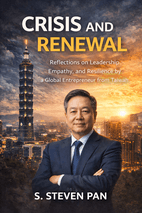
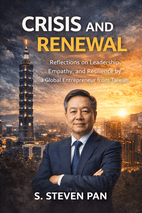
S. Steven Pan's Crisis and Renewal offers a philosophical exploration of empathetic leadership forged in geopolitical uncertainty, drawing from his experience as a Taiwanese entrepreneur. It provides a holistic guide for leaders navigating disruption and existential risk.
Feature
Insta.Page
Blinkist
Shortform
Summary Depth
Full Chapter-by-Chapter
15-min overview
Detailed analysis
Audio Narration
✓ (AI narration)
✓
✓
Visual Mindmaps
✓
✕
✕
AI Q&A
✓ Voice AI
✕
✕
Quizzes
✓
✕
✕
PDF Downloads
✓
✕
✓
Price
$59.99/yr
$146/yr (PRO)
$199/yr
*Competitor data last verified February 2026.
About the Author
S. Steven Pan
S. Steven Pan is a Taiwanese-American author and scholar known for his works on international relations and cross-strait relations between Taiwan and China. His expertise lies in political science and East Asian studies, with notable publications including "Rivalry and Cooperation: The Politics of China-Taiwan Relations." Pan's background includes academic roles and contributions to policy analysis in the context of Asia-Pacific security.
1 Page Summary
S. Steven Pan's Crisis and Renewal offers a deeply personal and philosophical exploration of leadership forged in the crucible of global business and geopolitical uncertainty. Drawing from his experience as a Taiwanese entrepreneur navigating the volatile high-tech industry and the complex cross-strait relationship, Pan argues that authentic leadership is not about authority but about empathy, moral courage, and the resilience to guide organizations through profound disruption. He frames this through the lens of "human-centric" leadership, where understanding the emotional and psychological needs of teams is paramount for fostering innovation and weathering crises.
The book is grounded in the unique historical and political context of Taiwan, a dynamic democracy living in the shadow of a superpower. Pan uses this position—at the intersection of East and West, tradition and innovation, autonomy and integration—as a powerful case study for leading under persistent pressure and ambiguity. His reflections extend beyond business to address the societal and identity challenges faced by Taiwan, proposing that the principles of empathetic leadership and resilient community-building are essential for any entity operating in an environment of existential risk.
The lasting impact of Pan's work lies in its synthesis of Eastern philosophical wisdom with pragmatic Western management theory, providing a holistic guide for the 21st-century leader. He moves beyond conventional playbooks to advocate for a leadership of character and conscience, one that prioritizes long-term renewal over short-term survival. Ultimately, Crisis and Renewal serves as a testament to the idea that the most enduring strength emerges from vulnerability, ethical clarity, and a steadfast commitment to human dignity in the face of relentless change.
The prologue opens with a vivid account of the April 2024 earthquake that struck near Silks Place Taroko hotel in Taiwan, immediately thrusting the staff into a life-threatening crisis. With communications cut and roads blocked, the team's self-organized, empathetic response—caring for hundreds of guests and colleagues—becomes a powerful testament to their ingrained values. This event serves as a springboard to introduce the core philosophy of Silks Hotel Group, framing crisis not as a disaster but as a catalyst for profound transformation. Through personal stories and reflective insights, the chapter argues that lasting success in business stems from a purpose-driven approach, continuous adaptation, and a leadership principle rooted in treating others as you wish to be treated.
The Earthquake and the Unfolding Crisis
On April 3, 2024, a major earthquake severed all communication to the Silks Place Taroko hotel, stranding hundreds and leaving management in the dark about the safety of employees and guests. The first signs of hope arrived with three mud-covered staff members who had climbed through rubble, bringing news that everyone on the hotel shuttles was safe and providing crucial information for notifying families. The following days revealed the depth of the team's resilience: without senior leadership on-site, they formed an impromptu emergency unit. Recreation Manager Paula Wu coordinated with rescue teams, Duty Supervisor Cece Wu managed guest services and infrastructure, and medical specialist Chen Kuan-ting prioritized helicopter evacuations.
Principles in Action: Fortress and Sanctuary
As rescue operations intensified, the hotel transformed into a hub of compassion and efficiency. General Manager Jackie Chao returned via dangerous roads to support the effort, while the staff amazed seasoned rescue workers by offering hot meals, showers, and laundry. Beyond physical care, they provided psychological support, partnering with a local hospital to offer counseling and organizing activities to ease trauma for guests and colleagues alike. This response, described as "business as usual," was driven by a simple, golden-rule philosophy deeply embedded in the company culture: treat others as you wish to be treated. The hotel's eventual reopening nine months later, with no job losses and a strengthened team, underscored that they emerged stronger because of the crisis.
The Broader Philosophy: Transformation as a Constant
This incident is presented not as an anomaly but as a reflection of Silks Hotel Group's three-decade journey. The narrative shifts to explain how the group has repeatedly turned existential threats—from parent company bankruptcy to SARS and the COVID-19 pandemic—into opportunities for reinvention. The metaphor of the butterfly is used to illustrate this necessary, vulnerable process of shedding old forms to achieve new growth. During the pandemic, for instance, the decision to retain all employees, coupled with strategic moves like selling a franchise, sparked innovation and led to significant profitability while competitors faltered. The company's evolution from one hotel to multiple brands showcases a mindset where crisis is embraced as a chance to reimagine the business.
Purpose Beyond Profit: The Foundation for Sustainable Success
The chapter concludes by articulating the deeper lessons for leaders and organizations. It challenges the notion of fixed rules for success, arguing that real progress depends on adaptive responses to setbacks and a clear, guiding purpose. For SHG, that purpose is creating harmony between culture, hospitality, and commerce to foster sustainable growth and human well-being. The author frames the book as a guide for those seeking to understand how to navigate transformative moments, transcend conventional thinking, and build businesses where values matter more than short-term profit. The ultimate message is that crisis, when met with empathy and purpose, can catalyze not just survival, but a renaissance of innovation and mutual prosperity.
Key Takeaways
Crisis as Opportunity: Effective organizations and leaders learn to perceive crises not as pure threats, but as pivotal moments that reveal opportunities for growth, innovation, and strengthening team cohesion.
Empathy as a Strategic Pillar: The principle of treating others as you wish to be treated is not just a moral stance but a practical leadership tool that empowers employees, builds unwavering loyalty, and drives exceptional service, especially under pressure.
Continuous Transformation is Essential: Like a butterfly molting, sustainable success requires a willingness to shed outdated models and adapt continuously. Resilience is built through repeatedly reimagining the business in the face of challenges.
Purpose Drives Resilience: A clear, values-based purpose beyond profit provides the "why" that allows organizations to endure hardship, make principled decisions (like avoiding layoffs), and focus on creating lasting value for all stakeholders.
Leadership in Adversity: True leadership is exemplified by presence, trust in teams, and a commitment to employee welfare, which in turn fuels innovation and operational strength during and after a crisis.
Key concepts: Prologue | Crisis as Catalyst
1. Prologue | Crisis as Catalyst
The 2024 Earthquake Crisis
Major earthquake severed communications, stranding hundreds at Silks Place Taroko
Staff self-organized emergency response without senior leadership on-site
Key personnel emerged as leaders: Paula Wu (rescue coordination), Cece Wu (guest services), Chen Kuan-ting (medical evacuations)
Initial hope arrived via mud-covered staff who brought safety confirmation and crucial information
Principles in Action: Fortress and Sanctuary
Hotel transformed into hub of compassion and efficiency during rescue operations
Staff provided physical care (meals, showers, laundry) and psychological support (counseling, trauma activities)
Response driven by golden-rule philosophy: treat others as you wish to be treated
Nine-month recovery resulted in no job losses and a strengthened team
Crisis as Catalyst for Transformation
Earthquake response reflects three-decade journey of turning threats into opportunities
Butterfly metaphor illustrates necessary vulnerability in shedding old forms for growth
Past crises (parent company bankruptcy, SARS, COVID-19) led to reinvention
Pandemic retention of all employees sparked innovation and significant profitability
Purpose-Driven Leadership Philosophy
Success depends on adaptive responses to setbacks and clear guiding purpose
SHG's purpose: creating harmony between culture, hospitality, and commerce
Values matter more than short-term profit for sustainable growth
Crisis met with empathy and purpose can catalyze innovation and mutual prosperity
Core Leadership Principles
Perceive crises as pivotal moments revealing opportunities for growth and cohesion
Empathy as practical leadership tool that empowers employees and builds loyalty
Continuous transformation essential like butterfly molting outdated models
Purpose-driven resilience enables principled decisions and lasting stakeholder value
True leadership shown through presence, trust in teams, and commitment to employee welfare
If you like this summary, you probably also like these summaries...
💡 Try clicking the AI chat button to ask questions about this book!
Chapter 2: Chapter 1 | Foundations
Overview
This chapter sets the stage by painting a vivid picture of Taiwan's remarkable journey, an island constantly shaped by external pressures and internal fortitude. Despite its modest size and lack of natural resources, Taiwan has consistently turned threats into opportunities, evolving from a postwar manufacturing base to the global epicenter of advanced semiconductor technology. This national narrative of resilience finds a personal embodiment in the author's father, Pan Hsiao-Rui. Arriving as a young refugee, he pioneered Taiwan's shipbreaking industry, creatively repurposing discarded materials like scuttled warships and even an entire decommissioned U.S. plant, instilling in his son the crucial lesson of finding hidden value.
That innovative, adaptive spirit was later channeled into national service when Pan Hsiao-Rui heeded the government's call to help build Taiwan's first international hotel. Despite immense personal financial risk and an eight-year ordeal of setbacks, his perseverance led to the opening of The Regent Taipei, driven not by profit but by a desire to contribute to Taiwan's economic future. His leadership was deeply rooted in a profound, selfless empathy—a generosity and kindness borne from a difficult childhood, which became the cornerstone of the author's own philosophy. This contrasts with merely strategic empathy, emphasizing that genuine care for others forms the bedrock of a strong organizational culture.
The author's path to leadership was a winding one, synthesized from a childhood of diverse influences—from model trains and LEGO fostering design thinking to his grandmother's lessons in frugality. Education in the U.S. during diplomatic tensions honed his resourcefulness, and his academic shifts from architecture to economics layered a multidisciplinary perspective. A stint on Wall Street left him unfulfilled, prompting a pivotal homecoming when his father asked him to lead the new Regent Taipei. This transition from finance to hospitality reframed his entire outlook; he began to see the hotel not as a simple property but as a complex, 24-hour "miniature city" requiring seamless orchestration of residential, commercial, and infrastructural elements.
This perspective fueled innovative business models, such as pioneering independent profit centers for restaurants and shops, which granted unique agility and brand identity long before industry norms caught up. Leading through numerous crises, from diplomatic shifts to the COVID-19 pandemic, meant viewing each challenge as a chance for strategic reinvention. Rather than cutting staff during the pandemic, for instance, the hotel transformed into an urban resort for domestic tourism, turning a global crisis into a case study for growth. This ability to recover and rebalance, much like solving a complex puzzle, is the essence of organizational resilience.
At its heart, this resilience is powered by human-centric leadership. The author learned that true strength during adversity comes from leading with empathy, courage, and attentiveness to team members' needs, principles inspired by his father and other mentors. This philosophy extends beyond the hotel, connecting personal development with corporate evolution through engagements like international forums. Ultimately, managing the company became less about hospitality operations and more about change management, where crises serve as powerful catalysts for self-examination and philosophical reaffirmation. The first thirty years of Regent Taipei, marked by continuous transformation, established that while techniques must adapt, a core philosophy rooted in empathy and value creation remains the unwavering guide for meaningful personal and organizational change.
Taiwan: An Island of Resilience
The chapter opens by establishing Taiwan's unique geopolitical and historical context as the essential backdrop for the transformation story. Despite its small size—smaller than Switzerland but with 23 million people—Taiwan lacks natural resources and faces constant natural and political threats, from earthquakes and typhoons to the immense pressure of a neighboring China that claims sovereignty over it.
The island's modern history is a chronicle of adaptation: colonization, integration into the Qing dynasty, Japanese rule from 1895 to 1945, and finally becoming a refuge for the Republic of China government and two million refugees, including the author's father, after the civil war in 1949. This history of crisis forged a national character of resilience. Despite diplomatic isolation, including expulsion from the UN and loss of U.S. recognition, Taiwan thrived economically by transforming threats into opportunities, evolving from a manufacturing hub for Silicon Valley to the indispensable home of TSMC and the world's most advanced microchips.
The Shipbreaking Pioneer
The narrative then introduces the author's father, Pan Hsiao-Rui, as the embodiment of this resilient, opportunistic spirit. An orphan who survived war and became a young major in military intelligence, he arrived in Taiwan in 1946. Faced with a disrupted plan to start a trading company, he pivoted to an urgent need: salvaging scrap metal from scuttled Japanese warships to supply Taiwan's postwar reconstruction.
He co-founded Nan Feng Steel Co., becoming "Taiwan’s King of Shipbreaking" and dominating the global ship recycling industry for decades. His business acumen was marked by creative repurposing, such as purchasing and towing an entire decommissioned U.S. missile propellant plant across the Pacific to convert it into Taiwan's largest industrial gas company. This experience taught the young author to find "hidden value in what others discard," a foundational business lesson.
Answering the Nation's Call
The father's entry into hospitality was not by choice but by national necessity. In the 1970s, following Taiwan's diplomatic crises, the government sought to build its first international hotel to restore foreign investor confidence. Recruited as the local partner for a project with a former U.S. Secretary of the Treasury, Pan Hsiao-Rui embarked on an eight-year ordeal of political delays, soaring costs, and his partner's eventual withdrawal.
He persevered, selling family properties to fund the project before finally partnering with Chen Yu-Hao of the Tuntex Group to see it through. The Regent Taipei opened in 1990. Profit was not the motivation; answering the government's call and contributing to Taiwan's economic transformation was. This pivot from industry to hospitality embedded a sense of purpose and innovative resilience into the hotel's DNA from its inception.
The Foundation of Empathetic Leadership
Pan Hsiao-Rui's character was defined by a profound empathy rooted in his difficult childhood. Despite immense business success, he remained personally frugal but extraordinarily generous, establishing a foundation that channeled millions into education and social services. He viewed success as an opportunity to help others succeed, a philosophy he extended to pioneering a social enterprise in biotechnology later in life.
This "selfless empathy"—prioritizing others' needs and treating them with the kindness he desired—became the author's core leadership philosophy. It contrasted with "strategic empathy," used for gain in negotiations. The father's life demonstrated that genuine empathy, woven into a corporate culture, creates consistency between personal and professional values and becomes an organization's greatest strength, especially in crisis.
A Personal Journey of Synthesis
The author traces his own path, shaped by a childhood of eclectic influences—from model trains and LEGO (fostering a design mindset) to his siblings' passions for music, literature, and antiques. His grandmother instilled a deep ethic of frugality and conservation. Sent to the U.S. for high school during another period of Taiwan-U.S. tension, he lived independently, honing his resourcefulness.
His academic path was iterative, shifting from architecture to pre-med to economics at UC Berkeley, each transition layering new perspectives. At Berkeley, he met his wife, Constance, and after earning an MBA from Columbia, he began a career on Wall Street at First Boston. However, he quickly found the single-minded pursuit of wealth unfulfilling.
The Homecoming and a New Perspective
In 1991, he was called home to become President of the newly opened Regent Taipei, a role he accepted out of loyalty to his father. This move from Wall Street finance to Taipei hospitality began a three-decade transformation. He came to understand Regent Taipei not merely as a hotel but as a complex, 24-hour "miniature city" with residential, commercial, infrastructural, and administrative components, all requiring seamless orchestration. This homecoming set the stage for leading through crises with a stakeholder-centric philosophy, moving beyond maximizing shareholder value to creating sustainable benefits for all.
The hotel industry's immense complexity, with global operations and interdependencies across hundreds of sectors, requires relentless innovation to keep all moving parts aligned. Regent Taipei embraced this need early, becoming Taiwan's first five-star hotel to integrate luxury shopping and pioneering the operation of restaurants and rooms as independent profit centers. This innovative business model, developed decades before international chains adopted similar strategies, allowed each unit to optimize performance and cultivate a distinct brand identity.
Navigating Crises and Building Resilience
Through numerous near-disasters, the author's leadership at SHG transformed potential catastrophes into sources of competitive advantage. SHG's reputation as Taiwan's leading hotel group is built not just on profitability but on a proven ability to recover and rebalance through crises—much like solving a complex Rubik's Cube. This resilience stems from viewing the hotel not merely as a property but as a dynamic lifestyle platform for cocreating value across dining, accommodation, shopping, culture, and learning.
The Human Element in Leadership
True resilience is rooted in human-centric leadership. Inspired by figures like John Hennessy and the author's father, leading with empathy, courage, and attentiveness to others' needs has proven essential during tough times. This philosophy extends to personal growth, where the author's expansion into related fields and international forums, such as the Young Presidents’ Organization (YPO), aligns with SHG's development. This approach was tested during COVID-19; rather than cutting staff, Regent Taipei redirected energy to transform into an innovative urban resort for domestic tourism, turning a global crisis into a case study for growth.
Philosophy and Self-Examination
Managing SHG evolved from hotel management to change management, where embracing change becomes a catalyst for growth. However, while techniques must adapt, the core philosophy must remain steadfast—change without a guiding principle hinders further transformation. Crises serve as powerful catalysts for self-examination, breaking down preconceptions and unlocking new perspectives. The first thirty years of Regent Taipei, marked by three major transformations, set the foundation for exploring these themes in depth throughout the book.
Key Takeaways
Innovative business models, like independent profit centers, can establish a lasting competitive advantage by fostering agility and unique brand identities.
Organizational resilience is cultivated by reframing crises as opportunities for strategic reinvention and growth.
Leadership grounded in empathy and courage strengthens team morale and long-term stability, especially during adversity.
Personal development and corporate evolution are deeply interconnected, necessitating continuous learning and cross-disciplinary engagement.
Crises provide invaluable moments for philosophical reaffirmation and self-awareness, driving meaningful personal and organizational change.
Key concepts: Chapter 1 | Foundations
2. Chapter 1 | Foundations
Taiwan's National Context of Resilience
Small island with 23 million people facing constant geopolitical and natural threats
History of adaptation through colonization, Japanese rule, and post-civil war refugee influx
Economic transformation from manufacturing hub to global semiconductor epicenter (TSMC)
National character forged by turning diplomatic isolation and crises into opportunities
Pan Hsiao-Rui: Personal Embodiment of Resilience
Orphan and war survivor who arrived in Taiwan as a young refugee in 1946
Pioneered Taiwan's shipbreaking industry by salvaging scuttled Japanese warships
Creative repurposing mindset: converted decommissioned U.S. plant into industrial gas company
Instilled foundational business lesson: finding 'hidden value in what others discard'
Selfless Leadership and National Contribution
Heeded government call to build Taiwan's first international hotel despite personal financial risk
Eight-year ordeal of setbacks culminating in The Regent Taipei opening
Motivation driven by contribution to Taiwan's economic future rather than profit
Leadership rooted in profound selfless empathy from difficult childhood experiences
Author's Multidisciplinary Path to Leadership
Childhood influences: model trains and LEGO fostered design thinking, grandmother taught frugality
U.S. education during diplomatic tensions honed resourcefulness and adaptability
Academic shifts from architecture to economics created layered perspective
Pivotal transition from unfulfilling Wall Street career to leading family hospitality business
Hotel as Miniature City: Innovative Business Philosophy
Reframed hotel as complex 24-hour 'miniature city' requiring orchestration of multiple elements
Pioneered independent profit centers for restaurants and shops before industry norms
Granted unique agility and brand identity through decentralized operational models
Crisis management approach: viewing challenges as opportunities for strategic reinvention
Organizational Resilience Through Human-Centric Leadership
True strength during adversity comes from empathy, courage, and attentiveness to team needs
Pandemic response: transformed hotel into urban resort for domestic tourism instead of cutting staff
Leadership philosophy extends beyond operations to personal and corporate development
Managing change through crises as catalysts for self-examination and philosophical reaffirmation
Core Philosophical Framework
Resilience as ability to recover and rebalance like solving complex puzzles
Genuine care for others (not strategic empathy) as bedrock of strong organizational culture
Techniques must adapt but core philosophy of empathy and value creation remains constant
Integration of personal development with corporate evolution through continuous transformation
The Father's Entry into Hospitality
Motivated by national necessity following Taiwan's 1970s diplomatic crises, not profit
Endured an eight-year ordeal of political delays, soaring costs, and partner withdrawal
Persevered by selling family properties before partnering with Tuntex Group
Embedded a sense of purpose and innovative resilience into the hotel's DNA from inception
The Foundation of Empathetic Leadership
Rooted in Pan Hsiao-Rui's difficult childhood and profound empathy
Defined by personal frugality combined with extraordinary generosity through philanthropy
Distinguishes 'selfless empathy' from 'strategic empathy' used for gain
Demonstrates that genuine empathy woven into corporate culture creates consistency between personal and professional values
The Author's Formative Journey
Shaped by eclectic childhood influences fostering design mindset and conservation ethic
Developed independence and resourcefulness during high school in the U.S.
Iterative academic path layered architecture, pre-med, and economics perspectives
Found Wall Street's single-minded pursuit of wealth unfulfilling despite early career success
Homecoming and Hotel as Miniature City
Returned to Taiwan in 1991 out of loyalty to become President of Regent Taipei
Came to view the hotel as a complex 24-hour 'miniature city' with multiple components
Shifted from shareholder value maximization to stakeholder-centric philosophy
Pioneered innovative business model with independent profit centers decades before industry adoption
Crisis Navigation and Organizational Resilience
Transformed potential catastrophes into sources of competitive advantage
Built reputation on ability to recover and rebalance through crises like solving a Rubik's Cube
Views hotel as dynamic lifestyle platform for cocreating value across multiple domains
During COVID-19, redirected energy to transform into innovative urban resort rather than cutting staff
Human-Centric Leadership Philosophy
True resilience rooted in empathy, courage, and attentiveness to others' needs
Extends to personal growth through expansion into related fields and international forums
Tested during crises where human-centric approach proved essential for survival and growth
Aligns personal development with organizational development through continuous learning
Philosophy of Change and Self-Examination
Evolved from hotel management to change management where embracing change catalyzes growth
Core philosophy must remain steadfast while techniques adapt to circumstances
Crises serve as powerful catalysts for breaking down preconceptions and unlocking new perspectives
First thirty years marked by three major transformations setting foundation for future exploration
Innovative Business Model Design
Independent profit centers create a lasting competitive advantage by decentralizing decision-making.
Agility and unique brand identity are fostered through autonomous, specialized units.
Structural innovation can be more defensible than product or service innovation alone.
Cultivating Organizational Resilience
Resilience is built by strategically reframing crises as opportunities for reinvention.
Adaptive capacity requires both structural flexibility and a proactive mindset toward disruption.
Long-term stability is achieved through continuous evolution, not static defense.
Foundations of Empathetic Leadership
Leadership grounded in empathy strengthens team morale and trust, especially during adversity.
Courage in decision-making must be balanced with compassion for team well-being.
Empathetic leadership fosters long-term organizational stability and employee retention.
Integration of Personal and Corporate Development
Personal growth and organizational evolution are deeply interconnected processes.
Continuous learning and cross-disciplinary engagement are necessary for holistic development.
Leadership effectiveness increases with self-awareness and philosophical clarity.
Philosophical Reaffirmation in Crisis
Crises provide invaluable moments for re-examining core values and purpose.
Strategic reinvention is driven by heightened self-awareness and clarity of mission.
Adversity can catalyze meaningful, lasting change for both individuals and organizations.
⚡ You're 2 chapters in and clearly committed to learning
Why stop now? Finish this book today and explore our entire library. Try it free for 7 days.
Chapter 3: Chapter 2 | First Transformation (1998–2003)
Overview
This period begins with a brutal corporate showdown. As the Asian financial crisis raged, the hotel’s chairman proposed a bailout plan involving a questionable related-party transaction. The author, as president, refused on principle, declaring, “We don't do deals with our own companies.” This clash of philosophies—pitting Western corporate governance against traditional conglomerate practices—escalated into a fight for survival, culminating in the author's forced leave and a tense boardroom battle that ultimately scuttled the plan.
The victory was short-lived. By 2000, the parent company's deepening financial woes threatened to sink the hotel through a joint venture guarantee. To secure independence, the author orchestrated a daring financial gambit, leading a buyout of the parent's stake at a premium while negotiating a reciprocal deal to sever ties with a failing project. This move proved prescient when the parent group declared bankruptcy shortly after.
Newly independent, the company immediately faced external shocks: the 9/11 attacks cratered travel demand and the stock price. This financial pressure, combined with hard lessons from past capital-intensive ventures, inspired a radical strategic pivot. Pioneering a new model in Taiwan, the company executed an unprecedented capital reduction to return cash to shareholders, boosting key metrics and establishing a new benchmark for shareholder value.
Concurrently, a quiet management revolution was unfolding inside the hotel: the implementation of a profit center system. This model shattered the traditional, centralized hierarchy, decentralizing the hotel into over twenty independent business units, each with its own profit-and-loss statement. The transformation was met with fierce resistance, requiring a complete overhaul of organizational structure and the creation of fair systems for internal cost allocation and internal transfer pricing.
This new framework forced every department to think like a standalone business, revealing hidden inefficiencies and instilling a fiercely competitive mindset. Restaurant managers now had to compete with the city’s best eateries, not just serve hotel guests. Most importantly, it created a culture of ownership, turning department heads into empowered “small bosses.” This agility proved invaluable when the 2003 SARS pandemic brought travel to a halt. These entrepreneurial leaders quickly pivoted, leasing rooms as offices, offering deep-cleaning services, and shifting banquets to home delivery—finding revenue streams that simply didn't exist under the old model.
The resilience forged during SARS launched a new era of expansion and innovation. The hotel began extending its brand beyond its walls, launching popular off-site restaurants and, in a bold move, acquiring the Domino’s Pizza master franchises for Taiwan and China. A pinnacle of this creative outreach was Silks Palace at the National Palace Museum, where cuisine became a form of cultural storytelling. Underpinning all this adaptive growth was a single, powerful concept that evolved from a tactical response into a core value: empathy. The principle of meeting clients where they were became the philosophical North Star for the entire group.
Looking back, this first transformation was about far more than survival or new business models. It was a forging of character. The battle over governance cemented a commitment to principle. The profit center system rebuilt the corporate mindset around entrepreneurship and accountability. Crises demonstrated that agility must be rooted in core values. The era established that true, lasting resilience is built on the intangible foundation of character, shaped by the principle of treating others as you wish to be treated.
A Clash of Philosophies and a Fight for Survival
The chapter opens in a period of intense corporate conflict. Following Regent Taipei's IPO in 1998, its chairman, Chen Yu-Hao of the Tuntex Group, proposed a bailout strategy during the Asian financial crisis: have the publicly listed hotel purchase Tuntex's troubled Beijing real estate investment. As president, the author—armed with a Western MBA's focus on corporate governance—vehemently opposed this ethically compromised related-party transaction, stating, “We don't do deals with our own companies.”
This principled stand led Chen to move for the author's removal as president. While the motion was delayed thanks to the author's father and a critical note of support from Independent Board Supervisor T. J. Huang reading "Be patient," the author was forced into an extended leave. The conflict culminated three months later when Huang’s intervention forced board members with Tuntex ties to abstain, scuttling the bailout plan. This battle revealed the deep philosophical divide between Western-style governance and the blurred lines of personal and company interests in traditional Taiwanese conglomerates.
Financial Gambit to Secure Independence
The crisis deepened in 2000 when Tuntex's financial troubles threatened Regent Taipei directly through a 50/50 joint venture on the Taichung Hotel Complex, for which Regent was a co-guarantor. Recognizing he was the hotel's "last line of defense," the author orchestrated a high-stakes financial maneuver. He formed a coalition of foreign investors, put his family's entire stake up as collateral, and led a buyout of Tuntex's majority share in Regent Taipei at a 30% premium (nearly NT$5 billion).
In a critical reciprocal deal, Tuntex bought back Regent's stake in the failing Taichung complex at a 50% discount, releasing Regent from its debt guarantees. This decision was swiftly vindicated when the Tuntex Group declared bankruptcy in 2001 with massive debts, and the Taichung complex's equity value plummeted to zero.
External Shocks and a Strategic Pivot
Just as the family took control, external crises hit. The 9/11 attacks in 2001 devastated global travel and Regent Taipei's stock price, which fell below NT$10 from a purchase price of NT$25. This financial pressure, combined with the painful lesson of the capital-intensive Taichung debacle, inspired a radical rethinking of the business model. Observing global chains like Marriott shifting to management over ownership, the author pioneered an "asset-light" strategy in Taiwan.
In 2002, he executed an unprecedented capital reduction for a profitable company, halving cash reserves from NT$4.3 billion to NT$2.1 billion and returning the excess to shareholders. This boosted earnings per share (EPS) and return on equity, setting a new precedent for corporate governance and shareholder value in Taiwan that was later adopted by other major firms.
A Management Revolution: The Profit Center System
Amidst these external battles, the hotel was undergoing an internal management revolution: the implementation of a profit center system. Championed earlier by Chairman Chen but led by the author, this model decentralized the hotel into over twenty independent business units—from restaurants to the laundry room—each with its own financial statements and accountable managers.
This shift from a traditional, centralized "captain of the ship" model was met with intense resistance at all levels. It required a complete redesign of organizational reporting lines, job roles, and, most challengingly, a system for fair internal cost allocation for shared resources like atrium performances, lobby maintenance, and support departments (PR, HR, Accounting).
Building Fair Systems and a Competitive Mindset
Making the system work demanded innovative solutions for internal fairness. Costs for shared amenities were allocated using weighted systems (like concert hall seating), square footage calculations, and guest counts. A rigorous internal transfer pricing system was established, anchored to market prices, forcing internal "sellers" (like the central kitchen) to compete on quality and value with external vendors.
The system revealed hidden inefficiencies, leading to strategic decisions like outsourcing the underutilized limousine department. Crucially, it instilled a competitive, independent mindset in each restaurant, compelling them to compete directly with top standalone eateries in the city, rather than just serving hotel guests.
Creating a Culture of Ownership
The profit center system transformed department heads into "small bosses" with a powerful sense of ownership. This empowered them to innovate, solve problems independently, and aggressively seek new revenue. Examples include the F&B retail division branching into TV shopping for mooncake sales, and the Brasserie buffet restaurant innovating by adding highly successful afternoon tea and late-night supper services—eventually earning a CNN recommendation.
This decentralized structure proved its immense value during the 2003 SARS pandemic when travel vanished. Empowered "small bosses" quickly pivoted, offering new services like converting guest rooms into monthly leased offices, providing deep-cleaning services to local homeowners, and pivoting F&B to gourmet home delivery and banquet catering. The system provided the agility to not just survive but find new avenues for revenue in a crisis.
Post-SARS Expansion and Innovation
The resilience built during the SARS crisis paved the way for a new era of growth. Beginning in 2005, Regent Taipei launched a dedicated off-site Food & Beverage services department, extending the hotel’s brand and culinary excellence into the broader community. This initiative featured diverse concepts like the Japanese buffet Wasabi, the Spice Market with Thai influences, and the elegant Garden Villa, which became a premier wedding venue.
The expansion grew bolder in 2006 with the acquisition of the Domino’s Pizza master franchises for Taiwan and China, rapidly scaling to hundreds of delivery units. This was followed in 2008 by the opening of Silks Palace at the National Palace Museum, a visionary project where cuisine became a form of cultural storytelling. Its menu, inspired by classical Chinese art and traditions, offered an edible connection to Taiwan’s heritage for international guests. These ventures served a dual purpose: they diversified revenue streams and acted as crucial leadership incubators, where future hotel general managers gained hands-on operational experience.
The Foundation of Empathy
This entire period of adaptation and outreach was fundamentally driven by a single, powerful concept: empathy. The strategy of meeting clients where they were, both literally and figuratively, when they could not come to the hotel, redefined the company’s competitive strength. Empathy evolved from a tactic into the core value of SHG, guiding all staff, activities, and decisions. It became the philosophical North Star for the group.
The Lasting Legacy of Transformation
Reflecting on this first major transformation, the lessons proved deeper than mere operational shifts. The implementation of the profit center system fundamentally altered the corporate mindset, fostering entrepreneurship and accountability. The difficult battles over corporate governance with Chairman Chen, while painful, instilled an unwavering commitment to principle. The SARS crisis demonstrated that agile adaptation must always be anchored by core values.
Ultimately, this era established that true business resilience is built on character. Whether through fair internal systems, empowering employees, or pivoting services with compassion, every action was rooted in the principle of treating others as one wishes to be treated. The company learned that while crisis tests business models, it forges an unshakeable character—an intangible asset that becomes the ultimate foundation for future challenges.
Key Takeaways
Strategic Diversification: Post-crisis growth came from proactively extending services beyond the hotel’s physical walls through new F&B concepts and strategic acquisitions like Domino’s.
Culture as Strategy: Empathy was codified as the organization’s core value, shifting from a crisis-response tactic to the guiding principle for all operations and leadership decisions.
Crisis Forges Character: The period proved that enduring challenges like corporate governance battles and a pandemic do more than test operations—they reveal and solidify an organization’s fundamental character, creating a resilient foundation for the future.
Key concepts: Chapter 2 | First Transformation (1998–2003)
3. Chapter 2 | First Transformation (1998–2003)
Clash of Philosophies and Corporate Governance Battle
Chairman proposed bailout via related-party transaction during Asian financial crisis
Author refused on principle: 'We don't do deals with our own companies'
Conflict between Western governance and traditional conglomerate practices
Forced leave and boardroom battle scuttled the bailout plan
Financial Gambit for Independence
Parent company's financial woes threatened hotel through joint venture guarantee
Orchestrated buyout of parent's stake at 30% premium (NT$5 billion)
Negotiated reciprocal deal to sever ties with failing Taichung project
Decision vindicated when parent group declared bankruptcy shortly after
Strategic Pivot Through Capital Restructuring
External shocks: 9/11 attacks cratered travel demand and stock price
Executed unprecedented capital reduction to return cash to shareholders
Boosted key financial metrics and established new benchmark for shareholder value
Pioneered new model in Taiwan's corporate landscape
Management Revolution: Profit Center System
Decentralized hotel into 20+ independent business units with own P&L
Overhauled organizational structure and internal cost allocation systems
Created internal transfer pricing framework
Forced departments to think like standalone businesses, revealing inefficiencies
Cultural Transformation and Entrepreneurial Mindset
Fostered culture of ownership among department heads ('small bosses')
Restaurant managers competed with city's best eateries, not just hotel guests
Instilled fiercely competitive and entrepreneurial mindset
Created agility that proved invaluable during 2003 SARS pandemic
Crisis Response and Adaptive Innovation
SARS pandemic prompted entrepreneurial pivots: rooms as offices, home delivery
Launched era of expansion beyond hotel walls (off-site restaurants)
Acquired Domino's Pizza master franchises for Taiwan and China
Created Silks Palace at National Palace Museum as cultural storytelling
Foundational Principles and Lasting Legacy
Empathy evolved from tactical response to core value and philosophical North Star
Battles cemented commitment to principle and governance
Resilience built on intangible foundation of character
Established that agility must be rooted in core values
External Crisis and Strategic Pivot
The 9/11 attacks devastated global travel, causing Regent Taipei's stock price to plummet below NT$10 from a purchase price of NT$25.
Financial pressure and the Taichung debacle inspired a radical rethinking of the business model toward asset-light operations.
In 2002, the author executed an unprecedented capital reduction for a profitable company, halving cash reserves from NT$4.3 billion to NT$2.1 billion and returning excess to shareholders.
This move boosted EPS and return on equity, setting a new precedent for corporate governance and shareholder value in Taiwan.
Implementation of the Profit Center System
The hotel decentralized into over twenty independent business units, each with its own financial statements and accountable managers.
This shift from a centralized 'captain of the ship' model faced intense resistance at all levels of the organization.
It required a complete redesign of organizational reporting lines, job roles, and systems for fair internal cost allocation.
Shared resources like atrium performances, lobby maintenance, and support departments (PR, HR, Accounting) needed new allocation methods.
Establishing Fair Internal Systems
Costs for shared amenities were allocated using weighted systems (like concert hall seating), square footage calculations, and guest counts.
A rigorous internal transfer pricing system was established, anchored to market prices.
This forced internal 'sellers' (like the central kitchen) to compete on quality and value with external vendors.
The system revealed hidden inefficiencies, leading to strategic decisions like outsourcing the underutilized limousine department.
Fostering a Competitive and Ownership Culture
Department heads became 'small bosses' with a powerful sense of ownership, empowering them to innovate and solve problems independently.
Restaurants were compelled to compete directly with top standalone eateries in the city, not just serve hotel guests.
Examples of innovation included F&B retail branching into TV shopping for mooncake sales, and the Brasserie buffet adding successful afternoon tea and late-night supper services.
This decentralized structure proved invaluable during the 2003 SARS pandemic, enabling quick pivots to new revenue streams.
Crisis Adaptation and Post-SARS Growth
During SARS, empowered teams pivoted by converting guest rooms into monthly leased offices and offering deep-cleaning services to homeowners.
F&B shifted to gourmet home delivery and banquet catering, demonstrating agility in crisis.
Post-SARS expansion included launching dedicated off-site F&B services with concepts like Wasabi, Spice Market, and Garden Villa.
Further diversification came through acquiring Domino's Pizza master franchises and opening Silks Palace at the National Palace Museum.
Empathy as Core Philosophy
The strategy of meeting clients where they were, both literally and figuratively, redefined the company's competitive strength.
Empathy evolved from a tactical response into the core value of SHG, guiding all staff, activities, and decisions.
It became the philosophical North Star for the group, rooted in treating others as one wishes to be treated.
Legacy of the First Transformation
The profit center system fundamentally altered the corporate mindset, fostering entrepreneurship and accountability.
Battles over corporate governance instilled an unwavering commitment to principle.
The era demonstrated that true business resilience is built on character, not just operational models.
Crisis forges unshakeable character—an intangible asset that becomes the ultimate foundation for future challenges.
Post-Crisis Strategic Expansion
Growth was driven by diversifying beyond core hotel operations into new Food & Beverage (F&B) ventures.
Strategic acquisitions, such as Domino's Pizza, were key to expanding the brand's reach and revenue streams.
This proactive extension of services demonstrated a shift from defensive survival to offensive growth.
Institutionalizing Empathy as Core Value
Empathy evolved from a crisis-management tactic to the organization's codified, central operating principle.
The value guided all leadership decisions and day-to-day operational practices.
This cultural shift was a deliberate strategy to unify and strengthen the organization from within.
Crisis as a Crucible for Organizational Identity
Enduring multiple challenges, including governance battles and a pandemic, tested the company's operational resilience.
These trials served to reveal and solidify the organization's fundamental character and values.
The period created a resilient cultural and strategic foundation essential for future growth.
Legacy of the First Transformation
The era established a proven playbook for navigating severe external shocks and internal conflicts.
It validated a leadership model centered on core human values rather than purely transactional management.
The transformation set a precedent for strategic agility, proving the necessity of adapting the business model to survive and thrive.
Chapter 4: Chapter 3 | Global Expansion (2008–2018)
Overview
Amidst the turmoil of the 2008 global financial crisis, the Silks Hotel Group (SHG) saw not panic but possibility. With Asia remaining relatively stable, they confidently launched two new brands: Silks Place, a cultural luxury experience, and Just Sleep, a value-conscious boutique concept. This bold move was both an expansion and a strategic hedge, as their licensing agreement for the Regent Taipei hotel was nearing its end. The crisis then created a remarkable opening—the chance to acquire the global Regent Hotels & Resorts brand from the Carlson Group. In a high-stakes bidding war, SHG's winning offer of US$56 million in 2010 was fueled by empathy, convincing the sellers they would cherish Regent as a "crown jewel" and making them the first Taiwanese company to own an international luxury brand outright.
Owning Regent prompted a deep dive into its identity, leading to the articulation of the Regent DNA—a set of twelve complementary dualities like "global yet local" that embodied a yin-yang philosophy. This formalized the group's mission to blend the best of the world with the local. SHG established a brand pyramid with Regent at the peak, but managing a global network proved costly and complex. By 2018, this led to a strategic pivot: a joint venture with IHG. Selling a 51% stake allowed IHG to handle global operations while SHG refocused on Taiwan, a move that also enabled the celebrated rebirth of Regent Hong Kong.
Financing challenges during the crisis sparked another innovation—the hotel-branded residences model. By selling luxury residences to fund development, SHG turned a capital drought into a sustainable strategy. This was proven first at Regent Porto Montenegro, which introduced the concept to Europe, and then perfected at Regent Phu Quoc in Vietnam. There, villa sales during the pandemic more than covered costs, transforming real estate into an investment vehicle that generated rental income for owners through the hotel's operation.
This journey of ambitious growth brought unanticipated burdens, leading to personal and philosophical reflections. The author found guidance in Taoist principles, reinterpreting wu-wei not as passivity but as proactive, selfless action. The parable of the Chinese farmer, who meets fortune and misfortune with a simple "Maybe," illustrated the wisdom of withholding immediate judgment. The yin-yang symbol became a metaphor for business resilience, where crises contain the seeds of opportunity and true strength lies in perceiving the creative potential at the boundary between opposites.
Liberated from daily operations by the IHG partnership, the author embraced continuous learning and spiritual enrichment, with music playing a key role as the self-appointed head DJ of the Regent Taipei. This practice underscored a broader theme: that a fulfilling life and a successful business both thrive on harmony, variety, and the resilience to see adversity and blessing as an inseparable, cyclical dance.
Navigating the Global Financial Crisis
The chapter opens at the onset of the 2008 global financial crisis, triggered by the collapse of Lehman Brothers. While the world plunged into recession, Asia, including Taiwan, remained relatively stable. This resilience gave the Silks Hotel Group (SHG) the confidence to advance ambitious plans despite the global uncertainty. In a bold move, they launched two new hotel brands in 2008-2009: Silks Place, a cultural luxury brand, and Just Sleep, a value-conscious boutique brand.
The creation of Silks was, in part, strategic contingency planning. With the licensing agreement for the Regent Taipei hotel set to expire in 2010, SHG considered its future paths. They chose to build their own legacy brand, inspired by the historical Silk Road’s East-West exchange. Just Sleep was designed to offer three-star prices with four-star amenities and five-star service DNA, targeting a new wave of mainland Chinese tourists and budget-savvy travelers.
The Bold Acquisition of the Regent Brand
The financial crisis created an unexpected opportunity. In 2009, the Carlson Group decided to sell its luxury portfolio, including the global Regent Hotels & Resorts brand. SHG’s chairman saw a once-in-a-lifetime chance: acquiring the brand would resolve their licensing dilemma and fulfill their mission of global integration.
A small, confidential team was assembled to navigate the complex, global bidding process. Against giants like InterContinental Hotels Group (IHG) and the Ritz-Carlton, SHG advanced through multiple rounds. Their winning bid of US$56 million was finalized in June 2010, making SHG the first Taiwanese company to own an international luxury hotel brand outright. The deal included management contracts for 17 properties worldwide. The chairman believes their success was rooted not just in financial terms, but in empathy—convincing Carlson they would cherish the Regent brand as a "crown jewel."
Defining the Regent DNA
Owning the brand prompted deep reflection on its essence. The chairman defined the Regent DNA through twelve key dualities—complementary opposites like "global yet local" and "quiet yet confident." This philosophy, akin to yin and yang, avoids polarized thinking and guides the brand to blend tradition with innovation. It formalized the group’s core mission: to "bring the best of the world to the local, and the best of the local to the world," a principle that would now extend across all SHG brands.
A Global Strategy and Strategic Pivot
With the acquisition, SHG established a brand pyramid: Regent at the peak as global luxury, Silks as cultural luxury, and Just Sleep as a stylish boutique base. Managing a global brand required immense personal effort from the chairman, who spent years building relationships with elite property owners worldwide.
However, major challenges emerged: the high cost of a global network, the financially draining lease of the Regent Berlin hotel, and operational hurdles. By 2018, this led to a strategic pivot. SHG formed a joint venture with IHG, selling a 51% stake in the Regent brand. IHG took over global operations and expansion, while SHG refocused on its core brands in Taiwan and gained access to IHG’s vast reservation system. This partnership also paved the way for the celebrated rebranding of the InterContinental Hong Kong back to Regent Hong Kong.
Transforming Crisis into a Business Model
The chapter concludes by highlighting SHG’s innovative response to the financing drought of 2008. Unable to secure traditional construction loans, they pioneered a new business model: combining hotels with branded residences. Selling luxury residences would fund a significant portion of the hotel's development, creating a sustainable capital solution and a new revenue stream from management services, turning a period of adversity into a foundational strategy for future growth.
Pioneering the Hotel-Residence Model: Porto Montenegro
The chapter details how Regent executed its strategy of using hotel-branded residences to unlock capital. A landmark example was the entry into Porto Montenegro, a former Yugoslav naval base being transformed into a luxury destination by a consortium of ultra-wealthy families. The opportunity arose serendipitously when Regent President Ralf Ohletz, speaking at a European real estate forum, found his vision for mixed-use hospitality perfectly aligned with that of the property owner. This shared outlook led to a deal where competing brands had stalled.
Negotiated during the financial crisis and opened in 2014, Regent Porto Montenegro achieved two industry firsts: it was the first new luxury hotel to open in post-crisis Europe and introduced the continent to hotel-branded residences. This project validated the mixed-use model in Europe. A telling anecdote involves a yacht owner at the marina revealing a $250,000 fuel bill, highlighting the clientele. The author learned the hotel served a practical role, housing crew and offering respite for guests seeking a break from life aboard the superyachts.
Refining the Model: Pandemic-Era Success in Phu Quoc
The hotel-residence concept was further perfected and proven resilient with the 2022 opening of Regent Phu Quoc in Vietnam. This project was a triumph, with villa sales more than doubling the total development cost—a remarkable feat achieved during the pandemic. The resort, set within a UNESCO biosphere, features 252 private pools across its Sky and Land Villas.
The secret to its success was framing real estate as a dual-purpose instrument: a personal luxury haven and an income-generating investment. Owners act as landlords, placing their villas into the hotel's rental pool when not in use. This model, requiring the meticulous operation of a five-star brand to optimize cash flow, allows developers to rapidly recoup costs and provides buyers with a revenue stream. Regent thus transformed from just a luxury brand into a reliable investment vehicle.
A Strategic Alliance with IHG
After nearly a decade of independent global growth, Regent needed larger infrastructure to scale. This led to a strategic joint venture with InterContinental Hotels Group (IHG), a former rival. Following years of acquisition offers from successive IHG CEOs, a framework was crafted under CEO Keith Barr. The 2018 deal sold a 51% controlling stake in the global Regent brand to IHG, while SHG retained 100% control of Regent Taipei and all future rights in Taiwan.
The agreement was structured as a "triple win." First, it allowed investor Goodwin Gaw to restore the Regent name to the iconic Hong Kong property he acquired (formerly the InterContinental Hong Kong). Second, it let IHG fill a gap in its luxury portfolio to compete with brands like Four Seasons and Ritz-Carlton. Third, it realized the author's long-held dream of resurrecting Regent Hong Kong, which reopened in 2023 as the brand's new flagship.
The Costs and Reflections of Success
The narrative reflects on the hidden toll of ambitious growth. The triumphant 2010 acquisition of the global Regent brand, while a breakthrough, brought unanticipated complexities and management burdens across seventeen worldwide properties. The author shares a celebratory letter sent to staff at the time, capturing the euphoria of bringing the brand "home."
This journey culminated in the symbolic reopening of Regent Hong Kong, a full-circle moment that fulfilled a decade-long vision. The author credits a philosophical grounding in Laozi's Tao Te Ching, introduced during a prior period of intense corporate strife, for providing perspective. It fostered a mindset of recognizing the coexistence of blessing and adversity, allowing him to navigate challenges and ultimately find strength in strategic compromise, like the IHG partnership, which embodied the principle of "purposeful inaction."
Taoist Principles as a Framework for Resilience
The author found profound personal and professional guidance in the Tao Te Ching, moving beyond viewing its concept of wu-wei as passive inaction. Instead, they interpret it as proactive, selfless action—akin to nature, which gives generously without expectation. This philosophy fosters a mindset where benefiting others enriches one’s own life, rejecting a zero-sum view of success. Central to this is the understanding that blessing and adversity are intrinsically intertwined and cyclical, much like the seasons. A seeming disaster can contain the seed of future good fortune, and vice versa. This perspective cultivates resilience, allowing one to face uncertainty not with fear, but with the resolve to find meaning and opportunity within it.
The Story of the Chinese Farmer: Embracing Uncertainty
The parable of the Chinese farmer, as retold by Alan Watts, perfectly illustrates the Taoist view of life’s unpredictable flow. The farmer’s repeated response of “Maybe” to events his neighbors label as misfortune or fortune underscores the impossibility of judging any single event in isolation. The story teaches that the full consequence of any occurrence is unknowable in the moment. This narrative reinforces the author’s belief that our response to change—not the change itself—determines whether a situation becomes a crisis or an opportunity. The key is to withhold immediate judgment and maintain equanimity.
The Yin-Yang Symbol and Business Resilience
The yin-yang symbol becomes a powerful metaphor for navigating a volatile industry like hospitality. The author is particularly drawn to the symbol’s representation of mutual dependence—the dot of one within the field of the other signifies that all conditions contain their opposite potential. The boundary line between black and white is seen as a neutral, creative space of pure potential. For the author, this translates to a leadership approach where macroeconomic downturns and global crises are not merely threats but necessary seasons that test and strengthen an organization’s character. True success comes from cultivating the self-awareness and peace of mind to perceive the opportunity for transformation hidden within disorder.
Personal Enrichment and the Role of Music
Liberated from day-to-day operations by the IHG partnership, the author dedicated time to continuous learning and spiritual enrichment. This structured life around quadrants of work, investing, learning, and wellness. Music serves as a vital “spice” for this well-seasoned life, a tool to modulate emotion and enhance different environments. This passion is applied professionally as the self-appointed head DJ of the Regent Taipei, where curating playlists for different spaces is seen as essential to crafting the guest experience. This practice underscores a broader philosophy: that richness in life and business comes from embracing variety, harmony, and the creative connection between different elements.
Key Takeaways
The Taoist principle of wu-wei is reinterpreted as proactive, selfless action, a guide for leadership and personal conduct.
Blessing and adversity are an inseparable, cyclical duality; the potential for one always resides within the other, making immediate judgment unwise.
Resilience is forged by perceiving challenges as necessary seasons for growth and by finding the creative potential that exists at the boundary between opposites.
Self-awareness and peace of mind are prerequisites for transforming crises into opportunities for meaningful change.
A fulfilling life, like a successful business, requires continuous learning, spiritual enrichment, and the harmonious blending of diverse elements, much like a curated playlist.
Key concepts: Chapter 3 | Global Expansion (2008–2018)
4. Chapter 3 | Global Expansion (2008–2018)
Strategic Response to the 2008 Financial Crisis
Asia's relative stability allowed SHG to launch two new brands: Silks Place (cultural luxury) and Just Sleep (value boutique)
The launches served as both expansion and strategic hedge ahead of the Regent Taipei license expiration
Just Sleep targeted the growing wave of mainland Chinese tourists with budget-conscious luxury
Acquisition of Regent Hotels & Resorts
Seized opportunity during crisis to acquire global Regent brand from Carlson Group in 2010
Won high-stakes bidding war against giants like IHG with US$56 million offer
Success attributed to empathy—convincing sellers SHG would cherish Regent as a 'crown jewel'
Made SHG first Taiwanese company to own an international luxury brand outright
Defining and Structuring the Brand Identity
Articulated Regent DNA through twelve complementary dualities (e.g., 'global yet local')
Formalized mission: blend best of world with local, inspired by yin-yang philosophy
Established brand pyramid: Regent (global luxury), Silks (cultural luxury), Just Sleep (boutique base)