Chapter 1: The Journey to Discovering the Root Cause of Suffering
Chapter 1 of 4
0:000:00
EN
1x
Voice
PDF
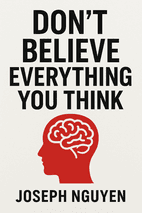
Don't Believe Everything You Think
by Joseph Nguyen
What is the book Don't Believe Everything You Think about?
Joseph Nguyen's Don't Believe Everything You Think explores how identifying with negative thoughts creates suffering, offering tools to observe thinking without attachment. It provides a practical guide for anyone seeking mental clarity and emotional resilience by shifting their relationship with the mind.
Feature
Insta.Page
Blinkist
Shortform
Summary Depth
Full Chapter-by-Chapter
15-min overview
Section-by-section guides
Audio Narration
✓
✓
✓
Visual Mindmaps
✓
✕
✕
AI Q&A
✓
✕
✕
Quizzes
✓
✕
✕
PDF Downloads
✓
✕
✓
Price
$89.99/yr
$146/yr (PRO)
$199/yr
*Competitor data last verified July 2026.
1 Page Summary
In Don't Believe Everything You Think, author Joseph Nguyen presents a powerful exploration of the nature of human suffering, arguing that its root cause is not our external circumstances but our own unchecked thinking. The book's central thesis is that we are not our thoughts; instead, we are the awareness behind them. Suffering arises when we mistakenly identify with our stream of negative, fearful, or anxious thoughts, believing them to be objective reality. Nguyen guides the reader to understand that thoughts are transient mental events that, when observed without attachment, lose their power to cause psychological pain.
The book is situated within the broader context of modern spiritual and psychological teachings that draw from ancient wisdom traditions like Buddhism and Advaita Vedanta, as well as contemporary insights from psychology. It builds upon the foundational idea, popularized by teachers like Eckhart Tolle and Byron Katie, that our internal narrative—not the events themselves—creates our experience of reality. Nguyen makes these concepts highly accessible, stripping away complex terminology to focus on the practical, immediate experience of recognizing thought as a separate phenomenon from the self.
The lasting impact of the work lies in its potential to offer immediate and profound relief from mental anguish. By providing simple yet profound tools to create distance from one's thinking, the book empowers readers to find a state of innate well-being and peace that exists independently of life's challenges. It serves as a practical guide for ending the cycle of suffering by shifting one's relationship with the mind, making it a valuable resource for anyone seeking mental clarity, emotional resilience, and a more peaceful life.
Chapter 1: The Journey to Discovering the Root Cause of Suffering
Overview
Overview
This chapter invites us to explore the very nature of suffering, distinguishing it from the inevitable pains of life. Through a blend of ancient wisdom and personal narrative, we learn that suffering often stems from our own reactions, not the events themselves. The author's journey from confusion to clarity reveals how understanding this distinction can lead to profound emotional freedom, setting the stage for a deeper dive into the mind's inner workings.
The Two Arrows Analogy
A powerful Buddhist teaching illustrates that when hardship strikes, we face two arrows. The first arrow represents pain—unavoidable and inherent to human experience, like loss or physical discomfort. The second arrow, however, is our emotional reaction: the self-criticism, fear, or anger that amplifies the initial hurt. As the Buddha noted, while we can't dodge the first arrow, the second is optional. This insight shifts the focus from blaming external circumstances to examining our internal responses, highlighting that suffering is a choice we make in how we interpret and react to pain.
The Author's Personal Quest
Driven by a desperate need to end his own suffering, the author embarked on years of intensive exploration. He tried nearly everything—from psychology and philosophy to spiritual practices like meditation, breathwork, and hypnotherapy. Despite moments of temporary relief, these methods fell short, leaving him feeling more anxious and hopeless than ever. This phase underscores a common struggle: even with the best intentions and efforts, surface-level solutions often fail to address the core issue, leading to a sense of futility and deepening despair.
A Glimmer of Insight
In his darkest hour, a breakthrough emerged that tied back to the two arrows concept. The author realized that ending suffering isn't about eliminating pain but about changing how we relate to it. By understanding the mechanics of the mind and how our thoughts create our reality, he saw that we can intercept the second arrow before it strikes. This revelation wasn't a quick fix but a fundamental shift in perspective, emphasizing that true peace comes from within, through awareness and intentional response rather than external fixes.
Key Takeaways
Suffering is optional, while pain is inevitable: Life will bring challenges, but our emotional suffering arises from how we react to them.
The second arrow is our responsibility: By recognizing that we control our reactions, we can choose not to amplify pain into prolonged suffering.
Understanding the mind is crucial: Lasting change requires insight into how our thoughts and emotions shape our experiences, rather than relying solely on external methods.
Personal journey matters: The author's story shows that perseverance through trial and error can lead to transformative insights, even when all else seems to fail.
Key concepts: Chapter 1: The Journey to Discovering the Root Cause of Suffering
1. Chapter 1: The Journey to Discovering the Root Cause of Suffering
The Nature of Suffering vs Pain
Suffering stems from our reactions, not the events themselves
Pain is inevitable in human experience, while suffering is optional
Understanding this distinction leads to emotional freedom
Ancient wisdom and personal narrative reveal this fundamental truth
The Two Arrows Analogy
First arrow represents unavoidable pain inherent to human experience
Second arrow represents our emotional reaction that amplifies initial hurt
While we can't dodge the first arrow, the second is optional
Suffering becomes a choice in how we interpret and react to pain
Shifts focus from external circumstances to internal responses
The Search for Solutions
Exploration of psychology, philosophy, and spiritual practices
Temporary relief from methods like meditation and hypnotherapy
Surface-level solutions fail to address the core issue
Leads to sense of futility and deepening despair despite efforts
Common struggle of seeking external fixes for internal problems
The Transformative Insight
Ending suffering isn't about eliminating pain but changing our relationship to it
Understanding how thoughts create our reality allows interception of second arrow
Fundamental shift from external fixes to internal awareness
True peace comes from within through intentional response
Revelation emerges in darkest moments of struggle
Core Principles for Emotional Freedom
Suffering is optional while pain is inevitable
We control our reactions and can choose not to amplify pain
Understanding the mind's mechanics is crucial for lasting change
Perseverance through trial and error leads to transformative insights
Personal journey matters in discovering fundamental truths
💡 Try clicking the AI chat button to ask questions about this book!
Chapter 2: The Root Cause of Suffering
Overview
This chapter delves into the profound realization that our suffering stems not from external circumstances, but from the inner landscape of our own thoughts. Through relatable examples and timeless wisdom, it reveals how our perceptions shape our reality, and how shifting our thinking can transform our emotional experiences. The core message is that by recognizing the role of thought in creating suffering, we can access a deeper sense of peace and freedom.
The Nature of Thought and Reality
We inhabit a world constructed by our thoughts, not by objective reality itself. As philosopher Sydney Banks noted, thought isn't reality, but it's the tool through which we craft our personal experiences. Imagine sitting in a bustling coffee shop: one person might feel overwhelmed by life's uncertainties, while another savors the moment in contentment. Both are in the same physical space, yet their realities diverge dramatically based on their internal narratives. This illustrates that what we perceive is always filtered through our unique interpretations, meanings, and judgments. For instance, money can symbolize freedom to one individual and corruption to another—showing how our self-created definitions color every aspect of life.
The Source of Emotional Suffering
At the heart of this exploration is the concept of the "two arrows": the first arrow represents inevitable pain from life's events, while the second arrow is the suffering we add through our reactions and thoughts. Consider a stressful job—it might cause one person anxiety even during leisure time, while a colleague in the same role feels fulfilled. This disparity arises because our feelings emerge from how we think about events, not the events themselves. A simple thought experiment highlights this: if you momentarily set aside negative thoughts about a disliked job, you'd likely feel a sense of peace. This underscores that suffering is not an inescapable fate but a product of our mental engagement with circumstances.
Transforming Experience Through Thinking
The chapter introduces the Human Experience Equation to visualize how our reality shifts with our thoughts:
Event + Same thinking = Same experience
Event + New thinking = New experience
This means that altering our perspective on any situation can change our emotional response without modifying the event itself. For example, viewing a challenge as an opportunity instead of a burden can foster resilience. The ultimate goal, however, is to move beyond thinking altogether—when we experience events without the clutter of judgment or story, we align with pure reality and find serenity. In its simplest form: Event without thinking = Peace.
A Parable of Inner Peace
The Zen story of the young monk and the empty boat serves as a powerful metaphor. The monk, frustrated by distractions during meditation, seeks solitude on a lake, only to become enraged when an "intruder" boat collides with his. Upon discovering the boat is empty, his anger dissolves, revealing that his suffering came from his reactions, not the external world. This tale emphasizes that people, situations, and even "empty boats" only disturb us when we attach meaning to them. By learning to see disturbances as neutral events, we can cultivate inner calm regardless of external chaos.
Key Takeaways
Suffering originates in thought: Our emotions are shaped by how we interpret events, not the events themselves.
Perception is personal: Each person's reality is unique, built from their individual thinking and beliefs.
Change your thinking, change your life: By adopting new perspectives, we can alter our experiences and reduce suffering.
Peace lies in detachment: Letting go of mental narratives allows us to experience reality directly, free from added anguish.
True freedom: Comes from non-attachment to our thoughts, enabling us to navigate life's ups and downs with equanimity.
Key concepts: Chapter 2: The Root Cause of Suffering
2. Chapter 2: The Root Cause of Suffering
The Nature of Thought and Reality
We inhabit a world constructed by our thoughts, not objective reality
Thought is the tool through which we craft personal experiences
Perception is always filtered through unique interpretations and judgments
Same physical circumstances can create dramatically different realities
The Source of Emotional Suffering
The 'two arrows' concept: inevitable pain vs. added suffering
Feelings emerge from how we think about events, not events themselves
Suffering is a product of mental engagement with circumstances
Suffering is not inescapable fate but can be transformed
Transforming Experience Through Thinking
Human Experience Equation: Event + Thinking = Experience
Same event + new thinking = new experience
Altering perspective changes emotional response without changing event
Ultimate peace comes from experiencing events without thinking
The Path to Inner Peace
Suffering comes from reactions, not external events
People and situations disturb us when we attach meaning to them
Seeing disturbances as neutral events cultivates inner calm
True freedom comes from non-attachment to thoughts
Chapter 3: Why Do We Think?
Overview
Our constant thinking, while essential for survival in our evolutionary past, often becomes a source of unhappiness in modern life. This chapter explores how our minds evolved to detect threats and ensure social acceptance, but today, this same mechanism can trap us in cycles of anxiety and fear. By understanding the distinction between mere survival and true fulfillment, we can learn to shift our focus from fighting perceived dangers to cultivating inner peace and self-acceptance.
The Evolutionary Roots of Thinking
Human thinking developed as a sophisticated tool for survival, allowing us to rationalize, analyze, and predict dangers based on past experiences. In prehistoric times, this ability helped us avoid threats like predators and harsh environments, while fostering communication and social bonds that were vital for group cohesion. Being ostracized from the tribe meant certain death, so our minds learned to fear judgment and prioritize fitting in over individuality. This hardwiring ensured our ancestors' survival but came at the cost of personal peace and happiness.
The Modern-Day Mismatch
Today, we no longer face the same life-or-death scenarios, yet our minds continue to operate with that primitive fear. Social rejection, while painful, doesn't threaten our physical survival, but our brain still treats it as a grave danger. This disconnect leads to chronic stress, anxiety, and negative emotions, as we navigate a world where the primary question isn't survival but whether we find joy and fulfillment in our daily lives. Our quality of life now depends on peace and contentment, not just staying alive.
The Roles of Mind, Consciousness, and Soul
Our mind's primary duty is to keep us safe, constantly scanning for threats and triggering fight-or-flight responses. In contrast, our consciousness is meant to guide us toward fulfillment and meaning, while our soul represents our deeper purpose—to find inner peace. When we confuse these roles and let the mind dominate, we remain stuck in a state of fear and dissatisfaction. Recognizing this allows us to reclaim our role as co-creators of our reality, moving from mere survival to thriving.
Shifting from Survival to Thriving
To break free from the cycle of suffering, we must learn to detach from the mind's alarmist thinking. This involves acknowledging that we are not defined by our fears or the need for external validation. The path to self-actualization isn't about self-improvement driven by a sense of inadequacy, but about letting go of the illusion that we aren't already whole and enough as we are. By doing so, we open the door to a life of peace, creativity, and genuine happiness.
Key Takeaways
Thinking evolved as a survival mechanism, but in modern times, it often causes unnecessary anxiety and unhappiness.
Our minds are hardwired to fear social rejection, a holdover from when ostracism meant death, but today this fear is often misplaced.
Distinguishing between the mind's role (survival) and consciousness's role (fulfillment) is key to finding inner peace.
True self-actualization comes from accepting ourselves as enough, rather than constantly striving to fix perceived flaws.
By shifting our focus from threat detection to inner fulfillment, we can transform our experience from surviving to thriving.
Key concepts: Chapter 3: Why Do We Think?
3. Chapter 3: Why Do We Think?
The Evolutionary Roots of Thinking
Thinking evolved as a sophisticated survival tool for detecting threats
Enabled prediction of dangers and fostered social bonds for group cohesion
Fear of judgment and ostracism was essential for tribal survival
This hardwiring came at the cost of personal peace and happiness
The Modern-Day Mismatch
Modern life no longer presents the same life-or-death threats
Brain still treats social rejection as a grave survival danger
This disconnect causes chronic stress, anxiety, and negative emotions
Quality of life now depends on joy and fulfillment, not just survival
The Roles of Mind, Consciousness, and Soul
Mind's primary duty is safety through threat detection and fight-or-flight
Consciousness guides toward fulfillment and meaning
Soul represents deeper purpose of finding inner peace
Confusing these roles leads to fear and dissatisfaction
Shifting from Survival to Thriving
Requires detachment from mind's alarmist thinking patterns
Recognizing we are not defined by fears or external validation
Self-actualization comes from accepting inherent wholeness
Transforms experience from survival mode to creative fulfillment
Chapter 4: Thoughts versus Thinking
Overview
This chapter delves into the crucial distinction between thoughts and thinking, framing it as a key to reducing emotional suffering and enhancing mental clarity. It positions thoughts as the spontaneous, neutral building blocks of our mental landscape, while thinking is the active, often draining process of judging and ruminating on those thoughts. By understanding this difference, we can learn to harness the creative power of thoughts without getting entangled in the destructive cycle of overthinking.
The Core Definitions
Thoughts are the effortless, intuitive promptings that arise in our minds—like sudden insights or observations. They're neutral, requiring no energy to produce, and we can't always control what pops up. In contrast, thinking is the deliberate act of engaging with those thoughts, involving judgment, opinion, and rumination. It consumes significant mental energy and often leads us down paths of negativity. A simple way to remember this is that a thought is a noun (something we have), while thinking is a verb (something we do).
A Personal Exploration
To bring this distinction to life, the chapter invites you to recall a long-held dream and sit with the initial thought of it. Notice how that first spark feels—inspiring, expansive, and light. Then, when prompted to think about the practicalities or obstacles, observe the shift to heavier emotions like frustration or fear. This experiment highlights how the neutral thought itself doesn't cause suffering; it's the subsequent thinking that triggers negative feelings and self-doubt.
Everyday Scenarios in Action
Several real-life examples illustrate the dynamic:
Situation: Rainy day Thought: "It is raining." (Neutral) Thinking: "Why does this always happen to me? This ruined my day." (Negative judgment)
Situation: Job loss Thought: "I lost my job." (Neutral) Thinking: "I'm not good enough. I'll never recover." (Destructive story)
Situation: Unfulfilling work Thought: "I want to quit my job." (Neutral) Thinking: "What if I can't find another? I'm not good enough." (Fear-based rumination)
Situation: Weekend plans Thought: "I want to start a new hobby." (Creative) Thinking: "It's a waste of time. Others will judge me." (Limiting beliefs)
In each case, the thought is a simple observation, while thinking layers on criticism and fear, transforming a neutral moment into emotional turmoil.
Emotional Signals and Attributes
Our emotions act as a built-in guide: thoughts feel light, expansive, and aligned with creativity, while thinking feels heavy, restrictive, and rooted in fear. A comparative chart helps identify which is at play:
Source: Thoughts come from a universal, infinite place; thinking stems from the ego.
Charge: Thoughts are neutral; thinking is negative.
Energy: Thoughts are effortless and expansive; thinking is laborious and limiting.
Nature: Thoughts are creative and divine; thinking is destructive and mortal.
Time Orientation: Thoughts reside in the present; thinking often dwells on the past or future.
By tuning into these cues, you can catch yourself before slipping into unproductive thinking patterns.
Key Takeaways
Thoughts are neutral, effortless mental events that arise spontaneously, while thinking is the active, energy-draining process of judging and ruminating on them.
Engaging in thinking about thoughts often leads to negative emotions and suffering, whereas allowing thoughts to exist without judgment preserves their creative potential.
Emotions serve as a reliable indicator: light, expansive feelings signal thoughts, while heavy, restrictive feelings point to thinking.
Recognizing and questioning your thinking creates space for new, life-enhancing thoughts to emerge, breaking cycles of rumination and fostering mental freedom.
Key concepts: Chapter 4: Thoughts versus Thinking
4. Chapter 4: Thoughts versus Thinking
Fundamental Distinction
Thoughts are spontaneous, neutral mental building blocks that arise effortlessly
Thinking is the active process of judging, ruminating, and engaging with thoughts
Thoughts are nouns (things we have) while thinking is a verb (something we do)
Understanding this distinction reduces emotional suffering and enhances mental clarity
Characteristics and Differences
Thoughts are neutral, effortless, and require no energy to produce
Thinking consumes significant mental energy and often leads to negativity
Thoughts feel light and expansive while thinking feels heavy and restrictive
Thoughts come from a universal source while thinking stems from the ego
Practical Examples and Scenarios
Rainy day: 'It is raining' (thought) vs 'This ruined my day' (thinking)
Job loss: 'I lost my job' (thought) vs 'I'll never recover' (thinking)
Career change: 'I want to quit' (thought) vs 'What if I fail?' (thinking)
New hobby: 'Start a hobby' (thought) vs 'Others will judge me' (thinking)
Emotional Indicators and Signals
Light, expansive feelings signal thoughts and creative potential
Heavy, restrictive feelings indicate thinking and fear-based patterns
Thoughts reside in the present moment while thinking dwells on past or future
Thoughts are creative and divine while thinking is destructive and limiting
Transformation and Application
Allow thoughts to exist without judgment to preserve creative potential
Recognize and question thinking patterns to break cycles of rumination
Use emotional cues to catch yourself before slipping into unproductive thinking
Create space for new thoughts to emerge by disengaging from destructive thinking
You've reached the end of the free chapters
Next chapter: “But Don’t We Need to Think Positively?” is locked
Keep reading Don't Believe Everything You Think — and unlock all 600+ book summaries with audio, mindmaps and AI Q&A.
$0.00 due today · 7 days free, then $89.99/year ($7.49/mo) · Cancel anytime before day 7
plus sales tax where applicable
More ways to explore Don't Believe Everything You Think
Joseph Nguyen is a celebrated author whose insightful works have resonated with readers worldwide. He is best known for his transformative book, "Don't Believe Everything You Think," which has become a cornerstone in the realm of mindfulness and mental well-being. His writing distills complex psychological and spiritual concepts into practical wisdom, empowering individuals to overcome anxiety and find inner peace. As a published author with multiple titles available on Amazon, Nguyen has established himself as a leading voice in personal development. His contributions continue to inspire a global audience to cultivate a more conscious and fulfilling life.
📚 Explore Our Book Summary Library
Discover more insightful book summaries from our collection