Chapter 1: The Story Behind The Story
Overview
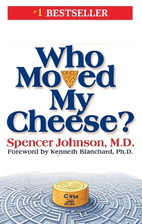
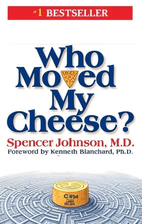
Kenneth Blanchard introduces the metaphorical foundation of Who Moved My Cheese?, explaining how its characters—Sniff, Scurry, Hem, and Haw—symbolize universal human responses to change. These figures embody both simple instincts (like anticipating or reacting quickly) and complex emotions (like denial or gradual adaptation) within everyone. He emphasizes that regardless of background, we all navigate a personal "Maze" (life, work, relationships) seeking "Cheese"—metaphorical for goals like security, success, or happiness—and face turmoil when it disappears.
The Characters as Mirrors
The mice (Sniff and Scurry) thrive by simplifying challenges: one detects change early, the other acts immediately. Conversely, the Littlepeople (Hem and Haw) struggle with overanalysis and fear. Hem resists change, dreading worse outcomes, while Haw eventually adapts, discovering growth. Blanchard clarifies that these traits aren’t about intelligence but about choosing effective responses—highlighting that simplicity often outperforms complexity amid uncertainty.
Real-World Impact
Blanchard shares how Spencer Johnson’s parable transformed lives, citing broadcaster Charlie Jones. Removed from covering his expertise (Track and Field) at the Olympics, Jones initially raged against unfairness until the story reframed his perspective. Recognizing his "Cheese had moved," he mastered new sports (Swimming and Diving), reignited his passion, and advanced his career. This underscores the story’s power to shift attitudes in careers, relationships, and personal crises.
A Tool for Organizational Change
At Blanchard’s company, pre-release copies were distributed to 200+ employees during turbulent changes. The story defused resistance by reframing change as inevitable—replacing the desire for "loyalty to old ways" with flexibility. Staff reported renewed energy and clarity, proving its effectiveness in reducing stress and fostering adaptability in "constant white water" environments.
Structure of the Book
Three sections guide readers:
- A Gathering: Classmates discuss life changes.
- The Story: Core parable where mice outmaneuver Littlepeople by acting instinctively.
- A Discussion: Readers explore practical applications. Blanchard notes some prefer self-interpretation after the parable, while others value the discussion for actionable insights.
Key Takeaways
- Change is inevitable: Success hinges on anticipating it (Sniff), acting fast (Scurry), or adapting (Haw)—not resisting (Hem).
- Simplicity triumphs: Overcomplication hinders progress; instinctive action often yields better results.
- Attitude shapes outcomes: As with Charlie Jones, reframing loss as opportunity unlocks growth.
- Universal relevance: The "Cheese" metaphor applies to career, health, relationships, and personal goals.
- Proactive adaptation: "Move with the Cheese" to thrive in evolving environments.
Blanchard’s closing wish: May rereading reveal fresh wisdom for navigating change, turning uncertainty into success.
Key concepts: The Story Behind The Story
1. The Story Behind The Story
Metaphorical Foundation of the Story
- Characters (Sniff, Scurry, Hem, Haw) symbolize universal human responses to change
- The 'Maze' represents life, work, or relationships; 'Cheese' symbolizes goals like security or happiness
- Highlights turmoil when 'Cheese' disappears and the need to adapt
Character Traits and Human Behavior
- Mice (Sniff, Scurry): Thrive through simplicity—detecting change early and acting quickly
- Littlepeople (Hem, Haw): Struggle with overanalysis—Hem resists, Haw eventually adapts
- Traits reflect choice of response, not intelligence; simplicity often outperforms complexity
Real-Life Impact of the Parable
- Example of Charlie Jones: Career shift reframed as opportunity after reading the story
- Demonstrates power to transform attitudes in careers, relationships, and personal crises
- Shows how recognizing 'Cheese has moved' can lead to growth and renewed passion
Organizational Application
- Used in Blanchard’s company to ease resistance during turbulent changes
- Reframed change as inevitable, replacing loyalty to old ways with flexibility
- Reduced stress and fostered adaptability in fast-changing environments
Book Structure and Reader Engagement
- Three-part structure: A Gathering (discussion), The Story (parable), A Discussion (applications)
- Allows for self-interpretation or actionable insights from group dialogue
- Designed to cater to different reader preferences (reflective vs. practical)
Core Lessons from the Story
- Change is inevitable—success depends on anticipation, action, or adaptation
- Simplicity triumphs over overcomplication in navigating uncertainty
- Attitude reframing turns loss into opportunity (e.g., Charlie Jones)
- Universal relevance: Applies to careers, health, relationships, and personal goals
- Proactive adaptation ('Move with the Cheese') is key to thriving