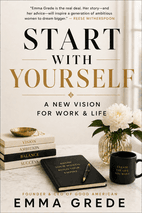
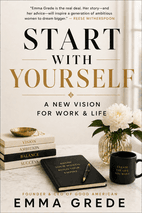
Emma Grede's Start With Yourself redefines success by teaching ambitious women, especially mothers, to master five core emotions—anger, fear, guilt, sadness, and joy—as signals for growth, offering practical tools for processing feelings and building a life on self-worth rather than external achievement.
Feature
Insta.Page
Blinkist
Shortform
Summary Depth
Full Chapter-by-Chapter
15-min overview
Section-by-section guides
Audio Narration
✓ (AI narration)
✓
✓
Visual Mindmaps
✓
✕
✕
AI Q&A
✓ Voice AI
✕
✕
Quizzes
✓
✕
✕
PDF Downloads
✓
✕
✓
Price
$59.99/yr
$146/yr (PRO)
$199/yr
*Competitor data last verified February 2026.
About the Author
Emma Grede
Emma Grede is a British-American entrepreneur and television personality best known as the CEO and co-founder of Good American, a size-inclusive fashion brand, and a founding partner of Skims. She also serves as an investor on the Shark Tank-style show "Shark Tank" and is recognized for her expertise in building inclusive, direct-to-consumer brands. Grede's success is rooted in her background in fashion and brand strategy, with notable achievements including expanding the visibility of plus-size models and shaping the modern landscape of shapewear and denim.
1 Page Summary
Emma Grede’s Start With Yourself presents a radical redefinition of success, arguing that genuine fulfillment in work and life begins not with external achievements, but by confronting and mastering the difficult emotions that shape our choices. Drawing from her own journey—from raising her sisters at ten, dropping out of fashion school, and hustling in retail to co-founding Good American—Grede centers the book around five core emotions: anger, fear, guilt, sadness, and joy. Each chapter offers a framework for understanding these feelings not as obstacles but as signals; for instance, she teaches that anger can be expressed constructively without destroying relationships, and that fear is a compass pointing toward growth, not a stop sign. The book’s heart is a paradox learned in childhood: “You’re not more special than anyone else, but nobody is more special than you.” This grounding belief allows her to treat self-worth as a non-negotiable foundation, separate from professional or familial roles.
Grede’s approach is distinctive for its raw honesty and rejection of spiritual bypassing. She opens with the shame of screaming at a deaf woman on the Tube, which drove her to a three-year anger management course, and shares her ongoing struggle with loneliness, using a Rule of Thirds to normalize that life will feel shitty a third of the time. Rather than promising easy happiness, she advocates for creating conditions where joy can visit by clearing barriers like perfectionism and overcommitment. The book is also profoundly practical in its later chapters on money, career, family, and leadership, where Grede reframes motherhood as an impossible standard to be dismantled, and leadership as a shift from seeking approval to providing direction. She insists on “trade-offs” over “having it all,” encourages women to heal their relationship with money as a source of power, and argues that the most important relationship is the one with yourself—citing Diane von Furstenberg as her touchstone.
The intended audience is primarily ambitious women—especially mothers—who feel torn between caretaking roles and professional drive, but anyone struggling with guilt, impostor syndrome, or the pressure to be perfect will find resonance. Readers will gain permission to stop apologizing for their ambition, a practical toolkit for processing difficult emotions (from breathing exercises to annual trade-off reviews), and a clear-eyed philosophy that values curiosity and consistency over grand plans. Grede’s ultimate message is liberating: you don’t need to be naturally gifted or have a perfect plan—you just need to start with yourself, own your contradictions, and treat every job as a school where you can learn through doing. The book is both a memoir of hard-won wisdom and a manual for building a life where you can have it all, just not all at once.
A loud, sudden silence filled the flat when Marcus wasn't there—he'd been arrested, and his urgent call set the tone for a life shaped by loyalty, survival, and an unshakable belief that the mold could be broken. Growing up surrounded by nicknames like Bonsey and Mads, where jail time was a familiar family storyline, the fortune-teller's prediction for a girl like her was clear: become a gangster's girlfriend or a footballer's sidepiece. But her mother, Jenny-Lee, planted a contradictory seed: "You're not more special than anyone else, but nobody is more special than you." That paradox drove everything. By ten, she was raising her three younger sisters; by sixteen, she was sleeping on Marcus's couch after her mother moved to Spain. Leaving school early (dyslexia undiagnosed) and dropping out of London College of Fashion after one term because she couldn't afford it, she discovered her genius instead in retail—convincing even declined customers to open store credit cards, pocketing fifty quid per account. That market research at Selfridges was really a side hustle that paid better than class.
Yet she had an endless appetite for work. She wrote a hundred letters to every designer, showroom, and PR agency in London, then showed up in person when no one answered. Unpaid apprenticeships at Aurelia PR, Gharani Strok, and Quintessentially taught her what she didn't want to do—the most important education. At eighteen, a real job at a fashion show production company gave her six years of London Fashion Week, rubbing shoulders with Alexander McQueen and Vivienne Westwood. But the economics baffled her: designers spending £150,000 on runway shows with no merchandising plan. When she needed a wall of TVs for a show, she called Toshiba and convinced them to ship TVs in exchange for logo placement. That gap became bridge—she moved into sponsorship, bringing in millions on a £26,000 salary. When they offered only a £4,000 raise, she quit, realizing that what she did for them she could do for herself.
So she made a plan. She wrote down her vision for her thirties and forties (and now she's working on her fifties). That sticky note still lives on her phone, checked every Sunday to see if she's moving closer or drifting off track. She works backward from the vision into yearly, monthly, weekly chunks, with her "new year" landing on her birthday in September. The process demands brutal honesty: what goals didn't she achieve and why? What three things did she wish she did more of? What is she avoiding or scared of? How does she plan to learn and grow? Last year it was the Hoffman Process, Transcendental Meditation, and learning to swim at forty-two. Habits and boundaries follow a simple rule—never write more than three for each, and don't expect to achieve all six. Even just writing them down creates forward momentum. One recurring dream involves collecting an award at a ceremony resembling the Academy Awards—no excitement, just a quiet certainty it will happen someday. Meanwhile, watching her mother attach to partners who squandered opportunities reinforced a personal vow: she would never be financially dependent on a man.
Experience often came through unlikely barters. An internship was secured by swapping a Juicy Couture tracksuit for a stranger at the store where she worked; he offered entry to a P. Diddy White Party, and she asked for work experience instead. Unpaid internships may be controversial, but the connections proved far more valuable than any paycheck. Underpinning all of this is a learned skill: emotional intelligence (EQ). The stereotype that women are more emotional than men may not be biologically driven, but it grants permission to be emotionally literate—reading rooms, spotting cultural trends, understanding others, and knowing what you want. Feelings connect to body-based intuition, but emotions must be modulated, not suppressed or indulged. Living on anger or fear is dysfunctional; fear paralyzes action, guilt holds back ambition, and ignoring a bodily "no" leads to self-betrayal. The goal is to rightsize every feeling, including enthusiasm, without running over or repressing it. Growing up largely left to figure things out meant no proper emotional coaching. A community-based program (therapy was unaffordable) taught how to listen to emotions without letting them color thoughts or destroy relationships. It takes patience and practice, but it is one of the most productive things you can do—clearing emotional blocks before tackling deeper mindset work.
Key Takeaways
Define no more than three habits and three boundaries; writing them down creates momentum even if you don't achieve all.
Unpaid internships can provide experience and connections more valuable than immediate payment.
Emotional literacy is an advantage, not a weakness—but emotions need modulation, not suppression or unchecked expression.
Rightsizing feelings (including guilt, fear, and enthusiasm) is essential; ignoring your body's "no" leads to self-betrayal.
Clearing emotional blocks comes before deeper mindset work; this can be learned through community programs if therapy isn't accessible.
Key concepts: Introduction
1. Introduction
Early Life and Family Influence
Raised siblings from age ten after mother moved
Family history of jail and low expectations
Mother's paradox: special yet equal to others
Left school early due to undiagnosed dyslexia
Career Beginnings and Retail Genius
Discovered talent in retail sales at Selfridges
Wrote 100 letters and showed up in person
Unpaid apprenticeships taught what she didn't want
Six years at London Fashion Week with top designers
Sponsorship Breakthrough and Self-Reliance
Noticed designers lacked merchandising plans
Brought in millions on £26,000 salary
Quit after only £4,000 raise offered
Realized she could do it for herself
Vision Planning and Habits
Wrote vision for thirties and forties on sticky note
Works backward into yearly, monthly, weekly chunks
Reviews goals every Sunday with brutal honesty
Limits habits and boundaries to three each
Emotional Intelligence and Self-Mastery
EQ is a learned skill, not a weakness
Modulate emotions, don't suppress or indulge
Rightsize feelings like guilt, fear, enthusiasm
Clear emotional blocks before deeper mindset work
If you like this summary, you probably also like these summaries...
💡 Try clicking the AI chat button to ask questions about this book!
Chapter 2: Chapter 1: Anger
Overview
I was nineteen years old, screaming at a deaf woman in a London tube station because she was slow with her turnstile card. That moment of shame—the horror of realizing I'd unleashed my rage on someone who couldn't even hear me—became my wake-up call. Sitting on the train afterward, pulse racing, I asked myself the hard question: What the fuck is wrong with you? And I knew I had to deal with my anger before it dealt with me.
That night, I enrolled in a free anger management course that I attended for three years, and I still practice what I learned there today. The work wasn't just about calming down—it was about understanding where the anger came from. I learned to close my eyes and breathe until I felt myself return to my body. I quit smoking weed, which I hadn't realized was fueling my volatility. Most importantly, I discovered that the goal wasn't to avoid feeling anger, but to become skilled at expressing it without destroying the people around me or burning down the relationships I needed to build a new life.
The Roots Beneath the Rage
I spent my teens, twenties, and most of my thirties angry at my mother—until I finally understood that she gave us what she had left after a long day at work. She couldn't give me what she didn't possess. Staying angry didn't magically change my childhood; it only hurt me. This kind of self-work isn't pleasant, but it's essential. I need proof that an adult is in the driver's seat, someone equipped to care for that indignant younger version of myself still living inside.
I also realized I had learned anger as my default emotion. It was a habit, not a truth. I needed to practice choosing something else. That doesn't mean I've gone soft—I have fierce boundaries and I enforce them without guilt. I'm direct. If I'm unhappy, I say it. I push back when pushed too far. But most of the time, I practice what I call "impeccable emotional hygiene": dealing with things as they come up, and taking time to calm myself before expressing my feelings in a way that doesn't harm others.
Dropping the Blame
I grew up in a blame-drenched culture where nothing was ever anyone's fault—the neighbor's fault, the government's fault, never our own. I carried that attitude into my first year at the London College of Fashion, furious at all the privately educated girls who'd had better starts than me. I convinced myself I'd never succeed, so I dropped out.
Then I watched Oprah talking about taking responsibility for yourself. That you can't change the world, but you can change your relationship to it. It clicked. The moment I dropped the blame, the way people responded to me shifted. I stopped seeing myself as a victim and started steering my own ship.
The Maze of Payback
Psychiatrist Phil Stutz calls our need for revenge, for an apology, for vindication—"the Maze." And the only way out is to say: I don't have enough time to waste on this shit. Let the other guy win. When a former boss threatened legal action after I left to start my own agency, I was angry, but I never tried to get even. I simply cut her out of my life. As Stutz puts it, "If you're waiting for someone who has harmed you to apologize, you're an idiot." What do you really get by winning? That's a question worth sitting with.
The Frontier I Still Haven't Crossed
Forgiveness remains my unfinished business. My instinct is to cut people out of my life and move on. I don't want to spend energy maintaining relationships that don't feel productive. I give myself grace here. Trauma therapist Prentis Hemphill says, "Boundaries are the distance at which I can love you and me simultaneously." I choose that peace. Some people can't give you what you want because they don't have it to give. You keep moving forward anyway, with or without them in your orbit.
Key Takeaways
Anger is an essential emotion that can show you what matters—but you must become skillful in expressing it without destruction.
The goal is not to avoid anger, but to learn how to choose a different response when it arises.
Blame is a trap. Taking personal responsibility for your experience shifts everything.
Revenge is a maze with no exit. Letting go of the need to be right or get even frees you to move forward.
Forgiveness is a process, and boundaries are a valid form of love. Not everyone deserves re-entry into your life.
Key concepts: Chapter 1: Anger
2. Chapter 1: Anger
The Roots Beneath the Rage
Anger is a learned habit, not a truth
Understand where anger comes from
Practice impeccable emotional hygiene
Express anger without harming others
Dropping the Blame
Blame is a trap that keeps you stuck
Take personal responsibility for your experience
Stop seeing yourself as a victim
Change your relationship to the world
The Maze of Payback
Revenge is a maze with no exit
Let go of needing to be right
Cut toxic people out of your life
Winning isn't worth the cost
The Frontier of Forgiveness
Forgiveness is unfinished business
Boundaries are a valid form of love
Not everyone deserves re-entry
Keep moving forward without them
Choosing a Different Response
Anger shows what matters to you
Goal is skillful expression, not avoidance
Breathe and return to your body
Practice choosing a new response
⚡ You're 2 chapters in and clearly committed to learning
Why stop now? Finish this book today and explore our entire library. Try it free for 7 days.
Chapter 3: Chapter 2: Fear
Overview
Fear isn't your enemy—it's your compass. That's the central theme of this chapter, and it's one that Arlan wears like a second skin. She opens with a genuinely terrifying moment: riding through South Africa with two cars tailing her, convinced she's about to be kidnapped. Turned out they were extra security she wasn't supposed to know about. That hypervigilance? It's a survival instinct forged in East London, where she grew up under the shadow of skinheads and a pub sign that read No blacks. No dogs. No Irish. Her family's response to that world wasn't to shield her from fear—it was to teach her that fear doesn't get to stop you.
That lesson became the bedrock of her entire approach to business and life. She's scared all the time, she admits. But she's learned to treat fear as a signal, not a stop sign. When she doesn't feel that twinge, she knows she's not pushing hard enough.
Fear as a Signal, Not a Sentence
Arlan makes a crucial distinction between real danger and the kind of fear that accompanies growth. The South Africa situation? That was real. But most of what scares us in business—investing in a first-time founder, launching a new product, starting a venture—won't kill us. It just feels like it will. She credits her East London upbringing for this clarity: if she survived that, she can survive a boardroom meeting.
The number one phrase she hears from women: I just don't know where to start. Her response? Yes, you do. You're just scared. Scared of losing money, scared of failing, scared of looking foolish. And she delivers a blunt reality check: You're going to have to shit your pants a little bit to get to anything good on the other side. Unsavory, true, and memorable.
Challenge Stress vs. Paralysis
Arlan introduces a concept that reframes fear: eustress, or challenge stress. That racing heart before a big interview, a wedding, or a high-stakes presentation isn't a sign of danger—it's your body rising to meet the moment. She borrows Fritz Perls' line that fear is excitement without the breath, and she lives by it. When you reframe fear as challenge stress, you shift from feeling like the world is happening to you to actively engaging with it. You're not a passenger; you're the pilot.
The Boss Trap and the Office Firing Fantasy
One of the sharpest observations in this chapter is how women often outsource their authority. We'll invent a boss where there isn't one—Fred the bank manager, Joe the lawyer, some critical Instagram follower. Arlan illustrates this with a dead-on anecdote: in a meeting with her executive team, they called in senior leaders one by one. The two women walked in and immediately asked if they were being fired. The two men? Sauntered in with a casual "What's up?"
These women ran essential functions and had zero reason to worry. But their default assumption was threat. Arlan acknowledges the cultural reality behind that fear—women are conditioned to operate as if they're always under threat—but she refuses to let it stand as an excuse. It's not an efficient use of energy, and it gives other people permission over your life.
The Only Way Out Is Through
Speed is the antidote to fear. Arlan emphasizes that stalling and overthinking come at a high cost. Perfection isn't the goal—forward motion is. She offers a simple visual: imagine fear as a doorway. You have to walk through it to get to growth and expansion. And this is a muscle you can build. With each step, you prove to yourself that you'll be okay regardless of what happens, and that trust overrides the fear next time.
Key Takeaways
Fear is a signal, not a stop sign. If you're not a little scared, you're not pushing your edge.
Reframe fear as challenge stress—your body rising to meet opportunity, not danger.
Speed matters. Move forward through discomfort quickly; don't let overthinking freeze you.
Stop inventing bosses to subordinate yourself to. You don't need permission from anyone to take your next step.
The women-may-get-fired reflex is real, but it's a cultural trap. Recognize it and refuse to live there.
The doorway is always there. Walk through it. Growth is waiting on the other side.
Key concepts: Chapter 2: Fear
3. Chapter 2: Fear
Fear as a Signal, Not a Stop Sign
Fear is a compass, not an enemy
Real danger vs. growth fear is crucial distinction
If not scared, you're not pushing hard enough
Challenge Stress vs. Paralysis
Eustress: body rising to meet opportunity
Fear is excitement without the breath
Reframe to feel like pilot, not passenger
The Boss Trap and Outsourced Authority
Women invent bosses where none exist
Default assumption of threat is cultural trap
Don't give others permission over your life
Speed as the Antidote to Fear
Forward motion beats perfection
Overthinking costs more than mistakes
Walking through fear builds trust in yourself
The Only Way Out Is Through
Fear is a doorway to growth
You'll survive what scares you in business
Each step proves you'll be okay
Chapter 4: Chapter 3: Guilt
Overview
From the earliest pages, this chapter lands with the weight of real confession. Emma Grede opens with her own childhood—the oldest of four girls, thrust into a mothering role while her actual mother worked long hours. She packed lunches, ironed uniforms, handled school runs, sometimes skipping school herself to watch Oprah. That dynamic shaped her deeply: she learned early that no amount of caretaking ever felt like enough. And when she eventually had to leave her sisters behind to pursue her own future in London, the guilt that followed wasn’t really about them. It was about a deeper, cultural script that says a woman’s first duty is to care for others, and that anything else is a betrayal.
That script is the real subject here. Grede argues that modern motherhood is haunted by an impossible standard: the idea that mothering should be a woman’s primary ambition, and that working outside the home comes at a hidden cost to her children’s well-being. She calls this out as both unrealistic and historically false. Citing anthropologist Sarah Blaffer Hrdy, she reminds us that humans evolved with “alloparenting”—communal, multi-generational care. That village is long gone, replaced by the nuclear family and the myth of the stay-at-home parent who can do it all alone. But the economic reality, Grede points out, is that for everyone outside the top 1 percent, both parents have to work. The conversation needs to shift from guilt to acceptance: women shouldn’t have to apologize for wanting—and needing—a career.
Key Takeaways
Parentified children grow up with a skewed sense of responsibility. Grede’s experience of being the “little mother” taught her that she could never do enough, a pattern that later fed her own mum guilt. Recognizing that pattern is the first step to breaking it.
Guilt has a purpose, but only when it’s your own. It’s a useful signal when you’re out of alignment with your values. But too often, guilt reflects other people’s expectations, not your own. Always ask: Is this guilt mine, or someone else’s?
Don’t make your kids responsible for your choices. When we blame our families for not pursuing our ambitions, we shift the burden onto them. Michelle Obama’s advice rings through: “If you are choosing to drive in your career, don’t parent from guilt.” Kids watch us; let them see you own your decisions.
We need to normalize working mothers. Grede calls out the double standard where fathers are rarely questioned about their presence, while mothers are constantly judged. Fighting back—even at the school gate—matters. Modeling ambition for your children, especially your daughters, gives them permission to do the same without the same guilt.
Key concepts: Chapter 3: Guilt
4. Chapter 3: Guilt
Parentified Childhood Roots
Oldest of four girls, thrust into mothering role
Packed lunches, ironed uniforms, skipped school
Learned caretaking never felt like enough
Leaving sisters triggered deep cultural guilt
Impossible Motherhood Standards
Modern motherhood haunted by impossible standards
Working outside home seen as hidden cost to kids
Calls out standard as unrealistic and historically false
Alloparenting replaced by nuclear family myth
Economic Reality vs. Guilt
Both parents must work outside top 1 percent
Conversation must shift from guilt to acceptance
Women shouldn't apologize for wanting careers
Guilt reflects others' expectations, not your own
Breaking the Guilt Pattern
Recognize parentified pattern to break it
Ask: Is this guilt mine or someone else's?
Don't make kids responsible for your choices
Own your decisions; don't parent from guilt
Normalizing Working Mothers
Double standard: fathers rarely questioned
Fight back even at the school gate
Model ambition for children, especially daughters
Give permission to pursue careers without guilt
Frequently Asked Questions about Start With Yourself
What is Start With Yourself about?
This book is a deeply personal guide that combines memoir with practical advice on managing emotions, building a career, and leading a fulfilling life. It explores the author's journey from a challenging East London upbringing to becoming a successful entrepreneur, tackling topics like anger, fear, guilt, sadness, and joy with raw honesty. The book also provides actionable frameworks for navigating money, career decisions, family dynamics, and leadership, all rooted in the belief that lasting success starts with self-awareness and self-work.
Who is the author of Start With Yourself?
Emma Grede is a British entrepreneur and the co-founder of Good American and SKIMS, known for her inclusive approach to fashion and business. Growing up in East London with undiagnosed dyslexia, she left school early and built her career from the ground up, starting in retail before launching her own brands. Her personal experiences with poverty, anger, and self-doubt inform the candid, no-nonsense advice she shares in the book.
Is Start With Yourself worth reading?
Absolutely. This book stands out for its unflinching honesty and practical guidance, making it a valuable read for anyone feeling stuck or overwhelmed in their personal or professional life. Grede’s stories are relatable and her frameworks, like the Rule of Thirds for managing emotions and the trade-off philosophy for life decisions, offer real, actionable tools. It’s a refreshing take that emphasizes starting with yourself before trying to conquer the world.
What are the key lessons from Start With Yourself?
One key lesson is to treat fear as a compass, not a stop sign—letting it signal growth rather than halt progress. Another is the power of trade-offs: you can have it all, but not at the same time, so be intentional about what you sacrifice in each season. The book also teaches that leadership requires shifting from seeking approval to providing direction, and from micromanaging to hiring people better than you and getting out of their way. Finally, it emphasizes that money equals power and that women must heal their relationship with money, while also learning to resource themselves first before caring for others.
📚 Explore Our Book Summary Library
Discover more insightful book summaries from our collection