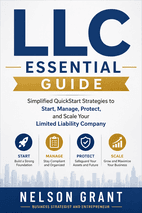
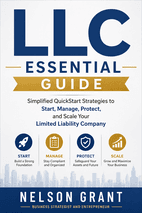
Nelson Grant's LLC Essential Guide provides a practical, step-by-step roadmap for forming, operating, and scaling an LLC, covering strategic state selection, compliance, taxation, and risk management. Written for entrepreneurs at any stage who want to protect personal assets while building a sustainable business with confidence.
Feature
Insta.Page
Blinkist
Shortform
Summary Depth
Full Chapter-by-Chapter
15-min overview
Detailed analysis
Audio Narration
✓ (AI narration)
✓
✓
Visual Mindmaps
✓
✕
✕
AI Q&A
✓ Voice AI
✕
✕
Quizzes
✓
✕
✕
PDF Downloads
✓
✕
✓
Price
$59.99/yr
$146/yr (PRO)
$199/yr
*Competitor data last verified February 2026.
About the Author
Nelson Grant
Nelson Grant is a historian and author specializing in 19th-century American industrial history, best known for his book "The Iron Horses: Railroads and the Making of Modern America." A former professor at Columbia University, Grant has also contributed to documentaries on the Transcontinental Railroad and the rise of steel magnates. His expertise is rooted in years of archival research into the economic and social impacts of industrial expansion.
1 Page Summary
This guide positions the limited liability company (LLC) as the backbone of modern entrepreneurship, a business structure that skillfully blends the personal asset protection of a corporation with the tax simplicity of a partnership. The author, Nelson Grant, emphasizes that an LLC is not a one-size-fits-all solution but a versatile hybrid whose value depends on factors like industry risk, credibility needs, and growth plans. The book systematically strips away legal jargon, beginning with the history and core definition of an LLC, and then guiding readers through the strategic decision-making process of whether and where to form one, including state-by-state comparisons and the critical choice between domestic and foreign filings.
The heart of the guide provides a practical, step-by-step roadmap for launching and operating an LLC. It covers the meticulous process of choosing a compliant name, securing a registered agent, and filing Articles of Organization, while warning of state-specific quirks and fees. Beyond formation, the text delves into the "real engine" of daily operations, covering everything from workspace setup and essential software to the taxes, bookkeeping, and risk management strategies that keep the business healthy. A key distinction is drawn between tax allocations and cash distributions, and the book details the "corporate veil" and charging order protection as essential legal shields.
Written for entrepreneurs at any stage, the book offers a comprehensive lifecycle of an LLC, including scaling strategies for expansion and the proper procedures for dissolution, selling, or restructuring. The author’s approach is grounded in practicality and caution, using real-world scenarios—from a slip-and-fall lawsuit threatening a pizza business to case studies of major corporations—to illustrate abstract concepts. Readers will gain not just the knowledge to start an LLC, but a robust toolkit for managing, protecting, and scaling their business with confidence, ultimately learning that success in business is about making smart, informed decisions at every turn.
When you first hear "limited liability company," it might sound like legal jargon reserved for big corporations or expert accountants. But the reality is that LLCs have become the backbone of modern entrepreneurship, accounting for over 70% of partnership tax returns in the U.S. and representing more than a third of all small businesses. This chapter peels back the mystery around those three letters, explaining what an LLC is, how it came to be, the different flavors it comes in, and why it's such a popular choice. Along the way, you'll get a clear picture of the advantages and drawbacks, plus a reality check on some common myths.
What Is an LLC?
A limited liability company is a business structure that combines the best of two worlds: the personal asset protection of a corporation with the tax simplicity of a partnership. Governed by state law, an LLC creates a legal barrier between your personal finances—your house, savings account, car—and your business debts. If your company gets sued or goes bankrupt, your personal assets typically remain safe. Meanwhile, profits and losses "pass through" to your personal tax return, avoiding the double taxation that corporations face.
The Birth and Evolution of LLC
The first LLC in the U.S. appeared in Wyoming in 1977, inspired by the German GmbH model. But it took over a decade for the concept to catch on. The big turning point came in 1988 when the IRS ruled that LLCs could be taxed as partnerships rather than corporations. That shift sparked widespread adoption, and by the 1990s, every state had LLC legislation on the books. Key milestones include the Uniform Limited Liability Company Act (ULLCA) in 1995, the Revised Uniform Limited Liability Company Act (RULLCA) in 2006, and the Tax Cuts and Jobs Act in 2017, all of which helped refine and unify how LLCs operate across state lines.
Different Types of LLCs
Not all LLCs are created equal. Depending on your business goals, ownership structure, and even your need for privacy, there's a type that fits.
Single-Member LLC – Owned by one person, offering liability protection with minimal paperwork and pass-through taxation. Ideal for solo entrepreneurs who want to keep things simple.
Multi-Member LLC – Functions like a partnership, with two or more owners. Members sign an operating agreement and can choose between member-managed or manager-managed structures.
Series LLC – A parent LLC holds multiple "cells," each operating independently with its own assets and liabilities. Great for real estate investors or anyone managing separate business lines under one umbrella.
Low-Profit LLC (L3C) – Designed for ventures that prioritize social impact over profit. Usually required to dedicate over half their activities to charitable purposes, they can attract foundation funding.
Anonymous LLC – Available only in Delaware, New Mexico, and Wyoming, this structure keeps owner identities off public records. Popular with celebrities or those needing privacy, though the IRS and courts can still subpoena information.
Restricted LLC – Exclusive to Nevada, meant for holding assets with a ten-year waiting period before distributions can be made. Offers tax advantages for estate planning.
Domestic vs. Foreign LLC – A domestic LLC is formed in your home state; if you need to do business elsewhere, you register as a foreign LLC there, paying separate fees and meeting additional requirements.
Professional LLC (PLLC) – Required for licensed professionals like doctors, lawyers, and accountants. Offers liability protection while ensuring compliance with state professional regulations.
LLC vs. Other Business Entities
The chapter includes a detailed comparison table covering taxation, deductions, cost, ease of setup, continuity, capital investments, and organizational structure. The essential takeaway: LLCs offer a flexible middle ground—easier than a corporation to set up and maintain, yet with far more protection than a sole proprietorship or partnership. They allow pass-through taxation by default but can elect S Corp or C Corp status if beneficial. Sole proprietorships have no formal filing but offer zero liability protection, while corporations involve complex governance with shareholders, directors, and officers.
Pros and Cons of LLCs
Advantages:
Recognized in all 50 states with straightforward startup and low fees.
Flexible ownership—any number of members, including non-U.S. citizens and other businesses.
Management can be member-run or manager-run, with minimal record-keeping.
Strong personal liability protection if you keep business and personal finances separate.
Tax flexibility avoids double taxation and allows creative profit-sharing arrangements.
Disadvantages:
Not free—startup and renewal costs exist, plus more paperwork than a sole proprietorship.
Changing membership may require dissolving and reforming the LLC in many states.
Liability protection isn't absolute; "piercing the corporate veil" can happen if you commingle funds or commit fraud.
Cannot issue stock, making capital raising more challenging than with corporations.
Self-employment taxes apply to members' earnings.
"Phantom profits" mean you pay taxes on your share of profits even if the cash stays in the business.
Common Myths and Facts
Myths abound, and the chapter sets the record straight:
Not complex or expensive – Most states offer easy online filing for a modest fee.
Ongoing work required – Annual reports, record-keeping, and tax compliance are essential.
Not just for multi-owner or small businesses – Single-member LLCs are fully recognized, and giants like Amazon and Google use LLC structures for subsidiaries.
Personal assets aren't bulletproof – Veil piercing can undo protection if formalities aren't followed.
Taxes must be paid – LLCs don't avoid taxes; they offer flexibility in how profits are reported and taxed.
Key Takeaways
An LLC blends the liability protection of a corporation with the pass-through taxation of a partnership.
Its modern form started in Wyoming in 1977 and gained national traction after the 1988 IRS ruling.
Numerous LLC types exist—single-member, multi-member, series, L3C, anonymous, restricted, domestic/foreign, and PLLC—each suited to different needs.
LLCs are simpler and more flexible than corporations but require ongoing compliance to maintain liability protection.
Weighing the pros and cons carefully is crucial; common myths about cost, complexity, and liability limits need to be understood before forming one.
Key concepts: Chapter 1:
1. Chapter 1:
What Is an LLC?
Combines corporate asset protection with partnership tax simplicity
Creates legal barrier between personal and business finances
Profits and losses pass through to personal tax return
💡 Try clicking the AI chat button to ask questions about this book!
Chapter 2: Chapter 2:
Overview
Chapter 2 helps you decide whether forming an LLC actually makes sense for your specific business. The chapter makes clear that the limited liability company is a versatile hybrid, but it’s not a one-size-fits-all solution. The right choice depends heavily on your industry, your appetite for risk, your credibility needs, tax situation, management style, and plans for growth.
Liability Protection
If your business carries significant risk—say you’re starting a construction company—LLC liability protection shields your personal assets like your home and savings from lawsuits tied to workplace injuries or defective work. Just keep in mind the protection has limits. If you personally guarantee a loan, commit fraud, or mix personal and business funds, a court can still hold you personally responsible.
Credibility and Perception
In a world full of digital scams, how you present your business matters. A day care center might only need a manager‑managed LLC plus a “doing business as” (DBA) name and professional branding. A dentist, on the other hand, might gain more trust by forming a Professional LLC (PLLC), because the “PLLC” tag signals a licensed profession and boosts perceived professionalism.
Taxation
An LLC’s pass‑through taxation can be a major win. Consider a real estate investor with a rental property generating $25,000 net profit. As an LLC, that profit flows directly to his personal return, avoiding the double tax hit a corporation would impose. The structure also lets him deduct expenses like mortgage interest, property taxes, insurance, repairs, and depreciation. Even better, tools like 1031 exchanges—which let you defer capital gains taxes when swapping like‑kind properties—become available. Many real estate investors form an LLC for each property to keep financing and tax reporting clean.
Ownership and Management Structure
Freelance creatives or small partnerships often love the LLC’s flexibility. A single‑member LLC is easy to form with just articles of organization and an operating agreement. If you want to team up with others, a multi‑member LLC works the same way. You can run the day‑to‑day yourself (member‑managed) or hand operations to appointed managers while you focus on creative work. As your network grows, adding new members based on the operating agreement’s rules is straightforward.
Future Growth and Investment
An LLC can be a great launchpad, but it has limits when explosive growth requires venture capital. Take a tech startup: early on, the LLC’s simplicity, asset protection, and flexible profit distribution are ideal. Founders can bootstrap and collaborate without corporate red tape. When the time comes to scale with outside investors, though, a transition to a C Corporation often becomes necessary—especially if you need public offerings or venture funding. Still, starting as an LLC builds credibility and negotiating power for that later switch.
Case Studies
Amazon: Jeff Bezos began as a sole proprietor in 1994, then moved to an LLC as the company grew. The structure allowed him to attract investors while keeping personal assets safe, and it simplified managing everything from retail to AWS without corporate overhead.
Basecamp: Originally 37signals LLC, the company has stayed an LLC for decades. The founders value the simplicity, fewer lawyers and accountants, and the freedom to stay self‑sustaining and profitable without shareholder pressure.
Google: Larry Page and Sergey Brin launched their search engine as an LLC, which gave them liability protection and creative freedom. As they needed public funding, they later converted to a corporation—a natural evolution many successful startups follow.
The Honest Company: Co‑founded by Jessica Alba as an LLC, the company focused on building a trusted consumer brand with personal liability peace of mind. It served customers for nearly a decade before going public in 2021, showing how an LLC can be a credible first step toward larger ambitions.
Key Takeaways
An LLC is ideal when you want personal asset protection but want to avoid the complexity and double taxation of a corporation.
The right choice depends on your industry’s risk level (construction vs. freelance writing), your need for credibility (PLLC for licensed pros), and your plans for growth.
Tax benefits are real—pass‑through taxation, deductible expenses, and tools like 1031 exchanges—but vary by state and revenue.
For startups aiming for explosive growth, an LLC works as a smart starting point; plan to convert to a C Corp when you need venture capital.
Always factor in formation costs ($40–$500) plus ongoing fees like annual reports and registered agents. Consult a legal or tax professional for guidance tailored to your situation.
Key concepts: Chapter 2:
2. Chapter 2:
Liability Protection
Shields personal assets from business lawsuits
Protection limited by personal guarantees and fraud
Mixing personal and business funds voids protection
Credibility and Perception
LLC structure boosts trust in digital marketplace
PLLC signals licensed profession for dentists
Manager-managed LLC plus DBA works for daycares
Taxation Benefits
Pass-through taxation avoids double corporate tax
Deduct expenses like mortgage interest and repairs
1031 exchanges defer capital gains on properties
Ownership and Management Flexibility
Single-member LLC easy to form and operate
Multi-member LLC works for partnerships
Choose member-managed or manager-managed structure
Future Growth and Investment
LLC ideal launchpad for bootstrapped startups
Transition to C Corp needed for venture capital
Amazon and Google started as LLCs before converting
⚡ You're 2 chapters in and clearly committed to learning
Why stop now? Finish this book today and explore our entire library. Try it free for 7 days.
Chapter 3: Chapter 3:
Overview
Choosing the right state for your LLC isn’t just a bureaucratic checkbox—it’s one of the most strategic decisions you’ll make early on. Mark Twain’s advice about getting started is spot-on, but starting smart matters just as much. The state you pick shapes everything: how much you pay in taxes, how much paperwork you wrestle with, and how smoothly your business runs day to day.
You’ve probably heard whispers about Delaware and Nevada being LLC magnets. There’s solid reasoning behind that, but the best choice for you depends on your specific situation. Let’s walk through what actually matters when comparing states.
The Home State Rule
The simplest path is usually the right one. Filing in the state where you live and do business keeps things straightforward and affordable. You avoid the headache of registering as a foreign LLC in another state, which means double filings and extra fees. Unless you have a compelling reason to look elsewhere, start local.
State-by-State Breakdown
Alaska gives entrepreneurs a genuine surprise. No state income tax—personal or corporate—and LLC member names stay off public records. The remote location and resource-focused economy mean it's not for everyone, but those tax credits and strong privacy protections are hard to beat.
California is the classic trade-off. Massive market, world-class venture capital, and industry ecosystems that are hard to replicate anywhere else. But that annual franchise tax? It stings. You're paying for access, plain and simple.
Delaware earned its reputation honestly. The Court of Chancery is legendary for handling business disputes efficiently and predictably. Fortune 500 companies love it. Wyoming gives you lower fees and stronger privacy, but Delaware offers that gold-standard legal environment and prestige.
Florida keeps things simple with no personal or corporate income tax. Business-friendly laws discourage frivolous lawsuits. The infrastructure is solid, the lifestyle is appealing, and the tourism and trade industries are thriving. Just watch out for those higher sales and property tax rates.
Nevada also skips income taxes, which feels great on paper. But the state makes up for it with a gross receipts tax and higher annual filing fees. The tourism and entertainment sectors are booming, though urban living costs and regulatory hurdles in certain industries deserve a second look.
New York opens doors that few places can. Banks, media giants, tech hubs—the resources are staggering. But the price of admission is steep. High fees, heavy taxes, and complex regulations can bury a young LLC if you're not prepared.
South Dakota quietly excels. Second-best business tax climate in the country (2025 rankings). No corporate or personal income tax. Low sales tax. The farming sector is strong, and the regulatory environment is refreshingly straightforward.
Wyoming started the LLC revolution and still leads. Low fees, no income taxes, strong asset protection, and no estate taxes. The biggest drawback? Small population means a smaller local market.
Key Takeaways
Start in your home state unless you have a clear reason to do otherwise
Match your state to your industry and goals, not just to buzz or reputation
Tax savings matter, but weigh them against costs like franchise taxes and filing fees
Privacy protections vary widely—Alaska and Wyoming keep names off public records
The right choice accelerates momentum; perfectionism just stalls the process
Key concepts: Chapter 3:
3. Chapter 3:
Home State Rule
Simplest path is usually the right one
File where you live and do business
Avoids double filings and extra fees
Start local unless compelling reason otherwise
Tax and Fee Considerations
Alaska, Nevada, South Dakota have no income tax
California has high annual franchise tax
Nevada has gross receipts tax and higher fees
Weigh tax savings against franchise taxes and fees
Privacy and Asset Protection
Alaska and Wyoming keep member names off records
Wyoming offers strong asset protection
Privacy protections vary widely by state
Delaware provides gold-standard legal environment
Industry and Market Fit
California offers massive market and venture capital
New York opens doors to banks and media giants
Florida thrives in tourism and trade industries
Match state to your industry and goals
Key Takeaways for Decision Making
Start in home state unless clear reason otherwise
Tax savings matter but weigh against costs
Right choice accelerates momentum
Avoid perfectionism that stalls progress
Chapter 4: Chapter 4:
Overview
Choosing a name for an LLC is more involved than just picking something that sounds good—states require it to be unique, include designators like "LLC" or "Limited Liability Company," and avoid misleading words such as "bank" or "law firm" unless properly licensed. A strong name also works as a branding tool: it should be easy to pronounce, culturally sensitive, and evoke the business's mission, with domain and social media availability checked early. Once settled, a trademark can lock down that investment. Before filing anything, a registered agent must be in place—a person or service that accepts legal and government mail during business hours at a physical address in the state. Acting as your own agent exposes your home address and risks missing critical documents like a lawsuit, so a professional agent offers privacy, reliability, and an early warning system for compliance. With name and agent ready, the next step is filing the Articles of Organization, the document that officially creates the LLC. This form pulls together the state, name, agent, principal address, member or manager information, duration, and a broad purpose statement, but fees and quirks vary wildly: California charges $70 to file plus an $800 annual franchise tax; Delaware charges $110 with a $300 annual tax; Nevada has a $75 fee but adds an initial list of managers and a business license; New York requires publication in two newspapers for six weeks, costing $600 or more. After approval, the LLC legally exists, and the next two moves are quick but vital. An Employer Identification Number (EIN) is a free nine-digit number from the IRS that takes about ten minutes online and is needed for taxes, hiring, credit, and opening a business bank account. Never use a personal account for business—mixing finances can pierce the corporate veil and destroy personal liability protection, so a dedicated account in the LLC's name using the EIN boosts credibility and legal separation. Alongside these steps, an operating agreement is essential even where not required by state law, because state default rules rarely fit a specific business. This document acts as the LLC's internal rulebook, defining roles, ownership percentages, management authority, profit distributions, tax elections, handling of member departures, dissolution procedures, and conflict resolution processes. A robust agreement reinforces liability protection and prevents expensive disputes, especially for multi-member LLCs. To further cement the LLC as a separate legal entity, documenting resolutions provides a paper trail for major decisions such as taking out credit, buying assets, admitting new members, amending agreements, settling lawsuits, or changing tax elections. An initial resolution formalizes the LLC's organization, and ongoing resolutions follow a consistent template with date, description, participants, voting outcome, and signatures. This practice promotes transparency, accountability, and compliance. Finally, two additional government requirements cannot be overlooked: business licenses and permits vary by location and industry, ranging from basic business licenses and zoning permits to health, professional, sales tax, and specialty permits, while the new Beneficial Ownership Information Report (BOIR) requires most LLCs to file ownership details with FinCEN at formation and update them as ownership changes. By completing these steps, the founder not only creates a legally recognized LLC but also puts in place the processes that preserve personal liability protection and set the stage for smooth day-to-day operations.
Naming Your LLC: More Than Just a Label
The first concrete step is picking a name—but it’s not as simple as jotting down something catchy. States require your name to be unique within the state, include “LLC,” “Limited,” or “Limited Liability Company,” and avoid confusing language that could mislead the public. Words like “bank” or “law firm” are off-limits unless you have proper licenses. Each state has its own restrictions, so checking the Secretary of State website early saves headaches. Beyond legal compliance, a strong name works for your brand. It should be easy to pronounce and spell, culturally sensitive, and evoke the feeling of your brand. Check domain and social media availability early, and consider filing a trademark to protect your investment.
The Unsung Hero: Your Registered Agent
Before filing anything official, you need a registered agent—a person or organization that accepts legal notices and government mail on behalf of your LLC. Most states require a physical address in the filing state, and the agent must be available during business hours. While you can serve as your own agent, it’s a bad idea: it exposes your home address and risks missing critical documents like a lawsuit. A professional registered agent provides privacy, reliability, and helps you stay compliant by forwarding important mail promptly.
Filing Articles of Organization: The Big Moment
This is the core document that officially creates your LLC. By now, you should have chosen your state, named your LLC, and lined up a registered agent—so the filing form pulls that information together. Common fields include the LLC name, registered agent details, principal address, member/manager info, duration, and a broad purpose statement. Filing fees vary wildly by state. California charges $70 to file plus an $800 annual franchise tax. Delaware charges $110 with a $300 annual tax. Nevada has a $75 fee but adds an initial list of managers and a business license. New York requires publishing a notice in two newspapers for six weeks, costing $600 or more. Once accepted, your LLC is legally born.
EIN and Bank Account: Making It Official
An Employer Identification Number (EIN) is a free nine-digit number from the IRS that takes about ten minutes online. It’s needed for taxes, hiring, credit, and opening a business bank account. Never use a personal account for business—mixing finances can pierce the corporate veil and destroy personal liability protection. A dedicated business account in the LLC's name using the EIN boosts credibility and legal separation.
The Operating Agreement: Your LLC’s Rulebook
Though many states don’t require an operating agreement, skipping it is like building a house without a blueprint. For multi-member LLCs especially, this document is essential. It defines roles and responsibilities, reinforces personal liability protection, and outlines procedures for major decisions like adding members or dissolving the company. A robust agreement should cover formation details, ownership percentages, management authority, profit distributions, tax elections, handling of member departures, dissolution procedures, and conflict resolution processes. Make sure all members sign and keep the original safe.
Documenting Resolutions: The Paper Trail That Protects You
For important actions—like taking out a line of credit or purchasing major assets—members can approve a resolution instead of amending the operating agreement. These internal documents serve as official record that the decision was made properly. Start with an initial resolution that formalizes your LLC’s organization. For ongoing resolutions, use a consistent template with date, description, participants, voting outcome, and signatures. This habit keeps your LLC compliant and demonstrates that you treat it as a separate legal entity—vital for preserving liability protection.
Additional Federal and State Requirements
Business Licenses and Permits – A business license gives you broad permission to operate within a city or county, while permits are activity-specific permissions. Research what your entity needs. Typical ones include business licenses, zoning permits, health permits, professional licenses, sales tax permits, and specialty licenses.
Beneficial Ownership Information Report (BOIR) – Starting in 2024, most LLCs must file a BOIR with FinCEN at formation, reporting each beneficial owner’s name, address, date of birth, and identification number. You may also need to file updates when ownership changes.
Key Takeaways
Document major decisions formally—transactions, structural changes, tax elections, and legal matters—to ensure transparency and prevent disputes.
Research and obtain the specific business licenses and permits your jurisdiction and industry require; don’t assume one license covers everything.
File a Beneficial Ownership Information Report with FinCEN at formation and stay updated on any filing changes as the rules evolve.
These compliance steps are essential for maintaining your limited liability protection as your company grows.
Key concepts: Chapter 4:
4. Chapter 4:
Naming Your LLC
Must be unique and include 'LLC' or 'Limited'
Avoid misleading words like 'bank' or 'law firm'
Check domain and social media availability early
Consider trademark to protect your investment
Registered Agent Requirements
Accepts legal and government mail during business hours
Requires physical address in the filing state
Avoid acting as your own agent to protect privacy
Professional agent ensures reliability and compliance
Filing Articles of Organization
Official document that creates the LLC
Includes name, agent, address, and purpose statement
Filing fees vary wildly by state
Examples: CA $70+$800 tax, NY requires costly newspaper publication
EIN and Business Bank Account
Free nine-digit IRS number for taxes and hiring
Takes about ten minutes to apply online
Never use personal account to avoid piercing corporate veil
Dedicated account boosts credibility and legal separation
Operating Agreement Essentials
Internal rulebook defining roles and ownership
Covers management, profit distributions, and member departures
Reinforces liability protection and prevents disputes
Essential even where not required by state law
Documenting Resolutions
Paper trail for major decisions like credit or new members
Initial resolution formalizes LLC organization
Follows template with date, description, and signatures
Promotes transparency, accountability, and compliance
Licenses, Permits, and BOIR
Business licenses vary by location and industry
Includes health, professional, and sales tax permits
BOIR requires ownership details filed with FinCEN
Update BOIR as ownership changes
Frequently Asked Questions about LLC Essential Guide
What is LLC Essential Guide about?
This guide covers the entire lifecycle of a limited liability company, from deciding if an LLC is right for your business and choosing the best state to form in, through naming, registration, daily operations, taxation, bookkeeping, and legal protections. It also addresses scaling strategies, insurance and risk management, and proper dissolution or exit options. Each chapter provides practical, actionable advice with real-world examples, making complex legal and financial concepts accessible to entrepreneurs.
Who is the author of LLC Essential Guide?
The author of this guide is Nelson Grant. The provided content does not include biographical details, but the book presents comprehensive, expert-level knowledge on forming and running an LLC.
Is LLC Essential Guide worth reading?
Absolutely. The book delivers a thorough, step-by-step playbook for anyone considering or already operating an LLC, covering everything from state selection and asset protection to tax strategies and scaling. It demystifies legal jargon with clear explanations, real-world stories, and actionable checklists that can save entrepreneurs time, money, and costly mistakes.
What are the key lessons from LLC Essential Guide?
Key lessons include understanding the corporate veil and charging order protection to separate personal and business assets, and the critical importance of choosing the right state for formation to minimize taxes and paperwork. The book emphasizes that proper bookkeeping, insurance, and a solid operating agreement are not optional extras but foundational pillars for growth and legal safety. It also teaches that scaling requires more than just selling more—it demands strategic team expansion, financial planning, and knowing when to restructure or exit.
📚 Explore Our Book Summary Library
Discover more insightful book summaries from our collection