Chapter One: Lesson 1: The Rich Don’t Work for Money
Chapter 1/4
Lang
1x
Voice
PDF
0:00
0:00
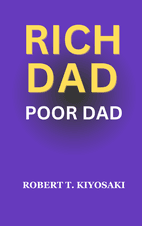
Rich Dad Poor Dad
by Robert T. Kiyosaki · Summary updated
What is the book Rich Dad Poor Dad about?
Robert T. Kiyosaki's Rich Dad Poor Dad contrasts the financial mindsets of two father figures to teach principles of wealth-building, assets, and financial literacy for readers seeking to escape the traditional paycheck-to-paycheck cycle.
Feature
Insta.Page
Blinkist
Shortform
Summary Depth
Full Chapter-by-Chapter
15-min overview
Detailed analysis
Audio Narration
✓ (AI narration)
✓
✓
Visual Mindmaps
✓
✕
✕
AI Q&A
✓ Voice AI
✕
✕
Quizzes
✓
✕
✕
PDF Downloads
✓
✕
✓
Price
$59.99/yr
$146/yr (PRO)
$199/yr
*Competitor data last verified February 2026.
About the Author
Robert T. Kiyosaki
Robert T. Kiyosaki is a renowned entrepreneur, investor, and educator best known for his groundbreaking personal finance book, *Rich Dad Poor Dad*. This international bestseller has challenged and changed the way millions of people around the world think about money and investing. Through his influential works, including the *Rich Dad* series, Kiyosaki advocates for financial literacy and advocates for building wealth through financial education, entrepreneurship, and real estate investing. His books, which are available on Amazon, have sold tens of millions of copies and have been translated into dozens of languages, solidifying his status as a leading and often provocative voice in the personal finance arena.
1 Page Summary
Rich Dad Poor Dad by Robert T. Kiyosaki is a personal finance classic that contrasts the financial philosophies of two father figures in the author's life: his biological father ("Poor Dad") and the father of his best friend ("Rich Dad"). Poor Dad, a well-educated but financially struggling government employee, emphasizes traditional values like academic success and job security. Rich Dad, a self-made entrepreneur, advocates for financial literacy, investing, and building assets that generate passive income. Through anecdotes and lessons, Kiyosaki highlights the importance of understanding money, challenging conventional wisdom, and taking control of one's financial future.
The book, published in 1997, emerged during a period of growing economic uncertainty and the rise of the gig economy, resonating with readers seeking alternatives to the traditional 9-to-5 career path. Kiyosaki's emphasis on financial education, real estate investing, and entrepreneurship struck a chord with those disillusioned by the limitations of formal education in preparing individuals for wealth-building. His critique of the "rat race" and advocacy for financial independence sparked widespread debate and inspired a global movement toward financial self-reliance.
Rich Dad Poor Dad has had a lasting impact, selling millions of copies worldwide and becoming a cornerstone of personal finance literature. While critics have questioned some of Kiyosaki's advice and the book's lack of detailed financial strategies, its core message—that financial literacy is essential for achieving wealth—remains influential. The book continues to inspire readers to rethink their relationship with money, challenge societal norms, and pursue financial freedom through education and action.
Chapter 1: Chapter One: Lesson 1: The Rich Don’t Work for Money
Overview
Chapter One: Lesson 1: The Rich Don’t Work for Money unfolds like a series of hard-earned revelations, blending gritty childhood adventures with profound financial wisdom. It begins with two boys, Robert and Mike, stumbling into their first business venture—melting toothpaste tubes to forge coins—only to learn that creativity without knowledge can lead to dead ends. Yet, their failure plants a seed: action, even flawed, sparks learning.
Their journey shifts when they’re thrust into a soul-crushing job at a grocery store, earning pennies under the guise of “learning to work.” Here, the chapter exposes the trap of trading time for money—a cycle where boredom and low pay masquerade as security. Through this lens, rich dad emerges not as a savior but a provocateur, stripping away comforts to reveal deeper truths. He forces the boys to confront fear (of poverty) and greed (for consumption), emotions that chain most people to unfulfilling jobs.
The narrative pivots to a clash of worldviews: poor dad advocates for traditional education and job security, while rich dad dismantles this logic, arguing schools train people to be employees, not thinkers. The real crime, he insists, isn’t low wages but ignorance—of taxes, systemic traps, and how money truly moves. When Robert agrees to work for free, he begins seeing patterns: how workers bear the brunt of taxes while investors thrive, and how emotional reactions (like panic or greed) cloud judgment.
A turning point arrives when the boys lose their job—and stumble on opportunity. By transforming discarded comics into a neighborhood library, they unlock a golden truth: money should work for you, not the other way around. This venture, though short-lived, embodies the chapter’s core: innovation thrives when you observe, not just obey.
Yet, the chapter warns that fear and greed are relentless adversaries. Rich dad likens money to a collective illusion, its power rooted in perception. True wealth, he argues, comes from mastering this illusion—building systems (like the comic library) that generate value autonomously. It’s a call to prioritize assets over income, and to see education not as a classroom chore but a lifelong pursuit of financial literacy.
By the end, the lesson crystallizes: breaking free from the Rat Race demands self-awareness. It’s not about earning more but seeing more—questioning societal scripts, leveraging emotions as fuel, and recognizing that every obstacle hides an opportunity. The rich don’t work for money; they teach money to work for them.
The Toothpaste Tube Venture
Robert and Mike’s first business attempt is born out of frustration and curiosity. After collecting used toothpaste tubes (made of lead in the 1950s), they melt the metal and pour it into molds to create counterfeit coins. The venture ends abruptly when Robert’s dad explains counterfeiting laws, but he emphasizes pride in their effort: “You’re only poor if you give up.” This experience introduces the boys to the idea of creative problem-solving—and the consequences of acting without knowledge.
A Harsh Introduction to Work
Under “rich dad’s” mentorship, the boys endure grueling, monotonous work at a neighborhood grocery store for 10 cents an hour. Robert grows disillusioned, feeling exploited, and nearly quits. Rich dad’s teaching method—forcing them to experience frustration—mirrors his philosophy: “Life pushes you around to teach you lessons.” The boredom and low pay become a metaphor for the trap of traditional employment, setting the stage for richer lessons about financial independence.
The Power of Life’s Lessons
During a tense confrontation, rich dad challenges Robert’s entitlement, arguing that most people blame others instead of learning from life’s hardships. He contrasts school-style learning (lectures) with experiential learning, stressing that “being able to know when to make quick decisions is an important skill.” His harsh approach—making the boys “taste life”—prepares them to see opportunities where others see only obstacles.
Key Takeaways
Creativity vs. Knowledge: Action and experimentation (like the toothpaste venture) are foundational to learning, even if they lead to failure.
Work to Learn, Not to Earn: Low-wage jobs can teach resilience and expose the limitations of trading time for money.
Life as a Teacher: Adversity and boredom are opportunities to grow; blaming others keeps you stuck.
Decisiveness Matters: Success often hinges on recognizing and seizing opportunities quickly.
Breaking Free from Fear and Desire
Rich dad’s lesson intensifies as he challenges the narrator to confront the emotional drivers behind working for money. By stripping away the meager 10-cent wage, he forces the narrator to face the reality of working without immediate financial reward—a pivotal moment to shift mindset from earning to learning.
The Trap of Emotional Reactions
Rich dad identifies fear and greed as the twin forces trapping most people in the "Rat Race":
Fear of scarcity pushes people to cling to jobs they hate.
Greed (or desire) fuels endless consumption, locking them into needing more money.
He illustrates this with the example of the narrator’s educated but financially struggling dad, who earns more yet remains enslaved by debt and taxes.
“People’s lives are forever controlled by two emotions: fear and greed. Offer them more money, and they increase their spending. This is the Rat Race.”
Education vs. Financial Literacy
The clash between traditional education and financial wisdom becomes stark:
Poor dad’s advice: “Study hard, get a secure job.”
Rich dad’s critique: Schools teach people to work for money, not to make money work for them.
The “20 Years Ago Today” interlude underscores this, highlighting how student debt and outdated financial advice exacerbate the problem.
The Power of Working for Free
When the narrator agrees to work for no pay, rich dad reveals the lesson’s core:
Break dependency on immediate rewards.
Observe systemic traps, like taxes penalizing workers but favoring investors.
Rich dad emphasizes that true financial freedom begins when money is viewed as a tool, not a goal.
Truth Over Comfort
Rich dad demands brutal honesty about emotions:
Admit fear instead of masking it with a paycheck.
Recognize greed’s role in perpetuating unfulfilling work cycles.
He warns that denial (e.g., “I don’t care about money”) keeps people enslaved to jobs they resent.
The Path to Mastery
The section closes with rich dad teasing the broader journey ahead:
Financial education is a lifelong pursuit, not a classroom subject.
Assets over income: Building cash-flow-generating assets (not high salaries) is key to escaping the Rat Race.
Key Takeaways
Self-ownership: Change yourself, not external circumstances.
Emotions as traps: Fear and desire keep most people stuck in unfulfilling work.
Learn vs. earn: Prioritize skills that make money work for you.
Tax awareness: Workers pay the most; investors leverage tax laws.
Break the cycle: Immediate paychecks offer false security—focus on long-term asset building.
The Trap of Fear, Desire, and Ignorance
Rich dad emphasizes that fear and desire, when left unchecked, create a self-inflicted cycle of financial struggle. Fear of scarcity drives people to work for money, while desire locks them into chasing short-term rewards—like a donkey following a carrot. This cycle is amplified by ignorance about how money truly works. He argues that ignorance leads to poor decisions, such as raising prices to solve personal financial gaps, which then ripple through society (e.g., doctors increasing fees, followed by lawyers and teachers demanding higher pay). This pattern perpetuates inequality and destabilizes economies, as seen in historical collapses of civilizations.
Education’s Failure to Address Money
While formal education teaches skills for professions, it neglects financial literacy. Rich dad criticizes business schools for producing “bean-counters” who prioritize cost-cutting and price hikes over innovation. This narrow focus exacerbates economic problems instead of solving them. He points out that schools train people to be employees, not thinkers, leaving them unprepared to question the system or seek alternatives to the paycheck-driven life.
Mastering Emotions, Mastering Money
The key to breaking free lies in controlling emotions rather than being controlled by them. Rich dad explains that most people let fear (of bills, job loss) and desire (for luxuries) dictate their actions, leading to reactive decisions like staying in unfulfilling jobs. True financial freedom comes from choosing thoughts deliberately—asking, “Is there another way?” instead of defaulting to societal norms. This requires resisting knee-jerk reactions (e.g., accepting a raise to soothe fear) and using emotions as fuel for long-term planning.
The Comic-Book Library: Opportunity in Plain Sight
When Mike and Robert lose their paid job at the store, they’re forced to think creatively. Noticing Mrs. Martin discarding unsold comics, they launch a neighborhood library, charging kids 10 cents to read unlimited comics. This venture earns $9.50 weekly—far more than their previous wages—and runs autonomously with Mike’s sister managing it. The lesson? By observing their environment critically (not just seeing “trash”), they create a system where money works for them. The business fails after a fight, but the principle sticks: opportunities abound for those who look beyond immediate rewards.
The Illusion of Money and Power
Rich dad reveals that money’s value is a collective illusion propped up by fear and ignorance. He warns against relying on jobs or governments for security, citing the gold standard’s potential collapse as an example of how blind trust in systems can backfire. True wealth, he argues, comes from understanding money’s intangible nature and leveraging that knowledge to build assets (like the comic library) that generate income independently.
Key Takeaways
Fear and desire trap people in short-term thinking, but awareness turns these emotions into tools for growth.
Traditional education teaches compliance, not financial creativity, leaving gaps only self-education can fill.
Opportunities are invisible to those fixated on security; innovation requires questioning the status quo.
Money’s power lies in perception—mastering it means building systems that generate value without direct labor.
The first step to wealth is shifting from earning money to making money work for you.
Fear, Greed, and the Money Mirage
This section digs into the psychological traps that keep people tethered to the Rat Race. Fear isn’t the only driver—greed, societal expectations, and the illusion of security also play roles. The text argues that many cling to jobs they dislike because they believe money will eventually neutralize their anxiety. But this creates a vicious cycle: earning more often amplifies greed or fear of loss, rather than solving the root problem. The “common reaction” to seek money as a salve stems from cultural conditioning and a lack of financial literacy—people aren’t taught to question why they chase money, only how to earn it.
Emotional Clarity in a Blind World
The chapter challenges readers to reflect on moments when emotions overruled logic. For instance, taking a high-paying job out of panic (emotion-driven) versus pausing to ask, “Does this align with my long-term goals?” (observation-driven). Interestingly, both the rich and poor are vulnerable to fear and greed, but the wealthy often have more tools to leverage these emotions (e.g., investing fear into calculated risks). However, the text suggests that self-awareness—not net worth—determines who escapes the Rat Race. Many don’t realize they’re trapped because complacency, routine, and societal narratives (“work hard, retire rich”) obscure the bigger picture.
Key Takeaways
Fear and greed perpetuate the Rat Race, but self-awareness disrupts the cycle.
Money alone won’t eliminate fear—it often fuels new anxieties or desires.
Both rich and poor face emotional traps; the difference lies in how they respond (reacting vs. strategizing).
Societal norms and a lack of financial education keep most people blind to their own entrapment.
Key concepts: Chapter One: Lesson 1: The Rich Don’t Work for Money
1. Chapter One: Lesson 1: The Rich Don’t Work for Money
The Toothpaste Tube Venture
Creative problem-solving through action (melting tubes for coins)
Failure teaches consequences of acting without knowledge
Lesson: 'You’re only poor if you give up'
The Trap of Trading Time for Money
Low-wage jobs (e.g., grocery store) expose monotony and exploitation
Metaphor for traditional employment’s limitations
Rich dad’s method: Use frustration to reveal deeper truths
Fear and Greed as Emotional Drivers
Fear of poverty keeps people in unfulfilling jobs
Greed fuels consumption, perpetuating the Rat Race
Example: Educated but indebted 'poor dad'
Work to Learn, Not to Earn
Rich dad strips wages to shift focus from money to learning
Schools train employees, not thinkers or investors
Ignorance (of taxes, systems) is the real barrier
Turning Obstacles into Opportunities
Comic book library: Leveraging discarded resources for profit
Lesson: Money should work for you, not vice versa
Innovation thrives through observation, not obedience
Mastering the Illusion of Money
Money’s power lies in collective perception
Build systems (assets) that generate value autonomously
Prioritize financial literacy over traditional education
Chapter Overview
Imagine a world where earning more doesn’t make you richer—it just spins you faster on a hamster wheel of debt. This chapter shatters that illusion, revealing why financial literacy, not income, is the true engine of wealth. At its heart lies a simple yet radical idea: assets and liabilities aren’t just accounting terms but lifelines separating financial freedom from perpetual struggle.
The journey begins by dissecting how society confuses liabilities (like mortgages or luxury cars) with assets, trapping even high earners in a cycle of “upgraded” debt and missed opportunities. Through vivid analogies—wealth as a skyscraper needing a deep foundation, cash-flow diagrams exposing the rat race—the text exposes why schools and societal norms fail us. Doctors, lawyers, and athletes might earn millions, but without understanding how money moves, they’re one bad investment or market crash from ruin.
Central to this critique is the homeownership myth. That cozy house with the white picket fence? It’s often a cash-draining liability, not an asset. Mortgage payments, taxes, and maintenance quietly siphon funds that could fuel income-generating investments. Worse, the “safe” middle-class playbook—relying on salaries, pensions, or mutual funds—leaves families vulnerable when economies shift or pensions crumble.
But there’s hope. By flipping the script on cash flow—prioritizing assets that generate passive income—anyone can escape the grind. Think rental properties paying your bills while you sleep or stocks quietly compounding. The chapter doesn’t just preach; it offers tools. Buckminster Fuller’s definition of wealth—how long you could survive without working—turns abstract net worth into a tangible goal. Could your savings last a month? A year?
Yet none of this works without unlearning. Rich dad’s genius wasn’t just hiring smarter people but rejecting herd mentality. Why trust a system that tells you debt is good and homes are investments? The text urges readers to “look in the mirror,” asking hard questions: Does my income flow to assets or liabilities? How many days could I survive without a paycheck?
By the end, a new blueprint emerges. Wealth isn’t about fancy titles or six-figure salaries—it’s about financial aptitude. Managing money, spotting true assets, and building teams to navigate complexity. It’s a call to ditch fear, embrace adaptability, and treat every dollar as a seed that could grow into a forest. Because in a world where taxes rise and markets swing, the only real security is understanding how money works—and making it work for you.
The Foundation of Wealth
Rich dad’s core lesson—“Rich people acquire assets. The poor and middle class acquire liabilities”—is unpacked through simple analogies. The author compares financial literacy to building a skyscraper: without a deep foundation (education), wealth collapses. Schools, he argues, fail to teach this foundation, leaving people to chase “get-rich-quick” schemes.
Assets vs. Liabilities:
Asset: Puts money in your pocket (e.g., rental income, stocks).
Liability: Takes money out (e.g., mortgages, credit card debt).
Most people mistake liabilities (like a primary home) for assets.
The KISS Principle:
Rich dad taught using visuals, not jargon, to make concepts stick. For example, cash-flow diagrams show how money moves for the poor (expenses > income), middle class (liabilities > assets), and rich (assets fund lifestyles).
The Pitfalls of Financial Illiteracy
The chapter dissects why even high earners struggle:
Misplaced Priorities: Society glorifies income over financial IQ. Professionals like doctors or athletes earn millions but often lack systems to keep wealth.
The “Rat Race” Cycle: A couple’s story illustrates how rising incomes lead to bigger liabilities (e.g., mortgages, car loans), trapping them in debt.
Taxes & Social Entitlements: The “bracket creep” of higher taxes and reliance on shaky systems (e.g., Social Security) erode earnings.
The author critiques conventional advice—“Work harder,” “Your home is an asset”—as dangerous myths. Instead, he urges readers to “look in the mirror” and question societal norms.
The Power of Unlearning
Rich dad’s success stemmed from surrounding himself with experts and rejecting herd mentality. The author shares how observing rich dad’s meetings with bankers and accountants taught him more than formal education. Key lessons:
Team Building: “Hire people smarter than you.”
Adaptability: Alvin Toffler’s quote—“Learn, unlearn, relearn”—echoes rich dad’s emphasis on flexibility in a fast-changing economy.
Key Takeaways
Financial literacy > Income: Wealth hinges on understanding cash flow, assets, and liabilities—not just earning more.
Assets Fuel Freedom: Prioritize investments that generate passive income (rentals, stocks) over liabilities (debt, unnecessary expenses).
Question Conventional Wisdom: Challenge societal myths (e.g., homes as assets, tax breaks for debt) to avoid the “Rat Race.”
Build a Team: Leverage experts (accountants, advisors) and stay adaptable to economic shifts.
Self-Awareness Matters: Use the “mirror” to confront financial habits—don’t let fear of judgment override smart decisions.
Challenging Conventional Wisdom: The Homeownership Myth
Robert’s clash with his educated dad over whether a house is an asset or liability sets the stage for a deeper critique of societal norms. Using a cash-flow diagram, he illustrates how a home drains money through mortgage payments, taxes, maintenance, and opportunity costs. Key arguments against treating a house as an asset include:
Perpetual Debt Cycle: Many homeowners repeatedly upgrade homes, resetting 30-year mortgages and never achieving true ownership.
Hidden Costs: Property taxes and maintenance escalate over time, straining budgets—even in retirement.
Missed Opportunities: Capital tied up in a home can’t be invested in income-generating assets, delaying financial independence.
Buying an overpriced home impacts individuals by:
Depriving them of time for other investments to grow.
Diverting funds from potential assets to upkeep costs.
Limiting financial education by conflating liabilities with assets.
The Mechanics of Cash Flow and Financial Statements
The chapter contrasts two financial blueprints:
Poor Dad’s Financial Statement: Income and expenses cancel each other out, with liabilities outweighing assets. This reflects the “Rat Race”—working harder only to see taxes and debt rise.
Rich Dad’s Financial Statement: Assets generate surplus income, which is reinvested to grow the asset column. This creates a self-sustaining cycle where wealth compounds.
Robert emphasizes that cash flow—not net worth—determines true wealth. A balanced sheet filled with “expensive junk” (like cars or non-income-producing property) is irrelevant if monthly expenses outpace passive income.
The Pitfalls of Middle-Class Financial Strategies
The middle class often relies on shaky pillars:
Overdependence on Salaries: As wages rise, so do taxes and lifestyle inflation, trapping people in a cycle of earning and spending.
Misplaced Trust in Pension Plans: Events like the 2008 crash and failing government pensions expose the fragility of relying on employers or the state.
Playing It “Safe” with Mutual Funds: Without financial literacy, people default to low-risk, low-reward investments, missing out on high-return opportunities reserved for “sophisticated investors.”
This approach leaves the middle class vulnerable to economic shifts, with no safety net beyond their next paycheck.
Redefining Wealth: A New Metric for Financial Freedom
Buckminster Fuller’s definition of wealth—how long you can survive without working—shifts focus from net worth to cash flow. For example:
If assets generate $1,000/month but expenses are $2,000, wealth spans 15 days.
Achieving $2,000/month in passive income means true financial independence.
Robert stresses that wealth grows by reinvesting surplus cash flow into assets, creating exponential growth. The goal isn’t to avoid spending but to ensure expenses are covered by assets first.
Continuity Note: This progression from questioning dogma to practical wealth-building ties back to Lesson 2’s core message: financial literacy is the foundation for escaping the Rat Race. The next section will explore actionable steps to “mind your own business” and build lasting assets.
Core Financial Principles from Robert’s Teachings
Robert’s quotes anchor this section, emphasizing foundational truths about money management:
“It’s not how much you make, but how much you keep” underscores the importance of preserving wealth over chasing income.
“Money without financial intelligence is money soon gone” highlights how financial literacy protects against poor decisions.
The Empire State Building analogy warns against building wealth on weak foundations—like overspending or misclassifying liabilities as assets.
“Rich people acquire assets” reinforces the critical distinction between assets (cash-flow generators) and liabilities (cash drains), such as primary homes.
Self-Assessment: Applying the Lessons to Your Life
The chapter challenges readers to confront their financial habits through reflective questions:
Timing of Financial Education: Did this book kickstart your journey, or did earlier sources shape your views?
Redefining Assets/Liabilities: Did Robert’s definitions clash with your prior beliefs? For example, reconsidering a home as a liability.
Cash-Flow Reality Check: Does your income flow toward assets or liabilities? The text warns that spending patterns often escalate with earnings, trapping people in a cycle.
Emergency Preparedness: “How many days forward could you survive without work?” forces a stark evaluation of financial resilience.
These questions aim to expose gaps in financial understanding and prompt actionable shifts in mindset.
Decoding Financial Terminology
Key terms clarify Robert’s framework:
Asset vs. Liability: Assets generate income; liabilities extract it.
Cash Flow: The “story” of money movement determines financial health.
Financial Aptitude: Managing, protecting, and growing money—not just earning it—is the skill that sustains wealth.
Golden Rule: Control over capital equates to control over outcomes.
Key Takeaways
Wealth hinges on retention and allocation, not income alone.
Self-awareness through honest reflection is critical for breaking poor financial habits.
Mislabeling liabilities as assets (e.g., a home) undermines financial stability.
Financial literacy isn’t optional—it’s the tool that prevents money from controlling you.
The questions posed are a mirror: Answering them truthfully is the first step toward rewriting your financial story.
Earning more doesn't guarantee wealth—financial literacy does
Society confuses liabilities (e.g., mortgages) with assets, trapping high earners in debt cycles
Wealth is measured by how long you can survive without working (Bucky Fuller's definition)
Assets vs. Liabilities: The Core Distinction
Assets put money in your pocket (e.g., rental income, stocks)
Liabilities take money out (e.g., mortgages, car loans)
Primary homes are often liabilities due to hidden costs (taxes, maintenance)
Why Financial Education Fails
Schools prioritize income over financial IQ, leading to 'get-rich-quick' mentalities
Professionals (doctors, athletes) earn millions but lack systems to preserve wealth
Conventional advice (e.g., 'your home is an asset') perpetuates the Rat Race
Escaping the Rat Race
Prioritize cash-flowing assets (rentals, dividends) over salary dependence
Higher incomes often lead to bigger liabilities—a self-defeating cycle
Taxes and social entitlements (e.g., pensions) erode earnings over time
Unlearning Societal Myths
Challenge herd mentality (e.g., debt is good, homes are investments)
Rich dad's strategy: Hire smarter people and build expert teams
Adaptability is key—'learn, unlearn, relearn' (Alvin Toffler)
Actionable Wealth-Building Principles
Use cash-flow diagrams to visualize money movement (poor vs. middle class vs. rich)
Treat every dollar as a seed for passive income streams
Confront financial habits with self-awareness ('look in the mirror')
Challenging Conventional Wisdom: The Homeownership Myth
A home is often a liability due to mortgage payments, taxes, and maintenance costs.
Perpetual debt cycles occur when homeowners repeatedly upgrade and reset mortgages.
Hidden costs like property taxes and upkeep strain budgets long-term.
Housing market volatility can leave owners vulnerable to financial losses.
Capital tied in a home limits investment in income-generating assets.
The Mechanics of Cash Flow and Financial Statements
Poor Dad’s financial statement reflects the 'Rat Race' with expenses canceling income.
Rich Dad’s financial statement shows assets generating surplus income for reinvestment.
Cash flow, not net worth, determines true wealth.
A balanced sheet filled with non-income-producing items is irrelevant if expenses outpace passive income.
The Pitfalls of Middle-Class Financial Strategies
Overdependence on salaries leads to lifestyle inflation and higher taxes.
Pension plans and employer reliance are fragile in economic downturns.
Low-risk investments like mutual funds often yield minimal returns.
Lack of financial literacy leaves the middle class vulnerable to economic shifts.
Redefining Wealth: A New Metric for Financial Freedom
Wealth is measured by how long you can survive without working.
Passive income covering expenses equals true financial independence.
Reinvesting surplus cash flow into assets creates exponential wealth growth.
The goal is to ensure expenses are covered by assets first, not avoiding spending.
Core Financial Principles from Robert’s Teachings
Wealth preservation matters more than income generation.
Financial intelligence is essential to protect and grow money.
Building wealth on weak foundations (e.g., overspending) leads to failure.
Rich people prioritize acquiring cash-flow-generating assets.
Self-Assessment: Applying the Lessons to Your Life
Reflect on the timing and sources of your financial education.
Reevaluate personal definitions of assets vs. liabilities (e.g., primary home).
Analyze whether income flows toward assets or liabilities.
Assess emergency preparedness: 'How many days could you survive without work?'
Decoding Financial Terminology
Assets generate income; liabilities extract it.
Cash flow tells the story of financial health.
Financial aptitude involves managing, protecting, and growing money.
Control over capital equates to control over financial outcomes.
Key Takeaways
Wealth hinges on retention and allocation, not just income.
Self-awareness is critical for breaking poor financial habits.
Mislabeling liabilities as assets undermines stability.
Financial literacy prevents money from controlling you.
Honest self-reflection is the first step toward financial transformation.
⚡ You're 2 chapters in and clearly committed to learning
Why stop now? Finish this book today and explore our entire library. Try it free for 7 days.
Chapter 3: Chapter Three: Lesson 3: Mind Your Own Business
The Asset vs. Income Trap
Most people prioritize their income column (salaries, raises) while neglecting their asset column. Schools prepare students to be employees, not owners, leading to a cycle of working for others’ profits. The author critiques societal norms where people mistake luxuries (cars, gadgets) for assets. For example, a new car loses value immediately, while a rental property appreciates. The key takeaway: Your business is what you own, not what you do for work.
The Myth of Net Worth
Traditional net worth calculations often include depreciating items (like cars or designer clothes) that aren’t true assets. The author shares a personal anecdote: banks once rejected his loan application due to “too much real estate income” but accepted his luxury items as “assets.” This highlights how flawed net worth metrics are—many “assets” can’t be liquidated without taxes or losses. The rich avoid this trap by focusing on cash-flowing assets (e.g., rental properties, stocks) that grow wealth passively.
Building Your Asset Column
The chapter provides actionable steps:
Start small: Buy assets you understand and love (e.g., real estate, stocks, royalties).
Delay gratification: Let assets fund luxuries, not debt. The rich buy luxuries last; the poor buy them first.
Avoid liabilities: A $400 golf club isn’t an asset—it’s a liability that loses value.
Think long-term: Trade up assets strategically (e.g., real estate swaps to defer taxes).
For entrepreneurs, the author warns that 90% of startups fail but encourages investing in small companies if you’re passionate. For others, keeping a day job while building assets is safer.
Key Takeaways
Your profession ≠ your business: Work to build assets, not just earn a salary.
Assets vs. liabilities: True assets generate income (rental properties, stocks); liabilities drain it (cars, credit-card luxuries).
Net worth is a mirage: Focus on cash flow, not depreciating “stuff.”
Luxuries last: Let your assets buy your indulgences, not your paycheck.
Love your investments: Passion drives better management and learning (e.g., the author’s love for real estate).
This lesson isn’t about quitting your job—it’s about shifting priorities. Financial freedom comes from what you own, not what you earn.
Key concepts: Chapter Three: Lesson 3: Mind Your Own Business
3. Chapter Three: Lesson 3: Mind Your Own Business
The Asset vs. Income Trap
Most people prioritize income (salaries) over assets, perpetuating dependency on employers.
Schools train students to be employees, not owners, reinforcing the cycle.
Luxuries (e.g., cars) are often mistaken for assets but depreciate in value.
Your true business is what you own, not your job or profession.
The Myth of Net Worth
Traditional net worth calculations include depreciating items (e.g., cars) that aren’t true assets.
Banks may value luxury items over cash-flowing assets, exposing flawed metrics.
The rich focus on cash-flowing assets (e.g., real estate, stocks) for passive wealth growth.
Many 'assets' can’t be liquidated without taxes or losses.
Building Your Asset Column
Start small: Invest in assets you understand and love (e.g., real estate, stocks).
Delay gratification: Let assets fund luxuries, not debt or paychecks.
Avoid liabilities: Items like golf clubs lose value and drain resources.
Think long-term: Strategically trade up assets (e.g., tax-deferred real estate swaps).
Entrepreneurs should balance passion with caution—90% of startups fail.
Key Takeaways
Your profession ≠ your business; focus on building assets, not just earning income.
True assets generate cash flow (e.g., rentals), while liabilities (e.g., cars) drain it.
Net worth is misleading—prioritize cash flow over depreciating possessions.
Buy luxuries last, funded by assets, not paychecks or debt.
Passion for investments (e.g., real estate) drives better management and learning.
Chapter 4: Chapter Four: Lesson 4: The History of Taxes and the Power of Corporations
Overview
Chapter Four: The History of Taxes and the Power of Corporations unveils the hidden mechanics of wealth and taxation, challenging widely accepted myths while equipping readers with strategies to reclaim financial control. It begins by dismantling the romanticized Robin Hood narrative, exposing how taxes—once marketed as a tool to penalize the rich—morphed into a system that disproportionately burdens the educated middle class. Governments, driven by perpetual growth and spending, clash with capitalist principles of efficiency and reinvestment, trapping everyday earners in a cycle of funding bureaucracy through income taxes.
At the heart of this imbalance lies the power of corporations, originally crafted to mitigate risk but now serving as the ultimate tax shield for the wealthy. Unlike employees taxed on every dollar they earn, corporations operate under rules that let them spend first—on everything from vacations to real estate—and pay taxes on what’s left. This structural edge, amplified by tools like Section 1031 exchanges for real estate investors, allows the rich to defer taxes indefinitely while building empires.
But wealth preservation isn’t just about loopholes; it’s rooted in financial intelligence. Mastery of accounting, investing, market psychology, and legal frameworks forms a fortress against exploitation. Without this knowledge, individuals remain vulnerable to predatory systems, while the wealthy hide behind layers of corporate entities, legally insulating assets from lawsuits and taxes.
The chapter weaves in Robert Kiyosaki’s personal transformation—from a Xerox employee watching his paycheck shrink to a business owner funding luxuries like a Porsche through pre-tax corporate investments. His journey underscores a radical truth: wealth isn’t about income, but about structuring assets to work for you. By challenging societal myths and leveraging corporate tools, individuals can escape the “Rat Race,” turning the very systems designed to exploit them into engines of financial freedom.
Ultimately, this chapter is a call to rethink power dynamics. It argues that true independence comes not from relying on governments or employers, but from understanding how money moves, grows, and hides—and using that knowledge to rewrite the rules of the game.
The Robin Hood Myth and Tax Reality
The chapter opens by debunking the Robin Hood legend. While society often praises the idea of redistributing wealth from the rich to the poor, Kiyosaki’s rich dad labels Robin Hood a “crook.” Taxes, initially sold as a way to punish the wealthy, eventually trickled down to the middle class. Governments, once reliant on temporary war taxes, institutionalized income taxes in the 19th and 20th centuries (1874 in England, 1913 in the U.S.). Over time, the tax system evolved into a tool that disproportionately impacts educated, upper-middle-class earners—not the rich.
Government vs. Capitalism: A Clash of Incentives
Kiyosaki contrasts his two father figures:
Poor dad (a government employee) believed in expanding budgets and hiring more people, viewing government as a force for good.
Rich dad (a capitalist) prioritized efficiency, minimizing expenses, and maximizing investor returns.
This dichotomy highlights a systemic issue: Governments grow by spending, demanding ever-higher taxes, while businesses thrive by saving and reinvesting. The middle class, caught in the crossfire, funds this cycle through income taxes.
Corporations: The Rich’s Best-Kept Secret
Corporations, originally designed to limit financial risk during maritime ventures, became the ultimate tax shield. Key advantages include:
Lower tax rates: Corporations pay less than individual earners.
Pre-tax expenses: Costs like travel, vehicles, and even vacations can be written off.
Asset protection: Wealth is legally insulated from lawsuits.
Kiyosaki shares his journey of forming his first corporation while working at Xerox, using pre-tax dollars to invest in real estate. This strategy allowed him to build wealth independently of his salary, culminating in assets like a Porsche purchased with corporate funds.
Financial IQ: The Four Pillars of Wealth
The chapter emphasizes financial intelligence as the key to escaping the “Rat Race”:
Accounting: Understanding financial statements to assess business health.
Investing: Mastering strategies to make “money work for you.”
Market dynamics: Analyzing supply, demand, and emotional drivers.
Legal knowledge: Using corporations and tax laws to protect and grow wealth.
Without this knowledge, individuals remain vulnerable to systemic exploitation—by employers, governments, or litigants.
Key Takeaways
Tax systems favor the rich: Historical “tax-the-rich” policies evolved to burden the middle class, while the wealthy use corporations to legally reduce liabilities.
Corporations are power tools: They offer tax breaks, asset protection, and financial flexibility unavailable to employees.
Financial education is freedom: Understanding accounting, investing, markets, and law empowers individuals to control their money—not the other way around.
Challenge the narrative: The Robin Hood ideal is a flawed model; true financial independence comes from leveraging systems, not relying on government or employers.
The Mechanics of Corporate Tax Advantages
Corporations serve as powerful tools for minimizing tax burdens. Unlike employees, who are taxed before covering personal expenses, corporations can pay for essentials like board meetings, car payments, insurance, and health-club memberships pre-tax. This structural advantage allows business owners to retain more wealth by spending first and paying taxes on what’s left. Section 1031 of the IRS Code amplifies this benefit for real estate investors, enabling them to defer capital gains taxes indefinitely by reinvesting profits into larger properties.
Building Financial IQ for Wealth Preservation
Robert emphasizes financial intelligence (Financial IQ) as the foundation of wealth-building. It comprises:
Accounting: The ability to interpret financial statements and assess a business’s health.
Investing: Strategies to make money generate more money.
Understanding Markets: Analyzing supply/demand dynamics and emotional vs. economic drivers.
Legal Mastery: Leveraging tax laws and corporate protections.
Without this knowledge, individuals remain vulnerable to financial pitfalls, while the rich use these pillars to grow and shield their assets.
Legal Shields and Asset Protection
Corporations aren’t just tax shelters—they’re legal fortresses. Wealthy individuals often “own nothing” on paper, controlling assets through layers of corporate entities. This makes lawsuits less effective, as plaintiffs encounter legal barriers instead of tangible assets. Robert urges readers to explore these protections, citing resources like Garrett Sutton’s books to demystify corporate structuring.
Robert’s Journey: From Employee to Business Owner
In 1974, frustrated by hefty paycheck deductions, Robert formed his first corporation while working at Xerox. By funneling earnings into real estate investments, his corporation eventually outperformed his Xerox income, funding luxuries like a Porsche. This shift from employee to business owner allowed him to escape the “Rat Race,” proving that strategic use of corporations accelerates wealth-building.
Philosophical Underpinnings and Critical Reflection
Robert challenges readers to rethink societal norms around taxation and wealth. He argues that the middle class—not the rich—bear the tax burden, as the wealthy exploit legal frameworks to avoid penalties. His quotes underscore a recurring theme: power lies in controlling money, not being controlled by it.