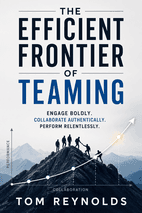
What is the book The Efficient Frontier of Teaming about?
Bryan Powell's The Efficient Frontier of Teaming provides a systems-oriented framework for leaders to balance authenticity and engagement, transforming good teams into high-performing ones through practical tools like the Team Contract and Bullseye Method. Written for leaders at all levels navigating hybrid work and low engagement.
Feature
Insta.Page
Blinkist
Shortform
Summary Depth
Full Chapter-by-Chapter
15-min overview
Detailed analysis
Audio Narration
✓ (AI narration)
✓
✓
Visual Mindmaps
✓
✕
✕
AI Q&A
✓ Voice AI
✕
✕
Quizzes
✓
✕
✕
PDF Downloads
✓
✕
✓
Price
$59.99/yr
$146/yr (PRO)
$199/yr
*Competitor data last verified February 2026.
About the Author
Bryan Powell
Bryan Powell is an American author and expert in the field of public health and emergency management. He is best known for his work "Code Red: The Crisis in Public Health," which explores systemic challenges in healthcare preparedness. Powell also draws on extensive experience as a former director of a state emergency management agency.
1 Page Summary
In a world where teams are often full of talented individuals who still underperform, Bryan Powell diagnoses the core problem as a failure to balance two fundamental forces: authenticity and engagement. Drawing from decades of coaching and his own leadership failures, Powell introduces the Efficient Frontier of Teaming, a model inspired by investment theory. It reframes team performance not as a trade-off between being nice (authenticity) and being tough (engagement), but as a dynamic curve where the highest-performing "Empowered Teams" maximize both simultaneously. These teams cultivate genuine connection, psychological safety, and whole-person respect, while simultaneously demanding rigorous accountability, shared ownership, and relentless results. The book argues that legacy leadership models—focused on command-and-control or fixing dysfunction—are insufficient; the real challenge is elevating "good enough" teams by managing human friction and unlocking hidden potential.
The book’s distinctive approach is its practical, systems-oriented framework for building this frontier culture. It eschews abstract theory for actionable tools like the Team Contract (co-created agreements on how to treat each other), the Bullseye Method (a goal-setting system that spirals from ambitious mastery goals to daily actions), and the Generative Coaching model (shifting leaders from directing to unlocking potential). A core theme is that safety is not about comfort, but about enabling intellectual friction without social friction—allowing fierce debate while preserving relationships. The author emphasizes that culture must be intentional, built through consistent rituals and shared language, and that measurements must be aligned across the entire team to avoid the "suboptimization trap" where departments pursue conflicting metrics.
The Efficient Frontier of Teaming is written for leaders at all levels—from team leads to executives—who sense their teams are capable of more but are stuck in cycles of disengagement, brittle alignment, or superficial harmony. It is particularly urgent for those navigating the pressures of hybrid work, generational diversity, and historic lows in employee trust and engagement. Readers will gain not just a diagnosis of why smart teams stall, but a concrete, repeatable operating system (the Generative Operating System™) to foster psychological safety, define authentic purpose, cultivate distributed leadership, and sustain a culture of continuous development. The core takeaway is that team transformation is a continuous journey, not a destination, where the ultimate success is not just what the team produces, but who they become in the process.
Chapter 1: Foreword
Overview
The foreword opens with a vivid, disquieting image: a leader doing everything right—strategically sound, values-driven, deeply committed—yet still surrounded by fatigue and disconnection. That gap between competence and genuine thriving is the raw nerve this book touches. Janet M. Harvey, founder of inviteCHANGE, draws on decades of listening to leaders wrestle with one essential question: How do we perform at a high level without losing ourselves or each other in the process? The answer, she insists, has never been purely technical. It has always been human.
Generative work, as she frames it, doesn’t aim to fix people or optimize them like machines. Instead, it creates the conditions where people, teams, and systems can evolve together—adaptive even amid great uncertainty. This distinction sets the stage for everything that follows.
From Doing Better to Being Whole
Most leadership literature focuses on improvement: better communication, better accountability, better execution. Important, yes, but incomplete. These operate primarily in what the Generative Operating System™ (GOS) calls the first two layers—self-awareness and relational awareness. Those layers invite different questions:
Who am I being as I lead, beyond what am I doing?
How do my beliefs, fears, and assumptions shape the system around me?
What becomes possible when people feel safe enough to be real and supported enough to stretch beyond habit?
This is where Generative Wholeness™ lives. It’s not a work-life balance slogan. It’s the recognition that human beings don’t check parts of themselves at the door. Our histories, identities, emotions, and aspirations all come with us. Leaders who try to manage performance without honoring that reality create fragmentation. Leaders who lead with wholeness create energy as a compounding, positive force. Performance is amplified by open, transparent, modeled humanity.
Why Teaming Is the Work of Our Time
Burnout, change fatigue, mistrust, fragmentation—these aren’t abstract costs anymore. They show up from executive suites to front lines. At the same time, the problems organizations face are more complex than ever. No single leader, no matter how capable, can meet this moment alone. That’s why teaming—the intentional design of how humans collaborate—has become one of the most critical leadership capabilities of our time.
This book doesn’t offer a rigid model or prescriptive answers. Instead, it invites readers to rethink how engagement and authenticity interact, how trust and accountability coexist, and how teams can move toward what the authors call an efficient frontier—the point where human energy and performance reinforce each other rather than compete. Teams are living systems to be cultivated, not problems to be solved. When leaders learn to notice patterns rather than assign blame, when they ask generative questions rather than impose solutions, conversations deepen. Ownership spreads. Performance becomes sustainable.
Coaching as a Way of Leading
Generative leaders don’t position themselves as the smartest person in the room. They position themselves as stewards of the system. They listen for what is emerging, beyond what is broken. They understand that insight is co-created, not delivered. This book reflects that posture throughout—no academic distance, just presence, story, and an honest reckoning with what it actually feels like to lead and belong to a team.
That tone isn’t accidental. It’s the result of deep personal work: the kind of human development that starts with self-awareness and extends outward into relational and systemic impact. Generative leader coaching helps leaders become, behave, and bring more of themselves while expanding their capacity to hold complexity, difference, and tension without collapsing into control.
Engagement and Authenticity: Not a Tradeoff
One of the most persistent myths in organizational life is that leaders must choose between caring about people and driving results. It’s a false and costly choice. Engagement without authenticity becomes compliance; authenticity without engagement becomes drift. Sustainable performance lives in the integration.
Teams that learn to speak the truth faster, to name what is uncomfortable, and to stay connected while holding high standards don’t become softer. They become stronger, more resilient, and adaptive—future-fit. The efficient frontier reveals the value of pausing before pushing harder, aligning energy so productive effort replaces the waste of managing fear, politics, or unspoken tension.
A Word to the Reader
If you’re looking for a quick fix, this book will challenge you. It asks for presence, curiosity, and courage. If you’re ready to lead in a way that is both deeply human and rigorously effective, you’re in the right place. Janet Harvey affirms that these insights are not theoretical—they are lived, tested, and refined in real teams with real stakes. Transformation doesn’t begin with strategy. It begins with awareness. And from awareness, everything else becomes possible.
Key Takeaways
The gap between competence and connection: Doing everything right on paper doesn’t guarantee thriving teams; the missing piece is wholeness.
Generative work creates conditions, not fixes: It cultivates living systems rather than optimizing machines.
The GOS layers start with being, not doing: Self-awareness and relational awareness precede systemic impact.
Teaming is a critical capability: No single leader can solve today’s complex problems alone; intentional collaboration is essential.
Engagement and authenticity are not a tradeoff: True performance lives in the integration of both.
Coaching as stewardship, not expertise: Generative leaders listen for what’s emerging and co-create insight.
Transformation begins with awareness: Before strategy or action, noticing what is real holds the key.
Key concepts: Foreword
1. Foreword
The Gap Between Competence and Connection
Leaders can do everything right yet still face fatigue
High performance without losing self or others is key
The missing piece is wholeness, not technical fixes
Generative work creates conditions for evolution, not optimization
From Doing Better to Being Whole
Most leadership focuses on improvement, not being
Generative Wholeness™ honors full human presence
Beliefs and fears shape the system around leaders
Wholeness creates energy that amplifies performance
💡 Try clicking the AI chat button to ask questions about this book!
Chapter 2: Introduction The One Challenge Every Team Faces
Overview
Most teams—despite brimming with smart, well-intentioned people—never quite live up to their potential. The authors, drawing on decades of coaching across industries, noticed a recurring pattern: the real bottleneck isn’t a lack of talent or drive. It’s an inability to hold two fundamental forces in balance—authenticity and engagement. This chapter lays out the central question that drives the entire book: how can leaders guide their teams toward optimal performance by intentionally balancing these two dynamics? The answer takes shape as a new model called the Efficient Frontier of Teaming, inspired by the investment concept of maximizing returns by balancing risk and reward. In a team context, it means finding the sweet spot between genuine connection (trust, safety, belonging) and rigorous accountability (standards, ownership, results). Over-index on accountability, and you get rigid, fear-driven cultures. Over-index on authenticity, and you risk permissiveness and conflict avoidance. The teams that thrive are the ones that ride the curve where both are maximized together.
Why This Problem Is Urgent Now
The modern workplace makes this balancing act even harder. Hybrid work has frayed connection, burnout has sapped motivation, and teams are more diverse, dispersed, and digitally mediated than ever. Old command-and-control leadership or top-down culture initiatives simply don’t work under these conditions. The authors argue that what teams need isn’t more structure or slogans, but leaders who can guide them through the messy, nonlinear process of growth toward sustainable high performance. That means building trust, giving honest feedback, realigning purpose, and fostering new forms of ownership. It’s not about perfection—it’s about progress toward maturity.
What This Book Actually Delivers
Rather than a theoretical treatise, The Efficient Frontier of Teaming is a practical roadmap. Every chapter is built around real coaching conversations, diagnostic tools, self-assessments, team exercises, original visual models, and research-backed insights. The book introduces a maturity model (Dependent, Collaborative, Aligned, Empowered), the Bullseye Method for goal setting, and frameworks like the Coaching Culture Continuum. All of it points to one goal: helping your team find and stay on its efficient frontier.
How the Journey Unfolds
The book opens with a diagnostic look at dysfunctional teams—what they look like, how they form, and why well-meaning leaders often fail to shift them. From there, it maps the spectrum of team development, giving you language and examples for each stage. Later chapters dive into the essential ingredients for peak team performance: psychological safety and trust, shared purpose and values, feedback and coaching, clear roles and interdependencies, and measurable goals with learning loops. You’ll see these ideas play out in real-world settings—financial advisory firms, nonprofit boards, startup teams in crisis. The final chapters focus on implementation: building a team contract, embedding coaching habits into everyday meetings, using KPIs without crushing morale, and adapting when the finish line keeps moving.
Why This Isn’t Just Another Leadership Book
The authors aren’t offering a one-size-fits-all formula. They’re offering a new mental model for leading in complexity—one that helps leaders become coaches, gives structure to the “soft stuff,” and adds depth to the “hard stuff.” It invites you to think like a system builder and culture shaper, not just a task manager or inspiration dispenser. The book exists because the authors believed the world needed better practice, not more content. Better conversations, clarity, habits, and above all, leaders who understand that performance without connection is unsustainable—and that connection without performance is insufficient.
Key Takeaways
The core challenge every team faces is balancing authenticity (trust, safety, belonging) with engagement (accountability, ownership, results).
The Efficient Frontier of Teaming is a practical model for visualizing and reaching the optimal balance between these two forces.
Modern workplace conditions—hybrid work, burnout, diversity—make this balance more critical and harder to achieve without intentional leadership.
This book provides concrete tools, real-world coaching examples, and a step-by-step framework to help leaders move teams from dysfunction to sustainable high performance.
Key concepts: Introduction The One Challenge Every Team Faces
2. Introduction The One Challenge Every Team Faces
The Core Challenge: Balancing Authenticity and Engagement
Teams fail due to imbalance, not lack of talent
Authenticity means trust, safety, and belonging
Engagement means accountability, ownership, and results
Optimal performance requires both forces maximized together
The Efficient Frontier of Teaming Model
Inspired by investment concept of balancing risk and reward
Over-index on accountability creates rigid, fear-driven cultures
Over-index on authenticity risks permissiveness and conflict avoidance
Sweet spot is where both forces are maximized
Why This Problem Is Urgent Now
Hybrid work has frayed team connection
Burnout has sapped motivation and energy
Diverse, dispersed teams need intentional leadership
Goal: help teams find and stay on their efficient frontier
How the Journey Unfolds Through the Book
Opens with diagnostic look at dysfunctional teams
Maps spectrum of team development stages
Covers essential ingredients like trust, purpose, and feedback
Ends with implementation tools like team contracts and KPIs
Scroll to load interactive mindmap
⚡ You're 2 chapters in and clearly committed to learning
Why stop now? Finish this book today and explore our entire library. Try it free for 7 days.
Chapter 3: Chapter 1 The Limits of Legacy Leadership
Overview
The chapter opens with a personal story from 2015, when the author stepped into a new leadership role over a cross-functional wealth advisory team—experienced and credentialed, but underwhelming in energy and innovation. His instinct was to tighten structure, efficiency, and performance reviews, yet the harder he pushed, the more disengaged the team became. That experience planted the seed: the missing link between engagement, psychological authenticity, and sustainable performance. The model that emerged wasn’t born in a classroom; it came from years of running teams, learning from failures, and watching good people struggle inside bad systems. One turning point involved a team that hit a wall—missed deadlines, eroding trust—and instead of assigning blame, they paused, realigned purpose, and committed to a new feedback cadence. Another came when a manager suggested coaching for “leadership and communication skills,” leaving the author feeling unable to show up authentically. Those experiences crystallized what legacy models miss. Books like The Five Dysfunctions of a Team and Leaders Eat Last offered smart insights, but they addressed only broken teams or high-stakes contexts like military units. The real challenge was subtler: good people operating below potential—not because of dysfunction, but because they weren’t showing up fully. They completed tasks but withheld ideas, left tensions unspoken, collaborated like negotiators instead of co-creators. This teaming inefficiency—the gap between capability and consistent delivery—became the core problem.
The term “high-performing team” is often a badge of honor, but it sets an unrealistic, unsustainable finish line. The author and Tom instead define optimal performance as a team’s ability to consistently operate at its full potential with the resources available in the present moment—energy, trust, communication, clarity, accountability, engagement. Where high performance is outcome-driven and pressure-inducing, optimal performance is process-driven, built for adaptability, and centered on human factors. In finance, the efficient frontier shows the highest return for a given risk; for teams, it’s the highest output for a given level of trust, authenticity, and engagement. The question becomes: How can we work most effectively with what we have today?
The real drivers of that frontier are sustained engagement and interpersonal authenticity—the axes of the Efficient Frontier of Teaming. Most organizations measure results, not the deeper mechanisms. Google’s Project Aristotle identified psychological safety as the top predictor of effectiveness, yet it’s rarely well defined or measured. When people feel safe to speak openly, admit mistakes, and express vulnerability, performance improves. Engagement without authenticity produces efficiency without depth; authenticity without engagement produces empathy without execution. But where both are high, performance becomes exponential. Traditional models treat trust as the foundation; this framework treats authenticity as fuel that expands over time. It introduces four levels of team maturity—Dependent, Collaborative, Aligned, and Empowered—each representing a different relationship with engagement and authenticity. This isn’t a static formula; it’s a strategic path for the team to show up as their true selves.
In complex environments, the differentiator is how quickly a team can learn, adapt, and mobilize. Two teams face the same crisis: one scrambles in silence, the other meets, revisits priorities, and reallocates work without waiting for direction. The difference is psychological safety built before the crisis. Reaching the efficient frontier requires a shift from command-and-control to context-and-calibration—the leader becomes a gardener, designing the environment and clearing obstacles. There’s a common trap for expert-leaders: holding onto decision-making feels safe. But the book shows how one leader, by letting team leads run client meetings with proper scaffolding, didn’t lose control—he gained time, trust, and momentum. Empowerment isn’t a loss of control; it’s a strategy for scaling leadership capacity. Teams are living systems, not machines. They need energy, feedback, rest, and connection. Great teams aren’t conflict-free; they are conflict-capable, able to metabolize difficult conversations rather than avoid them. Gallup research shows engaged employees deliver 23 percent higher profitability, but engagement alone falls short unless paired with authenticity. The sweet spot occurs when both are high, creating collective accountability.
This book’s promise goes beyond diagnostic tools and coaching strategies. It offers a mindset shift: most teams underperform not because of talent or strategy gaps, but because they lack the systems—and the courage—to unlock what’s already present. The standard to aim for is a team where every voice is appreciated, heard, and respected—where innovation, collaboration, and transformation happen consistently, not by accident.
Key Takeaways
Empowerment isn’t loss of control—it’s a strategy for scaling leadership capacity.
Teams are living systems; suppressing friction reduces long-term performance.
The most effective teams balance high engagement with high authenticity.
Change begins with reflection: own your past experiences, share them, and take concrete steps to bring your authentic self and raise collective engagement.
Key concepts: Chapter 1 The Limits of Legacy Leadership
3. Chapter 1 The Limits of Legacy Leadership
The Teaming Inefficiency Problem
Good people operate below potential without dysfunction
Tasks completed but ideas withheld and tensions unspoken
Collaboration is negotiation, not co-creation
Gap between capability and consistent delivery is core issue
Optimal vs. High Performance
High performance is outcome-driven and unsustainable
Optimal performance is process-driven and adaptable
Efficient frontier balances trust, authenticity, and engagement
Focus on working effectively with current resources
Drivers: Engagement and Authenticity
Sustained engagement and interpersonal authenticity are key axes
Psychological safety enables speaking openly and admitting mistakes
Authenticity without engagement lacks execution
Both high creates exponential performance
Leadership Shift: Context and Calibration
Move from command-and-control to context-and-calibration
Leader becomes gardener, designing environment and clearing obstacles
Empowerment scales leadership capacity, not loss of control
Teams are living systems needing energy, feedback, and rest
Team Maturity and Conflict Capability
Four levels: Dependent, Collaborative, Aligned, Empowered
Great teams are conflict-capable, not conflict-free
Psychological safety built before crisis enables adaptation
Collective accountability emerges from high engagement and authenticity
Scroll to load interactive mindmap
Chapter 4: Chapter 2 The Efficient Frontier of Teaming
Overview
Most teams aren't broken—they simply haven't been developed. The teaming inefficiency gap is the distance between what a team currently produces and what it's capable of, driven by underutilized insight and hidden tension. Borrowing from modern portfolio theory, the Efficient Frontier of Teaming reframes risk as human friction—misalignment, low trust, suppressed potential. The most effective teams don't eliminate friction; they manage it through shared purpose, high trust, and distributed leadership.
Research shows high-performing teams speak the truth faster, build micro-trust daily, manage tension rather than avoid it, revisit their purpose frequently, and make space for the whole person. The model identifies two critical levers: engagement (focused energy, effort, emotional commitment) and authenticity (safety to express truth, risk, vulnerability). Teams often optimize one without the other. Only when both are high do teams consistently produce innovation and resilience.
The framework maps four team types. Dependent Teams have low engagement and low authenticity, driven by authority and vulnerable to inertia. Collaborative Teams are high in authenticity but low in engagement—supportive but inconsistent. Aligned Teams are high in engagement but low in authenticity—goal-driven but brittle under pressure. Empowered Teams represent the frontier: high engagement and high authenticity, where people challenge each other without diminishing.
Team development isn't linear. A Collaborative Team may become Empowered by adding structured accountability; an Aligned Team may regress to Dependent after a reorganization. Four core conditions are always present: Direction and Leadership, Trust and Authenticity, Alignment and Accountability, and Ownership and Adaptability. These develop together; teams struggle when one matures faster than others.
A diagnostic tool—48 questions, twelve per condition—scores each between 12 and 60. The real insight comes from the pattern across all four conditions. Authenticity is measured by Trust and Ownership; Engagement by Direction and Alignment. The scores reveal team types as orientation, not classification. The coaching insight: teams stall from imbalance, not lack of talent. Strong leadership without shared ownership creates dependence; high trust without accountability creates drift. Growth comes from precision, not pressure.
Reaching the Efficient Frontier requires intention. Structure must support trust, accountability must be mutual, and leadership must evolve from control to cultivation. By completing the diagnostic honestly, identifying which condition is carrying the team and which is limiting it, and prioritizing one or two high-leverage shifts, any team can begin the journey toward its full potential.
The Model: Borrowed from Finance, Reworked for Teams
The core idea comes from modern portfolio theory—the sweet spot of highest return for a given risk. In teams, risk is human friction. Effective teams manage it through shared purpose, high trust, and distributed leadership, building a repeatable approach grounded in relational and operational infrastructure.
The Teaming Inefficiency Gap: Why “Good Enough” Isn’t
Most teams aren't broken—they just haven't been developed. The gap between current output and actual capability is the teaming inefficiency gap, driven by underutilized insight and hidden tension. Five patterns distinguish high performers: they speak truth faster, build micro-trust daily, manage tension, revisit purpose frequently, and make space for the whole person.
The Two Levers That Matter Most: Engagement and Authenticity
Engagement – focused energy, effort, emotional commitment. Answers: Am I here with energy and intention?
Authenticity – safety to express fully, including truth-telling and vulnerability. Answers: Can I show up as the real me?
You can have engagement without authenticity (politically cautious teams) or authenticity without engagement (connected teams that struggle to ship). Only when both are high do teams produce innovation and resilience.
The Four Team Types on the Efficient Frontier
Dependent Team (Low Engagement, Low Authenticity) – driven by authority, passive, fragile.
Collaborative Team (High Authenticity, Low Engagement) – supportive but inconsistent, conflates care with consensus.
Aligned Team (Low Authenticity, High Engagement) – goal-driven but brittle under pressure.
Empowered Team (High Engagement, High Authenticity) – the frontier in motion: challenge without diminishing, urgency without compromising care.
The Journey, Not the Destination
Team development isn't linear. Leaders must recognize where their team actually is. The chapter ends with a diagnostic tool to map your team's current position.
The Four Core Conditions Behind Every Team
Direction and Leadership – clarity, decision-making, leadership style.
Trust and Authenticity – psychological safety, truth-telling.
Alignment and Accountability – execution engine: roles, expectations, follow-through.
Ownership and Adaptability – responsibility for the whole team, learning and adjusting.
These develop together. Teams struggle when one matures faster than others.
How to Complete the Diagnostic
Each member responds individually using lived experience, scale 1–5. 48 questions, twelve per condition, scores 12–60. Score bands: 12–28 fragile, 29–40 uneven, 41–52 strong, 53–60 embedded. The real insight comes from the pattern across all four.
Authenticity and Engagement: The Forces Behind the Frontier
Authenticity (Trust + Ownership) asks: Is it safe to bring my real perspective? Engagement (Direction + Alignment) asks: Do I understand the work and feel responsible? High performance requires both forces in balance.
How the Scores Reveal the Four Team Types
Dependent: Direction 41–60, Trust 12–40, Alignment 29–40, Ownership 12–40. Work: more psychological safety and shared ownership.
Collaborative: Direction 29–40, Trust 41–60, Alignment 12–40, Ownership 29–40. Work: strengthen alignment without sacrificing trust.
Aligned: Direction 41–60, Trust 29–40, Alignment 41–60, Ownership 29–52. Work: deeper truth-telling and safety.
Empowered: All conditions 41–60. Work: maintenance and renewal.
The Coaching Insight That Changes Everything
Teams stall from imbalance, not lack of talent. Strong leadership without ownership creates dependence. High trust without accountability creates drift. Growth comes from precision, not pressure. Complete the diagnostic honestly, identify which condition is carrying the team and which is limiting it.
Final Thoughts: Building the Conditions
The Efficient Frontier expands as the team grows. Reaching it requires intention. Structure must support trust, accountability must be mutual, leadership must evolve from control to cultivation. Consider: Do team members give honest feedback? Is psychological safety visible? Is leadership distributed? Use the diagnostic to prioritize one or two high-leverage shifts.
Key Takeaways
Teams stall from imbalance among four core conditions: Direction, Trust, Alignment, and Ownership.
These conditions organize into two forces: authenticity (Trust + Ownership) and engagement (Direction + Alignment). High performance emerges when both mature in balance.
The diagnostic reveals team type patterns—Dependent, Collaborative, Aligned, or Empowered—each requiring a specific focus for growth.
Growth comes from precision, not pressure. Identify where the system is compensating and where it is constrained.
Action steps include honest self-assessment, team discussion about authenticity and engagement, and using the diagnostic to prioritize one or two high-leverage shifts.
Key concepts: Chapter 2 The Efficient Frontier of Teaming
4. Chapter 2 The Efficient Frontier of Teaming
The Teaming Inefficiency Gap
Most teams aren't broken, just underdeveloped
Gap between current output and actual capability
Driven by underutilized insight and hidden tension
High performers speak truth faster and build micro-trust
Collaborative: high authenticity, low engagement, supportive but inconsistent
Aligned: high engagement, low authenticity, goal-driven but brittle
Empowered: high both, challenge without diminishing
Four Core Conditions for Team Development
Direction and Leadership: clarity and decision-making
Trust and Authenticity: psychological safety and truth-telling
Alignment and Accountability: roles, expectations, follow-through
Ownership and Adaptability: responsibility and learning
Diagnostic Tool and Scoring
48 questions, twelve per condition, scale 1-5
Scores range 12-60 per condition
Real insight from pattern across all four conditions
Teams stall from imbalance, not lack of talent
Authenticity and Engagement Forces
Authenticity = Trust + Ownership
Engagement = Direction + Alignment
High performance requires both forces in balance
Growth comes from precision, not pressure
Reaching the Efficient Frontier
Structure must support trust and mutual accountability
Leadership must evolve from control to cultivation
Identify which condition carries and which limits
Prioritize one or two high-leverage shifts
Scroll to load interactive mindmap
Frequently Asked Questions about The Efficient Frontier of Teaming
What is The Efficient Frontier of Teaming about?
This book tackles a critical but often overlooked challenge: why talented, well-intentioned teams still underperform. It introduces the Efficient Frontier of Teaming model, which balances two essential forces—authenticity (safety to express truth) and engagement (focused energy and commitment)—to unlock a team's full potential. Drawing on decades of coaching experience, the book provides practical frameworks for building trust, fostering psychological safety, creating shared purpose, and moving from command-and-control leadership to a coaching culture. Ultimately, it shows that the path to sustainable high performance lies not in eliminating friction but in managing it intentionally.
Who is the author of The Efficient Frontier of Teaming?
Bryan Powell is a leadership coach and practitioner who spent years running teams and learning from failures before developing the Efficient Frontier model. His insights come from real-world experience, including a turning point when he realized that tightening structure and efficiency only made his team more disengaged. The book also draws on the expertise of Janet M. Harvey, founder of inviteCHANGE, who contributed the foreword and decades of work on generative leadership.
Is The Efficient Frontier of Teaming worth reading?
Absolutely. It offers a fresh, research-backed approach to team development that goes beyond traditional leadership advice focused on fixing dysfunction. The book is packed with actionable tools—like the Bullseye Method, team contracts, and coaching competency compass—that can be applied immediately to improve trust, accountability, and performance. Whether you lead a small team or a large organization, this book will help you close the gap between where your team is and what it's capable of.
What are the key lessons from The Efficient Frontier of Teaming?
The central lesson is that high-performing teams balance authenticity and engagement, avoiding the traps of permissive or fear-driven cultures. Leaders must shift from command-and-control to a coaching mindset, replacing judgment with curiosity and creating psychological safety where intellectual friction thrives without damaging relationships. Teams also need a clear, shared purpose aligned with measurable goals, explicit behavioral norms (a team contract), and deliberate practices like micro-trust-building and regular feedback rituals. Ultimately, the journey toward the Efficient Frontier is ongoing—success is defined not just by what a team delivers, but by who they become in the process.
📚 Explore Our Book Summary Library
Discover more insightful book summaries from our collection