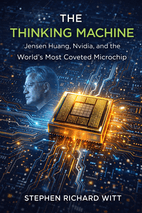
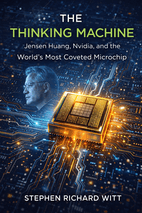
Stephen Witt's The Thinking Machine traces AI's evolution from theoretical beginnings to modern deep learning through a narrative of human ambition and rivalry. It provides intellectually curious readers a historical framework for understanding today's AI headlines and their societal implications.
Feature
Insta.Page
Blinkist
Shortform
Summary Depth
Full Chapter-by-Chapter
15-min overview
Detailed analysis
Audio Narration
✓ (AI narration)
✓
✓
Visual Mindmaps
✓
✕
✕
AI Q&A
✓ Voice AI
✕
✕
Quizzes
✓
✕
✕
PDF Downloads
✓
✕
✓
Price
$59.99/yr
$146/yr (PRO)
$199/yr
*Competitor data last verified February 2026.
About the Author
Stephen Witt
Stephen Witt is an American journalist and author best known for his book "How Music Got Free," which chronicles the digital revolution in the music industry and the rise of piracy. His expertise lies in technology, intellectual property, and the economics of media, drawing from his background in physics and his work for publications like The New Yorker and The Guardian.
1 Page Summary
In The Thinking Machine, Stephen Witt, author of How Music Got Free, turns his analytical eye to the history and future of artificial intelligence. The book traces the evolution of AI from its theoretical beginnings in the minds of pioneers like Alan Turing and John von Neumann through the boom-and-bust cycles of the 20th century to the modern explosion of deep learning and large language models. Witt’s central thesis is that the creation of artificial intelligence is not merely a technical endeavor but a profound and messy human story, driven by ambition, rivalry, funding battles, and occasional bursts of genius that have collectively brought us to the brink of a world-altering technology.
Witt’s approach is that of a narrative journalist, distinguishing the book from a purely technical manual or a futurist manifesto. He grounds the sprawling subject in vivid profiles of key figures—from academic researchers to Silicon Valley entrepreneurs—and elucidates complex concepts like neural networks and transformer models through clear, accessible analogies. The book is distinctive for its focus on the economic and social forces that have shaped AI’s development, examining how data, computing power, and corporate capital became the essential fuel for the current revolution, often as critical as the algorithms themselves.
The intended audience is the intellectually curious general reader seeking to understand not just how AI works, but why it developed as it did and what its trajectory suggests for our future. Readers will gain a coherent historical framework for today’s AI headlines, appreciating the long arc of research and the very human drama behind the machines. Ultimately, Witt provides a sober yet compelling foundation for considering the ethical dilemmas and societal transformations that the widespread adoption of true "thinking machines" is likely to bring.
The chapter opens with a pivotal and challenging period in the childhood of Jensen Huang. At age ten, having recently arrived from Thailand, he navigates a profound cultural and physical isolation in rural Kentucky. His daily journey to school involves crossing a treacherous rope bridge, which also becomes a site of racial bullying. This experience, alongside his time at the strict Oneida Baptist Institute, forges a resilience and toughness that define his character. The narrative then traces his family's journey from Taiwan to Thailand to America, and follows Jensen's path as he adapts, excels academically, discovers a passion for computing and table tennis, and ultimately finds his way to college and a fateful meeting that would shape his future.
Life in Rural Kentucky
Jensen Huang’s introduction to America was harsh. As a small, ten-year-old Taiwanese boy who spoke imperfect English, he was an immediate target for bullies at Oneida Elementary in Clay County, Kentucky. The other children, mostly from impoverished families of tobacco farmers and coal miners, subjected him to racial slurs and physical harassment. The precarious footbridge he crossed alone became a favorite place for them to try to shake him into the river below. Despite this, he impressed his classmate Ben Bays with his apparent fearlessness. Huang fought back, academically and physically, eventually supplanting Bays as the top student and teaching him how to stand up to bullies, which gradually reduced the torment.
Family Background and Journey to America
Huang was born in Taiwan in 1963 to a chemical engineer father and a teacher mother. The family moved to Bangkok for his father's work when Jensen was five. Political unrest in Thailand in 1973 prompted his father to send Jensen and his older brother Jeff to the United States for safety. An uncle mistakenly enrolled them at the Oneida Baptist Institute (OBI) in Kentucky, believing it to be a prestigious school. In reality, OBI was a reform academy. The brothers anglicized their names, and Jensen, at ten, was given a seventeen-year-old, illiterate roommate who had been stabbed multiple times. In exchange for reading lessons, his roommate taught him to bench press, initiating a lifelong push-up routine. Huang performed manual labor chores at OBI, including cleaning toilets and cutting brush with a scythe.
Adaptation and Early Success
By the end of his year at the elementary school, Huang had risen to the top of his class and earned a silver dollar for his academic performance. He retrospectively viewed his chores as lessons in the value of hard work. After a year, he adjusted to life at OBI itself. In 1975, his father secured a job in the U.S., and the family reunited in Oregon. Huang would not see Ben Bays again for 44 years, later returning to OBI to donate a building and recalling his time there fondly, albeit with a softened perspective on its difficulties.
High School Passions: Computers and Table Tennis
In Oregon, Huang attended Aloha High School, excelling academically and finding his place in clubs for math, science, and computers. He was captivated by the school’s new Apple II. His other passion became competitive table tennis. With intense focus and dedication, he practiced relentlessly at a local club, the Paddle Palace, quickly becoming a nationally ranked junior player. His coach noted his incredible capacity for rapid improvement and total immersion in mastering fundamentals.
Lessons from Denny’s
During high school, Huang worked at Denny’s, advancing from dishwasher to server. He loved the high-pressure environment, noting that chaos helped him think clearly. He also used the job to assimilate culturally, methodically eating his way through the American diner menu, with the "Super Bird" sandwich as a favorite.
College and a Fateful Partnership
Despite outstanding grades and achievements, Huang chose to attend Oregon State University to stay close to home. He majored in electrical engineering, where a required lab course paired him randomly with fellow student Lori Mills. Sensing competition for her attention, Huang won her over by being an exceptionally capable homework partner. Their work together on "breadboards" to build circuits created a close bond. After six months of studying, he asked her out, and they became inseparable. Huang graduated with highest honors just as the demand for microchip designers was exploding, leading him to seek his future in Silicon Valley.
Key Takeaways
Forged in Adversity: Huang's early experiences with isolation, bullying, and manual labor in Kentucky built an exceptional resilience and a pragmatic ability to "toughen up and move on."
The Power of Focus: Whether in academics, table tennis, or circuit design, Huang demonstrated a unique capacity for deep, patient focus on fundamentals, enabling rapid mastery.
Embracing Hard Work: From cleaning toilets to waiting tables, he reframed menial tasks as valuable lessons in discipline and opportunity.
Strategic Adaptation: Huang constantly adapted to new cultures and challenges, from learning English via dictionary drills to assimilating through American diner food, always finding a way to succeed.
Foundational Relationships: Key partnerships, like his friendship with Ben Bays and, most significantly, his study-based courtship of his future wife Lori, were central to his stability and path forward.
Key concepts: Chapter One: The Bridge
1. Chapter One: The Bridge
Early Adversity in Kentucky
Faced racial bullying and isolation at age ten
Crossed a treacherous rope bridge daily
Attended strict Oneida Baptist Institute
Fought back academically and physically
Family Journey and Background
Born in Taiwan, moved to Thailand at five
Sent to U.S. for safety during Thai unrest
Uncle mistakenly enrolled him in reform school
Learned resilience through manual labor chores
Adaptation and Academic Success
Rose to top of class despite challenges
Family reunited in Oregon after one year
Reframed menial tasks as lessons in hard work
Later donated to OBI with softened perspective
High School Passions and Work Ethic
Discovered passion for computers on Apple II
Became nationally ranked table tennis player
Worked at Denny's, thrived in chaos
Used job to assimilate culturally through food
College and Foundational Partnership
Chose Oregon State University to stay close
Randomly paired with Lori Mills in lab
Built close bond through circuit design work
Graduated with honors as chip demand exploded
If you like this summary, you probably also like these summaries...
💡 Try clicking the AI chat button to ask questions about this book!
Chapter 2: Chapter Two: Large-Scale Integration
Overview
The chapter kicks off with a heart-stopping moment as Jensen Huang's Toyota Supra spins out on an icy mountain road, a calculated risk that almost cost him and his fiancée everything. This brush with disaster frames his entire career, where such gambles, both personal and professional, repeatedly set the stage for his future. After recovering, Huang dove back into the microchip world at AMD, sketching designs by hand and even learning Mandarin from coworkers, before jumping to LSI Logic. There, he entered the realm of large-scale integration, where software began to manage the immense complexity of placing countless transistors on a chip, moving from artisanal drafting to the abstract efficiency of modern VLSI.
In Silicon Valley's "pit"—LSI's no-frills cubicle farm—Huang embraced a brutal work schedule, often clocking in from dawn until late night, with weekends fading from view. He mastered primitive tools like SPICE simulation, using them to defy conventional limits and solve problems others deemed impossible, all while forging a close bond with a fellow immigrant engineer who admired his focus. At home, he and his wife, Lori, built a quiet, stable life, marrying young, buying a house, and starting a family. Lori, a talented engineer herself, stepped back from her career to raise their kids, creating a dependable foundation that freed Huang to pour himself into his work.
His professional breakthrough came through collaborating with two demanding customers from Sun Microsystems: Chris Malachowsky and Curtis Priem. Together, they formed a powerhouse trio—Priem the visionary, Malachowsky the builder, and Huang the logistician—culminating in the creation of the pioneering Sun GX 3D graphics processor. Huang's blunt honesty and reliability earned their fierce trust, even surpassing their loyalty to their own bosses. However, when Sun rejected their idea for a budget-friendly graphics chip for PC gamers, Malachowsky and Priem saw Huang as the missing piece for their startup dream.
This presented a agonizing crossroads. Huang had just been promoted at LSI, seemingly groomed for leadership, but the startup offer was a leap into the unknown—no name, no business plan, and based on a partnership known for heated arguments. With a young family and only six months of savings, the risk was palpable. Huang's departure was fueled by a perceived political snub at LSI, but he met the startup proposition with characteristic caution, treating it as an engineering problem to be dissected. He embarked on a relentless pursuit of data, analyzing market trends, consulting game developers, and scrutinizing industry reports to validate every assumption. This data-driven analysis was his non-negotiable foundation, stripping emotion from the decision and proving that successful ventures hinge on ruthless scrutiny rather than optimism. With Lori's steadfast belief backing him, Huang stood ready to bet it all, illustrating how personal setbacks can ignite entrepreneurial leaps and that breaking down high-stakes challenges into manageable components is key to navigating uncertainty.
The Toyota Supra slid across a patch of black ice on a mountain highway near the California-Oregon border, rolling violently before coming to a stop. Inside were a young Jensen Huang and his fiancée, Lori Mills, both trapped and injured after a long drive following AMD's extravagant Christmas party. The totaled sports car and Jensen's neck brace became stark memories of a reckless, youthful gamble that luckily didn’t derail their future together. This brush with disaster underscored a recurring theme in Huang's life: calculated risks, both personal and professional, often paved his path forward.
Early Career and Formative Experiences
After recovering, Huang returned to his job at AMD, where he sketched microchip designs on paper and learned Mandarin phonetically from the photomask team, a group of Chinese women who reminded him of his mother. His frugality had already allowed him to buy the Supra and an engagement ring, but his ambitions were shifting. In 1985, he followed a coworker to LSI Logic, a pioneer in automated chip design tools. Here, he entered the world of "large-scale integration," where software began to manage the impossibly complex task of placing hundreds of thousands of transistors on a single chip, moving beyond artisanal draftsmanship toward the abstraction of modern VLSI (very large-scale integration).
Life in the Silicon Valley "Pit"
The physical heart of Silicon Valley was a bland stretch of suburbs along Highway 101, but for Huang, LSI's low-slung cubicle grid—"the pit"—was heaven. He adopted a relentless work ethic, often working from 7 a.m. until late at night, with weekends becoming an abstract concept. He formed a close friendship with Jens Horstmann, a fellow immigrant engineer who noted Huang's unique ability to dive deep into technical problems without getting lost in "ratholes." Huang mastered the primitive SPICE simulation software, using it to push circuit capabilities beyond accepted limits, often telling customers, "Let me see what I can do," when others said it was impossible.
The Personal Foundation
While immersed in work, Huang and Lori built a stable, domestic life. They married young, bought a tract home in San Jose, had two children—Spencer and Madison—and adopted an energetic dog named Sushi. Lori, a gifted engineer herself, left her job at Silicon Graphics to raise their kids, a decision Huang later recalled with some discomfort. Among their friends, the Huangs were seen as the responsible, albeit "kinda square," couple who maximized retirement accounts and rarely socialized outside tech circles. This stable home base allowed Jensen to pursue his professional obsessions.
Collaboration with Future Co-Founders
At LSI, Huang was assigned to handle demanding customers from Sun Microsystems: Chris Malachowsky and Curtis Priem. The trio developed a synergistic dynamic. Priem was the visionary architect with an eccentric demeanor, Malachowsky the practical mechanic who could build anything, and Huang the logistician who managed production and delivery. Their collaboration birthed the 1989 Sun GX, a pioneering 3D graphics processor. Huang's candor and reliability—traits that sometimes bordered on bluntness—earned their deep trust, even more than their own bosses at Sun.
The Crossroads
Huang's success with the Sun GX led to a promotion at LSI, where founder Wilf Corrigan seemingly groomed him for future leadership. However, Malachowsky and Priem, frustrated that Sun rejected their idea for a cheaper graphics chip for PC gamers, approached Huang in 1992 to run a startup. The proposal was risky: no business plan, no name, and the duo was known for fiery, door-slamming arguments. With a young family, only six months of savings, and Lori now out of the workforce, Huang faced a agonizing decision. Despite his later claims of lacking ambition, those around him saw a driven striver who aimed to run something by thirty. With Lori's unwavering belief, he was poised to take the leap.
Huang's Defection and the Start-Up Offer
Jensen Huang's fury over what he perceived as a political maneuver that stripped him of his division was the catalyst for his departure. Malachowsky and Priem, recognizing his brilliance, saw him as the indispensable leader for their nascent graphics start-up. Yet, Huang approached the proposition with characteristic caution, weighing the immense risks inherent in consumer hardware ventures.
Engineering a Business Decision
For Huang, every significant choice was stripped of emotion and treated as a systems problem. He dissected the challenge of launching a start-up into its fundamental components: market viability, competitive landscape, technological feasibility, and supply chain logistics. This meant embarking on a rigorous fact-finding mission, consulting with game developers, industry experts, and potential customers, while meticulously analyzing years of market data.
The Relentless Pursuit of Data
There was no room for guesswork. Huang immersed himself in the granular details of industry reports, sales figures, and consumer surveys, searching for the definitive trends that would validate the venture. This exhaustive research was, in his view, the non-negotiable prerequisite—the only solid ground from which to build.
Key Takeaways
Personal professional setbacks can serve as powerful motivators for entrepreneurial leaps.
Successful ventures are often built on a foundation of ruthless, data-driven analysis rather than optimism.
Treating business challenges as engineering problems allows for decomposition into manageable, testable components.
Thorough market research and customer validation are critical before committing to high-risk start-up endeavors.
Early brush with disaster frames risk-taking approach
Calculated risks become a recurring professional theme
Data-driven analysis replaces optimism in decision-making
Transition to Large-Scale Integration
Moves from AMD to LSI Logic in 1985
Enters era of software-managed chip design
Shifts from artisanal drafting to VLSI abstraction
Work Ethic in Silicon Valley
Embraces brutal schedule in LSI's 'pit'
Masters primitive SPICE simulation tools
Solves problems others deem impossible
Formative Professional Relationships
Collaborates with Sun Microsystems engineers
Forms powerhouse trio for graphics processor
Earns trust through blunt honesty and reliability
Personal Foundation for Risk
Stable home life with wife Lori as anchor
Lori steps back from engineering career
Domestic stability enables professional obsession
The Startup Crossroads
Faces agonizing choice between security and unknown
Approaches decision as engineering problem
Conducts relentless market validation before committing
Core Methodology
Breaks high-stakes challenges into components
Relies on ruthless scrutiny over emotion
Validates every assumption with data
⚡ You're 2 chapters in and clearly committed to learning
Why stop now? Finish this book today and explore our entire library. Try it free for 7 days.
Chapter 3: Chapter Three: New Venture
Overview
This chapter chronicles the chaotic and precarious founding of Nvidia, from a series of coffee-fueled meetings in a rough-around-the-edges Denny's to the development and disastrous launch of its first product, the NV1. It captures the blend of audacious vision, raw technical talent, and sheer luck that defined the company's earliest days, setting the stage for a desperate fight for survival.
The Founding in a Denny's
The story begins not in a garage, but in a 24-hour Denny's on Berryessa Road in San Jose, a downscale area in the shadow of Silicon Valley's wealth. In 1993, Jensen Huang, Chris Malachowsky, and Curtis Priem met in a back section frequented by police officers. Huang, with his laptop and spreadsheets, was trying to convince himself and his cofounders to enter the crowded field of 3D graphics accelerators for PCs—a market giants like Sun and SGI had ignored. Despite expert advice from graphics guru Jon Peddie to avoid the space, Huang manipulated his financial projections until they met his magic number: $50 million in annual revenue. Convinced, the trio decided to proceed.
Incorporation and Naming
They sought incorporation with noted Silicon Valley lawyer Jim Gaither. Lacking a name, Gaither used the placeholder "NV" for "new venture." Priem had already dubbed their prototype chip the NV1 (for "envy"), and from a list of "NV"-themed names, they settled on "Nvidia," derived from the Latin invidia. The final partnership details were ironically settled back at the Denny's, where Malachowsky discovered the window they sat by was pocked with bullet holes, prompting a swift exit. The actual incorporation papers were signed at Priem's townhouse, though the Denny's legend took hold. Capitalization was almost comically informal: Huang paid the $200 filing fee with cash from his wallet.
Early Culture and Doubters
Nvidia's first office was Priem's condo, with furniture moved into the garage and work done in the bedrooms. Huang's office was a small kitchen table, strategically placed in the path of all foot traffic—a positioning habit he would maintain. Despite the unorthodox setup, the team's talent attracted early employees who worked without immediate pay. Not everyone was optimistic; Huang's mother urged him to quit and return to a stable job at a large corporation.
Developing the NV1
The technical goal was to stand out in a saturated market. Priem loaded the NV1 with esoteric features, most notably "quadratic texture mapping" for rendering curved surfaces, and an object-oriented software approach. He dreamed of an architecture that would last a century. While Priem built, Huang raised capital. A disastrous pitch to Sequoia Capital's Don Valentine was salvaged only by a forceful recommendation from Wilf Corrigan of LSI. Sequoia and Sutter Hill Ventures invested, captivated more by the founders' world-class engineering talent than by a concrete business plan.
A Strip Mall HQ and Growing Pains
With funding, Nvidia moved to a dingy Sunnyvale strip mall, sharing a bathroom with another tenant and smelling of neighboring Chinese food. The back housed a recreation area with a ping-pong table and a Sega console where Priem held high scores. Huang’s command center was the conference room, where he meticulously covered every whiteboard and wall with strategic plans and chip architectures in flawless handwriting, creating a physical map of his brain.
Launch and Initial Success
Following a "merchant chip" model, Nvidia designed the NV1 but outsourced fabrication and sales to partners like Diamond Multimedia. The prototype's arrival was a moment of boyish excitement for the early team. Launching in late 1995 into a market supercharged by games like Myst and Doom, the NV1, bundled with Sega's Virtua Fighter, sold over 100,000 units. Nvidia expanded rapidly, hiring over a hundred employees and throwing an extravagant Christmas party. The future seemed assured.
Catastrophic Failure
The triumph was short-lived. In early 1996, critical flaws emerged. The NV1’s quadratic texture mapping was incompatible with the triangle-based geometry used by nearly all other game developers. This caused severe graphical glitches and system crashes. Making matters worse, Microsoft solidified the triangle standard with its new DirectX platform, completely stranding Nvidia's architecture. Returns flooded in, and store shelves filled with discounted NV1 boards. The company had bet its entire roadmap—including the planned NV2 for Sega and an NV3—on a failed technology. Huang’s master plans, literally written on the walls, were now obsolete. The founders' later assessments were brutally frank: the NV1 was a "disaster," a "piece of shit."
Key Takeaways
Founding Myth vs. Reality: Nvidia's origin story, centered on a bullet-riddled Denny's, encapsulates the gritty, unglamorous reality of many startups, even in Silicon Valley.
The Cost of Technological Divergence: The NV1's failure was a direct result of betting on a proprietary technical path (quadratic mapping) that the broader industry rejected. It was a painful lesson in the importance of standards and ecosystem compatibility.
Resilience from the Start: The chapter establishes the core dynamic of Nvidia's early identity: world-class technical audacity paired with a near-catastrophic capacity for error, requiring immense resilience to survive.
Leadership in Crisis: Huang is portrayed as the "adult in the room" from the beginning, but even his meticulous planning could not prevent a fundamental strategic misstep. The true test of his and Nvidia's leadership was about to begin.
Key concepts: Chapter Three: New Venture
3. Chapter Three: New Venture
Founding Vision & Origins
Founded in a Denny's by Huang, Malachowsky, and Priem
Targeted 3D graphics despite expert advice against it
Name derived from Latin 'invidia' via placeholder 'NV'
Early Culture & Operations
Started in a condo with informal, cash-based funding
Moved to a strip mall HQ with unglamorous conditions
Huang's strategic plans covered every wall and whiteboard
NV1 Development & Strategy
Focused on quadratic texture mapping for curved surfaces
Raised capital based on engineering talent over business plan
Adopted merchant chip model with outsourced fabrication
Initial Success & Catastrophic Failure
NV1 launched successfully bundled with Sega games
Quadratic mapping incompatible with industry triangle standard
Painful lesson on ecosystem compatibility and standards
Established pattern of technical audacity and resilience
Set stage for leadership test following fundamental misstep
Chapter 4: Chapter Five: Going Parallel
Overview
After staring down bankruptcy, Nvidia's survival in 1996 hinged on a desperate, industry-defying gamble: using a costly hardware emulator to skip prototyping and build a graphics chip for the Microsoft market at breakneck speed. Working a skeleton crew through brutal shifts and internal warfare—where CEO Jensen Huang's "Wrath of Huang" clashed with CTO Curtis Priem's purist vision—the team delivered the Riva 128. Its success saved the company and cemented Huang's philosophy of embracing desperate gambits over safe industry practices.
Yet, victory fractured the founding partnership. The rift between Huang and Priem became irreparable, leading to Priem's quiet exile and the rise of David Kirk as Huang's technical strategist. Together, they plotted to dominate the graphics market by poaching top talent from failing rivals, guided by Huang's study of disruptive innovation theory. This ambition required a manufacturing lifeline, forged in a hard-won alliance with TSMC. The partnership, born from a personal connection with CEO Morris Chang, survived a near-fatal production error that almost bankrupted Nvidia, underscoring the perpetual fragility of their early success.
The drive for dominance found its technical catalyst in legendary programmer John Carmack, whose relentless demand for more graphical power to fuel immersive games like Quake defined the market's needs. In response, Nvidia made a pivotal architectural bet, integrating parallel computing—a concept with a risky history—onto a single chip. The 1998 launch of the Riva TNT (Twin Texel) with its dual pipelines proved the gamble, earning Carmack's endorsement as "the perfect card" and allowing Nvidia to market the dream of total digital immersion. Beneath this triumph, however, was an embedded architectural secret in the silicon, one whose profound implications for the future of computing and humanity were still completely unknown.
The Desperation Gambit
When graphics expert David Kirk arrived at Nvidia in 1996, he saw a company on the brink. The office was a ghost town, morale was shattered after the NV1 failure, and founders Jensen Huang and Curtis Priem were locked in a bitter, public power struggle. Huang had made a drastic pivot to survive: firing most of the staff and betting everything on building a generic graphics chip for the Microsoft-dominated market with unprecedented speed. The centerpiece of this insane plan was a costly hardware emulator—a machine that simulated a microchip in code, allowing Nvidia to skip the physical prototyping phase entirely, a never-before-taken risk in the semiconductor industry.
Kirk, alongside Chris Malachowsky and Dwight Diercks, was tasked with making this gamble work. Working in double shifts on the sluggish emulator, the skeleton crew endured a mind-numbing process, watching game demos render one frame every thirty seconds. Behind the technical scramble, a battle for control raged. Priem, the brilliant but difficult CTO, clung to his technically pure vision. Huang, the pragmatic CEO focused on survival, demanded a marketable product. Their clashes escalated into shouting matches, with Huang employing what employees called the "Wrath of Huang"—brutal, public dress-downs designed to humiliate and instruct.
Huang ultimately overruled Priem, using his sole position on the board to force the Microsoft strategy. He even extracted a final $1 million from Sega for NV2 prototypes before informing them Nvidia was abandoning the Dreamcast project. With that money, he bought the emulator. The race was on with the company’s bills stacked in order of who could be paid last.
The emulation process, though agonizing, compressed a year’s work into three months. Kirk, working late nights, used the time to subtly clone features from competitors’ preview cards, ensuring the NV3, later branded the Riva 128, would be competitive. When the first chips returned from fabrication in 1997, the entire company held its breath. The test was a success; all 3.5 million transistors worked perfectly. The Riva 128 was a hit with reviewers and sold a million units in four months, saving Nvidia from oblivion.
This harrowing experience forged Huang’s core philosophy. He learned that following industry “best practices” could lead to failure, while desperate, improvisational gambles could yield success. He institutionalized this mindset, famously beginning meetings for years with the mantra: “Our company is thirty days from going out of business.”
Founder Fracture
The success of the Riva 128 did not heal the rift between Huang and Priem; it widened it. Their final, day-long shouting match in 1998 marked the point of no return. Priem, embittered by the NV1’s failure and his loss of authority, grew increasingly intransigent. After Huang promoted David Kirk to be Priem’s peer, Priem responded by childishly locking colleagues out of production databases.
Mediation failed, with the mediator noting their conflict was worse than that between Steve Jobs and John Sculley at Apple. Priem was systematically sidelined, demoted first to being Kirk’s adviser and then to managing the patent portfolio—a quiet exile from the company’s technical heart. Though he remained a shareholder and was still considered a friend, his operational role at Nvidia was effectively over.
With Priem neutralized, Kirk became Huang’s chief technical strategist. Their partnership was formidable: Kirk’s academic demeanor masked a ruthless competitive streak. Together, they executed a plan to consolidate the fragmented graphics chip market by systematically poaching the best engineers from failing rivals, “removing the brain” from competitor after competitor. Huang’s vision evolved from sharing a market to dominating it, predicting the industry would whittle down to just three major players.
Huang fueled this ambition through obsessive self-education, devouring business books rather than the sci-fi popular with his peers. He found his intellectual blueprint in Clayton Christensen’s The Innovator’s Dilemma. Christensen’s theory of disruptive innovation—where entrants conquer a market by first serving overlooked, low-margin niches—explained perfectly why giants like Sun and SGI had ceded the PC gaming market to Nvidia. It also charted a path forward: by dominating the “low-end” gaming sector, Nvidia could build the expertise to eventually challenge the high-margin workstation incumbents at their own game.
Nvidia's survival hinged on a delicate strategy of avoiding direct competition with Intel while pursuing ambitious growth. This required not only visionary leadership but also securing a reliable, high-quality manufacturer for its chips, leading to a fateful partnership with the Taiwan Semiconductor Manufacturing Corporation (TSMC).
The Hard-Won Alliance with TSMC
After persistent outreach, Jensen Huang finally connected with TSMC's CEO, Morris Chang. Despite Nvidia's small size and financial precariousness, Chang was struck by Huang's openness and candidness. Their shared experience as Chinese immigrants in a tech industry dominated by white men created an instant rapport, though Huang himself tended to dismiss discussions of identity barriers. This personal connection secured a vital manufacturing contract, giving Nvidia access to the world's premier chip foundry.
A Catastrophic Error and Narrow Escape
The partnership was almost immediately tested. In early 1998, a TSMC manufacturing error introduced short circuits into a major production run of Nvidia chips, consuming most of the company's working capital. Facing bankruptcy, Nvidia was forced to sell equity to its circuit-board partners to stay afloat. This crisis underscored the immense risks in the semiconductor business and the fragility of Nvidia's early success.
Huang's Return to Roots
Visiting TSMC's facilities, Huang experienced the astonishingly sterile "clean room" environment where chips are fabricated. This professional pilgrimage coincided with a personal return to Taiwan. He revisited the vibrant night markets of his childhood, savoring dishes like beef noodle soup and bearing a faint scar from a long-ago market accident. These trips reinforced a transpacific bond, blending cutting-edge industry with deep cultural ties.
Carmack's Relentless Demand for Power
In the gaming world, legendary programmer John Carmack was perpetually dissatisfied with graphics hardware. His masterpieces, Quake and Quake II, pushed 3D rendering to its limits, and his obsessive, low-level coding exposed the shortcomings of existing accelerators. His desire for smoother, more complex multiplayer "deathmatches" created a specific performance benchmark that caught Huang's strategic eye.
Betting on Parallel Architecture
Carmack wanted multiple pixel pipelines to handle complex scenes with multiple light sources and effects. While the market leader, 3dfx, used multiple chips on a card, Nvidia engineers proposed integrating parallel pipelines onto a single chip—a approach with a history of high-profile failures in the supercomputing world. Huang was initially skeptical but realized that for 3D graphics, demand for processing power was essentially infinite. Moore's Law, which saw serial CPUs double in power regularly, could never satisfy the hunger for more immersive visuals. This insight justified the gamble on parallel computing.
The Riva TNT and Its Instant Impact
Launched in June 1998, the Riva TNT (Twin Texel) chip featured dual pixel-rendering pipelines. Carmack embraced it as "the perfect card," even tailoring Quake III: Arena for its architecture and endorsing it to his vast fanbase. This was a turning point, proving that Nvidia's parallel design could not only compete but excel, often outperforming expensive workstation computers.
Marketing the Dream of Immersion
With Carmack's endorsement, Nvidia's marketing lead, Dan Vivoli, helped build a fervent brand community. The company tapped into a powerful cultural desire—the fantasy of total immersion in a digital world, as envisioned in William Gibson's concept of the "Matrix." Nvidia's implicit mission became to render reality so convincingly that the player could feel inside the game.
The Unknowable Secret
Beneath the technical achievements of the TNT lay something deeper. A fundamental architectural shift was embedded in its silicon—a change so profound that its ultimate implications for computing and humanity were completely unforeseen at the time. This secret would set the stage for revolutions far beyond gaming.
Key Takeaways
Nvidia's strategic partnership with TSMC was foundational, surviving a near-fatal manufacturing error to become a pillar of mutual success.
Jensen Huang's personal resilience and connection to Taiwan influenced both business decisions and company culture.
John Carmack's exacting standards as a lead programmer directly drove hardware innovation, highlighting the symbiosis between software and hardware development.
The successful adoption of parallel computing in the Riva TNT chip validated a risky architectural choice, distinguishing Nvidia in the graphics market and setting a new performance standard.
The pursuit of graphical immersion became a core driver, aligning technical progress with a powerful human aspiration and unknowingly planting the seeds for future technological transformations.
Key concepts: Chapter Five: Going Parallel
4. Chapter Five: Going Parallel
The Desperation Gambit
Bet everything on hardware emulator to skip prototyping
Brutal work shifts and internal power struggles
Riva 128 success saved company from bankruptcy
Founder Fracture
Irreparable rift between Huang and Priem
Priem sidelined into quiet exile
David Kirk becomes Huang's technical strategist
Strategic Talent Acquisition
Poach top engineers from failing rivals
Consolidate fragmented graphics market
Huang's vision shifts to market domination
Manufacturing Alliance
Critical partnership forged with TSMC
Survived near-fatal production error
Personal connection with Morris Chang
Market Catalyst
John Carmack's demands drive innovation
Quake defines market needs for graphics
Carmack's endorsement becomes crucial
Architectural Bet
Integrate parallel computing onto single chip
Riva TNT with dual pipelines proves concept
Embedded architectural secret in silicon
Leadership Philosophy
Embrace desperate gambits over safe practices
Institutionalize '30 days from bankruptcy' mindset
Study disruptive innovation theory
📚 Explore Our Book Summary Library
Discover more insightful book summaries from our collection