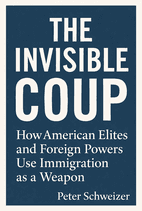
Peter Schweizer's The Invisible Coup details a bureaucratic seizure of power by the permanent administrative state, arguing that unelected officials in agencies like the FBI and CIA subvert presidential authority and democratic accountability. It is for readers engaged in debates about bureaucratic power and institutional integrity.
Feature
Insta.Page
Blinkist
Shortform
Summary Depth
Full Chapter-by-Chapter
15-min overview
Detailed analysis
Audio Narration
✓ (AI narration)
✓
✓
Visual Mindmaps
✓
✕
✕
AI Q&A
✓ Voice AI
✕
✕
Quizzes
✓
✕
✕
PDF Downloads
✓
✕
✓
Price
$59.99/yr
$146/yr (PRO)
$199/yr
*Competitor data last verified February 2026.
About the Author
Peter Schweizer
Peter Schweizer is an American author and researcher known for his investigative works on political corruption and government ethics, including the bestsellers "Clinton Cash" and "Profiles in Corruption." His expertise lies in scrutinizing the financial dealings and influence-peddling of political figures, drawing from his background as a former consultant and a fellow at conservative think tanks.
1 Page Summary
The Invisible Coup by Peter Schweizer argues that a fundamental transformation of American governance has occurred not through a violent overthrow, but through a quiet, bureaucratic seizure of power by a permanent administrative state. Schweizer contends that this "deep state"—composed of career officials in intelligence, law enforcement, and regulatory agencies—has systematically worked to subvert presidential authority and democratic accountability, particularly when an outsider like Donald Trump challenged established political norms. The book frames this as a modern, silent coup d'état, where unelected actors use leaks, investigations, and procedural manipulation to control policy and neutralize elected leaders they oppose.
Schweizer grounds his analysis in the historical context of the post-9/11 expansion of surveillance and security agencies, coupled with a growing ideological uniformity within federal bureaucracies. He details specific events, such as the Crossfire Hurricane investigation and the handling of the Hunter Biden laptop story, to illustrate his thesis that these institutions actively worked to protect certain political interests and target others. The narrative positions these actions not as isolated scandals, but as coordinated tactics in a prolonged conflict between a populist executive branch and an entrenched administrative class that believes it must act as a guardrail against perceived democratic excesses.
The lasting impact of the phenomenon Schweizer describes is a profound erosion of public trust in core institutions like the FBI, CIA, and Department of Justice. The book suggests that this "invisible coup" has fundamentally altered the balance of power in Washington, creating a system where unelected officials can wield veto power over the electoral will. Regardless of one's political stance, The Invisible Coup contributes to the ongoing and critical debate about the limits of bureaucratic power, the integrity of federal law enforcement, and the very health of American constitutional democracy in the 21st century.
The chapter opens not with theory, but with the visceral, chaotic scene of the 1980 Mariel Boatlift. It presents this event not as a simple refugee crisis, but as a deliberate and successful act of warfare—a "proof of concept" for weaponizing mass migration. Fidel Castro is depicted as the strategic architect who twisted America’s humanitarian ideals against itself, embedding criminals, intelligence agents, and the mentally ill within a flood of legitimate refugees to sow chaos, profit from drugs, and inflict lasting damage on the United States.
The Anatomy of an Invasion
What American officials and volunteers initially perceived as a spontaneous exodus of people fleeing communism was, in fact, a meticulously planned operation dubbed "the Attila Plan." Cuban intelligence selectively emptied prisons and asylums, forcing inmates onto boats bound for Florida. Early warnings from sources like Mariano Faget, a Cuban-American immigration officer, and Genaro Pérez, a former Cuban intelligence officer, were dismissed by U.S. agencies demanding impossible "proof." This refusal to see the migration as hostile allowed the invasion to proceed unchecked.
The consequences were severe and immediate. An estimated 16,000 to 20,000 criminals were seeded among the 125,000 migrants, leading to a dramatic spike in Miami's violent crime rates. The weaponization extended to public health, with cases of leprosy, tuberculosis, and hepatitis, and to national security, with the arrival of agents like Armando Romero Rivas, who was trained for bacteriological sabotage. Castro also embedded drug traffickers to establish distribution networks, aiming to both profit and accelerate social decay in America.
A Template for Future Conflict
Castro’s success demonstrated that migration could be a low-cost, high-impact weapon against a superpower, forcing the U.S. into a position of weakness, begging Havana to take back violent criminals. This victory did not go unnoticed. The chapter draws a direct line from the Mariel Harbor to an airport tarmac in Nicaragua, where Castro celebrated with like-minded revolutionaries, including Brazil’s Luiz Inácio Lula da Silva and Nicaragua’s Daniel Ortega. Both would later, as presidents, deploy migration warfare against the U.S. on a grand scale.
The strategic blueprint was institutionalized with the founding of the São Paulo Forum (SPF) in 1990. Led by Lula and inspired by Castro, this coalition of leftist parties, radicals, and later, adherents of liberation theology, formally shifted tactics from armed struggle to political and cultural subversion. A central tenet of their struggle became the pursuit of "a world without borders." As SPF members won elections across Latin America, these governments became staging grounds for orchestrating mass migration north, effectively scaling up the Mariel model.
Key Takeaways
The 1980 Mariel Boatlift was not a humanitarian crisis but a deliberate, state-sponsored attack by Cuba, designed to export crime, disease, and instability to the United States.
The operation succeeded because U.S. authorities, committed to a narrative of humanitarian rescue, willfully ignored early warnings and evidence of hostile intent.
Castro proved migration could be a devastatingly effective asymmetric weapon, inflicting damage comparable to Pearl Harbor or 9/11 but evading a conventional military response.
This "proof of concept" created a lasting strategic template, inspiring and enabling a network of state and non-state actors—coordinated through groups like the São Paulo Forum—to adopt mass migration as a primary weapon against American sovereignty and social cohesion.
Key concepts: Chapter 1: Proof of Concept
1. Chapter 1: Proof of Concept
The Mariel Boatlift as Warfare
Fidel Castro weaponized mass migration by embedding criminals, agents, and the mentally ill among refugees
Operation was designed to exploit U.S. humanitarian ideals to sow chaos and inflict damage
Served as a 'proof of concept' for using migration as an asymmetric weapon against a superpower
Anatomy of the Attila Plan
Meticulously planned Cuban operation, not a spontaneous refugee crisis
U.S. authorities dismissed early warnings from intelligence sources demanding impossible proof
Seeded 16,000-20,000 criminals among 125,000 migrants, causing dramatic crime spikes
Weaponized public health (diseases) and national security (trained saboteurs)
Strategic Consequences and Impact
Demonstrated migration as low-cost, high-impact weapon forcing U.S. into weak position
Damage compared to Pearl Harbor or 9/11 but without conventional military response
Embedded drug traffickers to establish networks for profit and social decay
Created lasting template for future asymmetric warfare
Institutionalization and Scaling
Castro's success inspired other leaders (Lula, Ortega) to adopt similar tactics
São Paulo Forum formalized shift from armed struggle to political/cultural subversion
Coalition promoted 'world without borders' as strategic tenet
SPF member governments became staging grounds for orchestrating mass migration north
If you like this summary, you probably also like these summaries...
💡 Try clicking the AI chat button to ask questions about this book!
Chapter 2: Chapter 2: Mexico’s Reconquista of the US Is Real
Overview
This chapter explores the idea that Mexico’s political and cultural elite actively promote a long-term, demographic Reconquista, or reconquest, of the American Southwest. This is not a fringe theory but a vision articulated by sitting presidents, legislators, and major cultural figures who view migration as a means to reclaim territory lost in the 1848 Treaty of Guadalupe Hidalgo. The strategy hinges on preventing the assimilation of Mexican migrants, encouraging them to retain loyalty to their homeland, and organizing them into a cohesive political force within the United States.
The sentiment is deeply rooted in widespread cultural resentment and is openly discussed. Politicians like José Gerardo Rodolfo Fernandez Noroña call U.S. states “occupied territories,” while former President AMLO affirmed migrants are “reconquering our lands.” This mindset is echoed in popular culture, from the lyrics of official anthems like the “Migrant Hymn” to a viral Absolut vodka ad celebrating the idea. Major media figures and intellectuals describe migration as an “unstoppable invasion” and a “powerful weapon.”
This project is supported by a sophisticated, state-led apparatus. The Mexican government ships millions of state-produced textbooks to American schools to teach a “decolonial” curriculum that fosters Mexican patriotism and presents the Mexican-American War as La invasion norteamericana. Its vast network of U.S. consulates works against assimilation by issuing Matrícula Consular IDs and mobilizing migrants for political action through bodies like the Institute for Mexicans Abroad (IME). These efforts find ideological underpinning in José Vasconcelos’s concept of the "Cosmic Race," which frames a continental struggle between Anglo and Hispanic civilizations.
Crucially, the Reconquista narrative finds powerful allies within the United States itself. U.S. politicians and activists echo the sentiment that “the border crossed us,” and major organizations like UnidosUS and the SEIU have partnered with Mexican government networks. This collaboration, which participants did not register as foreign lobbying, proved its power by mobilizing millions in the 2006-2007 protests to defeat U.S. immigration legislation. The model has even been copied by other Latin American nations, creating a broader front. Ultimately, the chapter presents a portrait of a sustained, multi-generational effort—endorsed by foreign adversaries like Russia—to culturally and politically transform the United States through organized migration and the explicit rejection of assimilation.
Political Rhetoric and Official Endorsement
The chapter opens with a speculative but illustrative scene: a newly inaugurated President Donald Trump signs an executive order to rename the Gulf of Mexico. In response, Mexican President Claudia Sheinbaum sarcastically proposes renaming North America "Mexican America," citing the historical Mexican ownership of several U.S. states. While many American observers dismissed this as mere retort, the text argues it reflects a deep-seated cultural resentment and a strategic vision among Mexico's political elite to transform the American Southwest through migration.
This vision, often termed "Reconquista" (reconquest), is openly discussed by figures at the highest levels of Mexican government. José Gerardo Rodolfo Fernandez Noroña, a member of parliament for the ruling Morena party, declared on the floor of the Congreso de la Unión that California, Texas, and New Mexico are "occupied territories" that Mexico should demand back. This rhetoric propelled, rather than hindered, his career, leading to his election as President of the Mexican Senate.
The sentiment is shared by former President Andrés Manuel López Obrador (AMLO), who, when asked if Mexicans were "reconquering our lands," smiled and affirmed they were. His protégé, President Sheinbaum, underscored this by commissioning and performing a "Migrant Hymn" that pledges loyalty to Mexico, with lyrics stating migrants "change places but not flags." Official government reports, such as one from the head of the National Population Council, frame the growing Mexican population in the U.S. as "reclaiming our territory."
Historical Resentment and Strategic Migration
The root of this ambition is the 1848 Treaty of Guadalupe Hidalgo, which ceded vast territories to the United States—a historical wound for the Mexican elite. The strategy to address it is not envisioned as a military reconquest, but as a demographic and cultural one achieved through mass migration, preventing assimilation, and organizing migrants into a political force. As prominent academic Jorge Nuño Jiménez stated, migration is "causing the demographic reconquest in areas that the Americans had forcibly taken from Mexico."
This strategy is not a recent innovation but a long-held ambition. An influential 1982 article in Excelsior newspaper, written by a former state governor, described the Southwest as "slowly returning to the jurisdiction of Mexico without the firing of a single shot" via migration. The constitutional change in 1997, allowing Mexicans to retain citizenship after naturalizing in the U.S., was explicitly framed by one congressman as recognizing that belonging to Mexico is rooted in "bonds of a cultural and spiritual order."
Presidents have consistently governed with this expanded nation in mind. Vicente Fox pledged to govern for "118 million Mexicans," including those in the U.S., and Enrique Peña Nieto referred to Los Angeles as "the other Mexico."
Cultural and Public Sentiment
The Reconquista narrative resonates broadly within Mexican society, not just among the political class. Polls from 2002 showed a majority of Mexicans believed the U.S. Southwest rightfully belonged to Mexico and that they should have the right to enter the U.S. without permission. Journalists report it is a common sentiment in casual conversation for Mexicans to say "we're taking it back."
This cultural embrace was demonstrated when Absolut vodka launched a "Reconquista" ad campaign featuring a map of the U.S. with its borders redrawn, which marketers hailed as genius for its popular appeal. Major media figures like anchor Carlos Loret de Mola have written that migration constitutes "an unstoppable invasion" returning land to Mexico's jurisdiction. Celebrated writer Elena Poniatowska described migrants as "imposing their culture," while intellectual Enrique Krauze called them "a powerful weapon" to influence U.S. politics.
Alignment with U.S. Activists and Geopolitical Endorsement
The concept has found allies within the United States. Congresswoman Alexandria Ocasio-Cortez has argued that U.S. immigration laws should not apply to people indigenous to the Americas, stating, "we didn’t cross the border, the border crossed us." Several prominent U.S. politicians, including former Los Angeles Mayor Antonio Villaraigosa, have past affiliations with MEChA, a student organization that advocates for a reclaimed "Aztlán" in the Southwest. Villaraigosa, as Speaker of the California Assembly, once publicly framed Reconquista as an inevitable question of "how and with what consequences."
Furthermore, the Reconquista narrative receives endorsement from adversarial foreign powers. Russia's Security Council Secretary, Nikolai Patrushev, applauded the idea, telling state media that sooner or later Mexico's "stolen" territories would be regained, describing the U.S. as "a patchwork quilt that can easily come apart along the seams." This commentary was proudly republished in the major Mexican newspaper La Jornada.
The section concludes by stating that for Reconquista to succeed, assimilation must be prevented. It notes the Mexican government maintains a vast network of over fifty consulates in the U.S.—far more than other nations—to bolster migrants' loyalty to Mexico, and has begun this work by shipping millions of Mexican textbooks to American classrooms.
Ideological Export Through Education
The Mexican government's textbook distribution program is described as an accelerated "foreign aid" initiative, delivering approximately one million state-produced textbooks to American schools annually. These materials, identical to those used in Mexico, are explicitly designed from a "decolonial" perspective, inspired by Brazilian Marxist Paulo Freire's Pedagogy of the Oppressed. The texts openly criticize capitalism, with examples including a fourth-grade chapter titled "The deterioration of nature and society under capitalist Culture" and secondary lessons blaming inequality on neoliberal, capitalist models.
The clear intent, as framed by the text, is to foster Mexican patriotism, not American assimilation. This includes teaching a specific version of history where the Mexican-American War is presented as La invasion norteamericana (the North American invasion), celebrating Mexican troops and lamenting the U.S. flag flying over the National Palace. Proponents of the program, like Raquel Romero of the Mesoamerica Foundation, frame it as part of a "concerted program" to help the U.S. transition into a "bicultural society" this century, asserting the ascendance of Mexican culture.
The "Cosmic Race" and Civilizational Conflict
Underpinning these efforts is an ideological framework tracing back to José Vasconcelos's 1925 book The Cosmic Race (La Raza Césmica). Vasconcelos posited a continental battle in the Americas between Anglo-Saxons and the mixed-race Iberian-Latin indigenous cultures. He called for a united Hispanic front to prevent Anglo-Saxon cultural triumph, ultimately leading to a superior "fifth race" or "cosmic race" through racial synthesis. Despite containing racist tropes about various ethnic groups, Vasconcelos is a foundational figure in Mexican education, and his work inspired the original name of the major U.S. Latino lobby group, UnidosUS (formerly La Raza).
This ideology manifests in modern Mexican political symbolism. Presidents like AMLO and Claudia Sheinbaum have publicly embraced pre-European, indigenous heritage while rejecting Spanish colonialism. AMLO's inauguration featured an indigenous limpia (cleansing) ceremony at the Zocalo, interpreted as a repudiation of European religion. Sheinbaum held a state funeral for the last Aztec emperor, Cuauhtémoc, lauding him as a symbol of dignity and resistance, while overlooking the Aztec empire's practices of slavery and human sacrifice.
Cultural Anthems and a Continental Posture
The Mexican government has adopted protest songs as unofficial anthems that reinforce these themes. "Somos Mas Americanos" (We Are More American), performed by Los Tigres del Norte, claims that Southwestern U.S. states were stolen and declares that mixed-race Hispanics are "more American than the son of an Anglo-Saxon." Another song, "La Jaula de Oro" (The Golden Cage), laments the assimilation of migrant children into American culture, portraying thinking "like an American" as a negative outcome.
Official Mexican policy extends its advocacy beyond its own citizens to all Latin Americans in the U.S., framing it as solidarity based on a shared colonial past. This continental posture is operationalized through consular networks that see Mexicans abroad as extensions of the nation itself, exemplified by President Felipe Calderón's statement: "Where there is a Mexican, there is Mexico."
The Institutional Fight Against Assimilation
Mexico has built a diplomatic infrastructure to actively discourage assimilation and engage in U.S. domestic politics. Key tools include:
The Matrícula Consular: An ID card issued by consulates to undocumented migrants, accepted by many U.S. cities and banks, described by former Foreign Minister Jorge Castañeda as a strategy of "creeping legalization."
Political Mobilization: Consulates have been instructed to propagate "militant activities," coordinating with U.S. Hispanic nonprofits to lobby against immigration restrictions and support political candidates aligned with their cause.
The Institute for Mexicans Abroad (IME): A lobbying mechanism designed to create a permanent advocacy group for Mexican immigrants within the United States.
This institutional effort is bolstered by voices within the U.S. that explicitly reject assimilation. Academics like Alejandro Portes speak favorably of migration's power to transform the host country's value system and power structure. U.S. government officials, such as a Maine policy analyst, publicly advise newcomers not to assimilate. Major Hispanic advocacy groups like UnidosUS award programs that promote "self-determination instead of assimilation." Together, these forces create a powerful current against the traditional model of immigrant integration into America's individualist ethos.
Forging a Political Network
The text describes how the Mexican Foreign Ministry, through its Institute for Mexicans Abroad (IME), created formal advisory boards that explicitly enlisted U.S.-based activists and labor leaders to lobby for Mexican government interests. Major organizations like the National Council of La Raza (now UnidosUS) and the Service Employees International Union (SEIU) participated. Notably, the text points out that none of these individuals or groups registered as foreign agents under U.S. law (FARA), despite working on behalf of a foreign government’s agenda.
Covert Political Organizing
Mexican diplomats adopted a dual-track strategy, publicly denying they were organizing a political bloc while privately doing exactly that in meetings with Mexican-American leaders. The advisory board’s early initiatives included efforts to change U.S. media language, specifically targeting the word “illegal.” The network’s goal, as stated by a former Mexican parliamentarian, was to strengthen the political organizing capability of migrants to influence U.S. domestic policy for Mexico’s benefit.
Expanding Influence and Mobilization
The model proved effective and was expanded. By 2021, the IME had partnerships with two thousand groups. Other Latin American nations, like Ecuador and the Central American countries, began模仿 Mexico’s approach, forming consular alliances like TRICAMEX. This was a deliberate strategy to extend political control beyond national borders into the United States, working even with non-Mexican migrants.
The power of this organized network was demonstrated in the massive 2007 immigration protests. Millions marched across U.S. cities, often waving Mexican and other Latin American flags, successfully defeating a congressional bill. The text highlights a revelatory moment when a Mexican TV reporter, covering the Los Angeles protest, stated on air that it showed “Los Angeles has never stopped being ours.”
Key Takeaways
The Mexican government formally enlisted major U.S. activist and labor organizations to lobby for its interests, creating a vast political network.
Mexican diplomats conducted this political organizing covertly, denying it to the U.S. public while promoting it within Mexican-American communities.
This model of extraterritorial political influence was copied by other Latin American nations, amplifying foreign intervention in U.S. domestic affairs.
The organized network demonstrated its power by mobilizing millions in 2007 to successfully shift U.S. policy, with some participants openly celebrating a reconquest of lost territory.
Key concepts: Chapter 2: Mexico’s Reconquista of the US Is Real
2. Chapter 2: Mexico’s Reconquista of the US Is Real
Political Rhetoric and Official Endorsement
High-level Mexican politicians openly discuss Reconquista as a strategic vision
José Gerardo Rodolfo Fernandez Noroña calls U.S. states 'occupied territories'
Former President AMLO affirmed migrants are 'reconquering our lands'
President Sheinbaum's 'Migrant Hymn' promotes loyalty to Mexico among migrants
Government reports frame U.S. Mexican population growth as reclaiming territory
Historical Resentment and Strategic Migration
Rooted in 1848 Treaty of Guadalupe Hidalgo territorial losses
Strategy focuses on demographic/cultural reconquest rather than military action
1997 constitutional change allows dual citizenship to maintain cultural bonds
Mexican presidents govern with expanded nation including diaspora in mind
Migration seen as causing 'demographic reconquest' of lost territories
State-Led Apparatus and Institutional Support
Mexican government ships state-produced textbooks to U.S. schools
Consulates issue Matrícula Consular IDs and mobilize migrants politically
Institute for Mexicans Abroad (IME) organizes migrant political action
Curriculum promotes Mexican patriotism and decolonial perspective
Ideological foundation in José Vasconcelos's 'Cosmic Race' concept
Cultural Expression and Public Sentiment
Viral Absolut vodka ad celebrated Mexican reconquest of Southwest
Media figures describe migration as 'unstoppable invasion' and 'weapon'
Widespread cultural resentment fuels Reconquista narrative
Popular culture reinforces Mexican identity and territorial claims
Migration framed as peaceful reconquest without military conflict
U.S. Collaboration and Political Mobilization
U.S. politicians echo 'the border crossed us' sentiment
Organizations like UnidosUS and SEIU partner with Mexican networks
2006-2007 protests demonstrated power of coordinated migrant mobilization
Foreign lobbying activities often unregistered with U.S. authorities
Model being copied by other Latin American nations creating broader front
Broad Cultural Resonance of Reconquista
Polls indicate majority Mexican belief in rightful ownership of U.S. Southwest and right to unauthorized entry.
Common casual sentiment expressed as 'we're taking it back' among Mexican populace.
Absolut vodka's 'Reconquista' ad campaign with redrawn U.S. borders hailed as marketing genius for popular appeal.
Major media figures describe migration as 'an unstoppable invasion' returning land to Mexico.
Intellectuals frame migrants as cultural imposers and political weapons against the U.S.
U.S. Political Alliances and Foreign Endorsement
U.S. politicians like AOC argue immigration laws shouldn't apply to indigenous peoples, using 'the border crossed us' rhetoric.
Prominent figures have past affiliations with MEChA, advocating for reclaimed 'Aztlán' in the Southwest.
Russian officials publicly endorse Reconquista, predicting U.S. fragmentation and return of 'stolen' territories.
Mexican media proudly republishes adversarial foreign commentary supporting the narrative.
Reconquista's success is framed as dependent on preventing migrant assimilation into American society.
Mexican Government's Educational Campaign in U.S. Schools
Annual distribution of ~1 million Mexican state-produced textbooks to American classrooms.
Materials teach Mexican patriotism, framing Mexican-American War as 'the North American invasion'.
Proponents describe program as part of concerted effort to transition U.S. into 'bicultural society'.
Consular network of 50+ offices works to bolster migrant loyalty to Mexico rather than U.S. assimilation.
Ideological Foundation: The Cosmic Race and Civilizational Struggle
José Vasconcelos's 'Cosmic Race' theory frames continental battle between Anglo-Saxon and mixed-race Iberian-indigenous cultures.
Calls for united Hispanic front to prevent Anglo-Saxon triumph, leading to superior 'fifth race'.
Despite racist elements, Vasconcelos remains foundational figure in Mexican education and inspired major U.S. Latino groups.
Modern Mexican leaders embrace pre-European indigenous heritage while rejecting Spanish colonialism.
Symbolic acts include indigenous cleansing ceremonies and state funerals for Aztec emperors, overlooking historical atrocities.
Cultural Reinforcement Through Music and Continental Posture
Protest songs like 'Somos Mas Americanos' serve as unofficial anthems, claiming stolen territory and cultural superiority.
Lyrics declare mixed-race Hispanics 'more American than the son of an Anglo-Saxon'.
Songs like 'La Jaula de Oro' lament assimilation, portraying thinking 'like an American' as negative outcome.
Mexican policy extends advocacy to all Latin Americans in U.S. based on shared colonial past.
Official doctrine treats Mexicans abroad as national extensions: 'Where there is a Mexican, there is Mexico'.
Institutional Mechanisms Against Assimilation
Vast consular network specifically designed to maintain migrant loyalty to Mexico rather than foster U.S. integration.
Textbook distribution represents ideological export to shape historical perspective of Mexican-origin youth in U.S.
Programs framed as helping U.S. transition to bicultural society with ascendant Mexican influence.
Cultural narratives emphasize victimhood and territorial grievance to sustain separate identity.
Combined efforts create parallel institutions that compete with American assimilation processes.
Diplomatic Infrastructure Against Assimilation
Mexico issues Matrícula Consular IDs to undocumented migrants as a strategy for 'creeping legalization' within the U.S.
Mexican consulates propagate 'militant activities' and coordinate with U.S. Hispanic nonprofits for political lobbying.
The Institute for Mexicans Abroad (IME) creates a permanent advocacy group for Mexican immigrants within the United States.
U.S. academics and officials explicitly reject assimilation, favoring transformation of the host country's values and power structure.
Major Hispanic advocacy groups like UnidosUS promote 'self-determination instead of assimilation' for immigrant communities.
Formal Political Network Creation
The IME created formal advisory boards enlisting U.S.-based activists and labor leaders to lobby for Mexican government interests.
Major U.S. organizations like the National Council of La Raza (UnidosUS) and SEIU participated in this foreign-influenced network.
None of these individuals or groups registered as foreign agents under U.S. law (FARA), despite working for a foreign government's agenda.
Covert Diplomatic Strategy
Mexican diplomats publicly denied organizing a political bloc while privately doing exactly that with Mexican-American leaders.
Early initiatives included efforts to change U.S. media language, specifically targeting the word 'illegal' in immigration discourse.
The network's stated goal was to strengthen migrant political organizing to influence U.S. domestic policy for Mexico's benefit.
Network Expansion and Regional Imitation
By 2021, the IME had partnerships with two thousand groups, demonstrating the model's effectiveness and scalability.
Other Latin American nations like Ecuador and Central American countries began模仿 Mexico's approach, forming consular alliances like TRICAMEX.
This strategy deliberately extended political influence beyond national borders, working even with non-Mexican migrants in the U.S.
Demonstration of Political Power
The organized network mobilized millions in the 2007 immigration protests across U.S. cities, successfully defeating a congressional bill.
Protests featured Mexican and other Latin American flags, symbolizing transnational allegiance rather than American assimilation.
A Mexican TV reporter covering the Los Angeles protest stated on air that it showed 'Los Angeles has never stopped being ours.'
The protests revealed the network's ability to successfully shift U.S. policy through mass mobilization of immigrant communities.
⚡ You're 2 chapters in and clearly committed to learning
Why stop now? Finish this book today and explore our entire library. Try it free for 7 days.
Chapter 3: Chapter 3: Mexico: Organizing Militancy in the US
Overview
Amidst the heated 2024 U.S. presidential election, over sixty people gathered inside the Mexican consulate in Oklahoma City, including diplomats, officials, and U.S.-based activists, to craft a solid plan against immigration restrictions and influence American policy. This meeting highlighted activists with deep ties to both nations, such as Karina Ruiz, who prepared to join the Mexican Senate while leading immigrant rights protests in Arizona, and Ramiro Luna, who outlined strategies to turn Republican states Democratic through Latino voter mobilization. The coordination extended to U.S. political operatives, like an advisor to Nevada's governor, and involved partnering with major Latino organizations to boost voter efforts, signaling a discreet yet significant intervention into domestic politics.
Parallel to these efforts, the Mexican government launched TV Migrante, a state-funded channel beamed to millions in the U.S., blending practical advice with overt political messaging that praised Vice President Kamala Harris, attacked Donald Trump, and broadcast segments accusing his administration of racism. This media push complemented explicit organizing by Mexico's ruling Morena Party, which dispatched officials like Alejandro Robles to U.S. cities to train "militancy abroad," framing it as "civil resistance" and collaborating with radical U.S. groups. These actions weren't new; they built on historical meddling during Trump's first term, when consulates supported deportation training, distributed confrontation guides, and financed citizenship applications to amplify Mexican political influence.
The interference traced back to presidential levels, with then-candidate Andrés Manuel López Obrador (AMLO) touring the U.S. in 2017 to rally Mexicans against Trump, proposing consulates as "migrant defense offices" and critiquing American values. As president, he and other officials advised dual nationals to reject Republican candidates, institutionalizing activism through channels like the Institute for Mexicans Abroad (IME), which treated the diaspora as a strategic resource. State-funded entities such as Migrant Force and embedded officials within U.S. activist circles further blurred lines between grassroots movements and foreign sponsorship.
Culturally, the resistance was fueled by narratives like the "Migrant Anthem," which proclaimed a superior claim to Americanness and rallied protests nationwide. Organized demonstrations, including a "Day Without Immigrants" and major May Day rallies, often had consular support, escalating into radical ideologies embraced by groups like Union del Barrio. Their goal of Reconquista—liberating and reunifying Mexican territory—found echoes in the Mexican political elite, with senators comparing Los Angeles to occupied territories. This radicalization peaked in violent June 2025 protests in LA, where Mexican officials like Congressman Aniceto “Cheto” Polanco glorified clashes as Aztec-like resistance, and organizers framed the unrest as a validation of people-powered defiance, marking a stark escalation from political organizing to endorsed violence on U.S. soil.
The Oklahoma City Consulate Meeting
In late May, amidst the heated 2024 U.S. presidential election, over sixty people gathered inside the Mexican consulate in Oklahoma City. The attendees included Mexican diplomats from consulates across the United States, officials from Mexico’s Foreign Ministry, Mexican politicians, and U.S.-based activists. The meeting's stated purpose was to develop a "solid plan of action" to combat immigration restrictions, particularly those associated with Donald Trump, and to "positively influence" U.S. policy for the benefit of Mexican communities. Cristina Planter, director general for North American Political Affairs, addressed the group, and a message from Foreign Minister Alicia Bárcena underscored the meeting's importance.
Dual-Loyalty Activists and Political Strategy
The gathering featured activists with deep ties to both the United States and the Mexican government. Karina Ruiz, an immigrant rights activist from Arizona and head of the Arizona DREAM Act Coalition, attended while preparing to take a seat in the Mexican Senate as a member of the ruling Morena Party. A DACA recipient, she stated her intent to support the agenda of Mexican President Claudia Sheinbaum from "this side of the border." Ruiz, who has organized confrontational protests in the U.S., supports the concept of making Mexicans abroad a "33rd state" of Mexico. At the meeting, she argued that Latino activists must show "constant, constant" action, elect U.S. politicians who "look like us," and described the immigrant situation in the U.S. as a "genocide."
Ramiro Luna, a DACA recipient and head of the Texas-based organization Somos Tejos, also addressed the group, declaring himself a "revolutionary" fighting for the immigrant and Latino community. He detailed a strategy of turning Republican-majority states Democratic by mobilizing Latino voters, using the political shifts in California and Arizona as a blueprint, and warned Republicans with a crude "f*ck around and find out" message.
Coordination with U.S. Political Operatives
The meeting also included individuals directly connected to American political figures, such as Margarita Salas Crespo, a senior advisor to the governor of Nevada. Discussions focused on coordinating with major U.S.-based Latino organizations like Mi Familia Vota, UnidosUS, and the Mexican American Legal and Education Fund to enhance voter registration and communication efforts. The presence of Mexican consular officials and Foreign Ministry staff at this strategy session on "collective action" within the United States represented a significant, discreet intervention into domestic American politics.
Propaganda and Media: TV Migrante
Parallel to these organizing efforts, the Mexican government launched TV Migrante, a government-funded television channel beamed to millions of Mexicans in the United States. While offering some practical advice, the channel's programming contained overt political messaging. It featured glowing profiles of Vice President Kamala Harris, repeated criticisms of Donald Trump's "fake news and lies," and played the "Migrant Anthem" to instill patriotic duty. After Trump's 2025 inauguration, the channel broadcast segments accusing his administration of racism and labeling ICE as part of a "repressive machinery."
Organizing "Militancy" and "Civil Resistance"
The ruling Morena Party explicitly worked to organize "militancy" within the United States. Alejandro Robles, a former Mexican congressman and executive secretary of Morena's National Committee of Mexicans Abroad, was dispatched to U.S. cities like Houston, Austin, and New York. He declared that the "extreme" MAGA speech "deserves an extreme response," which involved "organizing disadvantaged people to come out of the shadows." Robles stated Morena's mission was to "organize the militancy abroad" through training workshops and bragged about the party's network of chapters in 49 states. He framed this work as being on the "front line" of "civil resistance" within the United States, collaborating with radical U.S. groups like The People’s Forum.
Historical Precedent: Meddling During Trump's First Term
This interference built upon efforts during Donald Trump's first term. Carlos Jiménez, then consul general in Chicago, actively sought to build alliances with U.S. civil society, academic, and business sectors that opposed Trump. Mexican consulates supported campaigns training people for potential deportation, distributed "nada-nada" confrontation guides, and even financed citizenship applications for Mexican nationals to increase their U.S. political influence. Consulates also held political training seminars that, while ostensibly about Mexican politics, were designed to mobilize activism within the United States.
Presidential Meddling: The AMLO Tour
In 2017, then-presidential candidate Andrés Manuel López Obrador (AMLO) conducted a U.S. tour explicitly to rally Mexicans against President Trump. Stops in major cities like Los Angeles, Chicago, and New York aimed to create a "national defense front" with immigrant clubs, unions, and U.S. academics. AMLO proposed converting consulates into "migrant defense offices" and linked migration to a critique of "Anglo-Saxon individualism" and neoliberal capitalism. He appealed to a sense of Mexican moral superiority and spoke of a "world without walls." As president, he later advised Mexicans in Texas not to vote for Governor Greg Abbott or supporting Republican legislators. Other senior officials, like Senate President José Norofia, similarly called on dual nationals to reject Republican candidates.
Institutionalizing Activism Through Official Channels
The chapter details how opposition to U.S. immigration policy is coordinated and funded through formal Mexican institutions. The Institute for Mexicans Abroad (IME), part of the Mexican Foreign Ministry under Luis Gutierrez Reyes, explicitly committed to “using the diaspora as a strategic resource.” This official stance was echoed by President Claudia Sheinbaum, who announced a reinforcement of Mexico’s consular network in the U.S., instructing migrants: “Tell our brothers and sisters in the United States that we will always defend them.”
Government-funded entities like Migrant Force (Fuerza Migrante), with an office in Washington’s National Press Building, and Migrant TV, a state-funded news service, were established to organize and broadcast messaging. Furthermore, the Mexican government embedded its officials within U.S. activist circles. Key figures like Jorge Mujica and Omar Lopez, who led major protests in Chicago, were simultaneously advisors to the Mexican Foreign Ministry, with Mujica also serving as a member of the Mexican Federal Congress.
Cultural Mobilization and Protest Movements
A central theme of the resistance is a potent cultural and nationalistic narrative. The so-called “Migrant Anthem”—with lyrics declaring “We are more American / Than the children of the Anglo-Saxons”—became a rallying cry at protests in Los Angeles, New York, and beyond. This message was promoted by Mexican officials like Alejandro Robles, who criticized assimilated Mexicans as “traitors” and shared that President Sheinbaum used the same term.
The activism culminated in large-scale, organized demonstrations. A nationwide “Day Without Immigrants” protest in February 2025 saw migrants carrying flags from Mexico, El Salvador, and Ecuador. Major May Day rallies in Chicago and Los Angeles, organized by figures like Jorge Mujica, aimed to block traffic and initiate work stoppages. These protests were often planned with or supported by Mexican consulates, blurring the lines between grassroots activism and foreign state sponsorship.
Radicalization and the Embrace of “Reconquista”
The opposition escalated beyond protests to organized resistance against law enforcement, underpinned by a radical separatist ideology. Groups like Union del Barrio established street-level networks in Los Angeles to monitor and confront ICE officials, issuing social media calls for support that led to violent clashes, assaults on officers, and attempted vehicle blockades.
The group’s stated political goal is “the liberation and reunification of Mexico under a revolutionary government” and the dismantling of the U.S. as an “illegal settler state”—a philosophy openly described as Reconquista. This fringe ideology found echoes in the Mexican political establishment. After the June 2025 riots in LA, the president of the Mexican Senate, Gerardo Fernandez Noroña, declared Los Angeles and Palestine were “two sides of the same coin,” both being “occupied territories.”
Escalation to Violence and Official Endorsement
The violent protests in Los Angeles in June 2025 marked a significant escalation, which several Mexican officials not only observed but appeared to sanction. Mexican Congressman Aniceto “Cheto” Polanco, who continued to live in Los Angeles while serving in the Mexican legislature, posted videos glorifying the confrontation. One video likened protestors to Aztec warriors and was captioned with ethnocentric slogans like “For our race.” Following a day of burned cars and attacks on police, Polanco declared, “We declare ourselves in permanent resistance.”
Alejandro Robles, a key organizer, stated the unrest was “very encouraging,” validating the maxim that “only the people can save the people.” This synergy between on-the-street militancy in the U.S. and supportive rhetoric from officials in Mexico presented a unified front of resistance against U.S. immigration enforcement.
Key Takeaways
The Mexican government, through its consulates, foreign ministry, and state-funded organizations, plays a direct and active role in organizing, funding, and supporting political activism within the United States.
Key protest leaders in the U.S. often hold formal advisory or legislative roles within the Mexican government, creating a direct channel for foreign political influence.
Activism is driven by a powerful cultural narrative that rejects assimilation, frames the U.S. Southwest as occupied land, and positions migrant identity in opposition to Anglo-America.
The movement contains a radical faction that explicitly advocates for Reconquista—the liberation and reunification of Mexican territory—a view that finds sympathetic voices within the Mexican political elite.
Mexican officials have moved from supporting protests to appearing to endorse and glorify violent resistance and lawlessness on U.S. soil, framing it as a legitimate defense of the migrant community.
Key concepts: Chapter 3: Mexico: Organizing Militancy in the US
3. Chapter 3: Mexico: Organizing Militancy in the US
Mexican Government Intervention in U.S. Politics
Consulate-hosted strategy meetings to influence U.S. immigration policy
State-funded media (TV Migrante) broadcasting political messaging in the U.S.
Institutional activism through Institute for Mexicans Abroad (IME)
Historical precedent of meddling during Trump's first term
Dual-Loyalty Activists and Political Strategy
Activists like Karina Ruiz holding positions in both U.S. activism and Mexican government
Strategy to turn Republican states Democratic through Latino voter mobilization
Concept of treating Mexicans abroad as a '33rd state' of Mexico
Framing immigrant situation as 'genocide' to justify political action
Coordination with U.S. Political Infrastructure
Involvement of U.S. political operatives like Nevada governor's advisor
Partnerships with major Latino organizations (Mi Familia Vota, UnidosUS, MALDEF)
Consular officials participating in domestic U.S. political strategy sessions
Blurring lines between grassroots movements and foreign government sponsorship
Radicalization and Militant Organizing
Morena Party officials training 'militancy abroad' as 'civil resistance'
Collaboration with radical U.S. groups like Union del Barrio
Endorsement of Reconquista ideology by Mexican political elite
Escalation to violent protests with official glorification of clashes
Cultural and Narrative Warfare
Use of cultural tools like 'Migrant Anthem' to claim superior Americanness
Organized demonstrations (Day Without Immigrants, May Day rallies) with consular support
Political messaging attacking specific U.S. candidates and administrations
Historical framing of resistance from AMLO's 2017 U.S. tour to present
State-Sponsored Propaganda: TV Migrante
Mexican government-funded television channel beamed to millions of Mexicans in the United States.
Programming contained overt political messaging, including glowing profiles of Vice President Kamala Harris and repeated criticisms of Donald Trump.
After Trump's 2025 inauguration, broadcast segments accused his administration of racism and labeled ICE as part of a 'repressive machinery.'
Used cultural tools like the 'Migrant Anthem' to instill patriotic duty and political alignment.
Political Party Organizing of U.S. 'Militancy'
Mexico's ruling Morena Party explicitly worked to organize 'militancy' within the United States.
Alejandro Robles, a Morena official, was dispatched to U.S. cities to organize, declaring that 'extreme' MAGA speech 'deserves an extreme response.'
Mission involved 'organizing disadvantaged people to come out of the shadows' through training workshops and a network of chapters in 49 states.
Framed the work as being on the 'front line' of 'civil resistance' within the U.S., collaborating with radical U.S. groups like The People’s Forum.
Historical Precedent of Mexican Meddling in U.S. Politics
Efforts built upon active interference during Donald Trump's first presidential term.
Mexican consulates, like in Chicago under Carlos Jiménez, built alliances with U.S. sectors opposed to Trump.
Consulates supported campaigns training people for deportation, distributed confrontation guides, and financed citizenship applications for political influence.
Held political training seminars ostensibly about Mexican politics but designed to mobilize activism within the United States.
Direct Presidential and Official Electoral Interference
In 2017, then-candidate AMLO conducted a U.S. tour to rally Mexicans against President Trump, aiming to create a 'national defense front.'
AMLO proposed converting consulates into 'migrant defense offices' and linked migration to a critique of 'Anglo-Saxon individualism.'
As president, AMLO directly advised Mexicans in Texas not to vote for Governor Greg Abbott or Republican legislators.
Other senior officials, like Senate President José Norofia, similarly called on dual nationals to reject Republican candidates.
Institutionalizing Activism Through Government Bodies
The Institute for Mexicans Abroad (IME) committed to 'using the diaspora as a strategic resource.'
President Claudia Sheinbaum reinforced Mexico’s consular network, instructing migrants that Mexico 'will always defend them.'
Government-funded entities like Migrant Force and Migrant TV were established to organize and broadcast messaging from Washington, D.C.
Mexican officials were embedded in U.S. activist circles; key protest leaders also served as advisors to the Mexican Foreign Ministry or members of Congress.
Cultural Mobilization and State-Supported Protests
A potent cultural narrative was promoted, exemplified by the 'Migrant Anthem' declaring 'We are more American / Than the children of the Anglo-Saxons.'
Officials like Alejandro Robles criticized assimilated Mexicans as 'traitors,' a term also reportedly used by President Sheinbaum.
Large-scale demonstrations like the 'Day Without Immigrants' and May Day rallies were organized, often with consulate support.
Protests aimed to block traffic, initiate work stoppages, and featured flags from multiple Latin American countries, blurring lines between grassroots activism and foreign state sponsorship.
Radicalization and Separatist Confrontation
Opposition escalated to organized resistance against U.S. law enforcement.
Groups like Union del Barrio established street-level networks to monitor and confront ICE officials.
Social media calls for support led to violent clashes, assaults on officers, and attempted vehicle blockades.
Actions were underpinned by a radical separatist ideology, embracing concepts of 'Reconquista.'
Political Goals and Reconquista Ideology
The group's stated political goal is the liberation and reunification of Mexico under a revolutionary government.
It seeks the dismantling of the U.S. as an 'illegal settler state' through a philosophy openly described as Reconquista.
This fringe ideology finds echoes within the Mexican political establishment, with officials drawing parallels to other occupied territories.
The president of the Mexican Senate explicitly compared Los Angeles to Palestine as 'two sides of the same coin' following the 2025 riots.
Official Endorsement of Violent Escalation
The June 2025 riots in Los Angeles marked a significant escalation that several Mexican officials appeared to sanction and observe.
Mexican Congressman Aniceto 'Cheto' Polanco posted videos glorifying the violent confrontation while living in and serving from Los Angeles.
Polanco's rhetoric included ethnocentric slogans like 'For our race' and likened protestors to Aztec warriors.
Following the violence, Polanco declared a state of 'permanent resistance,' moving from support to active endorsement of militancy.
Synergy Between Militancy and Political Rhetoric
Key organizers like Alejandro Robles described the unrest as 'very encouraging,' validating radical self-reliance narratives.
A unified front of resistance emerged from the synergy between street militancy in the U.S. and supportive rhetoric from officials in Mexico.
This synergy explicitly positioned itself against U.S. immigration enforcement, framing violence as legitimate community defense.
The movement's rhetoric shifted from protest justification to glorification of lawlessness and confrontation on U.S. soil.
Chapter 4: Chapter 4: Voter Mills
Overview
The chapter traces how Democratic administrations systematically transformed the naturalization process into a partisan political engine, beginning with a pivotal 1996 memo. A request from a community activist to expedite citizenship for amnesty recipients was seized upon by President Clinton’s politically vulnerable White House. Officials imposed an artificial deadline to naturalize one million new citizens before the election, explicitly for political benefit. To hit this target, the Immigration and Naturalization Service dismantled safeguards—waiving tests, ignoring criminal background checks, and processing thousands of fraudulent applications from the corrupt SAWs program. Activist groups like Hermandad Mexicana Nacional partnered in the effort, illegally registering non-citizens to vote.
An investigation later found the process “suffered badly,” but the voter mill was deemed a roaring success, delivering 1.2 million new citizens and a decisive bloc of votes. This established a durable playbook. President Obama, aligning with his immigrant advocacy background, operationalized this strategy. His administration, led at USCIS by Alejandro Mayorkas, institutionalized a “get to yes” culture that pressured officers to approve applications and sidelined those concerned about fraud. Vetting standards collapsed as denial rates plummeted. The effort was formalized with a White House task force, a taxpayer-funded ad campaign in swing states, and waived fees to drive naturalizations ahead of the 2012 election.
The machinery was fine-tuned under President Biden, who simplified tests and forms. The chapter culminates with a revealing 2024 hidden-camera admission by two State Department officials, who state the quiet part aloud: the policy aims to change U.S. demographics by admitting left-leaning populations, while knowingly “letting in criminals daily.” The narrative shows a continuous, calculated effort across decades, where immigration law and the integrity of citizenship have been subordinated to a goal of altering the electorate.
The 1996 Citizenship Drive
The chapter opens with a simple memo from Father Miguel Vega, a Los Angeles activist priest, reaching the desk of President Bill Clinton in February 1996. The memo requested that the Immigration and Naturalization Service (INS) expedite citizenship applications for millions of amnesty recipients from 1986, highlighting a massive political opportunity. With Clinton having won in 1992 with only 43% of the popular vote and key aides like Secretary Henry Cisneros embroiled in scandals, the White House seized on this idea as a way to generate new partisan voters for the upcoming 1996 election.
The Clinton administration, led by figures like Deputy Chief of Staff Harold Ickes and aided by Vice President Al Gore’s office, initiated a pressure campaign on the INS. They imposed a strict deadline of September 30, 1996, for processing all pending applications—a date strategically aligned with voter registration cutoffs. Internal communications revealed the explicit political goal: aides like Douglas Farbrother emailed about "naturalizing one million new citizens in time for the November 1996 election," presuming they would support Clinton and Gore.
Systemic Breakdown and Fraud
To meet the White House's demands, the INS systematically dismantled standard citizenship safeguards. The agency eliminated FBI criminal background checks for thousands of applicants, ignored arriving arrest records, and waived English-language proficiency and civics testing requirements. In some offices, like Chicago, FBI reports were hidden in boxes and never reviewed, leading to individuals with criminal records, including one person in jail, being sworn in as citizens.
An internal Department of Justice investigation later revealed that over 75,000 new citizens had their arrest records ignored, and another 61,000 were approved without submitting fingerprints. The push was fueled by a pool of applicants from the fraud-ridden Special Agricultural Workers (SAWs) program, where an estimated 70% of applications contained false information. Despite warnings from INS Commissioner Doris Meissner about the risk of being seen as running a "pro-Democrat voter mill," the operation proceeded at full speed.
Activist Partnerships and Voter Registration
Outside activist groups partnered with the administration to amplify the effort. Organizations like Hermandad Mexicana Nacional in Orange County, California, aggressively registered people to vote, including non-citizens, and even ran an illegal lottery with a car as a prize to incentivize registration. Prosecutors later found the group helped 227 ineligible non-citizens register, though no indictments followed.
Within the White House, Harold Ickes pushed for voter registration drives at naturalization ceremonies. In Chicago, a "mass ceremony" was coordinated with Democratic field organizer "Skinny" Sheahan to simultaneously register the new citizens. The collaboration between official government action and external partisan groups created a seamless pipeline from application to voter roll.
Investigation and Lasting Legacy
A subsequent investigation by the Department of Justice’s Office of the Inspector General concluded that the integrity of the naturalization process "suffered badly" and that the White House clearly acted for "political benefit." Key figures like Ickes, Rahm Emanuel, and Vice President Gore refused to be interviewed. No one faced criminal charges or was fired.
The 1996 experiment was deemed a success, creating 1.2 million new citizens—three times the previous year's number—with 85% voting for Clinton-Gore. It established a playbook: circumventing immigration and citizenship laws on a mass scale could yield significant electoral rewards with minimal consequence. This model was replicated in subsequent election years, such as 2000 and 2008, cementing a transactional view of immigration policy within the Democratic Party, where more migrants were seen as equaling more Democratic voters.
The Political Calculus of Naturalization
The chapter details how the Obama administration operationalized the strategy articulated by figures like Eliseo Medina. It reveals a calculated effort to transform America’s electorate by accelerating and simplifying the naturalization process, often at the expense of legal standards and integrity.
Obama’s Alignment with Immigrant Advocacy
President Obama’s personal and political background positioned him as a natural ally for this transformation. His early work as a community organizer was with groups supporting immigrant rights, and he openly attributed his worldview to his multicultural upbringing. His campaign famously adopted the immigrant rights slogan “¡Sí se Puede!” Polling data underscored the political logic: immigrants, particularly newly naturalized ones, were overwhelmingly supportive of Obama’s expansive government agenda and were significantly to the left of the native-born population on issues like national pride and the authority of the U.S. Constitution.
Systemic Corruption Under Alejandro Mayorkas
To capitalize on this demographic shift, the administration systematically dismantled safeguards within the citizenship process. Alejandro Mayorkas, as Director of U.S. Citizenship and Immigration Services (USCIS), explicitly instructed employees to prioritize approval rates over fraud detection. He demanded staff “look at petitions from the perspective of the customer” (the applicant) and adopted a “get to yes” philosophy. Employees who resisted were labeled as having “black spots on their hearts” and were sidelined or reassigned. The result was a deliberate weakening of vetting, with a 30% drop in application denials and a new, dangerously low standard of proof for approvals.
Institutionalizing the “Voter Mill”
The effort was formalized and expanded as Obama’s reelection approached. The administration randomized background checks, created the White House Task Force on New Americans (co-chaired by former La Raza official Cecilia Muñoz), and launched a multi-million-dollar media campaign in key states to urge green card holders to naturalize. Crucially, application fees were waived, forcing taxpayers to fund what is framed as a partisan political project. The text draws a direct line from Clinton-era strategist Rahm Emanuel, who became Obama’s Chief of Staff, to the refinement and escalation of these tactics.
Biden’s Continuation and a Candid Admission
The machinery was further “fine-tuned” under President Biden. His administration simplified the citizenship test, reduced the number of questions, changed the format to multiple-choice, and shortened disability forms, increasing susceptibility to fraud. Most strikingly, the summary cites a hidden-camera recording from June 2024 featuring two State Department officials. They admit the policy is aimed at changing U.S. demographics, noting that “Latin Americans are all leftists,” and concede they are “letting in criminals daily.” This candid moment encapsulates the chapter’s central accusation: that migration is being weaponized by political elites, compromising national security and identity for perceived partisan gain.
Key Takeaways
The naturalization process under Democratic administrations has been deliberately streamlined and politicized to create new voters aligned with progressive policies.
Figures like Alejandro Mayorkas actively corrupted USCIS procedures, prioritizing high approval rates over legal integrity and fraud prevention.
Taxpayer funds have been used to support campaign-style initiatives to naturalize immigrants ahead of elections.
The stated goal, as admitted by officials, is to alter the demographic and political makeup of the United States, with conscious disregard for security risks.
Key concepts: Chapter 4: Voter Mills
4. Chapter 4: Voter Mills
The 1996 Citizenship Drive: Political Origins
A 1996 memo from activist Father Miguel Vega requested expedited citizenship for amnesty recipients, presenting a political opportunity.
The politically vulnerable Clinton White House seized on the idea to generate new partisan voters for the 1996 election.
Officials imposed an artificial September 30, 1996 deadline to naturalize one million citizens before voter registration cutoffs.
Internal communications revealed the explicit goal was to naturalize citizens in time for the November election, presuming their support for Clinton/Gore.
Systemic Breakdown of Safeguards
The INS dismantled standard safeguards: waived English/civics tests and eliminated FBI criminal background checks.
Internal investigations found over 75,000 new citizens had arrest records ignored; 61,000 were approved without fingerprints.
The push relied heavily on applicants from the fraud-ridden Special Agricultural Workers (SAWs) program.
Warnings about being seen as running a 'pro-Democrat voter mill' were overridden to meet political targets.
Activist Partnerships and Illegal Voter Registration
Groups like Hermandad Mexicana Nacional illegally registered non-citizens to vote, using incentives like a car lottery.
White House officials like Harold Ickes pushed for voter registration drives at naturalization ceremonies.
Mass ceremonies were coordinated with Democratic field organizers to create a pipeline from citizenship to voter rolls.
The collaboration blended official government action with external partisan group activity.
Investigation and Lack of Accountability
A DOJ Inspector General investigation concluded the naturalization process 'suffered badly' for 'political benefit.'
Key figures (Ickes, Emanuel, Gore) refused to be interviewed by investigators.
No criminal charges or firings resulted, despite evidence of systemic fraud and compromised integrity.
The 1996 drive was deemed a success, delivering 1.2 million new citizens and establishing a durable political playbook.
Institutionalization and Evolution of the Strategy
The Obama administration institutionalized a 'get to yes' culture at USCIS under Alejandro Mayorkas, pressuring officers to approve applications.
Vetting standards collapsed as denial rates plummeted; a White House task force and taxpayer-funded ad campaigns targeted swing states.
The Biden administration further simplified tests and forms to streamline naturalization.
A 2024 hidden-camera admission revealed officials acknowledging the policy aims to change U.S. demographics with left-leaning populations while 'letting in criminals daily.'
Core Thesis: The Voter Mill Playbook
A continuous, decades-long effort transformed naturalization into a partisan political engine.
Immigration law and citizenship integrity were subordinated to the goal of altering the electorate.
The strategy involves artificial deadlines, dismantled safeguards, activist partnerships, and waived fees to drive naturalizations before elections.
The calculated policy aims to admit populations perceived as politically favorable to one party, regardless of fraud or security risks.
The 1996 Experiment and Its Legacy
Created 1.2 million new citizens, three times the previous year's number, with 85% voting for Clinton-Gore
Established a playbook: circumventing immigration laws yields significant electoral rewards with minimal consequence
Replicated in subsequent election years (2000, 2008), cementing transactional immigration policy within Democratic Party
Created equation: more migrants = more Democratic voters
Obama's Political Alignment with Immigration Strategy
Personal background as community organizer with immigrant rights groups positioned him as natural ally
Campaign adopted immigrant rights slogan "¡Sí se Puede!" and worldview shaped by multicultural upbringing
Polling showed immigrants, especially newly naturalized, overwhelmingly supported Obama's expansive government agenda
Newly naturalized immigrants significantly to the left of native-born on issues like national pride and Constitution authority
Systemic Corruption of Citizenship Process Under Mayorkas
Alejandro Mayorkas instructed USCIS employees to prioritize approval rates over fraud detection
Adopted "get to yes" philosophy and told staff to view petitions "from the perspective of the customer"
Employees who resisted were labeled as having "black spots on their hearts" and sidelined or reassigned
Resulted in 30% drop in application denials and dangerously low standard of proof for approvals
Institutionalizing the Voter Mill for Reelection
Formalized and expanded efforts as Obama's reelection approached
Created White House Task Force on New Americans co-chaired by former La Raza official Cecilia Muñoz
Launched multi-million-dollar media campaign in key states urging green card holders to naturalize
Waived application fees, forcing taxpayers to fund partisan political project
Direct line from Clinton-era strategist Rahm Emanuel to refinement and escalation of tactics
Biden's Continuation and Candid Admissions
Further "fine-tuned" the machinery with simplified citizenship test and reduced questions
Changed test format to multiple-choice and shortened disability forms, increasing fraud susceptibility
Hidden-camera recording (June 2024) featured State Department officials admitting policy aims to change U.S. demographics
Officials stated "Latin Americans are all leftists" and conceded they are "letting in criminals daily"
Encapsulates accusation that migration is being weaponized by political elites for partisan gain
📚 Explore Our Book Summary Library
Discover more insightful book summaries from our collection