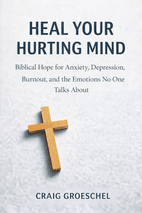
Craig Groeschel's Heal Your Hurting Mind addresses anxiety and intrusive thoughts as spiritual battles, offering a faith-based framework to replace negative patterns with biblical truth for Christians seeking emotional and spiritual renewal.
Feature
Insta.Page
Blinkist
Shortform
Summary Depth
Full Chapter-by-Chapter
15-min overview
Detailed analysis
Audio Narration
✓ (AI narration)
✓
✓
Visual Mindmaps
✓
✕
✕
AI Q&A
✓ Voice AI
✕
✕
Quizzes
✓
✕
✕
PDF Downloads
✓
✕
✓
Price
$59.99/yr
$146/yr (PRO)
$199/yr
*Competitor data last verified February 2026.
About the Author
Craig Groeschel
Craig Groeschel is the founding and senior pastor of Life.Church, a multi-site church known for its innovative use of technology, and the author of numerous bestselling books on Christian leadership and spiritual growth, including *Divine Direction* and *Winning the War in Your Mind*. He is a recognized speaker and leadership expert whose podcast, *The Craig Groeschel Leadership Podcast*, reaches a global audience.
1 Page Summary
Craig Groeschel's Heal Your Hurting Mind addresses the modern epidemic of anxiety, depression, and intrusive thoughts by framing them as spiritual battles for the mind. Writing from a Christian pastoral perspective, Groeschel argues that negative thought patterns are not merely psychological issues but are often rooted in spiritual strongholds that can be overcome through faith. The book's key concepts involve identifying "thought invaders"—lies about identity, past failures, and future fears—and systematically replacing them with biblical truths and God's promises, a process he presents as taking every thought captive.
While not a work of academic history, the book is situated within the long tradition of Christian pastoral care and the contemporary context of a global mental health crisis. Groeschel connects ancient scriptural principles, particularly from the Apostle Paul's writings on spiritual warfare, to contemporary struggles with digital overload, social comparison, and pervasive negativity. His approach synthesizes evangelical theology with accessible, practical self-help strategies, making it a product of early 21st-century popular Christian literature that seeks to bridge the gap between faith and emotional well-being.
The lasting impact of Heal Your Hurting Mind lies in its practical, faith-based toolkit for a wide audience within the Christian community. It provides a religious framework for those who may feel hesitant about secular therapy, offering specific prayers, declarations, and mental disciplines. By validating emotional pain while directing readers toward spiritual solutions, the book has influenced how many churches and small groups discuss mental health, encouraging a more open conversation that integrates psychological awareness with foundational Christian doctrine.
Chapter 1: Introduction
Overview
The author opens with raw vulnerability, describing a personal crisis that didn't arrive suddenly but as a creeping, inescapable fog of dread. Despite decades of successful ministry and family life, he found himself trapped in a place of terror, fearfully concluding, "I think this is probably going to kill me." He frames this painful experience not as an endpoint, but as the origin story for the book itself—a journey from breakdown to breakthrough that he now shares to help others. He promises an intense, honest, and important exploration of mental health struggles, bridging spiritual and psychological healing.
The Personal Crash
The author recounts using denial as a primary coping mechanism, trying to dismiss his suffering as just a "hard season." This strategy failed as a sense of emotional claustrophobia and impending doom grew. His confession—"This is going to get me"—marks a turning point from denial to a terrifying acknowledgment of his fragility. He shares that he yelled at God in his pain, questioning why he was allowed to endure such darkness, and now wonders if that very experience was meant to equip him to guide others.
Introducing a Guide: Dr. C.
Acknowledging his own role as a pastor and not a mental health expert, the author introduces Dr. Wayne Chappelle, the Christian counselor who helped him. Dr. C.'s background is unique: over twenty years of clinical psychology work assessing and preparing military personnel and government officials for high-stakes, classified operations, followed by work with Olympic and professional athletes to build mental toughness. Driven by his faith, Dr. C. later shifted to counseling Christian leaders. The author explains he has invited Dr. C. to contribute professional wisdom and clinically vet the entire book, including a personal reflection at the end of each chapter. Crucially, the author has waived doctor-patient confidentiality, allowing Dr. C. to speak openly about his vulnerabilities to aid the reader's understanding.
A Direct Invitation to the Reader
The author speaks directly to anyone feeling helpless or hopeless, assuring them he now understands that depth from personal experience. He extends a clear message of hope: "There is hope. Because God will help you." The book is framed as a joint exploration of principles for healing anxiety, depression, negativity, anger, trauma, and burnout. He invites readers to commit to "radical honesty" with God and themselves, possibly alongside a support group, emphasizing that mental health is a dedication to reality. The journey begins with the simple, profound question Jesus asked a suffering man: "Would you like to get well?"
Dr. C.'s Reflection
Dr. Chappelle expresses humility at being included and clarifies that his life is less "exciting" than portrayed; his skill lies in applying broad experience to help people grow through challenges. He affirms the difficulty of the healing process, noting it will require work, raw honesty, and courage. His closing statement aligns with the book's mission: "Your mental health is worth it."
Key Takeaways
Breakdowns can become breakthroughs: The author’s severe personal crisis became the foundation for offering hope and guidance to others.
Healing integrates faith and psychology: The book consciously blends spiritual truth with professional psychological insight, modeled by the partnership between the pastor-author and Dr. C.
Radical honesty is the starting point: Mental health is framed as a courageous commitment to truth about oneself and one’s struggles, first before God.
Asking for help is wise, not weak: The narrative powerfully normalizes seeking help, whether from God, a counselor, or a community.
Hope is presented as a promise: No matter how helpless or hopeless one feels, the core message is that healing is possible.
Key concepts: Introduction
1. Introduction
The Author's Personal Crisis
A creeping fog of dread led to a breakdown despite external success
Denial failed as a coping mechanism, leading to terrifying acknowledgment of fragility
The crisis is framed as an origin story—a journey from breakdown to breakthrough
Questioning God in pain became preparation for guiding others
Partnership with Dr. C.
Dr. Wayne Chappelle provides professional psychological expertise
Unique background: military/athlete mental toughness training applied to Christian counseling
Dr. C. clinically vets the book and contributes reflections
Waived confidentiality allows open discussion of the author's vulnerabilities
Invitation to Healing Journey
Direct address to those feeling helpless or hopeless
Core message: 'There is hope. Because God will help you.'
Healing integrates principles for anxiety, depression, trauma, and burnout
Requires radical honesty with God, self, and possibly a support group
Foundational Healing Principles
Mental health is a dedication to reality and radical honesty
Healing consciously blends spiritual truth with psychological insight
Asking for help is presented as wise and necessary
The journey begins with Jesus' question: 'Would you like to get well?'
Scroll to load interactive mindmap
If you like this summary, you probably also like these summaries...
💡 Try clicking the AI chat button to ask questions about this book!
Chapter 2: 1.1 Introduction
Overview
The chapter opens with a raw, personal admission: the author, someone who has always defined themselves by their steadiness and consistency, experienced a profound mental and emotional breakdown. This sets the stage for a discussion on mental health struggles that are often invisible to others, challenging the stigma—especially within religious communities—that keeps people from speaking openly about their pain.
The Hidden Struggle Behind Consistency
The author describes a life built on reliability in ministry, family, and personal discipline. This very consistency, however, became the mask that concealed their internal crisis. They continued to perform all their usual duties while being consumed by an inexplicable sense of terror and panic. This disconnect between a functioning exterior and a crumbling interior is presented as a common, yet often hidden, experience.
A Relatable Portrait of Inner Turmoil
Directly addressing the reader, the author lists the silent battles many face: chronic anxiety, depression, relentless worry, stress, exhaustion, burnout, and unhealed emotional wounds. The universal response of “I’m good” is contrasted with the private reality of feeling overwhelmed and unsure if one can endure. The author acknowledges that a reader's experience may range from early warning signs to circumstances more severe than their own.
The Compounding Weight of Silence
A critical point is made that the suffering is made worse by our collective reluctance to talk about mental health. While societal attitudes are slowly shifting, a legacy of shame and secrecy remains. The author expresses particular dismay that the church, which should be a sanctuary of honesty and grace, has often been complicit in this silence. This is framed as a tragic failure, as the core message of faith begins with admitting brokenness and needing help.
The Hope of Shared Experience and Courage
The chapter concludes by stating the book's primary goal: to dismantle the isolating belief that "I'm the only one." By sharing this personal story, the author hopes to reassure readers they are not alone and to empower them to find the courage to speak about their own struggles, beginning a journey toward healing.
Key Takeaways
Mental health crises can happen to anyone, even those who appear the most steady and consistent.
There is often a vast disparity between the calm we project publicly and the turmoil we experience privately.
Silence and stigma, particularly within faith communities, compound the pain of mental health struggles.
The core message is one of solidarity and encouragement to break the silence, offering reassurance that no one is alone in their battle.
Key concepts: 1.1 Introduction
2. 1.1 Introduction
The Hidden Struggle Behind Consistency
A life built on reliability can become a mask for internal crisis
Functioning exterior often conceals a crumbling interior
Common experience of performing duties while consumed by terror and panic
A Relatable Portrait of Inner Turmoil
Silent battles include anxiety, depression, worry, stress, exhaustion, burnout, and unhealed wounds
Universal response of 'I'm good' contrasts with private feelings of being overwhelmed
Reader's experience may range from early warning signs to circumstances more severe than the author's
The Compounding Weight of Silence
Suffering worsens due to collective reluctance to discuss mental health
Legacy of shame and secrecy persists despite shifting societal attitudes
Church often complicit in silence despite its message beginning with admitting brokenness
The Hope of Shared Experience and Courage
Book's goal: dismantle isolating belief that 'I'm the only one'
Personal story aims to reassure readers they are not alone
Empower readers to find courage to speak about their struggles and begin healing journey
Scroll to load interactive mindmap
⚡ You're 2 chapters in and clearly committed to learning
Why stop now? Finish this book today and explore our entire library. Try it free for 7 days.
Chapter 3: 1.3 Myth 1: Christians Shouldn’t Struggle with Mental Health Issues
Overview
This section confronts a pervasive and damaging belief within some Christian communities: the idea that genuine faith should immunize believers from mental health struggles. It passionately argues that experiencing anxiety, depression, or other challenges is not a sign of spiritual failure but a universal aspect of human experience, richly illustrated by both biblical figures and modern spiritual giants.
The Core of the Myth
A troubling narrative exists in some churches, suggesting that because Christians are saved and indwelt by the Holy Spirit, they should not face mental health issues. This myth often manifests as teaching that emotions like anger or sadness are inherently dangerous or unspiritual. It places the blame for mental health struggles squarely on the individual, attributing them to a lack of faith, insufficient prayer, or unconfessed sin. This creates a culture where suffering is stigmatized, and people feel isolated in their pain, believing their faith must be broken.
Humanity and Faith Are Not Contradictions
The chapter firmly rejects this notion, offering a compassionate correction. Struggling with mental health does not mean you lack faith or are a "bad" Christian. It simply means you are human. You can be deeply committed—faithful in prayer, worship, and study—and still feel overwhelmed by anxiety, gripped by depression, or haunted by past trauma. This reality is framed not as a flaw, but as a shared condition of our frail humanity, where "we have this treasure in jars of clay" (2 Corinthians 4:7).
Evidence from a Cloud of Witnesses
To solidify this point, the text turns to powerful examples from scripture and history, showing that even the most revered figures faced profound mental and emotional battles.
Elijah, after a monumental spiritual victory, sank into a depression so deep he asked God to take his life.
David, a man after God's own heart, penned psalms of raw despair, feeling abandoned and overwhelmed.
Jeremiah, chosen as God's prophet, wrestled with insecurity and sorrow so intense he cursed the day he was born.
The pattern continues beyond the Bible with leaders like Martin Luther, Charles Spurgeon, Martin Luther King Jr., and Mother Teresa, all of whom documented their own seasons of anxiety, insecurity, and depression.
A Shift from Assumption to Pursuit
The conclusion is a direct call to action. The problem isn't that Christians struggle; it's that we often wrongly assume spiritual health automatically translates to mental and emotional health. This assumption prevents the active pursuit of wholeness. True healing begins when we dispel this myth and acknowledge that mental health, like many good things, requires intentional pursuit—a journey that is interrupted by a second, related misconception.
Key Takeaways
Struggling with mental health is not an indicator of weak faith or hidden sin; it is a fundamental part of the human experience.
Biblical heroes and modern spiritual giants openly battled anxiety, depression, and despair, demonstrating that deep faith and deep struggle can coexist.
The harmful myth that Christians should be immune to these struggles often leads to shame, isolation, and inaction.
Spiritual health does not automatically confer mental health; we must actively pursue emotional and psychological well-being rather than assume it.
Key concepts: 1.3 Myth 1: Christians Shouldn’t Struggle with Mental Health Issues
3. 1.3 Myth 1: Christians Shouldn’t Struggle with Mental Health Issues
The Core of the Harmful Myth
Belief that genuine faith should immunize believers from mental health struggles
Manifests as teaching that emotions like anger or sadness are unspiritual
Attributes struggles to lack of faith, insufficient prayer, or unconfessed sin
Creates culture of stigma and isolation where suffering is hidden
Humanity and Faith Are Not Contradictions
Mental health struggles do not indicate weak faith or being a 'bad' Christian
Being deeply committed and faithful can coexist with anxiety, depression, or trauma
Human frailty is inherent - 'treasure in jars of clay' (2 Corinthians 4:7)
Struggling means you are human, not that your faith is broken
Biblical and Historical Evidence
Elijah experienced deep depression after spiritual victory
David expressed raw despair and abandonment in Psalms
Jeremiah wrestled with intense insecurity and sorrow
Modern spiritual giants like Luther, Spurgeon, and Mother Teresa documented their struggles
From Assumption to Active Pursuit
Problem isn't that Christians struggle, but wrong assumptions about spiritual health
Spiritual health does not automatically confer mental/emotional health
Healing begins by dispelling the myth of immunity
Mental health requires intentional pursuit rather than passive assumption
Scroll to load interactive mindmap
Chapter 4: 1.4 Myth 2: Faith Alone Should Fix Mental Health Issues
Overview
The chapter directly confronts a pervasive and harmful assumption within many faith communities: that deep spiritual belief should be sufficient to resolve mental health struggles. It argues that while faith is a vital component of a person's life, treating it as a singular cure for psychological and emotional pain is a profound misunderstanding, both of how faith works and of the complex nature of human beings.
The Flawed "Just Have More Faith" Message
A common response in many churches to someone experiencing depression, anxiety, or trauma is to suggest they simply need more faith or prayer. The author challenges this by drawing a sharp parallel to physical health. No one expects faith alone to mend a broken bone, improve a credit score, or lower cholesterol instantly. We recognize the need for practical, skilled intervention in those areas. The argument is that it is equally illogical and unhelpful to apply a "faith-only" prescription to a mind that is suffering. This approach can leave individuals feeling spiritually deficient on top of their existing pain, compounding their isolation and shame.
A Biblical Call for a Holistic Approach
The text grounds its argument in scripture, moving beyond the myth to present a more complete picture. When Jesus was asked about the greatest commandment, He didn't cite "faith alone." Instead, He commanded love involving the whole person: heart, soul, mind, and strength, coupled with loving others (Mark 12:30-31). This framework acknowledges human complexity—we are emotional, spiritual, intellectual, physical, and relational beings. Damage or imbalance in any of these areas requires attention in that specific area. Furthermore, the author references the Apostle James, who wrote that a person is considered righteous by what they do "and not by faith alone" (James 2:24). This principle underscores that lived action and practical care are inseparable from genuine faith.
The Path Forward: Comprehensive Care
Rejecting the "faith-alone" myth opens the door to a compassionate and effective strategy. The chapter suggests that alongside spiritual growth, true mental health may require a combination of practical steps. This includes addressing physical foundations like diet and sleep, seeking medical advice for potential biological factors like hormonal changes, cultivating healthy relationships, and—critically—engaging with therapy from a trained professional. The goal is a holistic (comprehensive) approach that honors the person as a whole, created by God with a mind that sometimes needs specialized healing, just as the body does.
Key Takeaways
Faith is not a magic cure: Being a Christian does not automatically fix mental health issues, just as it doesn't automatically fix physical ailments. Spiritual growth and psychological healing are related but distinct journeys.
The "just have more faith" message is harmful: It oversimplifies deep human suffering and can make individuals feel spiritually defective, adding guilt to their existing pain.
The Bible supports a holistic view: Jesus' command to love God with all one's heart, soul, mind, and strength validates the need to care for our mental well-being as part of our spiritual duty.
Action is required: Following the example of James's teaching on faith and deeds, pursuing mental health requires tangible steps—from lifestyle changes to professional therapy—as an expression of faith, not a replacement for it.
Key concepts: 1.4 Myth 2: Faith Alone Should Fix Mental Health Issues
4. 1.4 Myth 2: Faith Alone Should Fix Mental Health Issues
The Harmful 'Just Have More Faith' Message
Compares mental health to physical health: faith alone doesn't mend a broken bone or lower cholesterol, so it shouldn't be expected to fix mental suffering
This approach oversimplifies deep human suffering and ignores the need for practical, skilled intervention
Leaves individuals feeling spiritually deficient, compounding their existing pain with shame and isolation
Biblical Foundation for Holistic Care
Jesus' greatest commandment includes loving God with heart, soul, MIND, and strength (Mark 12:30-31), validating mental well-being as part of spiritual duty
Acknowledges human complexity: we are emotional, spiritual, intellectual, physical, and relational beings
James 2:24 emphasizes that genuine faith requires action and practical care, not faith alone
Comprehensive Care Strategy
Requires addressing physical foundations: diet, sleep, and potential biological factors like hormonal changes
Involves cultivating healthy relationships and seeking professional therapy from trained experts
Honors the person as a whole, created by God with a mind that sometimes needs specialized healing, just as the body does
Core Principles Rejecting the Myth
Faith is not a magic cure: spiritual growth and psychological healing are related but distinct journeys
The 'just have more faith' message is harmful and adds guilt to existing pain
Pursuing mental health requires tangible steps as an expression of faith, not a replacement for it
Scroll to load interactive mindmap
📚 Explore Our Book Summary Library
Discover more insightful book summaries from our collection